Transcripts are produced by Sofer.ai and lightly edited—please excuse any imperfections.
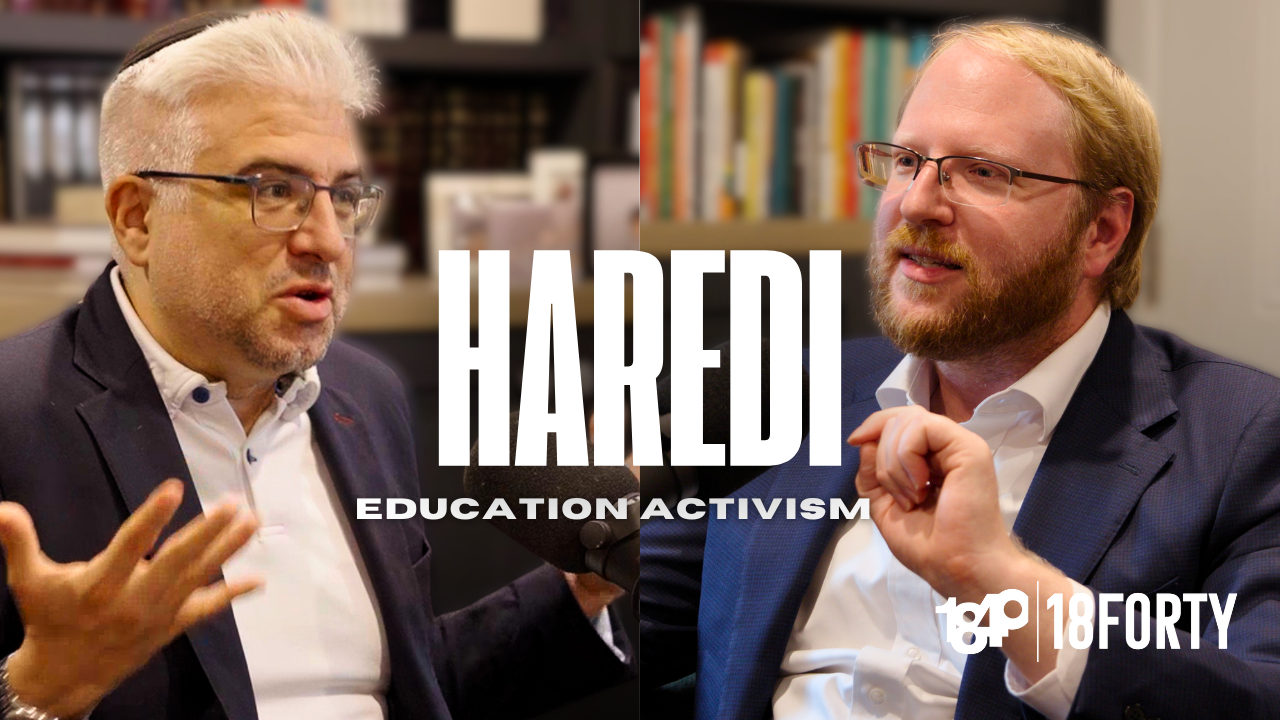
David Bashevkin: Hi friends and welcome to the 18Forty Podcast where each month we explore a different topic bouncing modern sensibilities with traditional sensitivities to give you new approaches to timeless Jewish ideas. I’m your host David Bashevkin and this month we’re exploring the American yeshiva world. This podcast is part of a larger exploration of those big juicy Jewish ideas so be sure to check out 18Forty.org that’s one eight f-o-r-t-y dot o-r-g where you can also find videos, articles, recommended readings and weekly emails. Growing up in the 1990s is when I was beginning to see a distinction between what we call a yeshiva world and a Modern Orthodox community within the United States of America.
I didn’t really grow up being sensitive to that distinction and it’s one that of course we will explore and that’s because my grandfather who was a part of the yeshiva world but he was part of kind of a different yeshiva world. My grandfather Rabbi Moshe Bakritzky zecher tzaddik livracha of blessed memory was a graduate the first graduating class of Yeshivas Chofetz Chaim. He was born in 1915 and he decided at an extraordinarily young age from Springfield, New York, to join the Yeshiva world to ask his parents please send me to yeshiva. This is pre-World War Two American Jewry this is genuinely a different world.
My grandfather is going to yeshiva in the late 1920s and he goes to a yeshiva that still exists today known as Yeshivas Torah Vodaas. It was one of the few options that existed in pre-Holocaust American Jewry and he went there to study under the person who I think is really the architect of the modern yeshiva day school movement the entire movement and that is someone named Reb Shraga Feivel Mendlowitz somebody whom my grandfather affectionately called Mr. Mendlowitz. Reb Shraga Feivel did not have formal rabbinic ordination because he did not have formal rabbinic ordination insisted on being called Mr. Mendlowitz which is how I grew up knowing my grandfather’s rebbe was Mr. Mendlowitz. I would hear that all the time.
It happens to be that Reb Shraga Feivel Mendlowitz is the one who really led the campaign along with Rabbi Joe Kaminetsky of Torah Umesorah a movement that was going around the country setting up day schools. And my grandfather who loved Yeshivas Torah Vodaas had a rebbe there named Rev Dovid Leibowitz. Rev Dovid Leibowitz was the great nephew of the Chofetz Chaim learned directly with the Chofetz Chaim and my grandfather loved his shiur so much his Torah class that when Rev Dovid Leibowitz broke off from Torah Vodaas and started a new yeshiva movement called Yeshivas Chofetz Chaim named after his great uncle it was there that my grandfather was the first graduating class of Yeshivas Chofetz Chaim. This was very rare an American trained American born rabbi.
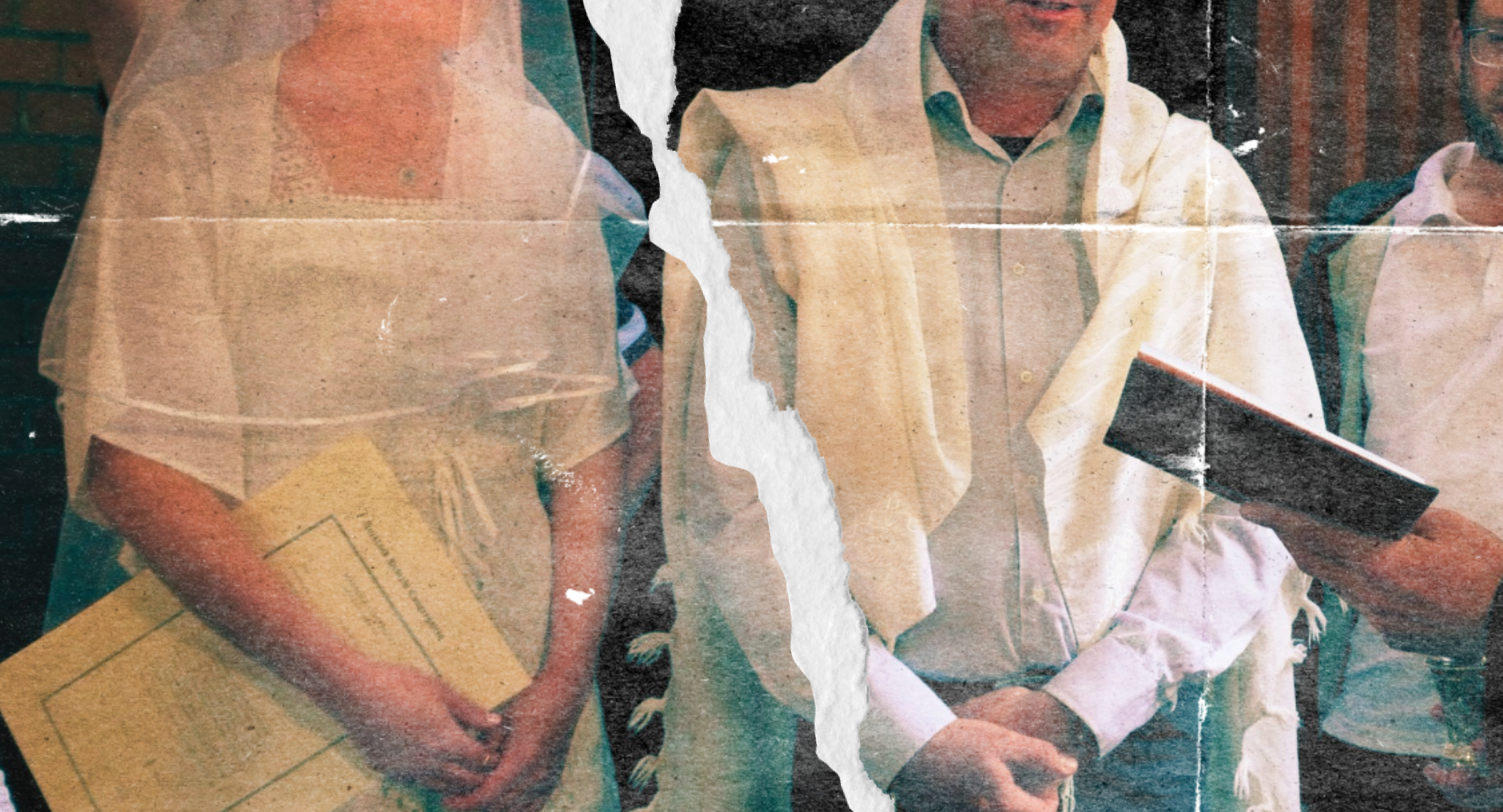
There were not too many in the first graduating class of Yeshivas Chofetz Chaim. I’m looking at the picture right now it hangs in my office. The thing I love about the picture is that that first ceremony celebrating their rabbinic ordination my grandfather and all of the graduates are wearing tuxedos. Got to bring that back to the yeshiva world.
More tuxedos at rabbinic ordinations. And in that picture you see Rev Dovid Leibowitz and next to him is Rabbi Pinchas Sheinberg who began his career in America and became much more well-known when he moved to Israel and people probably remember Rav Sheinberg zatzal because he used to wear dozens if not hundreds of pairs of tzitzis every day. He didn’t always do that. When he was sitting for the photograph of the first graduating class of Yeshivas Chofetz Chaim he did not yet have a full beard.
He’s wearing a mustache and a suit. And I grew up with a real sense of pride that I had a grandfather who was a yeshiva-trained rabbi. He was a rabbi in Portland, Maine, he was a rabbi in Poughkeepsie, New York, and had a fairly typical career of what we would now call an out of town rabbi. The landscape of the Jewish world is totally different.
The battles are totally different. My grandfather had battles over kosher meat he was locked in a meat freezer at some point which is a popular way of harassing early American rabbis. He fought for a mechitzah in his shul a partition separating men and women during services and he fought to set up a Jewish day school system and it was not easy and it took a tremendous toll. But there was a real sense of pride of like I felt like I was a part of it and I have very real vivid memories of As an elementary school student sitting and learning with my grandfather and even though dementia really ravaged his mind and his memory in so many ways something that I’ve always found so incredibly moving is really to the very end because he was a baal koreh he knew the entire Torah by heart and he never lost that he was able to read with the trop with the cantillation the entirety of the Torah.
And I grew up thinking that I was a part of it. I went to a yeshiva known as South Shore that was set up by the eldest son of Rav Yaakov Kamenetsky one of the great European leaders who eventually set up and became a Rosh Yeshiva in Torah Vodaas initially and his oldest son Rav Binyamin Kamenetsky set up the elementary school that I attended. His younger brother Rav Shmuel Kamenetsky is extraordinarily well known and is the Rosh Yeshiva he sits on the Moetzes Gedolei HaTorah the Council of Supreme Torah Sages and he spoke at my eighth grade graduation. I grew up with a great sense of affection and really feeling that I was a part of it.
Of course I was. Why wouldn’t I be? And then culturally things started to move a little bit in the 90s. I remember the popularity of different schools. There was another school that was a little bit more yeshivish in the neighborhood that I grew up in that became more and more popular.
Now it is a titan of an institution known as Yeshivas Darchei Torah was not all that popular at least as I remember it growing up led by Rav Yaakov Bender who Rav Yaakov Bender’s father and my grandfather were old childhood friends from Springfield New York. It felt like I was a part of it and then I remember at some point kids play together so it was the kids it wasn’t grown-ups but I remember at some point playing in my local shul Shaaray Tefila I lived across the street from it and I remember at some point there was a younger boy who I’m still in touch with and I love him. We’re not rehashing childhood fights kids fighting around in between Mincha and Maariv on Shabbos which is when kids can get really just rowdy we’re playing around but I do remember getting into a fight with a kid because he said you are Modern Orthodox and I felt very what do you mean by that am I not good enough and frum enough and kids have these way of surfacing the most superficial distinctions and cultural trends they have a real eye for these things and I reacted like a child very offended and very let’s get ready let’s have this fight let’s have this battle but the real truth is these distinct communities were not always all that distinct and there was a point I think in the 1990s particularly after the passing of Rabbi Soloveitchik where the difference between the communities there was some tension we’re headed in different directions are we all rowing together. The world that we live in now in 2026 in the Orthodox world is quite different.
My father who grew up in North Adams, Massachusetts, married the daughter of an out of town rabbi it’s hard to describe what he is it’s hard to describe what anybody is at this point. How do you evaluate what makes somebody Modern Orthodox versus American yeshivish is it wearing a black hat? By that standard my father is definitely yeshivish. He started wearing a black hat during this period in the 1990s and I remember my now chareidi sister was like Dad can you not oh my God are you going to go out with that? And that very same sister of mine is now living thank God in Yerushalayim and raising children there. We witnessed in the last I would say 30 or 40 years a real coming of age story not of any particular community but I think more generally of the Orthodox world of stepping into itself with a great deal of confidence and a vision.
We are no longer playing defense which I think was the story of the Orthodox world beginning in the early 1900s up until really the 1980s, 1990s. There was a sense are we going to survive are we going to be able to continue does this model work on American shore? And looking back at it I think that everyone no matter what community that you are a part of or how you self-identify or affiliate all of these movements contribute to everyone’s outcomes whether you live in a community that deems itself Modern Orthodox or yeshivish or non-Orthodox or you’re unaffiliated everyone is affected by all the movements and each generation creates its own fusion and its own way and its own approach and the Orthodoxy that we see today is very much a product of the revolution of the yeshiva world of the strength of the American yeshiva world as a movement a yeshiva world that really came to an American landscape that I am very much a part of a product of that really did not have a lot of Torah institutions. That I heard directly from my grandfather.
I know because so much of his career was the frustration of being able to just set up a day school. And this was a time where trying to set up a day school in Portland, Maine, was a realistic vision. This is what we should be doing, we should be going to outposts where Jews live and we should just be spreading Torah all throughout the United States of America, a place where educationally people did not have much of an education. And I’m describing my own grandparents with the exception of my grandfather who went to Torah Vodaas and eventually was a graduate of Yeshivas Chofetz Chaim.
His wife, as I’ve mentioned many times, my grandmother could not read Hebrew, did not know how to bench in Hebrew. And my father’s parents who both grew up in North Adams, Massachusetts in the Berkshires did not have at all a Jewish education. And most of my grandfather’s siblings and most Bashevkins worldwide were not products and were never really given a strong Jewish education. It’s not coming from a place of judgment.
This was a time in America where the prioritization of Jewish education was not yet well known. It is interesting that in this post-October 7th reality it feels like so much of the messaging that we are hearing, I’ve had so many people send me this address from Bret Stephens, which was beautiful and incredible, urging people not to exclusively center the fight on antisemitism, that is not going to carry us over the finish line, we need to focus on building Jewish education in America. That is wonderful that Bret Stephens is using his microphone to address world Jewry that way, to share an idea that we’ve repeated so many times. The purpose of Judaism is not to fight antisemitism, but rather we fight antisemitism in order to focus on the purpose of Judaism.
And the reality is in this moment, unfortunately, even the very people who are on the mic making this call, they’re not necessarily products themselves of having a strong Jewish education. And there is something frightening from the seat that I am in, where I try to keep my eye on both of these worlds, where I don’t think that the calls to set up Jewish education are taking enough direction. I’m not saying that they should become Orthodox or even that they should become Yeshivish, but they have to understand that the effort to set up Jewish education and Jewish schooling to ensure that every child is given a basic Jewish education is a story that we’ve already been through. We are not starting from scratch and we need to learn from each other.
There is a measure of, dare I say, hubris to get up in 2026 and make it sound like we just discovered sliced bread. Oh, by the way, we now realize we need Jewish education. There is a community that is alive and exists now. There are people, myself, David Bashevkin, I am only Jewishly educated because of the battle and it was a battle.
A battle not against antisemitism, a battle against Jewish apathy, a battle against come on, these are old ideas, leave them in Europe, we don’t want them here in America, let’s enjoy the freedom of America. These were battles that took place for half a century on American soil and to wake up in this moment and to pretend like we’re starting from scratch, we are not. Jewish people learn from the past and we need to look at the last hundred years at what our models have yielded and how to set up a model for a vision of common Judaism that can address and bring Yiddishkeit to the entirety of the Jewish people. And in order to do that, we cannot ignore the lessons of the American Yeshiva world, we cannot ignore the lessons of the Modern Orthodox world, we cannot ignore the lessons of the community that so often are hand-waved.
And I want to say on a personal level, I’ve seen this. I have sat across from philanthropists and they’ve looked me in the eye and said, isn’t this just for the Orthodox? And it is heartbreaking to me. I do not look at 18Forty as a project of just for the Orthodox Jews. This is a project that is really desperately trying in this moment to share the best ideas, the best experiences, all of the struggles in an honest and real way to come together to formulate some vision and some path for a Yiddishkeit, for a Jewish vision that can address the entirety of the Jewish people.
And there’s a part of me that feels that the establishment is not really taking enough notes from our own history and our own past. With great admiration and respect to all of those who have given world Jewry addresses and this is not my pitch to be invited, though I would certainly relish the opportunity, but I do wonder, it sometimes does feel that it is the blind leading the blind. Why don’t we put forward somebody Why don’t we put forward somebody who actually is the product of a vision of a Jewish day schooling system? Why don’t we put forward somebody who actually understands the struggles of what does it mean to set up systems within a community to ensure that everybody has an experience of Shabbos that they can take with them? That everybody has an experience of Torah, a basic knowledge of Jewish history and Jewish language and Jewish culture. It is beyond me and I’ll say it bluntly, why the Orthodox community is not being mined more carefully for the ideas, the struggles, the failures? We’ve got it all, for ideas that can then be through philanthropic work, be brought into the non-Orthodox world.
I look at 18Forty as one of those bridges. I take a great deal of pride in the fact that many of our listeners are Orthodox, many of our listeners are Yeshivish, are Chasidish, are non-Orthodox, are not affiliated. We need a place to share these ideas and we need to stop pretending that we are starting from scratch. And that is actually why I think it is so important that we are focusing now on the model, the history, the ideas associated with the American yeshiva world, which I think is extraordinarily important and until now so many people’s reactions have been, oh no, like are we going to become black hatters? Oh no, are we sliding to the right, are we sliding to the left? Instead of reactive defensive postures, I think we should have the confidence that good ideas exist and they can be modeled and replicated in different communities in their own way, but we need to create a Yiddishkeit that we are proud of.
And I am not sure that given the lessons that we could potentially have learned just from my own family of just looking, I mean, the Bashevkins had nine children, one of nine, and just to look at the landscape and see any given family, every family holds these stories. What worked, what didn’t, what were the factors that led to lifelong joy and inspired affiliation and engagement with Jewish life? And what led to very rapid and very real assimilation? It does not take hundreds of years, it does not take a millennia for Jews to become fully assimilated. It happened in my lifetime. I am forty years old, probably forty-one by the time this airs.
Feel free to send me birthday gifts. If somebody really wants to send me a killer birthday present, this is crazy that I’m doing this right now but here we are, let’s have a little fun, why not? Genazym is auctioning off a signed Ksav Yad, a handwritten letter from Rav Tzadok HaKohen MiLublin. I’ve been checking the auction every day. It’s at forty-two thousand dollars plus maybe a twenty-three percent commission.
But either way, I am forty-one years old now and in my own lifetime, I have seen relatives, family fully assimilate. That’s a reality and it’s not even coming from a place of judgment. There was a tidal wave pulling people away from the shore into the wider sea of American culture, of American life and without a plan and without a system and without schooling and without education, we are not going to be able to survive out there. It is really, really challenging.
In one generation, the difference between raising children with a robust and strong Jewish education and raising children without that robust education and community, you see where it leads and it is quite frightening and what frightens me most is that in this post-October 7th awakening, it already seems to me that I’m not sure how awake we are. I am not sure if we are yet ready to ask and have these really hard conversations and questions. This is the generation to do it. Let’s not wait for another generation.
Let’s not wait for more people who are lost. Let’s do this now. And that is why I think having this discussion is so incredibly important because the American Yeshiva world, whether you like it or not, has been a central part of the Jewish education revolution that has swept through the entirety of American Judaism. This is a revolution that every community has felt, whether they have felt it defensively like they’re coming to take over or defensively in the sense like, oh my gosh, this community has totally changed, it’s so different, which I do feel, I’ll be honest, when I visit the Five Towns, but nobody took over.
These are the children of the people who grew up also in the Five Towns, many of them, and it does feel different. That’s not a bad thing. Yiddishkeit evolves, Yiddishkeit is something eternal that can always fill new vessels. But we have to make sure that whatever vessel our generation holds out, that it is being filled with a vision for Yiddishkeit.
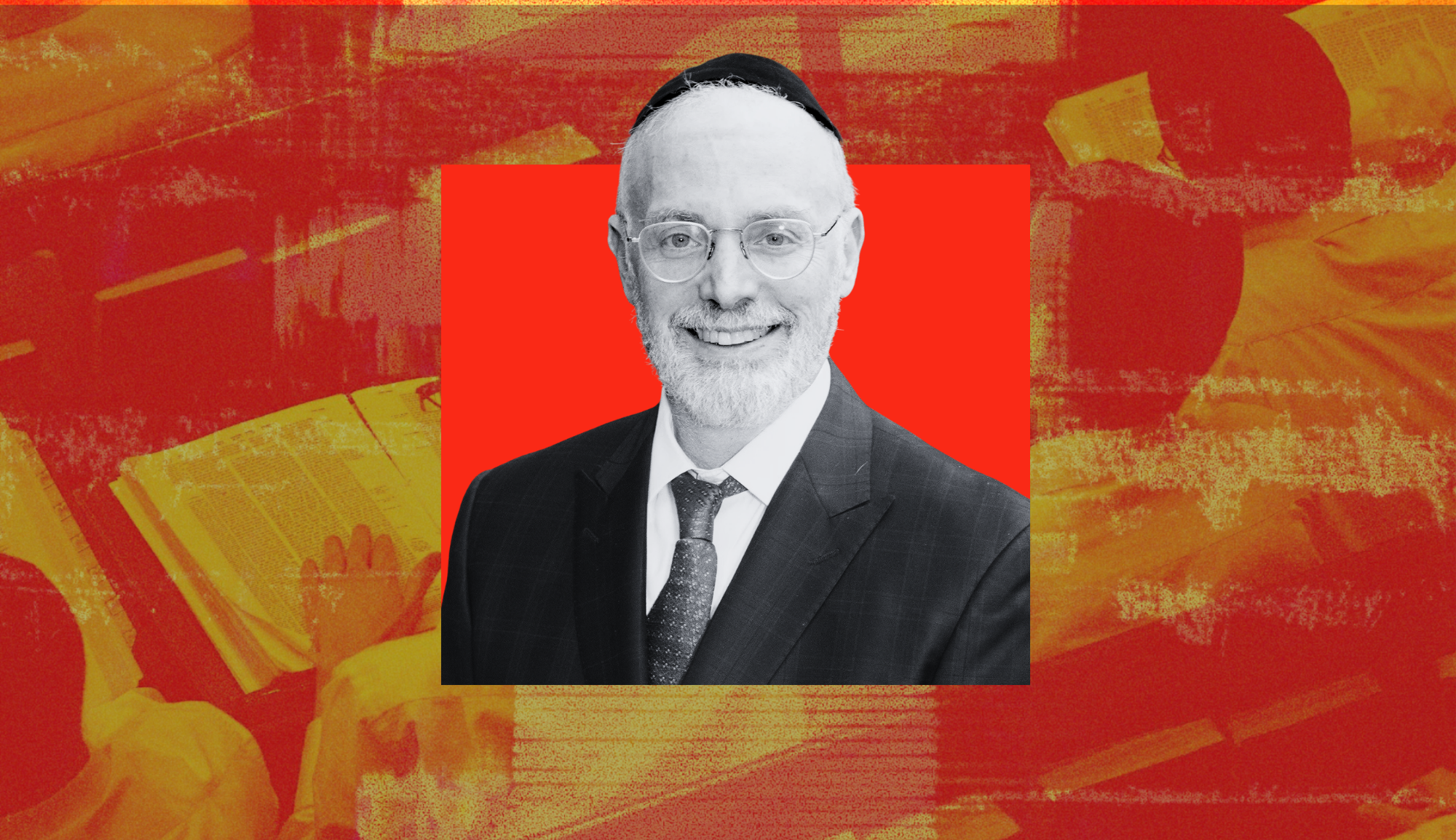
Before we get to our first interview, really about the contemporary American Yeshiva world with an incredibly esteemed guest who really stands at the center of the American Yeshiva world, Rabbi Aaron Kotler, who is a grandson of Rav Aharon Kotler, who really came and set up the Beis Medrash Govoha, the Yeshiva, now… known as Lakewood. Lakewood is a town and within Lakewood there is a very prominent yeshiva known as Beis Medrash Govoha which without a doubt has become the center of gravity of the American Yeshiva world. Whether or not you have studied there, Lakewood has transformed the landscape of American Jewry.
And before we get to our interview, thank you Johnny for setting that up at a moment’s notice. I wanted to actually begin by reading an interview not with Rav Aaron Kotler and not with Rabbi Aaron Kotler, but the figure who bridged in between them and that is Rav Aaron Kotler’s son and Rabbi Aaron Kotler’s father, Rav Shneur Kotler. I believe it was Rav Shneur Kotler who was really the primary architect of the yeshiva world as we see it, who was the second Rosh Yeshiva of Yeshivas Lakewood. It is his son Rav Malkiel Kotler who is the current Rosh Yeshiva, who is the brother of Rabbi Aaron Kotler.
And in August of 1977, Rav Shneur Kotler sat for an interview with somebody named William Helmreich. William Helmreich has a fascinating book that I would recommend to all of our listeners who are interested in really understanding, I don’t want to use word ethos because that’s such a not Yeshivish word, but the worldview, the approach of the American Yeshiva world. And I am deliberately calling it the American Yeshiva world because the Israeli Chareidi world is very different. There’s a lot to learn from that as well, but that is not what we are talking about today.
William Helmreich wrote a fantastic book called The World of the Yeshiva: An Intimate Portrait of Orthodox Jewry. And he supplemented that book with a series of interviews which he eventually used to actually write the book. And he interviewed all of the great leaders, Rav Shneur Kotler, the Novominsker Rebbe Rav Yaakov Perlow, Rav Yaakov Weinberg, Rav Ruderman who were both heads of Yeshivas Ner Yisrael, Rav Elya Svei who was the head of Philly, and it goes on and on. But I want to read a little bit of just how Rav Shneur described why his father, Rav Aaron Kotler, decided to establish a Yeshiva.
Just a note, this is a translation which is why Professor Helmreich was so successful in getting these interviews that he spoke a fluent Yiddish. This is a translation of the original Yiddish. So his first question is, I want to know, what were some of the problems that the Rosh Yeshiva’s father, alav hashalom, encountered in his efforts to start a Yeshiva here in America? And this is what Rav Shneur Kotler answered. He said, I was in Israel at the time that my father went to America.
He came in 1935. Upon seeing the situation in America, he was convinced that the level of education was such that there was really very little possibility to develop Gedolei Torah, meaning scholars, real giants of Torah scholarship, without the creation of more institutions of higher learning. So he went to Mr. Mendlowitz. You know who that is.
He’s very important for the work you’re doing. He was the founder of Torah Vodaas and he always wanted to be called Mr., not Rabbi. Anyway, Rav Aaron gave Mr. Mendlowitz his plans for the type of yeshiva he felt needed to be founded. It should be in a small town, away from the city, a place where people could devote all their time to learning Torah.
And he wanted to not just have bachurim, meaning single students, but also yungeleit, which is a Yiddish term referring to a married student in kollel, which was a new thing then. So this was one obstacle. Just the problem of setting up a yeshiva. My father had to recruit rabbeim from Europe who were qualified.
He came here in 1943 again to set up the yeshiva. For the most part he was involved in hatzala, meaning the saving of lives. The Holocaust is happening. The whole week he worked on hatzala.
He gave shiurim in New York, but only over the weekend. He was extremely busy with hatzala. But the main difficulty was that the level of learning here wasn’t that high and our desire was to develop a generation of Gedolei Torah who were American trained products and we have done that. There are gedolim today who are Americans, not European.
That was the chiddush, the innovation so to speak of somebody like my grandfather. He was not a gadol, he was very well learned, but to have somebody American born fluent in the entirety of Shas, of Talmud, that was very unusual. There weren’t Daf Yomi shiurim everywhere. There wasn’t the access that we see now.
The second obstacle was that my father felt that there should be Torah lishmah, and this is extraordinarily important. Let me just jump in and explain what Rav Shneur Kotler meant by Torah lishmah. Torah lishmah is a term that comes from the Talmud itself. Lishmah means for the sake of.
Torah lishmah means Torah for the sake of, literally. For the sake of what? That is actually a question that is raised by commentators in tractate Nedarim, but it is learning Torah for its own sake. Not for a degree, not because it’ll give you a profession, not so you could serve as a rabbi. rabbi or as an educator.
It is learning Torah for the sake of having the knowledge and experience of toiling in Torah itself. It is not even, dare I say, for the information outcome to become a genius in Torah. It is for the experience itself of standing before a text written generations before you and trying to find meaning. There is something uniquely Jewish about this.
Not to write a PhD, not to finish a sefer, not in order for you to give a shiur later or to say something on a podcast, but learning just for the experience of Torah learning itself. And that’s exactly what Rav Shneur said. My father felt there should be Torah lishma and that all practical benefits would come from it anyway. He felt that Torah lishma raises tremendously the general levels of the Jewish community.
The problem was that this was against the spirit in the country and he’s absolutely right. The people asked what’s the tachlis, meaning what’s the purpose of studying Torah? What can be gained from it? This was the attitude and that’s an attitude that is still prevalent today. What are you gaining from this? What’s the point of it? Why are you spending an hour of Torah study a day? Why does my father wake up at 4 o’clock in the morning to learn in a kollel and then only afterwards go into Brooklyn to treat cancer patients? It is bizarre, genuinely, to somebody who is not familiar with Torah study for the sake of itself, the experience of being immersed in Torah taking you kind of away from the daily life, not looking for relevance, but looking to be connected to a transcendent purpose. That is something very different than everyday relevance.
That you could open up a newspaper for that. What’s going on? What’s happening in my world, in my neck of the woods? There is something purposefully transcendent about immersing yourself in Torah study for no purpose other than the study itself. It’s hard to explain, continued Rav Shneur, that sometimes the most lasting things seem to come out from things which seem to have no purpose. I just want to read that line again because it’s really an interesting line.
It is hard to explain that sometimes the most lasting things seem to come out from things which seem to have no purpose. What ultimately won the day, it is not that all of our children are becoming rabbis, which was my bubby and zeidy‘s first reaction when my father first decided to go to Yeshiva University. They’re like, what, you want to become a rabbi? Why else on earth would you want more Torah study other than to become a rabbi, to get some certification? But what ultimately won the day is the pursuit of knowledge, the pursuit of transcendence for the sake of the experience itself, not for the degree that it gives you, not for the papers you can write on it, not for even the sefarim and the shiurim and the Torah study that can emerge from it, no, for its own sake. The important thing, says Rav Shneur Kotler, was to spread Torah in America.
This is an absolutely fascinating interview and you can look it up. It’s only a few pages, but it is an incredible window into this founding of the Yeshiva world. What was its philosophy? And that is at the center of our interview today. It is a great privilege to introduce our conversation with Rabbi Aaron Kotler.
Okay, this is really a privilege and pleasure and I’m so grateful for you joining today. I wanted to begin with going back to the original vision of Beis Medrash Gavoah, what is sometimes colloquially called Lakewood Yeshiva or BMG. What was the original vision for why your grandfather Rav Aharon Kotler decided to set up the Yeshiva?
Aaron Kotler: Well, I don’t think it was anything exceptional. Throughout history, the Jewish people always had yeshivas as their core and their essence.
Yehuda shalach lefanav. Yaakov Avinu sent down to Mitzrayim to build Yeshivas. Avraham Avinu learned in Yeshivas Shem v’Ever. So go back to the very origins of history.
I think Yeshivas, the Beis Medrash, was always the heart and soul of the Jewish people in every generation, obviously in different forms. Whether you think of the era of the Baalei Tosfos or you think of a time when yeshivas were very localized to local chadarim, before you got globalization, even in pre-globalization, you had small shtetlach and every shtetl had a yeshiva and all. And then there were great yeshivas of Europe. I don’t think there was anything exceptional in his vision.
It was just very simple is that this is the nature of the Jewish people is ki hi chochmaschem u’binaschem and that’s what we follow.
David Bashevkin: That is absolutely true and I think quite exceptional. But one question is demographically if you look at that time, one would have expected that to set up a Yeshiva you would have set it up in one of the more major cities or a metropolitan area, in Boro Park they had a large community, in Brooklyn there were communities all over the East Coast at the time. Why specifically Lakewood and correct me if I’m wrong, was not a bustling Jewish town? Why not build the yeshiva closer to the city where there was a much stronger Jewish population?
Aaron Kotler: Well, just a bit of history that’s really important is Lakewood had two hundred hotels at the time, fifty of them were kosher.
I don’t know… How many were glatt kosher by our standards, but it was a very Jewish town with a very strong Jewish presence with a lot of gedolim going there, it was well known, in fact, in the early days the Agudah conventions were in Lakewood. There were hotels like Bodner’s Hotel, the Bodner family is still in Lakewood, Baruch Hashem, New Brunswick Hotel, there were many Jewish hotels and there were many kosher hotels of all sizes. There was a small, I would almost call like a bed and breakfast owned by a Yid Itzel Goldstein on Madison Avenue and he had learned in Telz and he pushed Rav Aharon to come to Lakewood, but I think Lakewood was a pretty hospitable place in the sense of a lot of Yidn would go there, it was well known, it wasn’t like moving to Bismarck, South Dakota, or somewhere.
It was not that far from New York, certainly didn’t have some of the distractions of New York, but it had other distractions that in some ways were worse because before there was the Borscht Belt, there were all these Jewish hotels, card game playing and all that, so it was a pretty complicated place. I believe that Itzel Goldstein had an outsized role in talking to Rav Aharon about starting the yeshiva in Lakewood and there was a Yid Menasheh Rabinovitz, a very famous real estate agent if I’m not mistaken, who helped and when Rav Aharon bought the first building he literally danced with simcha. He was a Rosh Yeshiva in Slutzk, the Communists had come into Slutzk, 1917, and they arrested him numerous times, they forced the closure of the yeshiva eventually. He had to run away, they were going to kill him.
Rav Isser Zalman had to run away, so they ran to Kletzk. Rav Aharon started the yeshiva in Kletzk, which was then free of Communist control, it was in what was then Poland and then in 1940s, the Molotov-Ribbentrop Pact, so you had that happening and that was once again Communists came back in, so they had to run away once again and then Rav Aharon ran to Vilna and tried to restart the yeshiva in Vilna. There were a lot of antisemitism then, pogroms in Vilna at the time and also there were what we today call little green men like the guys who invaded Crimea, the Russians, they were Soviet agents infiltrating Vilna and it was clear that although the Molotov-Ribbentrop Pact had nominally left Vilna as a free city, capital of Poland ironically, today the capital of Lithuania, but they had left it nominally free, that was just to show the world that we’re really not occupying, we’re just taking territory that’s ours, but it was pretty dangerous, he split up the yeshiva and then had to escape. But I think he just went right back to doing what he believed, which we know is build yeshivos.
He found the right place for it and he started it.
David Bashevkin: One thing that I think is exceptional about BMG and really the legacy of Rav Aharon is how the yeshiva really became almost beyond its boundaries, beyond the former brick and mortar walls of the yeshiva. I’m not sure there is another yeshiva in America that has been as influential beyond the boundaries of the yeshiva. And that kind of leads me with a question, and it could be that it wasn’t deliberate.
Did Rav Aharon have a particular vision for what he hoped America would look like, you know, a hundred years after his work was done?
Aaron Kotler: Well, I don’t think he had a vision for America, I think he had a vision for the world and that was to build yeshivos all over. He was utterly consumed by building Chinuch Atzmai in Eretz Yisrael, Otzar Hatorah in France, Shuvu even in Argentina, build yeshivos anywhere. In 1946 I think or ’47, he flew to Cairo to convince the baalebatim there, the Rabbanim there to open yeshivos. He just wanted to open yeshivos all over, even in Eretz Yisrael he wrote a letter also about 1947 saying that his work in America was done.
At the time he probably had about fifteen or twenty talmidim, but he considered his work to be done. He said now we have to build yeshivos in Eretz Yisrael. So I think he just had a global vision for Klal Yisrael that what in other circles they call or they’d cry in lehachazir ateret leyoshnah, yeah the crown, the crown of the Jewish people is Torah and we deserve it and it belongs to everybody and just build as many yeshivos as you can and get as many people to become bnei Torah as you can and to love the Torah.
David Bashevkin: Very well said.
One question, you know, that I think about a lot is, you know, I grew up in the nineties. There was a very old and a very different divide between the yeshiva world and the Modern Orthodox world, things looked very different back then. But looking now to the childhood and the Lakewood and the yeshiva that you grew up with, in what ways has the yeshiva and the community changed in the last fifty years that you find interesting or notable?
Aaron Kotler: Well, the Torah has a promise that it will carry the Jewish people, that is the promise of the Torah, it’s a very clear promise and when you bring Torah to the Jewish people, the marbitzei hatorah, it transforms them and when proverbial the Golden Medina or the Treifene Medina where Jews were coming here and whether metaphorically or real throwing their tefillin into New York Harbor on arrival, there was a sense among many of the immigrants who came here that the future of America was so bright and glorious they didn’t need Yiddishkeit, they didn’t need Torah, they could send their kids… And then Rav Aharon came in, the other Gedolim came in, they built yeshivas, they built the yeshiva movement.
They convinced parents to send their kids to mosdos haTorah. They built yeshivas. My father then built kollelim and created the opportunity for Yidden to learn. Unfortunately, most Yidden today are not connected to Yiddishkeit and Torah.
Intermarriage, assimilation rate is very high. But for those who have had the opportunity to connect to it, it is transformative, exactly as promised.
David Bashevkin: I very much appreciate that. Maybe I could rephrase the question and ask it like this.
When I was growing up, I even look at the demographics of the community, I grew up in the Five Towns. And you looked at the types of schools that people sent to. It was not very common that you would see what we would call Bnei Torah, people who affiliated with the yeshiva world. It was a very visible minority even within the Orthodox world.
I’m talking about the frum community, but it was not the mainstream at that point in kind of outside of a yeshiva community. And at some point, it began to turn. And I wonder when do you think, or when do you notice that there was a turn of the yeshiva world stepping into almost a leadership role, not like an underdog fighting for its survival, but like a leadership role for American Jewry. Do you notice that there was a turning point, I don’t know when you would date it or when you would see it, where the yeshiva world kind of stepped in to a different position in the landscape of the United States?
Aaron Kotler: Let’s not use terminology for the moment of worlds, yeshiva world, non-yeshiva world.
The promise of the Torah is that it will carry the Jewish people and transform us and bring us to Hashem and make us into a holy Jews. That’s the promise of the Torah. Obviously you need zchus, it’s not a guarantee, zacha na’aseh sam chayim, lo zacha sam maves. But that’s the promise.
I think that it’s really very simple is that they brought Torah to Yidden, they brought Torah opportunities, Torah schools, and it had that transformative effect. And then what you call the so-called Torah world today is actually people who most of them or their parents and grandparents did not grow up in this so-called Torah world. Correct. But they formed the world.
So it’s not like there’s this world and that world took over the other world. In fact, it’s not true, it didn’t take over. The people voted, so to speak, with their souls to live a certain way in the classic Jewish way once they were exposed to Torah. They saw learning what it does, and in a thousand and one ways, whether it’s Daf Yomi, Amud Yomi, Kol Halashon, shiurim online, in the early days, a thousand morning shiur, night shiur, learning, kids learning, parsha sheets in the shuls.
Once you’re exposed to it, if you have the zchus, it will transform you. That’s its promise. And that’s all that happened. So I don’t view the world, yeshiva world as so-called triumphant.
No, it is not triumphant. The Torah was brought back to the Jewish people who were coming to America proverbially throwing their tefillin in New York Harbor. The Torah was brought back to them, given the opportunity and the exposure, and those people then said this is how we want, not all of them, there’s still so many millions who are assimilated, but the world of today, the world of Orthodoxy or people who said, “Hey, this is really how we should be living.”
David Bashevkin: I really appreciate it, it resonates a lot exactly what you’re saying because that’s literally my own family trajectory, where my father grew up in a home, didn’t go to yeshiva, didn’t have anything. And now he’s in his seventies, but he learns in a kollel every morning at 4:30 in the morning.
It’s not that one side, so to speak, won, but more people had more opportunity, which I really like the way that you’re phrasing it. But I actually have a question about this moment. That original vision of rebuilding Torah in America, the notion of opening up kollelim and building Torah in all places, in some sense, and you’ll correct me if I’m wrong, I feel like we’ve accomplished quite a bit. The Torah opportunities and the Torah communities that we have exist.
And my question is, has the mission changed for what yeshivas are trying to contribute? In a world where we have so many Bnei Torah, do yeshivas need to recalibrate the mission because now the landscape looks so different? What’s the next great challenge once Torah has in fact been rebuilt?
Aaron Kotler: Every Jew has bechira, every generation has bechira. Every generation will face one form or another of let’s call them cosmic threats or global threats that it did not yet have immunity for. You think back to the world of the 60s and 70s where rabbonim would speak, schools would speak, say television is bad for you, that type of thing. The world changes and the Yetzer Hara figures out new avenues, new vulnerabilities, and we have to build new immunities.
And unfortunately, we lose many along the way. the process. So I think the mission is to build Jews who live by the Torah. That’s the mission.
That’s what it’s for. Yeshivas are the homes for that where we build Yidden who love Torah, are connected to Torah, want Limud HaTorah, ki hi chochmaschem uvinaschem, because that’s how we live our lives. Asias hamitzvos is the framework for Yiddishkeit is mitzvos, but if you don’t have Limud HaTorah, Talmud Torah k’neged kulam is for a reason, it has this transformative effect on you. If not, the mitzvos can become mitzvas anashim melumadah.
You just perform them, you don’t know why you’re performing them, you don’t understand them.
David Bashevkin: And they can be by rote.
Aaron Kotler: And then over time it falls apart. So I think that creating a generation of active learners versus passive learners is the greatest thing.
You go into a kollel, you go into a shul and you see a balabus arguing in learning just like Abaye and Rava in their days, arguing in learning and you see people colloquially yelling at each other in learning, what do you mean, Rabbi Akiva Eiger said this, etc. That’s what carries us, that’s what will always carry us.
David Bashevkin: One thing that even beyond the ons of the yeshiva and beyond the boundaries and borders of Lakewood is the community kollel movement that has dotted really the entirety of the United States, Canada, I mean they’re all over the world. And not all of them, but many of them kind of are branches or we’ll call like a Lakewood kollel. Whose idea was it, whose vision was it to kind of have this notion of like satellite kollelim dotting throughout communities?
Aaron Kotler: My father, yeah, my father and Rav Nosson Wachtfogel, the Mashgiach, Rav Shneur Kotler and Rav Nosson Wachtfogel, they drove this.
And if you think about it in the seventies and early eighties, let’s say there were six hundred yungerleit in Lakewood, and Rav Shneur and Rav Nosson sent out two hundred of them to build kollelim in Melbourne, Australia and in Mexico City and in Manhattan and Boston, Chicago and Miami and Toronto, I’m not going to date each one to its specific time, but they sent out some of them to build kollelim just like they were sending out some of them to build yeshivas. And I would say Rav Shneur sent out one third of his talmidim. He certainly was not an empire builder of his own, to build his own institution because he sent out a third of his own yeshiva. He wasn’t fighting to keep people in and all that.
So they had a very clear vision that American Jewish communities were struggling. And they were not centers that were able to have a Torah Vodaas or a Ner Yisroel or an RJJ. They were in a Toronto or Chicago or any place like that. And sending out yungerleit and their families would transform those cities by bringing Limud HaTorah to those cities.
And they were transformative. I mean Los Angeles was utterly transformed by the kollel and today the kollelim. People don’t realize it, but I ran a study many years ago, but at the time the vast majority of mechanchim in LA and mechanchos, people running the kashrus, or Rav Gershon Bess, running Klal life, were Rav Zalman Orry and all the different circles of Jewish life in LA, they were graduates that had come through the kollel and went on to build the city. And they were the rabbonim, they were many beautiful balebatim.
And that’s how you build a city, is that you bring Limud HaTorah into the city. And if you go into the old Lakewood kollel so to speak in Los Angeles, the original one, you know, they stop before leining I think it is, or right after, I think it’s before leining, learn for an hour. It’s serious. Shabbos is not for, I don’t do social critique on podcasts or anything, but it’s not for Blue Label kiddushes and having a good time and JFKs and all.
You start early, you davven, you learn, and you’re connected.
David Bashevkin: You know, some communities, the community kollel transforms the whole community, and there are times, and I’m sure it’s a minority, I hope it’s never happened, but I’m sure sometimes it does not work out, a community kollel does not thrive and does not take off. In your experience, what are the ingredients of when a community kollel is able to transform a community and when a community kollel falls flat?
Aaron Kotler: My father’s vision was clear, not to brand it unlike other organizations, you know, for example like Chabad is always branded as Chabad. He always wanted to brand it as a local institution that would merit from local support and would be integrated into the local community, would not be outside the framework of the local community.
So I still believe that model works best. It’s not exclusive. Sometimes it’s not that way. But I believe to the degree they’re able to really integrate into the community and become a community institution, it will have the greatest effect.
Not all kollelim are community kollelim. Some are just, they don’t want to be a community kollel, that’s their right. People want to learn Torah and they don’t always want to be involved in matters of the community. But the community kollel model created by Rav Shneur and by Rav Nosson Wachtfogel, zecher tzadikim livracha, was to transform the communities and build a beis medrash and make a beis medrash the center of Jewish life, learning, learning, learning, learning, learning, and balebatim come in and learn.
They set the tone for the entire community. and their kids to yeshivos, hopefully the kids come back to the city, they go to the kollel and they move on and it creates a generational cycle. So I think that local buy-in is really important. Just to implant an institution in a foreign city doesn’t work so well.
My very, very dear chaver, Rav Sroy Levitansky, who runs the office of community development for Beis Medrash Gavoah, is a master at this. He’s out there every day, working, working, working, visiting cities, dealing with issues. I think like any mosad, good strategic planning’s important, good communal support, don’t just come in and try to blow up the world. I’ll never forget we once, Sroy and myself, were involved in a certain out-of-town community, shall I say, someone came in, wanted to be a partner with us in the project, and wasn’t crazy about the level of Yiddishkeit in the city and he used terminology, he says, “we’re going to blow this city up.” And Sroy turns to me and he says, “we’re out, like this is not what we do.
We are not revolutionaries, we’re not bomb-throwers. We’re not here to fight with people. We’re here to bring Torah to communities that already have Torah, but it’s another layer, it’s another element of Torah, another aspect of Torah. It’s limud haTorah for baalei batim on a scale and for yungeleit, and examples for kids to see what it means to be a ben Torah.
It’s a transformative level. But it’s not about bomb-throwing. So I think that if you have good local support and you build a plan and you integrate it well and you stay true to your core, to your ideals, it’s generally successful.
David Bashevkin: One thing that I’ve always admired about you, albeit from a distance, is especially when you were working on behalf of the yeshiva and raising money for the yeshiva, I know that you had to solicit and pitch the case for the yeshiva to people who were not necessarily bnei yeshiva themselves.
They never studied in yeshiva and you got serious philanthropists involved in supporting the activities and the Talmud Torah of Beis Medrash Gavoah. How did you make a pitch? What is the language you would use to explain the importance of en masse Torah study in a town in Lakewood, in a town in New Jersey, to somebody who doesn’t yet fully appreciate the transcendent power of Torah?
Aaron Kotler: Any thinking person would look at the social landscape and identify the trends of the social landscape and then say what works and what doesn’t work. So if you’re a thinking philanthropist and you’re committed, and there are many, many thinking philanthropists who are absolutely committed to the strong survival and flourishing of the Jewish people, so look at what works and look at what doesn’t work. Look at the models and say, okay, does this model work or not? And there was a time when other movements were ascendant, trying in their way perhaps to hold in those Yidden who had thrown away their tefillin and thrown away their kashrus, saying “let’s at least give them some form of Judaism and let’s try to hold them in.” And it’s not my place in this conversation to comment on that, but the model of a mosad haTorah is “this Torah belongs to you, it’s your Torah, it belongs to your city, your people, and if we build it and you work with us and you adopt it and you make it yours and you lead it, you’ll have a transformative effect on your community and your city, and it’s about you, it’s not about us.”
David Bashevkin: There is a real, not a field of dreams, but a yeshiva of dreams.
If you build it, they will come to yeshiva—a reference that I’m not sure is quite landing with you, but that was a statement: if you build it, they will come. It’s really true, it happened with Lakewood. When you look at the current landscape now, there is so much attention post-October 7th, there’s a lot of discussion among philanthropists, among federations, of people who have woken up and are trying to figure out what do we do at this moment with an ascendancy of antisemitism and all this, everyone’s running around, they’re trying to figure out what to do. If you had a moment and a floor with these philanthropists who are not necessarily a part of the Torah world, but they care deeply about the Jewish people, what advice would you give philanthropists at this moment on how to kind of rise to the occasion of this vulnerable moment for the Jewish people?
Aaron Kotler: If you’re committed to the Jewish people and you want to see it strong and you see headwinds, so the operative question for you is: the young Jewish kid out there in the world who sees those headwinds, what’s his or her motivation to lead a committed Jewish life? There’s headwinds.
It’s much easier to join the opposition, call them Zios and go demonstrate on campus and join the other side and go fight with the Jews, and you’ll be lauded, you’ll be carried around on their shoulders, especially you get a good Jewish kid, it’s like nothing better than a good Jewish kid on campus to join those who seek in one way or another to undermine the Jewish people—or you get a Holocaust survivor, if you remember the first flotilla they had a Holocaust survivor on it, the poor lady she probably didn’t even know where she was—but it’s like why would a Jewish kid in the face of headwinds want to lead a Jewish life? The answer is if you know what it means to be a Jew and you embrace your Judaism, you won’t care if there are or are not headwinds. You’ll be so passionate… and so committed and so driven, you’re going to say to yourself, how can I not live a Jewish life? And the fact that there are people out there, whether it’s a Tucker, a Candace, or someone woke on the left out to get you, instead of saying to yourself, well, people don’t like me, there must be something wrong with being Jewish, let’s say, no, no, no, I know what it means to be Jewish. I love being Jewish.
I’m connected to my Yiddishkeit. I love it. It’s so wise, it’s so beautiful, it’s the proper way to live, and you feel bad for the Candaces and the Tuckers and the Bernie Sanders on the left and the AOCs, you say, I feel bad for these people. They don’t know how to live life.
They don’t understand what it means to build a human being. We do. That’s why I want to be Jewish because it’s going to make me into a godly human being, fulfill my own destiny. So how could you not want to invest in that? It’s not my place to criticize spending money on a Super Bowl ad, which says stop Jewish hate, which after the guy saw it half drunk, he’s not sure if it means stop Jews from hating or stop the hating of Jews.
It’s just utterly confusing. Invest in the Jewish people, bring them to Yiddishkeit, bring them to Torah, bring them to Eretz Yisrael, bring them to a real innate understanding of what it means to be a Jew. If you give them that, they’re going to fly and flourish. You’ll then look at all those headwinds and you’ll say, oh, we’re like a good sailboat, those headwinds help strengthen the Jewish people.
It might be regrettable, but they help strengthen the Jewish people.
David Bashevkin: Rabbi Aaron Kotler, I am so grateful for you joining today. If you will indulge me, I always end my interviews with more rapid fire questions. My first question is, is there a book that you would recommend to give kind of an insight into the values of the Yeshiva world, either a book on history that you like, or just when you try to show somebody what this world is about, what book do you give them?
Aaron Kotler: Why not a Gemorra?
David Bashevkin: I love it.
Aaron Kotler: I have a very dear friend, I learn with him every week and did not grow up learning and after a couple of weeks learning he says, wow, this is really teaching me how to think. And this is a very smart young man who post-exit founder, did his whole thing, made a lot of money, doing it all, I thought he knew how to think. He said, wow, I really learned how to think. I don’t think it makes such a difference.
Give them a sefer, get them learning, give them a book on Yiddishkeit and let them start.
David Bashevkin: If somebody gave you a great deal of money and allowed you to take a sabbatical and go to university and get a PhD to study in depth any topic of your choice, what do you think the subject and topic of your dissertation would be?
Aaron Kotler: So I don’t really feel the need to do that. If I had a sabbatical and a year, I would certainly not spend it in a university. I have a pretty layman, but a pretty decent sense of world philosophy.
I know too much about Rousseau and Bertrand Russell and Nietzsche and the Socrates and Aristotle and Plato. I know enough to know that I certainly don’t want to spend my days trying to understand Ayn Rand or how they look at the world, what they thought of the world. I’d rather understand my own wisdom, the wisdom Hashem gave me. So I would not spend it on university studying philosophy.
David Bashevkin: You’d go to yeshiva, you’d study…
Aaron Kotler: Yeah, yeah, I’d just if I had the opportunity, I’d spend a year learning.
David Bashevkin: Don’t kill me for asking, is there an area of Torah that you enjoy studying the most?
Aaron Kotler: Oh no, I love it all, I mean, how could you not?
David Bashevkin: Do you not have a favorite mesichta, for real?
Aaron Kotler: Yeah, people often ask me, now you travel, which National Park do you like best? The one you’re in, it’s like, oh, you gotta love it.
David Bashevkin: I’m a big believer in having a favorite mesichta.
I don’t think it’s like picking children. I think it’s like you bond, you latch with some, but I’ll let you off the hook on that one.
Aaron Kotler: I’ll just share with you that Reb Aharon wrote that the essence of emunah is by learning maaseh avos siman l’bonim, learning Chumash especially with the sefer Neflaos MiToras Hashem. It’s not an easy sefer, I don’t recommend it if you’re not really committed.
I think that Reb Aharon, the pamphlet, how to teach Torah, and he talks about learning emunah from Chumash and I’m a big firm believer in that.
David Bashevkin: I appreciate that. My last question, I am always curious about people’s sleep schedules. What time do you go to sleep at night and what time do you wake up in the morning?
Aaron Kotler: Well, it really depends and this is not an easy answer because I do tend to travel, so I’m always slightly off on my sleep cycle.
But I do love a quiet morning where I’m able to think and really get a lot done and be productive versus the end of the day when I’m kind of waning down. I don’t like the late nights.
David Bashevkin: Very fair, Rabbi Aaron Kotler, thank you so much for joining today.
Aaron Kotler: Thank you so much David and have a beautiful day.
David Bashevkin: I am so incredibly grateful to Rabbi Kotler for coming on and really laying out in a very pure way a vision for the American yeshiva world and I’m so happy that it started from that because in many ways, every conversation about the American yeshiva world, it is much easier and much juicier to talk about the failures or struggles or obstacles or why it’s not it or this is not the way or all of these things and all of these polemics that we have and I feel like that’s pulling us all back into the world of who is right. I am not trying to figure out who is right. What I am trying to figure out is what is a model that can address, what are the ideas that can uplift the entirety of the Jewish people. It is not all that hard to poke holes in the contemporary world of Lakewood or frankly in any community or any institution.
It is really easy to sit in the back of the classroom and just throw spitballs and say, eh, that’s not going to work, they have all these problems and that problems, and every community and the American Yeshiva world is no exception has its own struggles. And I was very grateful even though the moment the interview ended I did want to kind of push Rabbi Aaron Cutler a little bit even from his own experience of how the yeshiva world responds to people who don’t fit and it doesn’t work for. But instead of that I actually want to share something else that I think is incredibly important and a perspective that I think gives a contemporary window to some of the more recent, I don’t even want to call it struggles but growing pains of the American yeshiva world. And I would like to share a post that was originally written on Substack by someone who I’ve spoken to.
I think he’s an absolutely wonderful educator, Jew, person and that is Rabbi Avigdor Goldberger who I believe hails from Minnesota, Atlanta and is now a Rosh Kollel in Orlando. Some of our listeners may already be familiar with this but if 18Forty is going to serve as the Beis Medrash for the study of the Jewish people, to open up windows to understand the interiority of Jewish life in communities and in places and in situations different than our own, then I think one of the most illuminating windows into the contemporary American Yeshiva world is from this Substack of Reb Avigdor Goldberger called Over-klal-ified. Klal is the Hebrew term for community. It is almost saying we are over-community-ified.
And this is what he writes: You’ve heard people say it. We’re thriving as a nation. We have more Mosdos HaTorah than ever before, meaning communal institutions, Torah institutions, more people learning, more Bais Yaakov talmidos, which is the standard women’s education, business is booming. We’ve never had so much wealth as a nation.
Yet when you ask individuals how they’re feeling you get a different story. A similar issue is felt across the landscape of the frum world in various ways. The balebos, he’s going through each one, the standard professional, the balebos, what are they struggling with? The standard of living is extremely high, yet many are struggling financially to try to keep up and even those who have made it don’t feel so successful. Women: the past decade or so has seen great advancement in employment opportunities for women.
Business owners, professionals have become popular vocations and salaries have increased. At the same time less women are interested in teaching, taking chinuch positions. Some argue it’s all about the money. Some say that feminism has crept its way into our society and some celebrate the progress.
Regardless it’s hard to say that individual women are better off for this change. The sense of competition has grown, internal satisfaction has dropped. The children and chinuch: this also plays a role in chinuch in our children. We have excellent mosdos, again that’s the term for an institution within the yeshiva world, with higher and higher standards.
At the same time the kids at risk phenomenon has only worsened and organizations like Kesher Nafshi, which we have featured in the past on 18Forty, that is an organization that helps in the religious community parents who are either estranged or struggling, their children are off and how to reach those children primarily in the yeshiva and even more so in the Chasidish world. The proliferation of mosdos also leads to a highly competitive environment for enrollment. Our Yeshivas and Bais Yaakov are producing in large numbers yet there seems to be an industrial-like approach as if Yiddishkeit is something you do, not something you are. A wise man recently remarked a train can continue down a track for quite a way after the engine has been shut off.
Is our engine still running? Finally he says I want to get to the group that I’ve worked with most closely with over the years and that he’s talking about Kollel yungerleit, meaning people who are studying in Kollel. There’s no question that we’re at a high point in history with the sheer volume of limud HaTorah and he is absolutely right, there is no point in Jewish history where we had this many people educated at this high of a level. The batei medrashim are full of diligent and brilliant talmidei chachamim. Sefarim are being written by the hundreds and even the more forgotten areas of Torah are being fully explored in depth.
All of this is a cause for celebration and he’s absolutely right. Yet in private conversations with yungerleit I often hear the same talmidei chachamim express an inner angst. Some say they would like a smaller matzav, meaning a smaller experience, not so huge. Others express it as a need to matter, I want to mean something.
There’s a disconnect between the health of the group and that of the individual. And now he offers a hypothesis: I’m hardly the first person to… These symptoms are being dealt with one at a time with little thought given to how we got here and what might be the root cause and I think he’s absolutely right we always have to ask how did we get here? For example, what are the different theories that people give? And he gives a bunch. Too much Gashmius meaning too much materialism, get our priorities straight, call out private jets from podiums, that’s one answer that people give.
Too much keeping up with the Joneses, we need to live more simply and have smaller weddings and celebrations, that’s also something that people point to as a problem. Maybe lack of Ruchnius for a ba’al habas meaning there’s not enough spirituality, join a chabura learning the daf, Orayso, kinyan, or he says some neo-Chassidish shtiebel, like part of the Thank You Hashem movement, we need more passion, more aliveness. Women not feeling fulfilled, career consulting and women’s enrichment programs. Maybe it’s too few teachers, raise the salaries, promote the level, the value of chinuch through Chasdei Lev, which is an organization.
The shidduch crisis, wring our hands and change the system. Kids not getting into schools, we need more schools, kids at risk, more variety of schools. Yungerleit needing something more, let’s have the Adirei Torah which is a celebration of kollel students and kollel scholars, yungerleit, smaller kollelim, etcetera, etcetera. These approaches, says Rav Avigdor Goldberg, are all based on truth and are effective.
They’re all great and they are. These are all wonderful ways of pointing out but it’s a little bit like whack-a-mole like you’re addressing each problem on its own and not one singular underlying cause. But the various nature of the solutions still begs the question, how did we get here? Where have we gone wrong? Now I think that this is amazing and when I read this I thought it was an extraordinary admission. I always value and I try to model this, people who are willing, I don’t even like using the word criticize, people who are willing to reflect on their own community like how did we get here? What has changed? What are the differences? And I thought this was really remarkable to ask where have things gone wrong does not, God forbid, mean that everything is wrong with the American yeshiva world.
Far from it. It is miraculous, the fact that it exists with the strength that it has and I know Rav Avigdor would agree to this enthusiastically. But our successes should not blind us from asking questions about the reality and also asking where have things gone wrong. Not everything is perfect and we have to figure this out for this generation and the next.
We can’t just continue to use the analogy that I’ve used in the past and that he quotes in here of a train barreling down the tracks at a hundred miles an hour and there’s no captain inside, there’s no conductor. You’re just continuing based on momentum. That is not how Jewish generations thrive, just based on sheer momentum. So he continues, after much thought I believe the answer isn’t because of anything we did wrong, it’s because of what we did right.
The problem isn’t that we’re not driven, the problem isn’t even that at our core we want the wrong things. It’s a function of our success as a community and a need to now gain individual identities and goals now that we’ve achieved our collective ones. I believe it comes down to living in a generation of individual achievement while still maintaining a klal identity. Twenty years ago when a yeshiva man hung a picture of Rav Aharon Kotler on his wall, it wasn’t a statement that I will be Rav Aharon, but that I was a soldier in Rav Aharon’s army and my sense of mission, purpose, and worth was found in my role in this communal cause of building Torah in America.
It was an external mission. We were building communal infrastructure, communities, yeshivas, schools, shuls, and the financial structure to support it all. We toiled, we sweated, we worked and we succeeded together. We were all grains of sand in the seashore collectively holding back the mighty waves of assimilation.
Then the sea subsided. We collectively built a community strong enough to withstand the storm. Sure it still requires maintenance, a lot of it, but the waves no longer form an existential threat. Torah in America is well-established far beyond anyone’s wildest dreams, and that also is true.
So a new generation comes into town, a talented and capable generation full of drive and ambition and raised with stability and strong values. A generation that’s raring to go but needs a mission. The mission of the previous generation has been accomplished, building Torah in America. Who can deny that Torah has not been rebuilt in America? You could judge based on numbers, you could judge based on the amount of sefarim being published.
Torah is thriving in America. As are the schools, shuls, and business infrastructure. A new sort of challenge now arises. What is our mission? And I’m just going to pause right here.
I think he has diagnosed this extraordinarily well. I see this with my own family. My father had five children. Children, thank God.
I have a sibling who is very much a part of the American Yeshiva world, lives in Edison in New Jersey, who her oldest child who’s married, thank God, who now lives in Lakewood. And we’ve completed the full circle coming from a Bubbe and Zayde who I don’t think you could say that they kept Shabbos. My Bubbe tried, my Zayde worked on Shabbos to my father who through going to Yeshiva University and getting the opportunities of just a basic Jewish knowledge and then raising a family, sending them to kind of your mainstream modern Orthodox Hebrew Academy-esque schools. We all went to HALB or South Shore, one of those places, and now our children are continuing that trajectory and now they’ve landed so to speak at the top.
They’re now in Lakewood raising families. The question is, what’s next? If you follow that strain, what comes after this? Is it just maintenance at the top of the mountain? What’s the next mission? And I think the way and the reason why I like this post so much is he really lays out at least through the eyes of an American Rosh Kollel, an American yeshiva student, through their eyes of, where do we stand? And he basically lays out that there are two options of where to go in terms of the mission. You can go collectively, the Klal, or you can go individually, the Prat. Now, I’m not going to read the entire rest of the article.
I think it’s absolutely excellent and you should take a moment to read it where he suggests that we’ve become over-Klal-ified. We have too much collective identity, communal identity, and we have not set up enough places for people to find an individual identity. That definitely resonates with me. I actually responded to this original post with an article that I modified an article that I had originally published in YU Torah to Go.
It was called “Gerrymandering Our Boundaries on Communal Responsibility and Cultural Translation.” And my basic idea was instead of trying to rebalance the individual and group identity, what we really need to think about is how we have gerrymandered our boundaries. If you look just towards the Orthodox community, then yes, we have reached peak success. It is really remarkable what we have achieved.
But that requires you to gerrymander your boundaries and exclude the wider landscape of American Jewry. And perhaps if we return to the original model of the yeshiva world, when Rav Aharon Kotler arrived in America in 1935 when he first came, I can assure you there was no thriving Orthodox community. It wasn’t like the Orthodox community was thriving and this was the only place where we were pitching Torah. We didn’t have a thriving Orthodox community.
We weren’t just trying to save the Orthodox Jews. I mean, my grandfather moved and started a community in Portland, Maine. He was trying to address American Jewry. What has eventually happened over the last 75 years is that each community, especially denominationally, we’ve separated from one another and there’s really not all that much cross-pollination.
That began for very real reasons and I am not lamenting or even saying that we should have changed our strategy. I think it was necessary, especially in those early years where we were so vulnerable, to draw very clear lines about what the Orthodox vision of a Jewish future is. It’s in this moment where we have really become, I don’t want to say victims of our own success, but our success has yielded new obstacles and new challenges and new opportunities that I believe it is worth revisiting that notion of how we gerrymander our boundaries. We still have very synthetic boundaries.
Unfortunately, the amount of integration and cross-pollination, people from within the Orthodox world addressing people in the non-Orthodox world, us building together and thinking what is the model that can help more people study more Torah, have more Shabbos, the things that we I think all agree on, and not getting bogged down by the very real ideological differences we have, I think it may be worthwhile to reimagine how we gerrymander our boundaries. When we say we succeeded, the biggest question is, who’s the we in that sentence? Who are you including and who are you excluding in your we? Because there are a lot of people who have not thrived on American shores. There are a lot of families, including my own, where many people have fully assimilated and they no longer have a connection literally zero, nothing. I think we need to ask ourselves, how could we create a model of Yiddishkeit that can reach beyond those who have had the opportunities offered within the Orthodox world? Is there a model that we can create together? And that we should include more than just those who have already had this experience.
We need the language, we need the vision, we need the capacity for cultural translation to reach beyond ourselves. So it is with that very long… So it is with that very long outro that I think there’s really a great deal to think about of the future of American Jewry. We began by talking about Bret Stephens’ world address and I think about those rooms and that also is a room that is reflecting some very real jerrymandered boundaries.
How can we create a space where these ideas and our own past that we all hold we can learn from our experiences in a very real way to build a collective Jewish future that can offer at least a very basic Jewish experience that can reverberate in the hearts of the entirety of the Jewish people? That in my opinion is the mission and God willing the goal we hope to achieve in our lifetime. So thank you so much for listening. This episode like so many of our episodes was edited by our incredible friend Denah Emmerson. Denah, please don’t kill me.
I know this intro and outro were obnoxiously long. So thank you so much. If you enjoyed this episode or any of our episodes please subscribe, rate, review, tell your friends about it. You can also donate at 18Forty.org/donate.
It really helps us reach new listeners and continue putting out great content. You can also leave us a voicemail with feedback or questions that we may play on a future episode. That number is 212-582-1840. Once again that number is 212-582-1840.
If you’d like to learn more about this topic or some of the other great ones we’ve covered in the past be sure to check out 18Forty.org. That’s the number 18 followed by the word forty f-o-r-t-y.org where you can also find videos, articles, and recommended readings. Thank you so much for listening and stay curious, my friends.