Transcripts are produced by Sofer.ai and lightly edited—please excuse any imperfections.
David Bashevkin: Hi friends and welcome to the 18Forty Podcast, where each month we explore a different topic balancing modern sensibilities with traditional sensitivities to give you new approaches to timeless Jewish ideas. I’m your host David Bashevkin and this month we’re continuing our exploration of Jewish mysticism, the ideas that really ground the why of Judaism. This podcast is part of a larger exploration of those big, juicy Jewish ideas, so be sure to check out 18Forty.org, that’s 18Forty.org, where you can also find videos, articles, recommended readings, and weekly emails. People who have been listening to me for quite some time know that there are certain figures, certain scholars, certain Torah thinkers, Torah educators who have had an unusual imprint on my own thought, and I really try to transmit that to our audience.
Probably the name that I quote most frequently is Rav Tzadok HaKohen MiLublin, the great Chassidic thinker who lived from 1823 to 1900. There is another figure who looms large in my life, and I want to share that with you today for a host of reasons. First and foremost, because this thinker, Rav Yitzchak Hutner, played a very important role in building the bridge and the breath that I find so inspiring and illuminating in Jewish thought and Jewish life, and also because his yahrzeit, the day of his passing, the day of his death, that’s what the word yahrzeit means. It’s one of the great Jewish words, the secular world does not have a great parallel for the day of someone’s death, the anniversary of death.
Sometimes they say died on this day. I think the best Jewish word is yahrzeit, which is Yiddish, that is the anniversary of the person’s death, and Rav Hutner died on the 20th day of the Hebrew month of Kislev that we are in, which this year, I believe, falls out on December 9th, 2025, the night of December 9th is when the yahrzeit begins, that is the 20th of Kislev. But I want to share a little bit about who he is and why specifically on 18Forty do I think the life of Rav Hutner merits the attention of the contemporary Jewish world, the entire Jewish world, our listeners. Really, his thought has built incredible bridges.
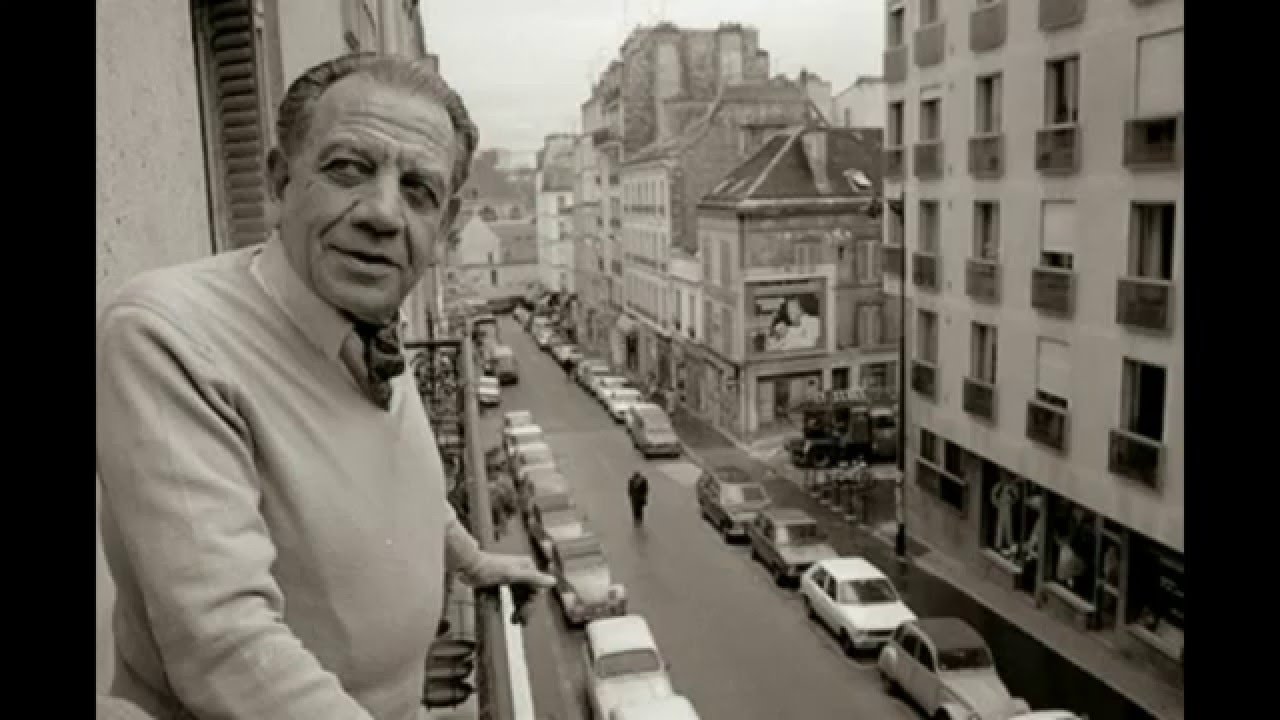
Let me just give a brief biography, and as we will discuss, there are really no great biographies on Rav Hutner. That is extremely deliberate. Rav Hutner was born in 1906 and he died in 1980. He was born in Warsaw, and he was educated in the yeshiva of Slabodka, where he became a close student of someone who is known as the Alter of Slabodka, who was one of the great pedagogues of modern Jewish history.
So many of the contemporary Roshei Yeshiva, the leaders of the yeshiva movement, particularly in the United States, were students of the Alter of Slabodka, and Rav Hutner was unique in really developing the pedagogy of the Alter of Slabodka, his focus on cultivating greatness, on cultivating the individuality of his students. And when the Slabodka yeshiva moved to Chevron in Israel, Rav Hutner moved along with them. And then in the 1930s, he moved to the United States of America, where he taught in Yeshivas Rabbeinu Chaim Berlin in Brooklyn, a yeshiva that still stands. It’s right near Pomegranate, if you’ve ever been there.
Delicious, delicious supermarket. And Chaim Berlin is an incredible, incredible yeshiva that has been going on for nearly, has it been a century? Perhaps it has been, I am not exactly sure. Rav Hutner‘s writings are collected in a multi-volume work called Pachad Yitzchak, The Awe of Isaac. And they are of the most celebrated works of modern Jewish thought.
These are thoroughly modern works, not because they are written in the modern vernacular, they’re written in a very flowery, poetic Hebrew, but because the issues, as we will discuss on this podcast, really are the issues of modernity. How do we cultivate authenticity in our religious life? How do we cultivate individuality in our religious life? How do we take the system of Yiddishkeit, of Jewish thought, of Judaism, of Jewish life, and integrate it into this modern world? One traumatic episode in Rav Hutner‘s life was that in 1970, he was on an airplane that was hijacked in an event known as Black September. He was actually on his way back to the States. He was supposed to be the mesader kiddushin to officiate the wedding of my brother-in-law’s parents, Faye and Stanley.
I don’t believe he made it in time to officiate at that wedding, which was in September of 1970, I believe. And instead, he was held hostage, and that entire ordeal has actually been discussed by one of the people who were taken. hostage named David Raab who wrote a book called Terror in Black September: The First Eyewitness Account of the Infamous 1970 Hijackings, and he does kind of describe his firsthand, he was younger, of what it was like being one of the hostages along with Rav Hutner. And that played a very serious role in his life.
He actually had a completed manuscript of one of the volumes of Pachad Yitzchak. Pachad Yitzchak is arranged based on the Jewish holidays. So there’s one on Pesach, there’s one on Purim, there’s one on Chanukah, there’s one on Sukis, and the manuscript for Pachad Yitzchak on Shavuos was actually lost during the hijacking and had to be rewritten from scratch, which is why the introduction to Pachad Yitzchak on Shavuos has this very moving essay. It’s not even an essay, it’s like a little longer than a paragraph, where he talks about the value, the religious significance of tears of joy, of why there’s a special quality of why when we cry from tears of joy, it is usually because buried within those tears are the pain and the difficulty of the suffering that we finally have went through to finally achieve some redemption and some resolution.
And that is what he so beautifully writes about the value of tears of joy. Towards the end of his life, Rav Hutner opened up a yeshiva, a kollel in Israel, known as Yeshivas Pachad Yitzchak, which is in Har Nof on Rechov HaKablan. That is the name of the street. I happen to know the name of the street and the yeshiva quite well because my sister Ilana lived for many years right across the street from Yeshivas Pachad Yitzchak.
Rav Hutner’s ideas and his legacy have a very personal place in my own life, which is why I wanted an entire episode to really focus on his thought, his approach to Jewish life. There were two teachers who primarily introduced me to the work of Rav Hutner. The first was my Rebbi in Yeshiva, Yeshiva Shalavim, somebody named Rav Ari Waxman, who’s the mashgiach in Yeshiva Shalavim. He would give on Monday nights a class in Pachad Yitzchak that I would attend fairly religiously, and what moved me about those classes was really the creativity of Rav Hutner’s thought and how he invited almost the people studying his Torah to participate in that creativity, to ask incisive questions about Jewish life, about Jewish law, to see how a question can open up an approach that creates depth, that creates meaning for the entirety of your life.
And I really have incredibly moving memories of those Monday night classes with Rav Waxman. After studying in Yeshiva Shalavim and I studied also for a few years in Ner Yisroel, I wasn’t going to mention him, but I do need to mention someone in particular, is that while I was in Ner Yisroel, I studied Pachad Yitzchak on Purim, and in the back of Pachad Yitzchak, his notes, his ideas on Purim, there are a bunch of essays that are in Yiddish, which longtime listeners to this podcast know, I do not really speak a lick of Yiddish. And there are so many incredible ideas in the back there, and my dear friend Yitzi Bloch in Ner Yisroel, who was a kid my age who just so happened to both read and write a fluent Yiddish, sat with me and went through one by one every single one of the essays of Rav Hutner on Purim, and I filled in like the nekudos so I would be able to read it. And I really am quite indebted to Yitzi Bloch, whose phenomenal Yiddish opened up the world of Pachad Yitzchak on Purim to me.
And then finally, when I was in Yeshiva University, I really studied with a student of Rav Yitzchak Hutner, not someone who learned with him in Yeshivas Chaim Berlin, but somebody who the figure of Rav Hutner, you could still feel it echoing within his soul. And that is my teacher and professor, Rabbi Dr. Yaakov Elman of blessed memory, someone who studied for many years independently with Rav Hutner. He himself was a massive, massive scholar. He would finish the Talmud every single year, yearly.
He would learn seven and a half pages a day, taught at Harvard, he taught at Yeshiva University. I studied Rav Tzadok with him, but he was really first and foremost a student of Rav Hutner. I remember him telling me, which is a wild thing to hear an academic say. This is a person who was really in academia.
He was deeply moved from his yeshiva years and he was very connected to Torah in the traditional sense, but this was an academic. And I remember he one time told me, he said, I believed with emuna shleima, I believe with a full heart that Rav Hutner had ruach hakodesh, that he had this divine insight in how he would see the world and understand people. And I was pretty taken aback when he said that. He was not known for hyperbole.
This is an academic, someone who published in academic journals and taught in all the Ivy Leagues, and yet, his experience with Rav Hutner left him saying to me, and I heard it with my own. years, I believe b’emunah shleimah. I believe with the fullness of my heart that Rav Hutner had ruach hakodesh. He had this divine insight.
I don’t think he was saying that Rav Hutner could predict the future or that he was a prophet. He was saying the way that he understood people, the way that he saw through people, the ideas that he said and his ability to uplift was really quite divinely inspired. And before we get to today’s interview, which I am so excited about, I wanted to kind of just try to share, because I haven’t even attempted yet, what is it about Rav Hutner’s thought that really drew me in so deeply and became so formative to the way that I approach Yiddishkeit, Judaism, Jewish life and Jewish practice. And I think my real love for Rav Hutner was nurtured not through his essays and his more typical writing, but actually through his letters.
After Rav Hutner died, a year after he died, I believe in 1981, his collected letters, his correspondence with students, with peers, with teachers, were collected and published as a volume of what’s known as Igros, which is correspondence. It’s the Hebrew word for correspondence, and they were collected in a volume called Pachad Yitzchak, like all of his other works. And this is the Pachad Yitzchak that contains his Igros, his letters, his correspondence. And he has a few letters in there that I think really highlight the work that we are trying to do through 18Forty.
Some of them are quite famous, but they really are worthwhile to go through one by one. I actually wrote an article a while back called “Letters of Love and Rebuke from Rav Yitzchak Hutner” for Tablet Magazine. And what it is, essentially, it’s my own essay, but I went through all of Rav Hutner’s letters and kind of highlighted the way that he gave religious guidance to this emerging modern world. And you see how sensitive he was to the struggles of his students.
And I think in many ways, you know, we don’t have the religious guidance of Rav Tzadok. We don’t have the religious guidance of a lot of the leaders who have influenced me personally. Rav Tzadok, Izhbitz, the Rebbe of Rav Tzadok. And I think that the only window through which we can even imagine or get a glimpse of how these major giants of Jewish thought and Jewish life would have given guidance to others is through the window of Rav Hutner’s writings.
Rav Hutner’s correspondence deals with the real world applied theology of, how do you give guidance to a student who’s struggling, who’s having difficulty, who their Torah learning, their religious life feels empty, feels hypocritical, feels broken. And so many of his letters deal with that. One of his most famous letters is the 94th letter, where he deals with a student who feels that they are living a double life. They feel hypocritical.
I am one part of the day in Yeshiva and the rest of my day I am involved in worldly matters. I don’t know how to balance these two worlds together. This is a very modern and contemporary problem of how we allow our religious life and religious dedication to inform the rest of our life. And Rav Hutner says something incredibly beautiful.
He says, there is a difference between somebody who, you know, he lives a double life. He’s got one room, you know, in his house, and then he takes out a room in a motel to do all of his depraved behavior. That person is living a double life. That person is a hypocrite.
But that is not what the vision of Jewish life is supposed to be. We don’t ask you to live a double life, that you’re religious in one part of your life and secular in another. We ask, and he writes this in English in the letters, which is so beautiful, we’re not asking you to have two different houses. What we are asking is that you have multiple rooms of your life.
And he writes, a broad life, not a double life. And it was Rav Hutner who had this vision of a modern Jewish life that is deeply, deeply rooted in tradition, in Jewish thought, in Jewish life, in Jewish practice. But because the roots are so deep, they’re able to nourish the entirety of our lives. Rav Hutner draws upon the language of the Talmud in the second chapter of Brachos, where the Talmud says that when you say Shema, Shema Yisrael Hashem Elokeinu Hashem Echad, if you’ve ever noticed in shul or in synagogue, when someone is saying this, some people have a custom to instead of saying echad, Hashem Elokeinu Hashem Echad, God is one, instead, they draw out the word echad.
They say echad. Why are they doing that? So the Talmud says you should draw out the last word echad so it sounds a little bit longer. The language of the Gemara of the Talmud is that kol hama’arich b’echad, whoever lengthens out the word echad in that first line of Shema, we lengthen out his days and life. And Rav Hutner says, what is this referring to? The entire idea is to stretch out, to broaden the oneness in our life.
What does the Talmud mean when it says that we should lengthen the word echad, meaning one, meaning unity in that first line of Shema? We need to broaden what our unity includes. we need to live lives of an all-encompassing cohesive unity that there’s no aspect of our lives that is not in dialogue with that all-encompassing unity of purpose, of mission, with life itself. As I mentioned, Rav Hutner does not really have any great biographies. Probably the closest thing to recommend to a really good biography on Rav Hutner is the classic work by Hillel Goldberg called Between Berlin and Slabodka, which is about these very important transitional figures from Eastern Europe who then rebuilt Jewish life here in the United States of America.
He has a chapter on Rav Hutner which is brilliantly written and an excellent overview if you’re looking for a few pages. And it’s a great book anyways. He also has a section on Rabbi Soloveitchik, and Abraham Joshua Heschel, and Harry Wolfson, and Rav Yisrael Salanter. It’s really, really excellent and worth reading.
If you notice, you know, Artscroll, who does these wonderful biographies on all of the Jewish leaders of previous years, they have on Rav Moshe Feinstein and Rav Yaakov Kamenetsky, many of the great leaders, post-World War II leaders who kind of rebuilt Jewish life following the Holocaust. And I’ve always found it interesting, there is no biography on Rav Hutner and those who study his works understand that that is really because Rav Hutner himself quite vocally criticized the cottage industry of rabbinic biographies that kind of go over the top with these hagiographic tales, hagiography. That’s a fancy word for kind of like the saintly tales that we tell about Jewish leaders. And he has a really famous letter.
It is incredibly beautiful and poetic and that is letter 128 in the collected writings of Rav Hutner. It has been translated quite beautifully by somebody named Rabbi Bamberger who has a volume that collects a lot of the correspondence of Jewish leaders. It’s called Great Jewish Letters. It’s actually published by Artscroll.
He has a beautiful translation of this letter, but I do want to kind of emphasize that you cannot capture Rav Hutner in translation. Rav Hutner has a very flowery, very beautiful Hebrew, a very poetic Hebrew, that if you have the ability, even if you have to kind of break your teeth over it like I did with Yitzy Bloch over the Yiddish essays, it is worth doing in the original Hebrew. But I will read a translation from this 128th letter. And the reason why is because it’s a very powerful, very moving letter that was clearly sent to a yeshiva student who is struggling.
We don’t know what he was struggling with, but anybody who has studied in yeshiva or seminary who kind of has religious ambitions and knows what that world is like where you look up and say, I want my religious life to be meaningful, to be nourishing, to be substantive, and then you look at the kind of circumstances of your life and it’s anything but that. And Rav Hutner responds to this student and it is so beautiful and I want to read a little bit from that letter. He says, everyone is awed at the purity of speech of the Chofetz Chaim, a righteous Jewish leader from a generation before Rav Hutner, who was known for his works on the importance of speaking positively and not speaking negatively. So Rav Hutner writes, everyone is awed at the purity of speech of the Chofetz Chaim, considering it a miraculous phenomenon.
But who knows of the battles, the struggles and obstacles, the slumps and regressions that the Chofetz Chaim himself encountered in his war with the yetzer hara, with his evil inclination. There are many such examples to which a discerning individual such as yourself, he’s talking to a student, can certainly apply the rule. What he’s saying is don’t believe the stories of, you know, you’re kind of born from the womb, you’re super righteous and then boom, you know, a great genius and becomes the next Jewish leader. That is not how Jewish leadership is formed.
And then he quotes, and this is probably the most famous part of the letter, he quotes from a verse in Proverbs in Mishlei that says, sheva yipol tzaddik v’kam. A righteous person falls seven times and rises again. And Rav Hutner writes as follows, fools, fools believe that this verse, that a righteous man falls seven times and then rises, fools think that the intent of this verse is to tell you how great that despite falling seven times, even though he fell seven times, at the end of the day, he got up again, so, you know, it shows you that that’s the greatness of this person. Rav Hutner says that’s absolutely wrong.
It’s not telling you despite the fact that he fell seven times. Says Rav Hutner, that wise people understand the hidden intent of this verse, that the very nature of the rising up again of the righteous, the very nature of their ability to get up once more is through falling seven times. That it is through the process of failure, through the process of struggle, through that cauldron of crisis of difficulty that we have in our lives, religiously, spiritually, theologically, professionally, romantically. It is through those points of difficulty that we cultivate the strength and resilience to get up again.
It’s not, okay, he fell seven times but. thank God he got up the last time. No, no, no, no, no. That’s not it, says Rav Hutner.
It is through falling seven times, it is through contending with difficulty and struggle, it is through that entire story that greatness, that character is forged. I’ll kind of end with a story that I heard. I’ve never seen this source. It’s a story that I heard about Rav Hutner that I’ve always loved, that Rav Hutner was one time in his early years was learning in Slabodka Yeshiva and he was learning by himself.
And the Alter of Slabodka, who was the leader of the yeshiva, walked up to Rav Hutner and he said, I don’t get it. How come you don’t have a study partner? Where is your chavrusa? What’s known as a study partner. And Rav Hutner looked at the Alter of Slabodka and said, no, I don’t have a study partner. Instead, I’m learning with my yeitzer hara.
I’m learning with my evil inclination. We’re learning, that’s my study partner. So the Alter kind of smirked and said, why don’t you at least study with your yeitzer tov? At least your study partner should be your good inclination. So Rav Hutner responded in his classic one-liner, he said, you can always rely on your yeitzer hara to show up to yeshiva on time.
You can always rely on your evil inclination, it’s gonna get here on time. You know, your good inclination, you know, sometimes it takes a while for him to wake up and, you know, motivate you. But your evil inclination that’s trying to get you, he’s there right in the morning. From 9:00 a.m., he’s there to study with.
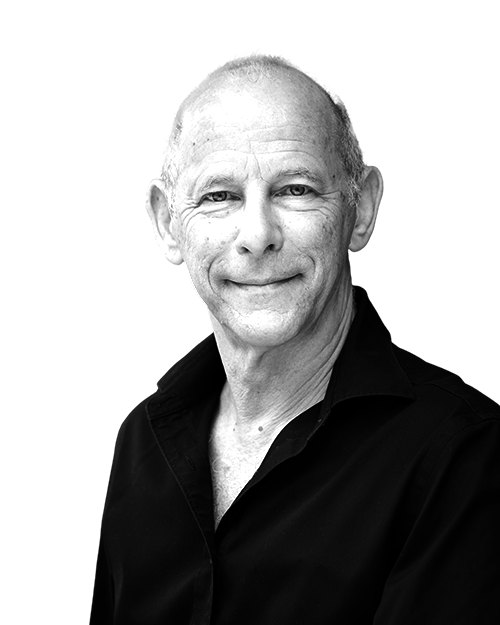
And this idea of using your yeitzer hara, using the struggles, the difficulty, the more difficult times, those times of absence and distance, and using that as a study partner to forge your own character, your own uniqueness, to build a bridge between worlds, I think is everything that Rav Hutner represents. It is that broad life perspective of developing a life of such unity that is able to encompass even the most difficult parts of our lives, to realize that even the struggles and the suffering that we endure is very much a part of the process of cultivating greatness. And that is why I am so excited about today’s very unique episode where we are going to explore the unique Jewish thought of Rav Hutner with our guest today, Alon Shalev. Alon Shalev, I discovered some time ago when he first published his PhD, which was in the writings of Rav Hutner.
It is called “Major Themes in the Biography and Thought of Rabbi Isaac Hutner,” which was a PhD that Alon Shalev completed under the supervision of Professor Jonathan Meyer, who’s a fantastic scholar of Jewish thought at Ben-Gurion University. And Alon Shalev, whose fantastic PhD, he later published it as a book called Rabbi Yitzchak Hutner’s Theology of Meaning, which is absolutely incredible. Unfortunately, the book is quite expensive, but if you go to the publisher’s website, it is published by Brill, there is a discount that I believe is available right now to get it at least half off. I’ve read a lot of stuff on Rav Hutner, secondary literature.
I thought this was absolutely phenomenal in the way that he weaves together a very deep, careful read of Rav Hutner’s life and legacy and how his very life experiences really shaped his approach to Jewish thought and developing this broad life. So without further ado, it is my absolute privilege and pleasure to introduce our conversation with Alon Shalev about the life and legacy of Rav Yitzchak Hutner. So we were in touch really when your book just came out. I devoured the book.
I actually don’t even have it with me because I lent it to my father, one of the handful of people that I do lend out books to. I normally don’t lend out books. I don’t lend out svorim, but your book is, it’s a little bit pricey, but there are some sales that go on. But I wanted to begin with your book, which is an examination of the thought of Rav Yitzchak Hutner.
And I wanted to begin with kind of the central question that you place at the heart of Rav Hutner, which is how do we find and build meaning in our temporal lives? Life is short. How do we find meaning within this blip of existence that is our lives? And I wanted to hear from you, number one, why did you center this as kind of a lynchpin, central question of Rav Hutner? And I wanted for you to kind of explain Rav Hutner’s approach and his influences for how we actually find and build meaning within our lives.
Alon Shalev: Most if not all scholars and thinkers who have picked up Pachad Yitzchak sort of intuitively placed him as what you might refer to as an existentialist thinker.
I called it a post-existentialist thinker in my book for all sorts of reasons that perhaps we can speak about later. But there seems to be a very apparent sort of either undercurrent or very clear current of this sort of existential bend in his thought, revolving around questions that have to do with the meaning of life, with the human personal freedom and agency, sometimes very explicit expressions. which have to do with what we call angst, the fear of death or fear of nothingness, which again associated with these sort of questions of meaning, and that was also my impression when I first encountered Pachad Yitzchak as a nineteen-year-old in yeshiva, and one of the tasks that I set myself when I started my academic study of Pachad Yitzchak is to see if I could substantiate this because the term existentialist is thrown around very easily.
David Bashevkin: Everybody has a stage, for me it was in high school where you stumble upon existentialism, you feel like, oh, this resonates, it’s a cool sounding name, it sounds like it could be the name of a rock band, The Existentialists. My question is before we even get to Rav Hutner, paint the background. What does it mean to be an existentialist? And then we can maybe explore what I’m talking about Rav Hutner’s specific approach. Help me understand, what does it mean to be an existentialist?
Alon Shalev: This is academically a very fraught question. As early as Jean-Paul Sartre, who is considered perhaps one of the founders of existentialism, he already complains in his foundational work, Existentialism Is a Humanism, already complains that the term existentialist is thrown around so easy that it’s become hardly applicable.
But we can talk about a sort of broad set of questions or issues that people we would consider existentialists return to again and again. One is this problem of temporality, the fear of death or the fear of nothingness, this sort of fear of not knowing what to do with your life, this sort of angst. Second is a very strong emphasis on the issue of freedom, human agency, the power of choice, the fact that people are free and obligated by this freedom to determine what their life looks like. A third would be a very strong emphasis on ethics, right? This sort of philosophical interest on how people should act and behave.
And fourth and most importantly, and this is what distinguishes the existentialists from all sorts of previous strains of philosophy and culture which dealt with this issue of perhaps the meaning of life, is the very strong tie between meaning and what will become known as authenticity. As sort of living or fulfilling the unique, very particular instance of humanity that you are. So that having meaning in your life is very essentially tied to this uniqueness you have as a person and living your life as only you can.
David Bashevkin: To find a mission and to find the purpose for your own life. What really fascinates me about Rav Hutner’s kind of exploration of existentialism, and maybe you might need to paint some of the background and the history. I said we’ll get to it later. But why wasn’t Rav Hutner satisfied with a more classical approach to Judaism? The purpose of this world is to perform the mitzvos, to study Torah, and we get reward for our performance in the next world. It’s like an open-shut case.
Why do you think that was insufficient for Rav Hutner as an explicator of Jewish thought and Jewish life and Jewish practice? Why even search for a new articulation? What was wrong with the old classical approach? The purpose of your life is to fulfill the commandments of God, to study his Torah, and you get reward for it in the next world. Rav Hutner has a much more complex approach. What do you think drew him to that complexity?
Alon Shalev: So I think it is precisely the last point I spoke about when trying to give this sort of working definition of existentialism. The point of authenticity, uniqueness, and individualism.
Rav Hutner was a very, very stark individualist. I tried to demonstrate this in my book with various excerpts from his personal writing, some poetry that he wrote, and some letters that he penned. But you can see this in his behavior across many different areas and, you know, the way people describe him and speak about him as well. He was a very stark individualist.
He craved self-expression. He was very, very resistant, and this is interesting in the Orthodox and the Chareidi context, very, very resistant to what he called a chotam kavua, which I translated as an indelible seal, right? This sort of ideological stance that is cookie-cutter, one-size-fits-all. He was very, on an emotional level, unable to conform so absolutely to a system which didn’t allow for any sort of personal expression. And it was very urgent for him to manage to find this sort of personal expression and self-fulfillment within Orthodox Judaism and not as a bonus, as a nice to have, not as a, perhaps in Jewish parlance you could say a midat chasidut.
He wanted to find this as a fundamental, elemental component or the main component of avodat Hashem, of the worship of God. And this, he did not find in the sort of classical Jewish conception that you described.
David Bashevkin: It’s so interesting because we take it for granted because so much of the way in which we look at Judaism is filtered through our own experience and through all of the works that have come before us, and it could sometimes be hard to step into the shoes of somebody living in the early 1900s. What is the philosophical world? We’re looking through the lens of an established Yeshiva world, of an established Orthodox world.
And Rav Hutner was not in that world. We couldn’t talk about the established Yeshiva world in the early 1900s. It wasn’t the same cultural force that it is now. What do you think are the experiences that contributed to his urgency in situating and centering individualism, in centering self-expression at the heart of the Jewish project? That’s a very radical idea.
If you would have told me I’m an Orthodox Jew and I really feel like I need self-expression, so normally we say it’s two different buckets. You got to follow Halakha and then once you have that set up, there’s a little wiggle room. In your spare time pick up, play a guitar, do some music. Rav Hutner merged the two.
Where do you think that urgency of the world he was looking at of why the need for self-expression is different in Rav Hutner’s eyes, is different in this moment in Jewish time than it was 200 years prior?
Alon Shalev: It’s worth pointing out that this is very much what you might call the zeitgeist, right, the spirit of the time amongst the world and Europe in general. Rav Hutner’s formative years are between the two World Wars. And the time between the two World Wars is very troubled in Europe and also one of the most fascinating eras in human history and in Jewish history. What you were saying about the Yeshiva world is 100% true.
In between the two World Wars, you can find within Orthodoxy and the Yeshiva world all sorts of incredible differences and flavors, this huge sort of bubbling pot where you find Kabbalist communists and you find Orthodox radicals. And this bend towards existential feelings or tendencies and personal self-expression is not unique to Rav Hutner during this time, right? You can think about somebody like Avraham Eliahu Kaplan, who was also a graduate of Slobodka like Rav Hutner and for a short while was the head of the Rabbinical Seminary in Berlin. He died at a very young age. You look through his writings, you find these sorts of expressions.
David Bashevkin: Take me to the way other philosophers, primarily Heidegger who you spend a great deal of time on, how were they approaching the central existential problem? How do we find meaning? What was the solution that Rav Hutner was looking and exposed to that other thinkers were offering? How do we find meaning? Our life is on a good day a hundred years long, and then we die, and how do we make our life meaningful, authentic, real, mission-driven, purpose-driven?
Alon Shalev: Perhaps we’ll take Rav Hutner’s writings as a point and then that will help us work into the comparison. So there’s two passages in Rav Hutner in Pachad Yitzchak for Shavuot, which are really key passages for sort of detecting the existential sort of theme in Rav Hutner. It’s the places where they’re most obvious. And that’s where he talks about the Mishna of ha’adam nivra yechidi, right? Man was created singular.
And on account of that, every person must say bishvili nivra olam, the world was created for me. That is in fact the subtitle that I chose for the book as a sort of like emblematic principle that Rav Hutner clung to. And in these two passages, in each one he explains why it is difficult for a person to believe that the world was created for himself. And the first one he mentioned is death, right? The fact of death makes it very difficult for you to believe that the world was created for you because you die and the world persists, right? So that is one problem.
The second problem that he says on account of this, it is impossible to believe that bishvili nivra olam, the world was created for me, is the fact that there are millions and billions of other people just like me, right? How could the world have been created for me? It might as well have been created for all these other people or some of those people and not me, right? So according to Rav Hutner, to maintain this belief, this attitude that the world was created for me, you need to have two things. You need to have some sort of horizon of eternal life which overcomes death, and some sort of horizon of uniqueness which makes you stand out from all other human beings in a way that can demonstrate that without you the world is missing something significant, right? The world needs to be created also, at least also for you. Now, what we find in the existentialist thinkers that Rav Hutner engages in, basically, and here I’m speaking predominantly on the secular existentialists which were to a degree more influential, and as far as I can tell, Rav Hutner would have been more aware of, which are Heidegger and Sartre, but mostly Heidegger, they basically abandoned the concept of eternal life. Again, they take an atheist perspective.
They don’t believe there’s any sort of overcoming of death. They do think that any sort of attempt at thinking about or believing in eternal life is basically just a way to close your eyes to the bleak reality, and they put all their stock on this concept of uniqueness, of individuality. Your life is meaningful to the extent that you yourself generate this meaning from within yourself. This is the world that Rav Hutner is sort of speaking to, speaking against, and a major part of his project is to reintroduce a Jewish theology, a kind that does allow for a horizon for eternal life.
But what he tries to do, very valiantly, and different thinkers and critics and philosophers can discuss whether or not he does this sufficiently well, he wants to somehow maintain this idea of eternal life without it being shutting your eyes to the harsh realities of this world, especially in Heidegger. For Heidegger, the fact of death is that which propels you to live authentically.
David Bashevkin: Explain this point. This is a fascinating point, where Heidegger basically posits, and you’ll explain it I think in clearer language, that the only place to be unique is how you die.
Alon Shalev: That is not entirely accurate. The argument is slightly different. You can be unique in all sorts of ways, but human natural tendency is to flee, is to run away, escape from authenticity and their responsibility and to sort of live as part of the masses. Right, I just do what everybody else does.
David Bashevkin: Because that’s comforting. That’s how we cope.
Alon Shalev: That’s comforting, that’s easy, and that allows you to push all sorts of problematic questions out of your mind, and especially the fact of death. Now, death is the one event in which you cannot just simply be part of the masses.
Right, this is Heidegger’s idea. You cannot die inauthentically. You cannot die imitating how other people die. Nobody can stand in for you in your death in the same way that in all sorts of social behaviors we can stand in for each other.
Right, all this sort of like mindless mass of people which just imitate what everybody else does, then you know, we’re all interchangeable in practically every situation except for the situation of death. So when a person looks at death, doesn’t turn away from the fact of death yelling, but looks at it squarely, according to Heidegger, then you will see two things. One, you will see the fact that you will end, that you are temporary. This is terrifying, but also lends a certain sense of urgency about what you might be doing with your life while it’s still here.
And the second thing you see is a definite instance of authenticity. Death proves the possibility, or even the necessity of authenticity. There is at least one moment in your life which you will experience and live, die, the way only you can. This, in Heidegger, should inspire you to try and live as many other moments as possible, if not all moments, in the same type of authenticity.
Shun the masses, never copy other people in the way you do stuff, but rather try to live every situation, every activity, every instance, moment of your life in this sort of authentic way as only you can.
David Bashevkin: He calls this being unto death.
Alon Shalev: Correct. That is the term.
David Bashevkin: Where your present being is in almost dialogue, is through the window, through the prism of your own mortality.
Alon Shalev: This idea of death should be present explicitly or implicitly in everything you do. All the time you are being towards your death, with your death in mind. This is why the idea of resurrection or eternal life for Heidegger, other than the fact that he believes this to be false because of the lack of religious convictions. Side note, there’s a whole lot of academic discussions about Heidegger and his religious convictions.
Though a lot of his secular philosophy secularizes a lot of religious terminology and there’s a lot of back and forth, but we’ll take him at face value at the moment.
David Bashevkin: And we should also mention that there was some controversy because of his affiliation with the Nazi party, so there’s some controversy there.
And for those who are interested in reading more, Elliot Wolfson recently wrote a book about Heidegger and Kabbalah and whether or not they can be synthesized. It’s fascinating stuff, but I want you to continue exactly on this line because I found this notion so powerful, the idea of being unto death and specifically how Rav Hutner kind of reformulates this. Rav Hutner obviously takes issue with the fact that Heidegger’s philosophy does not have an afterlife. And I could also imagine how Heidegger’s philosophy would be difficult to integrate and import into an Orthodox setting because we have very clear rules and regulations of where we’re supposed to find meaning.
So, explain how Rav Hutner kind of builds upon, changes, and develops this idea of Heidegger of being unto death, of keeping mortality front and center in your own life for the purpose of of meaningfulness, for the purpose of finding meaning. It’s almost like a reformulation of Heidegger reformulated YOLO. YOLO, kids say you only live once. So they use that to justify be reckless, be crazy, jump off the Empire State Building with a parachute, see what happens.
Heidegger kind of reformulates YOLO as you only live once, live deliberately, authentically, intentionally. What does Rav Hutner do with this idea?
Alon Shalev: As you mentioned Elliot Wolfson, first I will mention that Elliot Wolfson wrote a few very interesting articles on Rav Hutner which are worth looking at. For those interested in the issue of Jewish attitudes towards Heidegger, I might recommend another book by Daniel Hershkovitz called Heidegger and his Jewish reception, and there you will find all sorts of interesting instances of Jewish thinkers grappling with Heidegger’s thought and his Nazi background amongst other things.
But back to our topic.
So for Heidegger, this idea of resurrection or eternal life basically destroys authenticity, right? It relieves you from the urgency to have to, you know, live your life authentically because, you know, you can put it off, because there’s an eternal horizon in front of you. It allows you to turn away from death and it also shifts the emphasis from this life to another life, right? This life, I should spend my time making sure that I live again eternally. You know, when I live eternally, then I will live truly or authentically or whichever way I might happen to live, but this is a classic sort of secular critique of religion that religion sort of turns people away from this life and makes them discount this life and live for another life which, of course, from a secular perspective will never come. So Rav Hutner is left with this challenge.
How do I maintain eternal life without destroying the significance or the way that death functions within this sort of Heideggerian framework? This is something which I delve into in the seventh chapter of my book, but the short answer will have to be by tying authenticity, Rav Hutner will basically ties authenticity to the possibility of resurrection and the next life. And in that sense, if you don’t live authentically, your death becomes final. Death continues to function as this instigator of, you know, your death, the first death, right, is necessarily of the first life is necessarily coming. And if you do not live authentically, in light of the fact that you are about to die, you will not be resurrected.
And Rav Hutner does this by, it’s quite elaborate, but he ends up tying the way you earn your entry into resurrection, into Olam HaBa, to the degree that you lived authentically. This has to do with the very interesting and somewhat radical way he reinvisions, reconceptualizes the idea of Torah andwhat limud Torah is. Perhaps we can touch on that.
David Bashevkin: What is that reconceptualization of Torah that you found in Rav Hutner?
Alon Shalev: I’ll pivot to the second issue that you raised and with that we can tie back into the issue of how a person gains Olam HaBa through being authentic.
So as you mentioned, within an Orthodox framework, this idea of authenticity doesn’t seem to gel very well. We have halakha which prescribes how we must behave. Supposedly we have all sorts of ikarei emunah, principles of faith, which prescribe what we must think and believe and what sort of goals we should have in our life. And all this sort of flies in the face of authenticity and these existentialist tendencies.
What Rav Hutner does is that he expands, enhances, and prioritizes the two potential areas within Jewish Orthodox life where authenticity, self-expression, uniqueness has a purchase. Those two areas are limud Torah, right, the study of Torah. The study of Torah is a place where a person can have this sort of self-expression. And this ties in well to the sort of idea in the yeshiva world of the importance of the khidush, right, the novelty, right? The good student, the proper student, right, the highest caliber student in the yeshiva world, interestingly enough, is not necessarily the one which is most diligent or hardworking, but if you can have a khidush, if you can discover some sort of novelty, your own Torah in the yeshiva world, that is really respected.
Rav Hutner takes this and he elevates this, again, not to some sort of bonus, not to some sort of, oh, you get extra marks for bringing a khidush. He really leans into the idea that your limud Torah is only worth as much as it has this sort of novelty and khidush. As in, your limud Torah is measured by the degree that it is an expression of your own unique limud Torah, right? So in the realm of limud Torah, already within Orthodoxy, we have this place for self-expression. Rav Hutner latches on to this place and makes this into the ikar, this is the main idea, this is what limud Torah is supposed to be.
If you’re not being novel, if you’re not finding self-expression, then you are failing to an extent at limud Torah. That is the one realm. The second realm, here there is perhaps even more radical element of Rav Hutner’s thought, has to do with what in the Jewish tradition we call divrei hareshut, right, which we could translate as elective acts. Like many translated terms from Jewish language, there’s something clumsy about that, right? But basically, as expansive as halakha is, it does not cover every instance in a person’s life.
Not every instance in their day-to-day activity, and also not all sorts of issues which to a degree are sometimes the most important decisions a person makes: their profession, right, the way they spend most of their days, where they live, the kind of settings that they find themselves in in their day-to-day lives, which along the way, you will encounter halakhic issues, right? So you’ll be living your life and then you need to eat, you have to say a bracha, you have to say Birkat Hamazon, the blessings before and after meals and so on and so forth. But at the end, the profession you choose, the office you go to, the way you live through all your, let’s say, mundane areas of life, these are not governed by halakha, these are areas where you need to decide for yourself how you are going to act. Now we have a concept in Jewish thought, in Jewish tradition of asiyat divrei hareshut leshem shamayim, doing your elective acts for the sake of heaven. And this is sometimes posed as a challenge or extra piety where you try and find the ways that even the most mundane acts you do, in your livelihood, in your treatment of others, in your projects, hobbies, and so on and so forth, you try and somehow integrate this into your worship of God and to find a way to fulfill God’s will, right, while doing this.
Rav Hutner, through a remarkable series of arguments, basically situates elective acts to a degree on a higher level or more centrality than actual mitzvot and halakha, and possibly almost on par with limud Torah, right? So just for context, in traditional Jewish thinking, you might argue that at the top of the hierarchy of norms, you would have halakha, keeping the mitzvot, and then perhaps you would have limud Torah, and after that you would have divrei hareshut, which is elective acts.
David Bashevkin: What you do in your spare time.
Alon Shalev: What you do in your spare time. You could argue that within the modern phenomena of Orthodoxy in the Charedi world, right, there is a certain revolution where limud Torah becomes precedent even over mitzvot.
What Rav Hutner does is he takes the lower level, the elective acts, the really, you know, what you do in your spare time, this sort of extra, if you’re a super pious person, you put this into your Avodat Hashem as well, and he raises it over the mitzvot and almost puts it on par with limud Torah. This is a very unusual thing for a thinker in his sort of circles. You can find similar arguments or formulations in some Chasidic sects, some Chasidic thinkers, but also usually the more radical even within the Chasidim. You find in the Chasidim a lot of this sort of dealing with the idea of divrei reshut and how to do mundane acts leshem shamayim, but again, elevating it over mitzvot and putting it on par with limud Torah, that would be extreme even in Chasidic circles as well.
So by enhancing the self-expression possible in Torah, and by elevating and centralizing this idea of divrei reshut, which within at least the Orthodox Charedi world, really Rav Hutner stands out here, he is trying his hardest to emphasize uniqueness and the possibility of authenticity within a religious framework.
David Bashevkin: That was excellently said and this gets into kind of, you mentioned maybe the Chasidic influences. I would be remiss if I did not mention because we are on the 18Forty Podcast. 1840, as our listeners know, is named after the calendaric year which corresponds to Taf Reish on the Hebrew calendar, which is when the beginning of Izhbitz Chasidut began.
The Izhbitzer Rebbe, Rav Mordechai Yosef Leiner. I’ve done a lot of work on his student, Rav Tzadok. But it’s very interesting, within Rav Hutner’s lifetime, there was a professor named Stephen Schwarzschild who wrote an article essentially writing how one of Rav Hutner’s essays in Pachad Yitzchak could clearly be seen rooted in the work of the Mei Hashiloach of the Izhbitzer Rebbe, and Rav Hutner complimented it. That was in his lifetime, he said, you got me.
I think that Rav Hutner was deeply influenced from Izhbitz, though he never mentions them at all in his work, which Rav Hutner had a very interesting way of communicating influence. He didn’t quote the people necessarily who influenced him. He would quote to kind of give pedigree to his work, of show you who are the associations he wants you up front, and then he would kind of bury certain influences like Rav Tzadok, like Izhbitz, who he does not really quote in the body of any of his works. One thing that I’d like you to speak about is kind of the way that he presented influence.
Like you’ve mentioned Heidegger. What do we know about Heidegger’s actual influence on Rav Hutner? How do we discover that? Why do you think Rav Hutner was so reticent, was so hesitant to quote some of the more controversial chasidic thinkers that he had? Most notably he doesn’t quote Rav Kook, who he learned with personally and considered a Rebbe. Why is it that Rav Hutner was so careful not to center some of the more controversial thinkers in his work? Did he just want to make sure that it would be accepted within the Yeshiva world, which was kind of just emerging at the time? Did he have other reasons for why he would mask these influences?
Alon Shalev: I think that the simple answer is the true answer. His motivation in masking these influences is to make sure that his thought and that his leadership was viable within the community that he felt that he belonged to and that he wanted to influence, which was the chareidi community.
You are one hundred percent right about the influences of Izhbitzer, of Mei Hashiloach and of Rav Tzadok. There are also very strong influences of Chabad chasidism, Chabad thought, especially the early generations, Baal HaTanya and the Mitteler Rebbe, and all sorts of secular influences as well, which we mentioned. Rav Hutner is very particular never to quote anyone who isn’t already firmly established as part of the Litvish canon. So he will quote Maharal miPrag on end, and he will quote the Vilna Gaon, right? And he will quote Rav Yonah Gerondi, on Rambam obviously, and all sorts of well-established figures.
He will not quote chasidic figures, right? I think, you know, when we look in retrospect, this might seem strange to us. But in the times in which Rav Hutner is operating, right, the fissure between the Litaim, the misnagdim, right, the non-chasidic Jewish world and the chasidish Jewish world isn’t as well mended and welded as it is today, right? Nowadays you can walk into any Litvish yeshiva and find people studying chasidut in between bouts of Gemara. During Rav Hutner’s time, the fact that students in his yeshiva would pick up books of chasidut, sometimes under his encouragement, was unusual. If you look back to his own yeshiva in Slobodka, the Alter of Slobodka’s students praise him for having tolerated the fact that some of the students came from a chasidic background and would sometimes study some chasidic works, whilst around him in the yeshiva world this was frowned upon at best.
And Rav Hutner was throughout his lifetime a boundary-pushing person. His peers knew of his strong, sort of radical individualist tendencies. They knew of his sort of hush-hush on the side engagement with secular philosophy, with Chabad at the time where Chabad was very controversial in the early forties and fifties in America, and all sorts of other practices that were going on in his own yeshiva under his leadership at the time, which perhaps we can touch upon. Also, the mere fact that he tended to be more of a thinker than a talmudist or a halachist, right? A Rosh Yeshiva, a gadol, who spends most of his time in machshava and teaching machshava at the expense of an emphasis on Talmud and halacha was also unusual, right? He was always looked at askew.
So he felt, and I think rightfully so, that he had to be extra particular not to explicitly step out of line. This I think is the best explanation to why he censored all these sort of sources. He doesn’t mention these influences. This is also the main reason behind the fact, right, maybe we can get into this later if we have time about, you know, the history of how the books of Pachad Yitzchak came along.
But in a nutshell, Rav Hutner would give these sichot in his yeshiva, and then he would rework them into written essays, right? And most, the vast majority of Pachad Yitzchak was already ready in print in the late forties, early fifties, and Rav Hutner did not publish any of it until the sixties, until he was really well established as a gadol in American society, and my argument, only after the very strong and influential Rav Aharon Kotler passed away, only then did he actually publish the books of Pachad Yitzchak under his name. Beforehand they were very limited print booklets which were anonymous. They weren’t called Pachad Yitzchak, his name didn’t appear on it. At the bottom of each page, every single page, there was an admonition: This is for internal use only, only for students who were at class and wanted to do a chazarah on the material.
So, even in terms of publishing his works, after all the pains he went to to not cite any Chasidic sources, and as I tried to demonstrate in my book, all sorts of more radical trains of thought, to not state them explicitly, but rather embed them implicitly and let the reader sort of, you know, understand on his own accord. Even after all these measures, he still refused to publish his work until a later stage where he felt secure enough to do so.
David Bashevkin: It’s really interesting, after you published the book and I read it, I had reached out to you because I happened to have a little bit of a different theory, not to say that everything that you said I actually agree to, but the one thing that I would add and offer, I thought that the reason why he does not quote so explicitly and also the reason why he did not publish it for everyone explicitly and wrote this is only for the people who were present, I thought that was actually a nod to Izhbitz and Rav Tzadok, because Rav Tzadok does not quote his Rebbe explicitly, does not quote Rebbi Nachman explicitly in any of his works, though he clearly lets his readers know that he’s engaging with some of their ideas, and when they published the first works of the Mei Hashiloach, the grandson of the Rebbe of Izhbitz, known as Rav Gershon Henoch Leiner, he appended a warning saying this is only for people who were present during the lectures. I think that controversial Chasidic ideas need a lived community to help mediate and to help people understand how to apply them.
If you just read Izhbitz on your own, without dialogue of a lived Chasidic community, you know, a mymetic tradition to couple with a text-based tradition, I think you’ll float off the rails. It’s kind of the inverse of the argument that Dr. Haym Soloveitchik has made in Rupture and Reconstruction, a previous guest that we’ve had on 18Forty, who basically says, you know, you need a mimetic tradition and a text-based tradition to be in dialogue in Halacha or you’re going to become very right-wing. And I think in Chasidus, you need a mimetic tradition and a text-based tradition or otherwise you’re going to drift off and become a very kind of left-wing progressive because so many of the works are about individualism and about expressing yourself. So if you read them without mediated through a lived community, you’re going to drift off into the netherworlds of progressive, self-expression being the highest ordeal, the same way in Halacha, if you don’t have a mediating lived community, you’re going to live a very stunted, strict, you know, you’re not going to have a rhythm to your life.
I offer that, it doesn’t contradict at all with what you’re saying, but one thing I wanted to talk about are two specific teachers of Rav Hutner, one he had in his lifetime and one he never met but I think made a very deliberate effort to center him as one of his north stars. And that is Rav Hutner’s relationship to Rav Kook and to the Chazon Ish, Rav Avraham Yeshaya Karelitz. Let’s start with Rav Kook, who we mentioned, Rav Hutner learned with him, but the controversy that most people talk about as it relates to the relationship between Rav Kook and Rav Hutner is two things. Number one, the decision when Rav Hutner republished his work, Toras Nazir, which is on the laws of being a Nazirite, he originally included an approbation of Rav Kook and later on he took it out, or it was taken out.
That’s controversy number one, and controversy number two as it relates to Rav Kook, is reported that he used to have a picture of Rav Kook in his sukkah and then he took it down. So aside from, you know, the pedigree issues and being accepted into the Yeshiva world where Rav Kook as a Zionist figure was not as accepted, you actually had a very interesting suggestion that I had never thought of that related Rav Hutner’s reticence to associate with Rav Kook to his candidacy as chief rabbi to kind of create a distance. Help explain your theory of why Rav Hutner slowly drifted away from Rav Kook.
Alon Shalev: Rav Hutner’s relationship with Rav Kook was very significant.
I believe it may have been sometimes somewhat exaggerated. The main reason for me thinking this is that Rav Hutner’s relationship with Rav Kook basically begins and flourishes during the time where Rav Hutner is studying in the yeshiva in Chevron. Right? So Rav Hutner studied in the yeshiva in Slabodka, and then a year after the establishment of the branch in Chevron, we’re speaking the mid-1920s, he moves to the branch in Chevron, he becomes a very prominent student there. At the same time, Rav Hutner’s yeshiva is operating a Yeshiva HaMerkazit HaOlamit, the central world yeshiva, which will later become known as Merkaz HaRav, the center of the Rav after Rav Kook.
And one thing that Rav Hutner does not choose to do is to change is to move over to Rav Kook’s yeshiva as some students did, some students of Chevron did. Rav Hutner elects to stay in Hevron. He does have a consecutive relationship with Rav Kook in correspondence and in personal meetings. He went to Jerusalem ever so often to meet with Rav Kook and to study with him, but he refuses to sort of choose and make Rav Kook his rebbe.
This has to do with the individualistic tendency which I mentioned before already. This also has to do with some important differences of opinion, most importantly around Zionism and more importantly of Rav Hutner’s attitudes towards secularism. Rav Hutner is very intolerant of Zionism and secularism, a respectful intolerance. He appreciates the power and the pull of Zionism, and that is precisely why he opposes it.
He fears the possibility of Zionism and this sort of national aspirations becoming a locus of meaning for Jewish people together with, instead of, or above their commitment to Torah u’mitzvot. For this reason, he could never accept Rav Kook’s sort of basic train of thought. I also think that there’s something about Rav Kook’s ideas which flies against Rav Hutner’s individualism. There’s something Rousseau-like in Rav Kook in the sense that he sees beyond the people as they are to their true inner self, right? You have who you think you are, I am a secular Zionist ḥalutz, but I know that deep down inside you are something else, you are a neshamot de’tohu, a chaotic soul on a higher level, who’s only behaving the way they’re behaving because they want to counter the stagnant religion as it is now and help it improve.
There’s something sort of self-denying, as in denying the self-expression of others in this sort of attitude of Rav Kook, which I think that Rav Hutner would not sit well with him. This is all hypothesis because really, there is more work to be done for those scholars listening to us or interested about an in-depth comparison between Rav Hutner’s writings and Rav Kook’s writings, which I never did myself to sort of tease out these issues more.
David Bashevkin: But I think you’re absolutely right. There is the famous story that after Rav Kook’s controversial invocation at Hebrew University, which was controversial because there were concerns they were going to teach biblical criticism, having a big rabbi speak at the opening of a university was definitely something that was strange.
And Rav Hutner, there are a few different versions of this story that Eitam Henkin, Hashem yikom damo, did write about, but the basic version of the story is exactly what you said, that following Rav Kook’s invocation maybe a couple of months later or years later after they discovered they were going to be teaching biblical criticism, Rav Hutner has this brilliant line where he says about Rav Kook, he could see into someone’s shoresh of their neshama, the foundations of their soul, but that sometimes distracted him from looking at where their feet were actually planted. There’s a pragmatism to Rav Hutner’s mystical vision, which is you got to look, where’s the person actually standing? But I want you to also talk about Rav Hutner’s relationship with the Ḥazon Ish.
If I could just say one more thing about his relationship with Rav Kook, I think the one place where you see the influence the most is in his style of writing, is in his Hebrew.
Alon Shalev: A couple of things worth adding about that relationship.
I agree that you see the influence of Rav Kook in Rav Hutner’s style of writing, in his rich Hebrew and the poetic elements of it. You see Rav Kook’s influence in Rav Hutner’s merging of halakha and aggadah. Right, one of the most satisfying ma’amarim in Pachad Yitzchak is when he takes this very sort of dry, technical, halakhic issue or halakhic debate and he builds this whole beautiful, flourishing sort of Jewish philosophy over and above that. And that is something, in that sense, I think he’s really carrying a torch that Rav Kook tried to ignite, which is merging halakha and aggadah, connecting Jewish philosophy with Jewish practice.
I also think that Rav Hutner’s strong involvement and engagement with Maharal miPrag and Ramchal, which is one of the most curious figures in terms of Rav Hutner’s writings because Ramchal, as I argue, is very, very prevalent in his works and he is also one of the thinkers that Rav Hutner never quotes by name, which is very curious because by that point he would have been a very well-established person in the Orthodox canon. And in chapter eight of my book, I make a long argument about why I think he chooses to censor out Ramchal.
David Bashevkin: Could you just distill what that argument is for our listeners because I think it is important.
Alon Shalev: Basically, there is a fundamental dispute around the proper understanding of Kabbalah, specifically Lurianic Kabbalah, the Kabbalah of the Ari, which has to do to the degree to which the things described in Kabbalah, the sfirot, the partzufim, the different faces of divinity and how much these things are actual ontological, you know, existing spiritual elements, or if they are basically parables.
They symbolize something. But they don’t actually exist as is and really you should be looking to understand what they symbolize. Ramchal is very radical to the side of understanding Kabbalah as a parable, as symbolizing stuff, and he develops a whole Torah of how to properly understand what Kabbalah is trying to tell us. So much so that once you understood and have the nimshal what the parable is getting at, you perhaps don’t need to study Kabbalah as much.
And during the time of Rav Hutner in Eretz Yisrael, there’s a whole strain of Lithuanian thinkers who are taking this a few steps even more radically, and within the small pool of the Lithuanian world which deals with Kabbalah and cares about Kabbalah, this is still very much a controversy. And Rav Hutner on the one hand is deeply appreciative of Ramchal‘s thinking and is inspired very much by Ramchal‘s thinking, but on the other hand is on the other side of that argument about Kabbalah, which is why he takes as much as he can from Ramchal but still leaves him explicitly out, he doesn’t want to give him that sort of recognition.
David Bashevkin: The way I would phrase it, yours is a much more kind of subtle over a specific issue. I think Rav Hutner wanted to preserve the heterodoxy, dare I say almost the transgressiveness of what the Ramchal represented, and had he quoted the Ramchal, it would have given the impression that it’s just the works of the Ramchal like Mesilat Yesharim, The Path of the Just, which has been kind of embraced within the contemporary Yeshiva world.
He wanted to preserve that Ramchal was more controversial than you think. You think he’s part of the canon. If you really study his works, you’ll understand that he was actually trying to subvert the canon, which he writes about explicitly in the letters of the Ramchal. But return back to Rav Hutner and Rav Kook.
We mentioned the language, kind of the poetic writing style. Were there other specific points that you wanted to highlight in terms of their influence?
Alon Shalev: So the writing style, the emphasis on combining Halakha and Aggadah, and the sort of tying into this tradition of thought through Maharal, Ramchal, and the Kabbalah of the Gaon miVilna. I will add to the point you mentioned about the issue with the approbation. Again, nowadays, we sort of retrospectively think of Rav Kook as a Zionist rabbi, right, almost like people imagine him as a modern Orthodox, religious Zionist with a kippah srugah, right, walking around Yerushalayim.
He was a Charedi rabbi with a shtreimel, totally part of the new Yeshiva world in Israel, right? His peers were the yeshivot in Slobodka and the branch of Lomzha in Petach Tikva and the yeshivot of this kind. And at the time, he was considered an outlier, a bit of an oddity, but very much accepted. And many Yeshiva students went to him to get his approbation. He also had pedigree in his position as Chief Rabbi of Israel, the Ashkenazi Chief Rabbinate which he founded, and it was only in hindsight that he was adopted by the Religious Zionist movement that he started becoming more controversial in the Charedi world.
And we see all these people who got approbations from him starting to reprint their books without the approbation. And this was documented thoroughly by Marc Shapiro in his book, Changing the Immutable. But one thing that I noticed is that with the exception of Rav Hutner, all these removals of approbations happen in the ’80s. Rav Hutner is the earliest instance of removing an approbation of Rav Kook and this happens in the ’60s, in 1963, if memory serves, when Torat HaNazir is reprinted.
And this, I think, has to do with the fact that his name came up as a potential candidate for Chief Rabbi. It is quite famously known that Rav Soloveitchik was approached for this job, but not quite as well known that after Rav Soloveitchik declined, Rav Hutner was also, his name was also thrown into the ring. And when he was being promoted, he was being promoted under the stance that Rav Hutner, he was a big talmid of Rav Kook.
And this comes at the exact same time where Rav Hutner is sort of leaping out of the shadows and preparing to publish Pachad Yitzchak and possibly self-stylizing as the heir to Rav Aaron Kotler’s position as a sort of premier Gadol of the American Orthodox community, and this is very bad press for him. And I think that it’s not a coincidence that Torat HaNazir is reprinted in the ’60s with the omission of Rav Kook’s approbation right at the same time where this sort of candidacy comes up.
David Bashevkin: It’s a brilliant suggestion, I have never heard it before, but the moment I had read it in your book, it really it, I get it. To be a talmid of Rav Kook in the 1960s means something very different than it meant in the 1920s, so I understand why almost to just correct as what am I trying to do, takes out the approbation because people are getting the wrong idea.
Alon Shalev: I’ll add one more thing though. At the same time from that era, we have a letter that Rav Hutner sent to Rabbi Tzvi Yehuda Kook, the son of Rav Kook. And in that letter he gives a shpiel about how there’s this saying in the Talmud that a person doesn’t really understand his Rebbe, his Rabbi’s Torah, until forty years after he studied it. And there he writes to Rav Tzvi Yehuda Kook that now forty years after I spent time with Rav Kook, I think that maybe now I can say I understand him and he sort of adds, and perhaps better than those who speak in his name.
And there’s a degree to which he’s basically insinuating to Rav Tzvi Yehuda Kook, the Kookniks, led by his son, are basically a misinterpretation of Rav Kook and he, Rav Hutner, believes that he with all the disagreement understood him better.
David Bashevkin: It’s not a crazy thing certainly to have thought or to have articulated. He may in fact be right, what that means of who’s the correct interpretation or the correct direction is something that may take even more than forty years to figure out. But tell a little bit aside from his relationship to Rav Kook, and this really fascinates me, his relationship to the Chazon Ish.
The Chazon Ish was not in the same camp as Rav Kook, though they certainly knew each other. They were both close with Rav Chaim Ozer Grodzenski. Rav Chaim Ozer wrote to Rav Kook to let him know the Chazon Ish, Rav Avraham Yeshaya Karelitz is making aliyah, ari ola mi’bavel, get excited, there’s a lion coming from the diaspora to Israel. But the Chazon Ish had a much harder line, more traditional chareidi approach to what Jewish life should be like in Israel.
Rav Hutner never met the Chazon Ish. He sent his student Rav Shlomo Freifeld to spend time with him. But when the Chazon Ish died, I believe it’s written in his memorial book which the family put out, he tore kria, meaning he ripped his jacket, and he said Kaddish for a year. And not only that, the Chazon Ish, it bucks this trend, Rav Hutner doesn’t quote from contemporary rabbis and yet within the main body text of the Pachad Yitzchak, he makes a point of quoting from the Chazon Ish, where he has that beautiful line of there is no sadness in the world for someone who sees the inner light of truth.
In Hebrew it’s ein atzav ba’olam l’mi she’makir et or ha’orot shel ha’emes, which is Rav Hutner quoting the Chazon Ish in Pachad Yitzchak. What do you think drew Rav Hutner to the works of the Chazon Ish which are much more halachic? He has some other works that are more Jewish thought or theology. Why do you think he was so enamored with the figure of the Chazon Ish?
Alon Shalev: Here again is an issue which I can only hypothesize about because I did not delve into that issue in my studies, only so much you can do. Yeah, sure.
In one PhD, and there is that testament in the Zichronos, in the memorial that his daughter wrote about him about his attitude towards the Chazon Ish and there is that one quote in Pachad Yitzchak. But otherwise we have no reference, there was very little for me to try and work with, which is why I ended up not having anything very significant to say about that. But I can hypothesize two things for you. One, the Chazon Ish is a unique figure in the sort of history of the Orthodox movement in that he was completely independent.
He did not belong to Yeshiva. And in some ways, I think Rav Hutner looked at him as a model of what he wishes he himself could have been to a degree. The Chazon Ish is like something of a complete individualist. He works on his own terms. He doesn’t answer to anyone, he doesn’t have any sort of responsibility or community or something that forces him to conform to this or to that, which is a burden that Rav Hutner carried all the time. And in that sense, I think there was something that Rav Hutner really admired about him.
To that I would add, there is an interesting argument made by Shlomo Ksirer in his doctorate on Rav Hutner which was never published, was written in Hebrew at Bar Ilan University.
David Bashevkin: Sure.
Alon Shalev: So he had a whole chapter there where he talks about the idea of negiot in halacha. Can a posek, a halachic adjudicator, be trusted or trust his own inclination and his own bias? And what Ksirer does there is he compares two attitudes.
One is Rav Yisrael Salanter, right, the founder of the Mussar movement which Rav Hutner is a product of, and there’s very interesting ways in which Rav Hutner differs from Rav Yisrael Salanter which I write in my book and I will mention in a second because it’s relevant, and the second is the Chazon Ish. And basically Rav Yisrael Salanter carries this sort of idea that there is a problem of bias in halacha and how one should overcome bias, while Chazon Ish takes this more sort of like, one could argue naive approach. You find this also actually in secular thought about jurisprudence, interestingly enough, the judge, the juror, the adjudicator can extract themselves from the personal biases of the situation and sort of neutrally evaluate all the issues and with a combination of hard work and God’s help, you can reach the right decision without bias. And Ksirer makes a whole, a big deal about how showing that Rav Hutner is basically siding.
Chazon Ish over Rabi Yisrael Salanter. Rav Hutner, like many if not most existentialists, has an issue with psychology, with the sort of deterministic, Freudian-like idea that you have these subconscious, inner, what in Rabi Yisrael Salanter’s work is called dark aspects of your personality, and they really determine how you behave. This is an infringement on this idea of human freedom which is so dear to the existentialists and is so dear to Rav Hutner. And in that sense, if we can, you know, accept Cassirer’s argument, this could show another way in which the Chazon Ish fits with Rav Hutner’s way of life with this sort of opposition to the Musarnik idea of your behavior being suspect and determined by these sort of subconscious inner parts of your soul, as opposed to the sort of radical, strong agent, right, who can determine who he is and how he operates toward outcomes, which is more exemplified in the Chazon Ish’s persona.
David Bashevkin: That is a very brilliant read and I really do appreciate that. You know Rav Hutner has this incredible language, you’ll remember it more than I do, where he compares the work of Freud to the story in the Talmud of sticking the sword into the partition, into the paroches, that separates within the inner temple, the Holy of Holies from the rest. Literally in the Talmud it says when they went to destroy the temple, they stuck a sword in the paroches, that partition started to bleed. And you probably remember where and what he said better than I do.
Alon Shalev: So, you already mentioned Rav Hutner expunges all mention of non-Litvish Jewish and certainly non-Jewish thinkers or secular thinkers from his writings. But we have a whole body of writings which I call the apocrypha, Hutner‘s apocrypha, which is sources that he wrote or were written in his name but not edited for publication by him. So we have in the Zichronot, we have all sorts of parts of diaries and letters which he wrote where what you’re referencing appears in there, and we have Ma’amarei Pachad Yitzchak, which are compilations of pieces that he started preparing for publication but never published. And we have a series of books called Reshimot Lev which were written by a student of his in the seventies, Rabbi Leib Grutta.
There you see all sorts of Chasidic and other names propping up, which is one of the ways I tried to trace the influences on his writings, you know, which he obviously leaves out. In the piece you’re referring to, Rav Hutner speaks very strongly against materialism, right, and how materialism, the idea that there is no human soul or no spiritual element and everything is just the material world, for Rav Hutner, this is tantamount to nihilism, to the idea that there is no meaning, you know, there is no value to life. And he is very much opposed to this, and he mentions three materialists, and he says Darwin introduced materialism into nature via the theory of evolution. Marx introduced materialism into history, and this is a very strong nod to his influences from Ramchal, possibly the first important historiosophic figure, we say in academic language, somebody who theorized that God operates through history.
But Marx introduced materialism into history. All history is understood through the material dialectic of class struggle and whatnot. And Freud introduced materialism into the soul, so Rav Hutner says. And then he says, and Freud taka charbo le’parochet.
Freud stabbed, right, the parochet, the partition in the Beit Hamikdash, and then again is a reference to Titus having stabbed the partition when he destroyed, right, the Beit Hamikdash and the partition bled. And Rav Hutner does incredible work in Pachad Yitzchak with this imagery of Titus stabbing the parochet and the parochet bleeding. It’s one of my favorite pieces in Rav Hutner because he does an amazing, amazing conceptualization of this small midrash. But you see in his apocrypha that this expression, stabbing the parochet, it is a very, very strong expression, right, sort of expression you set aside for the most severe instances, right.
So this Freudian idea that we’re just motivated by our subconscious and all the sort of conscious perceptions we have of ourselves and our perception of choice is all just epiphenomena, it’s all just a mask for something else. This for Rav Hutner is as heretical as a person can get.
David Bashevkin: What makes Rav Hutner, I mean for me so brilliant, is that he really uses traditional modes of interpretation to speak to the chaos of modernity itself, to speak into history. And I always thought it was so brilliant that Rav Hutner says, because we are promised at the end of the Torah in Parshas Nitzavim that eventually a time will come where divine service will be natural and organic, where we’ll all have that natural inclination, as we get closer and closer, the ultimate heresy that we are going to see is people saying we’re already at that time and they’re going to diminish our agency, diminish our ability to make our own choices …
Alon Shalev: I’m actually glad you bring that up because that also brings us to a strong point which has to do with existentialism. As I mentioned, in sort of this existential mode of thinking, the idea of freedom and of power of choice, koach habechira, which is a big topic in Pachad Yitzchak, is fundamental, right? Without freedom there is no authenticity and there is no meaning. And this idea that in olam haba, in the end of days, the service of God, worship of God will be natural, as in without choice, determined, this is a problem, or should be a problem. Now he does not deal with this in Pachad Yitzchak, but you find in the apocryphal writings, you find a few places where you can see that he started to engage this issue.
And he writes, can it be that olam haba is worse, is less than olam hazeh? Because there is no choice in olam haba and choice is, you know, is the fundamental thing. And he tries for a couple of arguments to try and show how the fact that we will not have choice in the world to come is still okay, but these trains of thought never make it into Pachad Yitzchak. They never worked into a mature formulation.
And my understanding here is that Rav Hutner could not square that problem. He couldn’t come up with a satisfactory explanation and thus he was forced to leave it out. How can we be without choice in olam haba that seems the ideal we aspire to, contradicts what we see as the real ideal?
David Bashevkin: The book had a tremendous impact on me, and I want to talk a little bit more on a personal level. Your book ends with what I find is so interesting, with your own personal struggle to find meaning in your work about finding meaning, which anybody like myself, I also did a doctoral work, this descends upon you in the middle of a PhD that kind of you’re bereft.
When is this going to end? It’s like being unto death. The format of writing a PhD is very painful because it’s a very strict format, how you write it, how you do it … But there’s something deeply personal, and you could see it in your writing at the end of the book. You close on a note about kind of your own ruminations about what you hope the impact will be, who it will touch, and it has certainly touched myself and many other others I’ve shared it with. But you add on something that’s very interesting.
You kind of maybe lament the fact that Rav Hutner’s work, you don’t really see the application of his philosophy in the contemporary Yeshiva world. Now people may argue with that within the Yeshiva world and say, no, we’re the ultimate expression. How could you say that? And I would understand why they would get offended, but I also understand where you’re coming from in that estimation. Help me understand, what do you wish the impact of your work on Rav Hutner would have? What are you trying to impact and accomplish? You live in Israel, I assume you associate with the Dati Leumi community?
And yet you’re attracted to a classical Rosh Yeshiva, who presented as Rosh Yeshiva, who has a lived Yeshiva in Chaim Berlin. You weren’t thinking of going to Chaim Berlin, I’m going to assume. What is the piece that drew you from your life where you’re coming from to the works of Rav Hutner? And why do you think at this moment, it’s 2025, why do you think his work, his approach still merits our attention? What is the part of Rav Hutner’s neshama, the part of Rav Hutner’s soul, that you want to introduce to this generation?
Alon Shalev: That is a interesting and complex question for me. I encountered Rav Hutner in Yeshiva, Yeshivat Maale Gilboa in Israel, through my Rosh Yeshiva, Rabbi David Bigman, who is American born.
He studied in Skokie, and he knew of Pachad Yitzchak and brought it with him. And I immediately found that the sort of existential yearnings that I felt from a very young age had some sort of echo in Pachad Yitzchak, and that’s what drew me to him. For a long time, especially the more I studied Pachad Yitzchak and through the process of writing about him, I found that more than any other thinker I’d encountered, he was presenting a model for me that I could try and emulate or think through or, you know, understand my own Jewish practice through. A lot of the time when I was studying Pachad Yitzchak, I had this sort of feeling that a lot of what he writes and what he’s saying seemed to speak to someone like myself, you know, sort of a Modern Orthodox person who grapples with both worlds than to your standard Yeshiva student.
One of the things I do write at the end of my book is that I felt that Rav Hutner in sort of censoring and, you know, hiding, making the radical elements of his thought implicit in order to make sure that he’s relevant for his audience, I feel like he did too good a job. As in, he hid it. so well that I think a lot of the time it goes over his community’s heads, which is chaval. But having said all that, through the process of working on Pachad Yitzchak and very critically engaging his works, I started drifting away from his vision of what authentic or meaningful Jewish life is.
There’s all sorts of very important ways in which I am still very indebted to his thought, but in terms of the work I do at the moment, I feel that Rav Hutner is becoming for me something similar to what Ramchal and Baal HaTanya are to him, someone who the sort of patterns and train of thoughts and concept that he introduced, everything I think is inspired by the sort of format, layout that I found that he set before me, but my mind has gone other places. Part of that is that Rav Hutner’s vision of a meaningful life is very total, very totalizing, very intense, right? And the kind of mark you leave on the world has to be immense. And I, with age and with experiences I had in my own personal life, have moved to something of a softer vision, and I think you can already see that in that closing passage which you mentioned, where I talk about this book and perhaps like Rav Hutner, being meaningful for some souls, even if there are a few individual souls that this book is meaningful to, souls that the world was created for them, then this book has done enough. So in that sense, there are two things I’d like this book to do.
A, I would like for the people that this book would do good, right? People like yourself, your response to the book was amazingly encouraging and heartwarming to me. And I’ve received emails and people have reached out to me, all sorts of people who have read my book and felt that it was significant for their own lives, not academically, but more existentially. This was amazing to me. But the second thing I’d like this book to do is that I would like it to spark more of a conversation on the challenge that Rav Hutner took up, the challenge of formulating what does it mean to live a meaningful life within the world of Jewish thought and practice and tradition.
The modern era is characterized with this sort of crisis of meaning, loss of meaning, and the inability of people to understand the meaning of their lives. And the existentialist movement is part of the response to this, the whole sorts of trends of wellbeing in psychology are response to this. And within the Jewish tradition, Rav Hutner is a response to this. And to this day still, the most original, creative, and in touch with tradition response that I have come across.
And even if like myself now, you find that you don’t necessarily ascribe to the solution that he provides in every aspect of it, but to emulate his example of formulating this kind of Jewish solutions, Jewish conception of what a meaningful life is, I think that this should be a main challenge that contemporary Jewish thinking sets itself towards.
David Bashevkin: I cannot thank you enough for that. And if there is anything motivating our work at 18Forty and I really mean this, it was that crisis of meaning. And I look at Rav Hutner as really a great expositor.
We tend to think that everyone in the Jewish canon is trying to deal with this problem. But the truth is, and I think you point this out in your book, most Jewish works were not explicitly meant to tell you what is the purpose of life itself. They are not explicit with that question. The Ramchal is probably the first to situate a book very explicitly, what is the purpose of life? And Rav Hutner builds upon this in such powerful ways.
And the way that you wed it to language, I think is absolutely outstanding. I think this moment in Israel, in America, in the diaspora, we need to learn how to articulate a positive vision for what Yiddishkeit can and should be and become. And because of that, I really feel a kinship to you, to your work, and of course, the legacy and personality of Rav Hutner.
I always end my interviews with more rapid fire questions, if you will allow.
Somebody who is drawn to the work of Rav Hutner, to kind of the central project of Jewish existentialism, are there other books that you could recommend, particularly for beginners? It is accessible, your book. It’s a little financially expensive, but what other books would you recommend for those interested in the intersection between kind of the crisis of meaning, existentialism and the Jewish world?
Alon Shalev: Oh wow, you’re putting me on the spot with a bibliography. There are few references I can just throw out.
David Bashevkin: Sure.
Abraham Joshua Heschel’s book, Who is Man? is a fascinating attempt to try and develop a theology bent towards questions of the meaning of life. That could be a very interesting work for people to read. The obvious Rabbi Soloveitchik’s Halakhic Man is another interesting work. People have written extensively on that.
In terms of secondary literature, the only ones that come to mind at the moment are Hebrew volumes which might be less relevant to your listeners, but for those who want to pick up a book in Hebrew, there is a book, came out quite a few years ago already, called Filosofim Yehudim be-Rav Siach, a discourse between existentialist Jewish philosophers written by Ephraim Meir, but that takes you to some of the obvious candidates like Buber and Rosenzweig and Levinas. There’s also Rabbi Nachman of Breslev is in there, but in terms of literature which deals specifically with orthodox more traditional thinkers, there is still room in the shelf for many more books. I could not agree more and hopefully your book will motivate others to jump into that pool. I don’t usually ask this, but I’m going to ask you this.
Did you hear from the traditional Chaim Berlin students of Rav Hutner community? I’ve written a few very small pieces about Rav Hutner in my lifetime and I have noticed that the students of Rav Hutner are quite vigilant and sometimes can be even a little bit sensitive or guarded about the way others write about their teacher, which I appreciate. Rav Hutner has a letter where he’s responding to somebody who got angry over the honor of their Rebbe. And Rav Hutner says, I like it. Get worked up because I like when you protect the honor of your Rebbe.
I would do the same thing. Did you hear from anybody inside the community? Is there any common criticism that you have heard from anybody within the more traditional Rav Hutner community in Lakewood or Brooklyn, Chaim Berlin? People who see themselves as continuing his tradition within the yeshiva world.
Alon Shalev: I have not yet to have encountered many responses like that. I did get an email from a former student who, on the one hand, gave me a bit of a backhanded compliment.
He said telling me that he picked up the book to make sure I didn’t do such and such bad thing, and indeed he was pleased to find that I didn’t, but there are all sorts of factual errors, and he mentioned one. And I wrote back to this person asking them to, you know, please mention the other errors as well if I ever, you know, I’ll bring out the Hebrew edition, a different edition, maybe I could correct. I haven’t heard back from them yet. I didn’t do a lot of attempts at interviewing and speaking to his students during my research.
There was instances where I reached out and people were not willing to engage me because it was a explicitly academic project and I am not, you know, from unzer, I’m not a Haredi person myself. You’re not from unzer. And I was told by a certain individual that they felt that they’ve been burned in the past.
David Bashevkin: That’s fair.
Alon Shalev: When cooperating with academically minded writers. I mean, I try my very best in the book to be fair towards Rav Hutner, but again, things that I might consider praise or fair might be considered by those vigilant guards of his writings as bad for his reputation. I have received quite a lot of, relatively a lot for an academic book, of positive responses.
From people who tell me that they’ve studied Rav Hutner and this book was very important for them, or people who told me that they had studied with Rav Hutner, you know, in Israel in the 70s and they praise my work and they say, you know, now I think I finally understand some of this stuff. You know, I used to sit in his ma’amarim and I wouldn’t understand a word he was saying and now I have more of a. So I haven’t had a lot of backlash. Having said that, because I am a bit more of an outsider than you are, it stands to reason that the response to me from those types would be more to ignore rather than to engage in polemic.
David Bashevkin: Okay, hopefully after we publish this podcast episode, you’ll get more both positive and negative feedback. I have no idea as long as they’re contending with it. If you were given a great deal of money and you were able to go back to school and study whatever you want of your choice, write a second PhD, what do you think the subject and title of that PhD would be?
Alon Shalev: It would probably be a work in general philosophy or philosophy of religion, and the title might have been The Meaning of God’s Life and of Those Created in His Image. This would be very much inspired from Rav Hutner ties a lot of his ideas to this idea of Tzelem Elokim of man being created in God’s image, and I think it would be an amazing sort of theological, philosophical experiment to try and think about what it would be to think of God’s life as having meaning.
We speak of God as the living God, right? Elokim Chaim. And we speak of us as being created in his image. And if you look at all instances of Jewish thought which talk about the image of God, the image of God is always the thing which represents the most important thing about a human life. It could be reason for Rambam, it could be free choice for Maharal or Rav Kook and other people, and for me that thing would be meaning.
Can we explore this sort of theoretical connection between the image of God, what man and God have in common, and try to, out of that, theorize some sort of understanding of a meaningful life?
David Bashevkin: That is a fascinating dissertation. My wheels are already turning of how I would approach that.
And just because I didn’t ask though I could probably guess, do you have a favorite piece of Pachad Yitzchak or one that you would recommend to a beginner if they were just starting his work?
Alon Shalev: That is a very mean question.
David Bashevkin: Sure it is.
Alon Shalev: I think the first one which would come to mind would be a relatively short ma’amar from Pachad Yitzchak on Shavuot. If memory serves, it’s Ma’amar Dalet, and it is one of the shortest but maybe simplest expressions of Rav Hutner’s yearning for meaning and a meaningful life and how he ties this to Torah.
Well, I won’t give it away with any spoilers, but start with Pachad Yitzchak on Shavuot, Ma’amar Dalet.
David Bashevkin: I love that, and I wanted to add because you mentioned there’s kind of a harshness and an intensity, which you do feel, kind of the ambitiousness, the intensity of the ambition in Rav Hutner’s work. What I wrote about and what I would recommend and we didn’t get to discuss at all, is studying Rav Hutner’s correspondence, which I think you see his tough side, you also see a much softer side in his published correspondence, a much more encouraging side. My final question, because these rapid fires have not been that rapid, I’m just very thankful for your patience.
But my final question, I’m always curious about people’s sleep schedules. What time do you go to sleep at night and what time do you wake up in the morning?
Alon Shalev: Easy question. I go to bed around 10, 10:30 and I wake up at 6.
David Bashevkin: Alon Shalev, thank you so much for joining me today.
This was an absolute pleasure and privilege. Thank you very much, Dovid. I really enjoyed that discussion. There is a lament at the very end of Alon Shalev’s book, which once again is called Rabbi Yitzchak Hutner’s Theology of Meaning, and I do want to thank my friend JJ Kimche of the podcast of Jewish Ideas who had Alon Shalev on a while ago.
He’s a dear friend. I hope to have JJ Kimche on at some point. That conversation that he had with him I’m like, oh we got to bring him on to 18Forty. He is that good and that interesting and it really falls so squarely into the religious vision that we have tried to center in 18Forty.
But there is a lament at the end of the book that I thought was very interesting, where Alon Shalev highlights where is Rav Hutner’s work studied most right now? Who’s embodying this work, this vision of Rav Hutner? And this may upset many people and I would understand 100% why, but he does kind of suggest that maybe the yeshiva world from which Rav Hutner emerged is no longer the place where his writings are most closely embraced, but they are actually being embraced and being shared and being taught more in the religious Zionist community, which is struggling because it relates so much to the struggle of that world of finding authenticity and building this vision of what the State of Israel could be, integrating our personal religious lives with the sensitivities that can encompass and elevate the entirety of the Jewish people. And it rung extraordinarily true to me that there are certain communities that are kind of drawn to Rav Hutner’s work. In each generation, and the struggles of the yeshiva world, you know, right after World War II, of how are we going to build this edifice and take the glory of Eastern European tradition of Torah learning and replant it on American soil. And I think Rav Hutner was the one who really integrated that American ideal of individualism, of uniqueness, and connect that to the body of tradition that is Torah itself and the dedication required for Torah study.
And one thing I did was I actually reached out to the person who first introduced me to the writings of Rav Yitzchak Hutner, and that of course is my Rebbe, Rav Ari Waxman, who left a very short voice note that I wanted to share just because his voice was really the introduction for my connection to the writings of Rav Hutner. I had to go to a Hesder Yeshiva in Israel in Sha’alvim to first be exposed to the writings of Rav Yitzchak Hutner, which has its own I think sweet irony that I’m sure Rav Hutner himself would have appreciated. And here is what Rav Waxman said about Rav Hutner’s thought.
Ari Waxman: So, as my connection with Pachad Yitzchak actually started in Sha’alvim already.
I saw that I was I was very much pulled to the world of machshava and had certain windows opened in my time in Sha’alvim to the world of machshava, whether it was learning Rav Kook for the first time or being exposed to the world of chasidus of Sfas Emes more specifically through Rav Hendler’s shiurim. Then in YU, I started with Purim, like so many good things that sometimes start with Purim. So I was just spending time before one of the Purims in YU, I decided to start learning Pachad Yitzchak on Purim, and the mix there, I guess especially with my background of a litvishe background, whether it’s on the front of my family, litvishe blood or Yeshiva Far Rockaway, the mix of the litvishe world together with the world of machshava all in one really really spoke to me. And so then afterwards from the spending time learning Pachad Yitzchak on Purim, then I continued to other sfarim as well.
That was the beginning of the connection.
David Bashevkin: And I would urge anyone who is looking to find that authenticity, to find that mission driven vision of Yiddishkeit that can propel our lives if you have the ability, study Rav Hutner’s works. In Hebrew, they are often described as the ideas of mysticism in plain language. Nistar b’lashon nigleh, which means the ideas of mysticism in very plain, accessible language.
And I really think for the modern contemporary student of Judaism and Jewish life looking to find that richness, that depth, that transcendence in Jewish life and Jewish practice, the introduction for our generation can and should be the writings, the legacy, the thought of Rav Hutner. And really more than anything, if you’re not ready to jump into his writings or you’re trying to figure out where to start, obviously Pachad Yitzchok on Chanukah is phenomenal, which talks about the ideas of the development of the oral law. Pachad Yitzchok on Purim is absolutely kind of a knockout ideas, really phenomenal about choice, about free will, about determinism. But really more than anything, my enduring love is his letters and you can find those collected letters.
Again, it’s called Igros U’kesavim. Pachad Yitzchok is the collected writings and correspondence of Rav Hutner. And I’ll just end because these letters have had such an impact on my life, which is why I wrote that article, Letters of Love and Rebuke from Rav Yitzchok Hutner for Tablet. But I want to end with what I wrote about there.
If the medium is in fact the message, the message of these missives is the integration of theological profundities in the clothes of personal correspondence. The personal and subjective are seamlessly woven together with the eternal and enduring. Throughout the collection of Rav Hutner’s letters, none of the recipients’ names are listed. Listing the intended destination of these letters would certainly have increased their historical value, but their absence likely increases the feelings of contemporary relevance they convey.
The names are missing because the modern reader is intended to be their enduring addressee. Each of us are intended to be that address that Rav Hutner was writing to and really for his life, for his legacy, for his thought in this moment in modern life, I am personally so grateful to the windows and doorways that he opened up for our generation. So thank you so much for listening. This episode, like so many of our episodes was edited by our incredible friend Denah Emmerson.
Thank you so much, Denah. If you enjoyed this episode or any of our episodes, please subscribe, rate, review, tell your friends about it. You can also donate at 18Forty.org/donate. It really helps us reach new listeners and continue putting out great content.
You can also leave us a voicemail with feedback or questions that we may play on a future episode. That number is 212-582-1840. Once again, that number is 212-582-1840. If you’d like to learn more about this topic or some of the other great ones that we’ve covered in the past, be sure to check out 18Forty.org.
That’s the number 18 followed by the word forty F O R T Y.org, 18forty.org, where you can also find videos, articles, recommended readings and weekly emails. Thank you so much for listening and stay curious my friends.