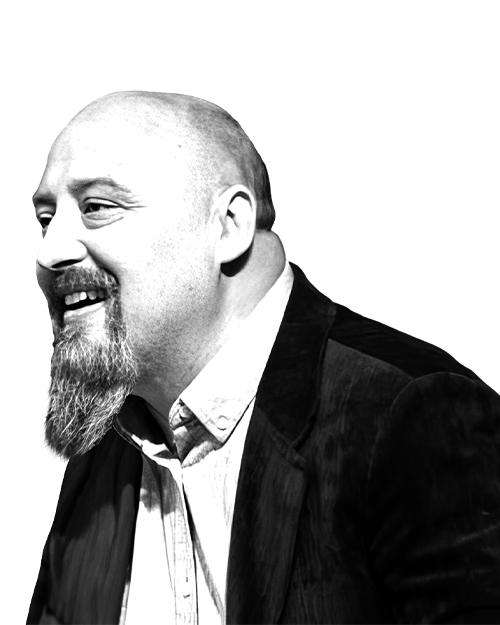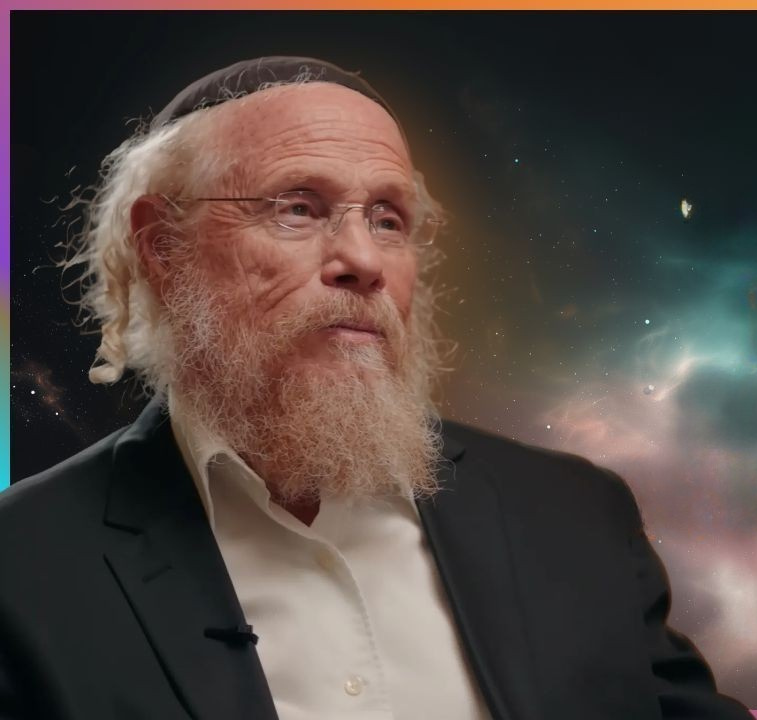
Prof. Moshe Idel joins us to discuss mysticism, diversity, and the true concerns of most Jews throughout history.
This podcast is in partnership with Rabbi Benji Levy and Share. Learn more at 40mystics.com.
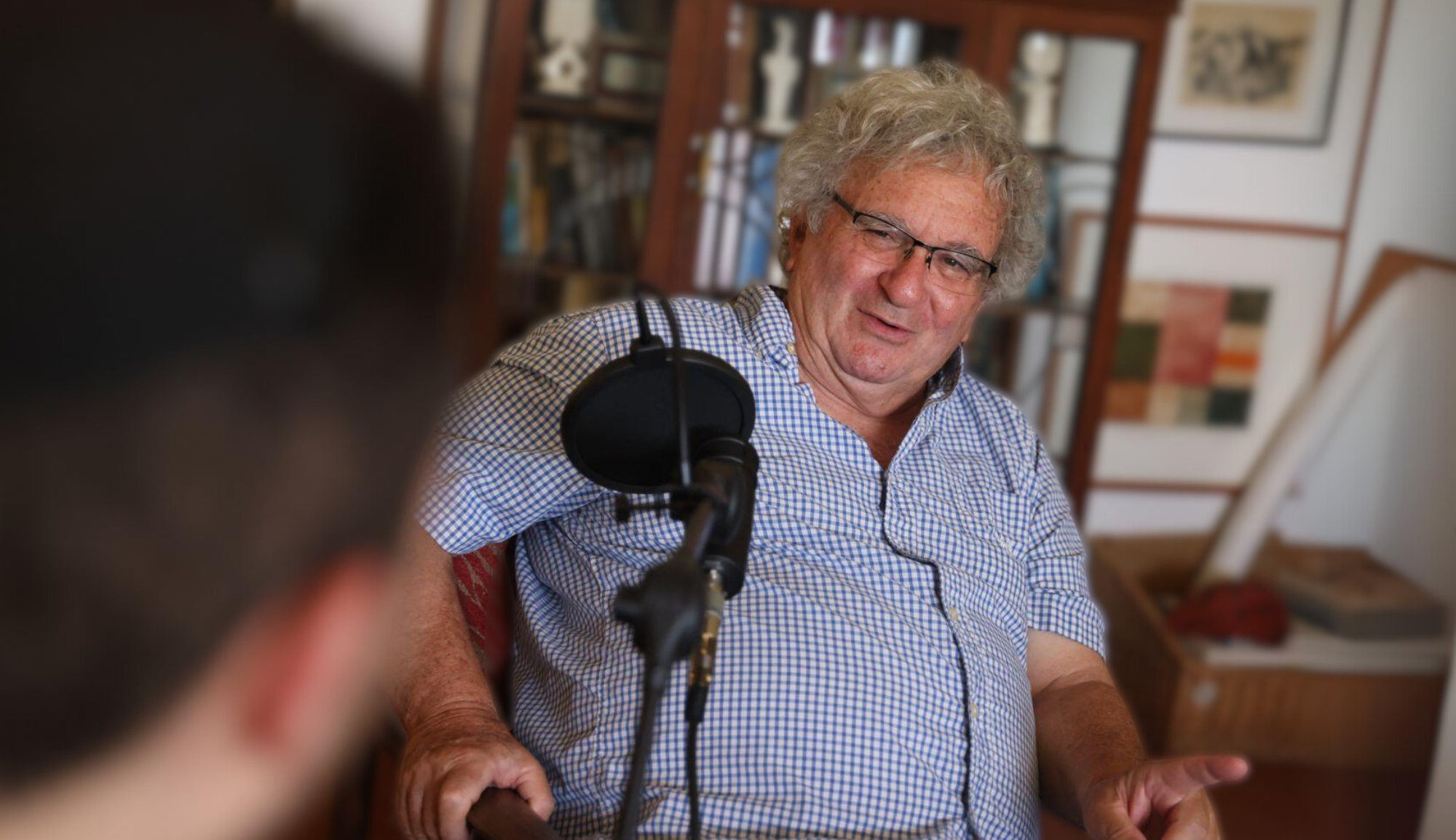
Professor Moshe Idel has always been curious about what he doesn’t know – it’s what drew him to the world of kabbalistic manuscripts, and ultimately it is what led him to become a philosopher of Jewish mysticism.
Moshe Idel is professor emeritus of Jewish Thought at Hebrew University and a Senior Research Fellow at Hartman Institute. His PhD focuses on the thirteenth century kabbalist Abraham Abulafia.
Now, he joins us to answer eighteen questions on Jewish mysticism with Rabbi Dr. Benji Levy including the importance of diversity within Jewish life and the true concerns of most Jews throughout history.
RABBI DR BENJI LEVY. Professor Moshe Idel, Professor Emeritus at Hebrew University, senior lecturer at the Hartman Institute, and really one of the most impressive scholars in the area of Jewish mysticism today. Thank you so much for joining us. So what would you say is Jewish mysticism?
PROFESSOR MOSHE IDEL. Jewish mysticism is one form of Judaism that emerged rather early, meaning at the end of the Second Temple. And it took different forms, so it’s very difficult to define in a simple way, Jewish mysticism, because it was transformed many times in different environments up to modern Chasidut [Hasidism] and various forms of Kabbala. So we should pay attention to each school, in each period, which is rather different from the others. In a simple way, I would say that it’s a way of accelerating Jewish life, but accelerating in different ways, in different periods.
LEVY. So what made you so interested in this area? What made you interested in this school of thought and Jewish mysticism?
IDEL. It’s difficult to answer the question. I started as someone who was supposed to write a PhD in Jewish philosophy, and it doesn’t matter how, I became involved in the manuscripts of Kabbala. So it was a lot of curiosity to see such a vast camp of unknown material. And that’s what attracted my curiosity. Simply, I have seen a lot of unknown material, different, from various periods. And it was a matter of curiosity more than anything else.
LEVY. So you followed your curiosity when you were exposed to the material.
IDEL. Yes. And I studied a lot of manuscripts, not just for writing a PhD but out of curiosity, to see something unknown.
LEVY. In an ideal world, would all Jews be mystics? Would they all learn this material?
IDEL. No. I would say it’s better to have a diversity rather than one form of Jewish life. Jewish life survived, the Jews survived because they adapted themselves to different environments. And I will prefer to have a very variegated type of Jewish life that will survive different challenges, to put it so.
LEVY. God is a very complicated concept. What do you think of when you think of God?
IDEL. To tell you the truth, I don’t think too much about God. Meaning, I don’t deny an existence, I don’t approve it. I am to a certain extent agnostic but assuming that possibility also there is such a power named God.
LEVY. When you study so much about God, does it not – and you have the curiosity to want to go deeper – does it not interest you to want to think more about it?
IDEL. Yes, I would be curious, but it’s up to Him to solve my curiosity. If I would have a revelation, I never have, for sure it would be interesting, but unfortunately I didn’t have any revelation so far.
LEVY. So far. What is the purpose of the Jewish People?
IDEL. To survive as a Jewish people. I don’t assume a theological or teleological vision. The Jews are supposed to serve something. In my opinion, it’s important to have a certain form of life, a certain attitude to the world, which is informed by Jewish concepts but not in order to be the light for the nations or to bring redemption to the world.
LEVY. So you don’t think that is necessarily the aim of the Jewish People, the purpose?
IDEL. It never was. Not only, it never was. The Jews, most of the Jews, 99% never thought about such a question and didn’t live in such a way.
LEVY. But doesn’t the Torah say to be a mamlechet kohanim ve’goy kadosh, to be a kingdom of priests and holy nation?
IDEL. You are right, but people live according to what they believe can be done, not in accordance to what was written in a certain ancient scripture.
LEVY. So according to this, what you study, the Kabbala, how does prayer work?
IDEL. How?
LEVY. How does tefilla, prayer, work?
IDEL. There are varieties of understanding of prayer in Kabbala. The assumption is for some kabbalists, that while someone prays, he, she may intend to a variety of divine powers in order to have an impact on them. So people understood the prayer as a system of symbols that may have an effect on the divine world. So that was the prevalent, dominant vision of prayer in Kabbala. But there are also other forms of understanding prayer in Kabbala. For example, to bring down divine powers during the prayer, to bring them down in order to use them, in order to use the power, which is a little bit more magical. And in Hasidism we can have prayer as a form of union with God. Those are totally different visions, and all of them survived.
LEVY. Your PhD was in the area of Abulafia.
IDEL. Yes.
LEVY. That approach to prayer is more connected to the more mystical, magical bringing down. How do you relate to it?
IDEL. Abulafia doesn’t speak too much about prayer because he doesn’t see prayer as the highest form of religious life.
LEVY. So what is the highest form in Abulafia?
IDEL. For him it was a certain form of union with God by using a series of mystical techniques intended to create a union with the divine.
LEVY. Is that what’s referred to as Yichudim? Is that Yichudim? Is that what it is?
IDEL. No, he wouldn’t call it Yichudim. He would call it simply recitation of divine name, Azkarot. And in his opinion, someone is able by combinations of letters to intensify intellectual life.
LEVY. And that is distinct from prayer, meaning Azkarot is different to what prayer is as we know it today?
IDEL. He would say that prayer is a religious form of life but inferior to his techniques.
LEVY. What about Torah study, studying Torah? What is the goal of Torah study?
IDEL. For him, to study Torah, that what I am citing, is to study Torah for le-shem, for the sake of. He would say for the sake of the divine name, le-shem, for the sake of the divine name, meaning to transform the Torah in a series of divine names.
LEVY. Does Jewish mysticism view men and women as different or the same?
IDEL. Different attitudes to women in Kabbala. Some of them are rather negative, some of them more positive, some of them very positive. So there is no one unified attitude.
LEVY. The ones that talk about it in a very positive way, how do they explain it?
IDEL. The most important commandment for the kabbalist is procreation, and without procreation there’s no way to attain some form of immortality. For this sake, you need a woman. But that’s not just some form of subordination. She is conceived on the high, the Shechina [God], to be the Queen of the world and to bring everything to the world. So that’s not something, how to put it, inferior or instrumental. It is some, according to the kabbalists, the last sefira [attribute] of the Shechina is ascending to the Ein Sof, to the infinity, bringing down divine influence or power and distributing it to this world. So She’s responsible for this world and She’s responsible for the souls in this world. So according to the kabbalist, the feminine potency is the most important one for what happens here. So that’s a very positive attitude.
LEVY. Yeah. And should Judaism be hard or easy in the mystical thought? Should it be something difficult and burdensome or –
IDEL. Judaism became very difficult for some people and easy for other people. So as a way of life, it was moderate, but when you entered the Orthodox way of life with the study of Talmud for many, many years, it can complicate life in a very clear manner. On the other side, for example, Chasidut [Hasidism], a Jewish life can become a matter of pleasure, of having a delight. So there is no one simple definition. Depends how you modelate Judaism. So that’s not something that is a given and you can consume it or not. It is a possibility that you can create out of it something that is different from the starting point.
LEVY. So according to the mystical school of thought, why did God create the world?
IDEL. It’s a hard question. In most of the cases, it is said that God needed some form of recognition, saying that there is no king without a people. So it’s a need of God to be recognized. Some others would say, God needs you in order to improve you. So there are a variety of answers why He created [the world]. In some cases, he created out of necessity, to put it so, it’s a flow overflowing you, and he created [us] out of an inner impulse.
LEVY. How can human beings go against the will of God? Do we have free will or do we just do whatever God wants?
IDEL. Again, there’s no one simple answer. Some kabbalists would say you are free, and some others would say that we are, in a way, premeditated. We must do some things from the very beginning. That is the mission. So there is a view of the mission. Jews must spread the divine message, which is found in many cases. But in other cases, the individual can choose and unfortunately, in most of the cases, the choices are very negative.
LEVY. What is a Mashiach [Messiah]? What’s going to happen when Mashiach, when the Messiah comes in the kabbalistic tradition?
IDEL. Depends whom you ask. In some cases, Kabbala accepted the traditional vision of a return to the land of Israel, the creation of a temple, and restoring the Davidic dynasty. So that’s a simple vision of Messianism found long before Kabbala, but also in Kabbala. In other cases, like Maimonides, Messianism is a time of philosophical meditation. For other kabbalists, the Messianic Era can happen anytime for different individuals. So someone can have a redemption and can call himself Messiah, while all the others are still not redeemed. So there’s no one simple form of redemption. According to Abulafia, who you mentioned here, he offered recipes for redemption. If you do it, you enter the Olam HaBa [World to Come] every evening, you return, and then you’re going to go. So he believes that he has another vision of Messianism.
LEVY. So he believed you can be in this world, do certain incantations, and then ascend to another world, and then you return to this world while you’re in this world?
IDEL. Yes.
LEVY. Did he believe that he could bring the Messianic Era? Was that a separate time?
IDEL. He would believe that for an elite there will be a Messianic Era. If someone will do his techniques. But I doubt if he believed that all the people are going to be saved, because most of the people are stupid and it’s impossible to save them.
LEVY. Have you ever tried these incantations and tried to go into –
IDEL. Never.
LEVY. Have you ever been tempted to?
IDEL. Not.
LEVY. No?
IDEL. Not. I’m curious about what was written in the books, but I never did it.
LEVY. And what about the State of Israel? The Medinat Yisrael, the State of Israel, is that part of the final redemption?
IDEL. I don’t know. It’s for sure a redemption in some ways. And to give you an example, in the last year and a half after the seventh of October, I had to speak by Zoom to some communities in Romania about what happened. And my message was very simple. In one day in 1941, 15,000 Jews were killed in one city. No one reacted, up to today. So that’s the difference. The difference is that once, I’m thinking about one day, I don’t speak about Germans, I don’t speak about the Holocaust, before the Holocaust. In one day, in the city of Iasi, 15,000 Jews were killed in one day, more than all the wars. So for sure it’s a redemption from the plight of most of the Jews in Eastern Europe and Central Europe, but also in Western Europe. In France, many people were sent to Auschwitz. In my opinion, it’s a redemption also for Jews in Arab countries. So it depends how do you frame redemption. If you frame redemption in a practical way, for sure the State of Israel redeemed many, many people, offering them a superior way of Jewish life.
LEVY. We live with many challenges in the world. What do you believe is the greatest challenge facing the world today?
IDEL. To maintain what you have. Meaning the situation in Israel before October 7th was not so bad. To maintain it, it is a challenge. It’s also the case with Jews in the Western world. Jewish life was not so bad. To maintain it is a big challenge.
LEVY. And how has modernity changed Jewish mysticism?
IDEL. Modernity was a very, very great challenge because of the secular vision. The kabbalists didn’t, in fact, interact with it and didn’t answer it. Kabbalists rather ignored it. For sure they use the secular tools: printing, TV. But they didn’t address deeply the challenges of modernity. They use modernity but didn’t adopt it or challenge it.
LEVY. What differentiates Jewish mysticism from other mysticisms and other religious traditions?
IDEL. Jews attempted to intensify Jewish life. So Jews used the commandments as a main tool for having a mystical life by intensification, by performance and intensification. For Abulafia, who didn’t use the commandments, he is nevertheless using divine names, which is part of Judaism and part of the cult in the Temple. So the Jews were using a variety of Jewish aspects intensified, while other religions are using their, how to put it, way of life to intensify their recitation of divine name, also in Hinduism. So that’s to use something given but in a new way.
LEVY. Does one need to be religious to study Jewish mysticism?
IDEL. He must be at least sympathetic with religion, because otherwise you don’t understand.
LEVY. What do you mean?
IDEL. To understand what is, to give you a simple example, what is the meaning to go to the synagogue? If you were never there, it’s very difficult to understand. So to give you an example, there was a conference once in Germany about voice. So I told them voice, actually in the synagogue there’s voice all the time, and it’s also in the yeshiva. People are shouting. People were a little bit confused because they didn’t understand what a shul [synagogue] is.
LEVY. Yeah.
IDEL. The shul is for praying and the yeshiva is for studying, but nevertheless there’s a lot of voices and that atmosphere of voices. And you feel this atmosphere. If you don’t feel it, you don’t understand what is going on. That is what I call sonorous communities. It’s sonorous. If you don’t understand what is sonorous, if you believe that going to the church and everything is silent, it’s difficult to understand that people were amazed in Germany. They thought that I’m antisemitic when I told them people are shouting. So we’re confused. That’s an example of how if you don’t see it or experience it, it’s hard to understand.
LEVY. And can mysticism be dangerous?
IDEL. For sure it can be, like everything. If you take it to extremes, it can be dangerous.
LEVY. Can you give an example?
IDEL. If you take the mystical vision of the Land of Israel, for example, it’s only for the Jews. So the consequence can be very, very dangerous, to give you just one example. Or if you demonize the non-Jews, it can be very dangerous, and so on.
LEVY. So how has this affected the relationships in your own life? A lot of the Kabbala is about – with your students, with your family. How has it affected your own relationships?
IDEL. My answer is I hope that no.
LEVY. You hope not.
IDEL. Yes.
LEVY. Why?
IDEL. Meaning I attempt to judge by myself without using cliches found in Kabbala.
LEVY. So you feel a complete separation. This is an academic study and then you’ve got your own –
IDEL. I don’t know if it’s complete. It’s not complete because I know all this. To say complete is a little bit exaggerated. But I attempt nevertheless to judge in a more detailed manner without using cliches.
LEVY. And when you read about character development and these ideas, does it ever, you feel, go inside or you try to maintain it?
IDEL. Depends what and when, meaning there’s no one simple answer. When you study just one form of Kabbala, you believe that is important. But if you study many others, you see that there’s a difference and you shouldn’t exaggerate and shouldn’t be attracted too much and not reify Jewish mysticism as if it’s one attitude.
LEVY. Do you have a favorite stream of thought that you’re most attracted to within mysticism?
IDEL. I myself, no.
LEVY. And is there one teaching that, a teaching that comes to mind, an idea, a thought that you think is really interesting or powerful for people to hear? Obviously there’s many but does one come to mind?
IDEL. Yes, but it’s too complicated to explain. Meaning, in one of the cases of Abulafia, he was very Jewish in one way and he was very open to the others in another way. He was ready to speak with the Pope. The Pope declined, but that’s an example of a kabbalist who was very Jewish, very anti-rabbinic, and very anti-anti-Christian and nevertheless ready to speak with them.
LEVY. How do you explain that?
IDEL. Because he believes that he is interested only in the elite.
LEVY. And the Pope was considered elite.
IDEL. It’s for sure an elite.
LEVY. Even though it’s not from the same tradition.
IDEL. Yes. But an elite can speak with an elite.
LEVY. And are there any areas of Kabbala that you think would be most interesting for people today, for the young people?
IDEL. I don’t know. I don’t know what the young people [are interested in]. I have children and grandchildren, I don’t know if they’re going to be interested in Jewish mysticism and I don’t recommend it. That’s an unknown for me to tell you what will be interesting for the next generation or two generations later.
LEVY. Do you remember what it is that made you excited about it? You said that you were curious.
IDEL. Yes.
LEVY. What was the part that made you curious?
IDEL. I was amazed to see so much material that is unknown. And I didn’t expect anything and I was not very much attracted by anything, but the unknown is – this is the term that may answer your question. I’m curious about what I don’t know. Not only in Kabbala, but Kabbala for sure, but also in other areas.
LEVY. It’s interesting because Kabbala is like the study of the unknown.
IDEL. I study what is unknown at a certain moment and then becomes known, and then you can go on because the material is very, very vast. Even today after many, many years of studying, there is a lot to be learned.
LEVY. What are some of the studies that aren’t very known? What are the areas that people still haven’t uncovered that you’ve seen?
IDEL. To give you an example, kabbalistic magic, what’s called Kabbala maasit [practical Kabbala]. People know there’s a lot of material but didn’t enter [into it] too much because it was despised. That’s something without big ideas, just practice, which people don’t believe in it, don’t believe that it is helpful. So that’s an area that if you read a lot of Kabbala, you don’t see the Kabbala maasit in the studies.
LEVY. What are the main scholars or sources for the Kabbala maasit that you’ve seen?
IDEL. There’s so much it’s hard to – in most of the cases, it is anonymous.
LEVY. Anonymous?
IDEL. Yes. There are a lot of large manuscripts without any author, including vast manuscripts of hundreds of pages that are not printed and not studied, and we don’t know who wrote them. And people, even when they mention Kabbala maasit, they, the scholars, they didn’t peruse it. I don’t say they didn’t use it, for sure, but they didn’t peruse it.
LEVY. Why? Is it because they don’t know who the author is or because there’s so much other stuff to study?
IDEL. Because the study is guided by an assumption that ideas are more important than practice. So you study the ten sefirot [divine emanations], and Ein Sof [Limitless God], tzimtzum [contraction], all those issues [core kabbalistic concepts] are as if they are the most important part. But what people did, and Kabbala maasit [kabbalistic magic] has a lot with what people actually did, is secondary, if not to say marginal.
LEVY. You believe that as well? Or is that your belief or the general belief of the academy?
IDEL. It’s my belief. Everyone will subscribe to it, but the problem is what do you do after you say that it’s important? It’s more important to study them than to say that it’s important.
LEVY. Can you share one or two examples before we finish about a Kabbala maasit action that someone could do? They create something, they make something, they heal someone? What is an example?
IDEL. One of the most important figures in Jewish mysticism ever, Yisrael Baal Shem Tov, was baal shem, which means that he was dealing with Kabbala maasit.
LEVY. Ah, the Baal of the Shem means he was the master of the name of God.
IDEL. Yes, in principle. What is the name? That’s complex, but here we have an example of actually a magician who created a big movement and succeeded. So, that’s very important to investigate what happened there. What was his magic, how his magic worked, what was the background.
LEVY. Do you know any examples of different magic things he did?
IDEL. Ah, sure, there are a lot of, you can use the divine name, you can use angelic names, you can use demonic names. Meaning there are a variety of magical recipes, a variety, huge variety. And the Besht used some of them, but other baalei shem [masters of the name], and there were many others before him, used others. That’s a vast story that had an impact on life. It was not studied enough.
LEVY. Yeah. Wow. Well, I think that at least for me, you’ve uncovered how exciting and how many different areas there are still to be studied. And you’ve done such important work in this area that’s really laid foundations for generations to come. So may you continue to study, teach, and may many more people follow.
IDEL. For sure, you know, to read those manuscripts of Kabbala Maasit [kabbalistic magic] for 6-700 pages each.
LEVY. Wow.
IDEL. You see life there. You see what was their concern.
LEVY. Yeah.
IDEL. To have children, to have parnasa [income], health, how to escape punishment from – in each manuscript you have a life.
LEVY. So they had a recipe of certain divine names or things to do to be able to achieve sustenance or wealth?
IDEL. They didn’t enter too much into details. But for me what’s important is to see their problems.
LEVY. Yeah.
IDEL. What was the common problem? To have children, to have parnasa [income], and health.
LEVY. Nothing’s changed.
IDEL. Not sefirot [divine emanations] and Ein Sof [limitless God], all this stuff that is very important for scholars, but for the vast majority of the Jews ever, it is very rare that you can find a recipe for remembering, not to forget the study. You can find. But that’s a minority.
LEVY. Wow. Well, that’s really what it was, understanding humanity on a broader level.
IDEL. Yeah, it’s a lot to be done, meaning after many, many decades of studying Kabbala by many, many scholars, the field is still open.
LEVY. Wow. That’s exciting. Well, thank you for your time, professor, and looking forward to reading much more of your material.
IDEL. Thank you.
We speak with Professors Elisheva Carlebach and Debra Kaplan about women’s religious, social, and communal roles in early modern Jewish life.
Haviv answers 18 questions on Israel.
In this episode of the 18Forty Podcast, we talk to Rabbi Menachem Penner—dean of RIETS at Yeshiva University—and his son Gedalia—a musician, cantor-in-training, and member of the LGBTQ community—about their experience in reconciling their family’s religious tradition with Gedalia’s sexual orientation.
Dr. Chava Green joins us to discuss the role of women in the Messianic Era and seeing God in the everyday.
In this episode of the 18Forty Podcast, we talk to Chava Green—an emerging scholar who wrote her doctoral dissertation on “the Hasidic face of feminism”—about how the Lubavitcher Rebbe infused American sensibilities with mystical sensitivities, paying particular attention to the role of women.
The true enemy in Israel’s current war, Einat Wilf says, is what she calls “Palestinianism.”
In this episode of the 18Forty Podcast, we speak with Channah Cohen, a researcher of the OU’s study on the “Shidduch Crisis.”
In this episode of the 18Forty Podcast, Dovid Bashevkin dives deeply into the world of dating.
In this episode of the 18Forty Podcast, we talk to Rabbi Pini Dunner and Rav Moshe Weinberger about the Yabloner Rebbe and his astounding story of teshuva.
In this episode of the 18Forty Podcast, we talk to Eitan Hersh, a professor of political science at Tufts University, about teaching students of radically different political and religious views how to speak to one another.
In this episode of the 18Forty Podcast, we talk to Liel Leibovitz and Lisa Ann Sandell about what happens when one partner wants to increase their religious practice.
In this episode of the 18Forty Podcast, we sit down for a special podcast with our host, David Bashevkin, to discuss the podcast’s namesake, the year 1840.
In this episode of the 18Forty Podcast, we talk to historian and professor Pawel Maciejko about the false messiah Sabbatai Zevi, Sabbateanism, and the roots of Jewish secularism.
We speak with Rabbis Eitan Webb and Ari Israel about Jewish life on college campuses today.
In this episode of the 18Forty Podcast, we discuss parental alienation.
In this episode of the 18Forty Podcast, we talk to Judah, Naomi, and Aharon Akiva Dardik—an olim family whose son went to military jail for refusing to follow to IDF orders and has since become a ceasefire activist at Columbia University—about sticking together as a family despite their fundamental differences.
In this episode of the 18Forty Podcast, we talk to Rabbi Ken Brodkin, rabbi of New Jersey’s Congregation B’nai Israel, about how he helped turn it into “the Orthodox synagogue for all Jews.”
David Bashevkin answers questions from Diana Fersko about denominations and Jewish Peoplehood.
In this episode of the 18Forty Podcast, we sit down with Rabbi David Aaron, author, thinker, and educator, to discuss what God is and isn’t.
In this episode of the 18Forty Podcast, David Bashevkin opens up about his mental health journey.
In this episode of the 18Forty Podcast, David sits down with Leah Forster, a world-famous ex-Hasidic comedian, to talk about how her journey has affected her comedy.
On this episode of 18Forty, we explore the world of Jewish dating.
We speak with Mark Wildes, founder and director of Manhattan Jewish Experience, about Modern Orthodox outreach.
These four forces are quietly determining what our schools prioritize—and what they neglect.
After years of unsolicited advice, I now share some in return.
Perhaps the most fundamental question any religious believer can ask is: “Does God exist?” It’s time we find good answers.

What Mishpatim teaches about human nature, moral fragility, and the structures a just society requires.
In Parshat Mishpatim, the Torah embeds one of its most radical emotional demands inside its civil code: Help your enemy.
Israeli minister Itamar Ben-Gvir wears the mantle of Kahane in Israel. Many Orthodox Jews welcomed him with open arms.
From verses in Parshat Bo to desert caves, tefillin emerge as one of Judaism’s earliest embodied practices.
Christianity’s focus on the afterlife historically discouraged Jews from discussing it—but Jews very much believe in it.

Children cannot truly avoid the consequences of estrangement. Their parents’ shadow will always follow.
The “way” of myself and other formerly Reform Jews is unclear, but our desire for spiritual growth is sincere.
What if the deepest encounter with God is found not in texts, but in a people? Rav Kook and the Lubavitcher Rebbe…
God promised the Land of Israel to the Jewish People, so why are some rabbis anti-Zionists?
A 94-year-old Holocaust survivor, a lone soldier, and more. Here are seven olim sharing their stories of aliyah.
David Eliezrie’s latest examines the sixth Lubavitcher Rebbe’s radical faith that Torah could transform America.
Between early prayer books, kabbalistic additions, and the printing press, the siddur we have today is filled with prayers from across history.
To talk about the history of Jewish mysticism is in many ways to talk about the history of the mystical community.
Meet a traditional rabbi in an untraditional time, willing to deal with faith in all its beauty—and hardships.
I think the topic of commitment is about our very humanity—how we deal with doubt, make decisions, and find and build healthy…
In reprinted essays from “BeyondBT,” a father and daughter reflect about what happens when a child finds faith.
Parshat Yitro anchors Judaism in revelation. But what does Sinai mean in a world where proof is the highest authority?
How can we find wonder in a world that often seems to be post-wonder? Enter Rabbi Abraham Joshua Heschel.
Dr. Judith Herman has spent her career helping those who are going through trauma, and has provided far-reaching insight into the field.

Reform leaders argued that because of the rabbis’ strained and illogical interpretations in the Talmud, halachic Judaism had lost sight of God.…
Jews from the Land of Israel prayed differently than we do today—with marked difference. What happened to their traditions?
In this special Simchas Torah episode of the 18Forty Podcast, we speak with Rachel Goldberg-Polin and Jon Polin—parents of murdered hostage Hersh…

In this episode of the 18Forty Podcast, David Bashevkin answers questions from Diana Fersko, senior rabbi of the Village Temple Reform synagogue,…
In this episode of the 18Forty Podcast, we speak with Mark Wildes, founder and director of Manhattan Jewish Experience, about Modern Orthodox…
In this episode of the 18Forty Podcast, we speak with Rabbis Eitan Webb and Ari Israel, head of a campus Chabad and…
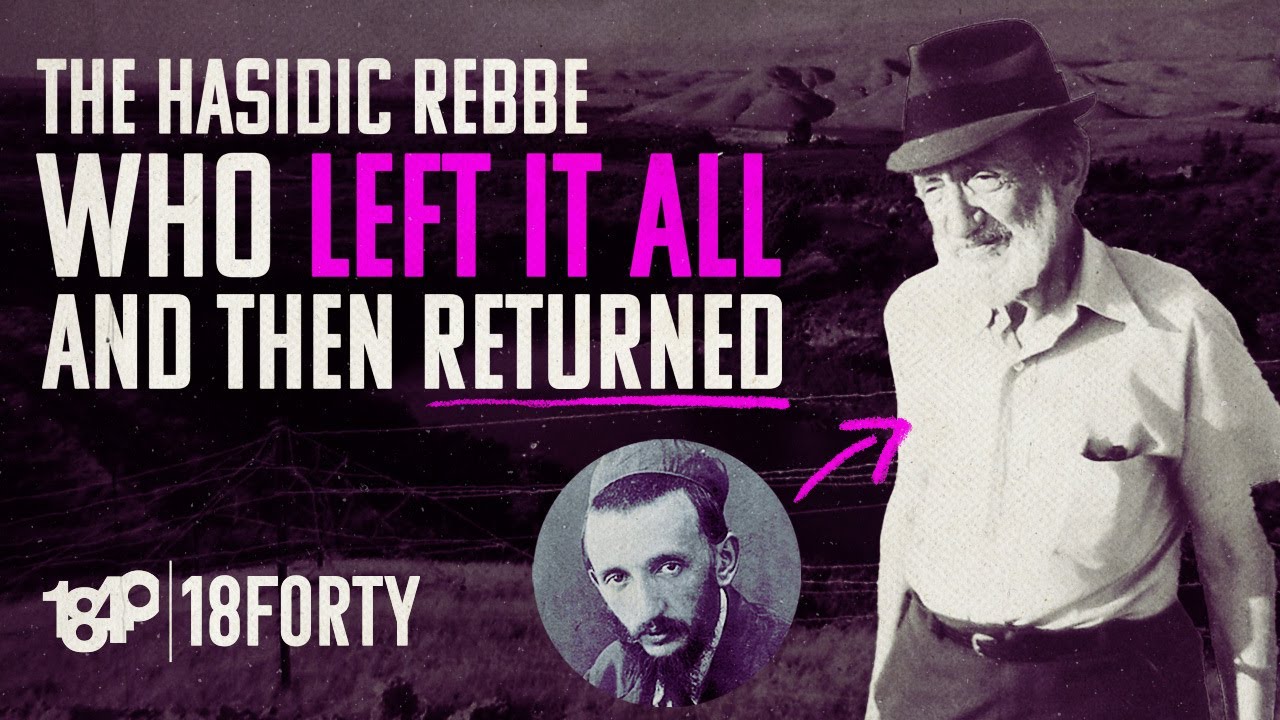
Why did this Hasidic Rebbe move from Poland to Israel, only to change his name, leave religion, and disappear to Los Angeles?
There is circularity that underlies nearly all of rabbinic law. Open up the first page of Talmud and it already assumes that…
We speak with Joey Rosenfeld about how our generation can understand suffering.
We speak with Naftuli Moster about how and why he changed his understanding of the values imparted by Judaism.
As a Chabad Hasid, Rabbi Zevi Slavin’s formative years were spent immersed in the rich traditions of Chassidut and Kabbala.
What has been Israel’s greatest success and greatest mistake?
What is Jewish peoplehood? In a world that is increasingly international in its scope, our appreciation for the national or the tribal…
In this episode of the 18Forty Podcast, recorded live at Stern College, we speak with Rabbi Moshe Benovitz, director of NCSY Kollel,…
In this episode of the 18Forty Podcast, we speak with Diana Fersko, senior rabbi of the Village Temple Reform synagogue, about denominations…
Love is one of the great vulnerabilities of our time. Can we handle it?
In a disenchanted world, we can turn to mysticism to find enchantment, to remember that there is something more under the surface…
What does it mean to experience God as lived reality?
Rabbanit Sarah Yehudit Schneider believes meditation is the entryway to understanding mysticism.
In this episode of the 18Forty Podcast, we speak with Shais Taub, the rabbi behind the organization SoulWords, about shame, selfhood, and…
Support Jewish explorations today by supporting 18Forty. Your partnership makes our work possible.
Donate today.