Transcripts are produced by Sofer.ai and lightly edited—please excuse any imperfections.
David Bashevkin: Hi friends and welcome to the 18Forty Podcast where each month we explore a different topic balancing modern sensibilities with traditional sensitivities to give you new approaches to timeless Jewish ideas. I’m your host David Bashevkin and this month we’re exploring once again the topic of teshuvah. Thank you so much to our series sponsors Daniel and Mira Stoker. We’re so grateful for your continued friendship and support.
This podcast is part of a larger exploration of those big, juicy Jewish ideas, so be sure to check out 18Forty.org where you can also find videos, articles, recommended readings, and weekly emails.There is an idea that I heard from Rav Aharon Lichtenstein that I have come back to over and over again when it comes to thinking about what teshuvah is all about, what does it mean to repent that we normally talk about. I mean, generally, when you do something wrong, you’re not supposed to wait until Rosh Hashanah and Yom Kippur time to ask for mechilah, to ask for forgiveness. You bump into somebody’s car if you cause damage, or you stop praying, or whatever it is you’re struggling with, you’re not supposed to say, okay, I’ll wait until it’s teshuvah time in Elul before the high holidays. You’re supposed to do it right away.
So Rav Aharon Lichtenstein asks a very beautiful question. His answer is just so powerful. Rav Aharon Lichtenstein asks, so what is unique about the emphasis of teshuvah specifically during this period of time? Why is it, and it’s a question that you could be asking because every year on 18Forty, we do a series on teshuvah, and why now? Teshuvah should be an evergreen. It’s not something that you’re supposed to wait specifically for one time a year to reflect on.
It’s supposed to be something that you fix whatever is wrong in your life in the moment that you notice it. So what is the emphasis on teshuvah, which we normally translate as repentance, specifically around these times? And the answer that he suggests, which I find so incredibly moving, is that the rest of the year we look at our life and how it aligns to our goals and vision, our ambitions, and we look at our life and see whether or not it aligns to those goals. We’re examining the arrow and looking how close is it to the bullseye. The teshuvah that we engage in specifically before the high holidays is a different form of teshuvah.
We are not looking at how close the arrow is to the bullseye. Instead, we are evaluating the bullseye itself. We are evaluating our goals and what we long for and what we are trying to become. Instead of assuming year after year that our conception of what we should be and what should become should remain stagnant, what Rav Aharon Lichtenstein suggests and what I think is very much of this moment in the way that we should reflect and think about teshuvah, is that we’re not looking at how close the arrow is to our bullseye, but we are asking, we are pleading, we are praying, are our bullseyes in the right place? Is our conception in fact correct of what we are longing for and our model of Yiddishkeit and Jewish commitment and Jewish life? Is that model in fact correct? There has been a discussion that has mostly been political and mostly been in Israel about this notion that in Israel they call it the konseptzia.
Konseptzia, I believe, is just the kind of Israeli formulation of this concept called conception, your initial conception, where you thought the bullseye was, where you thought things were and aligned. And there are countless articles, you just have to Google, you could Google it in English, konseptzia, and you will see that this term is invoked over and over again in think pieces on how our konseptzia of Israel’s relationship to its neighbors and what was the status of the Middle East has entirely collapsed. I’m reading from one headline that came out a year or two ago in the Jerusalem Post, but there are so many of these in all the outlets related to the war. The collapse of the konseptzia has far-reaching societal implications beyond October 7 analysis.
And it talks about the konseptzia, this is from the Jerusalem Post, a word coined by the Agranat Commission of Inquiry into the failures of the Yom Kippur War to describe the groupthink that paralyzed Israel before the war. Now, in this concept, we are talking about a conception, the konseptzia, which was originally a concept that was invoked after the Yom Kippur War to look back and say, we had a faulty conception of what was taking place in the Middle East. the failures, the military failures reflecting on the Yom Kippur War, and is being invoked again post-October 7th. I recently spoke to someone who I consider a friend, though I think it was the first time that we were talking, but it was like a very real conversation.
His name is Rabbi Michael Olshin. God willing, hope to have him as a guest, and we were talking about this word. It’s a word that I’ve also heard from a previous 18Forty guest, Rav Judah Mischel. He has invoked this many, many times, this notion of the conceptzia.
The conceptzia in this context, in conversation with Rabbi Olshin, in conversation with Rav Judah, is not referring to the conception of the Israeli military intelligence. It’s not talking about the conception of how we think Israel does or does not get along with its neighbors or how military readiness should be conceived of. Those are topics that are incredibly important, but not ones that I really have any formulated opinion on. Instead, the conception that we talk about is the conception of Yiddishkeit both in the diaspora, particularly the United States, and the conception of Yiddishkeit in Israel, and that so many of our lines and alignments for our own Yiddishkeit really need to be reexamined.
We are living in a bubble of sorts. For many people, that bubble has burst, but it is a bubble that the alignments of just what is the future that we are hoping for, what is the relationship of Yiddishkeit that we are trying to preserve? These are conversations that are taking place in every corner of the Jewish world. There are conversations that are taking place in the Modern Orthodox world, they are taking place in the non-Orthodox world, for sure, in the Reform world, like we heard in our interview with Rabbi Ammiel Hirsch, and these are conversations that are taking place in the Yeshiva world in Lakewood. I actually recently, over the summer, contributed to a substack that came out of Lakewood.
The Substack is called Not Daas Torah. Daas Torah is referring to kind of like rabbinic guidance in every facet of your life. And this is a Substack that emerged and was talking about the Lakewood Yeshiva community. It’s not our primary listening audience, but certainly there are many people in Lakewood who do listen.
And they were talking about something that I think really relates to everyone, which is where do we go from here? Why is it there is a feeling within Lakewood, and there were so many responses to this, but the essential feeling that it was talking about was what’s next for the Lakewood yeshiva world, for the American yeshiva world? And there was a sense of kind of confusion, ambiguity, concern, almost a nervousness. Where do we go from here? What comes after this? Have we reached kind of like peak Lakewood, peak Yeshivish? Like, what comes next from this? What’s the mission we are raising our children for? And this was a Substack, again, that came out reflecting on the Lakewood world, but it was a question that I think is equally true of any community, any Jewish community, particularly in this moment that you’re thinking about, what are we moving towards? There was a mission 75 years ago of building Torah in America, building Jewish communities in America, building Jewish schools, and really ensuring that the Jewish people would have a rich, vibrant future on the shores of United States. And that conception of that is the mission, so to speak, is, I wouldn’t call it collapsing, but it’s beginning to show cracks because every generation needs their own mission statement, every generation needs their own marching orders. And the point that I was making on this Substack, which relates to everything that we have discussed, it was entitled “The Real Reason We Feel Communally Burnt Out and How to Fix It.”
And the one thing that I spoke about and responded to was this person was writing and said, the last generation was really continuing in the mission of Rav Aharon Kotler, who was really the primary rabbi, thinker, leader, and architect of the contemporary American Yeshiva world. He created and started Beis Medrash Govoah, which is the central Yeshiva in the Lakewood community, and his mission was about building Torah for Klal Yisrael. He was thinking about the entirety of the Jewish people. And the question that they posed is, what is our generation doing? And my response was, and I’m reading directly from what I wrote, when Rav Aharon Kotler, zecher tzadik l’vracha, of blessed memory, spoke about Klal Yisrael, and when a contemporary person from a frum community, meaning an Orthodox community, writes about Klal Yisrael, they are not and were not referring to the same entity.
This essay, and I’m responding to a previous essay, while very thoughtful, clearly sees the klal, and I’m using that, the Jewish nation, whatever term is used, nowadays that more or less, what is that referring to? Someone’s referring to their own. They’re referring to people in Lakewood or the yeshiva world, or maybe it’s the Orthodox world. And that’s absolutely fine. But just understand that is not the Klal Yisrael that Rav Aharon Kotler referred to.
How could he be, as there was no yeshiva community at that time to speak of. And right now, what you see in every corner, and you can confirm if this is true in your corner, if it’s not true, that’s not a good thing. We should feel our conception beginning to shake.
We should feel the foundations of the conceptzia of what we are aiming towards, what we think, where we think the bullseye should be. We should be seeing it shake. We should pay attention to that. And instead of running in the opposite direction or like an ostrich putting their head in the sand, we should ask ourselves, what is the Jewish future we are building towards? And are our families, institutions, communities aligned towards building towards that goal? What is the Yiddishkeit that this generation is going to yield for the future? We’re the living body.
If you are a living Jew in 2025, you are an integral part of the living body of Knesses Yisrael, of the Jewish people. And the question is, are we still in the bubble of the conception of models of Yiddishkeit and Judaism, as important as they may be, but we’re responding to a different reality or are we ready to engage with the reality before our eyes? And it’s these questions that animate the teshuva of this moment, the teshuva that is before the High Holidays, which is not just checking how close the arrow is to the bullseye, but asking, are our bullseyes in the right places? Are we ready to let go of the conceptzia and build something new, and build a Yiddishkeit, a vision of a Jewish future that can in fact reach the entirety of the Jewish people and uplift and give a mission and a purpose to the entirety of the Jewish people. Do we have the right expectations? Do we have the right bullseyes? And it’s with this introduction that I think it is so moving and so beautiful to surface the Torah of Rav Kook. Rav Kook, whose yahrzeit is the third of Elul and always like marks the beginning of our entrance in many ways to the High Holidays, right at the beginning of Elul, the month before Rosh Hashanah, when we begin reflecting, and this form of teshuva, the teshuva on the conception itself, the teshuva on the bullseye itself.
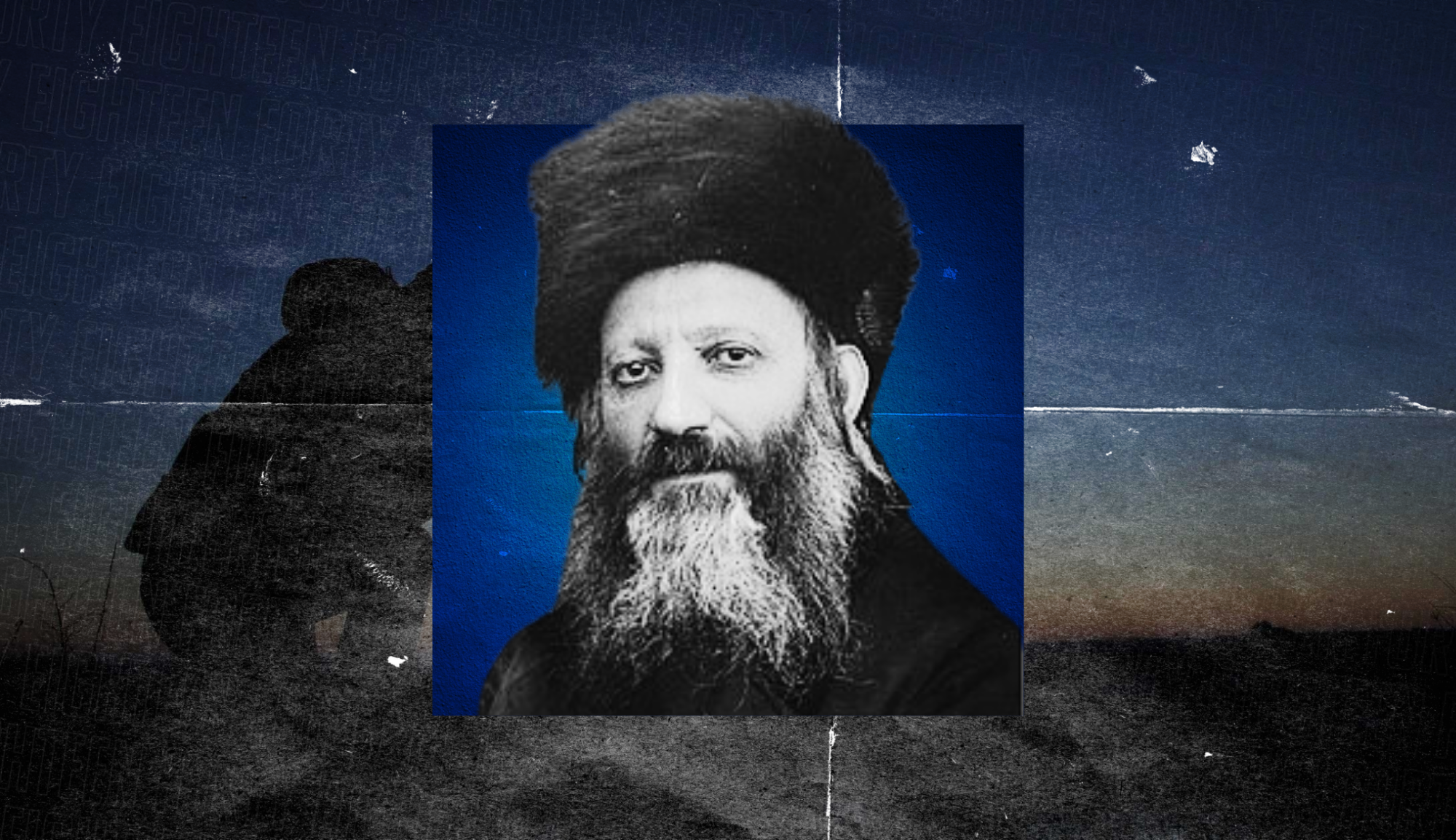
And the person who I think really modeled this was Rav Avraham Yitzchak HaCohen Kook, who we have spoken about in previous episodes, but I am so excited to introduce a very specific thinker and approach to his thought, which is based on a book that was just published by Mosaica Press called The Torah of Tomorrow, OneSong: Teachings of Rav Avraham Yitzchak HaCohen Kook in Hebrew and English. We are interviewing the translator, and she did so much more than translation, and that is Rachel Tova Ebner, who is an incredible person. And why this book is so unique and why it moved me so much is you will hear in our conversation. And it is jarring to hear this, but you will hear in our conversation this urgency of reimagining the conception, of reimagining where our bullseye should be.
And without dictating in a pedantic way telling anyone where they should place the bullseye, what this book does with a marvelous introduction is really ask us and ask whoever’s reading it, no matter what their affiliation is, whether they’re from Lakewood or Bnei Brak or Middle America or the Five Towns or Boca or Beit Shemesh or Ra’anana, wherever you are, we can be asking these questions, and the goal is not for a specific outcome, but the goal is really to become more thoughtful about our Jewish life. And the reason why this conversation, I think, will be jarring for some is because Rachel did something really amazing in this book. There are a lot of books that share the Torah of Rav Kook in English, in translation, and there are a lot of books that reflect on Rav Kook, and Rav Kook’s writing itself was in Hebrew. What this book does that is different is it really beautifully done, has Rav Kook’s Hebrew and English aligned right next to each other, so it’s so easy to move back and forth and preserves the original words of Rav Kook, sources where they’re from, and then provides an absolutely beautiful translation.
But what she is really inviting her readers to do is to become more thoughtful, to allow themselves to think, what is the conceptzia? What is the old concept of my Yiddishkeit and my vision? and invites, but invites them to reflect through the words of Rav Kook and invites them to imagine a new form of Yiddishkeit for our future and for future generations. And that is why, with Rav Kook’s yahrzeit approaching on the third of Elul, it is my absolute privilege and pleasure to introduce our conversation with Rachel Tova Ebner. So, I want to begin because your book is nearly entirely the words of Rav Kook that you present in its entirety, little snippets, and then you render into English through translation. And you really did a beautiful job of the translation.
But before we get to that, you snuck in a very brief introduction. It is just about 10 pages and it really caught my eye because it is entitled “A Tale of Two Rebbes.” And you talk about not only Rav Kook, who is the subject of the book, but you begin by talking about your father, Rabbi Dr. Michael ben Ephraim Bernstein, who served as both a Rosh Yeshiva in Yeshiva University, as well as a professor, I believe of Semitic languages. And I wanted to begin by asking you, why did you think it was important to introduce your relationship with your father in a book about Rav Kook? Why is this the introduction? It’s so moving and it’s so beautiful, but why did you think this was important for your readers to understand the introduction for your journey to Rav Kook?
Rochi Ebner: I don’t have any certification as a translator, if there is such a thing even.
And I wanted studiers of Rav Kook to know that they were hearing a translation from someone who has spent her life in Hebrew and who took the 40 years it took to translate. My father, I would say, taught me Hebrew, but I grew up in Hebrew. My house was across the street from Yeshiva University. Bachurim were there all the time, and Torah was spoken all the time.
My father was in a wheelchair most of my life, so that the students came to him, and they were studying for their doctorates or they were studying for smicha. And I would sit in my room and listen. And besides that, he learned with his children, my father, regularly, very strict about it that you have to show up on time. And through that constant learning, Hebrew came alive, English came alive, and so translation is very natural to me.
David Bashevkin: That’s so beautiful. And your father really seemed like a very rare combination, especially in that era. What year was your father born?
Rochi Ebner: He was born in 1915. He didn’t have a traditional yeshiva background.
He was an autodidact. He taught himself. He gobbled knowledge. And yes, he was a student of Rav Moshe Soloveitchik.
What made him different at that time at Yeshiva is that most of the rabbanim at RIETS, the Rabbi Isaac Elchanan Theological Seminary, were European. They had come from Europe. My father was American born, and so his English was perfect as well as his Hebrew. And and that did make him different in a world of Yiddish speaking immigrants.
David Bashevkin: And the decision to even go to yeshiva for someone born in 1915, did all of his siblings go to Yeshiva or that was unique?
Rochi Ebner: No. He found his way. It was not a time for people to go to yeshiva. Yeshivas didn’t really exist except for a Lakewood, except for a Torah Vodaas.
What made Yeshiva different, its emblem says, Torah U’Mada, Torah and science. And this unity of Jewish studies as well as a college education, which at that time was still worth everything, that unity between kodesh and chol was always hovering in the air. It was a state of consciousness. No one was scared of evolution.
No one was scared of studying philosophy, because nothing could touch our Torah strength.
David Bashevkin: Wow. I want to read some snippets from your introduction. You have one thing about your father where you’re not really so much talking about the Hebrew, the love of language, but really his love of questions.
Allow me to read a few sentences. My father taught me to honor my own questions. Nu, what’s your question? he’d ask after every verse of Torah we learned. Even as I grew older and our learning became more complex, and there were all the sages and commentators questions to be examined and appreciated, he would still ask, and what’s your question? It struck me as a little bit unusual that he would learn with all his children and it sounds like he really had a serious line of study both for his sons and his daughters.
Rochi Ebner: Yes.
David Bashevkin: I don’t know if that was unusual at the time. I know my grandmother, who was born at that time, did not receive any sort of Jewish education.
Rochi Ebner: Right.
David Bashevkin: In the time it was really bifurcated. What would exactly would you learn with your father and do you have specific memories of moments of learning on what you were learning that really drew you into that lifelong love of Torah?
Rochi Ebner: First of all, you’re correct, women were not learning at that time. Although Yeshiva University had a movement on, it took years to open a girls’ high school, Central. And so it was always in their mind.
Down the street from Yeshiva University was Yeshiva Rabbi Moses Soloveitchik, Reb Moshe Soloveitchik, which was an elementary school. I went to that elementary school. So in that era, there were few Yeshivos Gedolos. Elementary school was the most chashuve thing to do.
These people came from Europe, post-war.
David Bashevkin: To start a day school was a huge accomplishment in a community.
Rochi Ebner: That was the most important thing. You have to teach the tinokos.
You have to start from A.
David Bashevkin: The children, exactly.
Rochi Ebner: And so after that, thoughts of high schools. And after that, Stern College.
In other words, I think Yeshiva was always on the road to include women.
David Bashevkin: Sure.
Rochi Ebner: Now, even though it eventually did, it was nothing like my learning. My learning was with men.
I grew up with men surrounding me and felt very comfortable with that. So formal learning started with Chumash with my father, Chumash and Rashi. But long before that even, hearing Torah talk in the house, I remember very early there were Rambam discussions going on. And it was about in a general sense, what are we allowed to say about God? In what ways are we allowed to talk about HaKadosh Baruch Hu? And how there are certain names for HaKadosh Baruch Hu that are his name, ha’el, hagadol, hakadosh, and those are the only names.
We don’t add or make up names for God. And other issues of how we may talk about God. And that touched me very deeply because I wanted to talk about God. There was a pull inside me, past the Chumash, past all the learning, and certainly past all the halachic back and forth.
I wanted to know God. I wanted to talk to the hero of Torah stories. And that was permitted. I could ask about God.
Parallel to learning with him as a little one, I was going to Yeshiva, Reb Moshe Soloveitchik. And there I learned that that’s not a topic for conversation.
David Bashevkin: The example you bring about, you know, the kinds of questions and how questioning when you grow up can suddenly be stifled or kind of ignored. I want to read it from the next paragraph.
This is what you write. It says, if Hashem is everywhere, is he in the toilet? Is a question a five-year-old might ask making his parents uncomfortable. And I remember when I read this and I have kids exactly this age, they’ve asked me similar questions. You continue.
They might try to change the subject, and if the little one keeps asking the question, they might finally say, we don’t talk about God that way. They might call it chutzpadik, they might say it’s disrespectful. Certainly by the time a child is studying in day school or Yeshiva, he knows not to ask it. And if he dared to, many a teacher would turn it against the child, telling him that it’s a disgusting or impertinent question.
The child might be sent from the room for inciting other students to laugh because most teachers find it so hard to say, I don’t know. Which, of course, might be a fair answer to whether God is in the toilet or not. They turned the question against the asker. It is the asker who is at fault for having the question.
Never is the question validated as a question which meaning, which of course it is. It was such a specific example, and it’s one that I’m sure any parent has memories of their child asking the question you’re not supposed to ask.
Rochi Ebner: Right.
David Bashevkin: Was this a specific memory you were drawing upon or was it just a general feeling?
Rochi Ebner: One of my kids asked.
And I was so thrilled because translated into human language, the kid was asking about kodesh v’chol. The child was asking if kedusha, if HaKadosh Baruch Hu is everywhere, what about soiled places? It’s a question of holiness and unholiness. And I’m a believer in helping children ask questions. It is how we learn, and forbidden questions change my relationship with HaKadosh Baruch Hu.
In the Jewish world, forbidden questions change my relationship to HaKadosh Baruch Hu. And there’s this sense of the Rebbe and all rabbonim saying, I’ll tell you what to believe. I’ll tell you if your emunah is on track. Rav Kook runs a revolution.
He declaresthat this new time for him. He was born in 1865, he died in 1935. He didn’t see Eretz Yisrael come into official being, the state, but he saw it gloriously being built and unfolding. And he declared this is ikvesa deMeshicha.
This is the era of the footsteps of the Messiah, which is the name of the time the Gemara talks about, based on a pasuk in Tehillim, al toshev ikvos meshichecha. Don’t delay the heel steps, the footsteps of the Messiah. And ikvesa deMeshicha is the time of huge change. The Gemara says, b’ikvesa deMeshicha chutzpah yassageh.
In the time of ikvesa deMeshicha, chutzpah will rise. Chutzpah will be the dominant force. Chutzpah means overturning all the rules. And if you notice, that’s the time we’re living in.
Our world is upside down, very strange things are happening. And Rav Kook says don’t despair, that’s the sign of something very good happening. And he declares, it’s the time we need to prepare new Jewish consciousness. He says there will be a dissolution of the old forms of Yiddishkeit, and new forms developing, including Ruach Hakodesh.
Ruach Hakodesh is the entry level of nevuah. Ruach Hakodesh is the first step towards prophecy. And Rav Kook says anyone who’s drawn to this idea, even a little, should come and study Torat HaSod, the mysteries. When Torah was given at Sinai, Hakadosh Baruch Hu gave us the written Torah, which is unchanging over time, Torah shebichtav.
He gave us the oral Torah, Torah sheba’al peh, which is living and alive today. And he whispered into Moshe’s ear the secret Torah, Torat HaSod. Chochma ila’ah, Kabbalah, it has many names. And this secret wisdom was handed down from mekubal to mekubal in secret transmission generation to generation.
And Rav Kook is saying 100 years ago actually, now is the time to unpack this and make it public. Now, needless to say, he wasn’t listened to. He said, this is the Torah of Eretz Yisrael, and once Eretz Yisrael and our return is born, we are meant to study Torat HaSod, because golus is over. Now, here we are today, more than 100 years later, and we’re still studying Talmud Bavli.
The old ways of Torah learning are still dominant. He wasn’t heard, he wasn’t listened to, or perhaps he wasn’t understood. And it’s kind of dangerous. Rav Kook talks about an ultimate encounter between you and Hakadosh Baruch Hu without anything or anyone in the middle, dveikus.
Now, not having anyone or anything in the middle includes no rabbis, because Rav Kook quotes the pasuk in Hoshea that a day will come when you will all know me. Mikatan v’ad gadol, all of us will know Hakadosh Baruch Hu, whether we’re lowly and ill-learned, or whether we’re the rabbi of the country, we will all know God. And our relationship with him won’t need a teacher, won’t need a book, won’t need a rabbi. So, as hard as it is to understand this or imagine it, Rav Kook is inviting us to walk the road towards it, towards this, beginning with understanding what the mysteries are about.
David Bashevkin: You make a really excellent point about how the early childhood, whether it’s discouragement or ignoring of the forms of questions that we allow. We have certain types of questions that are discouraged. You know, is God in the toilet? That sometimes feel silly but are actually coming the closest to the most lofty questions. And because of that, you write as follows, is the fact that some questions are forbidden reshapes the permissible dialogue of Torah Judaism in both Israel and the diaspora.
Today, it feels like the only questions one may ask are halachic questions. How big does my esrog have to be? How many days must I count before I go to the mikvah? Is the chicken kosher or not? Spiritual questions about my relationship with God are answered, at best, by a list of behaviors he wants of me, shaking a lulav on Sukkot, etcetera, etcetera. Even though spirituality, you write, is what religion says about the big picture. So, I’m curious for you growing upbefore you found Rav Kook’s Torah, you were raised in a fairly traditional rabbinic environment.
This type of suffocation you felt, was that an outgrowth of your educational path? Did you feel like your father did encourage kind of the broader, more general questions? When did you first realize that you felt stifled, that you wanted something else?
Rochi Ebner: It didn’t quite happen that way. I met Rav Kook and understood that I’d been longing for something that I hadn’t encountered in that highly intellectual Litvish Saloveitchikin world, which shone bright light on Torah exquisitely. The knowledge in that world is extraordinary, but Rav Kook is talking to me and to you as an individual who yearns for God. He doesn’t check your tzitzit.
He doesn’t ask, do you keep this? Do you keep that? Lehefech. His focus is on you and your yearning for God. That’s what all his work that I’ve translated is about. It’s not about Yiddishkeit b’alma in some big, great descriptive way.
It’s about you, and that is new. It’s about you and about inner process and about longing for God, even though we don’t know what to do with it. We shuckle harder because we really want to touch him, we really want to be with him. There aren’t even words that are muttar.
Dveikus means to cling to him. We don’t even use the word cling anymore. But that kind of intimate closeness where we can share with God things we wouldn’t share with anyone else because he thought me up. God designed me with all my quirks and ickies, and so I can talk to him without shame or detachment, because he already knows what a schlub I am.
He already knows how gifted I am. He already knows the all of me. And that road to God through your inner self is the road Rav Kook invites us on.
David Bashevkin: I want to hear the moment because you don’t quite share it, who introduced you to Rav Kook? The world that you emerged from, as you so beautifully portrayed, was a world of Lithuanian Yeshiva royalty.
I assume you have memories of Rabbi Soloveitchik.
Rochi Ebner: He came to visit often. Haym Soloveitchik was in the house every Shabbos. That’s where he ate.
In other words, this was every day to me. I think it’s when I came to Israel, we made aliyah in 1982. And late in ’82, a book of Rav Kook came out called Arpalei Tohar. Arafel is like a cloud or a mist.
So, mists of purity. And it was the second volume of an eight-volume set of Rav Kook’s diaries. Okay? We’re not talking about a halachic psak book or other of his beautiful works. This was his journal.
And they published the second volume of his journal, calling it Arpalei Tohar. And I opened it, and it spoke to me about all the things that were missing. In other words, I didn’t know I was missing them until I met his sweet voice pointing in a different direction. Halacha, and it’s magnificent, I’m not, chas v’shalom, putting down halacha, but it is about behavior that I do that God has asked me to do.
It’s about obedience and following the rules very, very carefully to honor the king. Rav Kook says the next step is to come to know yourself so deeply that you find Hakadosh Baruch Hu within you. You meet him there. Now this is unheard of.
The most important thing in Orthodox Judaism today isn’t you need to become your authentic self. It’s, here’s a Shulchan Aruch, do these things. Rav Kook is saying that the search for your authentic self is the road to God in this new era. That’s even stranger than is God in the toilet.
This is on a grown-up level. It’s time for us to begin the search for intimacy with the divine. And just hearing that from Rav Kook awoken in me. Yes, yes.
That’s what I’ve been looking for. Not just what activity should I do to please the king, which feels like distance.
David Bashevkin: Which feels like distance. That is incredibly beautiful.
It’s remarkable because aside from the fact that I’ve interviewed on two different occasions Chaim Soloveitchik, it is interesting that I heard echoes of his article in your introduction about the shifting relationship towards halacha itself, which he discusses of course in the article “Rupture and Reconstruction” that we’ve discussed on the past over here. But I do want to ask you something. I’m so curious what your perspective is on this. On the one hand, Rav Kook urges a certain spirituality that only emerges through self-understanding, that could only be fostered through stop running from yourself, and your self includes your gifts and your limitations.
Learn to embrace that. Yet Rav Kook had a special, almost, I’m going to use the word hatred. Rav Kook had saved, I think, his sharpest critique for the Christian vision of spirituality, which is a spirituality that is detached from halacha, that is detached from obedience, that is detached from commandedness. I’m curious if for you when you read Rav Kook, I can tell that there is some radicalness in your own thought and your own process, which I deeply appreciate.
How did Rav Kook help you understand what the function or almost how to become an authentic self without discarding or looking at halacha dismissively, which can often happen when you embrace spirituality? And what I find so remarkable about Rav Kook is that aside for his deep reverence of halacha, he paints a portrait of spirituality that is in opposition to halacha as the thing that he reviles. So what do you think Rav Kook’s vision of the purpose of halacha was? Because it was very important to him, the role of commandedness.
Rochi Ebner: No question. To all of us.
Halacha or Torah commandments are our relationship with God, our relationship with God as His people. This is on the communal level. Our relationship with God is Torah. By completing the behaviors he asks of us, we please him.
And that relationship, Rav Kook is saying, was the highest we could get until now. Having held on to that for thousands of years of galus brings us to this new place, Eretz Yisrael again, and a new era when a new kind of relationship with God will emerge. You’re right that spirituality in its kind of tacky, cheap understanding can lead people away from Torah, can lead people away from God, can make it all very hippie-happy. Rav Kook is talking about something else, something more serious.
It’s not only find your authentic self so you can make yourself happy. It’s find your authentic self so you can be here in the world. And what we discover as we do inner work is our unique power, something Hakadosh Baruch Hu who gave us along with our story, along with our parents and brothers and teachers and all the little details of our story that’s meant to come together into something new and important in the world. That’s different from being one of millions that shuckles at maariv.
It’s different. And it doesn’t have to shove aside Torah. There is no derision. It’s just saying the old forms need to change now.
Now, needless to say, that freaks out everybody. Just the word change, just the phrase old forms, makes us clutch our tallis.
David Bashevkin: Mhm. I felt it.
Rochi Ebner: Right. You felt it.
David Bashevkin: I felt it in my body. Yeah, I felt it.
Rochi Ebner: Right, that’s what we’ve been taught, that Torah doesn’t change. And of course Torah doesn’t change, but you change. And that sweetness of voice in your ear saying, God made a perfect soul in you. If you’re hiding half of it because it embarrasses you or because you don’t think you’re really smart or pretty or this, or you smoke on Shabbos and you can’t imagine God wanting you.
But that’s who he wants. You and all of you. So if he’s ready to accept you, you have to be ready to accept you, all the parts of you. And you’re not allowed to say, oh, I want to be Haym Soloveitchik.
Nope. Haym is Haym. You are you, and your road will be different from the other guys, which is also different from all of us shuckling together at maariv. Your road will be different.
Let me just read to you a bit of Rav Kook describing this summons. This is number 38 in the book.
David Bashevkin: It’s so beautiful the way the book is organized. And I do want you to read this.
The way the book is organized, you have collections. Each one gives you the original source, exactly where to find it, and you have these different snippets from Rav Cook from his writings, you reproduce the entire Hebrew on one side and on the other side of the page, you write a translation. I happen to think translation is the highest form of mastery of language, but it’s so much more than translation. It is a poetic rendering because you really hear even in the English Rav Kook’s words and cadence.
So you’d like to read number 38. This is the words from Rav Kook that you source from Shmona Kvatzim. That’s his collection of his more recently published journals, and it’s chapter 4 number 6. And this was also found, because there’s overlap from his journals and his published materials, this was also published in Orot HaKodesh in the third volume, number 221.
Rochi Ebner: Every person must know that he is called to serve, work, or worship, the same word of avodah, according to his unique way of knowing and feeling, true to the core of his soul. And it is in that world that harmonizes with his unique self, which contains infinite worlds, that he will find his life’s treasure. Let him not become confused by stuff pouring into him from words that are alien to him, material that he cannot properly absorb, that he is unable to agreeably integrate into the bouquet of his own life. Those worlds will find their rectification in their proper place with people who are especially soul qualified to build and improve them.
He, however, must concentrate his life in worlds unique to him alone, his inner worlds, which, for him, are filled with all and encompass everything that he needs. A person is required to say, b’shvili nivra ha’olam, the world was created for me, Chazal tells us. This humble greatness validates a person and leads him to the higher wholeness that stands and awaits him. And as he strides on this confident way of life, on his own particular path, on his own unique route of the righteous, he will become filled with life courage and spiritual joy, and God light will be revealed to him.
His might and his light will emerge for him from his own unique letter in the Torah.
David Bashevkin: That is absolutely beautiful and the rendering of his Hebrew is so stirring. When you were open to Rav Kook’s calling and it’s so inward and it’s so individualistic, that process, because even though Rav Kook has prioritizers and always reminds the importance of connecting to the body, the collective body of the Jewish people, he validates that everything is within. But I’m curious for you, how do you conceive? We don’t have a Shulchan Aruch for self-exploration.
We don’t really have a clear map. We can listen in on other people’s journeys. I could read Rav Kook’s diaries, but Rav Kook doesn’t ever give you instructions, as far as I know, on how to do this work in plummeting your own self. So how did you understand how to take Rav Kook’s words and translate that into a process of work?
Rochi Ebner: You know, Rav Kook was in Europe during World War I.
He got caught there. He was there for a visit and then war broke out and he was there during World War I. Those years were extraordinary years in the goyishe world too. Quantum mechanics was being born.
Einstein’s relativity was what, 1912, something like that. And Freud, also around 1905. So all this knowledge was in the air there. And I’m so sure some of it affected him.
And Freud and his discussions of the unconscious and certain kinds of repression, I’m sure triggered ideas in him as well. The inner work, if you can afford it, go for therapy, no question about it. But keep a journal. Go buy a clean, new diary and a new pen and record your feelings.
Again, in Halachic Judaism, that’s pretty irrelevant. I don’t care how you feel about a lulav or an esrog. It’s whether you handle them properly and do the mitzva properly. Feelings are not a big deal.
Rav Kook talks about feelings and how our inner work, that journal should record your feelings, even feelings you’re ashamed of. I really hate that next door neighbor who’s always doing. And instead of saying, oh, we’re not supposed to be like that, write it down. I can’t stand that his junk is always on my side of the fence.
Makes me angry. Learning about your own inner feelingsand how they’re all okay. Feelings are not facts.
You didn’t do anything to your neighbor by hating him for doing what he did. But you’re getting to know you. You’re getting to know that you’re sensitive to when people cross your boundaries, and you usually silent about it. You just get angry inside and don’t do anything to protect yourself.
This is how inner work begins. It’s self-knowing with a loving eye. It’s knowing that your neshama is a baby, is innocent, and is whole. So everything she feels matters.
You’re the mother. We notice when our child is happy or screaming his head off, that’s our job. And our job, klapei our neshama, is the same job. That kind of rachmanus, that kind of loving eye.
David Bashevkin: Compassion?
Rochi Ebner: Compassion. And then writing about it. Truth. Truth is truth.
You don’t get mad at your baby because they got measles, right? Things happened to us, we did things. All of that needs exploration with a loving eye. That’s the beginning of inner process. Knowing that God designed you.
And so if you do have a sensitivity to people crossing your boundaries, Hakadosh Baruch Hu put it there. You are supposed to protect you. You, your neshama is holy. Do you relate to her that way? Or are you busy silencing yourself in various ways, so to be accepted in the community, so as to be accepted by Hakadosh Baruch Hu in your eyes? He’s not going to like me if he knows I do this and that.
Also, writing about our feelings helps us, I mean, we know, pardon my French, we know the ways we bullshit ourselves. And yet, we keep them in the closet. We have to bring those inner things onto the page, into consciousness with rachmanus, with love. It doesn’t mean we’re a dragon, that I have sins and that I did this and that.
It means I’m human. Hakadosh Baruch Hu created us in a sinnable way. He gave us the power to cross the line, whether we have the will to return to where we belong is another question. Rav Kook talks about will.
He says one day mankind will understand that it’s the strongest force in the cosmos, human will. And as a matter of fact, he uses that to explain the main question we all come up with when we’re talking about doing teshuva. Rav Kook says that doing teshuva is about returning to your authentic self. The big question we all have about it is, I can’t change the past.
I did all those things. What do you mean teshuva? And Rav Kook talks about a kind of eternal entanglement. He talks about all the cosmos, all of existence. Take a look at number 40, which is from Orot Hateshuva, a collection of Rav Kook’s writings on teshuva.
But in order to help you understand teshuva, he’s explaining the universe and how it works. All existence, number one. Number two, a particular freely chosen act of a human being, and number three, and that person’s inherent willpower. So we have the cosmos, a human act, and human will.
All three comprise one huge threefold network. They are never offline from each other. A person’s desire inputs into his actions. My desire made me reach for that cigarette on Shabbos.
Even actions in the past never lose contact with the life essence and desire in the person who was their original source. Every one of those cigarettes is still connected to me, since nothing is ever completely disconnected, a person’s present desire has the power to impress specific character even on acts in the past. And this is the secret of teshuva, which the holy one, blessed be He, created before he created the world. This means God expanded the human faculty of mental spiritual creation in its relation to human actions and to all existence, so that it would also include the past within its zone of effect.
A bad act keeps showing up in different forms, spinning off ugliness and evil, loss and destruction, as long as our mental spiritual creativity has not impressed new character upon it through understanding its origins within us. Once our mental spiritual creativity reconfigures the act into a form of goodness, the act itself begins to generate waves of goodness and delight, joy in God and his light. And so inner work might help me understand that my sins, that those cigarettes were me trying to lessen me, were me trying to fashmutz me rather than honoring me as a person. I made myself soiled and unlovable to God.
Now, why did I do that? That becomes the inner process. No one taught me I was beautiful. No one taught me I have potential. Whatever it is inside me that led me to participate in my own abnegation by reaching for a cigarette, that feeling is going to keep coming out, Rav Kook says, in various, what I call, metaforms.
Today it’ll be smoking a cigarette on Shabbos, tomorrow it’ll be not kashuring that fork. Whatever it is will keep coming out until I address it and ask, what is it that makes you feel small? Are you afraid of your own powers and greatness? Do you have no belief in Hashem that even if you’re small, he can make you great? There are a million ways to ask questions. And if we ask them lovingly, without beating ourselves up about the ways we’ve soiled ourselves, to look at them with an eye of an interpreter, to be the therapist and say, well, why do you think you did those things that seem to dishonor you and separate you from Hakadosh Baruch Hu? And then waiting for the answer or answers. And the question can be asked many times, and different answers will come.
This is the important work of self-love.
David Bashevkin: It is really incredible to hear you because I have been the recipient, and I’ve listened to people who are really masters in self-work and listening to you, aside from the fact that it’s very moving on a very personal level, I really feel like I’m listening to someone who is not just a masterful translator, but someone who’s really brought this work into their lives in a very real way. I wanted to ask you one question. We’ve spoken quite a bit about how Rav Kook is in dialogue with contemporary, what we called, you know, the shiver up our spine, old forms of Judaism, which is a phrase that I use with some measure of terror.
Rochi Ebner: Yes.
David Bashevkin: But I love the way that you explained it because we are constantly changing and there’s so much truth to that, and that is so beautiful. But I want to hear for a moment about how you understand Rav Kook’s vision in this moment, not just for the religious community, but for those, particularly in Israel, but even abroad, who are, let’s use a term, I don’t want to call any Jew distant, but who do not have the religious impulse. Their issue is not shuckling during Ma’ariv.
Their issue is the only spiritual experience they have is on the beach and that sense of freedom from any obligation. When you look right now, and there are some critiques, and you mentioned this, there’s a discomfort with some of Rav Kook, not just in America and in the yeshiva world, and we understand why that’s so, but also in Israel, also within the Dati Leumi world, because Rav Kook was this unremitting optimist about the inherent soulfulness of the Jewish people. And yet, you can look at this moment at certain corners in Israel, and I would not blame someone, and there are students of Rav Kook, I believe Rav Shagar himself, who was, you know, very influential in these fields. You look at some corners of Israel and you say like, are these the sparks of holiness that Rav Kook was talking about? What exactly is going on on this beach right now? It certainly doesn’t seem like the sparks of holiness.
Maybe it’s a lot of chutzpah, but we’re not sure it’s a Mashiachit chutzpah. Maybe it is. How do you understand almost the religious polarities that exist in Israel? I understand very clearly Rav Kook’s critique of contemporary Orthodoxy. That’s comes out very clearly.
What do you think Rav Kook would tell the secular world right now?
Rochi Ebner: In Israel?
David Bashevkin: Sure.
Rochi Ebner Listen, Rav Kook is definitely, you know, this is about the individual and finding who you are, and then it’s about the community, Am Yisrael, discovering their inner true I, and then it expands to humanity, understanding why we exist and whom we are meant to serve in a way that loves all of God’s children. There’s no question that there’s a universality element in Rav Kook. He expresses it clearly.
One of the interesting things he’s saying here, in the beginning of the process, he feels he’s watching ikvita d’meshicha, and a hundred years pass, and here we are. Part of that is, again, that we do not change anything in Torah, period. And so importing the Torah of gulos to Eretz Yisrael instead, has had its effect. But Rav Kook is saying right now, a hundred years ago, people who are touched by these ideas are meant to come and study the mysteries, aiming for Ruach Hakodesh.
And he’s talking about these people who feel called, becoming artists of the sacred, creating, just like I created this book, creating art, creations that reveal what this Torah is about. And that’s who he’s summoning now. If you feel this touches you, you’re summoned to study Rav Kook in depth, to study the mysteries, to do the inner work of understanding how God shaped you in order to bring out something that the world needs to hear. So it’s a process that’s not about, okay, the curtain comes down on the old days and now the curtain goes up on the new days.
He’s saying, we’re living in the old days. We need new forms. It’s time for this Torah of the mysteries, this Kabbalah. Anyone who feels this means something to them is called to study the mysteries so we can teach them in colorful ways, even to those folks on the beach who right now are not into this.
Even to those folks shuckling at maariv who right now are not into this. That’s the way it’s going to emerge. It’s not, okay, here’s the curtain on the new time, and I’m going to pass out the rulebook for the new time.
David Bashevkin: That’s an old-time conception of the new time.
Rochi Ebner:Exactly. And that’s the point. He talks about imagination a lot. Can I read the very first piece?
David Bashevkin: Please.
Rochi Ebner: Which is called “The Summons to Holy Consciousness.” And the reason it’s the first piece is because if you remember, l’halacha, not everybody is called to study Kabbalah. It’s secret, and a mekubal who has received it from a mekubal chooses carefully the person that they hand it on to. It is not widespread, it’s forbidden for it to be widespread.
And so, this first piece of Rav Kook, written during World War I, is declaring that’s no longer usser. We are meant to open those books now. And you’ll hear how it sounds like today. Just in time for a time like this, when the rebirth of the nation of Israel is awakening and becoming actualized in colorfully diverse ways every day, and when the whole entire earth is quaking in a tumultuous war whose hidden over-all objective is certainly, although only God knows the true meanings of each event, to inaugurate repair of the world through awakening consciousness of God’s kingship, through the return of the Jewish people to their stronghold, to become an established nation and an exalted one, crowned with all its powers and special qualities.
For through this return, the radiant light will shine forth, the divine light, which will become visible on all paths of life, in the life of every living thing, and in all the organizing systems of the inhabited earth, in the regimes of nations, and in the spiritual journeys of humankind in general. Just in time for a time like this, the hosts of heaven too are recovering from the dark calamities of the temple’s destruction, and the bonds restraining the shechina in her abysmal exile are becoming looser. The chains shackling the Messiah’s legs are shattering. They are breaking up, disintegrating into nothing like tow near a fire, like fine strands of flax passing between blazing flames.
Despite the fact that the national rebirth in Israel and the signs of the spiritual renaissance of humanity in general are visible only in their external embodied aspects, these are themselves the messengers bearing the good news that the spiritual structure and the light of the higher soul in all her sequential stages is also getting built, and the light of heavenly deliverance is being revealed more and more in its myriad waves of glistening gold. The time has come for every thinker of thoughts, everyone who wonders, everyone who interprets meaning, and everyone in whom the spirit of God soars. stirs to approach the desire for the experience of Ruach Hakodesh, which enters a person and floods him through engagement with the secrets of Torah at a proper depth, with freedom of spirit, with insight and with blessing, with contemplation of greatness, and with service that has been purified, elevated, and aimed high. And this heightening of holiness is revealed to especially sensitized individuals.
And anyone who sees in some aspect of his own spirit any sign, even faint one, in response to this joyful news of holiness must work up his courage to tune in on the secret murmurings on high, to rise above the spiritual thinking of the human mind, which is limited and crude, and to come for a stroll into spaciousness, into garden beds planted with the sweet smelling spices of the highest holiness, which are constantly perfumed by a radiant breeze of hidden holy things, and the scent of the goodness of the Messiah of the God of Jacob. Tend an ear and come unto me. Listen and let your soul come to life. That’s a calling.
David Bashevkin: That’s a calling and it’s a calling for all of us. And just for your generosity and just more than the story in the book, just your voice is so moving to hear you speak about this and your vision, and it really is a privilege. Aside from your book, which I really want to recommend. I have read a lot of books about Rav Kook.
There are wonderful biographies about Rav Kook, and there are a lot of fantastic books of his Torah. What makes yours unique is that the Hebrew and English are always side by side, very easy to go back and forth, and it gives you a real way to learn how to decode Rav Kook’s Hebrew, which is not easy. It is not an easy Hebrew at all. And you always quote the original source.
It is masterfully done. I’m curious, in your opinion, if you were to give somebody a recommendation, they’re going to buy your book, but they’re looking, they want to enter into the writings of Rav Kook. Let’s assume that they have some background in Hebrew. Where would you suggest someone starting to really appreciate Rav Kook’s approach to Yiddishkeit and religiosity?
Rochi Ebner: Right here with this book.
You know, one of the things that bothered me with stuff that I had looked at, a lot of the translations were very blurry. They sounded more like happy Hallmark cards spirituality. And I couldn’t get it. I couldn’t grasp it.
I have to learn the Hebrew. This is a good book to start with because I break things down into phrases. The Hebrew’s in a paragraph form, but the English is broken down into phrases. As you said, you can clearly see the translation.
I’m my father’s daughter. I’m very strict about translation.
David Bashevkin: Yeah, I can tell.
Rochi Ebner: Yes.
David Bashevkin: It’s fantastic.
Rochi Ebner: And yet, it also needs to be beautiful. Rav Kook is beautiful. Translation shouldn’t deaden it.
And that’s what I found very often. So, start here because Rav Kook is about you. That’s the point. None of these other books has that understanding of him that he’s calling you to this life of spirituality.
It’s not just theory. You know, the same way you were drawn to my personal attachment to the material. I was drawn to that Rav Kook clearly lived this. From his writings, it’s not just he’s standing on the dais addressing the ignorant ones.
He went through these things. He did this process. That’s why I know it works. And that kind of genuine teaching from the center.
Rav Kook is speaking from his own soul. And knowing that, he also mistam was not sinless, right? None of us is. He also knows the torments of a soul that’s at war with itself. And that came through for me so clearly, and so he was a man I could trust.
David Bashevkin: I’m curious, in your book, do you have a favorite? Do you have a favorite entry in the book?
Rochi Ebner: There’s one piece that most people have a stunning response to. They’re kind of surprised by it. And that’s the piece on evolution. That would be number eight.
And Rav Kook very simply says the doctrine of evolution, which is currently conquering the world. By the way, Darwin is also in that era.
David Bashevkin: Sure.
Rochi Ebner: Right? Darwin, Freud, the whole gang.
The doctrine of evolution which is currently conquering the world corresponds to the cosmic secrets of Kabbalah more than any other philosophical teachings. Evolution, which progresses on a path of improvement, is what instills the element of optimism in the world. For how can we ever give in to despair when we see that everything keeps evolving? and improving. And when we penetrate to the inner meaning of the principle of perpetual evolution or betterment, we find in it the matter of godliness elucidated with absolute clarity.
For it is precisely the one who is infinite in actuality, bringing about an actuality that is infinite in potential. Evolution casts light on all the ways of God. The whole of existence is evolving and rising, just as this dynamic is recognizable in parts of it. And its ascent is universal as well as particular.
It is rising to the ultimate pinnacle of absolute goodness. It is clear that goodness and all-inclusiveness are united and that the cosmos is destined to come to this dimension of being, that it will absorb into each of its details all of the goodness of the whole of it. And this is its universal rising, that no detail will be left out, no spark lost from the ensemble, everything will have evolved into readiness for the culminating celebration. Ha’kol metukan l’se’udah.
For the sake of arriving at this goal, we need a fine-tuning of spirit toward the highest God desire, which comes into being through work on what we believe about God. So he sees everything as rising, including us. That that’s teshuva.
David Bashevkin: Absolutely beautiful.
And you’ve been so incredibly generous with your time and I cannot thank you enough. I always conclude my interviews with more rapid fire questions. We’ve spent a lot of time on your book. I’m curious, is there another book aside from your own and those of Rav Kook that you would recommend for the modern spiritual seeker or that has played an instrumental role in your own spiritual journey right now?
Rochi Ebner: No.
David Bashevkin: I appreciate that.
Rochi Ebner: I don’t think that we have books that really address you and your spiritual journey, separate from halacha and what your activity during the day should be. We don’t. So maybe someone goes in and talks to their rabbi about struggles they’re having or doubts they’re having or wonderings they’re having.
And everything gets kind of talked about in those kind of abstract words. But you and what you believe about God and what you believe God thinks about you, that’s where it’s at. And that’s the spot nobody else touches but Rav Kook.
David Bashevkin: Beautifully said.
My next question, if somebody gave you a great deal of money and allowed you to go back to school to get a PhD, what do you think the subject of your dissertation would be?
Rochi Ebner: Why that kind of rigid thinking is done. In other words, I went to graduate school. I know how to write footnotes. I know how to do all that stuff.
I put a husband through a doctorate and typed it. What can I say? It’s very right-angled thinking and it doesn’t appeal to me. You know, Rav Kook has high criticism for Jewish life in Galus. As a matter of fact, he says that Jews in Galus are, innocently, oved avodah zarah.
That worship of HaKadosh Baruch Hu and what it’s become is the equivalent of avodah zarah. Again, innocently. It’s not that you’re committing, you’re standing in front of an idol.
David Bashevkin: Sure.
Rochi Ebner: Return to Eretz Yisrael was crucial for his understanding. It is in Eretz Yisrael that this Torat Eretz Yisrael is meant to emerge. People in Galut may not understand Rav Kook, and its pull towards higher because that’s not what we feel in America or in other galuyot. We feel like we’re doing it right.
And baruch Hashem. But there is more. And living in Galus negates that, it interrupts it. That flow mi’shamayim, that light doesn’t shine into Galus or our minds are not ready for it.
You really become a different person living in Eretz Yisrael, under that big blue sky of oneness, so different from that feeling of leaving your house in New York, stepping into the world where you have to behave certain ways, but you know you’re separate, you know you’re different. In Eretz Yisrael, the oneness, the sameness of us all, the sameness of our service is just a delight. Something happens, something grows you in Eretz Yisrael. So to all of your listeners, make aliyah.
You won’t be disappointed and it’s the best place on earth to raise children.
David Bashevkin: I could not agree with you more. My final question, I’m always curious about people’s sleep schedules. What time do you go to sleep at night and what time do you wake up in the morning?
Rochi Ebner: I’m embarrassed ’cause it’s so gooey.
I wake up at 6:13, and I from my nap. I also wake up at 6:13 in the afternoon. And I go to sleep around midnight.
David Bashevkin: RochiEbner, you are such an incredible person.
I am so excited to introduce you to our listeners. Your book, I’ll say it one more time, The Torah of Tomorrow, One Song, teachings of Rabbi Avram Yitzchak Kook in Hebrew and English. Thank you so much for joining us today.
Rochi Ebner: A pleasure.
David Bashevkin: Though sometimes honestly jarring, my conversation with Rachel Ebner was so illuminating. I use the term jarring and we spoke about it at the time because we’re not used to talking about change. So much of what stabilizes and the beauty and the nourishment of Yiddishkeit and Jewish life and Jewish practice is its consistency, is the fact that we feel like we are a part of something that will outlive us. And when we’re ever called upon to break the conceptzia, our initial conception of religious life and doing teshuva on the bullseye itself, it can feel jarring, it can feel unholy.
It can feel like we are asking people to make a rupture in their past. And nothing could be farther from the truth. And her response when I pushed her on this is something that really stayed with me, which is when I asked her, you know, about the importance of grounding in halachic practice and you know, kind of the immutability of Jewish life, the unchanging component of Jewish life. And I loved her response.
Her response was, you’re 100% right, it is not the Torah that is changing, it is us. We, we are changing. We need to be changing. Knesses Yisroel, the entirety of the Jewish people are the receptacles, are the vehicles for the unfolding of the divine idea in this world.
If we do in fact really believe that, if we do in fact believe that the Jewish people have a mission to play in the world’s conception of divinity, in the conception of what is our mission, what is our mission in life to do with these precious years of existence that we have. In that sense, we always need to be changing. I am different than my father’s generation. My father was different than his zaidy’s generation.
And before you know it, you can start to see change that’s taking place in your own lifetime, as I certainly have seen. I’m not that old, but I’ve seen a tremendous amount of change in my lifetime. We are changing. And yet, it is Yiddishkeit that really is the foundation and allows us, has the resilience to allow us to change.
The goal of Judaism is not to prevent change. The goal of Judaism is to ensure that all of those changes remain anchored in that transcendent, eternal, and divine idea. And that is where I think the work of Rachel Ebner in her incredible work, The Torah of Tomorrow One Song, does such an incredible job of presenting the words of Rav Kook and allowing them to speak for themselves, which is different than so many other books of Rav Kook, all of which I love. I’d like to recommend another one which I think relates in a much more maybe cerebral and academic way, but it is really an excellent book that is contending with the very ideas that we’ve been talking about today.
And that is a recent publication by Mark Shapiro. I think it came out within the last year or two, called Renewing the Old, Sanctifying the New:The Unique Vision of Rav Kook. It was published by Littmann. Mark Shapiro is an extraordinarily well-known scholar and author and of course, former guest on 1840.
And in his book, he really tries to mine the thought of Rav Kook for religious ideas that can help the Jewish people and the very idea of divinity and religion, give it the resilience to allow it to meet this moment. The entire book really highlights some of the more creative, innovative, and unexpected ideas from Rav Kook about morality, about heresy, about halacha, about the status of the Jewish people, other religions, Messianic times, and really goes through topically the key ideas from Rav Kook’s Torah. And the very title of the book, which again is called Renewing the Old, Sanctifying the New, The Unique Vision of Rav Kook, comes from an idea of Rav Kook where Rav Kook mentions and says in a letter, I think it’s letter 164. And in that letter, he mentions this idea, I’ll say it in Hebrew, but it’s the title of Mark Shapiro’s book.
Hayashan yischadesh v’hachadash yiskadesh. The old will become renewed and the new will become sanctified. Renewing the old, sanctifying the new. And in that book, he quotes something from Rav Kook’s diaries, where he talks about the need to believe in our own intuition, our own religious intuition. He says, Ha’adam hayashar tzarich leha’amin bechayav.
A person with direction needs to believe in their own life. Kalmar sheya’amin bechayei atzmo vehargashotav haholches bederech yeshara miyesod nafsho sheheim tovim viysharim. That he believes in his very sense of self and in his emotional intuition that will guide him on the right path. And he says, yes, of course there’s a place for Torah.
He says, Hatorah tzricha shetiye lener leraglo. You have to know what’s in front of you. And you need categories of prohibited and permitted and good and bad. But, he says, aval hama’amad hatmidi, the foundational way in which we place ourselves in our own lives, tzarich lihiyot habitachon hanafshi.
Believing, having a sense of assurance in our own intuition and in our own lives. Literally, believing, having faith in one own’s self. And this is something that Rachel Ebner also emphasizes in her introduction. And I’ll just read a few words she says, talking about the approach of Rav Kook.
She writes, “Now, the road isn’t easy. You may find all of this confusing for a while, weird even. But take your confusion as a sign of progress. This is, after all, the realm of mystery.
You will only be confused until the first spark of understanding comes, and then no doubt, you’ll get confused again. Don’t be put off by this, don’t give up. This back and forth on and off pattern is natural in the study of holiness. Indeed, it is the nature of all spiritual process.
Have faith in the process itself. More sparks will come, I promise, even flashes, if you commit yourself to the inner journey.” And this is a point Rav Kook made over and over again in his own words about how the breakdown of the konseptzia, the breakdown of how we approached our religious lives, needs to give way to something new. And we do change the bullseye as we change and we evolve as people, as humanity, as the Jewish people evolve. And it’s something that Rav Kook spoke about over and over again and he always mentions how it begins with a sense of despair, a sense of angst, of anxiety.
Thinking back to those substacks that I shared with, whether you’re living in Lakewood or the Five Towns or Middle America or Israel, it doesn’t matter. I think everyone intuitively feels that. The way that it is now is not going to necessarily carry us into the future, because as we change, the way that we express our Yiddishkeit needs to change. And this is what Rav Kook writes in Orot Hateshuva, talking about that sense of angst and despair about the present.
Hayiush sheba betoch halev. The despair that enters a person’s heart, moreh al mardus pnimis adina hanova’at mitoch hakara elyona shel musar veshel kedusha. The despair that enters a person’s heart is itself an indication of our delicate inner rebellion. What a beautiful turn.
Moreh al mardus pnimis adina, a delicate inner rebellion that is welling up from the person’s higher consciousness of holiness and morality. Al ken ra’ui hu shehayiush be’atzmo yachzek libo shel adam. It’s fitting that such feelings of despair, those feelings itself should encourage a person. Shelo yifached, veyashuv mikol chet bitshuva melea shalva ve’ometz ruach.
That that very feeling of, it can’t be like this, it can’t continue like this, something needs to change, we need something different, we need the vitality of the Jewish people restored. It is that very feeling of despair that encourages us not to be afraid. We have all the tools to change it, because we are the ones who are changing. And that we’re able to turn around from all of those limitations and all of those failures with a sense of renewed teshuva, that return, melea shalva ve’ometz ruach, filled with serenity and spiritual courage.
That is Rav Kook’s words in Orot Hateshuva, the eighth perek, the 15th chapter. That is reproduced in this incredibly beautiful work, The Torah of Tomorrow, one song, which collects the teachings of Rav Avram Yitzchak Hakohen Kook in Hebrew and English, once again translated by our guest today, Rachel Tova Ebner. And I think that song that Rav Kook is talking about is the song that emanates from our own intuition, from how we see the world, from how we think about it, and really learning to how to listen to ourselves, how to listen to our natural organic sense of urgency. Something needs to change.
We need to reflect on our bullseyes. We need to reflect on that konseptzia that keeps us tied down, that doesn’t allow the Jewish people and therefore the world. world to realize their ultimate potential. But that angst and that anxiety as Rav Kook says, isn’t something we need to be afraid of.
Adaraba, it’s the exact opposite. It is something that I think can focus us and awake us from the slumber of exile and the slumber of the conceptzia, the slumber of the same bull’s-eyes, to awaken us to see the world in front of us and believe in this spiritual integrity of our own lives that we have the capacity to change. And if we have the capacity to change, the world has the capacity to change. Because ultimately, as Rav Kook emphasizes over and over, if you allow me to paraphrase Martin Luther King Jr., the arc of history is long, but it bends towards teshuva.
We all are in the process of returning. So thank you so much for listening. This episode, like so many of our episodes, was edited by Denah Emerson. Thank you again to our series sponsors, Daniel and Mira Stoker.
We are so grateful for your continued friendship and support. If you enjoyed this episode or any of our episodes, please subscribe, rate, review, tell your friends about it. You can also donate at 18Forty.org/donate. It really helps us reach new listeners and continue to put out great content.
You can also leave us a voicemail with feedback or questions that we may play in a future episode. That number’s 212-582-1840. Once again, that number is 212-582-1840. If you’d like to learn more about this topic or some of the other great ones we’ve covered in the past, be sure to check out 18Forty.org.
That’s the number 18 followed by the word Forty. 18Forty.org where you can also find videos, articles, recommended readings, and weekly emails. Thank you so much for listening, and stay curious, my friends.