

This piece first ran on our Substack, Reading Jewish History in the Parsha. We’re pleased to share it here on our website.
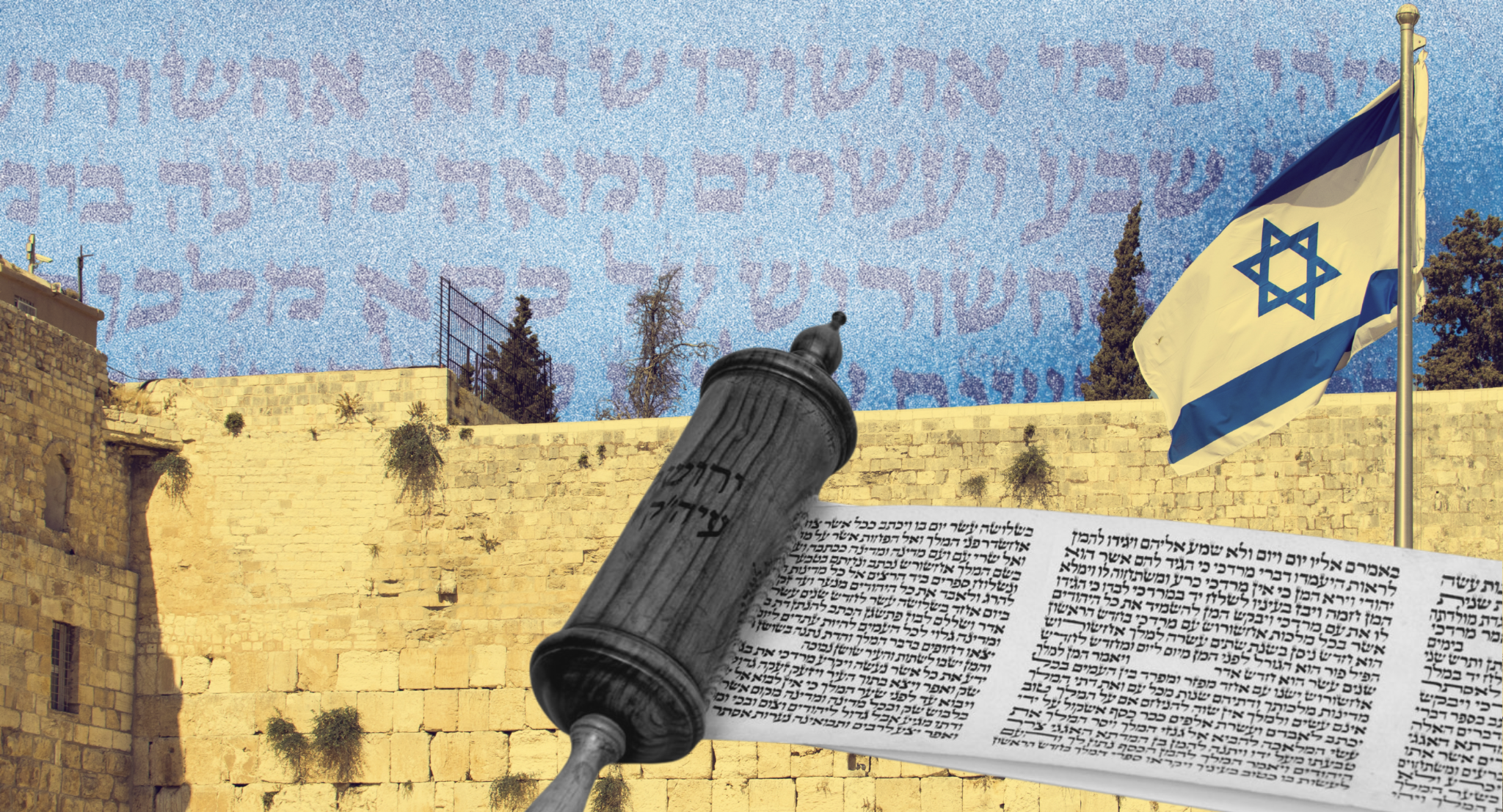
The Book of Esther unfolds entirely outside the Land of Israel, at the heart of the Persian Empire, and depicts the challenges faced by Jews living under a foreign regime. Unlike other biblical narratives, Esther notably omits any mention of God, commandments, or a return to the Land of Israel. Instead, it offers a unique portrayal of dual loyalty—to the Jewish People and to the foreign sovereign.
This narrative raises a critical question: To what extent are the Jews portrayed as an integral part of the Persian Empire? To what extent does the text depict them as a distinct group? At the beginning of the story, Esther appears to be fully assimilated into Persian royal life; however, over time she assumes a more active role as a representative of her people. Mordechai, in contrast, openly maintains his Jewish identity throughout the narrative, refusing to bow to authority. Does the author of Esther genuinely share the celebratory tone that concludes the story when Mordechai becomes second to the king? Or should we read the ending with more nuance?
Some scholars argue that the Book of Esther justifies Jewish life in exile, grounded as it is in dual loyalty and the strategic adoption of survival tactics within a foreign political system. Emily Colbert Cairns, in her book Esther in Early Modern Iberia and the Sephardic Diaspora: Queen of the Conversas, notes how the story resonated deeply with the conversos of Spain, who navigated lives of dual identity. Like Esther, who concealed her Jewish identity at a critical moment, conversos maintained secret Jewish practices while outwardly conforming to Christian society, revealing their heritage only when safe to do so.
Contrasting Models: Ezra, Nehemiah, and Esther
The figures of Ezra and Nehemiah present contrasting models of Jewish loyalty under foreign rule. Nehemiah, in fact, served under Artaxerxes I (465–424 BCE), about 20 years after Mordechai’s time under King Ahasuerus (likely Xerxes I, who reigned from 486–465 BCE). While Mordechai remained in the Persian capital, Susa, as a permanent court official, Nehemiah returned to Persia after his mission in Judah, and we hear little of him thereafter.
Ezra represents a focus on preserving Jewish identity through observance of the Torah and commandments. Operating in Jerusalem, he leads religious and social reforms, even instituting the controversial expulsion of foreign wives to safeguard Jewish distinctiveness.
Nehemiah, on the other hand, embodies a model of temporary political and social leadership. Appointed by the Persian king as governor of Judah, Nehemiah receives authorization to rebuild Jerusalem’s walls and reorganize communal life. Though loyal to the Persian administration, Nehemiah is deeply committed to strengthening Jewish identity in the Land of Israel, emphasizing religious observance and cultural separation from neighboring peoples.
Religious Loyalty Across the Persian Empire
One key question for Jews in exile was how to maintain religious observance within a foreign political system. Sabbath observance offers a revealing case study. The Jewish community at Elephantine in Egypt generally refrained from commerce on the Sabbath, though evidence also points to some Jews working on the holy day. In contrast, in Babylonia, records suggest that Jewish merchants commonly conducted business on the Sabbath, indicating a different communal approach to Jewish identity.
In Jerusalem, however, Nehemiah presents a stricter stance. He rebukes local merchants for desecrating the Sabbath: “In those days I saw in Judah people treading winepresses on the Sabbath … I warned them on the day they sold provisions” (Nehemiah 13:15). Nehemiah’s efforts highlight the tension within Jewish communities regarding observance and identity.
Onomastic studies (the study of names) provide further insight. Names incorporating “Shabbat” or the name Shabtai (Šabbatāya) begin to appear in the fifth century BCE within Jewish communities under Persian rule. This trend is evident in Akkadian, Aramaic, and biblical sources, especially in economic and administrative documents from Babylonia, including sites like Al-Yahudu, Nippur—and Susa. The increased use of such names may reflect a broader shift in Jewish identity, possibly influenced by Nehemiah’s emphasis on Sabbath observance as a defining communal marker.
A Spectrum of Jewish Responses to Exile
While the Book of Esther makes no explicit mention of commandments or religious observance, the emergence of names like Shabtai in Jewish communities hints at ongoing efforts to preserve identity. Nehemiah promoted strict communal boundaries, including Sabbath restrictions, while Esther presents Jewish figures who function fully within the Persian administration. This contrast invites the question: Does Esther advocate for a model of “cautious integration” into foreign rule, while Nehemiah seeks to preserve Jewish distinctiveness? Or does Esther reveal the complexities of political survival, where certain religious practices may be set aside for the greater good?
Esther and Mordechai offer a pragmatic answer. They do not seek to return to the Land of Israel or form a separate community. Instead, they fully integrate into the Persian system, using its mechanisms to protect their people while maintaining an underlying loyalty to their Jewish identity.
Navigating Power and Identity
Rabbi Binyamin Lau, in his book Esther: A Reading of the Megillah, and Michael Eisenberg, in So Shall Be Done to the Jew, highlight the amorphous nature of Jewish identity in Esther. Eisenberg sees the Megillah as a complex meditation on power, survival, and minority existence under threat. Both Lau and Eisenberg critique Mordechai and Esther for choosing integration over return, suggesting that their actions represent a missed opportunity to rebuild Jewish life in the Land of Israel.
Yet, perhaps the Book of Esther presents this model as legitimate. The Persian Empire (sixth-fourth centuries BCE) was known for its nuanced policies toward minority groups, allowing them to maintain religious practices and community structures in exchange for loyalty. This created a dual reality for Jews: They were integrated into the imperial administration while also grappling with questions of identity and allegiance.
Yoram Hazony, in God and Politics in Esther, argues that the Megillah offers a sober reflection on political power and Jewish survival. Ahasuerus is portrayed as a capricious ruler, swayed by his advisors. In this unpredictable environment, Esther navigates a delicate balance between political loyalty and commitment to her people: “For if you remain silent at this time, relief and deliverance will arise for the Jews from another place” (Esther 4:14).
Both Esther and Mordechai are depicted as “outsiders” within Persian society. Esther conceals her Jewish identity to enter the palace, while Mordechai’s refusal to bow to Haman becomes an act of defiance against an oppressive system. Ultimately, they leverage imperial power to safeguard the Jewish community.
Three Models of Jewish Identity Under Persian Rule
The stories of Esther, Ezra, and Nehemiah offer three distinct responses to life under Persian rule: Ezra champions religious distinctiveness and community rebuilding in the Land of Israel, though his mission is sanctioned by Persian royal authority. Nehemiah exemplifies temporary political leadership, balancing loyalty to the Persian king with efforts to strengthen Jewish identity in Judah. Esther and Mordechai embody dual loyalty, fully integrating into the imperial system while remaining committed to their people.
These narratives present alternative—and legitimate—models for Jewish existence under foreign rule. This conversation continues today, as Jewish communities worldwide grapple with maintaining their unique identities while integrating into broader societies. The Jews of the Persian Empire navigated these challenges under the auspices of royal decrees, while Jews in the Land of Israel, even decades after the Second Temple’s construction, faced internal struggles over identity, political tension, and economic hardship.
Conclusion: Embracing the Diaspora
The Book of Esther offers a profound, realistic vision of Jewish life in exile. It suggests that diaspora is not merely a temporary or anomalous state but an integral part of Jewish history and identity. The inclusion of Esther in the biblical canon is itself a bold statement: Jewish life outside the Land of Israel is legitimate, meaningful, and even divinely significant.
While one can dream of a utopian reality without diaspora, Esther confronts the complexities of Jewish life in exile, proposing a model of survival, identity, and agency—even within the heart of a foreign empire.