

I Read This Over Shabbos is a weekly newsletter about Jewish book culture, book recommendations, and modern ideas. Receive this free newsletter every week in your inbox by subscribing here. Questions, comments, or feedback? Email Rivka at Shabbosreads@18forty.org.
Rosh Hashanah is around the corner, and here at 18Forty, we’ve been thinking about teshuva for quite a while. We’ve explored what it means to repair a relationship with a parent, the value of learning Mussar, reclaiming Jewish tradition, and so much more.
But what about our books? I asked the 18Forty team what they’re reading to help them think about teshuva and the Yamim Noraim. The results, as always, vary greatly—some are exploring Chabad Chassidus, some are reading Transcendentalist classics, and others are reading marriage advice (but I won’t name names).
With hope, gratitude, and prayers, I want to wish our readers a Shana Tova Umetuka—a happy, fulfilling, and sweet new year. May this year bring comfort, joy, and salvation to the Jewish People.
Sruli Fruchter — Director of Operations
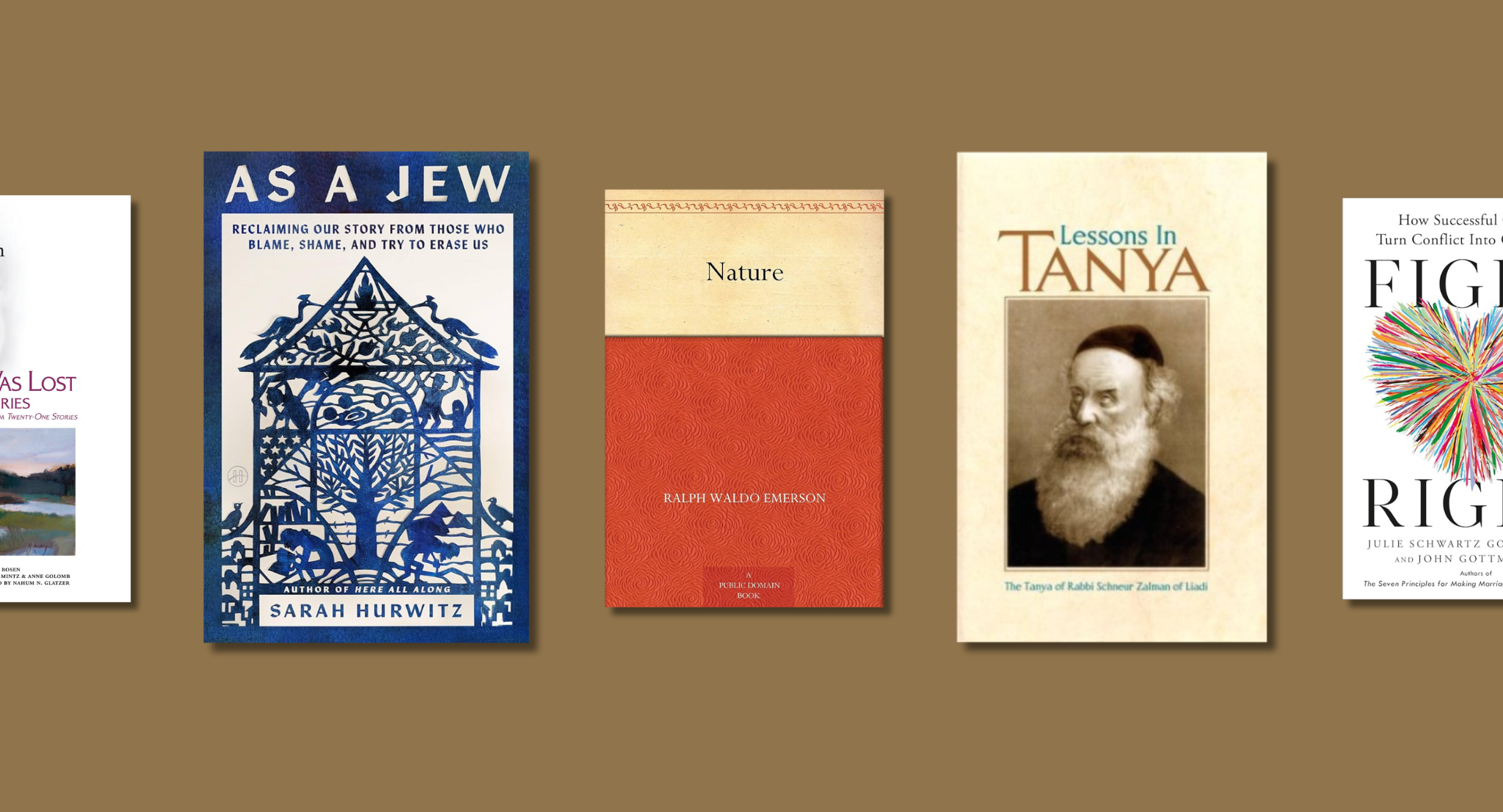
Nature by Ralph Waldo Emerson
Ralph Waldo Emerson’s Nature is on my mind a lot these days. Not just for its elegant prose but also for its reminder of what ought to be at the fore of mind—spiritual submersion with the Divine.
Though Emerson is a pantheist, his language on nature as a channel of divinity is rejuvenating. Blades of grass, ruffles of trees, beams of sunlight—the natural world reminds us to encounter God in this very moment, with whatever surrounds us.
Around Elul, I feel myself parched for some liquid connection to God. Smooth, natural, flowing. The Chasidic thinker Hillel Zeitlin has an obscure piece about praying alongside the trees. It reminds me of the hallelukah psalm about how all of nature sings God’s praises, as Rebbe Nachman of Breslov admires.
When I yearn for something more, I turn to nature. There, I can always find God.
Denah Emerson — Podcast Editor
As a Jew by Sarah Hurwitz
Sarah Hurwitz’s As a Jew: Reclaiming Our Story from Those Who Blame, Shame, and Try to Erase Us is part memoir, part call to action, and part spiritual exploration. In it, Hurwitz—a former White House speechwriter who rediscovered Judaism as an adult—pushes back against the voices that distort or diminish Jewish identity, whether from outside critics or within the Jewish community itself. She shares her personal journey of wrestling with inherited narratives, shame, and misunderstanding, while highlighting the richness, resilience, and beauty of Jewish tradition. What makes the book powerful is how it blends history, spirituality, and lived experience, offering a vision of Judaism that is unapologetic and deeply nourishing.
I’m reading it now, during the season of teshuva and the Yamim Noraim, because it feels especially relevant to this time of self-examination and renewal. These days are about returning to who we truly are, peeling back layers of fear or distortion, and reconnecting with our most authentic selves. Hurwitz’s book offers exactly that kind of reclaiming—not only personally, but communally—reminding us that our story as Jews is one of strength, honesty, and belonging. In the midst of reflection and prayer, her words feel like a guide for how to stand tall in my Jewish identity while doing the inner work of teshuva. It’s both grounding and inspiring, a reminder that returning also means reclaiming.
Cody Fitzpatrick — Associate Editor
Igeres HaTeshuva (a.k.a. Tanya Katan) by Shneur Zalman of Liadi
When we talk about the Tanya, we’re usually referring to the first and longest section, Sefer Shel Beinonim. But right now, ahead of the High Holidays, I’m reviewing the third part: Igeres HaTeshuva. (Shout-out to Rabbi Eli Rubin for reviewing this blurb and pointing out that this section is also called Tanya Katan—because, like Sefer Shel Beinonim, it also begins with the word “Tanya.”)
In it, the Alter Rebbe tells us about how the soul is like a rope, with its upper end “bound Above” and the lower end bound to the body. The strands of the rope connecting them are the 613 mitzvos.
“When one violates one of them, G-d forbid,” we’re told in Chapter 5, “a thin strand is severed.” More severe sins, we learn, can sever the entire rope.
However, when we do teshuva, we’re retying the rope.
We might think the rope has been imperfected, but in fact, “the site of the knot is twofold and fourfold thicker.”
So the question becomes: How do we do the “higher-level teshuva” prescribed by the Tanya? Readers of I Read This Over Shabbos will take comfort in knowing that it involves, among other things, learning.
“Since the violation of the covenant … causes a blemish in the mind,” we learn in Chapter 9, “therefore his rectification is secured by engaging in the study of the Torah, which derives from Wisdom.”
Rivka Bennun Kay — Shabbos Reads Editor
Fight Right by John Gottman and Julie Schwartz Gottman
Before Kol Nidrei at my midrasha, we sing “Aderaba,” a poem written by the Chasidic master, Rabbi Elimelech of Lizhensk (known by his famous work the Noam Elimelech). The poem is a short prayer for healthy interpersonal relationships:
On the contrary, grant in our hearts, that each of us recognizes the fullness of our brethren, and not their deficiencies
And that every one of us speak with their fellow in the straight and desired way before You
After singing this short but beautiful poem, alumni who’ve arrived for Yom Kippur are given a few minutes to say hello to their friends before davening begins. We enter the holiest day of the year in celebration of our relationships with one another—in a prayer that we may always see the best in each other.
The book I’ve been reading for the past month—relationship scientists John Gottman and Julie Schwartz Gottman’s latest work, Fight Right—outlines the fundamentals of interpersonal teshuva in ways that surprised me. Backed by decades of research on the science of love and relationships, the Gottmans offer five principles for fighting better—that is, harnessing conflict to build stronger, healthier relationships. They explore how to apologize, take accountability, own up to our mistakes, and express ourselves in an effective way.
I think of teshuva in concentric circles, beginning with myself, then extending outwards to my marriage, and so forth. Some of the holiest teshuva we do begins at home, with the person who knows you better than anyone else, with whom you spend the most of your time.
Gabriella Jacobs — Social Media Manager
A Book That Was Lost by S.Y Agnon
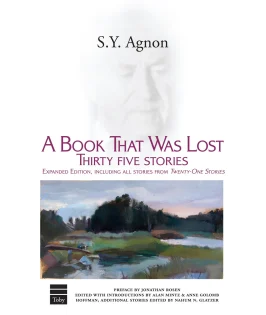
I recently revisited S.Y. Agnon’s A Book That Was Lost: Thirty Five Stories, and found myself surprised at how much it speaks to the Yamim Noraim season. Agnon, whom I first read in midrasha, has a way of folding folklore, ritual, and modern questions into stories with many layers of meaning. This compilation very much is not a “teshuva manual,” but I find Agnon’s stories still carry the mood of Elul in their own way. In “Tears,” I am reminded how human speech may fail, but longing and emotion might be a more meaningful prayer. “The Tale of the Scribe” makes me think of the book our fates are sealed in on Rosh Hashanah. And, in “That Tzaddik’s Etrog” the Maggid’s quest to find a perfect etrog at any cost reminds me of the excitement that always accompanies the Chagim, even while we find ourselves in a precarious position of judgement. Agnon doesn’t hand out any answers or provide direction on how we should do our own teshuva in any of his stories, but he nudged me into the reflective space that teshuva demands.