

In 1976, a fair amount of controversy was created surrounding the publication of Rabbi Yehudah HaChassid’s commentary on the Torah. Certain passages seemed to allow for parts of the Torah that were not written by Moshe Rabbeinu. The question of whether to publish was brought to Rav Moshe Feinstein, who ruled that they should be taken out (Igros Moshe YD, vol. 3, #114-115). The incident was another example—among many—of the ambiguity surrounding where the boundaries are, so to speak, for theologically sound discourse.
Boundaries in theological discourse are tricky, especially now. Online discourse has eroded what were once more obvious communal norms and lines. That’s not entirely a bad thing as people have access to more ideas, opinions, insight, and experiences than ever before. But the job of knowing who is the expert has become far more difficult.
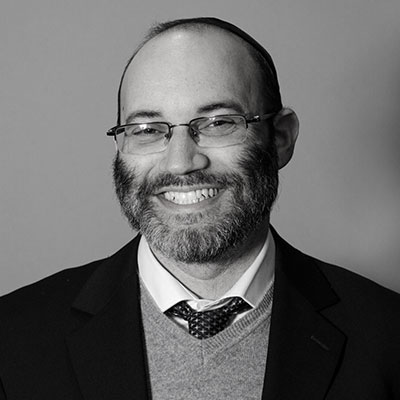
When I was in my early twenties, I stumbled upon Gil Student’s blog, then known as Hirhurim (now called Torah Musings). Here was someone without an official rabbinic title, without formal academic training, discussing some of the most contentious and interesting aspects of Jewish thought. Reflecting on how the internet has changed religious discourse, Gil writes:
One strategy for Torah leaders is to bemoan this democratization by standing their ground and denouncing the non-experts who overstate their competence for the intellectual frauds that they are. Unfortunately, however, calling out frauds generally alienates more than it attracts. The authentic scholar appears self-serving and uncharitable, even when he is entirely correct. Similarly, debate will fail, since the audience lacks the requisite sophistication and training to evaluate the credibility and strength of competing arguments. Consequently, such debates are won through rhetoric and simplistic formulations, usually the province of the fraud, and not authenticity and truth, the province of the scholar.
Online discourse has changed the way we discuss religion and it has changed the authority with which we draw communal lines and boundaries.
[Gil] makes the complex approachable and anchors the simple within the sophisticated and thereby provides a much needed voice in an otherwise crowded room.
In many ways, Gil himself is a product of this world. I don’t always agree with Gil, but I continue to be astonished at the breadth of his scholarship and the clarity of his writing. The substance and style of his ideas were made for the internet age. And I admire his fearlessness. Gil is one of those people who are difficult to predict—part of the reason why I like him so much. Sometimes he infuriates; sometimes he inspires. Some accuse him of being too conservative; others find him too open-minded. He doesn’t fit neatly into a box and it’s part of why I find his approaches so compelling.
Dr. Haym Soloveitchik wrote a brief article reflecting on the controversy surrounding the commentary of Rav Yehudah HaChassid. He’s not entirely convinced that Rav Yehudah HaChassid even wrote it. He concludes with a poignant reflection on authority in general—one that takes on new meaning in the internet age. He writes:
If one reads the description of Socrates in Xenophon one has the impression of a wise and moral man and an appealing personality, but one, in intellect at least, not very different from any of the sophists that he so opposed. From the writings of Plato, whether one takes all attributions by Plato to him quite literally or view the Socrates of the later dialogues as being simply a spokesman for Plato’s mature thoughts, Socrates still emerges as a compelling figure of genius, indeed, the father of western philosophy. The “Socratic problem” is a recurrent one in the transmission of ideas, especially in traditional societies when so much instruction is through oral teaching. And when one reads the reports of students of their master’s teachings, ancient, medieval, or modern, one would do well to bear in mind Bertrand Russell’s observation: “There has been a tendency to think that everything that Xenophon says must be true, because he had not the wits to think of anything untrue. This is a very invalid argument. A stupid man’s report of what a clever man says is never accurate, for he unconsciously translates what he hears into something that he can understand.”
Religious ideas, in general, suffer from this problem. Too often we hear ideas quoted that transform something profound into something the speaker or writer can understand. Gil, however, manages to stay faithful to both. He makes the complex approachable and anchors the simple within the sophisticated and thereby provides a much needed voice in an otherwise crowded room.
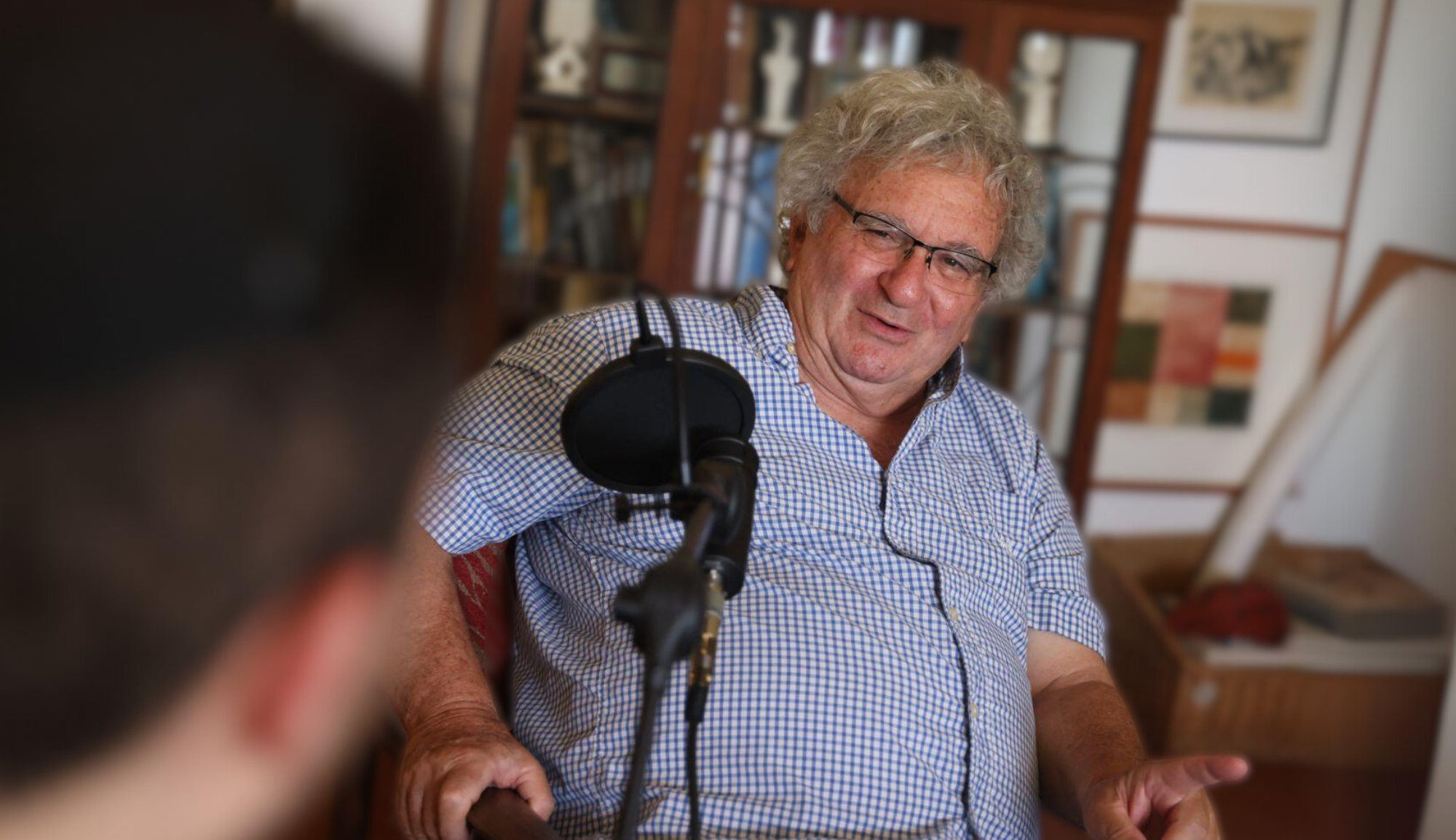
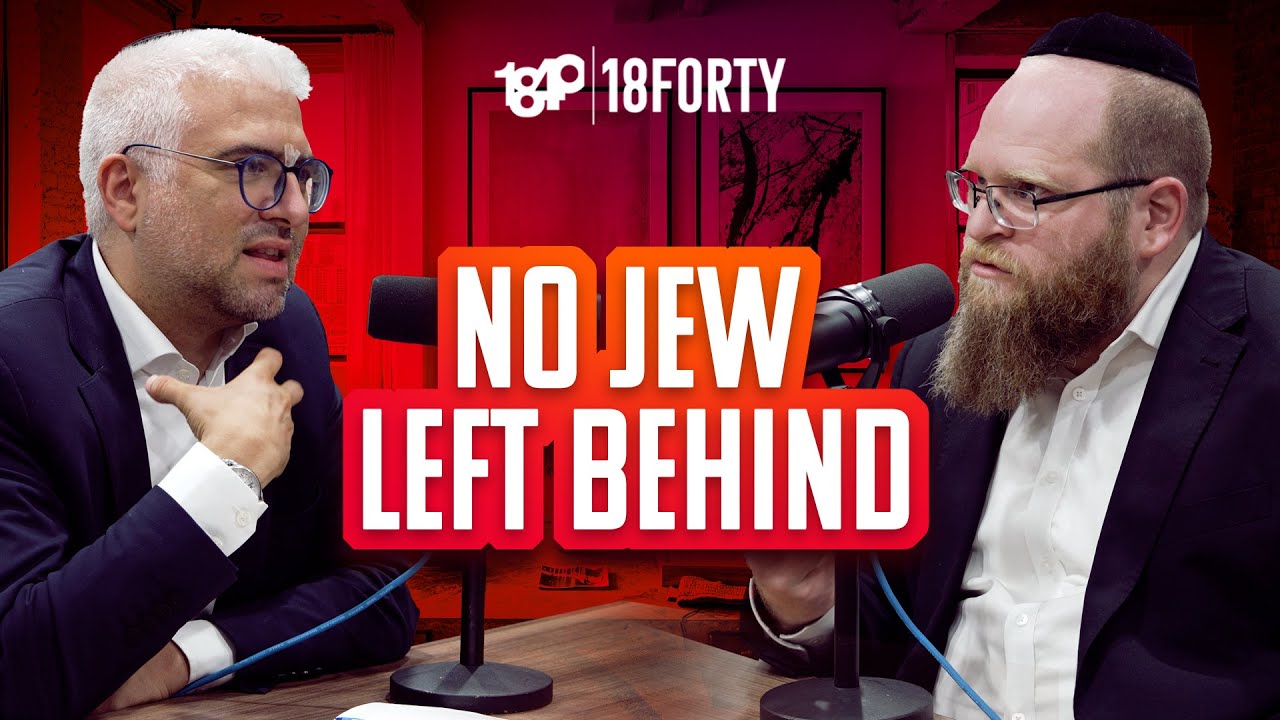
Tune in to our podcast with Gil Student.