

[A traveler] said to me [Elijah the prophet]: “My teacher, there are two things in my heart that I love with a great love—Torah and the Jewish People—but I do not know which of them came first.” I said to him: “People usually say that Torah preceded everything … but I say that the holy Jewish People preceded [the Torah]”.
Which came first—Torah or the Jewish People? This abstract question about cosmological chronology seems irrelevant to the average Jew’s life. After all, committed Jews are certainly enjoined to care about both.
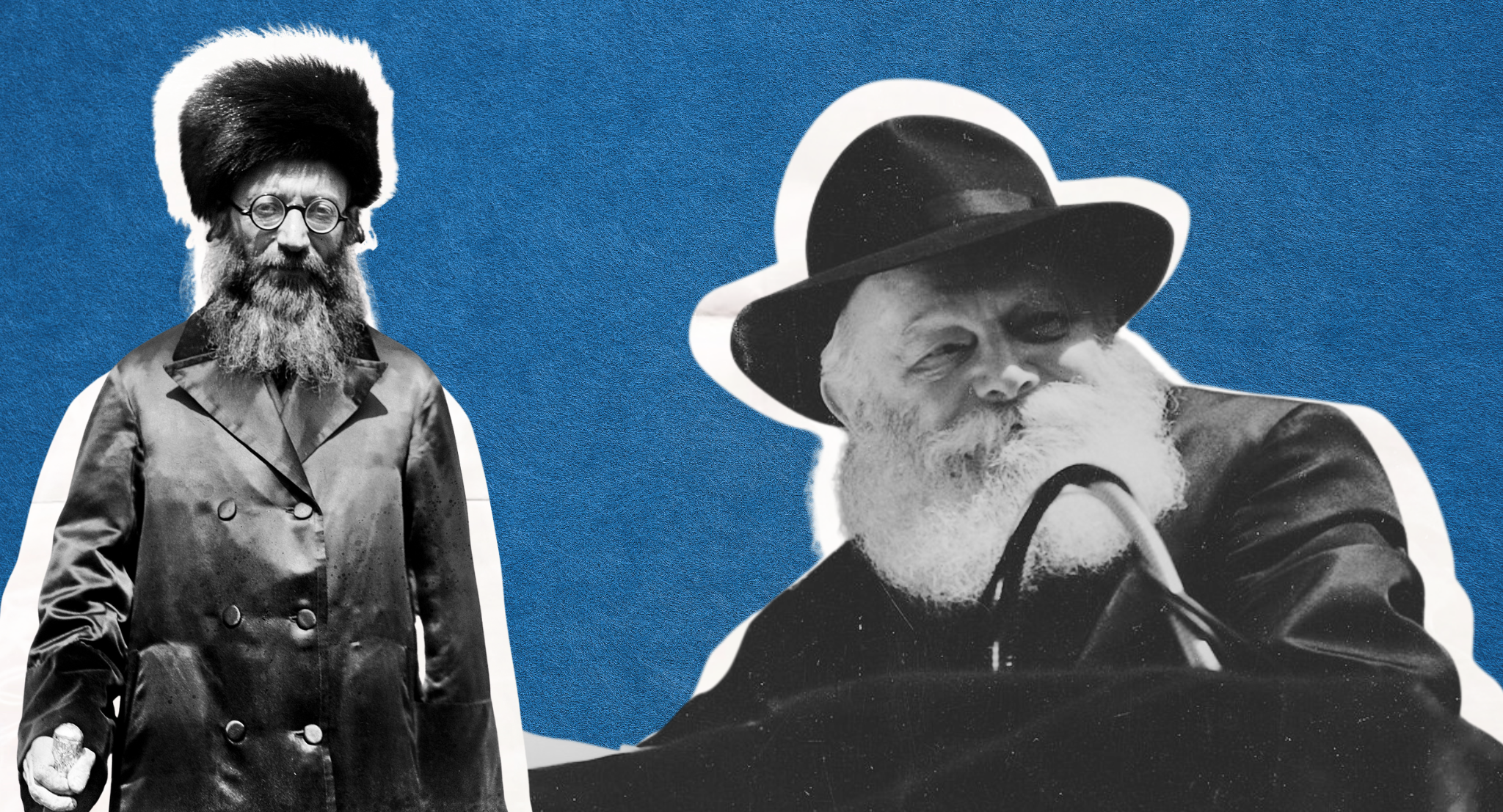
However, the question posed by the traveler to Elijah the prophet reverberates today with serious ramifications for Jewish ideology, hierarchy of values, and lived experience. More specifically, Elijah’s response helps form the ideological backbone of two major Jewish communities: contemporary Chabad and Religious Zionists. Rav Kook and the Lubavitcher Rebbe integrated Elijah’s assertion of the Jewish People’s primordial primacy into their understandings of the Jewish People’s value and role in the world.
RELATED: Chabad’s Mission Is Not Much Different Than Centrist Orthodoxy’s
What is the Meaning of the Midrash?
Rav Kook and the Lubavitcher Rebbe both explain that the traveler was not really asking a question about chronology. He was instead asking Elijah where to find divinity in this world. The traveler, like many spiritual seekers, wanted to connect to God. But this is a difficult task. God does not appear to be overtly present in our reality. How, then, should one reach out to the Divine?
The traveler understood one method of connection to be via a terrestrial proxy—an item representing the Divine down below. Elijah’s friend sought a real-world entity that was the most pristine expression of divinity. Where can one find the highest quotient of godliness, so to speak, in this physical world? Which created thing most represents God? Connecting with this entity, the traveler reasoned, can be one way of connecting with God.
One natural candidate is the Torah. The Talmud states that the Torah is an expression of God’s soul, an idea amplified in later sources. Ramban writes about how the Torah is, in truth, one long name of God. Rav Chaim of Volozhin asserts that the Torah and God are so intimately bound that one can achieve a state of deveikut, or spiritual cleaving, simply via studying and understanding Torah. This logic argues that Torah was the first entity created by God—the best expression of divinity in this world. This perspective is represented by the “people” in Elijah’s response who say that “Torah preceded everything.”
This was not what Elijah the prophet believed.
For Elijah, the Jewish People precede even the Torah. The collective soul of the Jewish People is the entity vested with the highest quotient of divinity outside of God Himself. Thus, connecting with the Jewish People is a means through which one can connect to God.
The Jewish People and the Torah
The traveler’s dilemma speaks volumes regarding the relationship between God, the Torah and the Jewish people. If the Torah is the first and holiest of creations, then the Jewish People’s relationship to God is mediated through the Torah. The Jewish People would be dependent on the Torah for their sanctity. It is their acceptance of the Torah, obligation to observe it and perhaps their actual living in accordance with the Torah’s precepts that imbues the Jewish People with sanctity.
Elijah’s conclusion, though, indicates that the Jewish People have a direct relationship with God that is not mediated by the Torah. The Jewish People were God’s first creation and were bound with Him even prior to the Torah’s creation.
This does not relegate the Torah to insignificance. Rather, Rav Kook explains, the Torah is necessary to help reveal the holiness of the Jewish People in this world. On a celestial and supernal plane, the Jewish soul is closer to God than any other entity. However, when a fragment of the collective soul of the Jewish People descends into this world and is placed within an individual’s body the situation changes.
In such an exilic and unnatural state, the soul finds it difficult to experience and express its true proximity to God. A Jew’s true closeness to God becomes buried under a labyrinth of physical urges and egotistical drives. Accordingly, God gave us the Torah to facilitate knowledge and behaviors that peel away our psyche’s external layers, revealing our innate Jewish soul with its innate intimacy with God.
In short, Rav Kook argues that the Torah does not create the sanctity of the Jewish People. Rather, the Torah was created for the sake of the Jewish People. The Torah enables the Jewish People to realize and reveal its intimate and unmediated relationship with God.
The Lubavitcher Rebbe formulates this idea through reconciling seemingly conflicting rabbinic statements:
The words of our sages are known: “The thought of the Jewish People preceded everything else,” including the Torah. This means that the Jewish People are above the Torah. On the other hand, the Zohar writes “the Jewish People are connected with the Torah and the Torah is connected with the Holy One blessed be He.” This seems that the Torah is above the Jewish People.
Regarding this it is explained: In their root, the Jewish People are above the Torah. However, when the souls descend into this world then the Torah is elevated and the connection of the Jewish soul to God occurs through the Torah.
The embodied Jew needs the Torah. However, in truth, before the concealments and contractions of this world, the Jewish People are above the Torah.
RELATED: How the Lubavitcher Rebbe Teaches Us to Transcend Ourselves
Conceiving the Jewish People as the created entity that is vested with the most godliness can have immense ramifications in many areas of life and thought. For the sake of demonstration, let me briefly outline two such instances.
Mesirut Nefesh
Mesirut nefesh, or self-sacrifice for the sake of God, is an important Jewish value. The classic expression in which a person martyrs himself rather than bow to an idol, is thankfully a relatively rare occurrence. Instead, many Torah authorities emphasize the value of living with a sense of mesirut nefesh—transcending one’s natural and narrow individual needs for the sake of living in a more godly manner.
In some communities, living with mesirut nefesh is primarily oriented towards Torah study. Rambam describes the loftiness of the crown of Torah and how one must sacrifice worldly pleasures to attain it. Many follow the Rambam’s words and choose to live with relative poverty for the sake of immersing themselves in the sea of Torah.
Rav Kook and the Lubavitcher Rebbe speak also of a different form of mesirut nefesh: self-sacrifice for the Jewish People. After all, Elijah the prophet teaches us that the Jewish People are the primary expression of divinity in this world. Accordingly, our dedication to God should express itself in a readiness to sacrifice ourselves for the sake of helping the Jewish People.
Mesirut nefesh for the Jewish People is expressed differently in the Chabad and Religious Zionist communities.
In Chabad, it is intertwined with the concept of shelichut. Already in his first ma’amar as the leader of Chabad, the Lubavitcher Rebbe spoke of the urgent mission to reveal divinity in our most lowly material realm. One method for accomplishing this task was by sacrificing one’s own desires—both material and spiritual—for the sake of helping other Jews.
A Chassid on shelichut will study less Torah and have less time to dedicate to passionate prayer. In addition, he might live without many of the amenities that a regular job and a large Jewish community can offer. However, the Rebbe argued that one must be willing to transcend these understandable and even lofty desires for the sake of helping other Jews. This is the mesirut nefesh for the Jewish People that the Rebbe inculcated in his followers.
In the Religious Zionist world, this is perhaps mainly expressed through army service. Here, mesirut nefesh is more literal, in the sense of willingly putting one’s life on the line to protect the Jewish People. Many Religious Zionist rabbis describe army service as the ultimate service to the Jewish People and therefore as a highly regarded religious value.
RELATED: What Religious Zionists Taught Me About Reading Tanach as a Living Story
Despite their differences, both members of the Chabad and Religious Zionist communities make real personal sacrifices for the sake of the Jewish People. This is directly rooted in their understanding of Elijah’s response to the traveler—the Jewish People are the entity that is closest to God.
Feeling Connected
Another expression of this “Jewish People-first” attitude is the importance ascribed to simply feeling connected to the Jewish People. While this category is somewhat amorphous, I will demonstrate it via several anecdotes.
A few months after October 7, I had a conversation with a God-fearing, pious, Torah scholar from a non-Zionist community who told me that he was only vaguely familiar with what was happening in the war. I can attest that he cared deeply and prayed fervently for the soldiers, the hostages, and the welfare of the Jewish People more broadly. But he did not read the news and only received occasional updates.
He explained to me that he wanted to keep the mindset that God alone was in charge of the war. He felt that more knowledge about the ins and outs of the battles, the military strategies, and the politics involved would cloud the clarity of his conviction that God was the Master of wars. This, in turn, would hurt his prayers, which he felt were his main contribution to the war effort.
RELATED: Is Judaism Fundmentally Zionist?
While one can respect this approach, I think that people educated in the spirit of Elijah’s response to the traveler would find it hard to accept. If the Jewish People are the most sublime expression of divinity in this world, and feeling connected with the nation is a supreme religious value, then it is natural to want to take an active interest in the happenings of the nation. The value of sharing in the pain of the community and not being one who “separates himself from the community” is so paramount that other factors pale in comparison.
This “Jewish People-first” mindset not only encourages interest in what is occurring, but also active engagement. Anecdotally, I saw this firsthand with Religious Zionist teenagers that I know. While they were too young to serve in the army, many of them wanted to be as involved with the war as possible. This included attending all sorts of events such as funerals of soldiers and hostages, shiva-houses, and mass prayer events and rallies throughout the country. Even if this form of showing up did not change the actual course of the war, nonetheless there was a desire amongst these teenagers to be part of what was going on with the people.
From an educational perspective, this point was sharpened for me a few months ago when a released hostage was driven past my city on his way from the hospital to his home. The family of this released hostage asked the communities situated along the route to come out to the highway to greet and escort the released hostage with cheering and songs of gratitude to Hashem.
Many people of all stripes and ideologies came out for what was a beautiful event. Of the local religious schools, though, only the Religious Zionist schools brought their students. Religious schools of a non-Zionist ideology did not attend.
I have not spoken to the administrators of these schools and therefore my analysis is speculative. My sense is that principals of non-Zionist schools decided to prioritize class-time and all the more so if Torah was being studied during this time. Religious Zionist school administrators, though, chose differently. My estimation is that their decision was rooted in the value of connecting to the Jewish People. When events of national importance are happening a few minutes away from the school, how can you not join Am Yisrael and participate in the event?
There are certainly multiple factors at play in the above anecdotes, and these sorts of attitudes and decisions cannot be pinned on a single binary issue. However, I feel that at least in a general sense, there is a clear line to be drawn from Elijah’s statement regarding the primacy of the Jewish People to the approach of the Religious Zionist community towards being connected to the Jewish People. If the Jewish People are a first-order expression of divinity, then being part of whatever is happening to the nation is of primary significance.
Ideas are powerful. Torah ideas are even more powerful. Elijah’s response to the traveler, together with other sources, creates a conception of the Jewish people that has cascading ramifications for abstract Jewish thought and attitudes of teenagers alike.
When outsiders look at the Chabad and Religious-Zionist communities there is often a sense of bewilderment mixed with admiration regarding their emphasis and ideals. It is important to realize that the choices made by the members of these communities do not happen in a vacuum. Rather, these personal life-decisions are made in the context of source-based value systems that energize these communities.
We all have what to learn from all communities. With the help of God, may we merit to both connect with and care about the Jewish People and the Torah.