

I Read This Over Shabbos is a weekly newsletter from Rivka Bennun Kay about Jewish book culture, book recommendations, and modern ideas. Receive this free newsletter every week in your inbox by subscribing here. Questions, comments, or feedback? Email Rivka at Shabbosreads@18forty.org.
Last month, I took a well-deserved vacation. I had not taken a real break in over a year, and was in desperate need to disconnect, spend time in nature, and hang out with my adorable nieces. In Internet terms, I needed to touch grass.
The biggest question was which book to bring with me. In search of both a good work of fiction (which I always love) and some Torah, I chose two: Fredrik Backman’s latest work, My Friends, and Rav Kook’s Orot HaTorah.
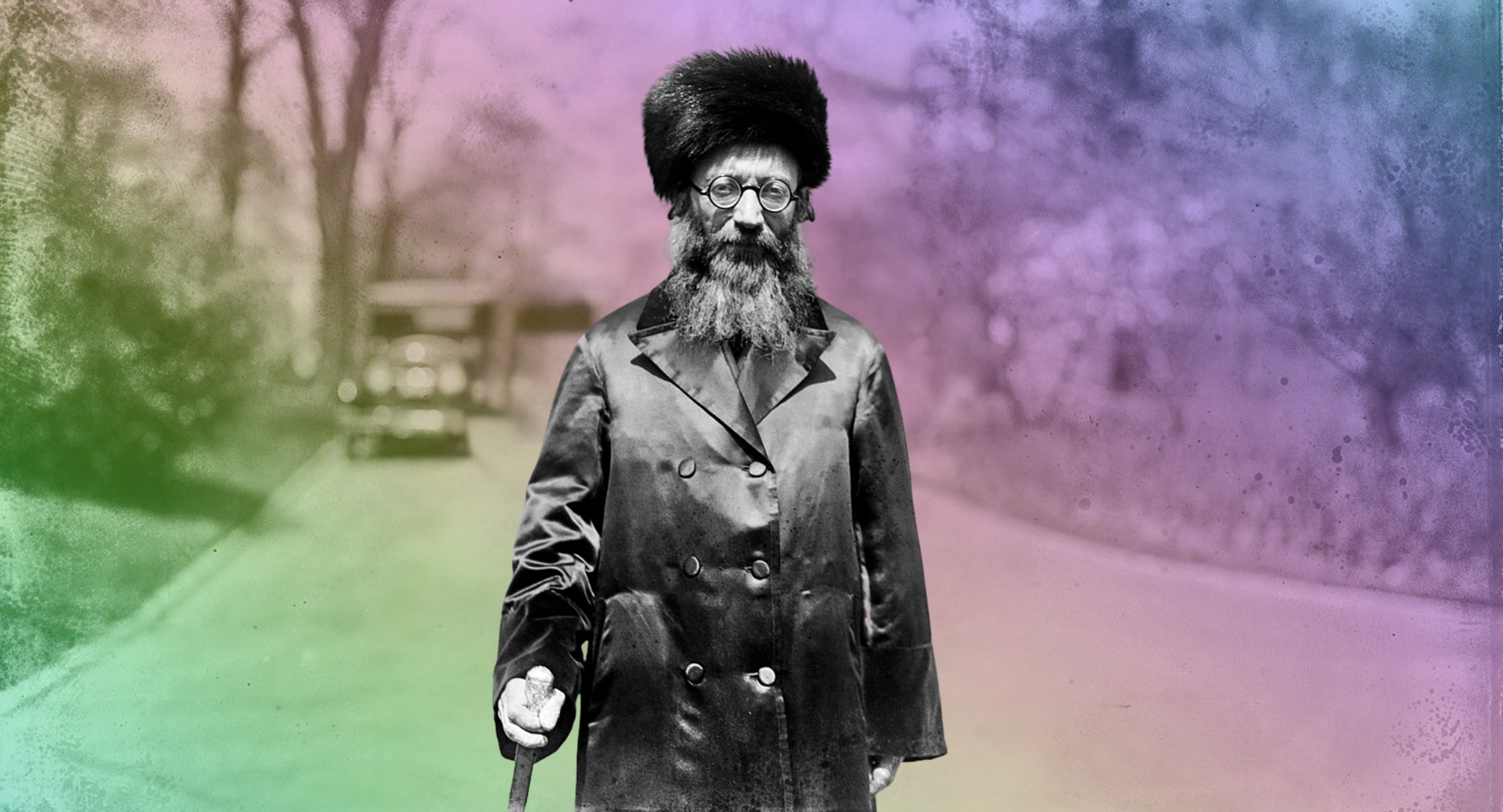
My copy of Orot HaTorah is small and modest, but I never really got through it. For some reason, vacationing felt like the right opportunity to start learning Rav Kook. I began by reading Yehuda Fogel’s guide to reading Rav Kook, where I found something that struck me:
I’d advise reading Rav Kook as you would read a poem, with an eye less to the argument or claim he is staking and more to the impression it leaves. It’s helpful to read through a piece of Rav Kook’s writing completely before breaking it apart and digesting it, as the ride is most enjoyed in its entirety as a spiritual journey rather than as a set of theories. If the words or ideas feel heavy, you might want to try reading some of them out loud, to taste them in your mouth.
Thinking about Rav Kook as a form of poetry removes the pressure of understanding every word, as the writing becomes more about feeling than meaning. Like a poem, I read a passage a few times, let it digest, then return to it a few hours later for re-reading. Only after processing how I feel do I consider what it means.
Take, for example, Orot HaTorah’s first chapter. I read it by the pool one sunny afternoon, the gentle chirp of crickets accompanying me. Rav Kook discusses the relationship between Written and Oral Torah (translated by Rabbi Bezalel Naor):
The Written Torah we receive through the highest, most expansive channel in our soul. We feel from it the living, general light of all existence. Not the spirit of the nation created this great light—but the spirit of God.
In the Oral Torah we begin the descent to life. We sense that we receive this light through the second channel of the soul, the channel which approaches practical life. We feel that the spirit of the nation molded the Oral Torah in its distinct image. Here the Torah of G-d and the Torah of Man converge. And these two lights make a complete world, in which heaven and earth kiss.
It felt like Rav Kook was directly addressing my own journey in Torah study. Growing up in a traditional all-women’s space, my Torah education in school was primarily of the Written Torah, and to this day, it still feels like the spirit of God itself hovers over Torah Shebichtav.
At higher institutions—i.e. midrasha—I was introduced to Oral Torah—Torah SheBaal Peh. I began to learn Mishna and Gemara, “breaking my teeth” over challenging concepts and elaborate arguments that engrossed me so deeply I lost my place on the page. Oral Torah was a labyrinth of intricate paths, replete with unforeseen destinations and diverse facets—kind of like humanity itself.
I often favored one form of study over the other. While I valued my extensive Tanach education, I was frustrated that a whole world of learning had been withheld for so long. I eventually learned to love both equally, seeing them, as Rav Kook describes, as a union of heaven and earth. Written Torah—the greatest work of literature—is divine. Oral Torah, shaped by “the spirit of the nation,” is human because it is complex and doesn’t always offer clear answers. When the “Torah of God and the Torah of Man converge,” heaven and earth unite in wholeness.
Can we truly feel this union? Rav Kook seems to think so—even in moments of rest.
In a later chapter of Orot HaTorah, Rav Kook discusses the impact of Torah study. His words resonate, especially for those of us who learn when we’re tired and lack the energy to fully comprehend (translated with additional explanations by Rabbi Chanan Morrison):
Intensive Torah study serves to bind the spirit to lofty holiness. This is true even when we do not fully grasp the topic studied. There is a spiritual influence when we spend many hours in Torah study, even if the study is not in depth. Sometimes Torah study will have an elevating influence even when we fail to grasp the plain meaning of what we have learned. We thirst for the word of God, we yearn to study much; so we slake our thirst with extensive study, and our soul is uplifted. Sometimes, just the effort to comprehend the word of God and the occupation in holy matters, even if we lack complete understanding, is uplifting.
Perhaps I was able to read and appreciate Rav Kook’s writing precisely because I was on vacation and had the mental space to receive his ideas. But this passage reminded me that learning can be uplifting even when we’re tired—that the effort itself has value, whether we’re lounging by a pool or stealing moments between obligations.
Naturally, I didn’t finish reading Orot HaTorah on vacation, because Rav Kook’s works are not something you “get through.” Like poetry, it’s writing that you return to, again and again, with fresh eyes and openness.
Bringing Rav Kook on vacation reminded me that Torah study doesn’t always have to be a grind of effort, mastery, and pressure. Sometimes it can be read like poetry: slowly, patiently, with room to breathe and reread.