

I Read This Over Shabbos is a weekly newsletter about Jewish book culture, book recommendations, and modern ideas. Receive this free newsletter every week in your inbox by subscribing here. Questions, comments, or feedback? Email Rivka at Shabbosreads@18forty.org.
I am a firm believer in making my sukkah into my home—not just in ways that halacha mandates we do, but in ways that feel personal to me. I’ll drink my morning coffee in the sukkah, linger over long conversations with family, and, of course, do lots of reading.
I don’t usually finish books in the sukkah. Instead, I consume bite-sized material in spurts. It’s not about headspace; it’s about reading texts that spark thought—something that I can pour over while eating breakfast, and then carry with me throughout the day on whatever Chol Hamoed activities are in store.
For me, Sukkot has always been a chance to recalibrate before the everyday current sweeps me up once more. Like vacation, I look for reading that makes me read a few times to digest how it feels and what it means. That’s why I’ll be reading bits and pieces of the following three books over the next week, and I would love to hear about your sukkah reads as well. May it be a joyous and restorative Sukkot for us all.
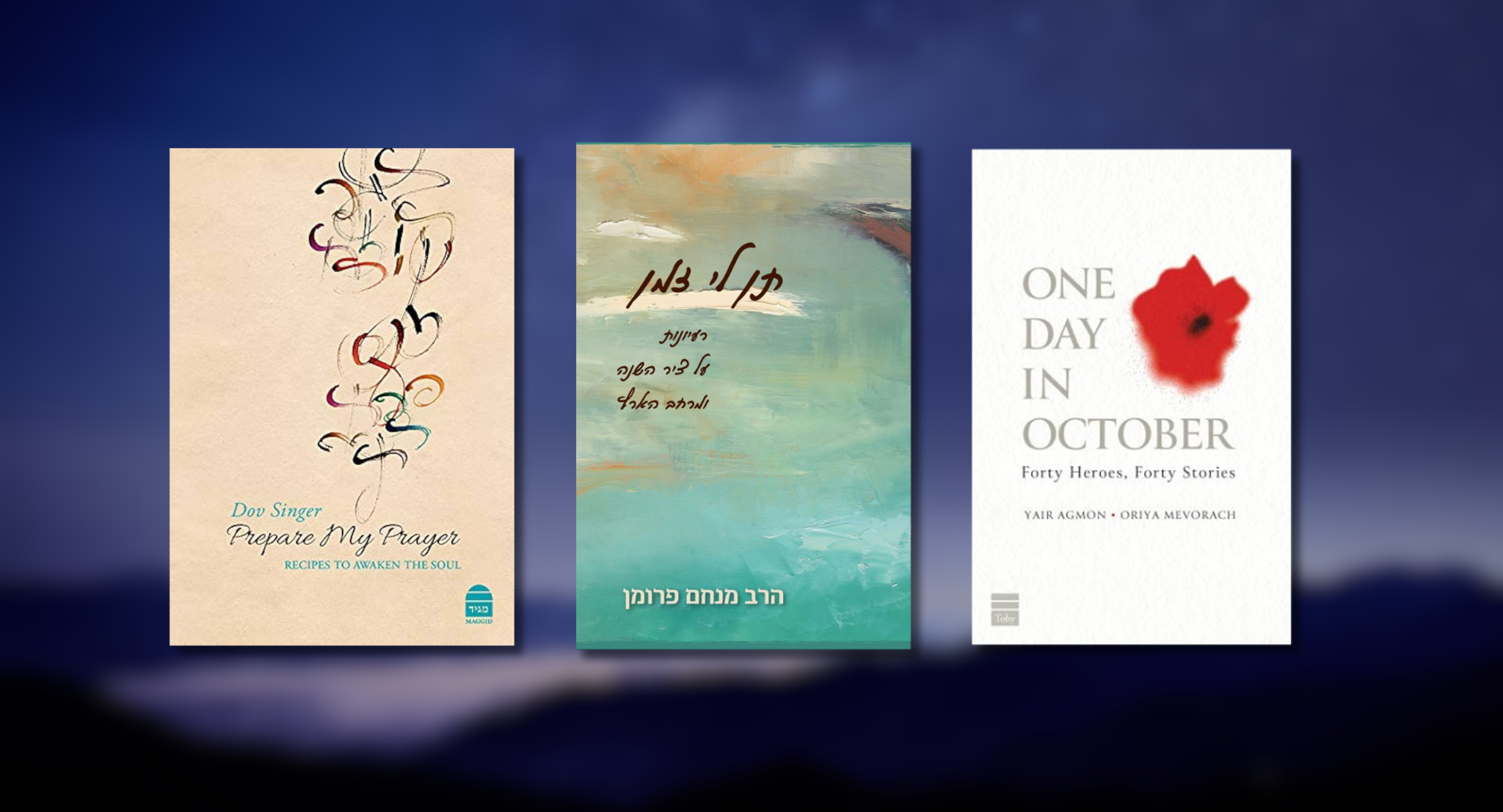
Prepare My Prayer by Dov Singer
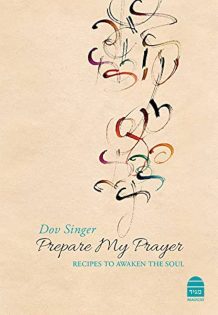
Personally, I believe this book was translated into English because the magic of Rav Dov Singer made its way to America a few years ago, and now people can’t get enough.
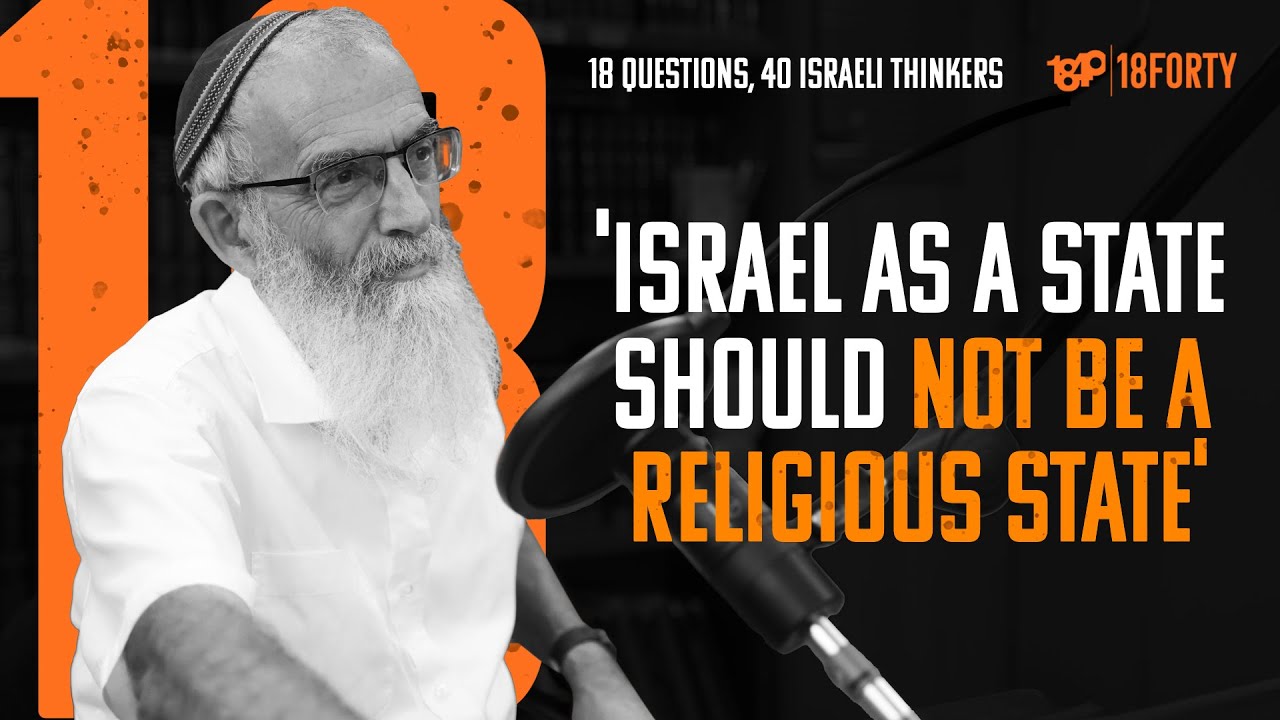
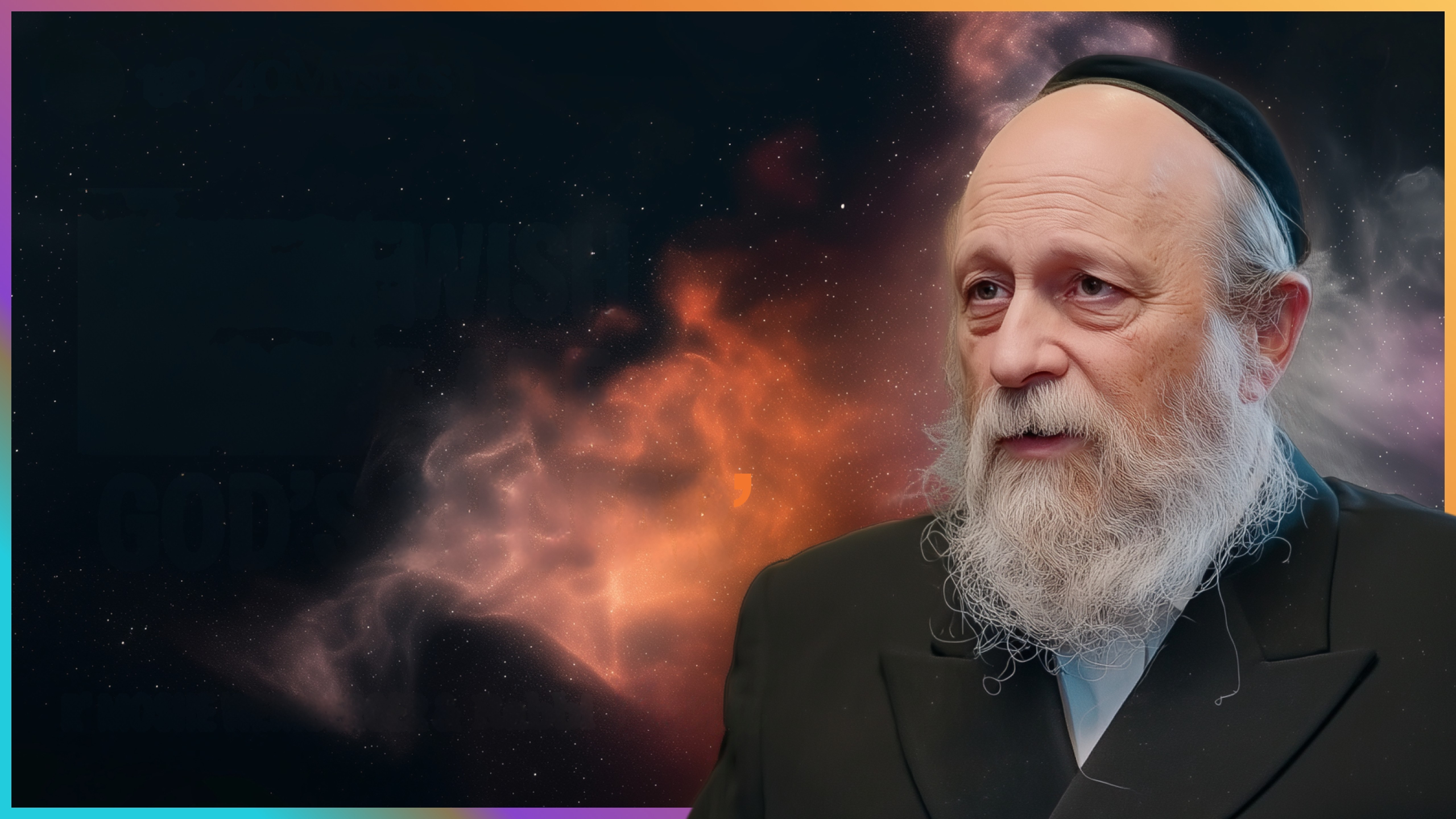
Rav Dov is no stranger to 18Forty. The rosh yeshiva of Mekor Chaim, a boys’ high school in Gush Etzion, and the founder of the Beit Midrash L’Hitchadshut, Rav Dov is a trailblazing Israeli educator and spiritual leader. His book Tikon Tefilati, which has since been translated into English as Prepare My Prayer, presents recipes (literally—this is the word used) for soulful prayer. The goal of the book is to develop a language of prayer—to expand the concept of prayer beyond the shul and the siddur, and to approach tefilla as an experience of presence before God.
I bought this book years ago, but I never got around to really delving into it—and I think Sukkot is the perfect time to begin.
Ten Li Zman by Menachem Froman (Hebrew)
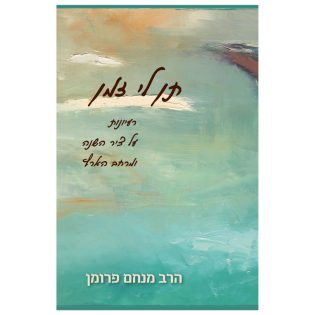
I’ve written briefly in the past about Rav Froman, and his profile and writings have been featured in the past on 18Forty. Ten Li Zman (Give Me Time) is a collection of Rav Froman’s thoughts—including essays, excerpts from shiurim, and prose—on the Jewish calendar. I’ve always appreciated that I could never fully understand Rav Froman, that I need to work hard to get his message.
His Sukkot essays are some of the first I ever encountered, so they hold a special place for me. In one of them, he argues why Sukkot is a celebration of Jewish settlement in the Land of Israel. If Pesach celebrates our exit from Egypt, and Shavuot honors our receiving the Torah at Sinai, then naturally, Sukkot celebrates the next phase of the Jewish People’s settlement: our entry into Eretz Yisrael.
Of course, Rav Froman supports this claim with proofs and comparisons, but it always struck me that an entire biblical holiday, in its essence, could be dedicated to celebrating the land. He concludes by suggesting that leaving our homes and going into the sukkah each year is reminiscent of our initial entry into the land thousands of years ago.
I won’t spoil the rest for you, but if you’re looking for something a little confounding and inspiring and transcendent to read in your sukkah, try out Rav Froman’s works. (One of them was recently translated into English—Chasidim Just Laugh. Check it out!)
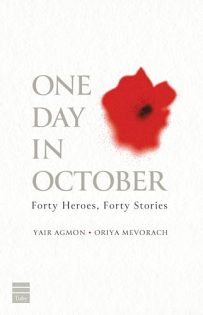
One Day in October by Yair Agmon and Oriyah Mevorach
This year, the first day of Sukkot will mark two years since the October 7 massacre—something that haunts us all every single day. Whether you’re in Israel running to bomb shelters on a regular basis or sensing the heightened antisemitism around other parts of the world, it’s impossible to escape the reality of a post-October 7 world.
Last summer, I joined a tour of the southern Israeli city of Ofakim, which was the site of a fatal and tragic battle on the morning of October 7. The tour was led by a resident of Ofakim named Itamar, who also serves as a police officer in the city. On October 7, Itamar saved tens of lives, and lost many friends.
I left feeling heartbroken for the lives that were lost and ruined, but also inspired by Itamar’s immense bravery in the face of terror and evil.
There are countless stories of courage and glimmers of humanity from that horrific day. One Day in October recounts 40 heroic individuals and their stories. This year, it’s a sukkah must-read for me.