

Recently a letter written by David Magerman entitled “Apology from American Jewish Parents,” was circulated widely online. It was a provocative letter that essentially apologized for the classical American Jewish upbringing – SAT prep, Ivy leagues, financial status, y’know—and instead advocates that parents raise their children in Israel. As he writes, “Go to Israel. Stay in Israel. Fight for Israel. Integrate into Israeli society. Raise your family in Israel.” Both his description of classical American Jewish parenting and his solution of pushing children towards Israel generated a tremendous amount of discussion, which overall I think was healthy and productive. Even if your experience growing up varied drastically from what Magerman describes, and even if you found his solutions wanting, I think these are really important conversations and allow each generation and family to grapple with their own struggles and opportunities.
The article inspired me to write a different form of letter: a thank you from American Jewish Children to their American Jewish Parents. Personally, I feel extraordinary blessed by my uniquely American Jewish upbringing and wanted to express what it taught me.
This letter seeks to challenge the assumption that the American Jewish story has been a failure or that the only faithful response lies in leaving it behind. Of course, the concerns that animate essays like Magerman’s are real. Assimilation remains a profound challenge. Jewish institutions often feel more fragile than they once did. But acknowledging those concerns should not require us to ignore what worked.
My experience points in a different direction. There is a form of American Jewish upbringing that produced confidence rather than hesitation, commitment rather than complacency. It cultivated Jews who are deeply rooted in Torah, emotionally connected to Israel, and capable of navigating the openness of American society while remaining anchored in their identity. This letter attempts to articulate that model, to affirm that something essential worked and that it remains worth preserving.
Thank You from an American Jewish Child
Dear Parents of the Diaspora,
You had a unique upbringing, coming of age right after the Holocaust and the establishment of the State of Israel. Both of your parents were born in the United States, and the Judaism you imparted to me was distinctly American. For that, I am profoundly grateful.
Allow me to explain the lessons of my upbringing as an expression of that gratitude.
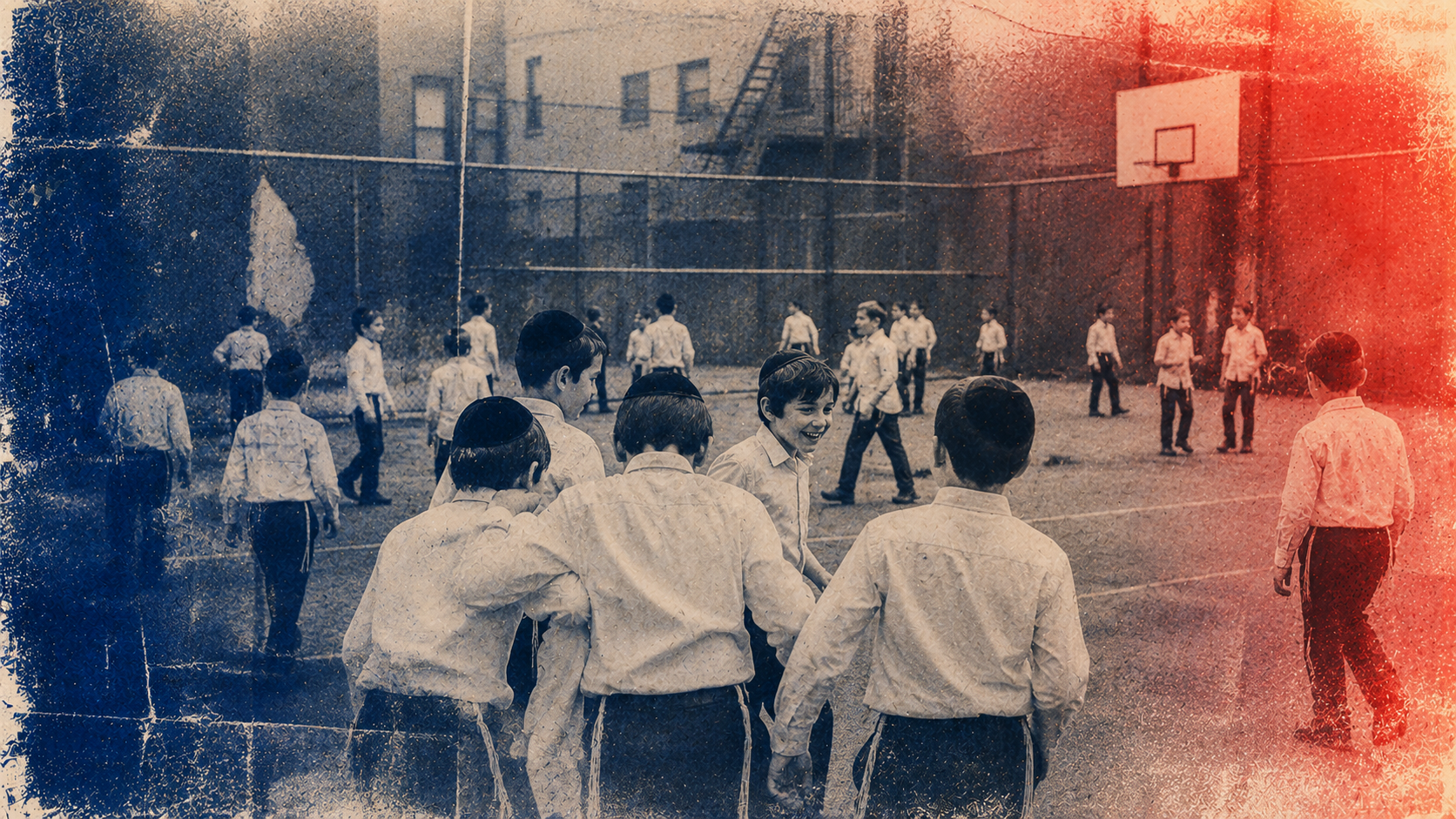
I did not know how special my childhood was while I was living it. But now, as a father myself, I constantly find myself drawing upon values from my own upbringing that have become a bit rarer in the current climate. At its core, my childhood was both deeply Jewish and deeply American. Only now do I appreciate how unusual—and how precious—that combination really was.
Dad—You were raised in North Adams, Massachusetts, what Bubbe would somewhat affectionately call “a crappy little town.” There was no yeshiva to speak of and scant Jewish education. Like many of your generation, you attended public school and supplemented it with the local Talmud Torah. But that did not stop you from building a rich and meaningful Jewish life.
Your parents embodied a generation of American Jews who preserved Jewish pride under difficult circumstances. Zaide was a communal leader despite imperfect observance, while Bubbe remained fiercely committed to Jewish continuity in a town where Jewish life was steadily disappearing.
As my sister Elana wrote about Bubbe’s dedication:
…there’s another genre of Jewish American heroes, individuals who knew close to nothing, save for the few tepid drops of Judaism that survived a transatlantic journey eons ago. Lacking proper education and role models, they weren’t bastions of halachic authority or fidelity. But their mesirus nefesh to keep what they did know while so many of their peers shed observance confers upon them a hero’s status all their own.”
Mom—You were raised in Portland, Maine, and had, in many ways, a very different upbringing than Daddy.
Undoubtedly, the center of gravity in your home was Grandpa, Rabbi Moshe Bekritsky, one of the first American-born and American-trained Orthodox rabbis.
Just as I was beginning to study Talmud, Grandpa was beginning to decline cognitively. Yet he was—and remains—a model of authenticity.
At Grandpa’s funeral, Rav Henoch Lebovitz, a kohen and the son of Grandpa’s rebbe, Rav Dovid, stood outside on a cold December morning simply to pay kavod acharon, final respects, to my grandfather.
My grandfather belonged to the generation that built American Orthodoxy before anyone knew whether it would survive. The vibrant Torah world we take for granted today was, for much of his life, little more than a dream.
My sister Elana wrote a moving article about my grandfather entitled, “The Grandfather I thought I Knew.” The article chronicles the difficulties of building Orthodox life in Portland during an era when Jewish continuity often felt more fragile than inevitable.. The article concludes with a conversation with Lynn Gordon, who grew up in Portland and now works in Darchei, about the relative nachas, or lack thereof, my grandfather felt from his time as rabbi:
At the end of my meeting with Lynn Gordon, I pose one last question: “Do you think my grandfather had nachas from what he built in Portland?”
Lynn looks down at her desk, silent and contemplative. When she looks up, tears are sliding down her cheeks. “After your grandfather was already sick, when he and your grandmother lived on Doughty Boulevard, my daughter Becky went every single Shabbos to visit them, to sit with them.”
And in a voice mottled with tears she says, “So yes, I think he had a lot of nachas.”
This is where I part ways with some contemporary critiques of American Jewish life. My grandparents’ generation did not fail. They built the world that built me. Their successes were imperfect, fragile, and often incomplete. But they were successes nonetheless.
Looking back, I increasingly think there was a common thread running through all of these values. My parents were deeply committed Jews, but they were not ideological Jews. They did not experience Judaism primarily as a movement, a platform, or a set of talking points. They experienced it as a way of life. In many ways, what I inherited was what Moshe Koppel once called “Yiddishkeit without Ideology,” from an article he published in Tradition in 2002. He writes:
The problem wasn’t with the particular institutions I attended, but rather with institutional Yiddishkeit in general. To see why both Haredi and modern institutional Yiddishkeit are severely handicapped, we need first to understand why the usual dictionary definition of Yiddishkeit is inadequate… Yiddishkeit is not simply a set of laws but rather embodies particular perspectives on all that is important. These perspectives are manifest in a web of attitudes regarding, for example, what families and communities are supposed to look like, and in a whole host of desirable character traits.
The values that follow are not separate lessons, they are different expressions of the same inheritance.
“We’ll bring the bagels!”: Relationships with Non-Observant Jews
Most Bashevkins in the world are not Orthodox, but they were always considered family. I knew that many of my uncles, aunts, and cousins were not Orthodox, but my parents explained the difference not as a source of anxiety, but as a reminder of how fortunate I was to have been given the opportunity to attend yeshiva. That was a common refrain, one my mother in particular took great care to emphasize. “You,” she would constantly remind me, “got a yeshiva education.”
I do not remember concerns about exposure or influence from my many non-observant relatives. In fact, the opposite was true—my father still laments that they did not spend more Shabbosim with us. My parents never seemed particularly nervous that I would discover that not all Jews followed halacha.
Instead, they emphasized the privilege of having Torah and mitzvos as a constant presence in my life, without speaking negatively about those family members who did not. Because—and I think this is so important—they emphasized that this was part of their story as well.
I think this was incredibly healthy. It ensured that I would continue to look at Jews who did not observe as I did as family, while remaining deeply committed to my own Orthodox upbringing. Religious life was presented as a privilege rather than a confinement.
We knew all too well how easily Jewish identity could be lost. The lesson of my childhood was not fear. It was gratitude. My upbringing taught me to be grateful for the Yiddishkeit I was given.
At a moment when many Jewish communities feel increasingly fragmented from one another, I am grateful that my parents taught me that Jewish commitment and Jewish kinship were never competing values.
“For this is our life”: Torah Study
Neither of my parents are rabbis, but voluntary Torah study was always at the center of our home. Again, thank you to my sister Elana for so eloquently writing about the sound of the garage door opening at 5 a.m. (when I was growing up, it had moved closer to 4 a.m.) as my father left to learn in the Shaar Yashuv morning kollel before beginning his work as an oncologist in Brooklyn.
My mother could always be found learning Chumash and Midrash, developing her own profound insights along the way. In the story of Moshe delaying the bris of his son, only to have the child nearly swallowed by a snake before Tzipporah steps in to perform the circumcision, my mother once reflected: “Man, woman, and the snake—reunited. But here, the woman takes initiative.”
I did not grow up with pressure to become a talmid chacham, and I am actually quite grateful for that. Instead, Torah was presented as a joy, something worth having in your life regardless of your level of scholarship.
There was something uniquely American about the Torah study in our home. Torah belonged to rabbis and laypeople alike. It was serious without being elitist and accessible without being shallow, reflecting the unprecedented era of access to Torah that has marked the Jewish American experience.
From Public School to Yeshiva: The Value of Education
The ultimate privilege, as I was constantly reminded, was receiving a proper Jewish education. My parents rightly saw this as the key to my Jewish future.
Both of my parents, as I mentioned, attended public school. But that did not make them anti-public school. In fact, my mother would often remind me that we should want strong public schools and that it was part of our responsibility as citizens to ensure that the schools in our community were performing well. Public education was not merely “them”; it was also part of “us.”
And yet, there was no greater source of pride for my parents than sending their children to yeshiva, despite the financial difficulty.
But education did not end in school. Our house was always filled with books. My mother was a devoted patron of the local library and seemed to know half the librarians by name. Reading serious books and engaging thoughtful ideas was simply part of our family culture.
What is striking to me in retrospect is that this never hardened into an ideology. A strong education—both Jewish and secular—was simply assumed to be valuable. At the same time, their love of education never descended into the credentialism that colors so much of contemporary educational life.
My father viewed the Ivy League with a fair amount of suspicion—perhaps, as he would admit, because he never imagined applying to such places himself. Believe it or not, I do not think I even applied to college in twelfth grade. I simply assumed I would spend a few years in yeshiva first, which I did.
But the value of Torah and yeshiva was never in competition with becoming a well-rounded and well-read individual. There was no pride in ignorance and no obsession with credentials. Education was ultimately about character.
Marching Proudly: Israel
It was never a question that we were rooting for the success of Israel.
I would occasionally hear my parents complain about particular politicians or policies, but the overwhelming sentiment was always: We are with you.
When my sister Elana made aliyah, it gave my father an extraordinary sense of pride that he—a boy from North Adams—now had grandchildren growing up in Yerushalayim.
Israel was never merely about politics or whoever happened to be serving as prime minister. It was a visceral and instinctive connection. Israel was not a replacement for a holistic life of Yiddishkeit; it was the place toward which Jewish history—and our family’s history—pointed.
At a time when Israel is increasingly treated as either a political litmus test or a substitute for Jewish identity itself, I remain grateful for a home that taught me to love Israel without reducing Judaism to Israel alone.
Familial Judaism: Yiddishkeit without Ideology
My parents were committed people, but they were not ideological people. They cared deeply about Torah, education, Israel, family, and community, but none of those commitments were transformed into identity markers or tribal affiliations. They were simply part of how to build a Jewish life.
Nowadays, Judaism can feel a bit too processed, with a few too many preservatives and food colorings, when all I really want is a home-cooked meal.
What worries me today is not simply assimilation. American Jews have always struggled with assimilation. What worries me is that in response we have sometimes become overly reliant on institutions, programs, and ideologies. All of those have their place. But what formed me most deeply were relationships, habits, examples, and the quiet confidence of people who lived Judaism naturally.
I recently asked one of my closest friends, Yonaton, what made our Jewish American childhood feel so special. His answer has stayed with me:
We grew up normal. I feel like a huge piece of this is that our parents had no expectations for how we turned out. Of course they wanted us to be shomer Shabbos and put on tefillin, but they had no detailed script for what kind of shidduch you would get or exactly how your life would unfold. Just grow up decently and the pieces will fall into place. Nowadays we choreograph so much of our Jewish lives—much of which is simply making sure that we remain part of whatever in-group we belong to.
We grew up normal.
The more I think about it, the more extraordinary that feels.
My parents and grandparents did not hand me a roadmap. They handed me principles. They taught me that Torah was a privilege, that education mattered, that family mattered, that Jews were family, and that a life of integrity was worth pursuing even when nobody was watching.
Principles are personal. Ideologies are institutional.
And I was raised in a home whose principles were sturdy enough to provide roots and generous enough to allow growth.
For all of the freedom America offers, my parents never responded by putting blinders on. They did not pretend other paths did not exist. Instead, they cultivated a sense of pride and joy in the path they had chosen. Religious life was presented as a privilege rather than a confinement.
The lesson of my childhood was not fear, it was gratitude.
I do not get the world of frumkeit I was raised in without first passing through North Adams and Portland. My Orthodoxy did not begin in yeshiva. It began with Jews who held on.
This was a Yiddishkeit that was deeply American and deeply Jewish. It gave my siblings and me enough confidence to be rooted, enough freedom to grow, and enough gratitude to appreciate what we inherited.
Looking back, I realize that the greatest gift my parents gave me was not certainty. It was confidence.
That is why I find it difficult to see the American Jewish story only through the lens of failure. The generation that raised me certainly made mistakes, as every generation does. But they also built families, schools, communities, and lives of remarkable Jewish confidence. If the American Jewish story is in danger today, it is not because nothing worked. It is because we risk forgetting what did. Allow me to conclude with the words of Moshe Koppel:
Always remember that we are passing you a small flickering flame that we received from our parents as they did from theirs. If you ignore it, if you smother it, if you fiddle with it, it will be extinguished. But if you sit by it and tend to it carefully, if you know when to guard it jealously and when to give it air, if you wander occasionally into the nearby forest and bring back healthy wood—then this small flickering flame will not only warm and light your dark winter nights, but it will be the legacy that you pass on to your children as they will to theirs.
יהי רצון מלפניך ה’ אלוקינו ואלוקי אבותינו, שתהא תורתך ערבה בפינו ובפי עמך בית ישראל, ונהיה אנחנו וצאצאינו וצאצאי עמך בית ישראל כולנו יודעי שמך ולומדי תורתך לשמה