

This piece first ran on our Substack, Reading Jewish History in the Parsha. We’re pleased to share it here on our website.
This essay was written during the June 2025 war between Israel and Iran. References to contemporary events, public statements, and the experience of the moment should be understood in that context.
And the people spoke against God and against Moses: “Why did you bring us up from Egypt to die in the wilderness? For there is no bread and no water, and our soul loathes this light bread (manna).” And the Lord sent fiery serpents among the people, and they bit the people, and many people of Israel died. And the people came to Moses and said: “We have sinned, for we have spoken against the Lord and against you; pray to the Lord that He remove the serpents from us.” And Moses prayed for the people. And the Lord said to Moses: “Make yourself a fiery serpent and place it on a pole (nes); and it shall be that anyone who is bitten and looks at it shall live.” And Moses made a bronze serpent and placed it on the pole; and it was that if a serpent bit someone, and he looked at the bronze serpent, he lived. (Bamidbar 21:5-9)
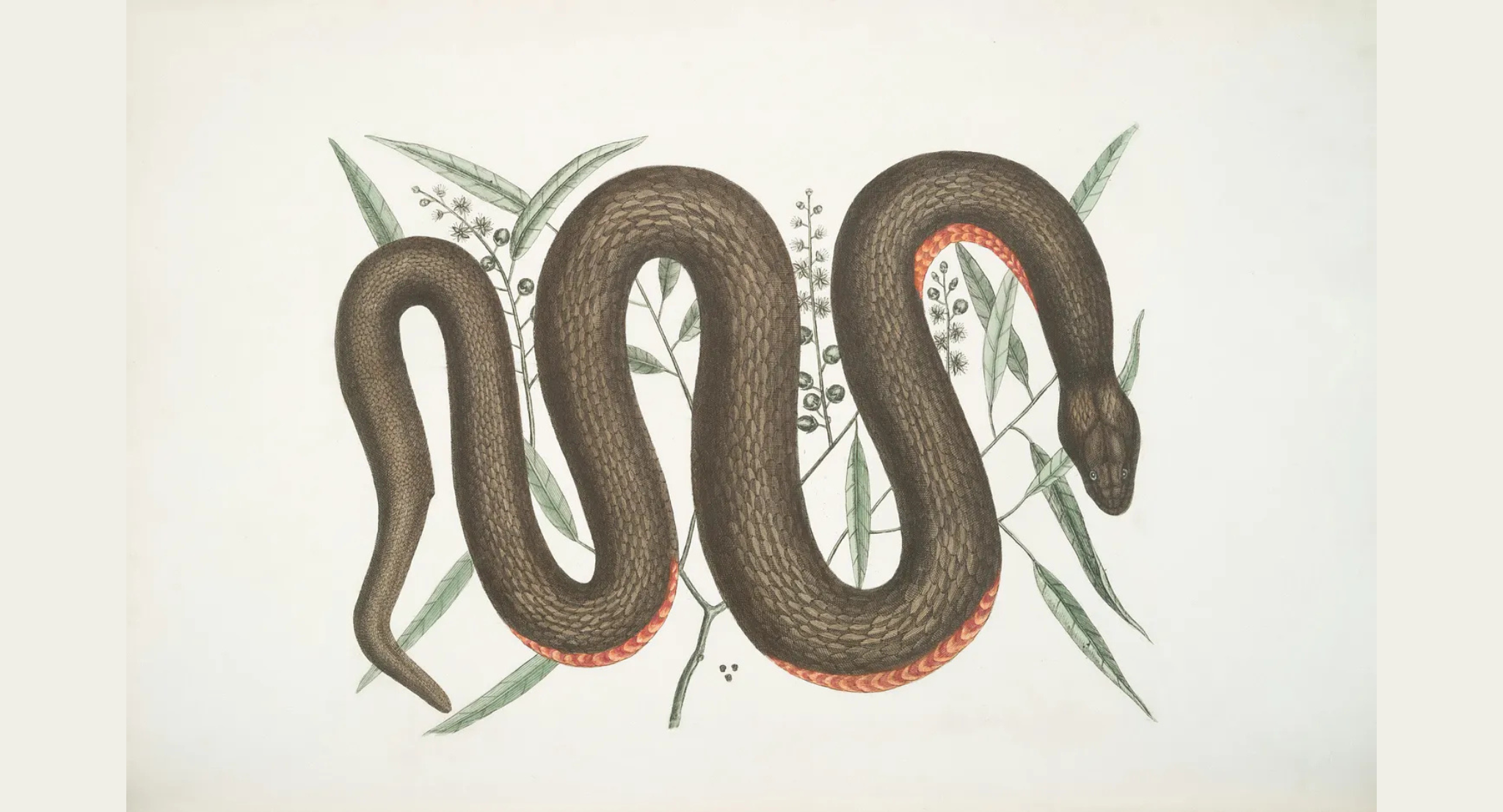
In Parshat Chukat, there is something wondrous that occurs. Hashem sends serpents and vipers among the people as punishment for their behavior, and when they repent and turn to Moshe, pleading for his help, he turns to God, who suggests making a bronze serpent and placing it in a high place—”on a pole” (al-nes) in the Torah’s language—and all who are bitten shall look at it and live.
The wonder is how specifically the source of evil—the serpent—becomes the solution. Moreover, the form of that same serpent, which has been man’s first enemy since the beginning of human history, has also become the universal symbol of medicine and healing.
We know from the medical world that what saves a person from a serpent’s venom is an anti-venom composed of the very same poison, but in a weakened quantity and form.
The Torah teaches us that confronting the serpent, confronting evil, confronting troubles, is not through evasion and flight, but rather the opposite—we are required to look at the serpent with our eyes, but only on condition that the background of our gaze be the heavens. One who looks at a serpent crawling on the ground without legs—those that were taken from it as punishment for its first wickedness—must flee from it or kill it. But when you place the serpent on a pole, against the backdrop of the heavens, the one who looks at it sees the heavens through it. Thus the Mishna teaches us:
Does a serpent kill or does a serpent give life? Rather, when Israel looked upward and subjected their hearts to their Father in Heaven, they were healed. (Mishna Rosh Hashanah 3:8)
It’s not enough just to look at the heavens: One must look at the serpent. But when the serpent is on a pole, looking at it is no longer frightening. It causes one to exchange fear for awe—fear of Heaven—and invites the Jewish People to subject their hearts to their Father in Heaven. “One who fears the One fears no one else.”
The word “nes” in Hebrew, as it appears here in the verse, miraculously gains a double meaning. “Nes” here refers to a high pole, like a mast that is prominent to the eye, but the word “nes” in its common usage is interpreted as a supernatural, heavenly revelation.
The Torah hints to us that a miracle (nes) is not necessarily disconnected from nature. We need the bronze serpent; we must take the anti-venom of the serpent to heal from its bite, but we must look at it with a miraculous, heavenly gaze, knowing that the solution also comes through subjecting our hearts to our Father in Heaven.
Throughout all the history of the Jewish People, our nation has grappled with the question of how much to rely on miracles and how much to prepare ourselves through natural means. What is the precise dosage and how exactly do we combine them?
In recent weeks, we were privileged to see one of the most instructive examples of combining open and clear skies, free from enemy weapons, while looking to the heavens with many prayers and the enormous divine assistance (siyata dishmaya) we merited. It was moving to hear the Prime Minister of Israel explicitly mention the Divine assistance. (He even used the double meaning of “siya” as a faction in the Knesset and said that the largest faction in the Knesset is the divine assistance—how amazing is the Hebrew language and how amazing that a Prime Minister in Israel uses its double meanings—a real miracle!)
I heard from many security personnel testimony that they had been preparing for this operation for ten years, and in any case, they were surprised beyond measure by its results. It was clear to them that the combination of circumstances, or in more faithful language, the miracle over which the planes flew, which caused us to look to the heavens and subject our hearts to the One who dwells on high, unequivocally constituted the source of the extraordinary success by any measure.
Immediately after the story of the bronze serpent, the Torah records a song that summarizes all of Israel’s wars throughout all generations:
Then Israel sang this song: ‘Rise up, O well, sing to it! The well that the princes dug, that the nobles of the people excavated with the scepter, with their staffs.’ And from the wilderness to Mattanah, and from Mattanah to Nahaliel, and from Nahaliel to Bamot, and from Bamot to the valley that is in the field of Moab, at the top of Pisgah, overlooking the wasteland. (Bamidbar 21:17-20)
The places mentioned in the song appear to be places where Israel fought when entering the land, but the Sages already interpret them as general names reflecting the way a person should behave in his various battles. When he reaches the “bamot” (heights), the high place and the peaks of victories, he must immediately humble himself and remember Who it is that gave him this strength.
And you shall remember the Lord your God, for it is He who gives you strength to make wealth, in order to establish His covenant which He swore to your fathers, as it is this day. (Devarim 8:18)
And in the language of the Gemara:
What is written: “And from the wilderness Mattanah, and from Mattanah Nahaliel, and from Nahaliel Bamot, and from Bamot the valley?” If a person makes himself like this wilderness that everyone tramples upon—Torah is given to him as a gift (mattanah). And once it’s given to him as a gift—God causes him to inherit (nahaliel), as it says: ‘And from Mattanah Nahaliel.’ And once God causes him to inherit—he rises to greatness, as it says: ‘And from Nahaliel Bamot.’ But if his heart becomes proud—the Holy One, blessed be He, humbles him, as it says: ‘And from Bamot the valley.’ And if he repents—the Holy One, blessed be He, elevates him, as it says: ‘Every valley shall be lifted up.’” (Eruvin 54a)
We pray that God will continue to accompany us by the strength of the covenant He swore to our fathers and to us, and continue to save us from the hand of all who rise against us to destroy us. We bear the responsibility to make every possible effort to help Him help us, and always remember that He is the One who gives us strength to accomplish this valor.