

I Read This Over Shabbos is a weekly newsletter from Rivka Bennun Kay about Jewish book culture, book recommendations, and modern ideas. Receive this free newsletter every week in your inbox by subscribing here. Questions, comments, or feedback? Email Rivka at Shabbosreads@18forty.org.
Around this time last year, I wrote about Shavua HaSefer HaIvri (“The Week of the Hebrew Book”), an annual book sale that takes place in Jerusalem and Tel Aviv during the month of June. It’s easily one of the best weeks of the year in this country.
When I wrote about it last year, Israel was in the midst of a brief war with Iran. This year, a lone rocket pushed the opening back by a day, but the doors opened and the adventures began.
Shavua HaSefer partners with the Book Publishers Association of Israel to bring up to 120 publishers to the sale, drawing 150,000 people each year. It’s become a meeting place for Israelis of all backgrounds to bond over a shared love of books—Am HaSefer (“the People of the Book”) at its finest.
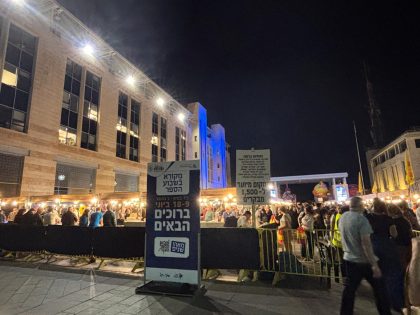
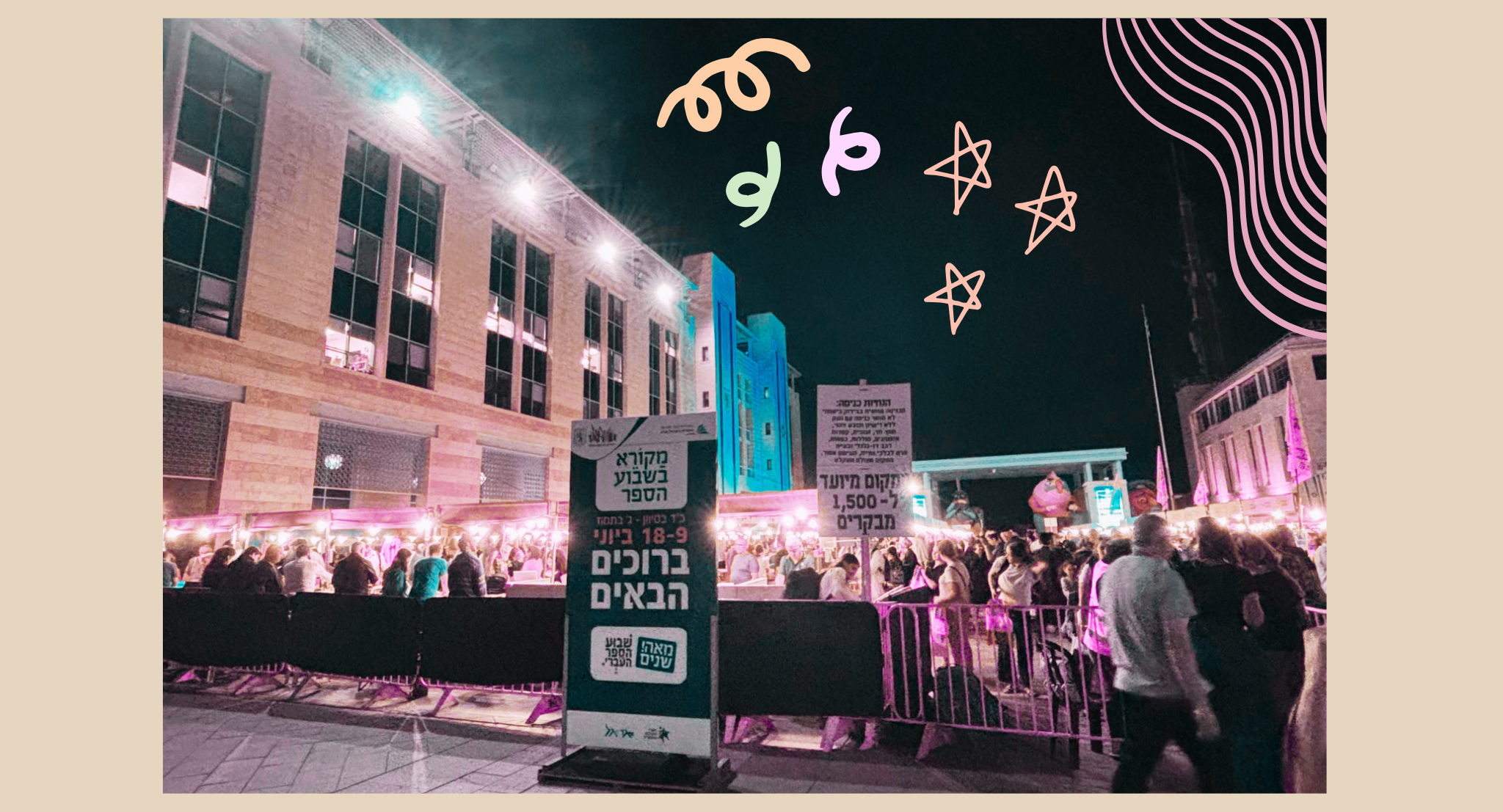
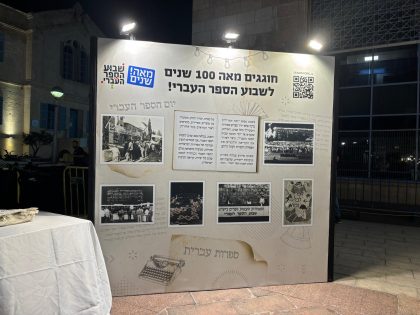
This year was especially exciting, I learned, because Shavua HaSefer is celebrating 100 years of existence. As you walk into the sale, a huge sign describes the event in Hebrew as “a celebration of literature, creativity, and imagination, bridging writers, illustrators, publishers, and readers from all generations.” I can’t think of a more fitting way to celebrate the better parts of Israeli society.
What stands out to me about Shavua HaSefer is its emphasis on including children—not surprising, if you know Israel. While the sale boasts prominent publishers and troves of academic works, kids are running around all over the place, drawn to the comic books or the children’s books.
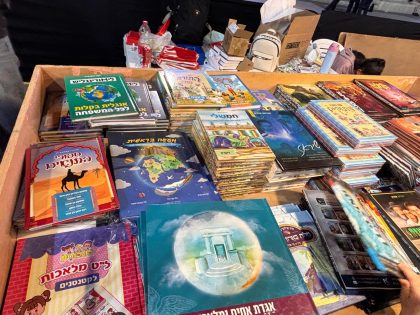
Children’s books in Israel are distinctive because they vary in their Jewishness. Some are straightforward children’s books with universal messages (like what I bought for my toddler nieces), while a lot of them take biblical and Talmudic stories and turn them into children’s books, which probably contributes to Israeli kids’ fluency in Tanach.
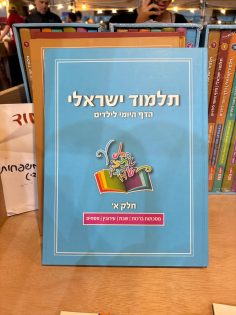
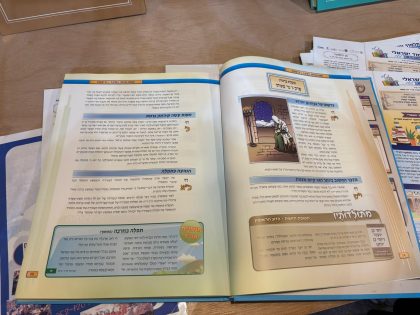
Things like Daf Yomi for kids, which takes each daf and boils it down to its basic ideas, or Sefer Yehoshua for kids, are part of what makes this sale—and the general book culture in this country—so special. Children are part of the national conversation here, and their learning shows it.

When I visited, I saw Rabbanit Yemima Mizrachi, a beloved Israeli teacher and author who hosts a weekly parsha program on the radio. A woman walked up to Rabbanit Yemima and simply held her hands, saying, in Hebrew, “את מחזקת אותנו.” You inspire us. You strengthen us.
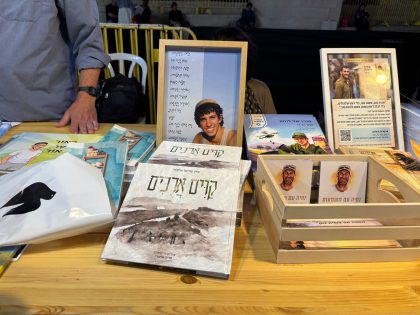
This year, I noticed a stand dedicated to the memory of fallen soldiers, and the many books that have been written in their memory. I also found at least one testimonial by a former hostage—Elkana Bohbot—a constant reminder of the pain people here carry with them as they move forward through life.
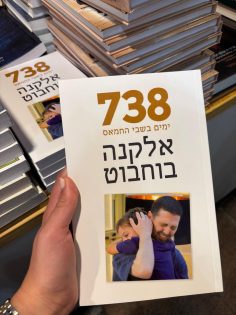
In no particular order, here are some works I thought were noteworthy:
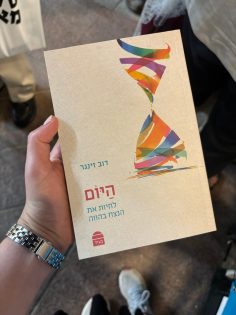
At the Koren stand I saw Rav Dov Singer, who was there to promote his new book HaYom, about living in the present and building a richer spiritual life.
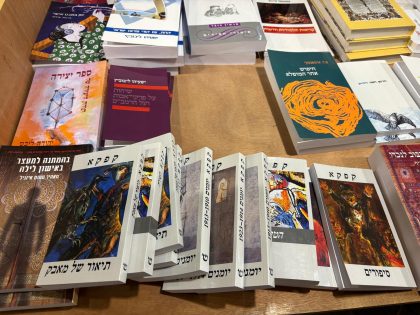
From Schocken Books, Kafka in Hebrew.
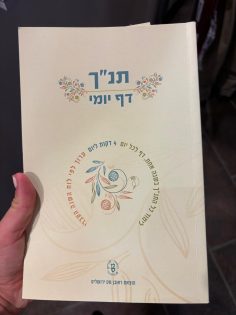
From Rubin Mass Publishers—one of the first publishing houses established by the Book Publishers Association of Israel in 1939—a Daf Yomi for Tanach, which breaks up the entire book of Tanach into daily learning, enabling the reader to finish Tanach in just one year.

From Ma’aliot, the official publishing house for Yeshivat Birkat Moshe in Maale Adumim, Rav Kook’s Orot HaTefillah, edited and organized by Rav Moshe Zvi Neria. Rav Neria was an important disciple of Rav Kook, and, in many ways, the architect of the Religious Zionist movement in Israel.
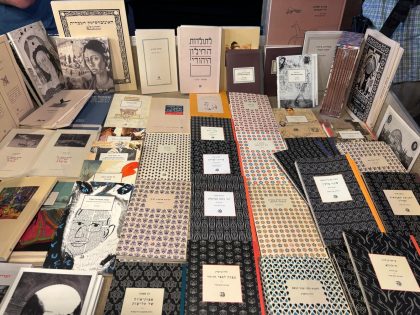
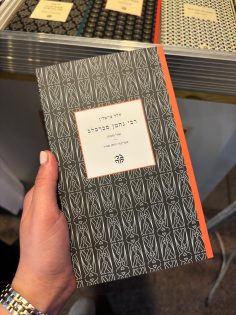
I discovered Blima Books, an independent publishing house dedicated to reviving, in their words, “radical Jewish literature.” What I can say is that they have an eye for aesthetics, something they pride themselves on, and that they love Hillel Zeitlin. We do too. I was glad to see they had a stand at Shavua HaSefer.
If you live in Israel, find the time to visit Shavua HaSefer this week, whether in Jerusalem or Tel Aviv. I left near closing time, but the crowds hadn’t thinned.