

Your 18Forty Parsha Guide is a weekly newsletter exploring five major takeaways from the weekly parsha. Receive this newsletter every week in your inbox by subscribing here. Questions or feedback? Email Rivka Bennun Kay at Shabbosreads@18forty.org.
We live in a culture suspicious of endings. Corporate vocabulary promises endless growth mindsets and continuous improvement, as if life were one unending performance review where the truly committed person always has another goal on the horizon. Our phones buzz with reminders of unfinished tasks. Our inboxes never reach zero. The finish line, we’ve been taught, should always recede. The practices we treat as merely practical—the audit, the inspection, the pause before celebration—carry sacred weight we have largely forgotten.
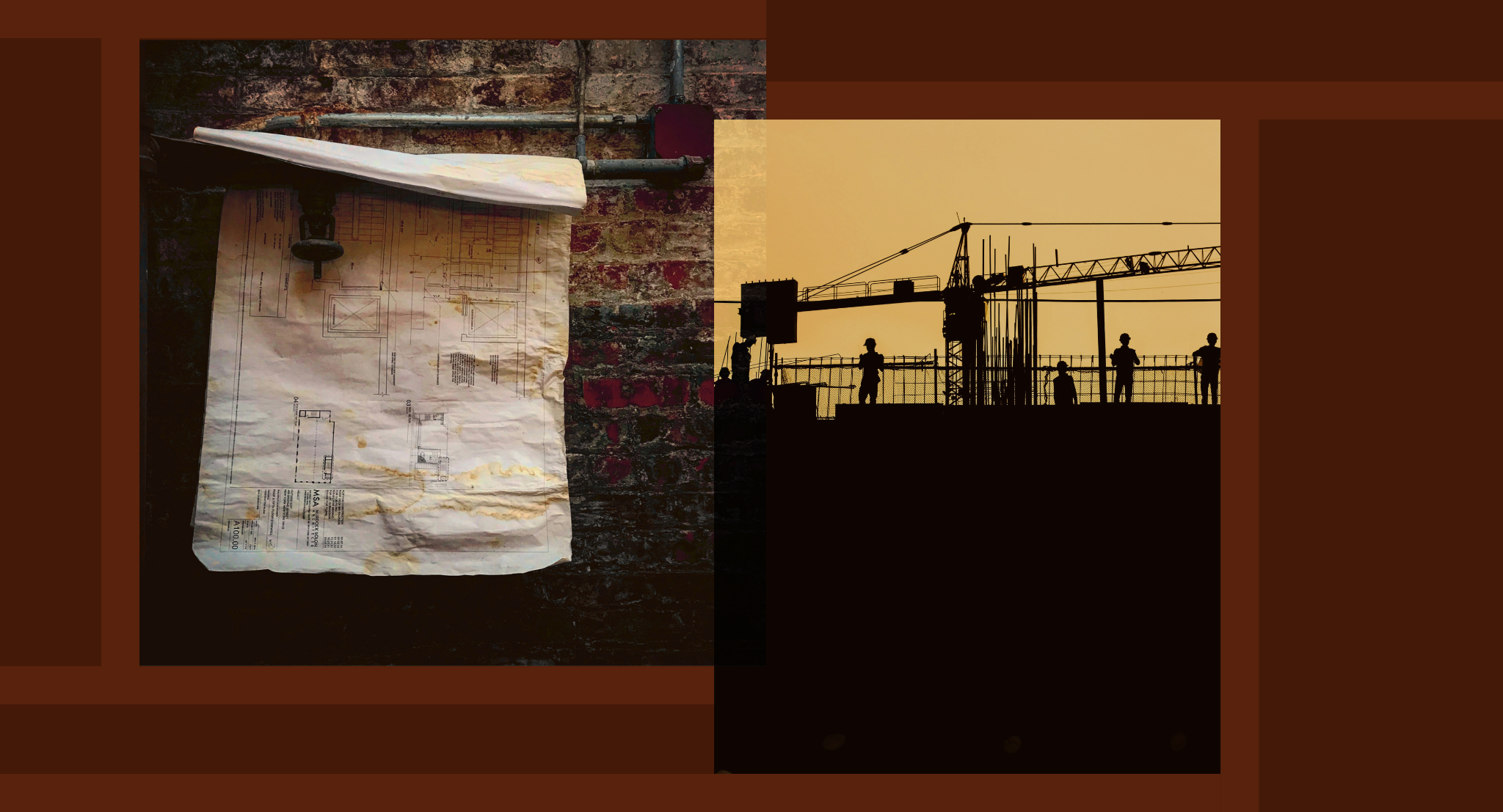
Then Parshat Pekudei arrives with a word that sounds almost foreign: Vateichel. “And all the work of the Tabernacle of the Tent of Meeting was finished” (Exodus 39:32). The Book of Exodus closes with finality. The work was done. The Israelites knew they were finished because God had provided the blueprint. The repeated phrase throughout the construction chapters, “as the Lord commanded Moshe,” appears no fewer than 18 times in these final sections. Completion was recognized because the divine specifications had been fulfilled, not because the builders independently assessed “this feels done.”
Yet the principle extracted for modern application runs deeper than blueprint fulfillment. The Israelites stopped because God’s specifications were met. In our own lives, where no divine voice declares “the work is complete,” we must develop the judgment to define our own parameters and then honor them when they’re met.
We face versions of this question constantly: when to retire rather than chasing another year’s security; when to ship the product rather than perfecting features no one will use; when to conclude a legal matter rather than pursuing one more appeal. The Tabernacle was a material project—gold, silver, acacia wood, skilled labor measured and verified—executed for spiritual ends. Its completion demonstrates that material endeavors, no less than spiritual ones, require the wisdom to recognize when enough has been achieved.
RELATED: 5 Ways the Torah Challenges Our Idea of Enough
This does not negate the Jewish value of continuous growth, the obligation to always deepen Torah study, to refine one’s character, to pursue justice. The question is whether we confuse perpetual becoming with an inability to ever acknowledge arrival. Completion and growth need not oppose each other; the Tabernacle itself would travel. Here are five lessons on why “finishing” is itself a spiritual act.
1. Completion Is an Act of Definition
The Torah uses remarkably similar language for two moments of completion. Genesis 2:1-2 records: “And the heaven and the earth were finished (Vayechulu) … and He rested on the seventh day from all His work which He had done.” In Pekudei, we read: “And all the work of the Tabernacle … was finished (Vateichel)” (Exodus 39:32). The Hebrew root K-L-H appears in both verses. Human creativity at its highest mirrors divine creativity in its structure. Both involve stopping.
The parallel extends beyond vocabulary. Exodus 39:43 records: “And Moshe saw all the work, and behold, they had done it; as the Lord had commanded, so had they done it. And Moshe blessed them.” The Targum Yonatan identifies Moshe’s blessing: “May it be the will of God that the Shechina rest upon the work of your hands.” Rashi on Exodus 39:43 draws the explicit parallel: Just as God blessed the completed work of Creation, Moshe blessed the completed work of the Tabernacle. Human creative effort, when aligned with divine intention, merits the same benediction as the cosmos itself. The workers who built the Tabernacle received from Moshe what the seventh day received from God: recognition that the work was complete, that it was good, and that it warranted rest.
Dr. Haym Soloveitchik explores how modernity fundamentally changed the Jewish relationship to tradition. His landmark essay “Rupture and Reconstruction” demonstrates that contemporary Jews often experience a gap between inherited practice and conscious choice, between the Judaism they received and the Judaism they actively construct. This gap creates a perpetual sense of aspiration, a feeling that authentic Jewish identity is always ahead of us rather than beneath us. To declare something complete means accepting a version of ourselves rather than holding out for a more authentic one. Yet the Tabernacle teaches that definition is not limitation.
Abraham Joshua Heschel argued in The Sabbath that holiness requires what he called “a palace in time” built through cessation. Physical spaces require boundaries. You cannot live in a house with no walls. The Tabernacle becomes a sanctuary only when the building stops. Until then, it remains a construction site. Both the cosmos and the Mishkan required divine rest to become holy dwelling places. The workaholic who cannot stop, the perfectionist who cannot declare a project finished, the student who cannot close the book—all share this problem: They cannot create the boundary that allows the sacred to enter.
RELATED: A Brief History of Shabbos, From the Biblical Age to Now
A reasonable worry emerges here: Does saying “I’m finished” mean settling for mediocrity? We imagine that completion represents giving up, that we’re capable of more if we just keep pushing. The reframe matters. Completion differs from quitting. Declaring something finished is boundary-setting that makes existence possible. You cannot inhabit a house forever under construction. Material completion differs from intellectual or spiritual growth. The retiree closes one chapter; the lifelong learner never stops reading. Yet even lifelong learners need stopping points, sabbaticals, moments of integration. The issue isn’t whether to stop forever but whether to ever stop at all. In our own lives, where no divine voice declares “the work is complete,” we must learn to define our own parameters and then honor them when they’re met.
2. Completion Requires Verification
After months of labor, the Israelites brought their work to Moshe. Exodus 39:43 records: “And Moshe saw all the work, and behold, they had done it; as the Lord had commanded, so had they done it.” Moshe does not assume completion. He actively inspects. The Hebrew verb is unambiguous: vayar, he saw.
The parsha’s very name, Pekudei, means “the accounts of.” The Torah devotes verses to inventorying every talent of gold, every socket of silver (Exodus 38). This was not ancient bookkeeping for its own sake. The meticulous inventory also demonstrated Moshe’s integrity—a public accounting that preempted any suspicion of misappropriation. But beyond accountability, the accounting established that completion requires verification. Moshe verified that every element aligned with the original command. His “seeing” constituted a structural audit. The work was complete because it had been verified as complete.
This resonates with how we experience satisfaction. Mihaly Csikszentmihalyi spent decades studying what he called “flow,” a state of complete absorption where satisfaction becomes intrinsic to the work itself. His research, documented in Flow: The Psychology of Optimal Experience, found that flow states require clear goals and immediate feedback. Without these, we cannot know where we stand. Moshe’s “seeing” transformed abstract effort into concrete achievement. The workers could point to a verified structure and say: We did this, and it was found worthy.
Philip Goff explores how organization and order are fundamental to the nature of reality. The same principle applies to human endeavors. A project isn’t complete until someone steps back and confirms: Yes, this holds together. Order doesn’t just happen. It must be recognized.
We encounter versions of this pause-and-inspect rhythm throughout modern life, though we rarely recognize their sacred function. When a project team gathers for a post-mortem, they are practicing structural audit, stepping back to verify whether outcomes aligned with intentions. Couples who schedule deliberate relationship check-ins are pausing to examine whether the partnership still matches its founding vision. Moshe modeled something profound when he paused to look closely at what had been built before pronouncing it complete. Completion becomes ratified only through inspection.
3. Completion Allows Celebration
As established earlier, Moshe saw and then blessed. The sequence matters: Seeing precedes blessing. But why does completion require this external validation? Why couldn’t the workers simply know they were finished?
Rashi on Exodus 39:43 identifies the content of the blessing: “May it be the pleasure of God that the Shechinah dwell in the works of your hands, and may the beauty of the Lord our God be upon us.” Moshe acknowledged that human effort alone cannot force meaning. The work needed to be received. The blessing invited something beyond the builders’ control. The workers could build a structure, but they could not compel the divine presence to inhabit it. Moshe’s blessing was not congratulation but prayer: May what you have built become what you intended it to become.
Research on what psychologists call “capitalization” confirms the intuition embedded in this ancient text. Shelly Gable and colleagues demonstrated that sharing positive events and having them validated through “active-constructive responding” is crucial for relational bonds and personal well-being. When something good happens to you, you need to tell someone who will celebrate with you. The achievement becomes real through shared recognition. Abstract knowledge that you’ve accomplished something differs fundamentally from concrete social acknowledgment of what you’ve built.
Rachel Yehuda has explored how positive experiences, when properly acknowledged and shared, strengthen both individuals and communities. Her research on intergenerational transmission demonstrates that what we celebrate shapes what we pass on. The Israelites’ accomplishment required external validation. Moshe provided that validation not as empty praise but as accurate assessment: They had done what was commanded.
The distinction between vanity and capitalization matters enormously. Vanity seeks applause for its own sake, an endless craving for external affirmation. Capitalization seeks connection, the binding of individual achievement to shared meaning. Moshe blessed the workers not to inflate their egos but to acknowledge their effort and connect their labor to a purpose greater than themselves. The blessing was earned recognition for genuine achievement, offered at the moment of completion rather than deferred indefinitely.
4. Completion Demands Release
Exodus 40:34-35 describes the climactic moment: “The cloud covered the Tent of Meeting, and the glory of the Lord filled the Tabernacle. And Moshe was not able to enter the Tent of Meeting, because the cloud rested upon it, and the glory of the Lord filled the Tabernacle.”
Ibn Ezra on Exodus 40:35 notes the resolution: “Then God called Moshe and told him to enter the tent.” Moshe, who led every stage of construction, who verified every detail, initially stands outside. The holiness filling the Tent is too intense for even him to enter. Only when God explicitly invites him back does Moshe re-enter his own creation. The builder’s temporary exclusion becomes proof of success. The structure no longer needed its builder to function because it had become the dwelling place of something greater than any builder could control.
RELATED: 5 Lessons from the Parsha Where Moshe Disappears
Rabbi DovBer Pinson explores how teshuva requires withdrawal, stepping back from previous patterns to create space for transformation. In his book Thirty-Two Gates: Into the Heart of Kabbalah and Chassidus, Rav Pinson demystifies core mystical concepts including tzimtzum, the divine contraction that made space for creation. Bitul, self-nullification, describes how the self must contract to allow the Other to emerge. Parents learn to step back so their children can grow; teachers measure success by students who no longer need them; leaders build organizations that thrive in their absence.
The psychoanalyst D.W. Winnicott developed the concept of the “holding environment” in The Maturational Processes and the Facilitating Environment. The “good enough” parent creates conditions that eventually facilitate the child’s independence. Success in parenting, therapy, and mentorship involves making yourself progressively unnecessary. If the system relies on you forever, you’ve made yourself indispensable, which is a form of failure.
This truth can sting. It hurts to be pushed out of what we built. Yet the reframing matters. Displacement is the goal. The glory of God filling the tent and pushing Moshe out represents the ultimate proof that the work is alive. The Tabernacle no longer needs its builder because it has become something greater than its builder could control.
5. Completion Enables Forward Movement
The Book of Exodus does not end with the Tabernacle standing still. Exodus 40:36-38 records: “And when the cloud was taken up from over the Tabernacle, the children of Israel went onward, throughout all their journeys.” The elaborate structure they built with such care was designed to move. The cloud’s lifting and settling established the rhythm of wilderness life. The entire sanctuary existed not as a permanent monument but as a mobile workshop of holiness, a traveling home designed for the journey rather than the destination.
The philosopher James Carse, in Finite and Infinite Games, distinguishes between games played to end and games played to continue playing. Finite games have winners and losers, beginnings and ends. Infinite games have no final outcome; the point is to keep playing. The Tabernacle represents a completed finite project that enables the infinite game of Jewish history. The Israelites finish building so they can continue traveling.
Malka Simkovich has explored how Jewish identity has always adapted to new circumstances while maintaining core commitments. In her book Letters from Home: The Creation of Diaspora in Jewish Antiquity, Simkovich examines how ancient Jewish communities maintained connection across distance and displacement. The Tabernacle was a portable structure, designed for a people in motion. Its completion did not mean permanence but readiness. Jews have always carried their sacred structures with them, completing one dwelling only to move toward the next.
Contemporary assumptions about completion often treat it as an endpoint. The Torah presents completion differently. The Tabernacle was finished so that it could function, and functioning meant movement. Completion enabled responsiveness rather than stasis. The entrepreneur who builds a company to sell it; the teacher who develops curricula that outlast their tenure; the parent who raises children to leave home—all understand that completion creates the platform for continuation. The work is not wasted because it moves; it moves because it was completed.
A final question remains: If we just have to move again, what is the point of stopping? The answer emerges from the image itself. We are builders creating the vehicle for the next leg of the journey, our labor purposeful and our rest deserved. Satisfaction in completion becomes the fuel that allows us to break camp and travel toward the horizon we couldn’t previously see.
The Tabernacle stands completed so that it can move. We finish our work so that we can move too.
Questions for Reflection
- What project, relationship, or life chapter are you reluctant to declare “complete”—and what would change if you did?
- Moshe was temporarily excluded from the Tabernacle he built. Where in your life might stepping back be proof of success rather than failure?
- The Tabernacle was completed so it could travel. What have you completed that enabled you to move forward in ways you couldn’t have anticipated?
This project is made possible with support from the Simchat Torah Challenge and UJA-Federation of New York. Learn more about the Simchat Torah Challenge and get involved at their website.