Transcripts are produced by Sofer.ai and lightly edited—please excuse any imperfections.
David Bashevkin: Hi friends, David Bashevkin here with a quick, very exciting message from our sponsors. Our 18Forty community has been nurturing a broad but deeply rooted and inspired Judaism. We’re not just hanging on, surviving, going through the motions, but we are looking to thrive and I have a very exciting opportunity that I am proud to highlight on 18Forty and it is an opportunity to really not just discuss the theories that we’ve spoken about but really build a life in a very practical and tangible way. This is not a drill, I’m here to talk about a new community called Eden, which is forming in Beit Shemesh proper.
The project is being built overlooking the Elah Valley near existing park, school and shopping centers, very, very green. It’s gorgeous. I know so many people who are thinking about where to build their lives specifically post-October 7th, thinking that they want a connection, whether it’s making aliyah or some connection to the land of Israel in a more significant way. And this is an incredible opportunity.
Eden will have its own shul, beit midrash and a five minute walk from both Sheinfeld and Nofei HaShemesh neighborhoods. For more information about getting in early on this project with a payment plan that you can afford, contact Rena Weinberg at info@edenbeitshemesh.com. Again, that’s Rena Weinberg at info@edenbeitshemesh.com. Eden is spelled E-D-E-N, Beit Shemesh B-E-I-T S-H-E-M-E-S-H dot com.
This is your chance to learn more about Eden, the community you’ve been searching for and dreaming about. Email Rena Weinberg now, link is in the description. I really look at this as a privilege to highlight on 18Forty. There are so many developments, I know the people involved in this one, I am very seriously considering investing.
I don’t right now think I’m going to be able to make aliyah, but I want a place for myself in Israel and this is it. An incredible opportunity, don’t ignore it. Reach out to Rena Weinberg at info@edenbeitshemesh.com to finally make our dreams into your reality.
Hi friends, and welcome to the 18Forty Podcast where each month we explore different topics balancing modern sensibilities with traditional sensitivities to give you new approaches to timeless Jewish ideas.
I’m your host David Bashevkin and this month we’re continuing our exploration of Israel-diaspora relations. This podcast is part of a larger exploration of those big juicy Jewish ideas, so be sure to check out 18forty.org, that’s one eight F-O-R-T-Y dot org where you can also find videos, articles, recommended readings, and weekly emails. In 1909, Ahad Ha’am, the famed Israeli poet, wrote an essay called Shlilut HaGola, the negation of the diaspora. And this phrase became a very central part of like early Zionist thought where the idea was that if we’re going to have a successful state, if we’re going to be able to build the Jewish state, it must come at the expense, so to speak, it should come as the culmination of all of those Jewish communities that are in exile.
Now, there were different iterations of this idea and not everybody phrased it as extremely, but there definitely was a strong sentiment within the early Zionist movement and continuing even today of, I don’t want to call it adversarial, but the idea that Jews should be in the state of Israel. If we have our own state, then why aren’t we there? I could imagine that it is even a halachic question. I haven’t seen anyone deal with this explicitly, but according to those who believe that serving in the IDF is a mitzvah, is a commandment, we are using all of the laws that we have. We have laws that the Rambam codified about the laws of war and contemporary sefarim written about ethics and halacha of war and if we really believe this is so to speak a milchemet mitzvah, we talk all about who should be serving in Israel.
I always wonder, I mean, who said Jews in the diaspora don’t have a halachic obligation to serve in the Israeli army? I don’t know if anybody’s written about that, I’m sure somebody has, but it’s a question anytime somebody brings up, you know, the populations that we most often talk about this, which is the Hareidi community in Israel, the first thing I think about is like, what about me? Why don’t I have an obligation to serve just because I happen to have an address in Teaneck? Is there an obligation for Jews to be a part of the defense of the Jewish people? That’s a very, very real question. There is an extraordinarily haunting passage which almost goes to the other extreme that was written by Rav Shagar. Rav Shagar who was just a really remarkable thinker and figure. has an essay and at the very end of this essay he reflects on the song Hatikvah.
Even I’ve had different periods in my own life with how strongly I connected with Zionist culture and ideas. I’m definitely at a revival and renewal in my life now. But the song Hatikvah always really moved me. It’s a really moving song.
I remember even I think I tweeted once, even an anti-Zionist, it’s hard to hate Hatikvah, it’s such a moving song and I believe at the time Peter Beinart, a noted anti-Zionist, quoted and said he’s right. It’s a really moving song. It’s hard not to get choked up when you listen to it. And Rav Shagar notes that the song Hatikvah is so different than any of the other national songs.
If you compare it to the French national anthem or the Egyptian national anthem, he uses both of them as examples and he calls them she-hem maleh otzma ve-koach. They’re very powerful melodies, almost like victorious melodies as opposed to, and he contrasts this to the tone of Hatikvah. Just listening to the melody. This is a song that talks about longing.
Od lo avdah tikvatenu, our hope has not been lost. Hatikvah bat shnot alpayim that is this hope, this dream that’s been nurtured for two thousand years. Lihyot am chofshi be-artzenu to be a free people in our land, Eretz Tzion ve-Yerushalayim. The tone of the song and the language of the song Rav Shagar notes in this essay is somewhat exilic.
It’s about exile, it’s about longing for something. This is the words that Rav Shagar writes. It’s really wild. It’s a very novel way the way he thinks about it but I think he’s really reflecting on this idea.
If Israel is to be our homeland and if it is to be the beginning of this redemption and we see not all Jews are moving here, so do we need to reimagine what this redemptive period will even look like? And you can hear that in his words. And this is what he writes about Hatikvah. Hamnon zeh einenu hamnon shel am she-nigal. This is not a song of a nation that has been redeemed ella shel am she-metzappe le-geulatenu.
This is a song about a nation who is anticipating their redemption. Ve-et tzipiyatenu zu hu menatzeach bi-zman ha-nigal atzmo. And it’s this waiting and this longing that expresses itself specifically while we are being redeemed. Lo galut be-toch geulah, we’re not talking about an exile within redemption ella geulah zocheret u-mafnimah galut.
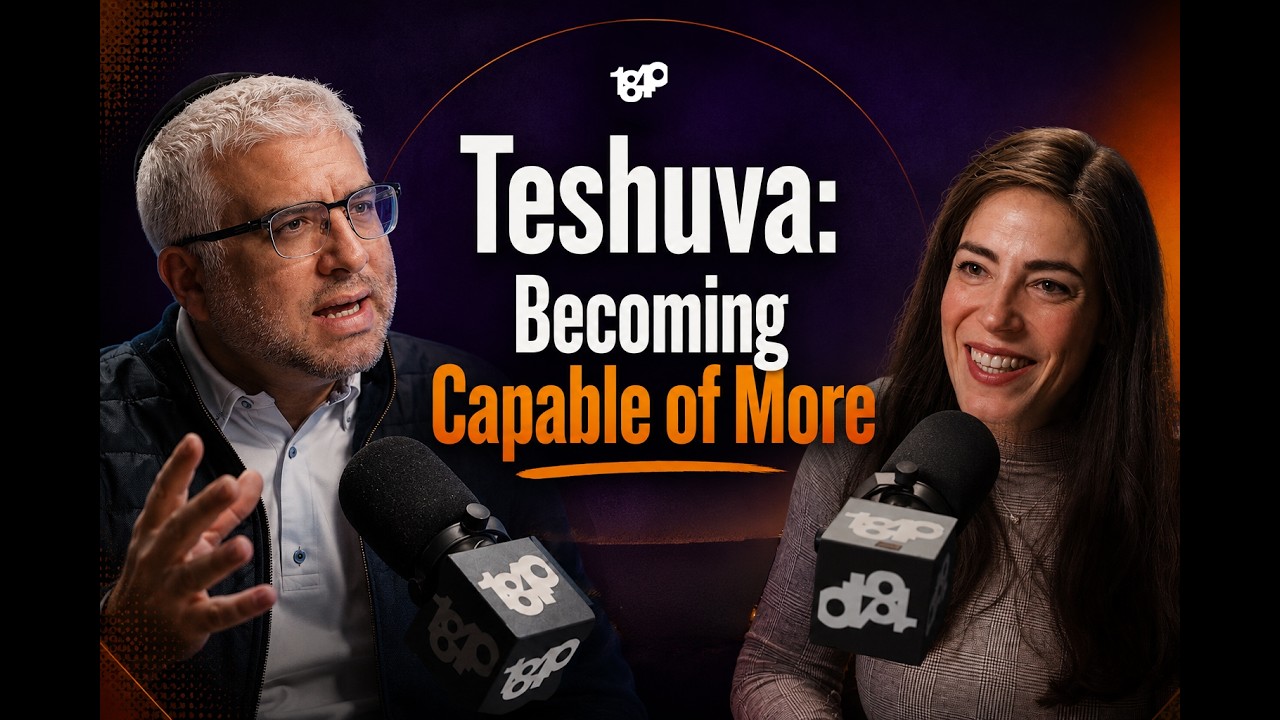
Our redemption pays tribute and internalizes that exile, that they could almost coexist. And it’s these questions that were at the heart, these questions of how diaspora and Israel, the Land of Israel, and these communities have interacted not in the moment that we are in now, which we think is so novel but actually in the very creation of communities, of Jewish communities outside of Israel. And that is why I am so excited to welcome back for the third time, which I noted I think this is the only guest, we’ve had a couple of guests on more than once, Ari Bergmann I believe we’ve had on more than once, Rav Moshe Weinberger we’ve had on more than once, Malka Simkovich, Dr. Malka Simkovich, who was the Crown-Ryan Chair of Jewish Studies and Director of the Catholic-Jewish Studies program at the Catholic Theological Union in Chicago. She has recently taken on a new position at the Jewish Publication Society, one of our great publishers, and she is now the head, which is great news for the Jewish people.
And we’re always excited to have Malka back and specifically because she wrote this amazing book and I really, really mean this, it was very moving for me to read. It’s very scholarly but it’s also very powerful and that book is called Letters from Home: The Creation of Diaspora in Jewish Antiquity. It is my absolute privilege and pleasure to welcome back Dr. Malka Simkovich. Malka, I’m so grateful that you are joining us today and there’s so much to talk about.
You have this amazing book which I don’t know if this is, I’m not meaning this as an insult, I feel like it’s underappreciated, the importance of this, maybe it’s because it’s most recent, but the book is called Letters from Home: The Creation of Diaspora in Jewish Antiquity. And honestly, I’m not just complimenting you for no reason, I really was captured by some of the themes inside of this book and this moment of really the creation of an exilic community, a community in exile from somewhere else. So I want to open up with something very basic because I think the biggest misconception people have about exile, being exiled from the Land of Israel, is it’s a binary. There was a time when everyone was there and now everyone got kicked out.
And we think about that binary really based on the destruction of the second temple, that period which is fairly modern on using air… Air quotes, it’s not actually modern, but we’re talking 70 of the Common Era more or less. And your story begins earlier. So I want you to take me back and just tell me the time periods that we’re talking about when we talk about the initial creation of a Jewish communities outside of Israel.
Malka Simkovich: It’s a great question, David, and I’m so glad to be here in conversation with you, so thank you again for having me on. The story really begins in the wake of the fall of the first temple, the first Beit HaMikdash, in 586 BCE. It’s at that point that, and this is very obnoxious, but what scholars refer to as Judeahites. In Hebrew we have one word, Yehudim, and part of what’s so confusing for us English speakers is that when we’re talking about this early, early period, we’re reading about Judeahites, it feels so foreign, it feels like a different population, something that’s totally disconnected from the world of the rabbis, from the normative Judaism that we know today.
So before I get into the chronology that you’re asking about, I want to clarify some questions of terminology. When you’re reading English works of history of this period, you’ll read about Judeahites. As you enter into the world of the Second Temple era, which begins in 538 BCE and we can talk about why I’m using these years, but
David Bashevkin: there are probably other scholars who would fight you and take you on for this dating? Or is it fairly consensus?
Malka Simkovich: In the world of academic scholarship, there’s consensus. In the world of Orthodox Judaism, there might be questions, especially about the Persian era.
David Bashevkin: Oh, okay. That’s a whole can of worms. I know it’s so complicated and I’ve spoken to people about it before. Let’s put that on hold for now.
I know my friend Mitchell First has written quite a bit about that, I believe, but continue please.
Malka Simkovich: Okay. In the early Second Temple era, we’re still talking about Yehudim, but in scholarship you’ll find them translated as Judeans, and these are people who returned to the land of Israel after the Babylonian exile. And then, later, in the second and first century BCE, scholars talk about these Yehudim as Jews.
So in English scholarship, we have a very artificial progression from Judeahites to Judeans to Jews. All of that reflects a kind of modern decision about when Judaism starts and it creates a rupture between later normative Judaism that becomes the world of the rabbis and the world of the Bible. I reject that, and I want to just clarify, we’re talking about Yehudim, and we can talk about rupture, we can talk about change, we can talk about revolution, but we also have to do it within the realm of continuity. These are all Yehudim in Hebrew.
So, I’m going to talk about Yehudim, even though we’re having a conversation in English right now. When the Beit HaMikdash, when the Temple falls in 586 BCE, the people of Yehudah, the Yehudim are exiled into Bavel, and when the Persian king Cyrus defeats Babylon in 539 or 538 BCE and announces that these Yehudim can return to the land of Israel and rebuild, it’s at that moment where, for the first time ever in their history, the Yehudim can say, wait a second, we’re not all going to live in the same place. Now, by the way, scholars will say they didn’t all leave the land of Israel, there were always some who remained in the Land of Israel. We’re going to put that aside.
The story that the Tanakh tells us is a story about the Yehudim all going in and all being invited to come back. When the majority of the Yehudim say, you know what? We’re not all going to come back. Either we’ll stay where we are along the Euphrates River or along the Tigris River, or we’ll go to these other places along the Mediterranean coast, we’ll go to Northern Egypt, we’ll go along the Levant, we’ll go up the coast to modern-day Syria, when it becomes clear, fifty years into the Second Temple era, that the majority of Yehudim have not returned to the Land of Israel, now there’s a theological crisis. And the crisis boils down to a single question, and the question is, is exile over? And you never have consensus on it.
The reason why there’s no consensus is because the Jews, the Yehudim, are opening up their scriptures, their Tanakh, and they’re reading the passages preserved by the great prophets, Yirmiyahu, Yeshayahu, etcetera, and they’re reading about two promises. The promises of God that the exile will end, and here’s how you’ll know it. On the one hand, everybody will come back to the land after Galut Bavel. It’s actually not called Galut Bavel in the Tanakh, but let’s call it that.
On the one hand, everybody will come back.
David Bashevkin: What does Tanakh call it? I’m just curious.
Malka Simkovich: Golah, which is very different. And that’s actually a very important point of terminology.
In the Tanakh it’s Golah. Some Jews in the land of Israel in the Hellenistic era will refer to Jewish life abroad as diaspora, which is not Golah. And the rabbinic conception of Jewish life outside the land of Israel is Galut. And Golah and diaspora and Galut are three different things.
David Bashevkin: Okay, we definitely I’m fascinated in this snapshot where we are right now because it’s a moment in some ways that repeats in the modern era where we are right now. You are talking about a time period where we have a second temple that has now been rebuilt upon the authorization of this King Cyrus, the Persian king, and we have a more or less fully functional second temple that performs the high holiday rituals, we have a high priest, a Kohen Gadol, and yet we have people who are not living in the land of Israel. What did they call the land where they lived? Did they call it Bavel at that time?
Malka Simkovich: Well, it’s now Persia, so they have different terms for it. I don’t think that they’re calling it Bavel, but I want to go back to this question, if I may, regarding whether the exile is over.
Can I go back to that for a minute?
David Bashevkin: I’m setting up to go back to it because I’m setting up how much is at stake with this question because that’s a question in many ways that the Jewish people asked themselves upon the founding of the State of Israel. Now we have a state, now we can live under security, we want to negate the exile, shlilut hagolah, which was a very real campaign that said if we’re going to be successful in being the Jewish state, it means the unification geographically of Jews all over the world. I want you to come back to this question now. We don’t need to talk about the modern diaspora just yet, but when you come back to this question, I just want to sprinkle in one other question, and you can come back to it anyways.
Were Jews living outside of Israel awaiting a Messiah? Or did they think that they were living in the messianic age? Now you can continue.
Malka Simkovich: I think that the vast majority of Jews who are living outside the land of Israel in the Persian era, so that’s the first half of the Second Temple period from around 538 BCE to let’s say 334, it’s not really half, but the first big era of the Second Temple period, I do not think that they were expecting the imminent arrival of Mashiach. I think that that kind of language comes much later, and I think it comes out of the land of Israel, and I think it really becomes a very powerful idea after the shocking victory of the Hashmonaim after the Syrian Greeks in 164 BCE, which enables the Jews of Judea to say for the very first time, we have autonomy over our land. They actually did not have autonomy in the first 200 years of the Second Temple period.
In other words, yes they have a temple, they’re living in Judea, the Persians call it Yehud from 538 BCE all the way until 164 BCE, the Jews are living with a temple, but do they have independent autonomy? They do not.
David Bashevkin: How was that lack of autonomy manifest? If they were able to live there and they were able to have a temple, what were they not able to do?
Malka Simkovich: So under the Persians, they have to pay taxes. The taxes are not debilitating. The Persians broadly practice religious freedom and are content to let the Jews observe their ancestral laws as long as the Jews pay their taxes.
Things get really contentious under the Greeks, and not all the Greeks, but under the Syrian Greeks. But before we dive into that, can we go back to the very early years of the Second Temple era?
David Bashevkin: Yes, yes. I’m being serious, thinking through these events and I have questions that I haven’t even asked yet that I’m just excited to hear your response. It’s otherworldly to think about these times.
We don’t think about Jewish communities living outside of Israel during the second temple period. What part of history did they think they were living in? It is so fascinating, it’s an understudied segment of just our community. But yes, go back to the question, you lead the way.
Malka Simkovich: Thank you.
So first of all, I want to say the Jews who are living, the Yehudim who are living outside the land of Israel throughout the second temple period are not assimilated Jews, they are not dispassionate Jews, they are not disinterested Jews, and by the second century BCE, they are not hellenized Jews. You cannot make a differentiating line between where someone lived and the kind of Judaism they practiced. You cannot say, well, these Jews who lived outside the Land of Israel practiced a corrupted form of Judaism. Just like today, you have Jews on the coast of Tel Aviv having their shrimp cocktail and you have Jews at Kiryas Joel who don’t have internet.
In the ancient world, you have highly pietistic Jews, even sectarian Jews who are living in the suburbs of Alexandria and you have Jews who are hellenized in Jerusalem. We know this, this is not conjecture. So it’s very important.
David Bashevkin: It’s fascinating.
So maybe you could pause over here. I was going to wait for you to kind of talk about this piece, but maybe you could spend just a moment of what data you are calling upon to paint the portraits that you do. You know, when students of a Beis Medrash think of the data that you can call upon, we know the Tanakh, we know Mishna, Midrash, you know, Talmud and such. Do you have papers and stories that we don’t have? What data are you using to paint this portrait? We’re talking during the second temple period.
This is well before the Mishna, well… well before the Talmud. What data do you call upon to paint this picture?
Malka Simkovich: I’d be glad to answer that. I am worried that I’m being repetitive from our second conversation and I don’t remember what I said, so I guess I apologize to all the…
David Bashevkin: Don’t even worry. I just want… forget about that. Forget…
they have to listen to all three anyways or they’re off the island, so don’t you worry about repeating, let’s just think of it as a healthy review.
Malka Simkovich: Okay, fantastic. There are many collections of Jewish documents that were composed in the Second Temple era. Now, everybody knows the Dead Sea Scrolls, which is a collection of nine hundred or so fragments found in a series of I think eleven caves on the northwestern corner of the Dead Sea.
I do not like the Dead Sea Scrolls because they are not representative of mainstream Judaism. They represent the thinking not even of a sect but of an extreme subset of a sect where maybe a couple hundred people lived in a very small amount of time, maybe the second century BCE through the mid-first century CE. So I don’t love going straight to the Dead Sea Scrolls, they’re there, everybody asks about them. Another fascinating collection of texts is the papyri, so they’re paper essentially preserved in the Egyptian island Elephantine.
The Elephantine papyri contain a cache of documents written by, we could say Judeans or we could say Yehudim, but Judeans who lived in this little island in the Nile River in the fifth century BCE as part of a Persian military garrison and their letters to authorities in Jerusalem concern questions of proper Judean practice including the observance of Pesach. So we have the Elephantine papyri, we have the Dead Sea Scrolls. Then we have big collections of texts that have nothing to do with one another. For example, the Apocrypha.
The Apocrypha is a collection of around fifteen documents that were written by Jews anywhere from the end of the third century BCE through the first century CE. The only relationship that these documents have to one another is that Christians in the early common era thought that these texts should be added to their Old Testament. And so in later Christian collections of what we call the Septuagint, which is the Greek Bible for certain Christian communities, the Old Testament and the New Testament, in between we have these apocryphal books which were written by observant God-fearing Jews in both the Land of Israel and abroad. So we have the Apocrypha, we have the writings of the great Jewish philosopher Philo who lived from around 20 BCE to 50 CE.
David Bashevkin: And he lived in Alexandria outside of Israel.
Malka Simkovich: Okay. Yes. And again, he gets a bad reputation for being Philo Christianus, for being this kind of proto-Christian philosopher because his writings are preserved by the church.
Philo is an observant Jew living in Alexandria who, yes, maybe his Hebrew wasn’t fluent, but I assume that many of my readers tonight might be more similar to a Philo of Alexandria than Rabbi Akiva, let’s say. Maybe I should not be making specific comparisons, but Philo’s Hebrew was not outstanding. His conception of Jewish law and values and moral structures was extraordinary and he identified as an observant Jew who kept the main identifying markers of Jewish law and identity and that was Shabbat, Brit Milah, and Kashrut. And then of course there’s two other categories, there’s the writings of Josephus, the late first century CE historian who wrote a magisterial history of the Jewish people known as Antiquities of the Jews and he writes a seven-volume account of the Jewish rebellion against Rome.
He wrote an autobiography and he wrote the first systematic defense in favor of the Jewish people called Against Apion. And we have this massive collection of texts called the Pseudepigrapha, which is a catchall collection of essentially anything that isn’t in those other categories. But it’s again a kind of categorization developed by Christians. The Pseudepigrapha is a term invented by an 18th century Protestant theologian named Johann Fabricius.
David Bashevkin: Where could one find… ’cause the papyrus collection sounded so fascinating. Is that something that one could access? Has it been translated, commented upon? Like where would one find like these actual Jews living on some island in the Nile who are serving in a Persian military garrison? It just seems so fascinating to see what are the questions they are asking about, what are in the minds of Jews of that period. Where could one find that?
Malka Simkovich: Well, the same place where you can find anything pertaining to the ancient world and that is Amazon.com.
You can go to any major bookseller and find Bezalel Porten’s giant red volume which contains transcriptions of all the papyri with beautiful commentary and introduction.
David Bashevkin: We left off right when I asked you about the data that you were drawing upon right before then. You were talking I believe about going back to some of the theological questions of the communities inside of Israel and outside.
Malka Simkovich: Exactly.
When the Yehudim are presented with the opportunity to return to the land of Israel, they begin to examine their scriptural, their prophetic texts and to look for hints about how to understand exactly what is happening to them. And this is especially the case for those Yehudim who return to the land of Israel and they’re reading their prophetic texts and these texts, especially Yirmiyahu, is saying yes, there’s going to be a horribly traumatic, painful era of divine rejection, you will be expelled from your land, that does signify divine anger, justified anger against the sins of the people. But God makes two guarantees in those passages: one, everybody will return in a kibbutz galuyot, and two, the temple will be rebuilt. Those are the guarantees.
Now years go by, right, 538, Cyrus announces the Yehudim can go back to the Land of Israel and rebuild their temple. And then we have these figures, very enigmatic, mysterious figures, we don’t know exactly when they lived, Nechemya and Ezra, and they’re gathering the people back to the land. What we know for sure is that decades go by, years and years and years, and it becomes clear that not everybody is going back.
David Bashevkin: Would they visit? Was there a culture like we have now of people going for Sukkos and stay at the Inbal? We do have a concept of being oleh regel, do we know how common it was for Jews in these lands bordering Israel to make the trek and go for the shalosh regalim, for Sukkos, Pesach, and Shavuos?
Malka Simkovich: Yes, but before I get there, I just want to talk a little more about the prophetic text.
So there is a huge problem for these Yehudim who return to the Land of Israel. On the one hand, the Beit HaMikdash is built. On the other hand, there is no kibbutz galuyot. What do you do when 50% of God’s covenantal promises are fulfilled? Do you wait? Are you in a holding pattern? Are you saying well we’re on the cusp of this major shift? This is kind of what we might call the proto-messianic mindset.
Are we just on the edge of our seats with the suitcase under our bed with the change of clothes waiting for the eagle to swoop down and take us? What is happening? How do we interpret these times? On the one hand we have the Beit HaMikdash, on the other hand everyone is spread out. And the majority of the Judeans are not there. The majority, not 10,000, millions, easily hundreds of thousands of Jews are not in the Land of Israel.
David Bashevkin: And the Talmud seems to deal with this question in a way, I believe it’s a passage in tractate Rosh Hashanah on yud zayin amud alef, 17A, but I could be wrong on the exact page.
And the Talmud has a question about whether or not the fasts mourning the destruction of the temple should continue during the Second Temple era. And I’ve always seen that to be such a fascinating question. Were they still observing Tisha B’Av during the time period of the Second Temple? Do we have any data? I don’t want to call it data because it could be Torah or any record of ceremonies mourning the destruction of the First Temple during the time period of the Second Temple?
Malka Simkovich: It’s a fantastic question. We do have nostalgic yearning for the time of the first temple.
I don’t know offhand of a text that talks about Tisha B’Av, that’s a really interesting question. I would just say going back to this crisis, this theological crisis, is the exile over? You do begin to see a split. And this is going to undermine a little bit of what I said earlier when I said you can’t make a geographic line around the land of Israel that tells you how people acted and observed, that I think is correct. On the other hand, when it comes to this question, is the exile over, you do see a pattern where Jews outside the land of Israel are saying of course the exile is over.
Look at us, we’re in the city of Antioch, we’re in the city of Alexandria, we’re in the eastern regions of what will become the Greek or Roman empire, and we’re just fine and we’re economically successful, God seems to be pleased with us.
David Bashevkin: And religiously thriving.
Malka Simkovich: And religiously thriving, they’re not fully assimilated. And meanwhile you have Jews in the land of Israel who are saying no, the exile is not over.
Guess whose fault it is? It’s your fault. You’re the problem. If you would come back to the land of Israel, then God would reassert himself into the natural world and we would see a total upheaval of the natural norms and we would be in a new era that would overturn our present reality for the better.
David Bashevkin: When you think of texts that capture that dialogue, what comes to mind? Because that is the dialogue that we are grappling with in this moment.
Of you and I, neither of us are speaking from the land of Israel, and we could get to our personal lives and personal thoughts a different time. I think I have both of these voices that live inside of me. But I’m so curious when you think of texts that capture this tug of war, Jews outside of Israel saying maybe this is okay, maybe this is good, maybe this can continue, it’s not exilic. Again, we’re talking about a time period when the second temple is standing, and there are Jews in Israel saying, we’re not all the way there, and it’s your fault, because if you only would come back, we would be there.
Malka Simkovich: Yeah, exactly. You have to piece it together by putting certain documents into conversation that I don’t think have been examined as a genre. So, where I would start is with the Greek translation of the Hebrew wisdom text Ben Sira. And actually, many rabbinic Jews know Ben Sira because it does show up in the Talmud.
The rabbis do know Ben Sira, but by the early common era, it’s being cited and preserved primarily in Greek, even though it was written in Hebrew. The circumstances in which it was translated into Greek are really interesting. In the early second century BCE, a Hebrew-speaking scholar Sira or Ben Sira wrote a wisdom text, and we have it now because it was discovered in the Genizah. It was lost for many, many centuries, this original Hebrew version, and it also shows up in the Dead Sea collection.
In any case, Ben Sira was written for a particular, I would say, elite community of Torah scholars in the land of Israel. But the grandson of the author of Ben Sira translated it into Greek specifically for Jews living in Egypt. And when he produced a Greek version, he adds a prologue that explains exactly why he’s embarking on this project, and it clarifies his profound anxiety about the spiritual welfare of Egyptian Jewry. And he says, I went to Egypt in the year 132.
He doesn’t say 132 because they’re not counting down the years. He says, in the reign of this king, but we know it’s 132 BCE, and so that’s already a historical golden nugget. We know exactly when he went to Egypt. And he says, and I saw that there was no shortage of need for good quality Jewish education, essentially.
Wow. And I’m writing this text for those who are thirsting for knowledge. And he compares his project with the project of his grandfather who wrote for those who, quote, want to make greater progress in learning. So, those Judean Jews, well, they’re already learned.
They just want to grow even more. But it’s the Jews of Egypt who they don’t even have the basics. And that prologue is really telling. That worry, but again, there’s a paternalism to it.
There’s a sense of, I would say, Judean exceptionalism, right? Where authentic Jewish practice, it’s centered in Jerusalem and the land of Israel, and so there’s a sense of responsibility. We have to bring this authentic kind of teaching to Egypt. Now, of course, we don’t know how Jews in Egypt responded to these overtures. We don’t know whether they were receptive, but we have a number of documents, and I go through them in my book, that reflect this kind of Judean anxiety.
And one of the big arguments of my book is that the word diaspora, it’s a Greek word, it wasn’t used by diasporan Jews outside the land of Israel. This is a word invented by Jews in Judea.
David Bashevkin: Tell me a little bit about the etymology of the word diaspora or diaspora. It’s so funny you say that and you talk about it in your book that it was language that the Jews of Israel used to describe the Jews outside of Israel, but Jews outside of Israel never used the word.
I never thought of myself growing up like I live in the diaspora. There’s only one thing I associated diaspora with, and you and I, there’s no chance we don’t have the same answer. Diaspora meant one thing and one thing only: the Diaspora Yeshiva Band.
Malka Simkovich: I knew you were going
David Bashevkin: to, the only, of course.
Malka Simkovich: I knew it.
David Bashevkin: Of course.So that was the only thing. There was a band that had the word Diaspora Yeshiva Band.
I associated with the Yeshiva or with the band. I didn’t even know that it referred, what does the Greek term, where’s it come from, diaspora?
Malka Simkovich: So, diaspora in Greek refers to scattered seeds. You might know the word spore from maybe your high school biology class. Diaspora is to scatter the seeds, and the word itself indicates this idea of transplant.
David Bashevkin: Seeds, it’s very interesting, but it also has an idea of growth. You plant seeds to grow communities, not to destroy them or think that they’re temporary.
Malka Simkovich: I really like that positive spin. I tend to not think about it that way.
I tend to think about the tree and the branches from whence it came, and this idea of the Torat Chayim kind of giving these seeds to the rest of the world. So I like that read, David, and I think that maybe There were Jews who did see that kind of generative positive aspect to it. I think certainly many Jews would have agreed with that. One of the interesting things about diaspora before I get into where it first appears if you’re interested in that, I want to make a contemporary point.
I think today many Jews assume that Galut is a really negative word. It’s laden with judgment. Oh, you’re in Galut, you’re rejected by God and you know, you’re kind of estranged from the divine. But diaspora’s more neutral, maybe it’s a little bit less judgmental.
Historically, this is absolutely not the case. I would say that when we’re talking about the biblical Golah and even the rabbinic Galut, but let’s talk about the biblical Golah, it is a much more optimistic experience and category than diaspora. And I want to highlight two very important differences between the Golah of the Tanach and the diaspora as a concept invented by Jews in the Land of Israel in the second century BCE. The Golah of the Tanach is not an experience that splits the people in half.
It is experienced, at least according to the Tanach, by all Yehudim, everyone experiences this trauma together, and they’re invited to all return. Now, they don’t, that’s part of the agony, you know, of the Jews afterwards is how do you deal with the fact that it doesn’t end up the way it was predicted? But what we’re reading in the Tanach, when we’re reading about how the Golah is going to play out, we’re reading about an experience that A affects every single person from this community, and B that ends. It ends. It is all-encompassing, it brings us together as a community, and then it’s over.
And the point is is that we’re supposed to remember this collectively, it brings us together into community in every generation, we went through this trauma, and we would have ended it had we all gone back to the land of Israel, but it is something that we remember collectively just like Yetziat Mitzrayim. We went through this trauma of slavery, we left together. From its inception, diaspora is meant to split the Jewish people in half between those who live in the land of Israel and are not in it and they are the recipients of God’s divine beneficence, and everyone who’s in this negative space, this diaspora defined by where they are not. And even worse, it’s open-ended.
And the people who are in it are self-perpetuating this negation and this status of being defined according to what they’re not. And what are they not? They’re not beloved by God. And so diaspora is not at all like the Golah of the Tanach. There’s always going to be people who are in it and people who are out of it, and it’s open-ended.
And so when today people say, “Oh, I don’t like to say Golah, I only say Tefutza,” you know, that’s the Hebrew word for diaspora, to me this is not a solution. In fact, it reflects a lack of understanding that from the beginning there was an effort, and it really was a polemic, to imagine all Jewish life outside the Land of Israel as monolithic and as embodying a certain kind of theological experience that was explicitly negative.
David Bashevkin: Fascinating. I am like enraptured by this, and I want to actually skip ahead because we’ve been talking a lot about the experience of diaspora, like the early, first emergence of the diaspora.
This is during the Second Temple period. I’m still kind of wrapping my head around, you know, during that period what Tisha B’Av feels like. Are they waiting for a Mashiach? I think you are probably one hundred percent right. We project a lot of our contemporary theology, the way that we look at things, on that period.
And it probably makes a lot more sense just to kind of understand them on their own terms before we try to retrospectively project ourselves onto them. But I want to jump ahead, and I was thinking about this question, it’s almost an emotional question for me. I want to jump ahead to the period of the destruction of the Second Temple. And my question is as follows: Do we have information about how those diasporic communities received the news of the destruction of the Temple, and in what ways did that destruction, did that upheaval affect those Jews outside of Israel? Because in a lot of ways, you know, we’re grappling with that now, you know, since October 7.
We’re together, we’re in it, beyachad nenatzeach, but we’re also not, we’re also at a remove, we’re also at a distance. You know, information travels much faster now, but we don’t experience it in the same way. So what do we know about how the diasporic world experienced that destruction of the Second Temple, how it affected their lives?
Malka Simkovich: This is a huge question. What very famously, every Jew in the Roman Empire was taxed with the Fiscus Judaicus after the first rebellion, the Great Jewish War, which culminated in the fall of the Temple, and it was actually a seven-year war from 66 to 73.
So certainly from the perspective of the Roman Empire, and we see the parallels today that are very obvious, if a Jewish community in one place rebels or acts in the wrong way or is somehow perceived to be disloyal, then every Jew has to pay. That much is clear and we see that pattern emerge in many different ways and throughout the Hellenistic era.
David Bashevkin: Were there ever periods, and this is important just to see how much it parallels, where Jews in the diaspora were resentful of Jews starting up fights with the Romans in Israel and say, hey, this is affecting all of us, maybe it’s not worth it, we should be more peaceful and more… did they have different views of how to relate to the Roman Empire?
Malka Simkovich: That’s a fascinating question and we know that in the late second century BCE, there was a lot of civil upheaval among various claimants to the throne in Ptolemaic Egypt.
And a lot of the debate among Jews in Egypt in the late second century BCE had to do with, should we choose to support a claimant to the throne that is less popular, but we know will support our kin in Judea? I know! What? This is true.
David Bashevkin: What parallels could one even draw from that? That is fascinating, that’s the question, who do we choose when we’re in elections? Is it about Israel? Is it about tax policy? Is it about the quantity you know and you can trust? And we, absolutely fascinating. I don’t want to even spell out the parallels, they’re too obvious and you can enjoy them and extrapolate them on your own. But let’s come back to this question, I think I had interrupted you, we were talking about that experience of that ultimate exile of the Second Temple.
Malka Simkovich: There are a few interesting points that I think would be relevant to this question. First of all, we see a spike of Jews outside the Land of Israel and in Egypt in particular giving their children Hebrew names instead of Greek and Latin names in the wake of two conflicts. It happens in the middle of the second century BCE after the Hasmonean rebellion, and it happens again at the end of the first century CE. And there’s a wonderful scholar named Sylvie Honigman who has looked at various inscriptional evidence and she’s just looked at the names and how they change.
What does it mean for a Jew in Egypt at the end of the first century to give their daughter or their son a Hebrew name? Not only is it an expression of loyalty and of connection and kinship, it’s actually quite risky because what you’re doing is you’re minoritizing yourself. You’re saying to your community, your host culture, I’m actually not of you.
David Bashevkin: Like wearing a Star of David, like a lot of what we see in the diaspora post-October 7th, people embracing the fact that I am a part of the Jewish community, I’m going to wear whether it’s a yarmulke or a Magen David or whatever it is. And she saw people…
but we’re still not yet at the period because you said this was in the first century.
Malka Simkovich: Well, it happens twice. It happens after the chashmonai rebellion in the second century BCE and it happens again in the late first century CE.
David Bashevkin: Absolutely fascinating.
We’re fast forwarding, this war begins, you said in 66 of the Common Era. And goes to 70, the temple’s destroyed in the year 70. Is that world news? Is that on the cover of… meaning I don’t know how people get the news back then.
Do we know how people find out? Do they have relatives? Are they traveling back and forth? Do they go up to, I don’t know, for Pesach, expecting to see it there? Meaning I don’t know how long information travels. How much do we know about the experience of the destruction of the Second Temple through the eyes of diaspora Jewry?
Malka Simkovich: It’s a great question. Well, first of all, the Romans were very proud that they finally quenched this Judean rebellion. Even though they really didn’t, there are two more clashes after 73.
There’s the war of Kitos as the gemara refers to it, or the war of Quietus in 115 CE, which is actually a war that scholars think started in the diaspora. That Jews rebelled against Rome outside the Land of Israel and then it traveled to the Land of Israel. And that is a conflict that we have very little reliable evidence for. In other words, a lot of Roman historians talk about the conflict, but they don’t give us reliable numbers.
They’ll say things like, well, the Jews killed a quarter million people. We don’t have the reliable numbers. But certainly the Romans were very impacted by this startling and offensive rebellion that takes place outside of Judea. And then of course we have the Bar Kochba rebellion in 135.
So the Romans of course can’t foresee the future, and in 73 they think that they’ve solved the Jewish problem. God, that’s a terribly insensitive phrase. But to celebrate this, they have parades and very famously, they’re parading the Jewish slaves through the streets of Rome and they’re really publicizing it. You know, imagine if there was an insurgence, imagine if Texas seceded from the Union and God forbid there was…
maybe this is too close to home, but imagine there’s a civil conflict that the federal government… the United States government quells. What would be the natural response? Would they present this as an outside infiltration? No, because that wouldn’t make any sense, right? This is an internal conflict. However, for whatever reason, Rome deals with the Judean rebellion against their own governance, which is an internal rebellion, as if it were a foreign infiltration.
It’s bizarre although again there’s a lot of contemporary resonance. What does it mean that they’re presenting these Jews as foreigners who’ve been vanquished? And you can even look at the Judea Capta coins, which are quite, I would say, graphic. I’m not going to describe them to you, but there’s definitely some sexual, yes, some images of
David Bashevkin: sexual violence.
Malka Simkovich: Definitely. And you could see it on your own, they’re easily accessible online. But this idea, not only that Judea has been vanquished but that she was an outside foreign threat. That it really shouldn’t have computed with people because everybody knew that Judea was fully incorporated into the Roman Empire in 6 CE.
So this whole thing was a kind of a marketing campaign on the part of Rome to say no, they were never one of us. They were a threat and we took care of that threat for you and you’re welcome.
David Bashevkin: That must have cascaded to Jews everywhere, meaning it reframed who the Jewish people were, meaning they were the enemy inside, they were never one of us, and us getting rid of them. This is what really I guess divides up and frames the Jews as that minority culture and that they can’t be trusted.
And so I am fascinated. Please continue because I’m still waiting to hear, I don’t know if we have this information about Jews’ reaction to the actual destruction.
Malka Simkovich: I don’t know if we have that information either, but I do think that the aftermath of that great war is rippling out into the early second century CE, so that whatever happens in 115 CE, this diasporan rebellion is taken by Roman historians as an extension of the conflicts that had taken place decades earlier. And so you can imagine that the morale of these Jews in let’s say more cosmopolitan regions really was on the decline because as you noted, David, there was a rude awakening for many of these Jews who thought that they could walk the line, that they could ingratiate themselves into their host empire and maintain their observance and their traditions of their ancestors.
And yet that is not their fate. They have to pay these heavy taxes. And so what ends up happening when they’re branded as outsiders is that they essentially own it. Yes, we are outsiders.
We are Jews. We’re going to start giving our children Hebrew names and we’re going to start to express more vocally our discontent with the Roman Empire. And whatever happens in 115 CE, we think it happens first in Egypt and then it travels northwards and into the land of Israel probably is an extension of that unhappiness. And this also very tragically spells the end really for the Jews of Alexandria.
We don’t have much evidence of thriving Jewish life after 118 CE. At this point, majority of the Jews were either put to flight or they very tragically abandoned their Jewish identities and chose to assimilate. We don’t know. There’s a lot of new scholarship on what we call non-rabbinic Judaism in the second and third century CE, but there’s precious little evidence.
And I know scholars might hear this and disagree and say, oh, what about these inscriptions? Or what about this lost text that’s preserved in the pseudepigrapha that’s dated to the second century CE? Well, that’s all fine and good, but most of those texts are tentatively dated. In other words, we don’t have many texts outside of the world of the rabbis that can be confidently dated to these particular times. We just don’t.
David Bashevkin: You have a sentence in your book right at the very end in the conclusion that I thought was really, really brilliant and very thoughtful, made me think.
You are talking about the way that diaspora Jews actually, I don’t know, we could call them Galus Jews, people living outside of Israel, used the notion of Israel to actually strengthen their religious lives. So you have this sentence that says as follows: While the modality of their written scriptures served to legitimize Jewish communities outside the Land of Israel by enabling them to thrive, the content of these scriptures presented Jerusalem and its temple as the spiritual center of Jewish life. There’s something very interesting that was taking place where they were actually by conceptualizing almost their distance and their yearning and their wanting to go back. Which they could have gone back.
These are Jews who very likely, correct me if I’m wrong, lived in the diaspora straight through the Second Temple period.
Malka Simkovich: Yeah, absolutely. Look, when the Jews, the Yehudim, are invited to have freedom of mobility and they can move anywhere. They can go to the land of Israel, they can stay along the Euphrates or the Tigris, they can go to the north of Africa, they can go anywhere they want.
And they start to carry their scriptures. They start to carry their Torah. Now, it doesn’t mean—we don’t have to go into this, but it doesn’t mean that they have this Tanakh, but it does mean that they’re reading Torah, they’re gathering regularly to read and interpret Torah, and they’re developing traditions, they’re sharing these stories and they’re examining. Now, by the second century BCE, Jews who have long settled outside the Land of Israel are making a very reasonable argument, which is: look, we know that the temple exists and we’re happy to send money and we’re happy to acknowledge its centrality in the Jewish past.
But God gave us this gift of the Torah and its very portability, our very ability to build communities around these sacred texts is a sign that God is okay with us settling anywhere we want because wherever we are in the world, we can study these texts and worship the universal God that controls the cosmos. And the Torah itself, the modality of this Torah is proof that God wants us and that God is happy with us building these communities wherever we live while showing loyalty to the Beit HaMikdash. And Jews in the land of Israel are like, okay, that’s nice, have you actually read it? Have you opened it up to say Bereshit? Have you taken a look inside? That’s the tension between the modality and the content. And both arguments are totally valid because we are in a totally new era where these Jews are able to develop very powerful connections to their scriptures.
And this goes back to a question that you asked earlier that I did not answer. Many of them are visiting on pilgrimage and then they go home.
David Bashevkin: This has been just incredibly wow and so clear and takes you to a world that is both so ancient and in many ways foreign, but so deeply familiar to the moment that we are in now, which is why I really found this entire conversation just so profound and so thought-provoking. There’s one last point that you make in the book that is so moving and so powerful, which is how you distinguish between the theological framing of what I’ll call the first exile, which is the exile after destruction of the First Temple, when those first communities were being built outside of Israel and those communities developed some theology and justification of living outside.
And then the added theological layers that were added specifically in rabbinic literature to conceptualize the second exile, and by that I mean following the destruction of the Second Temple. And you say as follows, I’m going to hand it over to you so you could explain: What did the rabbis add theologically to frame that second exile, the exile that we are so to speak, up until the establishment of the State of Israel where now it’s a little bit of a debate, where are we in history, but at least until that period, we were in that exile. What did the rabbis add theologically to explain their existence outside of the land of Israel?
Malka Simkovich: This is a really great question and when I was writing the conclusion of my book, I almost thought to myself I really should just start another book because it’s not enough to just write a conclusion. This really deserves much more study and attention than it’s received.
First of all, again, the golah of the Tanakh is not equivalent to the galut of the rabbis in numerous ways, but I’ll talk about two major distinctions. The first distinction is one that we find in many passages, most famously in Mekhilta de-Rabbi Ishmael, but elsewhere, and that is the tradition of bringing Hashem, bringing God into exile so that God is in a state of mourning. God is experiencing estrangement from where God is supposed to be. And so as the people are estranged from their homeland, so too is God estranged from the sacred Land of Israel and of course what does that do? It brings God and the people into a state of close intimacy.
When you have this triangulated relationship: God, the people, and the land, and now the estrangement is not between God and the people, it’s instead between God and the people on one side and the land of Israel and now we’re in a state of intimacy. So that’s distinction number one. Distinction number two is that throughout the second temple era, diaspora and the golah before it are spatial categories. So the diaspora is understood by Jews in the Land of Israel who invent it as a place where you are in a state of.
theological rejection to be sure but it’s a space and so therefore anyone who goes into the land of Israel is now out of the diaspora and back into God’s good graces because they’re in the land of Israel. The Galut of the rabbis is not merely spatial. There is a temporal aspect to it. And by that I mean that the rabbis interiorize Galut so that we Jews are all in a state of Galut.
It is a spiritual experience. And in this way the rabbis bring Jews within and without the land of Israel together because according to this conception you can be the most observant Jew in the Land of Israel in the third century CE and you’re still living in a state of Galut, you’re still anticipating the messianic age, there’s still something wrong. And what is wrong? That we haven’t experienced this Kibbutz Galiyot that was promised by the prophets that will be the harbinger into this utopian age of peace. And so as the rabbis are trying to develop a normative system of Halakha that could bring all Jews together because that is their number one goal is to bring all Jews into community into covenantal unity they are doing it by bringing God into the exile and bring God closer to humanity and closer to the Jewish people and they’re adding temporal elements to the category of Galut.
And what does this mean ultimately? It means that the rabbis can conceptualize God in a much more intimate personal relational way than Jews in the Second Temple period who adopted a kind of Hellenistic view of the Jewish God. Yes, these were Jews who observed their Jewish ancestral laws in the Second Temple era. On the other hand, they’re thinking about the Jewish God, the God of Israel in the way that their Greek and Roman neighbors are thinking about their gods. In other words, omnipotent, all-powerful, pretty scary, very distant in the cosmos and has total control over humanity but is certainly of another nature altogether.
The rabbis pull God into their personal orbit. They say we can’t understand the cosmos, we can’t understand what’s going on beyond the human realm of time and space. All we can do is bring our God into our physical intimate world and in doing that the rabbis imbue themselves with the agency to argue and to call God to task and even in some cases to put God on trial because the intimacy between God and the rabbis is so intense that the rabbis can express both love and also a certain set of moral expectations of God and to say, God you failed us, we’re in this intimate personal relationship, what have you done, how could you do this to us? And so in bringing God into their world the rabbis also challenge God and in those passages which are so painful and heart-wrenching to read we see a new image of God and a new kind of relationship that does not appear in earlier Second Temple literature.
David Bashevkin: That is absolutely fascinating and in many ways it kind of is the backstory behind the Yiddishkeit that we experience today.
Like so often it feels like the relationship we have with Hakadosh Baruch Hu with open miracles and prophecy in that redemptive world like it’s hard to relate to. And in many ways like the exile that we have now is that’s the world that we share with the Tannaim and Amoraim and everything that happened following the destruction of the Second Temple. But what I find so beautiful about your response is that instead of just focusing on what we lost it also emphasizes what exile created, an intimacy with God. That very personal relationship, of course we could have had earlier but that shift in emphasis that it’s specifically within exile that we confront a God so to speak, kivyachol, so to speak, that we can argue with, that we can talk to in a more intimate conversational way that we can cry out to where Hakadosh Baruch Hu is found now in the recesses of our actual lives and hearts, in our homes.
And in many ways just for our listeners can look at this, the Maharal says something so fascinating on this in Netzach Yisrael. The Maharal in the tenth Perek of Netzach Yisrael quotes a question of the Ritva where the Ritva asks the Gemara that the Talmud says. Ritva was one of the Rishonim. The Gemara in Megilla says that v’af k’shehein atidim ligoel haShechinah imachem and even when the Jewish people are redeemed that sense of intimacy with the divine will remain with them.
And the question is like why does the Talmud say and even when we’re of course when we’re redeemed we’re going to have divinity. But it’s saying exactly the point that you’re making. It’s in exile that we’re able to foster a new type of relationship that intimacy that we have fostered over these two thousand years when we feel the only way to look the only way to find Hakadosh Baruch Hu is in the interiority of our lives. So really thank you so much.
Malka you have been incredibly generous with your time. I have two personal questions that I want to I want to ask you as a part of this series. My first question is how has your involvement in this period, in this relationship between diaspora and Israel and also your relationship to the Christian world. You taught for many many years, I first should congratulate you on being appointed the senior editor of the Jewish Publication Society, but you taught for many years in a Christian university.
And I’m curious for you how your scholarship and where you taught has affected or shaped the way you think about Mashiach, Messianism.
Malka Simkovich: You’re asking me how my exploration of diaspora in the ancient world impacts my own relationship with Messianism, but you’re also asking me about how my experience in inter-religious dialogue impacts my personal approach to Messianism.
David Bashevkin: Yeah, if I had to rephrase it I would almost ask you, what do you think about when you wait for Mashiach? What do you think about when you think about redemption? I’m asking you because you have so much scholarship and so much fascinating experience professionally in a Catholic university where there’s so much at stake and we forget what these debates were about, but we didn’t even get into anything like Christianity and how that shaped exile, there’s so much to talk about there, but what do you think about when you think about Messiah?
Malka Simkovich: To be honest I don’t think about Messiah or Mashiach so much. I do think about the fact that the rabbis were less messianic than the world in which they lived.
They were much less messianic than their Christian counterparts. They were less messianic than other Jewish sectarian communities that did not last beyond the early Common Era. We know the famous tradition of Akiva observing that maybe Bar Kochba is the Mashiach and I think it’s Yonatan ben Torta who says grass will grow out of your cheeks before the Mashiach comes. So there is this kind of hesitation to invest in messianic claims.
I have become very sensitive to the dangers of overconfidence and when we look at whether it’s the first century or the 16th century or the 21st century, I’m very worried about the dangers of saying we’re living in a particular time and let me interpret it for you. I have a colleague, well a friend locally, who has been insisting to me for a year that we’re living out the perek in Yechezkel about Gog and Magog and we’re about to enter into a cataclysmic and catastrophic literally world-ending era that began with the disaster of October 7th. I shy from this, I’m very anxious about it and above all I deeply believe that we can live full authentic meaningful lives without eager anticipation of the next stage, even while accepting that the next stage might happen today in five seconds in a hundred years, we can acknowledge that it could happen at any time and at the same time affirm the authenticity of every aspect of our lives. And I think that’s what the rabbis wanted us to do and I think that’s what I’m trying to do.
David Bashevkin: My final question is about your relationship to Israel. Why did you choose to not live in Israel and how do you contend, especially post-October 7th, with the question of should you, do you feel like you should be living in Israel?
Malka Simkovich: I will say before October 7th I was much more confident about my decision to live outside the land of Israel. Anyone who knows my obnoxious Twitter profile knows that I’m acerbically Zionist and my conviction that Israel needs to exist for the Jews who live in it and for all Jewish people is very deep and will never be shaken. One of my colleagues in academia who works on the ancient world after October 7th said that she felt that she had been betrayed by her work.
And I think that’s a really interesting phrase. You know I spent five years writing a book which I think essentially argues that you cannot make an association between life in the land of Israel and Jewish authenticity. And experiencing from afar the catastrophe of October 7th made me wonder whether it is responsible to learn lessons from history. In other words I was working on this book thinking look at how these texts from the first century can prove that in 2024 or 2023 Jews can live fully authentic lives outside the land of Israel.
Is that the lesson to be learned? And it’s a bigger question: what are we doing when we’re studying Jewish history? And what lessons if any should we be taking for ourselves now? I can tell you on the one hand I still think that we can be fully authentic Jews because my approach to my Jewish identity is very interiorized, is very internal and I don’t want it to be overly connected to the context and the physical setting in which I find myself and I worry About how when we talk about the Land of Israel, we border, I think, I’m going to use this word very hesitantly, idolatry. And I’m going to say something and David you can edit it out if you feel that it’s too much.
David Bashevkin: I was about to say I’m like we’re going to be texting back and forth about whether or not we’re going to include this but go ahead.
Malka Simkovich: And here I’m going to say something even more extreme.
I grew up in a community, in a beautiful community that included many divrei Torah that treats the Torah like an embodied spirit. And so the Torah says X, the Torah wants us to do this, the Torah teaches us that, and that was the lexicon in which I was comfortable and that’s the lexicon in which I grew up. In my present Modern Orthodox community, we do the same thing, but we do it with the Land of Israel. Fascinating.
It’s the same projection of a third party that mediates our relationship with God. And if I’m going to say as a Modern Orthodox Jew, so condescendingly, wow, why do the Chareidim talk about the Torah as if it’s this human being walking through space and time trying to impart some kind of cohesive lesson? How can I critique that and at the same time talk about the Land of Israel as a separate entity that exists transcendently? I’m not comfortable with that. I don’t think we should be comfortable with that. I’m saying this as a deeply committed Jew who supports the Land of Israel in every way, really.
But we have to be very careful in our language and we have to be careful when we talk about authenticity.
David Bashevkin: Always thought provoking and always fascinating. Malka, I cannot thank you enough. Have an awesome night.
During my conversation with Malka, I briefly referenced a really moving incident that is mentioned in Zechariah in the eighth chapter. If you look in the nineteenth verse, this question comes up where they asked him whether they needed to observe Tisha B’Av as a fast day, which certainly was in place during the seventy years of galut Bavel when they were exiled, the Babylonian exile, for which was seventy years. But should they continue to observe Tisha B’Av while the Second Temple was standing? And just pause, such a fascinating question to think about, that they weren’t almost sure what period of time they were in. What were they asking themselves? Are we in exile? They were not even sure in a way.
And the answer that the Talmud seems to give is that yes, he said they should fast on Tisha B’Av and the other three fasts they don’t need to fast in. And what’s so interesting is why would they think that it wasn’t the redemption during the Second Temple period? And I believe the Ritva writes on the spot, the reason why the Second Temple period was not considered that final redemption was because they knew at the end of the day, from the moment it was built, they knew the Second Temple was destined to be destroyed. They knew that this was not the final destination, so to speak, that this was going to be the final redemption. And I wonder when we think about now, I don’t even want to elaborate on that question, but it’s a scary one.
I mean, thank God we don’t have such a prophecy and I don’t think we ever will, God forbid, chas v’shalom chalilah v’chas. You don’t even want to articulate it. But if we feel the permanence of the State of Israel, that we are really ready to continue this, and to continue this project of having a Jewishly governed state forever, this is ours, then what does that mean? What does that mean about the period of time that we live in? And what else needs to be done? What else are we waiting for? But to imagine that mixture of being in diaspora, living in Egypt, there is a Second Temple, there is a Yom Kippur service, just as an example, and you live in Egypt, and the reason why they still had Tisha B’Av is because they knew this would get destroyed. They knew that this wasn’t permanent.
But it sounds like had they not known that, or had they not felt that, then there would have been a reason to think or to imagine a world without Tisha B’Av. It’s a heavy thought and one that I’m not even fully articulating, but it’s one that I find extraordinarily moving. And this question of when are we living, what is this moment in time and what can this moment in time be and become is one that I hope all Jews think about because I sometimes wonder if we don’t take enough responsibility for not just waiting for redemption, but actually creating it. So thank you so much for listening.
This episode, like so many of our episodes, was edited by our dearest friend, Denah Emerson. We couldn’t do it without you. If you enjoyed this episode or any of our episodes, please subscribe, rate, review, tell your friends about it. Seriously, give us some advertising.
It really helps us reach new listeners. And of course you can donate at 18Forty.org/donate. It really helps us reach new listeners, grow our community, and continue putting out great content. You can also leave us a voicemail with feedback or questions that we may play on a future episode.
That number is 917-720-5629. We are overdue. For a voicemail episode again. That number is 917-720-5629.
If you’d like to learn more about this topic or some of the other great ones we’ve covered in the past, be sure to check out 18Forty.org. That’s the number one eight followed by the word forty F-O-R-T-Y dot org, where you can also find videos, articles, recommended readings, and weekly emails. Thank you so much for listening and stay curious, my friends.