

Your 18Forty Parsha Guide is a weekly newsletter exploring five major takeaways from the weekly parsha. Receive this newsletter every week in your inbox by subscribing here. Questions or feedback? Email Rivka Bennun Kay at Shabbosreads@18forty.org.
When a grandmother in her 70s stays over at her daughter’s house, she sings her grandchildren the same Hebrew bedtime songs on every visit. Her daughter married a Jewish man, and all they keep is a mezuzah on the door, a Seder every spring, and shul on Yom Kippur. The grandmother cannot pack the Shabbat she grew up with into a weekend visit, and a song needs no kosher kitchen and no Friday sundown, so the songs are what she gives. As a little girl she learned them from her own grandmother, and nobody in her daughter’s house has ever asked her what the words mean.
Moshe faces the grandmother’s problem in the closing chapters of Devarim. God has told him he will die before the people cross the Jordan, so nothing he hands Israel can depend on his presence. God’s answer is a song, because a song is what children still keep after a family lets the rules lapse. The instruction in Devarim 31:19 tells Moshe to put the song in the people’s own mouths. If anyone in your family still sings tunes whose surrounding practices fell away a generation ago, you have already watched a song outlast the rules.
RELATED: ‘All I Saw Was Cult’: When Children Find Faith
Moshe could not make the crossing with the people, so at God’s command he leaves them Haazinu, a song they could keep singing after his death. The grandmother cannot give her grandchildren the observant home she would choose for them, so she gives them the songs that work in the home they actually have. In those same final days Moshe also sets the written Torah beside the ark, and he puts the song where a book cannot go.
1. The Last Command Is a Song
At the end of his life, Moshe puts God’s words to two different uses. He gives the written Torah to the Levites, who lay it beside the ark as a witness against Israel. Then he takes the song of Haazinu and gives it to the people as a poem they can sing. Ramban reads the same words living in two forms at once, recited aloud as a song and written into the Torah in the spaced-out layout that marks where the chant falls. The written copy waits in the ark until someone opens it, but the song you learned as a child starts up in your head on its own, whether you want it to or not.
If those words already sit safely beside the ark, it is fair to ask why God puts them in the people’s mouths a second time. Rashi identifies the song as Haazinu, the poem from “Give ear, O heavens” to its end, and its middle verses turn to rebuke, warning that a fat and comfortable Israel will kick and forsake its Maker and that God will answer by hiding His face. Scripture calls the deposited words a witness and the song a witness too, the first in Devarim 31:26 and the second in Devarim 31:19, and a witness is no use to anyone shut in a cabinet. A person can leave the written copy beside the ark untouched for a lifetime, and the song he learned as a child is still in his mouth on the day he begins to stray.
We hold on to a tune the way we cannot shake a jingle, and the biblical scholar Robert Alter shows that a poem is built differently from a law, with the compression, rhythm, and paired lines that make it stick where prose slides past. Rav Dov Singer teaches that praying the words aloud, day after day, shapes the one who prays. A tune reaches further, because it plays back on its own when no one is even trying. God promises as much about this song, telling Moshe in the same passage that it will never be lost from the mouths of the people’s descendants, a claim about memory plain enough to check against what doctors now see in failing minds.
RELATED: ‘So Come—Let’s Dance!’: How Rav Dov Singer Led Me Into Life
2. A Promise Specific Enough to Test
God states the prediction in Devarim 31:21, telling Moshe that when troubles find the people, “this poem shall confront them as a witness, since it will never be lost from the mouth of their offspring.” The promise is about where the words survive, not about which words. A written copy can be lost in a fire or an exile, but no one can take away the words a people already sings by heart. Rashi reads the clause as an assurance that the Torah containing this song will never be entirely forgotten by Israel’s descendants. Neurologists can watch the durability half of that promise at work in failing brains.
The harshest tests of that promise run every day in memory wards. Neurologist Oliver Sacks wrote Musicophilia about patients deep in dementia who had lost names and faces and could still sing the songs of their childhood. His starkest case is Clive Wearing, a conductor who lost every new moment to amnesia within seconds yet could still sing and conduct his choir through entire pieces. Sacks drew the conclusion carefully, observing that musical memory spreads across so many parts of the brain at once that it is often the last knowledge to go.
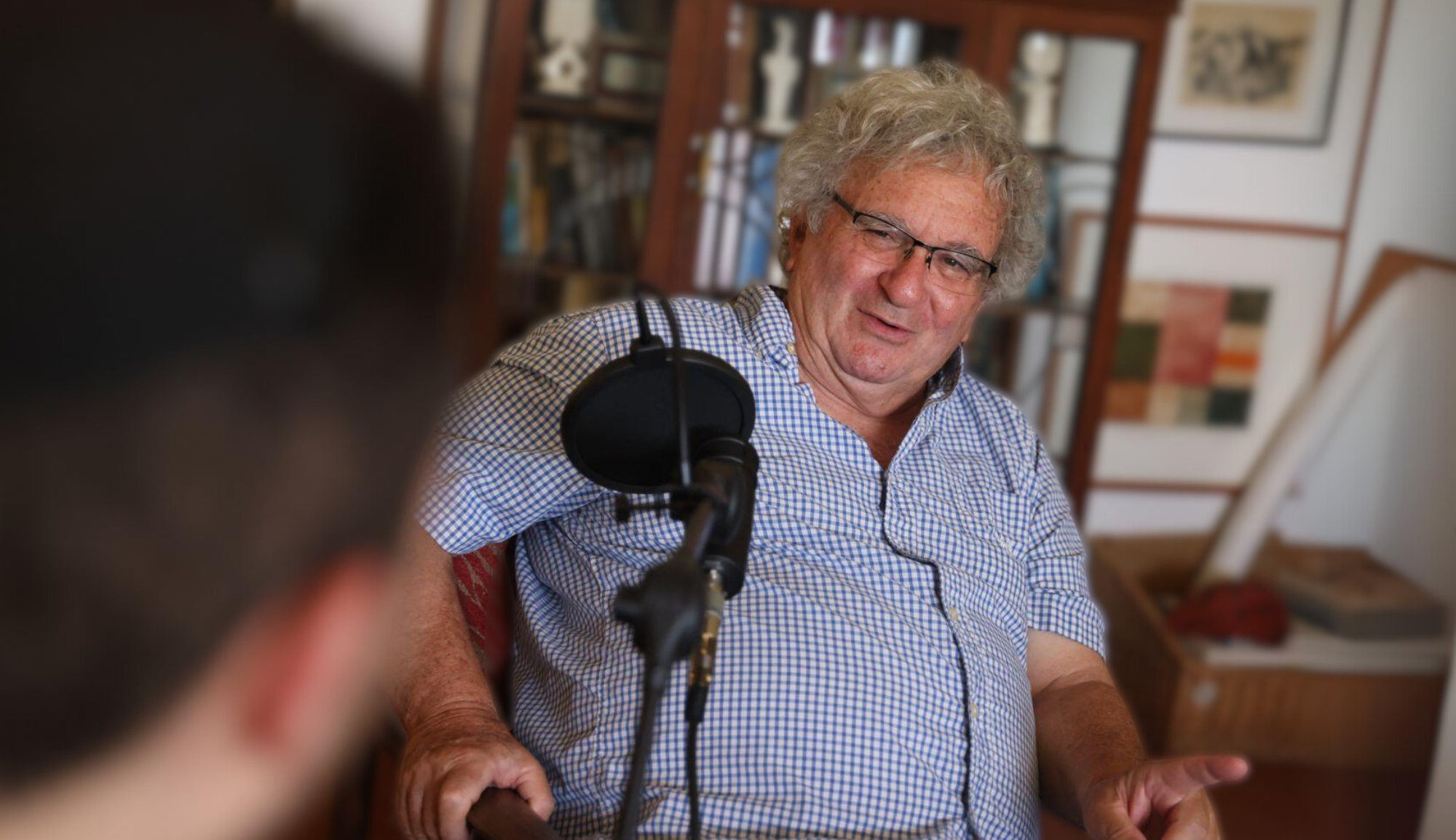
Rabbi Kalish, in an 18Forty Podcast episode about the song of teshuva, describes how teenagers can acquire a newfound fire in their spiritual lives, and five of his students join him to tell their own stories. Melodies vanish too, you might say, and whole repertoires did go silent with your great-grandmother’s generation. Most songs do die, and the promise in Devarim 31:21 concerns this song in particular. The broader pattern, that within the same family the sung words outlast the studied ones, is this guide’s reading of why God chose a song at all. The children at your own table will keep some of what you give them and lose the rest, and Moshe built instructions for the keeping into the song itself.
3. What the Melody Carries
Moshe planted those instructions seven verses into the song. Devarim 32:7 tells the people to remember the days of old. Then Moshe turns the remembering into a conversation, singing “ask your parent, who will inform you, your elders, who will tell you.” He could have left the people a song that only preserved itself, and instead he taught them one that orders the children to ask and the parents to answer.
Daniel Levitin ran McGill’s music perception lab before writing This Is Your Brain on Music, and he explains one reason a sung text crosses generations intact: Melody, rhythm, and rhyme constrain the words, so a misremembered phrase breaks the tune and gets corrected on the spot. A person can also be moved by a melody whose language they never learned, so the tune preserves feeling alongside wording. The rabbis put the same insight into daily practice, since every public Torah reading in every synagogue is sung through cantillation rather than spoken, which is part of why you can still hum your bar mitzvah portion decades later. The Talmud reports in Rabbi Yochanan’s name a rebuke for anyone who reads Scripture without a melody or studies Mishna without a song, and adds that the tune helps a learner remember what he has learned.
The synagogue’s music does not stop at the weekly reading. Rav Dovid’l Weinberg walks through the wide range of modes and levels a person’s prayer can take. At the far end of that range a person sings a niggun (a wordless melody), praying past the point where words stop. A song this portable can also show up nearly alone, stripped of the practices that once came with it, and it already has in the grandmother’s family.
4. What the Fragments Can and Cannot Carry
Almost every American Jewish family tree now contains the two kinds of houses. In one branch, the family keeps Shabbat every week, the kitchen stays kosher, and the holidays set the children’s year. In another branch the practices fell away one at a time, leaving Chanukah candles, a Seder, and a song sung at a bedside, and most of us can name which cousins live in which branch. The grandmother from the opening lives at that junction, raised in the first kind of house and singing to grandchildren in the second.
The rabbis came surprisingly close to making the second house’s case. The Talmud Yerushalmi preserves a tradition in Rebbi Chiya bar Abba’s name in which God says He could overlook the people abandoning Him, if only they kept His Torah, because the leavening in it would have produced their return. The tradition he preserves conditions everything on the people keeping His Torah, not candles or a melody, and the stretch from his case to the second house is real, though most of what Jewish parents sing at bedsides, the Shema and psalms and blessings, is Torah set to a tune. At Columbia, Marianne Hirsch studied how the children of survivors inherit a past they never lived, and she found the secular version of the same claim: that a photograph, a phrase, or a song can pass identity to a generation that never saw the original. Matisyahu lived a version of this in public, changing his observance and his appearance for years while his music stayed Jewish, through to his public re-embrace of his Judaism and Zionism since Oct. 7.
You may want to stop the argument right here, because candles twice a year do not make Jewish grandchildren. Moshe sang that forgetting into the poem itself, warning in Devarim 32:18 of a people who would neglect the Rock that bore them and forget the God who brought them forth. The grandmother is not confused about any of this, since she knows the difference between a song and a life, and she sings anyway, because the song is the one piece she can still give. Whether a few fragments can hold a family until someone comes back for the rest is not a question anyone answers from an armchair, and the Jewish immigrants who filled American cities 100 years ago already lived the answer.
5. The American Test and Your Table
Those immigrants carried more than fragments off the boat. Mark Slobin, the ethnomusicologist who wrote Chosen Voices, spent a career on the cantors who brought the music of East European Jewish life into America, through years of poverty and dislocation in which daily observance thinned fast. Immigrant audiences packed synagogues and concert halls to hear the great cantors and bought their records in the same decades when families were letting one observance after another lapse. Then the golden age of the cantorate faded too, inside two generations, because the music crossed the ocean intact and still died out wherever nobody taught the next singer.
Moshe warned the people about exactly that dependence as soon as he finished the song, telling them to take all of it to heart and to enjoin it on their children, because the Teaching is “not a trifling thing for you” and is, in the verse’s own words, “your very life.” Rebbi Mana reads the phrase to mean that “if it is empty, it is from you,” because the person has not exerted himself, and that the Teaching becomes your life at the time you exert yourself. A person has to want to learn before the effort means anything, and the grandchild who feels nothing at the candles has not yet found a reason to try. But a grandmother puts the song in the child’s mouth before the child ever chooses it, so it is waiting there on the day a reason finally arrives. A family that sings the song as a keepsake gets a keepsake, and a family that treats it as its life hands the next generation something alive.
RELATED: Thank You from an American Jewish Child
Alex Clare, a singer who walked away from the music industry to live as a baal teshuva, made that choice with his whole career at stake. He talked on the 18Forty Podcast about the identity he set down and the what-if questions that followed, and he came back to music only on the condition that it fit around Shabbat. When international success came anyway, he took it on those terms. This Friday night at your own table you will sing something or you will not, and the children at the table will remember what you sang long after they forget what you said. Moshe was told he would die before the people crossed, and the song God commanded him to plant has stayed in Jewish mouths for more than 3,000 years. Of everything you will hand your grandchildren, the song you sing tomorrow night is what they are most likely to still be singing in 80 years.
Questions for Reflection
- Which melody from your childhood do you still carry, and which practice that once surrounded that melody has lapsed in your family?
- Which part of your own practice feels emptiest right now, and what would exerting yourself over that one part look like this month?
- If your grandchildren keep only fragments of what you now keep, which fragment would you most want to survive?
This project is made possible with support from the Simchat Torah Challenge and UJA-Federation of New York. Learn more about the Simchat Torah Challenge and get involved at their website.