Begin exploring
today’s
biggest Jewish
questions…
×

The Samter Family: American Parents With Israeli Sons Fighting in Gaza
In this episode of the 18Forty Podcast, we talk to Yehuda, Bayla, Elisha, and Avi Samter—members of a family that made aliyah from the comfortable Five Towns life a decade ago—about the divergence between Jewish life in America and in Israel.

Summary
Our Intergenerational Divergence series is sponsored by our friends Sarala and Danny Turkel.
This episode is sponsored by an anonymous friend who supports our mission.
This episode is sponsored by an anonymous friend who supports our mission.
In this episode of the 18Forty Podcast, we talk to Yehuda, Bayla, Elisha, and Avi Samter—members of a family that made aliyah from the comfortable Five Towns life a decade ago—about the divergence between Jewish life in America and in Israel.
Whether one serves in the IDF has become a major realm of bifurcation within the Jewish People, and it’s a gap that we often fail to bridge even within our own social circles. In this episode we discuss:
- How does making aliyah and entering the army change prior friendships?
- Why should every Jew imagine the possibility of living an elevated life defending the Jewish People in the Land of Israel?
- What differentiates Five Towns Judaism from spirituality in the Land of Israel?
Tune in to hear a conversation about unifying “both sides” of the Jewish People.
Interview begins at 8:02.
The Samter family made Aliyah from America and now have two sons serving in the Israel Defense Forces, fighting in the wars over the last 16 months in Gaza and Lebanon.
References:
The Samter family made Aliyah from America and now have two sons serving in the Israel Defense Forces, fighting in the wars over the last 16 months in Gaza and Lebanon.
References:
Survivor Israel
For more 18Forty:
NEWSLETTER: 18forty.org/join
CALL: (212) 582-1840
EMAIL: info@18forty.org
WEBSITE: 18forty.org
IG: @18forty
X: @18_forty
For more 18Forty:
NEWSLETTER: 18forty.org/join
CALL: (212) 582-1840
EMAIL: info@18forty.org
WEBSITE: 18forty.org
IG: @18forty
X: @18_forty
Recommended Podcasts

podcast
When a Parent Becomes Estranged
In this episode, we talk to a father and daughter who were estranged and then reunited.

podcast
Shaanan Gelman & His Son: When a Child Becomes Addicted
We talk to Rabbi Shaanan Gelman and his son Ziggy about the persistence of a parent-child relationship when the latter faces addiction.

podcast
David & Sydney Magerman: When a Child Makes Aliyah
We talk to David Magerman and his daughter Sydney, who decided to make aliyah while on her gap year in Israel.
podcast
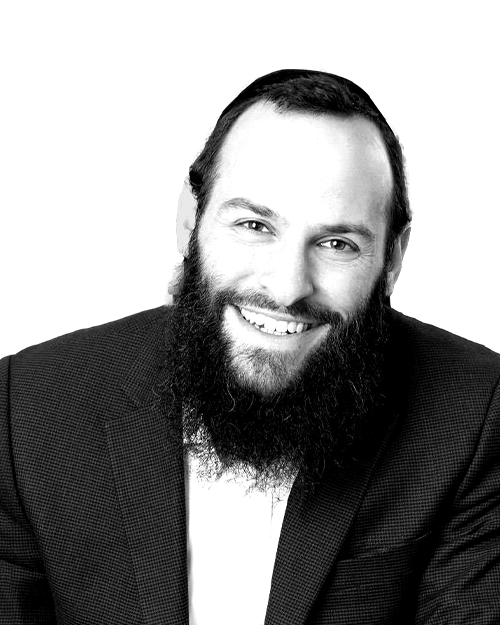
Yakov Danishefsky: Religion and Mental Health: God and Us
In this episode of the 18Forty Podcast, we talk to Yakov Danishefsky—a rabbi, author and licensed social worker—about our relationships and our mental health.44
podcast
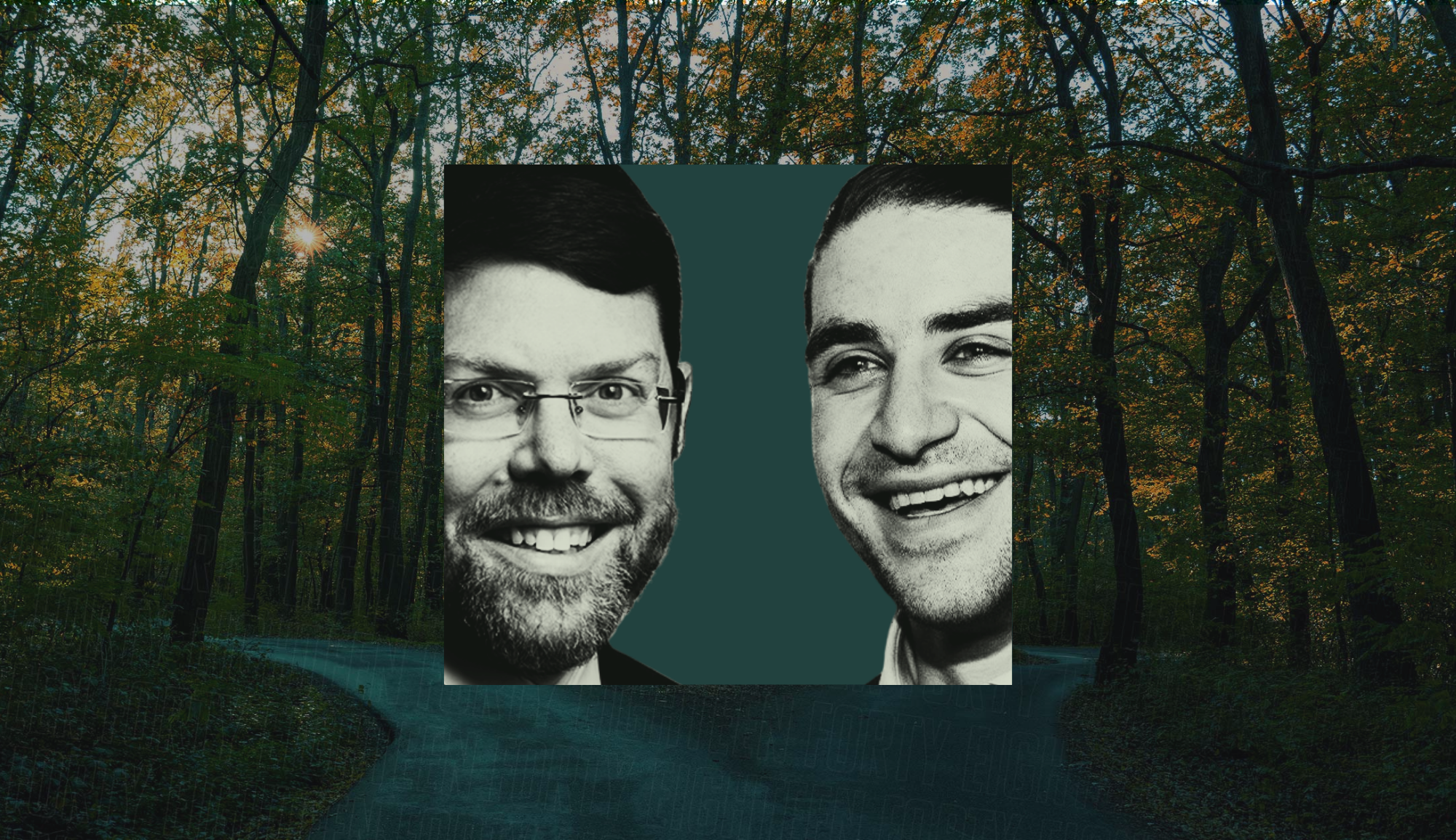
Menachem Penner & Gedalia Robinson: A Child’s Orientation
In this episode of the 18Forty Podcast, we talk to Rabbi Menachem Penner—dean of RIETS at Yeshiva University—and his son Gedalia—a musician, cantor-in-training, and member of the LGBTQ community—about their experience in reconciling their family’s religious tradition with Gedalia’s sexual orientation.

podcast
Modi Rosenfeld: A Serious Conversation About Comedy
In this special Purim episode of the 18Forty Podcast, we bring you a recording from our live event with the comedian Modi, for our annual discussion on humor.

podcast
Bruce Feiler: The Stories That Bind Us
In this episode of the 18Forty Podcast, we talk to author Bruce Feiler about family narratives.
podcast
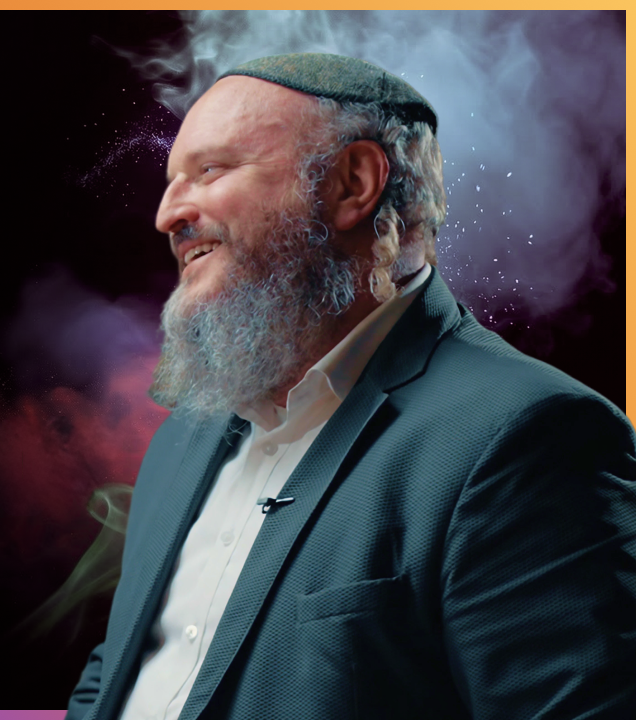
Shlomo Katz: ‘Today’s idol worship is self-persecution’
Shlomo Katz joins us to discuss the challenge of technology, Torat Eretz Yisrael, and the true purpose of the Jewish People.

podcast
Yakov Danishefsky: Transmitting the Jewish Story with Emotional Health
We talk to Yakov Danishefsky about the imperfect ways in which we transmit the Jewish story.
podcast
Einat Wilf: ‘Jews Are Never Allowed To Win, and Arabs Are Never Allowed to Lose’
The true enemy in Israel’s current war, Einat Wilf says, is what she calls “Palestinianism.”

podcast
Haviv Rettig Gur: ‘Hamas is upset the death toll in Gaza isn’t higher’
Haviv answers 18 questions on Israel.

podcast
Rachel Yehuda: Intergenerational Trauma and Healing
In this episode of the 18Forty Podcast, we pivot to Intergenerational Divergence by talking to Rachel Yehuda, a professor of psychiatry and neuroscience, about intergenerational trauma and intergenerational resilience.

podcast
Channah Cohen: The Crisis of Experience
In this episode of the 18Forty Podcast, we speak with Channah Cohen, a researcher of the OU’s study on the “Shidduch Crisis.”

podcast
Liel Leibovitz and Lisa Ann Sandell: When A Spouse Finds Faith
In this episode of the 18Forty Podcast, we talk to Liel Leibovitz and Lisa Ann Sandell about what happens when one partner wants to increase their religious practice.
podcast
Micah Goodman: ‘I don’t want Gaza to become our Vietnam’
Micah Goodman doesn’t think Palestinian-Israeli peace will happen within his lifetime. But he’s still a hopeful person.

podcast
On Loss: A Child
Mirlana Morris talks about the loss of her son, Donny, and perpetuating the memory of a loved one.
podcast
Anshel Pfeffer: ‘The idea that you’ll obliterate Hamas is as realistic as wanting to obliterate Chabad’
Prime Minister Benjamin Netanyahu did not surprise Anshel Pfeffer over the last 17 months of war—and that’s the most disappointing part.

podcast
Natan Sharansky: ‘If you don’t have faith or Zionism, your grandchildren will not be Jewish’
Antisemitism and assimilation are threatening the Jewish People, says Natan Sharansky, but to both Israel offers a solution.

podcast
Talia Khan: A Jewish Israel Activist and Her Muslim Father
In this episode of the 18Forty Podcast, we talk to Talia Khan—a Jewish MIT graduate student and Israel activist—and her father, an Afghan Muslim immigrant, about their close father-daughter relationship despite their ideological disagreements.

podcast
Daniel Statman: Can War Be Moral? On Moral Philosophy and War
In this episode of the 18Forty Podcast, we talk to Daniel Statman, a professor of philosophy at the University of Haifa, about what it means to wage a moral war.

podcast
David Bashevkin: My Mental Health Journey
In this episode of the 18Forty Podcast, David Bashevkin opens up about his mental health journey.
podcast
Anita Shapira: ‘You cannot wipe out Hamas’
Leading Israel historian Anita Shapira answers 18 questions on Israel, including destroying Hamas, the crisis up North, and Israel’s future.

podcast
Leah Forster: Of Comedy and Community
In this episode of the 18Forty Podcast, David sits down with Leah Forster, a world-famous ex-Hasidic comedian, to talk about how her journey has affected her comedy.
Recommended Articles

Essays
A Letter to Parents of Intergenerational Divergees
Children don’t come with guarantees. Washing machines come with guarantees.

Essays
A Letter to Children Estranged From Their Parents
Children cannot truly avoid the consequences of estrangement. Their parents’ shadow will always follow.

Essays
3 Arguments for God’s Existence
Perhaps the most fundamental question any religious believer can ask is: “Does God exist?” It’s time we find good answers.

Essays
‘All I Saw Was Cult’: When Children Find Faith
In reprinted essays from “BeyondBT,” a father and daughter reflect about what happens when a child finds faith.

Essays
Tzav: The Uneasy Economics of Holiness
Paying spiritual leaders can feel wrong. The Torah insists that it isn’t.

Essays
A Prayer for Israel to Add to Your Pesach Seder
Rabbi Yosef Zvi Rimon wrote this special prayer for Israel for Jews to recite at their Pesach Sedarim this year.
Essays
How the Damascus Affair Created Modern Jewish Solidarity
In 1840, a blood libel in Damascus transformed a local accusation into an international Jewish crisis.

Essays
(What) Do Jews Believe About the Afterlife?
Christianity’s focus on the afterlife historically discouraged Jews from discussing it—but Jews very much believe in it.
Essays
The Siddur Has a Lot of Prayers. Where Did They Come From?
Between early prayer books, kabbalistic additions, and the printing press, the siddur we have today is filled with prayers from across history.

Essays
A History of Jewish Belonging
In Parshat Vayikra, we are reminded that communal belonging lies at the heart of religious identity.

Essays
Judith Herman Is Giving Voice to Survivors
Dr. Judith Herman has spent her career helping those who are going through trauma, and has provided far-reaching insight into the field.
Essays
I Keep Shabbos, but My Husband Doesn’t. Our Marriage Still Thrives.
The most important message from my end is to not let religious differences prevent you and your spouse from loving and respecting…
Essays
Diving Into The World of Mysticism
Joy and meaning can be found not only despite the brokenness, but even because of the brokenness.

Essays
How Archaeology Rewrote the History of Tefillin
From verses in Parshat Bo to desert caves, tefillin emerge as one of Judaism’s earliest embodied practices.

Essays
Hiding in Plain Sight: Raising an Orthodox Family While Being Agnostic
At some point, my husband and I will need to tell my children that I’m agnostic. But for now, we’re focused on…

Essays
Edmond Jabès Had Questions—and He Learned to Live With Them
As the holiday of Passover approaches, we take a look into a man whose life was marked by questions: Edmond Jabès.

Essays
Your Guide to Reading Rav Kook
I’d advise reading Rav Kook as you would read a poem, with an eye less to the argument or claim he is…

Essays
This Pesach, We Honor Our Disordered Love
Why does the night of order, of freedom and liberation, have so much disorder to it? Why is it so chaotic, disjointed?
Essays
Who Wrote the Siddur?
I’ve searched high and low for an accessible English book or essay addressing the development of the siddur, but my findings are…
Essays
The Israeli Peace Activist and Religious Leader You Need to Know
Rav Froman was a complicated character in Israel and in his own home city of Tekoa, as people from both the right…

Essays
5 Steps for Systemic Change in The Shidduch Crisis
I helped survey 2,300 single Orthodox men and women and interview 100 other people about the Shidduch Crisis. Here’s what we found.

Essays
What Haredim Can Teach Us About Getting Off Our Smartphones
Kosher phones make calls and send texts. No Instagram, no TikTok, and no distractions. Maybe it’s time the world embraces them.

Essays
This Might Be What Saves Us from AI
In Klara and the Sun, Kazuo Ishiguro asks us to reconsider what, if anything, separates humans from machines.
Recommended Videos

videos
Moshe Gersht: ‘The world of mysticism begs for practicality’
Rabbi Moshe Gersht first encountered the world of Chassidus at the age of twenty, the beginning of what he terms his “spiritual…

videos
Is Modern Orthodox kiruv the way forward for American Jews? | Dovid Bashevkin & Mark Wildes
In this episode of the 18Forty Podcast, we speak with Mark Wildes, founder and director of Manhattan Jewish Experience, about Modern Orthodox…



videos
Intergenerational Divergence
videos
Moshe Benovitz: Why Religious Change Doesn’t Always Last
In this episode of the 18Forty Podcast, recorded live at Stern College, we speak with Rabbi Moshe Benovitz, director of NCSY Kollel,…

videos
A Vulnerable Conversation About Shame, Selfhood, & Authenticity with Shais Taub & David Bashevkin
In this episode of the 18Forty Podcast, we speak with Shais Taub, the rabbi behind the organization SoulWords, about shame, selfhood, and…
videos
Jewish Peoplehood
What is Jewish peoplehood? In a world that is increasingly international in its scope, our appreciation for the national or the tribal…
videos
An Orthodox Rabbi Interviews a Reform Rabbi | Dovid Bashevkin & Diana Fersko
In this episode of the 18Forty Podcast, we speak with Diana Fersko, senior rabbi of the Village Temple Reform synagogue, about denominations…
videos
Why Naftuli Moster Left Haredi Education Activism
We speak with Naftuli Moster about how and why he changed his understanding of the values imparted by Judaism.
videos
Moshe Weinberger: ‘The Jewish People are God’s shofar’
In order to study Kabbalah, argues Rav Moshe Weinberger, one must approach it with humility.

videos
Jonathan Rosenblum Answers 18 Questions on the Haredi Draft, Netanyahu, and a Religious State
Talking about the “Haredi community” is a misnomer, Jonathan Rosenblum says, and simplifies its diversity of thought and perspectives. A Yale-trained lawyer…

videos
What are Israel’s Greatest Success and Mistake in the Gaza War?
What has been Israel’s greatest success and greatest mistake?

videos
Sarah Yehudit Schneider: ‘Jewish mysticism is not so different from any mysticism’
Rabbanit Sarah Yehudit Schneider believes meditation is the entryway to understanding mysticism.