Sarah Yehudit Schneider discusses 18 questions on Jewish mysticism, including growth through joy and free will.
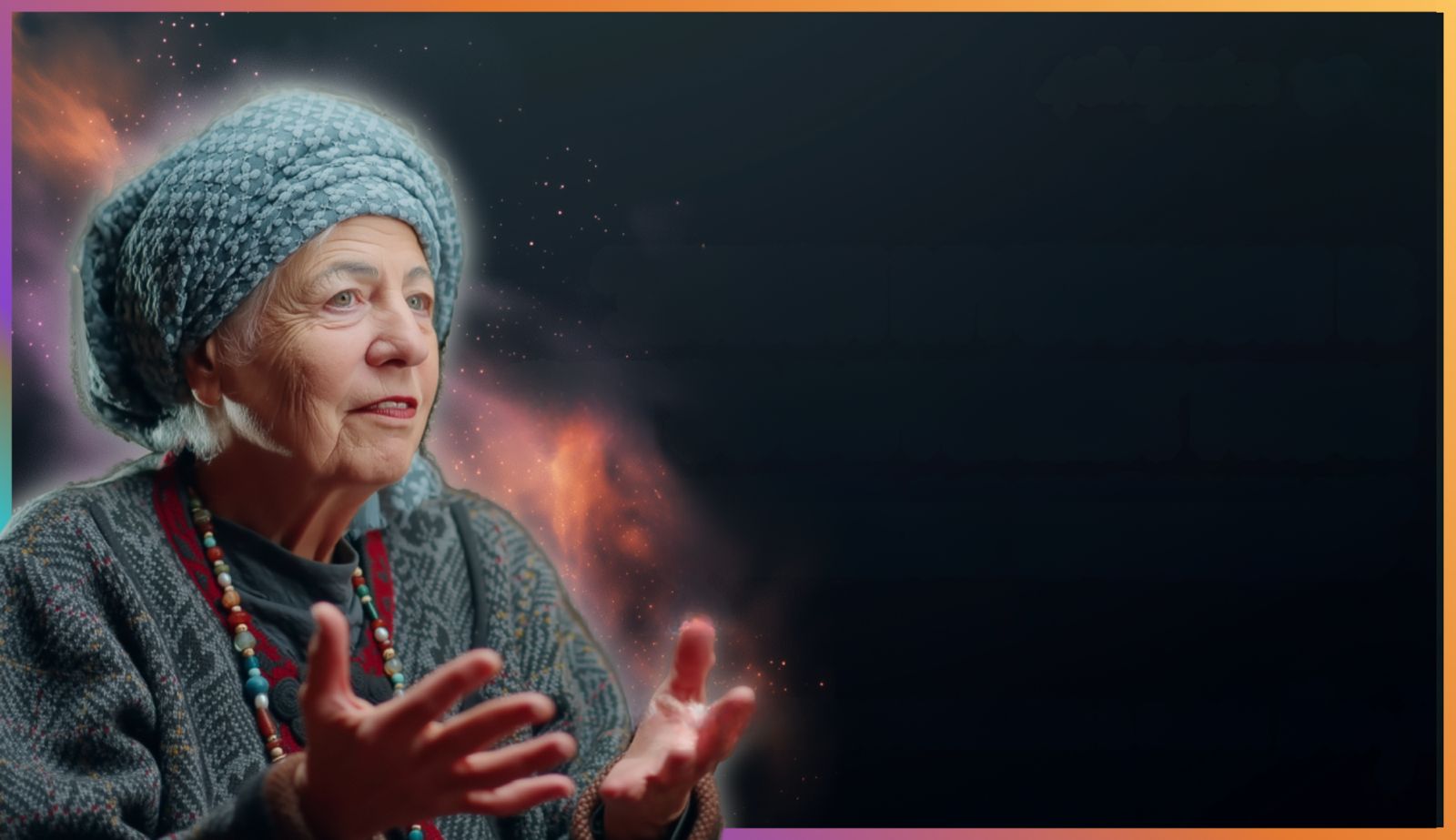
This podcast is in partnership with Rabbi Benji Levy and Share. Learn more at 40mystics.com.
Sarah Yehudit Schneider believes meditation is the entryway to understanding mysticism. She highlights that traditional Kabbalah often focuses on mystical realms associated with the masculine, and in her current work, she is actively exploring and articulating the Kabbalah of the feminine.
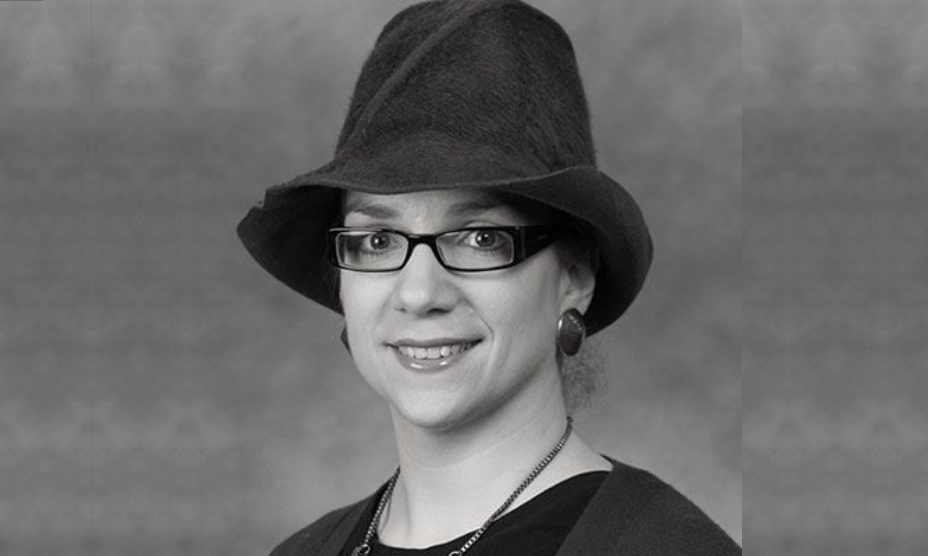
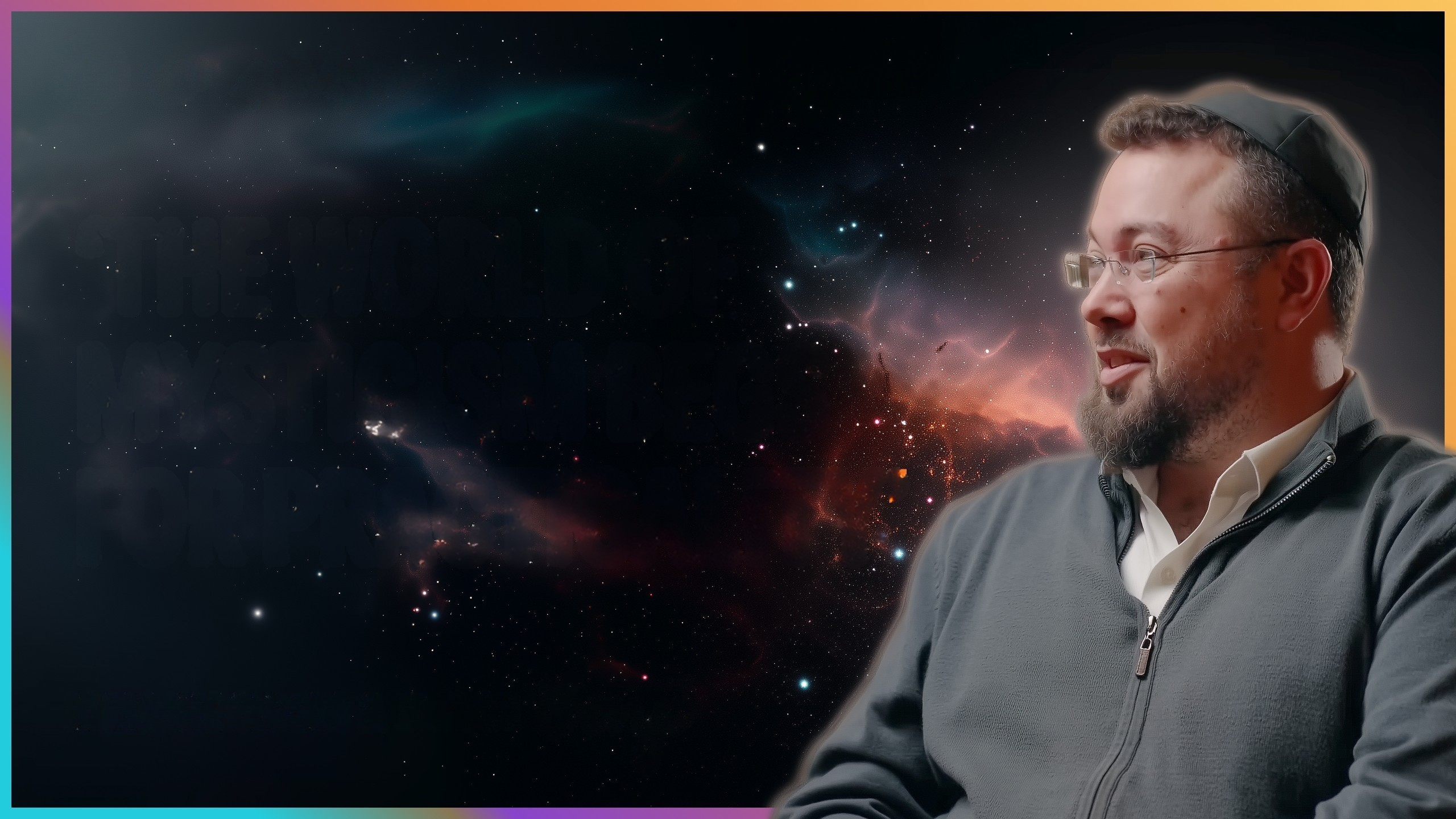
Sarah Yehudit Schneider is the founding director of A Still Small Voice, a correspondence school that provides weekly teachings in Jewish wisdom to subscribers around the world. She is the author of several books, most recently Dark Matters of the Soul: The Kabbalah of Shame (2024).
Here, she joins us to answer 18 questions on Jewish mysticism, including growth through joy in the Messianic era and how to reconcile God’s all-knowingness with free will.
Benji Levy: Sarah Yehudit Schneider, it’s such a privilege and pleasure to be with you here in the heart of Jerusalem.
Sarah Yehudit Schneider: Nice to meet you. Well, here as well.
Benji Levy: And you’re a published writer, you’re the founding director of A Still Small Voice, and you have taught so many people throughout the years. You’re involved in homeopathy, you’re involved in teaching, writing, and so many different things. And today we’re going to speak about Jewish mysticism. So what is Jewish mysticism?
Sarah Yehudit Schneider: Well, I think Jewish mysticism is not so different from any mysticism. It’s the striving to build a relationship with the Creator, with Hashem. And to bring one’s life into line—body, heart, mind, and soul—into line with spiritual law.
Benji Levy: So how were you introduced to it?
Sarah Yehudit Schneider: Actually, I was introduced by my brother who joined TM, transcendental meditation, and initiated the whole family into meditation. And that was my introduction. That was about 50 years ago. I’ve been meditating pretty much daily since then, but quickly moved away from transcendental meditation into meditations of my own design.
Benji Levy: So how would you advise someone else that wants to connect with Jewish mysticism that’s starting out at the beginning? What path would you direct them to? Any specific books or paths or experiences?
Sarah Yehudit Schneider: I first, I would talk to them and find out what their sensibilities are. Are they more meditation oriented or prayer oriented or intellectually oriented? And then I would suggest books or classes or practices that would speak to them.
Benji Levy: So in an ideal world, would everyone be mystics?
Sarah Yehudit Schneider: Well, I think yes. I think that that’s kind of the Messianic striving and model is for everyone to kind of actualize their potential of a relationship with the divine.
Benji Levy: Which happens through mysticism.
Sarah Yehudit Schneider: I think mysticism is the process of actualizing one’s potential relationship with the divine.
Benji Levy: So when you say the divine, or what people refer to as God or Ein-Sof, all these different terms. What is God?
Sarah Yehudit Schneider: Right. So in the writing that I do, I kind of work with the pshat in the some sense of the yud key vav key which is—
Benji Levy: That’s the simple understanding.
Sarah Yehudit Schneider: That which was, is and will always be. That which preceded creation, permeates creation, and will endure beyond its passing, its passing. But for myself, my personal connection to Hashem, I experience Hashem as the primal will to good that eternally creates and sustains the universe. And so the feeling that there is a primal will to good that is pushing us along in our journey.
Benji Levy: Do you imagine that in a tangible way? Is there something sort of that comes to mind when you think about God, or is it more of just a description that’s beyond a specific tangible expression?
Sarah Yehudit Schneider: Yeah, I kind of am drawn to that description of Hashem, primal will to good, because it’s not concrete. It just is a force that is kind of behind the scenes directing the unfolding of things in a way that is assuredly toward good.
Benji Levy: And so what’s the purpose of the Jewish People?
Sarah Yehudit Schneider: The entire creation is a single universe encompassing adam (man). Like it says when the first adam was created, he spanned from heaven to earth and one end of the world to the other. And the Jewish People are the inner soul core of that universe encompassing adam. The I-center that is charged with the mission of fulfilling the purpose of creation, which from the way I understand it, is that Divinity before creation, by definition, was lacking nothing except in some mysterious sense, the experience of actualized relationship, because there was no other with whom to relate. So Hashem created creation, i.e. us, to be this other. And to enter into all the myriad-faceted possibilities of relationship, some of which have already happened, and some of which, the more consummate levels of which, have yet to be realized. And so that creation is the totality of creation, is really an adam, or a shechina, there’s many ways to reference it.
But that’s the kind of feminine principle that is leshem yichud kudsha berich hu ushechinteh. For the sake of the unification of the shechina or indwelling face of Hashem and the Holy One, the transcendent face of Hashem. For the unification of the transcendent and the immanent, we—that’s kind of the point of our crea—that’s why we’re here. And the kind of I-center, the inner soul core and identity of the shechina or adam is the Jewish People that are really kind of making the relationship, directing the unfolding of that relationship.
Benji Levy: And you mentioned leshem, the special passage that Kabbalists often use before they say certain blessings and certain prayers. How does prayer actually work?
Sarah Yehudit Schneider: I mean, there’s many kinds of prayer. There’s the prayer of praise, the prayer of thanksgiving, and the prayer of request. And the prayer of request is the—is really the mitzva of prayer. And on some sense, people would think it maybe was the lowest, like praise and thanksgiving would seem to be more lofty, but really the essence of prayer, in terms of the mitzva of prayer, is to cry out to Hashem in a time of need.
And most people, like most people think of prayer as us trying to convince Hashem to give us something that He’s not necessarily, like, He’s not opposed to giving it to us, but He’s not—hasn’t really thought about it yet. And but really the challenge of prayer is that Hashem, like, in the creative process, there arose within the mind of God the thought of creation, and a vision of creation’s glorious success and Messianic achievement. And the utter glory of that inspired Hashem to actually create creation altogether.
And so the challenge of prayer is not to convince Hashem to give us something that he is neutral about, but to want our—in that vision that arose in the creative process, it included the entirety of creation and every single individual in it. And so our work is to—the challenge is not to convince Hashem of anything, but to want the perfection of our soul and the success of our mission individually and collectively as much as Hashem wants to bestow it. And the prayer that we speak and the vision behind it or the content of it becomes the vessel or keli as it were, that pulls down the lights that are exactly configured to fill that space, that lack. And that lack is—and to the extent that that lack is on point in the sense that it really does express what our soul is designed to do, Hashem is pleased to to answer that prayer that it is, He’s been waiting for us to ask for it and to realize that that is kind of where we’re headed and what we’re designed for.
Benji Levy: And then what’s the goal of Torah study?
Sarah Yehudit Schneider: The goal of Torah study is to kind of, I think, hardwire our consciousness into alignment with the deeper truths of the universe. And there’s a transformation that happens in Torah study. As our sense of the world and reality corrects itself, so then the way we—our interpretation of the moments of our life and the challenges of our life corrects itself. And we, and our life slowly or hope or even sometimes instantaneously comes into line with spiritual law and Hashem’s will for us.
Benji Levy: Amazing. Does the mystical sources, do they view women and men as the same?
Sarah Yehudit Schneider: No. There are, I mean, they’re 95, 98% the same, but there are also many differences, I mean, in terms of our humanity, we’re the same, but in terms of our gender, there are differences. And I mean, the most basic one then is the mashpia and mushpa, the bestower and the recipient. But that has all kinds of secondary repercussions.
Benji Levy: So you talked about two different capacities of feminine and masculine in terms of bestowing and being bestowed upon. What does that mean in the in the context of the masculine and the feminine?
Sarah Yehudit Schneider: It’s actually—I’m really kind of working right now on a exploration of, the Ari has says in in a number of places in his writings, that he is only giving over the teachings, the Kabbalistic teachings of the of the realms of yosher, of the hierarchical realms, which is associated with the masculine, and he’s not really giving over the teachings that are related to the the worlds of igulim, the circle worlds, which are associated with the more feminine modality.
And so, I understand that as a kind of invitation for women to articulate the Kabbalah of the feminine. That the classic Kabbalah is really very much masculine oriented and doesn’t so much deal with the feminine experience. And so I’m right now, kind of in the teaching that I’m doing right now, really exploring what the Kabbalah of the feminine is. And kind of starting with a premise that the Kabbalah of the feminine kind of presents a—begins from below to above, whereas the Kabbalah of the masculine generally moves from above to below.
And the above to below is really what’s called the Seder Hishtalshelut, the unfolding of light into matter, and it’s a very kind of technical and detailed Kabbalah. And the Kabbalah of the feminine, as I’m understanding it, is that it begins with something kind of concrete, an issue or problem or question that is concrete below, and then looks to classic Kabbalah for the paradigms, there are many paradigms that apply to different kinds of situations. So to find the paradigm from classic Kabbalah or masculine Kabbalah that sheds light on and helps to unpack the issues and shed some light on how to work with this particular matter.
And so I just published a book called Dark Matters of the Soul: The Kabbalah of Shame. And so I’m kind of doing teaching right now of working with the issue of shame in a manner of Kabbalah of the feminine, and it’s exciting and interesting.
Benji Levy: Well, I’m very excited because that means that the generation we live in, there’s a female view of Kabbalah, because traditionally, as we’ve seen all literature, that there was a dominance of masculine teaching, just because of the way society was. And now you’re saying that even the Ari, who was one of the greatest proponents of Kabbalistic thought, acknowledged that. And so now there’s a new way of thinking about this.
Can you give just a short example, I know it’s hard to say because you’re an expert in this now, what is the feminine Kabbalistic view of shame, for example? How is it unique? What does this female Kabbalah approach look like?
Sarah Yehudit Schneider: Well, it’s not so much like a feminine—
Benji Levy: Masculine.
Sarah Yehudit Schneider: Yeah, the issue of shame itself, but the, like, the work is to try to find—how to work with shame is what I’m exploring now in terms of as a Kabbalah of the feminine. But I don’t think—it’s really, it’s kind of a complicated thing to explain. Yeah.
Benji Levy: So I guess our viewers are going to have to read your book.
Sarah Yehudit Schneider: Yeah. But I just want to say that the Ari also, he is one of the main teachings that he has about, like, if you want to find out what the Ari has to say about the feminine, you look into the chapter called Mi’ut Hayareach, the diminishing of the moon. And there he gives over a seven-stage process of feminine development that applies to the feminine on all scales, from the inner feminine to the feminine in a couple, to the entirety of creation is feminine in relation to Hakadosh Baruch Hu. And the feminine life cycle as it moves through these seven stages, it moves from diminishment into fullness of stature, and the Messianic ideal of the masculine and feminine as presented by the Ari, is where he and she meet panim bepanim shaveh legamrei, face to face and completely equal. And when I first came across that teaching, I couldn’t believe it. I mean, it seemed like it was a feminist treatise that was that the Ari was presenting there of like a relationship of absolute equals that—
Benji Levy: Well it’s ultimately coming to the Kabbalistic view of true unity.
Sarah Yehudit Schneider: Right. Exactly.
Benji Levy: And growing back to that real primordial unity that really created the universe as we know it today.
Sarah Yehudit Schneider: Yes, yes, exactly.
Benji Levy: So, applying that today, what is the main impediment or what is the main thing that’s stopping people from living a more spiritual life?
Sarah Yehudit Schneider: Well, I think that it’s because it starts out very abstract. It’s called Penimiyut HaTorah because it’s very deep and it’s hard to get a handle on it or to really concretize. Like and you’re not really supposed to concretize what’s happening there. So I think for people it’s hard to know to trust themselves and to know how to really enter into that level of spiritual experience.
Benji Levy: So it’s a certain awareness. How do we rectify that? How do we help people connect to their deeper spiritual essence?
Sarah Yehudit Schneider: Right. I mean, I think that meditation is really the entry. I don’t know, I mean, for me, that was the entryway, was to dedicate a certain amount of time each day. I mean now it’s been over 50 years in just sitting and listening in and you begin to become more familiar with the landscape, so to speak, the inner landscape of the penimiyut layer of oneself.
Benji Levy: So if someone’s never done that, what is Jewish meditation?
Sarah Yehudit Schneider: So meditation is a continuous flow of thought on a particular object or point of focus. So you pick something as your focus, and then you kind of sit with it and try to hold your attention there, which you can never do, and you wander and you come back and wander and you come back.
And so really, Jewish meditation is just—if meditation is a continuous flow of thought on a particular object or point of focus, then you choose a point of focus that has Jewish content to it, and it becomes Jewish meditation. And that can be something that you—a name of Hashem or a verse or tefilla. Like it’s you can—or learning, like it’s, there’s, you can and should experiment with praying meditatively or learning studying meditatively. And then also if there’s some prayer in your heart that you want some help with or guidance about, you can kind of find a passuk that expresses that and make that your kind of meditative focus.
Benji Levy: And why did God create the world?
Sarah Yehudit Schneider: Well that’s what I said earlier, that Hashem before creation, by definition, was lacking nothing except in some mysterious sense, the experience of actualized relationship, because there was no other with whom to relate.
Benji Levy: And does that mean that God which is the infinite was lacking something? How do we relate to that?
Sarah Yehudit Schneider: Right, was lacking nothing except in some mysterious sense, the experience of actualized relationship because there was no other. It just wasn’t another.
Benji Levy: So God gave us that we became that receptacle, that opportunity to be able to fill that.
Sarah Yehudit Schneider: To be, right—which is really just Divinity, the transcendent and immanent faces of Divinity reuniting in their oneness is what is happening. The immanent expression of divinity is the other, so to speak.
Benji Levy: So then how God used His will to be able to create that. Did God endow us with free will? And if so, how does that relate to God knowing everything?
Sarah Yehudit Schneider: Right. Yes, I mean, a relationship, in order for it to be a real relationship, it requires that the other have real autonomy, and autonomy is basically defined as free choice. So, but the teaching is that in the same way that how to reconcile Hashem’s all-knowingness with free choice. Um, and this is the teaching from the Or HaChaim where he says that in the in the same way that Hashem withdrew His all-presence in order to create the possibility of our physical existence, so Hashem withdrew and constrained His all-knowingness in order to create the space for our free choice. Just like Hashem in any moment could fill the the space, the tzimtzum, the womb of vacant space that holds the creation, there’s nothing preventing Hashem from shining His light back in there as it was before the creative effort. But more than Hashem wants to shine His light back into that space, he wants us to exist as an other in order to ex- experience the actualized relationship.
So the same way with His all-knowingness, even though Hashem could know whatever is going to happen before it happens, more than Hashem wants to know that, He wants to create the space and possibility of our free choice. So Hashem constrains and conceals his all-knowingness. It—metaphorically, He doesn’t look, and in order to create because knowing, da’at has a compelling aspect to it. Like it means to know something so deeply that your instinctive and reflexive response to the world is now conditioned by that information, by that knowing.
So Hashem knowing would be causal. It would force us to choose in accordance with His preconception. So more than Hashem wants to know before something—what’s going to happen before it happens, Hashem wants us to have authentic free choice, and so He constrains His all-knowingness in order to create that possibility.
Benji Levy: Wow. So we’re meant to use that free choice to do the right thing, obviously.
Sarah Yehudit Schneider: Yes.
Benji Levy: That’s the desire.
Sarah Yehudit Schneider: Right.
Benji Levy: Us doing the right thing ultimately takes us towards the end of days, so to speak, this time of Mashiach, this Messianic redemption. When I say Mashiach, what comes to mind? What does Mashiach mean?
Sarah Yehudit Schneider: Growth through joy.
Benji Levy: Can you say that again?
Sarah Yehudit Schneider: Growth through joy. As opposed to—
Benji Levy: I’m gonna have to ask you to unpack that a little bit.
Sarah Yehudit Schneider: As opposed to growth through blood, sweat, and tears. Like now we’re, it’s, growth is a lot of work, and there’s a lot of suffering in the world. I mean, just horrendous suffering in the world. And but we—growth through—I mean it is a force of growth. We learn how to make the best of it. And—
Benji Levy: So in the Messianic era, we will be growing through joy.
Sarah Yehudit Schneider: Right.
Benji Levy: We’ll be able to see—
Sarah Yehudit Schneider: We’ll still be growing, but we’ll be growing through joy.
Benji Levy: So it won’t be hazor’im bedim’a, we won’t be sowing seeds through tears but through joy.
Sarah Yehudit Schneider: Right.
Benji Levy: And where does the State of Israel fit within this? Is this stage in the process of redemption?
Sarah Yehudit Schneider: It seems like that to me. I mean, it seems like an amazing gift, accomplishment and gift of the Jewish People to be able to plant ourselves here in our holy promised land.
Benji Levy: And how do you see that? I mean, you live in the Old City. How long have you lived in the Old City for?
Sarah Yehudit Schneider: Probably about 35, 40 years, something like that.
Benji Levy: Wow. And how do you see the State of Israel as an expression of a process towards bringing about the redemption?
Sarah Yehudit Schneider: Well, I think that, I mean, there’s all kinds of esoteric things about that, but really it’s just as a as an attractor of the Jewish People and the beginning of us having to figure out how to love each other and work with each other and and to build a new world together.
Benji Levy: So in this new world together, even beyond us, what is the greatest challenge facing the world today?
Sarah Yehudit Schneider: In the world today? Boy, so many challenges. Uh, I don’t know. I don’t know what the greatest challenge is. I mean, I think that it’s, I guess, well, part of the reason is, I guess sinat chinam is the greatest challenge.
Benji Levy: Baseless hatred.
Sarah Yehudit Schneider: Yeah. And I do think that that’s part of the reason I wrote the book about the Kabbalah of shame is because the, really—we’re not going to get we’re not going to solve the problem of causeless hatred until we become aware of how shame circulates in our psyche and is ultimately the cause of our of our causeless hatred.
Benji Levy: And so how has modernity changed Jewish mysticism?
Sarah Yehudit Schneider: Certainly the texts that are the basis of and the guides of Jewish practices and mystical practices are so much more available now than they ever have been, and we are literate enough to be able to—the average person is literate enough to be able to work with those texts and to find their way through them. So I think that’s probably the biggest change.
Benji Levy: And in terms of mysticism as a whole, is the Jewish brand of mysticism different to other traditions, cultures, religions, and views of mysticism? What makes Jewish mysticism unique?
Sarah Yehudit Schneider: Well, I think Jewish mysticism, because it’s very much a family-based religion and practice, I think it becomes more a embodied mysticism. Like not, I mean, even though meditation is a part of it for sure, but it’s really very much about bringing Hashem into the day-to-dayness of life and to kind of access the the soul level of things even in the chaos of daily life.
Benji Levy: So does one need to be religious to study Jewish mysticism?
Sarah Yehudit Schneider: Well, it helps. It helps, but I don’t, I mean, I think that there’s a way of—I don’t think you can really kind of access the deepest, deepest levels of it outside of a mitzva practice because so much happens inside the mitzva in Jewish mysticism. But you can certainly make headway and you can certainly grow, there are resources and tools that are available whether you’re religious or whether you’re not religious that will kind of take you somewhere. But I do think that the fullness of the practice is very much mitzva centered.
Benji Levy: Can mysticism be dangerous?
Sarah Yehudit Schneider: I think, you know, that our our aware the world and science has expanded our consciousness to such a degree that we that we’re not so vulnerable to kind of melting down or whatever it was, going crazy that people, that would at least reportedly happen when people delved into teachings that were too deep for them. But I don’t see that as a problem for us. I think that we’re, I think our consciousness is expanded to a degree that—
Benji Levy: As humanity, as—
Sarah Yehudit Schneider: Yeah, yeah, as humanity, that we’re not so vulnerable.
Benji Levy: And you talked about one of the unique factors and features of Jewish mysticism is bringing it into the family, bringing it down in a practical way. Personally, in your relationships, is there a place where we see it expressed? Can you give an example of where Jewish mysticism has actually influenced how you relate to yourself or others?
Sarah Yehudit Schneider: Well, I mean, it’s profound. I mean, everything has changed as a result of Jewish mysticism. I can’t think of a specific example
Benji Levy: With a child, grandchild, student.
Sarah Yehudit Schneider: Uh-huh.
Benji Levy: Any—does it find, yeah, does it find expression in the day-to-day relationships?
Sarah Yehudit Schneider: Certainly how I interpret the situation and what the relationship is calling for is very much informed by my, by my understanding of the world based on a more mystical or Kabbalistic model of things. But I can’t think of a specific—
Benji Levy: I think that’s a good sign because it pervades everything. What is, we’ve talked a lot about me asking you questions about the thought. I’d love you to share one thought. What is one Jewish teaching, a mystical teaching that inspires, animates, inspires you in terms of right now that comes to mind or in general?
Sarah Yehudit Schneider: Well, I guess one thing is well, one of the things that I’m teaching a lot about now is the relationship of prophecy to ruach hakodesh. That generally—
Benji Levy: Ruach hakodesh is divine intervention?
Sarah Yehudit Schneider: Yeah, inspired intuition. And generally prophecy is considered the kind of higher channel of transmission between a person and the divine, and ruach hakodesh is something lower, is secondary. But there is a sense in which prophecy, like the relationship between a, like in prophecy, the prophet’s ego and personality just goes underground. It’s the extent to which the authority of the prophecy depends upon the absence of the prophet’s impact on that transmission. Like, the term is called an aspaklaria hameira. They should be a transparent lens and have no impact on the transmission that Hashem is sending through them. And so it’s more, so prophecy is more of like of a master and servant, whereas ruach hakodesh is very much a a shared kind of reverie of creativity that the, it’s more of a partnership between the person and Hashem, where the person is like initiates the process, has some kind of issue or need or question, and they kind of invest effort into trying to solve it. And that effort on their part creates the keli that pulls down the providential assistance or guidance from Hashem. And in ruach hakodesh, there is even though there is in prophecy because the prophet can say ko amar Hashem, thus spoke God, so the prophecy has a great—is more authoritative, like it has a less of a margin of error than ruach hakodesh where Hashem is, like, it’s expressing itself through the thoughts in your own head, but you understand that those thoughts are actually not your own, they’re actually Hashem’s.
And so in ruach hakodesh, there is a, like an intimacy of relationship of share—the things are close when they’re similar and distant when they’re different. And so the connection between the person and Hashem or they’re sharing this effort of trying to solve this problem together and and working together and the prophet’s personality, unlike in the person’s personality, unlike in prophecy, is active and involved and is very much participating in and kind of setting the tone of the, of ruach hakodesh effort that’s happening. And so it is in that sense, it is actually, if the purpose of creation is actualizing the potential of relationship, then that happens in a consummate way in ruach hakodesh because both Hashem and the person are very much active and involved and participating.
Benji Levy: Beautiful. Well, I feel in throughout this conversation a real synchronicity of Hashem and your personality coming through and you’re clearly steeped in this tradition and you learn, you teach, you write, and you live. So thank you for all you do, really for all of humanity and we look forward to seeing you continue to inspire so many.
Sarah Yehudit Schneider: Thank you so much. Really, it’s been a pleasure to speak with you.
Benji Levy: Same here. Thank you.
In this episode of the 18Forty Podcast, we speak with Hadas Hershkovitz, whose husband, Yossi, was killed while serving on reserve duty in Gaza in 2023—about the Jewish People’s loss of this beloved spouse, father, high-school principal, and soldier.
Haviv answers 18 questions on Israel.
Elissa Felder and Sonia Hoffman serve on a chevra kadisha and teach us about confronting death.
On this episode of 18Forty, we explore the world of Jewish dating.
We have a deeply moving conversation on the topic of red flags in relationships.
The true enemy in Israel’s current war, Einat Wilf says, is what she calls “Palestinianism.”
In this episode of the 18Forty Podcast, we talk to Judah, Naomi, and Aharon Akiva Dardik—an olim family whose son went to military jail for refusing to follow to IDF orders and has since become a ceasefire activist at Columbia University—about sticking together as a family despite their fundamental differences.
In this episode of the 18Forty Podcast, we talk to Aliza and Ephraim Bulow, a married couple whose religious paths diverged over the course of their shared life.
In this episode of the 18Forty Podcast, we talk to Rabbi Shlomo Brody and Dr. Beth Popp.
In this episode of the 18Forty Podcast, we talk to Yisroel Besser, who authored many rabbinic biographies and brought David Bashevkin to Mishpacha magazine, about sharing Jewish stories.
In this episode of the 18Forty Podcast, we talk to Rabbi Menachem Penner—dean of RIETS at Yeshiva University—and his son Gedalia—a musician, cantor-in-training, and member of the LGBTQ community—about their experience in reconciling their family’s religious tradition with Gedalia’s sexual orientation.
Leading Israeli historian Benny Morris answers 18 questions on Israel, including Gaza, Palestinian-Israeli peace prospects, morality, and so much more.
In this episode of the 18Forty Podcast, we sit down with Rabbi Meir Triebitz – Rosh Yeshiva, PhD, and expert on matters of science and the Torah – to discuss what kind of science we can learn from the Torah.
Prime Minister Benjamin Netanyahu did not surprise Anshel Pfeffer over the last 17 months of war—and that’s the most disappointing part.
In this episode of the 18Forty Podcast, we sit down for a special podcast with our host, David Bashevkin, to discuss the podcast’s namesake, the year 1840.
In this episode of the 18Forty Podcast, we talk to Rabbi Larry Rothwachs and his daughter Tzipora about the relationship of a father and daughter through distance while battling an eating disorder.
Leading Israel historian Anita Shapira answers 18 questions on Israel, including destroying Hamas, the crisis up North, and Israel’s future.
In this episode of the 18Forty Podcast, we talk to Talia Khan—a Jewish MIT graduate student and Israel activist—and her father, an Afghan Muslim immigrant, about their close father-daughter relationship despite their ideological disagreements.

In this episode of the 18Forty Podcast, we talk to Frieda Vizel—a formerly Satmar Jew who makes educational content about Hasidic life—about her work presenting Hasidic Williamsburg to the outside world, and vice-versa.
Gadi answers 18 questions on Israel, including judicial reform, Gaza’s future, and the Palestinian Authority.
In this episode of the 18Forty Podcast, we talk to Lizzy Savetsky, who went from a career in singing and fashion to being a Jewish activist and influencer, about her work advocating for Israel online.
Wishing Arabs would disappear from Israel, Mikhael Manekin says, is a dangerous fantasy.
Israel should prioritize its Jewish citizens, Yishai Fleisher says, because that’s what a nation-state does.
Tisha B’Av, explains Maimonides, is a reminder that our collective fate rests on our choices.
If Shakespeare’s words could move me, why didn’t Abaye’s?
Perhaps the most fundamental question any religious believer can ask is: “Does God exist?” It’s time we find good answers.
After losing my father to Stage IV pancreatic cancer, I choose to hold onto the memories of his life.
They cover maternal grief, surreal mourning, preserving faith, and more.
We interviewed this leading Israeli historian on the critical questions on Israel today—and he had what to say.
In my journey to embrace my Judaism, I realized that we need the mimetic Jewish tradition, too.
Children cannot truly avoid the consequences of estrangement. Their parents’ shadow will always follow.
I spent months interviewing single, Jewish adults. The way we think about—and treat—singlehood in the Jewish community needs to change. Here’s how.
Not every Jewish educational institution that I was in supported such questions, and in fact, many did not invite questions such as…
Christianity’s focus on the afterlife historically discouraged Jews from discussing it—but Jews very much believe in it.

As someone who worked as both clinician and rabbi, I’ve learned to ask three central questions to find an answer.
My family made aliyah over a decade ago. Navigating our lives as American immigrants in Israel is a day-to-day balance.
What are Jews to say when facing “atheism’s killer argument”?
Half of Jewish law and history stem from Sephardic Jewry. It’s time we properly teach that.
With the hindsight of more than 20 years, Halevi’s path from hawk to dove is easily discernible. But was it at every…
Dr. Judith Herman has spent her career helping those who are going through trauma, and has provided far-reaching insight into the field.
A Hezbollah missile killed Rabbi Dr. Tamir Granot’s son, Amitai Tzvi, on Oct. 15. Here, he pleas for Haredim to enlist into…
Religious Zionism is a spectrum—and I would place my Hardal community on the right of that spectrum.
To talk about the history of Jewish mysticism is in many ways to talk about the history of the mystical community.
Meet a traditional rabbi in an untraditional time, willing to deal with faith in all its beauty—and hardships.
The Lubavitcher Rebbe’s brand of feminism resolved the paradoxes of Western feminism that confounded me since I was young.
Elisha ben Abuyah thought he lost himself forever. Was that true?
In a disenchanted world, we can turn to mysticism to find enchantment, to remember that there is something more under the surface…
18Forty is a new media company that helps users find meaning in their lives through the exploration of Jewish thought and ideas.…

There is circularity that underlies nearly all of rabbinic law. Open up the first page of Talmud and it already assumes that…
Why did this Hasidic Rebbe move from Poland to Israel, only to change his name, leave religion, and disappear to Los Angeles?
Has Judaism changed through history? While many of us know that Judaism has changed over time, our conversations around these changes are…
Talking about the “Haredi community” is a misnomer, Jonathan Rosenblum says, and simplifies its diversity of thought and perspectives. A Yale-trained lawyer…
Support Jewish explorations today by supporting 18Forty. Your partnership makes our work possible.
Donate today.