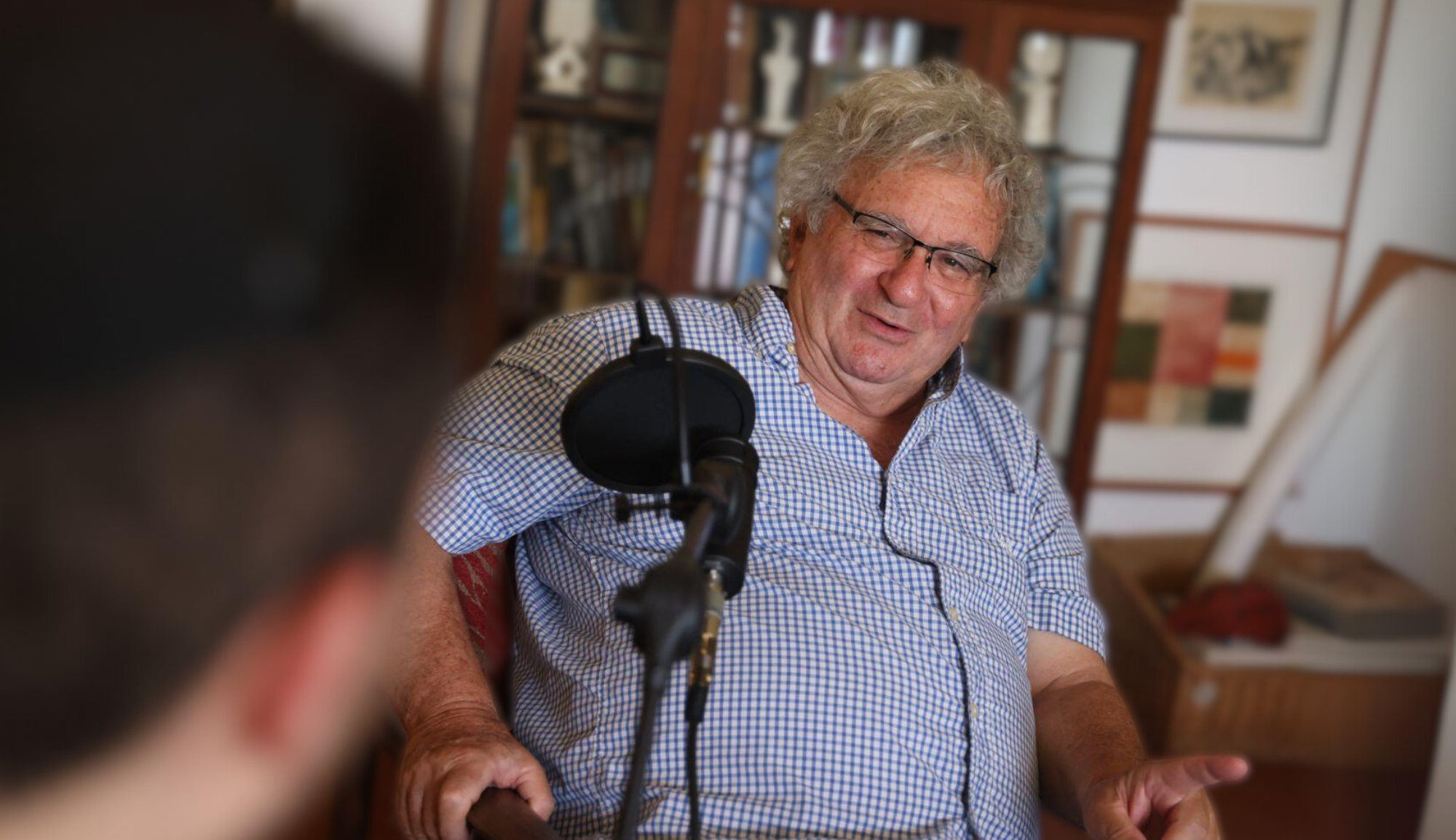
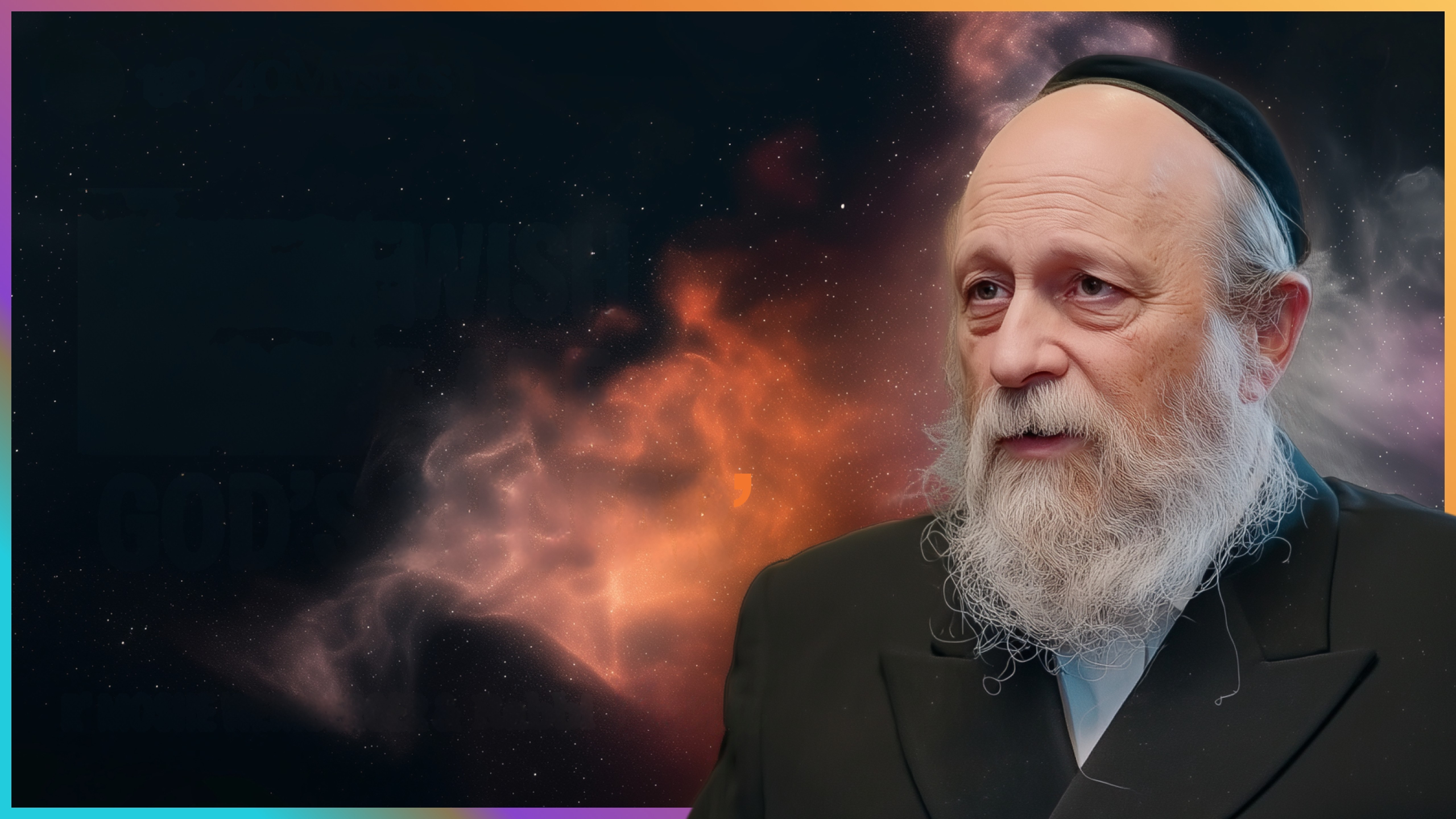
RABBI DR BENJI LEVY. Rabbi Moshe Gersht, Wall Street Journal bestselling author, an incredible spiritual teacher. You grew up in LA, now you are living in Israel. It’s such a privilege and pleasure to be sitting together with you here in Jerusalem.
RABBI MOSHE GERSHT. Oh, thank you so much. Pleasure is mine. Always wonderful to sit with you.
LEVY. So Rabbi Gersht, tell me, what is Jewish mysticism?
GERSHT. Jewish mysticism. Yeah, it’s the path towards the inside. And what the inside is, the inside of yourself, the inside of this world that we’re living in, the inside of reality. It’s touching back to truth. I think we can probably say a lot on that question. Jewish mysticism – you might think Kabbala, you might think Chasidut [Hasidism], you might think of a lot of different rabbis and different traditions along the way. But they all bring you to the same place, which is inside, a level deeper than where you were when you started.
LEVY. So, how did you get to this place? How were you introduced to Jewish mysticism?
GERSHT. It is actually an interesting story. The beginning of my journey was – I was born and raised spiritual, not religious. My family came close to the world of Torah significantly later. I was probably almost ten years old at that point and then I was thrown deep into what you might call the mainstream of observant Judaism. In that world I saw a lot of Torah, but it didn’t resonate as universal truth. It didn’t hit me as cosmic. It hit me as a nice set of ideas, some morals and a bit of a compass to live by. And it took – I was in a rock band for seven years. That was my life and I had this spiritual awakening when I was around twenty and the world of Hasidism was introduced to me. That was kind of the first lens I saw on what you might call Jewish mysticism. And it showed a unified system, that there was meaning to reality, not just a general sense of purpose but that the sun and the moon have symbolism that doesn’t just reflect planets or star systems in the sky but things about our nature. And all the things that we do and the places we go and the people we meet and and the words and the letters and the numbers, everything in the world of Torah had a very specific meaning that was attached to this grand system and I was so moved by it. It made me realize that I’d never stopped to think about life beyond whatever was right in front of me. So that was my introduction to it.
I then left that all behind really fast and fell into what you’d call mainstream Judaism and had to find my way back a number of years later [when I] had a second introduction, and I find myself having reintroductions all the time. The deeper you go, you’re always going deeper inside.
LEVY. So, what I find fascinating about you is you’ve traversed so many different worlds. You know, from literally America to Israel, from being not religious to religious, from being a certain type of religious to a different certain type of religious, different schools of thought. In an ideal world, would all Jews be mystics?
GERSHT. That’s an interesting question. I think if we’re using my translation, then yes. You might use a different translation of mystic and then maybe it’s a question. But I think if we want to be people who live from the inside out, that are rooted in something deep and authentic and true and real and whole, then yes, I think a mystic is somebody who is trying to touch and live with the wholeness that exists within themselves in the world. In that case, I think all people should be mystics.
LEVY. So that wholeness sort of stemming underneath everything, mystics see that as God. But what is God? Like, to a normal person, like how do you describe what God is?
GERSHT. So the word God is probably one of the most misused words in the English language. There are so many different definitions behind it. I’ll share with you an interesting story. When Eckhart Tolle, the author of The Power of Now – a great spiritual teacher, he came to Israel a number of years ago. And he shared with us a beautiful series of lessons and at the very end, he put his hands together and said, he didn’t use the word God once. At the end he said: By the way, I’m speaking about God, but I’m not going to say that word because if I say that word, then everybody shuts off, right? So God’s an interesting word that we use, but the Torah word for God is spelled yud, hey, and then a vav and then a hey. And the letters themselves point to a deep meaning. And in Kabbala, the meaning of the name God is the eternal now, the forever present, the always unfolding. It’s the source. There’s this whole one source behind everything, behind every little layer of self and then of the material and then of the energetic. And as you go higher and deeper into reality, there’s something that you touch and maybe indivisibly you start to experience that wholeness or oneness as what we would call love. It’s not that God is love, people get the wrong idea. Love itself has – there’s romantic love, there’s kindness, which is a form of love as action. This is a state of unity. It’s a connection to something bigger than all of the parts. And when you connect to that, which has a an intention and a cosmic intelligence, and you can sense that and know that, and it pervades all of reality, your specific life and the whole world, and you sense that even a little bit, that’s what you’re touching when we’re talking about God.
LEVY. Fascinating. So then if that’s God, what’s the purpose of the Jewish People?
GERSHT. The purpose of the Jewish People? Big question.
I’ll tell you a story. I was recently speaking at VeeCon. Gary Vaynerchuk has a wonderful conference where he brings together influencers of all different types. And in that context, I was a bit of a sore thumb. And somebody came up to me, and of course, you know, we’re sitting now at the beginning of 2025. When I was there it was towards the end of 2024. There’s a lot going on in the Middle East. And there was a person there with a nice big watermelon pin on his lapel that has a certain significance. And he walked up to me after my talk and he said, “You know, we don’t have a lot in common.”
I said, “That’s okay.”
He said, “I loved everything you had to say.”
I said, “That’s really nice.”
He said, “Can I tell you one thing that bothers me?”
I said, “Sure.”
He said, “I don’t like this idea of chosen people. Who are you chosen people?” He said, “I’m not Jewish. My mother’s Jewish. I’m not Jewish.” And he said, “I’m bothered, like, aren’t we all chosen?”
And I looked at him and I said, “I think we are. We’re all chosen. God loves us all, right? The foundation of the universe is flowing through every being.”
So he said, “So then what is the chosen?”
I said, “You want to know what the chosen people mean? This idea? To me, what it means? It’s like we’re all chosen. And [for] some people their job is to let everyone know. I think that’s what we’re doing here.”
I think the Jewish ideal is to help bring God consciousness to the world in one form or another, right? Whether that’s through actions of kindness and love and compassion, or it’s living a life that’s dedicated to higher ideals, or it’s studying the world and the mind and understanding the depth of life and bringing inspiration and clarity and moral objectivity to reality. All of those different things are part of being a conduit and a channel for God consciousness in the world.
I think the most famous or well-known Jewish prayer is the Shema. Shema Yisrael, listen Israel. Hashem Elokeinu, God is our God, Hashem Echad, God is one. And the Sages explain the verse so beautifully. The end, Hashem Echad, is there to say: Don’t think that God belongs to any one religion or any one people. The purpose of creation, the purpose of the channel, the whole way through is to go from Hashem Elokeinu, which means God, our God, that this is what I perceive as reality. Hashem Echad, we want to move towards the place where we’re all united under this greater vision of truth. I think that’s the job.
LEVY. It’s quite a tall order that we need to live up to.
GERSHT. Yeah, let’s start with being kind and nice and – you know, I once heard from a great mentor of mine in the name of Rabbi Schwab, if I’m not mistaken, that we know we’re doing the right thing when they change the dictionary definition of the verb to Jew from being cheap to being kind and compassionate and wise. Like if we don’t get that across, that means we’re not doing our job right in the world.
LEVY. And we all need to take it on.
GERSHT. That’s the whole world’s job.
LEVY. So you talked about the prayer of the Shema, which is one of the hallmark prayers that sits at the center of the evening service, of the morning service. How does prayer work?
GERSHT. Help me with your question. What do you mean by how does prayer work?
LEVY. Is it this cosmic existence? Like, does God need our prayers? However you want to interpret it, I think prayer is such a broad concept. And as a Jewish mystic, you know, there’s sort of a mechanic that works with these things. How do you view prayer?
GERSHT. The simplest way that I would look at prayer is our opportunity to dialogue with the divine. We get so caught up in our lives that life is busy by definition. We’ve got thoughts all the time. We’ve got emotions. We’re reacting to everything that’s taking place in our life. And we’re literally busy running around, whether it’s dealing with another person in your life or you’re running to work or you’re going to the gym or – life is very busy. And prayer is an opportunity to stop, to check back in. Who am I? What am I doing here? What’s important in my life? And how do I move in the direction of it? And it’s an incredible opportunity to dialogue with the source of creation, with the source of self, to move deeper into oneself, share that and as a – if we’re talking you asked about mechanics and technical. So it’s probably too big for now. We can give a whole year-long dissertation and course on the mechanics of prayer. But the power of prayer is undeniable. That’s across all races and religions. It doesn’t matter who you are. We’re all connected at the source. Taking a moment in your day, whether that’s ten seconds, ten minutes, or ten hours if you want to go sit somewhere and you want to sit in a deep meditation. Finding time in your day, your week, your life to connect on that level. It does so much for you. And on a personal level, I can tell you that it’s more than just what it does for you. You impact reality, right? The way you think changes the world. The way you speak changes the world. And when you do that at a cosmic level, gosh, you’ll be surprised to see what happens.
LEVY. Well, I hope it’s okay to share, but when you asked before we started this to take a few moments to pray, to meditate, to get into that space, you can feel that cosmic energy coming through you. So I really understand and appreciate and resonate with what you’re saying.
If it’s a dialogue with the divine, [if] it’s how we are speaking to God so to speak, then perhaps Torah study is the divine dialoguing with us. What is the goal of Torah study?
GERSHT. I think you said it beautifully. That the idea of sitting there and learning Torah is becoming open to hearing a message that’s outside of us. One of my teachers once shared with me beautifully. I once asked the question, can’t we just sit and meditate and come to this deeper understanding ourselves? And then we can just live our life. Why do I need to sit and fill my mind with Torah study? So there’s a couple basic answers before we get to his.
On the simplest level, there’s a lot of reprogramming we’re looking for. And reprogramming is a good thing. It gets a bad rap, but gosh, we come into this world, we don’t choose who our parents are, we don’t choose who our siblings are, we don’t choose our friends or society, the country we’re going to be born in, and we are programmed, like it or not, right? That’s against our will. We don’t get to choose what we intake as a young individual. And it is without a doubt that every single one of us is going to take in information that isn’t true. It was an illusion. It was just something that your dad thought when you were a kid or that was something that your mom heard when she was a kid and now she’s telling that to you. Or that’s just what your friend thought of you, but that wasn’t really true about you. So our whole lives are filled with programming that we’d like to transcend or rise above from. The power of Torah study is the ability to go in there and actually see something that’s taking you straight to this, what you might call a higher truth, a world of morality, a world of clarity, seeing something that you naturally wouldn’t see on your own because of the programming we were given in our youth.
The second element to it, and this is what my teacher shared with me was – even if you sat there all day and you meditated, we have so much intergenerational trauma. We’ve been doing this for a long time. Humans have been around, yeah? We’ve seen and done a lot. Just because you have a good experience once doesn’t mean you’re going to have it tomorrow. Just because you’re going to have clarity today doesn’t mean it’s going to be there in a year. Having something outside of you that continues to give you that direction. We’re building on something that was before. So it’s not to replace intuition and your own inner guidance. It’s to help guide and find clarity from within. I like to tell people: Lead with your gut but check with your mind, right? Meaning, we have a mind on purpose. Some people lead with their mind and I get that. That’s a way forward. But your inner world is very powerful and we need to learn to trust what’s on the inside. Sometimes we could be led astray, right? You can have a bad internal habit and you might wish you didn’t say or do that.
LEVY. So it’s this moral compass that we can tap into that both helps program us and create an objective reality that we can tap into.
GERSHT. Yeah, and I mean on another level, there’s something powerful that happens in Torah learning as – I’m an avid meditator. I teach meditation and mindfulness amongst other practices. But I can tell you this, the deepest spiritual experiences I’ve ever had have either been in prayer or as a result of Torah study. And it’s not something that I can apply logic to. It almost acts as a meditation. You lose yourself. If you can allow yourself to lose yourself inside of the Torah that you learn, you change and you didn’t do it. It happens to you.
LEVY. I completely understand that. You know, one of my favorite ideas to think about is the fact that the greatest way to find yourself is by losing yourself in something greater than yourself. We all feel like we need to sit and introspect to find ourselves, but sometimes we need to tap into something beyond ourselves and that’s actually where we find ourselves.
GERSHT. Yeah, and I think you said it really beautifully before. Where if in this dialogue with the divine, meditation and prayer is one direction, Torah study is kind of another direction, whether intuition and Torah study and all modalities of bringing in beauty of the mind. The mind is so important, it’s precious and it’s different than the heart. And we have to allow that to exist. There’s one thing that feels really good and there’s one thing of clarity. Clarity is something completely different.
LEVY. It’s fascinating because how often do we actually sit and focus on developing the mind, meaning we focus on how to train your bicep versus your tricep and your nutrition and all these different elements, what we wear. But your mind sits below all of it and sort of powers it all. And if prayer and Torah study are two key mechanisms to do that, I think we all need to be considering more how we give our mind that space and also train our mind to be in the right space.
GERSHT. Absolutely. And when we think about Torah, maybe to ask a question that wasn’t asked. Like what is Torah? Right? What is Torah when you say Torah study?
So Torah is – it might have very different definitions to different people. But at the deepest level, it’s what’s bringing you into the spiritual connection. So anything that’s bringing you back to cosmic connection, if that’s something you’re bringing into your mind, on some level, that’s Torah.
But the beauty of the fact [is] that you have these books and these sages for thousands of years that did the work. They went inside. They also had the dialogue and they put it down. So there’s something unique that comes through that when you think about the world of the Talmud or the Zohar or any of these writings that have already been put together by those that were living at that state of consciousness. They were living there. They put it down. So sure, I happen to love self-help. I love books on psychology. I love to read. That’s one element of the mind, but there’s a spiritual element that comes through when you allow yourself to go into the consciousness of those that are living at that space.
LEVY. It’s interesting you talked about people looking at Torah study differently and having different definitions. I guess that’s on an individual and a group level. There are two big categories, women and men. Does Jewish mysticism look at them as different in any way?
GERSHT. I don’t think so. I hate to make answers short like that, but I think that we have a desire for everyone to be connected at the deepest level. I think from kind of an Orthodox perspective, you would see men in yeshivot [study hall], women weren’t in yeshivot. But the world has been evolving for thousands of years. Until 150 years ago, no women in the world were in school at all. That’s not a religious thing or a spiritual thing. That was part of human growth, of coming to the recognition that everybody deserves education. Everybody deserves to grow and go internal. There is a kabbalistic idea of women being more, what’s the right word? Almost –
LEVY. Intuitive, in touch.
GERSHT. Yeah, I was going to say like – they’re primed. It’s like they’re primed for the world of prayer and meditation, like at an innate level. And that men are primed at an innate level to want to be involved in ideas. And there is actually a lot of scientific data to suggest that that’s absolutely true. Just based on the makeup and the differences between men and women. But I find just as many men who are feminine, yeah, they are – fall in love with the world of prayer and meditation and just as many women who fall in love with the world of Torah. So it’s not here or there. This is holistic. I think we all need to be involved.
LEVY. So if we all need to be involved there’s a real equality in terms of that approach. What is the biggest obstacle to living a more spiritual life across the board?
GERSHT. The biggest obstacle is the ego, if we’re going there. That’s what we’re all living with, right? Male, female, adult, child, doesn’t matter who you are. We are consumed by our fear that we’re not enough, that life’s not enough. We see the world through this lens of the ego that is our psychological sense of self, our separate sense of self. And in that, if we don’t see ourselves as connected to the whole, our entire life becomes about filling that void. When your life is about filling the void, the last place you look is in the whole. Right? That’s where it all is. It’s all happening on the inside. So we look everywhere else. I have to get a better job. I have to have a better career. I have to find a better spouse. I have to go live in a better country. I have to do something. So we look everywhere else. And if you’re looking out there for the answer that’s inside, yes, that’s the greatest impediment to spiritual growth.
LEVY. Amazing. So why did God create the world? We’re living in this space, we have these tendencies, but on a more cosmic level why does a perfect being need to create this space?
GERSHT. Yeah, just on one foot, why did God create the world?
LEVY. That’s all I’m asking.
GERSHT. So I’ll share a reason that resonates deeply with me. This has been a conversation throughout history, right? This question of why did God create the world? The Meor Einayim, one of the great rabbis of Hasidism, the Chernobyler Rabbi. He was from the earliest generations of the Hasidic movement. He says it in the following way: If you’re asking the question, why did God need to create the world? Recognize that you’re asking the question from the vantage point of a human that has needs. You’re still living in need because you only do things in your life because you need to or because you need them. But if you’re dealing with one that’s above needs, we have to ask the question: Why create the world if there are no needs? So he says, think of things in your life that you do where there are no needs. And that’s the world of creativity. You dance not because you need to. You dance because you’re a dancer and because you want to. You paint not because you need to paint. You paint because you’re a painter. The paint wants to be expressed through you. The source of reality, the goodness, the love, the intelligence wants to [be expressed]. There is a desire for more of that to be there. Not because it needs to be there, but because how could it not? How could that not be expressed in this world? And so we are the emanations or the creations of that which wants to perpetuate more of that light, more of that love, more of that goodness.
Now we might ask the question, so then the world doesn’t look [like] light, good, and love all the time, which is a different question. And that’s because we’re here in the journey to be able to receive that good at the deepest level, which is to learn to earn it on our own. To go through the growth process the same way. The Baal Shem Tov, the founder of the Hasidic movement, says that when you want your child to learn how to walk it’s hard to let them fall. So you hold their hand a bit, but you let them go because they are going to be bigger and better for it when they’re done. And so the gift of creation is: I’m going to give you all the light, but I want you to go out there and experience it and find it yourself.
LEVY. So it’s amazing that you put it that way and it sort of undermines a lot of [my] questions because I am asking from a human perspective, but you’re saying Jewish mysticism asks us sometimes to rise above and look from a more holistic, broad perspective.
And then my question is, what about free will? You know, I’m sitting here, am I choosing to do the things I do? Is it a paradox? Does it exist? Is it a figment of my imagination? What is free will?
GERSHT. So at the very least, there are at least thirteen opinions on the question of free will, but there’s many. Again, one of these questions for the ages. The way that I sit with it today is in the recognition of, from where we sit, it will feel like a paradox.
Two, if you go all the way to the rational side of Torah, which is in the world of the Rambam, Maimonides, and if you go to one of the most well-known Hasidic teachers, Rabbi Nachman of Breslov, they both speak about how at the very end, whether it’s the end of time in the Messianic Age or at the end of one’s life when you touch the divine, that the gift [we’re] given, one of the first gifts [we’re] given, is the ability to understand how free will and divine consciousness work together. Like that is the gift of going through life. So that means from where we sit here today –
LEVY. Maybe we can’t answer till we get there.
GERSHT. It’s experienced as a paradox, meaning it is true. You are both doing and you are being done, right? You are actively out there having these thoughts and doing everything you can to get there. And at the same time, you can ask the question, how did that thought even come to me to then make that decision? So, to me, from my vantage point, I live my life as having free will and I see those around me as not. Right? And from your perspective, it’s inverse with the recognition that that also means in your world, I don’t have free will. So on some level that’s true for me too. We – you can’t hold two things at the same time in this space. From a space that’s beyond time and space, we can hold two ideas that can coexist.
LEVY. So maybe we try and hold those as two ideas for now and when we get to the Messianic Age, we’ll somehow see the unity of this duality.
GERSHT. I think that is the healthiest way to go through it in the meantime. To live with free will as if you have free will in the moment. I think the easiest way to look at it for someone is in this moment you live as if [you have] free will, but when you look back, you allow yourself to say that’s divine.
LEVY. Amazing. So then what happens in this Messianic Age? You know, we’re going to find out this paradox. What is Mashiach? What do you see this concept as?
GERSHT. So Mashiach or the Messianic Age is actually not a singular event, it is a process of unfolding. And the way that Kabbala and the mystics have spoken about it for centuries is that in the beginning, it’s an awakening of consciousness. The beginning of this whole experience is that we go from thinking that we are this to knowing that we are more. And [we] start to recognize that our beliefs, our thoughts, our assumptions, and our opinions about reality are just that. They’re another thing that we have. They’re not who we are. So taking that first step back on the collective will will radically shift the way that the world interacts, how we live with one another. [In that] moment we can rise above the ego as a baseline so the divisiveness goes away because it’s okay. Everything is okay. We’re all allowed to have our shared opinions and move in the direction of moving towards good. As you go further down that tunnel and things continue to expand, you do eventually get to this place that they describe as being beyond free will. And that reality is called ayin lo raata – our eyes can’t see it. It is beyond where we are. And that’s okay. We can accept the fact that there might be a reality we don’t know just the – you know, people that I’ve spoken to sometimes have a hard time with that answer. But it would be like trying to explain the iPhone to your great-great-grandfather, our eyes can’t see it, [he wouldn’t] even understand such a thing. And not because it can’t happen, but because from where I stand, I can’t even conceive of that.
The idea that I could be on one side of the world, you could be on another side of the world, and we can speak to each other and I can see you. And even from where we stand, you can use your own imagination to imagine where we’ll be in twenty, thirty years from now with the acceleration of technology; we can’t even imagine where we’ll be. So knowing that, certainly on a level of consciousness, our ability to grow can be exponential and it’s living in the hope and knowing that it only moves in the direction of good. Our life moves better. We’ve been on this amazing evolution of human consciousness for thousands of years. If you go back about 5700 years, it is the beginning of writing that we can find, right? From when we’ve been able to speak and communicate that. What we’ve been trying to get to here, and we’re very close to getting to this place where there’s more harmony in the world, there’s more unity in the world. So the world of Mashiach, the Messianic Age, is one of love, of understanding, of transcendence, of connection, and of clarity and it’s one that we hope for every day.
LEVY. It’s clear why we yearn for it because we need that so much. And what about the State of Israel? Is that part of the final redemption?
GERSHT. It is to be seen. My firm belief is that this would be a very big coincidence if not. It could be. I’m open-minded. I think that’s something that’s important to be said. All of this is with non-attachment. I think if we’re attached to any one idea too much, you start to lose the magic. So remaining open is important. But that said, it would be an incredible coincidence if right after the Jewish People’s – maybe the biggest trauma and tragedy to befall the Jewish people, if right afterward there was an opening that led to where we are today, where there was a home for people that felt persecuted by the world for thousands of years to come back to the only [place] based on books written thousands of years ago that said this was going to happen. Right? So if you put all of the pieces together and now we’re living in it, I assume that you would also think it’s a big coincidence if it’s not part of this greater vision.
LEVY. So what’s the greatest challenge, you know, beyond the Jewish People facing the world today? You see so many different types of people. You’re a spiritual teacher; so many people have read your books, heard your thoughts. What do you see in common? What’s this challenge that’s facing the world today?
GERSHT. Single greatest challenge. I think we are dislocated from ourselves. We’re so close, meaning it’s not broken – it’s not like a broken arm, it just needs to be put back in the socket. Whether it’s technology or the pace of life because everything is so fast or the expectations that we put on ourselves or that we assume others have on us, as a whole, we are chasing something out there. It’s all inside. If we slowed down and you don’t need to – I’m not saying to stop doing everything. If you want to do that, you’re welcome to. But to find time to slow down, slow the mind down, and to allow yourself to experience this world. The world moves fast. So many people tell me everything’s moving too fast. It’s all moving too fast. It’s too heavy. And then that has different outgrowths emotionally, right? This one’s lonely and this one’s struggling with addiction. This person feels like they hate the person they’re living with and this person wishes they had someone to live with, right? Everyone has a problem but they’re all out there. And we’re trained to look outside for the answers that are on the inside. So maybe it does come back to ego.
There’s a lot of fear. That’s maybe like a close second, maybe for some a first, but to me what I see is a close second –
LEVY. But the fear is also what’s causing the dislocation. I mean the dislocation is what we’re experiencing.
GERSHT. Yes, exactly. And there’s a lot [of] rational understanding behind the fears, whether it’s something happening locally or the fear of things changing so fast. You know, artificial intelligence is going to rapidly change our reality. Whether it’s the fear of war. There are a lot of wars happening on the planet right now and we understand the level of destruction that can take place, it’s a lot. There’s a lot happening in the world. So there is existential questioning. And a lot of that might be because we’ve allowed ourselves to explore and kind of step away from our nature. But I sense and I feel there’s a great awakening in the world today. So just as much as there is fear, there’s opportunity to turn inward, to educate ourselves, right? It all starts with education on some level. You have to hear something from someone or from something: maybe it’s a book, maybe it’s a video, maybe it’s an MP3, maybe it’s this [interview] right now. I don’t know. You’re hearing something from somewhere. That calling has always been there. But the fear and the pain and the suffering forces us to listen. So even none of it’s bad, right? All this – it’s a dance, and that’s what we’re looking to transcend.
LEVY. So we talked about this unfolding history. A primary sort of, at least for us in this age, marker is modernity –
GERSHT. What is modernity?
LEVY. It’s a marker in history. If we look at the unfolding over the millennia, you know, it’s something big that happened. That’s why it’s an epoch, it’s got a title. So has modernity affected Jewish mysticism?
GERSHT. Yeah, everything affects everything. I don’t think it affects the primary sources and I don’t think it affects the experience, yeah? I think what it affects is how we look at the process. So what any sage had ever said in history, that didn’t change and if you can go in and touch that place, that’s the same inner experience, so authentic mysticism doesn’t actually change. But the language we use does. How much time and effort do you put into it? Just like there’s psychology and there’s tremendous depth over there, there is also pop psychology, yeah? It’s modernized. It’s made more simple, easy, accessible to the layman, to the average person to be able to at least touch it and have a rudimentary understanding of what’s happening on the inside, which changes their life.
So modernization, I think, is a good thing. I believe with all things, growth happens in stages and it happens in a cosmic dance of: We know a little more now. Maybe we have to know less of something else for a little bit while we really can digest a little piece at a time of how things are unfolding. That’s where we’re sitting today.
LEVY. And you’re eclectic in terms of learning from so many different places. Have you had any experience or understanding or time learning about other forms of mysticism? And if you have, what makes Jewish mysticism unique when compared to other traditions?
GERSHT. I have but it’s small compared to people who’ve truly studied these things in depth, so I don’t see myself as any sort of an expert. But in the time I’ve spent in what you might call the different wellsprings of mystical teachings and healing modalities and spiritual understanding, I would say if there’s a difference, the difference is in structure. So there’s a spiritual structure called Kabbala, which is the fundamental understanding of reality that depicts the psychology, the philosophy, the cosmology, the interrelatedness of all things and different dimensions of reality and soul and time and space. It creates an entire vision and that is a unique structure of understanding a blueprint for life.
And the second idea is really not on the mystical side, it’s this thing called mitzvot. The Jewish mystical teaching says that they’re not rituals. When a person goes to a Friday night dinner and someone picks up a glass of wine and says a blessing over it, it is a meditation in its own right. But the energetic movement that happens through these things called mitzvot are these [various] opportunities to both step into and draw down more of that energy in one’s life. And so here’s both a structural difference and pragmatically, [a difference in] how one lives their life and how they go about getting to that place. So what we call mitzvot are – you might have rituals in other religions and spiritual practices. But a body of work this large is quite unique.
LEVY. So does one need to be religious therefore to study mysticism?
GERSHT. I don’t think so. To study mysticism? I think the whole world needs to study mysticism. I don’t know if that’s bound to religion, which is funny. The word religion means bound, means to be restricted and tied up. I don’t even like the word. At no point in Judaism [is that] even really a thing. That’s something new. Even the word Judaism comes from Judah, which was one of the twelve tribes. Really, we all come from Yisrael, right? Yisrael is the father of all the tribes because just like humans are diverse, Jews are diverse, right? All of us have different pathways of what we’re called to in our mission in this world. And so within the context of that understanding in terms of like, who [should] study this? We [should] all study this. It itself is one of the mitzvot. By doing so, you’re already involved.
LEVY. So then is it dangerous? Should it be accessible to all? Is there anything people should be worried about, conscious of? Can it be dangerous?
GERSHT. The study of mysticism?
LEVY. Yes.
GERSHT. I think if one studies mysticism with the earnest heart of coming towards truth and moving in the direction of a connection with the divine, don’t get caught up in the fears that are surrounding it. Your heart is guiding you. The most important thing is that you’re trying to connect to truth. You’re doing everything in your power. Allow yourself to be led, allow yourself to be guided. Thank God, you’ve got a wonderful mind. If you’re here now listening and having this conversation about mysticism and depth, that’s the place you want to be.
There were throughout history fears surrounding mysticism because of individuals who acted in ways which were – you might call them charlatans. And in doing so, [they] gave Jewish mysticism and mysticism in general a bad name. I don’t think we have that concern today by and large. Can one get something wrong? And are there certain things one can learn that can lead you in the wrong direction? There are certain ideas in mysticism that talk about a oneness and an infiniteness and therefore maybe I don’t have to be so involved in this world and it leads to a certain asceticism or even an apathy to this life.
Is that possible? It is possible. Where are you now, though? Right? The person asking me that question – everybody’s already suffering, right? We’re all trying to make sense out of this world. So if you have a better option, if the better option is not to study anything, I don’t hear that as a way forward. We’re growing. The best way [is to] find someone who’s already living the life that looks like they understand it. They have something. I can see it in their eyes. I see it in how they speak. I see it in how they treat their spouse. I see it in how they pour coffee for their neighbor. I see that they’re living the life of what mysticism leads to. Talk to that person. If you have someone or you can find someone in your life, and if it’s not in person and it’s digital, that’s also beautiful. There are people who are already in that place and have so much to share. No one’s doing this alone.
LEVY. Well, as a Wall Street Journal best-selling author, you’re one of those people that people are clearly connecting to. And having had the privilege recently to spend time with you and other mystics and to have quality time with yourself and your wife, I’ve seen it firsthand. What I’d love to understand, really just as a final question is how have you brought, and maybe in a practical way with a specific example, the teachings of Jewish mysticism into your own life, into your own relationships specifically with your wife, with your children, with your friends, with your parents, with those around you. How has it actually manifested through your relationships?
GERSHT. Thank you, I appreciate that question. I think that the world of mysticism begs for practicality. It begs to live in this world and not remain as an idea. I think the area where I found it to be most impactful, maybe this is – maybe I get away with saying a little bit of two [ideas], but the first thing is I recognize the power of the first hour of my day. There’s a tremendous power spoken about it across all mystical teachings, but certainly in the Zohar and in Kabbala, that describe the power of the morning, that right in the morning there is so much energy that’s flowing into this life and we usually get up and go right into work and right into our phone and right into this, that, and the other. And I noticed the before and after, when I used to be that kind of troubled individual, running and [being] chaotic in my life, to the person who begins the early morning with time to meditate, time to think, and time to study. And utilizing the power of that first hour of the day. And sometimes I don’t get the whole hour, but I will always begin the day quietly. Though if I’m stuck and I have ten minutes, we’ll go ten minutes. But –
LEVY. So you try to wake up before your family wakes up in order to do that?
GERSHT. Absolutely. Yeah. And that’s been a game-changing point in my life maybe five, six years ago when I had this awareness that my days – in Hebrew I say it feels like the difference between chayim u’mavet, which means life and death. Not true death but this sense of aliveness and calm and clarity and peace and truth –
LEVY. So you have a specific routine that you do?
GERSHT. I do. Yeah, I have a routine.
LEVY. Can you share what that is?
GERSHT. I meditate for about twenty minutes. I study something for about twenty minutes, and I allow myself to just wander and think about life and my life, sometimes it’s specific, sometimes it’s broad, but that’s kind of the breakdown.
LEVY. That’s before you even pray, and then are there specific types of texts that you study?
GERSHT. Like you said, I’m eclectic. So sometimes I’m sitting with the Zohar, sometimes the Arizal, sometimes it’s Hasidism, any, a variety of sefarim [holy books], sometimes it’s the Maharal. So I mean it could be anything in the world of books. Sometimes it’s not that. I’m in the middle of a great book that I’m reading that’s a spiritual book and I want to continue that that morning. And sometimes I want to listen to someone. I want to hear a teaching from someone wise that I’ve listened to.
LEVY. And I rudely interrupted you. You said there were going to be two things. The first was your relationship with yourself and how you start your day. Was there a second relationship you wanted to refer to?
GERSHT. That’s right. Maximizing the potency of the beginning of the day and starting in quiet and contemplation is a game-changing experience for sure for me and for anyone that I’ve shared that with and then they did it. I share it with a lot of people. I don’t know how many people go and do it. But what I can say is the other thing is just the awareness of how often my mind runs to how things should be or shouldn’t be. And the more you become aware of the automatic habit of the mind, to try to place a label on how life is supposed to be, as opposed to just being open and present with it as we mentioned earlier, the eternal now, the forever present, which is how one experiences godliness and God in their life. To tap into that place and recognize, I see it. I can be in a room with, like you said, a family member and I want to have a judgment on this relationship or something that was said or done and to be able to become so comfortable with your inner world that you can see that and then say, ah, it’s just a thought and allow that to pass by and continue the conversation. Doesn’t mean that you’re not always feeling things, sometimes it goes in, but you can maintain your composure and I recently heard a line that I think is so powerful. Composure is contagious. I love that. And I see that in my relationships. The deeper I go in me, the better everything in my life is. Not because I’m better, but because people feel good around people who feel good.
LEVY. Yeah. I found myself, a few times in this conversation, conscious to smile because you’re just exuding happiness and a joy in that. So we’ve talked about these amazing questions and you’ve reflected on so many beautiful ideas about mystical teachings.
Is there a specific potent mystical teaching that you could share with us that you’ve been thinking about at this time?
GERSHT. Yeah. Earlier today I was thinking about this piece in the Zohar, which is essentially the body of kabbalistic work, one of the primary sources. In the section discussing the Torah portion of Balak, where it’s just so beautiful. It’s so precious to me. And it’s talking about the power of prayer. There’s a great beautiful teaching from Rabbi Nathan of Breslov, one of the great Hasidic rabbis, who explains that if you go all the way into the depth of what that part of Torah is speaking about, which for the sake of time, I’m not going to go into the whole story. But there’s a message of how co-creation works, how in modern vernacular or in the kind of the new age self-help space, you’ll hear the word manifesting, what it means to manifest, to be a co-creator with reality. So there’s a lot of depth over there surrounding that. And this one piece in the Zohar, it describes how prayer works and one of the most important mechanisms of prayer. And the line says, if a person wants to be answered in their prayer, then the moment that the words leave your lips, step into the experience of feeling that you’ve already been answered.
LEVY. Wow.
GERSHT. Right? Step into: I’ve received it. The moment you finish asking. So that is the ideal state. It’s easier said than done, because if you’re asking, that means you feel like you don’t have it. But the depth behind what the Zohar is really trying to say is that to become receptive to that which you’re looking to have, you first have to experience it on the inside on some level that you’re stepping into the wellspring of ah, I’ve arrived. This is what it feels like to be there. In the language of the late Wayne Dyer, he says if we have to live as if our wish is fulfilled. And that’s what the Zohar is teaching us, that when you step into that other frequency, you step into that place of gratitude because when you feel like you have it, so what are you left with? Appreciation. And in the space of appreciation, you become someone that is drawing that into your life. But it didn’t just come from nowhere. You did feel the lack and you expressed that and then you stepped into the gratitude.
LEVY. Rabbi Moshe Gersht, you live that teaching and I just pray that you have more of that gratitude because God continues to bestow upon you reasons to be grateful, and really that everyone that you speak to and that you share your message with, that should only be amplified [so they are] able to reach that state, to traverse that journey, and to become at one with who they are and everything they do. Thank you so much.
GERSHT. Amen, thank you so much.
LEVY. Thank you, Rabbi.