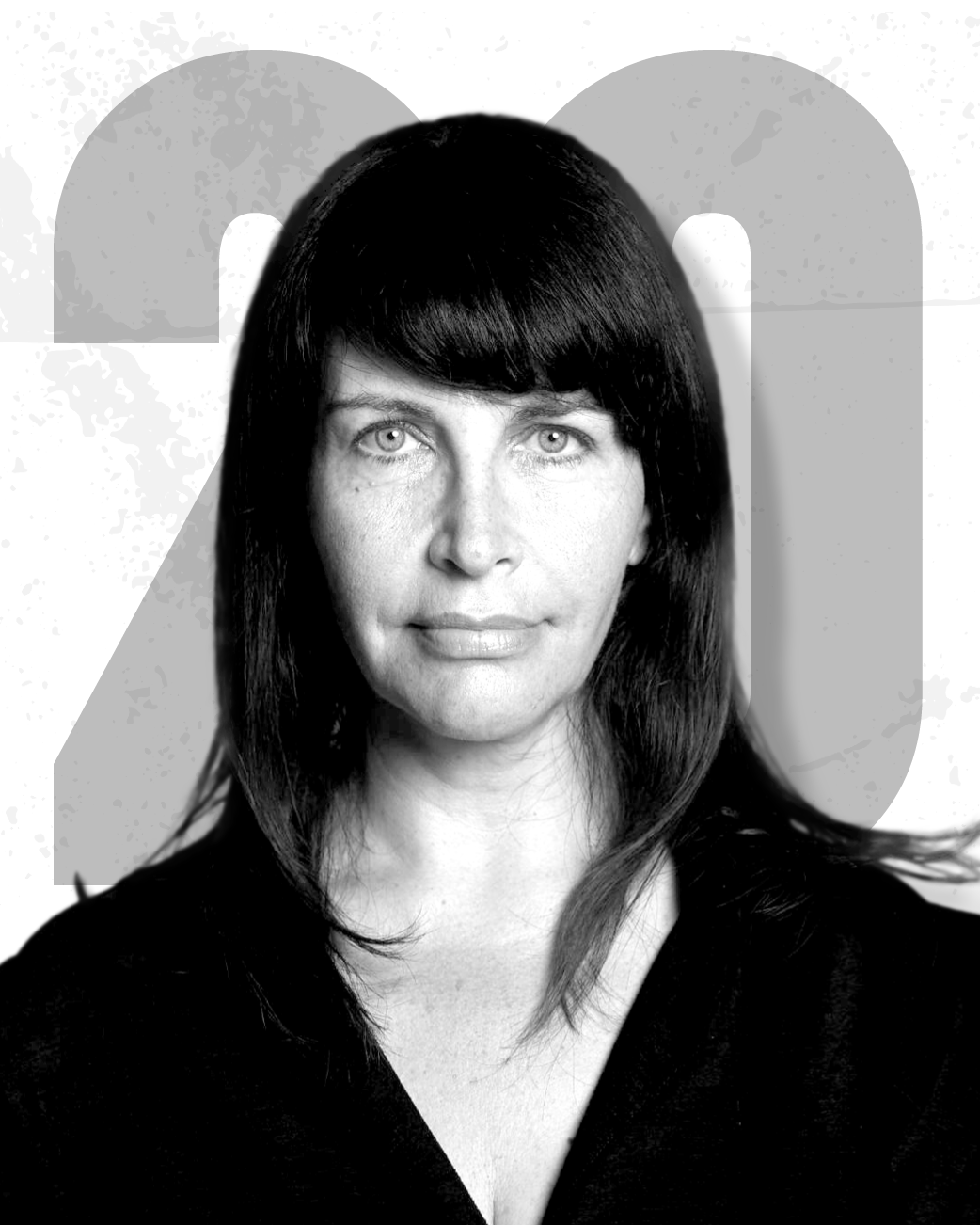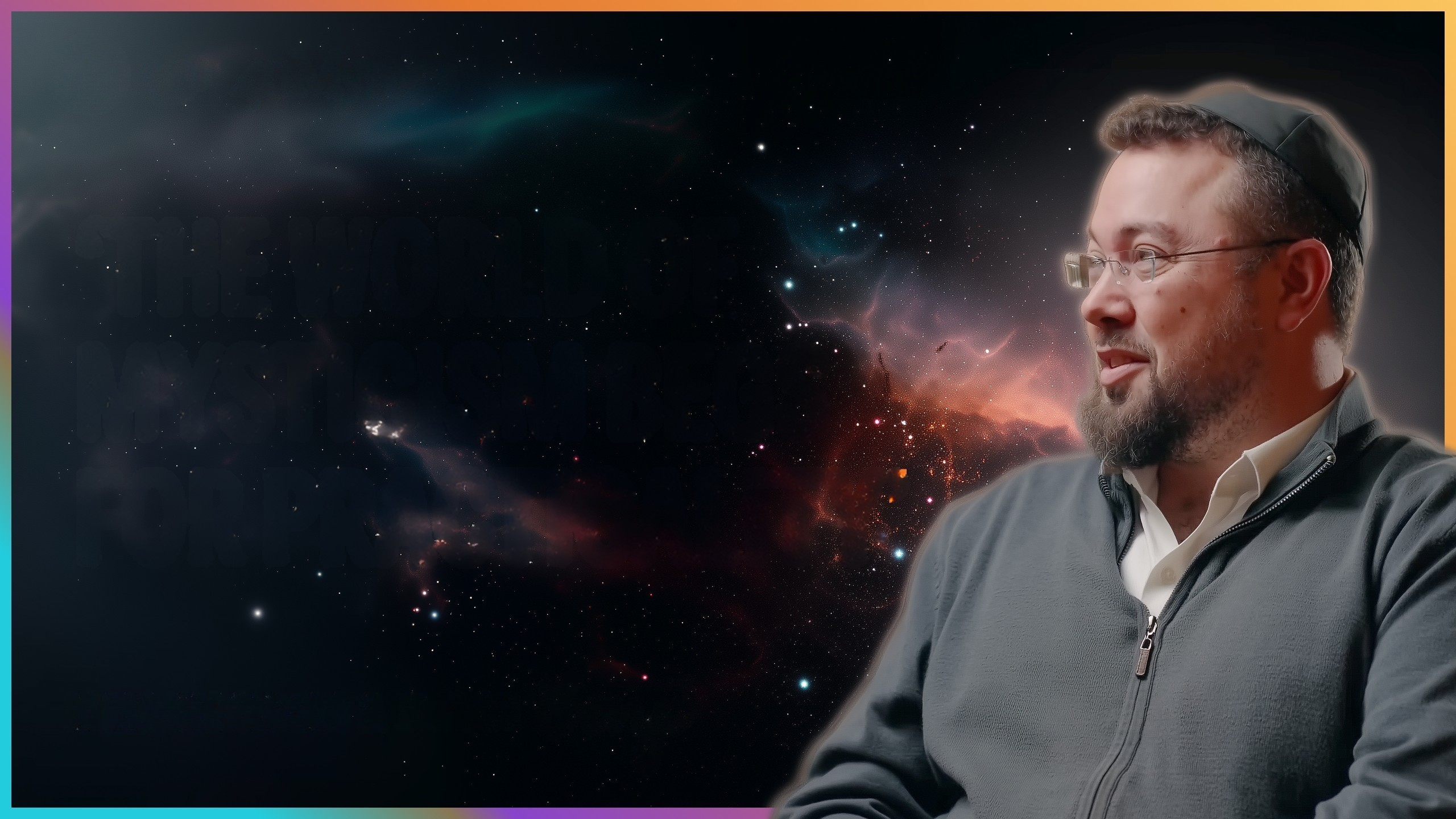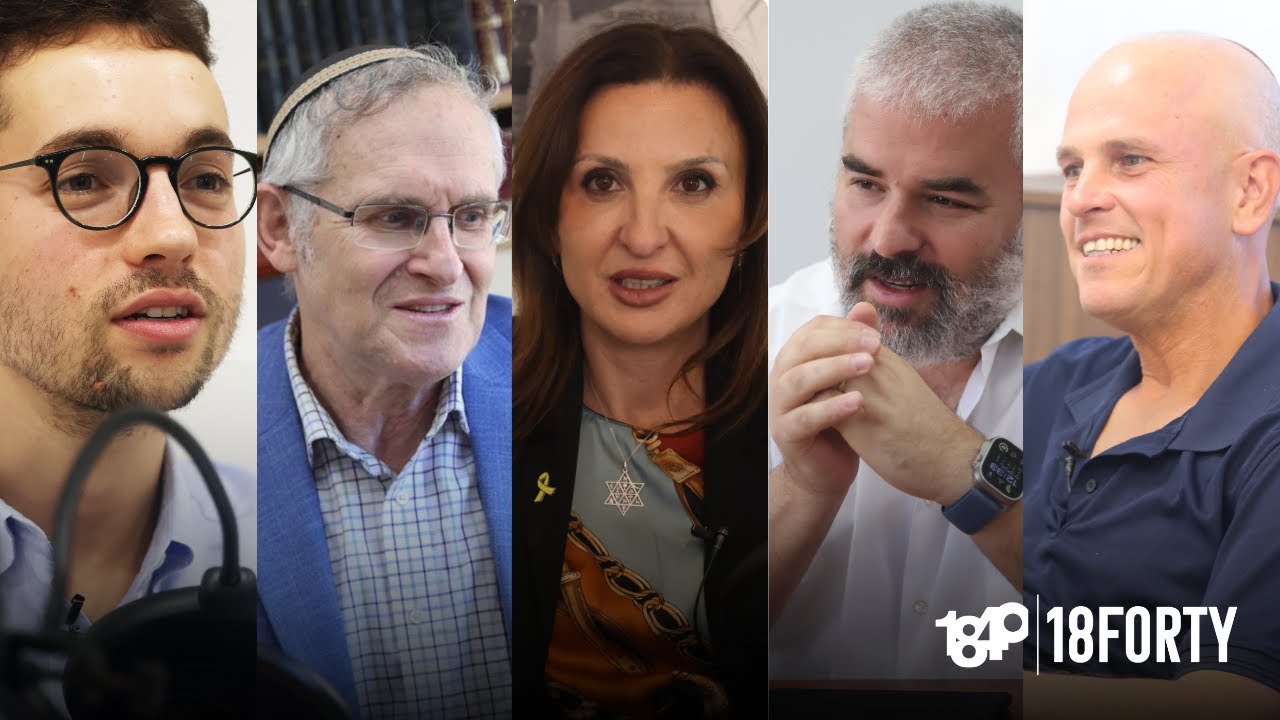
Ora Wiskind joins us to discuss free will, transformation, and brokenness.
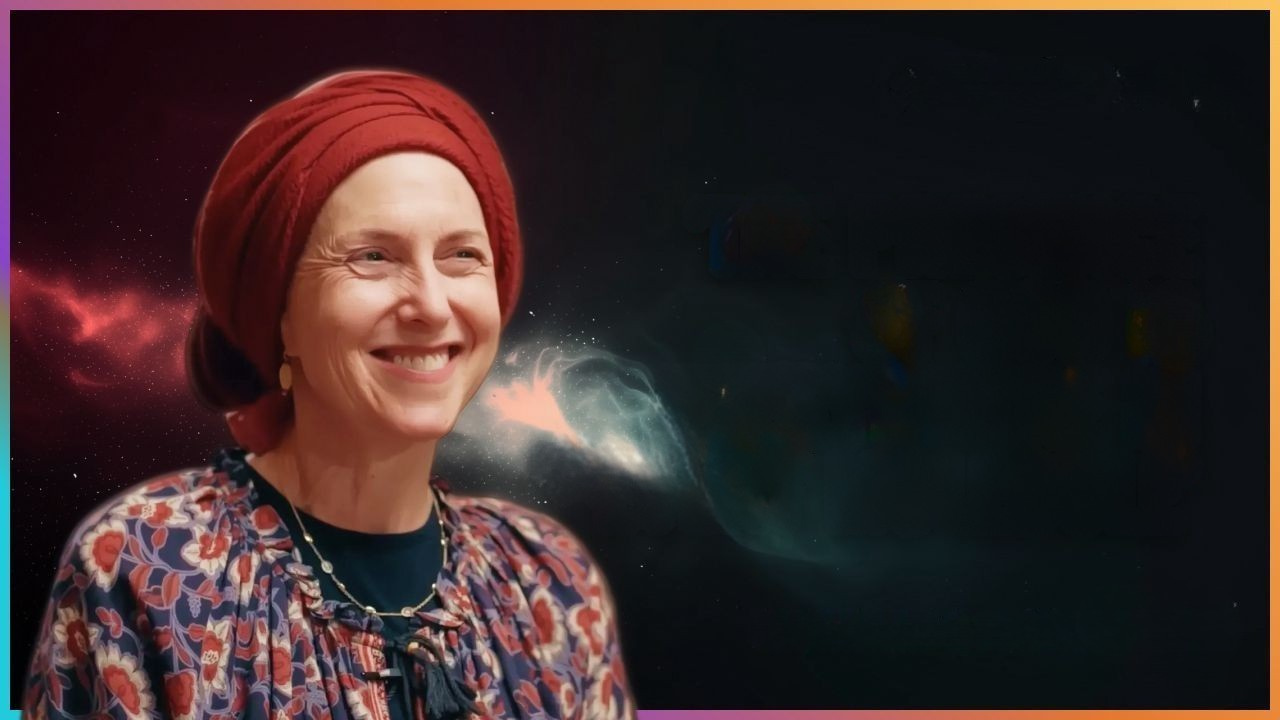
This podcast is in partnership with Rabbi Benji Levy and Share. Learn more at 40mystics.com.
As someone who has always been “anti-rational,” Dr. Ora Wiskind finds a world of deeper connection in Jewish mysticism. In particular, she is drawn to the study of Hasidism as a pathway to integrating spirituality into daily life.
Dr. Ora Wiskind holds a PhD in Hebrew Literature from the Hebrew University of Jerusalem. She is the author of Hasidic Commentary on the Torah, Wisdom of the Heart: The Teachings of Rabbi Ya’akov of Izbica-Radzyn, and Tradition and Fantasy in the Tales of Reb Nahman of Bratslav. She is an associate professor and the head of the Graduate Program in Jewish Studies at Michlalah College, Jerusalem.
Now, she joins us to answer eighteen questions with Rabbi Dr. Benji Levy on Jewish mysticism including the illusion of free will, embracing life’s journey over understanding its purpose, and how transformation often emerges from brokenness.
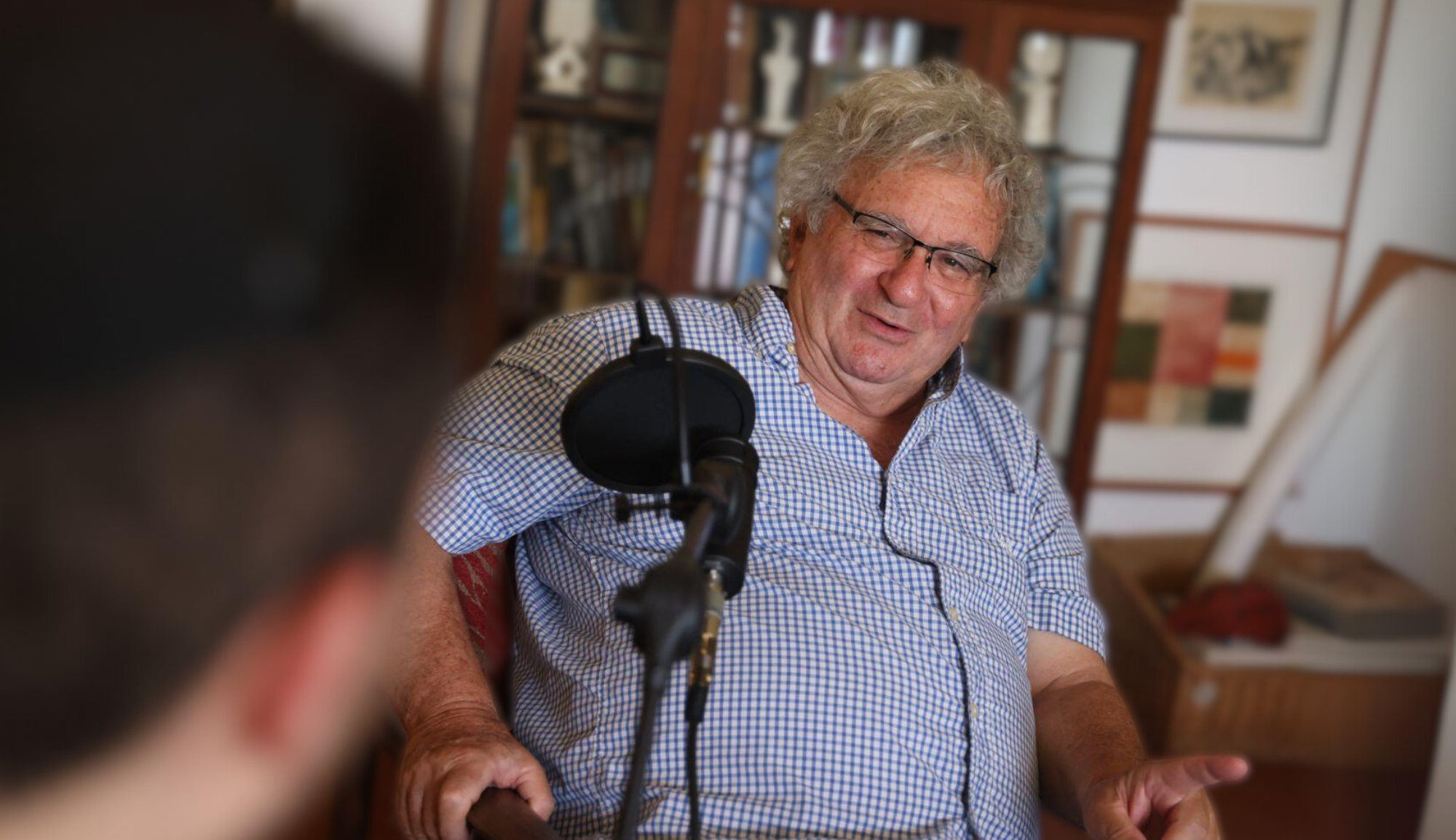
RABBI DR BENJI LEVY. Professor Ora Wiskind, you’re an incredible author, teacher, scholar, head of the graduate program at Michlalah for Jewish Studies. Thank you so much for joining us here today.
DR ORA WISKIND. Pleasure to be here.
LEVY. So what is Jewish mysticism?
WISKIND. Jewish mysticism – it’s too big a question for me to answer in general. I could say I’ve been trying to understand for the last, I won’t tell you how many years, what it is or what it could be. My approach to Jewish mysticism is through Chasidut [Hasidism]. I would say that Jewish mystical tradition in general is an attempt to see the world differently than people see the world rationally. It has less to do with concepts and thoughts and more with experience. For my purposes, mysticism is not so mystical in this sense that it’s something that you can’t really understand or it’s esoteric and beyond human tools to really do anything with it. Through my work I’m trying really to teach, or discover, or explore an aspect of mysticism that is integrated with life, with the world, with seeing the world, with dealing with other people. In other words, whereas traditional definitions of mysticism separate it from everyday life, it’s altered states of consciousness or something that’s reserved for adepts or people who aren’t like us. I am more interested in mystical teachings that talk about things that are accessible to everyone. It’s sort of an ability to see into the sod, into the secrets that are part of our lives and the world and the soul and relationships.
LEVY. So how did you get started on this journey? You’re now head of a graduate studies program. It must have started somewhere that you got so interested. What was your origin story with Jewish mysticism?
WISKIND. I think that I’ve always been sort of anti-rational. In other words, I got my lowest grade in my life in statistics and actually abandoned a potential career in psychology and therapy because I couldn’t deal with the numbers. The non-quantifiable aspects of life always interested me more. So I think in my own journey, it was a long journey and it went through a lot of different stages, but whether it’s through literature or art or history or culture, I’ve always sort of looked for other ways to interpret the world and reality that aren’t the ones that can be quantified or measured or studied. More experiential.
LEVY. In an ideal world, would all Jews be mystics?
WISKIND. I definitely think that people’s lives could be much better if they had more openness to mysticism. I think to various degrees, just like, yeah, it would certainly enhance people’s lives.
LEVY. So what do you think of when you think of the word God? What is this entity? What is God?
WISKIND. It’s interesting. I heard a very interesting innovative idea from Rabbi Meir Sendor. Last week I heard this. He said that people tend to think about how we can bring God into our lives, but really we should be thinking about how we can be in God’s world more completely. God is here, He’s everywhere. He, she, whatever, the presence of God is everywhere in every molecule, and we’re not aware of it. So I think it has a lot, what’s God? It has a lot to do with mindfulness, with just realizing that nothing that we see or feel or experience is just what it seems to be.
LEVY. What is the goal of Torah study?
WISKIND. What is the goal of Torah study? You know, I think it depends on who and when. I think Torah study has different goals for people in different stages of their lives, perhaps different for men and for women. I mean, you know, in the Zohar it says that the Torah and God and the Jewish people are one. So ultimately Torah study is to enhance that oneness and help us be aware of it and make it happen.
LEVY. And you said there are differences with men and women. So are men and women not the same?
WISKIND. Well, I don’t think they’re the same. You think they’re the same?
LEVY. No, but how does Jewish mysticism view it?
WISKIND. Ah. So again, I don’t believe in generalizations and certainly can’t talk about universal truths on that topic or any other. I think that women and men have different sensibilities and different, again, not as a generalization, but there are sensibilities that female scholars might be able to bring to Jewish studies that men don’t bring and the opposite, obviously. But, I think that it’s sort of – Am Yisrael [the Jewish People] is, you know, composed of men and women. So with all of the un-identity – women and men are not identical. So whatever any individual brings to Torah is important.
LEVY. And what is the purpose of the Jewish People?
WISKIND. I mean, we say every day letaken olam bemalchut Shaddai,1 that one of our purposes is to fix the world for the kingship of Hashem.
LEVY. And should Judaism be hard or easy?
WISKIND. Levinas said that Judaism is not for children. The problem that Judaism has had over the centuries is that people have tried to make it easy or reduce it to something or something else. No, it’s hard to be a Jew.
LEVY. And why did God create the world?
WISKIND. Oh my gosh. Why did God create the world? So I have lots of maamarim [articles], lots of statements and verses and things that come to mind. Why did God create the world? It says that there’s no king without a people. So God needed us, in a sense, to make the world complete. But really, why did God create the world? It’s a huge question, which lots of people have answered better than me. I actually think that on purpose God created the world without us knowing why it was created, and one of the purposes of creation is to help us, give us the motivation to figure it out because we’re here and what else are we going to do except try to understand the meaning of our existence?
LEVY. So part of the journey of life is to try and uncover the reason we’re here.
WISKIND. Right.
LEVY. Both on an individual and –
WISKIND. No, that’s actually a very important point. That’s a motif that I’ve thought about a lot and worked on a lot, this idea of the journey, that I mean it’s a cliché, right, that life is a journey, but the whole Zohar is built on that. It’s all about walking and going and having something happen along the way. And we never really know what the purpose of the journey was until the end, and maybe after the end.
LEVY. Do we have free will or can we change the will of God?
WISKIND. Well, I’m Hasid of Izhbitza, so no, we don’t have free will, obviously. But we think we do, and we have to think we do, because otherwise we couldn’t live ethical lives.
LEVY. Can you, can you explain that a bit? Does it basically just God – God decides and whatever we do, we think we’re choosing but really it’s just whatever God decided.
WISKIND. You know, it’s more complicated – more sophisticated than that. Like Chazal [our Sages] said, hakol tzafui vehareshut netuna,2 that Hashem [God] knows everything, what’s going to happen ahead of time, but we have total free will. It’s a paradox. It’s not something that you can just, you know, work it out logically and it’ll all make sense. But it’s a paradox that living it gives the ultimate power in human hands that we have to believe that we have the ability, to the best of our ability, with all of our tools to determine what happens to us certainly. I think also, Sharansky, I think he once said, they can imprison my body but they can’t imprison my soul. And I think that that’s – no matter what happens to us, we still have the ability to decide what we’re going to believe and what we’re going to think. And that’s it. Everything can be determined by some greater force, but that doesn’t absolve us from the responsibility of dealing with it in every given moment.
LEVY. So if we use that to try and do good things, you said letaken olam bemalchut Shaddai to try and repair the world in the kingdom of God. That ultimately takes us towards the Messianic Era, towards Mashiach [the Messiah]. When you think of Mashiach, what do you think of? What is this time meant to be when Mashiach comes? Or what is Mashiach?
WISKIND. That’s also something that I feel totally unequipped to talk about. I –
LEVY. Do you imagine something? Do you have any thoughts or inkling [about] what we’re praying for, what we’re trying to work towards? Is there anything that comes to mind with that?
WISKIND. I mean, I guess the closest that I’ve come to something that makes sense to me is the Beit Yaakov; he writes a lot about the time of the resurrection of the dead or geula [redemption]. And the verse says, ayin lo raata Elokim zulatecha,3 that the eye can’t see it. So I imagine it’s going to be really, really good. And beyond that, I guess we’ll read, we’ll hear the details when the time comes. And I think that for me it’s a part of, it’s an aspect of emuna [faith] too, lo lechashev et haketz, not to try to figure it all out and plan out exactly what it’s going to be in that golden building that’s called the Beit HaMikdash [the Temple]. People do that and I think it’s important for a lot of people and I’m happy for them to to think about that. Personally, I feel like there’s so much to do right now that knowing that there’s something very good promised in the future, that’s enough for me personally.
LEVY. Do you believe the State of Israel is part of this final redemption? It’s part of that journey towards it?
WISKIND. I do, yeah.
LEVY. What makes you think that?
WISKIND. I think certainly the idea, the reality of security, of the technical, I don’t know how you would call it, a just practical aspect of just having Eretz Yisrael [Land of Israel] as a place where Jews can come and Jews can be, certainly, if you read the books, that sounds like that’s one of the signs that things are going in the right direction.
LEVY. Amazing. There’s a lot of challenges we face in the world together more broadly. What comes to mind is the greatest challenge that the world’s facing, or what do you think is something that we really need to work on on a broader level?
WISKIND. Good question. What immediately comes to mind is Rabbi Nachman’s idea of hastara shebetoch hahastara,4 hiddenness within hiddenness, that the worst thing or the biggest challenge that we have is that we don’t realize how much in the dark we are, whether it means religion or morality or the world, I think today [we] just don’t have any awareness of what really needs to be done and that something needs to be done in order to make the world a better place.
LEVY. It’s like an ignorance of the ignorance that we have, basically.
WISKIND. Exactly, yeah.
LEVY. Wow.
WISKIND. In other words, a lack of awareness of what state we actually are in. I mean, I’m thinking in terms – say of religion or people who don’t realize how the lack of spirituality [affects them] or the spiritual poverty that many people are really suffering from. And to be very unhappy and feel at a loss and feel impotent and not knowing what to do about it. I mean, it’s really like being in depression and not being able to –
LEVY. Being aware of it. Well, you can’t cure a disease you don’t know exists.
WISKIND. Right.
LEVY. And so you can’t deal with it.
WISKIND. Right.
LEVY. That’s really interesting. So it’s that the knowledge of the issues we have is the starting point to be able to deal with them.
WISKIND. I think people do have a knowledge of it, but the awareness that, I mean, I really respect and admire people who are able to make changes on a global level or a national level or even a municipal level. I’m not a macher [doer] who, you know, gets people organized and goes out and does things, but I do believe that on the level of awareness a lot could be done. And that for me is the most painful, that people can be very unhappy and not know what to do about it or where to go or where to look.
LEVY. How has modernity helped – affected Jewish mysticism?
WISKIND. What do you mean by modernity?
LEVY. Like the period in time where following the emancipation, enlightenment, technology, industrial revolution, everything we sort of experienced when there was a sort of a real shift for all of society. How did that then affect Jewish mysticism?
WISKIND. I mean, I think it’s interesting. A lot of the literature that I’ve been reading about mysticism and mysticism in various areas, certainly mysticism went out of style for quite a few hundred years. And I think that most scholars today are recognizing a trend in the opposite direction, increased awareness and spirituality. I mean, it’s certainly not mainstream yet, but one field that I have been very interested in in recent years, and my current writing is about it, is mysticism and psychoanalysis. It’s very interesting to see the increasing awareness in the field of psychoanalysis that the soul is a mystery and it can’t be explained using rational tools. So whereas modernity struck a blow to mysticism, I think that there is a comeback now. The fact that we’re here would indicate that too.
LEVY. How does that work? What do mysticism and psychoanalysis have to do with each other? One can apply it as a therapist or as a way to look at the way people behave. How does it work?
WISKIND. Yes, it certainly can be applied as a therapist. First of all, I would say that there are certain psychoanalyst analysts who are recognized as mystics or having mystical tendencies, including Winnicott, Kohut, Milner, Bion, of course, Michael Eigen, Kabbalah and Psychoanalysis. There have been a lot of attempts to define mysticism within the context of psychoanalysis. There are a lot of questions about if it’s comparative – through comparative religion if we can understand what mysticism is. I don’t like generalities, but I can talk about Jewish mysticism and its relationship to psychoanalysis, that yes, first of all, a lot of the of the Zohar and Lurianic mysticism is about understanding the upper worlds or God through the soul and this idea that they mirror each other. So by understanding the soul better or the self, one can understand not only the self but the world beyond. So I guess the peshat [contextual and textual reading] would be that mysticism enables metaphysical truths, keilu [like], seeing metaphysical truths, but on a deeper level, mysticism enables a much deeper and richer understanding of the inner life.
LEVY. So what differentiates Jewish mysticism from other mystical traditions?
WISKIND. You’d have to be an expert in religions to be able to answer that question. I think there are interesting parallels. I mean, of course there are interesting parallels. A lot of people have written about that, but the biggest difference between Jewish mysticism and other religions is that Jewish mysticism is based on the Torah.
LEVY. So basically the guide book, the primary source is different, therefore by definition it’s going to be different.
WISKIND. Right. So the Torah meaning, I would say, for me at least, that the defining characteristic of the Torah is that it’s a hermeneutical tool. In other words, we engage with the Torah and try to understand it, and the Torah is a tool that enables us to understand the world. So Jewish mysticism is inherently hermeneutical in that it reads the verses, it reads the texts, and it applies them to things that are beyond the text itself.
LEVY. So this hermeneutical text has certain requirements of people or expectations from a commandments perspective. Does one need to be religious to study Jewish mysticism?
WISKIND. That’s a really good question. I mean, that’s at the risk of insulting people who are doing important work but aren’t religious – I would say you don’t have to be. On the other hand, there’s a – I guess some meaningful, really meaningful teachings for me, in understanding that question, that are based on the verse, “sod Hashem leyereiav,”5 that the mystery or the secret of Hashem is preserved or promised to those who fear him. So there’s a really interesting Hasidic text from this first generation of Chasidut [Hasidism] about what exactly that means, “sod Hashem,” that the secret of Hashem is promised to those who fear him. If it’s a secret, how can we have access to it? Because as soon as people give over a secret to someone else, it’s not a secret. So what’s the secret? The secret of Hashem or the mystery of Hashem? And I guess the answer that makes sense to me is that something being a secret depends on how we experience it. It has to be intimate, and it has to be personal, and it has to be something that changes me. In other words, it’s something that’s entrusted to a person who has a certain relationship to the person who’s entrusting it. So if we as Jews are supposed to live according to the Torah, the intimates of Hashem are those who respect His word and try to live according to His will. So it would follow that those who have loyalty to Hashem would be entrusted with the secrets in a different way than those who aren’t.
LEVY. Can Jewish mysticism be dangerous?
WISKIND. Oh, I think that [it can], definitely. I mean, that’s part of the whole fear I have about the word mysticism because it can mean all sorts of strange things that, without the proper commitment or without the proper understanding, I guess the primary meaning of mysticism for a lot of people is all sorts of esoteric experiences and you know, prophetic experiences and drugs and stuff like that. So if you go in that direction it has a huge draw, but it goes pretty far away from a life of holiness that the Jewish mystics wanted us to live.
LEVY. Well, you talked about how it affects relationships in a personal way. After your study for years, how has it affected your relationships with your students, with your family, with yourself? And are there any examples you can give to show how it really brings down these teachings in a practical way?
WISKIND. Mhm, okay. I think the most meaningful aspect of mysticism and Hasidic teaching that’s meaningful for me has been the idea of shevira and tikkun, of –
LEVY. Of brokenness –
WISKIND. I would say catastrophe –
LEVY. And repairing –
WISKIND. Catastrophe and repair. Brokenness, right? Shevira is actually brokenness, but it’s fundamental in the Lurianic Kabbala.6 It’s a fundamental idea about how the world was created and that worlds were destroyed and worlds were, of course it’s Chazal [our Sages], but that the world that we live in is the result of a cosmic catastrophe. It’s a very powerful paradigm because it so much reflects what happens in our lives, that really the most meaningful things, whether it’s giving birth to a child or breaking out of a behavior and doing something different, or deciding to make a change in your life, a career change even, I think that we’re always – the true possibility of creating something always comes on the basis of something else being destroyed before that. It’s so powerful, and I think that for a lot of people it becomes, you know, with all the small tragedies, big tragedies especially, it’s a very healing or comforting kind of idea that it’s counterintuitive. And that’s why it’s so powerful because everyone wants to lalechet me’chayil el chayil, things always just get better and better and better, and often in life that’s not what happens. So, I found, certainly in the past year and a half, two years of teaching, that a lot of my students are dealing with really difficult situations, you know, death and loss and violence, and many of them have told me that the material that I teach has really been – I teach Hasidism, I don’t do therapy in the classroom – but just talking about these topics in a sensitive kind of a way opens people up to – even if it’s things that they’ve thought about before, when you see them in the text it really has more holiness, and it I think it can affect people more deeply.
LEVY. What are the main chasiduyot? What are the main streams of Hasidism that you focus on or teach in your graduate studies?
WISKIND. What do I personally focus on? That’s still the Baal Shem Tov. He is sort of like the nucleus of everything. After the Baal Shem Tov, I’m in Peshischa, Rabbi Simcha Bunim, and then Izhbitz-Radzin and Gur and Piaseczna. Those aren’t really chasiduyot I guess, but –
LEVY. They are schools of thought.
WISKIND. Schools of thought, yeah.
LEVY. Do you consider yourself a chasida [Hasid]?
WISKIND. Definitely.
LEVY. Of a specific –
WISKIND. Do I belong to a Hasidic community? No.
LEVY. Or is there a specific Chasidut that you would be most –
WISKIND. No, those ones that I mentioned, those are all sort of woven into me.
LEVY. Amazing. And just to conclude, we’ve spoken about a lot of different ideas as they apply to different questions. I’d love to just end with a specific thought, a specific idea that either you carry with you always, or you find has extra resonance, or even just, you’ve got hundreds or thousands, even just at this moment that comes to mind that you’d like to share.
WISKIND. Okay, I will share something that sort of brings together the worlds that I’m in right now. The book that I’m writing right now is about Chasidut [Hasidism] and psychoanalysis. And the narrative arc of the book starts with darkness and then it talks about desire, the journey, and light. The last chapter is about light. So miraculously enough, I’ve gotten to the last chapter and I’m writing about light. And I also just enrolled in a sketching class. In my first class, we had an exercise where we had to draw some ceramic figures with intense light coming from one side of them.
And the purpose of the class is to learn how to see things, how to look. And one thing that the teacher said was: Notice that objects don’t really have an outline, even though that’s how we always draw things. So I was looking at this little white ceramic object that was illuminated from the left on a white paper, on a white table with a white background. So I drew it with a little black line on the other side and the teacher said to me, well, is there a black line on that side? I said, well, no, but if I don’t draw that line, you won’t be able to see the side of the pot. And he said, well, look at it again. How do you see that that’s the side of the pot? And I’m like looking at it and all of a sudden I noticed that there’s this huge black shadow coming from another object to the left of the pot. I said to him, well, you’re supposed to draw the shadows? And he said, you’re supposed to draw what you see. And all of a sudden, it’s just like a mystical experience, like I saw what was in front of me that there’s a huge black shadow and that’s how I can see the white pot.
I’ve been working on light and shadow and darkness for four years now, and I finally got it that you can only see the light because of the darkness. So, it’s one of those things that it takes a long time to understand things like that, and life teaches you sometimes what the books can plant in you, but you don’t really see it until it happens to you.
LEVY. Amazing. Well, clearly, you share a lot of light with the world despite some of the shadows, and we give you a bracha, we give you a blessing that you continue to do so through your writings, through your teachings, and others should be inspired by that light forever. So thank you so much.
WISKIND. Thank you.
We speak with Rabbi Aaron Kotler about the beginnings of the American yeshiva world.
We speak with Professors Elisheva Carlebach and Debra Kaplan about women’s religious, social, and communal roles in early modern Jewish life.
In this episode of the 18Forty Podcast, we talk to Aliza and Ephraim Bulow, a married couple whose religious paths diverged over the course of their shared life.
Haviv answers 18 questions on Israel.
We speak with Rabbis Eitan Webb and Ari Israel about Jewish life on college campuses today.
Prof. Moshe Idel joins us to discuss mysticism, diversity, and the true concerns of most Jews throughout history.
Dr. Chava Green joins us to discuss the role of women in the Messianic Era and seeing God in the everyday.
The true enemy in Israel’s current war, Einat Wilf says, is what she calls “Palestinianism.”
In this episode of the 18Forty Podcast, we talk to Rabbi Menachem Penner—dean of RIETS at Yeshiva University—and his son Gedalia—a musician, cantor-in-training, and member of the LGBTQ community—about their experience in reconciling their family’s religious tradition with Gedalia’s sexual orientation.
In this episode of the 18Forty Podcast, we sit down with Rabbi Daniel Grama—rabbi of Westside Shul and Valley Torah High School—and his daughter Aliza—a former Bais Yaakov student and recovered addict—about navigating their religious and other differences.
In this episode of the 18Forty Podcast, we launch our new topic, Outreach, by talking to Rabbi Yitzchok Adlerstein, a senior staff member at the Simon Wiesenthal Center, about changing people’s minds, the value of individuality, and the “no true Scotsman” fallacy.
In this episode of the 18Forty Podcast, we sit down for a special podcast with our host, David Bashevkin, to discuss the podcast’s namesake, the year 1840.
In this episode of the 18Forty Podcast, we talk to author Bruce Feiler about family narratives.
In this episode of the 18Forty Podcast, we talk to Rabbi Ken Brodkin, rabbi of New Jersey’s Congregation B’nai Israel, about how he helped turn it into “the Orthodox synagogue for all Jews.”
Rabbi Yehoshua Pfeffer answers 18 questions on Israel, including the Haredi draft, Israel as a religious state, Messianism, and so much more.
In this episode of the 18Forty Podcast, Dovid Bashevkin dives deeply into the world of dating.
In this special Purim episode of the 18Forty Podcast, we bring you a recording from our live event with the comedian Modi, for our annual discussion on humor.

Israel is facing several existential crises—at least three, by Netta Barak-Corren’s account.
In this episode of the 18Forty Podcast, David sits down with Leah Forster, a world-famous ex-Hasidic comedian, to talk about how her journey has affected her comedy.
In this episode of the 18Forty Podcast, David Bashevkin opens up about his mental health journey.
Yossi answers 18 questions on Israel.
In this episode of the 18Forty Podcast, we talk to Rabbi Josh Grajower – rabbi and educator – about the loss of his wife, as well as the loss that Tisha B’Av represents for the Jewish People.
In this episode of the 18Forty Podcast, we talk to Rabbi Pini Dunner and Rav Moshe Weinberger about the Yabloner Rebbe and his astounding story of teshuva.
On this episode of 18Forty, we explore the world of Jewish dating.
Divorce often upends emotional and financial stability. A Jewish organization in Los Angeles offers a better way forward.
Two programs are already bridging the Orthodox and non-Orthodox divide through the timeless tradition of chavruta learning.
Perhaps the most fundamental question any religious believer can ask is: “Does God exist?” It’s time we find good answers.
These recent works examine disagreement, reinvention, and spiritual courage across Jewish history.
Parshat Terumah suggests that chesed is part of the DNA of every synagogue.
After the revelation at Sinai, Parshat Terumah turns to blueprints—revealing what it means to build a home for God.
These four forces are quietly determining what our schools prioritize—and what they neglect.
Identity, desire, women in fiction, and more: What we’re reading before Purim.
Christianity’s focus on the afterlife historically discouraged Jews from discussing it—but Jews very much believe in it.
From verses in Parshat Bo to desert caves, tefillin emerge as one of Judaism’s earliest embodied practices.
Israeli minister Itamar Ben-Gvir wears the mantle of Kahane in Israel. Many Orthodox Jews welcomed him with open arms.

Religious Zionism is a spectrum—and I would place my Hardal community on the right of that spectrum.
To talk about the history of Jewish mysticism is in many ways to talk about the history of the mystical community.
I’ve seen firsthand the fallout and collateral damage of the worst divorce cases–and that’s why I’m sharing methods for how we can…
After years of unsolicited advice, I now share some in return.
Missing from Tanach—the Jewish People’s origin story—is one of the central aspects of Jewish life: the observance of halacha. Why?
What began as a half-hour experiment with ChatGPT turned into an unexpected confrontation with my own humanity.
What if the deepest encounter with God is found not in texts, but in a people? Rav Kook and the Lubavitcher Rebbe…
Between early prayer books, kabbalistic additions, and the printing press, the siddur we have today is filled with prayers from across history.
Dr. Judith Herman has spent her career helping those who are going through trauma, and has provided far-reaching insight into the field.

David Eliezrie’s latest examines the sixth Lubavitcher Rebbe’s radical faith that Torah could transform America.
As podcasts become more popular, the interview has changed from educational to artistic and demands its own appreciation.
Rav Tzadok held fascinating views on the history of rabbinic Judaism, but his writings are often cryptic and challenging to understand. Here’s…
In this special Simchas Torah episode of the 18Forty Podcast, we speak with Rachel Goldberg-Polin and Jon Polin—parents of murdered hostage Hersh…
In this episode of the 18Forty Podcast, David Bashevkin answers questions from Diana Fersko, senior rabbi of the Village Temple Reform synagogue,…
In this episode of the 18Forty Podcast, we speak with Diana Fersko, senior rabbi of the Village Temple Reform synagogue, about denominations…
We speak with Joey Rosenfeld about how our generation can understand suffering.
Why did this Hasidic Rebbe move from Poland to Israel, only to change his name, leave religion, and disappear to Los Angeles?
In a disenchanted world, we can turn to mysticism to find enchantment, to remember that there is something more under the surface…
In this episode of the 18Forty Podcast, we speak with Rabbis Eitan Webb and Ari Israel, head of a campus Chabad and…
What is Jewish peoplehood? In a world that is increasingly international in its scope, our appreciation for the national or the tribal…
We speak with Naftuli Moster about how and why he changed his understanding of the values imparted by Judaism.
Rabbanit Sarah Yehudit Schneider believes meditation is the entryway to understanding mysticism.
In this episode of the 18Forty Podcast, recorded live at Stern College, we speak with Rabbi Moshe Benovitz, director of NCSY Kollel,…
This series, recorded at the 18Forty X ASFoundation AI Summit, is sponsored by American Security Foundation.
In this episode of the 18Forty Podcast, we speak with Mark Wildes, founder and director of Manhattan Jewish Experience, about Modern Orthodox…
There is circularity that underlies nearly all of rabbinic law. Open up the first page of Talmud and it already assumes that…
In this episode of the 18Forty Podcast, we speak with Shais Taub, the rabbi behind the organization SoulWords, about shame, selfhood, and…
Support Jewish explorations today by supporting 18Forty. Your partnership makes our work possible.
Donate today.