Transcripts are produced by Sofer.ai and lightly edited—please excuse any imperfections.
David Bashevkin: Hi friends and welcome to the 18Forty Podcast where each month we explore a different topic balancing modern sensibilities with traditional sensitivities to give you new approaches to timeless Jewish ideas. I’m your host David Bashevkin and this month we’re beginning our annual exploration of intergenerational divergence, how different generations differ and find healing and meaning from one another. And of course thank you so much to our annual sponsors Danny and Sarala Turkel, I am so grateful for your friendship and support over all these years. This podcast is part of a larger exploration of those big juicy Jewish ideas so be sure to check out 18Forty.org, that’s 18Forty.org, 18Forty.org where you can also find videos, articles, recommended readings and weekly emails.
There is a paragraph from the psychologist Donald Winnicott who was like a second generation, very early in the field of psychology and so much of his work really focuses on how childhood, how our beginnings really shape the entirety of our life. And he has a quote that I’ve likely shared before where he says, “Tell me what you fear and I will tell you what has happened to you.” He writes this in his book which is aptly titled Home is Where We Start From. And he writes, “I would like to feel that as a result of what I have to say you may be able to see a little more clearly that in every case that comes your way there was a beginning and at the beginning there was an illness and the boy or girl became a deprived child; they did not get what they needed. In other words, there is a sense in what once happened although by the time that individual comes into your care the sense has usually become lost.” He is saying something incredibly profound and also incredibly simple.
If you want to truly understand someone you have to know their beginnings, you have to know their childhood. It animates the entirety of our life and Donald Winnicott says something really even more profound I think which is that nobody has a perfect childhood. He has a principle called the good enough parent, the good enough mother where he acknowledges that there is nobody who got exactly what they needed in childhood, nobody in history. If you go all the way back we all had reactions from parents that were maybe too harsh or too serious or too silly and it’s in that misalignment that we experience in our beginnings that ends up animating and kind of shaping the personalities that we develop for the rest of our lives.
I think about this constantly as an educator. You look around in a classroom and you see a lot of different beginnings. You see people who they need to always crack a joke to get attention, you see people who are struggling to just focus on anything. They receive everything with a certain harshness that’s not necessarily coming from the teacher or the educator but there is an adversarialness.
We each have memories that color the entirety of our life, we have these formative experiences of the beginnings so to speak of our childhood that animates the entirety of our life. It’s in this way that Passover is such a profound holiday and it is why year after year on 1840 we have chosen to focus on this idea that we call intergenerational divergence, how different generations shape one another, how the difficulties that we encounter in adulthood are shaped one generation in dialogue with the next. We are not born as blank slates as much as we sometimes want to convince ourselves that we enter this world like a blank sheet of paper. We are born into this world with certain culture, with a certain childhood, with parents who are carrying their own difficulties, who have their own personality and their own character that was shaped in their own childhood and each generation tries to make it a little bit better, each generation has the capacity to find what they need and hopefully build a foundation for the next generation to rise and thrive in this world.
That does not always happen but that’s certainly the goal, nobody is actively trying to make their lives more difficult. And I think that what Pesach represents is that absolute beginning. It is the Jewish way of returning back to our collective beginning, to our formation as a nation, to when the Jewish people emerge not just as a collective not just as a collection of individuals, not just as a family, but as a concrete people. And we specifically return to our beginning, not because we can change it, but we can relive it to understand our present.
We can enter into that beginning and know what is in the knapsacks that we all hold. To know that we didn’t come into this world with a blank slate, but we have a part of who we are is unchosen, is the generations that precede us. And learning how to reconcile and find healing and faith and meaning in the entirety of our lives, meaning not just our accomplishments, not just what we choose, but even the world that we’re born into, to know that we have a responsibility to this unfolding Jewish story, that this beginning is your beginning too. This is what the Passover Seder, what the Pesach Seder is all about.
It is a return to that beginning and it’s why, unlike any other Jewish holiday, there is something deeply experiential, we’re focused on childhood itself, because we know that however we deal with everything else in life and all of the challenges and the Jewish people we know right now are extraordinarily vulnerable. But we return to the Passover Seder and we remind ourselves that we are not vulnerable for the first time. We have a muscle memory that stretches back generations to the founding of the Jewish people where we emerged from within a cauldron of crisis. We emerged from within difficulty, struggle, persecution, and that is our founding story and learning how to find identity even within vulnerability, even when we don’t know the ending to the story.
There’s something that Reb Meilech Biderman, one of the great really Jewish educators, one of the great rabbis of our generation, just incredibly inspiring, and there’s a wonderful Reb Meilech Biderman Haggadah that was published with the help of our dear friend Evan Goldenberg who helped publish it with ArtScroll. It’s really an unbelievable Haggadah if you get a chance, but he asks something really, really amazing, which is of all of the holidays, why is this the one where we kind of hear the pushback of the wicked child? We have the four children that we mention every year at the Seder. We have a wise son, we have a wicked son, we have the son who doesn’t know how to ask questions, and we have a simple son. Where’s their pushback for Succos? Where’s their pushback for Chanukah? Where’s their pushback for Purim? You only hear their pushback when it comes to Passover.
Why don’t we get the four sons for any of the other holidays? Why don’t we get the four sons in their reaction to Tisha B’Av? That’s a day of mourning, surely the wicked son’s not happy about a fast day. Surely he’s not happy about Yom Kippur, but the only time that we really get their feedback is specifically for Pesach. And Reb Meilech Biderman says something really beautiful, where he says it’s specifically Pesach that in the weeks leading up to Pesach, they kind of witnessed and they see with their own eyes as a young child growing up, the tension, how meticulous and the cleaning. And you probably overheard maybe parents if they’re not fighting: Did you clean the closet yet? Did you get that done yet? Did you get the wine? Did you do? And everyone is kind of really laser focused.
They’re complaining how much matzah costs this year. Are your parents picking up for us? Are we picking up? Did you sign up through the shul? And when you grow up in that environment where you’re kind of listening to people ensure that their expectations are met, is the house going to be perfectly clean? Is the Seder going to be ready? Did we order everything that we need to order in? And it’s that tension that is required in order to set up the expectations of the Passover Seder. That’s ultimately, says Reb Meilech Biderman, it’s because he overheard everything going on before Pesach. All of the tension, all the difficulty in the household, all the did you make sure and the ordering, which is necessary and it’s a part of it, but that’s where that first seed, it’s in that beginning that the first seeds of adversarialness are often times planted.
And if I could suggest something a little bit different, I think that we hear from the four children specifically on Pesach because this is their beginning, this is our beginning. Where do you think those four children emerge from? It’s not Chanukah, it’s not Succos, it’s not Shavuos, it’s not any of the other holidays. You want to know where these different personalities emerge from, you want to know why the adversarial son learned to be adversarial and how the wise son learned to be wise and the simple son reinforced? Look at the beginnings. Tell me what you fear, tell me how you react, tell me how you make sense of the world, tell me how you relate to coworkers and your spouse and your family, and I will tell you what has happened here.
We are all carrying that beginning because it’s in that beginning that we learn to differentiate and our personalities and our approach to the world is beginning to to be shapen. And the gift of Pesach and the gift of Passover is the ability to return to that beginning and realize even if we can’t change it, we can recognize it and maybe allow us to build differently upon it because we each carry something that we cannot change. That is our unchosen identity. The families we’re a part of, the generational history that lies within each of us.
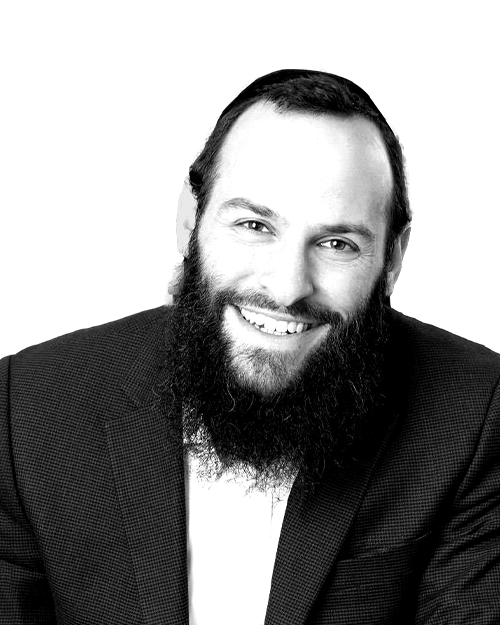
And that is why I am so excited to introduce, as we do each year to kick off our intergenerational divergence series, we always introduce an author who has written something related to either Passover or the very concept of intergenerational divergence. And this year I am so excited to welcome a returning guest to 18Forty, somebody whose ideas have had an extraordinarily profound effect on my inner religious life, somebody who I can’t tell you how many times I’ve had people come to my office looking to speak whether it was to me but I’m not the first person that they go to and so many times the person who brings them that insight in their lives has been our friend and guest today Yaakov Danishefsky who is not only a seasoned rabbi and educator with a new Haggadah called The Attached Haggadah which is absolutely fantastic. It is built off of his previous work Attached which presents the theories of attachment and how to have healthy attachment with others through the lens of Yiddishkeit and our religious lives and his Attached Haggadah gets to the core of how we relate to that next generation, how to use the entire experience of the Seder not to dispel but to nourish, to ensure that whoever is around our Pesach Seder gets the love, the messaging, and the feeling that they are wanted, that they are desired, that they are loved because that is in fact the beginning of the Jewish people. It is God taking us out of Egypt and saying I love you for no reason whatsoever.
I am redeeming you not because you’re holy or not because you’re wise and not because you’re smart and not because you’re wealthy. I’m redeeming you because I love this family and it’s not anything that you did in particular. You’re in fact almost indistinguishable from the Egyptians but modeling that unconditional love which is the bedrock and the foundation of the Jewish people. It is my privilege and pleasure to introduce my dearest friend Yaakov Danishefsky.
Reb Yaakov it is really a joy to have you on here and you have a new Haggadah called The Attached Haggadah and it brought to mind a Torah that I wanted to begin with. I heard once in the name of our mutual friend Rav Moshe Tzvi Weinberg who was explaining why do we have a custom to wear a kittel to wear the white kind of like cloak burial shrouds at our Seder? We understand there is a custom to wear white on the high holidays. We’re thinking about death. Pesach Passover is a time of life of joyousness and the answer he gave for why we would wear burial shrouds on Passover is because this is a holiday, this is a celebration where we are kind of giving over our ethical will.
This is where we are transmitting kind of the foundations of our own belief. It is about life but it’s almost the time that we give over those basic foundational goals which we usually only transmit when we are confronted death and over here we have the opportunity to transmit them when we are confronted life. So I thought about that when I was reading your Haggadah and I wanted to kind of begin with that foundational question in mind which is if the Seder is a time where we are transmitting our foundational beliefs, our foundational faith, what is Judaism? What is it that we are practicing? How does your Haggadah try to capture the foundational ingredients of transmitting faith?
Yakov Danishefsky: So I would say that in a certain sense maybe what we’re actually transmitting is more than beliefs of faith. We’re transmitting our way of living.
That’s why maybe the Seder is a night that has so many expectations around what we want to accomplish, what we want to give over, what we hope will be the transmission like you’re saying of foundational beliefs but I think anyone who has experienced the Seder in actuality knows that it doesn’t really feel like that’s what’s happening. No siree! Right. I’m sitting there as you know the host or the father of the Seder and I have my kids and I can transmit and they can ask questions and I can give over my ethical will and that all sounds great but I think what we’re really giving over is how do I deal with the reality that I can’t give that over in the picture that I want? How do I deal with the spilled grape juice and how do I deal with the misaligned expectations and the fighting and the different people there and managing the personalities and my own anxieties. How do I handle that? That’s what we’re giving over, that’s really what they’re absorbing more than any beliefs.
And I think that’s a really important point because the vessel, let’s say, that holds the beliefs is far more impactful than the beliefs. The beliefs will be shaped by the vessel. Derech eretz kadma la-Torah, the way of the world precedes the Torah itself, maybe can be understood as the way you are shapes the way the Torah you’re giving over or you’re living. If you are stressed, your Torah is stressed.
If you are regulated and calm, your Torah is regulated and calm. If I am completely unraveled by the chaos or the missed expectations of my seder, I could give over the most incredible beliefs in the world, but they’re going to be unraveled and dysregulated in everyone who’s hearing them. The container that’s holding them is what shapes the nature of what it’s holding.
David Bashevkin: That is an incredibly profound idea, one that I think in different ways you and I struggled with and both try to model, of kind of wedding the container that we share our beliefs with and realizing the container is as important and perhaps even more important than the actual underlying beliefs.
And you know, I got a little genuinely moved when you were talking because the seder memories that I have, some of which are really lovely, a lot of them are those broken expectations. I remember, you know, I had a family member who’d always get stressed the night of the seder. I have a family member who would recurrently miss usually the second seder, couldn’t even show up, would have a panic attack, just like I can’t be here, I can’t participate in this. And I remember for myself, sometimes you look at the seder, the kids are being silly, they’re making jokes, jokes that started off as cute jokes but then they slowly escalated, and you look around and you’re like: is this my Judaism? Is this what I got from my teachers, from my rabbeim? Is this the holiness that I’m supposed to capture? And you look around and you see the spilled grape juice and you see, I don’t know, you see the un-ideal but very real life that is in front of you.
You know, the place settings and the beautiful, you know, Passover meal that you planned usually is very quickly overcome with the crumbs of our lived experience. So can you dive in a little bit more? How does the seder actually do this? How do you see the actual structure and ideas of the seder aiding people for how to kind of embrace the lived reality of their religious lives?
Yakov Danishefsky: So I think there’s a number of different ways. One of them is the fact that the seder is so focused on children. The whole mitzvah is formulated as a mitzvah of focusing on children, ve-higadeta le-vincha, telling your child.
And the halachah is that even if a person doesn’t necessarily have a child to tell the story to, but they can still fulfill this mitzvah. So the idea that the Torah formulates it as being about children is not only about the fact of an actual child sitting there. I think it’s communicating to us we have to have kind of a mindset of looking at the child way of being when we think about the seder. What I mean by that is a few different things, but I would start with the theme that we’re already talking about, which is the messiness.
Children are messy. I mean, all humans are imperfect and messy, but children embody that and display that the most. Children are messy, children are imperfect, children have a sense of entitlement or spoiledness or disrespect, all these different things. And I think the idea is to really make space for that.
To realize that that’s the world we live in, we have to align our expectations as that’s the starting point. The status quo is the imperfection, is the messiness, like you said, is the crumbs. It’s not a glitch, it’s not something we oh we have to deal with that now. That’s the assumption going in.
Maybe I’m a pessimist, I don’t know, but the expectation going in is that it’s going to be messy and imperfect. The expectation in a sense is no expectation, but I would say more than that, it’s not even no expectation. And that to me is kind of just like a cute line. Really, the expectation is actually deep imperfection.
That doesn’t mean by the way, just as a sidebar, that I think when parenting kids that we just accept all the imperfection and allow it to do whatever it wants. I’m not trying to preach like a kind of entitled form of parenting. But coming back to our point, the idea being that really holding this knowledge that it’s going to be a seder of non-seder and that’s exactly what it’s supposed to be.
David Bashevkin: I really like in kind of early in your introduction to the Haggadah you have a really beautiful line and an idea.
You talk about exile and redemption and the notion of exiling myself from myself. The way that sometimes in our own lives we’re not sure which parts of ourselves to trust, we’re not sure which parts of ourselves should have a voice and should listen to. And you have a really beautiful idea that I actually want you to repeat in full about what it means to have kind of a redemptive experience. experience based on the description of the Talmud in the beginning of tractate Brachos where the Talmud talks about it breaks up the three different time periods where the morning where daylight begins to break.
And you do something really remarkable where you kind of change the goal of religious expectations to be something about like this very rigid, idealistic, pristine beauty into really kind of allowing somebody to confront where am I in my life? Like what is happening here? What is the litmus test for me to even know whether or not I am doing the right thing or have I been redeemed? I think there are people who they’re not even sure, I don’t know, I don’t know if I’m in exile, I don’t know if I’m redeemed. Can you begin with your approach to that Torah, that passage in tractate Brachos, it’s on the third page right in the beginning, on gimmel amud aleph, and explain why is that so central to your vision of redemption that you’re trying to transmit in your Haggadah?
Yakov Danishefsky: Yeah, I’d love to. So the Gemara says that there’s these three watches, gimmel mishmaros halaila, three different stages of the night. And we know that night in general is a symbol or an expression of darkness, of exile, of being in a place that is not bright and not where we necessarily want to be.
And daytime, the rising of the sun, is the idea of redemption. So what the Gemara says is that the final watch of this night, and the Jewish people have been in a very long night, it’s been a long night, it’s a dark night, it goes on and on, it’s had moments of stars that shine very bright even in the night, but it’s a long night. And at the end of the night there’s one final stage right before the sun rises, right before redemption comes. And that’s described as isha mesaperes im ba’alah, that a woman is speaking with her husband.
It’s actually incredible the way the Maharsha describes what that means, the way he depicts that is so intimate. He describes it as pillow talk between a husband and wife, that they wake up in the morning before they get out of bed, before the day starts, they’re whispering to each other. It’s a soft, personal, intimate conversation. But it’s specifically the woman speaking to her husband.
So what the Gemara is telling us, and our good friend and teacher Joey Rosenfeld actually kind of said something to me once, not exactly the idea I’m sharing, but he set me off on this course of how to think about this Gemara, is that what the Gemara is saying is that the final stage of what we need to do in this world to bring that daylight into the darkness is that the woman is speaking to the man. And I think what this represents is not only men and women, but the feminine and the masculine. And if we can in a general sense to characterize what those energies or those personalities mean, the masculine being the strong, the confident, the holding control over things, holding things in place, the more active, the more doing, etc. The woman representing the feminine energy being one that is more openness, one that has more vulnerability, more sensitivity, more emotional connection, more relational, coming more from the inside, being more okay with things being fluid, etc. And the idea is that this final stage before redemption, the work, the opportunity, is that the woman is speaking specifically. And the man’s job is to listen.
For so much of history, what Torah has been about and what the world has been about has been about in a sense perfecting the masculine side of things: action, behavior, society, structure, all these kinds of things, the intellect, philosophy. And now the feminine side is speaking. And it’s the man’s job to listen, to be quiet and listen to the feminine speaking, to the inner world that is speaking, to the softer side of things, the more sensitive, the more delicate, the more emotional, more vulnerable side of things. Which is why our world is filled right now not with a bedi’eved, not with an unfortunate glitch, that we’re all more keenly aware of our emotions and our inner world and our anxieties and depressions and relational struggles and self-esteem, that’s not an unfortunate situation, that is what’s supposed to be happening right now so that we can listen to it and hear it, because it’s bringing something really profound.
And what that brings us to, which is what you’re alluding to from the beginning of the Haggadah, what I write about in the introduction, is that what I really believe is that generally speaking there’s two different ways that people do things in this world, I would say and specifically about engaging Yiddishkeit, engaging Judaism, practice and texts, etc. One way is what I’d call the extreme let’s say masculine side of things to continue using this language and depiction, which is the Torah says I’m supposed to lean, let’s say at the Seder for example, I’m supposed to recline, haseiba. Why am I supposed to recline? Because kings recline and I’m free and I’m like a prince and so I’m supposed to feel free and dignified and noble, I’m at a royal feast and meal, so I lean. So that means I lean and when I lean I’m supposed to feel that sense of freedom and dignity. Great, that’s what I’m supposed to do, that’s what I’m supposed to feel, so I’m going to feel that, I’m going to do that.
The other side, let’s call it the more extreme of the feminine energy that I’m describing, which is: it’s about what I feel. So if I don’t feel free, I’m not leaning. Why would I do that? I don’t feel that. That doesn’t resonate with me, it doesn’t speak to me.
If it doesn’t speak to me, so then forget it, I’m not interested. What I think authentic Torah life is about is not choosing one of those over the other in either direction. It’s not choosing the masculine to just say, well, this is what Halacha says and this is what I’m supposed to do and feel. And it’s not choosing the feminine and say, well, it doesn’t speak to me, I want to do what I feel, so let me just do what I feel.
Authentic true engagement with Torah is that there’s an ongoing dialogue and conversation between my inner world and the objective texts of Torah and the objective norms and prescriptions of Halacha. So when the Torah tells me, to just continue using this example, when Halacha tells me there’s a mitzvah to lean and recline, which is supposed to be telling me to feel something dignified and free. What that means, if we create conversation between ourselves and the objective norms around that, is that I’m going to do the act of leaning with an awareness that the Torah is communicating to me: I want you to feel this sense of dignity and freedom. And I’m going to now check in and be aware of the feminine aspect of me that is speaking and saying: here is what you feel.
And sometimes, you know what, it might align perfectly because I might actually be feeling this incredible sense of freedom and that’s an amazing synthesis. It’ll be profound, they’re like meeting each other in the middle and they work off each other. And there might be times where it’s not at all like that. I might be feeling tremendous resentment about the person sitting next to me at the Seder who annoys me like crazy and I’m sitting with someone or I’m in a place I didn’t want to be there for Pesach and I caved and I’m feeling a hundred and one different things that are all as far away from freedom and dignity as possible.
So if I stay with that and I say, okay, so my inner world is communicating a sense of being somewhere I don’t want to be, not free, and the Torah is bringing freedom into my world. What happens if I let both of those voices actually stay here and engage with each other, talk to each other? What happens if the text that I’m reading is about X but I’m really more interested in thinking about Y and now I allow those two things to talk to each other, to interact with each other? Sometimes it might be a conflict, sometimes it might be a stalemate. But if you stay with that, if you don’t force answers, if you allow that to actually emerge and flow as a dialogue. My experience of the experiment of writing this Haggadah, because that’s actually how I wrote this Haggadah, one of the things that you’ll notice is there’s no sources, there’s not a single footnote.
David Bashevkin: I love this.
Yakov Danishefsky: I did that intentionally. If you notice, for example, my first book, Attached, is heavily footnoted and sourced. I felt that it was important to give background to the things I was saying and make it more rigorous and kind of give the academic side.
My whole intention for this Haggadah is to just display a form of Judaism, not a content. The form is a form of dialogue between the objective norms of Jewish life and the subjective inner world of each individual person. What the Haggadah shows of what I wrote is just what happened when I did what I’m describing to you. I sat down with the text each morning and I read the text and I was just curious, literally, I didn’t open any books, any sources.
What happens if I just sit here with that speaking to me and me speaking to it from a place of just natural spontaneity and resonance and discord and see what happens? And I think amazing things can happen for everyone and I think that’s really the avodah, the work and the opportunity of our time and really it’s the culmination of what, in my view, Judaism is at its finest supposed to be.
David Bashevkin: The three major kind of points of history, which is the creation of the world, the revelation of the Torah, and the ultimate redemption. The three points in Franz Rosenzweig’s star, which is right, you know, creation, revelation, redemption. In rabbinic literature, we always use words of speech for each of them.
The world is created with the language of vayomer, the Torah is given with the language of dibbur, and redemption is ultimately Mashiach, which is from the language of sicha, a different kind of conversation. And the way that I have formulated it, I explain why these attach to each of the three forms of speech: the world being vayomer, the Torah being dibbur, and ultimately Messiah and redemption being sicha. I’ve always conceptualized it as kind of this cycle of going: what you can feel, what you should feel, and then ultimately what you feel. The world is the world of possibilities, what you can feel, and then we introduce a should into our life, we introduce kind of models of better and worse, of ways that you should be living, expectations that you should have.
And ultimate redemption—and this is obviously we’re waiting for this collectively, but I think your Haggadah is talking about it on an individual level—is when there’s alignment, the dialogue between the can, the should, and ultimately what you feel. What do you feel? What do you feel Seder night? What are the feelings that are bubbling up? And you talk about in your Haggadah some of the cycles in the way that we need to in Introduce different expectations and then pulling back.
Yakov Danishefsky: I love that about the speech by all three stages there and that ultimate point. I just want to reiterate or emphasize one piece of this, which is that sometimes I think people will take an approach something similar to what I’m suggesting, where it makes it all about what you feel.
I think, and this is why I want to emphasize because there is a subtlety here, what I’m really trying to emphasize is it’s not only about what you feel. It’s also about what you feel. It is about what you feel, but it’s about the dialogue. So you’re feeling X at the Seder.
Allow the text, the words you’re reading, allow the Mitzvah that is asked of you to challenge you on your feelings, but not to make you abandon your feelings. That’s the exiling yourself from yourself. It’s the belief that I’m supposed to feel what I’m feeling while doing what I’m doing or saying what I’m saying. And now those two things, sometimes again, sometimes they will synthesize, they will align, it’ll be beautiful, but sometimes they will conflict with each other and that’s golden.
Don’t run away from that and now reduce it to, okay, so either I do that and I exile myself from myself, or I just go into this world of pure subjectivity and I abandon the objectiveness. Allow the subjective and the objective to talk to each other.
David Bashevkin: I love that and the ultimate goal is that from that dialogue to find some hopefully measure of alignment where you’re kind of holding both of these voices, which I think is such an apt description of religious life in general. But I wanted to kind of pull back a little bit and share this question that I was asked.
I was on a podcast of somebody who’s no longer religious. They said look, we both talk about the very real struggles of religious life. We’ve both experienced religious disappointment and I know talking to you you’ve also experienced religious disappointment, religious doubt. And she asked me such a jarring question, it was so unexpected.
I don’t even think she expected me to attempt to answer it. But she asked why do you think it caused me to leave and you continued to stay? What was covered over in my religious universe growing up that forced me, and again people might object nobody’s forced to leave, but there are people who grow up in our universe. They grow up with a Seder, they grow up with Shabbos, with Davening, and it doesn’t connect. They look for an exit or they look for a radical less obligation, less commitment.
And then some of us continue to stay. And you know, it’s a question I wonder myself, I sometimes I think about it. And I’m curious for you, you know, both in your Haggadah and in kind of your larger practice as a therapist, you deal with a lot of young families they’re growing up now, they want to avoid the mistakes of earlier generations. They want to be able to expose, we have all the tools of making Yiddishkeit enjoyable and amazing and joyful, all of these things.
What’s the answer of your Haggadah of kind of you of why is it that for some people the disappointment and the frustrations and the misalignments of Yiddishkeit cause them to leave? These things that everyone has experienced in one way or another. And for some people, and again let’s put aside the most extreme examples of God forbid abuse and all. People who are exposed and, you know, some people it comes off as too heavy. Why is it that some people leave and some people stay? I want to hear your perspective on this because I know for so many families coming together, they’re so conscious of who’s there, who’s not there, how each person is presenting, they’re having reunions, they’re psyching themselves up now as we lead to the Seder of like, bite your tongue, just be happy that they’re here or like are they coming this year or like are we going to get through these couple days together? What do you see in this generation that has more access to joyful Yiddishkeit? What is it that is still causing people to leave in 2026? We’ve learned so much from previous generations.
What’s your perspective on this?
Yakov Danishefsky: First off, I would say as you just mentioned, I definitely don’t have any answer to this, right? It would be foolish for anyone to think there’s one answer to this and there’s no way to know. It’s such an completely individualized question of why this person did stay, this person did leave. For as many people as we’re talking about, that’s how many answers there are to this question and more probably because each person has layers and layers within them. But I would say in the most generalized sense, my answer would be it comes down to relationships.
Right, if I had to guess and you can either not comment on this or you can, you know, confirm or tell me it’s not true. If I had to guess I think one of the reasons that perhaps you stayed with difficulties and doubts or questions is that the relationships that you have with people who are deeply religious are so powerful and so positive. Doesn’t mean perfect, but so powerful and so positive. And I think again I’m speaking only in the biggest generality right now, but I think people who leave are lacking those relationships.
That’s not to say that there’s necessarily So it’s not necessarily bad relationships. That’s more like the extreme like what you’re talking about, there’s let’s say abuse and different things which is a very, very real thing, I don’t want to marginalize that at all, that’s very real, but even without that. So it’s not necessarily that they have bad relationships, but they lack relationships. I think the people who stay despite the challenges are because the most powerful thing in our lives, and this is what societally we are still working to catch up on really accepting and internalizing this, the most powerful thing in our lives by far and away, it’s in its own category, it’s not even on the list, it’s its own category of power, is the relationships we have with other people.
David Bashevkin: I think a lot goes into the relationship, how authority and how expectations are introduced in childhood. I think for a lot of people, myself included and it requires a lot of evolution, you’re brought up in a certain home and you get comfortable with what is your relationship to rules, to expectations. Every home has its own expectations. And if you don’t feel a sense of rootedness in those kind of early years, if you don’t feel a sense of comfort with what I call your unchosen identity, which is life itself, which is the fact that you’re Jewish without meaning anything, it’s not something that you necessarily have to buy into, it’s life itself.
I think for myself, that was the work that I really had to do, which is like learning all of the religious expectations that we have are actually meant to sweeten our relationship with our unchosen identity, but they’re not meant to earn our unchosen identity. And you talk about this a little bit in a really I think fascinating way, it’s almost like a manual on parenting, where you talk about the cycles that we discuss in the passage in the Haggadah when we talk about Baruch Hamakom Baruch Hu where we say blessed are You God, we refer to God as the place, Baruch Shenatan Torah Leamo Yisrael, blessed are You for giving the Torah to the Jewish people. Tell me your approach to kind of the cycles of parenting and modeling authority and expectations that you interpret in these passages which I thought was really, really brilliant.
Yakov Danishefsky: It occurred to me like I was describing before, just kind of sitting with the texts of the Haggadah and just seeing what it brought up in me.
I was sitting with those words Baruch Hamakom Baruch Hu Baruch Shenatan Torah Leamo Yisrael Baruch Hu. And it seems to me that we’re describing the way that Hashem relates to us and perhaps it’s a model also for how parents can relate to children and really on some level all relationships, but especially parents to children. So Baruch Hamakom we’re blessing God as the place like you said, we’re giving a description in contrast with Baruch Hu where we’re just describing blessed is He. We can’t even describe Him, He’s further away.
So that already right there is expressing kind of a different way that Hashem relates to us and therefore we relate to Him. The first is Baruch Hamakom, He’s the place. We’re not saying He’s telling us anything. We’re not saying that He’s giving us any instruction.
He is the place. The place means He’s holding us. He’s the container, the ground that we stand on as the Midrash says that Makom is Ein Haolam Mekomo Ela Hu Mekomo Shel Olam. The world is not His place, He’s the place of the world.
Meaning the very first stage of a parent’s responsibility to their children is not to teach them anything, it’s not to tell them anything, it’s to be the place for them, to be the container, the ground, the stability that holds a solid foundation for them. To just be there, to be available, to be reliable. That’s the basis. Which means to be present, to be very present.
But then, not to be too present, we shift quickly from Baruch Hamakom to Baruch Hu. The parent needs to actually move back a little bit. Give the kid space. Give the kid space to run down the street and fall and scrape their knee and cry.
Give the kid space to say something mean to a sibling and have to deal with what that means. Baruch Hamakom you have to set up a foundation. There has to be that they feel a sense of containment, that they feel that there’s borders, there’s boundaries somewhere. There is a reliable home, there’s walls literally and figuratively to the house that I live in.
There’s rooms, there’s compartments. There is a sense of structure and order. That’s Baruch Hamakom. But then Baruch Hu, give space.
But now that you’ve given that space, now we go further, Baruch Shenatan Torah. Now Hashem comes, the parent comes and not only is present as Makom, as the place, but is actually present as the teacher, the one who is giving instruction, the one who is passing on beliefs, ideas, the right way to be. The shoulds. The shoulds, the shoulds of life.
But then once you’ve done that, what happens again? Baruch Hu. Now move back again and give space for them to grapple with the shoulds that you said, to make mistakes about the shoulds that you said, to disagree with your shoulds, to figure out their own shoulds. And that obviously is not happening only in one linear process. It’s kind of like a spiral.
So there’s Makom Hu Natan Torah Hu and that kind of continues to circle around in life over and over again.
David Bashevkin: I want to come back to some of the most foundational ideas… the ideas that you have and I think you did a really fascinating job it caught me off guard because you have a way of making concepts that we’ve heard over and over again using language to really allow it to not be a concept but like finding it within yourself and really getting to the foundation of the entire Haggadah of your Haggadah attached I think your central thesis has to do with where one finds value in themselves and reorienting how we look at our own self-worth and value and you kind of lay that out both in the beginning and in the end and in the beginning you talk about it in the dichotomy in the conceptualization of how we think about matzah versus chametz I have always struggled with the classical formulation of why we’re not supposed to have chametz on Pesach if chametz is the bad concept and matzah’s the good concept then you know it doesn’t take a rocket scientist to ask the basic question so shouldn’t we not have chametz the entire year? Now I don’t want to give rabbinic authority any ideas I am not looking for the rabbis to ban which they wouldn’t do but we don’t want to give anybody any ideas but it always struck me as very strange and we’d say you know chametz bad matzah good and you’d plug it in whether it’s your evil desire whether it’s what you talk a little bit about your ego but you have a way of really shaping two ways of approaching self two ways of thinking about our self-worth how do you think that is modeled how do you present that of what the chametz and matzah are representing in the way that we reflect on our own value?
Yakov Danishefsky: I think chametz is not bad to which to your point chametz is good the question is does your chametz come from itself or does the chametz emerge from matzah which is why chametz is all year round it’s what dominates the whole year it’s our diet the whole year but it needs to emerge from matzah which is why when the Jewish people first emerge as the Jewish people they begin with eating matzah which then flows into eating chametz it’s a chametz that comes from matzah chametz that comes from chametz is the problem chametz that comes from matzah is the way it’s supposed to be so what does that mean? What I think about is chametz that comes from matzah means I am aware of my different qualities and strengths and gifts and talents and what I bring to the table what I bring to the world of who I am my personality my character traits etcetera I’m aware of all of that and I feel good about all of that and I enjoy all of that and I know that that’s not something I created or chose and it’s not only here for me if I recall correctly what I outline in the Haggadah is three aspects of what it means to have your chametz come from matzah it’s what is the source of who I am? Did I create this? Did I generate this? Or did I come from a higher source? I begin as matzah I begin flat I begin as nothing the source on my own is empty there’s nothing there it’s matzah the chametz that rises the character traits that fill the space of who I am came from something beyond me something that’s given to me so that’s source number two is meaning does my sense of who I am make me superior to others? Am I more special than anybody else because I’m smarter than them? I might know that I’m smarter than them does that make me more special or more important than them? I might know that I’m more creative or more artistic or I might even know that I’m more humble this would be an interesting paradox I might even know that I’m more humble or I’m more generous does that make me better than somebody else? Does that make me superior in essence than somebody else? What does my chametz mean? Chametz that comes from chametz means that I’m superior to other people which really is rooted in inferiority but I guess that would take us into a different longer explanation but chametz that comes from matzah means that I didn’t generate this I am here because I’m inherently matzah that emerges as chametz and so is the other guy and so is she and so is he and so is everyone so I’m no more and no less special than anybody else everybody is unique nobody is superior and then lastly the purpose of the chametz is it for myself is it self-serving is it about me or is it about something broader than me? The chametz that I am is that contained within the chametz or if it is really rooted in matzah then it’s about where it came from and what it’s ultimately there for and actually what that means is that the experience at its highest level I once tried giving this over at a summit I was asked to speak at it was the worst shiur or talk I’ve ever given hands down in my life it made no sense so I don’t know if what I’m about to say is just me dictionary definition of insanity of like trying to explain something that will not has not worked and will not work but I will try nonetheless the idea that the experience of self is actually an experience of the divine it doesn’t detach me from the divine Hashem manifests God manifests into this world through each of us so each quality that I experience of myself is An experience of Hashem. There’s no ego, there’s no arrogance, there’s no self-serving in that.
It is an experience of self. I have to experience self. I have to experience my qualities. If I’m not, I’m actually eliminating God’s presence from this world because God’s presence is through my emotion, through my creativity, through my intellect, through my generosity.
But those are experiences of self that are an experience of Hashem, of the divine. That’s what it means to have chametz all year that’s rooted in matzah. Which I think is a much loftier experience of self-esteem. It’s God-esteem.
It’s God-esteem in the self as opposed to self-esteem. And it really connects to something I know you’re fond of quoting from Izhbitz, that just as a person needs to believe in God, so too they need to believe in themselves. Which by the way I just like to point out the word need there. I don’t think only needs to be read as like you need to do this.
It means you need this because how else can you live if you don’t have this. You need it. Like you need water. It’s like you need to drink water.
That’s not some authority figure like smashing you over the head you need to drink water. You need to drink water because you need to drink water. You need to find a way to believe in yourself. So how do you believe in yourself? You believe in yourself because you are chametz that is rooted in matzah.
Because you are actually a vessel, a vehicle of expression of Hashem‘s different qualities as they are filtered and distilled into this world through your being, through yourself.
David Bashevkin: That is incredibly profound and it’s something that I have grappled with for a very very long time and I think in a way there’s a part of this that’s very unique to, not, we’re just talking about how nothing’s unique, but there is a part of this that is accentuated within the Jewish world and that I grapple with a lot a lot in my own life. I think this is my number one struggle, which is confusing talents for the justification or the sanctification of your life. Confusing your accomplishments for the reason why literally you deserve to be alive.
Where I get caught in this trap and I’m sharing this now because I am currently within this trap. You know right before we spoke, I think you were being mischievous. I think you were doing something deliberately mischievous where we all have our triggers. You could probably list what my triggers are.
You name you know somebody else who’s really popular who’s doing really well or who’s fundraising a lot of money or who’s you know number one on the podcast charts or you named all of those things right before we started recording.
Yakov Danishefsky: I was trying to get you into a space that would be ripe for this conversation.
David Bashevkin: Oh you got, oh you got me there. You got me there.
And I know I am not doing well. I gauge my emotional health, my religious health, by I think two measures. How is my family doing? How does my wife think I’m doing? That’s isha mesaperet im ba’ala. Am I in dialogue with my family? And the other is, am I feeling jealousy? Am I noticing other people’s accomplishments? I pay so much attention to what makes me jealous.
You’re not supposed to be jealous. Here we are you know Jews get jealous and I look at like you know what do I see other people accomplishing that makes me jealous. And the more jealousy that I feel, the more my eyes are trained on other people’s accomplishments as a referendum of my own. I know what’s going on there is that I’m dealing with chametz that came out of chametz.
I am dealing with my own accomplishments but not on a foundation of inherent goodness, not on a foundation of your existence itself is why you’re alive. You’re alive for no other reason. You don’t need to earn your way out of this.
Yakov Danishefsky: You know there’s an irony that matzah is so expensive.
Right? Matzah is supposed to be poor man’s bread. It should be the cheapest. It’s what anybody could have and
David Bashevkin: Costs a bloody fortune.
Yakov Danishefsky: And you know how much is it per pound of matzah? It’s crazy.
David Bashevkin: Shoutout to my parents I want to say this publicly. You could do a bit of like how you slowly wean yourself off from your parents. You know when you first get married some people like your parents are still making your dentist appointments and then slowly you’re like off their health insurance. You turn whatever twenty six or whatever the age is in your state.
Mama and Dad still paying for your phone. Right. The last stand for my parents, I haven’t weaned myself off. Baruch Hashem thank God I can afford it, my parents still pay for my matzah.
Yakov Danishefsky: I love it.
David Bashevkin: Especially based on what you’re saying and I’m excited to hear this Torah. There’s something very holy about my parents. I need my parents to pay for my matzah because my parents they represent that they represent that unarticulated existence of just being in the world.
That is my relationship with my parents.
Yakov Danishefsky: I love it. That’s a beautiful Torah on it. What I was suggesting also which maybe we’d have to think about how it connects is it’s such an irony how expensive matzah is.
I think the idea is because I like to think often about people’s experience in this world on like a zero to ten scale. So zero is misery, depression, ten is thrill, euphoria, etc. Five is satisfaction. The truth is that the fives are much harder to come by than the tens. Tens are cheap, tens are easy.
Matzah is so expensive. The real matzah of life is one of the hardest things. It’s very easy to feel tens. You can consume something, you can be entertained by something, you can even be intellectually or spiritually stimulated by something and hit a ten.
And it’s also unfortunately very easy to hit zeros. But the fives, being okay with life, being okay with yourself, being okay with God, that’s really expensive. That costs everything. That takes a lifetime of work to reach that five.
And I think that’s why matzah is so expensive. Because the work of matzah, the work of being okay with yourself as a manifestation of the divine, as opposed to having to produce chametz, to produce accomplishments, to produce things that will make you feel like a ten.
David Bashevkin: But then also lead you to feel like a zero when you compare yourself to others. That work of matzah is the most expensive work in the world. And that’s why it’s poor man’s bread, but it costs a fortune.
Because only someone who’s an ani, who’s a poor person, who has nothing but themselves, can actually afford it. If you have all your accomplishments, you can’t afford matzah. You’re too busy with your chametz. But if you’re an ani, if you’re poor, and all you have is your own existence, then you can finally afford the matzah of being okay with who you are.
And that is the most beautiful thing I’ve heard in a long time. Thank you for sharing that. things to find. And that’s why minhag Yisrael Torah hi, what the Jewish people unintentionally create in the absurd prices of matzah is actually the deepest Torah in the world.
Because what it’s saying is that simplicity, just being okay with yourself, it’s not hard to feel great. You and I each have moments of tens because we have an awesome podcast that comes out, or of course I have a ten from putting out a new Haggadah. That’s easy. That’s not hard.
What’s hard is the regular day of just being okay, being satisfied, of being content. And those fives, which are so much more valuable and so much more important to actually living a good life, that is expensive stuff. That is hard to come by.
David Bashevkin: That is extremely holy and really it aligns with everything that you’ve been saying and has been a real source for me recently in my own Torah, which is really that dialogue between our unchosen self and our chosen self.
The dialogue between our earned and articulated talents and our underlying existence. And I think what underlies your entire approach and certainly your approach to the Haggadah is that neither of these things can live by themselves. We can’t just sit and bask in the warmth of our own existence accomplishing nothing, doing nothing, and just napping all day, though sometimes I’d like to, and we also can’t get confused that our accomplishments, that our successes, are what earns us a place in this world. We are all standing on matzah.
We are all standing on that unchosen identity, that unchosen self. Let me switch for a second and I’m just curious, I generally hate these questions but I am kind of curious about them. What is your Seder like? You have a family of your own, the Seder is kind of intimate. Nobody really knows unless you’re knocking on other people’s doors, which happens from time to time, but you don’t really know what happens at other people’s Seders.
I happen to be extraordinarily proud of what I’ve built with my Seder if I’m in a healthy enough space to appreciate the bracha and the blessing that lies in front of me. But I’m curious for you, do you do anything unique at your Seder? How does your Seder go? How do you manage it? Do you have any logistical pro tips? And I’m curious for you is there any part of the Seder that has a special meaning or holds a special purpose for you?
Yakov Danishefsky: I definitely don’t have any pro tips. It’s not my thing and I haven’t figured it out yet. I don’t think my Seder if I’m being really honest and open, I don’t think my Seder is anything necessarily so uniquely special.
Obviously it depends on the year, depends who we’re with and depends what’s going on. Thank God I’m blessed with a large family of a whole bunch of young kids. We still have babies, so we’re at that stage of still just in that space of littleness, so to speak. So my Seder I think typically ends up having two parts to it.
The first half or the first two thirds of it are very kid centric, not much by way of deep Torah or anything like that. Try to make it as fun and engaging as possible, try to make it interactive. My wife does a pretty good job at trying to do different kind of games and props, even costumes. Really trying to, as I was talking about before, the container being very fun.
And I really try to go in with that mindset of as little expectation of anything being deep or profound as possible. Not that I’m avoiding that, if there’s opportunities amazing. And I think that as my kids get older that’ll also shift a little bit, God willing, we’ll see. But at this stage it’s really focused on fun and enjoyment.
And then at some point most of my kids end up asleep or retiring, whatever it is. So then the end of my Seder ends up being for me typically a very meaningful, profound, sometimes literally by myself. I’ve had years where the entire room is gone and I’ll sit and sing Hallel or whatever it is literally by myself until I fall asleep. And that is some really cherished moments.
Sometimes it’s with a sibling-in-law or a sibling. There are some other adults that are into that kind of thing and still around. It’s bringing up some good memories and shout outs to some of my siblings and siblings-in-law of sometimes late in the night when the kids are sleeping and crying and dancing and singing and really beautiful things. But the most important thing to me is that even though I just shared all of that and it sounds nice, I go in or I try to go in with none of that as an expectation.
Every year will be its completely own experience, each night will be its own experience, and the only expectation is to remember what our also dear friend and teacher has shared, Rav Judah Mischel in his amazing Baderech Haggadah, that the end of the night is nirtzah. The very final thing is nirtzah. To know that whatever it is that happened that night is exactly what’s wanted. And so even though I prefaced this by saying I don’t think my Seder is anything particularly special, it is extremely special for exactly that reason.
David Bashevkin: Rav Yaakov, I cannot thank you enough. Your work, your perspective, the way that you thread together our inner world and outer world in such a masterful way is something that I have always marveled at. It gives me a tremendous amount of nachas. I want to clarify, and I think this is something very unique.
This is such a weird thing to say but I am going to say it. anyways ’cause I know you’d appreciate. I’ve never felt jealousy towards you, which is not to say that your accomplishments are not jaw-dropping. Maybe I have in a fleeting moment.
I just feel like our friendship it just transcends something and there’s just such a joyfulness and I feel like we’re always rooting for one another in the sweetest way, which I am so so grateful for. I love the imagery that you talk about of reminding people to still remain in touch with their own inner child, which is something that is so holy and so real. You talk about the babushka doll, those Russian dolls, there’s always an inner core that animates our present self. And you always gently turning people’s heads to not forget about that inner core that animates us, what makes us anxious, what are we reliving when we’re nervous, when we’re depressed, all these things, the inner core of our lives, that interiority.
Really on a personal level, I’m just so grateful for you and for your Torah.
Yakov Danishefsky: Thank you. It’s very mutual.
David Bashevkin: I always wrap up our interviews with more rapid fire questions.
Aside from your own Haggadah, The Attached Haggadah, which is beautiful and you mentioned our mutual friend Rav Judah’s Haggadah, do you have any other books, articles, or other Haggadahs that you would recommend for people looking for pre-Pesach wisdom?
Yakov Danishefsky: Not to be too cheesy, but each person’s own Haggadah to the point that I’m trying to suggest. Instead of picking up another Haggadah this year, just take a plain Haggadah text and do what I described. For as much time as you would have spent reading someone else’s Haggadah, this year just sit with the text of a Haggadah and see what happens if you create conversation between the Haggadah talking to you as if there’s a person sitting there talking to you and you’re responding and there’s a conversation and let it create your own.
David Bashevkin: I love that.
My next question, I’m always curious. If somebody gave you a great deal of money and allowed you to go back to school with no responsibilities whatsoever to study and get a PhD of any topic of your choice, what do you think the subject and title of that dissertation would be?
Yakov Danishefsky: I don’t know exactly, but definitely something in the world of the interface between psychology and spirituality.
David Bashevkin: And that is at the center of your holy work. My last question, you know what’s coming, I’m always curious about people’s sleep schedules.
What time do you go to sleep at night and what time do you wake up in the morning?
Yakov Danishefsky: It varies. Currently and the stretch I’ve been in, I’ve gone to sleep about twelve or a drop earlier and waking up about six or a drop earlier. But I will share a fun fact. The Haggadah was written at a different stage and I think this is actually interesting because it speaks to the whole nature of what I’m trying to give over in the Haggadah.
I’ll make it quick, I know these are rapid fire questions. No, please. We had a baby boy last summer, Baruch Hashem. And on the day of his bris, I thought to myself, when you’re the father at the bris, davening Shacharis in the morning, so everyone’s coming, giving you a hug, everyone wants to say hi, it’s a very hectic time, you’re thinking about a million things, very hard to daven.
And it’s a very meaningful morning of davening the day of making a bris. So I decided that morning that I was going to actually daven Vasikin at a separate time. And I davened my own davening at Vasikin early in the morning, it was in the summer, Vasikin was very early, I don’t know exactly, but very early. And then I went to the davening for the bris and I had already davened.
I could just be present then. And what happened was that at Vasikin, which I don’t typically do, I just had the most incredible experience. Typically even if I daven at an early minyan, like 6:15 or whatever, but the day’s already, I got to get home and the kids get ready for school and just the day’s already going, it’s hard to be present. And I davened Vasikin, it was 4:45 in the morning, there’s nothing to be present to.
There’s nothing. The world is not alive yet. There’s nothing going on, there’s nowhere to go, there’s no rush. When I finished davening, my kids were still sleeping for a while and it was beautiful.
I loved the experience. So I started davening, I haven’t kept it up now, but I had three four months where I davened Vasikin. And I wrote this Haggadah after the Vasikin minyan, of all places in Brisk in Chicago. Brisk has a yeshiva, beis medrash in Chicago, not a functioning yeshiva but a beis medrash, they daven Vasikin there.
And I sat there with my computer at 5:30 in the morning, whatever it is. And I say that because that really was the nature of what this whole thing I’m trying to give over is. I was too tired, I wasn’t looking up sources, I was just in this half conscious, half unconscious state sitting there and seeing what came up, what flowed. The world was asleep, I was in my own space of this dialogue between the subjective and the objective.
And it was a profound experience and one that I think is instructive as a way of being, not just literally what that experience was.
David Bashevkin: It is not a surprise that this very Haggadah was written at that time, as we spoke of Isha Mesaperes Bilayla, where the quietness, the vulnerability of the world and in dialogue with all of our dreams and all of our ambitions. My dearest friend Rav Yaakov Danishefsky, thank you so much for joining us today.
Yakov Danishefsky: Thanks David, it was great.
David Bashevkin: For me the takeaway of that conversation and there are so many takeaways and I really would urge all of our listeners if you don’t have the attached Haggadah, if you’ve never seen Yaakov’s original book Attached, or you haven’t heard the original conversation on 18forty with Yaakov Danishefsky where he really lays out the foundations of attachment theory, some of the most profound work that I think illuminates specifically in this moment so much of Of the pain and the difficulty that people feel within their religious lives is about revisiting that beginning and the entire order of the Seder and I loved the way he shared this. That we start the Seder by kind of listing all of the different steps of the Seder and most people have a song Kadesh Urchatz and you go through it and you probably have a similar tune as well I suspect. I’m not going to sing the whole thing for you now though I know many of our listeners are begging me, it’s not going to happen. But what I did take away and what I find so beautiful and it’s that very simple reminder that after all of the actions of Kadesh and Urchatz of making ourselves holy and washing our hands and telling over the story and eating together and praising God, after all of the steps, you know what the final step of the Seder is? The last step of the Passover Seder is Nirtzah.
Nirtzah is not an action, Nirtzah is a response. Nirtzah says you are wanted, you are beloved, you are loved, and you have enough. With the beginning that you have, however misaligned it may have been, however much you may continue to grapple with it, each of us stands at a beginning. Each of us had a beginning that continues to animate our lives.
And Pesach is that opportunity where we return to our beginning and even though we can’t change it, we can share the story and hope that maybe our cadence, our reflection on that story will help sweeten it, that it can serve as a foundation for healthy religious growth for a Yiddishkeit, for a Jewish people that can see the revealed revelation of redemption before our eyes to heal all of the pain and all of the suffering that we have collectively and personally, to return to that beginning, share our story and make it a little bit sweeter for the next generation. So thank you so much for listening. This episode, like so many of our episodes, was edited by our incredible friend Denah Emerson. And thank you again to our incredible series sponsors, friends over all these years, Danny and Sarala Turkel.
I am so grateful for your friendship and support. If you enjoyed this episode or any of our episodes, please subscribe, rate, review, tell your friends about it. You can also donate at 18Forty.org/donate. It really helps us reach new listeners and continue to put out great content.
You can also leave us a voicemail with feedback or questions that we may play on a future episode. That number is 212-582-1840. Once again, that number is 212-582-1840. If you’d like to learn more about this topic or some of the other great ones we’ve covered in the past, be sure to check out 18Forty.org.
That’s the number one-eight followed by the word forty f-o-r-t-y, 18Forty.org, where you can also find videos, articles, recommended readings, and weekly emails. Thank you so much for listening and stay curious, my friends.