Transcripts are produced by Sofer.ai and lightly edited—please excuse any imperfections.
David Bashevkin: Hi friends, and welcome to the 18Forty Podcast where each month we explore different topics balancing modern sensibilities with traditional sensitivities to give you new approaches to timeless Jewish ideas. I’m your host, David Bashevkin, and this month we’re exploring intergenerational divergence, the annual series we do each year before Passover. Thank you so much to our series sponsors and friends, Danny and Sarala Turkel. I am so grateful for your friendship and support over all these years.
This podcast is part of a larger exploration of those big, juicy Jewish ideas, so be sure to check out 18Forty.org, that’s 1-8-f-o-r-t-y.org, where you can also find videos, articles, recommended readings, and weekly emails. At every Passover Seder, there is something that is missing in the story that we tell over on Passover. We begin and tell the story in detail, going through the Jewish people’s slavery in Egypt. We drink four cups of wine throughout the Seder in order to commemorate the four acts of God taking us and delivering us out from Egypt, and the entire story is laser focused on that redemption, on that redemption story of God taking us out of Egypt.
If you pay close attention to the Passover Seder, and many people have noticed this and pointed this out, but you really have to articulate it to fully notice it, it is quite strange that our entry into the land of Israel, the ultimate completion of our exile in Egypt, of our servitude in Egypt, was in order for God to not only take us out of Egypt and give us the Torah, but actually deliver us into Israel. And it is very, very strange how, aside from a quick mention in the song Dayenu—dai dai yeinu, we know that one. Whenever I think of that song, I remember visiting my grandfather at the end of his life when he was in a nursing facility and there was a woman who was singing that song with such gusto, and she had a tambourine, and I almost feel like this song is the one song that was made to be sung with a tambourine. You wonder, what was the tambourine created for? It was created to get people pumped up for Dayenu.
It is a very tambourine-friendly song. You probably should not use a tambourine on Passover night, but it is a very tambourine-centric song and it ends with, were you did not bring us into the land of Israel, Dayenu. But why don’t we actually tell the story of the Jewish people entering and setting up a civilization, a state where the Jewish people lived in the land of Israel? Why don’t we mention Joshua? Why don’t we mention any of the kings, King David, and just the story of the ultimate fruition of the redemption was establishing a society in the land that we were promised by God to Avraham? Why is Israel missing from the Passover story? And it’s a question that if you sit on it, there are so many different approaches and so many different answers. It’s one of those questions where I actually like the question much better than any answer is given, is notice its absence, notice the deliberateness of its absence.
Many point out that the four languages of redemption that are retold in the beginning of the story of redemption from Egypt where God tells Moshe that He’s going to bring out the Jewish people, deliver them, redeem them, and take them out of Egypt. The four languages are vehotzeiti, vehitzalti, vega’alti, velakachti. These all appear in the sixth chapter of Exodus in the sixth verse. But what is very strange is, if you will notice and it strengthens the question, there is a fifth verb beyond bringing us out of Egypt, delivering us from Egypt, redeeming us from Egypt, taking us out of Egypt, there is a fifth verb and that is in the eighth verse where it says veheiveiti, and I will bring you into the land.
Now, if we were telling over the story, why wouldn’t we develop liturgy and the story of Passover where we could spend the night not only recounting our redemption from Egypt but also our entry into the land of Israel? And I think in some ways, and there are many different ways and approaches to answer this question, but I actually think there is something very simplistic and almost looking us in the eye, which is the Haggadah and Passover night wants us to ultimately associate the redemption And what we are doing with our lives, that fifth verb of bringing us into the land of Israel, that ultimate redemption in the story of coming into the land of Israel, that is told by the people around the table and where we are and how we are building our family. The answer to that question is the Passover Seder. When you look around the Seder and you see where people are building their lives, their connection to Judaism and Jewish identity and Jewish practice, and each person is sitting around the Passover Seder, essentially the Seder itself is the answer. We are being beckoned to train our eye about what is the present status of our lives after retelling the entire story of leaving from Egypt, of leaving that place of Mitzrayim, which comes from the word of Meitzar, meaning those constraints, all of that sense of limitation that we have in our lives, all of the sense of obstacles and difficulty that we all confront in our lives.
On Passover night, we are asked to imagine and look clearly and say, if we were delivered from that, if we actually had the opportunity, how would we live our lives? Where would we be? How would we conduct ourselves? If we actually had freedom, and we do, we have this ability, if we actually had freedom, the night of the Seder reminds us that ultimately the question of the fifth verb of God bringing us into the land of Israel, the question of why isn’t our entry into the land mentioned in the Haggadah, the answer is the participants of the Haggadah. The answer is who is around the table. The answer is where are our lives right now? What have we done with our freedom? Where have we chosen to build it? And ultimately, what we pray for and what we hope for at the Passover Seder is Nirtzah, we want to be loved, we want to be wanted, we want to be embraced. And we proclaim Leshana Haba’ah B’Yerushalayim.
Whether or not you are proclaiming that in the land of Israel, outside of Jerusalem, whether or not you are proclaiming next year in Jerusalem from your home in Teaneck or Canada or Australia or Spain or Europe or Jerusalem itself, the reason why we say that is because the participants at the Seder are the answer. We are the answer. We are the reflection. What do Jews do when they are given freedom? What do Jews do when they are given the opportunity to build their lives as they see fit? And we hope the answer to that question is moving a step closer, is taking one inch closer and orienting their lives to get a little bit closer to Jerusalem.
Not every family is going to be able to pick up immediately and go to Israel. Not every family knows that they have that connection. Not every family feels that freedom of movement and responsibility. But ultimately, the answer of the Seder of why don’t we talk about the actual redemption, the actual building of the Land of Israel? I think the answer is because that answer, that part of our redemption will always remain in the hands of the participants.
That is our question that we leave with at the Seder. What do we do with our freedom? What do we do now? Are we taking a step closer to the land of Israel? Are we taking a step closer to living a redeemed life, a spiritual life? Do we use our freedom to distract ourselves from any purpose, to distract ourselves from any window towards transcendence, or do we leave on the night of the Seder and say this was the first step towards Jerusalem, this was the first step towards making use of our freedom for religious commitment, for spiritual commitment? Are we pleased? Are we moved? Are we satisfied with what we see when we look around the Seder, when we see our family and those close to us? The Seder is the answer because it forces us to look at how we have built our lives. It forces us to look of what we have done with our Jewish identity, with our freedom, and the answer to that question will always lie in the hands of the participants. And that is why this year, for our conversation about intergenerational divergence, I am so privileged and so excited to introduce a conversation with an extraordinarily well-known philanthropist, David Magerman and his daughter, Sydney.
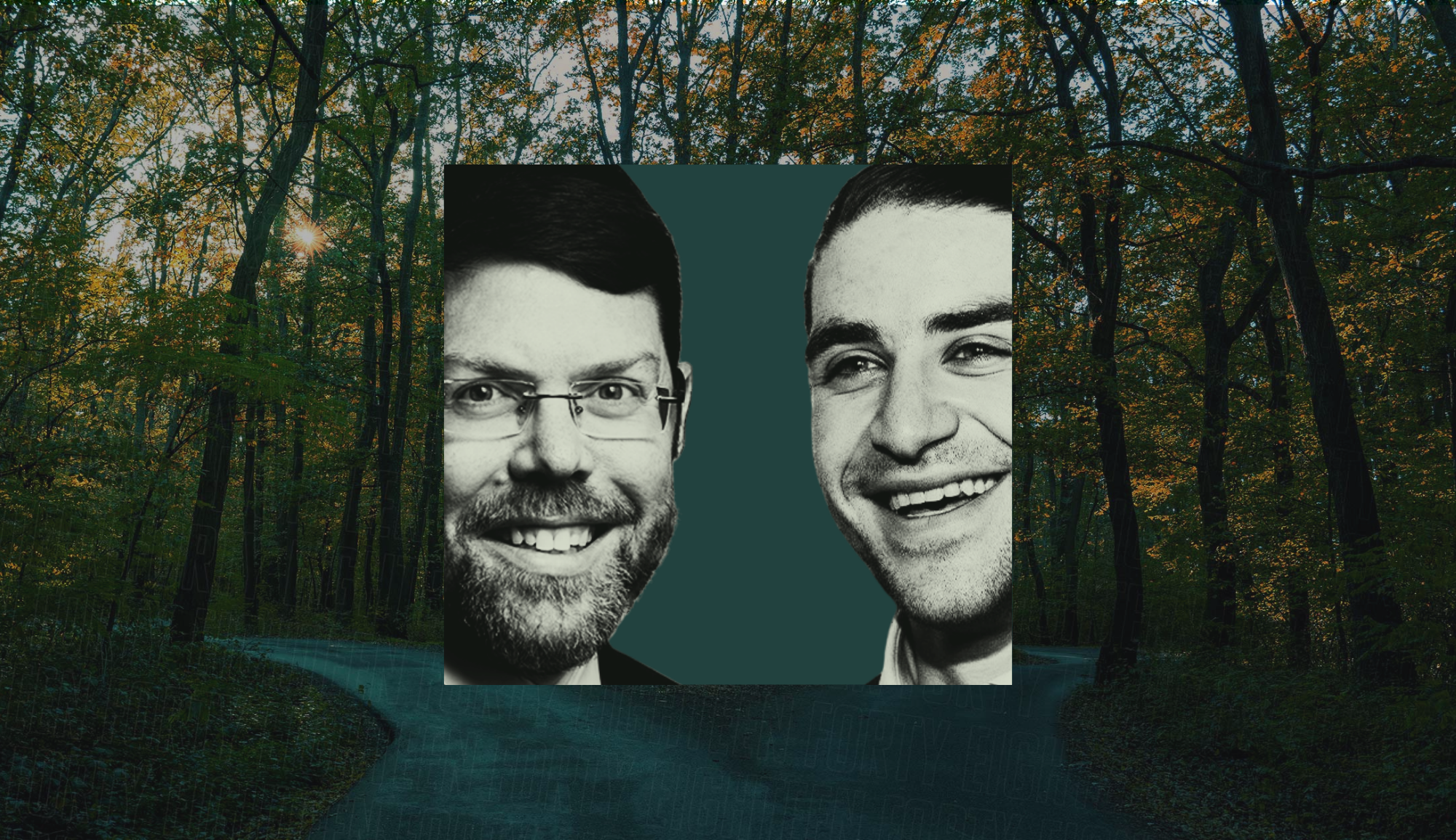
David Magerman is an extraordinary philanthropist who has built schools, who has dedicated a tremendous amount to Jewish education and higher education, and over the past few years, his philanthropic work, which for a very long time was centered on the United States of America, has slowly begun shifting his. exclusive focus on building the bridge towards Israel, on being that bridge to help the next generation build their lives in Israel and build Jewish lives in Israel. Build deeply inspiring lives in Israel. And when I heard that his daughter, who has a fascinating story of her own and frankly is the center of this conversation, decided to make aliyah while studying on her gap year in Israel.
Didn’t wait for it to be finished, didn’t wait to finish college, but immediately made aliyah knowing her parents continue to live in the United States, but is going to be that bridge that is going to bring her family and her slice of the Jewish people to continue their story in Israel, this was something that everybody needs to listen to because I believe that is the moment that this next generation is going to create. It’s already started, it is already unfolding, but the next generation of serving as a bridge towards building the land of Israel, the state of Israel, the people of Israel, to joining your fate with the collective body of the Jewish people of Amcha Yisrael, Knesset Yisrael, of saying my future lies with the Jews who have fully realized that promise that God made to Abraham where our future is going to be in the land of Israel, it’s going to be a redemptive future, a joyful future, a peaceful, safe future. And we discuss why she made this choice, how she made this choice, some of the concerns. This is an extraordinary family, aside from the fact that there is quite a bit of public attention anytime that there is a major philanthropist and now shifting his work into the land of Israel.
But this is an incredible family that has navigated religious differences, religious change, and I am so excited to introduce our conversation with David Magerman and his daughter Sydney about when a child makes aliyah.
So I want to rewind the clock a little bit before your gap year in Israel, before October 7th, really the world that you were getting ready to inhabit. And I wanted to begin with your father because he obviously has memories that date back even further. But your father was not just a private citizen and your average individual.
David, you have dedicated a tremendous amount of philanthropic dollars to the Jewish community in the United States, to build up schools, to build up synagogues, to build up educational programming for the Jewish community. And when you were raising your children, where did you assume they would be living? What kind of community did you hope they would join?
David Magerman: Well, that’s very much a moving target. Certainly when I started doing my work in American Jewish education back in 2009, 2010, we were still on a journey as a family from Conservative Judaism to Orthodox Judaism and each of us going at a different pace, with a different goal of an outcome. Initially I was happy to have my kids in Jewish day school.
At the time it was Conservative Jewish day school, I was working with the Orthodox community but I was very happy to have them going on that journey through the community day school system, leading to presumably an American secular college with Judaism, Torah in their lives. But as I became more observant and frankly more educated into what it meant to be a Torah observant Jew in the world today, and as I got to understand more about what was going on in America with respect to Judaism and culture in general in America versus Israel, over the course of the 2010s leading to early 2020, I was definitely messaging for myself and for my kids that I saw the best future for all Jews, including us, being a life in Israel.
David Bashevkin: And this is pre-October 7th still? Yes. I’m curious if you could just elaborate on that.
Pre-October 7th, you came from, let’s say a traditional Conservative home, you’re slowly moving into observance which is its own fascinating kind of evolution within a family. I’m curious, what was it about Israel that you saw was more sustainable for Jewish life? I mean, surely in America so much of your efforts and investments were to lift up Jewish life in America, and we have a wondrous generation, the school selections that we have, the institutions that we have. What was the switch exactly, if you could get a little more precise?
David Magerman: So first of all, I don’t think we have a particularly good situation in America with anything related to Jewish life. It’s extremely awkward, expensive, not self-sustaining, and greatly in conflict with society.
So different communities solving that problem different ways between Lakewood and Teaneck and the out-of-town communities and then the pluralistic communities, there’s a lot of different solutions, none of them particularly adequate because it’s a structural problem. But I would divide it up into two non-overlapping pieces. One question you ask is why do I think that life in America for Jews is becoming becoming less sustainable and less livable. The other question was why do I see Israel as the appropriate outcome? To me, those are two completely independent issues.
Even if America were thriving as a home for Jews, it’s still clear that from a messianic perspective, from a Torah perspective, from a Chasidic perspective, that the only place we should be is Israel and we should be there in five seconds if possible. To me, that’s like as I’ve been learning more and more Torah and getting deeper into my understanding of Chasidut and the meaning of life and the meaning of the world, it’s just clear to me that in a vacuum, we should all be in Israel as Jews. But on the first question, since the late 2010s, as I started getting involved in some political issues related to the Trump administration and the dysfunction in the US government and the police state and things like that, I started to understand that even not even thinking about Jews, just thinking about democracy and freedom and society, America is a failing empire in my opinion for all people, not just for Jews. But as the rule of law breaks down, the rule of law is the only thing that protects minority groups like Jews and as the rule of law breaks down, what we’ve come to depend on as security for Jews becomes undermined.
It’s not a reason we should go to Israel ab initio because we should be in Israel. It’s our homeland. But at the same time, the urgency for me switching tracks and pivoting from supporting Jewish life in America to putting all my resources into supporting life in Israel, the impetus for that is because of the disintegration of the rule of law and societal structure in America.
David Bashevkin: That is actually a perfect segue, believe it or not, to bring in Sydney because something tells me that the reason why is less political.
She wasn’t running a foundation, she wasn’t privy to the same. And Sydney, you were I assume alive as your family is evolving religiously and you finally find a spot, a community, you go to a high school, you develop friendships. Tell me a little bit about the way the religious evolution had you thinking, if at all, about your own future, about the future possibility of Israel or America as your family is changing. Was it easy for you to change as well?
Sydney Magerman: I think there are multiple pieces that one, we weren’t always moving together.
It was very clear that my dad was getting religious, sometimes my brothers were a little bit more and no one was forced to do that. You didn’t have to, you could join if you wanted to and some of us did, some of us didn’t and also it was determined based on age. My sister was very young when it started. If you’re like a baby, what’s going to happen? And it was very clear that my mom wasn’t going to, but I do remember a lot of my childhood sitting with my dad in shul, in Orthodox shul actually, and sitting through all of Rosh Hashanah davening.
I was his little partner until then I got too old and had to go over the mechitza. It’s a little sad. And I mean at that age I couldn’t imagine living in Israel either. I didn’t get to go to Israel until I was 11 and it was very much like everyone had their own personal journey.
And for me, it became clear in elementary school when I started to defy some of the things that my conservative school wanted me to do that I wasn’t comfortable doing. They wanted me to read from Torah and lead the prayers and I just wasn’t comfortable with that. There were some things that I had to do for the school to allow me to be there, but I didn’t have to do as much and I was clear to I think my family that I was going in a different direction and I was very excited to switch to a modern orthodox middle school. I think that’s kind of where my journey started.
At that point, I wasn’t shomer Shabbat, but I wasn’t shomer everything and I was still learning and it was really helpful when the school would teach you things. So I remember distinctively in ninth grade when they had like a big learning where they disrupted normal classes and taught us about tzniut. The head of Judaic studies taught it to us and that really imprinted on me. And then that following summer going on summer programs like Give West, NCSY does that, really pushed me in directions where seeing what people do in their own time, not when they’re in school and following rules, but what are they choosing to do? To be around people where it eventually became that in my modern orthodox school I was one of the more religious people, but I didn’t know as much.
And so going on programs like that where I was the least religious, it was really empowering. It really pushes you and I really enjoyed that. So as time went on in high school, I felt like I was growing out of the modern orthodox high school and looking for something more, which is why I sought out a seminary as difficult as MMY because I wanted something to push me and allow me to find all of what I was looking for. I had a lot of gaps in my halachic knowledge because I wasn’t taught at a young age how to say brachot on food, how to tie my shoes properly.
There were a lot of just minute things that normal people who are frum from birth don’t think about. And so I was really interested in just discovering those halachot and really connecting with them. And I really got to accomplish that last year and still do and I feel like that’s how my life has changed. And I know that everyone in my family who is religious now is a different level and we all have different ways of connecting to it.
So I wouldn’t say we’re all at the same level, we’re kind of all over the place.
David Bashevkin: That’s the best kind of family and I find that so beautiful and genuinely so joyful. I’m curious in 12th grade it’s such a fascinating experience. You’re more passionate because you kind of came to it later in life.
So you have this excitement but your knowledge level is a little bit lower. Help me understand when you’re at that point, when you’re looking towards America before you go to Israel, what communities in America were you kind of wondering where you would build your life? At that point, were you thinking that you’re going to continue your life in the states because for a lot of people, especially when they come to an orthodox community later in life, they want the intensity. They’ll go maybe to a more Yeshivah oriented community, they’ll kind of maybe go to a more black hat community. I’m curious if you were thinking in those terms about American Judaism.
Sydney Magerman: I think it didn’t start until the end of 11th grade, maybe 12th grade where I started to envision an idea maybe of staying in Israel, but it wasn’t certain. I was still applying to American colleges. And I think as I was raised in the suburbs, I really liked that and especially visiting my brother in the city, I knew that that’s not what I wanted, especially when I was visiting colleges, I knew that that’s not what I wanted and I committed to Brandeis, which is a very small college in the standards and but still Jewish but very liberal so it was an interesting mix. I didn’t see myself going to the Five Towns or Teaneck.
I never felt like I fit in with the Yeshivish crowd. I wanted the modern Orthodox, the more like closely related to like Dati Leumi. So that’s how I always felt because I came from a conservative background, I also felt like I could relate to like a spectrum. I’d never liked being put in a box.
And so that’s how I always felt with the Yeshivish community, but I didn’t know so much. Like my extent was knowing people from NCSY, but even my NCSY chapter was like Maryland and Philadelphia, so still out of town.
David Bashevkin: David, I mean you were operating at a pretty high level in the American Jewish community. I believe you were very involved in Penn during some of its major major issues.
It was very public when you pulled a lot of your investment and gift to Penn. I’m curious not from your family perspective, but in the philanthropic world that you were inhabiting, how did your colleagues, your friends, other foundation heads who you’re coordinating giving with, how did they react to your new perspective on just like where we’re headed? Did you try to plead with them? Did you try to make the case, or were they just like Magerman is crazy, let’s not even bother with this guy anymore. How did your colleagues in the Jewish philanthropic world kind of react to your awakening?
David Magerman: As I got more decided about my feelings about the lack of support for Jewish life as it was developing in America and the need to invest in Israel, I started talking to all of my contacts, usually it’s the development director, sometimes the head of an organization, and I would meet with them and share my perspective on why I needed everything I was doing to have an Israel component to it. I pushed Ari Berman at YU to be thinking about creating programs in Israel that would allow the gap year students who were going to YU to stay in Israel and to study at YU in Israel.
I was talking to NCSY about being Israel focused. I was talking to the OU about having JLIC move all its programs to Israel. And actually I was the impetus behind blowing out the growth of JLIC in Israel because I told the organizers of the program that I was no longer going to be supporting or increasing my support for JLIC in America and I wanted to cut back at Penn and other places, but I wanted to increase the programming in Israel. And this was before October 7th.
This was aimed towards the understanding that I got from when my boys went to Yeshivah in Israel in their gap year, and them and some of their friends, they wanted to stay in Israel. By the time you get to the gap year it’s too late. My younger son Zachary was already accepted to University of Pennsylvania. Here he had his life mapped out.
His their friends were also accepted to American universities. And to decide, based on a religious experience as strong and powerful as it is being in Israel, to decide to derail the last eight years of planning, all the investment your parents made into a life they envisioned for you, it’s a hard decision to make. And so I wanted to see how I could impact that decision making earlier in the process and make it a more obvious choice for students that were already doing gap years to plan or consider staying in Israel after their gap year and then having a clear path for what that would look like for them if they did that.
David Bashevkin: So that’s actually a really perfect segue for Sydney to kind of take us into the really the nuts and bolts of what it is like to make Aliyah when your family is living in the states.
This is a model that like I think should become more and more common. It is harder and harder for a family when you’re already, if it’s hard for a high school student who’s already planned their future, for a family that already has roots in the states, it’s not impossible but it’s very challenging for families. And yet I look at our generation as almost like the ushers, the stewards who should be pointing to the chairs in Israel for people to. To build thriving lives in the land of Israel.
Sydney, you take a gap year after finding yourself going through originally a community day school and then you go to a classic Modern Orthodox school. You get accepted to a gold standard seminary. Congratulations. MMY is a gold standard, not just because my sister teaches there.
It really is a gold standard seminary. But I want you to take me to the point of where you start thinking seriously about formally making aliyah. You’re having a great year in Israel. You’re studying.
You’re learning Torah. When does it dawn on you that, you know what, I don’t just want to study here for a year, I don’t want to take a gap year, I don’t want to just do college here, I want to build my life here? When does that dawn on you?
Sydney Magerman: Every time I’ve been to Israel, which is not that many times up until a few years ago, I felt this pull. And I think there’s no way to describe it unless you’ve felt it. You feel the second you land, you’re home.
You feel comfortable. I’ve never felt safer anywhere, which is ironic, but you just feel like everyone around you is there for you. And I’ve felt this on multiple occasions. So when I returned for seminary, I immediately felt, okay, it’s done.
Throw my other plan out the window. But I was waiting to be really sure. I didn’t want to freak my parents out too much. But my dad knew.
So Sukkot, my family came to Israel, so I spent Sukkot with them. And after that I was like, okay, we can start the process, which is pretty early on in the seminary year. But I was like, why wait? There’s no point in waiting. I’m ready now.
I’m already here. What’s the point in going back and then coming, making aliyah? I’m here already. So let’s get the stuff together. So we did.
And I made aliyah in February last year.
David Bashevkin: During your first year in Israel? Yeah. Which is absolutely remarkable. So let’s go back to that initial conversation that took place after Sukkot.
You intimated that your father already knew. I assume that that is because different parents have different feelings about their children making aliyah. Different parents have different feelings about their children being away from home. It’s harder on some parents than others.
In that initial conversation, were you worried about a specific family member? How did that conversation actually go when you shared with your family that you plan on staying?
Sydney Magerman: I believe I shared it with my dad first. And I think we all know that some parents have more influences on some children more than others. And I think he talked it up a lot and that made me really excited about it. And then once I discovered it for myself.
But I wanted to make sure when I was making this decision that it was for me. I wasn’t just trying to have him live vicariously through me. I was trying to do it for myself. But I was really hesitant to tell my mom because I was concerned at what she would say.
My mom is not religious and in the same line does not feel the same connection that we do to Israel. And she’s a very big advocate for the American college experience. And my brother backed her up on that, my oldest brother, which was hard for me. As he saw a lot of his friends make aliyah after they went to college.
But the reason was because he met them in college. So obviously they didn’t make aliyah before college. But as the years have gone on, he’s much older than I am, more people have been making aliyah before college. And I was told also that no matter what my parents would support me.
And so the second that my mom told me that she doesn’t agree with me, she doesn’t love the idea, but she will no matter what support my decision and be there to hold my hand, too. I was like, okay, then I can do it. Because you can’t do this by yourself. You need to have people around you, physically or over the phone.
Because I wouldn’t be able to do this if half my family hated me now. That wouldn’t work.
David Bashevkin: Correct. So David, maybe you could talk about this a little bit more.
You know the behind the scenes more than a mother is going to share with her daughter. What was the conversations between you and your wife like when Sydney first told you that she plans on making aliyah? Were you almost like blame, like look, this is your meshugas that is coming to roost? How did you make sure that Sydney’s decision would in fact yield everyone’s support, even if it wasn’t everyone’s idea?
David Magerman: It goes back to the whole religious journey that Deborah and I have always agreed. We both have different perspectives on religion, on God, on the world, on Judaism, on observance, but we respect each other. And we try to show our kids that we respect each other even when we disagree on things.
And that they, as Sydney pointed out, we’ve given them the choice of which path to follow. The one criterion is that they have to make thoughtful decisions. We want them to think through what they’re doing, not be flippant, not be irresponsible, not be ungrounded. And that historically through our raising of all of our kids, as long as they’ve made decisions well researched based on a thoughtful process, even if we disagree with their choices, we will support them.
And we’ll try to guide them through it and make them aware if we see pitfalls developing. But we try to support them because if we forbid them to do something, they’re going to want to do it more. And if we force them to do something, it will probably be a mistake simply because we forced it. Even if it was the right choice in a vacuum.
So making… Making the wrong decision willfully with thought is probably a better path to go on than making the right decision by force. And I think that in talking to Devorah about this, we had that philosophy that we wanted to make sure Sydney was doing this for herself not for me. And I think Sydney was concerned about that, Devorah and I were concerned about that.
She shouldn’t do it because she thinks somehow she’s pleasing me, as she said I was living vicariously through her. But once she made it clear that she was doing this for herself, there was no reason not to support her even if, not that I thought it would be, even if it turned out to be the wrong choice, it was a choice she wanted to make and it was thoughtful. We would support her through the process and if anything went wrong, we would support her in dealing with the problems.
David Bashevkin: Sydney, when I was your age, if I remember correctly, I don’t think I was yet making my own dentist appointments.
I think my parents were still dealing with insurance and all of these things. Take me through the actual logistics. If somebody were to want to make aliyah, somebody is listening to this now and they’re thinking where is my future, where does it lie? I don’t want to go back on the merry-go-round of the Five Towns, of Englewood, Boca, we have lovely communities but that’s not where I’m looking to build my life. I want to build my life in the Land of Israel and I want to formally make aliyah.
Just generally, how would you grade the process that you went through?
Sydney Magerman: It wasn’t so bad. I think everyone, it’s a spectrum. It also is different from what country you come from. I know some people who made aliyah from the UK and it’s much more difficult because you have to do it by yourself, not like through Nefesh B’Nefesh, which makes it more difficult.
I’d say for me it was an A, but I know that is not the case for everyone, not everyone has as much support. I also only know the perspective from making aliyah from within Israel, which is a little bit different than making aliyah from outside of Israel. Nefesh B’Nefesh has open houses to help you fill out forms and things like that, which I found very helpful. And also because I went to MMY, they had implemented a rakezet for making aliyah and she actually part-time worked for Nefesh B’Nefesh so it was a really great connection.
She could walk you through a lot of the application which was really helpful. We even had a whole time where even if you open an application, you’re not tied to anything, so anyone who was interested opened an application all together. She made sure we were doing it correctly. It was just a really great way to see how many people wanted to make aliyah and to see that you’re not alone and I went to her a lot when I had questions and you have a pre-aliyah advisor also that can walk you through different steps.
It wasn’t so bad. There are always some bumps along the way, a part of the fact that my birth certificate was not in Israel, which could be problematic and has to get an apostille and not, I wasn’t born in Pennsylvania so it makes it more complicated. There are always things and even the day of there are issues when you’re making aliyah but nothing they can’t handle. I would say it went really well.
I do think that I had a lot of support, but what was the most daunting I think for me, where this is different from everything else I’ve ever done is that my parents couldn’t help me directly. They had no idea. With everything else, opening a bank account, answering the phone for a stranger, they could walk me through what to do and I could be scared but I would do it. This they had absolutely no idea.
They could try their best, but they could just try to point me in the direction of the people who knew, but they couldn’t help me. If anything now I could help them, which is a little bit different.
David Bashevkin: What really makes you unique is that your process, while it is for you and solely your decision, it yields learning information that your family’s foundation, which is incredibly generous philanthropically and really focusing right now, has taken all of its investment from the American scene and is now trying to help Israel flourish with this next generation of olim. I want to hear from each of you.
What did you learn specifically from Sydney’s process of aliyah of what pipelines, mechanisms, programs are needed in order to really help accelerate the flourishing of this next generation’s lives in Israel? We’ve had so many efforts thank God and we should really give a full-throated gratitude to our former 18Forty guests at Nefesh B’Nefesh, they do fantastic work. But we all know that that’s not the end of it, meaning Nefesh B’Nefesh has been around for years and years and I am still here in exile in Teaneck with so many other families and we still need better and more pipelines. I’m curious what each of you learned in terms of what’s really necessary to move the needle in terms of the American Jewish connection to living in Israel? What do you think needs to be improved upon? What do you think needs to change? Let’s start with Sydney and then we’ll go to Dad.
Sydney Magerman: I’m not a big expert in people my dad’s age or your age, but I’d say for people my age, targeting them and showing them information.
I think the problem is some of the programs are there, we need I think the problem is some of the programs are there, we need more programs, but there’s a disconnect between the people and knowing what’s out there. People don’t know where to look for the information, they don’t even know these programs exist. So we need to get similar to how colleges visit high schools or even seminaries and yeshivas, YU and Touro visit. It’s really daunting when the Israeli universities visit.
That doesn’t always work. They visited my school on Zoom, no one came. The point is that we need a hub of all the information for olim, which has all the instructions, similar to how Nefesh B’Nefesh has all the instructions for how to make aliyah and what to do post-aliyah. You need instructions for what colleges, what options are there in English or a hybrid program or a mechinah program for olim in Israel and how can I look into that? When are there open days or how do I apply to them? Just need that connection.
I think that was lost in some ways. I’ve shown a lot of people different options and the only reason one of my closest friends is in this program is because I found it and she was like, oh, that exists? I didn’t know that existed. And ended up applying to it and going. People don’t know these programs exist and if they did, I think they’d be a lot bigger than they are.
David Bashevkin: David, for you, having a daughter who went through the aliyah process, now you’re obviously able to give it your utmost for your own daughter and when she’s going to make aliyah to clear, to the best of your ability, any impediments. But what needs to take place communally on a higher level, not just Sydney’s journey, but what are you thinking about, what are the improvements that are necessary right now that you are looking at in order to revolutionize the aliyah experience and decision?
David Magerman: So it’s funny that what I’ve seen through this process for Sydney is that so many of the things that I did in a vacuum for the Jewish people, for Jewish community, have benefited Sydney accidentally. I didn’t move JLIC to universities in Israel for Sydney, but she has been benefiting before, during, and after her enrollment in the school by having the JLIC couples that exist on Bar-Ilan‘s campus. I didn’t create the hybrid Hebrew immersion program at the universities for Sydney.
I had no idea that she was going to end up enrolling in it. There are things we’ve been doing as a foundation because they need to be done and they’re in place and developed already so Sydney can benefit from them. And when she talked about the idea of a hub, we had been building a platform called The Future Is Calling that is designed to be the Masa for universities, where it’ll be a clearinghouse for information about all the universities in Israel. It’s a one-stop shop for everything you need to know about how to enroll, what the programs are, what the restrictions are, what campus life is like, and so on.
And so those are things we’re doing, but they’re expensive and they’re awkward. A lot of the ways in which Sydney was not well prepared was a lost opportunity because she went to Jewish day school for 13 years and the structural problem in America, which we need to fix, is that the ideal, the outcome that the parents and therefore the schools and the teachers and the guidance counselors and everyone in the whole Jewish communal pipeline, the outcomes they’re looking for is Harvard or Yale. The goal is to get into the best American university and to stay in America and we only want to send them to gap year programs that are not going to push them for aliyah. This has been the historical process and objective system and I think that that is gradually changing from the most important audience, which is the parents, and to some degree the students, because students make life decisions much earlier than they did when I was growing up.
You have high school students, even middle school students, telling their parents where they want to go to school and telling the schools what they want from them. But a school board and a school administration is not going to create an Israel track in their school unless parents demand it. Hebrew language instruction in Jewish day school in America is about, you learn more Aramaic than you learn spoken Hebrew and you learn how to read, translate an ancient Hebrew text more than you learn how to order food at a restaurant and we need to change that objective function so that the schools understand that there is a track in their school, maybe even the primary track, where the ideal outcome is aliyah, army, sherut leumi, and university in that order. And then you can prepare those kids and the families from elementary school, middle school, high school, very early, so that going into the gap year, they’re completely armed with all the information they need.
They’re not going into it the way Sydney did with her parents not knowing what to do and her not knowing what to do and needing expensive guidance systems built up in Israel. We have an enormous workforce in America that have complete access to all these kids and families. It’s called the Jewish day school system and if we could commandeer that and we could steer it with parents’ permission to do more of that work, we could have a generation of kids that are primed and ready to just make aliyah hit the ground running and be completely functional in Israel.
David Bashevkin: That vision is astounding and may we see it completely unfold in our lifetime.
This magisterial movement called the day school movement is still relatively untapped. I feel like we just finished phase one. of the day school system, which is having strong schools that kids enjoy attending and they walk out with a Jewish education from. But I want to touch on one issue that may be sensitive but you may be uniquely positioned, you and Sidney, to discuss.
For many parents, the entire gap year experience in many pockets within the Orthodox world is really meant to solidify their kids’ commitment and to really say that you’re going to, we used to use the term to flip out. They would get much more religious, much more passionate, and very often the communities that they would then choose to be a part of were more yeshiva oriented communities. Then they’re going to move to a place which is more revolves around the yeshiva, maybe not a Lakewood or a Baltimore or a Passaic in one of those places. I’m curious how, if at all, you’re working with some of the religious concerns of parents within the Orthodox orbit? The concern that the Yiddishkeit, the Jewish practice that I could feel most confident in, that’s going to continue, is kind of to go back on the merry-go-round yeshiva day school.
They’ll flip out a little bit, they’ll have a couple kids who are a little bit less frum, they’ll go back on the merry-go-round. How do you address the fact that part of the reason why people are concerned to make aliyah is actually religious?
David Magerman: That was actually the original reason why I pivoted my foundation to Israel, a few years before October 7th, was because I had met people who felt that making aliyah, especially with younger kids in the elementary school and middle school and high school ages, that they were actually harming their children’s Jewish education by moving to Israel. And I’d seen anecdotes where that was the case. And I wanted to understand what was the impediment, what was the problem, why did that happen, and what could we do to fix it.
And so my foundation has been working for a few years now with the municipalities, with the state government, with other foundations, and with principals at schools, trying to help them understand how to better serve olim and how to make the transition for Anglo olim more seamless. But there’s also an information gap. We brought Jewish day school guidance counselors to Israel to visit the universities. Some of the guidance counselors who’d worked in Jewish day schools for more than a decade had never been to Israel.
Many of them had never been to any Israeli universities, to their campuses. They had no idea what the opportunities were and they were astounded at how mature and developed the schools were in Israel and where they would see a student and know, this is a kid that should go to Michigan, this is a kid that could go to WashU, or this is a kid that should go to Maryland, they now said, I know this is a kid that should go to Tel Aviv University. This is a kid that could go to Ben-Gurion University. By having the guidance counselors learn the university system in Israel, they’re better equipped to guide the students and make them enthusiastic and also guide the parents.
But we’re also working with the universities in Israel to increase the religious programming on their campuses. We’re helping JCT, the Jerusalem College of Technology, Makhon Tal and Makhon Lev. We’re helping them mature their program to be better recipients, trying to make them the Yeshiva University of the world in Israel. And we’re trying to bring more religious programs, beit midrash programs, to the universities that are now secular, Bar-Ilan, Tel Aviv, Ben-Gurion.
Although in the past some of them have been resistant, they now all are desperate to get these future Dati Leumi American students to go to their universities because they recognize these are the best and brightest future leaders of the country and they want them at their university. And the reason they’re coming back to YU and not staying in Israel, and the reason why they’re going back to America, is because the religious life component on these secular Israeli campuses is not up to snuff. It’s not developed enough to support a full yeshivish lifestyle, and they want to help create that. So we’re working with the universities to help bolster that, to make that a better destination for religious families to send their children.
And we’re working with the gap year programs. They’re letting us know what we need to do to make it viable for them to recommend secular universities in Israel for their students. And it’s really just a matter of a combination of information flow and incentive systems. If American parents want their kids to go to Israel, the entire system will steer itself to make that a more likely reality.
If the secular universities in Israel want these religious students, they will bend over backwards and change and adapt themselves to support that lifestyle. And frankly, the other piece of it is America is making it really easy because the indoctrination that happens on American college campuses of all sorts of religious kids, kids of all different stripes, the more that we can educate parents about what’s going to happen to their kids in a negative way by sending their kids to American universities, it can make the value of what they’re going to get in Israeli universities shine even brighter. So we just need to work on all the pieces together and push everyone in the same direction of figuring out what outcome do I want for my Jewish children and then once you realize what the best way to get there is, then going backwards in time and figuring out what does each step need to do better.
David Bashevkin: That is really extraordinary work and not just for philanthropists, but parents are a vital part of this mechanism of shaping the demand of what schools and the school experience is responding to.
I want to go back to Sydney and talk about what I just mentioned in terms of the religious culture in Israel and how you acclimated yourself to a new environment. You did two things at the same time, both of which are giant transitions religiously. Number one is you stepped out of your classical diaspora pipeline where you’re in institutions in elementary school and in high school, and then you spend a gap year where your Yiddishkeit is being handed to you through institutions. And now you left seminary and you’re quite a bit more independent and on your own.
What differences, if at all, have you noticed or you had to get adjusted to between the religious cultural universe of the Dati Leumi world in Israel of young people your age who plan on living in Israel versus the Orthodox Judaism that you are familiar with from the states and even in MMY, which is in Israel but has mostly girls from the diaspora? What are the differences, if any, that you’ve noticed that you’ve had to adjust to now that you’re actually living your life in Israel?
Sydney Magerman: I had some very different transitions. I thought Kohelet, which is where I went to high school, I thought it was a very standard modern Orthodox, but it’s on the less religious of the scale. So going to MMY, which is the most religious but still modern seminary or one of the most, was a very big transition, which was also very difficult, but making Aliyah during that was actually a very warm community because it’s not as commonly known, but I think it’s getting more commonly known that MMY is a very Zionistic seminary, very supportive of it. And you had mentioned the issues of flipping out and everything and MMY is a great place to flip out.
People are always talking about it, and my year they decided they’re going to coin a new phrase called zipping out, which means that you’re getting all Zionist and you’re making Aliyah.
David Bashevkin: Zipping out. I love it. Zipping out.
Sydney Magerman: So they decided that because everyone wanted to stay and that I think made it easier for me to see that I wasn’t alone. There were about 20 girls from my seminary year in Sherut, either made Aliyah before or my after, a good maybe 10 Shana Bet that made Aliyah or were in the process that will hopefully start Sherut or college next year. So it’s a really big growing community, and so I think that made it easier. And then moving to college, I specifically chose Bar-Ilan for the biology program that I’m in.
But what was nice about it is that Bar-Ilan has some of the most religious Jews out of all the secular universities in Israel, and they have a Midrasha and a Kollel where you can take classes for credit and everyone who’s Jewish is required to take 20 credits of Jewish studies in order to get your degree. So you can take it through the Jewish studies which is coed, or you can take it through the Midrasha or the Kollel. I didn’t have time last semester, but this semester hopefully I will have time to take classes through there and my roommate has been taking a lot. And I think that has been also amazing of it’s a community of religious people on campus you can see it.
And even though there are people who aren’t religious like we are, like we are Americans, whereas religiosity I think first we judge it based on the outside. But in Israel it’s completely different. It’s on the inside. People in my building might not be dressing tzniutly or covering their hair or covering it somewhat, but Mashiach is on their door and the Rebbe is all over their house.
They’re not taking the elevator on Shabbat, they only take the Shabbat elevator. They’ll only have Shabbat meals, but they might not do everything. So it’s a very different level that Judaism and Hashem are much bigger part of secular or traditional people’s lives, the spectrum is very different and I’ve felt that a lot here. So I think that also it’s made the transition easier that it’s not weird that I’m religious.
My level of religiousness doesn’t have to fit into a box like I felt it had to be wherever I was. Yes, MMY is a very nice large spectrum, so it wasn’t as hard. Kohelet was a little bit of a different box, but I think going back to America, you feel like in every community you have to fit into that box. But here, it’s like a giant forest of all these different types of religiousness that it doesn’t matter.
We all really value our connection with Hashem and that’s the most important thing. And I don’t think you can find that anywhere else. The fact that there are secular teachers that have PhDs in these things and teaching people who I know that are trying to get doctorates in Jewish history and Jewish studies and they really actually value their opinion that these people, they might not seem religious from the outside, but on the inside they are. On the inside their connection to Torah and Hashem are way stronger than most of the what we consider Modern Orthodox people in America are.
And I think that’s what changes, is that the order of things are different here. And in my opinion the inside is more important and I think everyone agrees with that, but we’re all quick to judge from the outside.
David Bashevkin: I am incredibly moved by that and really I think your generation and what you are doing is ushering in the future of the Jewish people. people and Yiddishkeit and is something that should be broadcast from the rooftops for parents and teenagers to allow themselves to kind of open their eyes to the possibilities of what their life can be in front of them.
I’m curious how you deal now with homesickness if ever, especially you know, a war broke out in Iran, the world’s eyes are still on Israel. I want to hear from each of you kind of how you manage the fact that at the end of the day you are in a different country and I wanted to maybe begin with David especially in how you kind of deal and manage your wife’s expectation, Deborah. You have somebody who wasn’t totally on board and now you know the world’s attention is on Israel, there is a lot of vulnerability and concern you would understand why a parent would just be like I can’t really handle this anymore. From your seat as you know the father of a family as a husband, how do you manage that within a family and make sure everybody you know is able to even sleep at night?
David Magerman: Well first of all I mean Deborah is the president and general manager of Team Sydney.
It’s all about Team Sydney for her and wherever she is in the world Deborah’s connected to her and supports her and you know time zones can be challenging and especially Shabbat but whenever Sydney needs us we’re available. I spend a lot of time in Israel she’s kind of sick of me at times when I’m there so much and I don’t think Sydney is home so I get the sense it’s not homesickness that Sydney has she misses her family and the connection to people. When she was going through the aliyah process I was on FaceTime with her it was three in the morning in America and it was you know she had an early morning appointment at the aliyah office but I was with her on FaceTime so you know with digital connections you can find a way to be with people and we spend a lot of time especially I wake up early in the morning I know when Sydney’s breaks are she knows when my breaks are so we spend a lot of time communicating and we make plans to be in Israel but you know Sydney’s home so I don’t feel like she’s got the homesickness it’s just really a matter of each of us you know me Deborah our three other kids making an effort to stay connected both by visiting and by being available by communicating and reaching out and as long as we all do that I think we’re still together we’re still a family and as more of us make the transition to being in Israel God willing the ones in America will feel homesick. I mean I certainly feel homesick not being in Israel now but hopefully we’ll all end up feeling that way.
David Bashevkin: God willing. Sydney, tell me a little bit whether you call it homesickness or miss are there specific moments where you miss your family where you feel like oh my gosh you feel overwhelmed by the transition that you’ve gone through? And how do you kind of stay grounded? You seem so at peace and so at home. How do you stay grounded when those feelings if they do come up how do you stay grounded when they occur?
Sydney Magerman: I mean my parents help me a lot my siblings too and they share a lot of the same feelings a lot of the time they can relate but yeah my parents really help me and sometimes I feel like it’s a little bit as friends but they kind of bring me back down to earth which is really important like I don’t think I could do it without their support all of this. I don’t think it’s homesickness and thank God my family comes for most chaggim which makes it a lot more bearable.
I would really like to not have to leave I just more want to see them especially when there’s some of my siblings who are not as great at communicating so it’s not always the same but whenever we’re reunited it’s like no time has passed. The relationships don’t go away my parents made it very clear when we were all kind of moving out of the house that we wanted to stay just as strong of a family that that was really important and I think accomplishing that it’s a very hard thing to do but it’s really important that we all stay connected no matter how different all of our lives are.
David Bashevkin: Sydney and David really your example of what you’ve set not only for your family but really for the Jewish people is so incredible and to be associated with kind of this transitional generation of American Jewry now realizing where our true home lies really on a very personal level I am so incredibly grateful for your efforts for your story and thank you so so much. I always wrap up my interviews with more rapid fire questions if you would indulge me my first question I’m always looking for great book recommendations do either of you have a book that kind of opened your eyes to either the beauty of life in Israel or the concerns about where American Jewry is headed? Did you ever read something an author who really kind of made it clear to you what the decision is in front of us?
Sydney Magerman: I mean I hope we have the same answer even though he’s no longer with us I think all of Rabbi Sacks’ books are still very applicable to this day I just finished Letter in the Scroll on Shabbat.
I know he would be proud of what’s going what’s continuing in Israel and I think a lot of what he says that Judaism really needs to be one nation. really powerful and I think people like us who have seen the spectrum really have our eyes open and can accept everyone around us but I think sometimes the extreme Orthodox and the Reform and Conservative can be so disconnected. And I hope that one day we can connect them all together and that’s really inspired me from Rabbi Sacks.
David Bashevkin: I mean that’s for certain what the Land of Israel is for.
It’s always has fascinated me the concept of mutual responsibility, what’s known as the Talmud as Arvus, which is every Jew is responsible for one another is revealed to the Jewish people on the dawn of them entering the Land of Israel. Land of Israel is what binds all Jews regardless of religious ideology or practice. It’s what binds us all together into one nation. Beautifully said.
David, is there a book that kind of opened your eyes to the acuteness and the urgency of this mission?
David Magerman: 100 percent, the Tanya. I’m on my third time through the Tanya with a third different translation, this one from Rabbi Steinsaltz, and the Tanya is described as the metaphysics of the spiritual world. It explains what drives us to be attracted to Israel, to Hashem, the drive to bring Mashiach and bring redemption. Everything about my life has been refined and focused from the understandings about what the world is here for, what we’re here for, what the world means from both my learnings from the Tanya and also reconciling that with my scientific background, my understanding of science and computers and mathematics.
I think that everyone who wants to understand how Judaism connects to them as human beings at some point needs to study directly or indirectly the teachings of the Alter Rebbe and Chassidus.
David Bashevkin: I love that answer. I did not see that coming. I don’t think Sydney did either, but I love both of your answers.
Sydney Magerman: I 100 percent knew that.
David Bashevkin: You knew it was coming. That’s beautiful. It’s what the ultimate motivation is not politics, it’s not safety, it is our soul, it’s who we are and our home is calling out to us.
My next question, I’m always curious if somebody gave you a great deal of money and allowed you to take a sabbatical with no responsibilities whatsoever, but you have to go back to school and write a PhD on any subject of your choice. What do you think the topic of your dissertation would be? What would you want to study? Let’s start with David.
David Magerman: Quantum physics. Quantum physics.
David Bashevkin: I love it. Sydney?
Sydney Magerman: If I wasn’t in science and biology, I’d probably be in if it wasn’t so terrible but it was really interesting I would like do something in math. I think that’d be pretty cool. I hate physics.
I don’t know what you’re talking about. But yeah, math is really interesting. It kind of breaks your brain but I think that’s like the good part sometimes.
David Bashevkin: It certainly broke my brain back in the day and I’ve avoided it since.
My final question, I’m always curious about people’s sleep schedules. What time do you go to sleep at night and what time do you wake up in the morning? Let’s start with Sydney this time.
Sydney Magerman: I mean right now it’s a little weird with the, you know, the lovely sirens that happen at night. So my brain kind of keeps me up because I’d rather stay up late and not be woke, you know, go to sleep at 10 and then woken up at 12:30 instead of just going to sleep at 12:30 in the first place.
I’m also on break right now regardless of the war, so that changes a little bit. It’s more like 12 to 9 at the moment. But when I actually have class it’s like 11:30 to 6:30.
David Bashevkin: That is a fine schedule.
David, what time do you go to sleep at night and what time do you wake up?
Sydney Magerman: This is terrible.
David Magerman: I have a bifurcated life because I daven hanetz, so I daven vatikin. So I wake up usually about 45 minutes before sunrise whenever it happens to be, and with daylight savings time shifting, I just went from waking up pretty early to now kind of sleeping in. So I’m waking up at 6:15 now but as of a week ago I was waking up at 5:15 and then 4:45 on Shabbos.
A lot of the time I spend with my wife is in the evening, we watch TV shows together, we hang out together before we go to sleep, so I go to sleep kind of late. So I tend to go to sleep around 11, 11:30 and then wake up maybe, you know, 45 minutes before sunrise.
David Bashevkin: That is not a lot of sleep. It’s making me tired just listening.
For a final message, you know we always do this series before Pesach and we end our Seder with Leshana Haba’ah B’Yerushalayim, that next year should be in Jerusalem. Let’s conclude our conversation from each of you with a parting message to our listeners in the States. What would you tell them to open their eyes up to the possibilities of building your life in Israel? What is the one message that you would say to people who are thinking about their future at this very moment? How would you make the case for Israel? Sydney?
Sydney Magerman: I’d say you have to seek it out. The things exist, you need to seek it out.
You cannot just sit down on the couch and watch things pass you by. If you want to be a part of the future you have to open your eyes and find the things that are out there, because they’re out there. The programs are there, people to help you make Aliyah, people to help you find doctors and different things that you’re confused with in a new world. But you can’t be afraid to be the first one or to start.
You have to just go out there. It’s not going to just happen. It’s not as simple, but it’s worth it.
David Bashevkin: Leshana Haba’ah B’Yerushalayim.
David, a parting message. David, a parting message for those thinking about a future in Israel.
David Magerman: It goes back to what I said before about our souls. When we still say kinos on Tisha B’av, we still say in Tachanun and in different parts of our ritual prayers, talk about the desolation of Jerusalem, it’s not a physical desecration we’re talking about.
You could have gold-plated tiles throughout the Kotel, we’re still in diaspora, we’re still in Galus, and we still need to be redeemed. And the only way we can do that is by recognizing that Israel, while it’s an amazing country, startup nation, a great economy, the shekel is strong, a brilliant people there, it is the spiritual center of the world for us. There’s no place in the world we can be Jews completely except for Israel. And as we see the revealed miracles of the last two and a half years and we see prophecy coming to life in front of us, we should wake ourselves up to the reality that we are both physical and spiritual, and we should physically be in Israel, but we have to also do what we can to be spiritually in Israel and to bring about the spiritual redemption in addition to the physical Medinat Yisrael redemption.
David Bashevkin: I could not agree more. Thank you so much David Magerman and Sydney Magerman for joining us today.
David Magerman: Thank you so much for having us.
David Bashevkin: It is very interesting the way God first introduces the Land of Israel to Avraham.
When God first approaches Avraham and tells him lech lecha, you’re going to go out from your land, from the place of your birth, from the house of your father to where you’re going to go, el ha’aretz asher areka, to the land that I will show you. And a question that I have surfaced previously and I’d like to return to is why doesn’t God actually say initially which land is he going to go to? Why is he being so coy, so to speak? You have kids going into a car on a long trip. Forget about asking when are we going to get there. Imagine you never tell the kids where there is.
We’re just going in a car ride, we’ll let you know when we get there, it’ll be a surprise. That is a risky endeavor. Why not tell Avraham lech lecha, go out me’artzecha umimoladet’cha umibeit avicha, go out from your land, from the place of your childbirth, from the house of your father, el, to the Land of Israel, or whatever you’re going to call it? Why does God specifically say el ha’aretz asher areka, to the land that I am going to show you? I had an explanation that I first heard from my teacher, mentor, and friend Rabbi Moshe Benevitz, which is really anchored and sourced in the writings of the Ishbitzer, the Mei HaShiloach, where he says such a beautiful explanation. God does not tell Avraham where he is going because, in fact, one of the names of Israel is el ha’aretz asher areka.
This is the name of Israel. Israel is referred to as the place that I will show you. And the reason why it is called this is because Israel cannot be described; it has to be experienced. What it means like to build your life with the Jewish people, what it means like to build a country, to build a place for the Jewish people to live out this promise is something that can only be shown, can only be experienced, and can never be fully described.
The Land of Israel is called the aretz asher areka, the land that I will show you, because it is a land that ultimately needs to be experienced exactly what Sydney mentioned in this conversation. And if you look really closely, I think this moment is so profound for the Jewish people of how we are going to strengthen the bridges and pipelines to the Land of Israel. And I think there is something very unique and very specific to what drove Sydney specifically to build her life in Israel, and she described it. She spoke about the box of American Judaism, the box of the denominations and the different lanes that we have in America, and that people, especially those who woke up post-October 7th and are looking for a vibrant Jewish life, are looking for a Jewish life that uplifts, that they can live with week to week, day to day, moment to moment, where they can feel the promise of their own Jewish identity reverberating through their very sense of self.
That future that I think we all want, for many, especially those who woke up after October 7th, the boxes of American Judaism, while great and wonderful, and there are so many different types and forms of community here, our future is in Israel. This awakening, if you are looking for where is that community that I can find and really be able to get in touch with what Judaism is all about? There are wonderful synagogues in America, there are wonderful educators and teachers in America. The only place where you will be able to imbibe it within the air, feeling that sense. of realizing the promise that we all carry is in the Land of Israel.
And I think for many people, especially those who were not raised within the Orthodox community, I think this is an incredible opportunity to build that future in the Land of Israel. I think there is a very different struggle that the Orthodox world is going to go through in order to figure out when and how communally and it’s already started in trickles but I think in droves how to build in Israel. American Judaism as David Magerman already mentioned is really genuinely not sustainable. Aside from the financial cost we are literally right now especially after the Michigan shooting in a synagogue where thank God nobody was killed but everyone was commenting afterwards now we need to pay for even more security and the cost of Jewish security.
There is a place that has a standing Jewish army that is dedicated to the protection of the Jewish people and that is in Israel. We are getting more and more signs that our future not because we need to run from America but because where does our future really lie? Where can we unlock the promises that we carry? That is undoubtedly in the Land of Israel. And we need to think of what are the actual pipelines that we can invest in in order to inch people closer to that question of where am I building the future of my life? I believe the place that we need to be building and we discussed this briefly in the conversation particularly within the Orthodox community but even in the non-Orthodox world is the gap year programs. Gap year programs which are that year that people study one year in the Orthodox community there are people who spend two years, three years studying in Israel in a host of different Yeshivas, seminaries and programs.
And they all do a phenomenal job. I think the one note that I would give nearly all of them though there are some doing a much more credible job than others is how is that year bringing people closer to actually establishing their lives or a very serious part of their life in the Land of Israel. One of the sad ironies that I have pointed out in the past when we discuss the gap year programs is the fact that in many gap years it is the year where students spend the most time being the most American the most diasporic the most divorced from the rest of Israeli society. And what I think we need in this very moment is a reimagination once we have so many kids who are already want-to and they go with their whole class most Yeshiva day schools send probably upwards of 90% of their class after high school to study Torah in the Land of Israel.
What could we do? What investments could be made so that experience is bringing the student body and the people who are spending that entire year a year that I also spent I spent close to two years in Israel but bringing them closer to the reality of actually building their lives in Israel. And I think this is the generation that is going to be the bridge generation. It is very interesting when God first describes the servitude in Egypt that the children of Avraham are going to have to suffer. The first time this is mentioned is in Parshat Lech Lecha which is the 15th chapter of Genesis and you can look at the 15th chapter 13th verse.
This is the first time where God actually describes the notion of Jewish persecution of Jewish discrimination that you should know he tells Avraham that your children are going to be slaves in Egypt for 400 years. And then God also promises that there is going to be a redemption the fourth generation v’dor revii that’s in the 16th verse the fourth generation is going to return. The Vilna Gaon asks a profound question. Why is the exile and the time in Egypt described as an amount of time 400 years but the redemption is described in terms of generations? The fourth generation is going to return.
And the Vilna Gaon answers a mystical theory of entropy in a way. The Vilna Gaon says the reason why the exile is written in terms of an amount of time and the redemption is written generationally in terms of an amount of fourth generation is because hakilkulum nitlim b’zman erosion difficulty the negativity is always contingent on time v’hatikunum t’luyim b’adam the healing the fixing the redemption is always in the hands of humanity. Time naturally is exilic. We only get a slice of time we don’t really understand the context of every moment.
consciousness where you only see one moment at a time you don’t know where your life is going or where it’s going to lead. This is the experience of exile itself. But generationally, when we think in terms of generations, when we think in terms of our ability to build meaning and everlasting meaning that continues family by family generation after generation, that is where we find redemption. Hatikkunim nitlim ba’adam.
The healing, the fixing, the redemption is always contingent on humanity. And I think there is something profound in that the original redemption is described as the redemption of the fourth generation. For me, that carries something very, very profound and it should carry something profound for a lot of American Jewry in particular. If you think about it, we are basically the fourth generation from the original influx of European Jewry after the Holocaust, after the decimation of European Jewry that came to American shores.
Those were the people who were the ages of my grandparents, they were the bridge generation. This was a generation who saw tremendous destruction, started from nothing, looking for how they’re going to build their lives, and then a generation came afterwards which is known as the baby boomers, who after this influx of European Jewry coming to American shores, this is going to be the big center of Jewish life going forward. Europe is finished. People came to America in droves.
And then my father’s generation was the first generation for many who went to college, who got graduate degrees, who kind of built a life in America based on the rules of the United States of America, taking advantage of the American dream. And the next generation, which is my generation, we grew up really taking full advantage, having parents who were American born and then took all of their opportunity and built lives of our own where we got to live lives basking in the optionality that American life offered. We can become whatever we want, we can build whatever we want, we can assimilate however we want. This exile was the first exile which was less about persecution and more about freedom, more about optionality.
Whatever you want to do, you can build it. And now the question is with our children. The fourth generation. What are they building? Are they rebuilding Torah in America? No, previous generations have done that.
Are they rebuilding a school system? No, the schools mostly exist. They’ve been dotted around, they need to be sustained, but they basically exist. What exactly are they building? What is the mission? What is the modus operandi of this generation emerging now in the United States of America? What is the mission that this fourth generation from the destruction of European Jewry to the flourishing of Judaism in America, what are they building? And I believe that it is this fourth generation that is the dor revi’i yashuvu henna. It’s the fourth generation that knows that optionality of I could do anything and be anything is a mirage.
It’s just another way to escape what you already are, which is a Jew. And your immutable Jewish identity which we all carry needs to be nurtured and nourished. And what I am saying is not just that the fourth generation is going to be the bridge so to speak from America to Israel, I think there is something even more profound of a transformation that is happening. And that is the same way that after the decimation of European Jewry, there was an influx of Yiddishkeit of sensibilities that transformed the landscape of the United States.
If you go to pre-1940s, the American landscape religiously had very little infrastructure. It’s the world where most people if they didn’t get formal Jewish education, completely assimilated or left with just memory scraps, nostalgia, families where the substance of their Jewish identity and Jewish commitment is really just memories from generations ago, yeah, yeah, yeah, I had a great-grandparent or a grandfather or grandmother, etc., etc. But when European Jewry came to America, it transformed the American landscape, something that we are seeing today demographically, the explosion of yeshiva, of Torah learning, of yeshiva day schools, etc., etc., etc. I believe we are priming ourselves and it’s going to take everyone’s participation and everyone’s input and talents, but we are primed now for a similar moment in the land of Israel, where this fourth generation of American Jews are hopefully not leaving God forbid because of a Holocaust. Holocaust as much as antisemitism begins to surge and hamper our lives. We’re not fleeing, we’re not running, but what I do think it does allow is taking the lessons that we learned in the United States and we learned incredible lessons about how to build Jewish life and Jewish culture and Jewish education when no one’s forcing you, when no one can sanction you or tax you, as opposed to Europe, it was totally the freedom of our own volition and the commitment of our parents and grandparents.
If any of us are standing here today with a strong Jewish education, it is because somebody on their own volition volunteered and said: I want to make sure that there are synagogues in America. I want to make sure that there are schools in America. I want to make sure that there are youth groups in America. But the fourth generation has the most exciting opportunity and that is taking the lessons, the sensibilities and sensitivities that we have amassed, that American Jewry has created something that is nothing short of miraculous.
But it’s time to build a pipeline and instead of continuing to build up America, the dor revi’i yashuvu hena, this fourth generation from the decimation of European Jewry has this opportunity like the Magermans, like so many families who are beginning and there are so many different ways to do this, and it’s not lost on me that I continue to live in Teaneck. But one commitment that I can make is that I am committed to being a part of this bridge generation. The way that I raise my own children, the experiences that I want to give them, I would like to see the last generation of mass Jewry living outside of the land of Israel will hopefully be our own. Not to say that you’re not going to have Jews outside of Israel, I think that will always continue to be, we live in a very global world, but I think this is the generation where we ask ourselves, we look at our Passover table, we look at the young ones and the children there and say: what can we each do to ensure that next year or maybe the year after, but slowly but surely we start taking footsteps towards that l’shana haba’ah b’yerushalayim, that we start building the pipelines, the roadways, the highways that can accommodate a mass return of that initial promise that God made to Avraham, the dor revi’i yashuvu hena, the fourth generation will ultimately return.
May we see it fully fulfilled, that promise in our lifetime. So thank you so much for listening. This episode like so many of our episodes was edited by our incredible friend Denah Emerson. Thank you so much, Denah.
And of course thank you to our series sponsors Danny and Sarala Turkel. I’m so grateful for your sponsorship and friendship over all these years. If you enjoyed this episode or any of our episodes, please subscribe, rate, review, tell your friends about it and of course you can donate at 18forty.org/donate. It really helps us reach new listeners and continue putting out great content.
If 18Forty has helped you in your Jewish journey, in embracing your Jewish identity and connecting more to the Jewish people, consider supporting our work at 18Forty.org/donate. And of course you can leave us a voicemail with feedback or questions that we may play on a future episode. That number is 212-582-1840. Once again, that number is 212-582-1840.
If you’d like to learn more about this topic or some of the other great ones we’ve covered in the past, be sure to check out 18forty.org. That’s the number one-eight followed by the word forty, f-o-r-t-y, 18forty.org where you can also find videos, articles, recommended readings, and weekly emails. Thank you so much for listening and stay curious, my friends.