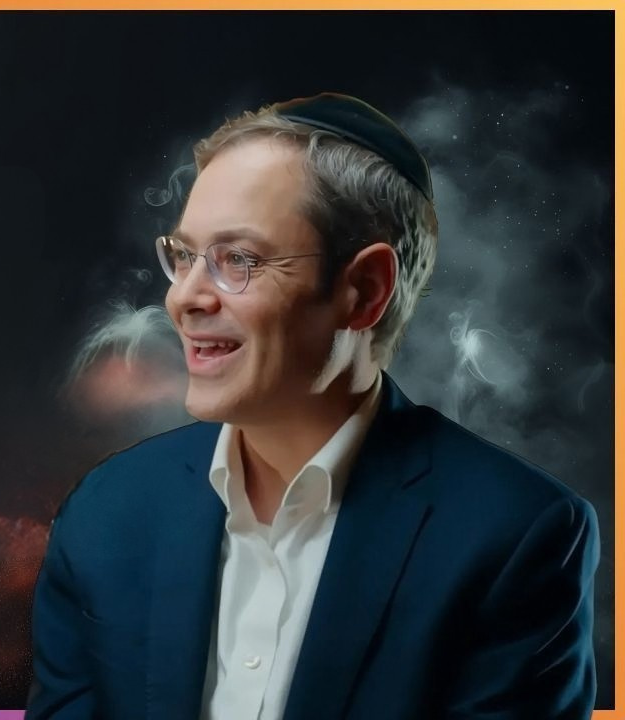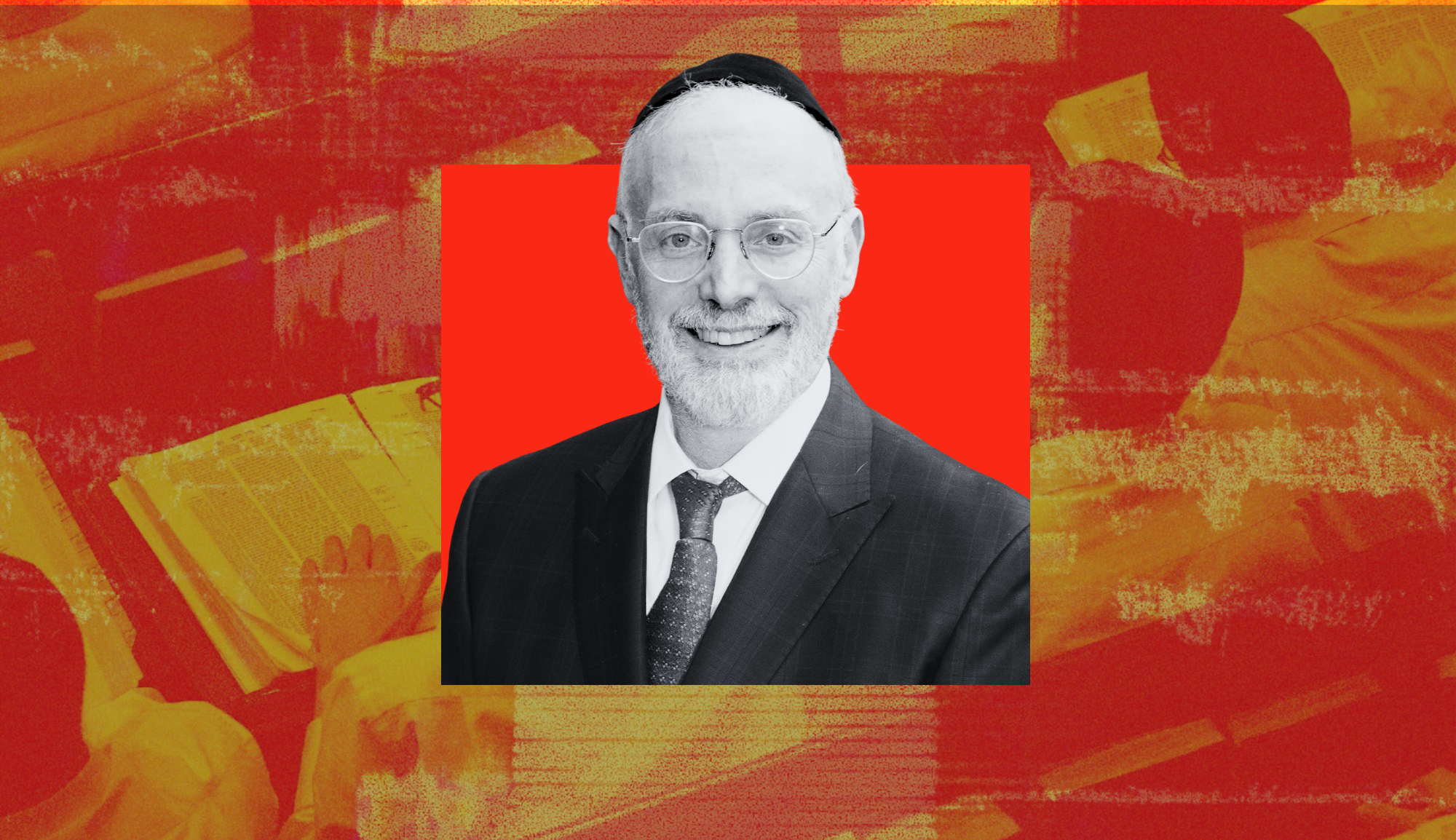
Rabbi David Aaron joins us to discuss ease, humanity, and the difference between men and women.
This podcast is in partnership with Rabbi Benji Levy and Share. Learn more at 40mystics.com.
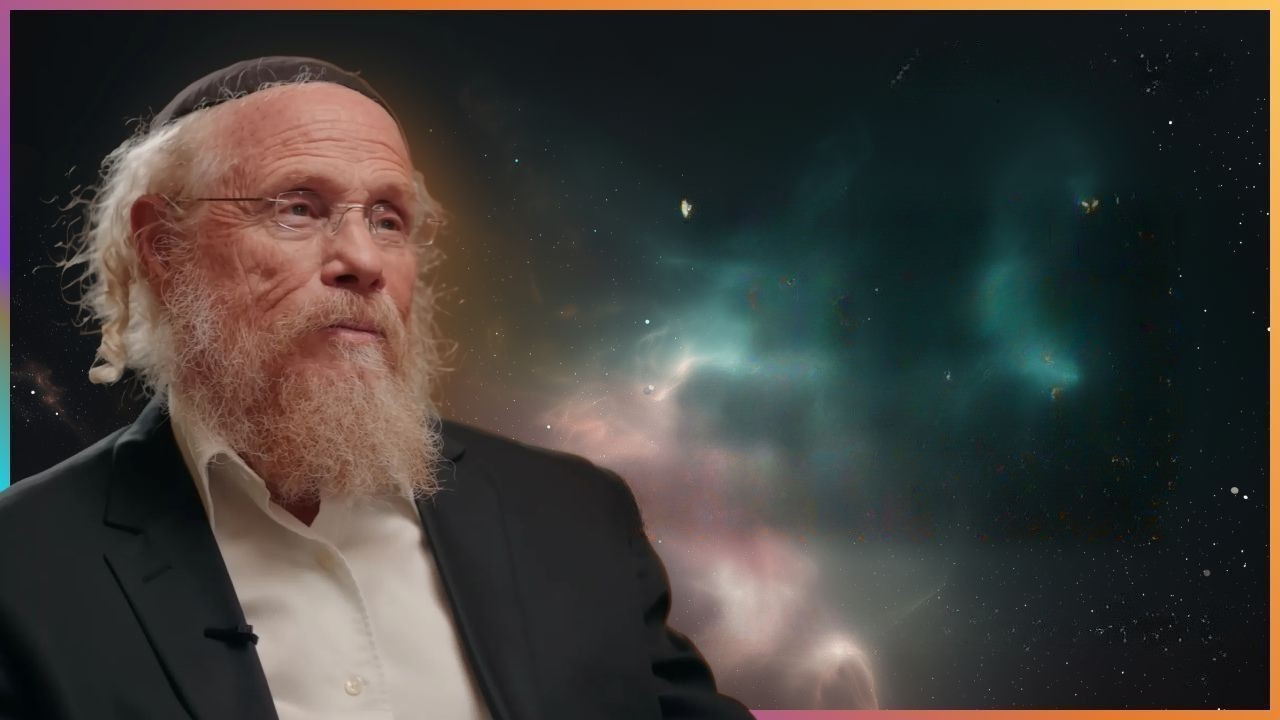
Rabbi David Aaron first encountered Kabbala at the young age of eighteen. Now, kabbalistic thought is a central influence in his life, leading him to strive to see a “ray of godliness” within every person.
Rabbi David Aaron is the Co-Rosh Yeshiva of Yeshivat Orayta and the author of eight books, including Seeing God and The Secret Life of God. He is also a noted teacher and international speaker.
Now, he joins us to answer eighteen questions on Jewish mysticism with Rabbi Dr. Benji Levy including how human beings are facets of the divine, that Judaism is meant to make life easy, and how men and women are equal but not the same.
RABBI DR BENJI LEVY. Rabbi David Aaron, author of ten books, incredible teacher, international speaker. Thank you so much for joining us here today.
RABBI DAVID AARON. Thank you.
LEVY. So what is Jewish mysticism?
AARON. Quite frankly, I’m uncomfortable with the term mysticism because I think it gives off this vibe that it’s kind of weird and strange and wacky and not rational. So I’ll forgive the term, but I think it really sends us in the wrong direction. Kabbala is wisdom, it’s a system, it has a rationale to it. I think it is just like somebody that would see an equation based on quantum physics. They wouldn’t have any idea what it is and would be surprised that it actually is based on a very deep system and understanding. So to go to Kabbala, Kabbala is the, I would call it the grammar of life. In other words, if I open up a page and I know the meaning of every word on the page, but I don’t know the unwritten grammatical rules, then I don’t know what ties it all together. Kabbala is a system that ties all of life together and demonstrates how we are literally part of a oneness.
LEVY. So how did you get into this study? What brought you into it?
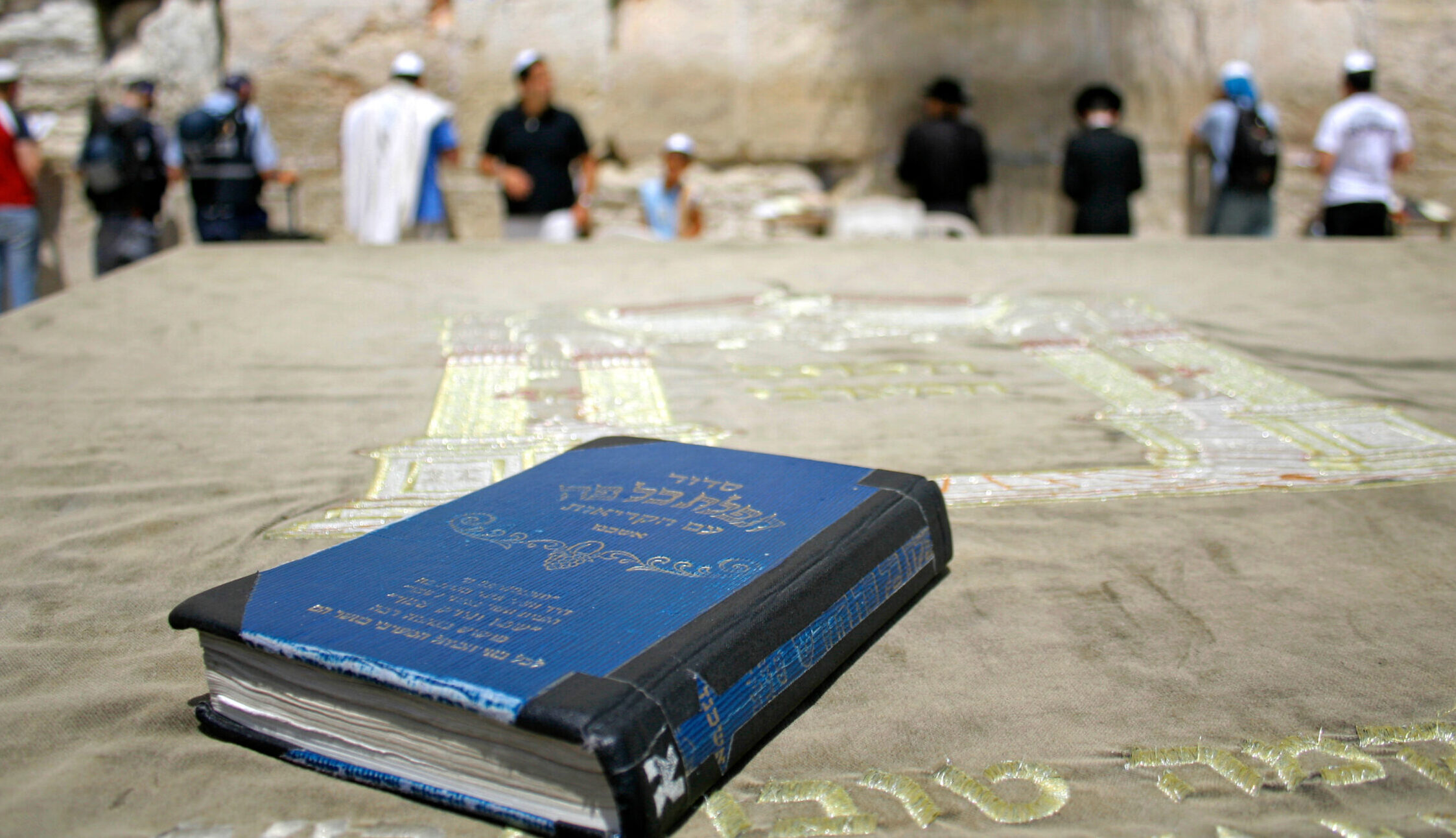
AARON. I was eighteen years old and I was at the Western Wall and a very religious looking man who had a long black beard and long side curls and a black coat came up to me and said in broken English, I teach Kabbala, you want to learn Kabbala? Now what did I know? I was eighteen and all I knew from Hebrew school was that Kabbala is forbidden, so I said yes. I was very excited about that opportunity to do something forbidden but Jewish. He took me under his wings and he started teaching me Kabbala and I really didn’t understand a word he was saying, but the one thing I saw is this is the system that all of Judaism is based on. And that intrigued me because my Jewish education was a little idea here and another idea there, and it all seemed [to be] very nice ideas, but it didn’t seem to be systematic. And when I encountered the Kabbala, clearly this is the system that ties it all together.
LEVY. So in an ideal world, would all Jews be mystics? Would we all be studying this work?
AARON. In an ideal world, we would all understand the system, yes. In an ideal world, we would all understand, and more importantly, experience the oneness of God and the oneness of all of reality. Yes. You know, we’re going in a direction where the world will know God like the waters fill the sea. And the Kabbala is really the source that addresses that and enables us to reach that.
LEVY. So what do you think of when you think of the term God? I remember very distinctly [that] you’ve really famously put across the idea of what God isn’t. It’s not the Zeus-like figure zapping people and it really breaks the construct of what a lot of us grew up with. But what is God? What do you think of when you do think of God?
AARON. Right. I’m actually uncomfortable with the word God. I use it, it’s on all my books, but I think in one of my books, Seeing God, the first chapter is “Getting Rid of God,” because I think God has been associated with someone, somewhere over there that’s got a big ego and a control issue. And that’s terrible and that’s sad and that’s not Jewish and that’s not what it’s about.
The Hebrew word that has been translated as God is the yud, then the hey, then the vav, then the hey, referred to as shem Havaya [name of God]. And it’s actually the name of Havaya. Havaya literally means existence. And so when an atheist says, I don’t believe there’s a God in existence, I agree with him. I don’t think there – somewhere over there is a single being called God who is in existence. Rather, I believe that the divine is existence and infinitely more. And whereby God is someone over there who created someone over here, Hashem, the divine, the Ein Sof, is the one reality that includes us, that we’re part of, that we’re facets of, although we’re not the divine, but we are included within the divine and facets of the divine.
LEVY. Wow. And so how does prayer work?
AARON. Well, you know, you have to think of it like a baby in the womb of its mother. In fact, that name, the yud, hey, vav, hey, is associated with the attribute of rachamim [mercy], which is unconditional love. And the word rachamim means rechem, is identified with rechem, which means womb. And that means that we are to God like a baby is to the womb of his, her mother. And although the baby is not the mother, the baby exists within the mother and the baby doesn’t have an independent existence from the mother, not at that stage anyways. And prayer is like that baby talking to the mother, and therefore the mother is very close, and very present, and very embracing, and very accommodating, and very interested in what I have to say because I, as the baby of my mother, am of utmost importance.
LEVY. And so how does it work?
AARON. Well, how it works is like this. Most people think that we’re trying to change God’s mind. But what would it mean to change God’s mind? Why do I change my mind? Because I get new information. I had an idea I was going to go to a certain restaurant. I find out that it’s not kosher. I didn’t know that. It lost its supervision so I changed my mind. But we’re taught that God is omniscient and all-knowing. And so if God is all-knowing, then what would it mean for Him to change His mind?
The truth is that the way prayer works – in fact, even the word, the English word prayer is misleading. The Hebrew word is lehitpalel. And what’s unusual about the word is, what’s important to know about the word is, it’s reflexive, meaning it’s doing something to yourself. Like ani mitlabesh, I’m getting dressed, I’m dressing myself. Ani malbish, I’m dressing my son. Lehitpalel means I’m doing something to myself. When I’m talking to Hashem [God], the goal here isn’t to change God’s mind. I don’t even want to change God’s mind because God’s mind – God made up His mind a long time ago to give me the best and only the best. What has to change is me. And so the more I acknowledge, for instance, that God, you are the source of healing, and the more I genuinely want healing for the right reasons, then I have changed myself and become more receptive to God’s healing. Even in the eighteen benedictions, every request ends in the present tense: Baruch ata Hashem, rofeh cholei amo Yisrael, Blessed are you Hashem [God] who is healing the sick. He is right now healing the sick. But why are the sick not healed if He’s always healing the sick? Because something’s blocking out the blessing of healing coming in.
And so when we are mitpalel, or we’ll use the word prayer, forgive me, we are talking to Hashem. We are requesting of Hashem but not in order to change God. [We are aiming] to change ourselves. Prayer, in its misunderstood way, is: I’m trying to get God to want what I want and change His mind to think like me. But lehitpalel means I’m trying to get me to want what God wants. And the more I want what God wants – and God wants healing. And the more I recognize You are the source of healing and the more I recognize You want healing and I want healing for the right reasons, I can align myself and be like a radio that’s tuned in and allow for that blessing to come into my life or the lives of other people.
LEVY. So it’s like a process of realignment.
AARON. Absolutely. Literally the metaphor of the radio is a good metaphor because in this room right now, there’s Chinese music, but I don’t hear it. I don’t think you do either because we don’t have a radio. But if we had a radio and we plugged it in and we turned it on and we tuned it in, we’d get that music and it would become present in our conceptual and perceptual world. And so too, actually all of Judaism is a kind of a spiritual engineering of our minds and our lives to be aligned with and tuned into the presence of God so that God’s presence and blessings could be downloaded into the world as we perceive it.
LEVY. And what is the goal of Torah study?
AARON. The goal of Torah study, as much as it is one of the goals of Judaism, is to realize your connection to God, which is the greatest joy in the world. The greatest gift that God gives us is a connection to God, a feeling of God’s presence. And most people think that God has attributes, but that’s not actually so correct. God is His attributes and infinitely more. So in this case, God doesn’t have wisdom. Maybe I have wisdom, surely you have wisdom, but God doesn’t have wisdom. God is His wisdom. Because if I said that God has wisdom, that would mean there’s God plus His wisdom and that would be problematic in terms of the fundamental faith that God is an absolute oneness. But going back to God is wisdom, so the Torah is divine wisdom. And when a person binds with Torah, when the wisdom of Torah enters into their being, that is synonymous with God, in so much as He is wisdom, He is entering our being. And we are fulfilling that exciting desire to bond with God and feel His presence in our lives, and literally feel His presence in our lives insomuch as He is wisdom and Torah is that wisdom. God is present in our lives.
LEVY. So does Jewish mysticism view women and men as the same?
AARON. Equal but different. Definitely not the same. Equal but different. Everybody has different strengths and different roles to contribute to the world and so we are different.
LEVY. And what is the fundamental difference there? Or how do we view that?
AARON. The fundamental difference is that the feminine quality is the power to be receptive and the male quality is the power to be influential. Now, it’s not like you can’t have a woman that’s influential and a man that’s receptive, but when she’s influential, in that state, she is more described as masculine. But in general, a woman holds that baby, receives the seed and holds that baby. And she has that power to receive and to be patient and nourishing, whereby the man is more in kind of like running out there and planting the seeds. But again, this is very general and somewhat dangerous because there’s plenty of women that have a lot of male energy and that’s good. And there’s plenty of men that have female energy and that’s good too. But bottom line, one is a man, one is a woman, they’re not the same.
LEVY. So, is Judaism meant to be hard or easy?
AARON. It’s meant to make your life easy, but it could be hard at the beginning. Some of the best things take time and take a lot of work. But Rabbi Kook [Rabbi Abraham Isaac HaKohen Kook] explains, one of the great teachers of this generation and a kabbalist, he says that the goal of Judaism is to lighten your burden. You know, if I didn’t know how gravity works and I’m going against gravity, my life is going to be hard because I’m going against the very principle that’s running things. If I understood what gravity is and understood how it works, then I could align myself with it and rather than go against the current, I could capture it and harness its power. And so too, when you understand the principles of Kabbala and the direction and the current of life, rather than trying to swim against the current, you swim with it and it carries you and you go in the flow. So the goal is to actually make life less burdensome, but a lot of people think Judaism makes their life a burden when in fact, when truly mastered, it’s just the opposite. It should make your life easier and more of a flow.
LEVY. So why was it created like this? Why did God create the world?
AARON. Well, you know, some questions get an answer, some questions get a class, and some questions get a course. So this one is a little bit hard to put in a few words. The purpose of the universe is – the fundamental understanding of God is that God is the epitome of absolute good, and good wants to give good. And so the world was created, as the kabbalists say, lehativ mituvo lezulato, to give of His goodness to the other. Goodness is being manifest. God, who is the absolute good, wants to express Himself as absolute good. An absolute good is giving goodness to the other.
What is the greatest goodness that one could receive? It’s the presence of God. And what is the presence of God? Well, just as I mentioned, the presence of God is wisdom, kindness, compassion, peace, truth. And so therefore, when a person lives a life that is filled with wisdom, sharing wisdom, when a person lives a life of kindness, then that’s literally the presence of God. When you do an act of kindness, then the presence of God as kindness is filling your being and being transmitted from you to others.
LEVY. So can someone act against God’s will? Does free will exist for human beings?
AARON. You can choose to want something other than God’s will, but you can never go against God’s will in terms of your actions. Hakol byedei Shamayim chutz me’yirat shamayim, all is in the hands of God [except for your fear of God]. So your real choice in life is what you choose, but the consequence of your choice is completely in God’s hands. And therefore, you can’t act against God’s will unless He allows you to do that. You can choose to go against God’s will, but whether that choice – you know, we have this assumption that – let’s say God forbid somebody has decided to kill somebody and they take a gun. So they’ve made the choice to kill somebody, but from there, it’s in God’s hands because the gun might not have a bullet, or the gun has a bullet but it’s a dud, or the guy pulls the trigger and it jams, or the victim moves. I mean, there are so many infinite variables that happen that are really not within the parameters of your choice. You can choose to kill them, but whether he’ll end up dead is not in your hands.
LEVY. What do you think about when you think about Mashiach [the Messiah]? What is this time? What is the Messianic Era?
AARON. When I think about Mashiach [the Messiah], I first of all think about you and me and every other human being because there’s a verse that says, “Ruach apeinu Mashiach Hashem.” The spirit of our breath is Mashiach. Rabbi Kook, once again, explains that within each and every one of us is a spark of Mashiach. And when we unleash the spark of Mashiach within us and act out that spark and give it presence in this world, then the accumulation of that will be embodied by a human being that will take it the rest of the way. What do I think about that spirit of Mashiach [Messiah]? It’s that spirit of peace, that spirit of world love, that spirit of mutual respect. It’s a world where people will finally live the oneness of God, which is the oneness of love.
LEVY. And is the State of Israel part of the final redemption?
AARON. In my opinion, absolutely. I think we, to me, it’s undeniable that we are witnessing the beginnings of what’s called ikva deMashicha, the footsteps of Mashiach. We’re coming back to our home against all odds. I mean, my friend did a tour in the old city of Jerusalem and he said to the tourists that he was guiding, you know, if your grandparents and my grandparents or great-grandparents would suddenly appear here in the old city of Jerusalem and see this, they would say, when did Mashiach [the Messiah] come? It would be clear to them that he already came because here we are in the land of Israel. Who would have thought? My grandparents were murdered by the Nazis. Would they ever think that they would have a grandson who’s a rabbi living in the old city of Jerusalem, learning and sharing Torah? So, I believe we are very close to Mashiach coming, but we’re definitely sliding into home base.
LEVY. What is the greatest challenge facing the world today?
AARON. The greatest challenge facing the world today is a sad misunderstanding of God and ourselves. You know, I believe that the root of all problems is the confusion regarding God because God is the root, the foundation, the essence, the context, the soul of all. And if we don’t understand, if we think God is some mean kind of guy and we’re supposed to emulate that power-hungry, praise-hungry being, that’s a bad thing. And religion has sadly brought a lot of bad things to the world. You know, when my first book came out, Endless Light, another book came out called God Is Not Great. And that book did a lot better than mine and basically demonstrates all the horrible things that have happened in the world in the name of God. And so sadly, there’s a lot of evil and crime and horrific viciousness that is being committed in the name of God. You got the wrong God. I think if we could understand in a deep way, which I believe the Kabbala provides, a deep understanding of what we really mean when we say God or when we really say Hashem, I think that would be the foundation, the root, and the context that would turn it all around.
LEVY. So how has modernity changed Jewish mysticism? Or has it changed?
AARON. Modernity has given us models, metaphors, principles. You know, the Kabbala teaches that in the late 1800s, the upper gates of wisdom will open up and the lower gates of wisdom will open up. And one of the understandings of that is the upper gates of wisdom is the Kabbala and the lower gates of wisdom is science. And through science we will have access to the upper gates. And so I’ve been very influenced by the study of modern science, specifically quantum physics, that gives us an understanding that these kabbalists understood the nature and the dynamics of reality, which is only now coming forth through science, but science will help us understand and give us models of modern terminology to decode the kabbalistic secrets.
LEVY. What differentiates Jewish mysticism from other mysticisms or religious mystical fields of thought?
AARON. Well, I’m not an expert on all the other mystical thoughts, but I will share that I met a fellow that was very steeped in Christian mysticism, and he asked me if I would be open to take a look at what they have to say. So I said sure, and he brought a suitcase full of Christian mystical books and I’m flipping through it to just get a little bit of a sense of what it is and I found out that there’s a personality in Christian mysticism by the name of Enoch that has center stage and has a very significant role. And I’m thinking, Enoch, I mean, that’s Hanoch in our tradition. And I look in the Torah and see, well, who is Hanoch? And I’m wondering how he became so significant in Christian mysticism.
Rabbi Shimshon Raphael Hirsch actually says this idea, he says, in other religions or traditions, Hanoch is a very respected figure, but not in our tradition because it says about Hanoch – there’s not much written about him other than he walked with God. And Rabbi Shimshon Raphael Hirsch says that that’s not the path of Judaism. He walked with God, he walked himself out of this world until he wasn’t in this world because he wanted to come close to God in the next world. And Judaism is about bringing God close to us into this world. Metaveh Hakadosh Baruch Hu lihiyot laasot dirato betachtonim is one of the key ideas of Jewish kabbalistic ideas, that God wants to be in this world.
And so I think one of the significant differences, at least from what I understood of Christian mysticism, and I could be wrong, but certainly Rabbi Hirsch is telling us that Hanoch is not an icon for us. It’s not about walking yourself out of this world and coming close to some God and some celestial world but rather bringing the divine into this world. We want to bring kindness into this world by putting our hands in our pockets and offering a homeless person some money. We want to bring compassion into this world by judging people favorably and being forgiving. We want to bring the presence of God into this world, and I think that’s one of the key things. Do we want to get spiritualized and meditate ourselves out of this world, or do we want to bring the presence of God, which is the presence of divine values and vision and attributes, into this world?
LEVY. So can Jewish mysticism be dangerous?
AARON. The danger of Jewish mysticism is that there’s a very fine line between the human and the divine. And one could easily misunderstand that Jewish Kabbala is pantheism. And Kabbala is not pantheism. Pantheism basically teaches that all is God and God is all, which would mean that God is the universe and the universe is God. God minus the universe would be zero. But that’s not what the Kabbala is teaching. The Kabbala is saying that there’s none but one, God is one, but we are not God. And we are zulato, we are other than God. Just like, as I mentioned before about the mother, the baby is not the mother, but it wouldn’t be correct to say there’s a baby and a mother because the baby doesn’t have an independent existence. So there’s really just a mother, and within that mother is an entity that’s not the mother but that is a part of the mother. Actually, it says that Adam was created in the image of God, but within Adam was Eve, who was not Adam. So we see that the image of God is a kind of mysterious oneness that includes not, which is really the image of love. What is love? Love is a oneness that includes not me and yet one. We’re one but not one and the same.
LEVY. So does one need to be religious to study Jewish mysticism?
AARON. Well, to study it, no, but to really live it, yes. You know, I once heard a very interesting point that you can have: What’s the difference between a Kabbalist and someone who simply has their PhD in Kabbala but doesn’t really practice Kabbala in terms of living? So he said, that’s the difference between a rich man and his accountant. The accountant knows where the money is, but he can’t spend it or use it. The Kabbalist doesn’t just know how much money there is. He knows how to use it and he has access to it. So there’s a big difference between people studying Kabbala in a purely academic way rather than really internalizing its teachings and living its truth.
LEVY. Amazing. So, you’ve lived this and we’ve talked a lot about it. Is there any expression of this in your actual relationships? Has studying Jewish mysticism influenced how you interact with your family, with yourself, with your students? And if so, do you have an example that shows that?
AARON. You know, I interact with people under the understanding that they are a ray of God. They’re not God. We are like rays, we are to God like rays of light are to the sun, but in this case, rays of light that are still in the sun. And I relate to everyone and I try to see that ray of godliness within everybody. You know, it says love your neighbor as yourself, “ahavta lireacha kamocha.” A lot of people don’t realize the last couple of words, “Ani Hashem.” I am Hashem [God], which means I am all there ever was, is, and ever will be. There’s just one I am, and your I am and my I am are rays of this one universal I am. And so I try to practice that sense of unity, oneness, connection, identity. I’m not you, you’re not me, we’re different rays. If God were white light, we’d all be different colors of the spectrum of light. And I try to respect that and seek that and hopefully reveal that in other people.
LEVY. Amazing. So to close, [what is] one teaching that you carry with you, one profound idea from Jewish mysticism that you think is important for people to hear now? And it can be a short one and it doesn’t have to be a favorite. I know you’ve got thousands, but what is one that resonates right now?
AARON. Well, one that resonates with me in a very deep way is that the neshama [soul] is a chelek Eloka mimaal, that the neshama is a part of God. Now, it is not a part of God like a slice of pizza, but a facet, an aspect, like the ray of light of the sun is a facet of the sun. And why I think that’s so important is I think we’re in a world that is being devastated by low self-esteem. You know, Rabbi Abraham Twerski, zichrono livracha [may his memory be a blessing], was a great psychiatrist, and he said that in his experience as a psychiatrist for many, many years, the root problem of all psychological issues is low self-esteem, other than if it’s a chemical disorder. But other than a chemical disorder, it always goes back to how we feel about ourselves. And I think we’re in a world where people are feeling less and less and less and trying to look more and more and more, but looking good doesn’t make you feel good, not really. And so when a person gets in touch with I am a soul, I don’t have a soul, I am a soul. What is a soul? A soul is the ray of the divine. I’m not God, but I am godly. It says in Judaism, you shouldn’t pursue kavod. You shouldn’t pursue honor, which is pursuing being valued. And the reason why you’re pursuing being valued is because you don’t think you’re already valued, because if you knew that you were really, literally a facet of the divine, again, you’re not God, which is the danger of these ideas, someone would start to think that they’re God and they have the license to do whatever they want. But you are godly. And so much of what it means to live according to the teachings of Torah and the guidelines of Torah is to align yourself and be you. A lot of people don’t understand that this is not about just simply doing a bunch of actions that earns me some, you know, frequent flyer points and I’ll get into the lounge in the next world. This is really a lifestyle that fits who I am as a ray of godliness.
LEVY. Beautiful. Rabbi Aaron, you don’t just respect that light in others, you live it yourself.
AARON. Thank you.
LEVY. And it’s been an honor to learn so much from you and see you do that and we give you continued blessing –
AARON. Amen.
LEVY. That you continue to go out and inspire others as well.
AARON. Thank you so much.
LEVY. Thank you.
How can our generation understanding mysticism, philosophy, and suffering in today’s chaotic world?
We speak with Yehuda Geberer about the history of the yeshiva world.
We speak with Rabbi Aaron Kotler about the beginnings of the American yeshiva world.
David Bashevkin speaks about the late, great comedian Garry Shalndling in honor of his 10th yahrzeit, which is this Purim.
Haviv answers 18 questions on Israel.
Ora Wiskind joins us to discuss free will, transformation, and brokenness.
In this episode of the 18Forty Podcast, we talk to Aliza and Ephraim Bulow, a married couple whose religious paths diverged over the course of their shared life.
We speak with Professors Elisheva Carlebach and Debra Kaplan about women’s religious, social, and communal roles in early modern Jewish life.
The true enemy in Israel’s current war, Einat Wilf says, is what she calls “Palestinianism.”
In this episode of the 18Forty Podcast, we talk to author Bruce Feiler about family narratives.
Leading Israeli historian Benny Morris answers 18 questions on Israel, including Gaza, Palestinian-Israeli peace prospects, morality, and so much more.
In this episode of the 18Forty Podcast, we talk to Judah, Naomi, and Aharon Akiva Dardik—an olim family whose son went to military jail for refusing to follow to IDF orders and has since become a ceasefire activist at Columbia University—about sticking together as a family despite their fundamental differences.
In this episode of the 18Forty Podcast, we sit down with Dr. Ora Wiskind, professor and author, to discuss her life journey, both as a Jew and as an academic, and her attitude towards mysticism.
In this episode of the 18Forty Podcast, we sit down with Rabbi Daniel Grama—rabbi of Westside Shul and Valley Torah High School—and his daughter Aliza—a former Bais Yaakov student and recovered addict—about navigating their religious and other differences.
Prof. Moshe Idel joins us to discuss mysticism, diversity, and the true concerns of most Jews throughout history.
In this episode of the 18Forty Podcast, we talk to Lizzy Savetsky, who went from a career in singing and fashion to being a Jewish activist and influencer, about her work advocating for Israel online.
In this episode of the 18Forty Podcast, we talk to Rabbi Menachem Penner—dean of RIETS at Yeshiva University—and his son Gedalia—a musician, cantor-in-training, and member of the LGBTQ community—about their experience in reconciling their family’s religious tradition with Gedalia’s sexual orientation.

In this episode of the 18Forty Podcast, we talk to historian and professor Pawel Maciejko about the false messiah Sabbatai Zevi, Sabbateanism, and the roots of Jewish secularism.

In this episode of the 18Forty Podcast, David is joined by comedian Alex Edelman for a special Purim discussion exploring the place of humor and levity in a world that often demands our solemnity.
On this episode of 18Forty, we explore the world of Jewish dating.
Israel is facing several existential crises—at least three, by Netta Barak-Corren’s account.
In this episode of the 18Forty Podcast, we sit down with Rav Moshe Weinberger, rabbi and educator, to discuss the role of mysticism in modern-day Judaism.
In this episode of the 18Forty Podcast, we talk to Rabbi Ken Brodkin, rabbi of New Jersey’s Congregation B’nai Israel, about how he helped turn it into “the Orthodox synagogue for all Jews.”
Two programs are already bridging the Orthodox and non-Orthodox divide through the timeless tradition of chavruta learning.
Perhaps the most fundamental question any religious believer can ask is: “Does God exist?” It’s time we find good answers.

For some, Purim is the triumph of exile transformed. For others, it warns that exile can never replace the Land of Israel.
Divorce often upends emotional and financial stability. A Jewish organization in Los Angeles offers a better way forward.
Identity, desire, women in fiction, and more: What we’re reading before Purim.
Parshat Tetzaveh forces a question that modern culture struggles to answer: Can true influence require a willingness to be forgotten?
Christianity’s focus on the afterlife historically discouraged Jews from discussing it—but Jews very much believe in it.

Israeli minister Itamar Ben-Gvir wears the mantle of Kahane in Israel. Many Orthodox Jews welcomed him with open arms.
Kosher phones make calls and send texts. No Instagram, no TikTok, and no distractions. Maybe it’s time the world embraces them.
Children cannot truly avoid the consequences of estrangement. Their parents’ shadow will always follow.
From verses in Parshat Bo to desert caves, tefillin emerge as one of Judaism’s earliest embodied practices.

Jews from the Land of Israel prayed differently than we do today—with marked difference. What happened to their traditions?
These recent works examine disagreement, reinvention, and spiritual courage across Jewish history.
My family made aliyah over a decade ago. Navigating our lives as American immigrants in Israel is a day-to-day balance.
To talk about the history of Jewish mysticism is in many ways to talk about the history of the mystical community.
Not every Jewish educational institution that I was in supported such questions, and in fact, many did not invite questions such as…
Between early prayer books, kabbalistic additions, and the printing press, the siddur we have today is filled with prayers from across history.

A bedrock principle of Orthodox Judaism is that we received not only the Written Torah at Sinai but also the oral one—does…
Jewish denominational labels are only 200-year-old labels. So why do they govern so much of modern Jewish life?
Changing how God appeared in my life began with changing how God appeared in my mind. I needed to let go of…
These four forces are quietly determining what our schools prioritize—and what they neglect.
Watching AI spread through every corner of life raises an unsettling question: What kind of world are we building for our children?
The Lubavitcher Rebbe’s brand of feminism resolved the paradoxes of Western feminism that confounded me since I was young.
In Israel’s Religious Zionist world, Tanach is not only a way to understand contemporary Jewish history—it is also a guide for the…
In this special Simchas Torah episode of the 18Forty Podcast, we speak with Rachel Goldberg-Polin and Jon Polin—parents of murdered hostage Hersh…
In this episode of the 18Forty Podcast, we speak with Diana Fersko, senior rabbi of the Village Temple Reform synagogue, about denominations…
In this episode of the 18Forty Podcast, we speak with Shais Taub, the rabbi behind the organization SoulWords, about shame, selfhood, and…
Why did this Hasidic Rebbe move from Poland to Israel, only to change his name, leave religion, and disappear to Los Angeles?
In this episode of the 18Forty Podcast, David Bashevkin answers questions from Diana Fersko, senior rabbi of the Village Temple Reform synagogue,…
We speak with Joey Rosenfeld about how our generation can understand suffering.
We speak with Naftuli Moster about how and why he changed his understanding of the values imparted by Judaism.
In this episode of the 18Forty Podcast, recorded live at Stern College, we speak with Rabbi Moshe Benovitz, director of NCSY Kollel,…
18Forty helps users find meaning through the exploration of Jewish thought and ideas.
In a disenchanted world, we can turn to mysticism to find enchantment, to remember that there is something more under the surface…
What is Jewish peoplehood? In a world that is increasingly international in its scope, our appreciation for the national or the tribal…
Rabbi Moshe Gersht first encountered the world of Chassidus at the age of twenty, the beginning of what he terms his “spiritual…
Rabbanit Sarah Yehudit Schneider believes meditation is the entryway to understanding mysticism.
Support Jewish explorations today by supporting 18Forty. Your partnership makes our work possible.
Donate today.