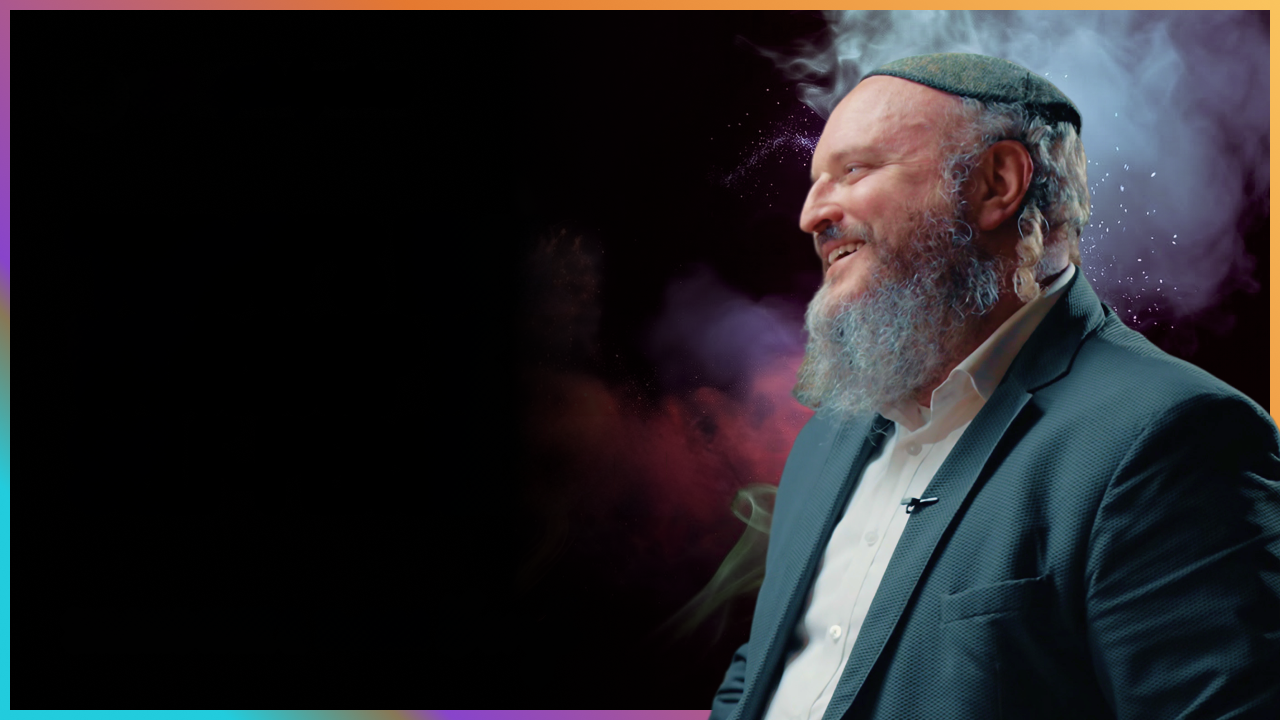
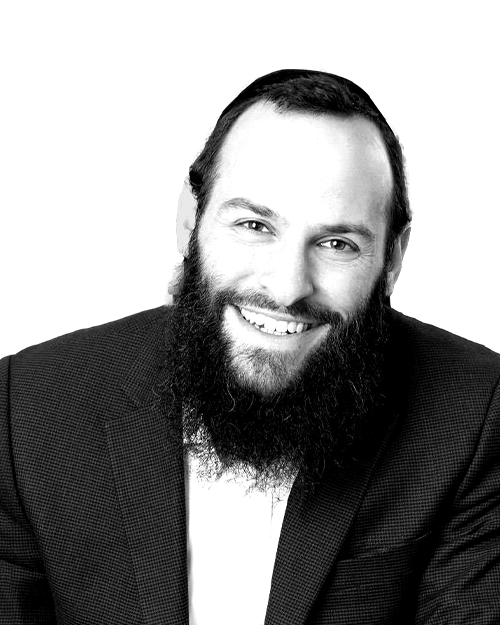
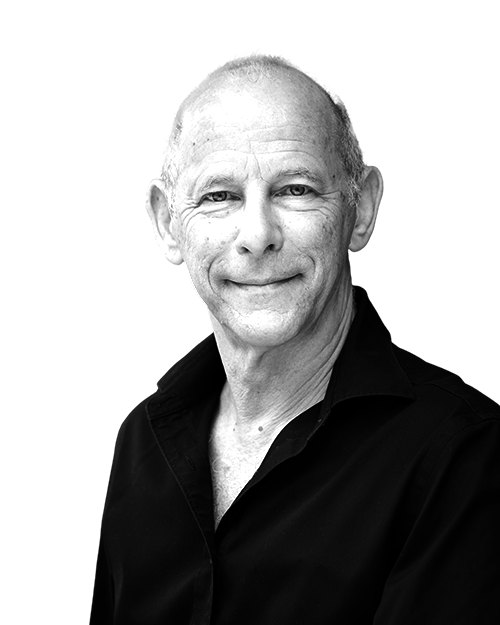
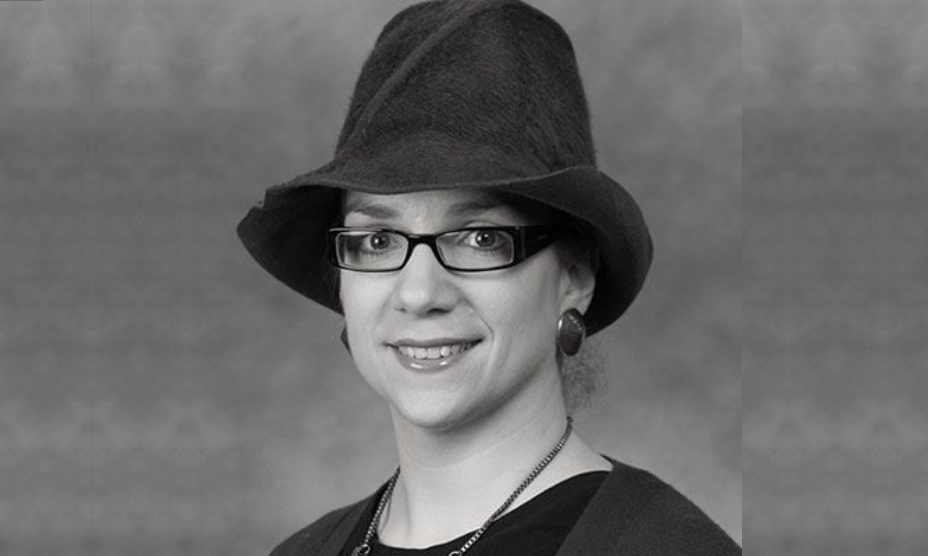
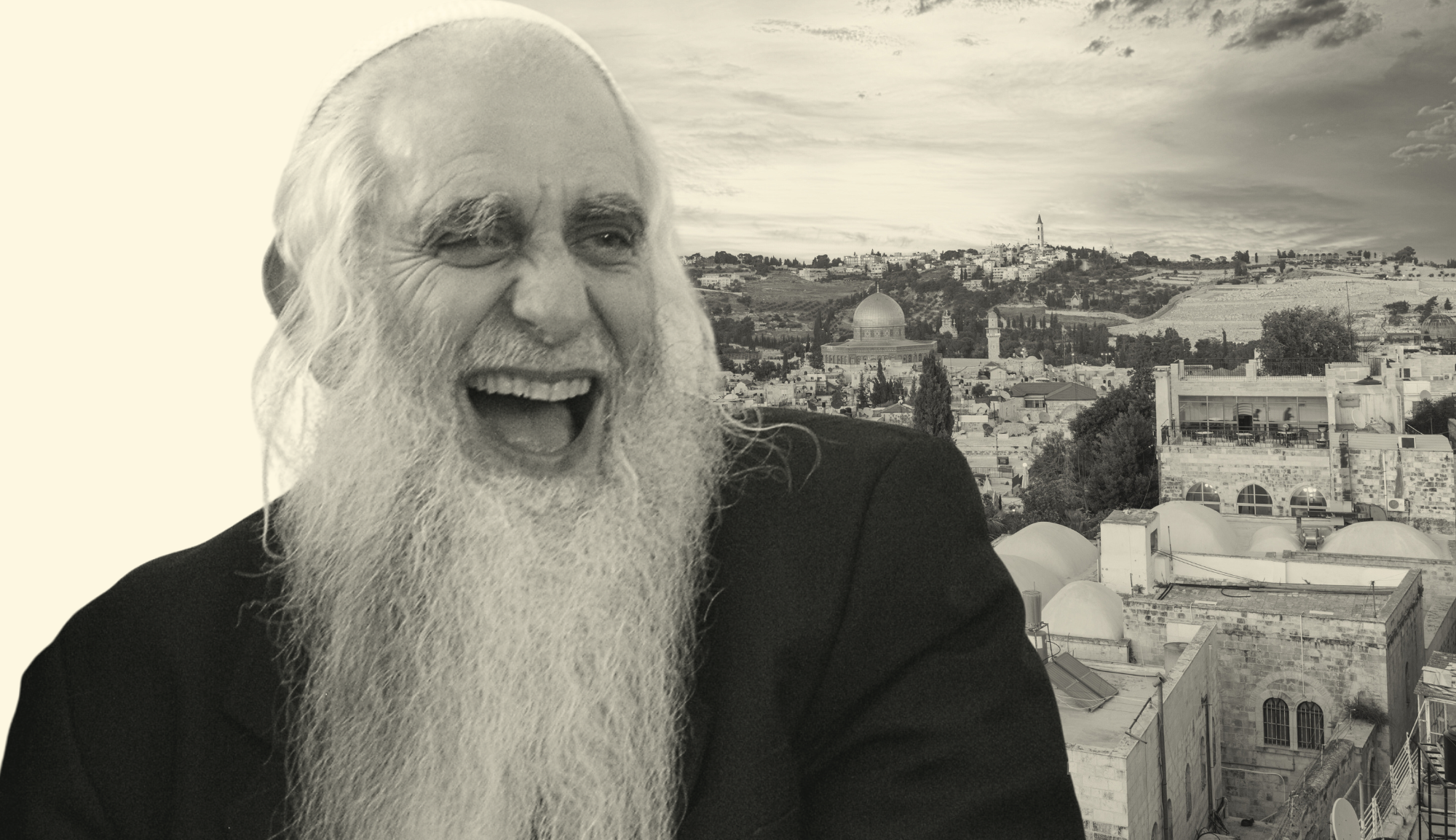
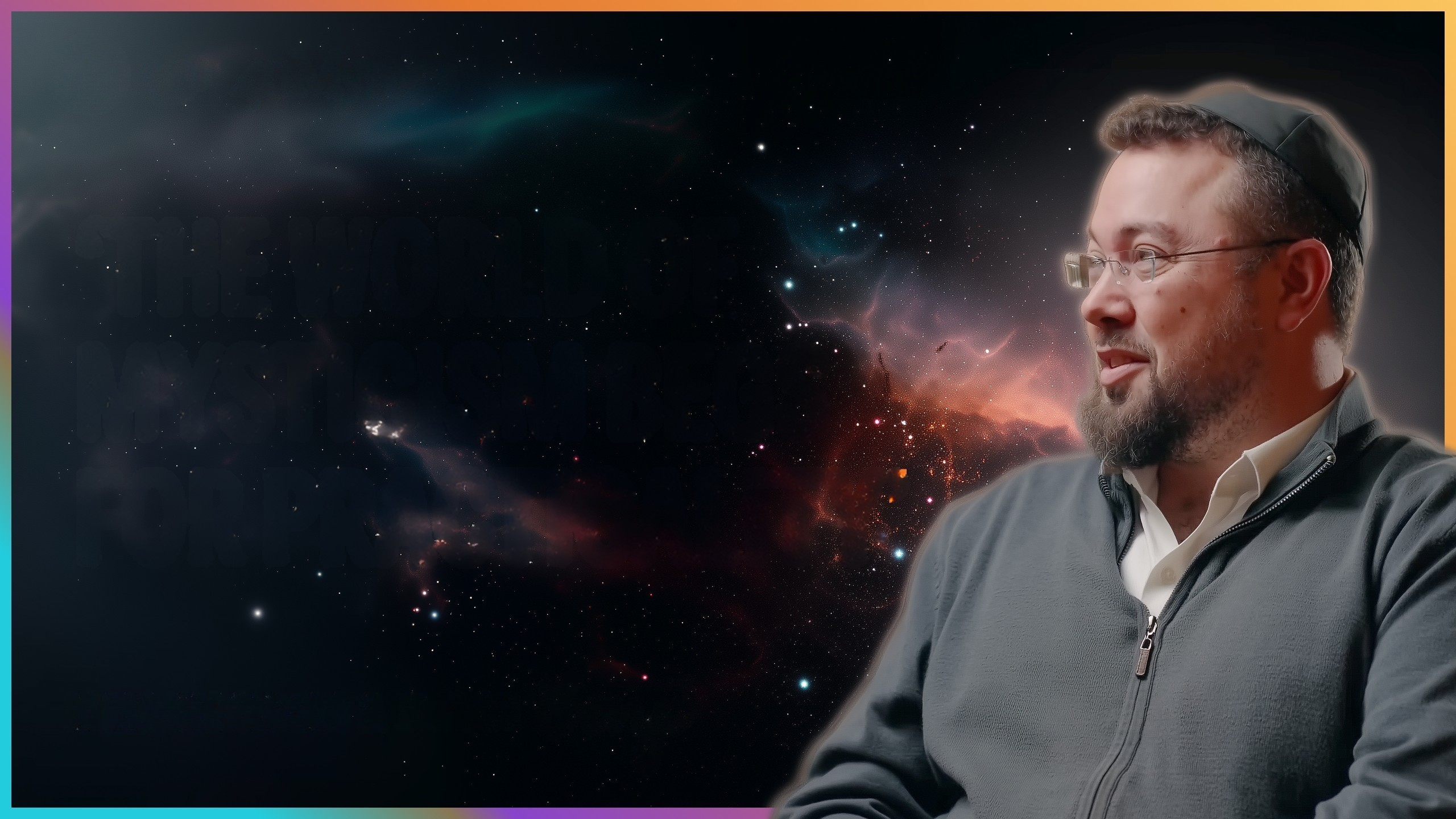
RABBI DR BENJI LEVY. Rabbi Shlomo Katz, the founder and rabbi of the incredible shul [synagogue] in Efrat, Shirat David, the rosh machon [program head] of Zimrat Ha’aretz, incredible singer, author, and amazing speaker. Thank you so much for joining us today.
RABBI SHLOMO KATZ. And friend. I have to hug you. Ein ma laasot. [What can you do?] And a friend.
LEVY. Definitely a friend. That’s my favorite. Thank you so much. And I’m a student. So, what is Jewish mysticism?
KATZ. What a beautiful question. Jewish mysticism, in my humble opinion, is the invitation that each of us have to get to know who we really are. A conversation with our neshama [soul]. Revelation of our soul. In a nutshell of all nutshells.
LEVY. Wow.
KATZ. And working from there as opposed to the other way around.
LEVY. Beautiful. So, how did you get into this? What was the part, the origin story where you connected more to Jewish mysticism?
KATZ. I’ll tell you a fascinating story. I just remembered as you asked that. I was on a bus in Poland together with Kehilat Aish Kodesh of Woodmere. They were doing a trip in Poland. And I came from Eretz Yisrael [Land of Israel] to be with them and to sing and to do whatever, be part of the chevra [group]. And some guy on the bus came up to me and he said, can I talk to you? I said sure. He’s like, when did you start learning Pnimiyut HaTorah [inner dimensions of Torah]? And I was so surprised by that question because I guess I never knew that there was something else. I didn’t feel I ever was into Chitzoniyut HaTorah, the outer realm of Torah. To me it was the way that I was introduced to Torah, to the Torah that I hopefully learn and teach today.
And I credit it all to Rabbi Shlomo Carlebach because he was the one that placed into my neshama [soul] a yearning at a very young age, right when he passed away, literally a few months after he passed away when I was fourteen, that negina, that song of Torah. And from there, everything sprouted forth until about eight years later when I found the vessel to contain all of this in the most harmonious way through my rabbi, Rabbi Moshe Weinberger.
LEVY. So was it always through song as well as Torah?
KATZ. It was always together.
LEVY. Together.
KATZ. It was not one or the other. It was always together. But obviously the words that were always popping up in between songs is really what really drew me in much deeper. One hundred percent.
LEVY. Wow.
KATZ. Yeah.
LEVY. And in an ideal world, would all Jews be mystics?
KATZ. Yes.
LEVY. Why do you say that?
KATZ. I believe that since the Tanya tells us so clearly that each of us has inside of us a chelek Eloka mimaal, that there’s this, what they call shtickel Elokute, which in Yiddish means like this little piece of Hashem [God] that’s within, that exists, and that really gives us our life and our creativity and our expression in this world. If that exists within every single person, so in an ideal world we would be operating and emanating from that place, which I guess would make us all mystics.
LEVY. Beautiful. And what do you think of when you think of God?
KATZ. Wow. You’re asking such easy questions today. This is so easy. Rabbi Shlomo Carlebach once said, whatever you think of God is what you think about yourself. What a statement that is. I think about that statement quite often. People, when they say the word God, they’ll go like this or they’ll point or it’s something outside of them. And I think the goal has always been for me to never go outside, to go penima, to go inside and answer that question.
So what do I think about Hashem, God, means what do I think about anything and everything? So it’s such a big statement but I definitely will say it like this. God has the most incredible sense of humor. God has the most incredible sense of creativity. And God has the most incredible melody that’s still vibrating even right now as we’re sitting here in Jerusalem. You can hear that niggun, that song that Hashem began writing with the creation of the world and continues.
LEVY. So there’s no specific image that comes to mind or there’s no specific sort of relational element?
KATZ. You know that sometimes we need that, and the Piaseczner Rabbi writes this. The holy rabbi, Rabbi Klonymus Kalman of Piaseczna, of blessed memory, who was murdered by the Nazis, he brings this up in one of his classic works called Bnei Machshava Tova, which in English I think [means something like] Conscious Community, where he writes there that sometimes a person needs imagery because we’re human beings, we’re functioning in that type of a setting. So we need some type of imagery. But imagery is only to arouse the soul to begin to cry and to sing and to express itself. So there’s always going to be imagery, but it’s only imagery that we use for a bigger purpose. But most of us are still working through cracking through the imagery of an old man with a long beard. But with the right teachers, and I think we’re entering into that era with the right teachers and educators, our children won’t need that type of imagery in order to relate to a question like you just asked.
LEVY. Amazing. So you might need to start with imagery, but you need to ultimately transcend it because God transcends imagery.
KATZ. I think so.
LEVY. And what is the purpose of the Jewish People?
KATZ. The purpose of the Jewish People. There’s always the classic answer that you have to give in surroundings and environments where a non-Jew will ask you, what does it mean to be the chosen people? Right? So we know that it’s almost like a safe way to say that we’re chosen to let everyone know that they’re also special and chosen as well. But we’re the ones that are chosen to actually let them know. And I’ve been dancing around that answer for many years. And I think I’m still finding the most relatable way to answer that question.
But the only way to let the world know about who they are and what humanity was made for can only be through the secrets of the Torah. So it’s not just to go around and tell people you’re so beautiful and you have great things that you could do, but from the voice of the Torah to answer that question.
LEVY. And so you’re a baal tefilla [prayer leader], you’re an incredible chazan, singer, and leading services. What you’re leading is what we call tefilla, prayer. How does prayer actually work?
KATZ. My first week of learning in rabbinical school [was] under the leadership of Rabbi Chaim Brovender and the Dean of Ohr Torah Stone, and where I was learning at the time Rabbi Shlomo Riskin [taught as well]. And it was a great experience, an amazing experience having learned from these two giants and continuing the relationship till today, thank God, in Efrat.
Rabbi Riskin would come in every Wednesday night and give a parasha shiur [class on the weekly Torah portion] for the whole yeshiva, and then the group of students that were learning to be rabbis had a private session with the rabbi, with Rabbi Riskin, on Thursday mornings. And he told us one time like this, he said: When you’re praying, you’re speaking to God. And when you’re learning, God is speaking to you. But Rabbi Nachman of Breslov taught us that we have to make our Torahs into tefillot, our learning into prayers and our prayers into learning. So I would say that prayer is a culmination of both the mind that’s absorbed a lot of passionate and precious intellect, absorbed into the prayer of the heart, which wants to elevate all that daat, all that knowledge, and lift it up to the highest realm.
But I was just learning this morning that the highest form of prayer, the Zohar HaKadosh says, is tze’aka, is when you’re screaming, without words. Just the screaming, the oy or whatever it is. Transcending even words. I think the words are there to get you to a place that things start to become, really natural. So in our shul, we love davening [praying]. Like we actually really love it. We love to pray. We love to be in that zone together. We love to do it together.
So I think that to answer such a delicate question of what is prayer, prayer is telling the Ribbono Shel Olam [God], hey, this is me, and this is who I really am, and this is what I really want. And it’s God answering us and saying, I just want to make sure that you heard yourself right now because I already know that. But I want to make sure that you’re aware of what just came out.
LEVY. Beautiful. So you balance, as we said at the beginning, being a baal tefilla [prayer leader], leading a shul as a rabbi in that sense, and leading a machon, an institute that’s training future rabbis, and really in the depth of Torah and how to teach it. So you talked about the balance of prayer and Torah. What is the goal of Torah study then?
KATZ. That’s another phenomenal question that I think that most of the time, not most of the time but quite often, it isn’t thought about and sometimes we get lost in it. If we say that Torah is Hashem [God] talking to me, so it’s really falling in love with the will of the master of the world. Like the Zohar teaches us, God put Himself into the Torah to kivyachol, so to speak, ana nafshi ktavit yehavit [I put Myself in writing]. We can explain later that that’s the acronym of the word anochi, I am who I am, I put myself in here.
And just like, I always say this, a husband and wife, sometimes a wife will ask a husband, what would you like for dinner? And you think you’re being such a great tzadik, a righteous person, by saying, oh sweetie, anything you make is fine. But sometimes there’s a real will to know, I would actually like to know though what you want. You know, beseder [alright], it’s great that you’re saying, you’re giving me that, but it’s actually here, when you express and you verbalize your will it makes it much easier for someone to connect to you. So Hashem Yitbarach, God Almighty, gave us the Torah and in the Torah it’s all the greatest dishes, the lunches, the dinners, the breakfast, whatever it is of God saying, this is how I like it. This is what gives me the greatest geshmak, the greatest, I don’t know how you’d say geshmak in Hebrew or English.
LEVY. Greatest feeling.
KATZ. The greatest pleasure. Yeah.
LEVY. Amazing. So you mentioned husband and wife. Does Jewish mysticism view women and men as the same?
KATZ. Well it’s 2025. You have to define that question a bit clearer when you say the same. What do you mean by the same?
LEVY. I don’t know. But does Jewish mysticism view them as different or different roles or functions or aspects?
KATZ. Yeah for sure. I mean, the greatest, I think the most common teaching that we find through Jewish mysticism regarding the form and the role of male and female is mashpia and mekabel, which means an influencer and a receiver. Now I had learned from the name of the Baal Shem Tov that one of the signs that Mashiach [the Messiah] is otot, is really on his way, the Messiah is coming, is that women will find their place again in the world.
Really, since the tree of knowledge, since the Garden of Eden, women haven’t really found their place again in the world. And we’re seeing such a beautiful, beautiful, some would call it a revolution, some would call it a phenomenon, but really it’s just the completion of a picture where women are finding their voice again in such a beautiful way. And if God wanted men and women to be the same, He would have created just one species. So just due to the fact that the two are, they’re both created, that means, thank God, celebrate the difference and each one has to, it’s just that each one has to be their role. Each one has to be really one and understand what it means to be a mashpia, what it means to be a mekabel, what it means to be a giver, what it means to be a receiver.
So I’m always going back to, if God wanted the whole world to be Jewish, the whole world would be Jewish. So I look at the creation of the world and I say, wow, Hashem, ma rabu maasecha Hashem [how abundant are your works, oh God], Your creations, look how much You did. Thank God I’m looking at these trees. Thank God these trees here look different because it’d be very boring if they all look the same.
But we have to approach this topic right now, as we see it’s touching upon a lot of sensitive chords in the era that we’re living in, and we have a way of approaching these things with a true desire of – Hashem, what do You want? Not what do I want? What do I want is not, it’s what do You want? And we have a teaching of saying, I want my ratzon, like Pirkei Avot teaches us, to be Your ratzon, I want my will to be Your will.
And when I look at topics like this, that’s what we call it, going into it with anava, with humility. So they’re definitely different, but different doesn’t mean more or less. It just means each one is unique and has something that’s vital for the continued beauty of the world.
LEVY. So a lot of us have challenges to living a more spiritual life. What would you say is the greatest obstacle to living a more spiritual life?
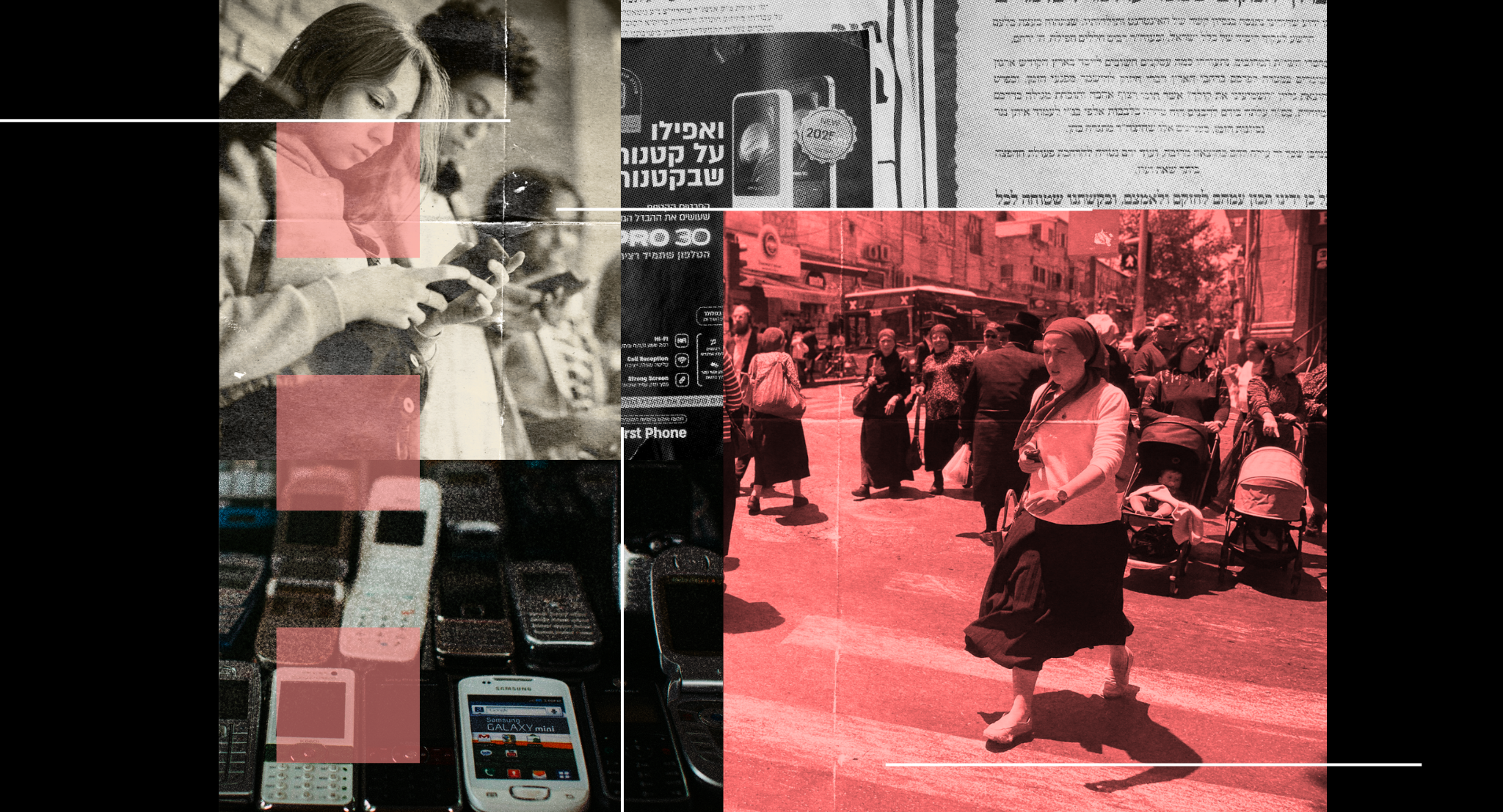
KATZ. iPhones. It’s just what comes to mind right now. I think today that technology, which is so funny because many people right now are probably looking at us and hearing us through that, through technology.
But just like everything in the world, the Lubavitcher Rabbi, of blessed, saintly memory, would speak about this quite often, that we have to take it, we have to utilize it, enhance it, and elevate it. But the screen, just so interesting because in the Zohar and in the mystical works, it always speaks about masach mavdil, the dividing screens, right? So we have to take every screen that’s a divider and get rid of that. But the screens that are not dividing but are giving you a glimpse into something, use it and enhance it, which thank God this program is doing and many programs like this are doing.
LEVY. So why did God create the world?
KATZ. Because He wanted to show how much He loves us. That’s the basic answer that we have through the writings of the Arizal, through all the mystics. God created this world as a form of expression of His love. And that’s really why He created people, to shower in His affection and to bring it into the world.
You know, I once asked this following question in the beginning of a parenting series. I said, why did you have children? So, what do you mean? That’s what you do. It’s like, no, no, that’s what the world does. Why do we Jewish people have children? There’s a beautiful teaching from Rabbi Natan of Breslov. He said that every child with their own nefesh Elokit, Godly soul, that they come into the world to show us another way to hear [these] words from God: I love you. And there are so many different ways to hear it. And each of us brings that melody and it sounds a little bit different. So Hashem created the world and filled it with pieces of Him just to hear all the different ways of how God said, I love you, and this is why I created the world.
LEVY. And do we have free will in this? What is free will?
KATZ. Here we get the different teachings in the Hasidic world. One of the greatest teachers in our life in our shul [synagogue], and in my life as well, is the writings of the Ishbitzer Rabbi, Rabbi Mordechai Yosef Leiner of Ishbitzer, who was one of the one of the greats, he’s still a secret. He’s still a giant secret. We’re talking now the beginning of the nineteenth century. And in his writings he once basically said, I’m going to give it over kind of very dumbed down, but the point of what he said is that we have free will in order to choose to not have free will.
What does that mean? God gave us free will. He gave humanity free will in order [for us] to come back to God and say that when it comes to serving You, I’m begging God, don’t give me a choice. Don’t make it so tempting. I’m asking actually for the free will, so to speak, to be removed from me.
And that is all the world that is resembled through the character of Joseph, of Yosef HaTzadik. He’s the one that’s always trying [to get] back to God, doing everything right and wanting to get holier and holier. And he’s basically saying to God, at the end of the day I don’t even want it because I just want to be one with You without having to choose all the time. But most of us are coming from the world of Judah, of Yehuda, and he’s the baal teshuva [master of repentance]. He’s the one that’s constantly in motion of trying to repent and get closer and closer. And the free will is obviously constantly, constantly there. And it’s a dance between these two worlds. So we definitely have free will, but God still runs absolutely everything.
And when Mashiach [the Messiah] comes, we’ll see how these two things, which seem like a dichotomy, or what they call in Gemara language, stira minei u’bei, which means like a self contradiction, right?
LEVY. A self contradiction.
KATZ. A self contradiction. When Mashiach comes, that will be the ultimate revelation where we’ll see that there really was no contradiction, and this was God’s way of creating the world.
LEVY. So you referred to when Mashiach comes. What do you think of when you think of Mashiach [the Messiah]?
KATZ. So I have a cute little Torah on this. I liked it so much that I put it on one of my albums. I have a niggun [song], ve’af al pi she’yitmame’a, even though it’s taking its time, im kol zeh, nonetheless, achakeh lo be’chol yom she’yavo. I will wait for Him [every day that comes]. This is one of the Thirteen Principles of Faith of the Rambam that we’re supposed to say every single day. So achakeh lo in Hebrew means I’m going to wait for Him. But you’ve seen this throughout the mystical teachings that certain letters in Hebrew sound exactly the same but they’re different letters. Like tet and taf, or vet and vav. So also with kaf and kuf. So achakeh with a kaf means I will wait. Achakeh with a kuf means to emulate. Holy imitation, to be like.
So I feel like ve’af al pi she’yitmame’a, it’s taking its time. It’s been taking its time. God knows so many years. And hopefully by the time people will see this, this will already be post, right? This will be like a memory of, remember when they were still in the world, pre-messianic, but af al pi she’yitmame’a, im kol zeh, nonetheless, achakeh, I will, whatever I think of Mashiach, I’m going to act like that. I’m going to be a little Mashiach yid [Jewish Messiah]. Which means that, and we have to learn, we have the sefarim [books], and in our shul [synagogue] every Sunday morning for years already, we’re learning what does it mean to greet Mashiach, what is Mashiach going to do? We have a lot that’s written and a lot that’s still concealed, but Maimonides writes in his masterwork in Hilchot Melachim, he writes there in the Mishne Torah, no one will actually really know until it happens. So if that’s the case, I have to tune in deep inside to what, to me, what does it mean to live in a Messianic world? And for me, it’s that people are close to each other.
And I have to walk around like we’re sitting right now. It can’t just be an interview or a podcast. It has to be that you and I should feel close to each other and that we’re going to miss each other when this is over. That’s a Mashiach world to me. That’s what it means to long for Mashiach.
LEVY. Wow.
KATZ. Are you going to miss me?
LEVY. I already do.
KATZ. Okay.
LEVY. Achakeh lo [I will wait for Him]. Wow, beautiful. So is the State of Israel part of this final redemption?
KATZ. It’s up to us. I think that’s the holy privilege that we have, those of us that are absolutely blessed to be here. One of my greatest teachers that I’ve been privileged to spend a lot of time with for the last I think ten, twelve years, it’s very humbling even mentioning his name, that’s Rabbi Yitzchak Ginsburgh of Kfar Chabad. And Rabbi Ginsburgh speaks a lot about this, about the gift that the State is a privilege. It is a gift, but the question is: What are we doing with it?
So when you look at the writings of Rabbi Kook, of the kohen hahadol, the high priest of the last generation, all paths lead to the realization of returning back home physically, not just in my mind and in my thoughts. The mitzva of dwelling in the Land, of rebuilding the Land, of the Shechina coming back to the Land, this is what we’re very, very – our hearts have been longing for for thousands of years and our prayers [mention it] every day.
I think that a third of the blessings of the Amida, of the silent prayer, are all about Mashiach and coming back to the land of Israel. So it’s been in our conscious and our subconscious for so many years. But I believe that the world was, and the country and the State were waiting for the revolution that’s taking place right now with conversations like we are having. I really believe it with all my heart and soul. It’s what Rabbi Kook was referring to a lot as the Torat Eretz Yisrael [Torah of the Land of Israel] where there’s synergy, there’s harmony between schools of thought, but there’s closeness that transcends differences. And that is definitely at the heart of the work of what’s going on right now in the State, in the Land.
LEVY. Beautiful. So what, on a broader level, on a macro level, what would you say is the greatest challenge that’s facing the world today? Or one of the greatest challenges that we should be aware of?
KATZ. One of the greatest challenges because I don’t know what the greatest challenge is. Takes a lot of deep thought for that one. Rabbi Kook speaks a lot about ometz halev, which means the courageousness of the heart. And it can’t be that God created the world and he had in mind that when two people would walk down the street and they don’t know each other, they would ignore each other’s existence. But it takes a lot of courage to acknowledge. And it takes even more courage to love.
So I think that we’re lacking a basic necessity of courage, courageousness of the heart to go to those places. And some people would say, look, I’m naturally just shy and okay, but still, we do have leaders that have shown us what to do, but now the avoda, the work, is on each and every one of us to tap into our courage of the heart, to make people feel seen, loved, and acknowledged. And I think that has been, that continues to be a tremendous challenge.
Knowledge and information, we’re great. We got it all. We’re getting even more as we’re speaking right now; I’m sure there’s more knowledge and information that’s being provided for people. We have all that. Teachers, I think we have great teachers today. I really do. I think some of our mutual friends are some of the greatest teachers in the world.
LEVY. Yeah.
KATZ. I think this podcast, our good friend Rabbi David, and the technology that’s used to reach more people, we have all of that. But closeness and really making someone else, letting someone else know that you really touched my heart, that takes a lot of courage to tell that to somebody because it’s got to be authentic. You actually have to feel that. So we have to be touched by each other.
LEVY. Beautiful. And how has modernity changed Jewish mysticism?
KATZ. I think we’re still really in the brink of it. I think we’re still, like, it’s too soon to say because it’s rapid changes. It’s like, all the time. On the one hand, you could say, well, it’s completely changed because now, like we just said, the availability. Back then, do you know what people would do to get a little page with a few lines that would – and you know what? There was something beautiful about that. Because there’s a famous story about Rabbi Yitzchak Breiter, who was a Hasid in Poland. He had never heard of Rabbi Nachman of Breslov, but he was hanging out in the beit midrash, in the study hall, of Rabbi Tzadok HaKohen of Lublin, who had just passed away in 1900. And in the year 1905, this Rabbi Yitzchak Breiter came across a book off the shelf he never saw. He opened it up, read one passage, completely flipped his life over, and he became, it ended up being from one of the works of Rabbi Nachman of Breslov. And then he ended up becoming the leader of the Breslover Hasidim in Poland until, nebach [alas], he was taken and killed in Treblinka. But what those few words, what they did, what it did to him.
So today, that’s what I’m missing. Because today our shelves are filled with things that if we had less access to, our appreciation for three paragraphs would take us to another world. So it’s – on the one hand, modernity and the access that we have to things has, you know, given us a lot more than we could have ever dreamed, but it’s actually demanding more of the soul to be in touch with it and to be moved by it. And we’re still in the midst of that.
LEVY. Beautiful. And how is Jewish mysticism different from other mystical traditions or mysticisms? What makes it unique?
KATZ. There’s an instrument that’s called in Hebrew, the way you say harp is nevel. That is what it’s called in Hebrew. So the midrash says, why is the harp called a nevel? Ki zeh menavel acherim, which means that after you play a harp, I mean, forgive me, piano and saxophone and violin and guitar and the harp, after you listen to a harp, what are you going to listen to, right?
Anyone that’s ever tasted Jewish mysticism for real realizes two things. All other schools of thought that have done and provided a lot for other people in the world, it’s all rooted in Jewish mysticism. All of it. We just have to show that to the world if we feel the need, that there’s a need to. But the other thing that people notice is that there’s really nothing else. There’s no need for anything else.
So, that’s all I would say about that and I don’t want to, God forbid, begin to belittle other people’s journeys that brought them to where they came to. If we have the need to belittle someone it means you don’t really understand what you really have, because when you know what you really have there’s no need to belittle anything else. But the truth of the Torah, the secrets of the Torah satiate the soul in a way that really doesn’t fill you with the need for absolutely anything else.
LEVY. So does one need to be religious to study Jewish mysticism?
KATZ. What does religious mean? That means Orthodox, that means observing the laws and the Torah and the mitzvot?
LEVY. That’s how a lot of people would say it.
KATZ. Yeah, I mean, some of us have an aversion to that word because we’ve seen a lot of people that are religious that I really hope they don’t represent God.
LEVY. Okay.
KATZ. There’s a letter that Rabbi Tzvi Yehuda HaKohen Kook, the son of the Chief Rabbi, received from his father that said to him like this. He said to him, Tzvi Yehuda, you’re going to go out into the world one day and you’re going to meet a lot of people. You’re going to meet a lot of religious people who, so to speak, speak in the name of God. But the problem is, they’re going to make God sound so shallow and so pathetic. And the phrase, the pasuk [verse] in the Torah from the portion of Haazinu says, “ki shem Hashem ekra,” when I call out in God’s name, “havu godel le’Elokeinu.” You’re going to bring greatness to this concept called godliness. The problem is, you’re going to meet a lot of people that when they speak in the name of God, havu katnut le’Elokeinu. They’re going to make God seem so small, so irrelevant.
[This is] how we know that we’re tuned into the right place. After an experience of learning, does God, not that God gets bigger or smaller, but in our conception of Hashem, of God, does God seem so much more than what He was a second before? And if we connect to what we began saying, does your role also seem so much more, you and your godly soul? Or do you feel more irrelevant and small in the world?
LEVY. So that’s what true religious means?
KATZ. In my humble opinion, but I want to make it very clear – that can only happen when one is connected, not just to the laws and keeping the laws and keeping the Torah and mitzvot, but being connected to the taamei hamitzvot, to the inner meaning, and even the taam, like we say, the taste of the mitzvot.
LEVY. And so does someone need to be connected to that to study Jewish mysticism or is it open more broadly?
KATZ. Well, it’s open to the world, but the true seeker will see that without vessels, that light has nowhere to go. It has nowhere to be contained.
LEVY. Yeah.
KATZ. And if you’re for real, you don’t just want to discover light and taste light. You want to absorb it and you want it to become part of your actual, you know, your day-to-day life and your being in this world, and that’s God’s will through the world of Torah and mitzvot.
LEVY. And can it be dangerous? Can Jewish mysticism be dangerous?
KATZ. Without a doubt. The more potent something is, the more it has the ability to machriv, to destroy. As we’ve seen throughout Jewish history with false messiahs and many rabbis that I’m sure some of them, in the beginning it was emanating from a real place, but the problem is that whenever you have a following, whenever you have people that are looking to you, so, like Rabbi Shlomo Carlebach would call it brother other side, right, the other side will come and be like, ooh, he’s feeling really good about himself. This is great material for me. Let me really make him think that he’s even bigger than he really is. And before you know it, where are you and what’s going on over here?
And that’s why the midda, the trait of anava, of humility, is one that without that being a key factor in the world of Jewish mysticism, you may be playing with fire that can destroy. Now, who can give over to you true humility? There was a teaching from the Apter Rabbi, the Ohev Yisrael, Rabbi Avraham Yehoshua Heschel of Apt. He said something like this: Someone once came to him and said, Rabbi, how do I learn how to daven? How do I learn how to pray? So the person that asked the question probably thought the rabbi would provide him with a lot of material, well whatever material they had back then. Today he’d fill him with all these links, but he basically said to him, you want to learn how to pray, go hang out with prayers, with people that actually pray.
So we have to seek out those that truly embody within them the spirit of of Moshe Rabbeinu [Moses our teacher], who was the humblest of all men, and be in their midst and be in their presence because the Torah of humility is not really one that a person can absorb by reading what this person had to say about it. Now I know what to do. And you have to pray for it as well. That midda [trait] of anava, of humility, I believe, is a necessity in the world of Jewish mysticism and it’s one of the hardest things to really be in tune with as you’re out there really turning on masses.
LEVY. Wow. And so how has it changed your own relationships, either with yourself, with your spouse, with your kids, with your students? How has Jewish mysticism had a practical ramification on your actual relationships in your life?
KATZ. It’s a great question because, thank God, with the chesed, the kindness, the infinite, infinite kindness that Hashem has bestowed upon me and and upon my wife, we’re blessed with six pieces of Hashem, six children. And our children today, the children of this generation, I always say they’re not going to buy all the answers that maybe you and I got from educators when we were younger. You know, we’re probably around the same age. With all the good intentions that our educators had, I don’t think our children are buying it. I think these are the children of redemption and they’re forcing us to really look into their eyes when we answer the questions that they have.
And I believe that through the the olam [world] of Chasidut [Hasidism], of the teachings of the Baal Shem Tov and the focus on the power of stories, which was one of the greatest revolutions that the Hasidic movement has instilled within tradition, and God’s the greatest storyteller of the world that ever existed. I think that when it comes to family, the role of the Hasidic world and of the world of mysticism may have once upon a time been a luxury, but for our children’s sake it’s a must because they want more at a much younger age. They’ve seen it all. You can’t – I’ve tried it. You can’t just brush things by.
Now with friendships, I would say that there’s a beautiful teaching in Slonim. One of the previous rabbis in the dynasty called Slonim said that there’s all different words to say the word friend in Hebrew. There’s chaver, there’s re’a. But there’s also this word, the first word we say when we come into Shabbat is yedid, yedid nefesh [friend of the soul]. So yedid, he said, comes from two words, yad [hand] and yad [hand], which he means to say that a true friend is someone who you feel is constantly holding on to your hand whether you’re feeling it or whether you don’t. But the truth is that friends that come together through the closeness of Torah, through love that emanates through Torah, are the friendships where you really feel like they’re holding on to your hand.
And many of us feel like we have friends that were alive 300 years ago, you know? Like this past Shavuot, we were learning a teaching from Rabbi Nathan of Breslov and we were like, I can’t believe that we have a friend like this. He already put out his hand to us 200 years ago and said, here, I’m waiting because these words were meant for you, you know? That’s what I feel, there’s this yad [hand] that’s being mushat, that’s being offered from all the giants in the world of mysticism. And they’re saying just hold on to my hand, it’s waiting for you.
LEVY. Beautiful. It’s interesting because yedid [friend] is [spelled] yud, dalet, yud, dalet and it makes the Gematria, the numerical value, of koach, of strength.
KATZ. Yafeh me’od [very nice].
LEVY. Because there’s an incredible strength that comes from putting our hands together and holding on.
KATZ. Chazak [strong]. Literally.
LEVY. And so just to conclude, you’ve shared, answered so many of these questions through teachings. I’d love you to just share a raw teaching, Torah lishma [Torah for its own sake]. What’s something you carry with you, a beautiful teaching? I know there’s thousands, but one that just comes to mind now that you can share with us to conclude this beautiful conversation.
KATZ. We’re blessed with living in a generation with contemporaries, not just people that are holding out their hand from many years ago but there are a lot of people that are alive today that are very much in sync with the inner meaning of what the masters told us many years ago. In our community, in our congregation, we try not just to learn from those that were around years ago but contemporaries, and we also visit with them and spend time with them. One of the greatest ones that’s infused our shul [synagogue], our community with such a spark is Rabbi Avraham Tzvi Kluger. Rabbi Kluger – that’s the rabbi of Rabbi Judah Mischel. And Rabbi Kluger, we took a teaching of his one time with us while we were visiting the Baal Shem Tov’s shul and gravesite in Mezhibuzh. We used to do a lot of trips to the Ukraine, not so much in recent years. But there was one teaching that when we did it one time, we always came back to it.
What is the chiddush [novel insight] of the Baal Shem Tov? What did he do? Was it new, was it old? He himself said, I didn’t come to do anything new, it’s just to restore lost art. But if we had to, for our minds, wrap our heads around a teaching, a modern-day teaching based on the Baal Shem Tov, I believe this is probably one of the most essential teachings for our dor [generation], that is, Rabbi Shalom Arush once said, we became today masters of self-persecution. And it’s the avoda zara [idolatry] of today. Every generation has its own idol worship. And today’s idol worship is self-persecution.
So Rabbi Kluger answered the question of what was the innovation of the Baal Shem Tov. He said, very simple. It was inserting one word into our lexicon, into the way we speak about ourselves. And that word is adayin. What does that mean? Not yet, right? So a person could say, I don’t know how to learn Torah. Or I could say, I don’t know how to learn Torah yet. I haven’t figured out how to have shalom bayit, peace in the home. Or I could say, I haven’t figured out a way how to master shalom bayit yet. And there’s a world of a difference between those two statements because one of them proclaims that I’m a failure and one of them proclaims that I’m blessed to be a work in progress. Where does a person get the strength to change the proclamation of being a failure to being a work in progress? Only with fire, light, and simcha [joy], which is the world of Chasidut really in a nutshell.
So I’ve believed that the Torah of adayin [not yet] is the Torah that I walk around with every single day. As I was driving here today, I thought about all these things. It’s my birthday in a few days. I thought to myself, man, I thought that by this age, you know, I would have figured it out. But then I remembered, wait a second.
LEVY. Adayin [not yet].
KATZ. Adayin. Adayin keeps us alive, you know? Adayin makes it all worth it.
LEVY. Beautiful. Well, you’ve inspired the adayin in so many of us and continue as we’re on this journey that adayin, we’re still longing towards. And we give you a bracha, a blessing, through this birthday and beyond, through every breath that you’re able to live and experience and breathe and embody the notion of adayin, adayin for the Mashiach, adayin for our relationship with God, adayin for shalom bayit [peace in the home] and teaching, and learning, and growing. And in your case as a kohen that blesses so many, as a teacher, as a singer, to really inspire so many of us adayin [not yet], to connect to the greatest one of all.
KATZ. Amen, right back at you, my brother. Thank you.
LEVY. Thank you so much. Thank you.