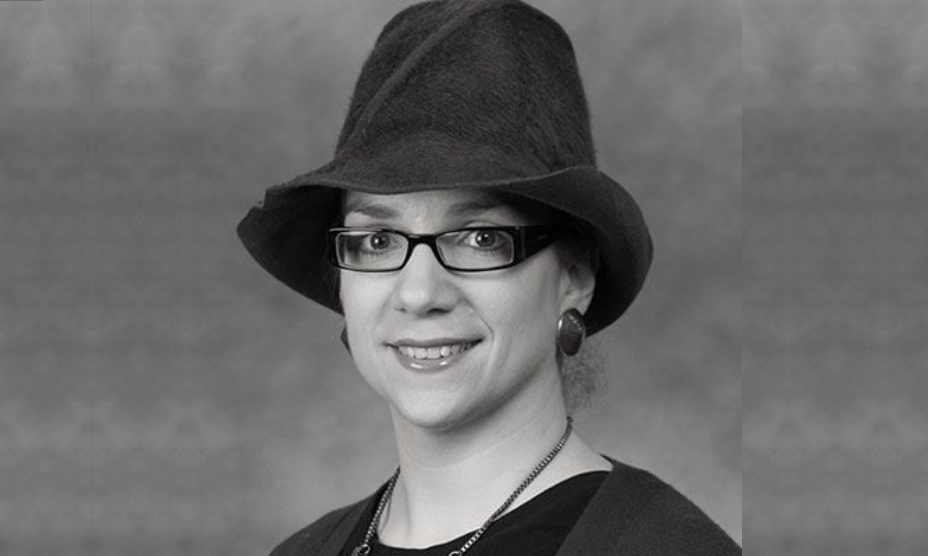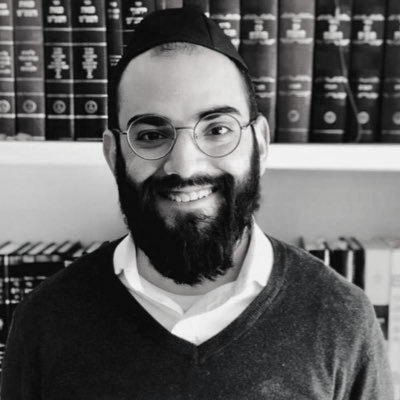
Shoshana Judelman joins us to discuss Jewish mysticism and the power of prayer.
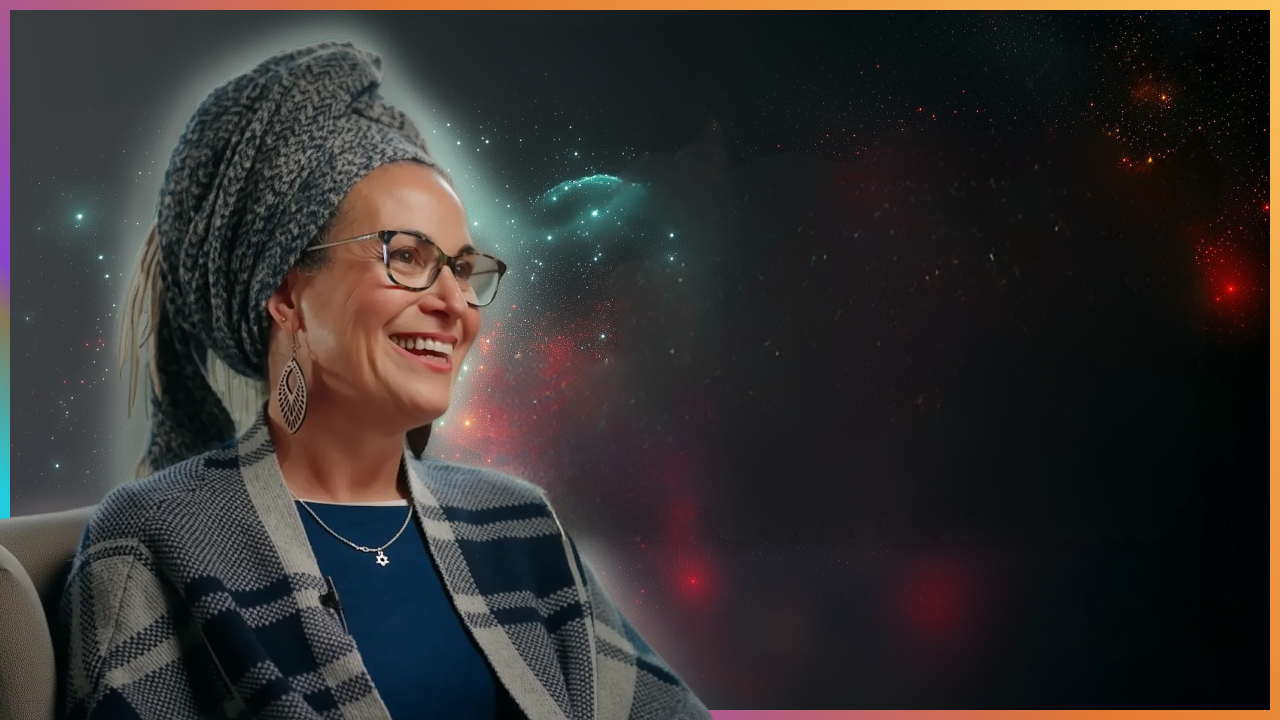
This podcast is in partnership with Rabbi Benji Levy and Share. Learn more at 40mystics.com.
For Rabbanit Shoshana Judelman, mysticism is a lens through which one can see through God’s reality and recognize the divine hand in world events and personal growth.
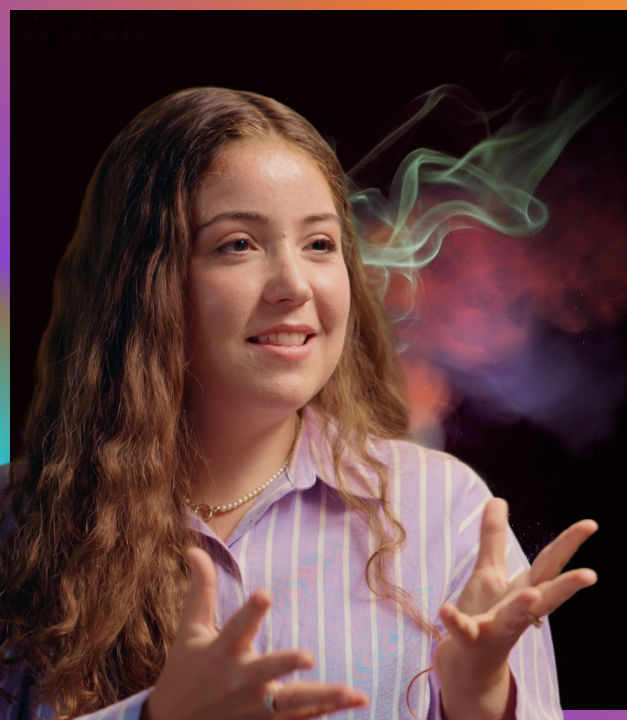
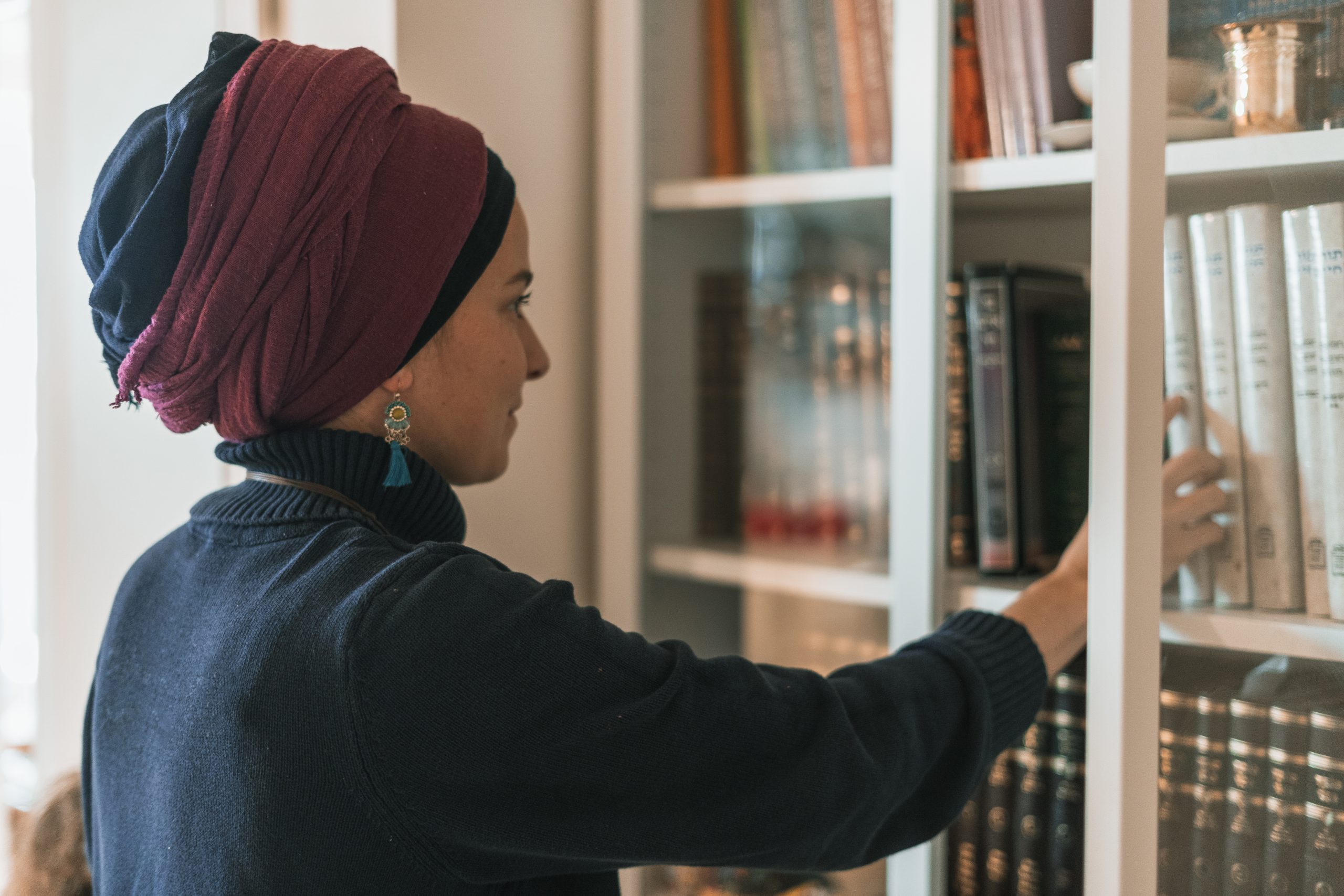
Shoshana Judelman is a passionate educator of Torah and Jewish history. Shoshana serves as the Women’s Mashpia for Congregation Shirat David, is a guide at Yad Vashem and leads inspirational trips for women with JRoots through Europe and Israel.
Now, she sits down with Rabbi Dr. Benji Levy to answer eighteen questions on Jewish mysticism including the power of prayer and the universal applications of Jewish mysticism.
RABBI DR BENJI LEVY. Rabbanit Shoshana Judelman, it’s such an honor to be sitting with you here by the hills of Jerusalem to have a conversation about Jewish mysticism. You are a teacher at Midreshet Rachel, you teach women across Israel, and you lead trips with JRoots all across Eastern Europe. Thank you for joining us.
RABBANIT SHOSHANA JUDELMAN. Thank you so much for having me.
LEVY. So, what is Jewish mysticism?
JUDELMAN. Ah, Jewish mysticism is the best thing in the world. It’s a lens through which we can try to see what is really happening beneath the surface of the world. I once heard a term called “seeing through God’s reality,” and that really stuck with me. To look at everyday life events and things that happen on a national level, on an international level, and on a personal level, and first to understand that this is Hashem [God] working world events for you to become the person that He knows that you can become. And when you see things through that lens, it just changes your whole experience in this world and everything deepens, everything becomes more meaningful and also more hopeful because you know that Hashem is in charge. And I think Jewish mysticism is like learning the texts and trying to live with that outlook of seeing Hashem’s hand in everything.
LEVY. So you grew up in New Jersey, you spent significant time in Australia, and you live in Efrat. Where did your interaction, your encounter, your journey with Jewish mysticism begin?
JUDELMAN. Oh wow. Actually, it began without me even really knowing it. I was born in Chicago. We lived in Long Island and then we moved to Livingston, New Jersey. And in Livingston, we had a rabbi, Rabbi Moshe Kasinetz, alav hashalom [peace be upon him]. He passed away a couple of years ago. He was the rabbi of Suburban Torah Center, which was an Orthodox shul [synagogue] in Livingston, and I went to him to learn for my bat mitzva. And he taught me Chasidut [Hasidism] without me knowing that it was Chasidut. My birthday is on Chanukka, so everything we talked about was darkness and light and how a little light can dispel a great deal of darkness. And I didn’t realize that was Chasidut [Hasidism], I just thought, okay, Torah, that’s Torah. I was not – we were not an observant family. We were very connected to our Jewish identity and to our Jewish roots, but we did not keep halacha [Jewish law]. And I was just learning for my bat mitzva. But those ideas stayed with me, and many, many years later, after high school and after university, I was given the opportunity to go to Rabbi Manis Friedman’s Bais Chana Women’s Institute in Minnesota. And when I reencountered the ideas of Chasidut there, I realized that the seed had been planted in me many, many years before, and it just felt like coming home.
LEVY. So in an ideal world, would all Jews be mystics?
JUDELMAN. I don’t know. The term mystic is such a funny one. In an ideal world, all Jews, I think, could see the world through the lens of mysticism, of a deeper reality. I feel like when you say, is someone a mystic, it sounds like they live on a mountaintop somewhere, and of course we learn in Chasidut [Hasidism] that that wasn’t Hashem’s plan. We’re not supposed to go and meditate up on the mountaintop and shy away from the world, but rather [we should] draw down His light into this world and bring up the world by doing that, you know, bring it to a higher level.
LEVY. You talk about His light, you talk about this God concept. What is God?
JUDELMAN. God is everything. God is everything.1 God is the breath that I take, God is the breath that you take, God is our bodies and the buildings around us and the world around us. All of the energy that is in the world is really Hashem. And because Hashem is really all of reality, so the whole world is really Hashem experiencing life through us in a way, right? So I’m like a Shoshana-shaped Hashem, like Hashem living through the lens of my experience and my history and my reactions. And through that, there’s like a growth process, a growth that happens, like more of – I don’t know, it’s hard – I can’t say that Hashem is growing, you know, but He’s experiencing different things. So He’s everything, and He’s in us, and He’s truth. He’s truth.2
LEVY. What’s the purpose of the Jewish people then?
JUDELMAN. I think the purpose of the Jewish people is to draw down,3 like you said, His light, blessings. I mean, the sources tell us that it’s through us that the rest of the world receives berachot [blessings]. Abraham was told the bracha [blessing],4 like you’re going to be a bracha, you’re going to be a blessing for the world. And so the Jewish people are like the vessel through which that blessing comes into the world.5 And it’s a big responsibility. We are called the chosen people, and it’s a well-known phrase now to say we are chosen to do something. We are chosen to take on this responsibility of teaching Hashem’s truth to the world, of being a light unto the nations, of trying to really – I really think that the whole world, all of life, is about trying to grow. Constantly, constantly trying to grow. And if you’re constantly trying to grow with the Hashem piece in the picture, trying to grow in Hashem’s reality, then that’s what we were put here to do.
And through our growth and our own personal healing of our own, really on a microcosmic level, like our own personal issues, it has a huge effect on the world because then we interact with people differently. If I’m in a store and I get triggered by somebody in the store and I start being not nice to them or yelling at them or whatever it is, then the rest of their day is messed up and they spread the bad energy on and on and on. The opposite of that, of course, is if I’m working on myself and someone bangs into me in the store and I just smile and I say, no problem. And I help them pick up their stuff and they help me pick up mine and I smile, then they leave and I leave and we’ve both had a more positive interaction. Then they may go and have a more positive interaction with the next person, then the next person, and the next person. Really, I think it happens on that small level, and that’s the responsibility of the Jewish people: to be working on ourselves so that we can be spreading that positive energy.
LEVY. How does prayer work?
JUDELMAN. Well, I’m really into learning about tefilla [prayer] right now, actually. And I think my favorite concept of prayer is – well, really the Lubavitcher Rabbi said we shouldn’t call it prayer, we should call it tefilla because prayer has this connotation of requesting something, and tefilla means to connect.6 So in the book BeYam Darkecha, which is a book of Chasidut, of Pnimiut HaTorah, of the inner aspects of the Torah, the author brings down this idea that it would be lovely for everybody to think of tefilla [prayer] as having coffee with Hashem every day.7 Sometimes you go and you meet a friend for coffee and it’s amazing and you come away and you’re really inspired. And you had this great conversation and it shines light on the rest of your day. And sometimes you have coffee with a friend and it’s like, meh, it’s okay, I saw my friend and that was it. And you walk away and you go on with the rest of your day.
And he says that we expect so much of ourselves in tefilla [prayer]. We expect every session of tefilla to be this awesome, illuminating experience, and then we walk away. If we haven’t had that [experience] we feel like it was a failure. And so his suggestion is to think of it as having coffee with Hashem every day and just by opening up the siddur, the prayer book, the book of tefillot [prayers], we can show that desire. I’m showing Hashem that I want to connect to You, I want to have this ongoing relationship with You, I want to have coffee with You today. And sometimes it’s going to be great and sometimes it’s not going to be great, but it’s an expression of wanting to have a relationship. And I think really that’s what tefilla is: it’s connection, it’s relationship, it’s me showing up and saying, I want You in my life, and please be in my life, please show Yourself in my life.
LEVY. And what’s the goal of Torah study?
JUDELMAN. Same. But Torah study is more – you can’t have tefilla [prayer] without Torah and you can’t have Torah without tefilla. That’s why Tehillim, Psalms, is so powerful because it’s actually both in one. But I think Torah hits in a different place; it hits us in a more intellectual place and we try to grapple with understanding Hashem.
My favorite explanation of Torah is actually from Tanya.8 The Alter Rabbi says that the experience of opening up any book of Torah has the element of what he calls anochi.9 So “anochi,” which means I, is the first word of the Ten Commandments, the first word that Hashem said to us, to the Jewish people. And in the Gemara10 it says that anochi is an acronym for ana nafshi ktavit yehavit, which means, I put Myself in My writings and I gave them to you. And the Alter Rabbi says that it’s essentially Hashem, through His wondrous ways, He took His infinity and He put it into the words of Torah. And therefore, whenever you open up [books of] Torah to learn Torah – and it could be any of the five books of Moses, or all of the books of Tanach, or books that explain Tanach – that really when you’re opening up the book, you’re having a face-to-face – you know, Hashem doesn’t have a face, but we say that – imagine that, that I’m having a one-on-one, direction-to-direction interaction with Hashem. And the Alter Rabbi actually says you don’t even need to understand what you’re reading in those words because really just reading the words is like this immediate connection. And then understanding adds a whole other layer to that.
LEVY. Does Jewish mysticism view women and men as the same?
JUDELMAN. No. No, women and men are not the same. Jewish mysticism is truth, and so it brings out the roles. There are different roles in Jewish life, different mitzvot, different commandments or ways of connecting for men that enable men to bring out what they need to bring out, and there are certain ways of connecting that enable women to bring out what we need to bring out. Of course, on a deeper level, there’s masculine and feminine, and really we all have masculine and feminine aspects in us. So there’s the physical men and women, and then there’s the spiritual masculine and feminine, and none of them are the same. And we really need to nurture, on a spiritual level, both sides of ourselves, the masculine side and the feminine side. And again, it’s with different roles because they’re different energies, just like physical men and women are different energies.
LEVY. Is Judaism meant to be hard or easy?
JUDELMAN. I think it’s meant to be easy, but I think we make it really hard. I don’t think that Hashem wanted us to – you know, every year a friend of mine sends me a little cartoon, and it’s like – sometimes we get crazy around Passover trying to make our houses as kosher as possible. And it’s a picture of a whole house that has tin foil all over everything, and then it’s an image of Hashem’s eyes looking down from above and He’s saying, I said don’t eat bread. You know, like you’re taking it too far.
So I think we sometimes make it more complicated, and really at its heart – but we’re seeking. We’re seeking, and so we want to always want to understand Hashem, and so we find many, many different ways of trying to understand Him and trying to grasp Him. And so we add layers and layers and layers and layers. But if we really take deep breaths and we really re-center ourselves, at our core, the Alter Rabbi says,11 of course, that we all have a godly soul inside of us. And so at our core, we’re already connected to Hashem. And sometimes it’s good to just take a deep breath and back off and get out of our own way and reconnect to the easy connection that’s actually inside of us.
LEVY. And so why did God create the world?
JUDELMAN. In Chasidut [Hasidism] it teaches that He just had a desire.12 He had a desire. Really, people are the only creation that can have a relationship with Hashem because we’re the only creation that has free choice. So a pillow doesn’t have free choice, and a tree doesn’t have free choice, but people do have free choice and we can choose to engage and to have a relationship or turn away from Hashem. And when a tree does what Hashem created it to do, or an animal does what Hashem created it to do, of course Hashem has nachat, He has pride and He has enjoyment. But there’s something about when people have free choice and we can choose not to have a relationship with Hashem, so when we do choose to have a relationship, that fills something that Hashem wanted, that He needed to create the world in order to have.
LEVY. So you said part of it is this free choice thing. Does that mean we can do something against God’s will?
JUDELMAN. So we can do something that is the harder way. I don’t think we can do anything that’s against God’s will because really everything is how Hashem is making it happen. That’s what the Baal Shem Tov13 taught us: everything is hashgacha pratit [divine intervention], Hashem is controlling every single leaf on every single tree and every single breath and gust of wind and everything. But at the level that we’re conscious of, we do have free choice. And so we can choose to go – Hashem knows we’re going to get to point Z, let’s say, right? But I can go from A to D or I can go from A to B, and therein lies what I think is my free choice. I’m still going to ultimately get to where Hashem wants me to go, but I can take longer to get there and it can take me longer to learn the lessons that I need to learn.
LEVY. So I feel like it’s taking humanity a while, but we’re trying to get where God wants us to go, which is ultimately this place or the space of Mashiach [the Messiah]. When I say Mashiach, what comes to mind for you? What does it mean?
JUDELMAN. Clarity. That’s what comes to mind. Mashiach [the Messiah], I think, would feel like the clarity of knowing. I feel like we’re supposed to feel Hashem’s presence in our life, and it’s very challenging. We all have moments here or there where if I stand on one foot and I squint my eyes I can see Hashem in my – but I think that really feeling held by Hashem would offer us a level of clarity that we don’t yet have.
And sometimes people [might think it] means that there’s not going to be any more growth because right now growth is very painful for us, and it’s a very long process, and it seems like it’s a very hidden process. And I tell my students that it is like gymnasts. Gymnasts are always going to the next level and the next level and the next level, so there’s an endless amount of growth, but you can reach a point where you’re growing sort of exponentially or you’re growing in a less painful way. And that to me sounds like geula [redemption] or I think that would be like – that’s what I’m imagining. That’s what I want so badly – to grow and to have clarity. So I think we all kind of imagine geula [redemption], in a way, in our most painful thing being taken away. That’s geula.
LEVY. So is the State of Israel a part of the final redemption?
JUDELMAN. For sure. For sure. Definitely, we’re not there yet, but yeah, just like the Jewish people are the vessel through which blessings come into the world, so too it all comes through Eretz Yisrael, through the Land of Israel. And the Jewish people in the Land of Israel creates an amazing energy that draws that life force into the world, draws those blessings down into the world when we’re behaving in our best way in the Land of Israel. So it’s an essential piece of the final redemption.
LEVY. What’s the greatest challenge facing the world today?
JUDELMAN. I actually think that our greatest challenge is as individuals facing our own demons. Like each one of us is sort of locked into our own personal struggle, and that ends up translating into dysfunctional relationships and ego-based reactions to things. And so it’s like the pebble in the – right, exactly, the ripple effect. So I think the greatest challenge is for us to do our own personal healing, face our own demons, face our own stuff, uncover, unlayer, deal with all the issues that we need to deal with. And I think the greatest, really the greatest challenge is realizing that and then doing it.
LEVY. Well now we know it. How has modernity changed Jewish mysticism?
JUDELMAN. Oh wow. It’s much more accessible. I’m a woman; I would not have had access to mysticism hundreds of years ago or even, let’s say, 100 years ago the same way that I do now. I think that the Lubavitcher Rabbi14 always was ahead of his time in terms of using modern technology for kedusha, for holiness, for good things. And really he saw, you know, Chabad.org was like a frontrunner on the web. And now mysticism is so accessible. It’s accessible no matter where you are in the world. If you have reception, if you have internet access, you can access it. And also for the English-speaking audience, more and more things are being translated in a beautiful way and there are more and more resources online.
So I don’t think mysticism has changed, but our access to it [has changed] and therefore, like when I read something, I’m bringing my own personal lens to it. I’m a woman living in 2025; I’m living in the Land of Israel. I live a certain way, I have a certain viewpoint, and so my explanation, how I teach that piece of Chasidut [Hasidism], that piece of mysticism, is going to be very, very different than how it was taught, let’s say, fifty years ago by someone else. So we keep on bringing more and more explanations. I read something the other day, it was so beautiful. It said that Jewish ideas are like a crystal and depending on where you stand you see different facets. So I think from our vantage point of modernity many, many more facets have been opened up for us.
LEVY. Well it’s also like a crystal that reflects and refracts the light. So in terms of Jewish mysticism versus other mysticisms, is there something different than other mystical traditions, is there something unique?
JUDELMAN. You know what, I’m not an expert in other mysticisms so I don’t really know. That wasn’t my path. I was not religious, I was not observant, but I was always very connected to Jewish history and my Jewish identity. So when I was seeking something, I was lucky enough to really seek it already in Judaism.
LEVY. Does one need to be religious to study Jewish mysticism?
JUDELMAN. No, and I think actually – but it helps. Because there’s light and there’s vessels. And you have to have them together. Light is beautiful and amazing and that’s what we’ve been talking about this whole time, but when it’s contained in a framework it becomes much, much more powerful. It becomes usable, it becomes something that can change your life and not just fly away and be inspirational for one minute and then get lost, dissipated. So I think the halachot, the laws within Torah, provide for us the framework to hold the light. So I don’t think you need to be religious to learn mysticism, but I think mysticism when learned in a way of trying to become closer to Hashem – which is really what it’s for – that’s the healthiest way of approaching it. I think it will naturally lead to building a relationship, and part of the relationship is what Hashem wants from us, which is the Torah that He gave us, which has laws in it, which are the framework.
LEVY. Can it be dangerous? Can Jewish mysticism be dangerous?
JUDELMAN. Anything can be dangerous. Anything can be dangerous when learned from an unhealthy vantage point or with unhealthy intentions. So yeah, yeah.
LEVY. And how has it affected your life personally? Like in a very personal way as a mother, as a wife, as a teacher, or just even through your own journeys you’re going through, how has Jewish mysticism provided help in that way?
JUDELMAN. Everything. It gave me everything. Very personally, I’m in the middle of a cancer journey right now. About two months ago I got a breast cancer diagnosis. And I really felt – it was actually erev Yom Kippur [Yom Kippur eve], and we got the news, we got the reports back from the tests. And in that moment, I actually felt like the first thing that popped into my head was that it was like Hashem saying, “Okay, you’ve been learning this for a really long time; here, now you get to put it into practice.” And to receive that news is obviously life-changing, and I was really blessed to feel it with light, to feel like Hashem is giving me this journey, actually with a lot of love. And I have to go through this journey and it’s not an easy one and it’s not painless, but it actually was a gift of me actually being able to feel His presence in a more real way than ever before in my life. And so Chasidut gave that to me, mysticism gave that to me. I mean, if my life had veered off in a different course and I still got this news, I don’t know how I would have received it. And this, my constant work, and my constant returning to the sources, and returning to the books of Chasidut, and returning to the teachers that bring light into my life helped me to receive this news with light and I’m so grateful.
LEVY. So there wasn’t resentment or anger; you felt that this is God increasing His presence in your life?
JUDELMAN. Does that sound crazy?
LEVY. It’s inspiring.
JUDELMAN. Yeah, yeah, I really felt it that way. I really still feel it that way. I mean, I’m in the middle. So I’m feeling that right now. I can’t tell you how much love and how much going through this has brought into my home and into my family from my community, from friends, from family. Baruch Hashem, I thank God, I live in a beautiful, beautiful community in Efrat. I go to Shirat David [synagogue], I’m a member there, I teach women there, and it’s a real, real community. And it’s such a privilege to be a part of it and it’s in moments like this where you see the strength of Jewish community and my community particularly, because I’m experiencing it through them with the kindnesses and the tefillot, the blessings, the prayers that have been directed my way, the good wishes, the messages, and the meals, on a practical side. It has just been overwhelming in the best way.
LEVY. I think that is such a powerful lesson for each and every one of us, as is every answer you’ve shared, but I’d love to end with one teaching, as the teaching that guides you and you teach so many. What’s something that resonates now, that inspires you, that animates you that you can share with everyone listening?
JUDELMAN. My favorite Torah is from Rabbi Levi Yitzchak of Berditchev, who we know was a great lover of Jews, a great advocate for Am Yisrael, for the Jewish people. And it’s based on the last chapter of Psalms, the last kapitel in Tehillim, chapter 150. It says the last line is “Kol hanshama tehalel ka,” which is translated normally as: All who breathe should praise Hashem, essentially. And in the Gemara, it says actually, and in the Midrash on the Gemara, it says you can read it not as: All who breathe should thank Hashem, but: With every breath thank Hashem. And the word neshama [soul] and neshima [breath] in Hebrew is the same thing: every soul, every breath.15
And Rabbi Levi Yitzchak,16 he says it’s such a beautiful thing, it’s such a wondrous thing. An exhale, if you think about it, is essentially your life force leaving your body, right? After 120 – with Mashiach [the Messiah] we won’t even need to say that, but you know, a person should live a long life, but the final thing that they do in this world is an exhale. And essentially every exhale has that potential, you know. It’s the soul kind of leaving the body, the life force leaving the body; the life force wants to connect back up to its source. But then what happens? We inhale. And what is that inhale? It’s Hashem returning your life force to your body, sending you back a new breath. And he says this is Hashem recreating you in this moment, and it’s everything. It’s hope, it’s Hashem saying to you, “I believe in you,” and not only that, “I need you here. There’s more work for you to do here, and I’m with you in this work, I’m giving you the koach [strength], I’m giving you the energy to do this work.”
And that just changed my life when I heard it. I actually have asthma, so breathing is a lot on my mind. And it’s such a tangible, accessible Torah because – I’m going to bless myself to practice this more mindfully, more often, but really when I have moments of doubt and I can feel myself breathing and I take in a breath, this Torah comes back to me, this idea comes back to me, and it gives me so much faith and just strength that it’s like, oh yeah, oh yeah Hashem, You’re with me. You’re giving me that breath, and now I can take another breath, and You’re with me and we’ll sort this out. And we’ll take the next step and it’s as close as the next breath.
LEVY. It’s a crazy concept that we need to breathe in and out.
JUDELMAN. Right. Right?
LEVY. Because breathing out is almost like taking a risk, will you breathe in again? There is that holding that breath moment. And God is there every step of the way without us even being conscious of it. So we give you a blessing like you gave yourself a blessing: [just] as you shared very personally going through something difficult now, but you’re taking it with so much in your stride and inspiring each of us, we continue to pray for you that you strengthen through this process and that through that strength of that process you can strengthen others. That you become very healthy with a lot of beautiful breaths, deeply inhaling and then exhaling but knowing that you’ll be able to re-inhale that. And you really breathe that life force as God does through you; you breathe it into all those you teach, all those you connect with every step of the way. Thank you so much.
JUDELMAN. Amen, amen. Thank you so much.
LEVY. Thank you.
How can our generation understanding mysticism, philosophy, and suffering in today’s chaotic world?
Haviv answers 18 questions on Israel.
David Bashevkin speaks about the late, great comedian Garry Shalndling in honor of his 10th yahrzeit, which is this Purim.
We speak with Yehuda Geberer about the history of the yeshiva world.
We speak with Rabbi Aaron Kotler about the beginnings of the American yeshiva world.
In this episode of the 18Forty Podcast, David is joined by comedian Alex Edelman for a special Purim discussion exploring the place of humor and levity in a world that often demands our solemnity.
Micah Goodman doesn’t think Palestinian-Israeli peace will happen within his lifetime. But he’s still a hopeful person.
In this episode of the 18Forty Podcast, we talk to historian and professor Pawel Maciejko about the false messiah Sabbatai Zevi, Sabbateanism, and the roots of Jewish secularism.
The true enemy in Israel’s current war, Einat Wilf says, is what she calls “Palestinianism.”
In this episode of the 18Forty Podcast, we talk to Judah, Naomi, and Aharon Akiva Dardik—an olim family whose son went to military jail for refusing to follow to IDF orders and has since become a ceasefire activist at Columbia University—about sticking together as a family despite their fundamental differences.
In this episode of the 18Forty Podcast, we talk to Rabbi Josh Grajower – rabbi and educator – about the loss of his wife, as well as the loss that Tisha B’Av represents for the Jewish People.
Rabbi David Aaron joins us to discuss ease, humanity, and the difference between men and women.
In this special Purim episode of the 18Forty Podcast, we bring you a recording from our live event with the comedian Modi, for our annual discussion on humor.
Prime Minister Benjamin Netanyahu did not surprise Anshel Pfeffer over the last 17 months of war—and that’s the most disappointing part.
In this episode of the 18Forty Podcast, we talk to Lizzy Savetsky, who went from a career in singing and fashion to being a Jewish activist and influencer, about her work advocating for Israel online.
In this episode of the 18Forty Podcast, we talk to Rabbi Menachem Penner—dean of RIETS at Yeshiva University—and his son Gedalia—a musician, cantor-in-training, and member of the LGBTQ community—about their experience in reconciling their family’s religious tradition with Gedalia’s sexual orientation.
In this episode of the 18Forty Podcast, we talk to a son who almost intermarried, the mother of a daughter who married a non-Jew, and Huvi and Brian, a couple whose intermarriage turned into a Jewish marriage—about intergenerational divergence in the context of intermarriage.
We speak with Professors Elisheva Carlebach and Debra Kaplan about women’s religious, social, and communal roles in early modern Jewish life.
Israel is facing several existential crises—at least three, by Netta Barak-Corren’s account.
In this episode of the 18Forty Podcast, we sit down for a special podcast with our host, David Bashevkin, to discuss the podcast’s namesake, the year 1840.
In this episode of the 18Forty Podcast, we talk to Aliza and Ephraim Bulow, a married couple whose religious paths diverged over the course of their shared life.
Israel is a heroic country, Michael Oren believes—but he concedes that it is a flawed heroic country.
In this episode of the 18Forty Podcast, David sits down with Leah Forster, a world-famous ex-Hasidic comedian, to talk about how her journey has affected her comedy.
In this episode of the 18Forty Podcast, we pivot to Intergenerational Divergence by talking to Rachel Yehuda, a professor of psychiatry and neuroscience, about intergenerational trauma and intergenerational resilience.
Perhaps the most fundamental question any religious believer can ask is: “Does God exist?” It’s time we find good answers.
For some, Purim is the triumph of exile transformed. For others, it warns that exile can never replace the Land of Israel.
We spend our lives searching for clarity. Parshat Ki Tisa suggests that the most meaningful encounters may happen precisely where clarity ends.
A guide to the essential books that tell the story—past and present—of the American yeshiva world and its inner life.
The Book of Esther suggests that diaspora is not merely a temporary or anomalous state but an integral part of Jewish history…
Christianity’s focus on the afterlife historically discouraged Jews from discussing it—but Jews very much believe in it.
Brother Jorge asks: Can we laugh at God? We might answer: We can laugh with God.
Two programs are already bridging the Orthodox and non-Orthodox divide through the timeless tradition of chavruta learning.
Divorce often upends emotional and financial stability. A Jewish organization in Los Angeles offers a better way forward.
Between early prayer books, kabbalistic additions, and the printing press, the siddur we have today is filled with prayers from across history.
The “way” of myself and other formerly Reform Jews is unclear, but our desire for spiritual growth is sincere.
Dr. Judith Herman has spent her career helping those who are going through trauma, and has provided far-reaching insight into the field.
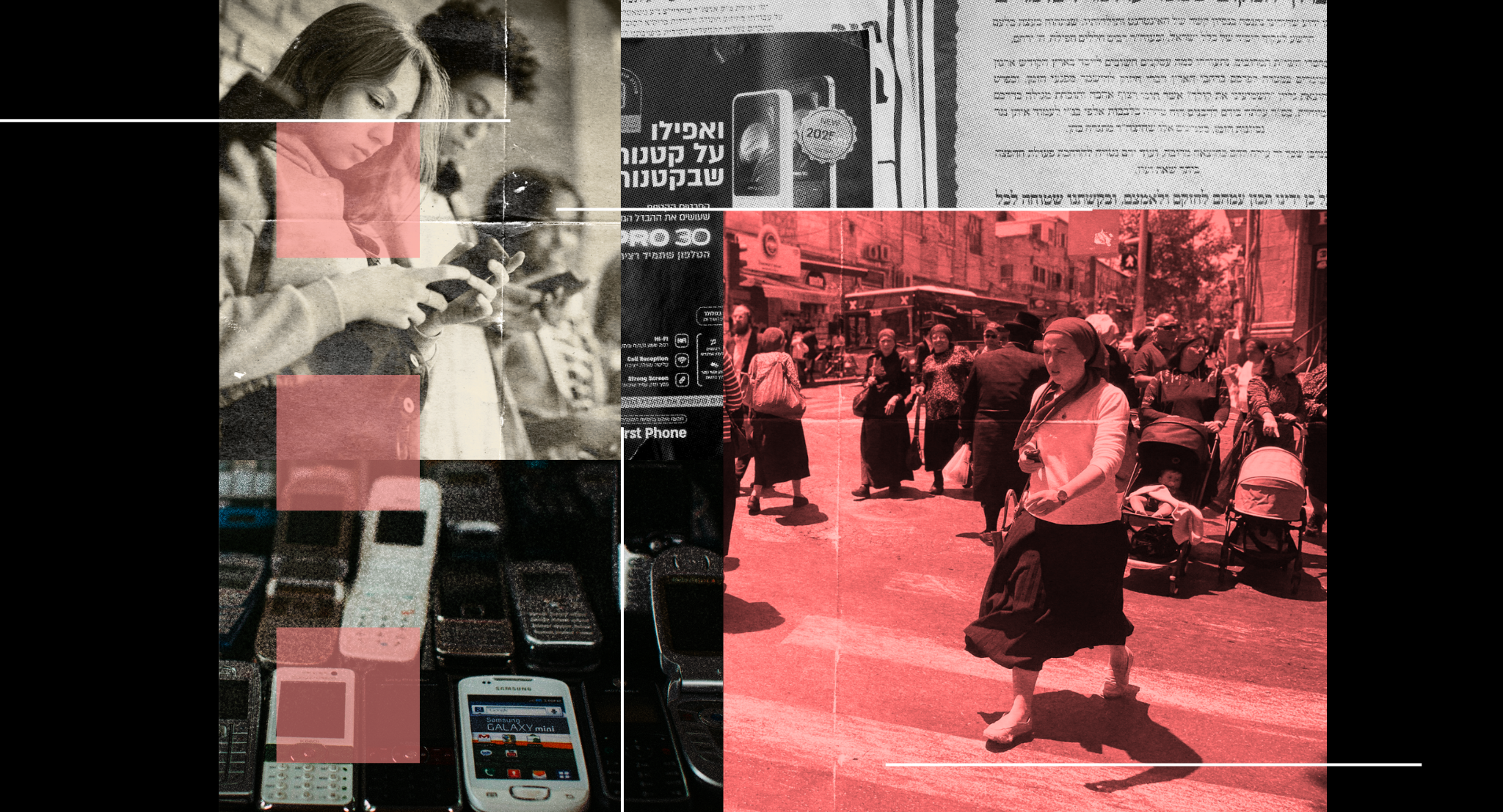
Kosher phones make calls and send texts. No Instagram, no TikTok, and no distractions. Maybe it’s time the world embraces them.
To talk about the history of Jewish mysticism is in many ways to talk about the history of the mystical community.
Israeli minister Itamar Ben-Gvir wears the mantle of Kahane in Israel. Many Orthodox Jews welcomed him with open arms.
A bedrock principle of Orthodox Judaism is that we received not only the Written Torah at Sinai but also the oral one—does…
Identity, desire, women in fiction, and more: What we’re reading before Purim.
Children cannot truly avoid the consequences of estrangement. Their parents’ shadow will always follow.
Religious Zionism is a spectrum—and I would place my Hardal community on the right of that spectrum.
God promised the Land of Israel to the Jewish People, so why are some rabbis anti-Zionists?
Our Sages compiled tractates on the laws of blessings, Pesach, purity, and so much more. What did they have to say about…
Jews from the Land of Israel prayed differently than we do today—with marked difference. What happened to their traditions?
Jewish denominational labels are only 200-year-old labels. So why do they govern so much of modern Jewish life?
We interviewed this leading Israeli historian on the critical questions on Israel today—and he had what to say.
In this special Simchas Torah episode of the 18Forty Podcast, we speak with Rachel Goldberg-Polin and Jon Polin—parents of murdered hostage Hersh…
In this episode of the 18Forty Podcast, we speak with Shais Taub, the rabbi behind the organization SoulWords, about shame, selfhood, and…
Why did this Hasidic Rebbe move from Poland to Israel, only to change his name, leave religion, and disappear to Los Angeles?
In this episode of the 18Forty Podcast, we speak with Diana Fersko, senior rabbi of the Village Temple Reform synagogue, about denominations…
We speak with Naftuli Moster about how and why he changed his understanding of the values imparted by Judaism.
In this episode of the 18Forty Podcast, we speak with Mark Wildes, founder and director of Manhattan Jewish Experience, about Modern Orthodox…
Rabbi Moshe Gersht first encountered the world of Chassidus at the age of twenty, the beginning of what he terms his “spiritual…
In this episode of the 18Forty Podcast—recorded at the 18Forty X ASFoundation AI Summit—we speak with Rabbi Eli Rubin and Rabbi Steven…
On this 18Forty panel, we speak with Alex Jakubowski of Lightning Studios, Sara Wolkenfeld of Sefaria, and Ari Lamm of BZ Media…
In this episode of the 18Forty Podcast, David Bashevkin answers questions from Diana Fersko, senior rabbi of the Village Temple Reform synagogue,…
In a disenchanted world, we can turn to mysticism to find enchantment, to remember that there is something more under the surface…
What has been Israel’s greatest success and greatest mistake?
We speak with Joey Rosenfeld about how our generation can understand suffering.
In this episode of the 18Forty Podcast, recorded live at Stern College, we speak with Rabbi Moshe Benovitz, director of NCSY Kollel,…
In order to study Kabbalah, argues Rav Moshe Weinberger, one must approach it with humility.
Support Jewish explorations today by supporting 18Forty. Your partnership makes our work possible.
Donate today.