

Begin exploring
today’s
biggest Jewish
questions…
×

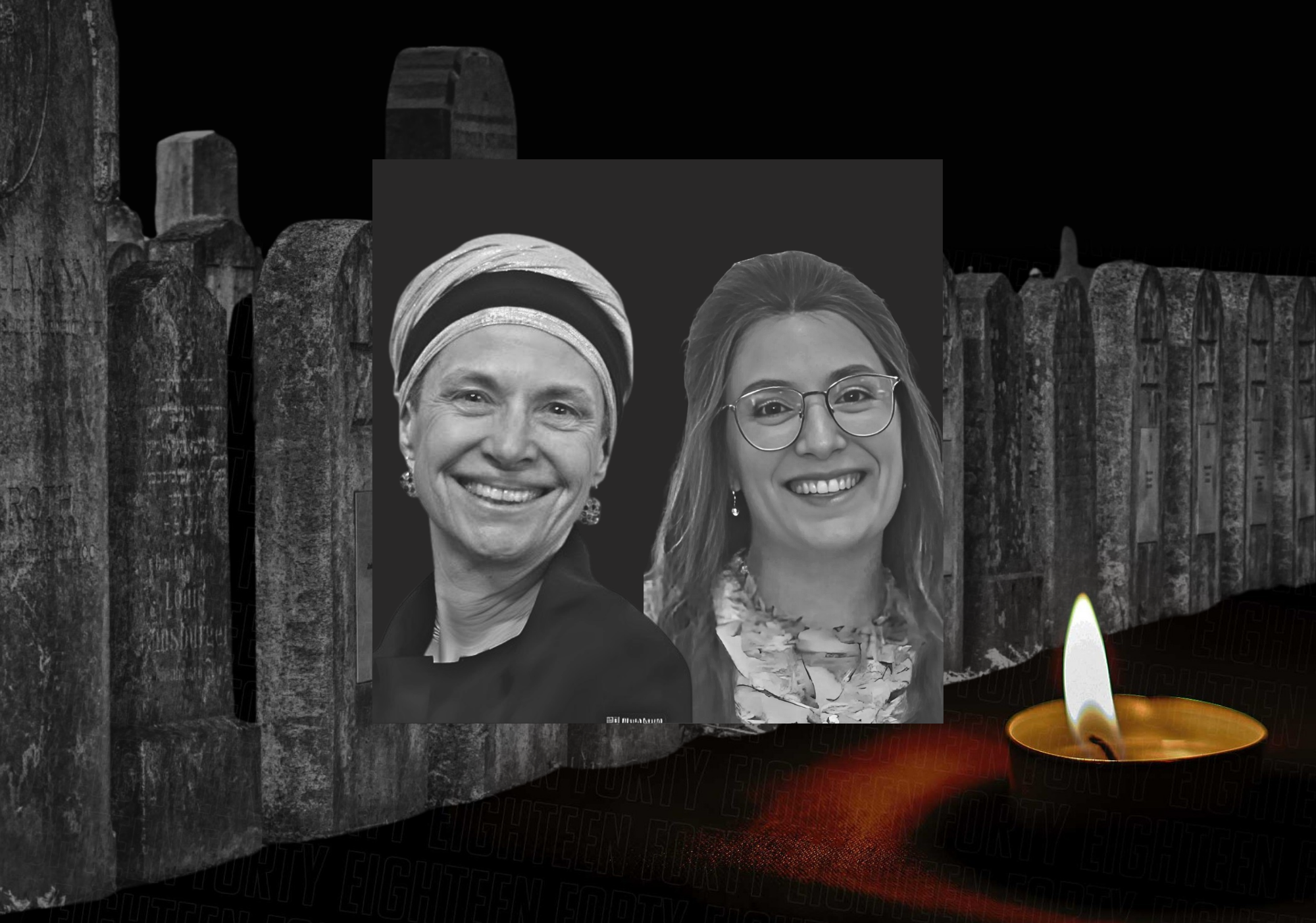
Elissa Felder & Sonia Hoffman: How the Jewish Burial Society Cares for the Dead
Elissa Felder and Sonia Hoffman serve on a chevra kadisha and teach us about confronting death.
Summary
In this episode of the 18Forty Podcast, we talk to author Elissa Felder and her daughter Sonia Hoffman—both of whom have experienced the loss of a child and serve on a chevra kadisha—about what the Jewish burial society teaches us about confronting death. In this episode we discuss:
- How does the process of purifying a dead body work—and how is it possible to purify a dead body at all?
- What Kabbalistic practices are performed by chevra kadisha to bring dignity to the body and soul?
- How can we “normalize” discussions about grief and death?
Tune in to hear a conversation about how care for the deceased is a “love story” between the Jewish People and God.
Interview begins at 15:31.
Elissa Felder started and actively manages Core’s community of practice for women who serve on a traditional chevrah kadisha. The knowledge she acquired through her work motivated her to write From One Life to the Next Life; The Sacred Passage after Death, a memoir about the loss of her baby son. She is the head of her local chevrah kadisha and speaks widely on this topic.
Sonia Hoffman is a Limmudei Kodesh teacher at Kohelet Yeshiva in Philadelphia. She is a daughter, mother, wife and member of the Bala Cynwyd community. She is also an active member of the Philadelphia Chevra Kadisha, having started during COVID to help with this mitzvah. After the loss of their daughter in 2016, she began speaking about her experience with loss and sharing resources with the community on ways in which we can move forward after tragedy. In addition, Sonia began hosting an annual event in her daughter’s memory to bring awareness to the community around the topic of infant loss and relationship with God.
For more 18Forty:
NEWSLETTER: 18forty.org/join
CALL: (212) 582-1840
EMAIL: info@18forty.org
WEBSITE: 18forty.org
IG: @18forty
X: @18_fortyWhatsApp: join here
Interview begins at 15:31.
Elissa Felder started and actively manages Core’s community of practice for women who serve on a traditional chevrah kadisha. The knowledge she acquired through her work motivated her to write From One Life to the Next Life; The Sacred Passage after Death, a memoir about the loss of her baby son. She is the head of her local chevrah kadisha and speaks widely on this topic.
Sonia Hoffman is a Limmudei Kodesh teacher at Kohelet Yeshiva in Philadelphia. She is a daughter, mother, wife and member of the Bala Cynwyd community. She is also an active member of the Philadelphia Chevra Kadisha, having started during COVID to help with this mitzvah. After the loss of their daughter in 2016, she began speaking about her experience with loss and sharing resources with the community on ways in which we can move forward after tragedy. In addition, Sonia began hosting an annual event in her daughter’s memory to bring awareness to the community around the topic of infant loss and relationship with God.
For more 18Forty:
NEWSLETTER: 18forty.org/join
CALL: (212) 582-1840
EMAIL: info@18forty.org
WEBSITE: 18forty.org
IG: @18forty
X: @18_fortyWhatsApp: join here
References
Teshuvot HaRadbaz Volume 3, 985
“Passing Through” by David Bashevkin
“Reconciling Opposites: Uncommon Connections in the Halakha of Mourning” by Emanuel Feldman
From One Life to the Next Life; The Sacred Passage after Death by Elissa Felder
The Wild Edge of Sorrow: Rituals of Renewal and the Sacred Work of Grief by Francis Weller
The Choice: Embrace the Possible by Dr. Edith Eva Eger
Consolation: The Spiritual Journey Beyond Grief by Maurice Lamm
Gesher Hachaim – The Bridge of Life by Rabbi Yechiel Michel Tucazinsky
Rabbi Yitzchak Hutner’s Theology of Meaning by Alon Shalev
Recommended Podcasts

podcast
Shaanan Gelman & His Son: When a Child Becomes Addicted
We talk to Rabbi Shaanan Gelman and his son Ziggy about the persistence of a parent-child relationship when the latter faces addiction.
podcast
David & Sydney Magerman: When a Child Makes Aliyah
We talk to David Magerman and his daughter Sydney, who decided to make aliyah while on her gap year in Israel.

podcast
Yakov Danishefsky: Transmitting the Jewish Story with Emotional Health
We talk to Yakov Danishefsky about the imperfect ways in which we transmit the Jewish story.
podcast
Menachem Penner & Gedalia Robinson: A Child’s Orientation
In this episode of the 18Forty Podcast, we talk to Rabbi Menachem Penner—dean of RIETS at Yeshiva University—and his son Gedalia—a musician, cantor-in-training, and member of the LGBTQ community—about their experience in reconciling their family’s religious tradition with Gedalia’s sexual orientation.
podcast
Haviv Rettig Gur: ‘Hamas is upset the death toll in Gaza isn’t higher’
Haviv answers 18 questions on Israel.
podcast
Micah Goodman: ‘I don’t want Gaza to become our Vietnam’
Micah Goodman doesn’t think Palestinian-Israeli peace will happen within his lifetime. But he’s still a hopeful person.
podcast
Einat Wilf: ‘Jews Are Never Allowed To Win, and Arabs Are Never Allowed to Lose’
The true enemy in Israel’s current war, Einat Wilf says, is what she calls “Palestinianism.”
podcast
Daniel Rowe: ‘It’s very easy to either idolatrize God or just misuse mystical teachings’
Rabbi Daniel Rowe joins us to discuss the inner dimensions of the Torah and how one can connect with the divine will.
podcast
Yehuda Geberer: What’s the History of the American Yeshiva World?
We speak with Yehuda Geberer about the history of the yeshiva world.
podcast
Tonia Chazanow: ‘Every soul has a story’
Tonia Chazanow joins us to discuss the role of the Jewish mystic, the goals of Torah study, and the potential dangers involved in studying mysticism.
podcast
Yakov Danishefsky: Religion and Mental Health: God and Us
In this episode of the 18Forty Podcast, we talk to Yakov Danishefsky—a rabbi, author and licensed social worker—about our relationships and our mental health.44

podcast
Leah Forster: Of Comedy and Community
In this episode of the 18Forty Podcast, David sits down with Leah Forster, a world-famous ex-Hasidic comedian, to talk about how her journey has affected her comedy.
podcast
Pawel Maciejko: Sabbateanism and the Roots of Secular Judaism
In this episode of the 18Forty Podcast, we talk to historian and professor Pawel Maciejko about the false messiah Sabbatai Zevi, Sabbateanism, and the roots of Jewish secularism.

podcast
Why 1840?
In this episode of the 18Forty Podcast, we sit down for a special podcast with our host, David Bashevkin, to discuss the podcast’s namesake, the year 1840.

podcast
The How and Why of Moving to Israel
In this episode of the 18Forty Podcast, we talk to a series of guests who have made aliyah about the practical factors involved with building a life in Israel.
podcast
The Dardik Family: A Child Moves Away From Zionism
In this episode of the 18Forty Podcast, we talk to Judah, Naomi, and Aharon Akiva Dardik—an olim family whose son went to military jail for refusing to follow to IDF orders and has since become a ceasefire activist at Columbia University—about sticking together as a family despite their fundamental differences.
podcast
Benny Morris: ‘We should have taken Rafah at the start’
Leading Israeli historian Benny Morris answers 18 questions on Israel, including Gaza, Palestinian-Israeli peace prospects, morality, and so much more.
podcast
Yossi Klein Halevi: ‘Anti-Zionism is an existential threat to the Jewish People’
Yossi answers 18 questions on Israel.
podcast
Daniel Statman: Can War Be Moral? On Moral Philosophy and War
In this episode of the 18Forty Podcast, we talk to Daniel Statman, a professor of philosophy at the University of Haifa, about what it means to wage a moral war.
podcast
Anita Shapira: ‘You cannot wipe out Hamas’
Leading Israel historian Anita Shapira answers 18 questions on Israel, including destroying Hamas, the crisis up North, and Israel’s future.
podcast
Jonathan Rosenblum: ‘Would you want to live in a country run by Haredim?’
Talking about the “Haredi community” is a misnomer, Jonathan Rosenblum says, and simplifies its diversity of thought and perspectives.

podcast
Rabbi Aryeh Lebowitz: A Healthy Relationship with Halacha
In this episode of the 18Forty Podcast, we talk to Rabbi Aryeh Lebowitz, the director of semicha at Rabbi Isaac Elchanan Theological Seminary (RIETS), about the development of halacha.
podcast
Yussie Zakutinsky: Connecting to a Disconnected Jewish People
In this episode of the 18Forty Podcast, we talk to Yussie Zakutinsky, rabbi of K’hal Mevakshei Hashem in Lawrence, New York, about his vision for a Judaism that unites the entire Jewish People—no matter how wide the gaps between us.
podcast
On Loss: A Child
Mirlana Morris talks about the loss of her son, Donny, and perpetuating the memory of a loved one.
Recommended Articles

Essays
Vayikra and the Shape of Sacrifice
If God has no need for offerings, why does the Torah devote an entire book to them—and what does that reveal about…

Essays
3 Arguments for God’s Existence
Perhaps the most fundamental question any religious believer can ask is: “Does God exist?” It’s time we find good answers.

Essays
A History of Jewish Belonging
In Parshat Vayikra, we are reminded that communal belonging lies at the heart of religious identity.

Essays
How to Read During a War
Notes from a mamad: How war kills intellectual curiosity, and why I picked up a book anyway

Essays
(What) Do Jews Believe About the Afterlife?
Christianity’s focus on the afterlife historically discouraged Jews from discussing it—but Jews very much believe in it.
Essays
A Letter to Parents of Intergenerational Divergees
Children don’t come with guarantees. Washing machines come with guarantees.

Essays
A Letter to Children Estranged From Their Parents
Children cannot truly avoid the consequences of estrangement. Their parents’ shadow will always follow.
Essays
Tzav: The Uneasy Economics of Holiness
Paying spiritual leaders can feel wrong. The Torah insists that it isn’t.
Essays
The Siddur Has a Lot of Prayers. Where Did They Come From?
Between early prayer books, kabbalistic additions, and the printing press, the siddur we have today is filled with prayers from across history.
Essays
How Archaeology Rewrote the History of Tefillin
From verses in Parshat Bo to desert caves, tefillin emerge as one of Judaism’s earliest embodied practices.
Essays
A Prayer for Israel to Add to Your Pesach Seder
Rabbi Yosef Zvi Rimon wrote this special prayer for Israel for Jews to recite at their Pesach Sedarim this year.

Essays
This Pesach, We Honor Our Disordered Love
Why does the night of order, of freedom and liberation, have so much disorder to it? Why is it so chaotic, disjointed?

Essays
Censorship Uncensored: A Timeline of Jewish Censorship
Over time, the advancement of thought and modernism in culture has led to the disagreement of how much should be shared and…
Essays
What Haredim Can Teach Us About Getting Off Our Smartphones
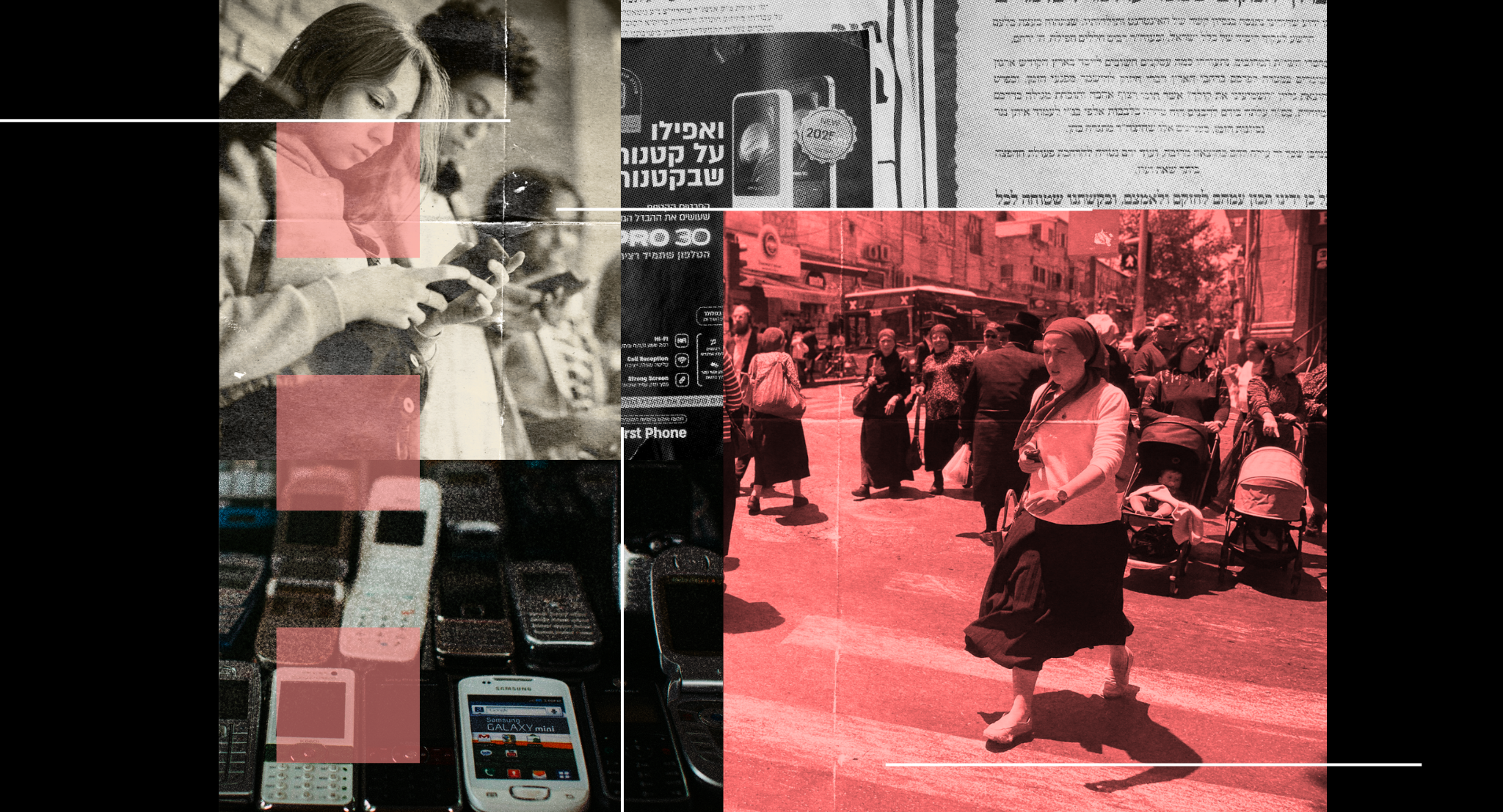
Kosher phones make calls and send texts. No Instagram, no TikTok, and no distractions. Maybe it’s time the world embraces them.

Essays
Judith Herman Is Giving Voice to Survivors
Dr. Judith Herman has spent her career helping those who are going through trauma, and has provided far-reaching insight into the field.
Essays
Diving Into The World of Mysticism
Joy and meaning can be found not only despite the brokenness, but even because of the brokenness.
Essays
Between Modern Orthodoxy and Religious Zionism: At Home as an Immigrant
My family made aliyah over a decade ago. Navigating our lives as American immigrants in Israel is a day-to-day balance.
Essays
The Hardal Community Explained: Torah, Am Yisrael, and Redemption
Religious Zionism is a spectrum—and I would place my Hardal community on the right of that spectrum.

Essays
A Brief History of Jewish Mysticism
To talk about the history of Jewish mysticism is in many ways to talk about the history of the mystical community.

Essays
Your Guide to Reading Rav Kook
I’d advise reading Rav Kook as you would read a poem, with an eye less to the argument or claim he is…
Essays
Is Judaism Fundamentally Zionist?
God promised the Land of Israel to the Jewish People, so why are some rabbis anti-Zionists?
Essays
Your Attachment Style, Applied to God
What the theory of relationships can tell us about our religious lives—and how we relate to God

Essays
This Might Be What Saves Us from AI
In Klara and the Sun, Kazuo Ishiguro asks us to reconsider what, if anything, separates humans from machines.

Essays
Edmond Jabès Had Questions—and He Learned to Live With Them
As the holiday of Passover approaches, we take a look into a man whose life was marked by questions: Edmond Jabès.
Recommended Videos

videos
Intergenerational Divergence

videos
An Orthodox Rabbi Interviews a Reform Rabbi | Dovid Bashevkin & Diana Fersko
In this episode of the 18Forty Podcast, we speak with Diana Fersko, senior rabbi of the Village Temple Reform synagogue, about denominations…

videos
Moshe Gersht: ‘The world of mysticism begs for practicality’
Rabbi Moshe Gersht first encountered the world of Chassidus at the age of twenty, the beginning of what he terms his “spiritual…
videos
A Reform Rabbi Interviews an Orthodox Rabbi | Dovid Bashevkin & Diana Fersko (Part 2)
In this episode of the 18Forty Podcast, David Bashevkin answers questions from Diana Fersko, senior rabbi of the Village Temple Reform synagogue,…
videos
Is Modern Orthodox kiruv the way forward for American Jews? | Dovid Bashevkin & Mark Wildes
In this episode of the 18Forty Podcast, we speak with Mark Wildes, founder and director of Manhattan Jewish Experience, about Modern Orthodox…
videos
Moshe Benovitz: Why Religious Change Doesn’t Always Last
In this episode of the 18Forty Podcast, recorded live at Stern College, we speak with Rabbi Moshe Benovitz, director of NCSY Kollel,…
videos
The Hasidic Rebbe Who Left it All — And Then Returned
Why did this Hasidic Rebbe move from Poland to Israel, only to change his name, leave religion, and disappear to Los Angeles?


videos
Five Years of 18Forty
18Forty helps users find meaning through the exploration of Jewish thought and ideas.

videos
Zevi Slavin: ‘To be a mystic is to be human at its most raw’
As a Chabad Hasid, Rabbi Zevi Slavin’s formative years were spent immersed in the rich traditions of Chassidut and Kabbala.
videos
Rationality
videos
We Asked Jews About AI. Here’s What They Said.
This series, recorded at the 18Forty X ASFoundation AI Summit, is sponsored by American Security Foundation.
videos
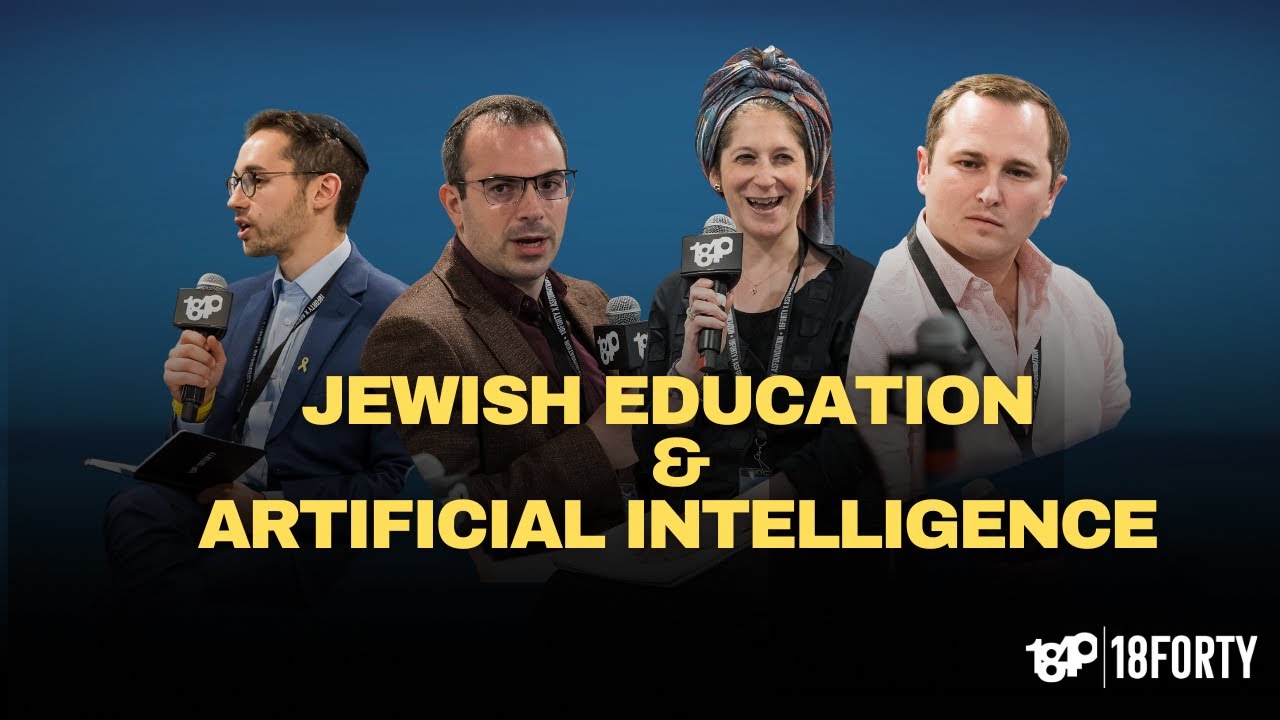
Torah Study and ChatGPT: How Should Jewish Education Respond to AI?
On this 18Forty panel, we speak with Alex Jakubowski of Lightning Studios, Sara Wolkenfeld of Sefaria, and Ari Lamm of BZ Media…