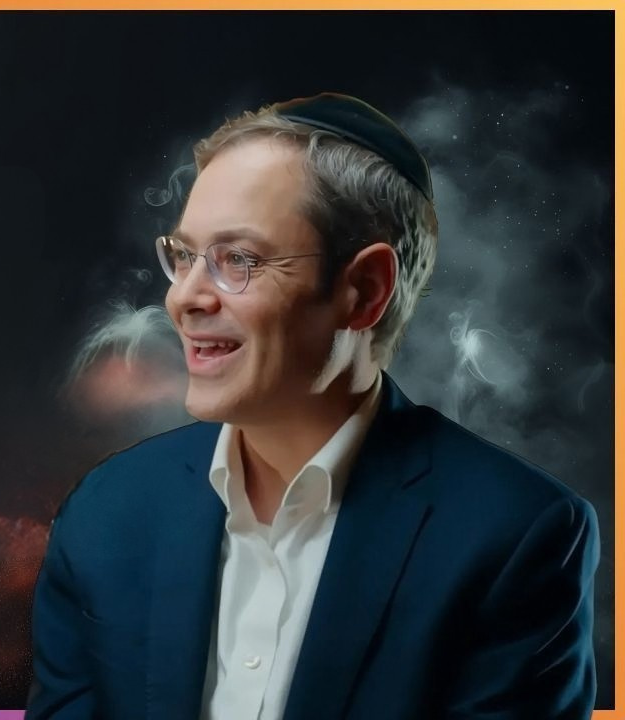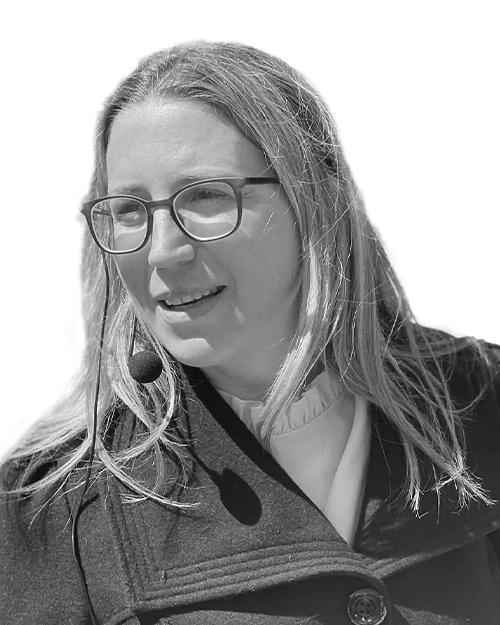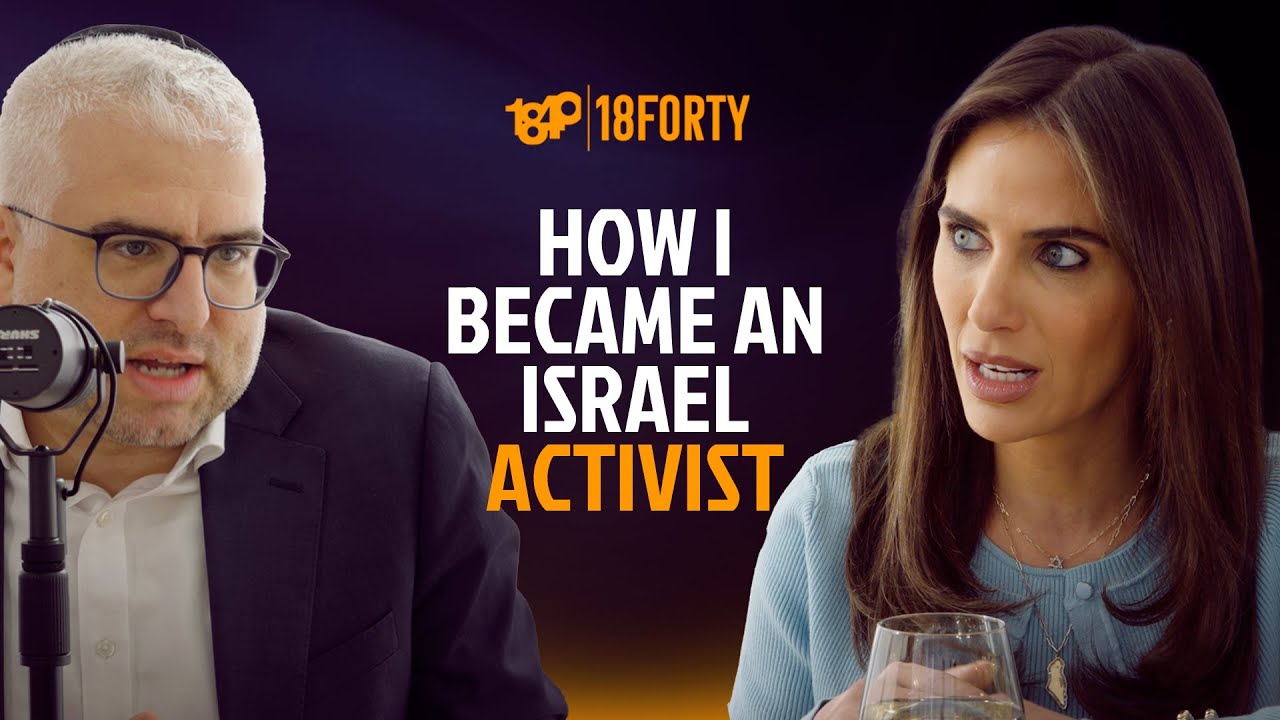
Tonia Chazanow joins us to discuss the role of the Jewish mystic, the goals of Torah study, and the potential dangers involved in studying mysticism.
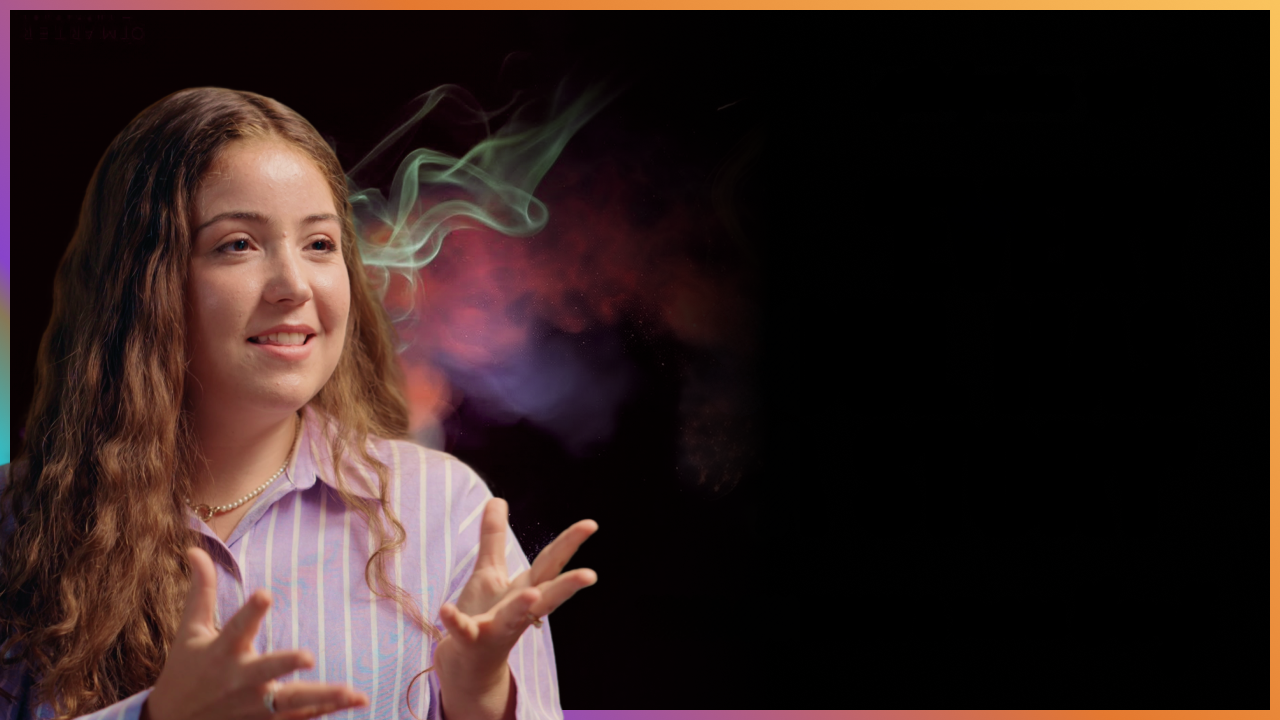
This podcast is in partnership with Rabbi Benji Levy and Share. Learn more at 40mystics.com.
Tonia Chazanow believes everyone deserves to have access to Jewish mysticism because it is a tool through which each person can discover and understand the divinity in their own life and help others find theirs.
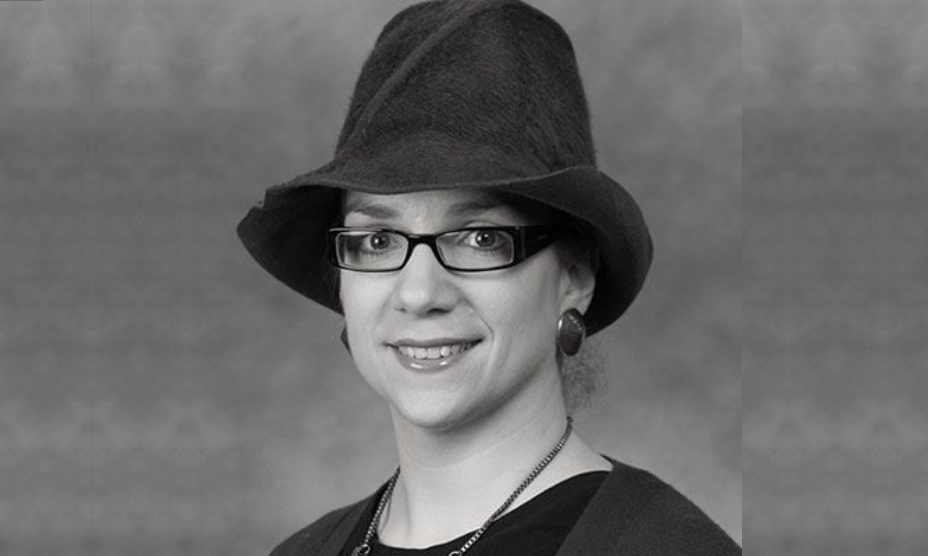
Tonia Chazanow is a Los Angeles-based writer and poet. Along with teaching weekly Torah classes, she is also the founder and host of the Human and Holy, a podcast that explores Judaism and Chasidut [Hasidism] through the lived experiences of and conversations between a spectrum of Jewish women.
Now, she sits down with Rabbi Dr. Benji Levy to answer eighteen questions on Jewish mysticism including the role of the Jewish mystic, the goals of Torah study, and the potential dangers involved in studying mysticism.
RABBI DR BENJY LEVY. Tonia Chazanow, host of Human and Holy, teaching Torah across LA, thank you so much for joining us today.
TONIA CHAZANOW. My pleasure. Thanks for having me.
LEVY. So you’re one of the youngest people that I’ve got the privilege of interviewing, and I think when people think of a Jewish mystic, they don’t always think of you. What is Jewish mysticism?
CHAZANOW. Jewish mysticism, in my understanding, is the science and art of understanding and making sense of the infinite in a finite world, and it shows up across so many different mediums. It’s like the language of the mind and the heart, and also of the body, and that’s something that I do in my work with Human and Holy. On an intellectual level, I think that mysticism seeks to expand our minds to understand something that’s beyond what we can see in this world. On an emotional level, [it seeks] to feel the divine texture of a world that often presents itself as being just physical. And on a physical level, it pushes us to embody the divine reality that we study through the mystical teachings and to enact the covenant between God and the Jewish People, like on a physical, cellular level.
LEVY. Amazing. So how were you introduced to this? How did you get into Jewish mysticism?
CHAZANOW. There’s a good line by Kathryn Schulz. It says you often have to search extensively for something that you first came upon by chance. And that’s how I feel about mysticism because I grew up in a Chasidic family and so as a result, the mystical teachings and the whole idea of interconnectedness of the world and the divine reality is something that’s so baked into my existence. But it was only until I began asking myself the questions about my own Judaism that mysticism took on a new flavor and that I began to study it in a way that felt different, specifically when I began to study it through art forms and when I started a project with the Tanya where I started writing a daily poem based on the Tanya of the day. That was a moment where I began to enter into a dialogue with mysticism that felt new and unique. It felt like I was revisiting something I’d always known and messages and teachings that I’d always understood but from a completely different angle. And what I find is that there are different periods of your life where you experience sheddings of your identity and I find it again and anew and differently. So my entrance was definitely the Tanya, and over time it’s developed and I’m always searching and finding new paths of mysticism that speak to my soul’s search for truth.
LEVY. Amazing. So in an ideal world would all Jews be mystics?
CHAZANOW. In an ideal world all Jews would have access to mystical teachings. I don’t think that it serves the Jewish People for all of us to be homogeneous or to have the exact same way of life. I think we thrive, as Jews, with diversity of practice. Something that I’m seeing a lot of today is that mysticism is becoming so assimilated in the Jewish language and in our core understanding of Jewish principles and values that people don’t even necessarily know that they’re interacting with mysticism. So my vision for the world is that the entire – the navi [prophet] says, “Umale haaretz de’a et Hashem,” the whole world will be filled with the glory of God, with the knowledge of God. That’s something that I think you only access specifically through mysticism. And that’s something that I’m seeing in the Jewish world and I think that all Jews deserve access to, regardless of whether or not they identify as mystics or live a Chasidic life. Everyone deserves to have access to the teachings of mysticism.
LEVY. So you quoted the prophet that everyone will know the wisdom of God, so to speak, the knowledge of God. What is God? What do you think of with that word?
CHAZANOW. When I think of God, I think of the source of all things. The source of all things in my life, both big and small, challenging and blessed. And something that comes up, something that God conjures up in me is a sense of responsibility more than anything. A sense of responsibility to my source and this feeling that everything was given to us to offer back to God in some way. I think of the heartbeat of creation, like the undercurrent of everything that keeps it alive and that makes it alive. I don’t think of the classic visual of a father king, that’s not what comes up for me. What comes up is more of that sense of aliveness in everything. That’s God to me. The source of life in everything, the heartbeat of creation, the pulse that everything has. That’s what God means to me.
LEVY. What is the purpose of the Jewish People?
CHAZANOW. What is the purpose of the Jewish People? To be who we are and to embody the divine reality to such an extent that it awakens the divine self in others. I think when two people meet, just on a body level, there’s a lot of talk, specifically in mysticism, about what loving another person truly is. And when you love someone on a soul level, and you experience your own identity as your divine self, then you awaken that divine self in others. And I think that when two people meet purely on a body level, they’re distracted by each other’s masks and external factors, but when two people meet on a soul level, or even when a soul meets a body, there’s an awakening within the body, a sense of curiosity about their own self and divine self. And I think that the Jewish People are asked to embody their own divine self and worth so courageously and unapologetically so that every single divine being, Jew, non-Jew, and I even – I think that the world is alive too, not just people, are awakened to their own divine self and purpose.
LEVY. How do you do that? If you bump into someone in the street, or someone comes to your synagogue, how do you see their soul and not get distracted by the facade of their body?
CHAZANOW. Well first of all, how do you see yourself? I think it begins with that. I’ve had the experience of being shifted just by meeting someone whom you can sense when you met them that the person they were presenting to you was who they were at a gut level. And it was just like, if you slice them in half, this is who you would find. And there’s something that’s existentially moving about that experience. And I think that the same thing is true for a Jew in that if you begin to see yourself and begin to really integrate your divine worth and your divine soul as your own existence, when other people meet you they get that sense from you. And then you have an easier time seeing past other people’s blockages because people are still human and imperfect just as you are. But if you identify primarily with your divine self, then you can begin to identify with others’ divine self.
LEVY. So it’s sort of a sense of authenticity? It’s sort of a sense of who you really are, is that what you’re –
CHAZANOW. That’s one way of saying it, totally. But who are you if you’re a Jew and that’s who you are internally and you’re able to live that way so completely? And it’s not just the fact that you’re a Jew. It’s all the details of your character and who you are. Every soul has a very unique mission on this earth and you can sense when someone is trying to fit into a mold or when someone is expressing their own inner self.
LEVY. And then how does prayer work?
CHAZANOW. Prayer is permission for a human being to pause in a frenetic world and get in touch with our source, with that heartbeat of creation, that pulse that’s beneath everything. It’s an invitation to enter into a conversation with God that is constantly happening at all times, but we can slip into it at any moment through prayer. There’s already a dialogue happening between the divine and our world, but prayer is the opportunity to enter into that dialogue. One of the cornerstones, I feel, of living a spiritual life is to set aside times where you’re able to quiet the noise of the world, and get back in touch and listen for God speaking to you, and [send] your words back to God.
LEVY. And so what’s the goal of Torah study?
CHAZANOW. My favorite. The goal of Torah study. Well first of all, even the question, even the word goal attached to Torah study makes me want to say there’s no goal when it comes to Torah study. Something I’ve really learned over the last few years is that you have to enter into Torah study without an agenda. Because it’s an encounter with the divine and in order for something to be a pure encounter that is not just a projection of your own set of belief systems and what you want to receive from it, you have to empty yourself a little bit and enter into it with a state of openness and curiosity, without the agenda of: What am I going to receive from this? And the mystics teach us that when we do encounter the Torah, we encounter the divine, and that it’s the only place and position where we can actually grasp the mind and wisdom of God. And we’re taught that it both fills and encompasses us. So on the one hand, we enter into this encounter with God, this act of intimacy, and we just see the divine wisdom separately as this incredible thing itself. And that enters us and penetrates us and we, through our own study, enter into a dialogue with it and shape the wisdom. So we’re at once totally agenda-free and just entering into this encounter where we’re going to be shaped by speaking with the divine. And on the other hand, we’re also shaping the divine wisdom too. So it’s a conversation – I’ve heard people say Torah study is God speaking to us and prayer is us speaking back to God, and I’ve always felt that it’s missing something. Because Torah study, like real deep Torah study, is also us speaking back to God and shaping the divine wisdom and melding it with the reality of our world to change it and bring it alive and create something that’s real and that we live.
LEVY. And perhaps prayer is the same in the sense that you said about prayer that we need to be listening. So both of them are conversations. One, I guess prayer, we’re leading the conversation – even if God ultimately leads everything – and then in Torah God is leading the conversation.
CHAZANOW. I love that. Yeah.
LEVY. You’re involved in a women’s podcast that you founded, that you host. You’re a leader in the community as a Hasidic woman. Does Jewish mysticism view women and men as the same?
CHAZANOW. Does Jewish mysticism view anyone as the same? I think every soul has such a unique journey and every soul has a story. Most of us have old souls and have lived many lives before and our process on this earth is part of that. I think there are many different pieces that come into play in our identity that play out in our purpose in this world. Being a woman for me is certainly one of them, but it’s not the only piece. I think sometimes we do women a disservice by creating their whole identity under that tent of womanhood. And I think that what would be more true to mysticism would be to say that every single person is made up of so many different pieces and stories. And a woman is also made up of her womanhood, her unique soul’s path, her talents, her gifts, her struggles, and who she is as a person. So I don’t think we view anyone as being the same, and men and women could be clumped together but I wouldn’t clump anyone together in that way.
LEVY. Interesting. So should Judaism be easy or hard?
CHAZANOW. I feel like it wouldn’t fall into that binary in my mind. Sometimes it’s easy, sometimes it’s hard. This is what is coming to mind: the Baal Shem Tov says that the greatest enemy to our spiritual service is trying to mimic someone else’s. And I think that one of the great struggles of modern Judaism is conformity and wanting to mimic another person’s Judaism. So some people’s Judaism comes easily, some comes with more difficulty, but it doesn’t matter. What’s your Judaism? And there will be, probably, pieces of it that will be more challenging and pieces of it that will be simpler, but I think that the sense should be that it’s mine and I look in the mirror and I feel like this is aligned with who I am.
LEVY. So as I’m in this journey as part of this world, I ask myself, why did God create the world in the first place? It’s a famous question. What would Jewish mysticism say, in your view?
CHAZANOW. It’s the question, right? It’s the great question of existence. I mean, for conversations like this, for human beings to co-create with God, to be part of the conversation of the infinite, to add something. I think God gives us the ability to add because each of us are endowed with that divine spark; we have the ability to create. And before tzimtzum [contraction], before that concealment, before the world was created, there was no space for us to create or to participate with God. And so we have that conversation that we’re describing through prayer, through Torah study, where we receive this infinite wisdom and we offer something back that’s in some way made better and in some way refined by that experience.
LEVY. So God created the world in order to allow us to be part of that co-creation process.
CHAZANOW. Yeah.
LEVY. Even though He was lacking nothing.
CHAZANOW. Well, He was lacking us.
LEVY. So He was lacking something.
CHAZANOW. I guess.
LEVY. Can humans do anything against God’s will?
CHAZANOW. Yes and no. On the one hand, yes, anyone can have free choice. And I think it’s good to recognize the extent of that free choice. I think that helps when you mentioned how you can actually experience another person as a soul. Recognizing the extent of your free choice will immediately eliminate a lot of judgment around other people’s choices when you recognize that you could easily make the same one and are probably a hair’s breadth away from making those choices as well. What comes to mind around whether or not we have free choice is that on the one hand yes, we can do something that is completely in opposition to the divine will. But on the other hand no, because everything that we do is part of the divine story for our lives and is part of the path of creation that we’re given. Rabbi Tzadok speaks about teshuva [repentance] and return and how part of teshuva is accepting that all the choices that you made that you thought were in opposition to God were actually always bringing you closer to God. So even those choices that seem to be exercising your free will in a way that seems to take you further from the divine are actually always just bringing you closer.
LEVY. Amazing. I have this image of someone doing pole vaulting where they take the pole and they have to walk back a few steps and then they can run forward to be able to jump even higher.
CHAZANOW. Nice.
LEVY. So somehow it’s all part of this divine journey in some way.
CHAZANOW. Yeah. The descent for the sake of the ascent.
LEVY. Exactly. What do you think about when you think of Mashiach, about the Messiah?
CHAZANOW. Something I’ve been thinking about a lot when it comes to Mashiach [the Messiah] is every single person owning who they are and not having fear around expressing their own strengths and voices and wisdom into the world. I just imagine a world where everyone rises up to give everything they have to offer to the world and how instantly, if everyone believed in themselves to that extent of their infinite abilities, instantly this world would be a place where everything would be whole.
LEVY. Is the State of Israel part of that final redemption?
CHAZANOW. Specifically the State?
LEVY. Yeah. The concept of the State of Israel, where Israel is today.
CHAZANOW. Yeah. There’s no question to me that the Holy Land is one hundred percent part of the final redemption, that the Holy Temple being rebuilt is our vision of the divine reality of this world being embodied in a physical way. And Jewish mysticism isdeeply rooted in Jewish heritage. And so there’s no final redemption without the Holy Land, without Israel.
LEVY. And you asked specifically the State, and you made the distinction with the Holy Land. Do you feel about the process that God has guided the State being established and [having a] Jewish army and Jewish government is part of that?
CHAZANOW. It’s impossible for me to know. To me it’s so invigorating to see the State of Israel, to see us having a Jewish land in that way, and it feels that way to me, but I have no idea. I’m curious to see how it all unfolds.
LEVY. What is the greatest challenge facing the world today?
CHAZANOW. I think distraction. Being able to live a life that’s connected to our spiritual selves is dependent on us being able to hold our attention for long enough on the things that matter so that all of the discomforts that we naturally feel on a soul level with the world that we live in can rise up within us. But when we’re living at such a quick pace and with so many distractions, many of them beautiful and wonderful distractions, but – There’s a famous line from Mary Oliver, “Attention is the beginning of devotion.” And I think that attention is the beginning of living a spiritual life. Being able to sustain your attention on your soul, on your own self, on your own questions, on the world around you to the extent that truth will naturally bubble up to the surface, because something that’s inherent within the world of concealment is that it doesn’t have a substantial root in this world. Like, falsehood has no legs, and if you look at it long enough, you begin to see how it’s a little shaky. And it requires deep focus in our lives that I think is a struggle to come to. It’s something that I struggle with, and that I think is one of the greatest struggles of our generation.
LEVY. Is distraction wrong inherently? Meaning, are we allowed to intentionally decide that we want to be distracted and then relax a bit by doing something that may be a distraction directly from a spiritual pursuit? Is that okay sometimes?
CHAZANOW. Yeah, I think it depends on where you’re living the majority of your life and if that has taken over your life as opposed to a brief respite to experience some relaxation or calm. But what can happen is that years of our lives can go by or months or weeks where we just have been in that state of complete distraction and disconnected from who we are. So that I think is the danger. But intentionally experiencing distraction to me isn’t even distraction, that’s intentional relaxation as opposed to distraction where you’re numb and you’re shut off and you don’t hold your attention on the parts of life that matter.
LEVY. Amazing. How has modernity changed Jewish mysticism?
CHAZANOW. It’s made it so much more accessible. And I think that’s been the greatest gift, which is that you don’t need to be a scholar in today’s day and age to access Jewish mysticism. You can access it in so many different forms. Whatever your personal interests are, there’s an access point for you into Jewish mysticism.
LEVY. What differentiates Jewish mysticism from other mystical traditions or religious traditions in that sense?
CHAZANOW. I think it’s its focus on the deed. And the way that Jewish mysticism cannot be divorced from Jewish rituals and practices. And specifically mitzvot [commandments] and the acts that we do to ground the mystical wisdom in a very embodied way in this world is unique to Jewish mysticism. There’s a very specific physical expression for the spiritual ideas.
LEVY. So does one need to be religious to study Jewish mysticism?
CHAZANOW. I don’t believe in that binary and I don’t think mysticism would either, because every act of connection is an infinite act with the divine. Anyone can study mysticism. I think there are different ways of studying. You can study about mysticism or you can study mysticism itself. Like you can listen to a friend open up their heart to you or you can listen as a therapist. I think that that would be the differentiation: regardless of what your starting point or background is, if you can enter into the encounter of mysticism with that sense of insideness, with – don’t study about mysticism, study mysticism. And I think that you can be religious or non-religious and struggle to do that, to truly be within the subject and strive to have an authentic experience of the subject and of God without an agenda.
LEVY. Can Jewish mysticism be dangerous?
CHAZANOW. Can it be dangerous? That’s the age-old question. So when you ask that question, what comes to mind is the Pardes [garden/mystical orchard] and the four sages who entered into the garden, which is said to represent the mystical teachings. And one dies and one loses his mind and one becomes a heretic and one remains pure. And I’ve always mulled over this story because it’s such an interesting one. And it’s always had me thinking, how has Jewish mysticism shaped me in that way? And how has it been dangerous? And I have felt that it’s a beautiful metaphor for what happens to you when you study mysticism, which is that a part of you becomes a lunatic, a part of you becomes a heretic, a part of you dies, and a part of you remains completely pure. And a part of you becomes a heretic to the institutionalized version of Judaism and becomes cynical to the systems that we’ve created around infinity. And when you enter into the wisdom of mysticism, you can engage with the systems of Judaism but with a little bit of irony and a wink. And a part of you becomes a lunatic because you believe in the miraculous and you believe that you’re divine and that you have a purpose on this earth, and that’s crazy. And a part of you dies, I think the part of you that believes in this physical world. There’s a great sentence about the students who would enter into Tomchei Temimim. If you ate the food from this Hasidic yeshiva [study hall] then you could never enjoy the physical world in the same way. A part of you dies and then a part of you remains completely human.
LEVY. Which part remains human?
CHAZANOW. So that to me is Akiva. If we’re just taking this on a complete metaphor, but the part of you that –
LEVY. Akiva is the fourth rabbi that went into the Orchard.
CHAZANOW. Went into the Orchard –
LEVY. And came out.
CHAZANOW. Akiva goes into the Orchard and comes out completely pure, exactly. And that’s the part of you that enters in and returns unscathed. Something I’m still making sense of in my life. How can you access that divine wisdom and still be so human? And still struggle? And still be almost untouched by what you saw? I think that that’s what it means. So can it be dangerous? Yes, it can be dangerous. You’ll be changed.
LEVY. I actually think that it doesn’t say that he came out unscathed. Just says that he came in and he came out.
CHAZANOW. He came in and he came out. He seemed to be unchanged on the outside.
LEVY. He was alive. He didn’t become a lunatic, he didn’t become a heretic, he didn’t die. He came out alive. But maybe his life was more animated having gone in and come out.
CHAZANOW. Without a question. I think he was absolutely shifted and in that translation that I’m doing it’s completely metaphorical and not based in fact. Absolutely, I’m sure he was shifted by it. And I think also that’s a beautiful rendering of the idea that even if we do seem to be unchanged on the outside, something in us has been shifted. And even if we do think that it’s been years of me studying and I’m still so human, there’s a part of you that’s been shifted and that sees the world differently.
LEVY. Beautiful. So talking about seeing the world differently, one of the critical areas of Jewish mysticism is the relationships in our life.
Are there any practical ways that you see that it’s actually affected your relationships with your parents, with your children, with your husband, with your friends, with your students?
CHAZANOW. Believing that the divine self of the people that I love is the true expression of them, and there are other parts of them that I love but that are not necessarily their most essential self. And believing that about my children, even when they’re struggling, that there’s something internal that’s unshakable, that can never be touched by any difficult experiences that they have in their lives or difficult behavior that they present. And [I feel the same way] with other people that I have in my life and just really believing in the interconnectedness of our souls. That all of us were brought for some reason into a sphere where we’re connected in a real way for a reason, and that we are each part of each other’s paths and journeys and purpose in this world.
LEVY. So if a child of yours, probably never happens with your kids –
CHAZANOW. No, never.
LEVY. – is getting, you know, irritable,
CHAZANOW. Yeah.
LEVY. So you sometimes go into these quiet moments where you feel you need to lean more into the depth of our interconnectedness and there’s something deeper going on? Can you actually translate that in those moments sometimes?
CHAZANOW. Yeah, I think that the very grounded experience, what I tell myself in those moments, which is not: we are interconnected, but it is that I was chosen to be this child’s parent because our souls are connected, and there’s something that this child has to teach me and that I have to teach this child that’s unique to this dynamic. And even if I feel like I’m not enough, and even if I feel like I wish this child was a little bit different so that I could handle them, that’s not the truth. The truth is that we were divinely chosen to be in this mother-child relationship and that I have what I need to offer them the guidance that they need on their soul’s mission in the best way that I know how.
LEVY. Beautiful. To conclude, is there any Jewish mystical thought that comes to mind that inspires you or that you share or that resonates specifically with you at this moment?
CHAZANOW. Yeah, for sure. This has been the mantra of my life for the last few years, a line from Job that’s expressed a lot in the Hasidic teachings: “Mibisari echezeh Eloka,” from my flesh I perceive God. It’s a reminder to me that God is not anywhere over there outside of me. I am the access point. God is within me, and every single person has that access point within their humanity. All of these mystical ideas that we talk about are not something that are outside of us or something that we have to search for elsewhere. It’s something that’s deeply rooted in our own lives, in the struggles of our own lives, in the hardships that we have, in our own spiritual evolutions and our searches. That’s where I find God, in my own flesh, nowhere else.
LEVY. Beautiful. So just like Job expresses it, just as you did in your own flesh, you experience and embody that. May you continue to feel that in a more vivid and real and visceral way –
CHAZANOW. Amen.
LEVY. – because through that process it’s clear that those that are learning from you, those that are connected to you can find that, not just through you but through themselves. And that’s a definition of a kiddush Hashem [sanctifying God’s name], of sanctifying God’s name, where they can see through you God, and ultimately that they could see through themselves that godliness as well, and you should continue to help people be more human, be more holy –
CHAZANOW. Thank you.
LEVY. – and be filled with blessing.
CHAZANOW. Thank you.
We talk to Rabbi Shaanan Gelman and his son Ziggy about the persistence of a parent-child relationship when the latter faces addiction.
We talk to Yakov Danishefsky about the imperfect ways in which we transmit the Jewish story.
Haviv answers 18 questions on Israel.
Rabbi Daniel Rowe joins us to discuss the inner dimensions of the Torah and how one can connect with the divine will.
In this episode of the 18Forty Podcast, we talk to Rabbi Menachem Penner—dean of RIETS at Yeshiva University—and his son Gedalia—a musician, cantor-in-training, and member of the LGBTQ community—about their experience in reconciling their family’s religious tradition with Gedalia’s sexual orientation.
The true enemy in Israel’s current war, Einat Wilf says, is what she calls “Palestinianism.”
Micah Goodman doesn’t think Palestinian-Israeli peace will happen within his lifetime. But he’s still a hopeful person.
We speak with Yehuda Geberer about the history of the yeshiva world.
In this episode of the 18Forty Podcast, we talk to Yakov Danishefsky—a rabbi, author and licensed social worker—about our relationships and our mental health.44

In this episode of the 18Forty Podcast, we sit down for a special podcast with our host, David Bashevkin, to discuss the podcast’s namesake, the year 1840.
In this episode of the 18Forty Podcast, David sits down with Leah Forster, a world-famous ex-Hasidic comedian, to talk about how her journey has affected her comedy.
In this episode of the 18Forty Podcast, we talk to Rabbi Larry Rothwachs and his daughter Tzipora about the relationship of a father and daughter through distance while battling an eating disorder.
In this episode of the 18Forty Podcast, we talk to historian and professor Pawel Maciejko about the false messiah Sabbatai Zevi, Sabbateanism, and the roots of Jewish secularism.
Leading Israeli historian Benny Morris answers 18 questions on Israel, including Gaza, Palestinian-Israeli peace prospects, morality, and so much more.
Yossi answers 18 questions on Israel.
In this episode of the 18Forty Podcast, we talk to Frieda Vizel—a formerly Satmar Jew who makes educational content about Hasidic life—about her work presenting Hasidic Williamsburg to the outside world, and vice-versa.
In this episode of the 18Forty Podcast, we talk to Daniel Statman, a professor of philosophy at the University of Haifa, about what it means to wage a moral war.
We speak with Rabbi Aaron Kotler about the beginnings of the American yeshiva world.
Leading Israel historian Anita Shapira answers 18 questions on Israel, including destroying Hamas, the crisis up North, and Israel’s future.
Rabbi Gil Student speaks with Rabbi Aryeh Klapper and Sofer.ai CEO Zach Fish about how AI is reshaping questions of Jewish practice.
In this episode of the 18Forty Podcast, we talk to Judah, Naomi, and Aharon Akiva Dardik—an olim family whose son went to military jail for refusing to follow to IDF orders and has since become a ceasefire activist at Columbia University—about sticking together as a family despite their fundamental differences.
In this special Purim episode of the 18Forty Podcast, we bring you a recording from our live event with the comedian Modi, for our annual discussion on humor.
In this episode of the 18Forty Podcast, we talk to Liel Leibovitz and Lisa Ann Sandell about what happens when one partner wants to increase their religious practice.
Perhaps the most fundamental question any religious believer can ask is: “Does God exist?” It’s time we find good answers.
If God has no need for offerings, why does the Torah devote an entire book to them—and what does that reveal about…

In Parshat Vayikra, we are reminded that communal belonging lies at the heart of religious identity.

Notes from a mamad: How war kills intellectual curiosity, and why I picked up a book anyway
Children don’t come with guarantees. Washing machines come with guarantees.
Children cannot truly avoid the consequences of estrangement. Their parents’ shadow will always follow.

Christianity’s focus on the afterlife historically discouraged Jews from discussing it—but Jews very much believe in it.

Over time, the advancement of thought and modernism in culture has led to the disagreement of how much should be shared and…
From verses in Parshat Bo to desert caves, tefillin emerge as one of Judaism’s earliest embodied practices.
Between early prayer books, kabbalistic additions, and the printing press, the siddur we have today is filled with prayers from across history.

Why does the night of order, of freedom and liberation, have so much disorder to it? Why is it so chaotic, disjointed?
Rabbi Yosef Zvi Rimon wrote this special prayer for Israel for Jews to recite at their Pesach Sedarim this year.

To talk about the history of Jewish mysticism is in many ways to talk about the history of the mystical community.
Joy and meaning can be found not only despite the brokenness, but even because of the brokenness.
Israeli minister Itamar Ben-Gvir wears the mantle of Kahane in Israel. Many Orthodox Jews welcomed him with open arms.
Dr. Judith Herman has spent her career helping those who are going through trauma, and has provided far-reaching insight into the field.
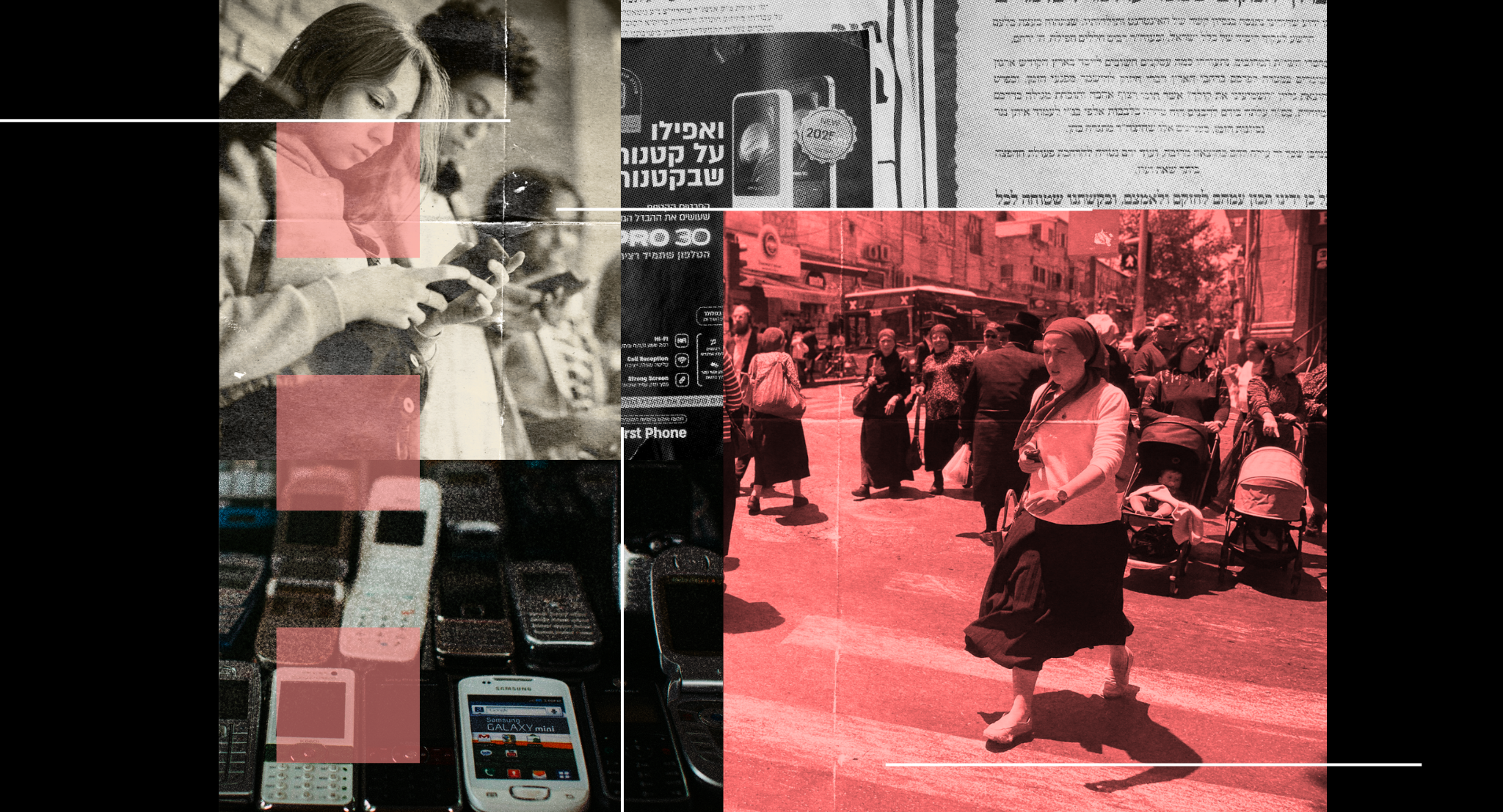
Kosher phones make calls and send texts. No Instagram, no TikTok, and no distractions. Maybe it’s time the world embraces them.
I’d advise reading Rav Kook as you would read a poem, with an eye less to the argument or claim he is…
God promised the Land of Israel to the Jewish People, so why are some rabbis anti-Zionists?
Their motivations are not ideological extremism but a basic survival instinct to protect their families from the past’s failed paradigms.
For some, Purim is the triumph of exile transformed. For others, it warns that exile can never replace the Land of Israel.
I consider the Rebbe to be my personal teacher, and I find this teaching particularly relevant for us now.
Religious Zionism is a spectrum—and I would place my Hardal community on the right of that spectrum.
My family made aliyah over a decade ago. Navigating our lives as American immigrants in Israel is a day-to-day balance.
In this episode of the 18Forty Podcast, we speak with Diana Fersko, senior rabbi of the Village Temple Reform synagogue, about denominations…

In this episode of the 18Forty Podcast, we speak with Mark Wildes, founder and director of Manhattan Jewish Experience, about Modern Orthodox…
In this episode of the 18Forty Podcast, David Bashevkin answers questions from Diana Fersko, senior rabbi of the Village Temple Reform synagogue,…
Rabbi Moshe Gersht first encountered the world of Chassidus at the age of twenty, the beginning of what he terms his “spiritual…
Rabbanit Sarah Yehudit Schneider believes meditation is the entryway to understanding mysticism.
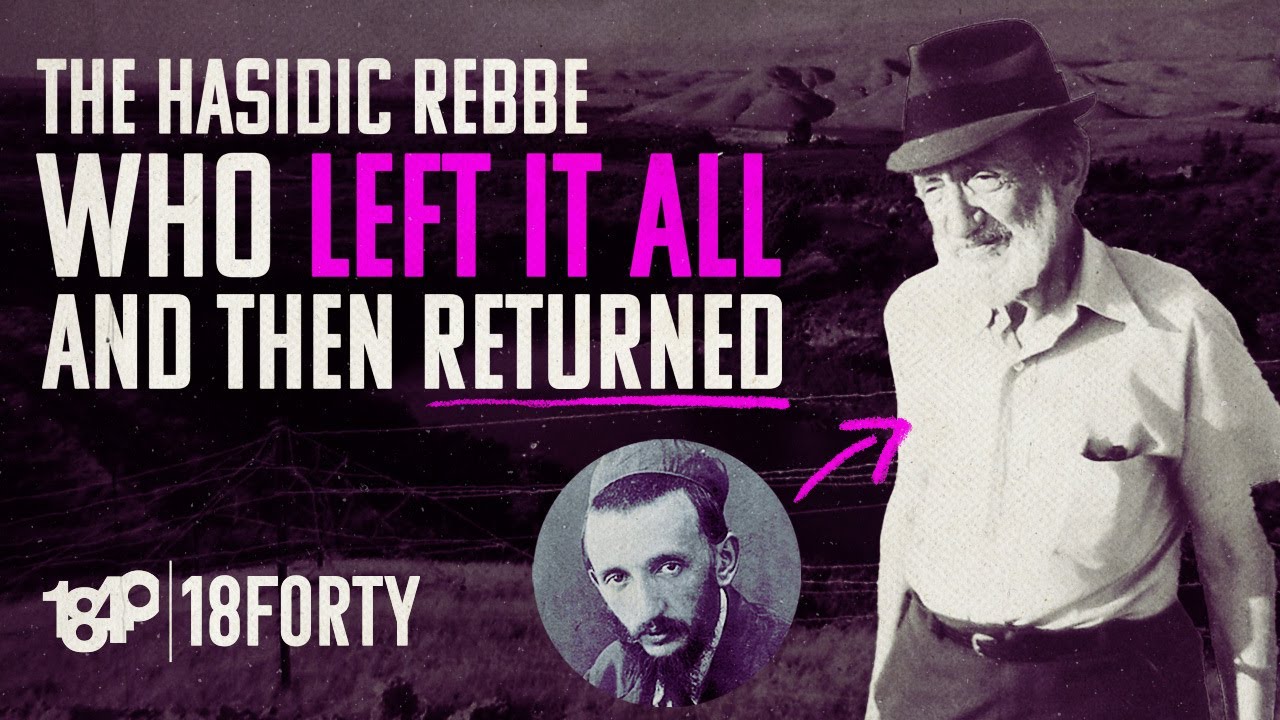
Why did this Hasidic Rebbe move from Poland to Israel, only to change his name, leave religion, and disappear to Los Angeles?
18Forty helps users find meaning through the exploration of Jewish thought and ideas.
In this episode of the 18Forty Podcast, recorded live at Stern College, we speak with Rabbi Moshe Benovitz, director of NCSY Kollel,…
This series, recorded at the 18Forty X ASFoundation AI Summit, is sponsored by American Security Foundation.

In this episode of the 18Forty Podcast, we speak with Shais Taub, the rabbi behind the organization SoulWords, about shame, selfhood, and…
Support Jewish explorations today by supporting 18Forty. Your partnership makes our work possible.
Donate today.