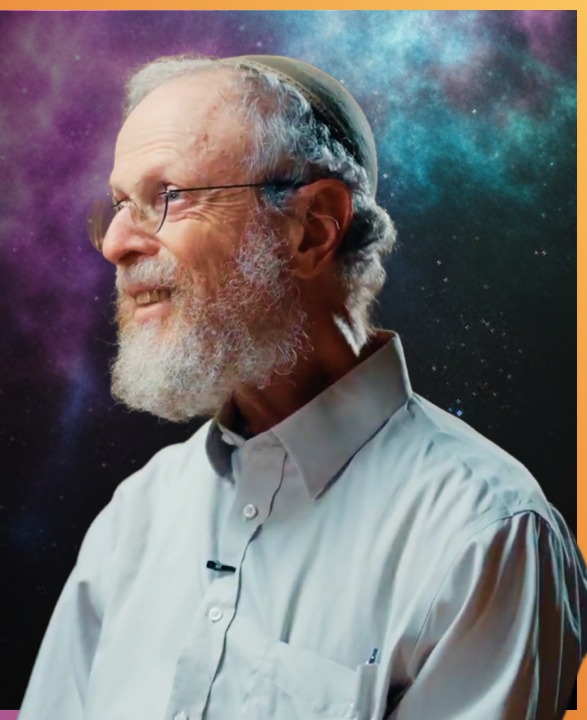
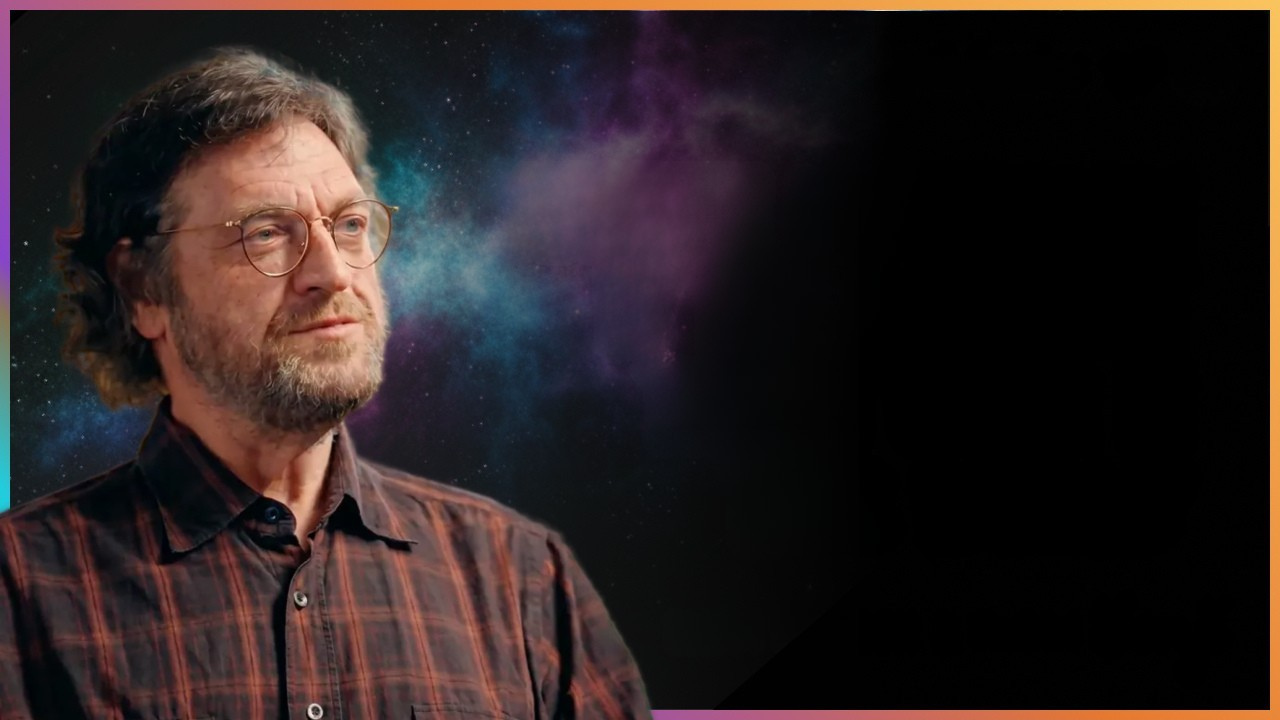
Elliot Wolfson joins us to discuss the mechanics of prayer, the constant recreation of time, and Pardes.
This podcast is in partnership with Rabbi Benji Levy and Share. Learn more at 40mystics.com.
Professor Elliot Wolfson, one of the world’s foremost scholars of Jewish mysticism, has dedicated over forty years to teaching and researching Kabbala and its expressions across Jewish history. He explores how ancient kabbalistic concepts resonate with contemporary philosophical and feminist theory.
Elliot Wolfson is a professor emeritus of religion at University of California, Santa Barbara. He is renowned for his research in the history of Jewish mysticism, but he has also contributed to the fields of philosophy, literary criticism, feminist theory, and more.
Now, he sits down with Rabbi Dr. Benji Levy to answer eighteen questions on Jewish mysticism including the mechanics of prayer, the constant recreation of time, and Pardes [the orchard].
RABBI DR BENJI LEVY. Professor Elliot Wolfson, it’s such a privilege and pleasure to be sitting with you here in California where you’re a professor emeritus, but your acclaim is global with your incredible contribution to Jewish mysticism, to the broader area of mysticism, and the broader academic field. Thank you so much for being here.
PROFESSOR ELLIOT WOLFSON. Thank you for having me. I look forward to our dialogue.
LEVY. So do I. So what is Jewish mysticism?
WOLFSON. I regularly taught a class on introduction to Jewish mysticism for forty years and I always would start by saying the topic of this course has two different subjects, Jewish and mysticism. And it will take a lifetime to learn what Jewish does not entail, so I’m going to just go to mysticism, and then go back to how Jewish modifies mysticism.
So mysticism is a notoriously difficult term to define, and in fact, there are debates whether or not we can think of mysticism in a cross-cultural way, or it’s sometimes referred to in a perennial or essentialist way versus those who argue that it must always be understood in terms of context. Jewish mysticism, Christian mysticism, Islamic mysticism, and so on. But for our purposes, I’m going to assume something of a commonality and I would say mysticism has several major features as it is expressed in different religious cultures. One would be having a kind of direct experience of the Divine or what is considered to be the absolute. Even more profoundly would be the emphasis on a unitive experience that one has with that absolute, which would break down the distinction between the self and the Divine.
Mysticism also often entails meditational or contemplative practices that bring the individual to that ecstatic state, either of being in the direct presence of the Divine or actually becoming one with the Divine. I would also say, characteristic of mysticism is an assault on our normal logic, which doesn’t allow for the possibility of a thing being both A and not A at the same time and in the same relation. But what is distinctive about the mystical consciousness actually is we get to a point where the opposites coalesce, where we get beyond opposites, and the truth therefore is a kind of paradoxical nature.
And finally I would say a common feature of mysticism is ascetic practices, where the mystic adopts a more austere view towards the physical in order to achieve those ecstatic experiences. And all of those features can be found in Jewish mysticism in varying degrees across the centuries.
LEVY. So how were you introduced to Jewish mysticism?
WOLFSON. Well, I started as I grew up in an Orthodox home in Brooklyn, New York, and my father is an Orthodox rabbi, so I was around Jewish learning my whole life. And in high school I started to learn about Rebbe Nachman of Breslov, and actually, in my father’s synagogue there was a shiur [class] on Likutei Moharan and I started to attend that.
I also started to study a little Rabbi Kook on my own and Chabad was a major influence in the area I grew up in. So I had some contact first with Tanya and other aspects of Chabad. Then my last year of high school, I went to yeshiva in Jerusalem and I started to attend some classes on Kabbala, including in Yeshivat Kol Yehuda, where I studied some of Ashlag’s Kabbala.
LEVY. Wow. And in an ideal world would all Jews be mystics?
WOLFSON. Would all Jews be mystics? I don’t know if that would be an ideal world, but let’s put it this way. Even though Jewish mysticism, particularly Kabbala, puts great emphasis on sod [secret] or esotericism that this was, these are doctrines and practices that should not be widely disseminated, and the individual who is a recipient of them has to have certain requirements, the truths that the mystics have articulated are truths that apply more generally to the nature of Judaism.
LEVY. So they do relate to everyone in that sense, but –
WOLFSON. They do, and they have the entirety of the Jewish community in mind, Israel in its great, greater sense.
LEVY. Interesting. So what do you think of when you think of God?
WOLFSON. What do I think of when I think of God? Well, I mean, many things, but ultimately, because of my attraction to Kabbala, I want to get to a point where I think of God as nothing in the grand sense, the mystical nothing, which is everything. In other words, to get beyond our images or our concepts or our language about God.
So even though in Jewish mysticism, and this is a common denominator that cuts across different forms of Jewish mysticism, or Scholem would have called it the major trends in Jewish mysticism from late antiquity all the way to the present, there is a great emphasis placed on language and particularly the Hebrew language. Nevertheless, the ultimate reality is beyond language. And it’s beyond all of our concepts and all our images. So finally, in that respect, there is a great indebtedness to Maimonides on the part of the medieval kabbalists, because Maimonides too got to a point where he thought, “silence is praise to Thee,” quoting from Tehillim [Psalms].
Because we can’t ultimately know the nature or the essence of what Maimonides called the necessary of existence, the mechuyav hametziut.
LEVY. So you see nothing and therefore everything when you think of God?
WOLFSON. That is an essential feature of the Kabbala. You have the Ein Sof [Infinite], and then you have the manifestation of the Ein Sof.
LEVY. Ein Sof meaning limitless?
WOLFSON. Yes, limitless or infinitude, infinity. The manifestation of that infinity in the ten luminous emanations, which the kabbalists called the sefirot. And all those sefirot are configured in the imagination in the image of the adam kadmon, the primordial Adam. But the Ein Sof is beyond that representation. The first of the sefirot is also referred to as ayin, nothing, sometimes keter [crown], sometimes machshava [thought], either the crown or thought. So that itself is ayin [nothing], but beyond that ayin is the nothingness of Ein Sof. Some later mekubalim, kabbalists, actually go so far as to say of the Ein Sof, even the term Ein Sof is too limited, so they tried to avoid even using that expression.
LEVY. So the kabbalistic conception essentially is that by conceiving of anything, we’re by definition limiting the limitless. And therefore, we’re praying – I’m just trying to understand. A human being is limited, so we need to direct, well we at least think we need to direct our thoughts, our words to something.
WOLFSON. Yes, so that’s absorbed by the sefirot [divine emanations].
LEVY. Okay, so that’s sort of like the first layer.
WOLFSON. Right.
LEVY. So you can imagine the sefirot, which are these –
WOLFSON. Yeah.
LEVY. But they then transport it towards this limitless –
WOLFSON. Yes, they lead you as kind of rungs on a ladder to the nameless or the Ein Sof. Actually, there was a mekubal [mystic], Isaac of Acre, and he reports in one of his texts, having received a tradition from a master whom he does not name, talking about how one cleaves to the Ein Sof. And the term he uses is lehitdabek [to cleave] from dvekut [cleaving]. How is one conjoined with infinity? And he says it’s through the name. And the name is another way of referring to the sefirot [divine emanations] because collectively the ten sefirot make up the Tetragrammaton. And so by meditating or contemplating on the name, one gets to the nameless. And then he uses the image of a ladder. So the name is like the ladder by which the mind or the soul can ascend and become absorbed or incorporated into the nameless.
LEVY. So the name basically is the starting point and it serves as a bridge or ladder towards that which cannot be articulated.
WOLFSON. Right. And that absorbs everything from the biblical and rabbinic tradition, and prayer, and mitzvot [commandments], everything is directed that way. Now, I also want to say one other thing about that. This is not simply a philosophical exercise, because to be absorbed in the nothing, one has to become nothing. So there’s a kind of divesting of one’s own self or egoconsciousness.
LEVY. Is that the notion of nullification, of bittul?
WOLFSON. That’s the nullification, exactly, precisely. So this becomes very accentuated in Hasidic texts, the teaching of the Maggid of Mezritch, and then some of his disciples, including most pronounced in Chabad Hasidism, the bittul. The bittul hayesh, the nullification of something, and then even a higher bittul, which they call bittul bemetziut, which would be the nullification of existence.
LEVY. So where does the Jewish People fit in this? What is the purpose of the Jewish People?
WOLFSON. The Jewish People are instrumental insofar as they are the ethnos, they are the community, first of all, invested with the keeping of the commandments and safeguarding the Torah. And that has the theurgical means of unifying the divine emanations. And particularly this is often expressed in terms of the unification of the masculine and the feminine, which is a quite distinctive feature of the Kabbala in terms of the history of Judaism. And then as it relates to what we were just talking about, the Jewish People have the ability to achieve that state of nothingness or nullification.
LEVY. So it’s sort of like a collective vehicle that is there to be able to bring that about.
WOLFSON. Yeah.
LEVY. And then how does prayer work?
WOLFSON. The passage that I chose from the Zohar deals actually directly with prayer. So prayer works exactly according to the mechanics that I was just briefly describing, namely, it’s about triggering an overflow down into the last of the sefirot, which is the Shechina [Divine Feminine]. And that overflow facilitates a kind of union between the masculine and the feminine within the Divine. So broadly speaking, the masculine is the attribute of chesed, of loving kindness, and the feminine is the attribute of gevura, strength, or din, judgment. And the union of the Divine is the conjunction of those two. Then once the Shechina receives the overflow through the prayers of Israel going up from below, there’s an overflow from it of blessings into the world that sustain the world.
LEVY. So it sounds like you’re sort of drawing out a metaphysical map that is basically the underpinnings of existence. And someone might just open a siddur, a prayer book, and just be saying these words, but what’s happening is there’s this sort of transformative experience going on.
WOLFSON. Yeah. I mean, eventually they added into the siddurim [prayer books] the “leshem yichud kudsha brich hu u’shchinteh” [for the sake of the unification of the Holy One, Blessed be He, and His Divine Presence].
LEVY. Which is a special preface at the beginning of certain prayers.
WOLFSON. Yeah, and that clearly reflects the impact of kabbalists.
LEVY. Which is the intention of unifying.
WOLFSON. Yeah. But again, to kind of return to a question we were addressing a moment ago, it doesn’t matter to the kabbalist whether the worshiper understands or doesn’t understand because the effect of the worship is what it is.
LEVY. But there is a debate in the Talmud about if prayers or commandments require intention, “mitzvot tzrichot kavana” [mitzvot require intention].
WOLFSON. That’s true.
LEVY. So to the kabbalists, are you saying that is less important?
WOLFSON. No, I wouldn’t say that, but –
LEVY. But the effect of what is going on.
WOLFSON. Yeah.
LEVY. So it’s a dual thing. There’s the intention and the action. Regardless of the intention, the action happens, which has a metaphysical consequence, which is separate from that notion.
WOLFSON. Right. Now ideally, of course, the proper intention is required. So that’s why you get the kavanot [intentions]. This becomes especially prominent in the Lurianic Kabbala, the sixteenth century and in the following centuries, seventeenth and eighteenth centuries. So ideally for a kabbalist, “mitzvot tzrichot kavana.”
LEVY. Yeah.
WOLFSON. But the point I was making is whether or not the intention is there, the process unfolds as it unfolds.
LEVY. Meaning, if I drop water on a plant, the plant will grow, regardless if I intended it to or not.
WOLFSON. Right, exactly.
LEVY. And what is the goal of Torah study?
WOLFSON. The goal of study would be to unify the attributes of the Divine, and again, primarily through the prism of the masculine and the feminine. So this would be expressed, Torah Shebichtav, the Written Torah, is the masculine, Torah Shebe’al Peh, the Oral Torah, is the feminine. And of course the kabbalists, since they’re intrinsically part of the rabbinic culture, understood the dual Torah. So Torah study always involves both.
LEVY. So then what’s the fundamental difference between the prayer and the study, meaning are they just two routes to the same destination of unification, or is there a fundamental difference?
WOLFSON. I would opt for the former, that is to say the two routes to the same destination.
LEVY. But one does need to do both.
WOLFSON. One does, yes, one has to do both. Right.
LEVY. But if I was trying to get to a destination, I could just take one path.
WOLFSON. True. The logic you articulate is valid. But I’m trying to think here how to express it. Maybe in terms of klal [general] and prat [particular].
LEVY. Collective and individual?
WOLFSON. Yeah. So Torah study is kind of the klal here. And then the prayer is one of the –
LEVY. Oh, sorry, not collective and individual here, you mean sort of principle and –
WOLFSON. The general and the particular. And so prayer would be like other mitzvot, other commandments would be the pratei pratim [most specific details], which are all contained in the klal [general].
LEVY. Interesting, fine. So Torah study is the highest level and includes everything, and then one of the avenues is the prayer.
WOLFSON. Yeah. “Gadol Talmud shemevi lidei maaseh” [Great is Torah study, for it leads to action], a famous debate in the Talmud: talmud [study] or maaseh [action].
LEVY. The learning is the highest because it brings to action. And you talk about masculine and feminine. I understand those are specific principles when applied within Jewish mysticism. Does the mysticism view men and women as the same?
WOLFSON. No, because it’s still working within the kind of rabbinic ethos, so the number of commandments that women are obligated in is far fewer than that of the men. And this has been a pretty central part of a lot of my work, bringing feminist theory into trying to understand the construction of gender in these sources. And there’s been a lot of debate and pushback because I’ve tried to argue that the model is the second chapter in Genesis, which the kabbalists read as the interpretation of the first. So in the first, it says with regard to the creation of Adam, “zachar unekevah bara otam,” created them male and female. Whereas in Genesis chapter two, there is the ish [man] out of which the isha [woman] is constructed. And so that is critical in my understanding of the way the kabbalists looked at the gender.
So, they’re not exactly equal, but it’s more complicated, for sure. And there’s a surplus in the material, which in and of itself doesn’t lead to an egalitarianism, but one can understand how more egalitarian approaches to Judaism in the modern period have drawn from kabbalistic sources.
LEVY. Because of ideas of unity and –
WOLFSON. Yes, and also even to have gender be so highlighted, something unusual in the history of Jewish religious thought.
LEVY. Because everything emanates from one.
WOLFSON. Well, because prior when you look at the biblical texts and the vast corpus of rabbinic literature, it is predominantly masculine, right? The representation of God. So the fact that the kabbalists allow this in is already something of a major shift and contribution.
LEVY. Should Judaism be hard or easy in mystical tradition?
WOLFSON. Oh, it’s one of the hardest, for sure. I don’t know what it should be, but I can tell you factually that it is. First of all, to enter into the Pardes, into the orchard of mystical speculation in Judaism, is not an easy matter. It requires a lot, a lot of knowledge, a lot of languages. And then, if one doesn’t only approach it as an academic but as a practitioner, it’s extremely demanding.
LEVY. Wow. You highlight the difference between an academic and a practitioner. You articulate beautifully the way these concepts work. Do you see Torah study on a personal level as a commandment that you’re achieving? Do you personally pray? How do you sort of –
WOLFSON. Well, I still every now and then connect to communal prayer, but I’m not sure you were asking me exactly about that. I do think that my own dedication to the study of this material and what I write is an act of prayer.
LEVY. Beautiful. And of Torah study.
WOLFSON. And of Torah study, for sure.
LEVY. Why did God create the world?
WOLFSON. You want me to answer from a kabbalistic perspective? Well, from a kabbalistic perspective, so I’m going to answer that by what Chaim Vital, a major disciple of Isaac Luria in the sixteenth century, said. He argues that before the world existed, Ein Sof filled all worlds. Of course, filled all worlds is a rhetorical trope to say there were no worlds, because all there was was the light of infinity. So there had to be a tzimtzum, a contraction and/or withdrawal of the light to create a makom panui, an empty space or a chalal, a vacuum in which worlds other than Ein Sof could be created. And Chaim Vital says, why was that necessary? In order for God to exercise His quality of chesed, to have loving kindness upon the other.
LEVY. You’re paraphrasing the beginning of Etz Chayim, of Tree of Life.
WOLFSON. Exactly. Yeah.
LEVY. And so that was the purpose of it really, for God to bestow His benevolence.
WOLFSON. Yes, exactly. So for that to be affected, there has to be some sense of other, right? And in terms of the language of the Lurianic kabbalists, beginning with Luria himself, and actually, he didn’t write too much, but what I’m now going to say is actually one of the texts that he actually authored. After the tzimtzum [contraction], there is then the creation of the or and the keli, the light and the vessel. And that’s already a sense of difference. Right? Because before when there’s just the or –
LEVY. It’s all the same.
WOLFSON. It’s non-differentiated.
LEVY. So can humans do something against God’s will?
WOLFSON. Oh, absolutely. All the time they do. Yeah, that’s the transgression and that creates a kind of rupture in the Divine, separation of the masculine and the feminine. And again in terms of Kabbalat Ha’Ari [Kabbala of Rabbi Isaac Luria], the process unfolds that at a certain point the kelim, the vessels, weren’t strong enough to hold the light. And that created a shevirat hakelim, a breaking of the vessels. Now that first break was a rupture within the Divine. It wasn’t caused by anything outside of the Divine. But then that is rectified, and it’s not broken again until the sin of Adam and Eve in the Garden of Eden. And then that gets rectified at Sinai, and then it’s broken again with the Egel HaZahav, the Golden Calf. And we are still historically living within that break.
So those breaks, even the building of the Temple, which went far to creating the mechanism for unification, it still wasn’t perfect yet. That will only be, according to them, in yemot haMashiach, the days of the Messiah. So, in answer to your question, with the exception of that first break, all the other breaks are dependent on human transgression.
LEVY. So, you said that will only be rectified ultimately in yemot haMashiach, in the Messianic Era. What do you think of when you think of the word Mashiach or the Messiah?
WOLFSON. What do I think of? Again, I can tell you what I think kabbalistically. It would be the attainment of the perfection where the union of the masculine and the feminine would not be disrupted again. It would be consummate, so perfect. And Luria also describes this as the liberation of the sparks of light that were attached to the shards of the vessels and a restoration of those sparks back into infinity. How that looks in terms of history is not entirely clear.
LEVY. Even among the kabbalists?
WOLFSON. I don’t think so. Sometimes it seems like it will be a period of desolation. There’s a teaching of Rabbi Katina in Sanhedrin that the world is six millennia, and then chad charuv, then a period of desolation. It seems to me that Luria, after the coming of the Messiah, what is initiated is that period of –
LEVY. Desolation.
WOLFSON. Desolation or even you might call it a cosmic Sabbath.
LEVY. After or before?
WOLFSON. After.
LEVY. But that doesn’t last forever.
WOLFSON. Remember you have 2000 years of tohu [chaos], 2000 years of Torah, and 2000 years of Mashiach [the Messiah]. And so the Mashiach is supposed to come at some time within those last 2000 years.
LEVY. Which we’re coming close to.
WOLFSON. Yeah.
LEVY. So is the State of Israel part of that final redemption?
WOLFSON. Yeah, of course, kibbutz galuyot, the return of the –
LEVY. The gathering of the exiles.
WOLFSON. Yeah, leaving the diaspora and returning to Israel, the Land of Israel, and a rebuilding of a Temple. And then all of that is a part of the messianic vision.
LEVY. Do you sometimes, when you’re reading the texts of Vital and of Luria, think, what would they think if they saw the State of Israel and the trajectory since 1948?
WOLFSON. I do think about that. And it’s hard for me to imagine that they could have imagined what a modern State of Israel looks like, with the military power and a police force and all the other factors that are necessary for a modern state. I’m not exactly sure how they would –
LEVY. Imagine that. What is the greatest challenge facing the world today?
WOLFSON. Well, the turmoil in Israel and Gaza is a big problem, I find. I mean, for the Jewish People, not just for those who live within the boundaries of Israel. I think it’s had a real impact on the body politic of Israel and it’s unleashed, as we’ve seen, quite a bit of antisemitism both in word and in deed. So, that’s a nut that’s hard to crack. I think that’s the biggest problem.
LEVY. Wow. And how has modernity changed Jewish mysticism?
WOLFSON. Well, it’s opened it up obviously. You know, in the last century, first of all, let’s start with the academic. There’s a whole academic discipline, the study of Jewish mysticism, which really grew exponentially in the twentieth century and into the twenty-first century. We have so many scholars now. I myself trained twenty-two doctoral students who finished. I have more, but twenty-two finished. And then of course the great scholars in Israel have trained many as well, and some of my students are now training students. So that’s a big change.
But then also in terms of a wider appeal. There’s no question about that. There’s been a popularization of Kabbala, sometimes not to my liking, but I can’t deny it.
LEVY. We talked in the beginning about Jewish mysticism and you separated the two terms. What is the difference between Jewish mysticism and mysticism of other religions or other traditions?
WOLFSON. So I do find that the characteristics I delineated under mysticism are found in Jewish sources, but they have the particular coloring of Judaism, right? So, the example I gave before in terms of the name being the ladder by means of which one is incorporated with or united with the namelessness of the Infinite. So that’s a classical example of what we call unio mystica, mystical union, but it’s expressed very specifically in terms of the Jewish tradition and the Tetragrammaton. The characterization of the Divine as male and female and the theurgical efficacy of the commandments, all of that assumes this specific coloration of the Jewish tradition.
So, I’m one of those scholars who believes we can still speak of a comparative mysticism, but we can’t do it by soaring high above the specific traditions. One has to go deep into a tradition, and the deeper one goes into the tradition, one finds the pathways to other traditions.
LEVY. Fascinating. That resonates with the idea of the deeper you go into the infinite, the more you’re connected to everything.
WOLFSON. Yeah.
LEVY. Does one need to be religious to study Jewish mysticism?
WOLFSON. Well let’s put it this way. If one doesn’t have a sensitivity to Jewish religiosity as it evolved over the years, I don’t think one can really understand what’s going on here. How one as an individual practices or doesn’t practice, I think that’s a separate question. And I would be more liberal with respect to that question. But there’s no way one can understand what’s going on here unless one is sensitive to the nuances and the textures of the religious culture.
LEVY. Can mysticism be dangerous?
WOLFSON. Absolutely. In Judaism, I mean that’s the famous story of the four sages who entered into the Pardes [orchard]. Ben Azzai, Ben Zoma, Elisha ben Avuya, and Akiva.
LEVY. They entered into the orchard of the four different interpretations of –
WOLFSON. Right. So, the only one who actually succeeds is Rabbi Akiva. But the others are met with ill fate. I mean, Ben Azzai goes insane. Elisha becomes a heretic. Ben Zoma dies, but the verse that’s quoted there suggests that it’s not altogether negative, but still he perishes. He doesn’t succeed. Rabbi Akiva enters and exits intact, be’shalom [in peace].
LEVY. It’s quite scary.
WOLFSON. Yeah, so it’s definitely imparting to us the dangers of mystical speculation.
LEVY. How has Jewish mysticism affected your relationships with yourself, with others, with those around you?
WOLFSON. Well, anybody who knows me knows that it’s an essential part of my being and who I am. I don’t discuss it much, honestly, with friends, or even relationships I’ve had so much. I much, much keep it to myself. But everyone understands that it’s the levush I wear. It’s the garment that I wear in this world.
LEVY. But that’s what it’s about ultimately, right? To affect our relationships in how we interact.
WOLFSON. Yeah. Yeah.
LEVY. What is a Jewish teaching that you always take with you, or something that inspires you, or that you’d like to share?
WOLFSON. Well, there’s so many, but one that comes to mind is it articulates the rabbinic sensibility of time. The verse speaks about the day on which the Torah was given. So, the rabbis midrashically interpret that hayom, the day, is something that constantly recurs. Every time you study the Torah, it’s as if the Torah was given again at Sinai. So there is a reliving, a re-experience of the Sinaitic revelation through the interpretive process of study. And that always grabs my imagination because the rabbis are saying that the past itself is not something fixed. It remains open and can be recreated, reformulated again as a present going into the future.
LEVY. Wow, it’s a really beautiful idea and, allow me to say Professor Wolfson, that if it’s one thing that you’ve done, beside the twenty-two scholars that you saw through, that sense of hayom, of the today, of giving over that Torah, of renewing it, of its relevance today, the over 60,000 books that you live around with you, the books and the articles that you’ve written, and the constant contributions you give to academia, which as you said, doesn’t just stay in the cerebral but goes through into your relationships, into the day-to-day. So we give you a blessing that you continue to expose more of these teachings that can have a meaningful impact on the world. And thank you so much.
WOLFSON. Oh, thank you.
LEVY. Thank you.
We talk to Jenna Weissman Joselit about the everyday expressions of Judaism that reinforce the identity and distinctiveness of the Jewish People.
Efraim Palvanov answers questions on misinformation, prayer as self-reflection, and every Jew’s role in bringing Mashiach.
David Bashevkin moderates a discussion on finances within the Orthodox Jewish community.
We talk to historian Zev Eleff about what 250 years of Jewish life in America can teach us about religion, identity, and the future of American Judaism.
In this episode, we talk to a father and daughter who were estranged and then reunited.
In this episode of the 18Forty Podcast, David sits down with Leah Forster, a world-famous ex-Hasidic comedian, to talk about how her journey has affected her comedy.
In this episode of the 18Forty Podcast, we sit down with Rav Moshe Weinberger, rabbi and educator, to discuss the role of mysticism in modern-day Judaism.
We talk to Elana Moskowitz about how her American Jewish upbringing shaped her life and worldview.
In this episode of the 18Forty Podcast, we sit down with Joey Rosenfeld, social worker and kabbalist, to talk about the differences between mysticism and rationalism and the roles they should play in our lives.
The true enemy in Israel’s current war, Einat Wilf says, is what she calls “Palestinianism.”
In this episode of the 18Forty Podcast, we talk to Aliza and Ephraim Bulow, a married couple whose religious paths diverged over the course of their shared life.
In this episode of the 18Forty Podcast, we talk to Rabbi Menachem Penner—dean of RIETS at Yeshiva University—and his son Gedalia—a musician, cantor-in-training, and member of the LGBTQ community—about their experience in reconciling their family’s religious tradition with Gedalia’s sexual orientation.
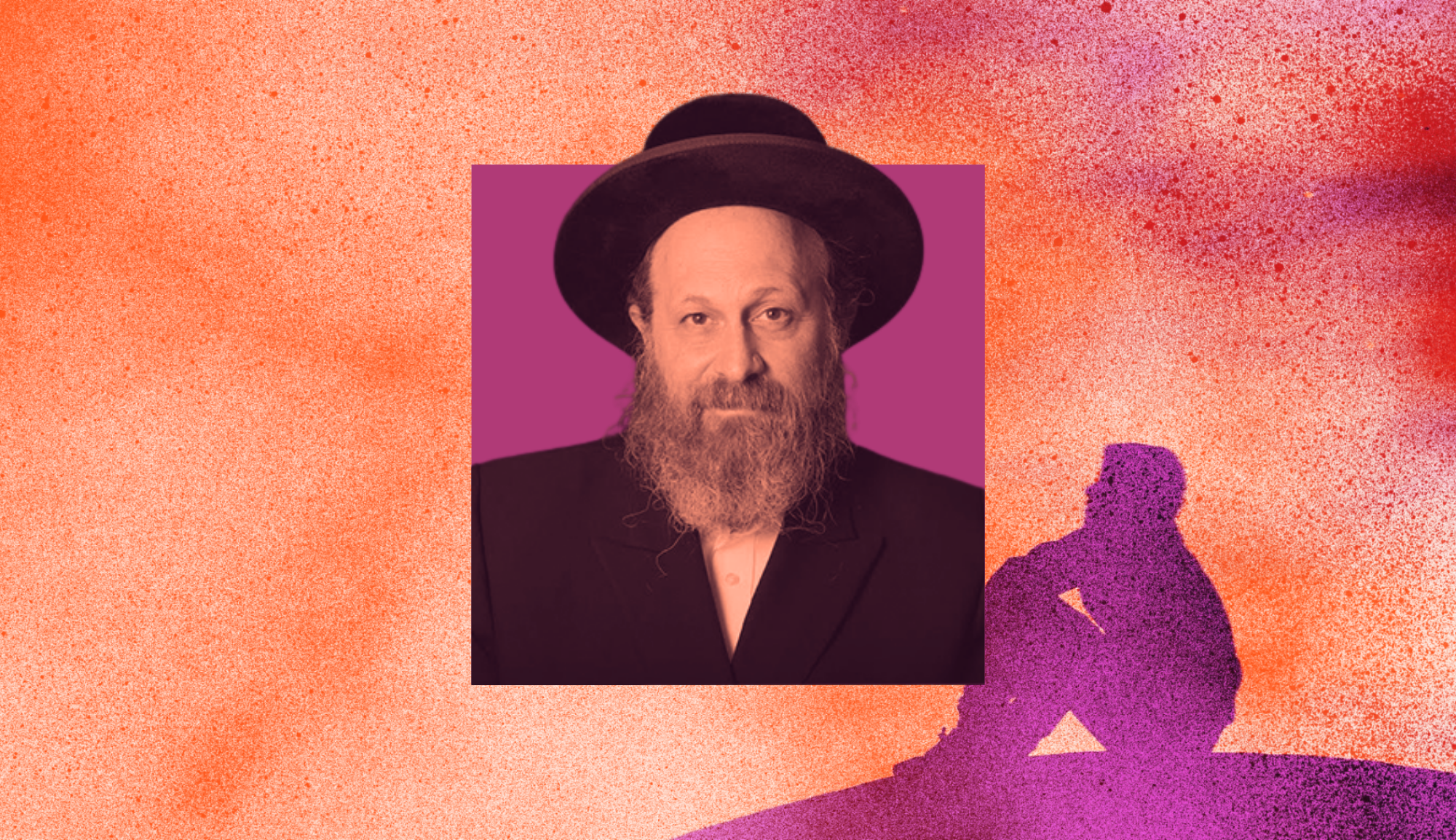
In this episode of the 18Forty Podcast, we sit down with Dr. Ora Wiskind, professor and author, to discuss her life journey, both as a Jew and as an academic, and her attitude towards mysticism.
We talk to Michael Eisenberg about the state of the Jewish People in Israel and the diaspora.
Haviv answers 18 questions on Israel.
In this episode of 18Forty Podcast, we had the privilege of speaking with Professor Haym Soloveitchik, University Professor of Jewish Studies at Yeshiva University.
In this episode of the 18Forty Podcast, we talk to Rabbi Josh Grajower – rabbi and educator – about the loss of his wife, as well as the loss that Tisha B’Av represents for the Jewish People.
In this episode of the 18Forty Podcast, we talk to Rabbi Aryeh Lebowitz, the director of semicha at Rabbi Isaac Elchanan Theological Seminary (RIETS), about the development of halacha.
In this episode of the 18Forty Podcast, we talk to Frieda Vizel—a formerly Satmar Jew who makes educational content about Hasidic life—about her work presenting Hasidic Williamsburg to the outside world, and vice-versa.
In this episode of the 18Forty Podcast, we sit down for a special podcast with our host, David Bashevkin, to discuss the podcast’s namesake, the year 1840.
We speak with Naftuli Moster about why he changed his understanding of the values imparted by Judaism.
In this episode of the 18Forty Podcast, we talk to historian and professor Pawel Maciejko about the false messiah Sabbatai Zevi, Sabbateanism, and the roots of Jewish secularism.
In this episode of the 18Forty Podcast, we talk to Judah, Naomi, and Aharon Akiva Dardik—an olim family whose son went to military jail for refusing to follow to IDF orders and has since become a ceasefire activist at Columbia University—about sticking together as a family despite their fundamental differences.
Perhaps the most fundamental question any religious believer can ask is: “Does God exist?” It’s time we find good answers.

Rav Froman was a complicated character in Israel and in his own home city of Tekoa, as people from both the right…
As Bamidbar comes to a close, Matot-Masei suggests that religious maturity is knowing which questions not to carry alone.
Joy and meaning can be found not only despite the brokenness, but even because of the brokenness.
A Hezbollah missile killed Rabbi Dr. Tamir Granot’s son, Amitai Tzvi, on Oct. 15. Here, he pleas for Haredim to enlist into…
Children cannot truly avoid the consequences of estrangement. Their parents’ shadow will always follow.
Christianity’s focus on the afterlife historically discouraged Jews from discussing it—but Jews very much believe in it.
Children don’t come with guarantees. Washing machines come with guarantees.
I consider the Rebbe to be my personal teacher, and I find this teaching particularly relevant for us now.
To talk about the history of Jewish mysticism is in many ways to talk about the history of the mystical community.
From Freud through today, our desire to heal asks us to consider why we care so badly—and maybe if it’s hindering the…
A 94-year-old Holocaust survivor, a lone soldier, and more. Here are seven olim sharing their stories of aliyah.
Until recently, I too found myself almost entirely estranged from Jewish tradition. My return is showing me what we need to do…
My family made aliyah over a decade ago. Navigating our lives as American immigrants in Israel is a day-to-day balance.

Israeli minister Itamar Ben-Gvir wears the mantle of Kahane in Israel. Many Orthodox Jews welcomed him with open arms.
Yes, the Israeli army needs Jews to draft, but more than that, Jews need to experience what it means to serve.
In Acharei Mot-Kedoshim, we learn that holiness requires moving beyond the letter of the law to its spirit.
Religious Zionism is a spectrum—and I would place my Hardal community on the right of that spectrum.
It isn’t only censorship that creates the narrative of our history, but it is every creative endeavor that we engage in.

If You’re Reading These Words is a book in which all the heroes have died, yet it overflows with life.
From classics to digital minimalism to friendship, the perfect summer reading list is making its way to your bookshelf.
Israel is clearly important to Jews. The question becomes: To what extent?
Rabbi Moshe Gersht first encountered the world of Chassidus at the age of twenty, the beginning of what he terms his “spiritual…
In this episode of the 18Forty Podcast, we speak with Diana Fersko, senior rabbi of the Village Temple Reform synagogue, about denominations…
What is Jewish peoplehood? In a world that is increasingly international in its scope, our appreciation for the national or the tribal…
We speak with Naftuli Moster about how and why he changed his understanding of the values imparted by Judaism.
In this episode of the 18Forty Podcast, recorded live at Stern College, we speak with Rabbi Moshe Benovitz, director of NCSY Kollel,…
In this episode of the 18Forty Podcast, we speak with Shais Taub, the rabbi behind the organization SoulWords, about shame, selfhood, and…
In this episode of the 18Forty Podcast, David Bashevkin answers questions from Diana Fersko, senior rabbi of the Village Temple Reform synagogue,…
What is the Zohar — and why has it captivated mystics, scholars, and seekers for nearly a thousand years?
What does it mean to truly give? And why does Kabbala teach that our deepest pleasure lies not in receiving, but in…
What draws a man trained in business and finance into the world of Kabbala? And what does it actually mean to find…
In order to study Kabbalah, argues Rav Moshe Weinberger, one must approach it with humility.
Support Jewish explorations today by supporting 18Forty. Your partnership makes our work possible.
Donate today.