Transcripts are produced by Sofer.ai and lightly edited—please excuse any imperfections.
David Bashevkin: Hi friends and welcome to the 18Forty Podcast where each month we explore a different topic balancing modern sensibilities with traditional sensitivities to give you new approaches to timeless Jewish ideas. I’m your host David Bashevkin and this month we’re exploring Israel’s relationship with the diaspora, a topic that we have touched on in the past and we are now returning to. This podcast is part of a larger exploration of those big, juicy Jewish ideas. So be sure to check out 18Forty.org, that’s 18Forty.org where you can also find videos, articles, recommended readings, and weekly emails.
Before we get into today’s episode, I wanted to first share my appreciation to our colleague Sruli Fruchter, who has worked with us for a whole bunch of years, began as an intern and then became our director of operations and really oversaw so much of our growth over the past few years, has rode on to his next adventure and is no longer with 18Forty, and I did want to publicly share my appreciation for everything that he has done for the growth of 18Forty and wishing him tremendous success in his future endeavors. We love you and appreciate you Sruli. Today’s episode is always a little bit difficult because this is not a political podcast. I do not keep afloat of all of the changing political dimensions and when October 7th broke out, we spent a long time just trying to process what are the events that are unfolding in front of us, how do we make sense of them.
The lens with which we try to approach issues is rarely political. There are many great political podcasts, I’m not going to list all of them right now, but I’m sure you know them, they’re really, really wonderful and it is not what I am focused on. I think at 18Forty, we have always been focused obviously on the Jewish people and secondly on the vision for Jewish life and Jewish practice, what is our shared collective vision for Judaism. And when the war broke out in Iran, the most recent war and there were missiles being dropped on Israel and people running into bomb shelters, I felt very misaligned.
I wasn’t sure if we should stop our episodes and just talk about what’s going on, especially right before Passover each year we focus on families and family dynamics, what we call intergenerational divergence, and to me at least, I don’t think people come to 18Forty for breaking updates on what is happening with Iran and the Middle East, at least certainly not from a political perspective and not from a security perspective. This is not the focus of our work. And yet, I’ll be honest, I guess the experience in America because where I’m living now, the distance feels so much stronger because of the relative calm that we have at least in the United States compared to what our brothers and sisters have been experiencing in Israel. The divide, I think, is much starker now than it was even after October 7th.
After October 7th, the whole world felt upside down wherever you were, obviously the closer you were to Israel, the more acutely you felt it. But there is no question that the sense of the entire world feeling upside down, I’m not sure if we have felt that over the last months or so with what is happening in Iran. And I felt on a very personal level like a sense of distance from the urgency, from the seriousness of what is transpiring. And it felt not only appropriate but very necessary to take a little bit of time after Passover, after Pesach, and revisit what I have always promised is a topic that we will continually revisit, which is this transitional moment of our relationship with the state of Israel, the Jewish people around the world who do not yet or do not have plans to move to Israel.
What is our relationship? What is unfolding in Israel? And more than anything, not in terms of the political situation or the security situation, what do we hope comes next after this? What is our focus? What is our project? If God willing our most serious enemies are vanquished, what is the project now of the rebuilding of the Jewish people and the state of Israel? And when I have questions like this that kind of border both on the political security questions, but really what’s driving my inquiry, what’s driving my curiosity, is the future, is the future of the Jewish people, is the future of Yiddishkeit, of Jewish life and Jewish practice. And when I have such questions, I turn to a friend who is also a former 18Forty guest, my dear friend Michael Eisenberg. Michael Eisenberg, who’s an investor and venture capitalist in Israel, also a very accomplished Torah scholar who has written in many, many books on Torah thought, but more than anything he is one of the people I enjoy more than anyone else to sit and just talk honestly and sincerely.
What is happening right now? What is going on? What are we witnessing? What should we at least be praying both in action, in thought and in words should come next? And that is why when I was looking for an overview to really understand where are we right now, what is this moment, what does it represent, where should our focus be, it was not a question of who to turn to. Michael is very often in the room with the prime ministers, with the generals, talking about the unfolding security situation in Israel, as well as a deep understanding as an American about what world Jewry, American Jewry, but more than anything else what I admire most about Michael is his commitment to really visioning for the Jewish people. What is the vision for Amcha Yisroel, for the collective body of the Jewish people? Where are we headed and how do we get there? So it is my privilege and pleasure to approach these incredibly important questions about what comes next for Israel and for the Jewish people. It is my pleasure to introduce our conversation with Michael Eisenberg.
Welcome to my dear friend Michael Eisenberg. Thank you for joining, Michael.
Michael Eisenberg: David, it is great to see you. I wish we could see each other in person more these days, but travel’s been harder, as you know, and I look forward to welcoming you here to Israel soon.
David Bashevkin: Amen, God willing.
Michael Eisenberg: You’re reminding me of a story about my father. My father was in Kerem B’Yavneh, the yeshiva in 1967 and he had a Yemenite Israeli chavrusa and it was the end of the Six-Day War and my father, along with Rabbi Willig and Rabbi Miller from Gush, they were all together in Kerem B’Yavneh and they went to Jerusalem, they went to Yerushalayim for Shavuos right after the war in 1967. What an incredible moment.
He comes back to yeshiva and his Yemenite Israeli chavrusa says to him, nu Baruch ta’aleh l’aretz, are you going to make aliyah? And my father said, im yirtzeh Hashem, or as you would say, God willing. God willing. And the Yemenite chavrusa said to him, al tidag Hashem rotzeh zeh taluy becha. Ah.
Don’t worry, God wants it, it depends on you. That’s what that reminds me of.
David Bashevkin: I love it. So I wanted to begin by taking like a general pulse.
You know, I’m in America right now and so much of what’s happening in Israel and with Iran is filtered through the headlines and through media. And I wanted to just take your pulse of where you’re standing in Israel from your vantage point. You’ve been involved in very high-level meetings. How is the war going in Iran right now?
Michael Eisenberg: So first of all, you know, we’re recording this podcast a few days into the ceasefire.
In this ceasefire, the Iranians fired on Bahrain, I think it’s seven times today, and they fired on Kuwait and they fired on Saudi. So it’s kind of a tenuous ceasefire. And the president has just started the blockade of the Strait of Hormuz. And I think where we’re at right now is a tense ceasefire.
I was somewhat joking today that traffic is back in Israel. We have no missiles, but now we have traffic. And I think it’s fair to say that this is a wait-and-see moment where the Iranians are going to have to make some hard decisions probably. And if they don’t make the hard decisions, which should have been made a long time ago and enforced a long time ago, and you know, President Trump’s right, it’s been the failure of many US administrations to enforce upon Iran that they cannot have a nuclear weapon.
That’s the sine qua non. The president has said that and Prime Minister Netanyahu has said that. I’ve heard it myself. Now on top of that, I think it’s very important to say that this is an evil, evil, evil regime.
Okay? What they do to their own people is beyond evil. And I think as Jews when we look around the world and we asked where were people in late 1930s and early 1940s, we should be asking of ourselves the same question. Where are we for the Iranian people being hung and slaughtered as this regime carries out its evil doctrine? Obviously, in any political organization, there are more hardliners and less hardliners, but I think it’s hard to stand by the wayside and say, hey, you know, they turned off the internet because, you know, they didn’t want people watching Netflix. I think they turned off the internet because they don’t want people knowing what’s going on there.
And my sense is it’s bad. And I don’t think we have a right as a people, I don’t think we have a right as a world to stand by while this regime continues to slaughter its own people and while it continues to terrorize its neighbor. And I think the last point that’s really important to point out is the following. Israel has known, and give Prime Minister Netanyahu credit for this, for decades that Iran is an existential threat to the state of Israel but not only, also to the world.
It is an existential threat. And what this war has proven beyond a shadow of a doubt is that Iran was and is an existential threat to the world and this is in numerous ways. Number one, they have a nuclear weapon or the ability to build a nuclear weapon. They told Secretary Witkoff, Special Envoy Witkoff, that.
I made that mistake on CNN calling him Secretary Whitkoff and I got tens of messages.
David Bashevkin: Tens of messages. I think our listeners, you’ll get one or two and I know who they’re from so don’t worry about it.
Michael Eisenberg: Special Envoy Witkoff said, you know, that they told him proudly we can make eleven nuclear bombs and they’ll threaten the world with that.
Number two, we now know because they fired on Diego Garcia that they have ballistic missiles that can reach Europe. That’s the second thing we know today that might have been in doubt in some people’s mind before. Number three, we know they are willing to fire ballistic missiles, not just on Israel but on the Gulf states: Saudi Arabia, Qatar, UAE, Bahrain. They’ve all borne the brunt of this.
And they were fired on the US, if they could, and they will. And they’ve fired on the UK, and on France, and they tried to fire on Cyprus, which is an EU member state. And the last thing we’ve learned, which is also critical, is that they’re willing to engage in economic terror. Closing the Strait of Hormuz, attacking the oil pipelines of neighboring countries, attacking the gas fields in Qatar, is economic terrorism of the first rate.
And by the way, while Israel fires on military targets, as the US or IRGC targets, they fire on civilian centers. Arad is a civilian center in Israel. They fired on hotels in Bahrain, in the UAE, in Saudi. So these are people that don’t play by rules that Westerners like to believe that they play by.
They’re playing by an entirely different rulebook. And that rulebook is: number one, survival at all costs, but number two, we want to disrupt your way of life. We want to extinguish your way of life. That is what radical Islam seeks to do, and the Shiite version of it, empowered by this state sponsor, is rabid.
And the last thing to add is the following. October 7th started with Hamas, an Iran proxy, attacking Israel. Iran spent decades building a ring of fire around Israel. Hamas, Hezbollah, Shiite proxies in Iraq, the Houthis, and Iran itself.
Look, nobody attacked Hezbollah after October 7th, but they attacked Israel. Nobody. Okay, we’re defending ourselves against Hamas in Gaza, and they attacked us. And so what Israel’s had to do over the last twelve and a half months is dismantle this ring of fire, this reign of terror.
Hamas, Hezbollah, Houthis, and Iran and their other proxies around the world. But at the same time, the world has discovered that Islamism, not Islam, Islamism, radical Islam, is cancerous and needed to be nipped in the bud. At least UAE recognizes that, Israel recognizes that, President Trump recognizes that. I’m not sure that Keir Starmer or Emmanuel Macron recognize that yet.
The UAE knows it, Kuwait knows it, they’ve all outlawed the Muslim Brotherhood, which is by the way Sunni, not Shiite. This is a real issue that the West is going to need to confront over the coming decade, no matter how this war in Iran ends.
David Bashevkin: That’s exactly where I wanted to go with the next question, because I look at this segment with Iran, we use terms like endgame. This is kind of the end of a very long game that began really before October 7th, but became much more acute on October 7th.
And what we have seen in the last twelve and a half months, and it’s really startling, it’s destabilizing, is the language with which people talk about Israel. How much easier it is to joke around Netanyahu running the world. And I’m not talking even about the most virulent antisemites out there. I’m talking about cute reels on Instagram where guys have their hands up and they’re saying Benjamin Netanyahu, my ex-girlfriend is developing nuclear weapons, can you please attack her? Which made me giggle also, I’ve seen a bunch of these videos.
What’s the underlying message is that Israel has been repainted as an aggressor, and for a lot of people, and it’s become so much more mainstream, is to question Israel’s relationship with the United States of America. My question is threefold: We obviously needed to respond and we needed to respond strongly. Was this worth it? Was it inevitable? And will we ever get back to a time, do we want to get back to a time where the classical intertwining of the American and Israeli flags is the status quo of the American sentiment?
Michael Eisenberg: So first of all, I’m very thankful for two things: one, that I don’t have Instagram, and two, that I don’t have TikTok. TikTok is the Chinese Communist Party’s sewage system in which it kind of spews it into America to contaminate the water, and Instagram is just, I don’t know what to tell you.
I haven’t been on it, so I don’t know.
David Bashevkin: I don’t blame you.
Michael Eisenberg: So I’m thankful for that. It’s how you maintain your sanity, X or Twitter which I find better.
It doesn’t have silly videos, thankfully. Correct. Is in itself challenging. And fake mainstream media, it’s funny when you end up in some of these rooms you realize how much of what the reporting is just not what happened.
And it’s a real word of caution. I used to say when they started writing about me in the business world that I knew things that weren’t true. And you say, but why do I believe things about other people? So I just stopped believing all this stuff and tried to do my own research. That’s kind of point one.
Point two is, I think October 7th taught us, should have taught everybody, that waiting until a problem is too large is existential danger incarnate. And you need to be aggressive. It’s not popular because the world likes sha shtil as they would say insome form of Yiddish and English.
Don’t rock the boat, don’t rock the boat.
But I think we continue to find out, whether by the way it’s true in business and it’s true in politics and it’s true in military affairs, that if you don’t rock the boat, your boat gets rocked. So being preemptive is generally right, not wrong, I keep finding. It’s unpopular, but it’s right, not wrong. In the same way, by the way, that being contrarian in an investment is very unpopular for a long period of time, but that’s how you make money.
The famous investor Howard Marks at Oaktree has this two by two matrix in which he says you make a good investment or a bad investment. To make a good investment but it’s consensus, you don’t make any money. You have to make a good investment that’s non-consensus, which means you have to live with shame and ridicule for a long period of time. And so, I don’t think we can afford to kind of sit back and let the game come to us, we need to be preemptive, and I think that is morally correct in addition to everything else.
Now, about the United States, 11 years ago I wrote a book called The Vanishing Jew, which unfortunately literally called this moment in time. My view is that since 2008 and the financial crisis, antisemitism has been on the rise because financial challenges, and which I think parts of America have been in since 2008, cause rises in antisemitism. Antisemitism’s always beneath the surface, it’s bad economics that lets it flourish. That’s kind of point one.
Point two is if you look at the results around people expressing antisemitic opinions, you learn something really interesting: these people hate the United States of America. These people hate the United States of America. They don’t want it to be successful. I saw yesterday Tom Friedman said that he hopes America and Israel lose the war against Iran so that Trump and Netanyahu are not right.
I mean, you must be a hater of the United States of America to believe that. In addition to probably being a self-hating Jew at the same point in time. I’m sure I angered some of your listeners with that comment.
David Bashevkin: Thank you for that.
Michael Eisenberg: You know, Tom Friedman’s the most consistently wrong human being over the last 30 years and somehow he still has a column in The New York Times. I still remember sometime in the 2000s this great epiphany he had about the Saudi peace deal, my god. Anyway, the America that I grew up in, the America that was founded by the founding fathers, was a Hebraicist Christian country. That’s a fact, it’s a fact of history.
Now America is changing, and there’s some people who don’t believe in American meritocracy, they don’t believe in the American dream, they don’t believe in the Christian values of America, the Judeo-Christian values of America that I was brought up on. Those people hate America and they also hate Israel and they’re becoming antisemitic. It’s got nothing to do with this war, it started before, check the stats, they’ve been ticking up long before the war in Gaza. Now add to that October 8th.
On October 7th, Hamas attacked Israel. On October 8th, the world’s most planned attack on Jews and on Israel was launched on social media and on campuses and other places across America. Well-organized, well-funded. We’re now seeing some of these networks being exposed.
And that was launched. Now, I said this to you before, the Jewish institutions have been asleep for decades letting this fester, much like Israel was asleep about Hamas and Gaza, it’s fair to say.
David Bashevkin: When you say the Jewish institutions have been asleep, what would you have wanted to see institutions to be more vigilant about?
Michael Eisenberg: Let’s start with the following, that the average age in most of the kind of leadership of these institutions compared to my startup companies is a giant gulf. Interesting.
And part of that has to do with the fact that it’s pay to play. And so these are technologically unsophisticated for the most part institutions whereas the enemy was playing a very technologically sophisticated game. That’s number one. And that has changed a little bit since October 7th, but really not enough.
And the world has changed technologically over the last 20 years and particularly in the last five years and even more so in the last two and a half years since the ChatGPT moment. And if you don’t put young blood in these kind of AI-native or internet-native people, you’re at a disadvantage. Number two, you asked about preemption versus responsiveness, Jewish institutions have been responsive. And number three, and here I’m with Bret Stephens on this big time: you don’t fight antisemitism.
That’s a silly notion. We have to be proud Jews. We have what to say. And if you don’t stand up and be super proud of it, you lose the young kids, you lose the people, and you lose the battleground, and you retreat.
How is it possible that Jewish communities did not turn up on the college campuses of Harvard and Yale and these other places to support these students? You know, when I was in Yeshiva University, that YUSSR they went all the way to Russia to stand up. Sure. And there was Operation Torah Shield to Israel 1991 when I was in Yeshiva there. People, we used to turn up.
David Bashevkin: It’s an interesting contrast. Why do you think the Jewish community was mobilized, the diaspora, the American Jewish community, and maybe it’s hindsight, I was too young to remember, but were so mobilized for Russian Jewry for the fall of the USSR and we were, I wouldn’t say not mobilized, I don’t like talking negatively about anybody, but I didn’t feel the same mobilization institutionally when it came to October 7th. I felt it almost more acutely in the Orthodox world, the lack of mobilization.
Michael Eisenberg: The 1980s when I grew up and we used to go down and protest at the UN for Soviet Jewry, I think was still both less than 40 years after the Holocaust.
I think people still remembered that. I think a lot of Jews, not my family for what it’s worth, were immigrants to America or second-generation Americans and understood that you needed to fight for these rights. I think on some level Jews have become very, very comfortable in the United States of America. Famously, the Meshech Chochmah says at the end of Parshat Bechukotai about the Jews of Berlin, that they say Berlin is Jerusalem.
Lakewood, Teaneck, not one or two people have said this is our Jerusalem, you know, of the East Coast or of America. You know, when you get comfortable you don’t want to rock the boat, and so you don’t turn up. And I think, you know, in general, I wrote this in my book too, fourth generation becomes assimilated into culture, and that’s roughly where many American Jews are at right now.
David Bashevkin: I want to get back to exactly that point about the fourth generation, but I want you to just come back to the question of America and Israel just to kind of wrap a bow on this.
Are you worried that this relationship is now in irreparably different and that there’s no way to get the genie back in the bottle, or is there a perspective where this was inevitable and actually a good thing?
Michael Eisenberg: I don’t know is the answer to the question. I think since the destruction of the Temple, prophecy was given to fools. I will say the following: I don’t think there’s ever been a stronger relationship between two governments anywhere in the world than there is right now between the United States and Israel. It’s incredibly strong.
The partnership is incredibly robust, not just in war, by the way. I was involved in setting up of Pact Silico with my good friend Under Secretary of State Jose W. Fernandez and here, General Erez Eshel, who runs the Israel AI Authority. Israel is a founding member of Pact Silico, which is the global supply chain under the US aegis for artificial intelligence.
That’s super robust. The military and intelligence cooperation has been robust for a long time. I think it showed up in spades here, and I think if you ask commanders in the US military, they’ve learned a lot even from Israel in this war, and vice versa as well. And so the military collaboration is very, very strong.
US investment in Israel is exploded over the last two and a half years. It was already robust. I just got off the phone with one of the big PE firms who bought a company here since October 7th for about a billion dollars, and they’re looking to double down. And the economy here has been extremely strong in the collaboration with the US.
So I wouldn’t bet against it. But you have to be blind not to see some of the changing sentiment on the fringes, both the right and the left fringes of the American body politic. And the horseshoe theory of politics works every time.
David Bashevkin: Explain to our listeners what the horseshoe theory of politics is.
Michael Eisenberg: The horseshoe theory of politics says at the edges, the far right and the far left are actually much closer than the centers are to each other, and they kind of close at the top. Historically, by the way, the far right has been, let’s call it, more deadly, but the far left has enabled much more antisemitism because it provides a fig leaf for—by the way, particularly Jewish far-left has a tendency to do that, it’s historical fact. I think the same thing is true right now. That’s what you had over the Biden era and in the universities, which is that the far left, embedded in the university with this grand project of erasing everybody’s identity and dealing only in victimhood, kind of enabled the rise of safe spaces that were safe from, yet had to keep Jews out.
And you’ve got on the right now, the Tucker Carlsons of the world, who have become rabidly anti-Semitic, not just anti-Israel, in quite extreme ways, and I think those things meet. And so, unquestionably those two forces are rising, not just in America, they’re rising globally. But I think the core point of this has nothing to do with America, okay? We are in the middle of four simultaneous revolutions now, and it’s really critical to understand this. Number one, democratic governments are challenged globally.
Okay, it’s not just that you think New York City is falling apart, London’s falling apart, Paris is falling apart, France is falling apart, England’s falling apart, Sweden has its challenges. But even the Israeli bureaucracy, I think we’re, by the way, in the best shape of many. And so, democratic governments are really, really challenged now. The second thing is that the social welfare state, which has been the state of affairs for at least the last eighty years, in the UK it’s a hundred plus years since after World War I, the welfare state is crumbling.
All of these countries are massively indebted. They can’t afford to make the social welfare payments. You have people on welfare for way too long, second and third generations. Education systems failing in many of these places.
The social welfare state is both bankrupt, failing, and will disappear. And that’s scary because it means an entire change of the economic model of countries. The third thing is that war is back. Because we’re Jews and because I live in Israel, I like to think of October 7th, but that’s the second war.
The first war was Russia attacked Ukraine, and that is still causing perturbations for good reason across Europe right now. I like to say that we’re going to be SIFO, second in and first out, because Russia and Ukraine were first in. But since then we’ve got stuff going on in Sudan and Somalia and there’s been a couple of skirmishes in Southeast Asia. And the world has become increasingly unstable, right? The US-Venezuela, now Iran, and Iran attacking the Gulf states and Diego Garcia.
The world is going through a perturbation that we haven’t seen in eighty years. And so, war is back. And then the last thing is AI. That’s the fourth revolution of our time.
And it’s massive. It’s massive. People don’t understand how fast this is happening and how important this is and how important it is to kind of be a technological leader in this era. Okay? We have this era of the need for energy and electricity, which is carbon and atoms and solar and nuclear and all that kind of stuff.
And at the same time, this notion of AI disrupting just about everything on planet Earth is a big deal. And it will be undermining. We’re just at the beginning of it. It’s the bottom of the first, to use the baseball metaphor.
And that’s going on everywhere. And I think this is undermining people’s sense of security and stability and who they are and what they are and what they’re going to become. And that’s causing, I think, a big political disruption in addition to causing an economic disruption and a geopolitical disruption.
David Bashevkin: If Israel is able to neutralize Iran and it does not have any immediate military threats, obviously we want a safe and secure Israel.
My question has always been, because I am not a political junkie, I actually don’t even like talking that much about politics, but I am a Jewish people junkie, and I am very curious about what you think the project needs to be on the other side of an Iran war with an imagined safe and secure Israel. And I want to actually throw in, if you’ll allow me, that Beis HaChochmah that you— you mentioned, Rav Meir Simcha of Dvinsk, who my dear friend Dovid Safier just did a beautiful overview on in Mishpacha magazine, has a very famous commentary I believe in Parshas Bechukosai where he talks about the curses and how in each generation we’re kind of looking for a synthetic enemy, an adversary. We don’t do well when we are kind of complacent. We come to a new place and the first thing that Jews want to know is we need Judaism, we need infrastructure for Judaism.
They build infrastructure. The next generation, they kind of grow up with infrastructure and then the third generation is like, what now? What do we do now? Which is why the fourth generation very often deteriorates and falls apart because they don’t have an adversary. If you do the math, we are four generations in from the American Jewish community being the largest Jewish community in the world. It basically lasted four generations from after the Holocaust till right now, we’re basically neck and neck with Israel’s just pulled ahead a little bit.
But it lasted about four generations. That’s my grandfather, my father, me, and now my children are the fourth generation of this American stock. And the question that I’ve been thinking about is what is the next big project for American Jewry? And even more so, what’s the next big project in Israel? Meaning if they no longer had the pressure of security, what is the next big project of this fourth generation in the land of Israel of what they need to rebuild and how do these two projects, if they both in fact exist, the project of American Jewry and the Yiddishkeit that we’re building in Israel, how do they intersect?
Michael Eisenberg: Well, that’s a big one.
David Bashevkin: That’s a big one.
Michael Eisenberg: Let me just hit two quick notes. Please. The first on the Meshech Chochma. I don’t think the Meshech Chochma says that we have synthetic enemies or we create synthetic enemies.
What he actually says is that as Jews become rooted and complacent and they’ve even built Torah institutions in the lands that they go to, God brings upon them a se’arah, a storm. He’s writing, I guess, this probably 45 years before the Holocaust, 50 years before the Holocaust at this point, and it’s quite prophetic. And what he basically says is as Jews become more comfortable, God has to rattle them with antisemitism. You know, he says there, I hear people saying Berlin is Yerushalayim, Berlin is Jerusalem.
That shows that they’re settled and unfortunately we all know what happened. That’s point one. Point two is you’re not a political scholar or that much interested in politics, but you are a Bible scholar and I’m always fascinated by the line in Sefer Shoftim, the Book of Judges, where the Navi says, the prophet says, vatishkot ha’aretz arba’im shana. And it appears, I think, three times in the book of Shoftim.
You go, why did it have to tell us that the land was silent or placid for 40 years? Let me help you. It’s because that was a giant chiddush. The fact that the land of Israel was quiet for 40 years, unperturbed by the Philistines, the Moabites, the Ammonites, or whoever it is, that was a giant revelation. 40 years.
40 years. Wow. Which means it’s not going to be quiet. And I think that’s actually a feature, not a bug.
That’s actually a feature. The land of Canaan, of Israel, which travelers walked through, which trade routes went through—we’ll talk more about this in a second about what’s coming afterwards—which the IMEC, the India-Middle East Corridor, that’s being talked about now with incredible gusto because of what’s happened in the Strait of Hormuz, will go through Israel because geographically, it’s very, very central to the world. The Mediterranean borders Europe. It goes to Asia if you go to the north and to the east.
It goes south into Africa, which has the fastest-growing population on planet Earth today. It’s just a very, very central place in the world, not endowed with that many natural resources, although we are energy-independent now because of the gas finds off the coast. Torah never talked about the off the coast, only about the seven species on the land. And it matters geographically.
Because of that, you can build a meaningful life. And so you ask, what’s the project? And I have a view that comfort or comfortable or quiet is over time ossifying. And I think one of the things about Israel, where it is, what Avraham Avinu, Abraham our forefather, who had to contend with animosity and famine, and Yitzchak, Isaac, who contended with the Philistines and the people stealing his water and animosity, and Jacob—that confrontation, that adversity created greatness. And so a part of what I would consider little old me life work is to try to figure out what does Israel become in its next 78 years.
And I’ll say that that is a proxy for the Jewish people. Exactly. When God says to Avraham, come to Israel, Avraham’s a wealthy man. But God says to him, you know, you’re going to be blessed.
And blessing we know, this bracha says it be-feirush, it’s in the pasuk and psukim in Devarim, in Deuteronomy, it’s very obvious. It means material blessing. We have a commandment to be a prosperous society. The notion that many in at least the ultra-Orthodox community in Israel have adopted of pas b’melach tochal, you should eat only salt and water, is nonsense.
That’s for maybe a few people. It is not an aspiration for a country. Anyone who thinks that theologically has no He’s never read a piece of Torah before. He doesn’t understand that that’s a curse and not a bracha.
And so God says to Avram, be prosperous. By the way, it’s not enough to be prosperous. You must make everyone around you prosperous too. He-yei bracha, be a blessing.
Venivrechu becha kol mishpachot ha’adamah, all the other nations around you will be blessed through you. We have a responsibility through our innovation, our innovation economy, through our natural resources. And today, by the way, we supply Jordan and Egypt with gas. Okay, we power their countries.
That is a blessing. By the way, one could argue that that is also on some level a military insurance, but it is a blessing to be able to share that and empower other people. We have a responsibility as a people to spread monotheism. When Hashem says to Avram, cross over the line, cross over the river, come in from the north, as the Midrash famously says, when Avram sees the people working the land during the right seasons, he says, those are the people I want to be among, that is in the Land of Israel, because we have a responsibility to work and to be productive as a society and to be able to export that, the innovation, the produce.
And by the way, the Abraham Accords has led the UAE to being a three billion dollar trading partner with Israel in a short few years. It’s incredible. After the war with Iran, whenever it ends, and we’re not through it yet, I fully expect that Bahrain and UAE, who are signed currently on the Abraham Accords, and other nations around us, will become part of this brotherhood. And that will include the children of Japheth, of Yafet as well, which is the Greeks and Cyprus and other members around the Aegean Sea and around the Mediterranean.
And we have an opportunity, we have a responsibility to show what does a God-fearing people. And by the way, one of the interesting things about Israel is what I call the median Israeli is different from the median American, even the median American Jew. The median Israeli has somewhere between three and four kids. It doesn’t matter if he’s religious.
Both the spouses work. They served in the military or national service. They pay their taxes. And they believe in God.
They are to use Hebrew words mishtadlei taryag. They may not keep all taryag mitzvos, none of us do by the way. True. And they may read Tehillim, they may put on tefillin in the morning.
I have so many stories, by the way, about people I’ve traveled with who put on tefillin in the morning. One of them even asked me about sof zman tefillah, what’s the last time he can daven tefillah, and they ate in a non-kosher restaurant in the place that we went to. Amazing. It’s not what I do myself, but it’s amazing.
And these people believe in God. And so we have a responsibility as the children of Abraham, as the children of Isaac, to turn Israel into a model society. A society that empowers the aspiring poor, not the poor of choice, the aspiring poor. Chai amicha achicha, when your brother falls down, you pick him up.
That should be part and parcel of the society that we want to build. That’s an economic thing. We should be the most innovative nation around, because when you’re innovative, you can export both your values and your bracha, your blessing, your prosperity. We should want to have engagement with our neighbors, to bring them around, to be friendly with them.
And that is an aspiration of a society that the Torah is a blueprint for, in my opinion. The Torah is not some ephemeral thing of personal spiritual growth. It’s a blueprint for a society. That’s why it says ve-chi tavo’u el ha’aretz, when you come to the land.
It’s a blueprint for an actual society, not a community or a shul in Teaneck, not a Bais Medrash Gavoah in Lakewood, not a temple in Cincinnati. For an actual living society. Now, for 2000 years, we haven’t had to deal with these problems, so we’re still learning how to use power, we’re still learning how to budget, we’re still learning how to field an army. We’re doing a pretty good job of it, thank God.
We’re still learning what all this means. How do you do foreign relations, right? We don’t have frameworks for this for 2000 years. And the last thing I’ll say is the following: in an era of so many confused countries, where we’re following, I hope, the era of progressivism and multiculturalism and all this nonsense where countries need to find their ethos, and Alon Nevous wrote this, I wrote this also in my book called We the Israeli Heroes, same idea. Israel and Zionism are the blueprint for the future of successful societies.
And by the way, you see Germany adopting Zionism right now. The mandatory draft is making its way down. You know, flying the flag, not multiple flags, flying the German flag is coming down the pike. It makes some Jewish people feel uncomfortable.
Germany’s Israel’s closest ally in Europe right now. Poland is another one. You wouldn’t imagine it 80 years ago. We’re kind of not so surprised that the Spanish have turned on us again for some reason.
But Zionism is a blueprint for a model society. It’s a, by the way, a blueprint for a Torah society, for a God-fearing society, for a society that has a will to live and define its own identity and export its innovation, its economy, its power. Our Torah has a model for an economy. We need to adapt it for modern times, which hasn’t been done in 2000 years.
Our Torah has a model for a justice system. Needs to be adapted, but we can do it. It has a model for a governance structure, and we should be proud of that and embrace it. And that’s an incredible project.
If my kids, I’m too old, but if my kids grow up, and I think they’re growing up with this notion, you know Rabbi Sholom Rosner’s a person I love very much, said an incredible thing at his son’s wedding in the middle of the war. Incredible thing. He said growing up in America on the Torah of Rabbi Soloveitchik, I understood that there are mitzvos, there are commandments between man and God, and mitzvos, commandments between man and his fellow man. For my kids, I’ve learned that there’s a third category of commandments, that between a man and his nation, his country, bein adam le’amo.
David Bashevkin: Bein adam le’amo, beautiful.
Michael Eisenberg: Bein adam le’amo. I’ve adopted that from him. I think he’s right.
And you asked me part of what’s happened between to Israel there was a difference between what happened in Europe and what happened with these pioneers and they grew apart. They did grow apart only because European and then North African Jewry or Arab country Jewry needed Israel did it kind of come back together. In our communities I’ve got two daughter-in-laws who come from Sephardic or Edot Mizrach families. That’s all coming together now.
This generation, my generation of kids who serve shoulder to shoulder in the military with all these people coming from all over the world see a broader view of Judaism than your average kid in Teaneck and Lakewood. And they have national aspirations. I’m telling you about my son when he was like 11 or 12 or 13, I don’t remember, we were in New Jersey for the summer and we’re dropping kids off at camp.
He says like, “What are these people doing?” I said, “Well, you know, dropping the kids off at camp and taking them to shul.” This is not meant in any demeaning manner, just different, okay? He said, “But what are they doing?” “Well, you know, they’ll go to shul, they’ll come back.” He said, “But what are they doing? Like, what matters for our people, for our country?” He couldn’t grasp it. And I think since October 7th, that’s even emerged more. My kid’s done a couple thousand days in reserve duty. That’s a searing experience.
It’s changed an entire generation. There’s 450,000 people in this country that have gone to battle. And that’s their kids and their wives. And we’ve been through a different experience.
How this comes together afterwards I don’t know, but quote unquote Judaism changes at the same time. It’s inevitable. It always has.
David Bashevkin: I love the way you phrase this moment of transforming, I think you’ve used this term in the past though you didn’t use it now, transforming Israel into an empire.
That it really becomes the model of what it means to run a country Jewishly. The question I have is where that leaves American Jewry. We had four generations as I mentioned before of American Jewry being the primary drivers and to me the most unique part of the American Jewish experience was religion became voluntary. We had to figure out how to preserve religion under completely voluntary freedom of religion, freedom of practice.
That was always the mantra of America and it’s why so many people thought traditional Judaism would absolutely disappear. What’s so interesting, it was specifically in America that we were able to foster the highest level of commitment to Jewish education, probably the highest we’ve ever seen, though it’s hard to know particularly the highest levels of commitment to halacha which goes hand in hand with education. We have seen remarkable things accomplished in America. We’re kind of left with this problem more acutely in America of what now, but I was wondering what you thought of the notion of America being this four-generation incubator teaching the Jewish people how to preserve religion when it is not forced upon you.
We build day schools, color war, camps, make it fun, make it geshmak, give out prizes, all these things that we do that now is the moment that we almost need to share what we have learned in America. How does Yiddishkeit persevere when there are no methods of coercion? You have to make sure that it can justify itself just from the experience and that, and I say this with a great deal of humility and reverence, is something that maybe Israel is still learning or is still developing. What do you think of that thesis or do you have an alternative one?
Michael Eisenberg: Turn around for a second
Those yellow books I believe are the Peninei Halacha, right? Sure is. And who’s to the right of that?
David Bashevkin: This is the Koren Nach.
Michael Eisenberg: The Koren Nach, yeah. And the Koren Nach was published where?
David Bashevkin: Israel.
Michael Eisenberg: Here’s the interesting thing I’d point out. Since the Rav and Rav Moshe Feinstein, Rav Moshe I think died in 85 or 86 and the Rav died in 1993. You’d be hard-pressed to find a meaningful sefer that’s come out of American Jewry over the last or set of sefarim over the last 30 years. No disrespect meant to any.
You’d be hard-pressed. But in the last 30 years or so there’s an explosion out of Israel. Incredible Torah. So I think what’s happened is Torah flourishes when it meets real life and new challenges and gets out of the comfort zone.
Some of our greatest shailos u’teshuvos, responsa, over the thousand years plus of the genre are because of complex circumstances. And you know, whether it’s Rav Rimon or Rav Melamed or Rabbi Benny Lau or Rav Medan and you know, the Tanach explosion in the Gush, the virtual Beis Medrash which really started in the Gush, it’s been explosive. And I think culture is upstream of politics and culture is upstream of call it resilience. And so what I think you see happening is the early days of American Jewry which kind of transferred out of Europe has now moved completely to Israel in terms of who sets the tone and what matters.
Ki mitzion teitzei torah.
David Bashevkin: You know what’s interesting about this? It’s an interesting data point that my nephew sensitized me for is that in American yeshivas they still speak Yiddish or Yeshivish. But in the Israeli Charedi yeshivas the kids have no connection to Yiddish. It’s like what, we don’t need Europe for our authenticity.
I’m talking about Charedi yeshivas. They are full Hebrew in all of them.
Michael Eisenberg: The younger generation of Charedim as opposed to the older generation of rabbonim and askanim is Zionized at the end of the day. And that’s why they want to integrate at the end of the day.
They’re being held back by the rabbonim, by the askanim, and some of the gvirim in America. They know it, we all know it, it’s like it turns up on my door every day. It’s very obvious. And it’s hard because you know the social pressures and the sanctions are very high.
But the broader point is the following because you’re asking about American Jewry. There’s 350 million people in America today, maybe getting closer to 400 million. There is a shrinking Jewish population in America. Jews were 2, 2.1% of the population, you know, maybe now it’s like 1.7, 1.8% depending how you count.
One more generation, what you call the fourth generation, which you talk about the Orthodox community, but you’ve lost a large number of Jewish people along the way. So as a percentage of the US population, Jews will shrink over the coming decades. That’s point one. When you shrink, your political influence wanes.
When you shrink more broadly, your industries shrink. Okay, doesn’t mean America’s not a big place and you can make a lot of money, etc. But like the Jewish infrastructure industry starts to come under more pressure. Just like that, it’s a numbers game. And so when you play the movie forward, you know, a few decades, I think American Jewry will still be around, I’m sure it’ll still have vibrance, they’ll probably still have Pesach programs because everyone’s forgotten how to make Pesach.
But it will be more like the UK than it is like the American Jewish experience that you know, which is a smaller, more insular community, which continues to do business and probably has, you know, yeshivas and day schools, but it will become a much smaller minority population with a lot less influence. And Israel at the same time is going to grow. My own view is we’re headed into the golden decades of Israel right now. We’ll get past this political stalemate we’ve had over the last 7 to 10 years.
Like I said, we’re still figuring this out. Like it’s early. I want to point out, you know, thank God, thank God that the judicial reform in Israel didn’t lead to a civil war because at the same time period in the United States of America in the 1860s, same time after the founding of a state, you end up with a civil war over slavery, over a legal issue. Like we forget this.
It’s in my new book coming out on Devarim. But it’s a legal issue. Will the new states allow slavery? Okay, what is the power of the judicial branch of government? Thank God we have so much to be thankful to God about for this, to Hashem Yisbarach for this. So much that we didn’t end up there, could happen.
It happened in the time of Shlomo Hamelech too. Right, Shlomo Hamelech dies, the kingdom splits, roughly 80 years. This happens in the history of humanity, in the history of the world, in the history of our people. This happens.
We just have to keep davening that it doesn’t happen. And so when you think about what happens to American Jewry, it becomes less powerful over time. And that’s a scary thought for me, by the way, it should be a scary thought for you. I think by the way, we’ll see over the next 10 to 15 years a significant amount of your high agency people moving to Israel.
By the way, today I got three inbounds from people just graduating first-rate Ivy League colleges looking to move to Israel after they graduate in June. Today. By the way, I’m not sure there is a thing anymore as first-rate Ivy League college, but nonetheless, they go to Ivy League colleges.
David Bashevkin: You know, there are these and I’m painting with too broad of a stroke, but there are these three major populations within the Jewish population in Israel. There is what we call a Charedi community, we call a national Zionist community, and then finally a community that we sometimes call Chiloni or more secular community. There are winds of change that are happening in each of these. One that I at least rarely talk about on 18Forty, but I think it is important to think about in the very highly secularized parts of Israel.
What is the religious vision, should we have a religious vision for the very sizeable part of Israel that seems, I hate speaking this way, but seems very distant from Jewish identity, Jewish practice. They talk about a new identity of an identity of an Israeli rather than Jewish identity. Do you see any movement or opportunity in this population to ensure that Israel doesn’t fracture at the seams? You know, because we have these very different communities, we’re never all going to be the same. I don’t think you have this vision where we’re all going to be Dati Leumi or we’re all going to be Charedi, we’re all going to be Chasidish or whatever.
There’s always going to be religious diversity in Israel. But what do you think is the game plan for the people who reside in Israel, a Jewish country, but seemingly seem so distant from Jewish life and Jewish practice?
Michael Eisenberg: Okay, I think I’m going to surprise you here right now. Who left Egypt? The Jews. No, they did not.
The Israelites left Egypt, Bnei Yisrael left Egypt, the children of Israel. Israel is our name. That is Yaakov, our forefather Jacob’s other name is Israel. There were no Jews in Egypt.
There were no Jews who came into the promised land. Jews is an exilic existence called the Judeans, turned into the Jews, is an exilic existence. Now, Ben-Gurion in his infinite wisdom called it the state of Israel, not the state of the Jews, by the way, it’s the Jewish state, but it is the state of Israel. And therefore, the people who live there are Bnei Yisrael, the children of Israel.
Israel. And so your framework for thinking about the problem is your exilic Teaneck Judean Jewish framework and not, I think, an incorrect framework. That’s point one. Point two.
I said before that the median Israeli believes in God. By the way, it’s like eighty-five percent of Jewish Israelis, maybe higher, believe in God. That’s a big deal, not a little deal. Today I saw this incredibly inspiring picture of a soldier who had a Sefer Torah pack on his shoulders, like a Sefer Torah knapsack, to go into Lebanon.
And he marched in, could’ve been my kid in the group, I have no idea, he marched into Lebanon with a Sefer Torah on his shoulders. Now, that’s not a religious battalion, that’s an everybody battalion. And they blow the shofar, just like they did when they came into the land of Israel. And catch this, if you go in Tel Aviv in Chodesh Elul, in the week before Rosh Hashanah, you will see so many what you called chiloni or secular young people in shul for selichot, not selichos, for selichot.
When you go to the Kotel before Rosh Hashanah and Aseret Yemei Teshuvah, the days of repentance, you see all of Am Yisrael there. There is right now an emergent Israeli identity. It is belief-oriented. It’s not what I would have grown up on and you grew up on as halachic, Shulchan Aruch.
And they do mitzvot and they say Tehillim. And by the way, you see plenty of people today, plenty. I’ve been seeing this for five years, my good friend Alan Pfeffer, I told him this five years ago, he said, “Can’t be.” You see people walking around in tzitzit and no yarmulke, all over the place. It’s something you wouldn’t see in America anywhere.
And it’s emerging because identity is shaped by a number of things. One is your life experiences. Two is the calendar.
David Bashevkin: I love this point.
Michael Eisenberg: Okay, our calendar is the Jewish calendar. You’re off for Chanukah. You dress up to go to school on Purim and everybody does, it doesn’t matter which part of society you’re in.
David Bashevkin: It’s so underestimated how much culture is produced by a calendar and Israel runs on the Jewish calendar.
Michael Eisenberg: Everybody goes to Seder. Everybody goes to Seder. Fasting on Yom Kippur is incredibly high, nobody drives on Yom Kippur. Unfortunately, it’s the day of national bicycle accidents in some places, but the calendar matters and language matters.
Hebrew is the language of Tanach. And so turns of phrase are biblical, okay? And some of them, by the way, are Talmudic, like melacha be’fanecha, famous line from the Gemara. These are turns of phrase, these are idioms in society and it’s borrowed from Tanach, from Torah. And the average Israeli knows to sing Ani Ma’amin and on the way, the average Israeli, no matter how he grew up, on the way out of battle and into battle, and knows how to sing Acheinu Kol Beit Yisrael and he knows a bunch of perakim of Tehillim.
And so the kind of notion of the anti-religious Zionist of a hundred-plus years ago who was rebelling, okay? He was rebelling against what he or she saw as a hundred years or two thousand years of inaction to bring redemption to our people. Right? Ben-Gurion was a meshichist. He believed in the redemption of our people. Read his writings.
People in America don’t read Ben-Gurion’s writings.
David Bashevkin: I love his writings.
Michael Eisenberg: He was focused on Geulah and redemption. And without an emphasis on Geulah and redemption, it’s hard to build a country, it’s hard to build an identity.
Now, when it started with that, just like you said about American Jewry, we’re now fourth-generation Israeli. And fourth-generation Israeli-ism, you have an emergent identity, okay? Which is this mix of Mizrachi and Ashkenazi and Sabra and Israeli and people who came from here and people who came from there and it’s still emerging. It hasn’t fully coalesced yet. But you see kind of its outline.
You can kind of limit its contours. It believes. It’s not fully on what we call halachah. But the Jewish holidays are the Jewish holidays or the Israeli holidays are the Israeli holidays to go back to what I said because it was the Israelites commanded on Chag HaMatzot, the Matzah holiday, not Passover, on the Matzah holiday.
And that’s why you see people you walk around the parks everyone’s eating matzah, right, on Pesach. And on Shavuot, staying up all night and learning is like a galus thing, it started in Italy, right? If you think that’s like the highest form, Bikkurim, even in the kibbutzim they bring first fruits, there’s a whole ceremony around it in the kibbutzim. And it’s agricultural and it works. And so this is emergent.
We don’t know what it’s going to look like yet, but it’s emergent. And that is going to take on a different form because it’s got national elements to it. Like I said before in the name of Rav Kook, bein adam le’amo, a man in his nation. My son saying, “What are they doing? What about this is national?” It’s not fully formed yet, but it will become over the coming twenty to thirty years.
And that emergent B’nei Yisrael identity, the Israelite identity, which is more comfortable in Arabic than it is in English because that’s what’s around us. And it’s very international because India is a rising power and, hey, we’re close, Hodu ve’ad Kush. The beginning of the Megillah. The last redemption, they came at the time of the second temple, came from Hodu ve’ad Kush, from India until Ethiopia.
By the way, Ethiopia is an ally of Israel and will be a bigger ally of Israel over time. Somaliland, for those who don’t know the map of Africa, is close to India. This is all coming together now over the next decades and century and it is our kids’ responsibility. Like I said, I’m old already.
It’s going to be our kids’ responsibility to build this regional empire of goodness, of monotheism, of belief in God’s name and belief in God’s goodness and His providence and the ups and the downs and the belief that we can build a uniquely Israeli economy. That our chagim, that our holidays have real importance even today. That when I go out into the sukkah, I don’t have to be afraid that it’s going to hail or snow or rain. It’s like the Rambam says—I was learning Moreh Nevuchim with my son this morning—the Rambam says in the Guide to the Perplexed in the third chelek, he says, “Why do we have Sukkot when we have Sukkot?” Because it’s not too cold and it’s not too hot.
And I remember Hurricane Gloria on Sukkot when I was a kid. You don’t have that here. And it rhymes. And that impact, all that stuff impacts your identity.
When you can sleep in the sukkah without being in fifty layers of clothing, that impacts your identity over time.
David Bashevkin: The thing that I love about you and it reminds me of, I think it’s a story attributed to Reb Yisrael Salanter, where he would tell people, “You worry about other people’s gashmius and worry about your own ruchnius. Worry about other people’s material success and worry about your personal religious success.” We oftentimes say, “Have a meaningful fast,” and somebody corrected me once. He said, “Don’t wish somebody a meaningful fast.
That’s between him and his God. Have an easy fast. Be worried that his body’s working and that he’s healthy and it’s okay. You can wish him an easy fast.” So what I love about you is how your economic station, the work that you do in investing in companies, is so deeply spiritual and mission-oriented.
My last question is the origin story of why aren’t you a rabbi in an Israeli yeshiva? You do put out sefarim, you teach a tremendous amount of Torah, but you’re professionally not an educator. How is it that you merge these two worlds of being so deeply motivated by Am Yisrael, but you didn’t take the typical route of teaching Torah?
Michael Eisenberg: When I was finishing YU, I actually had an offer to go to Houston, to go to Atlanta to teach. I’d done both Yachad and Kiruv work for many years in America. So in 1991, the Gulf War happened, and Saddam Hussein, instead of firing on America, fired on Israel.
And I can’t remember, it was 40 or 41 Scud missiles landed in Israel. And we were running back and forth to sealed rooms at the time because they were afraid of chemical weapons, and so you’d go into these rooms, you’d put the tape on the door—gas mask? Gas mask. By the way, that was Operation Torah Shield. I’ll never forget when those kids from YU turned up.
I thought it was amazing and inspiring at the time. The Gulf War went on and ended on Purim, as is now famous. So about a week later, I found myself in the auditorium in Yeshivat Har Etzion in the Gush with Rav Amital, who was one of the two Roshei Yeshiva. Now, I went to the Gush because Rabbi Michael Hecht, who was my eleventh grade rebbe and the associate dean of Yeshiva University, who needs a refuah sheleimah—Amen—and who was deeply invested in me and I love him very much, he said to me, “Michael, you need to go to Gush to learn with Rav Aharon Lichtenstein.
Go to Gush, learn with Rav Aharon Lichtenstein.” That’s why I went to the Gush. Anyway, almost two years being there, and at the end of the Gulf War, I find myself in the room with Rav Amital, who I barely had a relationship with, if at all. And I asked him a question as a yeshiva bachur. And by the way, I should say that that year I was learning with an Israeli chevrusa, so my Hebrew had gotten better.
And Rav Amital spoke to me in Hebrew and I asked him whether there’s a bigger mitzvah of yishuv Eretz Yisrael, of settling the land, for somebody who made aliyah and moved to an unpopulated place—it didn’t matter, the Negev or the Galilee—or if I move to a populated place like Jerusalem or Tel Aviv, that would be the same fulfillment of the mitzvah of yishuv Eretz Yisrael, of settling the land. And he looked at me and says, “Hakol shtuyot. It’s nonsense. Your question is complete and utter nonsense.
What you need to do is make aliyah, move to Israel, and open a factory to employ ten thousand people.” And then he emphasized so that they could earn an honest and decent living. And my jaw dropped. I’d been in yeshiva education my whole life. I never heard a rabbi or rav or anybody talk about the economy, about empowering other people, about, “Hey, this is your responsibility to ensure that other people earn an honest and decent living.” And literally on the spot I decided, “All right, I’m going to move to Israel and see if I can employ ten thousand people.” It was good to be young and stupid.
That has stayed with me. The epilogue to the story—I’m not sure I’ve ever told you, I never talked about this story. I don’t talk about myself in general. I never talked about this story.
When Rav Amital turned eighty, I get a call from somebody who said that Rav Amital wants me to go on stage at his eightieth birthday party. It wasn’t a party, it was obviously an educational event at Binyanei HaUma in Jerusalem, like two thousand people, and tell the story of your aliyah. And Rav Amital and I had become very close since this story. And he’s someone I appreciated his wisdom, his simple complexity.
David Bashevkin: Well said. He cultivated his own moral intuition, I think, in a very, very powerful way.
Michael Eisenberg: And more than that, he didn’t ask people to follow him. He used to famously say, “I don’t want more Amitalim.
I don’t want more Amitals. I want people to forge their own path.” Anyway, so at his eightieth birthday party—and I said, “No one knows this story. There’s no way that’s what he’s talking about. He knows it, I know it, and ten people or fifteen people in the room then know it.” “No,” he insisted.
Anyway, I get on stage and he’s got this Cheshire grin on his face and I know I’m in trouble. I just landed that morning from a business trip to the States. I get on stage there and he says, “Nu, Michael, tell the story of your aliyah.” I tell the story. So he turns to me and says, “Nu, so how many people do you employ right now?” I said, “I don’t know.
It’s high tech, you sell companies, I don’t know if I can count those.” He said, “Get off the stage and get back to work. Make sure you employ ten thousand people.” Quintessential Rav Amital. But the message is deep, which is: our job of building the Jewish people and our responsibility for it just doesn’t end. And comfort is not a benefit.
I’ve often wondered about the pasuk in Tanach about ish tachat gafno v’tachat te’enato, someone sitting under his vines and his fig tree, if that is a blessing or a curse because when you look at this, it actually in Tanach it led early on to a curse. The people were doing very well in the time of Shlomo HaMelech and then everything fell apart. Why did everything fall apart? And I think some tension in the system is actually valuable, it’s what makes us alive, it’s what makes us meaningful. I’ll finish with one more thing.
I met a guy on Friday. It’s a true story. I get a call out of the blue from a friend of mine who says why please spend a half hour with this guy. I’ve been very busy, I put it off.
They called me in December, okay? Things have been extremely busy, the war, this, that, the other. Anyway, the guy called me and said he’s still here from America, could you please take a half hour and meet him? So on Friday, I met him for a half hour. Incredible story, guy from California, someone unconnected, October 7th happened. He’s done well in high-tech, that’s kind of our connection.
He started to come here to volunteer and he said I literally served food to chayalim on the border to go in, they let me turn up there and I felt a sense of meaning, I felt being around these people that they had meaning in their lives, that they were doing something that was challenging and hard but it would be lasting for the Jewish people. This guy grew up in Great Neck, he lives in California. So I said what are you doing here? He says well I came in December and I couldn’t leave. Wow.
And then the war happened here right before Purim and everyone called and said come back. I said come back? This is meaning. He said and I turn up in the shelters in Tel Aviv and everybody asks me if I need a Shabbat dinner and everybody asks me to take care of me and people want to engage with me. Some of the wives need help because their husbands are in reserve duty and he said and I’m doing meaningful work and my future is in the place where the Jewish people will have lasting meaning.
David Bashevkin: Wow, my place is in the place where the Jewish people will have lasting meaning. That is a powerful sentiment. I cannot thank you enough. If you’ll allow me, rapid fire, I promise.
Sure. You had mentioned before you took a lot of knocks at the media, I am curious, when you really want good information about what is going on in Israel, I usually ask people what books they recommend, this is happening too quick, this book will be written in another 10 years, where do you turn to get news about Israel?
Michael Eisenberg: I’m in a somewhat privileged position, which is I’m in the room. And so I don’t need to call.
David Bashevkin: But where would you recommend if somebody wants to know what is really going on in Israel, do you have a recommendation?
Michael Eisenberg: Call your friends and family.
David Bashevkin: I like that.
Michael Eisenberg: Pick up the telephone, don’t send a WhatsApp, don’t send a text message, don’t send an email. Pick up the telephone and call your friends and family.
Ask them what’s going on, ask them how they’re doing, ask them where their kids are, ask them what they’re feeling. That is the most authentic thing you can find out.
David Bashevkin: That is holy. You had mentioned you’re always turning out new books.
I don’t need to ask you what you would do if I sent you back to school because you manage to write books even when you’re not in school. What is the next big book project that you are working on?
Michael Eisenberg: I’m working on two right now and I will get one of them out first. I have been writing divrei Torah on the parshah and events, economics, Israel for the last seven years. I’ve compiled at this point all of Bereishit and sorted through it and I’m in the middle of writing the introduction, so I will publish five years of compiled writings on Genesis on Bereishit and I am close to finishing my series on all of Torah, on the economic approach and statecraft approach of the Torah.
I’m close to finishing Devarim Deuteronomy. I just submitted Ki Tetze to my editor and Ki Tavo is written, so I’ve got three and a half more.
David Bashevkin: In Hebrew or English is this coming out?
Michael Eisenberg: Those are Hebrew. I am failing at English translations of the book.
The Bereishit book, the compilation book will come out in English too at the same time because I have published them simultaneously in Hebrew and English. But stuff that I write originally in Hebrew, which is the big series, only one of those books has come out, which is on Bereishit, Tree of Life and Prosperity, has come out in English and then my book on Esther has been out in both Hebrew and English.
David Bashevkin: That’s fantastic. I would recommend that to everyone.
My final question, especially now, curious about your sleep schedules. What time are you going to sleep, what time are you waking up these days?
Michael Eisenberg: So as you know about me, I’m like a morning guy and I normally get up very, very early in the morning. I still do most days. But since I’ve done some work with the government, the government here operates for interesting reasons like through the night.
And so it has thrown off my sleep schedule and so I find myself a couple of few nights a week getting home between like 1:00 and 3:00 AM in the morning. If that happens, I end up getting up a little later, sometime before sof zman kriat Shema.
David Bashevkin: Michael Eisenberg, I cannot thank you enough, really. We don’t know where things are headed but the fact that you think about it with such clarity, with such thoughtfulness, I think everyone’s minds at this moment need to be what are we building together and the inspiration and the clarity, I cannot thank you enough for joining me today.
Michael Eisenberg: That’s actually the last thought I want to leave you with because you asked throughout this conversation about the separation between American Jewry or different experiences in Israel and I think the right question to ask is what is the challenge we are taking on together as a people to ensure that through the perturbations and complexity of the coming decades and it’s going to be complex. We’re like I keep saying this everywhere no one will listen to me. We’re like three and a half years into the ten-twelve year revolution right now, okay? It’s early. It’s early.
And they’ll continue to have perturbations. What are we doing together to ensure that the people of Israel writ large emerge from this stronger with more arvut not achdut, not unity necessarily but more mutual responsibility for our future than we came into this. My wife makes this distinction often. There’s like this thing in the diaspora of achdut of unity.
No, the key thing is arvut is mutual responsibility. That is the key thing, not false unity.
David Bashevkin: I love that.
Michael Eisenberg: That’s the project and we need to figure that out and everyone’s got to be all in.
We have no choice. There’s only 13, 14, 15 million of us around the world. We gotta do this and that’s what I’m calling on you to do.
David Bashevkin: Arvut not achdut.
Michael Eisenberg: The whole difference is what’s the mutual responsibility we’ll all take to make sure this gets better over the next 10 to 20 to 30 years.
David Bashevkin: Michael Eisenberg, thank you so so much for joining today.
Michael Eisenberg: Thanks Reb David.
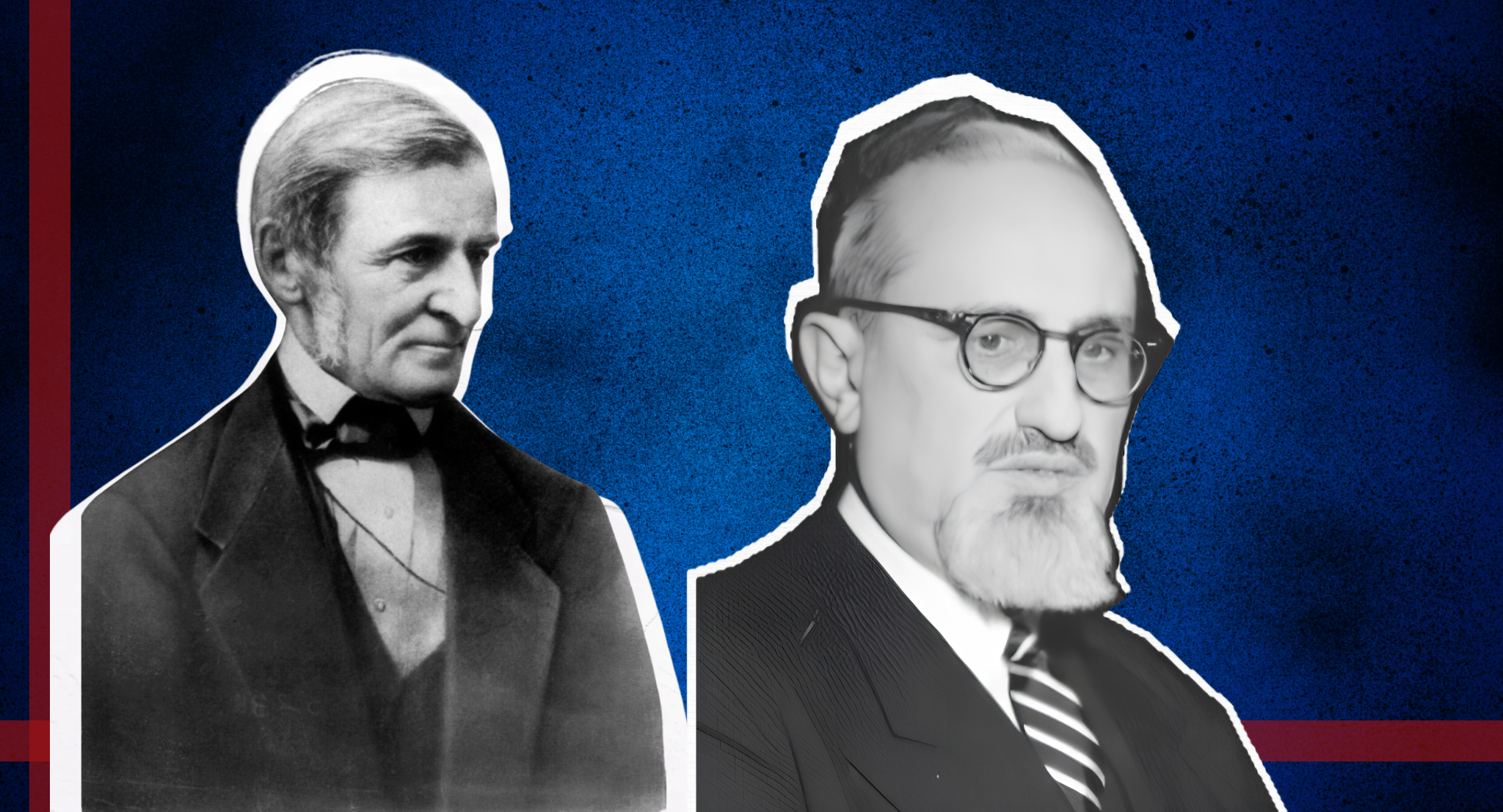
David Bashevkin: One idea that came up in our conversation and we spent a fair amount of time discussing and it’s one that we have spoken about in the past and that is the words of Rav Meir Simcha of Dvinsk in his commentary on the Torah known as the Meshech Chochmah, the name of the commentary on the Torah.
His words in Parashat Bechukotai, which of course we can link to in the show notes, but it’s this remarkable reflection which begins in the middle of the paragraph he says, kach hi darkah shel ha-umah. This is the way, this is the narrative, this is the cycle of our nation, of the Jewish people. And he proceeds to kind of list of how the Jewish people constantly are thrown out of lands and then need to reestablish themselves and it goes through a very similar cycle. They come to a land, he says, that is foreign to them, it does not have any Jewish infrastructure, doesn’t have Jewish education, doesn’t have, you know, kosher establishments or anything like that.
It’s a barren land that has never had Jews before or serious Jewish populations. And that first generation that gets there like they lose a lot of their knowledge and Jewish life starts to dwindle. The next generation are the people who grow up and think this can’t be it. We have to start rebuilding Jewish life here.
We can’t just throw away and assimilate. We need to rebuild. And that is the next generation ends up rebuilding and working on building Jewish infrastructure educationally, communally, synagogues, etc etc. And then you have a third generation who kind of grows up with that infrastructure and now they have this society and community where Jewish life is thriving. It is the next generation, the fourth generation, he says, that is struggling.
The fourth generation grows up, they don’t remember the struggles of their great-grandparents who first came to the land, who had no infrastructure, who didn’t have the Jewish education, who abandoned so much, and they’re just looking, that fourth generation says, what now? Where do we go from here? Where should we be building? And it’s that lack of mission, it’s that lack of project that often deteriorates the character of the collective Jewish people. His words in Hebrew are genuinely remarkable where he writes, halo ein be-yad ha-dor le-hosif mah. There’s a generation that is going to ask themselves what do we add to all of this? How do we build upon all the infrastructure that already exists? Le-hitgader neged avotav mah ya’aseh chefetz ha-adam ha-asuy le-hitgader u-le-chadesh. What does that next generation do who grows up with all of the infrastructure in place, where do they build and how do they build? This is the question of this moment.
We are the fourth generation following the destruction of European Jewry. We had four generations where the majority of if not the majority, the largest population of Jews lived in North America. We had four generations of this. It began with my grandparents’ generation, they actually even preceded the Holocaust, they were born here.
But that was the first generation that was in America without European Jewry to look at, meaning early American history, just to be clear, we would look towards Europe for authenticity. Once European Jewry was decimated in the Holocaust, we had a generation who essentially was cut off. Many of our listeners I’m sure your grandparents or if you’re a little bit older, your parents, spoke a native Yiddish. They still were connected to that world of European Jewry.
But right now we are four generations in following the destruction of European Jewry where we have essentially been the largest population. By we, I mean North American Jewry has been the largest population of Jews in the world. That moment has already gone. It is now the largest Jewish population is now in Israel.
And I believe the question is what are the lessons of America American Jewry, what did we learn from the last four generations? What is the message and what comes next? And it is my belief that the underlying message of American Jewry is that this was the exile, the first exile that tested us not because of coercion and oppression, but tested us because of the freedom of America. We needed to learn how to develop a model of Jewish life that could sustain itself without coercion, without state power. For most of the European exile that we had during that period, and not just in Europe, whether it was in Africa, all around the world, religion and religious life did have state power. Rabbis were able to tax, they were able to punish, they could determine where you lived, and there was a real motivation for people to affiliate with the Jewish community because otherwise they were not going to have the rights and benefits that were bestowed upon them by whatever empire or king gave to the Jewish people.
In America, we had the freedom to practice Judaism any way that we wanted, and if you look around at American Jewry and Judaism in the diaspora, you will notice that there are a whole lot of different streams and a whole lot of different choices on how to practice Jewish life. We were all learning to do the same thing: how can we create a model of Judaism that can sustain and perpetuate itself without state coercive powers? To me, that is the model and test of diaspora North American Jewry and the lesson that we have learned over the past four generations. Now I have obvious thoughts and feelings of which models have really shown the test, that have been able to cultivate Jewish education, Jewish life, and Jewish practice, which communities have rose to the occasion and perpetuated a model of Judaism that we can be confident that even without coercion, even without persecution, is something that people want, that motivates people to participate in Jewish life not because they’re being forced but because they want the Jewish life itself. I want to be a part of this.
No one’s forcing me to keep Shabbos. I keep Shabbos because I want Shabbos. Your parents can’t force, your teacher can’t force, your rabbi can’t force. This is the reality of American Jewry, and it took us a very long time to really embrace this reality.
It was not easy, and we lost a lot of people through assimilation along the way. There was never a period that it was easier to assimilate into the host culture than this American exile. But we’ve also learned miraculous things. We’ve learned how to model a Jewish life where it is cool, where it is exciting, where young people want to affiliate.
You walk the hallways of some Jewish schools and you don’t see kids blah and embarrassed and oh we’re in the nerdy Jewish school. There’s a sense of pride and excitement. The mantra that you will hear at floor hockey games of young kids singing geshmak to be a Yid. It is enjoyable, it is exciting, it is inspiring to embrace your Jewish identity.
That is a very unique product that we have learned and developed. You know, American Jewry started with a refrain that was famously criticized by Rav Moshe Feinstein, but Jews used to say shver tzu zein a Yid, it is hard to be Jewish. After the decimation of European Jewry, we began America with this sense of shver tzu zein a Yid, it is not easy, it’s not great being Jewish, it’s very tough. And the truth is Jewish life does require a lot of sacrifice.
But the sacrifice and the commitment that is needed for Jewish life is the very catalyst. It is through commitment, it is through sacrifice that we’re actually able to uncover and find not the shver tzu zein a Yid, it’s difficult to be a Jew, but geshmak to be a Yid. It’s so awesome, it’s so wonderful, the Torah, the mitzvos, the community, the people. And I believe this is the moment where the Yiddishkeit that we have fostered in America is simply it’s miraculous.
But the question is where do we go from here? And I believe this is the time that we take this vision of Yiddishkeit and we bring it to Israel. This is what the State of Israel needs more than anything. Not to say God forbid, I just want to be very clear, I am not criticizing the Yiddishkeit of Israel. It is wonderful and amazing.
But the same way that European Jewry infused and transformed American Jewry, I believe that American Jewry is going to transform through aliyah, through the connections, through people going there, sharing ideas, sharing thoughts, becoming even more connected. And as we said, it’s not about achdus, it’s about arvus. It’s not about unity, it’s about responsibility. And anyone who has a model of Yiddishkeit which is joyful, which is inspiring, we have a responsibility to share it and God willing in this moment, in this transitional moment when we can feel the wheels of history turning, we will take this miracle that has been fostered over the last four generations and God willing, share it with the entire world.
So thank you so much for listening. This episode like so many of our episodes was edited by our incredible friend Denah Emerson. Thank you so much Denah. I don’t know what we would do without you.
If you enjoyed this episode or any of our episodes please subscribe, rate, review, tell your friends about it. You can also donate at 18Forty.org/donate. It really helps us reach new listeners and continue to put out great content. You can also leave us a voicemail with feedback or questions that we may play on a future episode.
That number is 212-582-1840. Once again that number is 212-582-1840. If you’d like to learn more about this topic or some of the other great ones we’ve covered in the past be sure to check out 18Forty.org. That’s the number 18 followed by the word forty f-o-r-t-y dot org.
18Forty.org where you can also find videos, articles, recommended readings and weekly emails. Thank you so much for listening and stay curious my friends.