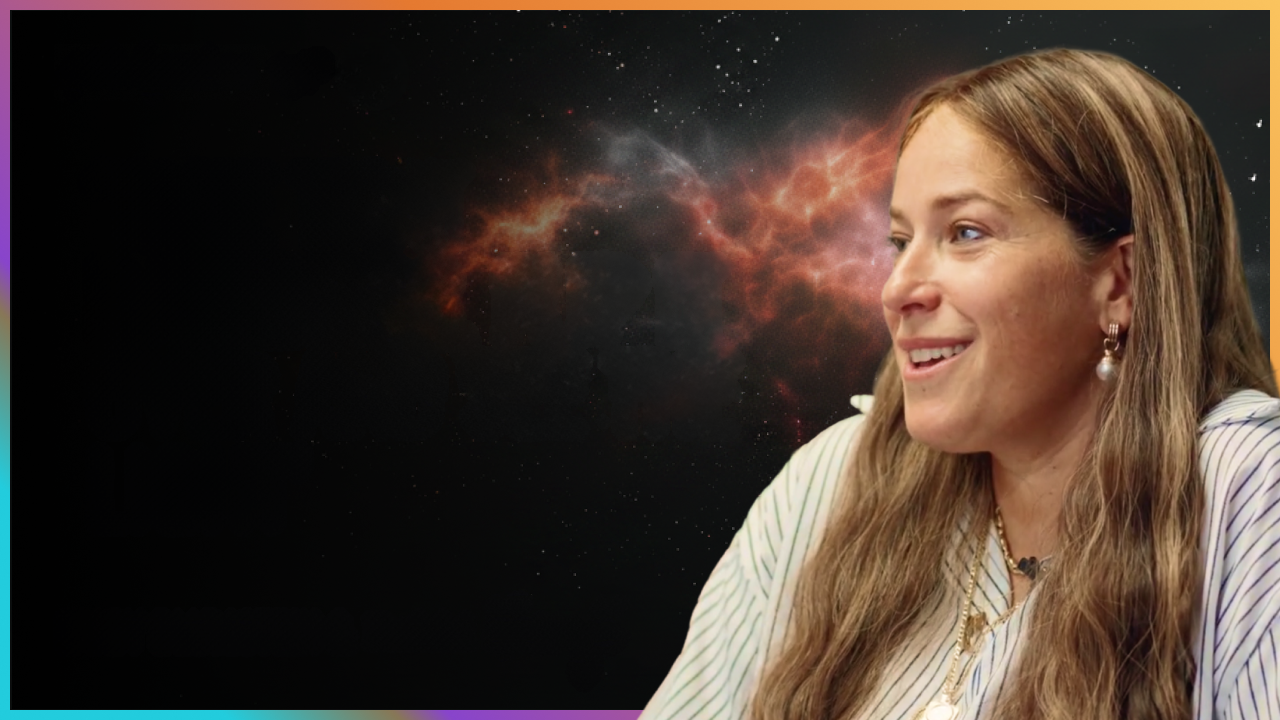
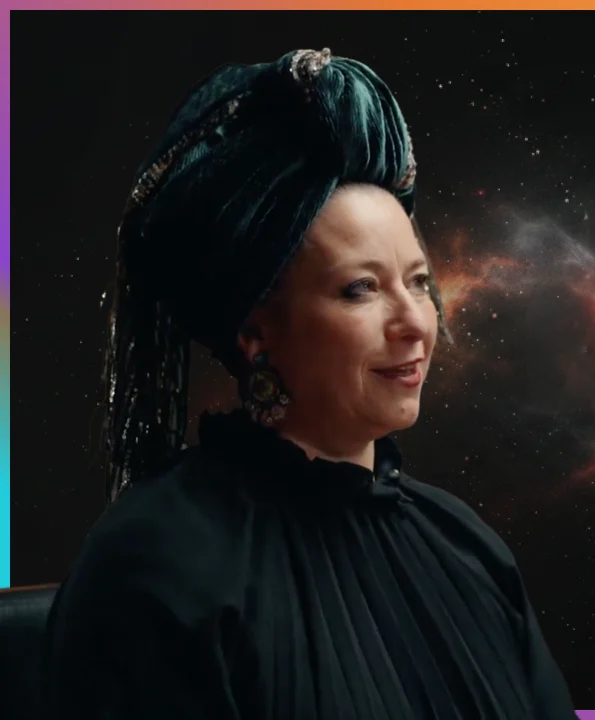
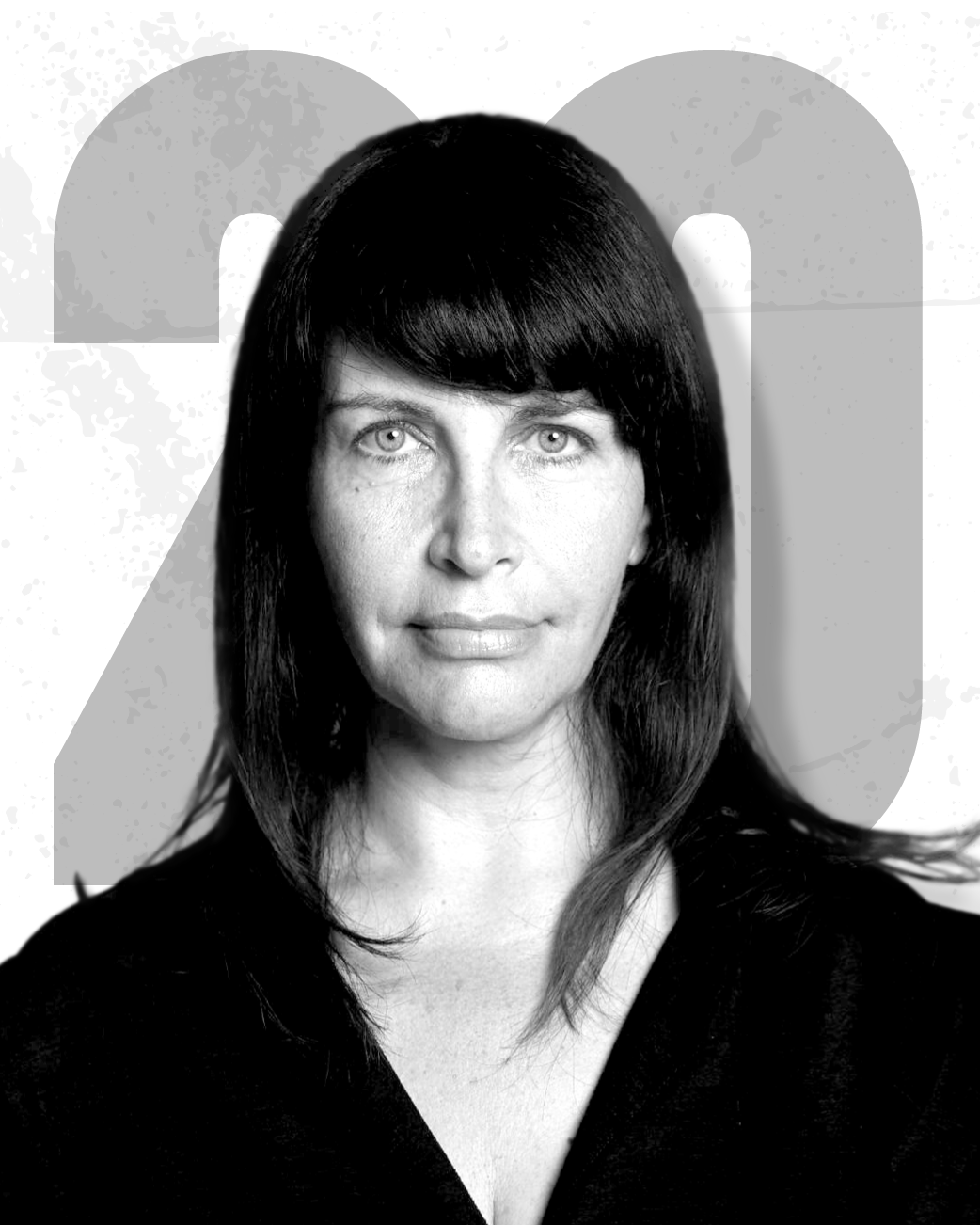
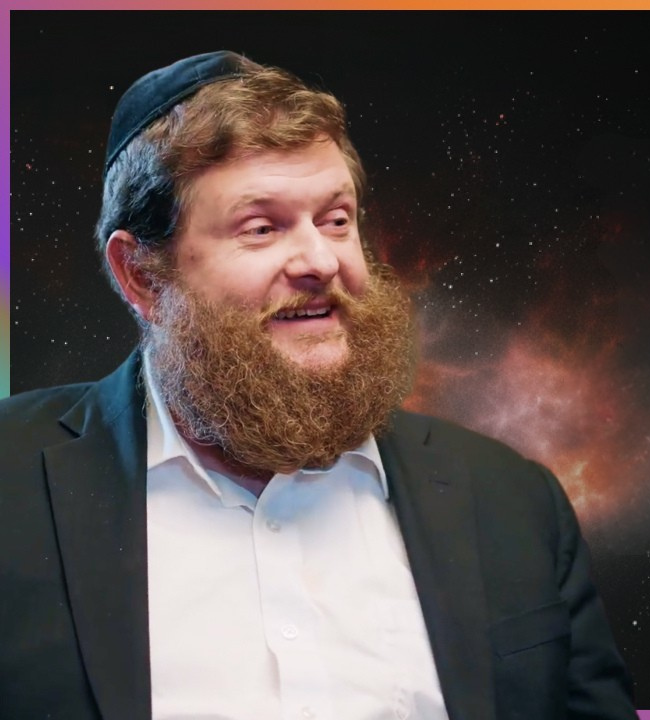
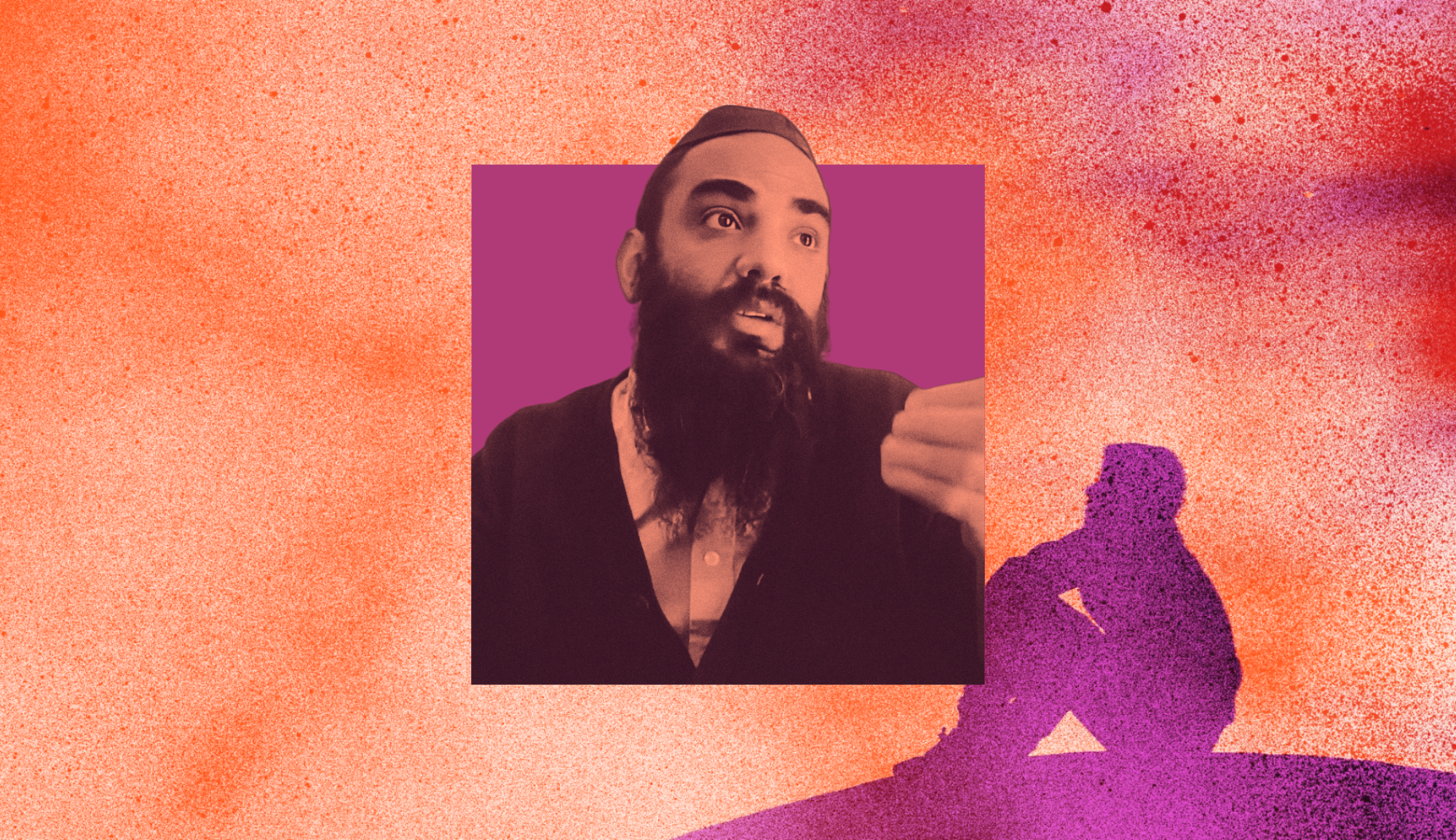
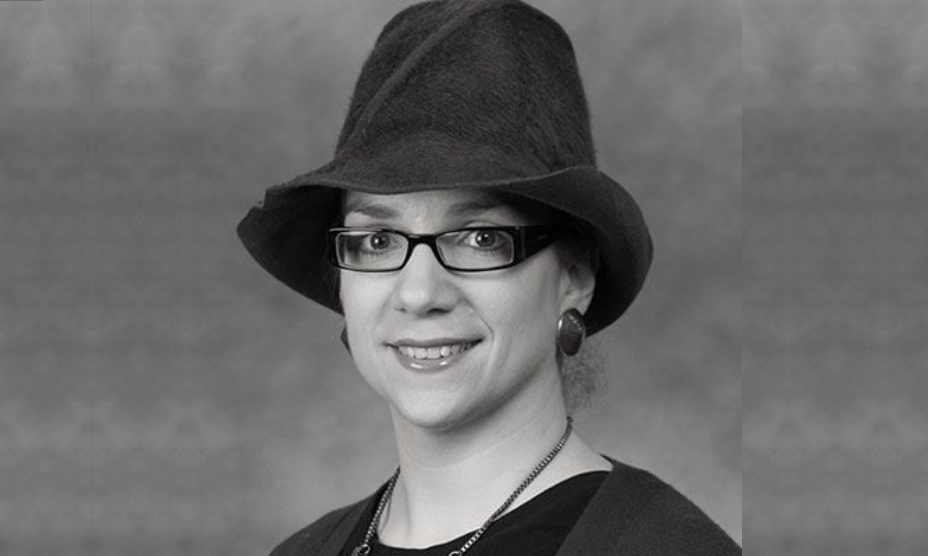
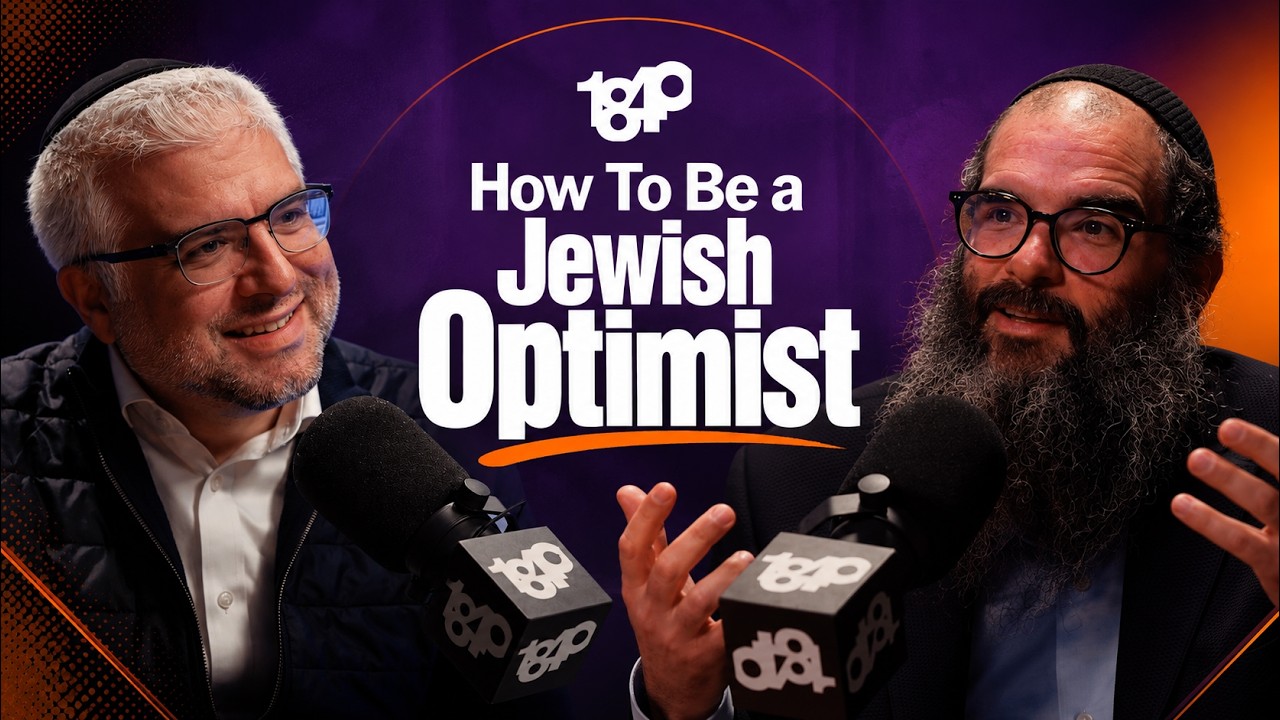
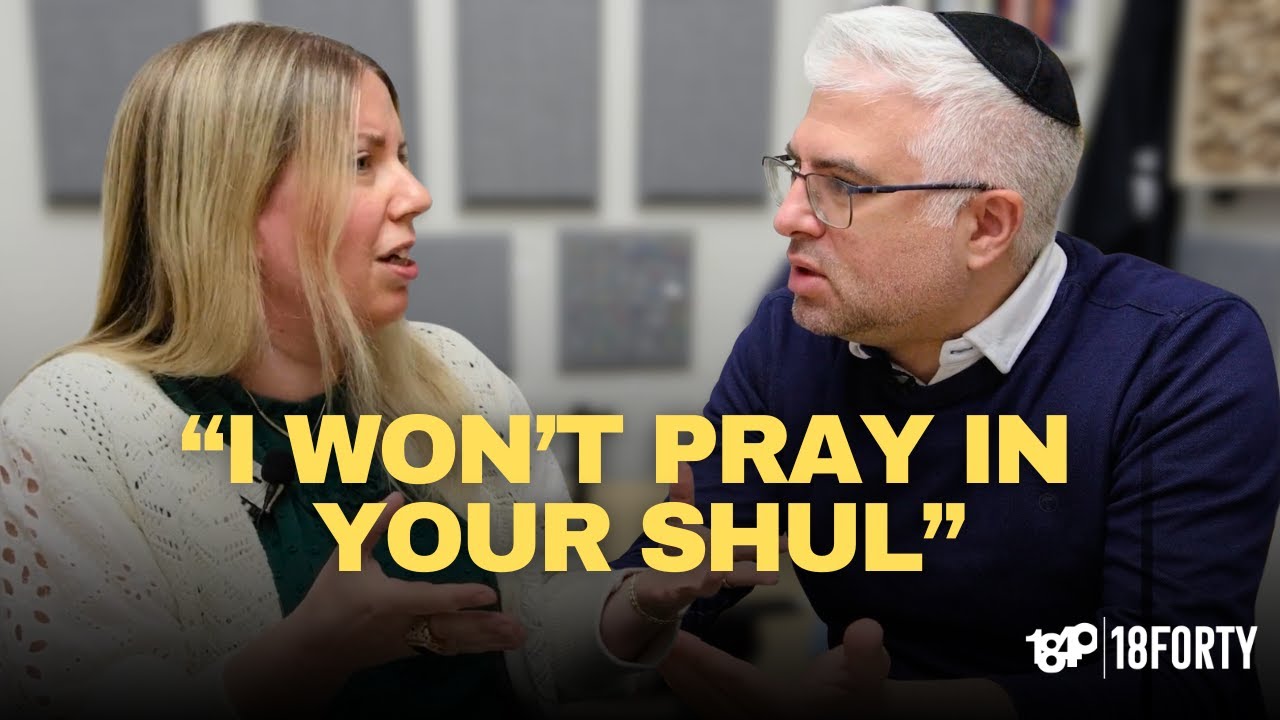
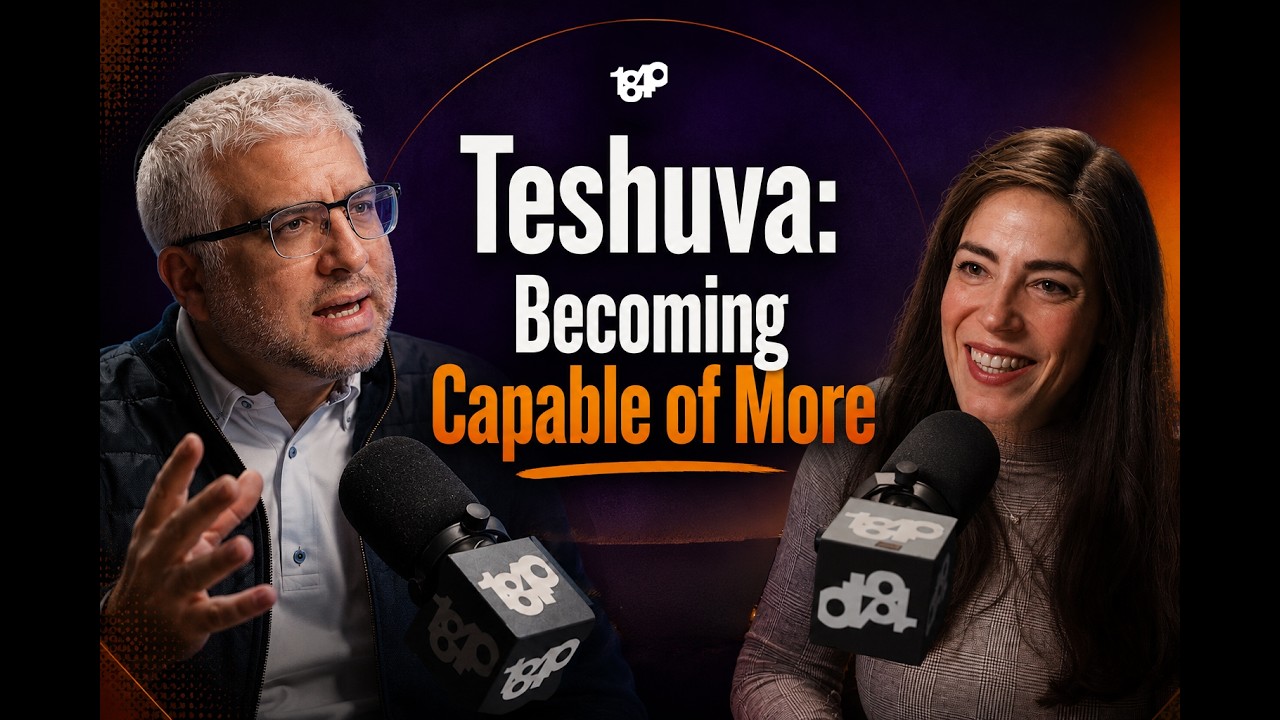
RABBI DR. BENJI LEVY. Faigy Blumstein, school psychologist, lead teacher for Thank You Hashem. Thank you so much for being here today.
FAIGY BLUMSTEIN. Thank you for having me.
LEVY. So, they call you a mystic millennial. What is Jewish mysticism?
BLUMSTEIN. They do. I think for me it evolved. Mysticism always sounded like something scary, like there was a crystal ball involved or like tarot cards. I never liked, or like, gazing at the stars. But I realized that over time, with all my learning, the thing that excited me the most was this idea of mysticism. It was like a sod [secret]. And I think part of not knowing what it is fully still keeps it a secret. So it was something that was intriguing to me and something I started delving into. And I found that mysticism was very connected to this word Chasidut [Hasidism]. My grandfather was a really big Munkacs Hasid. He came from Europe, he helped plant the seeds of Munkacs here in America, which was fascinating for me as a kid, watching my family growing up in this black-and-white culture, big beards, long davening [prayer], swaying, singing. I just know that my father was the last one home from shul [synagogue] all the time. My mother wasn’t so thrilled with it. But there was something deeper there. And I feel like when it came to my Judaism, I wanted something deeper. So I started delving into this world of mysticism that was exciting, like I said, like a secret, but something that was more than what you see at the surface. And I just wanted to keep going deeper. And that’s where I started. I started by going deeper with yamim tovim [holidays], I started going deeper with my food, I started going deeper with my children or my relationships. And then I realized, wow, I’m now in this world of mysticism. It was mystical, it was a secret. Why are people so happy? There must be some secret. Like, what are they doing? What are they connecting to? And I just wanted to know more. So I started.
LEVY. So how did you get into it? Was it a specific moment or was it just because you were all around it?
BLUMSTEIN. So I think in general, when anybody’s going through a struggle, everybody tries to grasp at the regular things. So as a school psychologist, we go straight to the mental health things and see how I can help myself. But when it’s deeper and darker than you ever could have expected, you just need something more. There’s something right here that the regular world and all the self-help books and all the parenting books are not going to help me with. And that’s kind of where I started. And also, my husband was on such a search and such a journey for something so big. And I would say he was about four years ahead of me. He found Rabbi Moshe Weinberger and he found Rabbi Yussie Zakutinsky and he was in this world of mystics, you would say, or Chasidut. And I [would ask], “Where are you going?”
[And he would say], “Oh, I’m driving here, I’m going to this shiur [Torah lecture],” and “I’m driving there, I’m going to that shiur.”
I [thought], well, what is it? What are you drinking that I don’t have and I want? And I would have to say that it definitely started with Rabbi Nachman. I picked up a book written by Yaakov Klein called The Lost Princess, and that story was – okay, I love – I’m a storyteller. So for me, I’m [thinking], Rabbi Nachman, this is what he was doing? He was writing these stories? I heard very famously from Rabbi Moshe Weinberger, he used to say, “The world tells stories to put their kids to sleep. Rabbi Nachman told stories to wake the world up.” So that story really woke me up. I would say that almost everything started from that story, The Lost Princess.
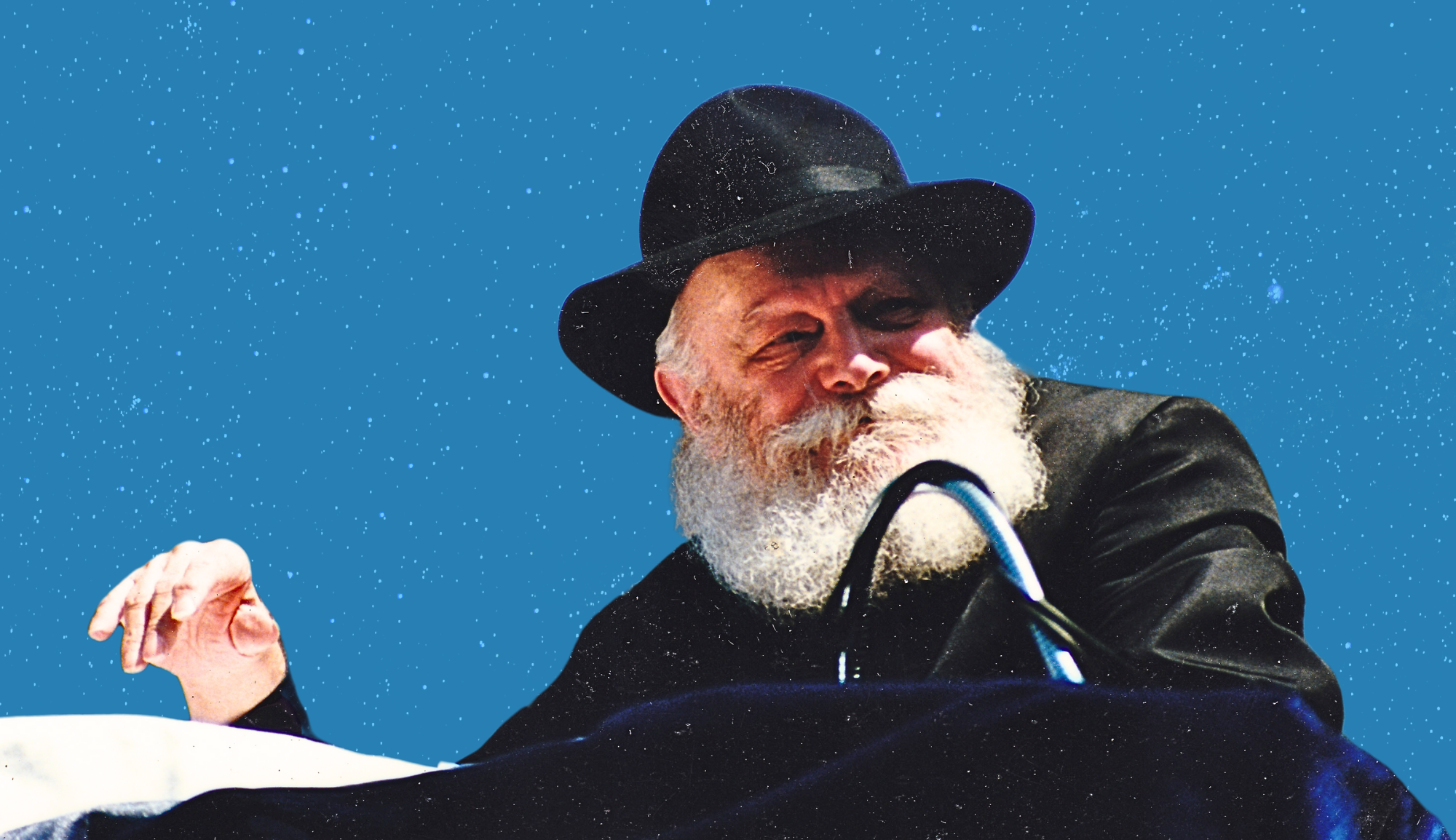
And then from there I [thought], wait, does Rabbi Nachman have other teachings? And then it developed a little bit more. And then as times got harder and harder, I needed to seek out even stronger and more tzaddikim [righteous people]. So I found myself at the Ohel, where the Lubavitcher Rebbe is buried, which was ten minutes from my house. And I was just so gravitated to it. It was like Israel vibes, there was a calmness. You know in Israel how there are babies up at two in the morning and everyone’s pushing their strollers at any given moment? At the Ohel where the Lubavitcher Rebbe is buried, there are children there, there are little kids there, there are cookies, great cookies. And I just found myself pouring my heart out to this tzaddik [righteous person] whom I’ve never met. I didn’t even know his teachings, and perhaps at some point I thought his teachings were taboo. And I just found myself there. There’s a big Rabbi that my husband started becoming close to, his name was the Mezhbizher Rabbi, he’s from Israel, and he would come in every so often. He would come in before yamim tovim, before the holidays, and we would meet him. And when I walked into the room, he looked at me and he looked at my husband and he said, “Oh, your wife is Lubavitch.”
So I said, “No, actually my family is Munkacs.”
And he looked at me and he said, “No, your wife has a connection with the Lubavitcher Rebbe.”
I was just so taken aback and I looked at him and I said, “You know, I go and I daven [pray] there a lot. I pray there a lot. I had some struggles, some medical things going on with people in my family, and I’m always finding myself praying there.”
And then he looked at me and he said, “You should go also when it’s good.” A lot of times people will go and they’ll pray with their wish list of all the things that they need. And from that moment on I started to go once a week. And I just found myself there. I didn’t even know what was happening there, but I just found myself there. It was drawing me in. Anytime something was difficult, I would just get in the car and drive ten minutes, say my prayers, go back. It was also on the road, which I found very interesting. Like he specifically asked to be buried on the road because he knew that people would be coming in and out. You know how Rachel Imeinu, our matriarch Rachel, she chose to be buried on the road because she knew that the Jews would be passing by and it would be a place [for them to stop and pray at her grave], he chose to be buried right by the airport. At any given moment, you can come to the Ohel and there are suitcases and people coming in and out of the airport. It’s on the derech [way]. And I found that on my way to doctors appointments and on my way home from anywhere, from work, I would just stop off there and I would just talk about my day. And it was almost like this part of me [was asking], Who am I even talking to? What is this? And then I realized that it was just this channel for me to speak to God when at a certain point He [felt] unattainable, or at a certain point I felt like maybe I didn’t need Him, but when I needed Him, He was there. And then when it was bad, and then when it was good and everything. So I started finding myself there a lot. And about two years ago, my brother handed me a Tanya and he [said], “Faigy, why are you not learning this?”
And I was like, “It’s so hard.” But I started from there. I started by turning on my phone on Instagram and saying, “Here, I’m teaching a class.” A friend of mine asked if I would do a chabura [study group]. So I started a chabura and it’s been two years. And we’ve completed it at least once, we’re like one and a half ways through the Tanya.
LEVY. So in an ideal world would all Jews be mystics?
BLUMSTEIN. In an ideal world all Jews will be mystics. Yeah. I think that the world is now getting ready for it. I think that we will have schools for prophecy. I think that prophecy is different than what we think it is. I think that we think that, oh, it’s a magic eight ball and we shake it and we get our answer, but I think that real true prophecy in its essence, what it was and what it will be, is a real connection with the Divine, with yourself, and being a channel to bring Godliness into this world.
LEVY. So when you talk about Godliness in this world and you mentioned before you weren’t sure about relating to God at a certain stage. What do you think of now when you think of God?
BLUMSTEIN. That’s a good question. I think that the goal is to see it as a partner to get you through life, one of the deepest lessons I’ve learned is that we all have a chelek Eloka mimaal mamash [an actual part of God from above]. That we all have a piece of Godliness within ourselves. So having a real relationship with God means fully, completely understanding every part of yourself, especially the dark parts, especially the parts of yourself that are unknown. And the more you get to know all of yourself, the more you get to know God.
LEVY. So when you’re praying to God, is there something that you see or relate to?
BLUMSTEIN. Like an image?
LEVY. I don’t know.
BLUMSTEIN. I don’t know if I see an image. What I see when I’m fully immersed in prayer, I see a full, complete healthy version of myself that is using all the parts of myself for divinity, for other people. And a lot of times we don’t activate all the parts of ourselves. We use very little parts of our brains to get through the day, especially when it’s work and it’s rote and you keep doing it. But the challenges that God gives us are just to help activate ourselves.
I used to be so frustrated with challenges, like, why are You doing this to me? Why is it so hard? And then I realized I would never be able to uncover that part of myself if I didn’t go through this challenge. I look at my daughter who’s amazing and she’s incredible, but those first two years of her life were so scary and I was just dreading [it]. I owe everything to her. So I look at her with a different light and I think that she revealed a part of myself that I never knew I had.
LEVY. Wow. So what is the purpose of the Jewish people?
BLUMSTEIN. The purpose of the Jewish people is to be spreaders of light. We are lamplighters. We walk through the streets and find light within every single person, within every single thing, whether it’s an inanimate object, a living plant, an animal, or a human being. We need to bring the light to every single one of those areas. And that can be by enjoying nature and also by finding calmness and peace in nature. It could be finding beauty in the world and it could be revealing the beauty in the world and showing it to others. And then ultimately to the highest, which would be to people. And I’m so grateful to be a Yid, to be a Jew. I’m so grateful to be able to draw light from people and I think that I have to be reminded of that every single morning, like, what’s your purpose here?
LEVY. Beautiful. And how does prayer work?
BLUMSTEIN. Oh, prayer is so deep. Prayer has also evolved for me. As a kid, prayer is like, do you have your finger on the place? Can you read the Hebrew? Can you read the letters? Do you know the nekudot? Do you have the proper pronunciation? I think that prayer for me is like having the purest communication skills. I know that I’m a good talker, I know I’m a good communicator, but sometimes I don’t get the words that I want fully out. And I think when I’m truly immersed in tefilla [prayer], there are no barriers, there are no distractions. There’s just me and God in this room. Proper communication can get you anywhere and I think that when we learn that we can properly communicate with God or with Godliness, then we’ll know that everything is always for the good. It’s always for the good.
LEVY. What is the goal of Torah study?
BLUMSTEIN. In my teachings and my learnings of Tanya, I’ve learned that the Alter Rabbi quotes this often and he says “Ein HaShechina shora ela bedalet amot shel halacha” [the Divine Presence only rests within the four cubits of the law]. That God’s presence rests within the four cubits of Torah. That His will and His desire of what He expects in this world, it’s almost like a GPS on how to navigate this world. Hashem gave us the Torah. There’s this idea that when Adam and Eve were in the Garden of Eden and they made a mistake and they were sent out, God was like, you ate from that tree, and you’re going to go out into this world, but I’ll give you another tree, and that tree will be the Etz Chayim [Tree of Life]. That Etz Chayim is referred to as the Torah. So Hashem says, you might feel lost in this world, but I’m going to give you a GPS, I’m going to give you the best ways, I’m going to give you Google Maps, and that’s the Torah. So put aside all those parenting books, put aside all those other self-help books and go into the Torah. I find myself opening it all the time, to help guide my teenagers, to help guide myself. If you follow it and you study it and you learn it, it really guides you. It keeps you on that track of how to navigate this world, because it could be dark and scary and confusing.
LEVY. For sure. So does Jewish mysticism view women and men as the same?
BLUMSTEIN. It’s a good question. I know. I don’t think we’re the same. I don’t think anybody is the same. That’s the truth. So you could put men and women aside, I think every single one of us came down here for a certain purpose. And with your role, with your job title, with your spouse, with your children, you have a set of circumstances that you need to complete in this world. And if you don’t scratch off your corner – imagine the fifty states, right? Let’s say there were fifty people in the room, and every single one of us was a different state. I can’t be California if I’m New York. I have to be New York. So if my soul came down in this era as a woman, that means that I have to find the feminine traits of connecting to Godliness. So I would never say that we’re the same, but I don’t think anybody is the same. I think every single one of us is different, every single one of us has our different job and role here and however we’re presented here in this world, however we come down as our soul comes down in, and our soul’s been here many times. Most of us here are old souls. But they’ve been here before and maybe the soul has been here in a different form and a different way, but I think you just have to hold on to what you have now. Let’s say now I’m in this feminine role, I have six children, I’m a school psychologist, can I try to be somebody else? No. Just be the best version of yourself. So that’s kind of how I see gender roles.
LEVY. Fair enough. Should Judaism be hard or easy?
BLUMSTEIN. Oh, it should be beautiful. I don’t know if I like the word hard or easy. I think that hard makes it sound like it’s scary, but we want challenges, we grow from challenges. That’s actually the Zohar that I prepared. But we grow when things are dark, you would never be able to reveal the things if they were always good.
LEVY. So why did God create the world?
BLUMSTEIN. The mystics teach us that He wanted to have an apartment down here, lihyot Lo dira betachtonim [to have a dwelling place in the lower realms]. He really wanted to bring His presence to the lowest, darkest places. He could have stayed up there in heaven. It would have been so much easier, the angels were singing His praise all day, they were so happy. He had everything there. But no, He chose to create this, He chose to conceal Himself so many times until He brought this world, which by the way, the Hebrew word for world is olam, which also rhymes with helem, which means hidden. So God is hidden here, but He chose this. Nitaveh Lo HaKadosh Baruch Hu lihyot Lo dira betachtonim [God desired to have a dwelling place in the lower realms]. It was a taiva, it was a desire. We don’t know why, but we know that He wanted to bring Himself to the darkest, to the lowest place.
LEVY. Amazing. And can we do something against His will now that we’re here?
BLUMSTEIN. We definitely could because we have free will. And I think that was part of the design. I mean, it was such an intricate design. Layers and layers and layers of concealment until we think that we’re God ourselves.
LEVY. So what do you think about when you think about Mashiach, the Messiah?
BLUMSTEIN. Messiah. So in my preschool mind, my elementary mind, it was like this white horse or donkey. I think it was a donkey. A donkey with this imagery of someone coming to save the day, like this redeemer, like a yeshua [salvation], like a redemption that comes. But over time I started to learn that really the redemption is the possibility of having the redemption and seeing the redemption is within our own hands. That we have the ability to reveal it through all our good deeds and through everything that we do. So I almost see that every single one of us has this messianic spark within us that we can redeem. So the world of Mashiach [the Messiah], we’re taught and I’ve learned, there’s many different levels. Like there’s the societal way of everybody realizing that there’s God and eventually bayom hahu yihye Hashem echad u’Shmo echad [on that day God will be one and His name will be one] that everybody will see that there is one God, and He created this world, and He’s loving and caring and just wants the best for this world. So I think that what I see now the Mashiach [the Messiah] is that it’s in our hands, we have the ability to bring it. And recently I’ve learned that the Lubavitcher Rabbi says that Mashiach is already here. You know, you see those signs on the street all day, they say “Mashiach is here,” and I was like, nah, that’s crazy, Mashiach is not here, look what’s going on, the world is burning down. But the fact that it’s already here, I like to see it as a scratch-off card. You know those black cards that you can scratch off and you see the colors? Yeah, we just have to reveal it. So the goodness and the Mashiach is already here. It’s just whether we choose to see it. And I believe that people can reach that Mashiach point in their lives when they see that everything is good and everything is really from Hashem and people can be living in the Messianic Era while just living here looking like it’s 2025.
LEVY. So is the State of Israel part of the final redemption?
BLUMSTEIN. Israel is definitely, definitely a big piece. It’s our land. There is this idea that the whole world will become Eretz Yisrael [the Land of Israel], that the whole world will become the State of Israel. I don’t know how that actually manifests and I’m not sure. But I think that there’s this idea that everything exists in time, space, and in a human, in a person. Olam, shana, nefesh. And there’s special people, there’s special time, and there’s special places. And Israel’s one of those special places. So I would love to be there when it arrives. But I’m okay with flying on an eagle.
LEVY. You said before about Israel that when you go to the Ohel it feels like this and you say now you want to be there. Why don’t you live there?
BLUMSTEIN. So I have a five-year plan that started two and a half years ago. So we’re definitely baderech, we’re on the way. But I think that it’s important to recognize that wherever Hashem puts you in your place of life, you need to reveal the Eretz Yisrael [the Land of Israel] there. You need to reveal Israel there. I light my Shabbat candles and I walk to shul [synagogue], oh, I’m definitely in Israel. The second I light my Shabbat candles, my time and space, I enter Israel. I just imagine myself instead of walking to the Kotel [Kotel], I’m walking to my shul, to my synagogue, and it’s like Israel. I just put that into my mindset. You can live in an Israel, you can live in a mindset of Eretz Yisrael without being there. And the more you do it, the more you’ll be able to get yourself there.
LEVY. What’s the greatest challenge facing the world today?
BLUMSTEIN. Okay, so being a mom, I think it’s being present. I think being able to fully be present where you are and not have, for me, that’s how I feel. I feel like one of the biggest challenges is not having that idea of menuchat hanefesh [tranquility of the soul], of having calmness of the heart and being present in every single thing you’re doing. Because we’re capable of so much. We could be everywhere, we could do everything, we could do Zooms, we could do work, we could work remotely, but we could also be in person, we could do so many things. And the lack of feeling present is the scariest thing. I think it’s very, very dangerous. I’m not one to be like, oh, it’s iPhones. I don’t know if that’s it. I think that’s just a manifestation of the lack of it. One of the things I try to take from my father, my father passed away a year and a half ago, Yisrael Tzvi ben Aharon David, his neshama [soul] should have an aliya [spiritual ascent]. He was the busiest person in the entire world. He had an MD, PhD, he was a doctor, he had his own practice, he had two practices, one in the city, one in Brooklyn. He had five kids, he traveled, he worked, he did everything. He had chavrutot [study sessions] starting at five in the morning. In every single thing he did, he was so there, you thought you were the apple of his eye. And I think if we can try to do that, we’ll save ourselves from a lot of danger.
LEVY. And how has modernity changed Jewish mysticism?
BLUMSTEIN. I think it’s made it so accessible. We’re so lucky. It used to be that you would have to travel to the court of a great Rabbi to hear his teachings and now I can turn on a podcast and I can listen to a class. And when I go to the Ohel I hear the [Lubavitcher] Rabbi speaking. I feel like I’m there. I feel like I was there. I feel like I was at his court, you know? So I think that it’s helped us tremendously. You can have everything. Yeah, people can say you have modern times, it’s difficult, but it’s so real. It’s so accessible.
LEVY. And what differentiates Jewish mysticism from other mystical traditions or religions?
BLUMSTEIN. I just started becoming a yoga instructor. So I just signed up for classes. There are a lot of kelipot [husks] there. There are a lot of layers that are not necessarily Jewish. There’s a lot of Buddhism, and I’m trying to weed it out and trying to find Hashem. I think that perhaps in Jewish mysticism it’s that we all have a chelek Eloka mimaal mamash [an actual part of God above]. That we are God ourselves. We have a piece of Godliness in us. So we want that to shine. Not that I am God, but that I am connected to God.
LEVY. And that’s what makes it unique.
BLUMSTEIN. I think so.
LEVY. Does one need to be religious to study Jewish mysticism?
BLUMSTEIN. I grew up in a world, you’d say FFB, frum [religious] from birth. I have been religious since I was born. So I don’t know anything else. But I do know that even though I grew up religious, I strive all the time to think of myself as not [religious]. I try to reinvent myself every single time, like what we refer to as a baal teshuva [one who has returned to the faith]. Of somebody who’s always wanting to return. And [you may ask], “But Faigy, you’re religious, you keep Shabbat, you keep kosher, why do you need to be [like that]?” And it’s that idea of reinventing yourself: as much as you think that you’re on top of the world, always realizing that you have so much to grow. There are two types of people that the Mashiach [the Messiah] is going to come help. I just learned this from Rabbi Yussie Zakutinsky. The Mashiach [the Messiah] is going to come help the people who know nothing, and he’s also going to come teach the people who think they know everything that they know nothing. This religion, this word like someone saying they’re religious, I don’t know if I fully buy into it. No. I don’t buy into that because I think that for the people who think they’re so religious there’s no room for growth. So you have to wake up every single morning and recognize that today I’m going to be a baal teshuva [one who has returned to the faith].
LEVY. So it’s for everyone basically.
BLUMSTEIN. Everybody. Yeah.
LEVY. And can it be dangerous? Can Jewish mysticism be dangerous?
BLUMSTEIN. Not that I’ve seen. I don’t see it as so dangerous. I see it as a loving relationship with yourself, with Godliness. It just brings you closer. I know [that for] anybody who I’ve seen study mysticism, there’s a tremendous calmness on them that you can spot in a second. You can see it in a painting, you can see it in a photo, you can see it in real life. My daughter tells me this all the time. She says about anybody that she sees with this calm facade, she’s like, “Ma, he looks like so-and-so. He looks like a big rabbi.”
And I’m saying, “Yeah, but he’s just seventeen years old.”
But she says, “But you can see it on his face.”
There’s a humility, there’s a shine that comes from it, and I think it’s beautiful. I think there’s a beauty that comes with it. There’s a calmness, there’s – Rabbi Avshi Weingot is a very big kabbalist [kabbalist] from Safed. He talks about this idea of ragua, which is almost like a reggae, like a chill vibe. That there’s this calmness that comes when you study mysticism. And I’ve seen it in Israel; there’s this small little yeshiva in the Old City –
LEVY. The mekubalim one?
BLUMSTEIN. Yeah, the yeshiva of mekubalim [mystics]. I randomly found myself having coffee there with my husband, in the Rova [Jewish Quarter]. And I see these Jews coming from all over. Some of them look like farmers: long white beards, overalls, denim shirts. Some of them walk in with tefillin on their head and tefillin on their arm but it’s four in the afternoon. [Looking at] the people that were coming in and walking in and walking out, I was like, where are we? And I realized that this was a yeshiva for mekubalim, for mystics. And we actually asked if we could walk up and have a little sneak peek. And there were all different kinds of people from all different types. You could tell, I’m telling you, from the farmer to the black hat to the no hat to all of that. And you have it all there in one room and they’re all studying and they’re all so connected and there’s a beauty there. Such beauty and such calmness that I’m actually envious of that. I want that.
LEVY. So you say it creates this calmness. Do you feel that it’s affected you personally, on an individual level, or your relationships, whether it’s with your spouse or your kids or your students?
BLUMSTEIN. I think that the more I study Jewish mysticism, the more [I pursue] that calmness that I want, there’s a tremendous amount of humility that comes with it as well as ahavat Yisrael [love for other Jewish people]. You start to love everybody. And now I’m thinking about it because I’ve been talking about my father, but my father was a little bit of a secret mekubal, he was a mystic. We found out only after he passed away that he was actually studying Tanya years ago and he had his chavrutot [study partners]. And that’s what I envied in my father, that he could be the busiest person in the entire world but he gives you all the time of day.
LEVY. And do you see personal examples, like with your kids, how you look at parenting differently, or how you look at marriage differently?
BLUMSTEIN. Oh! [If] my oldest, who’s nineteen, misbehaved, I took her phone for a week; I grounded her. My eight-year-old now, she does the same thing, [I think], wait, she’s teaching me something.
LEVY. That’s what you say when these things –
BLUMSTEIN. 100 percent. My oldest says, “She’s so lucky!”
I’m like, “Listen, birth order,” you know, that’s what it is. But her neshama [soul] came down to help us. And I believe that with souls within the family, there’s almost like a soul family. Each soul comes down to teach a parent something. This is one of the biggest things it’s taught me, like if I think my kids are here for my nachat [pleasure], for my, how do you translate nachat?
LEVY. Like familial satisfaction?
BLUMSTEIN. Yeah, there’s a satisfaction, like, ah, my kid won the recital. My kid plays piano the best. What does that mean for me? Does that gain me more friends? Does that give me more street cred? And through the teachings of Hasidism I realized that every soul came down here to fix me. So everybody came here for a different reason to help me. And that’s really what nachat [pleasure] is, because I’m becoming a better parent by understanding them and seeing what they can teach me.
LEVY. It’s such an amazing system where each person is here to teach you, and you’re there to teach someone else, and it’s all just perfectly orchestrated divinely. An amazing feature if you try and think about it.
BLUMSTEIN. Yeah! And it’s immediate with your spouse, the most with your spouse. And then with children. And then with family members, and parents, and neighbors, and community, and rabbi, and shul [synagogue], and everything. And it just grows and wow, it’s this crazy effect that we can have on so many people by learning about ourselves, becoming the best version of ourselves, but only becoming the best version of ourselves through other people.
LEVY. I think the reason that’s powerful is because if it’s coming to teach me something it means that I can take ownership over my part in the situation. If I’m always trying to expect the other person to improve for me or to improve for them or try to change them, I don’t have control over that, but I do have control over who I am and how I can react.
BLUMSTEIN. Right. And then the calmness sets in. The anger comes from being like, I don’t have control over this. You don’t have control.
LEVY. We’ve had the most beautiful conversation and I really appreciate it. Just to conclude, we’ve talked a lot about the teachings and how they relate to life. Can you share one teaching as we conclude?
BLUMSTEIN. Sure. So I’ve been studying a lot of things about understanding darkness. Not that my life is so dark, but when it is dark I get very overwhelmed by darkness. So I want to understand darkness a little bit more. And I’ve learned in my teachings of Tanya from the Alter Rabbi that there’s a certain light that comes from the darkness that you would never be able to have if you didn’t have the darkness. And there’s an advantage of darkness over light, right? With light, you can see. And we want to see, we want to live in a world of light. But the advantage of being in the dark and then coming out is even greater because it’s like, wow, I appreciate it so much more. But even deeper, the Alter Rabbi teaches us that to be able to transform darkness into light is the greatest level. So a lot of times we’re faced with challenges or we’re faced with darkness or we’re faced with things that we don’t understand. Look what’s going on in the world today. I can’t look at the news. I just took the app off my phone, I took everything away. I don’t want to hear things, I don’t want to see things. And people say, “Oh Faigy, you just want to bury yourself,” right? “You just want to stick your head in the sand.”
And actually, yeah, that’s the teachings. I want to stick my head in the sand, I want to be able to go into the darkness and turn that darkness into light. All you need to do is turn on that light and then it’s transformed. So the idea of not just “I always want light,” but being able to transform darkness into light is the deepest thing. So when you’re faced with a challenge or you’re faced with darkness, look in that darkness, see what can I get from here, flip it. Like the Lubavitcher Rabbi says, “kerevelt,” turn over the world. He doesn’t say: push away, scoot that somewhere else, or pack it up and put it in the basement, put it in the cedar closet. He doesn’t say that. He says, take that darkness, flip it over, and see the light, because on the bottom there’s light when you can transform it. So for me it’s almost like I look forward to those challenges or to the dark places because I can go in there, extract it, flip it over, pull it out, and then rise from it.
LEVY. Beautiful, Faigy. Well, you said at the beginning you’ve literally transformed this light that’s transformed your life and transformed theirs and all those around. And we just give you a bracha, a blessing, that you can continue to bring so much light to everyone around and just shine away any darkness.
BLUMSTEIN. Wow, thank you so much. Amen. Amen.
LEVY. Thank you.