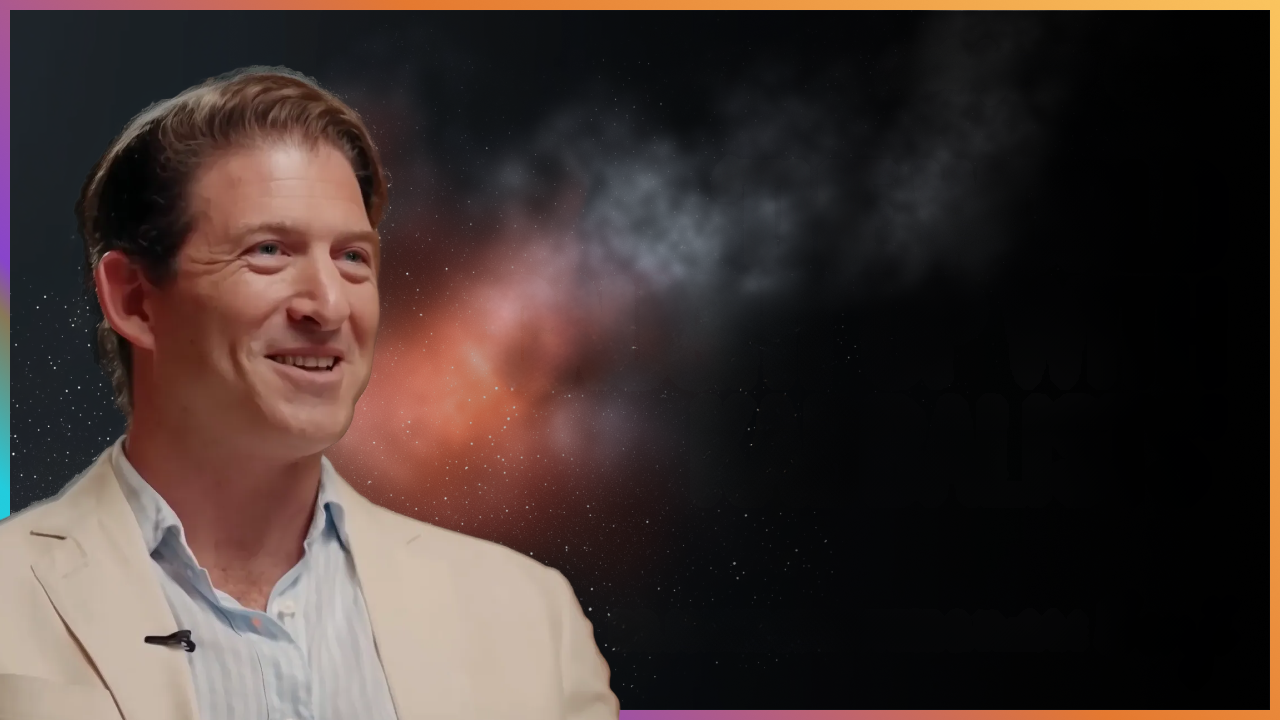
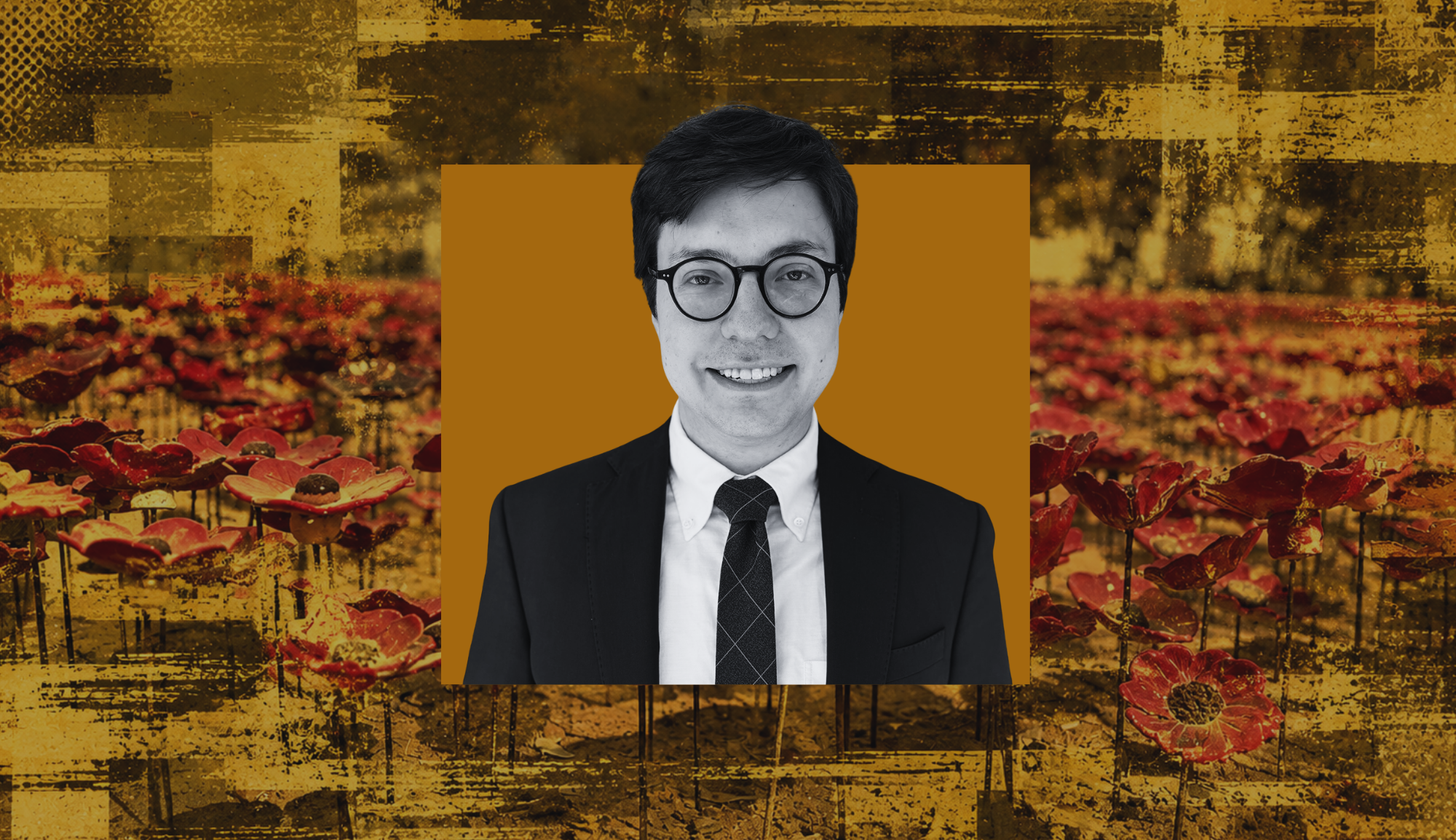
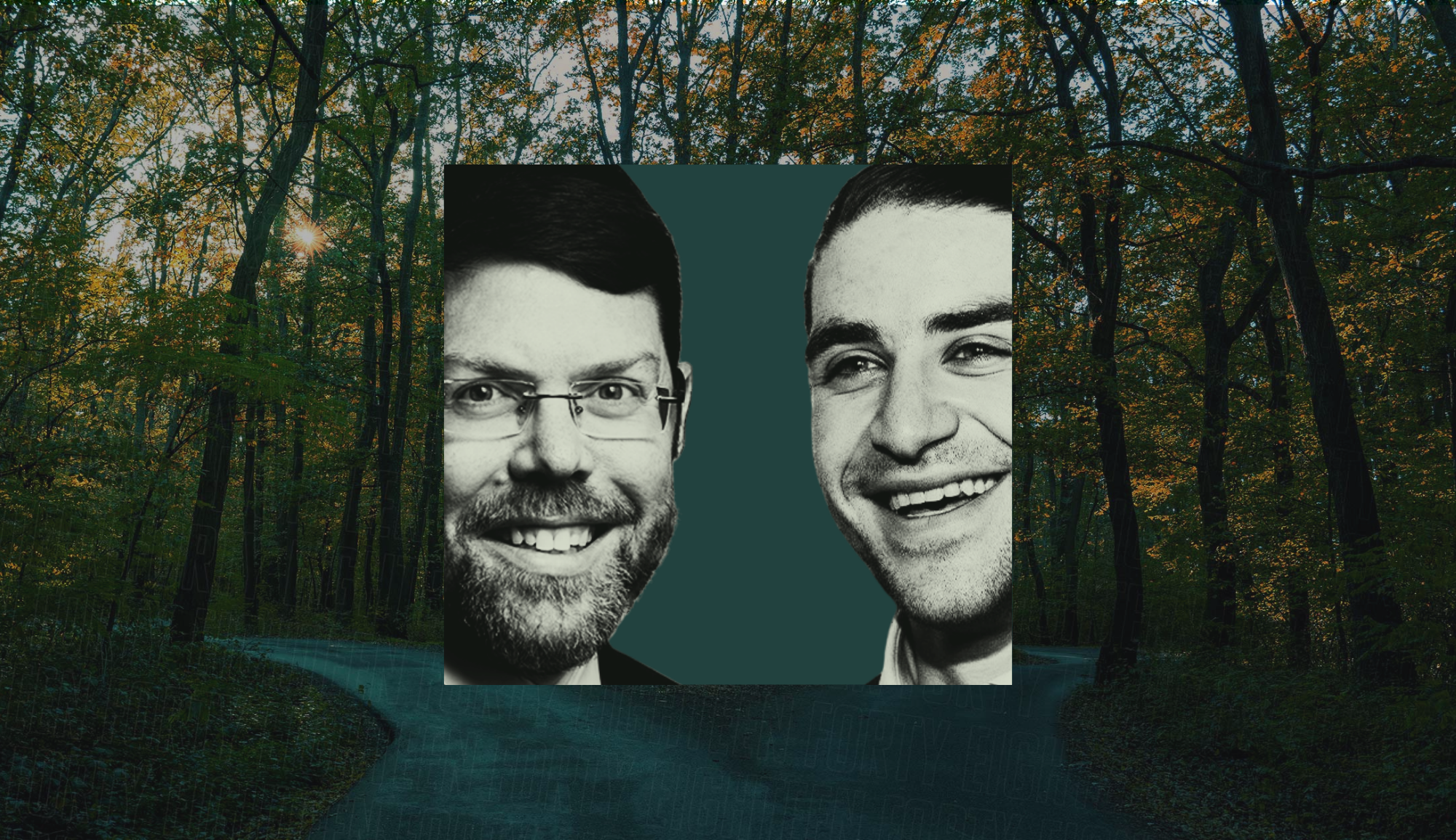
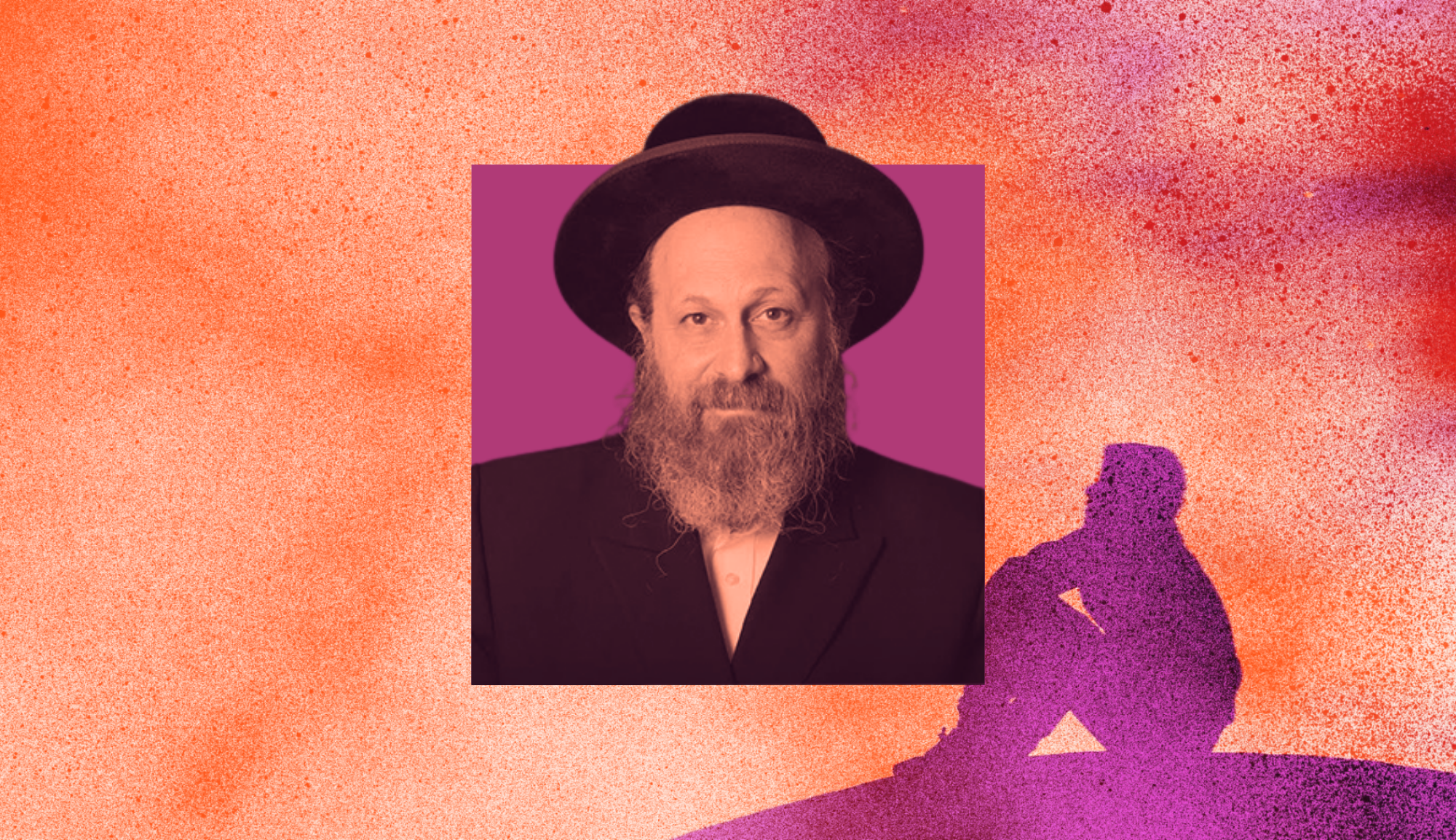
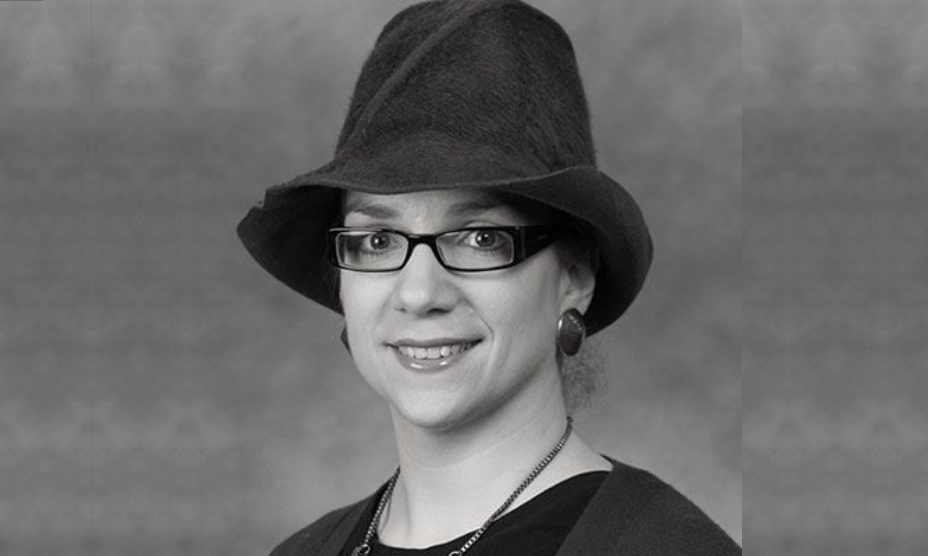
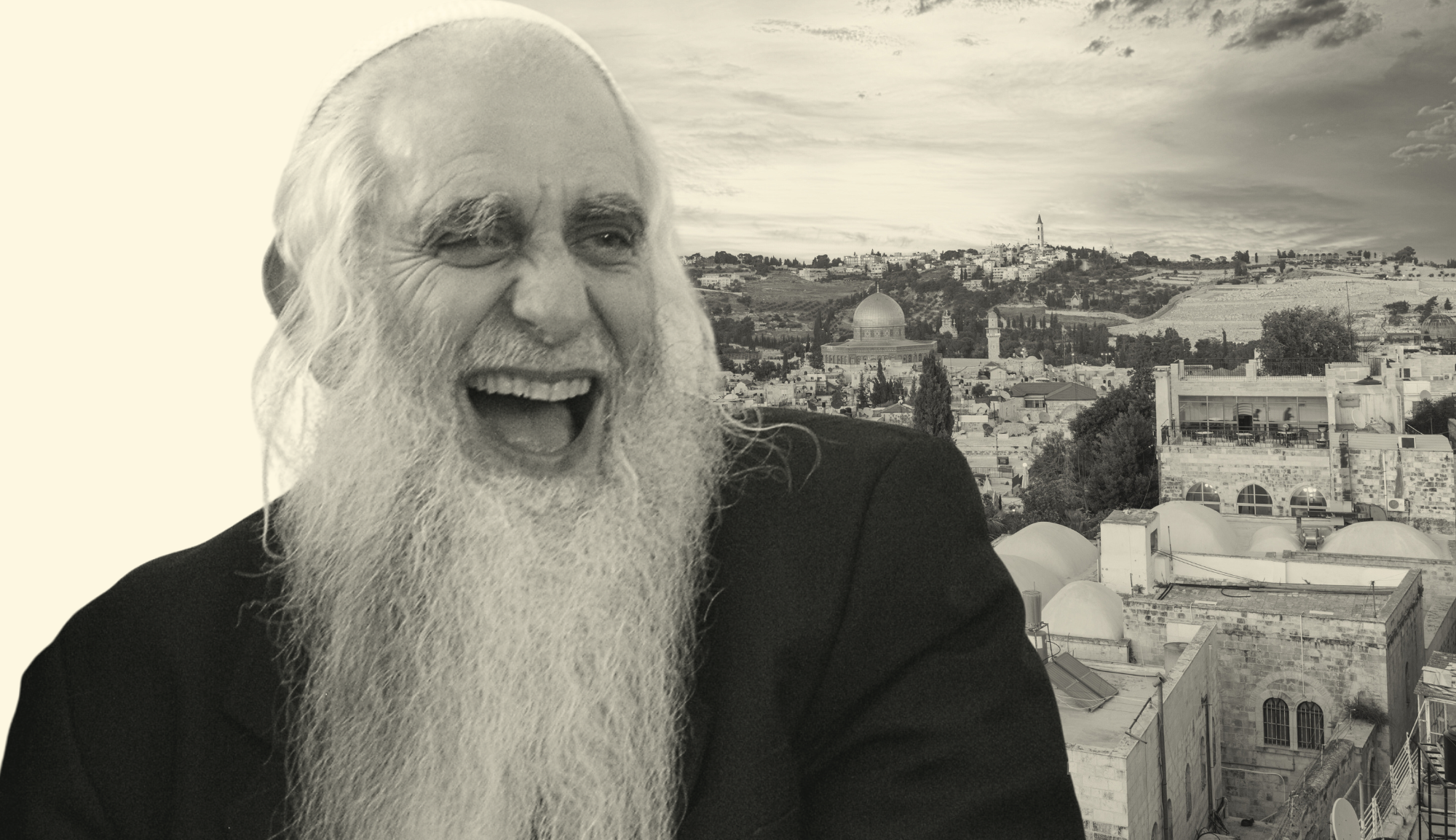
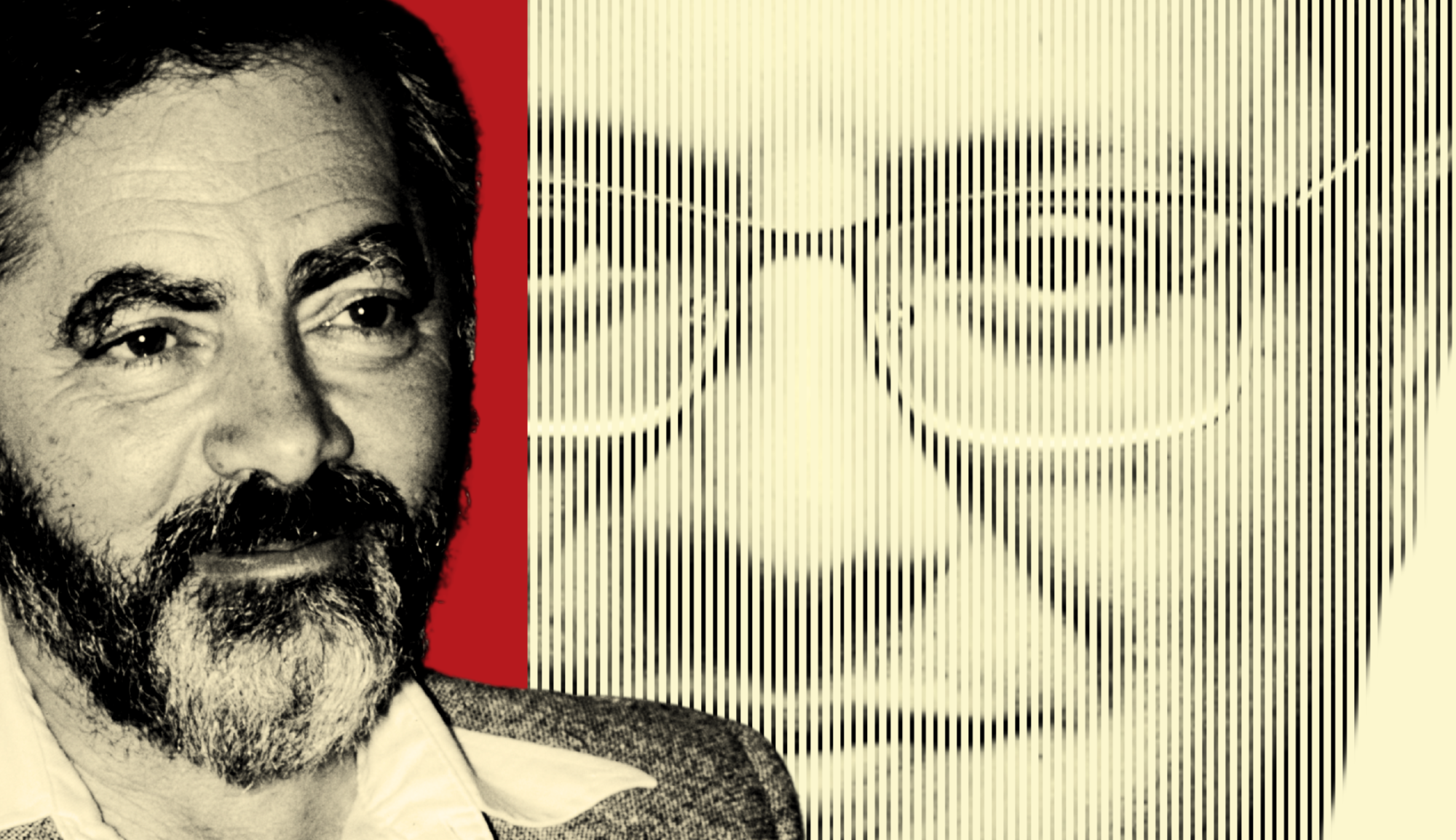
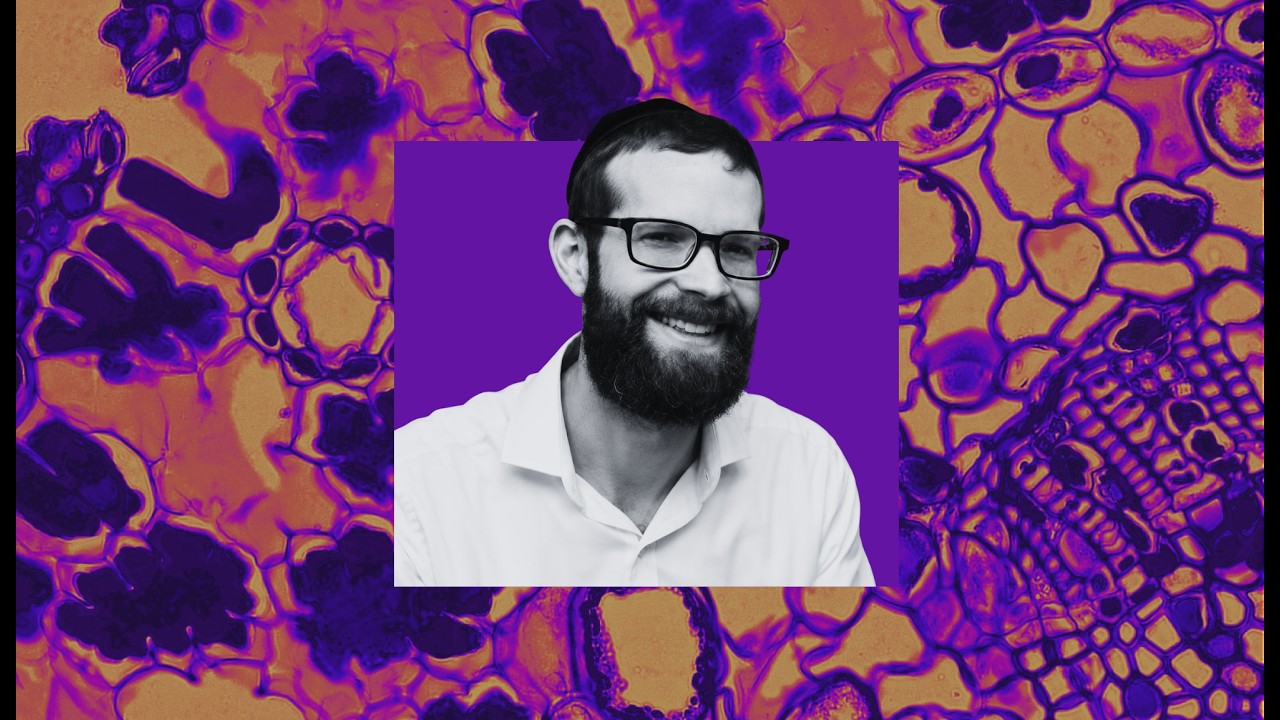
RABBI DR BENJI LEVY. Dr. Jonnie Schnytzer from the Multidisciplinary Center for Jewish Studies at Bar-Ilan University. An incredible scholar, thought leader, teacher, and writer. Thank you so much for joining us here today.
DR JONNIE SCHNYTZER. Thank you. Thank you for having me. It’s a real pleasure.
LEVY. So, what is Jewish mysticism?
SCHNYTZER. Jewish mysticism. I think first and foremost, it depends on who you ask. I’m very tempted to say that it is what’s beneath the surface. It’s sort of – analogy, let’s take The Wizard of Oz. Kabbala or Jewish mysticism is how to get to the Wizard of Oz, how to help Dorothy get there through the yellow brick road in a way that there will be less struggles, in a way that we will understand more where we’re going and what we’re doing. I’m not sure that necessarily means that you can’t go on the regular path. Meaning there’s this debate, and amongst kabbalists, especially in the medieval era, this is a fierce debate, is Kabbala everything and the only thing? Meaning, is there only the real truth, the Pnimiyut [inner dimensions], the deep whatever’s underneath, or is it one of the paths? There’s peshat [contextual and textual reading], remez [allegorical or allusive meaning], derash [deeper interpretation], sod [secret/mystical meaning]. I’m inclined to go with the latter. That’s sort of where I stand. And I think it literally puts everything upside down, right?
We have this beautiful image of this tree, etz hachaim [tree of life]. And why is it upside down? Why do we have the roots going up? It’s to say you don’t get it. Nothing is the way you think it is. So the Torah, what’s the biggest secret in Kabbala? The Torah is not a book, it’s God. Now, what does that mean? So there’s a lot of deconstruction going on, a lot of taking something that we think we understand and saying we need to sort of break the pieces and rebuild it. Is that for everyone? Does everyone need it? That’s the question.
LEVY. So, how did you get into this? The last time we crossed paths was around going to Australia, and positive Jewish identity, and things about Israel. And now you’re a doctor in Jewish mysticism teaching at one of the top Israeli universities. How did you connect to the space?
SCHNYTZER. As you know, in Australia there’s a big Hasidic influence. And my father always says that he grew up with a Hasidic background but without the mitzvot. So there was always that kind of Galitziana [Galician] background, there were these things that you felt were Hasidic that were, you know – so there’s already this underlying belief. You go before Yom Kippur to the mikva [ritual bath]. That’s just what you do. It took me years to understand this is a Hasidic thing. If you do this, then this, this means something and you know, we just sort of do this as we do.
And then I worked with StandWithUs, with Birthright, sort of. I’m a very irregular, different academic. I come from explaining to the world why we’re okay to explaining to the Jews why they’re okay. I don’t know what’s more difficult; I know what’s more important. And then sort of at the peak, I’m the advisor to the CEO of Birthright and I need to make a decision: Where am I going? And I felt the best way to be involved is taking a step back and learning. And so I decided to go on the PhD track.
And in Jewish thought, you have, it’s like a forked road. You’re either with Maimonides or you’re with Nachmanides. I was sure I was with Maimonides. And then I took an intro to Zohar with Professor Daniel Abrams, who was one of my big teachers, and I fell in love. But more than anything, I think I realized that it was always there from day one, the kind of that Hasidic, this other way of looking at things that very much connects to the [Hasidic] way [of life]. A little joke to conclude this point: When my grandmother passes away, my mom’s looking in the garden and there’s a white butterfly and she says, oh, that’s grandma. And this idea of gilgul [reincarnation], it’s just something that very naturally comes out. And then we can be walking to shul [synagogue] and my daughter Eliana can say, oh, Abba [Dad], I just saw grandma. So there’s something that’s sort of there that – and you realize, yeah, I’m more there and I guess you’re inclined, the text that you’re more attracted to has something to do with who you are and where you’re coming from.
LEVY. It’s almost like a homecoming, meaning you were connected to this and now you have more knowledge about what that is.
SCHNYTZER. Yes, and it happens, I think, in a very unconscious sort of way. A lot of these paths are not clear cut. I mean, for some people there are themes. Take, we might get into this later on, Joseph and Judah. You’re going on a certain route, and you will reach a certain point and it’s not very clear how you’re getting there and what’s happening, but then you look back in retrospect and all the dots connect. There’s this famous, it’s one of the most watched, videos on YouTube, Steve Jobs giving this [talk], like for Stanford graduates, and he talks about how he took this course, I think, in hieroglyphics – different things he did and only twenty years later he looks back and says it was only then that you were able to connect the dots. And there’s something about that, that’s sort of the way it works.
LEVY. And that’s mysticism in and of itself.
SCHNYTZER. There you go. And that’s the yellow brick road. That’s exactly what it is.
LEVY. So in an ideal world, would all Jews be mystics?
SCHNYTZER. Would all Jews be mystics? In the late nineteenth century, there was a Tunisian kabbalist by the name of Rabbi Khalifa haCohen. I think he phrases perhaps in the most radical way what you just said. He says the fact that many people are not studying Kabbala, “memit et Mashiach ben Yosef.” Meaning we are killing the messianic process by not all being kabbalists. And this is what I meant before where you have this one camp. And it goes back to books like Sefer HaKana, Sefer HaPliya, these sort of radical, rebellious kabbalistic books that say it is all about Kabbala and that’s it. And here you feel the biggest clash with the rabbinic world because you’re always looking for the deeper meaning of the mitzvot, the days when the mitzvot perhaps are going to change and become newfangled, and this leads to problematic things like Sabbateanism. Which is why these books are sort of, we’ve heard less of them, we’ve heard more of Zohar, because it’s more mainstream, it’s the sort of stuff that is endorsed by roshei yeshivot [dean of a talmudic academy] and things like that. So do all of us need to be Jewish mystics? I think those that feel they most connect to it.
LEVY. What do you think of when you think of God?
SCHNYTZER. What do I think of when I think of God? Whew. My parents’ God. Going to study Jewish thought, for me at least, was not going to find God or going to look for God. That doesn’t mean that there aren’t struggles, there aren’t challenges. Who is God? Yeah, God is who my parents told me from a very young age. It’s someone, something, an entity that you pray to and you connect to something inside and you can have conversations with. I learned about hitbodedut [solitude] before I knew the word hitbodedut. It was just, this is something you do. I think God is something that can’t be put into words, but it’s a feeling and you have to feel it.
LEVY. And so what’s the purpose of the Jewish People?
SCHNYTZER. The purpose. Also depends who you ask. So in the Torah, I think there’s one verb that continuously reoccurs and that’s bidul – badal. It is to be differentiated. We see this in Leviticus, we see this in Deuteronomy. The purpose of the Jew in the Bible is to be differentiated. I think Rabbi Jonathan Sacks, zichrono livracha [may his memory be a blessing], would argue that this is to create the dignity of difference. This idea of through being separated, we teach that everyone is equal yet different. And this connects to achdut, to unity. If we go to the Talmud, the Jew suddenly becomes someone who is, in order to be differentiated, you are constantly asking questions. Jews don’t ask questions in the Bible, Jews complain. By the time we get to the Talmud, we’re asking questions. For Maimonides, it becomes something completely different. For the Zohar, what does it mean to be Jewish? To be a superman. It’s literally through the commandments you are unifying the divine world and bringing an influx of everything the world needs. This is radically different to what we read in the basic meaning at the surface of the yellow brick road. The Zohar is somewhere else. So it really depends on who we ask.
LEVY. Does that excite you? These kabbalistic ideas?
SCHNYTZER. Oh, very much. One of the most fascinating texts I first came across when I had to decide what I’m going to write my dissertation on, which kabbalist I’m going to dedicate years to, which I thought would be four or five years, it’s become until this very day sort of ten years plus. Rabbi Yosef ben Shalom Ashkenazi, he wrote a very famous commentary on Sefer Yetzira, influenced the Ari, influenced the Baal Shem Tov, influenced the entire Jewish world, anonymous, not known, not wanting to be known. Ashkenazi is the first to talk about this radical cosmic theory of reincarnation. It’s the first time in the Jewish bookshelf to the best of my knowledge where we discover that it is accepted that the inanimate can be reincarnated into flora, into fauna, into humanity, into the celestial orbs, into the very essence of the sefirotic Godhead. If you go any further, you’re not going to get an aliya in shul [being called to the Torah in synagogue]. This is as radical as it gets and you’re still kosher.
And I read this thinking to myself, what purpose does this serve? Where does this come from? Before the thirteenth century, Rabbi Saadia Gaon says there are those people who call themselves Jews that believe in reincarnation and rachmana litzlan [Heaven preserve us], there are those that believe in reincarnation from human to animals. Maimonides doesn’t even mention it. And then by the thirteenth century, it got a hechsher [rabbinical certification]. And then the Ari, you already have books that are written, dedicated to [reincarnation] – right, Shaar HaGilgulim, Sefer HaGilgulim. This is a thing. Where does this come from? What is it, what is the purpose of it? I was, until this day, these are the sort of things that I am trying to understand. How does it connect to this world? How does it connect to climate change, to radical politics, to the ontology of being? These are the sort of things that interest me.
LEVY. How does prayer work?
SCHNYTZER. Prayer. Well, one of the most beautiful teachings about prayer is not kabbalistic. I’m sorry to sort of burst the bubble. My father taught me this. So my father has the Koren Siddur [prayer book] with Rabbi Soloveitchik’s explanations. So that’s my siddur [prayer book] as well. And in Shema Koleinu, there is one of the most beautiful vorts [brief Torah commentary] on prayer ever. Rabbi Soloveitchik discloses that when we say Shema Koleinu that this is a place where it’s become traditional that Jews can ask for a shtickel [little bit of] something. And Soloveitchik then says, it was in the thirties, I’m in Berlin, I have my PhD, Heidegger, you know, and what does a Jew like that want? He says, I wanted a job at the University of Berlin. I didn’t get it. And I was offered this [job] far, far away, Boston. And he said I was upset. He gets to Boston and then we all know what happens, the Nazis and then the Holocaust. And he says, then I learned that I need to pray that everything works according to God’s plan. And that’s radically different. So that always for me is this kind of special moment in prayer because it very much connects to sort of – to my parents, to my upbringing.
The kabbalistic approach to prayer, and it’s also an approach that I think is a little more tricky to connect to or is more problematic because it requires sort of getting more into the essence of things. When Moses comes to God and God is furious after the sin of the golden calf, he says, “Ve’ata yigdal na koach Adonai” [Now I pray, let the might of my Lord be great]. Now for Rabbi Yosef ben Shalom Ashkenazi, it’s not one of the verses. This is the verse that holds the secret of prayer. What is “Ve’atah yigdal na koach Adonai?” [The numerical value of the letters in] koach is twenty-eight. This is reminiscent of the lunar movement throughout the month and this goes into this idea that – this starts with Nachmanides. He says the astral plane works, astrology works, but it’s subordinate to the Godhead. And the trick is to know which sefira [divine emanation] is connected to which planet, to which orb, and the way that you can manipulate or turn the keys of mazal [fortune/destiny] if you understand the right moment, the right sort of combinations. So here we’re already getting into theurgy, we’re getting to this idea that humans have a lot of power in prayer that there is a force where things can be changed. Maimonides would not like this one bit. And Soloveitchik, I think, is somewhere in the middle. Interestingly, every so often he’ll talk about tzimtzum [contraction]. You can see that he had that Chabad rabbi where he’s somewhere in the middle, and so I think I’m sort of somewhere, that’s kind of where I am.
LEVY. Well, Soloveitchik, famously, on the question of prayer, when there’s a dispute between Nachmanides and Maimonides on whether it’s a rabbinic or Torah-based commandment, he shows that basically they’re both right because Maimonides says it’s Torah-based, and Nachmanides says only if you’re in a time of distress or the other way around. He says, we’re always in a time of distress, so they’re both right.
SCHNYTZER. And so he’s created this confluence.
LEVY. Exactly.
SCHNYTZER. And in a way, that ties into Rabbi Kook’s [Rabbi Abraham Isaac HaKohen Kook] thought, but in a very different place. But it’s exactly that kind of act of unification of these two things and there’s a revolution there.
LEVY. Yeah. And that’s what prayer tries to achieve essentially. What about Torah study? What’s the goal of Torah study?
SCHNYTZER. The goal of Torah study is growth, to tap into ourselves; for some I think it can be an intellectual journey into our cultural heritage. For others it can be a very intimate religious experience. And those are two very, very different things. At times even they clash and they are contradictory to the point of real cultural battles between the two. I think we see this today; the State of Israel can be analyzed through these different viewpoints of how you understand Torah. Is it the Shakespeare of the Jewish people or is it the way to tap into your intimate religious experience? Rabbi Yosef Gikatilla, prominent kabbalist, wrote what the Vilna Gaon said is the best intro to Kabbala, Shaarei Ora. And there he has this beautiful description of a different way of understanding Torah. This idea that Torah is not a book. And he says, take the shem hameforash [God’s name], take yud, kei, vav, kei. This –
LEVY. The ineffable name.
SCHNYTZER. This is the trunk of the tree. The roots are “eheyeh”. It is what God answers, says to Moses when Moses asks, so what do I tell the elders? And He says, I will be what I will be, or as Sacks translates it, I am what I am. And that is at the root of it and that’s this constantly changing, developing name, and the whole Torah essentially is branches upon branches or ripples of these and we’re meant to constantly undress the Torah and find this deeper meaning.
LEVY. Does Jewish mysticism view men and women as the same?
SCHNYTZER. No. I’m inclined to say no but temporarily, and this already gets into a kabbalistic eschatological debate of when the Messiah will come. We already know from the Talmud the sort of three biggest secrets are understanding God, understanding the way God created the world, and the difference between men and women. Right? Rabbi Yochanan, the famous Maaseh Beresheit [the creation of the universe], Maaseh Merkava [the mechanics of divine manifestation], and Arayot [forbidden relationships/sexual ethics]. These are the three things that are secret upon secrets.
If we would ask the Zohar, and even I think in the followers of the Ari, there is a difference between men and women and once we fix what needs to be fixed, we heal this fractured world, we reach the happily ever after. There was another set of kabbalists, just as prominent, that believed that the secret hides in the commandments of the Sabbatical Year and the Jubilee. This idea that God intended from day one to create seven cycles, seven worlds, each of 7,000 years: 6,000 years of creation and a thousand of destruction, and then created anew. We’re not going to get into where we are and what, but what’s interesting is that these kabbalists start depicting in the medieval era the conditions, the scala naturae [the great chain of being], what each world looks like. So the bad news is this world has Antisemitism and racism and plagues and wars because it’s governed by the sefira [divine emanation] of gevura, it’s governed by stern judgment.
But there was a previous world in which it was a sort of water world of aquatic creatures full of chesed, divine compassion. And in each one of these a different aspect of the Torah is manifest in that world. So in the future world, for example, in the third one, humans are going to have angelic souls, animals are going to have human souls, and the differences between men and women are going to change because women, for example, will be keeping all of the commandments. So this question of what the difference between men and women is, it depends on how we view this. But I think all would say there is, this is just a big difference, but it’s one of the big secrets.
LEVY. Is Judaism meant to be hard or easy?
SCHNYTZER. Both. I think to be a Jew is to be constantly walking on this fine line between sheer hope and utter despair. And it’s both of them. It’s like that tear that we all shed under the chuppa. It’s that tear of immense joy for the house that’s being built, but it’s also half a tear shed for tragedy in what happened, that very same tear in that famous midrash of what happened between people that all of a sudden God said, that’s it, I’m destroying the Beit HaMikdash [Temple], I’m kicking you guys out because you’re ragbags, you’re not behaving. And I think that’s at least what I tell my kids the more they grow up. Being Jewish is complicated, being Jewish you have this part and that part, but it’s a beyond historic sort of experience.
LEVY. Why did God create the world?
SCHNYTZER. We should ask Him. Why did God create the world? If we look at sources or at the way kabbalists would look at this, and I think here we see a similarity between Maimonides and the kabbalists, it’s this will. It’s this will to give, this sort of driving force of what is the point of having everything if you can’t then bestow it upon others. And one of the biggest challenges or paradoxes is that in order to give, you have to take away something from yourself, this idea of tzimtzum [contraction]. And what this implies is that once there is creation, God’s hands are shackled behind His or Her back. And that is something that a philosopher could not accept.
But a deeper question is, is this what the kabbalists really believe? Is the difference between a homo mysticus and our philosopher a debate about the way or the end of the journey? And it seems safe to say that both at the end of the journey agree that it would be ridiculous to think that we can talk about shackles and a God that can’t. The two most popular words, at least in the Zohar, I think, are mamash [really] and ke’ilu [as though]. Right? This idea of, yeah, it’s exactly like this, but not really. And many kabbalists adopt this. What does it mean when you say there are ten sefirot [divine emanations], but then, no, it’s not that really the Godhead is the way it is. It’s because the kabbalistic practice, the mode is to say, I’m going to paint a picture, I then need to completely eliminate it as a prerequisite for mystical experience. Whereas for the philosopher, for Maimonides it will be, no, no, no, let’s be logical. Let’s start with what we can’t say. In a nutshell, but I think this is the difference.
So going back to why did God create the world, we can get into all sorts of stories but I think even these stories, at the very essence, we’re talking about a will to bestow good for another and then understanding everything else has to do with where we are with these two paths.
LEVY. So if that will continue, can we go against that will? Do we have free will to go against the will of God?
SCHNYTZER. That seems to be the case. I mean this is what they call theodicy. How do we understand the birth of evil? It’s a bit like, I guess, pregnancy. You can look at tzimtzum [contraction] or this divine womb and all of a sudden there’s this trauma, there’s something beautiful that’s happening, but as a result of this there is something problematic that happens in creation, and that something problematic implies, yes, by necessity, the superhero can also become the biggest vilde chaya [wild animal] and completely ruin a big part of what’s going on, ke’ilu [as though], supposedly.
LEVY. So what do you think about when you think about that end of days that you’ve referred to before, the eschatology, the Messianic Era? What is Mashiach?
SCHNYTZER. What is Mashiach [the Messiah]? It’s a very good question. I think Isaiah puts it best. Isaiah has two depictions, but essentially we’re talking about a world in which there is justice, a world in which a little boy can go, or a girl, and you can go with a pack of wolves or animals and everything’s fine and everything’s utopian and great. And the million-dollar question is, were Isaiah’s words a metaphor or is it mamash [literally]? Is that exactly what it’s going to be? But it doesn’t matter if we talk about metaphor, that’s exactly what it is. It’s better than what we have right now.
So the question is how do we get there? And I think the messianic idea is a Jewish idea. And what’s up for grabs, the biggest debate, I’ll put it differently. If you look in the Talmud, Professor Ephraim Urbach told us, if you try to understand what is the messianic idea in the Talmud, you’re going to get lost because it is so multifaceted, there are so many different views. One believes it’s a process of Mashiach ben Yosef [the Messiah, descendant of Joseph] and then Mashiach ben David [the Messiah, descendent of David]. Another scholar thinks this, a rabbi thinks that, and throughout history, Don Yitzchak Abravanel, Shlomo Molcho, where is Herzl in this?
It’s a big question what needs to happen. If you ask the Satmar Rabbi, for example, then it’s very clear you need to be keeping mitzvot and commandments and the last thing you need to be doing, the last thing, is going to Israel. If you would ask Rabbi Yehuda Alkalai, he would say it all begins and ends with the sins of the brothers against Joseph. They were not united and they left Israel. So we need to do two things to bring the Messiah, to do teshuva [repentance], we need to all come back to Israel and we need to be united. No more Italian Jew, Tunisian Jew, Israeli Jew is what Alkalai would have had. That is one of the answers for how to bring the Messianic Era. And I think part of the Jewish journey for many of us, or for all of us, is what our answer to that question is.
LEVY. So neither the Satmar Rabbi nor Rabbi Alkalai are here to see what’s going on with us. You’re living here, you’ve got children here, you’re teaching in a university here. Do you see the State of Israel as part of this process towards the final redemption?
SCHNYTZER. Not until we have Australian rules football. I think the biggest problem that we face in Israel is one of the most complicated pesukim, verses, in the Torah, and that is “som tasim alecha melech” [you shall surely set a king over yourself]. The question of Jewish governance. If you look at the commentators, almost half say the way this is phrased, it’s a recommendation. God says when it comes to Israeli politics, I’m not getting into that mess, not getting into that balagan. The other half say, what are you talking about? It’s a mitzva, it’s a commandment that you have to do this. But the ramifications of how you interpret this are huge. Look at what’s going on today. Every two years we have elections. Is there accountability for politicians? There are a lot of questions we need to be asking and I think figures like Don Yitzhak Abravanel have a lot to teach us today.
You know, there’s this need, this renaissance, to go back to certain sources, to kind of go back to views of Jewish governance. Should Israel be a federation? Is that what shofetim [judges] and shoterim [magistrates] are? There was a sheriff in New York who was a shtickel [little bit] mystic in the nineteenth century, Mordecai Manuel Noah. He firmly believed that the whole program of the United States of America was the finger of divine providence in order for the Jewish people to get there, to learn democracy, to learn democratic institutions. He had this Uganda plan and then only came to Israel. Maybe it was a good idea.
LEVY. So what is the greatest challenge facing the world today? On a broader level, what do you see that people are suffering from or challenged by?
SCHNYTZER. It’s very difficult to say anything today. I think there’s a slight change, but let’s take even sentiment towards Israel. Ten, fifteen years ago it was safe to say that a lot of the anti was due to ignorance. I think today, a lot of the anti-Israel sentiment has nothing to do with Israel whatsoever, and it has more to do with a broader Western question of what is the Western project. Have our philosophers done us wrong? Who have we adopted? The fact that we went with the Stoics and not the Epicureans or vice versa, and the ramifications of that in terms of how we view humans vis-à-vis the natural world. These are things we don’t think about often enough, but they directly are interpreted, are manifested in the politics of identity and how we view ourselves. And I think what we see today is a lot of soul searching going on. That’s at least my interpretation of what’s going on, which you know has sort of good news and bad news aspects to it.
LEVY. Can Jewish mysticism help solve that?
SCHNYTZER. 100 percent.
LEVY. Quench that thirst for the soul searching?
SCHNYTZER. I think one of the things that Jewish mystics or kabbalists were most fascinated by, meditated on, perhaps more than anything, is understanding being. And understanding being, ironically or paradoxically, is a very in the moment kind of thing. We often think of kabbalists, Kabbala, as spiritual escapism. But it’s to go in order to come back with some profound understanding of what I am, of who I am. There’s a reason why God says to Moses, I am what I am. It’s almost a calling to each and every one of us, but do you know? I know exactly who I am, but do you know? And this is this idea of “bo el Paroh.” Why does God say to Moses, come to Pharaoh? It’s this scary idea that because God is standing right next to Pharaoh, it’s what we don’t want to confront. We don’t want to confront the pharaohs in us, the demons in us. And that’s what has to be, we need to reach beneath the surface and simply ask this. And I think a lot of the reason why we’re not doing this or some of the biggest challenges have to do with preconceptions that we’re not even aware of.
LEVY. So when it comes to modernity, [it has] changed the world in many different ways. What did it do to Jewish mysticism?
SCHNYTZER. The world caught up. The world caught up with kabbalists. We have today posthumanism, or post-posthumanism, this idea of deconstructing the human. We have medieval kabbalists that will utter phrases like, the secret of formation or the secret of creation is that the human partners with all beings and all beings partner with the human. You have here essentially a sentence that puts the human at the center and yet you are fully entangled with all other beings. This is a post-human project. What do we do with this? So the world is caught up as part of this soul searching with ideas that – I think this is our biggest flaw. It’s that we don’t dig up enough text from the past. That, I think, is what we need to be doing most.
LEVY. So what is unique about Jewish mysticism as opposed to other mysticisms or mystical traditions?
SCHNYTZER. That’s a very good question. What is unique to Jewish mysticism? I think it’s Jewish flavor. There is a very strong element revolving around justice, tzedek, as opposed to if we go east, Jainism, Buddhism, Hinduism, there’s a lot more to say about peace, about shalom. I think a lot of that is at the essence of the kabbalistic or the Jewish mystical project because it’s confined within the commandments, within the Toranic, the Talmudic framework.
LEVY. It’s that idea of tikkun in that sense.
SCHNYTZER. Yes.
LEVY. To rectify, to fix in a just way.
SCHNYTZER. Yes. And even if you think of Sabbateans, right, the most radical example of Jewish kabbalists, even this notion of sanctifying sin, as odd as it may sound, is very ultra-Orthodox. Because you’re still confined within – the essence is the commandments. You’re not being detached, you’re just radically reinterpreting what it means, but you’re within this.
LEVY. So if you’re within this and the essence is the commandments, does one need to be religious to study Jewish mysticism?
SCHNYTZER. No. I don’t think you need to be religious, but I think you need to be aware of the daily routine of a Jewish kabbalist, and we don’t often think about this. That you make blessings before you eat something, that you are praying, your day-to-day experiences are part and parcel of what is going on. We are what we read, we are what we do. So how can we understand Jewish mysticism or Kabbala without what kabbalists are doing most or part of their day, fulfilling a hundred blessings and whatnot? That doesn’t mean that to tap into Jewish mysticism or to its deep profound knowledge one needs to be religious [or that] one even needs to be Jewish. That depends who you ask. But it does mean we need to be faithful to where these texts are coming from and where the authors are coming from.
LEVY. So can it be dangerous? Can Jewish mysticism be dangerous?
SCHNYTZER. Yes. Again, Sabbatianism – I think one of the big problems with reading and getting into what is beneath the surface is that you can get lost. Especially if we accept this idea that the kabbalist is constantly deconstructing, that one is constantly painting a Rorschach painting of the sefirot [divine emanations] but then completely destroying it to then reach something. We might get stuck with a certain view and think, oh, this is what God looks like. And that’s where problems occur. The more simple approach is you say Shema and you say Shema. Once you get into how the six words in Shema have to do with the six cosmic cycles and then what the ramifications of this is for men, for women, that’s where we get lost.
LEVY. So you’ve been immersed in this study for over a decade now, you teach it, and you’ve gone very deep. How has that affected your own relationships? If it’s meant to be a practical thing, has it affected your relationships? And if so, do you have an example with your family, with your students, with your friends, with yourself?
SCHNYTZER. I think probably the idea that I tap into the most and that many times I will try to keep it on the intellectual surface, especially in class, [is differentiating]. I think part of differentiating, again, this is the Jewish project, differentiating is very important because when we differentiate it seems like we are splitting things, but what’s on this end meets this end from another place. But there are moments where you try to create that. Teshuva [repentance] is one of them.
What is teshuva? You know, there’s this beautiful idea, think of – a lot of the world today talks about progress, talks about becoming, developing into the best version of ourselves. And this can be very dangerous when we wake up in the morning and look at ourselves in the mirror. Right, this affects us psychologically because I might not like what I see. One of the most profound Jewish ideas is the idea of teshuva [repentance], and I’m thinking now of the Sefat Emet, Rabbi Yehuda Leib Alter, who took Shabbat to signify teshuva. And Rabbi Yehuda Leib Alter would essentially say, and this is the idea of teshuva, you were born perfect. When you look in that mirror, you are meant to see perfection. Your goal in life is to return to yourself. And the model to reach that is Shabbat. Why? When we do the same thing time and again, it gets boring. So we look to progress. No one gets sick of Shabbat. And Shabbat always promises us the same thing week in and week out. It’s like a spiritual reminder, this is your goal. To just go back to being what you were.
And that’s one of the things that I’ll, on a very personal level, try and try to tap into. Teshuva [repentance] on a psychological level to ourselves, teshuva as a people, how the Jewish people can return to themselves, how much of exile has changed us. Things that happen need to happen, they’re beyond serendipity, they are part of a divine project of divine providence. But I think one of the biggest challenges is how to understand that return now that we’re here and what needs to happen.
On that note, going back to what we spoke about before about Israel, I think one of the biggest challenges we face is how to view Jewish governance from a spiritual perspective, from a perspective of Pnimiyut [inner dimensions of Torah]. Because that’s something we often don’t do. We think, oh this is what we do, the way to make decisions needs to be rational, it makes sense. We don’t bring spirituality into that, but I think there’s a lot to be said about, Martin Buber spoke about this, a lot of the sort of early voices as Zionism and the Jewish state were sprouting was understanding that the mechanisms that we put into play are what we need to focus on the most. How this state is different.
LEVY. Amazing. So as we conclude, I’d love you to just share one thought, one teaching that has any profound impact on you or that you feel resonates. I’m sure you’ve got many, so just at this time, what comes to mind?
SCHNYTZER. Well it’ll tap into what we just spoke about. My bar mitzva parasha [Torah portion] is Vayigash. So I’m a firm believer in you are your parasha. And everyone has to sort of be intimately acquainted with their parasha. One of my good friends is Kes Ephraim Levi, an Ethiopian kes, the first Ethiopian kes born in Israel and recognized as a kes. We were once talking and he said to me, Vayigash is a beautiful parasha [Torah portion] because it teaches – look at the chutzpa of Judah. Judah comes to Joseph, who’s essentially, he’s almost the prime minister. And this verse in Vayigash, this first verse, he says, “vayigash eilav Yehuda” [and Judah approached him]. Vayigash can be understood as the “vatikravna bnot Tzelofchad” [and the daughters of Zelophehad drew near], the sort of slowly coming close. But the midrash understands we’re in war mode. We’re coming here with something very vicious because things aren’t working. And even words like “bi adoni” [please, my lord]. Ultimately, what is this scene? Kes Ephraim says, this scene shows you that it doesn’t matter how far you fall, Judah forever and always will be your model. Judah is your model, it doesn’t matter how. Look, this is a person that fell to the greatest depths, and he then stands up. Imagine today standing up in front of the prime minister of a foreign, hostile country and you come and say, take it or leave it. You either do what has to happen now or your head’s gone.
Now, what this means is, a lot of us many times in life have these challenges and we think, no, this is too much. Judah, who becomes the ish teshuva [repentant man], he is the person that symbolizes our ability to return to ourselves more than anything and the challenges we have to overcome to reach that. Judah becomes this sort of archetypical character that says, there is nothing in your life that can ever be too much. Because look what I just did now.
And it’s Rabbi Yaakov Abuhatzeira, the Abir Yaakov – one of the biggest Moroccan kabbalists of the nineteenth century, he says, “Yehuda ish hateshuva” [Judah is the repentant man]. This idea that the Talmud teaches us that a tzaddik [righteous person] can’t stand in a place where a baal teshuva [master of repentance] stands, this is referring to Yehuda and Joseph. Once Yehuda, once ish teshuva [the repentant man] confronts their demons, their internal challenges, even the tzaddik [righteous person] can’t stand in front of you because you’re already there. So I think this, for me, Vayigash is all about that personal confrontation. By necessity you need to be confrontational. And really reaching in to sort of see who we are. There’s almost a mirroring image where Judah sees Joseph for a moment as himself but then understands, no, now I see who I am and I know what I need to do and Joseph succumbs.
LEVY. Well Dr. Jonnie Schnytzer, if that’s your parasha [Torah portion], that’s your journey, then we give you a blessing that you’re able to always confront and come out on top with the truth, inspire your students to do the same, and inspire all of us on this journey of coming closer to really what the essence, what the Pnimiyut [inner dimension] is, what we can truly achieve in this world. So thank you so much.
SCHNYTZER. Thank you so much for that. Amen. Thank you very, very much.
LEVY. Thank you.