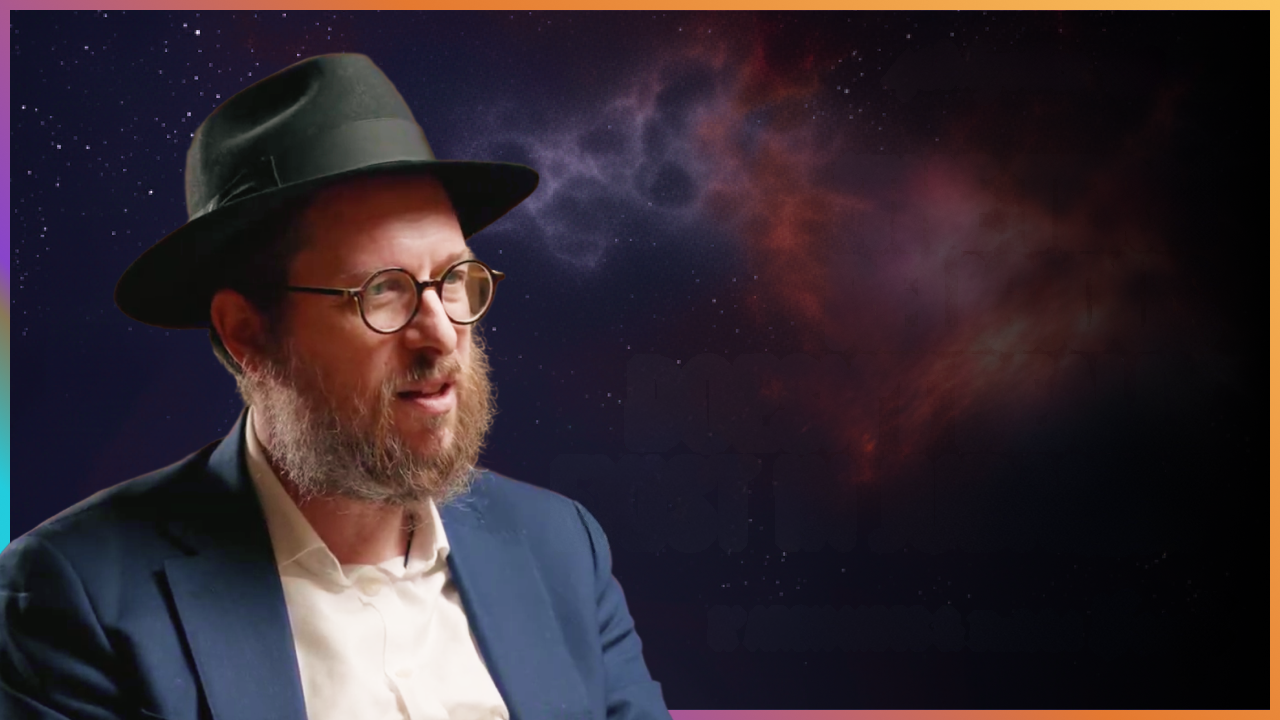
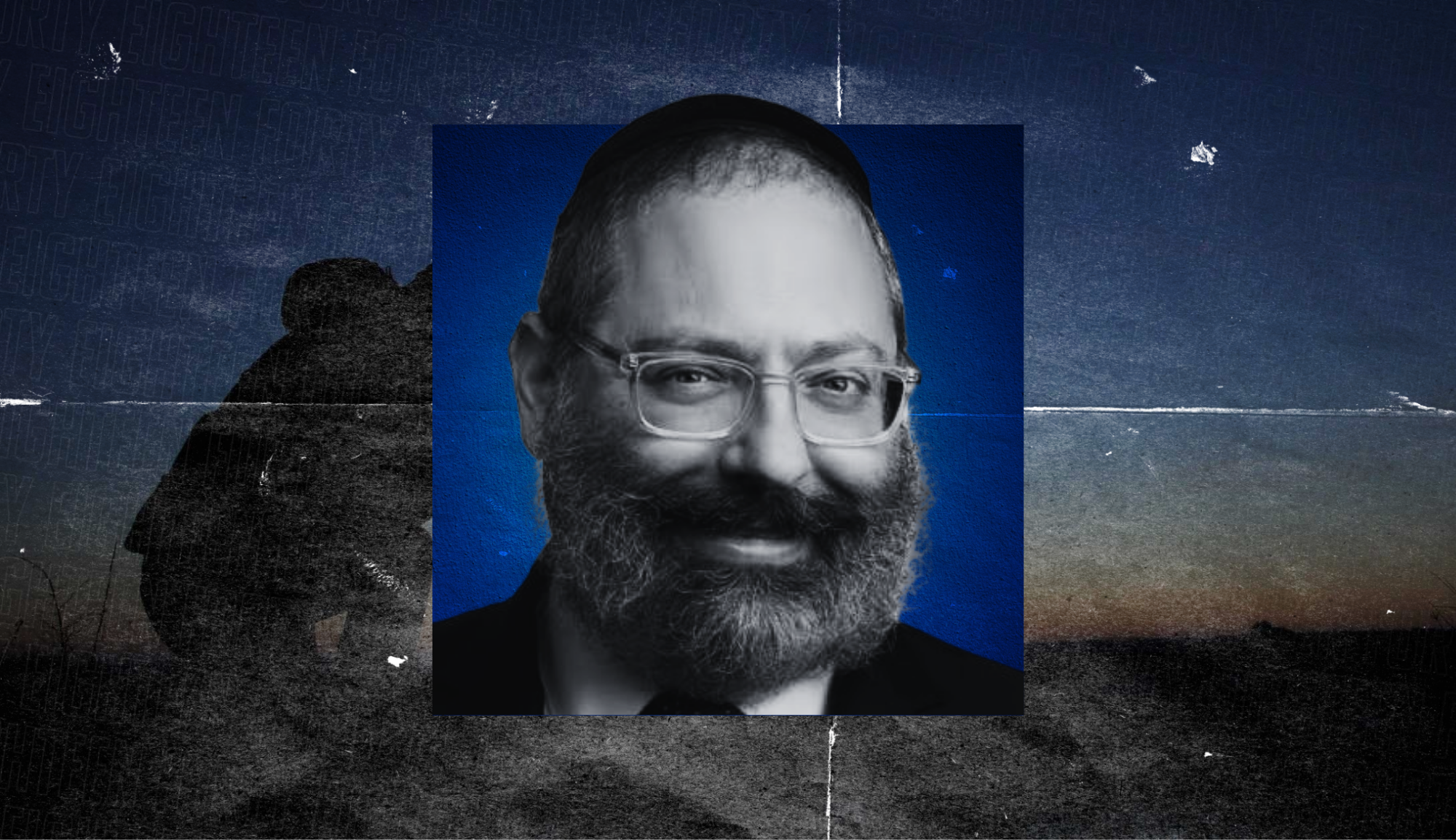
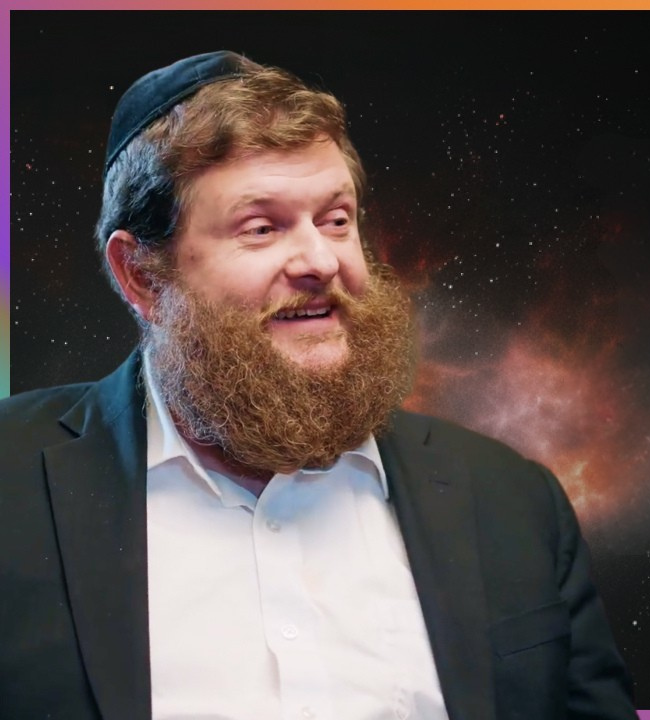
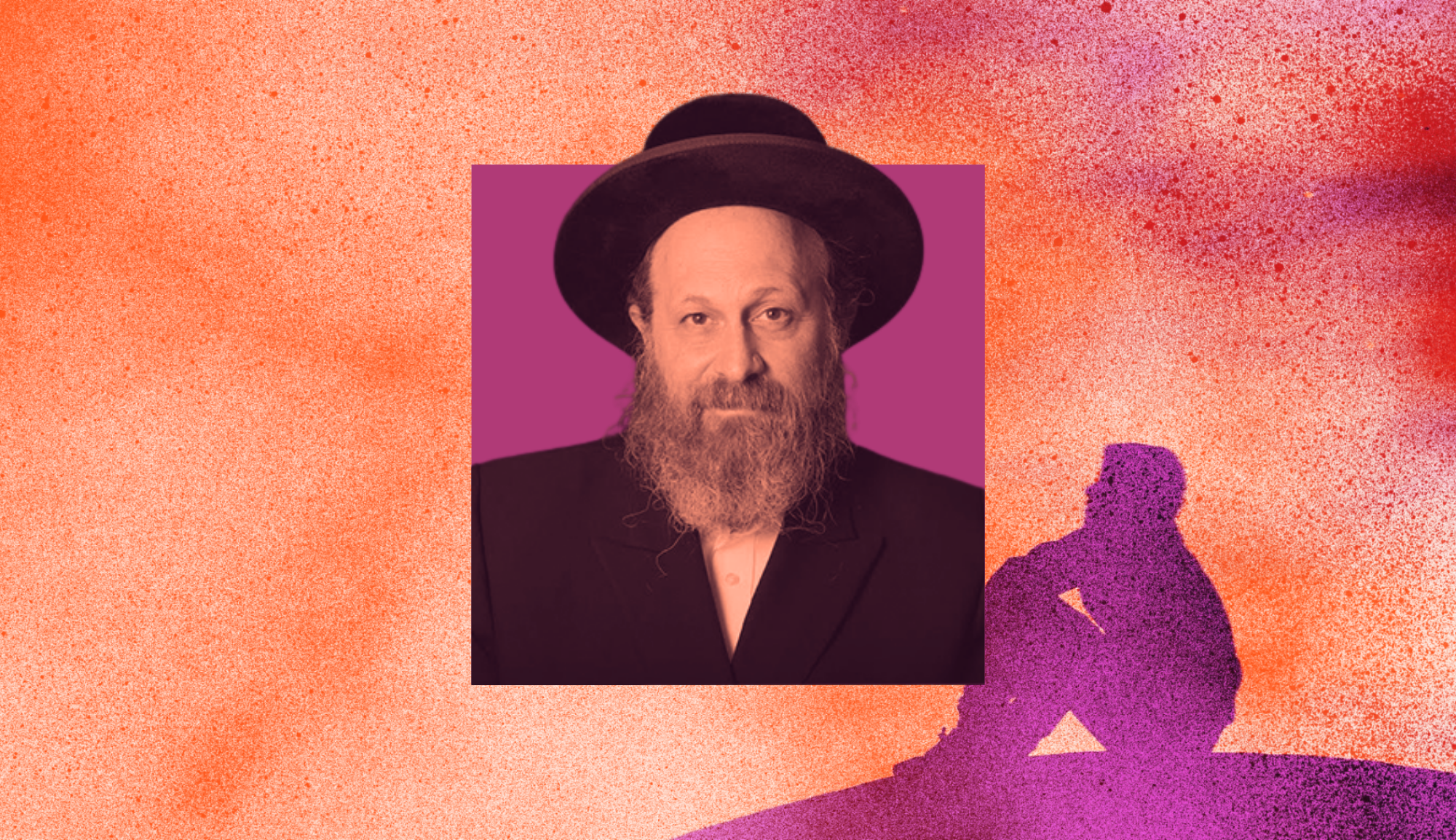
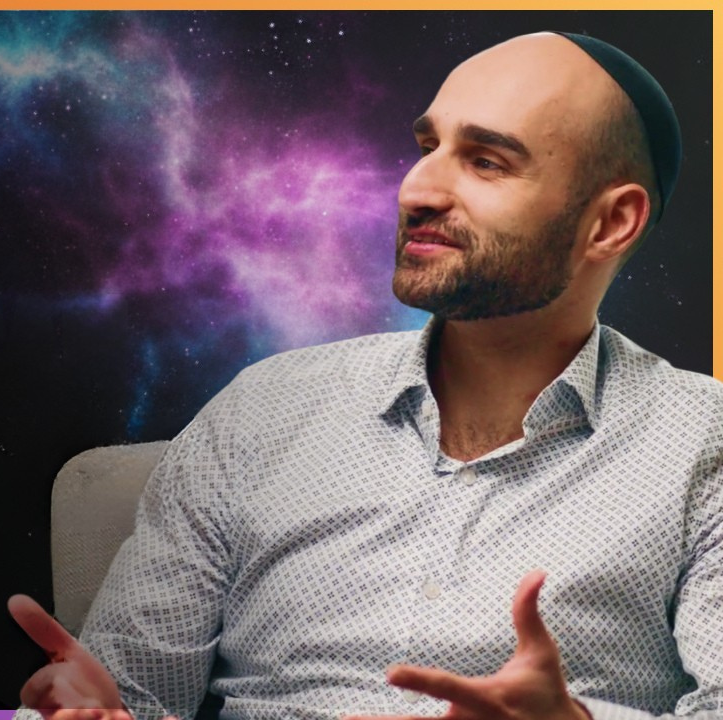
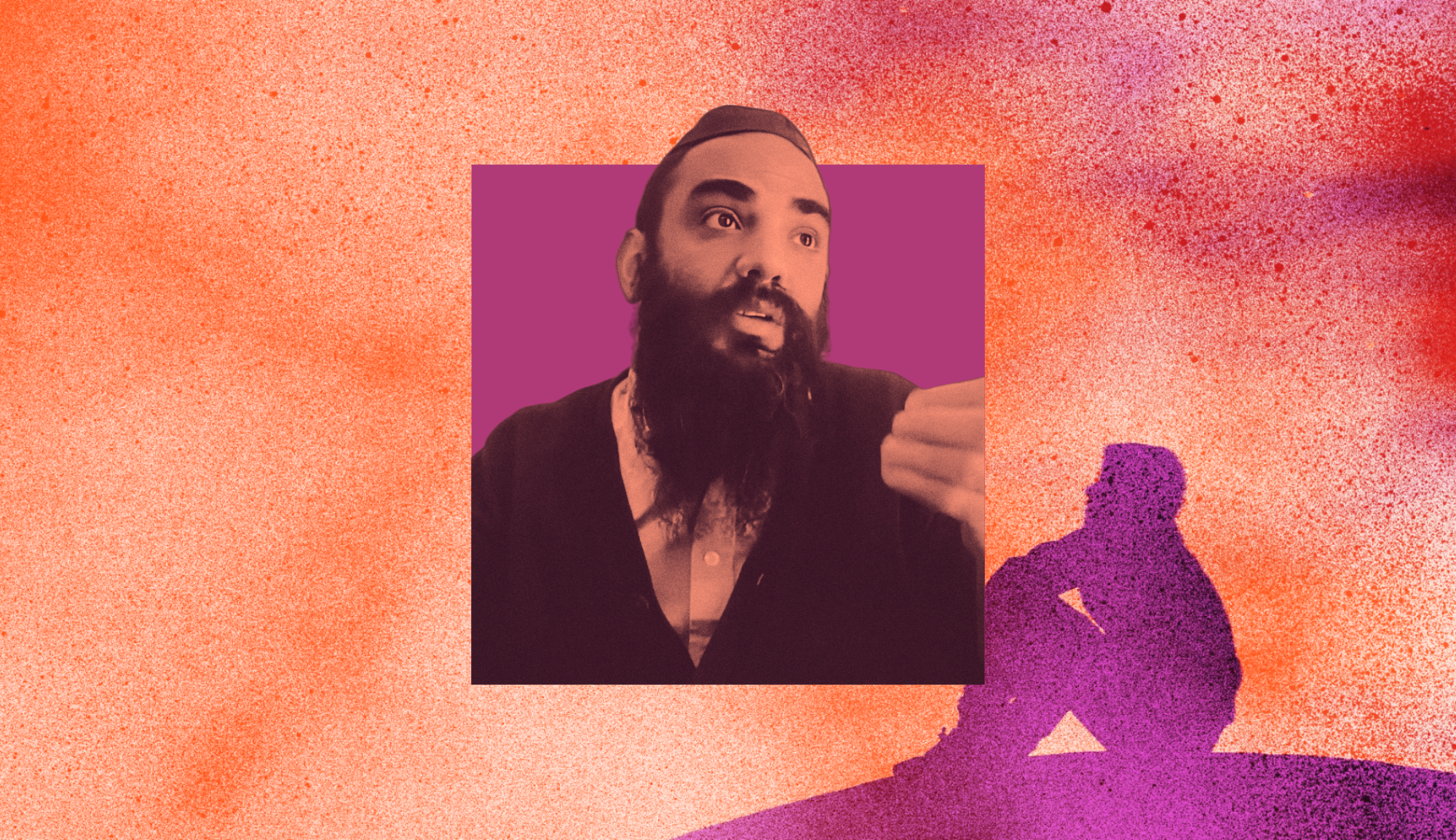
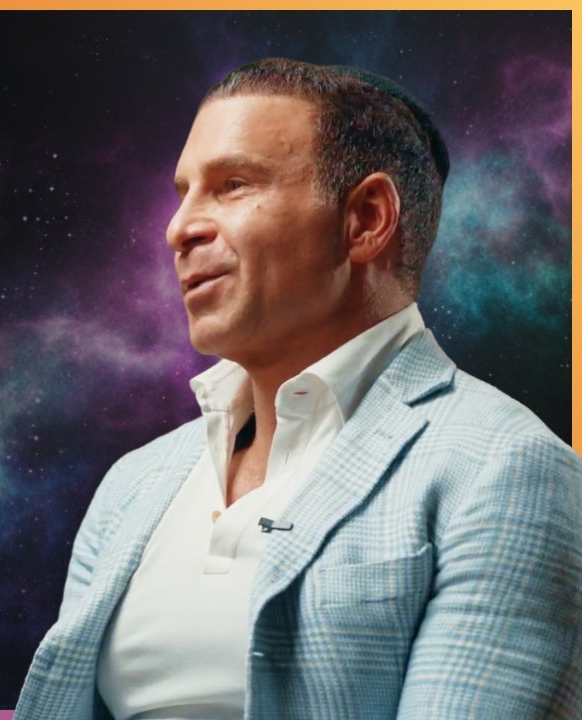
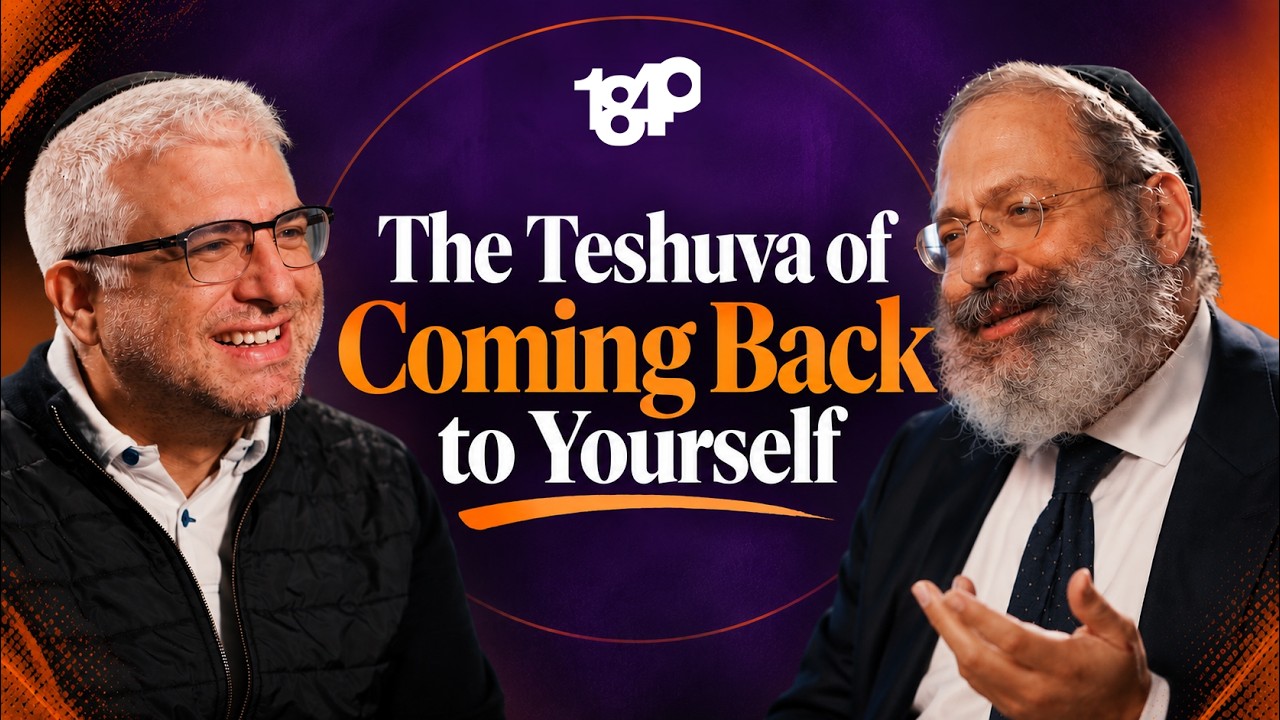
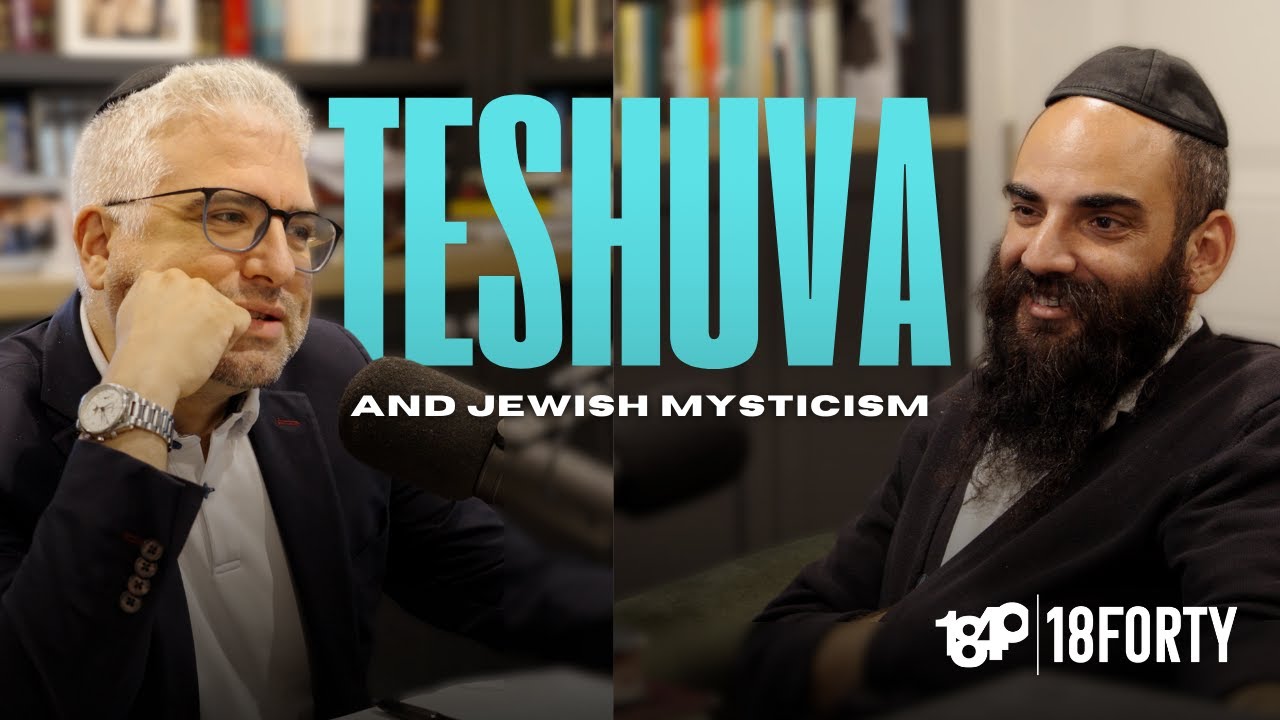
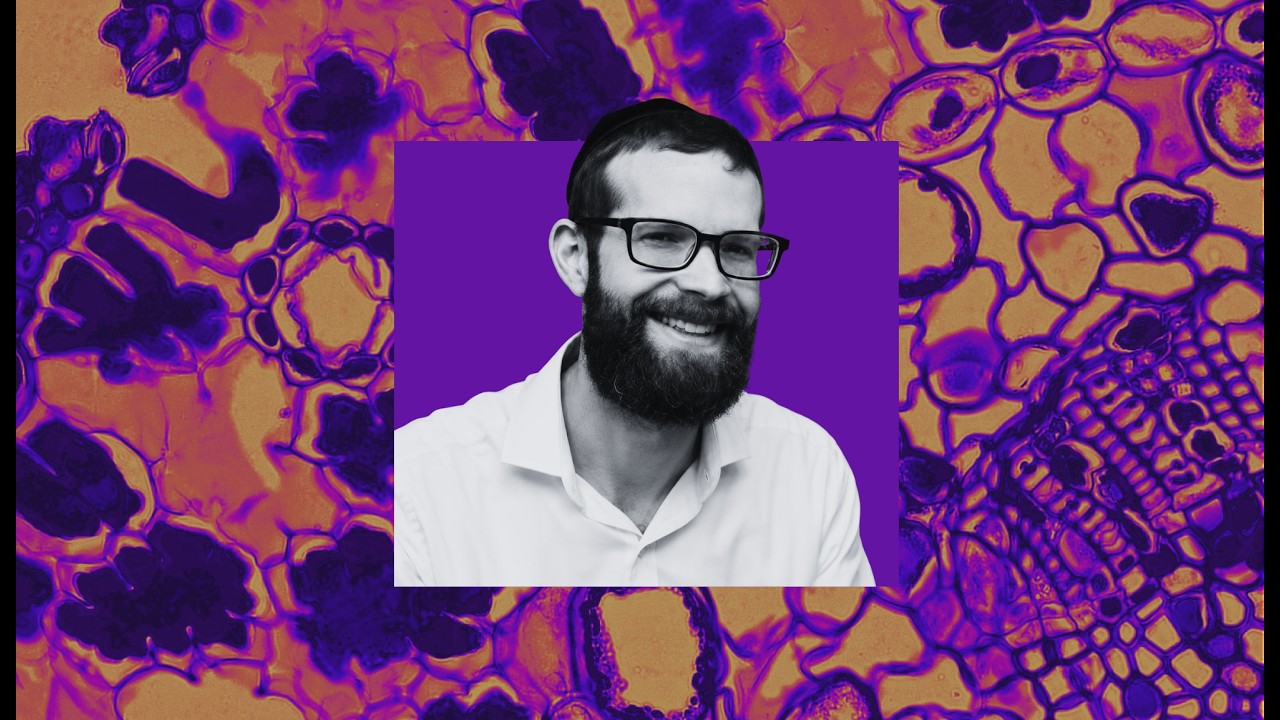
RABBI DR BENJI LEVY. Rabbi Aron Moss, it’s such a privilege and pleasure to be sitting with you in Jerusalem, Israel after I grew up in Sydney, Australia and watched you doing such amazing things: the founding rabbi of Nefesh and a writer of the question of the week that is featured on Chabad.org and read around the world by tens of thousands. And you put them into this amazing book, Can I Name My Dog Israel? Thank you so much for being with us here today.
RABBI ARON MOSS. Thanks Rabbi Benji, great to be here.
LEVY. I wanted to start off, when we look to you in Sydney, Australia, when we think of Jewish mysticism [and] those that can package it well, you really stand out in an incredible way. What is Jewish mysticism?
MOSS. It’s the soul of Judaism. It’s an integral part of Torah. Just like the human being has a body and a soul, [where] the body is what you see when you have the first glance and then there’s a soul that you get to know and have a feeling about but you don’t see it straight away. So the Torah is the same thing. The Torah is described as being a persona. And so there’s the part of the Torah that’s familiar that you straight away read if you open the book of the Chumash. That’s what we learn to read at our bar mitzva and that’s the part of Torah that’s familiar and obvious. But then there’s the soul inside, the hidden meaning, the deeper meaning, the spiritual significance of everything in the Torah. That’s Jewish mysticism. It’s not mystical in the way of weird. It’s deep.
LEVY. So we just spent a beautiful Shabbat together where you shared that you were a Cranbrook boy. Now most of the global audience don’t know what that means, but those in Sydney, Australia will understand. It’s not your typical Jewish day school, it’s not even a Jewish day school. And now you’re sitting here with a jacket, with a hat, with a beard and really proliferating this incredible mysticism. How were you introduced to it? How did you access this place?
MOSS. I grew up in a sort of, somewhat traditional Jewish home. We did Friday night dinners, we had Yom Tov once a year, but [we were] certainly not religious. I met a religious family for the first time just after my bar mitzva. I had my bar mitzva here at the Kotel, and that turned me on. Something in my soul was awakened at that moment that I didn’t have the words to describe or really know what it meant. In fact, I remember at my bar mitzva saying I’m going to be religious when I’m an old man. Because those are the only people I saw in shul when I was growing up, old men.
But then, soon after my bar mitzva back in Sydney, I met a Chabad family. They were the first religiously fervent, lively, and happy family that I’d ever met. And I think it was the neshama, the soul that they lived and embodied, that just, I just said I want this. And at age thirteen I started on that path, much to my parents’ consternation at the time; they were certainly worried. But I saw a light that I’d never seen before. I grew up in a happy home. There were no big issues and problems, but that idea of a deeper meaning to life and living for a higher purpose, I hadn’t seen that before. And as soon as I saw it, I was naturally attracted to it and wanted to know more.
LEVY. Amazing. So in an ideal world, would all Jews be mystics?
MOSS. I don’t know if they’d be mystics, but I think all Jews need mysticism. They all need to study the Jewish soul and to have that because it’s a superficial world and it’s a tricky life we live. It’s difficult, it’s distracting, there’s a lot of stuff going on. We all have our challenges. If there’s no inner purpose and higher reason and deeper thing going on, how are we supposed to survive? I don’t know how anyone can stay sane in such a world. Whereas when you have that soul, you can get through a lot. You can get through a lot of tough times and not only get through them but find meaning and depth even in the darker times. So I think everyone needs that.
LEVY. Amazing. When I was the dean of Moriah College, one of my favorite times was [when] we used to bring you in every year to ask questions for the students, and my understanding is you still do it today. One of my students, Ben Ezzes, brings you in now. So the generations continue. And we often dealt with the complex issues, with the tough topics. I’d love to ask you how you define, how you look at it, some of these terms. Let’s start with the source of all things, God. What is God?
MOSS. God is the truth of all things: not just the source that is removed but the inner reality of everything. Just like the Jewish mysticism is the soul of the Torah, so the soul of all is God. And so, I guess we grow up thinking of God as being this sort of old man with a beard on the cloud somewhere. But the mystical version of God is He’s the true inner reality of everything.
So as I’m sitting here, I feel alive. I feel a pulse of life within me. That’s my connection to God on the very palpable level. Just my living, my sense of living, because I don’t make myself alive. It’s not my body that has its own life. There’s something inside that is life, which is my soul, and that soul is a piece of God. That’s my piece of God. So that’s where I start if I want to connect to God: not as some distant being who created the world, which He did, but as the inner light within my very self.
LEVY. And so what’s the purpose of the Jewish people?
MOSS. Well the Jewish people, we’ve got this message. We got this information. We were given it and our mission is to live a divine Godly life and to display that to the world. To be that sort of “a light unto the nations,” means to bring light into the world, to show that the world has a higher purpose. I mean, that’s what we’re good at. Every nation has its gift that it brings to the world. Jews are not necessarily great basketball players. I mean, there are good Jewish basketball players out there, but that’s not what we excel at. What we excel at is bringing a higher purpose, innovating to create something new in the world by seeing more than what meets the eye. I think that’s why there are Jews who are great innovators in business or in science or in all different areas, but what is at the soul of the Jewish people is to innovate a view of the world that has purpose and meaning.
LEVY. And so how does prayer work?
MOSS. Prayer is our moment to plug in to that divine energy. It’s not expected that we pray all day. Even though the Talmud says if only we could pray all day, wouldn’t that be fantastic? But that’s if only, that’s not what we do. We are in this world to work and to interact and to create. But we need to start the day with plugging in to that divine source, to center ourselves and to remind ourselves of our mission. And then during the day to plug in in a smaller way as well every now and then through the afternoon prayer, the evening prayer, but the morning prayer is the time when we really align ourselves with that divine purpose and feel connected to the soul.
LEVY. And where does Torah study fit into this picture? What’s its goal?
MOSS. Well, Torah study has two sides to it. It has the mystical side and it has also the revealed Torah side. And both of them are essential and important. The difference between the revealed Torah, I guess, and the mystical hidden Torah is that revealed Torah, when you study it, you understand a concept fully and you know what you’re talking about.
If I study the laws of Shabbat, for example, or if I study a section in the Talmud that speaks about an ox goring a donkey, I know what an ox is, I know what a donkey is, I can understand it fully, and my brain at that time is speaking about what is God’s opinion of an ox goring a donkey? I’m studying divine wisdom. But that can get a little bit technical and a bit uninspiring. I mean oxen are wonderful and the poor donkey we also care for, but there’s nothing very inspiring about that. When you study the inner Torah, you’re reminded of the mystical and the deeper realities behind what the ox represents, what the donkey represents, and that it is divine wisdom.
And when you study the two of them, your brain is starting to take in the divine information and starting to think like God thinks. And that’s really what Torah is about. So prayer is us reaching out to God and connecting to Him. Torah study is God reaching out to us and giving His viewpoint into our brain.
LEVY. And from this brain point, from this Jewish mystical sense, is there a difference between women and men or are they the same?
MOSS. As far as studying mysticism, both men and women are encouraged and need to do it. As far as mysticism’s view of men and women, we are different. We have different soul energies, different presences, different spiritual gifts and modes. And that’s encouraged. The mystical tradition speaks a lot about the masculine and feminine and those two energies.
There’s an idea that the masculine energy is a linear type of energy, feminine energy is circular. Linear energy is quite limited and one-dimensional and is directed from A to B to try and get to the point. Circular energy is infinite, endless, no beginning and no end. Each has a power, each has an advantage over the other and something to contribute that the other doesn’t have. And Jewish mysticism encourages that difference and that tension that men should be masculine, women should be feminine, even though we’ve all got both because every man is a product of a man and a woman, and every woman is too. So we’ve all got both, but we have different, I guess, contributions to make.
LEVY. And can that be offensive to people in your experience? And should it be? Or is that that role description something that we should be celebrating?
MOSS. Some people have really [been] conditioned to try and take away all divisions and look at men and women as being exactly the same, which is I think just a mistaken extension of a good intention, and that is that men and women are equal. That we agree on. Men and women are certainly equal, but equal is not the same, it doesn’t mean the same.
And so I think people can be sometimes offended by it, but I think that’s a misunderstanding. And then when you look into it, if we’re just honest, even though this is such a taboo topic and almost controversial to say these days, in our anecdotal experience guys behave like guys, girls behave like girls. There are exceptions, but an exception to a rule doesn’t mean the rule’s not there. And there’s nothing wrong with that. We’re not saying one’s better or worse. We want to hear both voices. We want to hear both contributions. And so I think when masculine spirituality is forced on women, then they’re not being their true self. When feminine spirituality is not allowed to flourish, then we miss out on that.
LEVY. So your synagogue is the closest synagogue in the world to Bondi Beach on Roscoe Street. And Bondi Beach has transcendental experiences, surfing down an incredible wave. And it has other types of experiences and different types of spirituality, and some would say lack thereof, and everything in between. What is the biggest obstacle to being in the heart of all these things in this beautiful place? What is the biggest obstacle to Jewish spirituality and to living a more spiritual life?
MOSS. People are busy and sometimes busy with just the very mundane day-to-day stuff of surviving and feel that this is maybe a luxury. To get into spiritual stuff and spirituality and deeper things, well, I’ve just got to go on with my life. And sometimes they also don’t realize the yearning that they have for it. People feel that I have my fun, and I have my hobbies, and I have my fitness, and I have my family, and I have my work, and I have all these things, and sometimes just coping with all that can cloud the deeper yearning that a person has until it falls apart and they say, well, what what am I here for? What’s my life mean? What’s my existence for? And so it just needs to be more accessible, I think. People need to know that it’s there and that it’s there for them, and that they can access it, no matter who they are, and where they are, and what level they are, and what experiences they have, and what background they come from.
You can access Jewish spirituality and Jewish mysticism. It’s there for you; it’s yours. And I think probably the ignorance of that is the biggest obstacle.
LEVY. So why did God create the world?
MOSS. He wanted a world; He wanted a place that He is not to be invited in. The only thing you could say about infinity, an all-encompassing God, the only thing you could say He didn’t have is [a] finiteness that somebody else invites Him into. And so what this world is is the opportunity for God to share Himself, the experience of Himself, with another. Basically a relationship. Why He wanted that, we can’t answer. There’s a certain point where we have to say: there’s no why for God. There’s nothing that pushes God to do something. He decides. He wanted. This is what He wants. But what did He want? He wants a connection with a finite, simple, fallible being like me and you, who are not perfect, that means we’re not Him. And we choose Him. Our relationship with Him is by choice. We’re not forced to. We could easily ignore Him our entire lives and live a comfortable, happy life. But there’ll be that thing missing and that is the purpose that we’re here [for] and that is to connect to Him.
LEVY. And then what’s free will?
MOSS. Well, free will is the gift that He gave us where He said, I’m hiding Myself. I’m there, but I’m hidden, and you can choose to connect with Me or not. That’s the essence of what makes us human: we have free choice. No other being has that. Animals don’t have it and angels don’t have it. Animals do what they’re programmed to do. They follow their instincts entirely and they can’t reverse that. Neither can angels. The angelic beings just are forces that do their mission, what they’re supposed to do. Humans can choose to go completely against our purpose. We can utilize all of our energies for selfish and negative things or we can find our purpose and give our gift to the world.
LEVY. And so what do you think about when we say Mashiach [the Messiah]? What is this concept? What is this term? What’s going on here?
MOSS. Well, I think we can all recognize that the world is broken, that there are so many problems, and issues, and difficulties, and pain, and darkness in the world. And our job is to bring light to it, to use our free choice, to bring more and more light and goodness into the world. That’s our choice. But there has to be an end point. There has to be a purpose to it. There has to be a time when the job is done. And Mashiach [the Messiah] is the leader, a person just like us, who reaches that level where he can teach the world a new way to live where we can transcend that darkness and the world can come to its fruition and completion.
LEVY. When you say the word completion, does that mean it’s going to be done? We don’t have to work anymore, we don’t have to do anything anymore? What’s going to happen in that time?
MOSS. Yeah, we are completely built in a way that we understand that there has to be achievement. There has to be something to do. If you get up in the morning [and] you have nothing to do, you get frustrated. Sometimes you’re on holiday and it’s great for a day or two, but then I need something. I need it, so you need to find an activity. You can’t do nothing. That’s because that is our exile state. The current state is: yes, it’s about achievement, and changing things, and fixing things. But eventually we’re going to shift into a higher mode where you don’t need to fix things. It’s good as it is.
It’s similar to the six days of the week and Shabbat. Six days to work, to create, to fix the world, and Shabbat is the day of rest, the day to enjoy the world as it is. And so now we have the tension of both going from one to the other, but in the future there will be the yom shekulo Shabbat, it’ll be completely Shabbat always. Which is also, by the way, the masculine and feminine energy, that the six days of the week is the masculine energy of fixing and making things better, improving what’s there, changing the reality. Shabbat is the feminine energy of appreciating the inner beauty that is already there that doesn’t need to be touched. And in the future, the feminine energy will be dominant and the world will be fine as it is.
LEVY. Is the state of Israel part of this final redemption?
MOSS. It’s a huge opportunity to bring redemption because Jewish people are back in their land and we’re able to determine our own destiny here. And so if this country of Israel becomes that light, which I believe it is, to the nations of making the moral and the right choices based on our eternal Jewish values, then it will be the fruition of the coming of Mashiach.
LEVY. So we said that the Messianic Era is really needed and there are parts of the world that are really broken. Honing in on one part, what would be the greatest challenge facing the world today?
MOSS. I think that the greatest challenge facing the world – it depends on which world you’re talking about. Obviously, here in Israel, there’s a survival issue. There are people who are out to kill us. There are neighbors, not far away, who have the means and the desire to actually kill. And so, survival, that’s number one. That’s always number one.
In Australia, for example, we don’t have that level of threat. We have enemies as well, but not that level of threat. And so it’s not survival mode. We have bigger problems, I guess. There’s a problem of just identity, of knowing who we are, of knowing what our deeper and real purpose is.
And that, I guess, is across the board as well. Here [in] Israel as well. Our identity and who we are is the biggest challenge. But I think we need to have clear definitions. We need to know that there is good and there is evil. We need to be able to identify it and be willing to fight for good. And I think when we have that clarity, we’ll be closer to Mashiach [the Messiah].
LEVY. So how has modernity changed Jewish mysticism?
MOSS. It’s made it way more available because really, in the past, to study Jewish mysticism you had to go somewhere where there were mystics and experts in it. They had to be willing to teach you. You had to find them. You had to speak their language.
And so that meant that Jewish mysticism was pretty much reserved for very few people. You had to understand the vernacular of Hebrew and Aramaic, which it’s written in. And you had to be in a place like Israel where the mystics were teaching. Today, you could be anywhere in the world, speaking any language in the world, [have] any level of knowledge, and you can access these teachings. You can go on YouTube. You have to find the right teacher because there are some quacks out there who are teaching stuff that’s not authentic. But it’s very accessible and not too hard to find those teachers in your language.
So modernity has made it [accessible] at our fingertips. Which is a little bit of a messianic view as well because the great Baal Shem Tov, the founder of the Hasidic movement, had a vision where he met the Mashiach in an out-of-body experience. And he asked the question that anyone would ask if you met the Mashiach, and that is: When are you coming? When are you arriving? And his answer was: when the wellsprings of your teaching spread to the furthest outside. Which means that when mysticism becomes mainstream, that’s when Mashiach is ready to come. And the fact that we have the means through modernity to do that today anywhere in the world, anyone can access these ideas on the deepest, most real level. That means we’re ready. We’re ready for Mashiach [the Messiah] to come.
LEVY. You talked about these wellsprings and you also talked about access on a huge level. And modernity has also amplified all knowledge, all mysticisms, all schools of thought. Is there something unique about Jewish mysticism that differentiates it from other mysticisms?
MOSS. Yes, certainly. I think Jewish mysticism is deep and spiritual, but it’s deeper than spiritual. It’s godly; it’s divine. And therefore it brings you back down to earth. I think there are a lot of spiritual traditions that remove you from the here and now. They take you away from life down here.
I remember years ago I was sitting with a friend I met up with in London. An old school friend I hadn’t seen for many, many years. And we were very close in our childhood. Then we went very different ways. I got involved with Judaism. He went on a very different path and ended up quite into Buddhism. And we met up in a pub in London after not seeing each other for many, many years. And we’re having a beer together.
LEVY. Good Aussies in a bar.
MOSS. Exactly, yeah. But the beer was warm, so it wasn’t Aussie beer, but it was nice to catch up. And we were sharing our different mystical teachings that we had picked up, him in the Buddhist tradition and I in the Jewish tradition. And there was a certain point in the conversation where he said, “I really struggle with – I go away to these Vipassana retreats where [there is] ten days of meditation, where you don’t talk all day. And you meditate for hours and you eat these little mushroom thingies and it’s very intense for ten days. But then I come back and I’m sitting here with you having a beer in a pub, it’s such a dichotomy.”
And I said, “That’s interesting because in Judaism, that’s not a dichotomy. If you have the deepest meditation where you really connect to the highest level, that’s nothing if you can’t bring it down into your day-to-day life. If you can’t bring it into the beer at the pub and connect it to your here and now, you’ve missed the entire point. If you have a deep spiritual experience and that doesn’t make you a more refined, patient person to the other human being next to you, if it doesn’t make you have your beer in a more refined way [so that] you eat with more intention and more understanding, then you’ve missed the entire point.”
And so I think the higher you go in Jewish mysticism, the more it points you back down to say: Your soul belongs up there but it’s been sent down here in a body, in a physical world, to make a difference down here. That’s the deepest level. So your spiritual yearning may be to transcend, to reach nirvana or a higher place or heaven. That may be your spiritual nature, but God’s intention for you is to be in a physical body.
And so I guess there are three ways you can live. You can live as a materialist person who’s after pleasures of the body. You could be a spiritualist who seeks the yearnings of the soul, higher worlds. But a true Jewish mystic is somebody who fuses the two together. The soul is in the body to make a difference in this world.
LEVY. So does someone need to be religious to study mysticism?
MOSS. The term religious doesn’t really exist in Judaism. We use it in English, but there’s no term in Torah literature for a religious person or a secular person. They’re non-Jewish concepts really. Nobody does nothing and nobody does everything. There are many, many mitzvot in the Torah. And there’s no Jew who does none of them, and there’s no Jew who does all of them. So the question is if you’re a growing soul or a stagnant soul. That’s really the difference. Are you learning and growing? Then Jewish mysticism is for you. If you’re stagnant, Jewish mysticism is for you.
LEVY. So the answer is yes.
MOSS. Yeah.
LEVY. Amazing. And can it be dangerous to study Jewish mysticism?
MOSS. I think, like any philosophy, it can be abused, it can be misunderstood. There was always that sort of idea that you had to be forty years old, you had to be a Torah scholar already, married, and in a very solid and stable situation before you study Kabbala. That rule was made at a time when Kabbala had been misused.
Particularly during the Shabbetai Tzvi false Messiah debacle in the 1600s where Kabbala was used by somebody who was unstable to claim that he was the Messiah. And so people got scared of it. But I haven’t ever met somebody that Kabbala and mysticism actually damaged or hurt them. There are people who are already not very healthy that use it in an unhealthy way. It can make you worse. But I don’t think a normal, stable person studying mysticism is going to go wrong. The most important thing is to study it in a way that will be practical and integrated and brought down to earth as opposed to escapism.
LEVY. So you talk about escapism and you talked about spirituality as needing to be grounded. And we know from the Chabad school of thought that one of the most important areas of mysticism is dira betachtonim [a dwelling place in the lower realms], to ensure that it really comes down in the day-to-day. I want to ask you on a personal level: how many children do you have?
MOSS. I have twelve, thank God.
LEVY. Baruch Hashem [thank God], you’ve got twelve children. An amazing wife, a beautiful family, an amazing community. And the main thing you really deal with is relationships. How does this actually express itself in relationships? Can you give one example with a congregant, with a friend, with a child, whatever it is, where this idea of Jewish mysticism is actually being brought down, dira betachtonim, into your relationships?
MOSS. Well, I think when you study Jewish mysticism you’re learning to see the soul in everything. You’re studying the soul of Torah. And you learn to see the soul in every person and in every situation and in every challenge.
And so if you’re dealing with a difficult person, whether it’s in your family or community or at work, wherever it is. We can all think of people who are difficult. They really are difficult. If I meditate on that person and think I have here in front of me a soul. There is a beautiful divine soul just like mine, connected to mine, and a part of the oneness of God. Over that soul may be layers of difficult personality, of obnoxiousness and things that are really bad, but they’re layers. That’s not the essence of the person. The essence of the person is a good, pure person, a pure soul.
So when you study a lot of these ideas that becomes your lens. That’s how you look at people. And the more you study, the more natural that view becomes. And it gives you a lot more patience and a lot more of the ability to see the good in somebody and to have hope for every person, including your own family. Sometimes we get frustrated with people in our family, or there is something going on with one of our kids or in our marriage; there are things happening. But if we remember: One second, this is my soulmate that I’m married to. These are the souls that were sent to me and entrusted with me to look after and to bring out their beauty. When you remind yourself of that it becomes much easier. They still might throw stuff at you, and the kids still make a mess even when you’re in that state. And sometimes you will lose it. But at least you’ve got something to go back to and say: Hang on a minute. I’m a soul, they’re a soul, and we’ve got a soul connection. And that can get you through a lot of tricky moments.
LEVY. The irony is that so many people see mysticism as out there. What you’re saying is it’s really grounding you in here. And it’s actually what brings you down to live in the moment. You talked about so many different questions today and you share this weekly question. I’d love to invite you, rather than speaking about mysticism, to actually teach mysticism. Is there one short thought you have that may resonate with you, may resonate with our audience, who may just be thinking about right now, that you can teach us as we end this beautiful conversation?
MOSS. Well, here’s a thought that I would say I use every day, and it really helps me, particularly when I’m overwhelmed and when there is a lot of stuff going on: a few kids, community, other stuff happening. And there are some times when it’s just too much, like I can’t handle all this, I can’t do this, like it’s beyond me.
We say the Shema prayer every morning and every evening. And in that prayer, there’s a mystical translation of the line “Shema Yisrael Hashem Elokeinu Hashem Echad.” Hear O Israel, the Lord our God, the Lord is one. On a simple level it’s talking about the oneness of God. But in the book of Tanya, it’s in chapter forty-seven, it has an incredibly deep translation of that line. “Shema Yisrael” means listen Israel – me. I’m Israel, I’m the Jew. Listen, listen to this, contemplate this, think about this deeply. “Hashem Elokeinu,” the Lord is our God. That’s two names of God. Hashem is the name of God as He is infinite and beyond. The infinite power that Hashem has. Elokeinu is my power, the power that’s inside of me.
So we’re saying in that prayer: I may see myself as a limited being and there’s just too much going on. And I am limited. But I’m not because I’ve got a divine power inside of me. I’ve got infinity inside of me. Hashem Himself, His energy is my soul. So whatever I’m going through, whatever’s happening, stop and remember that “Hashem Elokeinu,” the power inside of us is the infinite power of God.
And “Hashem Echad,” God is one. There’s no blockage in the way of God because He is the oneness of everything. There’s no opposing force that can stop God because He is everything. There’s no event that happens or experience that I’m having that shouldn’t be happening. There is one God who is behind everything.
So if I stop and think about that, and I do, on a daily basis, you can face anything. You can get through anything because it’s absolutely meant to be. It’s coming from the same God that gives you strength, the one that gives you the challenge. And the divine, infinite power is inside you. So what could go wrong? What are you missing? What more do you need? You’ve got the divine power in you.
And it doesn’t take away all problems. It takes away the edge of what you see as a problem. This is my challenge now. This is where I’m supposed to be. This is what I’m supposed to face at this moment. And I’ve got the divine power to do it.
LEVY. Well Rabbi Moss, thank you for sharing your secret as to how you manage twelve kids, a community, writing, teaching, and really living as a Jewish mystic, not up there but down here. And we just give you a bracha, a blessing, that you’re able to continue to grow, that you can fulfill the words of the Zohar of that dream “l’kesheyafutzu maayanotecha chutza,” that you can continue to spread all the way to Bondi Beach; to Sydney, Australia; and beyond. And we thank you for all you’re doing.
MOSS. Thank you, but my secret is my wife. That allows me to sit here and have this great conversation with you.
LEVY. Well, I’ll thank her next time I speak to her. Thank you.
MOSS. Thank you.