Transcripts are produced by Sofer.ai and lightly edited—please excuse any imperfections.
David Bashevkin: Hi friends and welcome to the 18Forty Podcast where each month we explore different topics balancing modern sensibilities with traditional sensitivities to give you new approaches to timeless Jewish ideas. I’m your host David Bashevkin and this month we are continuing our annual exploration of teshuva as we lead up to the high holidays, thinking about introspection and personal transformation. This podcast is part of a larger exploration of those big juicy Jewish ideas, so be sure to check out 18Forty.org, that’s 18Forty.org, 18Forty.org, where you can also find videos, articles, recommended readings and weekly emails. Each year we start this series on teshuva, which literally means to return: return to God, returning to ourselves, return to that stasis, that beginning that I think we all live our lives in retrospect, trying to think, how did I get here, how do I get back to when it felt right, when it felt okay? And each year we start this series at the beginning of the month of Elul.
Elul is the month that precedes Rosh Hashanah and is typically, for really all of Jewish history, has been used as almost a preparatory ground to enter into Rosh Hashanah. Instead of just having a new year and just saying, okay, we’re jumping in, we’re going to approach God as King, we’re going to approach our own lives as creations, we first enter into the world of teshuva through the month of Elul. Now, Elul has significance of its own and it really has its own form and focus of teshuva. What is that form and focus? So the significance of Elul as cited by the Tur, the Tur is really the work, it’s a four-volume work on all of the laws, customs and practices that relate to day-to-day Jewish life.
It is the forebearer of perhaps a better known work known as the Shulchan Aruch that really distilled all of the Talmud and the commentaries that came afterwards into a practical guide of daily living and the way the Tur, which is a Hebrew, a Hebrew word, tav vav resh, the way the Tur introduces the month of Elul is by citing an earlier midrash that appears, an earlier commentary that appears in Pirkei de-Rabbi Eliezer, which is an earlier collection of midrashim, of thoughts and concepts related to Jewish life. And in Pirkei de-Rabbi Eliezer, it says that the significance of Elul as kind of the introduction to Rosh Hashanah and the entire teshuva process is very historic because if you look at the Hebrew calendar, it was on the 17th of Tammuz that was already a few months ago, that came out in July probably, early July I think. In Pirkei de-Rabbi Eliezer, which is cited by the Tur, it says that this story, the power of Elul, really began in the aftermath of the 17th of Tammuz. What happened on the 17th of Tammuz? That is the date for the sin of the golden calf, where the Jewish people, right after receiving the Ten Commandments, right after experiencing revelation from God, they almost lose their sense of self.
Moshe is with God, studying the Torah and being involved in this intimate prophecy and the Jewish people are left bereft and they don’t know what to do. Where’s Moshe? They thought he’d be back, they miscalculated when he would come back and they were looking for some tangible expression of their religious lives. They were looking for something that they could hold onto, a tangible manifestation of what they just experienced. They felt like we can’t do this on our own, we need something to hold onto.
And it is that impulse that gives birth to the golden calf, which they created this idol, this tangible thing that can represent their relationship with the transcendent God. And then in the aftermath, the golden calf, they worshiped the golden calf, Moshe comes down late, sees what the Jewish people are doing, oh my gosh, are you crazy? And then there is a lot of retribution, the Jewish people are punished, there are real consequences. And then they’re like, what now? Are we going to be given a second chance? And it is at this point where God invites Moshe to come back to Sinai to receive a second set of ten commandments known as the Luchos, the tablets, and it is the day on Rosh Chodesh Elul when Moshe decides to go up the mountain and to receive this second set. And this second set, Moshe goes up the mountain beginning on Rosh Chodesh Elul, on the first day of the Hebrew month of Elul, and then stays up the mountain for forty days and comes down with this second set.
If you count forty days from Elul, it is Yom Kippur, and it is on Yom Kippur that Moshe comes down from Mount Sinai with a second set of tablets, the Luchos, and kind of recommits with the Jewish people, we’re still in this together. This process begins of receiving this second covenant, this reminder that we didn’t break everything and that our impulse and the consequences of the golden calf, as real as they are, did not annihilate our relationship with God and our uniqueness as a people. This process begins on the first day of Elul where we begin working towards receiving that second covenant. And that second covenant is not just one place in history but is reliving in our lives in every generation.
When we think that we messed it all up, that it’s irrevocably damaged, that there’s no way of turning back, there’s no way of healing, there’s no way of finding a place back, what we do is we begin that recommitment, we begin that reapproach through Elul. And we hope on Yom Kippur that we receive that renewed sense of vitality, that renewed sense of commitment, that renewed sense of relationship. We ultimately receive that on Yom Kippur, but it is through the work of Elul that we work towards that. And there is something very unique that I think sheds light on really what Elul is all about, like what is the nature of our work, of our focus of Teshuvah during the month of Elul? How is it any different than what we do on Yom Kippur? On Yom Kippur and even on Rosh Hashanah, the focus is very different than what it is during the month of Elul.
I think the insight begins with an acronym that is famously described to really encapsulate what Elul is all about. Elul is the Hebrew month and it’s spelled Aleph, Lamed, Vav, Lamed, Elul. And as many are familiar with, it’s cited in so many of the commentaries, it’s a very old kind of acronym in how we explain and explore the essence of what this month and where our focus of Teshuvah should be, that the month of Elul, Aleph, Lamed, Vav, Lamed, Elul, is an acronym for the Hebrew for the verse that appears in Shir Hashirim, the Song of Songs, the love song between the Jewish people and God. And in Shir Hashirim there is a verse that says, Ani L’dodi V’dodi Li, I am to my beloved and my beloved is to me.
And if you take the first letters of that verse, Ani L’dodi V’dodi Li, it is the very same letters. Ani starts with an Aleph, L’dodi starts with a Lamed, V’dodi starts with a Vav, Li is to me starts with a Lamed, and that spells out Elul. Elul is that world where we step into and we say, I, my very sense of self is to God and God is to me. What I have received from my Rebbi, and my Rebbi passed away this year.
I had a very tough year and maybe we’ll talk about that on another episode, but this has been an extraordinarily trying year for me on a personal level, on a professional level. One of the things that I lost this year, and there were many things, many challenges, but one of the things that I lost this year was my Rebbi. I’m very often asked who is your Rebbi? Who’s guiding you? Who is the honest, really, real answer is I never had a relationship with a Rebbi where I’m checking in on what I’m sharing. I’m the only one responsible for this.
You can’t blame any of if you hate the things that I say, don’t blame my teachers, blame me. But I do have teachers. I don’t think they’re the ones to blame for me, but they played a role in really shaping me and really my primary teacher during my years in Yeshiva when I studied in Baltimore, in Ner Yisrael. was somebody named Rav Ezra Neuberger, and Rav Ezra, as we affectionately called him, unfortunately passed away this past year.
And I remember each year as we started the month of Elul, he would focus and he would always speak on Friday nights—and hopefully one day we’ll, and I really have dreams of this, to do an episode just describing his impact and his presence in my life, in the lives of his students—but I think of anything that I’ve ever experienced during Elul, what made the most lasting, intense impact on me were these kind of Friday night gatherings that would happen in the house of Rav Ezra. It would be in his home; he’d put out little cakes, we would sing a little bit, and then he would talk. And it wasn’t—it was so atypical of what you would hear from a rabbi. He was not really giving over kind of pithy divrei Torah or like, “Okay, there’s a question on the parsha, here’s the answer, okay you can go home now, you have something to say at the table.” It was almost impossible to repeat what Rav Ezra would talk about, but every year, without fail, during Elul, his focus would be on this very concept of ani—a sense of self, the importance of a sense of self, of cultivating a sense of self, of learning how to feel comfortable in our own skin, learning how to notice ourselves, realizing that you cannot escape into the world of religious commitment and obligation without also confronting and really mining the depths of our own self.
We can’t use Torah life and religious life as a cover or a crutch or as some Band-Aid over our essential difficulties and barriers and character flaws that we all have. We need to learn how to focus inwardly and even grasp the magnitude and the depth of having a sense of self, of the integrity of self. And Rav Ezra would talk in this very intense, slow, rhythmic tone, and his pauses were so pregnant with meaning, but what he really wanted more than anything was to try to transmit the magnitude of life itself, the magnitude of the fact that we even have a sense of self that we have such a hard time identifying. We never really meet ourselves in our lifetime; we meet our thoughts, we see our body, but if we believe in God, if we believe in something transcendent, then part of that belief is also believing that there is something transcendent in ourself: that we are more than just our thoughts, we are more than just our body.
And Rav Ezra would actually challenge us to think about, like, “What is yourself?” It’s not your thoughts either, he would tell us. We were smart yeshiva students who said, “Okay, we know it’s not—the rebbe doesn’t want us to think it’s our body, it’s more than that.” And anybody who’s alive and thinking knows that we’re more than our fingernails and our skin and our bones, there’s something beyond that. And sometimes we said, “No, it’s our—it’s our thoughts, it’s our feelings, it’s our”—that’s not it either. There is an essential self that is producing that, that is the source of our thoughts, that is the source of our emotional triggers, of our anger, of our sense of inadequacy.
And it is that essential self that we try to reach out and touch and explore in the month of Elul, the ani l’dodi v’dodi li of Elul being the acronym of encapsulating the work that needs to be done before we receive a Torah, before we enter into religious life, of realizing that before Moshe goes up and receives that second set, the healing from the sin of the golden calf, he doesn’t just walk up the mountain. It’s 40 days of introspection, of work. What are we working on? We don’t have a Torah yet, so, so what is happening during this period? What’s happening during this period is learning how to look inwardly and create a space inside of ourselves to even know what Torah, what religious life, what religious commitment is even addressing. To realize that we are creations of a Creator, of God, and that our sense of self has integrity, has sanctity, and has a purpose, and that our lives have meaning.
And learning how to find that and how to feel comfortable with that does not happen in an instant; it takes tremendous work, and it takes backpedaling, and it takes therapy, and it takes healing, it takes conversations that That we’re avoiding, takes saying I’m sorry, it takes the ability to receive I’m sorries. I want to say something. I had a conversation with somebody I love who was really, you could tell he had a really bad day. It was very obvious to me.
And he had every reason to have a bad day. The plumbing wasn’t working, everything was falling apart. And I was talking to this person and they were actually lashing out at me. And I understood why they were lashing out at me.
I canceled a meeting last minute. And we ended up rescheduling it, it was fine. But I called to apologize and this person was so wrapped up and it was a freeze frame of, this is where the work of teshuva happens. And I remember there was a moment where I said, I’m so sorry.
I’m so sorry that you feel this way. I’m so sorry that you’re in pain. I’m so sorry that you’re suffering. And the instinctive reaction was so illuminating because I’ve done it myself.
It was, I don’t need your sorry. Don’t tell me you’re sorry. I don’t need it. It doesn’t do anything.
There is a place that we all have and we’ve all been. I have no doubt I am not the only one who has experienced both on the receiving end and who has said this to someone. I don’t want your sorries. We can get so angry and so lost in our own story that we lose the ability to even receive kindness, to even receive goodness, to even have a conversation with a friend, with a spouse, with a child.
We become so broken internally and so unwilling to admit that our most fundamental flaws are not out there. They’re not going to be fixed not by a rebbe, not by your parent, not with, not even with Torah. There is work that needs to be done that is us alone. Just I.
The vessel of the ani, of our sense of self. Each of us have different flaws in that vessel. And I don’t even know if the goal is to fix those flaws, but at the very least it is to become self-aware of them. To become more self-aware of people, of how we interact, what makes us lose our temper, what are our triggers.
This to me is the ultimate work of Elul. It’s almost stepping away from the world of just exclusively filtering and self-discovery through religious expectations. And not God forbid say I’m not going to be religious during Elul. That’s not what I’m saying.
What I’m saying is having a mode of introspection and of self-analysis and looking inwardly and self-discovery that is not exclusively filtered through the expectations of religious life, but actually learn how to discover how those, how we, how our most essential selves respond and react and feel about those expectations. Do we feel whole enough, do we feel processed enough that when we place those religious expectations into our lives that we become vehicles for positivity, for transcendence, for godliness that we can bring that into the world. And very often there is something essentially that is so broken that we never allow ourselves to even look at. And it’s the thing that we stare at and stare through our entire lives and our entire day.
And that is who are we as individuals? And how do we learn how to turn that mirror and almost discover and interact with our most essential self? And that is why I am so excited for today’s episode with somebody who I expect most of our listeners have not heard of, but somebody who in our conversations over the years and in reading their writings, somebody who has a profound simplicity, a profound simplicity. I don’t think you’re going to get the one-liner that’s going to answer all your problems. In fact, if you pay close attention, this episode may create more problems for you, more problems in terms of realizing that what many of us are really waiting for, the cavalry to come, the skies open up, to arrive, to get there, all those words that we use to explain what we are waiting for and to realize that ultimately what we are trying to get comfortable with is the uncertainty itself, of existence itself, of the not knowing. And that is our conversation with our…
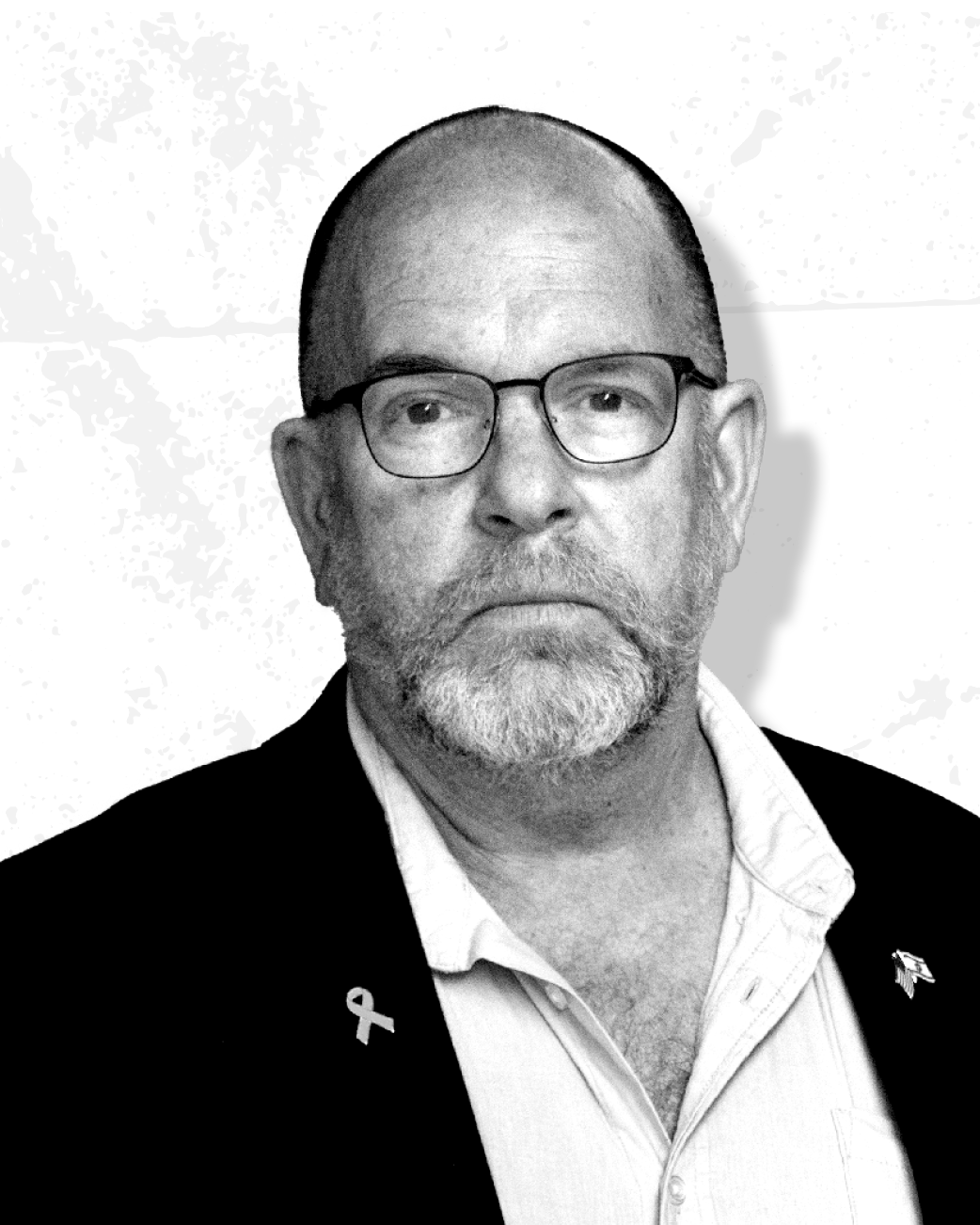
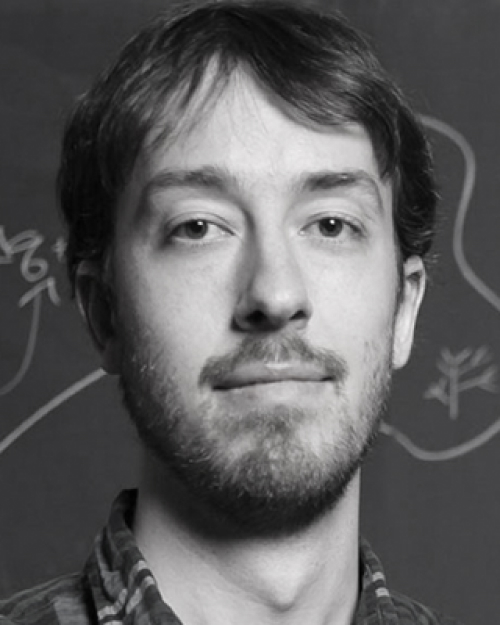
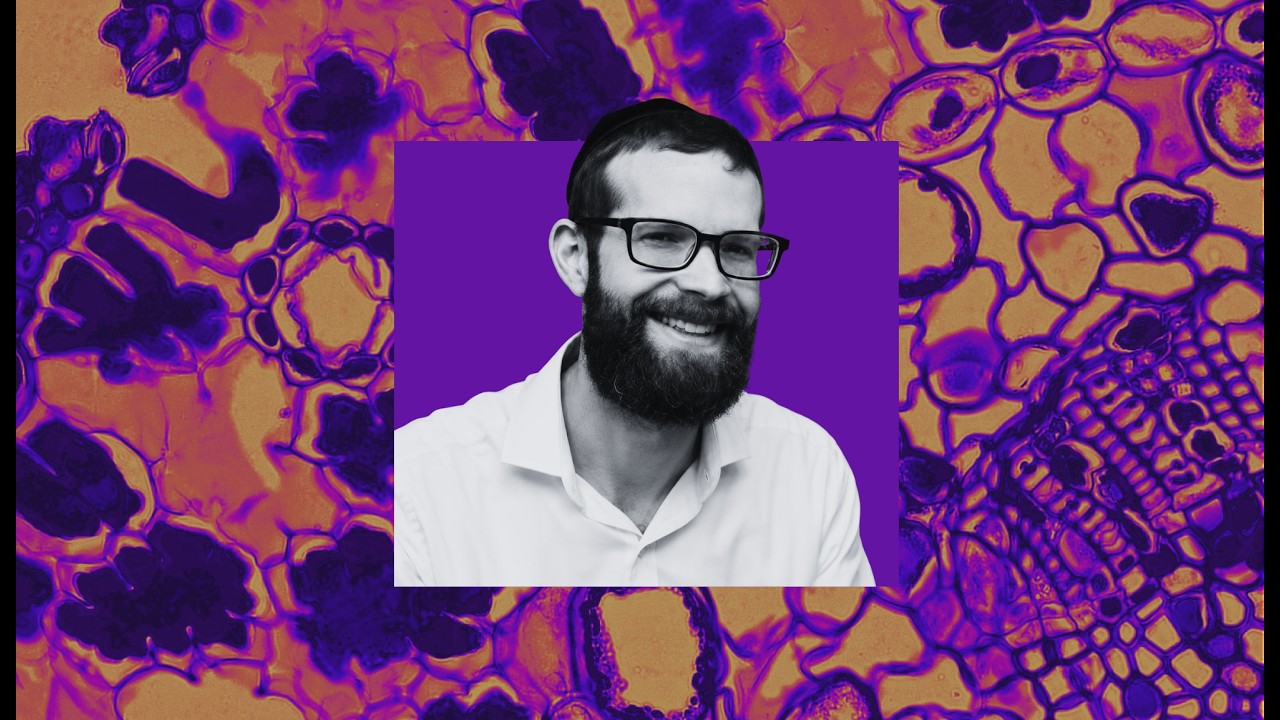
Our guest today, Mendel Horowitz, who is a psychotherapist in Israel. He runs both individual and group work. I became close to him because I have become so interested in actually the spiritual and religious value of group work. One of my great dreams is to have group work through 18Forty.
That is for another time. If that sentence interests you, please reach out to me. I really do mean that. But yes, to have groups, people together and really be in a laboratory of conversation where the conversation itself is the window in how we learn about ourselves.
What triggers us? What bothers us? Aside from the conversation today, Mendel wrote an article that we are publishing on 18Forty that of course if you sign up to our emails, I don’t say this enough, but if you’re unable to help give a little bit, we run on donations so it really does help when you give. But I know a lot of people either that’s too much, they have so many other causes which I totally understand and appreciate. But if that doesn’t interest you or you’re not able to do that, one very easy way of helping our work is to subscribe on YouTube and our podcast, leave reviews. It really does help and I’m saying it plainly, it’s something that will help us grow to where I hope we can one day be.
But we’ll put it out there, he’s publishing it through 18Forty and it’s an incredible article where he explores the interplay between psychological work and religious work. And he doesn’t sugarcoat it. And I want to read a few words because it relates to so much of what we spoke about in this introduction about the work of Elul itself. This is what he writes to explain, I’m just going to read a little bit from it and you can see the rest of it online and I hope you do check it out on 18Forty.org or in any of our WhatsApp groups or newsletters.
This is what he writes: In our community, the roles of therapist and teacher can easily become blurred. Psychodynamic therapy offers something different. Not by asking, how do we fix this, but rather, what is this really about? It wonders not just what is happening, but why it keeps happening. It considers how early experiences shaped our expectations, which emotions have been defended against and how these forces influence your interactions today.
And then I’ll skip a little bit. He talks about specifically the lens of yeshiva and seminary students when so many people go to Israel for the year, there are so many psychological issues that bubble up which makes sense. You’re in a new geographical location, you’re away from home. You kind of take the pot off of the gentle bubbling fire of home and the comfort of our environment.
And many people, myself included, many people I know, their first major episode in realizing something is not okay, something is off is in the year in Israel. That gap year, seminaries, yeshivas. And for many people, though not always, this is where things get blurred. They can sometimes use religion to kind of heal those most internal aspects of themselves.
That is not what Elul is about and that’s not in my opinion what Judaism is about. We need to have a healthy sense of self before we are able to sacrifice that sense of self for Torah and for commitment and for religious life. Rav Ezra said it even in a more pithy, brilliant way. Rav Ezra once said that the Talmud says that you have to be meymis atzmo al divrei Torah, you have to literally sacrifice yourself for the words of Torah.
And Rav Ezra would stop and pause and say, but you understand that that means that you first need an atzmo, you need a sense of self, you need to feel comfortable with yourself before you sacrifice it. Before we make sacrifices of ourself, we first need to have a healthy relationship with self. And this is what Mendel writes about that year and I think that this will resonate with many people in Israel, with many parents, many people who remember those years. For many young men and women, a year in Eretz Yisrael marks a meaningful time away from home to learn Torah, develop relationships and move towards adulthood.
Separated from family and familiar support, some encounter unexpected emotional challenges or develop behavioral symptoms for the first time. Teachers and rabbanim responding with concern often recognize these struggles and act quickly to help. They may try to offer advice themselves or refer students to therapists who specialize in crisis or symptom management. reinforce an individual’s identity as someone who is vulnerable or broken.
Sometimes teachers and Rabbeim collaborate with therapists, which can sound promising but may complicate the therapeutic process. When this collaboration involves shared updates or outside expectations, it can shift the focus away from personal exploration and responsibility and back towards pleasing others or meeting external standards. For young people already balancing dependence and independence, this dynamic limits their opportunity for self-exploration. The therapist, like the teacher or Rebbi, can inadvertently become another authority offering solutions and guidance, suppressing the student’s own voice and self-understanding.
This is what we are here to talk about, and it is not so glamorous and it doesn’t come with a beautiful neatly wrapped story, but it is the messy work of learning how to meet and almost introduce ourselves to our very sense of self, to detach ourselves from all of the people-pleasing, from all of the external expectations, and learn how to live comfortably and how to almost assess and find what do we want, to find our most essential self and to learn to discover our most essential desires and our most essential triggers. And this is the work of Elul and that is why I am so excited to introduce our conversation and really the work as you will explore that we hope to continue throughout the month of Elul with Mendel as you will hear in this episode. It is my absolute privilege and pleasure to introduce our conversation with Mendel Horowitz. I am so excited to introduce a friend, somebody who I’ve known, though we’ve never got to meet in person, who I found your ideas in writing and your thought to be incredibly substantive, provocative, thoughtful about religious life, about Jewish life.
It is my great pleasure to introduce my friend, Mendel Horowitz.
Mendel Horowitz: Thank you, David. Very, perhaps too many accolades this early in the conversation. But you jumped right into religious life and I guess you didn’t say psychological or anything of that sort.
David Bashevkin: Well, we’re gonna get to that and that’s really why I find your thought to be so interesting because you are really immersed right now in the world of psychology. You do both individual and you lead group therapy. But you began your professional life not as a psychologist but as kind of a classical Rebbi, teacher, an educator in the gap year programs, which is when so many people spend a year after high school on religious discovery, finding themselves. And after twenty years of teaching, more or less, I think I have that correct, you left and really became exclusively, as I understand it, a therapist.
And I wanted to talk about that transition and the differences and maybe we can begin with the transition itself. What was it or why was it that you left the world of being a Rebbi to enter into the world of psychology? And what did you have to learn and unlearn to really make that transition?
Mendel Horowitz: Okay, let’s jump right in. Just to clarify, you use the word psychologist, which I am not. I am not a psychologist.
I’m a psychotherapist. A psychologist is a term that applies to people with a specific training and a specific degree and perhaps a specific license, which actually is not one that I hold. So I am not a psychologist, just to make that clear. As far as the transition that you’re referring to, also I need to make clear that it wasn’t a black and white break.
It wasn’t something that happened overnight. It was something that developed over time. And there was definitely a huge gray area in the middle. So I’ll give you just a very brief background of where I’m from.
Far Rockaway, New York. I grew up in a community that was led by Rabbi Shlomo Freifeld. And I think that I led a pretty standard childhood in that sense. I know that we went to the same school, South Shore.
And a lot of the ideas that I had in my life originally came more from Rabbeim. They came from my tradition in the community that came through Rabbi Shlomo Freifeld, through Rabbi Yitzchok Hutner, and through his talmidim, and of course through my parents, and so on. So that was my original introduction to being a helper, I would say. And it was natural for me to go into that world of being a helper, being a…
it’s hard to put a label on it, I would say, a religious helper, a spiritual helper, a helper in the sense of Rebbe. At the same time I was interested in the world of psychology and mental health. I have an undergraduate degree and my bachelor’s degree from Touro College. I started that path already while I was in yeshiva.
And then I married, I moved to Eretz Yisrael, I started learning in kollel. I left kollel, I got a job working, as you said, in a gap-year program, and I started teaching. What did I teach? A lot of the gap-year programs, the teaching is supportive, like you said, of people going through the process of separating from their families, seeing themselves in a new light, developing, and so on. So on the one hand I say, I call it a Rebbe, it’s also a lot of mentoring, it’s also a lot of supporting and guiding.
And I enjoyed very much what I did as a Rebbe. Ultimately or eventually a program opened up locally here in Har Nof to train frum men to be mental health professionals. I was interested in the field, I joined the program, and as I started to learn more about what therapy is, I started to realize that there might be a fork in the road. And that’s really more for me what the transition was.
It was really, really gradual. It was learning that teaching people what to do from a lens of what’s right and what’s wrong, or supporting people in their religious development, is really not the same thing as presenting people with an opportunity to learn about their inner psychological world. The Rebbe world has a framework of right and wrong, good and bad, mutar or assur. Not in terms of behavior, what’s mutar and assur, but the framework itself is one…
David Bashevkin: And I’m just jumping in with a translation: mutar and assur meaning permitted and prohibited. Where you would ask, “Can I eat this? Can I do this on Shabbos?” And you’ll ask those questions and a Rebbe might guide you of what’s the right way to keep Shabbos, what are the right foods to eat, etcetera, etcetera.
Mendel Horowitz: Correct, thank you. Now I want to go back and rewind two seconds and just make clear that the distinction that I’m making is not that one is a framework that tells people what to do and how to do it and when to do it and the other isn’t.
That’s not really what I’m thinking, what I’m trying to communicate, is that the framework itself is a framework that pre-exists and that it has already built into it… I don’t know, you could help me, even, I think you understand what I mean.
David Bashevkin: Yeah, meaning you come in and the cultural universe that you’re trying to introduce, a universe that in many ways has already been built. There is a way towards Jewish life.
There is a way…
Mendel Horowitz: Let me give you an example, because I just thought of it this second. When I logged into this meeting right here right now, what came up on my screen was OU. And immediately there’s an association to the Orthodox Union, and there’s an association to right and wrong.
It’s the same idea. You can’t escape that association that exists once it exists. If somebody comes to a yeshiva in Israel and somebody refers to me with the title Rebbe, that already has created a framework that’s not psychotherapy. That has created a framework that comes along with it a whole set of assumptions, a whole set of ideologies, a whole set of mentalities, and a whole set of expectations.
It’s not blank. Psychotherapy, the way that I practice psychotherapy, is something that is blank. It’s something that is completely generated by the person who’s sitting with me. It’s not generated by anything else.
And of course the associations that come up in the relationship with me, perhaps because of how I look and perhaps because of how I sound and perhaps because of things that the patient already knows about me, that becomes part of the work that we do, but it happens on their terms, not on my terms, not with a sefer, not with a book, not with an insight that… that comes from me, it’s completely generated from them. And over time, that became very appealing to me. I kind of realized that perhaps that’s what I have to offer more than teaching, more than guiding.
David Bashevkin: And let me jump in and ask you, you know, it’s such a popular genre and if anything over the past few years, it has gotten even more and more popular. You know, the notion that these two worlds really coexist or they’re the same idea but with different language. There’s so many books that, you know, talk about psychological insights that we can derive from Torah. I think even a thinking Jew would like to hope that the world of Torah and Jewish life always prioritizes and has your best mental health interests in mind.
And I’m curious for you because as long as I’ve met you, you know, almost the introduction is this very disciplined wall between religious conversation and psychological conversation. As if not even there is overlap in the words and the information, but these are two different disciplines. And I want to hear from you why not, you know, build a perspective or an approach that is much more porous, that blends them, that wears multiple hats as surely so many people do. It sounds to me, and I’m asking this as a question so you can correct me, that there’s something that either you experienced or understood that your approach wants to deliberately disentangle these two worlds.
And my question is why?
Mendel Horowitz: Some of that perhaps is personal, which I won’t share here. But in a general sense, I want to really, I want to speak to something cultural, perhaps. Like you, it’s true, there is a lot of overlap. And of course, I would say between us, we know each other, there are psychological insights in Torah.
That’s not a question. But what I’ve seen over and over and over again is the porous boundaries kind of make it difficult for people to speak their mind and difficult for people to discover things about themselves that they didn’t yet know and discover really what’s motivating them. And I think that in the frum world, the general frum world, the yeshiva world, for I think a lot of cultural reasons, people wear multiple hats. People engage in different relationships at the same time.
Not for any nefarious reasons, it’s just by necessity partly. It’s cultural. I think because we all want to be good and friendly and nice and kind. And we also, there are religious teachings about wanting to help another and wanting to support another and wanting to teach another.
But we can’t really escape that culturally. We’re always teaching, as you know. We’re the people of the book, so we’re always reading and we’re always teaching and we’re always guiding. And those are priorities for us that we don’t want to set down.
But what psychotherapy does is it creates a different environment. It says, yes, learning is wonderful, yes, books are wonderful, yes, insight that comes from texts and insight that comes from material is useful and helpful and perhaps good. At the same time, there’s a whole other world here. There’s a subjective world.
There’s a world of what’s going on in my head and what do I know about myself and what connections can I make in my life and how could I understand my relationships in a way that will give me more insight and more power over the choices that I make. Because what therapy has brought to the table is that a lot of what fuels our choices is beyond our awareness. We don’t know what fuels our choices. So I would, the way that I think of it is the religious approach to, let’s say, free will or choice is that we have chayim ve-mavet, we have tov ve-ra and we’re supposed to.
David Bashevkin: I’m just jumping in for the translation. Chayim ve-mavet meaning life and death, tov ve-ra good and evil.
Mendel Horowitz: Right. And I’m specifically referring to Bible verses that set these as goals for humanity to make these choices.
What therapy, or what this type of therapy, psychodynamic therapy, presents is the idea that the choices are not. Really being made between two equal playing fields. The choices are being made between what we know about ourselves and what we don’t know about ourselves. So if it’s something that we don’t know about ourselves, how could we use that and harness that to make choices? The answer is we can’t.
And that’s really what happens is when people want to make different choices, but they find themselves making the same choices, and that’s because there’s something about themselves that they are not yet aware of. So what therapy provides is an opportunity to become aware of that. Now what you do with that awareness is your own free will. What you do with your awareness and what choices you actually make is up to you.
It’s not a therapy that has an agenda attached to it or saying you should or shouldn’t do this. It’s just a therapy that brings to your awareness something that you weren’t yet aware of. In that sense it sounds pretty simple. It’s a slow discovery of the parts of yourself and the ways that you define yourself and relate to the world around you that you simply weren’t aware of.
David Bashevkin: Does it bother you that the religious life does not inherently bring people to this discovery? Meaning let’s take it for granted that you and I over the course of our lives have met serious, seriously engaged religious leaders, thinkers, educators, to say nothing of the students, who are engaged deeply in religious pursuits, and yet it is clear to the naked eye that they are suffering in whatever specifics in their mental health. How do you make sense of the fact that our religious pursuits by definition don’t address or don’t necessarily address and heal our deepest sense of self? Is it because we are not, it’s not a true Scotsman, it’s you’re not really doing the religion correctly, or is there another way in which you’ve made sense in why religious engagement doesn’t necessarily yield a healthier mental and emotional life?
Mendel Horowitz: You said two things, or I heard two things. You said necessarily and then I think the first time you didn’t put the word necessarily in. I just want to be careful and not diagnose any religious people for not necessarily, you used the phrase mentally healthy, it didn’t come from me.
I try not to use that phrase at all. I don’t think that way. I think that it’s difficult and challenging to be a fully aware human being. I think if you come to that awareness through religious texts, as we would say ashrecha, that’s wonderful, that’s praiseworthy if you can.
Most people can’t. I think for lots of different reasons. Either like you said because our religious texts are complicated. It takes a lot of work, it takes a lot of discovery, and it’s confusing and it’s complicated and not everybody has the time or the resources to dedicate to it to get to the bottom line, no different than any other endeavor.
It’s not specifically religion. It’s anything. It’s philosophy, it’s literature, it’s science, it’s anything. How many people in the world are really getting to the bottom line of whatever it is that they’re doing? So I don’t want to point a finger at religion.
I would look at it the other way. I would say that there’s an opportunity to learn more about ourselves and I think that what psychotherapy has brought to the world is a structure and a framework in which to do that. Meaning you can engage in a therapeutic relationship with a trained professional and as a result of that you can use that to learn more about yourself, to bring things to your awareness that come directly from you. With religion you’re always going to be, it’s always going to be coming from outside of you because that’s what religion is.
Religion is already presenting material to work with from the start. It’s kind of like human development. When, or it’s not kind of like, it’s exactly human development. When a baby is born, everything you would think your identity is coming from your own self and it means you and yet what therapists and psychologists have discovered over the years and clarified is that that doesn’t happen, that it happens you become who you are in relation with the people around you and relationship with the world around you.
So your identity is very… Much dependent on the world that you live in and the people who raised you and the communities that you’re a part of. So I don’t see it as, I mean, am I addressing the issue in the way that—
David Bashevkin: I think so, maybe it would be more helpful to think in another term. You know, somebody comes to an appointment, to your office, wherever you’re performing therapy, and they are, and this I think is an experience that many people have, myself included, who they are religious, they are showing up, they are, you know, somewhat, you know, they’re involved, and yet there is something, there is a dysfunction, whether it’s, you know, consistent anxiety, depression, worries, there is something, there is a blockage.
And for all of their accomplishment religiously, they don’t like the way their life feels to themselves. And my question for you is beyond, you know, the obvious stuff that we work on, we’re in the time of teshuvah, we’re doing this as a series on teshuvah, which focuses your gaze in one direction. What I guess I would like to hear from you is, at least in your practice, where do you see, you know, if you could speak in generalities, where’s the missing spot that people are not really, the line of questioning that people may be ignoring, or the areas of their life that for all of their religious involvement and they’re listening to advanced classes of many rabbis who talk now about trauma, about difficulty, about, you know, relationships, and they’re still in this rut of continual, they just don’t feel embodied in their own life. What is the line of questioning that psychotherapy can help reveal to somebody that the religious environment is unable to provide or doesn’t provide?
Mendel Horowitz: Silence.
In one word, that would be my answer in the way that you pose the question now. Silence. I don’t have a line of questioning with people who come to my office. I sit with them and I wait patiently.
And I notice how I feel with them when I’m waiting patiently. And I notice how uncomfortable they feel, and I notice all the beginnings of sentences that kind of don’t end and all of the what gets unspoken as much as what does get spoken. And I think that what happens specifically maybe in faith communities is that people are consistently searching for answers outside of themselves. And even as you said, rabbis are speaking about trauma.
Again, as soon as you have the label rabbi, you’re coming with, you’re a man of authority, you’re a man of wisdom, you’re a man that I could expect something from. It’s not generated by yourself. So the most uncomfortable usually equals the most rewarding. So a lot of the discomfort in therapy comes from the silence, comes from the waiting, comes from the process of discovery that comes from the person who I’m sitting with and being with them and allowing them to generate.
And I would say in an amazing way, it also shows how strong human beings can be. They can find themselves, they can discover themselves, they can reveal themselves. And in that process, they can learn how to overcome certain challenges that they haven’t yet been able to overcome. They have learned, they learn to discover strengths that they never knew that they had.
But that has to come from them. It has to come without a line of questioning, without a line of expectations, without a line of aphorisms or any of the things that are out there that people have tried and that don’t work. It really is an opportunity to provide something entirely different. So I guess that’s for me what’s appealing about it.
It has a frame. It’s different than any other helping relationship. It’s not like when you come to my shabbos table and I support you and I say, “Oh, I know what you mean, I’ve been through that, I’ve gone through that. Oh, let’s look at this commentary and find some encouragement, or let’s look at the time of year that we’re in and find encouragement.” agement, it’s really, really personal.
And I’m not suggesting that that is the only platform or framework that a person should live in. I think people live in many different frameworks at the same time. This is just one. So a person could be a religious person with a family, with a rabbi, with a mentor, with a study partner, a chavrusa, with a sefer, with a book, a self-help book that’s religious, and added to the list can be an opportunity to go for fifty minutes somewhere that’s private and quiet, that’s an entirely different type of framework.
So it’s not something to replace, it’s something to add.
David Bashevkin: You know, for me, I think the hardest thing to really discover, and my intuition tells me that you’ll probably rephrase it or you may disagree with it outright, but I think the hardest adjustment that I had to make in my own journeys is that there is something about the process of growth within the Jewish community which kind of trains you and hopes to expect to find the knower. And I don’t think I’ve ever spoken about this, but like, there’s a search for like the person with the answers, the person who’s going to tell me the line that opens up my heart and soul, that helps me find myself. And we go through a lot of life searching for that knower.
And sometimes people find it, and they’ll call that person their rebbe, their rabbi, they’ll say, you know, this is, I have a knower in my life, I have a rebbe, they have the all of the answers. And what I find somewhat refreshing about you and why I think we’ve gravitated towards one another, and I’m not asking to psychoanalyze the relationship itself, but is there is something that you model, a willingness to almost say openly that I am not the knower and there’s no knower who is going to save you. Meaning there is no, there’s no external figure. The cavalry, as my friend Reb Judah often reminds me, the cavalry ain’t coming.
Meaning you’re waiting for this figure. It’s almost messianic in a way but on an individual level. You’re waiting for your personal mashiach. And for a lot of people, and I think myself, it is the ability to liberate and almost confront, and it could come through a lot of suffering, that the ultimate answer that you are looking for, it’s self-contained.
It’s not on a podcast episode, it’s not with the rebbe, it’s not even with the therapist. And I’m curious for you as the therapist in the room, as the knower, how do you kind of wean, especially within the religious community, that hunger for just like the person who I can now hang my hat on? They’re the knower in my, they’re the one with the answers who I can now turn to.
Mendel Horowitz: I think there’s a reason why this idea is so popular, why you can find this idea of the knower and the seeker and the cavalry and what you refer to as the personal Messiah, which perhaps we both know that there are songs about. So there are, there’s a reason why this theme is present in religion, it’s present in art, in literature, it’s everywhere, and in culture.
The psychodynamic understanding of where that comes from is a person’s early relationships in life. When we first begin our lives, we need to be protected and taken care of as a creature. And people in an ideal unit or an ideal early childhood environment, somebody is there to take care of me. And that person is exactly what you describe for me.
I needed somebody to take care of me, I needed somebody to have all the answers, I needed somebody to provide for me. At the same time, very early in life, we learn that that comes with conditions, and that it’s not exactly true, and it’s not exactly what we want it to be, and then we learn Learn how to navigate the world without that, and that’s part of our development. So I don’t think we can escape that. I think that that’s everywhere.
I think that’s what it means to be a human being. What I do differently in my office is because of my training and because of my supervision, I resist that temptation. I notice in myself when I want to be that helper, when I want to be that knower. And I also in supervision discover what that says about me.
Why do I feel like I want to be a knower? And as a Rebbe, I had to ask myself that question also, like why do I feel like I have the answers? I’m just now thinking of this anecdote from the first year that I was teaching. And I was talking to a young student who was in Israel for, away from his family, the first year of his life and we were having a conversation and I’m sure it was deep and meaningful and I’m sure at the time I thought I had all the answers and he turned to me and he said Rabbi, I hope you know what you’re doing. And almost thirty years later I hear his voice saying Rabbi, I hope you know what you’re doing. I don’t know what I told him, I can’t imagine that I told him that I do, because I didn’t.
I was doing the best that I could. But he was putting himself in my hands because I was a Rabbi, because I was a person of authority. He needed me. He wanted me.
And a part of that felt good, I think. I want to be a knower and I want to be that individual. As a therapist I need to resist that. I need to say to myself the part of that person who needs me to be that for him, that belongs to him.
That’s not for me to fix. My goal is that he comes and he has a relationship with me and then eventually leaves. So it’s a relationship under very different terms. So going back to the question, because maybe I didn’t answer it, I think that’s what it means to be human.
I think what it means to be human is to be cared for, I think we become human because people in our life cared for us, but then we become perhaps more human or the next step of our development is to become more independent.
David Bashevkin: So let me ask you, I want to draw on a quick contrast and one that you have written about and I know you’re a practitioner and one that I’ve had a little bit of experience in, but it’s a world that I am fascinated by, and that is aside from individual therapy, you’re also involved in group work. And I just wanted to broad strokes to explain what is the difference, why would one person do better in one-on-one therapy versus when do you recommend group work? Are those two different profiles? Are they struggling with different things? What is the difference and how does group where there is no knower, it kind of you’re everyone’s kind of sharing, how does group work actually heal and work?
Mendel Horowitz: Okay, so let’s shift gears. I think in order to make that shift let me just say again about the therapy that I was describing is a particular type of therapy, psychodynamic therapy.
There are other forms of therapy and there are other types of therapists. I’m speaking about one, which is what I do. Similar in the world of group therapy. Group therapy has become a catchall phrase.
It’s very common, it’s very popular. The type of therapy I think that you’re referring to, which is the type of therapy groups that I run, are interpersonal process group therapy, which is different than support groups where people are there because they share a life experience and they want a place to talk about their shared experiences. That would be more of a support group. There are groups that are the twelve step model groups which are there because everybody has a similar challenge and they’re trying to overcome the challenge.
Process groups as they’re known are different. Process groups are actually comprised of people who are different than each other, with different life circumstances and different struggles. The goal of the process group is that you learn about yourself through the way that you interact with other people. It’s a laboratory.
Whatever is happening in the group, if the group is facilitated well and there’s a sense of trust and there’s a sense of commitment. Then over time people experiment with each other and they talk straight with each other about how they feel about each other in the moment, which is very different than individual therapy. Individual therapy is something that develops slowly over time and as I was saying before it is really about the process that is coming out from your own personal discovery. Process groups are not like that at all.
In a process group somebody might just say, hey, stop talking, you’re making me uncomfortable in that moment and so on. Or you remind me of this, you remind me of that, or one person might confront another and say I don’t really think you’re being honest or you don’t notice how you’re affecting me or you’re taking up most of the time why are you talking so much and so on. So it’s a lot about the process that happens in between people, which perhaps anticipating a question of yours, makes it very different than a learning group where perhaps people are sharing their thoughts and feelings about a specific text, let’s say, because we know that such groups exist where we’ll take a book that has great and wonderful ideas and then everybody relates to that idea together. This is different.
This is how do I feel with you? How are you impacting me? How am I impacting you? And am I willing to talk about that? Which is a very, very different experience than I once wrote an article, which I would write differently today, I think any article, I’m telling you because I would imagine you agree, any article that you’ve written you would write differently today. So I wrote an article that I would write differently today but the idea of it was contrasting men going to Minyan and men going to a process group. And I think on the one hand men, Minyan is a quorum of prayer that Orthodox men participate in. I think people go to Minyan and people go to therapy are entirely different things for that specific reason because we might be joined together in a purposeful gathering when we pray, but we’re not talking to each other about each other.
And we’re not noticing how we feel about each other and having the opportunity to express it.
David Bashevkin: I am enchanted by the term you used and it’s the one that I’m familiar with, group work as a laboratory because what it really mimics is how we relate and move about in the world, meaning we have these feelings in the world and usually we take these feelings, we access them through our memory and then process and discuss them with a therapist individually. What I think is so incredible about group is it’s not asking you to rely on your memory. It’s not asking you to say, well, think about a time that someone bothered you or that your parent disappointed you.
You are, it is in real time in the room and there to me, it is the closest place that I’ve seen towards like a messianic idea of really learning and addressing how we are in the world. I because of 18Forty and being a somewhat public figure, I am so often the recipient of criticism and praise, but very often criticism. And I really genuinely dream, it’s a hope of mine that I really hope to see one day to have almost 18Forty groups where instead of the goal being maybe psychological healing, but learning how Jews react to one another in a room, especially we came off of each year Tisha B’Av gets more extravagant in the content that comes out. I participate, I also do stuff with Tisha B’Av content, but I sometimes wonder if what we really need in terms of all the emphasis on Jewish unity, on coming together, on really learning how to see one another is a skill that can really only be learned in group.
It can only be learned in real time. It can only be learned if you see a Jew in front of you who bothers you in their Jewishness in the way that they express their Jewishness. And learning how to explore why does that bother me? Why am I so angry or threatened or feel so attacked or adversarial because of this person? And I want to hear from you, you know, you live in Israel, you are certainly not blind to the divisions that we have communally right now, which have surfaced with an intensity that we have not seen in some time. I’m curious what you think could be learned or the potential of taking the ideas of group and teaching them en masse so the Jewish people learn to live with one another better.
Is that… be honest with me, like…
Mendel Horowitz: I’ll be honest with you. I’m wondering how many times in this conversation you said messianic.
I’m trying to pay attention, I think you might be at three or four. So I’m wondering… let me again, I think I’ve done this three or four times. I want to go back a step and just point out something that these two types of therapy, which are entirely different, but something that they have in common.
Psychodynamic therapy is also in a sense a laboratory in that the most useful information is not when you tell your therapist a story that happened to you last week on Tuesday. It’s when you open up your mouth and you talk about what you’re thinking in the moment, what you’re feeling in the moment. And you did this, you described it very well. So let me give you one example.
I don’t want to, I didn’t share… well, there was one anecdote about the student asking me if I knew what I was doing. So I’ll just share this one example from a group that happened many years ago, but you touched upon it. It was a group of, just let’s just say very generally, men who present as Orthodox Jewish, men with beards, men with yarmulkes on, and a lot of the conversation wound up…
it was a process group, so there were no expectations of what we would be speaking about. But because of the lifestyle that these men led, almost every week issues of religion would come up. I do this, you do that, I learn this, I study that, and so on about their lifestyles and communities. And there was one man who continually every time he mentioned a religious question, a question in his family that related to what was permissible or what was not permissible or who should behave one way or who should behave another way, and this particular man was somewhat aggressive.
He would lash out at other members of the group and talk forcefully to them. And what happened was every example that he gave of religious behavior, he wound up describing a strict position. He would say, I spoke to my rabbi and my rabbi said that I need to be strict about this or I spoke to my rabbi and he said I needed to be strict about that. And it was after many, many, many months in the group that another man, it didn’t come from me, another man, his peer sitting right next to him said, I don’t understand, I’m also an Orthodox Jew, I also learn in the kollel, I also have a beard.
And I know that sometimes there are opinions that are a bit more lenient. How is it that you are consistently on the strict side when it comes to your religious behavior? A light went off for that man. And the man calmly thought to himself and said, it might have to do with my personality, and it might not just simply be an expression of a religious belief. My religious belief might actually have something to do with my emotional world, and it might have to do with me as an individual and not me as a follower of a particular rabbi or member of a particular community.
So I think what you’re describing can happen. I think people can learn to speak, people can be nicer to each other, let’s say. I would say the first step is recognizing the gray areas in me, meaning you alluded to it before by saying that we’re imperfect people and we all have parts of ourselves that perhaps we’re less proud of, parts of ourselves that we’re more proud of, and it’s a difficult thing for us to acknowledge to ourselves. When we see it in another person, we react to it.
I think if we need to start with ourselves, we need to start with recognizing those parts of ourselves that are difficult to verbalize. And if you go back to what I was saying in this about silence, what happens in the silence? What do I think? What, what am I really not saying? So I think that starts before what am I not saying about you is what am I not saying about me. What is it about you, for example, that I’m jealous of? What is about what is it about you that I find offensive? What is it about you? But to be clear, that doesn’t happen like what about you, what about you, what about you. It’s really what about me.
It’s am I beginning with that? Am I beginning with looking inside? I, I think the challenge for the community is to continue doing that. I think what I would like to see happen is perhaps, we mentioned it, my own journey is to kind of retreat into this framework and to say this is what I have to offer. I was motivated numerous times in this conversation to pull from another framework and say, “Well, hey, did you, did you hear about this Midrash? Did you hear about this?” And we can do that. If we were sitting in another context, we could probably enjoy each other’s company and pull references from a lot of different places.
But that would take away from what this is. And I think that that’s something that I don’t know how that would be implemented. Like you’re saying you want to have groups, like I’m not sure. How can we have groups that are blank? How can we have spaces that are free of, for example, as I said, the OU on the screen, which already makes the framework different? So I don’t have an answer to that.
I don’t know if that’s disappointing to you.
David Bashevkin: No, it’s, it’s, it’s not at all, it’s not at all disappointing. I admire your kind of the honesty in which you talk about the limitations of the discipline itself. Very often and it’s frustrating, you know, and this is not unique to I think religion, I think that you see this in medicine plenty, you see it in law plenty.
People gravitate to their field, but sometimes they, they overcorrect and begin to convince themselves and others that my field has all the answers to all the problems. And they can become just another another knower, you know, like if only they would, they would come seek me out then we could, we could really solve everything. Something that I myself honestly grapple with, you know, given the landscape of people that I deal with, it seems almost too simple like, “Give me five minutes with somebody and I’ll just like, I’ll just like help them like you’re nuts, like deal with it.” And the real lasting change, the real transformation of self, can it, it will never come from the outside, which I think you are, you are entirely correct about. But let’s talk for a moment and, and talk about, I want to talk a little bit about teshuvah itself, about teshuvah in its deepest sense, which, which I know is mixing metaphors for you and I, and I almost want to hear even what the mixing of the metaphors become.
But we do spend beginning in the month of Elul, leading up to Rosh Hashanah and through Yom Kippur, we are involved collectively, communally in a project that we call teshuvah. It is a religious project. It is a religious project that is very often, probably more often than not, framed and presented with psychological terms, you know, getting to know yourself, returning to yourself, returning to your true self. And at the same time, I know many people who struggle with this time of year, the expectations of this kind of year, the idealism of this kind of year.
How do you approach the themes which are so rich and should seemingly like this should be your like your Super Bowl? This is, this is the time where people are now, they’re introspective. Mixing metaphors. Yeah, mixing a lot of metaphors, but they’re introspective, they’re, they’re returning to self, they’re thinking of self, they, they want to heal. The goal of this time is to heal.
What do you think teshuvah or this process that we call teshuvah, how do you think it could be better aligned to actually help people heal and address the problems they are struggling with, or is that an imp- possibility so long as it’s phrased in religious language.
Mendel Horowitz: I think you asked the question and I think you answered it. I think you answered the question. I think but you almost set up kind of this straw man in the sense of you started with a few different versions of Teshuvah that you described as popular and yet I would say at least from a purely religious sense you missed the basic what Teshuvah is.
This repentance is repenting for sin. Sin is for an expectation of you that exists outside of you and the returning is not a returning to yourself, I think you would agree that’s kind of a play on words, the return is a return to God and a return to a religious level of religious living that you haven’t yet lived up to. So I think and that needs to stay in its own box, that is it is that that is what this time of year historically the basis for this time of year and so on. The project that we spoke about and I think what you’re hinting at or what you’re getting at or maybe it’s coming from me is that the psychodynamic or the psychotherapeutic contribution like I said earlier is raising your level of personal awareness and that can be part of a process of introspection but the mechanism is that if I’m thinking about my process of introspection with my awareness I’m leaving out everything that’s not in my awareness because if it’s not in my awareness it can’t contribute to my process of introspection so my process of introspection itself is limited and then the cycle sometimes continues.
So what psychodynamic thinking offers is some kind of access to the parts of yourself that were not in your awareness. Once you bring them into your awareness then you could use them in your introspection towards whatever goal you have. If your goal is a more religious lifestyle then you could use that awareness to have a more religious lifestyle. If your goal is better relationships then you could use that awareness for the better relationships.
So I again I think we’re back to there really being two things happening. There’s the religious expectations of this time of year and then there’s the personal process and they don’t have to overlap meaning they’re happening at the same time but if your goal is to reach a certain point and you don’t reach that point then perhaps you can say you failed at your goal you haven’t yet reached that but if your goal is to raise your level of awareness and you raise your level of awareness then you’ve been successful. So I think when we talk about if something is good enough or not good enough it really depends on what the goal is. So I think what I am we didn’t really talk in detail about what that project is but the idea would be to present a way of raising awareness which you might call a way of personal growth a way of self-discovery that leaves space for uncertainty that it leaves space for imperfection that it leaves space for brokenness and I think that not on a communal level but on a personal level that will make for stronger individuals that will make for stronger communities which might sound counter-intuitive of how could brokenness lead to more wholeness but the idea is that there’s always there’s inherent uncertainty everywhere and we need to learn to live with it better.
If it’s uncertainty in ourselves if it’s uncertainty in our communities if it’s uncertainty in our faith if it’s uncertainty in the world around us you know politically militarily and so on. There’s uncertainty everywhere and I would say that all of the symptoms that get expressed in people come from a lower ability to tolerate uncertainty like you mentioned anxiety before so people who exhibit symptoms of anxiety they are not able to tolerate certain levels of uncertainty and the same would be for addiction and the same would be for interpersonal problems in relationships so if we raise people’s uncertainty tolerance then people will have more command over their choices.
David Bashevkin: That is a profound idea. I do want to introduce this project, but I have one last question before we introduce it.
And we’ve been dancing around this, but I want to ask it more boldly. How do you advise people how to approach or how to make a choice when they come to a fork in the road, if you even acknowledge that it can exist, where on one road it is what is religiously advisable and in the other path it is what is, you know, in my own mental health journey I think is for me. Undoubtedly there are people who they reach a point where they have to choose one. They’re not going to be able to hold both.
How do you even conceptualize people how to make that choice, how to know when to let go of a religious ideal in service of a emotional or personal ideal? How do you advise somebody when if ever to do that?
Mendel Horowitz: I was hoping you were going to phrase it that way because the answer is really simple. I don’t advise. That’s really the bottom line. This psychodynamic therapy is making space for the problem.
It’s making space for the uncertainty. It’s making space for the dilemma. It’s giving people a framework in which they can talk about the dilemma. It’s not about advice or guidance.
It’s not about the choices that are made in the room. It really isn’t. So I think that for somebody who’s steeped in the world of psychodynamic therapy this question doesn’t begin. I think this is more a question for the rabbis to answer because they are in a position of being sought after for direction and for answers.
In psychodynamic therapy part of the contract, not a signed contract but part of the agreement and the understanding that develops over time and it really is the foundation is that I am not going to be giving you answers. I am not going to be advising you or guiding you or telling you what to do. And what happens is that question keeps coming back. So you referred to this earlier, that’s kind of the knower, like I can’t take responsibility for that choice so I need to find somebody with more information and experience to make the decision for me.
That itself is an unhealthy process for an adult. That itself is a sign that something is happening that this person’s level of awareness about himself or herself is not yet complete because why would you give that decision or that choice in your life to another person to make if it’s that important to you and your identity depends on going this way or that way? Why give that up? So therapy by not answering the question and by encouraging the person to continually live in the uncertainty ultimately gives a person more strength to say hey you know what I’m going to go this way I’m going to go that way. But it doesn’t come from the therapist’s advice or guidance. It comes from the therapist’s silence.
It comes from the therapist saying this is something well not saying this outright but the framework itself says this is something that you can tolerate, that we can tolerate. We can tolerate sitting here without an answer.
David Bashevkin: I appreciate that so much and I really love just the making space for the problem, for the dilemma and building tolerance for uncertainty. Those are two really really profound exercises.
And what I want to introduce with our remaining time and we don’t have that much time together though you and I both know we could fill up hours and hours but I want to be disciplined. You wrote an incredible I would call it like a pamphlet, a guide to help facilitate individual introspection. And I want to really just talk about the name. We can discuss briefly how it’s structured because it really takes you through all of Elul which I think is remarkable.
But I want to talk about the name which I find very enchanting and the name is The Good Enough Elul. The Good Enough Elul. You know it’s usually a time where we focus on ideals, having the best teshuva. teshuvah experience, the best Elul experience.
Nobody walks out of a religious program, nobody listens to a podcast and then with enthusiasm says, how’d it go? And they say what they do? Good enough. You know, like that’s usually not what excites people. But I love this name. Explain the origin, it is making reference to an earlier theory and how it relates to the process of teshuvah itself.
Mendel Horowitz: Okay, so the name itself, which came out of a conversation that we were having at the time, comes from a psychoanalyst, a British psychoanalyst who coined the phrase the good enough mother. He was researching and trying to understand early relationships.
David Bashevkin: Donald Winnicott.
Mendel Horowitz: Donald Winnicott, yes, and he used the term specifically, he didn’t mean mother as a gender female, he meant the primary caregiver.
And the idea was that in his understanding, people will develop into independent, balanced, capable human beings if their primary caregiver was good enough. Meaning, the standard did not have to be, I need to be excellent, I need to be amazing, I need to be present twenty-four seven, one hundred percent of the time. It was that I need to be good enough. And the idea kind of has been used in so many different contexts to communicate exactly that, that on the one hand we strive for excellence, but there’s a reason why most people are not in the top one percent, the top one percent is the top one percent in whatever it is.
Most people live in the realm of good enough. And when things are good enough, they really are sufficient. And I think that when we think of Elul and we automatically think, if we’re frum Jews, if we’re Orthodox Jews, and we do live according to a set of guidelines and expectations and a for living, then we are striving for excellence. And that is a struggle, perhaps it’s a yearly cycle, we have all different cycles in which we struggle with this to excel or to expand or to whatever word fits in whatever particular context.
What this proposes is that in addition to that, it can be useful to conceptualize things that are good enough. Because hopefully we’ll be doing this again. Like, for example, I’m going to maybe give a plug your project where you go through the Shas and the Daf Yomi and so on. If this is the only time in your life when you’re going to see this page, then your relationship with it is different than if you say, hey, I’m going to see this ten or fifteen or twenty more times in my life.
So the same would be for Elul. Like, we experience Elul every year, over and over and over again. So on the one, it’s sometimes maybe this is personal, sometimes I feel like we demand I demand of myself that this needs to be perfect now. But that’s really an impossibility.
Perfection is an impossibility. And making space for uncertainty and saying, hey, this is good enough for now for what it is, leaves room for future development, and it also leaves room for maybe for brokenness, maybe for imperfection, maybe for and there are numerous examples of this idea within our literature, within our davening, within our prayers, within our way of life. This idea of not only things that are perfect get saved. And I’m almost tempted to say the main one.
Should I? But you see, that this is the challenge, and I’m going to say it because it reflects the challenge itself of distinguishing between one framework and another when I’m an Orthodox Jew. So the process of Elul culminates with Yom Kippur, and Yom Kippur culminates with God forgiving the Jewish people for the sin of the golden calf, for the chet ha’egel. And after Moshe broke the luchot and Moshe took the luchot, broke them on the seventeenth of Tammuz, and the process of teshuvah brings us to Yom Kippur, and on Yom Kippur we receive the second set of luchot. Correct? Is that the history?
David Bashevkin: Exactly.
Mendel Horowitz: That’s the history. However, we know that the Talmud says that the broken luchot were also cherished. So And the broken Luchot were kept in the ark, in the Aron as well. So we have even in our tradition the idea that things that are broken have value.
It wasn’t Leonard Cohen who made up this idea. So that idea of that brokenness has value. So the idea of this project was using Winnicott’s title, “The Good Enough Elul,” that it’s good enough, it doesn’t have to be perfect, and the idea is to present psychodynamic topics. Not as a self-help guide, not as any kind of guide at all.
Really each one of the days is independent of the other. It’s just simply using the time of year when people are, like you said, culturally introspective. So hey, let’s take this time to present people with thirty different topics, thirty different ideas that come from the world of psychodynamic thinking. And the way that I gathered them is in kind of a sequence of what therapy might look like.
Meaning, not a day-to-day, but kind of any successful therapy when you look back on it it has an arc of where did we start, where did we end. So I tried to organize the material in a way that kind of mimicked that. But it’s not intended as a self-help guide. It’s really intended as, “Here’s the information, you’re the reader, you can engage with this information in whatever way is meaningful to you.” So in each one of the days there are different components, right? There’s something to think about, there’s something to notice in your life, there’s a title, if you want to learn more there’s a book, and it also includes art, right? Right.
We spoke about that, because I think we get trapped in words, we get stuck in words, and we need other mediums in order to kind of free ourselves up to different ideas about the world that we live in but also different ideas about ourselves. So each day includes an AI-generated artwork, and in the brochure, in the pamphlet, it explains the meaning behind that. That’s not just incidental. It’s very deliberate that I used AI for that, and maybe I’ll just quickly say here that the reason for that is also to leave room for uncertainty.
When I generate artwork with AI, I’m kind of guiding the process with the prompts that I use, but then what I get back is kind of random. But it’s a guided randomness. So that was why I chose to do it this way and not to have an artist do it, is because I wanted to leave space for the randomness, leave space for the uncertainty, leave space for the unknown. And as much as the information can guide you and give you, there’s always going to be something unexpected and something uncertain, and tolerating it is hopefully going to be good enough.
David Bashevkin: Mendel Horowitz, I cannot thank you enough. Your writing, your voice, your vision, you step into so many incredible subjects and really, at least in my life, have provided an incredible amount of insight and illumination. I always end my interviews with more rapid-fire questions if you’ll indulge me very briefly. First question I’m always curious about: book recommendations.
Do you have a great intro book for somebody who, beyond the world of a self-help book that you would find in an airport, but a book that really helped introduce you to the work and where it is taking place, somebody who is interested in learning more about the work of psychodynamic therapy? Is there an introductory book that you recommend?
Mendel Horowitz: Yes, I would. A book by Janet Malcolm. It’s called Psychoanalysis: The Impossible Profession. I really love that book.
It’s kind of an insider view of what psychodynamic therapy can look like. And the second book I would say is Stephen Grosz, I believe is how you pronounce his name, wrote a book in 2013 called The Examined Life. And that is different. That’s a series of stories from his psychotherapy practice where he kind of shows how the process works and he also speaks much about uncertainty and not expecting the.
David Bashevkin: I love it! If somebody gave you, my next question, if somebody gave you a great deal of money and allowed you to take a sabbatical with no responsibilities whatsoever, go back to university and pursue a PhD in a new subject, what do you think the subject title of that dissertation would be? What would you want to study?
Mendel Horowitz: My dissertation now would be, would be on this, would be on the convergence of where there’s room for psychodynamic thinking in the religious world, in a religious life, in a religious lifestyle. Because as I practice them, I practice them differently. I practice them as separate frameworks. And yet I live in both of them.
So for me, there needs to be a synthesis. And I want to use each one of them to understand the other. So that would be my PhD.
David Bashevkin: Absolutely brilliant.
My final questions, I’m always curious about people’s sleep schedules because I’ve struggled with mine my whole life. What time do you go to sleep at night and what time do you wake up in the morning?
Mendel Horowitz: Well, that’s an easy one because I can give you different answers for different time zones. But no, I am not a late sleeper. I try to go to sleep, I would say, between, let’s say, eleven and up by seven.
I would say I try to get eight hours of sleep. In my house they say that Abba is always going to sleep earlier than everybody else.
David Bashevkin: Mendel Horowitz, thank you so much for joining me today.
Mendel Horowitz: Thank you, David, and I look forward to further discussions about all of these topics and any of them.
David Bashevkin: So much more to mine. Thank you again for all of your time. I was so moved by what Mendel represents and for me, on the deepest, most personal level, the idea of learning how to build capacity to live with uncertainty is something that resonates so deeply with me. It is hard because in a sense you want an answer, you want someone else to fix your problems.
This is almost the, what I love about Mendel, it is the self-annihilating therapist, the therapist who admits to you upfront that they don’t have the key or the answer to help you. The therapist who admits that the cavalry is not coming and that so many, though not all, but so many of the issues that irk and give us anxiety is really just learning how to feel comfortable in our own skin, how to feel comfortable and discover our most essential self, and how to move through the chaos and uncertainty of life itself. And that is why I’m so excited for this initiative called The Good Enough Elul. And you can check out 18forty.org and we’re going to put it in our newsletters and we’ll have it all together in a beautiful PDF that you will be able, God willing, to download.
But the whole idea of a Good Enough Elul, that idea, I even love the term good enough. It comes, as he mentioned, from Donald Winnicott, this notion of being the good enough parent, the good enough mother. It is so often that we allow perfection to be the enemy of the good, to be the enemy of the adequate, to be the enemy of life itself, of feeling comfortable and knowing that, you know what, it’s okay to feel a little bit of uncertainty. We have to learn how to manage that, how to build our capacity, because this is what life feels like.
And learning how to extricate, how to divorce, to disentangle religious expectations from our very understanding of self. To learn how to reintroduce religious expectations on firmer, healthier ground, where it’s not intertwined with all of the people-pleasing that it picks up over the years. I want to make my rebbe happy, and my parents happy. There is a part of teshuvah that needs to be lonely, that needs to be it’s just us, it’s just you, it’s just I, it’s just David, it’s just, it is confronting the ultimate aloneness of life itself and the container of self and the most essential self and building capacity how to live with that.
And that is why I’m so excited about The Good Enough Elul. Rav Tzadok, who I quote often, who I consider, you know, I mentioned in the intro, who’s your rebbe? Unfortunately, the people that I’ve gravitated to most are no longer alive, which doesn’t mean that I don’t have living teachers. It just means when somebody asks me, who is your rebbe, usually what I am hearing is they want somebody to blame. They don’t like something I said and they want to know who’s the rabbi who we should be blaming for this.
And I think that’s genuinely the most unhealthy form of religious thinking. We have to stop thinking that way, we should start learning how to evaluate religious ideas and religious conversation based on the words and you can discard some of what I say, you could accept other things, but blaming blaming my rebbe is not the way to go. Is not the way to go for anything. It’s just not, it’s just it’s not the way.
It’s not the way. And every rebbe knows this. Every rebbe knows this. Adin Steinsaltz, I’m rambling a little bit, we’ll get back, but Adin Steinsaltz once said about the Lubavitcher Rebbe, he was under a lot of controversy.
And they asked him, why don’t you ever invoke your rebbe’s name as defense to say, invoke the name of the rebbe. That you have a rebbe, push back against the people who are attacking you. And he said, my rebbe’s got his own issues. The answer to everything is to point to the next guy? This is not the way.
But anyways, my rebbe who I never met, who I never lived with, is Rav Tzadok HaKohen MiLublin, whose yahrzeit is coming up, it’s Teth Elul, it’s right in the beginning of Elul. And Rav Tzadok says something really amazing, he quotes it from earlier kabbalistic sources, but he says, and this is a theme that I will come back to a thousand times because I think it’s so fundamental, he says that we have three grammatical tenses in which we refer to God. We sometimes refer to God, and I’ll use the Hebrew word as Hu, Hu in Hebrew, Hey Vav Alef, means he, it’s in third person. Sometimes we refer to God as Atah, you, that’s second person, as if he’s right there with us in the room in front of us, so to speak.
And sometimes we refer to God, Rav Tzadok says as Ani, as our very sense of self, of the very way in which we feel in this world and knowing that all of our struggles and all of our pain and all of our anxiety and our triggers derive from an essential self that itself is a spark of God. And that sometimes in our own life, especially in exile, especially when we don’t feel the presence of God daily in our lives, it can feel so absent. We don’t have access to that transcendence, the third-person God of Hu. That’s the all-encompassing God where everything makes sense, all of existence seems to be in harmony, the God of that transcends time and transcends history.
That God can be hard to hold on to. And there are other times where the God of second person, of Atah, of you, the God that seems to be right in front of us, that can also be hard to access because it feels like sometimes we feel so abandoned, we feel so isolated, like where is this God? How come you’re not swooping in and performing biblical miracles and giving me a prophetic voice to actually help me? So it’s hard to hold on to God as second person. Rav Tzadok says the most essential way in which we relate to God, the God that’s discovered by Abraham by looking at the chaos of the world, that is the discovery of God through self, where we close our eyes and we ask, do I believe that I actually exist? That the almost conceptually do I exist? Is there an integrity of self? Am I a creation? Is this real? Is life, is life, is the world, is life, is existence, is this a product of God? Is my sense of self something that is real and that has integrity or this is all just a happy accident and neurons firing in evolutionary biology? The entry, the starting point, says Rav Tzadok, of learning to where God exists in the world and in our life is turning inward. It’s the God of first person.
It’s the God of I, of learning that our most essential self is is a spark of God. Of realizing that we are more than just our thoughts and our body and our anxieties and our pain. And the journey in which we recapture this I and rediscover it is the journey of Elul. Of ani ledodi vedodi li, I am to my beloved and my beloved is to me.
Of learning how to feel comfort and grace and joy and positivity and hope within our very life, not outside of it. This is not the God of transcendence, of third person, hu. This is not the God of ata, of you right in front of me. It is the God of ani, of realizing that life itself is a spark and a projection and a vehicle for divinity itself.
And if that is the case, then the goal surely, because we are human and because we are creations, the goal surely is not perfection. The goal is learning how to feel comfortable, how to become a vessel, how to not act with such surprise at our triggers and our anxiety, but learning how to go through life with calmness, with menucha, with serenity, knowing that our lives and our experience of life itself is also a vehicle for God. And that is why the goal is not perfection, the goal is good enough. The goal is actually learning that we’re never going to smooth and iron ourselves into perfection.
But at the very least we can notice, we can explore, we can build capacity for uncertainty, wishing everybody and all of our listeners a good enough Elul. So thank you so much for listening. This episode, like so many of our episodes, was edited by our incredible friend Denah Emerson. Thank you so much, Denah.
If you enjoyed this episode or any of our episodes, please subscribe, rate, review, tell your friends about it. You can also donate at 18forty.org/donate. All of these efforts help us continue to grow, get new listeners, and build our community. You can also leave us a voicemail with feedback or questions that we may play on a future episode.
That number is 212-582-1840. Once again, that number is 212-582-1840. If you’d like to learn more about this topic or some of the other great ones we’ve covered in the past, be sure to check out 18Forty.org. That’s the number 18 followed by the word forty, F-O-R-T-Y, 18forty.org, where you can also find videos, articles, recommended readings, and weekly emails.
Thank you so much for listening and stay curious, my friends.