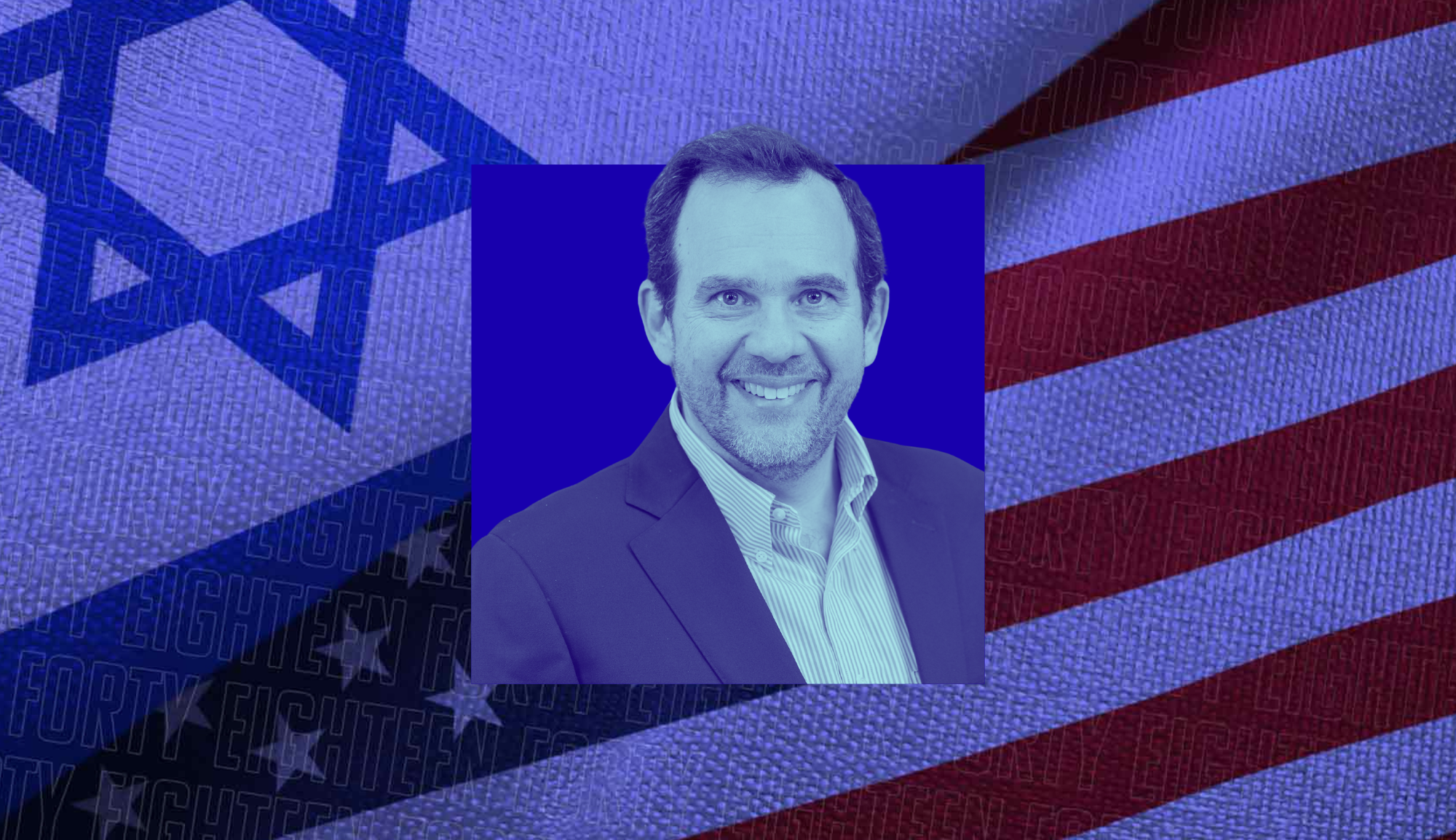
Transcripts are produced by Sofer.ai and lightly edited—please excuse any imperfections.
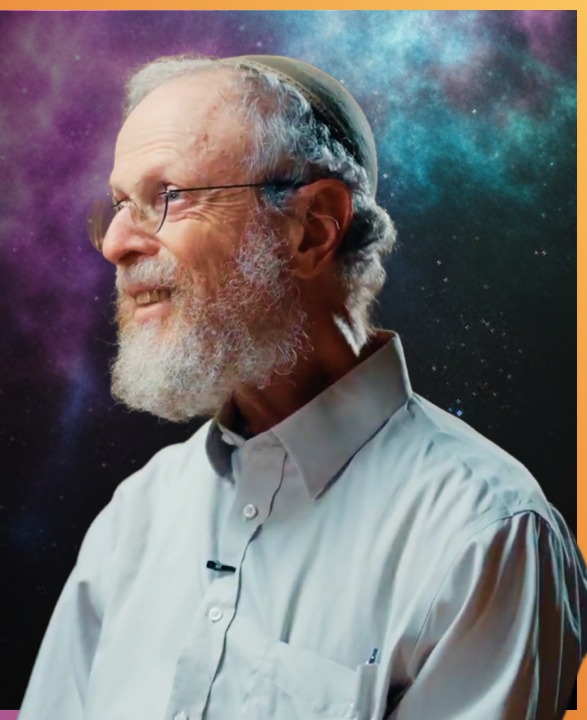
David Bashevkin: Hi friends and welcome to the 18Forty Podcast where each month we explore different topics balancing modern sensibilities with traditional sensitivities to give you new approaches to timeless Jewish ideas. I’m your host David Bashevkin and this month we’re continuing our exploration of Israel’s relationship with the rest of diaspora. This podcast is part of a larger exploration of those big juicy Jewish ideas so be sure to check out 18Forty.org that’s 18Forty.org where you can also find videos, articles, recommended readings, and weekly emails. Most people who are not really paying attention do not really understand why 18Forty and in general most of our episodes pay such close attention to the Orthodox Jewish world.
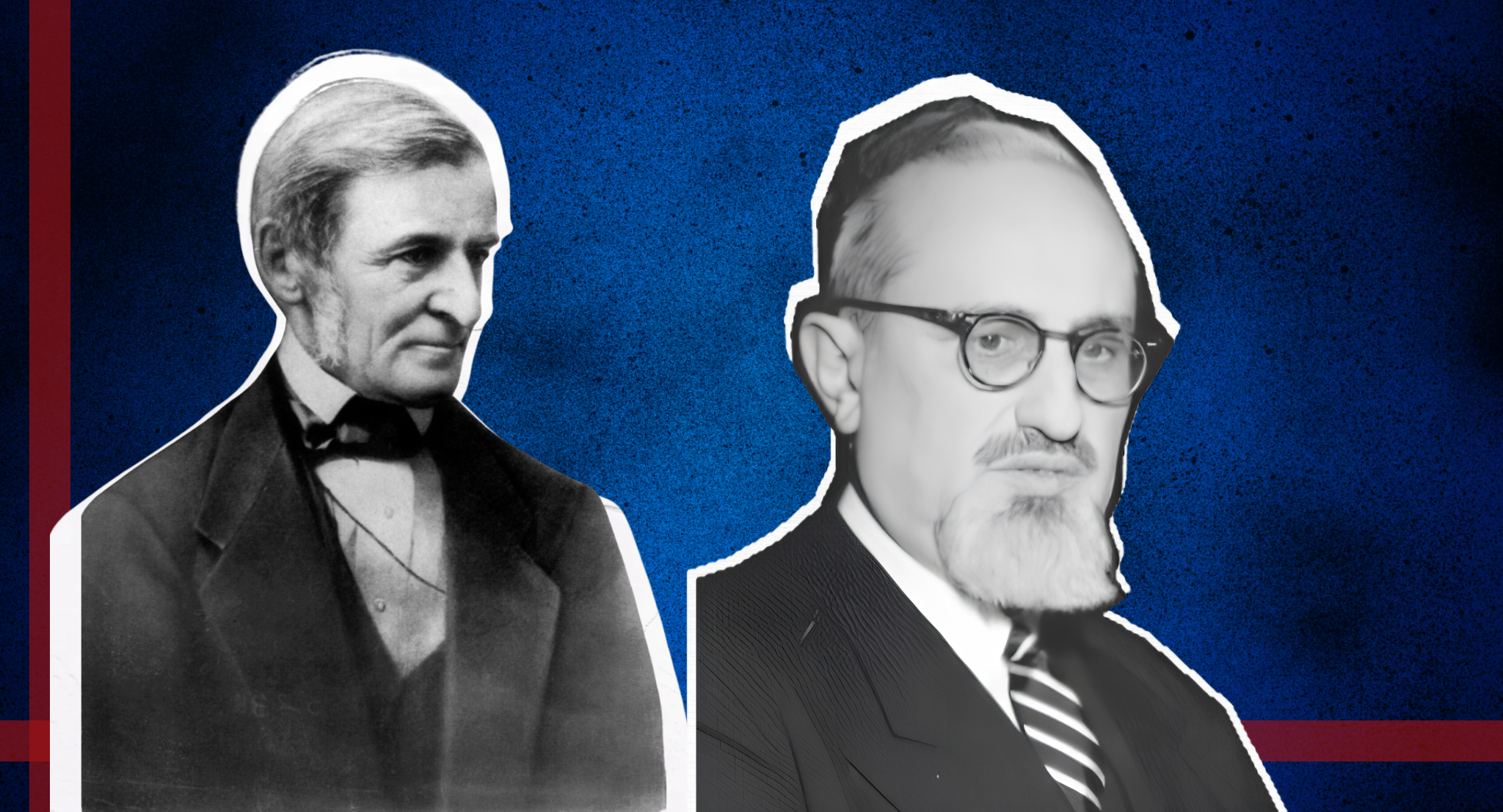
For most certainly American Jews and in a larger sense the world, Orthodox Jews are a footnote to a footnote; why would you spend so much attention and have a podcast that really focuses so much on the thought and practices within the Orthodox world? This was the dominant point of view for most of American history. We have quoted in the past the very prominent sociologist Marshall Sklare who wrote about Orthodox Judaism in 1955. He was the primary sociologist affiliated with the Conservative movement and JTS and he basically said, this is a direct quote, “the history of their movement,” referring to Orthodoxy in America, “can be written in terms of a case study of institutional decay.” He wrote this in 1955 and I myself know many Orthodox Jews who were alive in 1955 and I think they all, the ones at least that I knew, would have agreed with him. Orthodoxy was not doing well in the 1950s.
It was not the future and people were really kind of just waiting until the vestiges of what they associated with European Jewish life and culture, much more serious, much more passionate, eventually in America things will temper, things will ease out and Orthodoxy will be relegated to the dustbins of history. Now it is very interesting that the person who predicted this, Marshall Sklare, and I don’t think he was being malicious, I think he was being honest as a sociologist of where he thought things were headed and he felt there’s no way they’re going to be able to keep this up in America. It’s just not viable, this form of Judaism. The interesting footnote to this is fast forward half a century and I am in yeshiva in Baltimore in Ner Yisroel with Marshall Sklare’s grandson named Yona Sklare who has become a very prominent educator and author and a really dear friend.
Marshall Sklare did not really predict all that well where American Judaism was headed and it was ten years later after he wrote this in 1955 about how the Orthodox world is basically just a case study of institutional decay, just ten years later another young sociologist emerged named Charles Liebman and Charles Liebman in that ten years time took a radically different point of view where he wrote that the only remaining vestige of Jewish passion in America resides in the Orthodox community, that it’s the only group which today contains within it a strength and will to live that may yet nourish all the Jewish world. This is a sociologist writing in 1965. This exchange about where things are headed doesn’t really need to be debated anymore. I am not one for triumphalism but there is no question that looking at the landscape of the American Jewish community beginning in the early 1950s to where we are now there has been an absolute sea of change.
Marshall Sklare’s predictions have been proven really false in many ways; institutionally the Orthodox world has never been stronger while Charles Liebman’s assessment that a time will come where the Orthodox community will nourish all Jewish communities I think is beginning to emerge but probably suffers from the fact that the Orthodox Jewish community because it built such an insular culture, such a strong insular culture, that’s not a criticism, I think many of the bridges of influence that could exist helping the Orthodox world influence and uplift the rest of the American Jewish landscape. I think is still emerging. I think 18Forty is one of those very important bridges and it goes both ways in terms of that influence. But there is no question that part of the justification of why 18Forty, why we here spend so much time really examining the minutiae of the Orthodox world is because I, like Charles Liebman, very much agree with that sentiment.
Looking at the landscape of the past hundred years, it is hard to deny how much the Orthodox Jewish community has radically transformed—I think overall for the better—educationally, in terms of practice and passion and observance, has really transformed the landscape of the American Jewish community. Now this debate between Marshall Sklare and Charles Liebman is how our guest, Professor Adam Ferziger, opens up his previous book, which I use quite a bit of it on my syllabus when I am teaching Jewish public policy, which I do in Yeshiva University. And that first book is called Beyond Sectarianism: The Realignment of American Orthodox Judaism, where Professor Ferziger is trying to really understand where is American Judaism headed, what are the primary battles and fights communally in terms of our future and the vision of this community. But the book essentially justifies itself, much like our work here on 18Forty, by examining the American Orthodox community specifically based on this idea of Charles Liebman that the community may seem small, it may seem distant depending where you are situated, but the trends, the ideas that emerge from within the Orthodox world cannot be ignored.
The power of the community, in the words of Charles Liebman, has the capacity to really nourish the entire landscape. This book, Beyond Sectarianism, is absolutely fantastic and it talks about the changing landscape of the American Jewish world becoming more in some ways Yeshivish, which he discusses and describes in what ways has the American Orthodox community changed over the last half century. And there’s no question that it has. But that is not what we are here to talk about.
His most recent book, instead of focusing on the American Jewish community, actually takes the journey of American Jews and their influence on Israel. His most recent book is called Agents of Change: American Jews and the Transformation of Israeli Judaism, published by NYU. And I believe this book in many ways is the perfect sequel to the phenomena that he describes in Beyond Sectarianism. If the focus of his book Beyond Sectarianism is examining how the sensitivities and sensibilities of the remnants of the yeshiva world after the destruction of European Jewry in the Holocaust absolutely transformed the landscape of American Judaism, his next book, Agents of Change, picks up where the last book left off and explores how American Jews and their increased Aliyah to Israel are now transforming Israeli Judaism, a theme that we have discussed in the past.
But I love that he draws a very clear parallel. The same way the European Jewish world, the remnants of which absolutely transformed American Jewry, I think we are seeing something unfolding very similar in Israel, where the increased Aliyah of American Jews and the Judaism that they represent, especially those leaders, the agents of change, where he focuses specifically on the Israeli reception to Rabbi Sacks, on the personality of Rav Aharon Lichtenstein and many others are transforming the landscape of Judaism within Israel. And that is why I am so excited about today’s conversation, continuing the thread that we have been discussing the last few weeks about the relationship of the Yiddishkeit of the Judaism that is emerging in Israel with the rest of the world. It is my absolute privilege and pleasure to introduce our conversation with Professor Adam Ferziger.
It is such a pleasure to have you here and particularly your book, which was just published by NYU, Agents of Change: American Jews and the Transformation of Israeli Judaism, a phrase that many of our listeners might almost bristle at: Israeli Judaism, American Judaism. We usually make distinctions between American Jews versus Israeli Jews. rarely hear in just common conversation the distinctions based on the Judaism. We like to believe we’ve got one Judaism and different kinds of people.
Let’s start with the term Israeli Judaism and let’s rewind the clock where your book starts. Your book opens up with a 1960 visit from Ben-Gurion to Yeshiva University. And if you could freeze frame at that moment in 1960, you have the first Prime Minister of Israel and he is visiting one of the most prestigious American Orthodox institutions in North America, if not the most prestigious one in 1960. How would you characterize their differing visions of what Judaism should be at that moment?
Adam Ferziger: Ben-Gurion who grew up in a shtetl and had a very traditional upbringing in Poland, but certainly took a different path, was very much an ideological secularist.
He was very appreciative of Jewish history and Tanach. He had a regular study session and he wrote books about biblical archaeology, but he certainly wasn’t an observant Jew nor a traditional believing Jew and just to sort of capture that moment, so he gets to America in March 1960 because he wants to meet Eisenhower and that’s really what that visit was about and he set up an invitation to Brandeis so he could move south to Washington. But the only other visits that he made were one day, I think it was the 16th of March, when he visited three institutions: HUC, JTS, and YU. And people who’ve mentioned this briefly, historians and other scholars and journalists all say, oh he gave the same speech.
I actually came across this in the strangest way. I was, I think I was walking, I used to live in Kfar Saba, I live in Jerusalem now, and I wanted to download I think to do some chazarah on through Zvi Sobolofsky on Issur V’Heter.
David Bashevkin: Okay, so you’re listening to YU Torah.
Adam Ferziger: Yeah, I have smicha from YU and I like to keep up.
And I was going through YU Torah and all of a sudden I come along Ben-Gurion’s visit to YU and I’m like, why is that in YU Torah? And what’s going on here? So instead of listening to my old friend Zvi Sobolofsky who we used to play basketball together, I download that and listen. I was like, what’s he doing at YU? Anyway, then I discovered he was at all these other places. But there’s one point in that speech, the one that was attended by the most people and that was in Hebrew, was in Lamport Auditorium. 2,000 YU, YC, Stern, tons of students were there including a very important one by the name of Steven Riskin who wrote about it in the Commentator.
And at one point Ben-Gurion says, Hinei lo yanum v’lo yishan shomer Yisrael. The protector of Israel shall never sleep.
David Bashevkin: From the book of Psalms, from the Shir HaMa’alot Psalms.
Adam Ferziger: From Shir HaMa’alot, from the book of Psalms.
And somebody heckled from the audience, Adoni Rosh HaMemshala, keshe’ata omer shomer Yisrael l’mi ata mitkaven? When you say the protector of Israel, who are you referring to? And people say be quiet, be quiet, be respectful. He actually was wearing a big black kippah. I have a picture of it in the book thanks to Shulamith Berger from the archives who was really amazingly helpful to me. And Rav Soloveitchik and Rabbi Belkin are sitting right behind him.
It’s an amazing moment. And he looks at him and he says, Ata betach choshev she’ani medaber al HaKadosh Baruch Hu, aval ani medaber al hachayalim sheshomrim al Yisrael babasisim, bagvulot shel hamedina. You think that I’m talking about the Almighty, I’m talking about the soldiers who guard our country on the borders. So he wasn’t backing down and actually what was interesting about that whole visit when I read it is that it looked like he was very ambivalent about going to YU.
He thought JTS was the place where he’d get the best reception. He thought that was maybe the future of Judaism, something that was sort of traditional but evolving. And he thought YU was sort of galutish or shtetlish and he knew there were even some of the rabbis who weren’t so happy about his visit. And by the time he finished, he was so excited, he said it was the best visit he ever had.
Everyone knew Hebrew, everyone kept clapping. And we know this because of the newspaper reporter who was covering his trip. It was the Yedioth Ahronoth columnist, his name in the byline was Eliezer Wiesel, better known as Elie Wiesel. He was the reporter and he writes at one point, if Ben-Gurion had just visited YU, dayenu.
Dayenu.
David Bashevkin: Just for that day, dayenu.
Adam Ferziger: Everything that he did in America was worth just to be connecting with the Jewish youth. But he was in a different place.
What I write about in the book, Israeli Judaism is something very different than what Ben-Gurion envisioned. And I’m not sure Ben-Gurion would be pleased. I think he’d be pleased with the fact that the country is where it is, ten million strong, but certainly ideologically or culturally it’s a very different place than he as a socialist envisioned when he worked in the 40s, 20s, 30s, 40s to create the state. So when I write Israeli Judaism I mean the way that Jewish religion has evolved over the last seventy-eight years in the sovereign state of Israel.
Does that mean that it’s not Orthodox? Of course not. And that’s not what I’m saying. It’s not a halachic statement so to speak, maybe Orthodox is not the right word. It has implications for halacha, but it’s not about that.
It’s about the fact that for two thousand years or more the center of gravity of the people who decided Jewish policy, religious theology, religious life was in the exile, was in the diaspora and was a function of that existence. Different scholars or different theologians, rabbis debate whether that was an ideal situation, Samson Raphael Hirsch, whether that was a punishment, others, mipnei chateinu, but that’s not the issue. But the context was one in which Jews were powerless, was one in which Jews had some sort of autonomy often, but they certainly were at the mercy of whoever was ruling and certainly the language they spoke was not Hebrew or Yiddish etc. and the main holidays were not Chanukah or Pesach or Sukkot or Yom Ha’atzmaut.
David Bashevkin: Jews were a minority population in a non-Jewish—
Adam Ferziger: absolutely, they weren’t a majority.
So when I say Israeli Judaism, what I’m talking about is what happens when that corpus, when that masoret, when that tradition, when those beautiful, that moreshet, that inheritance that we have is now sprouting in a context of majority, in a context of Hebrew, in a context of power, in a context of self-rule and all those things and you know sometimes it’s something very tactical like the Tzomet Institute, like how do you deal with a Jewish hospital in a Jewish land? How do you deal with police? How do you deal with army? All sorts of technical Shabbat, chag issues. But it also impacts on big issues that everyone talks about like conversion, like immigration, like attitudes towards non-Jews.
David Bashevkin: Attitudes towards non-Orthodox.
Adam Ferziger: Non-Orthodox, non-Jews, I write about that in the book, gender issues, all sorts of partnerships etc. And so that’s the Israeli Judaism that I am referring to and I define that at the beginning of the book and the agents of change are then, which is what you asked about, those people who came from America that I believe had a profound impact on the gestation of Israeli Judaism particularly since the nineteen sixties and even more so since the beginning of the twenty-first century.
David Bashevkin: Perfect kind of summary and it’s a moment now, the reason why I think your book is so important and I want to kind of say this up front, is because I think we’re going through almost a second iteration where American Jews’ Aliyah has picked up and we are bringing a Yiddishkeit, a Jewish life that was incubated in America, which is very, very different than the Yiddishkeit, it’s not day and night, we can speak to each other, we know the chagim, we know the halachos, we know the routines, but culturally it is very different in the way people are brought up. I’m not sure if an Israeli teen would feel comfortable at a Yeshiva League floor hockey game and I’m not sure that your average American teen would feel quite at home or know what’s happening you know at your average kind of youth meetup or what they’re talking about or what concerns them. They’re very different personalities.
Adam Ferziger: It’s interesting that you picked the hockey game.
I was wondering if that’s a ritual moment. I thought you were going to say you know a second seder actually. Or maybe just a Pesach program you know as something that Israelis would have a hard time with, but I get your drift. There are differences and I really do want to get into the nitty-gritty of how that works because it has implications for the now, but there’s a historical backdrop.
David Bashevkin: Let’s start with the historical backdrop. Your book focuses, I would say mostly and the part that I was obviously very focused on, was the personality of Rav Aharon Lichtenstein. How did you evaluate which personalities to include?
Adam Ferziger: First of all, for better or worse I stopped writing books you know from start to finish. I write and I write about things that I’m interested in and it’s a big privilege to be able to do that and things that people seem to want to learn about and at a certain point I look back and it’s the same person.
So after a while you tend to be writing about related issues. Then I start re-reading and seeing that there are these themes that sort of go from article to article to article and then I start to sort of well is there something deeper here? And that’s really what happened in this. I’d written a few articles about Religious Zionism, I’d written a book about American Orthodoxy as you know, Beyond Sectarianism, and what happened here is that I actually started thinking about well what do Americans have to do with Israeli society? So the assumption is sort of like what you said which is you know there’s a connection, there’s a conversation, but the Shalhevet boys stay in Shalhevet and then they may go to YU and they make Aliyah and if they make Aliyah they make Aliyah to Beit Shemesh and it’s sort of they’re this little bubble within Israeli society. But there was something deeper.
Something else that really piqued my interest, my curiosity. I’m not interested in all of Israeli Judaism. I’m interested in a particular niche of an Israeli Judaism that was once not even a niche. It was maybe like a footnote.
But today it’s a vocal, not a majority, but a vocal piece of Israeli Judaism. And I’ll even telegraph that aliyah that’s coming now, that was just the focus of the recent edition of Torah To Go. I’m wondering if it will have the same impact. So, when I came on aliyah when my wife Naomi, Dr. Naomi Ferziger and I moved to Israel in 1988, we were in Gush for two years and then we moved to Kfar Saba.
Hardcore Israeli center of the country. Ra’anana, Kfar Saba. It’s where we brought up our kids. All these like Rav Soloveitchik books or ideas or Torah u-Madda or synthetic kind of modern Orthodox worldview, certainly roles of women, were just not part of the conversation, not part of the religious culture.
And I’m not talking about Haredim, I’m not talking about right-wing, I’m talking about basic religious Zionism people who were not so strict about, I don’t know, where they swam or or where they socialized, but just those kinds of trying to connect. There were connections, but the connections were learning and army. Learning and serving the country. But culturally and sociologically, it just wasn’t part of the mainstream.
There had been some sort of once upon a time the religious kibbutz movement did sort of focus on these things, but by the 1980s they were sort of like the old guard, they were passé, they weren’t representative. What the dominant ideology and the most of the educators in the Religious Zionist movement in Israel were influenced by the Merkaz HaRav school, by the settlement Gush Emunim, redemption, Rav Kook world and they were very focused on that, on settlement, and they were also leaning at least in terms of their enthusiasm towards more strictness in terms of the way they dressed, the way that they looked at the world, sort of a more binary type of approach. And that was in the 80s. By the 2000s, I saw that these ideas that I grew up on or that I learned from Rav Lichtenstein or I learned in YU or in Ramaz where I attended in high school or SAR Academy where I attended when I grew up in Riverdale had become part and parcel of the Israeli experience and of Israeli discourse and all sort of issues which are covered in the book.
And the question I asked as a historian is what happened? How did Israeli Judaism change and develop this moderate, what I call ISMO, Israeli Modern Orthodoxy and how did it all of a sudden flower in the early 21st century? And my answer is something that began about 40 years earlier, which is from the 1960s till the early 1980s I counted eight prominent, extraordinarily talented Orthodox Jewish rabbis and educators, seven of them YU graduates, seven of them direct students in one way or another of Rav Soloveitchik who had burgeoning careers in America as rabbis, as teachers, as heads of school, as professors, etc., and picked up with their partners and moved to Israel. I’ll go through the names in a minute, but the key moment is that when they came to Israel very few people paid attention to them. And the ones who did know who they were except for a very small cadre thought they were weird, thought they were Martians, thought they were Americanim. What’s this rabbi, this tall guy with the tweed jackets and clean-shaven who quotes from Matthew Arnold and from Rudolf Otto and from Cardinal Newman and Augustine? What’s he doing? He’s the Rosh Yeshiva of Hesder Yeshiva? And the same goes for people like Rabbi Rabinovich of Ma’ale Adumim, and the same goes for Rabbi Bravender and for Chana Henkin and for Malka Bina and for Rabbi Riskin and for Danny Tropper, the founder of the Gesher youth movement and for David Hartman.
They’re not all the same, they’re all YU products and Rav Lichtenstein and David Hartman were chavruta. I checked it, I wanted to make sure I wasn’t wrong.
David Bashevkin: Is that true? Rav Lichtenstein and—
Adam Ferziger: Dr.Tovah Lichtenstein affirmed for me that they were chavruta. They both went to Chaim Berlin.
Fascinating. David was a little bit of a better ballplayer and that’s why he was recruited to the team, but they both played ball. Yeah, I have some great stories about David Hartman if you want to hear them at some point, wonderful stories. Actually, I’ll tell you one just because it’s so good.
So he was the founder of the Hartman Institute, he went to Chaim Berlin, he went to Lubavitch high schools, grew up in Brooklyn, went to YU, took off from YU for a year to go to Lakewood because it wasn’t frum enough in YU and was there when Shlomo Carlebach was there actually and learned with Rav Aharon Kotler. Came back to YU and became a very strong student of Rav Soloveitchik who encouraged him to do a PhD in philosophy at Fordham, Catholic University, went on to be a rabbi in Montreal and then a professor at McGill. 1971 he makes aliyah, same year as Rav Lichtenstein, and he founds the Hartman Institute. He also taught at Hebrew University.
And as years went by he became more radicalized, he also drew a lot of Gush graduates towards his program and some of the most prolific people in Hartman Institute like Moshe Halbertal, the Zohar brothers. Sure. So, Professor Larry Kaplan from McGill, who is the translator of Halakhic Man, told me in 1982 when the galleys were ready, he went up to Boston. Rav Soloveitchik was living in the Twersky’s house, and he waited outside the Rav‘s office to show him the galleys of Halakhic Man to make sure everything was correct in the English translation.
The door opens, and who comes out? David Hartman. Larry Kaplan, Lawrence Kaplan walks in. Rav Soloveitchik looks at him and he says, you know it, I’m not going to imitate Rav Soloveitchik, he says that’s Dovid Hartman. Rav Soloveitchik says, what do you think of him? What do I think of him? What do you? He says, well, he’s very smart and kind of controversial.
Already then he was kind of controversial. Rav Soloveitchik looks at him and he says, he’s a searcher, he needs discipline, I like him.
So all these eight people came to Israel, started institutions or led institutions and attracted Israelis, small groups of Israelis. But over time more and more Israelis studied with them. And what my thesis is about is not about them coming to Israel, it’s about the seeds they planted that initially were only acknowledged by a very small group, but by the 21st century, their students, their Yuval Sherlows, their Benny Laus, their Esti Rosenbergs, Migdal Oz, themselves were heading institutions, and that’s where the transformation takes place. That’s where American Jews start to impact Israeli Judaism in a very profound way.
And that’s really the argument that the book makes and then tries to show how that manifests itself in a variety of different spaces.
David Bashevkin: You know, you had these list of personalities. You mentioned Yeshivat Har Etzion where Rav Lichtenstein served as co-Rosh Yeshiva with Rav Amital. You mentioned Rabbanit Henkin and Nishmat.
You mentioned Rabbi Riskin and setting up the community in Efrat
Adam Ferziger: and Ohr Torah.
David Bashevkin: Ohr Torah Stone, correct.
Adam Ferziger: His big impact is the Ohr Torah network, now run by Rabbi Kenny Brander.
Tens of schools throughout the country that are part of the Ohr Torah system.
David Bashevkin: I like that he tried to make the leap when he made aliyah from Kenny to Katriel. That’s a big jump. That’s a tough name to kind of introduce halfway through your career.
Adam Ferziger: Maybe, maybe we should talk to his family and ask them why they called him Katriel in the first place. Exactly. He’s owning it.
David Bashevkin: He’s owning it.
You got to give him credit. He’s trying.
Adam Ferziger: He’s a great guy and he’s doing great work.
David Bashevkin: That’s for a different time.
But what I want to really understand is what is different about this brand of Judaism? Meaning, I understand that it comes from the personalities who were kind of incubated primarily in America. I see differences between American Jewish life and what’s happening in Israel now in 2026. How would you characterize the differences? What exactly did they contribute aside from the flourishing of these institutions? What made these institutions any different than the existing institutions that we had? How would you characterize what specifically they contributed to Yiddishkeit and Jewish life itself? What was different about their Judaism?
Adam Ferziger: There are two pieces to your question, okay? I’ll just do it very simply and then I’ll go into I think what’s the more complicated part of it, which is a little different. So take Rav Lichtenstein.
Rav Lichtenstein, he’s not your typical Israeli Rosh Yeshiva in terms of his own background, his education. The style of learning of Rav Soloveitchik was not prevalent, and that’s just a learning issue. But also the combination of being a Brisker talmid chacham, a Torah scholar and someone who was interested in philosophical issues in the way that he was and referenced those different worlds and thinkers in trying to discover his own religious worldview. But those are the easy ones.
And Rav Lichtenstein came to Israel already with well-developed ideas about the relationship between state and the individual, already appreciative of women’s Torah learning, very much appreciative of the importance of developing mutually respectful relationships not just on a pragmatic level but on a theological and on an identity level with people who had different religious orientations or secular orientations. There’s a whole chapter about that in the concept of fragmentary Judaism that he developed and really flourished within Israel. Rav Zvi Yehuda Kook, the son of Rav Avraham Yitzchak Hakohen Kook, who was the famous Rosh Yeshiva until 1982 of Mercaz Harav, thought of the galut, thought of the diaspora as an evil place. He thought that Jews who live in America were sinning and that they were just continuing Hitler’s work and that it was a demonic environment.
Rav Lichtenstein was one of the pioneers of developing a fluidity of talmidim coming from America, spending years, gap years, going to kollel. So all that network which to us may seem, you know, obvious—and I did a very nice session with Yossi Klein Halevi and he said to me something that made me really happy. He said to me: Adam, a lot of things that you said I knew about, I never put them together. I never realized that things that I experienced were really part of a revolution or a transformation.
So there are areas in the book which I think many people have told me they didn’t know about that at all. But there are also areas that people did, but they never, because of the way that I’ve been trained by my teachers, I sort of look at it in a broader spectrum. But those are just peratim as we say, those are details. Here’s the big one.
There’s a well-known scholar of what’s called transnationalism. His name is Mel van Elteren. He talks about things like how do transnational or conglomerates impact cultures around the world? Globalization, things like that. And after I had started to crystallize what I was writing about, I needed someone to help me to get it right, to get it sharp.
And he talks about concepts like what he calls creolization. We’ll give a very simple example, okay? Why did Starbucks fail in Israel and McDonald’s succeed? Why are there hundreds of snifim of McDonald’s all over Israel and Starbucks closed down? The classic van Elteren answer is that Starbucks thought they had the best coffee in the world and they thought everyone’s going to want to drink their coffee. And McDonald’s said we have a really cool product but every society is a little bit different. And what we have to do is do research in Israel and figure out what their taste buds are, how they like their hamburgers, what kind of rolls they like.
Do they like pita or do they like rolls? Do they like their chips this? And it goes the other way, by the way. I have a student from many years ago who studied food engineering in the Technion. He got a job for Elite, I think it was. And they sent him to America for two years to research the hummus industry.
Today you go to a supermarket there’s 25 different labels of hummus, brands, you know, barbecue, this, that. He was the guy. He figured out that in Israel they only want like two or three kinds of hummuses. In America it’s only going to succeed if you have this flavor and that flavor and that flavor and that’s why hummus exploded.
David Bashevkin: I love that there is a real job called hummus taster.
Adam Ferziger: Well, think about the amount of money we’re talking about. Coca-Cola bought their whole company eventually, that’s Intishush? Sabra. So taking that paradigm, now apply it to religion.
Rav Lichtenstein had great ideas and Rabbi Bravender and they all were profound and innovative people and they did stuff that wasn’t going on in Israel. Certainly Chana Henkin, the yoetzet halacha, the halakhic advisor, basically smicha for women in a woman’s subject is a really a very much an original idea. And all these people, great credit. But it’s the processing that their students did that made the product available and attractive to the Israelis.
That’s why it’s the 2000s, because for 20 years or 30 years they’re doing the hummus research. They’re adjusting it. The reason the Benny Laus and the Esti Rosenbergs are getting Israelis and further is not just because time, it’s because their product is not the same. And here I want to go to something which is going to press some buttons.
There’s a reason that people really know about Israeli Judaism know that Israeli Judaism, the moderate one that I’m talking about, is often much more progressive and much more moderate and much more lenient than the sort of standard contemporary YU orthodoxy. For sure. It might have something to do with Rav Lichtenstein versus Rav Schechter. It might have something to do with Rabbi Willig versus etc. But for the most part, it has to do that Israelis are chalutzim.
They have a different type of sort of attitude towards their agency when it comes to religion. They don’t have rabbis at the heads of their shuls to decide for them, they’re much more collective. They have a certain type of Wild West character to their religious life. You know, for better, for worse, I’m a historian, I’m not giving a judgment.
But the fact is, they can do things that you can’t do in America because you’re part of the OU, you’re part of the RCA, you’re part of the Rabbinical Assembly. 60 percent of the rabbis of the Conservative movement want to perform intermarriages, but they’ll get kicked out of the RA if they do it. That’s a model that applies to all the different denominations. In Israel, you don’t have denominations.
You don’t have that competition. It’s a much more porous kind of boundary. And you have this unbelievable partnership called the Israeli army, where people who might eat a cheeseburger on Yom Kippur are heroes and are your commanders and are saving Jewish lives and are creating Medinat Yisrael or defending Medinat Yisrael and are flying to Iran and preventing atomic destruction from coming to the State of Israel. And you can’t look at them and say they’re not really acting like Jews.
It doesn’t work that way in Israel. Those types of dynamics transform and mean that it’s Israeli Judaism, it’s not American Judaism. It’s related, there’s connections, there’s influence, but that’s what I’m getting at in this book.
David Bashevkin: It’s really interesting.
One of the areas where you know I think Israel and America it’s still kind of really bubbling up and boiling is you know the first controversy after the establishment of the state was Ben Gurion’s question on who is a Jew and figuring out how to really define Jewish identity for the Law of Return in the State of Israel. which has to do a lot with how the population in Israel looks at non-Orthodox movements. We have different conversion practices in America, each denomination has its own. Your thesis about American Judaism affecting the evolution or the development of Yiddishkeit in Israel, how did it affect relationships between what we call Orthodox and non-Orthodox in America, or in Israel you have Masorti, non-Orthodox Judaism never really thrived in the land of Israel though you have many people who identify as secular? Was this because it imported like America, kind of like the American personalities warned them and said look, we saw what happened in America, be careful, you don’t want this to happen in Israel? Were the voices of Rav Aharon Lichtenstein and these personalities more prominent when it came to evaluating and drawing boundaries between, you know, how we intermingle or partner with non-halakhic movements in Judaism? Tell me a little bit about the differences in how we draw the boundaries in society versus America versus Israel.
Adam Ferziger: It’s such a great subject. There are so many pieces here. So, one piece is just the structure. American Judaism, including Modern Orthodoxy, is founded on a Protestant model of denominations.
And every denomination has to draw boundaries and explain why they’re different than the other ones. So it’s market-driven. Israel isn’t market-driven. You have the State Rabbinate, it’s Orthodox.
That’s a political decision that was made. And so the politics certainly engine the dominance of Orthodoxy. That’s certainly one piece of it. But I think if the agents of change had any impact on Israeli Orthodoxy’s approach to non-Orthodox movements, it’s actually expanding their tolerance.
Because even quite open and expansive-thinking Orthodox rabbis in Israel, the only thing they know about Reform is like the Hamburg Temple controversy of 1819, the trefa banquet. That’s all they’ve heard. Or maybe they heard about patrilineal descent. That’s all they know.
They don’t know that Chabad works with Reform. They don’t know that the community kollels are doing beginners’ services in Atlanta, Georgia, or in Dayton, Ohio, or in Palo Alto with Reform. They don’t know that when it comes to antisemitism and all sorts of issues, or at least till recently, support of Israel, there were these areas that were not considered to be ritual in which there was cooperation. So I think that some of the agents of change have sort of introduced a different discourse.
Like Rabbi Yuval Cherlow is very interesting. You can actually follow—he’s the Rosh Yeshiva of Orot Shaul in Tel Aviv, he’s a very important student of Rav Lichtenstein and an important religious figure in Israel today. And you can actually follow his approach to Reform from his writings when he started the Tzohar organization with his three friends when he was in his thirties till today when he’s in his sixties, and you can see over time that he became more exposed. But I think that Israel, you know, this is really going into like the nitty-gritty of Israel.
Shlomo Avineri, a famous political scientist, said once, “The synagogue I do not attend is the Orthodox synagogue.” I am a professor at Bar-Ilan University. I’m also a rabbi. I was a rabbi of a synagogue in Kfar Saba for over ten years. One of the things that I’ve done throughout my career, before Tzohar started and until today, is perform weddings of non-observant Jews, because I felt that was my shlichut because no one was doing it and no one would sit down with people and show respect to them.
I remember early on—I don’t do it as much now because there are other people doing it—but when I first started performing weddings, inevitably at the end of every wedding, they would come over to me and they would say, “Atah Reformi?”
David Bashevkin: They thought you.
Adam Ferziger: Because I spoke openly, respectfully to the couple, because I tried to make a positive atmosphere, because I didn’t try to sort of say now do this, do this, do this. And they didn’t have any language to say Modern Orthodox or Modern Orthodox, or to say today they’ll say, “Ah, atah Rav mi-Tzohar. Oh, you’re part of the Tzohar organization.” Tzohar is part of this transformation that I talk about.
So many of the Tzohar people are people who are students of these agents of change. And then the other point just to understand about Israel is changing a little bit in America, but America is until recently and still so dominated by Ashkenazi, first German and German-speaking and then Eastern European Judaism. And now because of Israelis moving to America and because of Persians, Syrians, etc., you hear them, but they’re really still not part of the mainstream. Israel is majority Sephardi.
David Bashevkin: That’s such an important point.
Adam Ferziger: Bli ayin hara, you know, so grateful to God, all our children got married. My son got married last Friday. It was a big, big simcha.
Three of our six children are married to kids who are from Edot HaMizrach backgrounds. And it’s so wonderful, not because of kitniyot, but because they bring traditions, they bring a sincerity of faith, they bring flavor in the most beautiful and profundity of thought that is different than a typical Ashkenazi. That’s also part of Israeli Judaism.
Not just my sons and daughters-in-law, but my friends who are Mizrach, even if their families are religious, they’re bound to have relatives who are not observant, but it’s not like often happens in the case in America, as soon as someone grew up Orthodox and stops observing, they stop showing up to family events. They’ll feel comfortable, they don’t want to come to shul. If they have to, they’ll go, but it’s always a whole thing.
David Bashevkin: It’s not like that.
Adam Ferziger: No one asks how you got there. It’s just masoret. It’s beautiful. I know people who are non-Orthodox here and I think that there is value to enabling, facilitating different paths, different portals of entry into Judaism in Israel and it’s sometimes lacking.
But the fact is that for many people, they find ways to connect through family without necessarily expecting a more theologically distinct framework.
David Bashevkin: So it’s actually a perfect transition because this is really the question that I wanted to hear from you. Not only because I loved your book and I’ve loved all of your books, but I know very little about you personally. You said you made aliyah to Kfar Saba.
You were educated in classical American Jewish institutions. Based on the thesis of your book, I’m curious to hear, how has your Judaism changed since you made aliyah? If you were to compare the Jewish life that you had in America when you lived here, when you were developing as a student, when you were getting smicha, and looking at your kids, what are the differences that every parent notes to themselves, how their kid’s childhood may have differed from their own? How has your yiddishkeit, your relationship to Judaism changed from your time in America and now looking at your own family?
Adam Ferziger: Wow, that’s a lot to ask. So the first thing I’ll say is that I may be a historian, and what I teach my students is being a scholar doesn’t mean you’re objective. It means that you use the tools and you set it out for people to read you and to check your sources.
And if you’re not doing it correctly, then they should call you on it. But I’m a person. Every person addresses subjects through the lens of their eyes, that’s neuroscience. And the idea that somebody else would write the same book as me, to me is absurd.
So I’m not in this 19th-century German utopian type of thing. This is definitely my most autobiographical book. But I think all my books, my first book, Exclusion and Hierarchy, is about the relationship between Orthodoxy and non-observance. My second book, Beyond Sectarianism, is about changes in American Orthodoxy and relations between haredim and Modern Orthodox and kiruv.
And this book is about olim and there’s two pieces to this. The easy answer is there is no question my Judaism and my avodat Hashem, my worship and my relationship to God and to other Jews is affected profoundly by the fact that Naomi and I have established our lives here at the age of 22 and have lived here for the last 39 years together in Kfar Saba and now in Yerushalayim. And I served in the army, I did miluim for over 20 years.
David Bashevkin: And it was at a time when people were not flocking to Israel, certainly not to Kfar Saba.
Adam Ferziger: From my Gruss group, about eight or nine of us either stayed or came back pretty quickly. People who’ve done some really amazing things, people like Sholom Berger and Yehuda Sussman and Buzzy Borstein and all heads of institutions doing really cool things, and Rabbi Daniel Mann from Gruss. I’m actually speaking at the Gruss reunion in June, we’re doing a session with Rabbi Berman and Rabbi Miller and Rabbi Bednarsh about the impact of YU on Israeli society based on my book. The easy answer is yes, it has affected.
But there’s two pieces to it. In terms of my background, my parents were shomrei Shabbat but they came from a different era. They grew up in Brooklyn, they went to public school because that’s what you did. Not all my brothers went to yeshiva high school, some of them went to Horace Mann and they went to Brown University.
Some of them went to JTS after-school programs. I grew up in Riverdale. I’m writing an article right now, “Memoirs of Riverdale Judaism.” And it’s really about the liminality between Orthodox and Conservative. There were so many JTS professors there that went to the Orthodox shul and Orthodox people went to Conservative, so it was a different era in the 70s and 80s.
I read the Torah for junior and senior year of high school in the Conservative shul. No microphone, women didn’t get aliyot then. I sat by myself, but I sat there looking through the siddur and trying to compare what things were different between the Artscroll
David Bashevkin: And you were the ba’al korei for the shul?
Adam Ferziger: Yes, the ba’al korei. I got paid, but it was probably my first introduction to this world of denominations, which I wrote a book on for the Hebrew University right here.
Probably started when I was 16 years old. I had non-observant relatives who came to the Seder. Went to SAR, Ramaz, most of my classmates were not shomrei Shabbat at that time. They were, you know, philo-Orthodox or they were sympathetic towards Orthodoxy.
That was their framing. Israelis, so I think that in terms of the American Orthodoxy that I grew up with, my parents’ first rabbi in Riverdale was Yitz Greenberg. We went to the RJC, but Avi Weiss was part of our lives and we loved him, but we also loved Rabbi Willig and we’re very close to Rabbi Willig. So we had all these different things and it was eclectic and I was brought up very early on the idea that, yes, we are Orthodox Jews, but every Jew has a journey and has a contribution and that I’m probably, you know, still more conservative with a small c than people who maybe like someone like David Hartman who’s very radicalized.
I’m not there. But here’s the paradox, and I would love to hear your response to this. I am absolutely very halakhic and all the different The silly things that people write on their CVs, the mixed swimming, separate swimming, and not going to the opera and whatever, my wife covers her hair, but they’re less important to me. Not because I don’t do them, I do them because I believe in the halacha, but I don’t care if my kids eat kitniyot or not.
It doesn’t register for me. So I think I am as committed halachically, but a little less… my son teaches in a secular high school. And when he came to America for law school, he did a year, a semester at Columbia, he said, “How come all the rabbis on Friday night in Israel, they talk about hashkafa and about parshat hashavua, and in America they talk about whether you can use grapefruit knives on Shabbos?” But my relationship to Hakadosh Baruch Hu, my emuna, my sense of the higher power of Hakadosh Baruch Hu, my sense that we are not in control, my theology about anthropomorphism and all sorts of questions about humanizing God, I see God as this most powerful, non-human, unbelievably profound existence in this world that I want to cleave to, and those are things that I wasn’t brought up on in the halacho-centric heavy technical education I got.
I remember, I do not remember the word God being spoken in high school and college. I remember tefilla, I remember Shabbos. And they’re still part of me, and I want them to be, and my children, thank God, are there. Each with variations, some with a kippah on, some with a kippah off, some with covering their hair, some not covering their hair.
But the one with the kippah off is serving in Duvdevan and he’s doing mitzvot that I can’t imagine in my wildest imagination that Hashem would give us the zchut todo mitzvot of hatzalat nefashot.
Yeah, these are changes. And I’m sure there are lots of people, friends of mine, people in YU, people who, “You see? That’s what happens!” and people say, “I don’t want to make aliya because that’s what happens to my kids.” You know, we could have that discussion. But my relationship to Hakadosh Baruch Hu and my sense that when I want to get up in the morning to daven, I want to say this with a sense of connecting to Hashem and not just fulfilling, lihiyot yoysei sein? That has grown with me tremendously living in Israel and experiencing life in Israel and being exposed to simple Jews who feel Hakadosh Baruch Hu every day, and I just want to keep working on that because I feel that lezeh notzarnu, that’s why Hashem put us on this earth.
David Bashevkin: So beautifully expressed, and I appreciate it. You know, like in America, we have more limited mediums of how we can substantively express our Jewish identity. And the importance of halachic commitment in the exile… halachic commitment is equally necessary in my opinion in Israel and America, but its importance or almost its singularity as like the primary means of Jewish expression is so much more intense in America.
Meaning in Israel, there are so many more modes of substantive Jewish expression, of Jewish commitment.
Adam Ferziger: They’re mitzvot.
For a person to be devoting themselves to the kiyum of Am Yisrael be’artzo, to be able to have the privilege of defending Jews, not being victimized, and if you can do that in a way where you do it with integrating your observance and your yirat shamayim, what an opportunity. And you know, I totally believe in Israel not as a fait accompli of atchalta de’geula, but as the great experiment in Jewish history. It’s the opportunity, it’s the kol dodi dofek. It’s the knock on the door.
But I think that that Israeli Judaism of the expansion of the opportunities to do mitzvot… this is my personal interpretation. People say, ratza Hakadosh Baruch Hu lezakot et Yisrael lefichach hirba lahem Torah u-mitzvot. God wanted to give zechuyot, to give credits to Israel, therefore God made many, many mitzvot.
I see that our generation and the opportunities to perform mitzvot today is a fulfillment of the words of Chazal. And not just when you sell your chametz, when you build your eruv or whatever it is that you’re doing. Those are great, those are important, those are critical, those are central. But there’s a whole world of lefichach hirba lahem Torah u-mitzvot that we have been privileged to have today that I think that actually enables us to develop our relationship to God in ways that we weren’t able to in the past.
David Bashevkin: So beautifully expressed. What do you think, if anything, is left for the American-Israel cultural synthesis? Is there anything left for American Jews to still teach Israel? You wrote this entire book about how these students of Rabbi Soloveitchik, Rav Aharon Lichtenstein, and these streams of American Jews, Rebbetzin Henkin, we can go through the list again, and how they influenced and how they really changed and evolved and their ideas were incubated in Israel and changed Israeli society and most importantly changed Israeli Judaism. Looking at the landscape now, it’s 2026. What do you notice that Israeli Judaism still needs to learn and what do you see in American Jews that we could potentially teach, if anything?
Adam Ferziger: I think many things. I think there’s a lot there, though it demands a little bit on the part of American Jews, especially the ones who make Aliyah, but not just. You know that experience when you read something you wrote two years ago or a year ago and all of a sudden you realize that I didn’t even realize I had baruch shekivanti, like you didn’t realize it was in the book and then someone pointed it out? So all of a sudden I realized my book is about education. It’s really about how you plant seeds and then people run with it and they don’t duplicate you.
So that’s just one thing I really want to say, ultimately this book is about educators, about when you create institutions that are of good quality and are rigorous and are challenging and are exciting and you believe in your students and you don’t expect them to become cookie cutters, you believe they’re smart and committed and loving and that you believe what you’re doing is significant, it’s amazing what happens. And that really is part of the story here. But I think that these people were very brave. They gave up promising careers, they gave up family, they gave up connections, connectedness, they became immigrants, we’re all immigrants.
My children are not immigrants. I remember when my daughter invited us after 20 years in Israel to speak to her Bnei Akiva chanichim, she was a madricha, for Aliyah Week, and she asked me in front of all, the whole Chevraya Bet, 100 kids at Kfar Sappir, Atah yoter Yisraeli o yoter Amerika’i? Are you more Israeli or American? After 20 years, and I realized I’m like my wife’s father, my wife’s father was born in Hungary, a Holocaust survivor, he came to America, he never lost his accent, but he was very proud of America. I am an immigrant. My children are not.
But it takes a lot to come here, even today it’s easier because of communication, because of social media, because of transportation, because of English, it’s still different. Someone told me, “You know what you didn’t write about in your book? Adam, you didn’t write about how it’s so much easier economically to move to Israel now because the standard of living has grown.” It’s true, but it’s still people like to be in their familiar surroundings and as long as America is a somewhat comfortable place, even if it’s a little less comfortable, the masses are not going to move, I don’t believe that. But I think that American Jewry has a lot of things, there’s an animus to state-driven religion. I think that community is so crucial.
Community is about chesed, community is about belonging, community is about study, community is about friendship. It’s not just about spirituality. When I was in Gruss, Rabbi Lamm came, at the time my goal was to be a pulpit rabbi in Israel. I said, “Rabbi Lamm, when are pulpit rabbis going to really catch on in Israel?” He said, “When Conservative and Reform Judaism succeeds,” because he thought that the competition would, and I think that he didn’t understand that Conservative Judaism and Reform didn’t have the same sort of resonance here.
The fact that so many services are provided from the state, the mikvah, the eruv, the kashrut and stuff like that, it’s amazing. But I think that people need the warmth and I think that there are many people, at least once upon a time who weren’t so stark, frum, they loved community, they loved the kiddush. People make fun of kiddush clubs, kiddush clubs are great. Kiddush clubs are great.
They bring people to shul.
David Bashevkin: We’re pro kiddush club at 18Forty, there’s no question about it.
Adam Ferziger: I’m anti-teenage alcoholism, that’s horrible, but a kiddush club that people feel that the shul is a warm place. Aish Kodesh succeeds, there’s a reason why the Five Towns has all these kinds of stieblach.
So I think that community is something that could enable people who might not necessarily want to self-define in the sort of classic Orthodox ways to feel that observance or we’ll say ritual or those things are beneficial to them, that they give them meaning. Tonight’s Yom HaZikaron. You know what people like to do on Yom HaShoah now and Yom HaZikaron? They didn’t in the past. In the past on Yom HaShoah everyone went to Yad Vashem for the big tekes or they watched it on TV.
Now they do Zikaron Basalon. They like to go into someone’s living room and hear a Holocaust survivor or a child of a Holocaust survivor. You know what they do on Yom HaZikaron now? They go to a ceremony, they like to go to a place where they can sing, you know, hundreds of people together, Israeli songs, sad songs, people love sad songs in Israel, by the way. Their favorite songs are like Mah Avarech, Hinei Lo Yanum.
Yeah, but those things sort of indicate to me that we’re in a stage where we need more of that kind of warmth and I think that American Judaism has that legacy. There are other things as well, but I think that’s one that I would point.
David Bashevkin: I absolutely love that answer, the communal warmth. We need it in America ’cause there’s no other way to retain Jews in that way, and I think that what you said is that state-sponsored religion comes at a cost.
I really appreciate that answer and once again, I love all of your books, I love this most recent book, Agents of Change: American Jews and the Transformation of Israeli Judaism, published by NYU Press. Professor Adam Ferziger, I am so grateful for you, you’ve been so gracious with your time. I always wrap up my interviews with more rapid fire questions. Someone who is looking for a book to understand kind of the sociology Of this moment of how we got here to understand the lay of the land of the Jewish people right now, what is a book that you would recommend to help people really understand the mechanics of what brought us to this very moment?
Adam Ferziger: Well this is a book that has a very profound thesis and not everyone agrees with it but I think it’s a fantastic book.
It was written in 2019. It’s by Yossi Shain, an Israeli political scientist. In Hebrew it’s called Hame’ah Hayisra’elit, in English it was translated as The Israeli Century. It’s a fantastic book.
It’s a total paradigm changer and it’s all about how sovereignty has affected Jewish life not just in Israel but in the entire world, how it’s impacted antisemitism, how it’s impacted Jewish culture. Even the people who are against Israel, it’s all talking about Israel. And I think that that is a book that I would strongly recommend people to read and it impacted me very strongly.
David Bashevkin: I appreciate that.
If somebody gave you a great deal of money and allowed you to take a sabbatical, you get to go back to school and get a PhD in a totally different area than your current expertise, what do you think you would go back and study? What would be the subject and title of that dissertation?
Adam Ferziger: I think I’d probably not get another PhD. I think that I would want to go to like Iowa School of Writing and want to write a novel. I read a lot of novels, they help me think out of the box.
David Bashevkin: And I want to tell our readers your scholarship reads like a novel.
The way that you set up your scholarship, you’re not just lecturing at your readers, you always tell it like a story. You know this book opens up with Ben Gurion visiting Yeshiva University. Your book on beyond sectarianism, I love it because of the drama about the birthday wishes.
Adam Ferziger: The reason I would like to write a novel, I realize I’ve spent so much time, thank you so much David for liking my writing.
Do you know how hard I worked? The first article I ever wrote, I gave it to somebody I love very much who’s very smart, who has a degree from Ivy League college in literature and they said “This is scholarship?” and I worked so hard to get the point where you can say that to me. And I realized the only way you can write novels is to work just as hard. Umberto Eco said all his colleagues in universities have drawers full of novels that they wrote that were lousy. But the reason I want to write a novel is because I think a novel like a Dostoevsky type of novel is the only way to write good theology.
I think theology doesn’t come from theological tracts, it comes from writing a story and having characters within a human context. I would love to push myself to be able to do that one day.
David Bashevkin: That is fantastic. My final question, I’m always curious about people’s sleep schedules.
What time do you go to sleep at night and what time do you wake up in the morning?
Adam Ferziger: Okay so for many many years I was a night owl. We have six children. It was great. I figured out if I can get to work by about nine I can go till about 1, 1:30 and make it to a 7 o’clock or 7:30 minyan and get a decent amount of sleep.
I’ve gotten older. I’ve gotten into different exercise schedules. My wife, she’s a doctor of neuroscience, she’s a very accomplished academic and she learns Daf Yomi and then when her mother died she decided she’s going to say Kaddish three times a day. She’s a very busy woman and we decided together we’re going to go to the 6 AM minyan in the Yael Shul near me in Baka every day.
So I try now I try to go to sleep between 11 and 12 so I can get up at 5:37 and get to shul before the first Kaddish and have my tefillin on and it’s something I never did except on Shabbat. I sometimes take a little bit of a shloofie or a little nap in the afternoon and then get to my writing a little bit later.
David Bashevkin: Professor Adam Ferziger thank you so much for your scholarship, for your encouragement and of course for this fantastic book Agents of Change American Jews and the Transformation of Israeli Judaism.
One of the ways that I have noticed and I may have mentioned this in the past in the differing ways that Judaism in Israel versus Judaism in America where they find their authenticity.
The yeshiva world in Israel no longer speaks or really understands Yiddish. It may still exist in Chassidic yeshivas in Israel but most mainstream Israeli yeshivas the students do not speak Yiddish. This is in direct contrast in the American yeshiva world where Yiddish or at least some version of Yiddish sometimes called yeshivish which mixes in a lot of English is still thriving. The American yeshiva world and this makes a lot of sense still looks towards Europe for its authenticity, that we are a remnant of rebuilding Torah after the destruction of European Jewry.
In Israel this is no longer the case. They absolutely are rebuilding Torah where it is flourishing in Israel but Israeli Jews do not find their authenticity by looking to European Judaism, to what the yeshiva world was like that magisterial yeshiva world of Europe that is not where they look. In Israel it’s right here, we’re building it right now before your eyes. before your eyes.
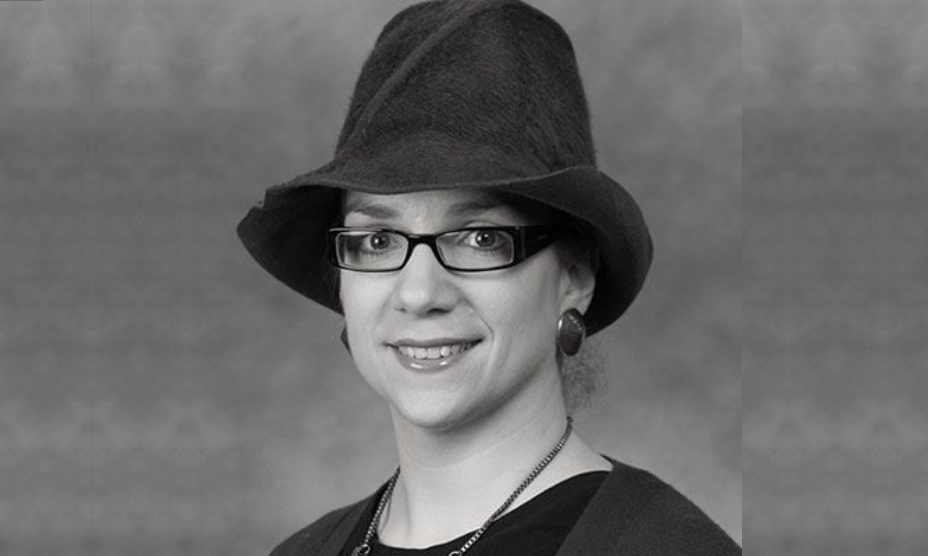
They no longer need to look towards kind of the classical European yeshiva world in order to have that sense of authenticity. You may not agree with that insight, but I think it really does tell you something about how each different community, where they turn to find that authenticity. But I do want to share something that is a letter that was sent to me by a past 18-40 guest who I’m going to do something very risky, I did not ask her permission to share the entirety of the letter, but I find her thoughts to be so powerful and so uplifting. I received a letter from a past 18-40 guest named Shaina Goldberg, who is a renowned educator in Israel.
She is a Yoetzet Halacha. She is a Rabbanit, an educator at Migdal Oz, and really is somebody I look to to understand. We don’t always agree, but I always look towards to really understand these differences. She understands the American mentality quite well, and obviously she is deeply immersed in the Israeli educational scene.
And she sent me an email that was reacting to our past episodes. She pushed back on some of the way I was framing and really romanticizing, and I continue to really be astounded by the miracle of what the American Jewish community has accomplished. And I did suggest, and I continue to suggest that what has been created on these American shores, particularly the American Yeshiva League where you see kids enthusiastic and passionate, you know, whether it’s at a floor hockey game or a late night Beit Midrash, you see kids, they’re really excited about their Judaism. But she pushed back with some questions of how much of the passion that we see in the American Jewish community, how much of the Jewish culture that I am describing in schools, camps, and community is fueled, to be blunt, but this was her question, which I think is entirely fair, how much of it is fueled by money? And she continues to ask how much of it is strengthened by the insularity of Orthodoxy, particularly Orthodoxy in America, and how much of it is fueled in her last question that in America we live in relative security, even with the rise of anti-Semitism, does not compare to the existential threat that Jews live under in the State of Israel every single day.
Perhaps that comfortable, passionate, fun Judaism that we’ve developed on American shores, can it even exist in Israel when there is really an existential threat constantly hovering? And she concludes by asking, as much as the American brand of Judaism that you describe has lots of wonderful components that I, Shaina’s writing about herself, benefit from and admire, and as much as I too am constantly trying to inspire Israeli students to be connected to their Judaism, I think there are some very significant reasons why the Yiddishkeit here is experienced differently and why even all the American Olim in the world might not succeed in infusing this culture with exactly that. I don’t think she’s arguing on my assessment, and I think her skepticism is well-founded. If there is any way that I could kind of abridge what I have been saying, it is not that the American Jewish community is going to grab the reins of Judaism in Israel and say, hey, it’s our turn, step aside. Obviously that is the big difference in the parallel between rebuilding Torah in America after the Holocaust versus this moment now in Israel.
Israeli Jews are alive, thank God, and are thriving as opposed to European Jewry which was decimated after the Holocaust, and American Jews really had to step in and build their own version. But what I am arguing is not that American Jews are going to immigrate in mass and kind of grab the reins of Israeli Judaism and kind of all of a sudden, you know, in five years from now, you’re going to see all the teens in Israel playing floor hockey and singing Geshmak to be a Yid together. That is not the argument I am making. What I am saying is that I do believe what we are witnessing right now with the influx of American Olim, we are going to see the emergence of something new entirely.
It is not going to be the Yeshiva League American Judaism that many of our listeners are familiar with, and it is also not going to be the classical Israeli Judaism that people may have been familiar with and that has been nurtured since its founding. You’re already starting to see it change, the styles in Israel change. I know I’m obsessed with dress, and I can already hear our listeners push back that I bring examples from that, but I do think these things are significant. How do Dati Leumi, Religious Zionists who live in Israel, it used to be they had a distinctive dress, you may remember They don’t dress like as formal as rabbis dress in the states, but you are starting to see a change and the change that I think we are going to see is not going to be the Judaism in Israel that we are familiar with and it’s also not going to be the American Judaism and Yeshiva League that you may or may not be familiar with.
I believe that what redemption is about and what this moment is about is seeing something emerge new entirely. The same way Yiddishkeit in America did not simply import European Jewry into America. It didn’t work. People tried, it did not work.
The Yiddishkeit in America is very different than what was nurtured in Europe over a thousand years and that entire world, it didn’t just transfer to America. Something new emerged following the Holocaust and I believe in this moment something new is emerging as well. It is not quite American and it is not quite Israeli. It reminds me in many ways of an incredible commencement speech where at that time of year, I used to collect commencement speeches.
I would read all of them and I have a folder of the best commencement speeches ever given. In my opinion, the best commencement speech ever, ever given was Conan O’Brien’s commencement speech that he gave at Dartmouth in 2011. And he gave this speech right after losing out on The Tonight Show. I think the parallel to what we are seeing now in the Jewish world will become quite clear.
Conan O’Brien: Way back in the 1940s, there was a very, very funny man named Jack Benny. He was a giant star, easily one of the greatest comedians of his generation. And a much younger man named Johnny Carson wanted very much to be Jack Benny. In some ways he was, but in many ways he wasn’t.
He emulated Jack Benny but his own quirks and mannerisms along with the changing medium pulled him in a different direction. And yet, his failure to completely become his hero made him the funniest person of his generation. David Letterman wanted to be Johnny Carson and was not, and as a result my generation of comedians wanted to be David Letterman and none of us are. My peers and I have all missed that mark in a thousand different ways, but the point is this, it is our failure to become our perceived ideal that ultimately defines us and makes us unique.
It’s not easy, but if you accept your misfortune and handle it right, your perceived failure can become a catalyst for profound reinvention.
David Bashevkin: It is our failure to become our perceived ideal that ultimately defines us and makes us unique. I believe this is also the story of all change and particularly change within the Jewish world. Each generation has its own ideal of what kind of Jew they want to become.
Perhaps in the early 1900s they wanted to become assimilated and connected and really feel American. Fast forward to the 1950s following the Holocaust and Jews said we want to be like that authentic ideal that we saw decimated in the Holocaust. And now in this moment as American olim transform the landscape of Yiddishkeit and Judaism in Israel, they also have a perceived ideal. That ideal is taking everything they learned with their Yiddishkeit in America and now kind of transporting it very neatly and cleanly onto Israeli shores.
But the point is this, all of these are going to fail. We are never going to actually become and embody with perfection and precision the previous generation. Every generation yields a new relationship with our unchanging mesorah. But every generation has its own quirks and mannerisms to paraphrase Conan’s description of Jack Benny.
American Jews brought in their quirks and mannerism, Jews in Israel brought in their quirks and mannerisms and in this moment now, what we’re seeing, these agents of change, post-October 7th, Jews building their lives, American Jews choosing to build their lives in Israel, they are also going to fail. You cannot bring the Judaism of America to Israel. And yet as Conan said, it is this failure to completely become the heroes, our perceived heroes, that make each generation really step into their own and they become a catalyst for profound reinvention. It is that very failure to neatly transfer the Yiddishkeit of one generation to the next generation as hard as we try, but it is that very failure to become our perceived ideal that ultimately defines us and makes us unique.
makes us unique. We have seen it in the world of late night television and l’havdil, obviously no comparison, but I think we see very similar dynamics at play in the Jewish world where each generation is reaching to embody the Yiddishkeit, the Judaism of the previous generation and it is specifically our failure to become that perceived ideal that invigorates us, that transforms us, and ultimately defines us. So thank you so much for listening. This episode, like so many of our episodes, was edited by our incredible friend Denah Emerson.
Thank you so much, Denah. If you enjoyed this episode or any of our episodes, please subscribe, rate, review, tell your friends about it. And of course you can also donate at 18Forty.org/donate. All of these efforts, whether it’s a subscribe button on YouTube or on Spotify or a donation big or small, all of this helps us reach new listeners and continue to put out great content.
And of course, you can leave us a voicemail with feedback or questions that we may play on a future episode. That number is 212-582-1840. Once again, that number is 212-582-1840. And we have one coming up! So please, reach out with your voice notes, your criticisms, your critiques, your pushback, your questions, your encouragement.
We want to hear from our listeners. And of course, if you’d like to learn more about this topic or some of the other great ones we’ve covered in the past, be sure to check out 18Forty.org. That’s the number 18 followed by the word forty F-O-R-T-Y, 18Forty.org, where you can also find videos, articles, recommended readings, and weekly emails. Thank you so much for listening and stay curious, my friends.