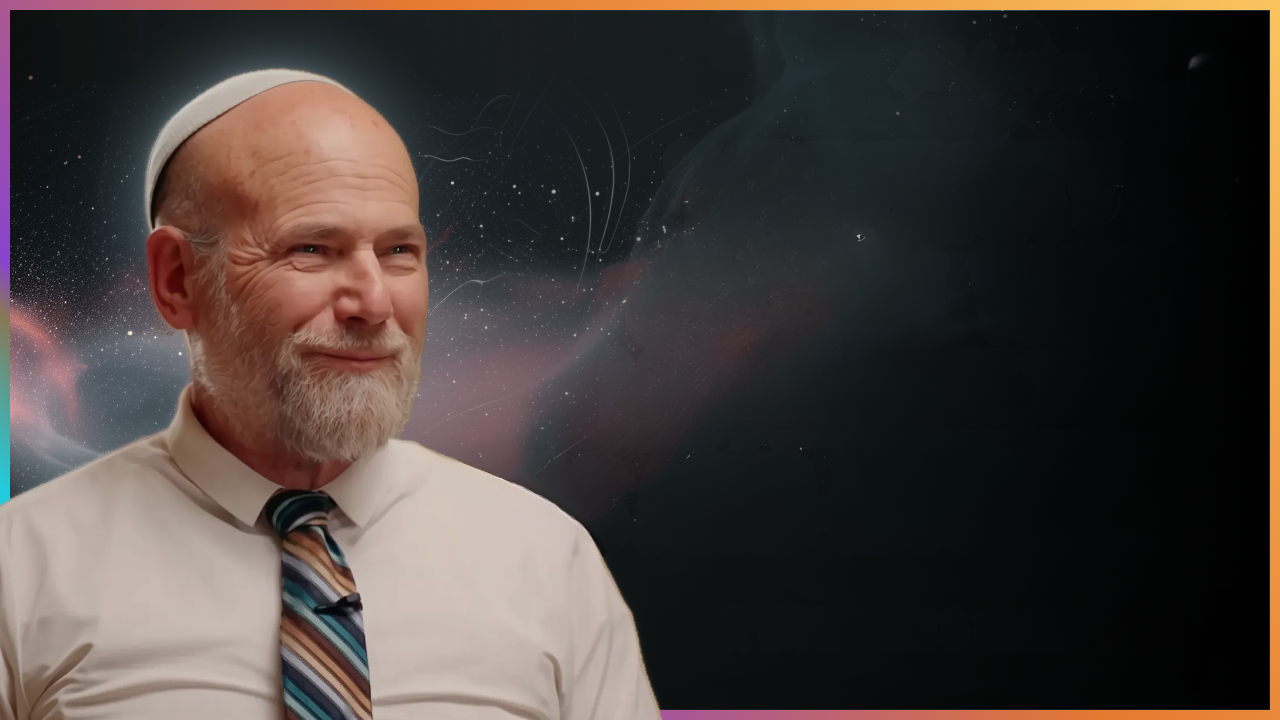
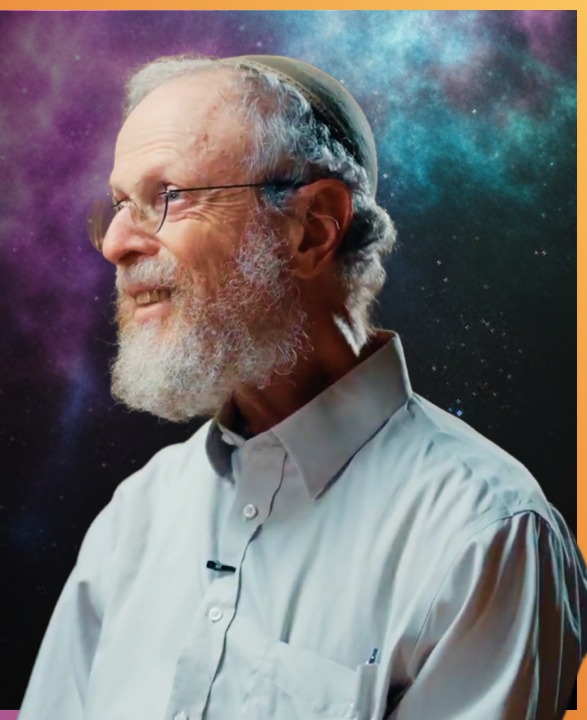
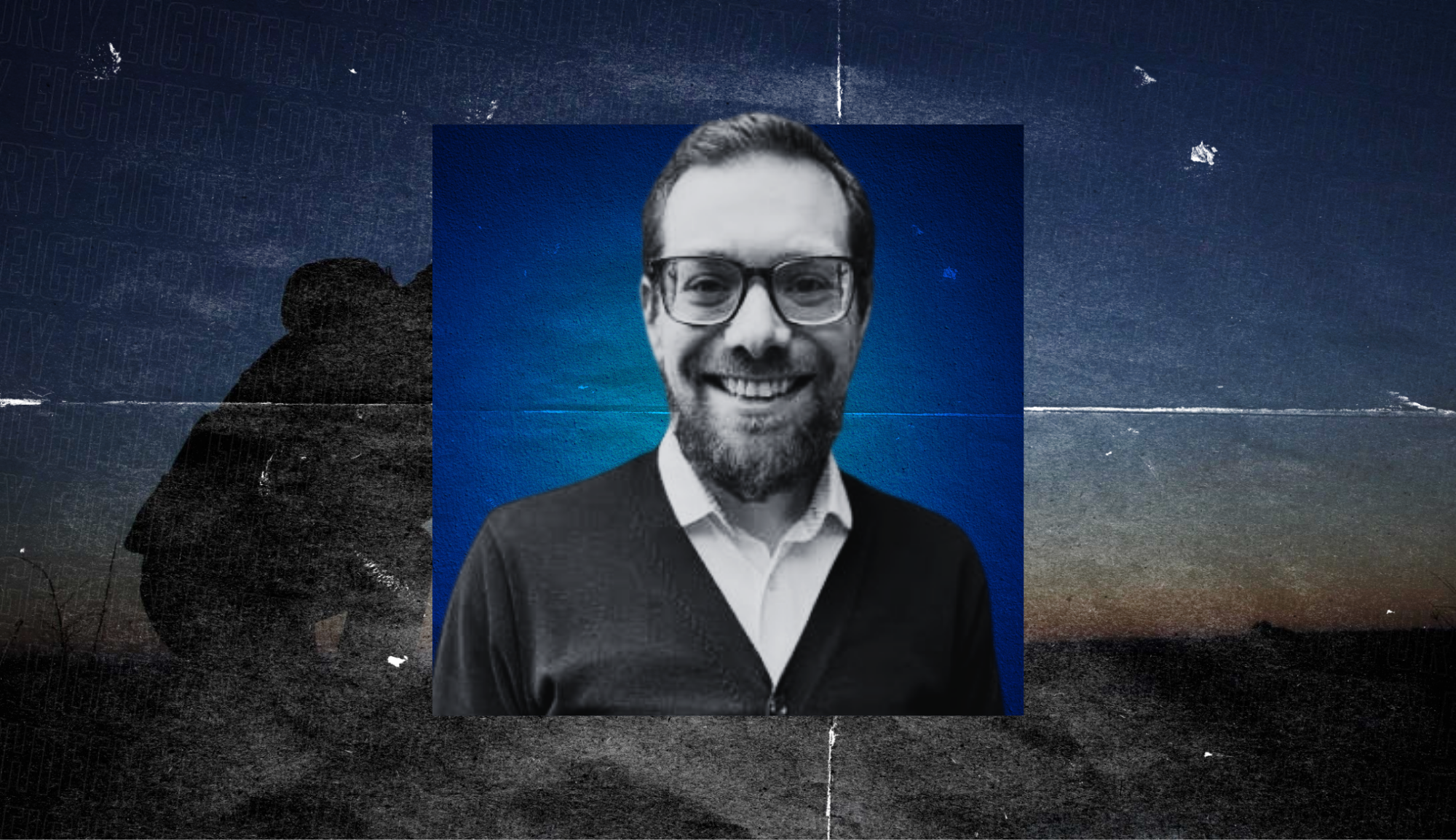
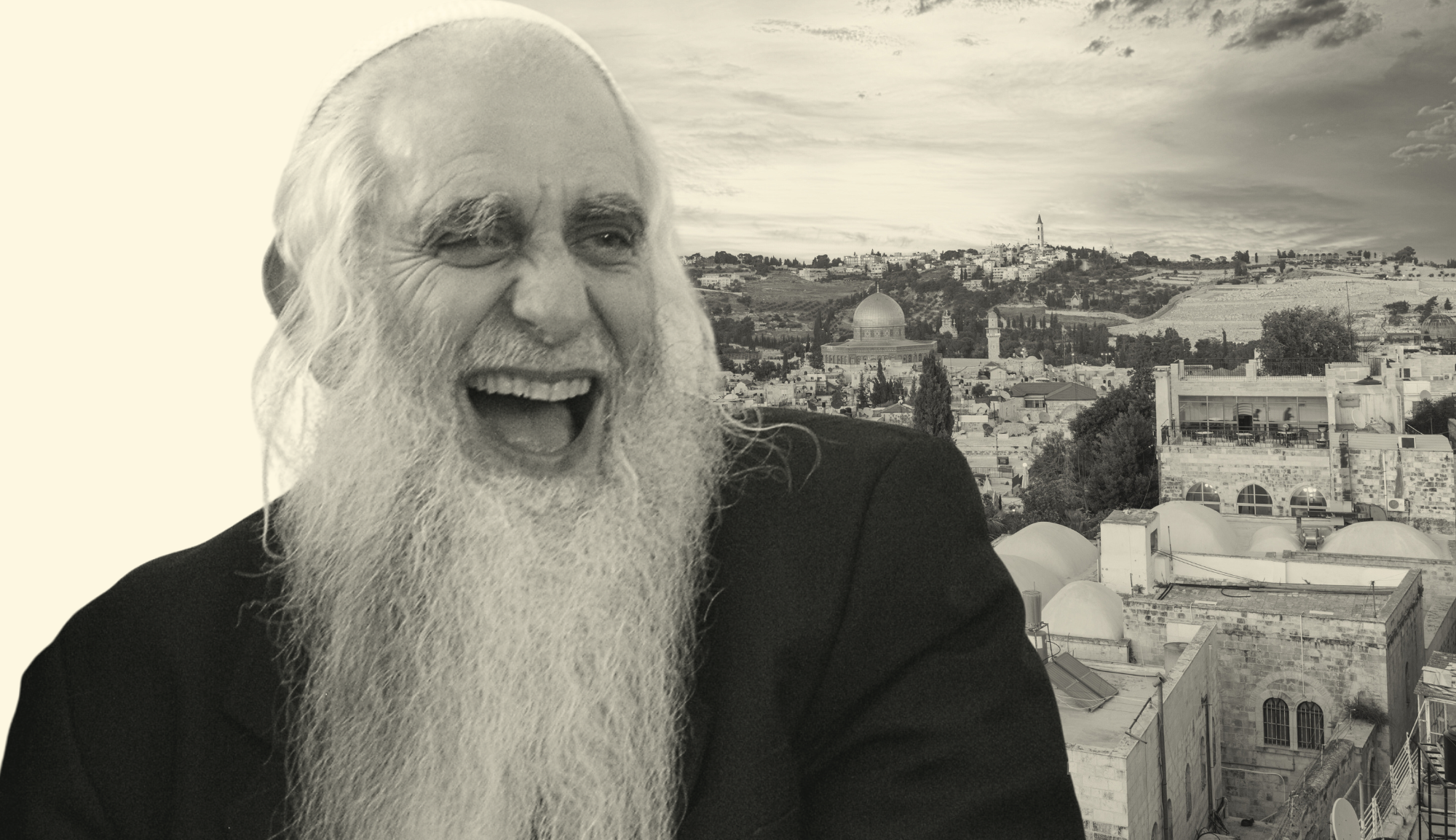
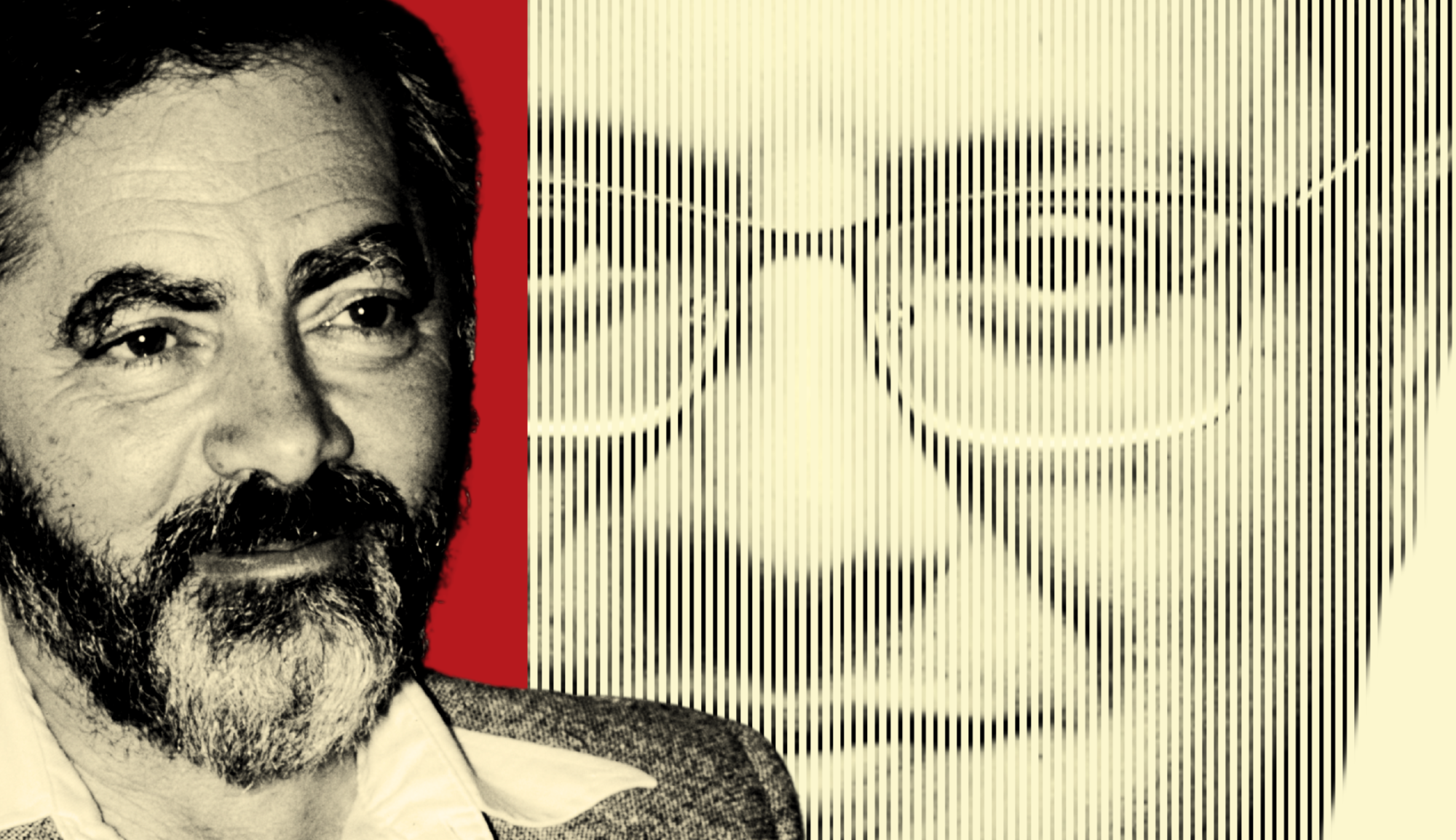
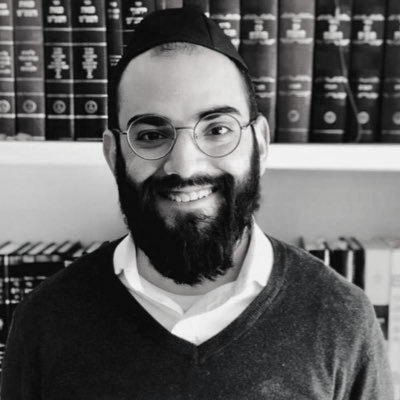
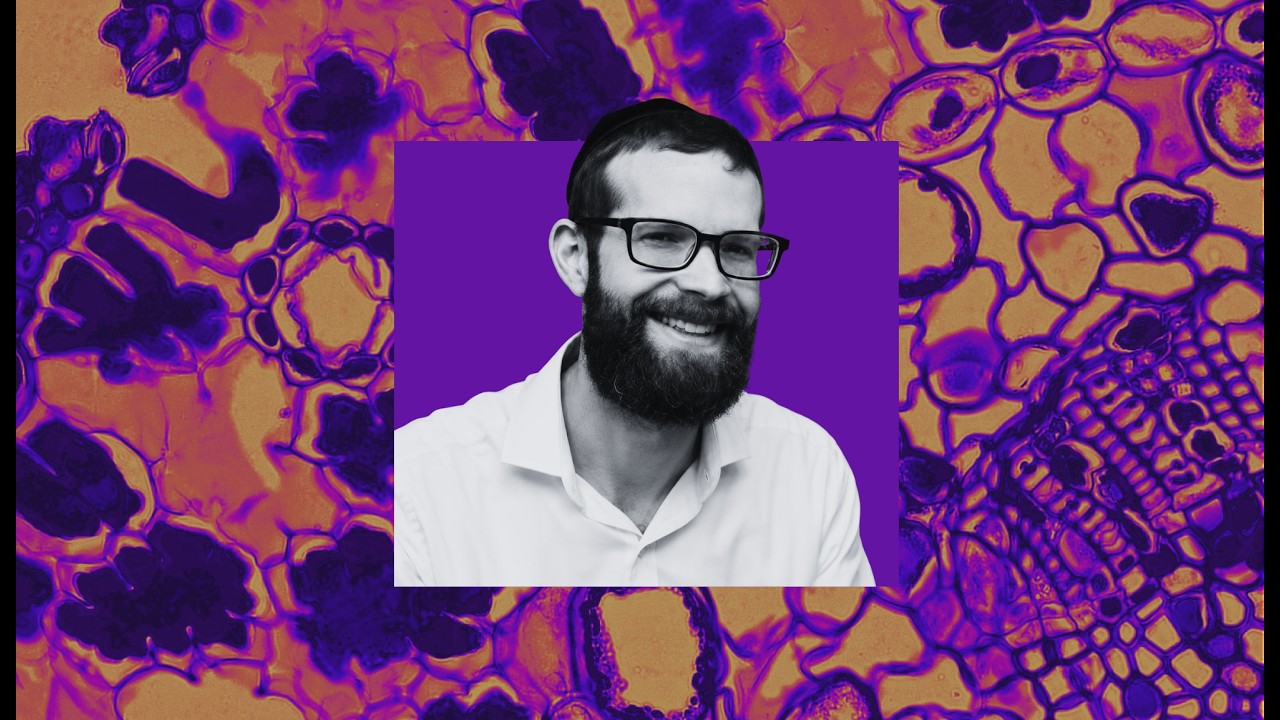
RABBI DR BENJI LEVY. Rabbi Dr. Zvi Leshem, such a privilege and pleasure to be sitting with you here in Jerusalem. You have such a distinguished career in education through so many different institutions, on the rabbinic side, on the educational institution side, culminating with really leading the greatest collection of of Jewish mysticism in the world in one place, which is the Gershom Scholem Collection housed in the National Library of Israel. Thank you so much for joining us.
RABBI DR ZVI LESHEM. It’s my pleasure.
LEVY. So as the person that really oversaw all of this, what is Jewish mysticism?
LESHEM. That of course depends on how you define mysticism, which is obviously a topic of much discussion. But I think the simplest definition of mysticism would be a very intense personal encounter with the Divine, with Hashem, which goes beyond what we would usually, maybe call a spiritual experience. A mystical experience is a more intense experience of breaking down the boundaries between the individual and the Creator. And Jewish mysticism shares some characteristics with other general mysticisms but has also a lot of unique characteristics in the context of the world of the Jewish religion, of Torah study, and prayer, and mitzvot, and Jewish theology.
LEVY. Amazing. So how did you get into this? How did you personally become so interested in Jewish mysticism?
LESHEM. I think it started when I was a student in New York and I reconnected with my Hasidic family in Brooklyn. And [I] spent a lot of Shabbatot in Borough Park and Flatbush and I kind of realized that I was from a Hasidic background. And then when I made aliya [moved to Israel] right after university and started to study in yeshiva, I started studying Chasidut [Hasidism] and then quickly realized that to understand Chasidut you need to understand Kabbala also. So I started getting into that somewhat. And as time went on it became more and more my focus, also academically, which I see as part of my learning Torah and my avodat Hashem [service of God], not as a separate thing. So then it really became a much more powerful thing and culminated with my work for many years in the Scholem collection.
LEVY. Beautiful. So what’s the vision? Meaning, in an ideal world would all Jews be mystics?
LESHEM. That’s a really interesting question. I’ll just say that the Piaseczno Rabbi, who’s [the subject of] most of my academic research, and a lot of my teaching and my personal spiritual path is based upon [his work], he was very involved in trying to revive prophecy in the world. That was a big part of his vision as we move towards the Messianic Era. And he describes prophecy in a way that basically, pretty much everyone is receiving messages from Hashem [God] all the time. I mean it’s sort of like that in the Baal Shem Tov. In the Baal Shem Tov it’s a little bit more subtle. It’s about seeing everything that happens, everything I hear about, everything I see, and understanding that Hashem is talking to me through those things. [For] the Piaseczno it’s more powerful. It’s [saying that] people are really having Hashem speak to them all the time. So if that’s the Messianic vision then I guess I would say that everyone should be mystics in some way, on some level.
LEVY. So what do you think of when you think of God? What is this concept? What is this entity?
LESHEM. That is a much harder answer than it is a question. I think part of me has never overcome the simplistic vision of a kind of a paternal figure sitting on his throne even though I know that’s not real in that sense. And on the other hand, I know that God is just the force of everything that happens in reality, but there’s a balance there.
And I guess the balance I find, which I think is the main path within Chasidut [Hasidism] from the Baal Shem Tov and the Tanya and onwards is not that everything is God, that’s sort of Spinoza and pantheism and I think heretical, but that there are sparks of divinity within everything. So on the one hand, there’s the goal to connect with the divinity in every single aspect of reality at all times. It’s maybe deveikut, clinging to God on the more lower level, but then there’s the awareness that there is some transcendent being beyond, and I guess the goal of the mystic is to find moments of a deeper connection with that aspect as well.
LEVY. So what’s our role in all of this? Meaning, what is the purpose of the Jewish People?
LESHEM. The purpose of the Jewish people is to perfect the world, which is a big task. The world that’s out of sync since the time of shvirat hakelim, [when] the vessels were shattered during the creation process, and that was perhaps ramified by the sin of Adam and Eve in the Garden of Eden that threw things out of order. That caused there to be a diffusion of divine energy and sparks throughout all of reality that need to be redeemed and uplifted back to their supernal source in order to bring the Mashiach, to bring Messianic times. So everything that we’re doing is for that. In addition, we have also the task of being an or lagoyim [a light unto the nations], that we’re supposed to be setting an example for all the gentile nations of righteousness and spirituality and reminding everyone of the godliness that’s inherent in the world, but that’s inherent in the world, not only through leaving the world, which is a different path.
LEVY. It’s quite a tall order and I pray that we’re able to achieve it. It makes me think of, how does prayer work?
LESHEM. Well, prayer works in many different ways. I’ve been a Hasid for many years now of the Komarno Rabbi of Beit Shemesh, shlita [may he live for many long and good days, amen], who has taught for decades the Baal Shem Tov’s Amud HaTefilla, his teachings about prayer, and he also has published his commentary on that text, which is called Or Shivat HaYamim. And he taught us to try to pray like the Baal Shem Tov, which is seeking prayer as an avenue of deveikut [cleaving to God], as a way of connecting with Hashem. And in addition, prayer is a way to obviously change ourselves and perfect ourselves, which is a more rational approach to prayer, but prayer also has that magical component, which is the attempt to change reality through prayer, which is not rational. If I pray for a sick person to become well, I’m essentially asking for a non-scientific, non-material change in reality because of a spiritual act that I engage in. And we were taught how the Baal Shem Tov suggests doing that and to try to do that ourselves.
LEVY. Wow. So every time you pray, you try to engage with that encounter.
LESHEM. Well, every time I pray, when I do focus on the needs of people who need health or financial success or to find a marriage partner or to have children, I always have a list of those people that I pray for pretty much every time that I pray formally, three times a day. I don’t always have the consciousness that I should. Most of us have trouble concentrating, but in moments of consciousness, the hope is that what I’ll be able to do is to uplift their names to a higher level of reality. We call this the sefira [divine emanation], the attribute of bina [understanding], which is kind of the supernal womb where the letters of their names can be elevated to a higher place and then be reborn into this world in kind of a new combination where the former problems that plague them no longer are applicable.
LEVY. Amazing.
LESHEM. I don’t always do that, but that’s theoretically what I should be doing –
LEVY. What you are trying to do or what prayer is trying to achieve. So what about Torah study? What is the goal of Torah study?
LESHEM. That’s, of course, a big point of contention between the Hasidim and the Mitnagdim, their opponents. And it focuses on how you define the concept of Torah lishma, of studying Torah for its own sake. And you really see it most clearly stated in the one of the disputes between the Baal HaTanya, the first Chabad Rabbi, and the Nefesh HaChayim, the book of Rabbi Chaim of Volozhin, a student of the Vilna Gaon, who came afterwards and was responding to the Tanya. In the classic Lithuanian formulation, Torah lishma is studying Torah for its own sake as a mitzva. And when I engage in Torah study, I am automatically in a state of deveikut, of deep connection with the Divine, whether I feel that way or not. Now when I’m using my intellectual powers to analyze the Torah, I may not feel very spiritual. Comes Rabbi Chaim of Volozhi and he says, well, don’t worry about that, you are spiritual. You’re engaged in the most spiritual act you can be by the fact that you’re engaging in Torah. The Hasidim, articulated most clearly by the Tanya, but throughout, said, no, the goal of studying Torah, Torah lishma [Torah for its own sake], is about reconnecting overtly with the Divine Presence, which is in the Torah. As the Baal Shem Tov said that when it says in the midrash, quoted by Rashi, that when God created the world, he hid the primordial light for the tzaddikim, for the righteous people, in the future, he was hiding it within the Torah. And when I study Torah to connect with God’s message for me within the Torah, that’s really Torah lishma. So in Chasidut [Hasidism], as opposed to by the Mitnagdim, there’s a much stronger emphasis on working overtly to reconnect with Hashem [God] through everything, but including through Torah study, and not to take it for granted that Torah study is in and of itself going to be a spiritual act of significance for me.
LEVY. And does Jewish mysticism view men and women as the same?
LESHEM. Jewish mysticism views men and women very differently. Jewish mysticism as a traditional thought process or theology is very essentialist. A lot has been written about that in the last few decades, more about essentialism relating to women, relating to non-Jews, et cetera. And it is a big topic, but men and women are seen as very, very different. They have different spiritual components and different roles as a result.
Men are seen as being a mashpia, as being one who influences. Women are seen as mekablot, someone who receives. This starts with simple biology but is understood by the mekubalim, by the mystics, that biology is an external manifestation of an inner quality. Now, of course men and women both have masculine and feminine characteristics. If men are primarily related to the sefira, the divine attribute, of chesed, of giving, and women to that of receiving, of gevura [strength], which is more passive, nonetheless, all men and all women have both of those sides within them and the goal is to find the proper balance. For men, it largely has to do with lowering our ego and finding a softer part of ourselves that might be the more feminine side. And recently articulated by my friend, the great kabbalist Sarah Yehudit Schneider, in her book about the Kabbala of shame, the goal of women, which is not articulated clearly by earlier mekubalim [mystics], might be to work on their self-esteem as a way of balancing more towards the masculine side. So it’s all a question of finding the right balance.
LEVY. Beautiful. And is Judaism meant to be hard or easy?
LESHEM. When I was growing up, there was a saying that our parents always said in Yiddish that it’s hard to be a Jew. And I think I read once that Rabbi Moshe Feinstein, zatzal [may the memory of the righteous be a blessing], said that people should stop saying that because kids don’t want to hear that. And if kids hear so much all the time that it’s hard to be a Jew, they’re saying, well, who needs this? There are a lot of things that are more fun and easier. So I think that while on the one hand, Judaism is certainly meant to be challenging. I mean, Rabbi Elimelech of Lizhensk said we were created only to to completely change our character traits, to be able to break our bad character traits, which is obviously a very, very difficult thing.
On the other hand, again, it’s a question of balance. Judaism has to be joyful. And certainly, if it’s not joyful, then our kids will not be interested in staying in it. It’s really important, as when I was a teacher and a community rabbi, I would always stress to my students and my congregants the importance, for example, of making Shabbat has to be really fun for your kids. If it’s not fun, they’re not going to want to keep Shabbat when they get older. It has to be fun. I think Hasidism gives us [that], and this is a very big theme also in the Piaseczner’s educational writings. Hasidism, which gives us a very powerful spiritual high through davening, through prayer, through other ritual activities, is really, really important because, as the Piaseczner writes in his diary, people need emotional thrills. And if they don’t get them through spirituality, they’ll look for them in other areas and they won’t want to stay connected to Torah.
LEVY. So why did God create the world? Like, it is hard. We’ve got to work this out, but in a broader sense, starting at the beginning, why did God create the world?
LESHEM. Right. So we can never really know for sure, and we know the philosophers like the Rambam, Maimonides, and others basically said, well, we can’t know. It’s impossible to know. We don’t understand that level of God’s will, so just forget about that and move on and do what you need to do. The mekubalim [mystics], pretty much all the way through and very much expressed also by the Ramchal, among others, talked about God creating the world because teva hatov lehativ. The good wants to do good and God, so to speak, despite being perfect and not needing anything, God, so to speak, needed creations that He could express his goodness to. And He created the world so that there would be a place where He could give us goodness and we could learn as well to be good. That’s of course a major theme in the Kabbala of Rabbi Ashlag, the Baal HaSulam, who wrote his great commentary on the Zohar, that the purpose of humanity and in creation is to go from having someone who desires to receive to being someone who desires to give, which is to be more godlike.
LEVY. Beautiful. And then what does that mean in terms of human beings? Meaning, can we go against the will of God? Do we have free will?
LESHEM. The classic answer, needless to say, is that of course we have free will, and that’s very highly emphasized in the Rambam and other classic Jewish philosophical traditions. Within Kabbala and very much expressed within the Hasidic tradition of Izhbits-Radzin, Lublin, the Mei HaShiloach and his descendants and students, like Rabbi Tzadok HaKohen of Lublin, they questioned the reality of free will and posited that perhaps what appears to us as free will, and what’s important that we believe is free will, is in a certain sense an illusion. Or perhaps you could state it in this, I think it connects to an idea in the Ramchal as well, that there are different levels of reality. On a certain absolute divine level of reality, there can be no free will because everything is God’s reality and God knows what’s going to happen and controls everything that happens. On my level, as a human being in this world, of course there’s free will, and I make choices all the time and they have tremendous implications. And again, as a balance, in the back of my head I know that ultimately everything that happens is Hashem’s will, but that doesn’t stop me from knowing that I need to take responsibility and make the right decisions at the right time. Afterwards, looking back on things, then I’m in a place to try to analyze, why did this happen? Why did I make this decision? What were the implications? What were the ramifications? What was God’s will through this series of events? But at the time when I’m deciding what to do, I have to let go of that idea and try to do what I believe is what Hashem expects me to do and make the right decision, assuming that I have that ability to make that decision.
LEVY. So to make the right decisions based on the previous answer you gave about the purpose of the Jewish people is somehow to bring about this Messianic Era, to do what we need to do with these divine sparks and bring it to that place. Let’s say we get there. What do you picture? What is Mashiach? What is the Messiah? What is this time?
LESHEM. There’s a very well-known dispute between the Rambam and the Ramban, Maimonides and Nachmanides, in the Middle Ages about the Messianic Era. Maimonides quotes the quotation of Shmuel, one of the Babylonian Talmudic masters, who says, ein bein olam hazeh limot haMashiach ela shibud malchuyot bilvad. The only difference between this world and the time of the Messiah will be that the nations will no longer subjugate Jewish people, but all of reality will continue as it is now. For example, so based on that, Maimonides would explain the verse in Isaiah that gives a Messianic vision of the lamb lying down with the lion. He says, well, that means that the nations who are the lions will no longer be bothering the lamb, which is the Jewish people.
Nachmanides, the Ramban, and I think most of the Kabbalists follow him straight down the line, sees the Messianic time as a time of a complete change of reality where people are totally reconnected with God’s will as was Adam before the sin in the Garden of Eden. They’ll naturally choose the good, and people will live a highly intense spiritual life. The Baal Shem Tov describes it as going from a consciousness of knowing that God exists in everything in the world but not being able to perceive it viscerally to a reality that we’ll be actually able to perceive all the time the reality of God in everything. We’ll be – we’re living with that consciousness. If you add in the Piaseczner, that means people will be receiving little prophecies all the time.
And I’ll end with mentioning one of my own teachers, Rabbi Shagar, zatzal [may the memory of the righteous be a blessing], who spoke about his Messianic vision of Medinat Yisrael, the State of Israel, becoming a place both of justice and of miracle. And the miracle that he described was what he called he’arat panim, the shining of countenance, which basically boils down to people being really nice to each other all the time. And he saw that as a miraculous transformation that would happen in Messianic times. So that would be wonderful.
LEVY. But I was going to ask you, I mean, we haven’t fully got to that, but is the State of Israel part of this final redemption?
LESHEM. In my mind, absolutely yes. There’s no doubt. I’m a religious Zionist and believe very, very much that the return of Am Yisrael, of the Jewish people, to the land of Israel after 2,000 years of exile, [is part of the redemption]. This is a process that we started before the official Zionist movement, [as seen in the] very, very religious history of Rabbi Yehuda HaLevi, the Kuzari, making aliya [moving to Israel], and later the Ramban making aliya in the Middle Ages, and then in early modernity, the Ramchal makes aliya, and you have the talmidim [students] of the Baal Shem Tov, the Hasidim make aliya to Tiberias, Hebron, and other places. The Baal Shem Tov himself wanted to come on aliya but didn’t manage to get here. The Vilna Gaon tried to come here. He didn’t succeed, he sent his students here. The Or HaChayim HaKadosh comes from Morocco. All this is happening, talmidim of the Chatam Sofer from Hungary. All this in the early nineteenth century, this tremendous outpouring of religious interest in hastening the Messianic Era by coming to Israel. And then we see now in a reality where we have almost the majority of the Jewish people living in the land of Israel. I absolutely see this as being, it’s called atchalta degeula, the beginning of the geula [redemption] or reishit tzmichat geulateinu, the beginning of our flowering of the redemption. I absolutely see it that way.
LEVY. Amazing.
LESHEM. We have a lot to do before we, you know, to perfect a lot of things. We have a lot of problems –
LEVY. It shows we’re getting closer.
LESHEM. We’re moving closer all the time.
LEVY. And what is the greatest challenge facing the world today in your mind?
LESHEM. I think the greatest challenges facing the world today are not that dissimilar from what they have been for a long time. I think hatred, warfare, racism, including, of course, Antisemitism, which has been shockingly revealed how powerful it is over the last couple of years, poverty, but I think all of those things that have challenged us for a long time. I guess perhaps climate issues as well. But I think finding a way that all of the people in the world can work together on a common path with the tolerance of each other to find a way to to help each other. I think that we learned from a lot of Jewish sources and one of them that comes to mind is the Netziv, Rabbi Naftali Zvi Yehuda Berlin, who talks about this in his introduction to his commentary on Genesis, that people have to realize, and he sees that this was a major trait of the patriarchs and the matriarchs, that you have to realize that if things aren’t good for everyone, then they’re not good for anyone. And therefore winning and being the victor and being in charge and being powerful is sometimes necessary, but in the long run, we have to find a way to improve the quality of life for everyone in the world. And then for us in Israel, let’s start here, and only when things are good for everyone do things become good for everyone. There’s a lot to do to achieve that.
LEVY. So you said that ultimately a lot of these problems have been around for a while. How would you say that modernity has changed or shifted anything related to Jewish mysticism?
LESHEM. Well, I think that we have to talk about several stages. There’s modernity, now we’re in postmodernity, and some would say post-postmodernity, or you could fit in New Age in there as well. Modernity, generally speaking, and these are of course, I have to speak in generalizations, but modernity in general was a movement that was anti-mystical. Modernity was a movement that very strongly emphasized rationalism, philosophy, progress, and the need for religion to reform itself and become more in line with scientific theories, et cetera. And therefore mysticism was sort of, to some extent, in places where modernity was powerful it either went out of business or went underground in some way or another. And then in places where modernity was less powerful, for example, in the oriental world or in Eastern Europe, right, where the haskala or the enlightenment was less powerful. So then you do have movements like Hasidism or you have the continuing mysticism of Sephardi mystics, who are living in a world that still remains, in a sense, pre-modern to a large extent. So there’s a strong mystical undercurrent that continues despite this sort of aversion to it. Once you come to postmodernism, some see that as being related to a a dissatisfaction with progress, with science, with rationalism, and therefore mysticism in some ways connected with the new age kind of loosening of formal religious practices or institutions, I guess is a better word, becomes more prominent again.
LEVY. What differentiates Jewish mysticism from other forms of mysticism? My assumption is with your work, especially in the library and looking across the world, what is the difference?
LESHEM. This is a huge topic, and if you go to the Scholem library you’ll see a huge amount of books of Eastern mysticism, Christian mysticism, as well as scholarly works on comparative mysticism. So there are basically two schools of thought. One school of thought holds that basically all mystical experiences are more or less the same. The mystical core of all religions is basically the same. It has to do with the mystic connecting with God and the external trappings are less significant. Others strongly disagree and part of the disagreement also is to reject the use of the term mysticism when talking about Jewish mysticism. Let’s talk about Kabbala, which is a Jewish term. As soon as I say mistika yehudit, Jewish mysticism, I’m essentially placing Jewish mysticism within the context of some broader mystical tradition, which may be irrelevant or very misleading.
One of my teachers, Professor Yehuda Liebes, used to say that he prefers to talk about mystical Judaism as opposed to Jewish mysticism. In other words, let’s situate the mystical impulse within the Jewish tradition and not look at the Jewish aspect within the general mystical tradition. So those who are more, let’s say, particularistic and less universalist would tend to say that every religion has such a powerful cultural, ritual, theological envelope so that by definition the mystical experience is going to be very, very different. As a Christian mystic in their mystical experience may be related to some vision of Jesus or Mary or something like that, a Jewish mystic, or for that matter an Islamic mystic, a Sufi, who is largely theoretically, at least, theologically opposed to the idea of any image of God, is going to have a mystical vision or experience that is presumably less visual. Although that’s certainly not always the case, and I’ve written about that in some of my scholarly works as well.
LEVY. So does one need to be religious to study Jewish mysticism?
LESHEM. I think that ideally, Jewish mysticism is best studied in a situation where it’s practiced, keeping in mind what one of my teachers, Professor Moshe Idel, often would stress, which is that the most basic mystical techniques in the Jewish tradition are the mitzvot themselves, are the commandments of the Torah. So certainly for the traditional mystics, who – and especially we see this in the Ari in Tzfat with Rabbi Yitzchak Luria, who put so much mystical intention and also details into the way the practice was done, that as soon as you take away the commandments as we know them, the Jewish law, then you’ve taken away the major portion of what is the the vehicle for the encounter with God.
On the other hand, I think that we see very clearly that many, many people are brought to Judaism today by studying mysticism or Hasidism even if they’re not religious. And my general feeling is that studying Torah is never a bad thing. And the more that people connect with any aspect of Torah is always for the good. And in this case as well, my first choice is that people study mysticism, Kabbala, let’s say, together with observing Judaism, but I’m open to the idea that Kabbala will have a good influence on people even at an earlier stage of their spiritual trajectory.
LEVY. So can it ever be dangerous? Is Jewish mysticism dangerous?
LESHEM. I think it can be dangerous. I was thinking of that aspect as well. I mean, I think all mysticisms are potentially very dangerous for people who are perhaps emotionally unstable or have mental health issues. I think for most, the great majority of people studying Kabbala, we do it on perhaps such a general level or not on such a deep level that it’s dangerous for us. I mean, there’s also theological dangers inherent in Kabbala. There is a radicalism in Kabbala. There’s certainly a radicalism in Hasidism, especially in certain strands of Hasidism. So in that sense, there’s always a danger that people are going to take things the wrong way and are going to misuse the text that they study or things like that. We have to look at the general good and deal with the problems as they arise.
LEVY. So in terms of the good, my understanding is it’s quite a lot about influencing our own relationships. Has your study of Jewish mysticism influenced your own relationships and is there an example of how, either with yourself or with others around you?
LESHEM. Well, I’ll give one example. I think that as I’ve alluded to before, the Mei HaShiloach, the Izhbitzer Rabbi, is the most well-known example of a Hasidic rabbi who seems to largely deny the possibility of free choice. So how does that affect interpersonal relations? So it has been pointed out that – and he writes also within – it’s clear that he does write this as well, if I believe that essentially what everyone does is what God wants them to do, then that 100 percent undermines my ability to be judgmental in any way, shape, or form. The Baal Shem Tov going back even without that radicalism about free choice, the Baal Shem Tov taught us repeatedly that when I see something negative in another person, I should realize that what I’m seeing is some kind of a mirror of myself, since everything that happens in the world to me is a message from God. So why do I see a person who seems to me to have a negative character trait? Because that’s God’s way of reminding me to work on that character trait within myself as opposed to judging the other person. So I think that my study of Kabbala and especially Hasidism has made me less judgmental, which, I think when you grow up in the yeshiva world you can be, unfortunately, pretty judgmental about people who aren’t sort of similar to you or don’t seem to have similar values. And so I think that’s been, I think that’s made me a softer person. I think that the very, very strong emphasis in Kabbala and Chasidut [Hasidism] on ahavat Hashem, on loving God and loving other people, [has influenced me]. As the Baal Shem Tov said, I’ve come into the world to teach that one shouldn’t engage in ascetic practices but just to love God, love the Torah, and love the Jewish people. So that has hopefully influenced me as well. And I think my Torah study is much less about acquiring knowledge and much more about understanding, well what does this mean for me in terms of my own life.
LEVY. Beautiful. It’s amazing to see you reflect on your own Torah study and how that has transformed. And we’ve talked a lot about these different ideas. I’d love to conclude if you could just share one idea itself. You know, any mystical idea that comes to mind or Hasidic idea that either is a favorite of yours or just comes to mind right now that you carry with you, a very short idea.
LESHEM. Well, to emphasize one of the things I said before, which has really strong educational implications. The Piaseczno Rabbi in talking about the importance of the spread of Kabbala and Hasidism was very much a messianist. I believe that Hasidism is very messianic, unlike Gershom Scholem who saw it as a neutralization of messianism in response to Shabbetai Tzvi. I don’t buy that. I think that there’s a very, very strong messianic undercurrent. And one of the strong messianic texts is the Baal Shem Tov in 1746, on Rosh Hashana he had an aliyat neshama, a soul ascent. He had a vision of going up to heaven and he meets the Messiah and says, when are you going to come here? And he says, right, “eimatai kaati mar.” And the Baal Shem Tov just says, when your wellsprings spring forth, flow forth, and everyone engages in similar mystical practices [to those] that you do, that will be the time of the redemption. So the Piaseczno Rabbi who sees himself as a Hasidic reformer, as someone who needs to revive the original Hasidism that he felt that in his time in the early twentieth century had very much lost its initial luster and spiritual potency and intensity, he takes this really, really seriously. And he says that if we don’t really know what Chasidut [Hasidism] really is and engage in it properly, which is what he attempted to do through his books and his yeshiva and his teachings, then we’re essentially slowing down the messianic process.
In order for the Messiah to come, the world has to become filled with knowledge of God as the Baal Shem taught it and how to engage in the service of God on a divine level, which includes also a topic we didn’t touch on, avoda bgashmiyut, serving God through corporality, through all aspects of of reality. As soon as you say that God is present in all aspects of reality, so the field of the potential [for holiness] becomes very, very wide, then we’re not really moving forth the messianic order of things. So the fact that we live in a world right now where there’s such a tremendous interest in Kabbala and Hasidism, more than ever before, in many, many aspects of Jewish society, including amongst people who wouldn’t define themselves as religious or certainly not as Orthodox, these are all signs that we’re moving in the right direction and what we’re doing is really important. That we’re helping to spread this Torah and these teachings for Am Yisrael [the Jewish People], to move forward spiritually and to move the world forward spiritually.
LEVY. Rabbi Dr. Zvi Leshem, your entire career has been moving that forward, recognizing the expansive nature and opportunities, whether it’s from the pulpit in a shul [synagogue], whether it’s from the beit midrash, the study halls of an institution, or whether it’s collating and collecting all through the library. Your ongoing scholarship, your ongoing teaching, and we give you a blessing that you’re able to really fulfill these words, l’k’sheyafutzu maayanotecha chutza, and be part of that process bringing closer at this time when people are so thirsty for it.
LESHEM. Amen.
LESHEM. Thank you.
LEVY. Thank you so much.