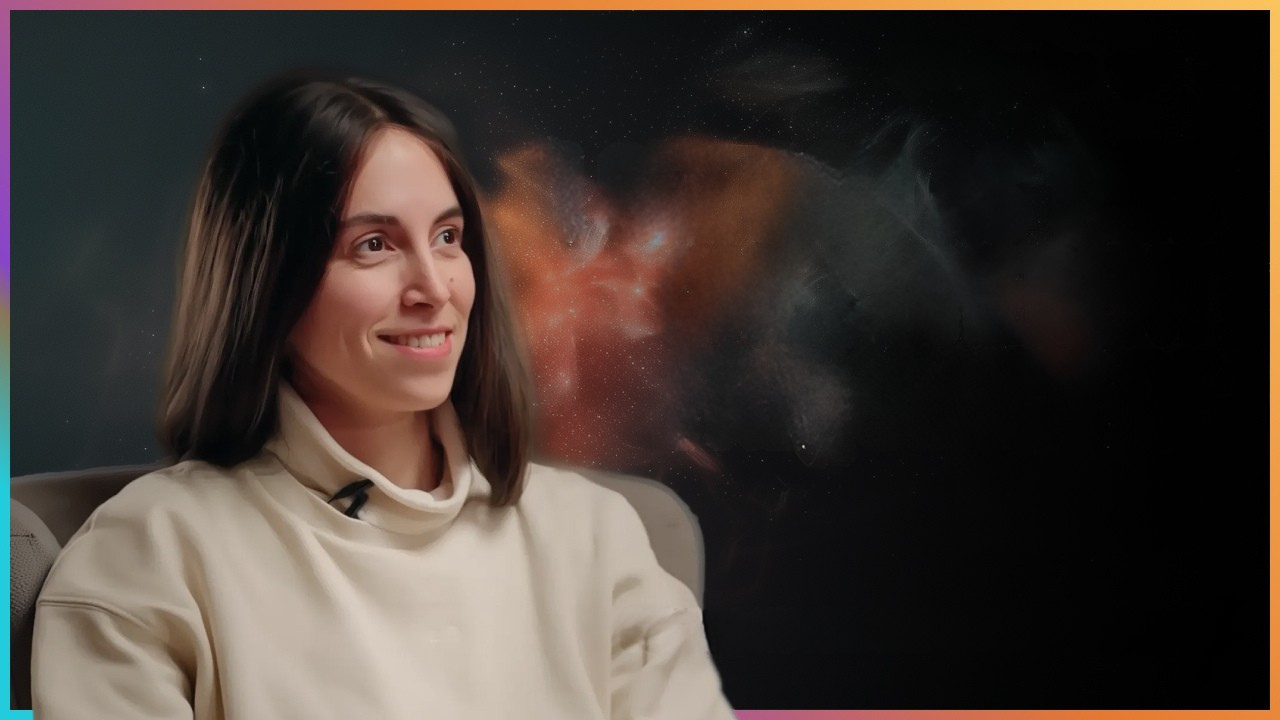
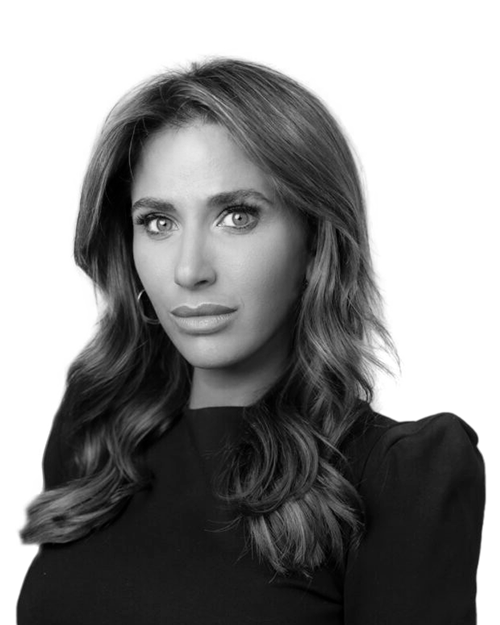
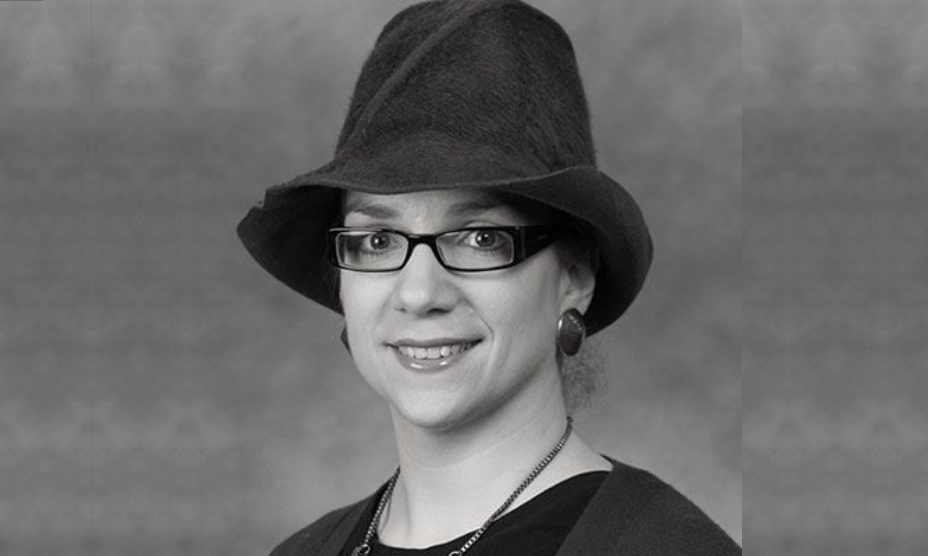
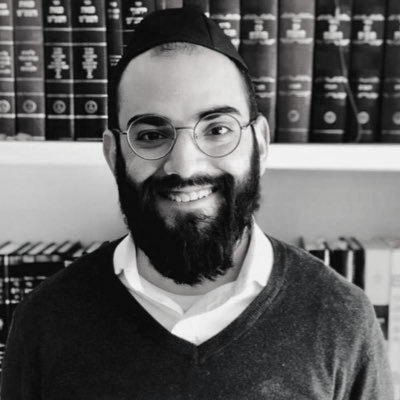
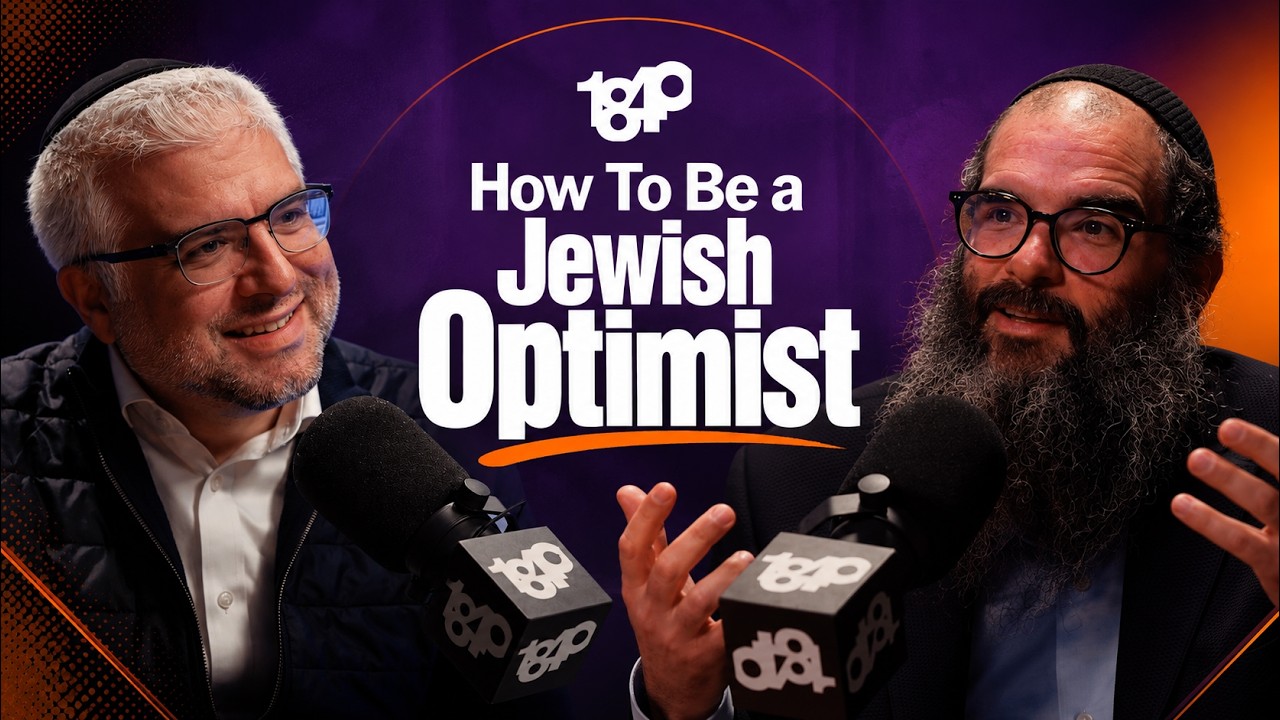
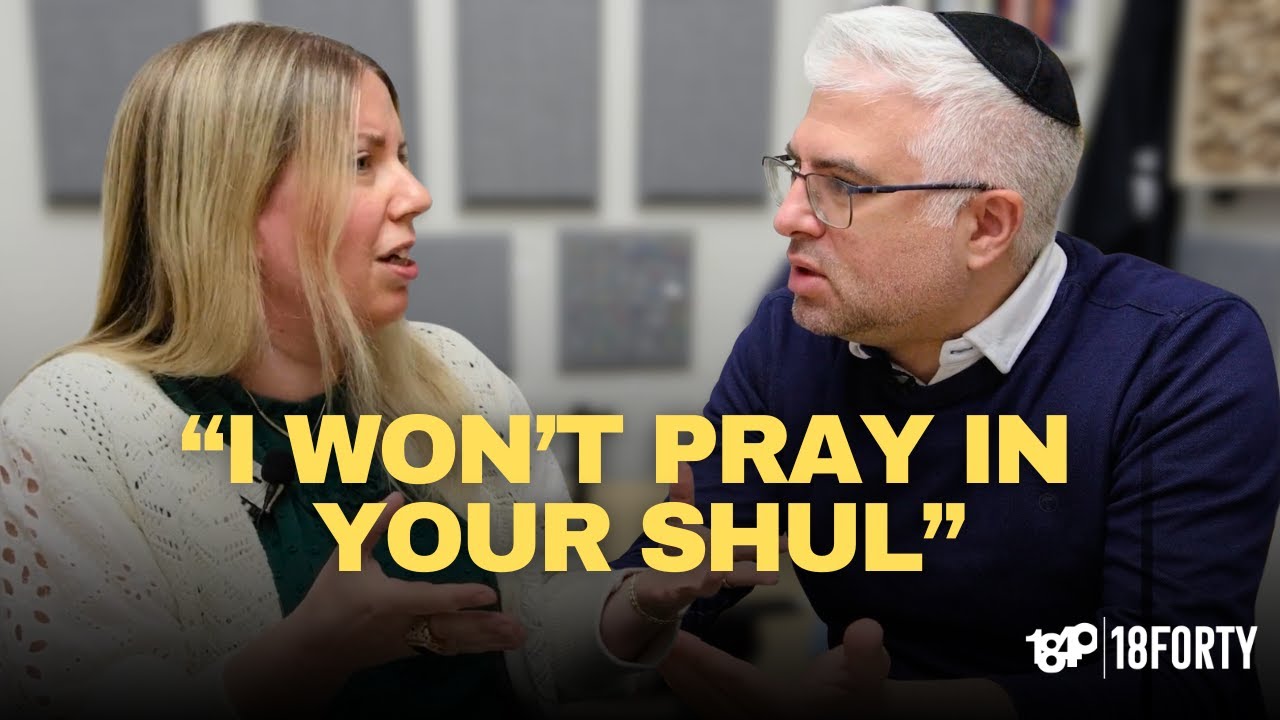
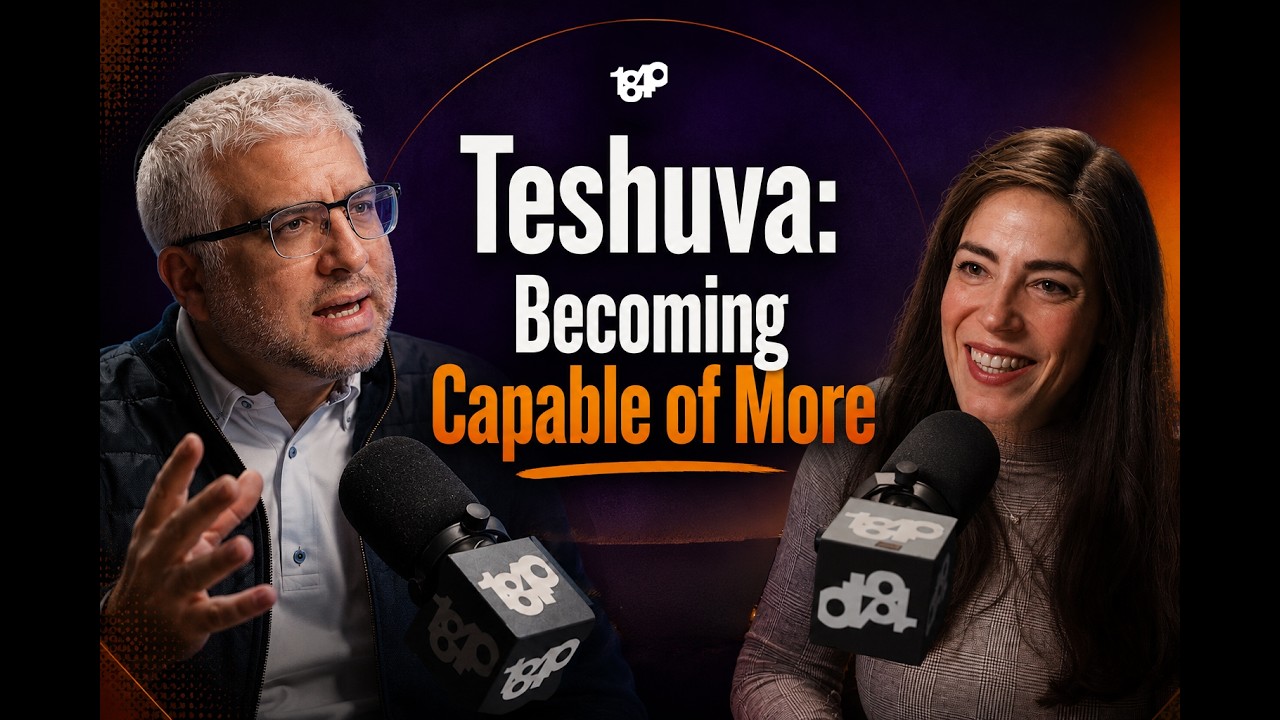
RABBI DR. BENJI LEVY. Devori Nussbaum, it is a privilege and a pleasure to be sitting with you here in Israel. Growing up in Brighton, living in London, coming here for this conversation in Israel. You’re a phenomenal psychotherapist, you’re an amazing author, and you host a wonderful podcast. Thank you for being here.
DEVORI NUSSBAUM. Thanks for having me.
LEVY. So, what is Jewish mysticism?
NUSSBAUM. Okay, so when you ask the question: What is, there are going to be many answers depending on which perspective you’re holding when you come to define the language. So I could tell you my perspective on how I perceive or describe it, but I wouldn’t say this is the definitive answer. So the way I see it is that mysticism is looking at anything that is not physical. So the soul within anything. So even a thought or an emotion I would say is mystical, because it’s not tangible – you can’t hold it in your hand. Even if you can see when a person’s thinking because certain parts of their brain might light up, you still can’t hold that thought in your hand. So it’s spiritual, it’s soul. And I feel like the way I refer to mysticism is that you’re looking at the soul behind. You’re looking at what’s not obvious in this world. And you’re looking at the truths of how these non-defining, soul-spiritual concepts are actually the life that drives all of creation and learning how to integrate that into our lives.
LEVY. So you’ve been integrating it in your own life. What is your origin story? How did you get into Jewish mysticism?
NUSSBAUM. I grew up Chabad. I grew up learning Chasidut [Hasidism]. I would say Chasidut is the soul of Torah. This is how I was taught it to mean, that there is the peshat, there’s the external technical stories, so to speak, in the Torah, and then there’s the metaphors behind, the deeper meaning behind it, and then there’s the lasting message for everyone in their life, every single moment behind. And these are the non-obvious, spiritual or mystical aspects of the Torah. And this is what the teachings of Chasidut are explaining. And so I always grew up with this as a part of my understanding of the world. And then I became a psychotherapist. And when I started the first day, I believe I was in college, our teacher said, “What you’re going to learn here in the next few years is theory. It can be disproved in a few years’ time.” And I remember thinking at the time, I had some very young kids and didn’t have a lot of time and I’m not going to spend the next five years of my life studying something that could be disproven in the next few years. So I decided that everything I was going to learn, I was going to check it against what I understood or knew about Chasidut. And so I started actually looking for sources more and studying more and researching more. And as I was studying to become a psychotherapist, I was also expanding my knowledge of Chasidut and Jewish mysticism as I saw them coming very much hand in hand, especially when you think about psychology. Psyche really means soul. It’s all about the soul. And this is what mysticism is, it’s the study of the soul behind everything that exists. So if I’m sitting here studying the soul, the thoughts and emotions of a human being, then of course this will be referenced in the spiritual teachings because this is what we are: spiritual beings having a human experience. And so this was my beginning.
LEVY. So what do you think of when you think of God?
NUSSBAUM. To me, God is all life and all intelligence and so much more. So within every single thing that exists, even just take an atom, it’s not still, you know? There’s electrons and protons moving. There’s energy inside of everything that exists. And without that energy, nothing would exist. And so God is within everything that exists. He’s the life force energy within everything, the intelligence, the DNA, what makes this thing decide to grow, let’s say a bud turns into a leaf, the intelligence behind that, the life force energy behind that, the soul within everything. And also God is the container, the vessel for all of it, which means also the material matter of the universe and also the observer and the witnesser of all of that, the knowledge, the knower and the known. And also so much more than we can possibly understand. So everything exists within God. Nothing, nothing exists outside of God. We all are inside of God and experiencing God through different filters and ways that He’s expressing Himself to the created beings. And so everything in life is one long conversation with God. Every single person you speak to, everything you interact with, everything you experience is all God communicating something. Because this intelligence is one coherent being. There’s one unified field that we all exist within. It’s not separate, it doesn’t have powers that have power outside of this. And so I see God as this one coherent frequency of truth that exists in all of creation and that we are all learning to attune to, to connect to, to align with.
LEVY. In an ideal world, would all Jews be mystics?
NUSSBAUM. So if you go by the definition that a mystic is someone who sees the soul as being the primary and the material matter that surrounds it as being the vessel that contains it, then ultimately yes. Because this is what the entire Torah teaches us: to see and exalt the soul above the body, even though the body has its own unique godliness inside of it, which is part of Torat Mashiach [The Teaching of the Messianic Era] – is understanding how actually the essence of God is within the material matter of the universe, whereas the light of God is what’s in the soul. However, this understanding of seeing what’s underneath, seeing what’s really there, rather than just looking at the superficial and then treating it as such, is a really important part of Judaism. So yeah, I would say.
LEVY. And then where does that place the Jewish people? What’s our purpose?
NUSSBAUM. Okay, this is a great question. So the way I see the Jewish people, if you think about Abraham as being the first Jew, Abraham was the first person to say: This is one coherent form, [or] field of life force energy, that exists that is creating the world every single moment and it’s One. Before Abraham came along there were a lot of people who were idol worshipping. What does that mean? It means they were attributing powers to something outside of one coherent life force energy, one coherent field of intelligence. They were saying: This has power in and of itself outside of that.
And the way that God created this world, this matrix or this perception of reality, is the world of duality, which means that you have the oneness of God’s presence here and you also have what God created as the energy of ra [evil]. The energy of ra is the drive to fragmentation, the sense of separation that people are that is almost intertwined within all of existence. So what it does is it gives us free choice. We can either say: I am going to focus my attention on gaining more power and separating myself off and taking things that don’t belong to me and deciding what I want to choose to do with them, or: I am going to recognize that I am part of this flow, of this one unified field that is channeling through me and all the life and everything that I can give in this world is all just me being a channel and being a part of this one coherent life force and this flow. And so this world has this dance between the side of ra [evil], the side of oneness and unity, and the side of fragmentation, the side of control and power, and all of the darkness that comes with that. And so Abraham was the first person who came to the world and he said: God is One. Shema Yisrael Hashem Elokeinu Hashem Echad [Listen, Israel, the Lord our God, the Lord is One]. Listen to the frequency of oneness.
And he taught this to the world as a frequency. Then you have his descendants who are upholding that frequency, the “God is One” frequency in the world. But Abraham is the father of all the religions that believe in the one God, so you have Christianity, and you have also the Muslim religion, and they all believe in the one God. But you have Sarah, who is the female, and we know that the Jewish line follows the wife. And she is the one who individuated the Jewish people by saying: And there’s a unique way that the Jewish people hold this frequency.
And the Jewish people have been living for and dying for this frequency. It’s almost like we’ve been given this gift to hold. All you have to do is hold this message: God is One. And we live for it and we die for it and we live for it and we die for it. We’ve been doing this for generations, holding the frequency. And there have been many, many nations, people who have come from the side of ra who have said: We’re going to destroy this. We’ve got power outside of God, we’re going to bump up against that.
We’re going to almost crash up against it, but just like a wave that crashes against the pillar, it crashes back down, everything just dissolves again. And then the next wave comes and crashes away. And we’ve just been standing there and saying: God is one, God is One, God is One, God is One.
And eventually the whole world will see that God is One and this knowing will overflow into the whole of existence and then the whole world will be in this state of coherence and peace.
LEVY. Why is that so important? If it’s our purpose to help the world understand that God is One, does it really matter for everyone?
NUSSBAUM. Absolutely, because it’s the truth. And this dynamic in existence where you have unity versus separation is the exact place where we have choice. And if you don’t have something to push against, there is no growth. It’s like a pair, like weights. If you want to grow muscle, you have to have something heavy to push against. You need something that’s giving you resistance. So all of this ra, all of what is called klipa [shell] is resistance that we get to push against to build and grow on a spiritual level, to grow spiritual muscle. Otherwise there is no expansion, there’s no way of growing if there’s no resistance. And this is why we came into this world as humans, as souls [our purpose in] coming into the human experience and coming to the world of duality was to grow. We came here to grow. And so this world is a gym. And our growth happens when we, in the face of resistance, stay true to the truth. And that’s what we’ve been doing.
LEVY. So how does prayer work?
NUSSBAUM. I would say that it is a gift that we’ve been given. The way I see prayer is that really it is in the lack, in the hole within our hearts, deep in our consciousness where we feel the need or the lack of what it means to be a human being, what it means to be vulnerable, what it means not to have what it is that we need. And instead of being afraid of that lack and trying to control the outcome and make sure we get our needs met, which is what the side of ra tells us, all of the controlling mechanisms that we have as human beings to manipulate or try to leave God out the picture, I’m going to control this aspect of my life, this is all the side of ra. The minute I learn that I can actually sit in that place of lack and instead of trying to externally manage my environment, I can actually turn my needs to God, I can turn upward and become a channel to receive whatever infinite abundance God wants to flow through me. So then I can see that place of need, that place of lack, that place of vulnerability in my heart is actually a portal for prayer. It is a channel. And the reason why it feels like a lack or emptiness is because it is a vessel or a channel, a pipeline. A pipeline needs to be empty otherwise there’s a blockage – nothing’s coming through. And so whenever we’re in that position of feeling that we are in a state of lack, this is an invitation for us to go into a deep state of prayer, which is to take our needs and turn them upward. And when we do that, we become co-creators with the Divine. We actually call forth whatever it is that the world needs.
It says that on the third day of creation when God said: Let there be grass and trees and flowers and all of those things, they only came just underneath the surface in potential. But until God created Adam and he saw that the world needed rain, and then Adam prayed for rain, then rain came and fell, [only then] did everything grow. And because we are in a relationship with the Divine, with God, we are invited to step in as equals, as co-creators. And we co-create when we first of all face resistance and we stand true to what we know is true. And [we co-create] also when we see the lack and we ask God for help and we choose to step in as the channel for that abundance or blessing to flow through to come into this world. There’s lack all around us. Everywhere we go there are things, like corners of the world, that need filling somewhere. If we see them and we turn that into a prayer, then we become a channel to be able to give and help to enhance the world on some level. This is what the function of prayer is – the opportunity for prayer.
LEVY. So where does Torah study fit in? What is the goal of Torah study?
NUSSBAUM. So the Torah itself, Chasidut [Hasidism], Jewish mysticism, teaches us, if it was possible to say this, [that it is] God’s brain, right? However, it has been invested in many, many layers of concealment after concealment after concealment until it can come into the world in a very, very cryptic format, which is sometimes very technical. And in Tanya the Alter Rabbi [Rabbi Shneur Zalman of Liadi] says ink on parchment, like books. How could you say God’s brain, God’s wisdom, or God’s thought process could be distilled into just a book? And he says this is where you see God’s humility. You see the energy of humility in this because God wished to share Himself with us. God wished to give us a lifeline, He wished to give us guidance, He wished to give us a map coming into this world of darkness where we have all this ra, tons of resistance to “God is One” energy. And to help us to manage to be able to walk through this forest and to have a map to get through to the other end, He gave us the Torah. But also every single time you read the Torah, you’re going to see something deeper. So this is the book that never ends, that never stops giving. Every time you read it, every time you learn it, you can see it from a new light, you can see it from a new angle. There’s wisdom in every single aspect of it including the numerical equivalents of the words and why this word is next to this word. And there are so many different ways of looking at extracting wisdom from this infinite amount of wisdom that is encoded in this finite book. But it’s actually infinite because there are infinite levels of light and awareness and teachings that come from it. And so it’s the gift that God gives us to keep us connected, to keep us in alignment with this oneness energy, and to keep us being able to hold onto that frequency of God is One through learning the Torah and through connecting our minds with God’s mind, so to speak, and bringing ourselves more and more into that frequency of oneness.
LEVY. Does Jewish mysticism view women and men as the same?
NUSSBAUM. No, they’re not the same, and that isn’t a bad thing. I would say in this generation we talk about diversity. However, a lot of that is just undercurrent sameness. Ultimately, everything has its strengths. Everything has its gifts and everything has its challenges. And we are different. Every human being is different and men and women are different because we have our different strengths, our different gifts, our different challenges, and our different ways of bringing rectification to this world. We have our different ways of contributing to this world. There isn’t a better or a worse, there isn’t a right or a wrong. Each one is magnificent in its own light. And when it is in its full truth, when it is acting or channeling the true energy that it has come to channel, it’s indispensable for what it is.
LEVY. Should Judaism be hard or easy?
NUSSBAUM. So this whole world is hard. Honestly, this is a hard world because of the resistance – like I said, we’re in the gym. So as we are born into this world, as we’re born into life, we have two opposite drives inside of us. One wants to stay small, safe, and in control, and one wants to grow, create, give, expand, find meaning. And as human beings we are constantly in that state of friction between which is going to win, which one is going to be the one that we end up acting out in the end. And so life is hard. The question is: Why are we afraid of hard? We can do hard things. Hard things mean great things, right? Hard is an opportunity for tremendous growth. And there are different levels of hard. There is unnecessary hardship and so on. We don’t need to make it unnecessarily hard, but we also can accept the fact that in general, if you want to grow in life, growth requires stretching, and stretching is uncomfortable. So there is going to be some level of discomfort. And can we embrace that? Can we get comfortable in the uncomfortable?
LEVY. So why did God create the world?
NUSSBAUM. I think there are many answers to this question. However, I’m going to give you the answer that the Alter Rabbi brings in Tanya, which is for this infinite, divine light to be expressed through this finite, it’s like the lowest world. But what does it mean, the lowest world? The lowest world means the most concealment of God’s light. It’s the darkest place. And so when we take this infinite, divine light and you bring it and you shine it through, and you have it revealed through the backdrop of darkness, this is where you create true beauty. True beauty is always in contrast. When you have light that’s been there all along, take a candle and bring it into the sunlight. Okay, it’s nice. But you take that same candle and put it in a dark room, then it’s beautiful.
Why do people think the sunrise is so beautiful? Because it’s the contrast of the dark sky. And so beauty can only be created in contrast. And so in order for God’s light to be truly at home and truly expressed and truly revealed in a way that its absolute beauty can be fully appreciated by the created beings, there needs to be a backdrop of darkness. And so God created this world that is a virtual reality, so to speak, of darkness as the lens that we perceive the world through is a lens where we see the superficial first before we see. We see the vessel before we see the light. We see the body before we see the soul. We see the book cover before we see what’s in the book, right? Everything’s external first. And so it’s very easy to get seduced by the external and to think, well, the external is the main thing. And our work is to see through that and to see the light and to draw it out. And then to see that the vessel can be a container that adds beauty to the light, not in and of itself. And then when we do that, what we’re doing is we’re creating, bringing unification between opposites. And that is the true beauty of what we are creating here and the true reason why God created the world, to bring into existence the concept of relationship.
If there is only oneness, if there’s only one coherent energy, there’s no other to have a relationship with. In order for there to be other, there needs to be an individuation process. The individuation process comes by me feeling myself to be separate. Feeling myself to be separate is the cause of all of my resistance and struggle and everything because of the uncomfortableness of feeling separate, and then I come back into whole. I come back into relationship. And so the beauty of relationship is only possible because of the separation or the experience of separation, the matrix of separation. Because it’s never truly a separation since truly there is nothing that exists outside of God. So we’re all just learning what it means to be in relationship with ourselves, with others, with God.
LEVY. So can humans in that process do something against God’s will?
NUSSBAUM. I would say there are things that are going on simultaneously. If a person chooses to do something that enhances or takes their life force energy that enhances the ra of existence, enhances the drive to separation – let’s say I take something that doesn’t belong to me because I think that gives me more power. So I haven’t acknowledged that God is in control, that there is one coherent life force energy, and if I’m taking from you, I’m taking from myself because we’re all connected. Ultimately there is no other. So if I’m hurting you, I’m hurting myself. And if I don’t realize that, I think: No, I’m separate from you. I’ll take care of me and who cares about you, which is what this world, the ra, drives people to believe.
There are two lines going on at the same time, because ultimately God knows what we’re going to do. And whatever it is that we choose to do, in the end it will end up being exactly what needed to happen. However, in the moment we have a choice, because we don’t know that God knows what we’re going to choose. And it is a struggle for us in our own consciousness whether we add power to the side of ra, whether we add to the fragmentation of the universe, or we trust in God and we say: No, God is in charge and I’m going to do God’s will over what might make me feel safe and in control.
So let’s say I don’t have something that I want and I decide to take it from you. And this is me enhancing the separation in the world because I am making you the other, and I take from you, and I think now I’m going to be small, safe, and in control. I’m going to be good. And I’m not taking into consideration the truth that actually God is the only true thing that exists, which means that if I’m hurting you, I’m hurting myself, right? And ultimately, in the sense when I do that, I’m going to now create ramifications that are going to impact my life. So if I take something that doesn’t belong to me, that frequency or that energy is now going to impact my life and I’m going to go through a process until I eventually do teshuva [repentance]. What does teshuva mean? I will realize the ramifications of my actions, and I will return back to recognizing that God is truly the only thing that exists and God is the only one in control, and I want to dedicate my life and my life force energy to serving God because that’s the only truth. So ultimately I’m going to come back to that, whether it’s in this lifetime or another lifetime or whatever it is, I’m going to end up coming there. So in the end you can say there are no true mistakes, because every mistake is an opportunity for growth. If I do something wrong, it will keep coming back to me until I rectify it. And God will know what I choose, so you could say there are no true mistakes. However, there are things that we can do that really, let’s say, make a mess in God’s world, which is when we do things like that, when we do add to the ra [evil] of the world. And ultimately we are the ones who will end up experiencing the fragmentation in our own psyche, in our own consciousness. So we can call that punishment or you can just call that the consequences of choosing to add to that power until we learn that it’s not worth it.
LEVY. So if we all come to that knowledge, Mashiach [the Messiah] will be here. What do you think of when you think of Mashiach?
NUSSBAUM. First of all, the Alter Rabbi explains that when Mashiach [the Messiah] comes, all klipa [shell] and all ra [evil] will disappear. So all of the internal belief systems in our psyche, in our consciousness that keep us feeling separate from others, or separate from God, or separate from the world, or fragmented inside will just cease to exist. Almost just like that energy will be taken out of this consciousness and we’ll really see truly that God is One and that we are one with God. And we will see the infinite wisdom behind everything, and we’ll see the light in everything, and we’ll see the meaning behind everything. And our whole consciousness will shift as a result. And therefore the way that the whole world runs, and the way that we act towards each other, and the way that we build together will be in a way of unity rather than a way of power struggle.
LEVY. So is the State of Israel part of this final redemption?
NUSSBAUM. Ultimately, I believe that when we can live in peace with each other, I have a sense that indigenous people will be returning back to their lands because ultimately the reason why there was ever colonialism or anything like that was people trying to seize power, trying to seize more control, and not seeing that there is this one coherent power, knowledge, wisdom, infinite amount – I’m losing words because it’s so beyond human words – that is really guiding this show. And can I truly tap into that frequency? Can I be a part of that oneness and serve that oneness, which means serving, giving to others, being kind, and being respectful and supportive? And what would it mean for an entire world to live like that? I don’t think that there will be arguments over land. And everyone will return back to the place of their origin and so on. And I believe that ultimately, of course, when Mashiach [the Messiah] comes, the Jewish people will return to their homeland. I don’t know enough and I can’t say that I really understand the concept of the State of Israel now, and how it was formed, and if it was formed in the way that was in alignment with Jewish values or not, and so on that I can say I have an opinion on this. I don’t know. But I do know that our role right now is to bring more peace to the Jews who live in Israel, to all people who live in Israel, and to be able to do whatever we can to eliminate internal struggle amongst people as best as we can to help create more harmony in relationship, in the relational field. And I believe that by doing that work, we will come to a place where ultimately the entire world will be at peace with each other and we won’t have to worry about state lines and politics.
LEVY. But we walked past the Kotel today. We see these ingathering of the exiles. You’ve read the Tanach, I think, the Bible talks about all this coming home. Do you feel an intuition that we’re headed in the right direction, that we’re heading towards Mashiach with Israel?
NUSSBAUM. Of course, of course. It’s so beautiful to be here, to be a part of this land, and to be a part of this people, of course. I absolutely, absolutely – this is for sure where we’re meant to be, because it’s here. It’s really beautiful to be alive.
LEVY. We’ve just got to work on the unity and bring it closer.
NUSSBAUM. Absolutely, absolutely. I feel like that needs to be the focus on the people, the people’s connectivity. As a therapist, my work is very much always focused on relationships. Relationships between husbands and wives, between friends, between community members, and so on. And between parts of ourselves. And to build good communication, to build peace amongst people, we need to sit and communicate.
LEVY. So what’s the greatest challenge facing the world today?
NUSSBAUM. I would say disunity, miscommunication, distortion, dishonesty, lies. It’s all part of the same thing.
LEVY. What do we do about it? You’re a therapist. How would you apply your therapy on a global level?
NUSSBAUM. Well, I know I’m doing my bit. I know everyone has their bit to do. I see my bit as having these – I gather women together. Bring them into the same room and do my best to bring that frequency of Mashiach into the room, which is that state of joy, support, coherence, love, acceptance, connection in a way that feels expansive. And when I start to sense that energy in the women that I work with, I feel like that’s a little like breadcrumbs. We’re following the breadcrumbs, like little bits of light, little pockets of light. And I feel like there’s a certain frequency in the universe that is building momentum. And it is slowly shining out everywhere and eventually I feel like that is going to be the universal consciousness.
LEVY. How has modernity changed Jewish mysticism?
NUSSBAUM. I don’t think it has. I think – I think what’s true has always been true. I think maybe the language we use has changed and the different analogies we bring or the different ways we package it are different. But I think what’s true has always been true.
LEVY. And what differentiates Jewish mysticism from other mystical teachings or traditions?
NUSSBAUM. Again, I think what’s true is true everywhere. I think of course in each tradition they have their own unique things that they may add and so on and I don’t know enough to be able to talk about that. But I do know that what is true in Jewish mysticism – and I have worked with and studied things like Eastern mysticism and different types of teachings from different, other mystical traditions – they’re the same teachings. The fact that God is one, that there’s one coherent life force energy that is functioning under all of existence. What does it mean to be a channel, to be able to surrender to this light? All of these ideas, they’re not unique. They’re not only in Jewish mysticism. They’re in every mystical tradition. And to see the whole world as a mirror, the whole world as your teacher, these are things I’ve heard from non-Jews who have taught me this and I’m like, oh, I saw that from the Baal Shem Tov [Rabbi Israel Baal Shem Tov], he also taught that, right? So I do feel like what is true is true everywhere and that we’re all just accessing the same truth, the same universal truth through different doors.
LEVY. So what makes it unique? What differentiates it?
NUSSBAUM. We of course have our own additional teachings. We have our own additional ways of seeing things and our own unique path to the service of God. Because there is one God. However, there are many ways of connecting to this one God. And as Jews, we know that we have our particular way of serving God through the Torah. Whereas other people of other nationalities, they have the Sheva Mitzvot Benei Noach [Seven Noahide Laws], so they also have their mitzvot [commandments], they also have their one God to serve, they also have [the commandment] not to add power to the ra by serving other gods. Right? What does that mean? Attributing power to something outside of God. So they are headed in the same direction as us: oneness, unity, and so on. But we have a unique role that we play in this world and we have a unique path that we follow. And to honor what is ours and cherish it as a gift that we have and also respect that every path has its windows of truth as well. And we’re all going to meet somewhere in the middle is how I see it. Like all together.
LEVY. Does one need to be religious to study Jewish mysticism?
NUSSBAUM. I don’t think so, no.
LEVY. Can it be dangerous to study Jewish mysticism?
NUSSBAUM. Anything can be dangerous if you take it out of context and you fragment it. Anything that is taken out of context can be dangerous because anyone can take anything and make it mean anything that it doesn’t mean. But ultimately I don’t think that if it’s in the right context it can be dangerous.
LEVY. Your practice is in the realm of relationships. On a personal individual level, you’re also a mom, you’re also a wife, you’re a teacher. How has the study of Jewish mysticism affected your own relationships, if you’ve got an anecdote or example to bring that to light?
NUSSBAUM. I would say in every single area of my life I have been impacted by this because it is truly, I would say, what gets me up in the morning, the purpose for why I feel I’m here, what I’m doing. Why am I waking up in the morning, and going to work, and taking care of my family? Why do I have a family in the first place? Because I believe in God and I believe in the Torah and I believe that my work in this world is to spread that light as best as I can in my unique way. It feels like it lives inside of me. It’s a fire that wants to come out. And so every single day I pray, every day I learn, every day I try to take the things that I have learned and integrate them into my life. Every day I try to meditate on God a little bit more, understand the Torah a little bit deeper, and use that in how I show up as a human being in every relationship I have, in every interaction I have, in my therapy practice, with my kids, with my spouse. Because I see it as just all being the same thing. There is no separation really.
LEVY. You talk about learning every day. Is there a specific teaching that comes to mind now that really inspires you or may resonate with others?
NUSSBAUM. So many. I can’t pick just one. Every day there’s something to learn. I think one of the branches of Torah that has spoken to me the most and that has inspired me the most in my lifetime is the teachings of the Tanya. And this is actually what I wrote my book on. So I really see it as a map to understanding the psyche and understanding the spiritual aspects of being human, the consciousness, the thoughts and emotions, and the different ways that we can think and show up in the world, the human struggle, and understanding how to become more of a neutral channel for God’s light. And also understanding internal struggle. We have so much internal struggle as human beings. But the ra [evil] inside of our own consciousness is very, very highly intelligent. And one of the things the Alter Rabbi teaches is that there’s something called a Chasidishe Yetzer Hara [Hasidic evil inclination], which is the drive to fragmentation inside of us that can look like either self-righteousness, or guilt, or superiority, or inferiority – anything that makes us feel separate from the whole. Anything, and that can sometimes come across as someone who’s really trying to serve God. I think I’m trying to be a better person. But then I keep making mistakes so that means I really must be bad, right? It’s not the mistakes that are the ra, because that can be resolved through teshuva [repentance]. We can just say I’m sorry, God, and try again. It’s the: Now I think I’m bad. That’s the ra. Because what that energy does is it shuts us down, disconnects us, puts us in a shell-like state, the klipa, which literally means shell, it puts us in a state of isolation. And then all growth waiting to happen is shut down. And so what inspires me so much, especially as a psychotherapist, is to help people inside their own consciousness differentiate between what is actually pain that needs processing from the human level and what is our internal drive to fragmentation that is keeping our pain locked in place in shells that then block all growth waiting to happen. These very, very clever, shape-shifting thought processes inside of our consciousness take us out of being in a neutral state of saying, I’m just here, God. Hineni [Here I am]. Whatever it is You want me to do today, I’m showing up with my full heart and soul. Anything that makes me feel less than, or worthless, or guilty, or bad, or shameful – all of that, that is the internal ra. And we have to learn how to, like a process of borer [refine your essence], dissect and take out, see it for what it is, call it out, see it again, call it out, see it again, call it out. And until we get really good at catching it, it’s like a game of hide and seek, and you just see it and you call it out and then you can sidestep and move back into, I would say, neutrality, equilibrium. And that’s the best way – that’s the only way that we can really show up to serve God with joy. But what is joy? Joy is a regulated nervous system. It’s a presence. It’s a sense of self. You cannot serve God if you don’t have that. So it’s a teaching of what is blocking my joy? It’s all the judgments I have on myself. It’s all the hierarchies I’ve created between me and other people. It’s all of that stuff: the comparing and the isolation, the stories I tell myself about reality that are not even true. That’s all the ra. That’s the stuff that needs disentangling. And so a lot of the focus of my work is really helping people to understand the Tanya in this context and living it too, as much as I can.
LEVY. Devori, we said responsibility is the ability to respond. The good and the bad are going to happen to us, but then do we tell ourselves a narrative of isolation or the capacity to expand and to do teshuva and to return, as you said. And we give you a blessing that in your own life you’re able to be able to do that borer [refining] to create that separation, to refine your essence because you’re doing a phenomenal job. And at the same time to be able to help so many others do that, whether it’s in the groups, whether it’s through your writings, whether it’s through your podcasts, whether it’s through your own family life, and in that process truly be a light tapping into the infinite light and really have blessing every step of the way. Thank you so much.
NUSSBAUM. Thank you.