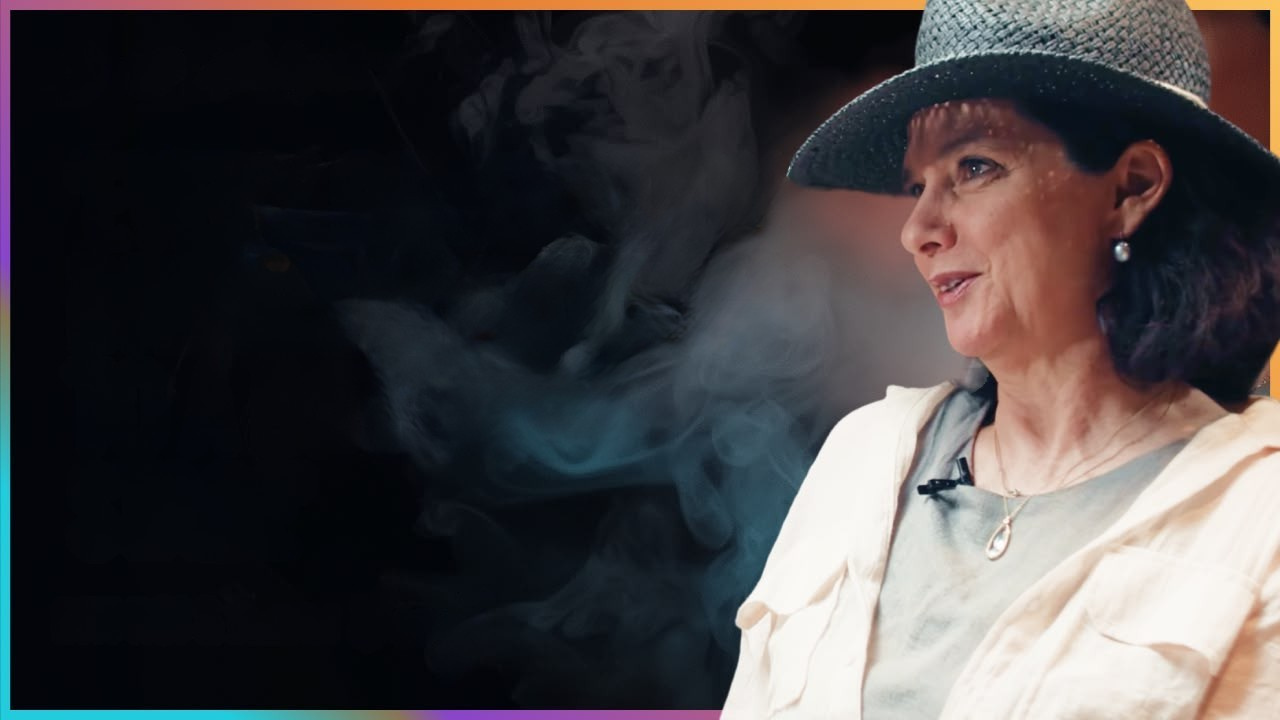
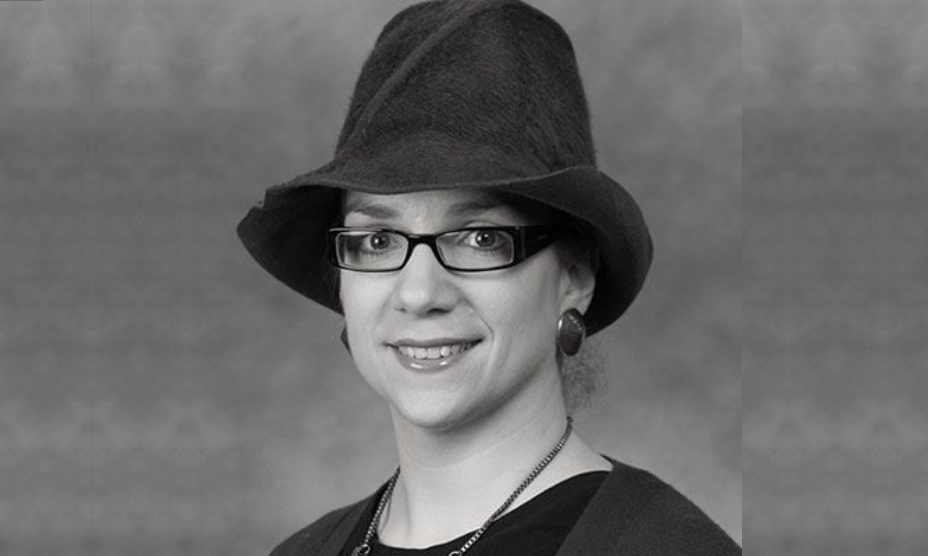
RABBI BENJI LEVY. Professor Dr. Biti Roi, it’s such a privilege and pleasure to be sitting with you here in Jerusalem. You teach Zohar and Chasidut [Hasidism] at some incredible institutions like Hartman, Hebrew University, Zohar Chai. So thank you so much for joining us.
DR BITI ROI. Thank you. Thank you for inviting me.
LEVY. So what is Jewish mysticism?
ROI. Yes. So the word mysticism is a problematic word. Let’s start with this because mysticism is a Latin word, a Greek word, it’s not a Jewish word. It’s not in the core of the Jewish mysticism because we don’t have this word. So, some people said, what is mysticism? It has fifty different interpretations of this word. Some say it’s a mist with the ism, so it’s nothing. So I would say that instead of Jewish mysticism we should talk about the Jewish concept of it which will be Maaseh Bereshit [the mechanics of Divine creation], Maaseh Merkava [the mechanics of Divine manifestation], and the sod, torat hasod [secret/mystical meaning of Torah]. I prefer to say this is what we’re dealing with. This is the inner meaning of the life of the Torah and it’s not mysticism, because people think that mysticism is something that you cannot talk about, and we see that in our tradition they talk all the time about these things. So it’s a little bit, you know, take you off the right derech [path] to understand actually what Jewish mysticism is about.
So I would rather call it Maaseh Bereshit [the mechanics of Divine creation] and Maaseh Merkava [the mechanics of Divine manifestation] as the mishna in masechet [tractate] Chagiga [did]. It’s very, very ancient. People think Jewish mysticism, when did it start? Actually it’s very, very ancient and it starts in the Talmud. The Talmud actually described in masechet [tractate] Chagiga that there are three different types of topics. We’ll see later on it goes everywhere, but at the beginning there are three different topics of Jewish secrets – will be Maaseh Bereshit, actually Genesis chapter one, what’s going on there? What’s the mayim [water], what’s the rakia [firmament], what’s the or [light]? Maaseh Merkava, Ezekiel chapter one, and arayot [unions], a few chapters in Vayikra, in Leviticus, that speak about the arayot. So these are the three components of the Jewish mysticism at the beginning.
Later on the Zohar will say, no no, you didn’t understand. Everything stands on the secret. Ein alma mitkayma ela al raza. This entire world is established, or being, on a secret. So everything is secret and every chapter in the Tanach actually has its own interpretation, inner interpretation, that actually can bring you the secrets of the Divine, the world, maybe I would say the soul and and everything. So I would describe it like this and I would also go back to tractate Chagiga to say that in tractate Chagiga it says, what [is] this world about, what’s the foundation of the world? Oh, people are walking around, they’re like sleeping, they are standing on things that they are not aware of what they’re standing on. And later on, a very well-known Hasidic master, the Sfat Emet, will say, lech lecha [go forth], Abraham said, lech lecha, what is lech lecha? And this world was on the world. If you pay attention, you can hear – everyone can hear the word lech lecha [go forth] or lechi lach for women. There was a guy, his name was Abraham, that listened to this. So actually, it’s here. It’s maybe obscure, it’s maybe under things, but if you are willing to give a chance to things that you’re not seeing or are not scientifically proven, are you willing to give this kind of reality to be part of your life?
LEVY. Amazing. So how did it become part of your life? What’s your origin story? How did you get into the depths of Pnimiyut [inner dimensions of Torah], of Kabbala, of Chasidut [Hasidism], of this sense of mysticism?
ROI. It’s hard to say, how did you get your life? How did you find your husband? I think on the one hand, my dad was part of a group – with Rabbi Adin Steinsaltz, we called him Adin, and with other people that they became chozer betshuva –
LEVY. They became religious.
ROI. They became religious and they started to look for inner meaning in their life. This is one hand. The other hand is my mom, who wasn’t religious, but she actually was very into the inner soul. She was a psychoanalyst and she actually tried to understand the inner part of what we talk about, of what we do. So maybe this, but I can’t tell you exactly the road that I take, the road not taken, and how I came to it, but I guess these are experiences that influence my life. And then I had a great teacher. My teacher, Professor Yehuda Liebes and Professor Moshe Idel. And I mentioned Rabbi Adin Steinsaltz, that from another direction, not academically, he shaped my way of thinking, and yes, maybe this thing. I started to study philosophy. I thought maybe it would organize my doubts, my research, my search. And I found very good teachers and I got into this time of – I can also say that I was very interested in Jewish study as a whole, and that Talmudic speaking, because I was a woman, wasn’t really accessible for me. So I think you find in Israel a group of davka [specifically] women that are dealing with Kabbala. They are scholars, many of us are from the feminine side of the map, that we found our way of studying Torah through this, through the inner studying of Torah.
LEVY. So in an ideal world would all Jews be mystics?
ROI. I don’t know. I’m not seeing mysticism as a should. I see the Torah as a should. I see this, our traditional way and more practical way of life, as a should. And it’s interesting that this is the claim that Kabbala actually started from trying to give inner meaning to the mitzvot. So actually it didn’t start with the big ideas, tzimtzum [contraction], shvirat hakelim [breaking the vessels], sefirot [divine emanations], no, it started with Jewish people starting to give an inner explanation to what they’re doing. I’m putting on tefillin in the morning; what does it mean? So if you go in this stream, you say actually what it means is [that on] the practical level we practice and be’ezrat Hashem [with God’s help] it will go and last. And the inner meaning that somebody is giving to it, it’s his own way. Two people can sit on the same bench in shul and they can cover their eyes together and they can say Shema Yisrael Adonai Eloheinu Adonai Echad [Hear O Israel, the Lord is our God, the Lord is One], and their inner meaning is completely different. It can be completely different what the word echad [one] means. Philosophically, mystically, it’s okay.
I also believe as the kabbalists in the sixteenth century in Safed believe that everyone has his shoresh neshama, the root of his soul. And the concept of shoresh neshama says that we are all different. Listen, we are all different, everyone has his own inclination. So I wouldn’t press, I wouldn’t vote to be a mystic, no. I think it’s enriching a lot in our life. I think it’s one of the most profound Torah literature that we have and that we can open it and enjoy it and enrich ourselves with, but it’s not a must. No.
LEVY. So when one says Ein Sof [Infinite Being] or God or whatever word you want to use to describe this being, what do you imagine? What do you see as this entity?
ROI. So again, as I said before that Jewish mysticism is a little bit misleading, also to say Ein Sof is a little bit misleading because the concept of Ein Sof, the Infinite, became something that is so profound in the culture, in the Western culture, that it switched a little bit from its own original understanding. I would say that Ein Sof [Infinite Being] in the Western world, that inspired Borges and all kinds of people actually. They came with the Ein Sof, Harold Bloom and many others, literature kind of people and philosophers, very based on the Christian understanding of the Ein Sof, which is the ineffable, the one that you cannot say anything about. Actually the X, the one that you cannot give a content to. As opposed to that, I think we can see inside the Jewish tradition, the Kabbala tradition, that Ein Sof [Infinite Being], I will quote: “Haayin hu yoter yesh mikol yesh.” This ayin, this nacht, as we say in German –
LEVY. Nothingness.
ROI. Nothingness, the nothingness is yesh, is how would I say yesh?
LEVY. It’s something.
ROI. It’s something more than every something. So like the ayin is telling us everything is open, all the options are open, all the cards are open, and nothing is yet to be done, but everything can be there. So in a way it’s a completely different understanding of the word ayin [nothingness] or Ein Sof [Infinite Being] became so crucial in the Western world. And more than that, we found that actually for the kabbalists, Ein Sof is something that you can achieve in your life. Like you say, Baruch Ata Hashem Eloheinu Melech haolam [Blessed are You, Lord our God, King of the universe]. This is the well-known bracha [blessing]. And you start with Ata [You], which we say in Hebrew second body, guf sheni –
LEVY. Second person.
ROI. Second person, and Eloheinu [God] is in third person, and what are you doing? You are actually praying, you are accessing or you’re trying to access this Ein Sof [Infinite Being]. So actually what kabbalists more were interested in is not to nullify and to evacuate all existent and reality from the Ein Sof, but rather the opposite, to fill it with a lot of meaning and then to tell you, listen, you can wake up in the morning and pray to the Ein Sof.
LEVY. Wow.
ROI. So it’s very interesting to – especially when we talk in English to clarify this concept, like people like to say, Jewish meditation. Oh, Kabbala is Jewish meditation. Now what is meditation? Usually it’s quietness. You sit against maybe a white wall, or you’re evacuating your thoughts, and this is what meditation is. But when we see in our sources, usually and many, many of the sources speak about speaking, sometimes even in excess of speaking. What do you do? You come to shul and you open your mouth and you speak, and some people, if they’re Jewish, they’re also shouting. There’s no choir or a piano and everything. You are actually shouting or speaking. As my Professor Moshe Idel says, we are a community of tzlil, of vocal expressions, and this is the way to get to the Divine. Not usually, I’m not speaking about everyone, but not usually through evacuating your mind and sitting quietly but rather the opposite. Through our ritual, the performing body and the performing mouth, I would say, you’re accessing the Divine.
Maybe I should say something to clear my intention when I speak about it, I speak in a generalization, which is not accurate. I mean, I cannot speak about the Jewish mysticism. I cannot speak about Kabbala. I cannot even speak about the Zohar because the Zohar has all kinds of voices and also, of course, of the Chasidut [Hasidism]. A very well-known article by Yosef Weiss, who was one one of the promising scholars, actually described typological differentiation between Breslov and Chabad. It’s completely different in their motivation, in their style of religion. So I just want to clear it now. I’m not speaking about the Kabbala, the Jewish mysticism, Hasidism, no, but –
LEVY. Your view on parts of it.
ROI. Yeah, it’s you need to –
LEVY. That’s such an academic thing to say.
ROI. It’s academic –
LEVY. It’s like in the beginning of the thesis, you need to limit what it’s referring to.
ROI. Yes, because –
LEVY. It’s good.
ROI. Okay, academic –
LEVY. You’re trying to be true to it.
ROI. No, sometimes I say academic. I don’t like the word academic sometimes, believe me, but we need to be accurate –
LEVY. It’s to be true to the source.
ROI. We need to be true. Like the Baal Shem Tov is not exactly like his grandson and this is the beauty about it, that you have all kinds of understanding. Let’s say Hasidism. So this one, Rabbi Shneur Zalman of Liadi, left and went to Russia. The other one went down to Romania. Everyone has his own personality, his own way of life, and he shaped Hasidism in his own view. And therefore we have all kinds. Chabad is not Breslov and Breslov is not Komarna and we have a richness of this as I said, shoresh neshama.
LEVY. The soul root.
ROI. Yeah.
LEVY. So what is the purpose of the Jewish People?
ROI. I don’t know what the purpose of the Jewish People is. I guess it’s to do good in the world. I see the Torah story is starting from where we are now moving. This is a movie. Taking the movie concepts, we are a long shot and then there was somebody, Noah is not good enough, there’s something, and then we say to Abraham, come come here, lech lecha, and we start the whole thing. And I guess this is – what’s the Jewish People’s purpose, you said? And also I would say about the word Yisrael [Israel], nachon [yes], Yisrael, we say it’s a theophoric name. It’s a name that holds the Divine within, which many of the Jewish names hold, like we can have the root Chanan and we have Chananel, Chananiah, Elchanan, we have everything. The Jewish People have to hold the Divine in the world, and it says in the midrash, haavot hem haMerkava. Our ancestors –
LEVY. Are the chariots.
ROI. Are the chariots. So we need to be transparent, we need to work with, we need to expose in a way the Divine in the world. This is the big mission. Who understands exactly what it means? I don’t know, but this is the mission. And it says – going back to the word Yisrael [Israel]. It has a few –
LEVY. Permutations.
ROI. Permutations and explanations. So in one of them you are sarael, you are the minister of God in the world, which I always think we need to be very careful about. It has to come with a lot of humility. It’s a mission, it’s not a power that we can be proud of, or [use to] suppress other people. It’s a mission, it’s a sublime mission in the world. But Yisrael, on one hand, there is a very nice explanation that I love. It’s an acronym actually of all our ancestors and matriarchs –
LEVY. All the patriarchs and matriarchs.
ROI. All the patriarchs and matriarchs with Abraham, Sarah, they’re all there. This is Yisrael [Israel]. We adhere or we stick with this. We follow them. They started a way, as I said, in the Torah, until Abraham, and then we started to follow them. This is one explanation. The other one is the acronym, yesh shishim ribo otiyot laTorah [there are 600,000 letters in the Torah]. Which actually says a completely different thing. It says that Yisrael and the Torah, Yisrael are holding the Torah, but every one of us has his own letter. I don’t know what your letter is. I think my letter is bet. But everyone holds his own letter in the Torah. By the way, there’s not 60,000 –
LEVY. 600,000.
ROI. 600,000. There’s not. But nevertheless, it’s a number of the Jewish people. And everyone has his own letter, as we said before, shoresh neshama [soul root], and this minhag [tradition] that everyone is writing one letter in the Torah, it’s enough. If you find your own letter in the Torah, it’s okay. I will say kind of a derash [deeper interpretation]. On the one hand, you have to follow your origins. On the other hand, you today, 200-whatever we are post Shavuot 5785, you have to find your own ot, your own letter in the Torah. Now, a letter has no meaning semantically. It’s not a word even –
LEVY. Only when it’s with other letters.
ROI. Yes, but you have to find your own piece, even if it’s very minimal. You have to find yourself in the Torah. This is your mission.
LEVY. Yeah. And how does tefilla work? How does prayer work?
ROI. Tefilla [prayer]. It’s a maamatz, it’s like an effort, it’s a mission, it’s something that I need to put myself in. It’s not happening on its own. You have to say before tefillat Shemoneh Esreh [the Amida prayer], “Adonai sfatai tiftach.” Please God, open my lips. So it’s closed actually. How do we get to a minute that we feel that we’re in front of God, that we can say Ata [You]? Ata, as we said before, it’s a – second person you call it in English, yeah, guf sheni. How are you available to say I believe that there is an Ata [You]? So tefilla [prayer] is something very hard to do. Every educator knows today that tefilla is a complete challenge to say, but how can you open your mouth and say, like, we have to say tefilla al hatefilla [prayer on/about the prayer]. Like Rabbi Nachman is saying teshuva al hateshuva [repentence on the repentence], you have to say tefilla al hatefilla [prayer on the prayer]. “Adonai sfatai tiftach” [God, please open my lips] is tefilla al hatefilla.
LEVY. Say a prayer on prayer.
ROI. Yeah. Leah Goldberg, a very famous Hebrew poet, spoke about “borcheni Elohai, lamdeni Elohai, barach vehitpalel al sod ale kamel.” Teach me, God, to pray. It’s not coming on its own. How can you pick up the phone, speak to somebody, and there’s no voice from the other side? This is the challenge of prayer. And I feel that this is something of – it’s a core of the Jewish practice. In a way that we can speak about God academically and philosophically and all kinds of concepts but prayer is a minute of a real ability to give the otherness, whatever will be, a place in your life that is not proved scientifically and it’s not part of what people speak about or can prove. And are you ready to be in this situation where you speak to something that you didn’t see, you didn’t touch, and really talk to Him? And it’s a miracle actually because He is the omnipotent whatever philosophically you can say about Him and you’re talking to Him. I mean, what kind of talking is this? It’s like prophecy. Is it possible, this connection between the human and the Divine? So I see it as checking challenges in its inner time. And I think that it says in the Gemara, “chasidim rishonim hayu shohim –”
LEVY. “Shaa lifnei.”
ROI. “Shaa lifnei o shalosh shaot lifnei.” So it’s a kind of something that you need to organize yourself –
LEVY. The original pious people used to prepare for at least an hour, three hours before and afterwards.
ROI. Yes, you have to prepare yourself and what you do in the tefilla [prayer]? And later on, a Hasidic master will say tefilla, it’s all about deveikut [cleaving]. It’s not just to believe that you are talking to the invisible, but are you there?
LEVY. Cleave?
ROI. Cleave, connect, attach yourself in a real way? Not okay, He’s there, I’m here. Can you actually do a kind of a meeting, you have a date. Can you be there? And they say tefilla, lashon petil, it’s a wick. A wick has two strings that are combined together. This was the ideal thing, but I think there’s no Jewish streams like Hasidism that put prayer on the table and said, this is the domain of your personal inner reflective understanding of what’s going on, because they also spoke about machshavot zarot, alien –
LEVY. Alien thoughts.
ROI. Alien thoughts and what’s happening in your inner life and can you actually track your associative understanding and thinking and what you do with this? So I think they saw tefilla as a personal analysis of yourself in the most profound way. What do I do there? Where do I find myself? Am I proud with my tefilla? Can I be in anava, in humility, in order to give the Divine to be with me? I think they’re talking about tefilla in the most profound level of what it says. And in the Zohar it says “mimaamakim keraticha ya.” “Mimaakeem keraticha ya –”
LEVY. In the depths I call out to God.
ROI. In the depths, but it can be also from the depth of the Divine. The kabbalists think about a whole depth of the Divine world. So it’s both. I want to direct myself to the depth of the Divine and also to find this depth of mine. And I think it’s an analysis in tefilla, if you’re ready to take these moments of I don’t know, five minutes, seven minutes, half an hour, whatever. Whatever you do, I think this is kind of a testing point. Do you really believe in your ability to talk to Hashem [God]? It’s not very easy.
LEVY. And what about Torah study? What’s the goal of Torah study?
ROI. In the Zohar it’s called itin. Torah gives you itin. Itin is in Aramaic, etzot –
LEVY. Advice.
ROI. Suggestions and advice on how to live your life. For the Hasidim they would say it’s itin for deveikut [advice for cleaving to God]. How can you attach or cleave to God through the Torah? But kabbalistically thinking, we speak about the Torah as something that is open too. I mean, it’s not a text that has communication, a semantic understanding of this word.
The Ramban, Nachmanides, at the beginning of the Peirush LaTorah, with his commentary to Genesis, he says that the entire Torah is – Rabbi Moshe Nachman, Nachmanides, we know who he was. By the way, he’s very, very important to the history of Kabbala because he was a big, big, big person, very, very famous and I know people really admired him. So to say Rabbi Moshe ben Nachman has a Kabbala in his commentary to the Torah, it actually moved the Kabbala from the side, maybe, to the front.
Nevertheless, in the beginning of his commentary, he says that the Torah can be read in many, many ways. I can read the word bereshit [in the beginning], bara shit. He created the six or beit reshit, two beginnings. I can read it in all kinds of permutations. And actually, he says that the entire Torah can be read very differently. I mean, vayomer Hashem el Moshe [And God said to Moses], I can cut the letters in many ways. I think this is an encapsulation of the Jewish understanding of the Torah and life, actually saying that the Torah is what it is, but it’s open in a way. And it says that the Torah was written esh chora al gabei esh levana –
LEVY. Black fire on white fire.
ROI. Black fire on white fire. The black fire is the letters and the white fire is the klaf, parchment. But then it says that the white parchment is zeroa shel haKadosh Baruch Hu, it’s the hand of God. So in a way the Torah is a piece of the Divine. And it’s not a textbook [where] we open a book, we take it from the shelf, we open the Torah, it says this, I can take another book, it says differently. But rather, ontologically, it holds the Divine in it. And therefore, because He is the ayin, because He is the existence of all existence, it can be everything. Everything is in the Torah in that way. Everything is inside. And there’s a midrash that I really love that says, just after Shavuot, the word of Shavuot, what’s the word of Shavuot? It’s the word anochi [I am]. Anochi –
LEVY. The first word of the ten commandments.
ROI. The first word, yeah, the first appearance.
LEVY. God says I am.
ROI. Yeah, anochi. And in the Talmud, it says very, very profoundly the explanation that anochi [I am] stands for, it’s an acronym of ana nafshi ktavit yahavit. I gave my soul, wrote it, and I gave it. So actually, I think the real Torah is to look for the Divine inside it. And when I say divine, again, I’m not speaking about the western understanding of the Divine as the sublime, the ineffable, the one I cannot achieve, but rather how do the rituals, the stories, and everything hold in a way the name of God in the world. I would say this is the Torah for me. The Torah is also in the Aramaic. The word is oraita, and oraita is light. So in a way, in all the mysticism, whatever, the Divine is light or water. This is a kind of abundance that comes to you. So to say that Torah is oraita and you listen and you hear the word or [light] has to do with it. Don’t pick up the Torah as something that is closed and this is what it says. Shivim panim laTorah [seventy faces to the Torah] and many more, because it’s “alma dechiru,” as the Zohar said. It’s a world of freedom in a way.
LEVY. Does Jewish mysticism view women and men as the same?
ROI. So I would say it’s very interesting because we believe that Kabbala was a traditional giving, but it’s a composition of the Middle Ages. And of course, in the Middle Ages, women and men weren’t the same. And the roles were very clear-cut. Nevertheless, I would say that kabbalistically thinking, I’m thinking now about the Zohar, there’s no other stream of thought in the Jewish tradition that actually is open to express and to dig into the experience of the other sex. What do I mean? I mean that in the Zohar, part of the Divine world, are two sefirot or two manifestations of God, I would say, that are feminine. One is bina [insight], and the other one is malchut [sovereignty]. They are described in feminine characters. That actually creates this kind of digging into the other sex’s experience. Like bina, for example, is a mother. She’s nursing, she’s giving birth. She is a mother. She is a spouse to chochma [wisdom]. And think about a kabbalist, a man, that is now describing the Divine world in a feminine functions. So it’s not to say we are the man, we have our own qualities, and the women are not important. Vice versa is to say, if the Divine has His own ability to be everything and to express Itself in many, many ways, we won’t give up on the feminine side and about what it means to be feminine and we can describe God also as a woman in a way. Shechina [God] –
LEVY. The Divine Presence.
ROI. The Divine Presence.
LEVY. In a feminine sense.
ROI. So in English you say the Divine Presence, but in Hebrew when you say Shechina or tefilla or Shabbat, they are all feminine words because in Hebrew you have masculine and feminine. So, it has a completely different understanding. Like you say Lecha dodi likrat Shabbat [Come, my beloved, to greet the Shabbat] –
LEVY. Likrat Kala [to greet the bride].
ROI. Likrat Kala. So you actually, grammatically thinking, Shabbat is a woman. But now you are the man and you are accepting Shabbat, which is the bride. So I’m saying this kind of maybe fragility I would say, or liquidness of the sexes, is much more profound in Kabbala. Rabbi Chaim Vital in the sixteenth century, he enters his home and he says I’m kissing the back of my mother’s hand. Because she’s part of the Shechina [Divine Presence]. She’s part of the Shechina. We just finished Shavuot. Rabbi Yosef Karo says to Rabbi Shlomo Alkabetz, what are we doing erev Shavuot [Shavuot eve]? We want to get a revelation as well. Sinai was nice but we want [to receive] also. And who is speaking to them, who is revealing Herself to the Divine Presence? She is the mother and She is the Shechina. So if Safed wasn’t the city of Kabbala, I would say it’s the city of the Shechina. They actually live with Her, with the feminine Divine that they see as part of their life. And they see the woman, their daughter, their sisters as taking part in this Shechina. Like Vital is kissing the hand of his mother saying this. Or Rabbi Moshe Cordovero is saying we came to Safed to be in chek haShechina, in the hug of the Shechina.
So in a way they I would say they are more exposed to this kind of ability that the Divine will be also feminine, which is amazing, amazing, amazing, yes? Or to say that Elohim [God] is also Elohima [Goddess]. Yes? It’s also a divine femininity. And I’m the kabbalist, I’m not just giving, I’m also receiving. As opposed to the Divine, I’m becoming feminine. Daniel Boyarin wrote about the Talmudists that they are a little bit women. Here they are women because they want to receive from the Divine. And whoever is receiving, he is the feminine in the couple. Yes? So they are much more flexible in their ability to move from place to place, I would say.
LEVY. Interesting. So what is the biggest obstacle to living a more spiritual life?
ROI. The cell phone. I mean, our attachment to things in the world and our obstacle to seeing through, to understanding that there is something beyond. And I’m going back to masechet [tractate] Chagiga in the Talmud. People are standing in this world and they don’t know what they’re standing on. And people are awake but they are asleep. And we are not in this world, we are not open many times to speaking about things that we don’t see and we don’t believe in scientifically and we don’t – it’s not on the TV. Like your ability to open your life. And I would say that I was once at a funeral. It has to do with this place. I was at a funeral and what struck me about the speech of the son of the person who died, he said, I thank you, my dad, for telling me legends when I was a kid. Telling me about Peter Pan and telling me about all these kinds of stories actually enabled me to be an adult that is open to all kinds of options. How do you say in Peter Pan, the –
LEVY. Never Never Land.
ROI. Never Never, or is there maybe if we’ll have a world just with kids, or maybe we have a world with three, like Asimov gives us three rules. Like to educate ourselves to think that everything can be different. That whatever we see is not stable at all. We are very inclined to this side of: maybe this is/was our problem now/recently. We think that we know, we think that everything is closed. Just to open up our side to it.
Nevertheless, I would say also from the other point, also from the religious point of view, you need to understand that you never know. The Zohar has a very beautiful midrash about the word Elohim [God]. Elohim, he spread it into two words. Why? Because that’s what Jews are doing, spreading letters. We brought up a few explanations and examples just with our talking, but to do a deconstructzia –
LEVY. Deconstruct.
ROI. Deconstructing everything is a very Jewish practice I would say. So the word Elohim [God] in the Zohar has two words in it that combine together. One is eleh, these, and the other one is mi, who. Now for the Zohar, kabbalistically speaking, mi is the sefirat bina [attribute of insight] who is above, she’s very concealed and everything. And eleh are the sefirot [divine emanations of] chesed [loving-kindness], gevura [might], these things that you know. What was the sin of the people of Israel? The sin was that they said eleh elohecha Yisrael [Israel, these are your gods]. Not that they did a [golden] calf or they didn’t believe that Moses would come. They spread [separated] the who, the mi, from eleh [these] and they worship the eleh, the concrete, what you can see and you can point on, yes, eleh. The other people think that God is mi. They think that He is who is talking to me, like who, I don’t know. But if you can combine these two, I would say, the doubt, the things that you are not sure of, again, physically, visually speaking, and the eleh, your concrete life, you got the Elohim [God]. Yes, this is what combines these two together. And you cannot give up on [either] of the sides. Eleh elohecha Yisrael [Israel, these are your gods] and mi [who] from the other side. You need to always combine them. I think this is what attracts me in this Jewish life, that you actually enable yourself to give a chance to a world that mi is present and eleh is present.
LEVY. Beautiful. Why did God create the world?
ROI. Wow. I don’t know. I have no idea. Maybe I can say that in the beginning of the Zohar there is a very beautiful drasha [discourse] that in the center stands a beautiful picture of a rose, shoshana. Okay? They start Bereshit [Genesis] with a shoshana [rose].
They want to ask, Bereshit, it’s not like we translate it into English, in the beginning. Bereshit grammatically speaking, and you can see Ibn Ezra on the spot and many others, it’s very weird. Bereshit [in the beginning] is a smichut. It’s like Bereshit for what? –
LEVY. It’s a construct that should be connected to something else.
ROI. Right, so grammatically it doesn’t work. You cannot say in the beginning, it’s not. So many people are thinking about it and the Zohar has his own understanding of Bereshit: the bet [in] is not with the reshit [beginning] rather for the reshit. It can be also in Hebrew like “beRachel bitcha haktana” [for Rachel, your younger daughter]. Jacob is saying to Lavan, I worship – I work here for Rachel. Bereshit [for the beginning], “beRachel bitcha haktana” [for Rachel, your younger daughter]. So Bereshit is for the reshit [beginning]. And they put it in the beginning of the Zohar telling us the Bereshit in the beginning is not in the beginning, it’s actually what’s the end? Where does it go? And if you want to open up to this idea, Bereshit is for the reshit. And the reshit is the people of Israel and the promise. But even though –
LEVY. There’s other times that the word reshit is used.
ROI. Reshit, ken [yes].
LEVY. Like what Rashi says on the spot.
ROI. Ken, ken [yes, yes], reshit in the midrash, it’s hachala [the beginning of], it’s the people of Israel. But to say “keshoshana bein hachochim,” that’s how the Zohar starts.
LEVY. From the Song of Songs.
ROI. Song of Songs. Like a rose among the thrones.
LEVY. Thorns.
ROI. Thorns. “Ken rayati bein habanot” [so is My love among the daughters]. So it says, listen, you’re gonna have Nukhba [the military wing of Hamas] on October 7, you’re gonna have the Shoah [the Holocaust], you’re gonna have Spain –
LEVY. The Spanish inquisition.
ROI. Yes, you’re going to have many, many things. There are going to be a lot of thorns that are going to –
LEVY. Prick you.
ROI. Prick you and kill you and rape you and you’re gonna have a very troubling situation, but don’t forget “keshoshana bein hachochim” [like a rose among the thorns], God is saying as a traditional reading of Song of Songs, “keshoshana bein hachochim ken rayati bein habanot” [like a rose among thorns, so is My love among the daughters]. This is the verse that the Zohar starts with telling us, this is the Bereshit [in the beginning] actually. So maybe if you want to take this story as an option, maybe we are going in this kind of direction. This is what we need to keep the promise, we need to believe in the promise. Sometimes it’s hard to believe in the promise when you read the newspaper and you hear, especially now, but this is the direction.
LEVY. So do we have free will? Do we have agency in this process?
ROI. I think that [with] free will, we need to assume it. There are people that didn’t believe in free will also from our tradition. But as Maimonides is saying in the middle of the tractate of teshuva [repentence], we have five chapters and the middle one is speaking about free will and telling us everyone can be righteous like Moses or or a sinner like Jeroboam and it’s on you. The Raavad came and said, oh my God, why did Maimonides do that? Why did he open up this question? It’s better he will leave it. But what I like about speaking about free will, it’s what Rabbi Nachman of Breslov wrote, and he actually wrote about it, he said – this is a story – he said, I had an answer to the big question that bothered, by the way, not just Jews [but] Christians, Islam, if there’s free will, does God determine what will [be], whatever. And he said I had an answer to it. And I wrote the answer on a piece of paper, but I lost it. This is the story.
Now, I love this story because it tells us that we are growing in our life from [one] stage to [another] stage. Like we develop our relationship with our spouse, with our children, whatever, or we develop our mind, we also have to develop our religious concepts of life. And what [we are] basically saying is, we can ask, are you nuts? What do you mean? You had the answer and you just wrote it on a piece of paper, [as if] you went to the grocery [store]? What does it mean that you wrote it like this? And that you’re telling us that you lost it. But then it says, Rabbi Natan, his disciple, actually is explaining and is saying [that] every time he wanted something new. So we have to take into consideration that our religious perception or personality is developing throughout our years and sometimes an answer that was meant for a fourteen-year-old, it’s not an answer for a twenty-five-year-old or a person who is forty-seven, and this is what he meant by this. I had this answer for my stage, my personality, my mood, I don’t know, of this level –
LEVY. That moment in time, that existential state.
ROI. That moment in time and we need to move on with this. So I like this, it’s like a philosophical question. We need to move on with our perception.
LEVY. So what about Mashiach?
ROI. Mashiach, the Messiah.
LEVY. What is that?
ROI. Mashiach [the Messiah] is a concept of hope. Mashiach is the concept of yihiyeh tov –
LEVY. It will be better.
ROI. Yeah. In the Intifada time, a big poet in Israel, his name is Chaim Guri, wrote after all the terror attacks and many, many hard things, he wrote a poem and the title was “Yihiyeh Ra” [it will be bad]. And if you read it, you feel [like] you stop a knife in your stomach. What does it mean yihiyeh ra? It’s like –
LEVY. It will be bad, it will be evil.
ROI. It will be bad. Yes. So in a way, I would say yihiyeh tov, it will be good, is even more crucial than Shema Yisrael [Hear O Israel, the Shema prayer]. In a way, netzach Yisrael lo yeshaker, or yes?
LEVY. The eternality of the Jewish People.
ROI. Yeah, there’s something about this that we – it’s in our DNA that – and I think this is the idea of the Messiah. He will come like this, like that, with a donkey, without a donkey, from heaven, [not] from heaven – there’s all kinds of explanations, especially in masechet [tractate] Sanhedrin in the Talmud, and sometimes it is opposite ideas. Nevertheless, it is the hope that it will be better. In the end, it will be better. The tikva, the word of tikva, hope, in Hebrew is the kav [line]. You have to follow the kav [line]. The kav –
LEVY. The shoresh, the root of the word.
ROI. The root of tikva [hope] is kav [line]. Kovei Hashem yachlifu koach [They that wait for the Lord shall renew their strength], the people were – you have to follow. Rabbi Moshe Chaim Luzzatto says whoever has a tikva [hope] can take himself out of gehinnom [Hell]. I’m just thinking about our –
LEVY. Out of hell so to speak.
ROI. Yeah, our people in the tunnels, yes? If you have a tikva [hope], you can go out and do like this, like the girls [some of the freed hostages] went out and said. It’s something inner, it’s personal, maybe it’s the DNA of the Jewish people to say Pharaoh, yeah, okay, another Pharaoh will [come]. Because I think this [is a] kind of a tikva [hope] that actually we’re all practicing every Shabbat. We take twenty-five hours of pretending we are princesses and princes and queens and –
LEVY. Kings.
ROI. Kings.
LEVY. It’s a messianic taste. A foretaste of the world to come. Me’ein olam haba [The World to Come is before me].
ROI. Me’ein olam haba. Me’ein olam haba. It’s a taste. Sometimes maon le’olam haba. It’s a dwelling of the olam haba [World to Come]. So what do we do? We fantasize that – and think about people in the Holocaust and in the galut, in the diaspora, and in all kinds of troubled times. Sunday, Monday, Tuesday, Wednesday, Thursday, by the way we say in Hebrew rishon, sheni, rishon leShabbat, sheni leShabbat, not in the the –
LEVY. Each day is a first, second, third towards Shabbat.
ROI. To Shabbat. We count for the Shabbat, not for the Mercury and [so on]. So Sunday, Monday, Tuesday, Wednesday, Thursday, people were spitting on you, and putting you on the side, and whatever, yes, discriminating against you, humiliating you, whatever. And you come home, you put on your garment, you take the silver cup. Wow, you are now a king. You’re pretending you are a king for twenty-five hours. This is practicing hope. And every chag [holiday] actually, every holiday we are practicing hope. This is an idea that Rabbi Jonathan Sacks actually developed a lot, it’s very nice. Passover, oh we were slaves, every chag [holiday] we are practicing hope. We are practicing it and practicing it in order to, as I said before, [like] this funeral that I was [at]. How can you internalize fantasies into our life? It’s very important, the imagination.
LEVY. To expand our horizons and our imagination.
ROI. Yeah, our imagination, [so] that even though I’m now in trouble, in the pit, I can [get] out. It’s something that is a kind of riddle, but maybe we are practicing it so well.
LEVY. That it connects you.
ROI. Maybe we are not, I don’t know, maybe we’re losing ourselves, but I think the Messiah is this idea.
LEVY. And what about the State of Israel. Is that part of the final redemption?
ROI. I don’t know what the final redemption is. I don’t know. I would be happy to be a fly on the wall, but I don’t know. I’m not a prophet, but I hope so. I hope this is something that is giving us another stage of kiseh Hashem [God’s throne] like Yisrael [Israel], Merkava [Divine Chariot mysticism], this kind of way, maybe, and maybe in a very challenging way. I mean, being in the diaspora, you don’t have your own police, your own army, how are you fighting in a war and still holding your values? It’s something that we didn’t know before. So it’s all kinds of challenges that give us another stage of expressing this kind of being Yisrael baolam [Israel in the world].
LEVY. What is the greatest challenge facing the world today on a macro level?
ROI. Wow. To believe in good, to do good. Just to believe in the good heart and to believe that the good will win this kind of a battle and bloodshed.
LEVY. How has modernity changed Jewish mysticism?
ROI. How has modernity changed Jewish mysticism? In a way it opened up a window to Jewish mysticism. Afterwards we basically saw that we cannot prove all kinds of things and that rational thinking is not the only way and that science has its own limits and everything. In a way, it opens up a way to Jewish mysticism. Wittgenstein, the big philosopher, is saying he’s ending his tractate and he’s saying ma she’ei efshar ledaber alav, mutav lishtok odotav. The things that we cannot talk about, which is a lot after these days, mutav lishtok odotav, it’s better to be silent above or on them. So when you’re silent, when you are diminishing your kind of fantasies about what you are and what you can achieve, maybe a way, a window of this kind of respecting this kind of understanding of the world is to have this more in place.
And also I think that every generation brings mysticism to a different stage. Like Rabbi Kook, Rabbi Abraham Isaac HaKohen Kook, for me was a mystic. And he not just organized the mysticism [that existed] until him, he wanted to achieve experiences and also to develop his own commentary on the inner side of the Torah. So I think it’s also a challenge for us to take it [to] a different level because it’s esh shchora al gabei esh levana [black fire on white fire]. So we need to take it and do something with it.
LEVY. What differentiates Jewish mysticism from other mystical traditions?
ROI. So again, we’re coming to the tricky word, Jewish mysticism and other mysticism, which is Islamic mysticism or –
LEVY. Eastern, Christian.
ROI. Eastern, whatever. Actually we see also many influences, like [I’m] just studying now about the Sufism that the son of Maimonides, Rabbi Avraham ben haRambam, actually wanted us to and there are all kinds of things that we find in Safed by the way, they were next to Sufists and Sufism is considered to be the Islamic mystic stream. So there’s all kinds of influences.
Maybe we can say, and again, in generalization I’m afraid to say something, but in general Jewish mysticism is very text oriented. We base ourselves in text, not everyone of all the kabbalists, they were more experiential, but the text is the base and we go back to the text. Like the Zohar is a commentary on the Torah. Nachmanides wrote commentary on the Torah. Not that people didn’t write a mystical diary. We can think about Rabbi Joseph Karo who wrote his own diary. During the day he was writing the Shulchan Aruch and at night he had these kind of visions and he wrote, and it’s also experiential, but I would say that the text is very important, to say. We’re not so much going on the way and seeing a light and somebody’s talking to us. It’s more into the normative, I would say, borders of the Jewish tradition. And again, this is a generalization, but in the general way of speaking I would say this.
LEVY. Does one need to be religious to study Jewish mysticism?
ROI. I don’t think so. I don’t know what’s religious and not religious, at what stage you are. A very well-known Torah of Rabbi Nachman, apropos Shavuot, we said Moshe nigash el haarafel asher sham haElohim. And Moses approached the what, the smoke, the mist, the cloud. So Rabbi Nachman is developing a whole Torah, Torah Samech Dalet, a very well-known Torah about the chalal hapanui –
LEVY. The open –
ROI. The open space, domain. So some people can go through their doubts and their questions and the mist and the smoke. So I don’t know who is in, who is out. Every one of us is doing his own voyage and his own –
LEVY. Journey.
ROI. Journey to get through the arafel [fog] and the mist. Even Moshe Rabbeinu [Moses], it’s not somebody from the side, to get to the Elohim [God]. So, I don’t know what everyone’s journey is.
LEVY. So it’s for everyone because everyone’s on a journey at a different stage anyway.
ROI. I don’t know. The kabbalists want people to be immersed in Kabbala when there are actually a whole set of things that they did. But I don’t know what to tell you about it. I don’t know exactly the journey of people. But I do say, as I said before, that Jewish mysticism sits and started and is evoked from understanding the mitzvot, and Jewish mysticism is based on the Torah. So these are two components that are very Jewish, practical ways of being there.
LEVY. Can it be dangerous? Can Jewish mysticism be dangerous?
ROI. Going back to masechet [tractate] Chagiga, this is the anchor to the Jewish mysticism trip, journey until today. I would say that it can be dangerous. One out of four didn’t succeed –
LEVY. Three out of four didn’t succeed.
LEVY. Three sorry, three out of four, yeah. Three out of four didn’t succeed doing it. In a way it exposes you to all kinds of sides of reality that if you are not what I would say, strong enough, stable enough, maybe open enough, it’s not clear what was exactly, and this is why we see during Jewish history that mysticism and Kabbala was under debate many times. The Vilna Gaon was so afraid of the Hasids. He didn’t want to meet Rabbi Shneur Zalman of Liadi. Wow, he didn’t want to meet with him. He ran out of town [to avoid him]. Being afraid that these are Shabbeta’im [in the tradition of Shabbetai Zevi] and maybe they are trying to do something that is digging into the borders of the Jewish tradition. If you want to say that if you believe that the Jewish tradition is so open and free, it has its own dangers.
That’s why it was under discussion until Rabbi Chaim of Volozhin came and said, oh, they are okay. They’re keeping mitzvot. Don’t be afraid. They’re not hidden Shabbeta’im. It took time. So in a way, not everyone wants to open up the norms. As in Chasidut [Hasidism] there’s an ideal man, Hanokh, Hanokh from the Bible. Chanoch tofer min alim. Hanokh was a person that was sewing leathers to make sandals –
LEVY. Yeah.
ROI. And shoes. And he is the ideal man of the Hasidim that in every hole that he made on the leather, he said, leshem yichud kudsha brichu ushchinte, for the sake of the unification of God and the Shechina, the Divine Presence. So what everyone will do like this, outside of the beit midrash [study hall], outside of the shul [synagogue], just to do something that you do with stinky leather and you are worshipping God. So it’s kind of challenging the borders of the normative way of what we do as a community, and on the other hand it’s inspiring.
LEVY. For sure. So you study all this text for decades of your life. You’re a grandmother and a mother, you’re a wife, a student, a teacher, a citizen. How’s this practically affected relationships in your life? And can you give one example of a relationship that this has actually affected?
ROI. This is my life because this is what I eat. I eat it for breakfast and lunch and dinner. These texts are my life. I swallow them. I –
LEVY. Consume them.
ROI. I consume them. I love them. This is what inspires me as a human being. I don’t know what to tell you. This is something that I can’t – Rabbi Pinchas of Koritz said that the Zohar kept me in Yiddishkeit, kept me in Jewish life. In a way, I feel like this. I mean, before being exposed to this kind of rich world, psychologically, spiritually, whatever we can say about it, literally, poetically, whatever. It was, I’m speaking about [my] teenage [years], it [was] a little bit boring, a little bit flat. If you want to feel that you are actually living something that is lively. God is called Chayut in Hasidism, not Almighty, He’s Chayut, He’s a –
LEVY. Life Force.
ROI. Life Force. So if you want to live like this, you have to be inside these things.
LEVY. Amazing. We’ve talked so much about different questions and you’ve brought ideas to them. Can you share just one idea to conclude? One thought that animates you or that’s just meaningful for you that resonates right now that we can learn together as we conclude this conversation?
ROI. Okay. So I’ll bring something that I taught this morning. It’s a drasha [discourse] of the Maggid of Mezritch. He is considered to be the second generation for Hasidism, which is not true, but we’ll put that aside. Nevertheless, he speaks about a very, very not well known pasuk [verse] in the Torah that actually –
LEVY. A verse.
ROI. What?
LEVY. A verse in the Torah.
ROI. A verse in the Torah that says that we need to build trumpets –
LEVY. Chatzotzrot?
ROI. Chatzotzrot kesef, chatzotzrot kesef [silver trumpets]. In order to –
LEVY. Silver.
ROI. Out of silver in order to gather the people for war, for whatever. This is the WhatsApp for ancient times. Nevertheless, he finds up in the word chatzotzrot [trumpets], the he again –
LEVY. Separates the word.
ROI. We spoke about separating the words and deconstructing the word, that it’s a Jewish habit. A Jewish habit that is very important because it says something about the freedom, the undogmatic way of thinking. And he says chatzotzrot are chatzitzurot. [Trumpets are] two halves. Actually, he relates that if we’ll dig inside the text, he relates it to the Platonic mythos about splitting the human being, that we’re like a ball and cutting it in two, but I put it in an aside. Nevertheless, he’s interested in saying that we and God are half shaped, chatzi tzura. Chatzi tzura. Every one of us in this relationship is not enough. As opposed to the philosophical idea of God as the the shlemut –
LEVY. Completeness.
ROI. The completeness, the wholeness, the everything. God actually made Himself chatzi tzura [half shaped] in order to be with us chatzi tzura. And what’s our chatzi tzura? He takes the word adam [man] also and splits it into two. Dam. Dam is blood. We are actually blood and bones and this is what we are. And alef is Alufo Shel Olam, is the Divine. And actually together, we are Adam. “Naaseh adam” [let us make man] is not the Divine calling the angels to make [a man] like the midrash [says], but rather He calls us to be together with Him, Adam. And he says, what’s kesef [silver]? Kesef is kisufim, is the longing of this chatzotzrot [trumpets] to be together again.
So, in a way, I feel this is something that is going with me because we are a human body. We are performing many things in our life with our body. And we also are open to this alef. And are we? Are we willing to be open to the alef? And are we willing not to give up on the dam on our physical side –
LEVY. Flesh and blood.
ROI. Flesh and blood, whatever that means, with the Divine. I think this is the challenge, this is the scope that I’m dealing with in my life. Yes, I would say this one.
LEVY. So we give you a blessing that you never give up on that and that you can continue to inspire people through your study and through your life –
ROI. Thank you.
LEVY. To connect the alef to the dam.
ROI. Amen.
LEVY. To bring these chatzotzrot [trumpets] together, kisufim [longing]. And thank you so much for your ongoing work to bring this powerful Kabbala to the Jewish world.
ROI. Thank you, Rabbi Benji, thank you very much.