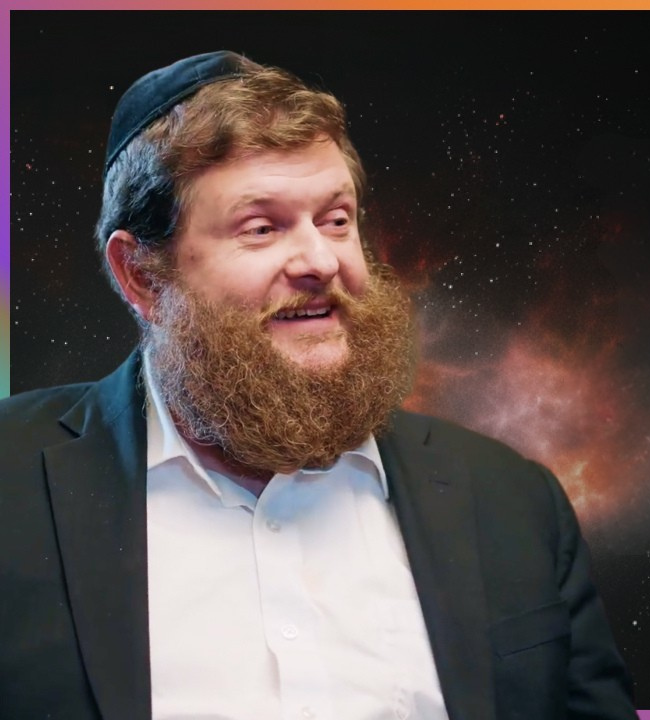
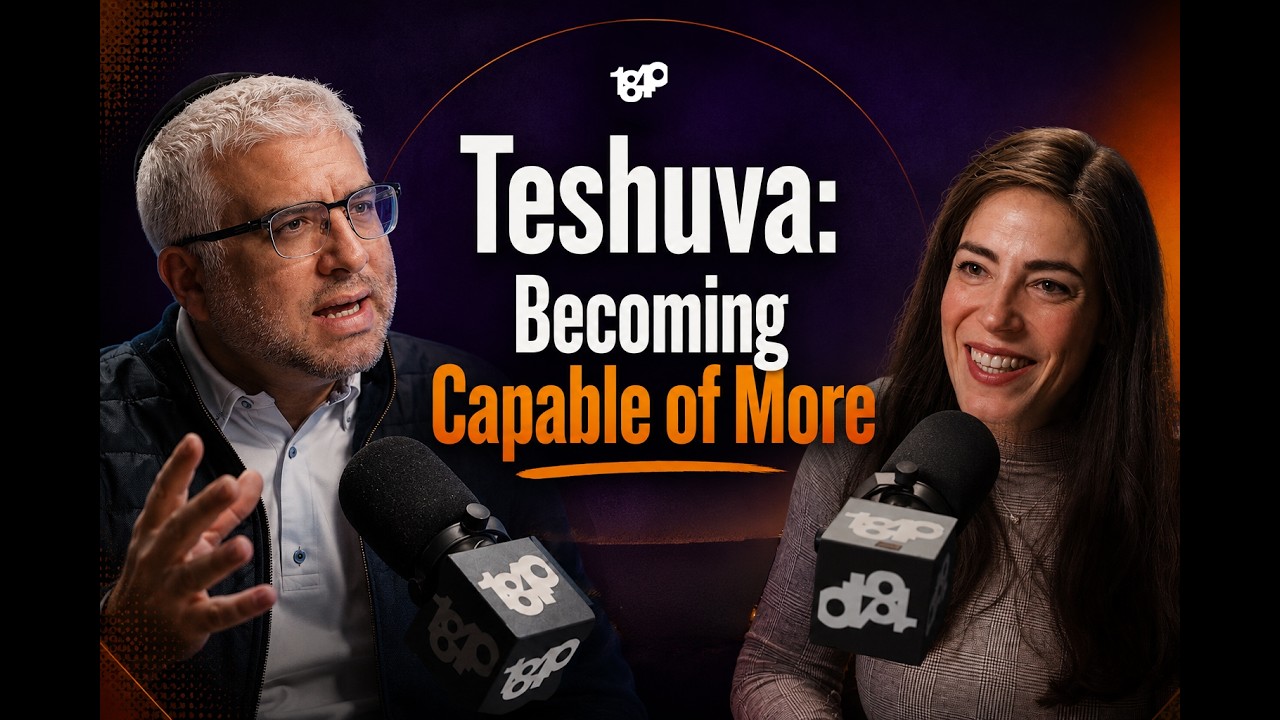
RABBI DR. BENJY LEVY. Fruma Schapiro, it’s such a privilege and pleasure to be sitting with you here in California. You’re a shelucha [emissary] first and foremost, an emissary of the [Lubavitcher] Rabbi. You teach in Ohel Chana. You have a podcast that is called Weekly Sichos [talks], getting to women all around so that on the go they can connect. And most importantly to you, and definitely to your children, mother to eleven beautiful children. Thanks for coming today.
FRUMA SCHAPIRO. Baruch Hashem [thank God], thank you. Thank you for having me.
LEVY. So what is Jewish mysticism?
SCHAPIRO. I’m going to be honest enough to say that I’m going to focus on what I’m familiar with, which is Chasidut [Hasidism], specifically Chabad Chasidut. And what would I say is a definition of Chabad Chasidut? I will answer with a story that we experienced out here in Los Angeles: Soon after we moved here, my husband had a friend who contacted him and said that he had a friend who was living out here in LA – an Israeli who, at that point, was not religious but very interested in exploring answers to a lot of questions that he had about the existence of God. He was, I think, a student of philosophy and a very, very brilliant young person. And he asked my husband if he would get together with him, have conversations, and try to answer some of his questions. So his name was Gil, he came over to our home, he came together with his girlfriend, they were both lovely people. And we started this weekly session, the four of us together, and he would just come in with his questions, just pounding, one after another. And my husband tried to do a lot of research for him and answer his questions, and they were literally getting nowhere. Every single time my husband would say the word God, he would just come back with, “Who said there is a God?” and then they would just spin. To the point that his girlfriend and I would look at each other and we were like, this is ridiculous, this is just going on and on.
And so finally my husband said to him, “Let’s just learn. We’re just going to assume there’s a God for now, and let’s just learn.” And so instead of trying to address the questions, they just sat down and they started to learn a section of Tanya, which is the seminal work of Chabad Chasidut authored by the first Rabbi of Chabad over 200 years ago. And they learned a section called Shaar HaYichud VeHaEmuna [The Gate of Oneness and Faith], which primarily focuses on how God created the world. And they just started going through it. And he warmed up, and slowly, bit by bit, he started to put on tefillin [phylacteries], he started to come to our house for Shabbat meals. And then eventually the months went on and he needed to go back to Israel. And he came to say goodbye, he brought my husband a beautiful gift that we still have, and he went back to Israel.
A few years went by, and we went for [the month of] Tishrei to be in 770, to be in the [Lubavitcher] Rabbi’s shul. And a guy walks over to him, he says, “Mendy!”
And he looks and he’s like, “Gil?” And here he is, now a completely frum [observant] young man. And they started talking, and he started telling him about what happened when he went back to Israel and how he got involved in learning more and more Pnimiyut HaTorah [the inner dimension of the Torah], Jewish mysticism, and his life shifted in incredible ways. And so at the end of the conversation, my husband couldn’t resist and he said to him, “Gil, what happened to your questions?”
And he answered, “Some of them I got answers to, some of them I didn’t, but most importantly is that my faith became stronger.” So for me that story really captures what Chasidut, what mysticism, what Pnimiyut HaTorah is about. It’s the nourishment of the soul. So just like if I would physically feel weary, worn down, and then I eat a good meal and it gives me energy and it makes me feel more capable, more alive, more able to be my best self, I think when we learn Chasidut, we’re nourishing our souls and nourishing our souls in the deepest ways. So the pnimiyut of the Torah, the depths of the Torah, nourish the depths of the soul.
LEVY. Beautiful. So that’s how Gil got into it. How did you get into it? What was your origin story?
SCHAPIRO. Hashem was very kind to me and I was born with a silver spoon in my mouth, as they say, because I was born and bred into a Chabad family. My father is a descendant of the Alter Rabbi’s brother, so I go way back in Chabad Chasidut. But I have to say that for myself personally, I feel like what pivoted me towards really learning Chasidut in a deeper way started in my high school experience, because I had the opportunity to live right down the block from the Rabbi’s shul [synagogue], from 770. And one of the incredible things that the Rabbi did when I was in high school is that for certain special occasions the Rabbi would give out a kuntres [booklet], a booklet that would contain sometimes incredibly deep teachings of Chasidut with terminology and ideas that I never thought I could wrap my head around. And yet, the Rabbi made it an event that anyone could come by and receive one of these booklets from the Rabbi. So that meant that here I am, this little fourteen-year-old, and I’m walking by the Rabbi and the Rabbi’s giving it to me. And for anyone who’s ever had an encounter with the Rabbi, you know what that experience is like. It’s like you feel like the Rabbi is just totally tuning into you, sees you for your soul, sees you for your potential. And when the Rabbi handed that to me, I felt like he was saying to me, “You can learn this.” And for the Rabbi, “You can learn this” also meant, “You can teach this.” So I feel like that’s really what got me started, where I felt like, wow, I can learn this. I can learn these ideas. If I have one that I personally received from the Rabbi, I can learn this. And then when I had the opportunity to start teaching, in the beginning it felt daunting, like can I really bring these ideas to young high school girls? And then I was like, yeah, we can learn these things. And it’s gone on from there. It has been an incredible opportunity.
LEVY. Beautiful. So in an ideal world would all Jews be mystics?
SCHAPIRO. Absolutely. As I said before, I think it’s the nourishment of the soul and all Jews have souls. So absolutely I do think so. I’m not sure how we’re defining mystics, but if mystics mean being in tune with the depths of your soul, then yes, I definitely think that every Jew can be a mystic. And not only could be, but I think that there’s tremendous ability to be. So I just want to mention one of my favorite mashalim –
LEVY. Parables.
SCHAPIRO. – parables that was put out there by the previous Lubavitcher Rabbi, where he described that Chasidut is compared to someone who’s out there searching for coals or searching for pearls. Coals in the depths of the earth or pearls in the depths of the sea. And he goes into describing the details of it and how important it is to get into the deep, right? That’s his message. So when our Rabbi took that example from his father-in-law, he analyzed it in more detail. He talked about, what is it about coals that we’re comparing to Chasidut? What is it about pearls that we’re comparing to Chasidut? And the message of coal is that it provides you with warmth. When you’re in a situation where there’s cold all around you, that’s what the coals give you – they give you that ability to light up a fire and that there should be a warmth in whatever it is that you’re doing. And when we have the marker of something that’s a dead body, it’s cold. Something that’s a living body is warm. And when you mentioned this idea of should every person be a mystic, every person should be alive, right? Every person should have that life in their lives. It shouldn’t be a dead Judaism. There has to be that excitement, there has to be that life in whatever we’re doing. And I think that’s something that Chasidut [Hasidism] brings to the table.
LEVY. Maybe that’s why he said we need to be lamplighters, so we can create the light and the warmth.
SCHAPIRO. Exactly. And then to take it a step further, the idea of the pearls. Coals are more of a basic necessity, that feeling of, I’ve got to be alive, I need to have that warmth, I need to have that light, I need to have proper vision and perspective in my life. You’ve got to have coals, you have to have the warmth and the light, and you’ve got to have it every day. It can’t be the kind of thing where you say, oh, once upon a time I opened up a sicha [conversation of the Rabbi] or once upon a time I think I learned a piece of Tanya. It’s got to be something that you keep on in your life because as we grow as people, as we develop as people, we need to keep having those messages come into our lives in our more developed version. But then come the pearls, and that’s where I really feel we want to focus on what Chasidut brings to the world. Pearls are not a necessity. You can go your whole life long and not necessarily have strands of pearls. I can get dressed in the morning and not put on a set of pearls and I’m good to go; I’m okay, right? But when you go out to a wedding, especially if you’re the bride, it doesn’t work to walk in without pearls. You’ve got to be decked out. And so, especially for us today, we are, as the Rabbi described, the last generation of this galut [exile] and we’re heading into the geula [redemption]. Which means –
LEVY. From exile to redemption.
SCHAPIRO. – from exile to redemption. Which means that we’re on our way, walking to the marriage of Hashem and the Jewish people, we’re walking in as the bride. And that’s really what I feel Chasidut brings to our lives, is just this beauty. It brings things into this more appreciated, special, again, not just on a basic level, but also overflowing with a real appreciation. And I feel as Hashem’s kalla [bride], as Hashem’s bride, we want to be decked out. So.
LEVY. It’s almost like you’ve got the luxury and the necessity. The coals provide that bare necessity because otherwise what would be without that fire, without that passion? But it’s like the concept of hiddur mitzva [beautifying the commandment] that you want to beautify something even more –
SCHAPIRO. Right.
LEVY. – and that’s what the pearls allow us to do.
SCHAPIRO. And one pearl just doesn’t quite do it for a bride. You need lots of pearls.
LEVY. Pearls in the plural.
SCHAPIRO. Exactly. Really decked out.
LEVY. Amazing. So you talk about us, this marriage, this cosmic marriage with God. What do you think of when we say the word God? What is God?
SCHAPIRO. That’s a great question. Can I start with my childhood version?
LEVY. Definitely.
SCHAPIRO. When I was a little girl, I grew up on shelichut. My parents are sheluchim [emissaries] of the [Lubavitcher] Rabbi in New Orleans, Louisiana.
LEVY. Emissaries of the Rabbi.
SCHAPIRO. Yes, emissaries. And my father had – still has, I think – hanging in his Chabad House a beautiful painting of the Lubavitcher Rabbi. And whoever made this painting made light as sort of the background behind the Rabbi. And in my childhood mind, the light behind the Rabbi was what I envisioned when I thought of Hashem in that painting. So, I don’t think it was so off. I think the idea of Shechina, Hashem’s presence, being around a tzaddik [righteous person] very much fits with the image that I had of Hashem. But now in my more adult version, I think of a pasuk [verse] that we quote from the Navi [prophet] Yeshayahu, the Navi Isaiah, where he says, “Ki lo machshavotai machshavoteichem,” Hashem’s way of thinking is not like our way of thinking, right? My thoughts are not like your thoughts. And I feel like that can come up in two different ways of how I envision Hashem. One is that all the things that I think are important and make all the difference and are so real and maybe even so frightening, in God’s viewpoint they’re all insignificant and they’re all nothing. And He’s so much bigger than anything I can ever consider significant. So that’s one end of it. And then the other end of it is that the only way to connect to that bigness is through big things or big accomplishments. And that’s another way where His thoughts are so not like my thoughts, because really the direct path of connection to Hashem is through the simple and through the small. Through the blessing that’s made by a very small child when they pick up a cup of water and they make the beracha, they make the blessing. So that’s what I feel. I try to tune in. When I think about God today, His greatness and the simplicity is the way to reach Him.
LEVY. It’s like the everything and the every thing in between. What about the purpose of the Jewish people?
SCHAPIRO. I think we’re God’s people. We’re God’s emissaries in this world to represent Him here in this world, and that comes up literally from top to bottom. There’s a beautiful haftara [Torah reading from the Prophets] we read on the week of Parashat [Torah portion of] Vayikra and it starts with the words “Am zu yatzarti li tehillati yesaperu,” that Hashem says, I have created this nation and they tell My praise, like, they speak of My praise. And the [Lubavitcher] Rabbi describes there how every single detail of how a Jewish person is made, both from his physical makeup to his soul makeup to every single detail in between, is perfectly designed by Hashem for his purpose in this world to be the ones who are just obviously seen as God’s nation. And I feel like the message of that is that we have to realize how significant our actions are. For example, this summer I’m running a camp with my son and a bunch of his friends and wherever we go, it’s like the constant messages: we’re Jewish children; wherever we go, we make a difference here in this world. We represent something bigger. We’re not just kids walking into Topgolf, we’re Jewish kids walking into play at Topgolf, and we represent Hashem everywhere we go. And certainly the history of the Jewish people just speaks of the praise of Hashem, that we’re here, we’re here proud and strong – Am Yisrael chai [the Jewish People live] in every sense of the word. So we’re here to show that message to the world and bring the morals that Hashem stands for into the world.
LEVY. How does prayer work?
SCHAPIRO. So I’m going to specifically focus on prayer for women. I think for a lot of women, they sometimes shy away from prayer because we’re busy. We have a lot of responsibilities. If a woman is busy taking care of young children, she can be very distracted and it can be hard to designate time to pray, especially because most women are not going into a shul, they’re not going into a synagogue three times a day and participating in a full prayer service together with a minyan [prayer quorum]. Sometimes as women, we don’t always appreciate what prayer brings us. But I think it’s very important for women to be praying, and what I would want to emphasize, especially for women, is instead of focusing on the length, to focus on the depth when it comes to prayer. No matter how long you have to pray, even if it’s a very abridged version of what would be the typical full-length morning service, whatever it is that you’re doing, take the time to really stop, to really connect to the Creator of the world, to really believe that Hashem is running your life and that everything that’s happening around you is for you. And I think that that is crucial, especially for women. As women we carry so many responsibilities on our shoulders. We have so many people whom we love and care about, and our hearts are with our children, our hearts are with our families, our hearts are with our friends, our neighbors; we feel in very deep ways. And that kind of deep feeling can also bring tremendous anxiety, where we can just feel so overwhelmed – what’s going to be with this one and what’s going to be with all different kinds of situations that are out there. And for me, I feel that for women, we need to just take tefilla [prayer] as a time, take prayer as a time to connect back to Hashem and hand over those anxieties. Hashem is taking care of everything, and I feel like one minute of just really connecting to that truth is something that every woman needs every day.
LEVY. So it’s the way prayer works, you’re almost plugging into this faith system that allows you to regain perspective, not have this anxiety, and to share.
SCHAPIRO. I mean tefilla, meaning connection, to just really connect back to Hashem. My husband and I have this joke that we call prayer “tallit [prayer shawl] therapy,” because for a man, you can just get under the tallit and process. And anything can happen under the tallit. You can cry under the tallit, whatever it is, it can all happen there. So there is something really powerful about taking the time to be able to process all of your truths and what’s really important to you. But if a woman doesn’t have the opportunity to necessarily do a full-length tefilla, just know that it can happen in a mini-version. Take a little bit of time, put your feet on the ground, take that deep breath, and connect to Hashem.
LEVY. Beautiful. And then what’s the goal of Torah study?
SCHAPIRO. Again, for women, it’s interesting because there was this thought over the years, over the centuries, that women did not have to learn Torah. And that is something that has, Baruch Hashem [thank God], changed in very big ways. So I think today Torah study is just crucial for every woman. Not in the same way as men. For a man, Torah study is his mitzva [commandment]. For a woman, Torah study is her lifeline.
The vision that I have for it is, imagine a person who just needs a constant drip, drip, drip of nourishment in their lives. That’s how I view Torah study for women. We need to have perspective, we need to be uplifted, we need to be connected, and that’s really what learning Torah is about, especially learning Chasidut [Hasidism], especially learning the depths of Torah. Taking the time to make sure that you’re not just relying on that “once upon a time you went to high school” or “once upon a time you spent your year in Israel and you did your learning.” It’s got to be that constant, ongoing drip, drip message of: What does Hashem say about this topic? Right? What’s the viewpoint of the Torah on whatever it is that I’m dealing with? And I think the takeaway for a woman – how does she know that she’s learning Torah the way that it needs to be learned? If she can walk away feeling prouder, a greater sense of pride and understanding of who she is and what she’s doing, then I feel that that is successful Torah learning.
LEVY. It’s interesting, both with prayer and with Torah study, you said, I’m going to share a perspective for women, as a woman. Does Jewish mysticism see women and men as the same?
SCHAPIRO. So if you’re describing the same as in identical to each other, then I’m going to say an unapologetic, absolute no. If you’re saying same as in worthy, do they have equal worth? Yeah, absolutely yes. That’s an easy one. But I want to just feel comfortable to talk about the role that Jewish women have and really bust the myth that’s out there, that in any way Jewish women who are living proudly, having as I have been blessed to have, eleven babies, and now going on to devote myself to marrying off my children and raising a next generation of grandchildren, and sometimes people can see that as, oh my goodness, she’s tied down to her family, or all the other lines that get out there. So I just want to take a minute and talk about what I feel is a woman’s greatness and how I feel that especially Chasidut highlights the greatness of a woman.
One of the special opportunities that we had during the [Lubavitcher] Rabbi’s lifetime is that twice a year, and I don’t know if there was any other Jewish leader who did this, the Rabbi would have a gathering just with Jewish women. And the entire shul, the Rabbi’s entire synagogue, the whole downstairs area that was usually filled with men praying or men learning, was cleared out, all the men had to leave, and the whole shul was filled only with women. And there would be a special opportunity for the Rabbi to meet with women once before Rosh Hashana and once before Shavuot. And those gatherings were so special and so incredible, and the feeling that I had, especially when I look back now and learn the talks that the Rabbi gave at those gatherings, is that the Rabbi really counted on the women. You know how sometimes in life you have someone who you know just really gets you, they really have your back, like, they’re going to take care of it? I think that’s how the Rabbi viewed women. Whenever the Rabbi would talk to the women, he would be like, “I know you have the emuna [faith],” like, I know you understand what I’m talking about, even if it’s hard for the Jewish people as a whole to believe and to really know that Mashiach [the Messiah] is coming, to really know that the way of Torah is the way of life. The Rabbi really counted on the women to have that as such an innate sense that we know, we innately believe as women that there are better times to come and that there has to be purpose and meaning in the things that we’re doing in this world. So I think the Rabbi really counted on women in that way, and the Rabbi constantly quoted “Bizechut nashim tzedkaniyot” [in the merit of the righteous women], that he’s counting on the Jewish women, on righteous Jewish women, to usher in the time of Mashiach. One of my favorite lines that I learned from the Rabbi about women is about a fascinating Rashi [Rabbi Shlomo Yitzchaki] where Rashi contrasts the attitude of Jacob and the attitude of Esau. And he says that Jacob put the men before the women and Esau put the women before the men. So it doesn’t come across as a very complimentary thing about putting women before men, because we associate that with Esau. And the Rabbi has an entire sicha [recorded conversation] where he analyzes the Rashi and he explains that in this case, the men were the sons and the women were the mothers; nobody puts sons before mothers. So the Rabbi explains the whole perspective of Jacob’s perspective and what’s the appropriate way, and what it means [to put] the men before the women. But that’s not what I want to focus on today. What I want to focus on today is that at the very, very end, the Rabbi says, there’s always the flip way of viewing Esau. Instead of viewing him as the bad guy, we could also view him as the last galut [exile]. We live in what’s known as galut Edom, the exile that was created by the descendants of Esau. And so in our time, in these last moments of this exile, we actually need to put women before men. And what that means is that a woman’s primary way of processing things in this world is through her heart. A man’s primary way of processing things in this world is through his brain. And so right now, typically we say the brain has to rule the heart. But in these last days of galut, and I know every woman who’s hearing this knows what I’m talking about, when you go with your heart, there’s something so powerful about that. And it’s something that the Rabbi was saying everybody needs to learn from that approach of: Don’t just be calculated in your ability to commit to Yiddishkeit [Judaism] or in your ability to commit to being good to another person. Go with your heart, do something that’s not going to be limited to just what the mind is able to accomplish.
LEVY. Should Judaism be hard or easy?
SCHAPIRO. That’s a good one. Judaism has to be joyful. And if it’s not joyful, there’s something off about what’s happening. So if it’s gotten so hard that you’re not happy, you need to go to somebody wise and figure out what’s going on. Is it supposed to be challenging? Absolutely. But it needs to be joyful. So that’s the fine line where we have to feel like we’re pushing ourselves. If we get into this place of being complacent, we’re not really serving Hashem. We have to be oved [serving], we have to be someone who is working to be a servant of God, and at the same time there has to be joy. Whenever I’m talking with young mothers and they’re like, “I’m so overwhelmed,” it’s like, no, mothering has to be wonderful. And if it’s not feeling wonderful, we’ve got to tweak it, right? So I feel that’s true about every area of serving God. There has to be joy together with appreciation for the challenge. So, are there going to be challenges? Absolutely. That’s part of what Hashem put into the world. But if it’s getting to a point where you’re not able to tap into the joy, then that’s not Jewish.
LEVY. Why did God create the world in the first place?
SCHAPIRO. Whoo-hoo. Why did God create the world in the first place? As they say, I’m not God. You’re going to have to ask Him that one. But what I can share with you is a famous line that has probably been quoted by the [Lubavitcher] Rabbi I don’t know how many times, and that is “Nitaveh leHaKadosh Baruch Hu lihyot lo Yitbarach dira betachtonim,” that God desired to have a dwelling place down here in this low world. And, again, as women we can really connect to the idea of making a home, having a home. I think we really appreciate that, we understand how valuable that is, we understand that a home is not just a structure, it’s not just a building, it’s not just a place that has walls. It’s a home, it’s a place where you can come in and you can feel like yourself. And so I think that’s why God created the world, to make this world into a place where He can be fully expressed.
LEVY. And then are we able, once He’s created this world, to do something against His will?
SCHAPIRO. Another great one. Okay, so this is actually one of the most complicated topics in Chabad Hasidism. They say that Rabbi Yoel Kahn, who was the Rabbi’s –
LEVY. Chozer.
SCHAPIRO. – primary chozer, the one who would repeat the Rabbi’s teachings, was very careful when he would get to this topic because if you teach it right it’s incredible, but if you teach it wrong it’s kefira, it’s –
LEVY. Heresy.
SCHAPIRO. Yes. So that’s why it’s a very fine line. The basic concept is – I’ll try my best – Nora alila al bnei adam [who is held in awe by mortals for acts divine], that Hashem did set us up with a final vision, and part of that final vision is that we have to have the greatness of teshuva [repentance]. And there’s something that the baal teshuva [one who repents or returns] is able to accomplish that the tzaddik [righteous person] will never be able to accomplish.
LEVY. Someone that repents or comes, who returns, as opposed to a righteous person.
SCHAPIRO. And the power of going through darkness and coming out to a place of light is just so much more powerful than having always been in the space of light. So for that reason, there are mistakes in this world. At the same time, in order for us to receive the reward that we deserve, we need to be responsible for our actions. And so that’s this fine line where, on the one hand, we have free choice. Each one of us, as I’m making my choices, I can step in and make a choice. Once that choice is made, I have to always be able to look back at it and say, this was part of God’s plan, and I need to now take it forward. So it’s almost like whatever you do as your next step forward defines whatever has happened in your past.
LEVY. What do you think about when you think about Mashiach? You spoke about the Messiah a lot. What does that mean?
SCHAPIRO. So when I read that question, I wasn’t sure what you meant. Are you talking about the person Mashiach [the Messiah]? Are you talking about the era of the geula [redemption]?
LEVY. However you want to take it. Is there a person in your mind, is it an era, is it both? What does the word Mashiach mean to you?
SCHAPIRO. First of all, it means something that’s happening imminently. I really try to think of Mashiach as something that’s not just happening off in the far future, like achakeh lo bechol yom sheyavo, I await his eventual coming, but more as something that is relevant for me in my life today. For me that means trying to live today with a perspective of what the geula, what the final redemption is going to look like. So when we talk about concepts like lo raav, lo milchama, lo kina, lo tacharut, no hunger, no war, no jealousy, no competition – those are things I can live with right now. I can try to start to live in that mentality and I don’t have to be in the scarcity mentality that if you take it, I’m not going to have it. I can live with a reality of Mashiach. When we talk about the person Mashiach, I’m a Navi [Prophets] teacher and I love the pesukim [verses] –
LEVY. The Prophets sections of the Bible.
SCHAPIRO. I love the sections that describe Mashiach. It describes Mashiach as someone who judges with a sensitivity. The expression is that he judges with a sense of smell. Not just based on what his eyes see or what his ears hear, but on the bigger picture. And then when he speaks to someone who has made mistakes or someone who’s too meek to step into their full potential in life, he takes into account all of their circumstances and he doesn’t just blame them, he doesn’t just be harsh with them. He tries to show them how they can lift themselves up to be their best selves. So that’s my image of Mashiach, a leader who has the greatness of a king, and has the humility of a real Jewish king, and has the ability to see each person for their greatness. One of my favorite stories, that I’ve heard my husband tell so many times because it’s one of his favorites too, is that there was a woman who, in the original days before podcasts, was doing interviews and she was going around and interviewing all the rich and famous out there, and somebody told her about the Lubavitcher Rabbi. So she contacted the Rabbi’s secretary to see if she could get an interview, and they said, “I don’t know about an interview, but you can have a yechidut, you can have a personal audience with the Rabbi.” So she came and she walked out very uplifted from her experience and from there made some big changes in her life.
And later on people asked her, “What was it like?” And she said one of the things that was fascinating is that she goes around and she interviews people all over, and people love to talk about themselves. She’s like, you would come into the Rabbi, and she couldn’t get the Rabbi to talk about himself. He just was totally uninterested in tooting his own horn. And instead, he spent the entire time talking about her potential, her greatness, and her ability, and trying to encourage her and show her what a difference she could make in this world. And it blew her away. So when I think of Mashiach’s ability to be able to combine this leadership, the melucha [kingship], of being melech haMashiach [the king Messiah] and yet still have that humility – that’s the ability to see another person and bring out their greatness.
LEVY. Is the State of Israel part of the final redemption?
SCHAPIRO. So I’ll say this, I think that ahavat Yisrael [loving your fellow Jew] is what brings Mashiach.
LEVY. Baseless love.
SCHAPIRO. There you go. And I think the amount of ahavat Yisrael that goes on in Eretz Yisrael [the Land of Israel] is boundless. Ranging from the taxi driver who’s not just your taxi driver but cares about you and wants to make sure you’re okay and your baby who’s crying is okay to, of course, the IDF soldiers who are literally giving their lives with their love to protect their fellow Jews. And that kind of ahavat Yisrael is without a doubt what Mashiach is about.
LEVY. Beautiful. And what is the greatest challenge facing the world today?
SCHAPIRO. I think it’s not appreciating just how special we are. Both the fact that we live in a unique time – I think we can get really, really, really stuck in the galut [exile] and just think the exile is real, the tragedies are real, everything that’s happening to us is what really defines existence. Instead of being able to, as the Rabbi used the expression, “open up our eyes” and really feel that actually, redemption, geula, light is right there. It’s not so far away, it’s something that we’re able to bring into our lives today. So I think that’s true on a global level, but I also think it’s true on a personal level. When I interact with people, and especially when I interact with myself, I can get very stuck in my limits, in not feeling like I’m able to make a difference. Limited by circumstances or limited by myself or whatever it might be. And when I interact, especially with teenagers, they don’t feel powerful enough, they don’t feel worthy enough. And I think that’s what Chasidut is about. It’s really about making ourselves more aware of our greatness, our godly greatness.
LEVY. How has modernity changed Judaism or changed Jewish mysticism specifically?
SCHAPIRO. I think it’s given it the opportunity to hit the chutza in unprecedented ways. Chutza, meaning how the original ideas of the Baal Shem Tov started out with a tiny little group of people, and the extent of where it has gone and how far it has gone is just incredible. And that’s because of the modern world. When you read the words of the navi, of the prophet, about how there will be a leader and he will be able to speak to the Jewish people, nobody understood how that could happen. And today it’s so obvious, it’s so clear, it’s just out there. My family, living in New Orleans, went through Hurricane Katrina. And at one point one of the other sheluchim [emissaries] who was living there described that when the hurricane first hit, they didn’t realize the extent of what was going on. They didn’t realize that a levee, that a wall that was holding up the water, had broken and that literally the lake was pouring into the city. So when the first bit of water started coming up under their door, they took out towels and tried to mop it up. Now they look back and laugh at how they were trying to mop up Hurricane Katrina. So on the positive side, I feel like there’s this outpouring of Chasidut, of godly awareness, and the walls have come down and Chasidut is just really spreading in incredible ways.
LEVY. And what differentiates Jewish mysticism from other mysticisms, other religious traditions in the space?
SCHAPIRO. I can’t say I’m such a big expert on comparative religions, but I would hope that anything connected to authentic Jewish mysticism is going to be connected to the godly soul. And if it’s connected to the godly soul, it’s going to be truly altruistic. There won’t be anything self-serving about it. And when I say self-serving, I mean even in the most subtle of ways. Instead of it being a spirituality that brings me pleasure or that makes me feel a certain way or whatever it is, it all has to be for a godly purpose. And I think that’s going to be the marker.
LEVY. So does someone need to be religious to study it?
SCHAPIRO. No, you just need to have a soul. As long as you have a soul, you need soul food. And not only do you not have to be religious, I think that Hashem in His incredible plan made the generation of Mashiach a generation that’s primarily not religious. And there’s tremendous strength in that because the strength of the baal teshuva is greater. Coming from a place of darkness and being able to appreciate light, or coming from a place where you never heard of something before and then you get the opportunity to learn it – that’s an incredible experience.
LEVY. Beautiful. Can mysticism be dangerous?
SCHAPIRO. Can mysticism be dangerous? It’s a really good question. I would say it’s really important that as someone is learning any form of mysticism, especially Chasidut, that it’s really important that you have a mentor as you’re learning to make sure that the learning is translating into appropriate application. In Hasidic tradition, there’s always a rabbi who’s teaching Chasidut, and I don’t think that’s a random occurrence. I think that they come together. If we’re talking about soul nourishment, you need to have a soul guide that comes together with that learning. So for someone who’s learning, let’s say Chabad Chasidut, I do think it’s important to have opportunities to, let’s say, go to the Rabbi’s Ohel [burial place of the Lubavitcher Rabbi], or to interact with someone who understands how the Rabbi applied those teachings and encourage them to be applied in practical application.
LEVY. How has Jewish mysticism affected your own personal relationships? With your husband, with your parents, with your children, with your family, with your congregants, with your students?
SCHAPIRO. I’ll share two of my favorites. The first one: there’s a very famous line that Jews have three natural characteristics. We are rachmanim, bayshanim, and gomlei chasadim. We’re naturally merciful, we’re naturally – how do we translate bayshanim?
LEVY. Show shame.
SCHAPIRO. So, shameful. Yeah, that’s an intense translation, but yes. And then gomlei chassadim – that we naturally like to do –
LEVY. Bestow kindness.
SCHAPIRO. Kindness. So one of the ways that the [Lubavitcher] Rabbi explains that is that when you meet someone who’s not in a great situation, you can look at them and have this feeling of rachmanut, mercy, upon this person. But the next step has to be bayshanim. The next step has to be instead of looking at this person like, I’m here, they’re there, and here I am to have mercy upon them and to bestow my kindness upon them –
LEVY. Patronizing.
SCHAPIRO. Exactly. I actually have to switch that thinking and realize, really, their soul came into this world because I needed to perform an act of kindness. And they’re doing me the greatest kindness by stepping into the position of being the person who’s poor so that I can give in that place. And it has to actually make me feel shameful. Like, I apologize that you needed to go through this because I needed to have this kind of growth in my life. So especially as parents, it’s really important when any one of our children is going through a struggle to always realize that it’s for me. There’s growth that I need to have here. And I need to stand in awe of my child, of my student, and whatever struggle they’re going through, and just look at them not from a place of looking down at them, but actually from a place of [amazement] that they were worthy enough to step into a position to do this for me and give me a chance to have my growth. And then the act of kindness that comes next is a totally different kind of act of kindness. That’s one concept that I really try to take with me.
Another one of my favorites, and again, I’m coming from the woman’s perspective, this actually is a teaching that comes from Rabbi Shimon bar Yochai, who was the original author of the Zohar. But it’s not his Zohar teaching, it’s actually a teaching that comes from a midrash. And Rashi brings it in [his commentary on the] Chumash [Five Books of Moses]. So, when we talk about the Jewish people as they were going through the desert, we know that God gave them this heavenly bread, the man [manna]. And the Jewish people come along and they start complaining about the man. And one of their big complaints was that the man was able to turn into every type of flavor except for certain foods. The man could not taste like five specific foods. And the reason why it could not taste like those foods is because those foods are not healthy for nursing women, for women that are breastfeeding. So the Jewish people come along and they complain and they’re like, Hello, there’s just this small minority of the population who can’t have these foods and all of us get docked? Come on. And that was their complaint. So Rabbi Shimon bar Yochai comments on this and he says how obviously this was totally off. And he goes on to explain how there’s something so powerful about each individual person, how special and important each individual is that, yeah, it’s worth it. It’s worth it for you to not have all your favorite foods so that these nursing mothers and their babies are going to have more support and are going to be able to be included and are going to be able to have the kind of setting that they need to be able to be their best selves. So that mindset of inclusion is not just me doing you a big favor, but that we as the Jewish people deeply value, and it’s good for me to deeply value, each individual and putting aside some of my comforts on behalf of another person’s needs.
LEVY. And we talked about your story with Gil. That when your husband decided to just learn with him, that’s when you really appreciated it, not just talking about it. So to conclude, I’d love you to just share one teaching from Jewish mysticism that resonates with you, that inspires you, or that comes to you at this moment.
SCHAPIRO. It’s not only from Jewish mysticism, it goes all the way back to Jewish tradition, and that is Me’at or docheh harbeh choshech, that a little bit of light pushes away a tremendous amount of darkness. So I think that’s really important. I try to take it with me every day. I try to feel empowered to know that wherever I go, I’m making a big difference. And even in those areas of my life that might feel very dark or despairing or overwhelming, sometimes the littlest things make the biggest difference, and I don’t have to feel overwhelmed by how big the darkness is. I’m sure you’ve all heard Netanyahu tell his story with the [Lubavitcher] Rabbi, how at that point he [Netanyahu] was representing Israel in the UN. And the Rabbi told him, “You’re in a house of darkness, but you light one candle in a house of darkness and it does incredible things.” So that’s a message we can all take with us and I try to take it in my life and really just feel, okay, don’t let the darkness define you. You come in with your light and light is really, really powerful.
LEVY. Well, Fruma, I think if a little bit of light can dispel a lot of darkness, I can’t imagine what a lot of light can do.
SCHAPIRO. That’s right.
LEVY. Even more and –
SCHAPIRO. Bring Mashiach today.
LEVY. – you and your family bring so much light, and we give you a beracha, we give you a blessing that you continue to be vessels that bring this Jewish mysticism, this Chasidut, all the things that you see as Pnimiyut HaTorah, as the inner works of Torah, into the world and just continue to emanate and to really share your light so that others can also feel inspired.
SCHAPIRO. Thank you. Thank you for giving me this opportunity.
LEVY. Thank you.