Transcripts are produced by Sofer.ai and lightly edited—please excuse any imperfections.
Dovid Bashevkin: Friends, on this podcast, we spend a lot of time sitting with hard questions, and there is no harder question in Jewish life than suffering. Why do terrible things happen to good people? Rav Soloveitchik in Kol Dodi Dofek makes a move that I think is one of the most important ideas in Jewish thought. He says Judaism doesn’t really ask why. Why is a question for the metaphysicians, and we’re never going to get a satisfying answer.
Judaism asks a different question. Not why did this happen, but what do I do now? How do I respond? In the summer of 2001, a 12-year-old girl in Jerusalem named Michal Belzberg was preparing for her bas mitzvah. Then came the Sbarro bombing, and Michal made a decision: she canceled her celebration and gave the money to victims of terror. Think about that.
The day you become a bas mitzvah is the day you become obligated, commanded, and Michal understood at 12 that the first commandment is simply: don’t let someone suffer alone. That decision became OneFamily. 25 years later, they have stood beside nearly 12,000 victims of terror, over a thousand orphans, families who lost everything. And here’s the detail that gets me: on the second or third day of shivah, when the first wave of visitors starts to thin, someone from OneFamily walks in, and they don’t leave.
Not after shivah, not after shloshim, not after the world moves on. Trauma care, financial support, retreats, a community of people who truly understand. On Wednesday, October 28th, OneFamily marks 25 years with a Night of Heroes. Silver for the anniversary, steel for the strength of families who lived through the worst day of their lives and chose to keep living.
We may never answer the why, but we can answer the what now. Learn more at charidy.com/onefamilygala. Once again, that’s Charidy with a D, c-h-a-r-i-d-y.com/onefamilygala. You know that feeling when you see a Hatzalah member drop everything and run? Here in our communities, we know exactly who to call when something goes wrong.
So who does Israel call? Magen David Adom, MDA, is Israel’s Hatzalah. When someone in Eretz Yisroel calls for emergency medical help, 95% of the time, it’s MDA who answers. And they’ve been doing it since before there was a State of Israel. In 1930, when Israel was still a dream, MDA was already on the road with one ambulance.
Today, it’s a nationwide network of ambulances, medics, and motorcycle first responders racing through traffic to get there first. Whether it’s a fall at home, an emergency on the highway, or a moment none of us want to imagine, MDA is there, protecting, saving, and giving life. That’s what they’ve done for over 95 years. To learn more and see how you can be a part of it, visit magendavidadom.org.
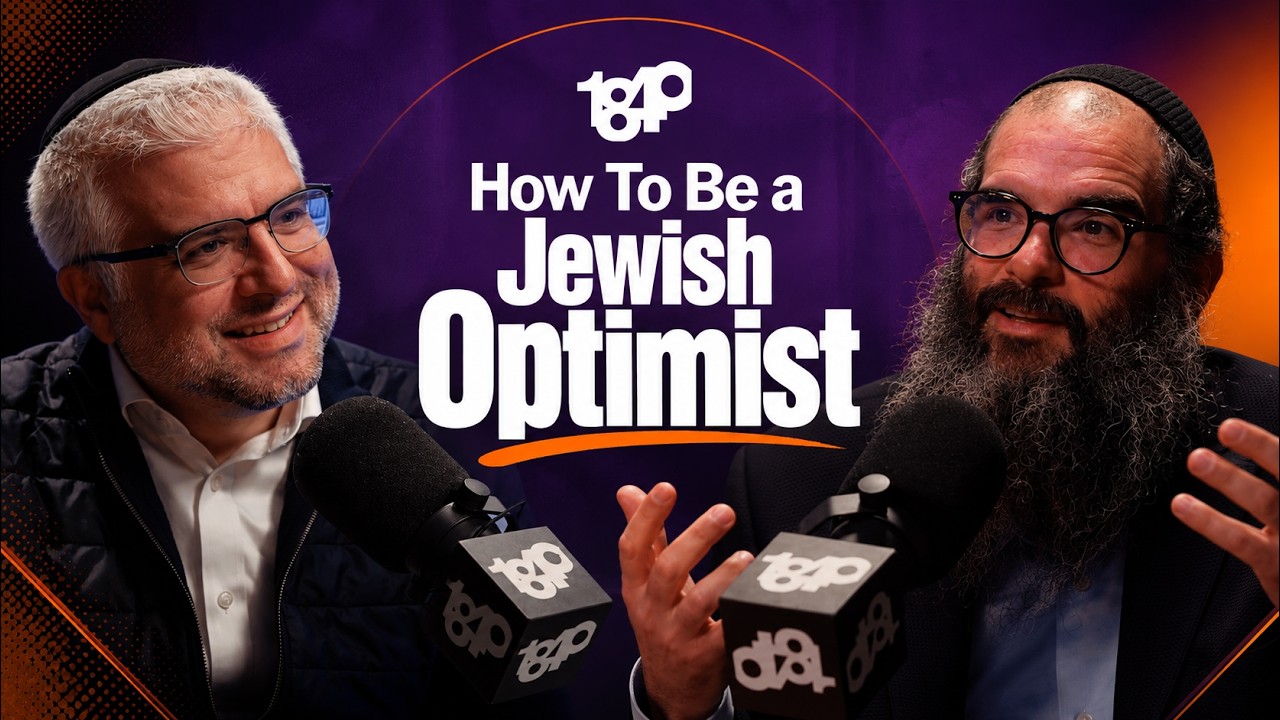
That’s m-a-g-e-n d-a-v-i-d a-d-o-m.org, magendavidadom.org. Hi friends, and welcome to the 18Forty Podcast, where each month we explore a different topic balancing modern sensibilities with traditional sensitivities, to give you new approaches to timeless Jewish ideas. I’m your host, Dovid Bashevkin, and today, we are asking the question: how do you become a Jewish optimist? This podcast is part of a larger exploration of those big, juicy Jewish ideas, so be sure to check out 18forty.org, that’s 1-8-f-o-r-t-y.org, where you can also find videos, articles, recommended readings, and weekly emails. I think I was on Twitter too much one day.
I was scrolling through videos, and people were beginning to think about Israeli elections, and I saw the way people were talking to one another, and I had this like very painful feeling. You know, post-October 7th, the Jewish people had this moment where we all came together, and what really saddened me was the fact that it felt that when I looked at the landscape of what we, of what our vision was—and when I say our, I mean the Jewish people, for the State of Israel—it felt like every group’s vision was deliberately constructed to exclude, respond, sequester a different group in Israel. And I’m not Israeli, so I don’t necessarily vote, but Watching this, it, it can contaminate your soul, like I felt it. Like I felt the pain, the frustration, the anger, the disappointment, just being hurled in all different ways, a lot of times the mud hits you in the face.
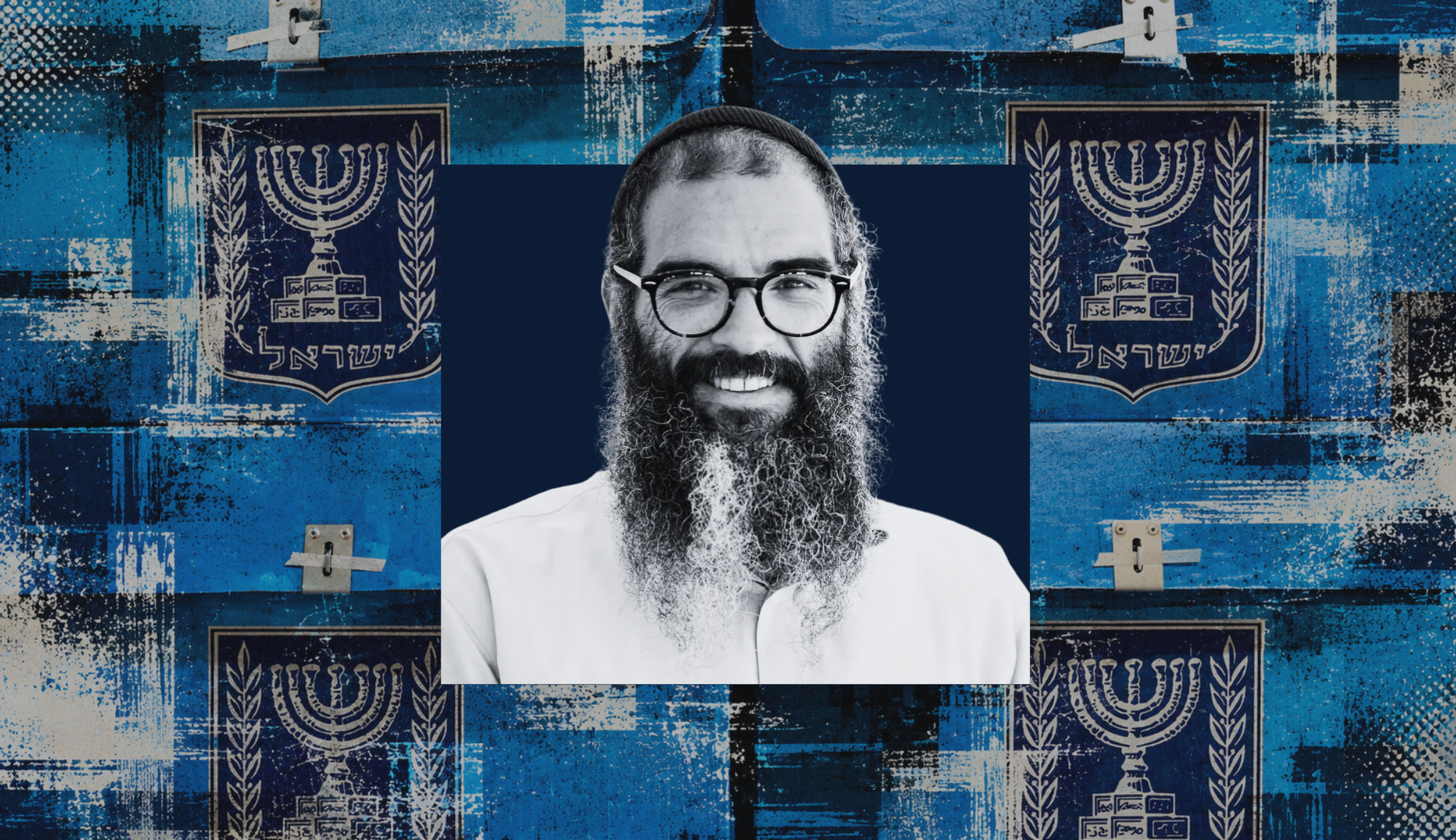
And that’s why I decided to have today’s episode. Somebody who you may already be familiar with, he’s been a guest on 18Forty, and I really consider it one of the great privileges of my life to consider this person one of my closest friends in the world, and that is Rav Judah Mischel. If you’ve ever had the opportunity to sit with Rav Judah, you will immediately experience a very rare type of sincerity, a very rare type of commitment to really the entirety of the Jewish people. And Rav Judah was in town to plug his most recent book.
He has written a series of books under the title Baderech. There is the Baderech original, there is the Baderech on the parsha, there’s a Baderech Haggadah, more Baderech coming. And he and I have been talking writing for many, many years together. I also, by the way, just came out with a book.
It’s behind me, you might even be able to see it in the shot. Buy all our books, buy multiple copies. But, you know, I reached out to Rav Judah and said, “You know, instead of just talking about our books, which is, you know, something that we discussed, I want to talk about something else.” And that is today’s conversation, where I ask Rav Judah, “How do you remain so optimistic about the Jewish people? How do you remain so closely connected and integrated to so many different Jewish communities, so many forms of different communities in the Jewish world, and you don’t seem to get that frustration, that anger, that disappointment? How do you get there? Because this is a skill that I think the Jewish people need at this moment. This is a perspective, this is a vision, this is a disposition, a relationship towards the Jewish people that every Jew needs to figure out for themselves, and I can think of no better guide than Rav Judah Mischel to teach us a little bit of how do you become a Jewish optimist?” Okay, hineni muchan umezuman.
It is really a pleasure to be sitting here with a with a dear friend, but with a very clear purpose of what I want to talk to you about. You know, I spend too much time on social media, but I don’t know that I can blame social media on this one, where I had a very distinct feeling two weeks ago when people were talking and arguing about what’s happening in Israel. There are elections now, and there’s like something very like practical happening, like what direction are we going in? And I noticed that every competing vision related to Eretz Yisrael seems to be constructed to exclude or respond to a different demographic of the Jewish people. And it’s a tough spot to be in if you want to be a Klal Yisrael optimist, if you want to remain positive about where the Jewish people are.
Election season.
Judah Mischel: Yeah, ’cause like you.
Dovid Bashevkin: see how mutually exclusive the visions are. You see like if we’re going to go this way, that means we’re not going, we’re going the opposite of where you’re going. The reason why is like to me, I don’t care much for politics, not American or Israeli, but I care deeply about the Jewish people.
And I noticed myself, I remember at night getting frustrated, I’ll say it openly, at some aspects of the yeshiva world, where I felt like, how come we haven’t articulated a clearer vision of what we’re doing with the state? I get frustrated at aspects of the religious Zionist world, of like understanding culturally the need to preserve a Chasidic community in Israel, to preserve every community. They bring so much flavor. Like, I don’t know even where I align, and maybe that’s not important, maybe you let go and say, “Okay, like I’m sitting on an island.” But when it starts to metastasize, and you start to get like cynical, and you start looking at other communities, start looking at the rabbis, you know, the you know, fill in the community, and I remember we had a plan to talk about our books, and there’s nothing I love more, and maybe we’ll have two minutes to do that, than to push product. But it bothered me to such an extent of, how do you remain an optimist, a Jewish people optimist, a Klal Yisrael-first optimist in this period? And I was thinking the one person who I can turn to in honesty and have a sincere conversation about how this is possible is you.
Because, aside from the fact that you live in Israel and so much of your life and every the Torah that you share is in love with Klal Yisrael, you’re situated in a place where we kind of interact and really build deep connections and relationships with multiple different communities, and it never seems to erode that inner love for the Jewish people. So my question to you that I want to talk about is how do you remain an optimist about where Klal Yisrael and the Jewish people are headed when it seems in this moment our visions and our what sometimes we call hashkafa, our worldviews seem to be so mutually exclusive?
Judah Mischel: Well, first things first, there is a tefillah kodem hatefillah, there’s a prayer that’s published in some siddurim called the prayer before the prayer of Reb Elimelech of Lizhensk, the Rebbe Reb Elimelech, who was third generation after the Baal Shem Tov, responsible for the spread of Chasidus to Poland, probably the most you know, one of the more transformational figures in the development of the Chassidic movement. And Reb Elimelech’s prayer, most famously, the most the most often quoted part of his prayer as the prayer before the prayer, tefillah kodem hatefillah, is actually asking, is verbalizing this and saying, “Please Hashem, aderaba, tein belibeinu shenireh kol echad ma’alas chaveireinu,” asking Hashem let allow me the ability to see good, to find the good points in the others. You said there’s a lot of frustration with this community, with that community.
Of course there’s frust- meaning, that’s part of life, frustration and people falling short, and us not necessarily being aligned with everything that everyone else thinks, and but you could also say it the other way is that if we’re able to open ourselves up and to daven, to ask Hashem, “Help me see good in those places,” then also see frustration, but the dialectic is as well as also incredible, you know, values and nekudos tovos and endearing qualities, and I think that as you were talking, I was I was I was in Lakewood last night, you know, and I was looking around the wedding. I was like I was at a simcha and then at a at a farbrengen, at a gathering there many people that I don’t know, and all the roshei yeshiva from Lakewood, there was an entire and I was zocheh, I had the privilege to say hello and say shalom aleichem and make a little small talk by the chosson’s tisch with some of the roshei yeshiva there, people of incredible stature and ba’alei middos and giants in Torah, who I’m certain, I know for fact, you know, that if they were to vote and we were to vote, we would not be voting for the same party. And if we were to like hang out and talk about, you know, some key issues of what’s call you mentioned the State and the army and we would not be aligned on those things. And there are up close, the interaction, the privilege of just being there, there’s such beauty and such grace, and there’s such grandeur of Yiddishkeit and Torah, so that it mitigates a little bit some of maybe the darker side or the negative side of people and movements and opinions when you’re up close and personal.
Yosef was only able to be sold out by his brothers because there was distance, you know, they didn’t see him. So when you say like, how do I you know go different communities and overlap, it’s intentional. I want to know Jews. I want to know the different communities.
I don’t want to be mevater, I don’t want to give up on so many wonderful parts of Klal Yisrael. There’s beauty there, and there’s something godly there, and there’s something important there, and there’s something that’s mine there, and that’s yours there. When we bind ourselves in our tefillah and in our mitzvos to b’sheim kol Yisrael, it’s a real thing, right? It’s not just a phrase that, “Oh, we’re binding ourselves to the entirety of the Jewish people.” So before even optimism, the first thing is like that has to be intentional. It’s not like suddenly we just wake up and like, “Oh, everything’s fine.” Not everything’s fine.
A lot of there’s a lot of pain in the world, and there’s a lot of brokenness in the world. We’re still coming We’re coming out of two off of 2,000 years of shi’abud malchiyos, of being in exile, of suffering, hurt, and hurt people hurt people, and traumas passed down generation generationally. And then there’s a there’s a So which piece of There’s yetzer hara. There’s kinah, there’s jealousy, there’s ta’avah, there’s people desires for money and for whatever, for power, and there’s kavod, people want honor and to pick themselves up over other people.
But everyone is like that, and every movement and every community has that aspect. If we focus on that, then we’ll never be interested, and we’ll always we’ll shut ourselves off to everyone. But if we’re able to instead look for the good points and see ma’alas chaveireinu, it’s a whole different, it’s a whole different experience. It doesn’t cancel out the hardship and the difficulties and the disagreements existential disagreements that are painful, that are real machlokes, but it does kind of frame them, those conversations and those disagreements, in a in a way which is in the context of relationship, of family, somebody who you want to feel close to, at the end want, like Hillel and Shammai, to be able to make shidduchim together, and be able to build a society together, so it’s effortful.
Takes a lot of tefillah.
Dovid Bashevkin: Now I mentioned, you know, social media, and I would include in that like the world of like, you know, WhatsApp, and very often, like clips get passed around. And some of the clips, you know, whether it’s from a politician or whether it’s from a rabbi of like extreme like really extraordinary stature, and very often, you can hear things where you’re getting the opposite of the nekudah tovah. They clip out, you know, the most painful, the most jarring.
Judah Mischel: You know, at YU they used to do that. I could say a name, they used to, guys used to cut out articles and put on Rabbi Bronspiegel’s desk to get a rise out of him.
Dovid Bashevkin: Really?
Judah Mischel: Yeah, they’d cut out articles, but then like highlight the two or three lines that would like get…
Dovid Bashevkin: Yeah, they’re still they’re still doing…
Judah Mischel: to get a response.
Dovid Bashevkin: K’dei d’havei uvda, that’s for a different time.
Judah Mischel: No, it’s true, it’s the same, if it bleeds it leads, you know, there’s, you know, like Sivan Rahav Meir, one of the great mekadshei Hashem in this generation, I know you had on the on your on your podcast, she always said like the headlines are never, somebody helped an old lady cross the street, somebody helped a, a Yid helped another Yid with their packages, somebody judged another person l’kaf zechus, right? Somebody helped… It doesn’t it’s not interesting.
We want to see fighting, we want to see blood. We want to see, you know, we want to see chaos. We want to hear something extreme.
Dovid Bashevkin: But I’m asking you in real time, meaning, you could give me one of two answers.
You could say that you deliberately shelter yourself, and you actually, I don’t I don’t see this stuff. I try not, I avoid it like the plague, which I certainly would admire, but it is a Herculean effort in this world because even sometimes, I would say…
Judah Mischel: There are, there are news outlets that I don’t that I that I that I… There are news outlets that I block.
Dovid Bashevkin: Meaning… I’ll say more blunt, a lot of the frum outlets are the ones that share the ugliest stuff.
Judah Mischel: Guard your eyes. Guard your eyes.
There’s the I’m going to say this, the shemiras einayim, the notion of shemiras einayim, that we should guard our eyes and try for purity. I, there’s a lot of emphasis on what happens with, could speak openly, pornography online, and things of… That it’s a lot less damaging to the soul, that’s a lot more developmentally, you know, understandable or relatable. There we have a tikkun klali, we have mikveh, we have maturation filters.
You can’t, the damage that certain things, that certain news outlets magnify and accentuate and highlight is infinitely more damaging to the soul and to one’s spirituality and one’s relationship with other Jews and with the Ribono shel Olam. It’s much harder to uproot that sinas chinam that you see of police fighting with chareidim, with extremists and Jews fighting in the streets and Klal Yisrael… I find that’s more damaging than anything else that a person would search incognito and need to sign up for Vayimaen and Guard Your Eyes with and have a buddy or whatever it may be, a filtering system. Web filter.
It’s just, it stains, you’re so it damages a person’s inner world, and erodes sense of faith in people, and optimism, and simchas hachaim, and it just makes negativity and hatred of other Jews. It’s just, we have to guard ourselves from it, we have to guard ourselves. I won’t I can’t look at it, I don’t want to see it. I know it’s happening, I’m stuck in traffic, my kids were stuck in traffic, I know it’s happening.
You can’t be a healthy person in the world and be stuck in that. And k’mo chein, in a similar way, I just won’t read that there are certain news outlets that I’ve just chosen the last couple years especially, It’s toxic. No, I don’t want to, it’s not, I don’t want to hear it. I don’t want to know from it.
I know, no, I’ve been around, I read enough, I hear enough, it’s like all that noise, it’s time, it’s time in general, part of like the process of becoming healthy and optimism is just called being healthy, I think. Having faith in God’s plan and God has faith in humanity and God has faith in the world and creates and recreates the world, called an El Emunah. Like God creates the world because He believes in us and He believes in the potential of the world, and when you’re reading these or hearing these voices that are just deflating and missing that part of it, it’s not just that it’s hard to be optimistic, it’s hard to be a Yid. It’s hard to feel joy and that we’re moving forward.
The world is moving forward. God’s plan is unfolding. Nevuah, prophecy, is getting closer towards to being manifest, and it’s happening. But it’s not necessarily what’s being reported in all this poisonous media environment.
And in Israel and here also, in the same way, whether it’s on the right or it’s on the left, there’s this defeatist, neg… negative, you know, let’s talk about other people. We don’t we don’t Jews don’t we don’t talk lashon hara. There’s more halachos of lashon hara of how we speak about each other than there are about any other category in Torah.
And we and the way we speak about others and relate to people who are different, ve’ahavtem es hager, is more than Shabbos and more than, than kosher. So when we other somebody who thinks differently or lives differently than us or observes differently than us, then we’re undermining foundational ideas of Torah, not to mention ve’ahavta lere’acha kamocha. It’s not Jewish. It erodes Yiddishkeit.
A question of optimism, if it’s it’s politics, it eats away at Yiddishkeit. It’s like the, and it’s not to say that everything is hunky-dory. It’s not. We’re at a very tenuous gesher tzar in history, gesher tzar me’od.
But Rebbe Nachman said vehaklal veha’ikar, the main thing is lo lehispacheid klal, is don’t You could be you could be concerned, but to exacerbate it when you’re watching the news and buying into all this machlokes and accentuating that which is going off the rails and the parts that are the ugly parts of what we and others do, we just we bug ourselves out. We create more noise and more tension and more fear than it has to be. You know, there’s a ma’amar Chazal which I think a lot about these past couple of years especially, before social media, one of the most painful and horrific episodes in Torah, probably I think the Meshech Chochmah refers to it as like the moment where the most division, right, there was between man and God, and then between you know between human beings, the ultimate the penultimate moment that period was the selling out of Joseph by his brothers, mechiras Yosef. And in mechiras Yosef, so the way that Chazal describe it was that Yosef besako veta’aniso, Yosef was in his sackcloth in his mourning, and Yaakov, his father, was in mourning in his sackcloth, and the brothers were mourning and beating themselves up over what had happened and regret, sako veta’aniso, this crying and mourning and regret and this sense of self-loathing and just like realize something really like happened here.
You know, but and in the midst of all of that, Hakadosh Baruch Hu is borei oro shel Mashiach. God is creating or God is like, you know, creating this light of redemption. There’s something that’s emerging from that pain and that chaos. There’s a narrative, and then there’s a metanarrative.
So the narrative is like, look around, everything is off the rails, everything is falling apart, that the symbol of father’s love was dipped in blood, and they sold him out, and he thought maybe his father was in on it, like, “What did they bring me down to Dothan for?” Like, imagine the loneliness and alienation and like the suffering of that story, but that you read that.
Dovid Bashevkin: like At that very moment.
Judah Mischel: At that very moment, God is creating the light of redemption, oro shel Mashiach. I believe that’s what’s happening. That’s emerging from this time, whether it was the experience of post-October 7th when everyone was together, there was this That’s the real story.
That’s still true. That’s still true. A kid a kid has a playdate, has a friend over and everything. They play wonderfully Shabbos for a couple hours.
The Magna-Tiles, they’re playing, so on, and then they get into a fight at the end.
Dovid Bashevkin: At the end, yeah.
Judah Mischel: You’re like, “Oh, you ruined it.” The whole day’s You ruined it.
Dovid Bashevkin: The day It was a bad playdate.
Judah Mischel: Bad playdate. Oh, well. They played together beautifully. That was That’s the real story.
In the head The real story is they love each other, and they’re friends, and they played, and they were tired and hungry. You have to You have to make, see, whatever, he was tired, hungry, the boy a little It didn’t It didn’t ruin the playdate. It’s part of a process, and it’s painful, and there’s heaviness like there was at mechiras Yosef, but to not see that there that there’s such an awakening of goodness, of connectivity, and that’s the main story. And people say, “Oh, okay, you’re being,” you know, temimus and I don’t think that.
I really believe, I believe so much in God’s plan. I believe so much in God’s people.
Dovid Bashevkin: You have two sons-in-law who have who have served, right? You’re raising a family like very proudly and connected in Eretz Yisrael, connected to the State of Israel. And I’ve always found it very, I don’t know if the right word is intriguing, curious, something I’ve noticed is that your rebbe is not a part of you know that stream.
Your rebbe is like from a real chasidic, proper, classic, classical chasidic community, and I wonder if you could speak a little bit, or even why you maybe why you don’t feel it’s worth speaking about, either one, the experience of having a rebbe, your rebbe, but you’re not in the same communal checkbox. So, and on issues that are fairly serious and strong, and issue- Deep—
Judah Mischel: deeply related to the nefesh and to our identity.
Dovid Bashevkin: Core.
Judah Mischel: Yeah.
Core identity.
Dovid Bashevkin: Core identity, yeah. And at the same time, he’s your rebbi, and I see the respect and the seriousness that you treat your rebbi. He’s rebbi muvhak.
Judah Mischel: It’s not just a rebbi. He’s not like, you know, yeah.
Dovid Bashevkin: It’s not it’s not somebody who you know who happens to be a big talmid chacham, it’s not a rebbi who…
Judah Mischel: I feel bound to him belev venefesh, and he’s bound to myself and to my family belev venefesh.
Dovid Bashevkin: Yes.
And that holiness to me is an example of something very beautiful, which is why I want to understand it. Yeah. Which is like, yeah, your rebbi is classically chasidish, and like I don’t know if you avoid this subject, I don’t know how much you feel comfortable talking about it.
Judah Mischel: I’ve spoken about it openly, as openly and as intensely and as deeply as you could talk about it in every single facet. And I’ll share an anecdote. It was a number of years ago. It was about 15 years ago, I’d say, when I was started davening there regularly.
It was about a number of years ago.
Dovid Bashevkin: By the way, say the name of your rebbi, cuz I don’t think I mentioned it.
Judah Mischel: Yeah, his name is Reb Avraham Tzvi Kluger, shlit’a, you know, and nothing that I say or do reflects on his opinions or his way of life. There’s, you know, that’s the that’s the—
Dovid Bashevkin: Sure.
I know. I learned in Ner Yisroel.
Judah Mischel: Trust me, I had some of those experiences. No, but I mean that, meaning that’s the kol mah d’ba’i, the disclaimer is a real one.
And but he’s very proud of me, and even though we have very different, you know, I was davening there, and I was davening there every day in the mornings, and I was learning, I had a chavrusah there, and like a pas shacharis, a sitting at breakfast, and then I’d sit and then after, I’d sit and learn there for a while, and it was really the place that I found myself in avodas Hashem, the avodas hatefillah, specifically the Rav‘s independence, my rebbi‘s, his independent thinking. And I mean, he’s not, you know, he’s a tzaddik. I mean, he’s in he’s in the realm of being a manhig of the Jewish people. And I was I davened there on every day, and then it was coming to that point in the year where it was like, you know, Iyar time.
Like, you know, Yom HaZikaron, Israel’s Memorial Day, you know, I davened Shacharis there and then drove straight to Har Herzl, you know, to spend the time on Har Herzl. And then the next day was Hey Iyar, was Yom Ha’atzmaut. Now, Yom Ha’atzmaut, different people do different things on that day, and there’s many ways to mark Hashem‘s chesed, and to mark the miracle of the promise of, in prophecy, of kibbutz galuyos. One of the ways which is to that day, this has real significance, historical significance and religious significance, and I feel very deeply of the religious significance of that day.
You know, at different points in time, I’ve had different customs of what to do: Hallel, not Hallel, berachah, whatever. Whatever it is, something special in the tefillah in that day. And very much so, not hedging bets, like very much so. But I had a place of makom kavua for the first time.
I really, you know, felt like, by choice, not as a job or whatever, this is where I daven. This is where my tallis and tefillin was. So, I went, and I left my and I and I went, and it was Hey Iyar. And it was a regular day, like, you know, a regular day there in the in the community in Ramat Beit Shemesh Bet, which was, you know, pretty it has a reputation of being pretty extreme.
It’s they call it the Casbah. Kikar Hakana’im, it’s right up the steps over there. You know, there’s a big spray-painted Shetach Falastin, isn’t it right over the Kikar.
Dovid Bashevkin: Good, I love it.
Judah Mischel: And, you know, I was there. That day, I wasn’t wearing a blue shirt. I was wearing a white shirt, actually, ironically. And I was davening there, and it was a regular tefillah.
And, you know, after Shemoneh Esrei, after the Amidah, there’s nefilas apayim, there’s Tachanun, where everyone puts their head down and says Tachanun. Now, there are, I mean, Tachanun is generally not said on a day where there’s a festival, where there’s a joy, it’s like just skipped. Of joy, yeah. But I was part of the tzibbur, and there was Yud-Gimel Midos HaRachamim in Nusach Sefard, and you say Hashem, Hashem, the thirteen attributes of mercy.
And I said Tachanun, because I was part of it. And my intention was, when I go home, I’ll say Hallel with my family, you know, but then our kids’ll be back from wherever they were the night before, at the concerts or whatever, and maybe I’ll try to squeeze out a Hallel in the house together. That’s generally the way things are. And at the davening that day, at after Tachanun, and again, he’s a person who’s davening on Rosh Hashanah the Amidah for I think probably four hours.
He’s just in the corner, and he davens for hours with kavanos, so he’s not like, you know, he walked by me at the end of davening and just looked at me and said, “Higzamta. Higzamta. That is too much.” So, I went like this. He said, “Lo mat’im nefilas—lecha lo mat’im nefilas apayim bayom hazeh.
It’s not for you to do nefilas apayim on this day.” Meaning, that and that was it. He said it just to me and walked out, and just continued walking out like that. That he that he noticed. I didn’t want to stick out like a sore thumb.
I wasn’t sure what to do, and also like, I don’t know, what the tzibbur is saying—
Dovid Bashevkin: Sure, he’s your…
Judah Mischel: I love Tachanun. There’s lots of There’s different ways that people do things. A real big person has space for other people, and a real manhig, a real rebbe, a real a gadol, a person, and someone who’s taking responsibility for others understands that the goal is not for you to be a mini-me, it’s not to be me.
In fact, I believe that one of the nekudos tovos that he sees in me, one of the is that I think, and I’ve changed, and changed, and reconsider, and consider, and reconsider, and fight through a lot of things. The chavrusa that I had for all those years, who was a very close friend, when I went home to say Hallel with my family, he went home to his house and said the Ramban’s kinah, the Ramban’s lament over the destruction of the Temple on the fifth of Iyar, because that’s tradition that he had from his father, growing up in Toldos Aharon, in Meah Shearim. And he’s a dear friend who we learned Torah with We I learned Torah with him more seriously than I’ve ever learned Torah with anybody. And I love him very much, and we disagree on these things deeply.
But like there are many other facets to our life. And there was a little bit of a sense of distance and disappointment, not going to lie, after October 7th, painfully so. And it was hard for me to go, sometimes. I just felt like you’re just not with what’s happening here.
We’re just experiencing this too differently. But not my rebbe, not Rav Shkluger. He would email it. He was so deeply connected, and so deeply involved and engaged, not in the way that I or you or most people listening to this were, with their activism, and the rallies, and the flags, and the this, and the that, and baking for soldiers, but fighting the war and participating in a way which was kodesh kodashim.
If we’re going to only be able to learn from and learn with and be connected to those who are, you know, lock, stock, and barrel exactly on, you know, our talking points of our specific political party, it’s going to be very lonely, and we’re not going to get out of this mess. The more The older I get, and the more time I spend with him, the more he’s modeling the I believe the way that you just A person can have their opinions, and have their strong opinions, and the greatest way to really, you know, I guess the litmus test for how comfortable and confident one is in their opinions is if you’re okay that other people have other opinions and other ways of doing things.
Dovid Bashevkin: You know, there’s a beautiful teshuvah, like a responsa, that was written by Rav Menashe Klein, and it is in response to something that the Munkatcher Rebbe wrote. The Munkatcher Rebbe had very harsh words He.
Judah Mischel: was the Minchas Elazar.
Dovid Bashevkin: Yeah, exactly.
Very He was a zealot, very strong, and they had very harsh words for those who, you know, weren’t observant, or, right? So, Rav Menashe Klein has a response to this. The way he writes it is very interesting. He’s talking about his own relationship to loving Jews.
And he says, it’s a very not rabbinic way to write it, so I don’t think it’s perfunctory, he writes: Harbei, harbei, harbei kochos hishkati bemidah zu ad sheHashem Yisbarach nosan li ketzas matanah le’ehov kol Yisroel bechol levavi.
Judah Mischel: I think that’s—
You shared that with me one time, yeah. I cherish that teshuvah.
Dovid Bashevkin: That line always meant a lot to me, because it was a rabbi admitting: This did not come easy to me.
I had to work at this. Meaning, what your first point, which is that optimism like it requires work. And I’m curious for you, A, did this require a lot of work? Like this being able to hold multiple, conflicting worlds?
Judah Mischel: All the time. All the time.
It’s effortful. You open up the news, and you hear, and you see the way people are talking. There was just recently a publication that came out right before the yom tovim that I enjoy, that I recoiled when I saw it. And this is in a publication that I feel comfortable with, and in many ways enjoy.
I recoiled from it. And one of the whatever, one of the I don’t know it represented the art, the lead It represented of something that was so painful, and that was so hurtful, was so such a like, this is what you highlight? And I was so upset by it. I was stirred by it. And it was on Erev Yom Tov that I saw it, and I had already gone to mikveh, and I had already like started the zman simchaseinu.
Like I was lit. The soundtrack was The playlist was already going. Playlist was in the house, it was knacking, it was like a good vibe. Like I went back again to mikveh later in the day, cuz I just I was like I was so bothered by it.
I took it out of the house, and I Even on Chol Hamoed wrote a letter. Like it’s but we can’t just like go like, you know, with your hand, you can’t just brush them away and say that and push people away and say, “I don’t like it. I disagree with it, or it’s ugly, and I and therefore they’re not part of my…” I don’t know, fill in your blank over here. “No, these are my brothers.
This is my family. This is Klal Yisroel.” And Can’t be mevater on it, you can’t, on the left and on the right. And every person, you know, we all think that we’re just right down the middle.
Dovid Bashevkin: Yeah, we’re the consensus, right?
Judah Mischel: Of course it’s effortful, and it and we’re not always matzliach.
I mean, we’re not always it doesn’t always work. It could be a lot of you know, it could be a very gut-wrenching and painful process. But I don’t know, this requires mesiras nefesh for Torah and mitzvos, and this is a mitzvah. B’tzedek tishpot amisecha.
Lo hibit aven b’Yaakov, lo ra’ah amal b’Yisrael, Hashem Elokav imo, tru’as melech bo. I mean, do we want to be people who have elevated way of seeing ourselves and seeing each other? Do we want to be people who are part of the problem, or we want to be part of the solution? Do we want to be people who are holding back the geulah, or do we want to be people who are pushing the geulah forward? I don’t know that having stink eye and being critical and writing angry posts on Facebook and, you know, shtoching somebody on Twitter, or magnifying and spreading negative, you know, ugliness and things to like have your to your triumph, your one-up another person and show like, look how bad they are, look how low they are. It’s embarrassing. It’s I think it’s hurtful to Hashem.
I believe that it causes pain, tza’ar Shechinah, and that it perpetuates galus. And it doesn’t make things better. It doesn’t make things better. You’re teaching the entire Torah, and I think about, what, about Rav Kluger, and this is you asked about rebbe, when I met him, and hear the way he sees the world and talks about people and movements and ideas, I said like, this is a rebbe, like this is a rav.
And I couldn’t figure, I couldn’t put my finger on it exactly what it was, because a lot of people will say deep ideas and everything, you know, and avodah, and daven long, and aura, you know, of holiness. And I’m like, was it that he was down to earth? Is it that he had made space and allowed myself and a couple of the chevreh in? And I spent a lot of time, a lot of time myself and Dan Wartsberger, we would spend days and nights driving in the north and spending time in like very intimate, very personal ways. And at a certain point, I realized what makes it what’s so big is that he’s just sees the good. Just won’t get drawn into something which is negative.
It just won’t, won’t hear it. Not a word of negativity, not relating to a person’s aveiros or mistakes or lackings or failures, not mine, not others, not his own, not other movements. It’s just you can’t squeeze it out of him. And I’m like, this is what a tzaddik is.
This is a rebbe. This is what I want to be like. Like I want to bring that, I want to be like that in my house. Like I want my kids, like that’s what I want around.
I want I want that. It’s so easy to look at, you know, anyone and focus on what’s going wrong. Noach was called ish tzaddik tamim b’dorosav. He was a righteous man, who was wholeheartedly walked with God.
And right away, this person who was chosen to perpetuate humanity, to save the world, who built a teivah, who had faith and sacrifice in God, who brought his whole family, involved the meaning, right away we’re talking, ah, he didn’t daven enough, he didn’t do enough for other people. He’s tzaddik tamim, it’s relative. If he would have been in this generation, the generation of Avraham Avinu, you could say he wouldn’t have been such a big deal. Or the truth is you could say, had he been in Avraham Avinu’s generation, maybe he would have been picked up and elevated by the chevreh.
And Rashi says, Yesh me’raboseinu she’dorshin l’shvach. There are those among our teachers, raboseinu, who are who interpreted or doresh, who explain it or frame Noach, you know, in a positive sense, and praise him. V’yesh dorshin l’gnai. And there are those who see the cup as half empty, and will say, “Nah, he wasn’t so great.
It was just kind of relative greatness.” And it was Menachem Mendel from Kosov who pointed out this beautiful thought, which is what I identified in my rebbe, which is what I literally ask Hashem every day that I should could be counted among these people, is that Yesh me’raboseinu she’dorshin… How do you know who’s a leader in the Jewish people? How do you know who’s worthy of looking up to? How do you know who’s really somebody who’s a manhig, a leader, and someone who’s worthy of teaching Torah and being a role model? Yesh me’raboseinu she’dorshin l’shvach. And then there are others who are doresh l’gnai. If you’re doresh l’gnai, you’re just not me’raboseinu.
So when you see something on social media or you see something on WhatsApp, or you read something in an article, and there’s a person who knows a lot of Torah, who has a leadership position, who’s just talking garbage about other Jews, who’s just talking down, who’s just being mezalzel others or saying something which is just doesn’t sound right, it’s just it’s negative, it’s toxic, it’s hurtful, it’s being insensitive, it’s speaking down about another segment or sector of the community because of their lack of Torah observance or because of their behavior or because of how they dress or because of what they do or because they just think differently, and they’re talking gnai, Genai, it’s chaval. It’s exiled. It’s not redeemed. It’s not finding the light.
It’s, you know, the sak veta’aniso, it’s the focusing on what’s on that. You lost me. When you hear words of encouragement and positivity, it’s meraboseinu. And that’s the litmus test.
That’s just the litmus test. And even big people, a lot of Torah, Torah can be sam hachayim or it can be sam hamaves. It can be an elixir of life, or it could be something which is poisonous. And hurt people hurt people, and we’ve been hurt for 2,000 years.
We’ve been, like Moshe begged God for mercy for the Jewish people, that we just, it’s not our fault. It’s not our, it’s not it’s not your fault, Will. It’s not your fault. We’re hurt, we’ve been damaged.
And instead of getting angry at each other, leaders, or angry at big people with platforms who should know better, who just aren’t, don’t read the room and say something reprehensible and insensitive at like very sensitive moments in time. I’m being careful to not, I don’t want to.
Dovid Bashevkin: It’s not about anybody, but I understand.
Judah Mischel: It is about, I have in my mind three people right now who are who are people of who have tremendous respect and tremendous Torah, and it’s so disappointing! It’s so disappointing. Zeh, that’s Torah? If that’s Torah, I’m not interested! Who wants that? It’s sam hamaves! It’s genai! In that way, they’re not great.
They could be gadol bemakom acheir. Greatness is in another area.
Dovid Bashevkin: I love that term, gadol bemakom acheir.
Judah Mischel: That’s, I heard that first from Rav Aviner.
Dovid Bashevkin: What was the context that he said that?
Judah Mischel: I don’t know, somebody was asking how could you, the gedolim say this and that, but how could they be how could you the gedolim he was talking about the gedolim TM, you know, the gedolim.
Dovid Bashevkin: Yeah.
Judah Mischel: And his response in that specific question was, they could be gadol bemakom acheir. Because a person is able to interpret every Tosfos in Shas, and know every Rashba and every Ritva, and be an expert in every facet of the dalas amos shel halachah, it could be they’re in the dalas amos shel halachah bilvad.
It doesn’t mean they have good social acumen. Doesn’t mean they know how to read the room. Doesn’t mean that every opinion they say about history or sociology is good. Doesn’t mean that they’re, they’re gadol bemakom acheir.
I don’t know, such a thing, I don’t know if that’s I don’t know, there are certain communities who might feel that’s a undermines the role of a manhig. I don’t know, I think that we have such a thing in Chumash also. That the gedolei olam, the avos, we have people who made mistakes, we have people who misspoke, we have people who did things and I can’t, we can’t throw the baby, can’t throw the baby out with the bathwater, and you can’t just pasel people and big people because of it. Gadol bemakom acheir.
The same way that I am, and that you are, and that we all have our strengths. And we expect more. A talmid chacham shouldn’t have a dot on their on their shirt. It’s bolet.
It’s more disappointing because, because we believe in the koach haTorah, because we believe in Gedolei Yisroel’s ability to like see a big picture, that when there’s smallness, it hurts.
Dovid Bashevkin: Yeah.
Judah Mischel: We recoil from it.
Dovid Bashevkin: Yeah.
Judah Mischel: That’s not because we don’t believe, it’s because we do believe! It’s because we believe in Yiddishkeit, we believe in Torah! Torah makes a Torah‘s Torah is magnificent, it’s magnanimous, it’s big! It’s big. It’s harchavas hadaas from Torah. So when it’s not, it’s like, no, you say, it’s se’or sheba’isah, it’s yetzer hara. There’s a yetzer hara.
There’s a yetzer hara. Moshe Rabbeinu said about cheis ha’eigel, there’s a yetzer hara. And there’s shibud malchiyus. We’re suffering with that, we’re beaten, we went through the Holocaust.
We’re suffering trauma! Meaning we’re trying to figure out what to do over here. And it’s and there’s a tahalich. There’s a tahalich. We’re in a tahalich.
And we have to just be, we have to be a little bit patient. We have to be a little bit patient, and a little bit patient with God’s plan. Patient with ourselves, and patient with others, and a little bit faith in the big bigger picture in God’s plan.
Dovid Bashevkin: Let me ask you, and really this is, I so appreciate it, but, you know, you mentioned and I love the way that you frame the story of as the brothers are selling out one of their own, Yosef, and as there’s this cataclysmic, biblical fight within a family, it’s in that moment that the seeds of Moshiach, Yehudah and Tamar, and you can look, it’s right over there.
And Rashi says it, that he’s sowing the ohr of Moshiach, that the light of Moshiach was coming in. So we’ve been focusing a lot on like how you deal with the negativity. I’m curious, where do you turn to, where do you look when you want to find or you need to be reminded of that messianic light that’s unfolding? Where do you go to fill up your tank with Klal Yisroel optimism? Where you want to feel It’s going to sound child—
Judah Mischel: I look at my family. My kids.
My kids and their friends. This generation in Eretz Yisroel and here also. That you see young people It’s not a sefer. It’s like I’ll read, oh, the Kedushas Levi, or you’re reading Reb Noson Breslover, like, you know, baderech.
Baderech. We’ll get back to that. I read the parsha, you can read No, but in all seriousness, I just look around. You have to have to have einayim liros, to have eyes to see.
Look I look at my kids. I look what they’re busy with. Look at how they’re spending their free time helping people and volunteering, and I look at their mesiras nefesh. Look, I see our daughters, they’re regular they were raised regular kids, that they’re that the their sacrifice for other Jews and their willingness and their all-in-ness on I think specifically came out during this war, and both the and our others our other kids, what their commitment to Torah and their excitement for Yiddishkeit and for the future.
I was just We had Motzei Shabbos here in Teaneck. Oh, yeah. There was hundreds and hundreds and hundreds of people who came on the Saturday night after Yom Tov, was already like it’s time to just like let things go. We’re on fire.
There’s growth. There’s positivity. There’s people learning. How many people are learning? 60,000 The biggest shiur in the history of Klal Yisroel is in our days.
There are people learning You know, I have probably 15 friends who are learning Yerushalmi now. Yeah. Right?
Dovid Bashevkin: Like This guy in my shul learns Yerushalmi.
Judah Mischel: Who are learning Yerushalmi now, right? Like I like I don’t know, I’m on like those weekly taharos thing like I’m What? What’s going Just open our eyes, look around.
I see I just see it in my own home, so much good and so much positivity. I think like we just I don’t know that there’s a book. I don’t know that it’s a podcast. I don’t know that there’s like a place that you can go and a well that you can drink from.
It’s not from the rabbis. It’s not from the leadership. It’s not the Prime Minister that’s going to lead us to the promised land. It’s not the derech hamedini.
It’s not the Ramatkal. It’s certainly not the Supreme Court. We have a lot of tikkun and a lot of teshuvah that has to happen. God’s plan doesn’t end with the foundation of the State of Israel, and it doesn’t end with like this process of elections in Israel.
That’s not it. It’s just That’s not it. We’re waiting for Malchus Beis Dovid. We’re looking for a Beis Hamikdash, waiting for techiyas hameisim, waiting a great the great day of vengeance on our enemies, le’eineinu, nekamas dam avadav.
There’s a There’s a big picture here. It’s not just like, “Oh, hopefully, we’ll get 61 seats, our team, our color wear team will get 61 seats, and the other guy will get a little bit less. And then I’ll get my budget and you’ll get your budget, and then we’ll have a little quiet until the next round of fighting.” It’s That’s not redemptive. That’s not big picture.
I just The answer is not going to come from top-down. The answer is going to come from just regular people like us. The Rav, zt”l, explains, Rav Kook explains I think we were once talking about this. In the ma’amarim the Rav, zt”l, explains there’s a certain amount of God-consciousness in the world, a certain amount of prophecy, a certain unit.
In the earlier stages of history, that was concentrated in a very small group of people called the Avos, the Imahos, fathers and mothers. Then it was passed down to like the Shevatim, and then passed down further into the prophets, the Nevi’im, and then to the Anshei Knesses Hagedolah, to the zekeinim, the Anshei Knesses Hagedolah, and then the Sanhedrin. And it was concentrated and focused in the Beis Hamikdash, the Kohanim, right?
Dovid Bashevkin: The same unit of prophecy.
Judah Mischel: Yeah, that amount, right, exactly.
Dovid Bashevkin: passed down to the leadership of the Jewish people.
Judah Mischel: to the elite and the leadership. And it was kind of like, you know, the lishkah was there with the Sanhedrin and there was the Urim V’tumim and the and the Kohanim and then And that’s the way that’s kind of the way it was. It started very small and it kind of slowly, but surely, spread, but that same amount of that same unit of God-consciousness, of clarity, of prophecy, of Ruach Hakodesh. And after the destruction of the Temple, the process of that the shattering and the decentralization, that it kind of What’s the, I guess you’d say diffused? Diffused, yeah.
Diffused into the into Klal Yisroel. And that same amount of prophecy is now It’s the It’s latent within every single one of us. It’s in every child and every woman and every man in Klal Yisroel has that. We have that in them.
We have that in our in us. And Rav Kook explains that as we get closer to the end of history, we don’t find it in the leadership anymore, but we find it among the masses and the movements. You saw that in the shetach kinus in the war. You saw You see it among the soldiers.
You see it at slichos in the Kotel. It’s not just in the beis medrash anymore. It’s not the hegemony of, you know, God, you know, of God’s will, trademark, being in this specific beis medrash, or this specific house of worship, or this specific tradition, or this specific group of people. Like, it’s just not it.
It’s that’s shattered, that has to keep shattering. And people are trying to hold on very strong to that. You can say for control, for power, for money, but it’s for to maintain the flask of oil in its pure sense, and hold on to ratzon Hashem, and to hold on to God’s will and their interpretation of that, because we had to do that for a couple thousand years very, very strongly to hold on, and it’s hard to change. And it takes a lot of turns on a big wheel.
But now we’re seeing an awakening And I’m seeing it in, like, regular kids in my neighborhood. I saw it Motzei Shabbos here in Teaneck, New Jersey, hundreds and hundreds of high school and college students who are, and regular people from the neighborhood who are coming out on a Motzei Shabbos dancing and singing niggunim and lit up. Like, there’s an awakening that’s taking place in the masses, and we’re still stuck in the conceptzia of, like, looking, “Oh, what are they saying? What are those What’s the rabbi saying? Yeah, what did the rabbi say?” Everyone has their place, and it’s important to be respectful of transmission and mesorah and rabbis and leadership, but they’re not the answer. It’s not coming from there.
It’s coming bin’areinu uvizkeineinu neileich. Geulah comes, it’s following na’areinu, it’s following There’s something that’s taking place in the community, ground up, and it’s not reported in the news all the time. It’s literally to be doresh lishvach is just to see what’s happening. Like, look around at all the chesed in the community, look at all the goodness in the community.
Like, look at all the tzedakah that’s being given, and all the and all the and This is just the regular people. When we get stuck in ideologies and political parties, so like we move away from what’s from who we really are, and we fall into this trap, and it’s like the old, you know, trap of like defining us based on who you’re voting for. Elections are The main thing is elections that Hashem‘s Habocheir be’amo Yisrael be’ahavah. That’s the whole thing.
It’s like I feel like election elections is like a mashal. It’s important to vote for your vote your conscience, and other people don’t want to vote, also don’t, vote your conscience, whatever. But that’s what defines us? A Yankee fan? This is like a There’s no political party that touches pushes all my buttons. Vote for I have to vote for whatever cuz there’s enough there that’s important that represents whatever, in some sense, a vision for the future, but okay.
But that’s not That’s Okay. Shivim panim laTorah. And there’s many different ways to understand this. If we’re going to cut out other people who have different views and different opinions because like we undermine the entire way that Torah is intended to be lived and learned.
I mean, we have that’s the way that the entire Torah is based around. I’m just trying to, like, remember, like, to not to be stuck, and some a big person or a person who was big in certain regards or in many regards, you know, who represents a certain thing, like, says something which is reprehensible. I don’t know, and you can’t say, “Oh, maybe they’re hungry, maybe they’re tired, maybe whatever” and that No, maybe they This is what they believe and what they think. And like, okay, okay, that’s okay.
I think it’s wrong, and I think it’s a failure and morally reprehensible to say something like that, to think like that. I think it’s a bad vision for the future. I think it’s dangerous, and so I’m not going to vote for that person. I have to hate that person? I have to hate that person and hate everybody who respects that person? I can’t have anything in common with those people? I have to I can’t be misyacheis to them? In the end of the day, what does Hashem get from that? What nachas does Ribbono shel Olam have from that?
Dovid Bashevkin: This is a fairly small question, but I’m also a little bit curious, and then and then if you’ll indulge me, I would love to briefly shift and push a little bit of product together.
But Ready.
Judah Mischel: But.
Dovid Bashevkin: do you ever get flak from people either within or outside of your community for not tying down to one way?
Judah Mischel: Meaning the I’m tied down. One second, I’m tied down. I must tell you I’m tied down.
I’m tied down. I’m tied down.
Dovid Bashevkin: Make this point.
Judah Mischel: Jewish.
I’m tied down. I’m not tied down to your definition of what it is to be tied down because I’m not hanging a banner of a political party outside of my house, unless I get home and my kids did, I don’t know. You know, which is very which is very possible. Or I don’t wear it like, you know what I’m saying, “I identify as a…”.
Dovid Bashevkin: Yeah, this stream.
Judah Mischel: Mah, just because you have to decide who what’s whether I’m Republican or Democrat, or whether you’re milchigs or fleishigs, like Yankees or Mets, like mah, like, I am tied down. I don’t I’m not flaky about what I think, about what I believe. I’m happy to sit and talk, anybody who asks me, say what I what I think. But I also think that other people have ideas, too.
There could be some truth there, and there’s a there’s a narrative there, and there’s an element there that also deserves to be heard and also deserves to be respected. Even if it’s lo na’im, or it goes against my, you know, certain I have certain allergic reactions to certain things. There’s truth over there, also. There’s no monopoly on Shivim panim laTorah.
I refuse to buy into that. I refuse to buy into that. And I do get flak. I get flak from all sides.
Yeah, well, I’m not important enough to get enough of the flak. I’m like and also I’m also like I don’t write about any of those things in B’Derech. Meaning, like, it’s intentionally down the middle. Yes.
It’s intentionally that way. Meaning, I don’t like think, “Oh, what story could I say that’ll be a different perspective for other people to hear?” It’s that I read Sruly Besser’s books, and I read Rabbi Yechiel Spero, Spero’s books, and I love hearing, and I read the Tenu’as HaMussar sefarim.
Dovid Bashevkin: So happy you mentioned Yechiel Spero. Can I say I’m jumping in, I’m interrupting you, but I want to say this publicly: I’ve never, I don’t think I’ve ever met Yechiel Spero.
Judah Mischel: He’s the most generous, complimentary mashpia in the world. He’s a person who has a mila tova—
Dovid Bashevkin: That’s why I want to interrupt 18Forty to say.
a mila tova about Yechiel Spero.
Judah Mischel: an incredible teacher of Torah, who’s not a religious Zionist or Modern Orthodox central Torah’s person. He’s Telzer.
Dovid Bashevkin: Yes.
Judah Mischel: He’s a maggid shiur.
Dovid Bashevkin: Yes.
Judah Mischel: And loves Jews, loves the Jewish people.
and I love him, and I appreciate him, and I thank him, and Sruly specifically in the book because I apologize also Sruly.
Dovid Bashevkin: I love also, but I feel like it’s well documented.
Judah Mischel: No, meaning, and it’s not like they’re so different. Mah, because he’s because a step this way, a person stepped that way, mah, Torah’s Torah, it’s the same Chumash, the same siddur, the same Shulchan Aruch, same Ribono shel Olam, it’s the same. I don’t even understand when people are, like, surprised.
A guy told me last night in Lakewood, “That’s a chiddush, you say from Chassidim, from Misnagdim, from Sefardim, Ashkenazim.” I’m like, meaning from Jewish people? I’m like, “Did you read the story about Naomi Shemer, bro?” You know what I’m saying? Like tell me tell me you saw something Elie Wiesel in there, I mean that was like interesting. Tell me that like I got it through the mosaica is so good that they’re like you know they have Professor Heschel, okay. Not fine, Professor, but tell me that was interesting to you, that you have a story of Baba Sali, and then you have the Chazon Ish, and then you have Okay, it’s intentional, meaning like this is intentional. But also because I can’t afford, I’m not on the level where I don’t I was raised in a home to appreciate the different voices and different beauty.
I have a hard time, I’ll say it from my own upbringing and from my own community where we come from, I have a very hard time in the Modern Orthodox community, very hard time. I find it very uncomfortable. It’s tighter. It’s more charedi and more narrow and more closed-minded.
I can’t lo yachol, I can’t handle it. I can’t handle it. So they should be, they should do teshuvah. Also those who speak who won’t don’t daven for soldiers should do teshuvah.
And those who speak disrespectfully about the mesiras nefesh of chayalim should do teshuvah. They have to do teshuvah. It doesn’t matter how much Torah you know, how many volumes you’ve written in halachah, you have to do teshuvah. I also do teshuvah.
And good news is everyone has to do teshuvah. And there’s nothing wrong with saying such a thing. We’re falling short. How do I know? The geulah‘s not here.
We haven’t reached that the final and if we’re not able to learn from each other and with each other, it’s a total failure. Then we missed the point. We haven’t learned a thing. We haven’t learned a thing from 2,000 years.
The there’s a there’s the author Aruch HaShulchan and also Reb Yehuda Leib Maimon have in their Haggadahs a beautiful thing. If I could, I don’t want to—
Dovid Bashevkin: Please.
Judah Mischel: They have a beautiful paint a beautiful picture of that of that night. Pesach night, when we read about the gedolei Yisrael, the Moetzes Gedolei HaTorah getting together.
Who was there? Rabban Elazar ben Azaryah, Rebbi Akiva, Rebbi Tarfon. They all came to Bnei Brak. And they came to Rebbi Akiva, which is interesting. So it’s suggested, it’s interesting, what are they doing over there? How come they’re not in Yerushalayim? They’re not they don’t have an apartment in Schneller? They couldn’t afford a place in Shaarei Chessed? To go to Bnei Brak? Reb Meilech used to be Slobodka in Bnei Brak, now he’s hanging out in Yerushalayim.
What are you doing? They went to Bnei Brak, and the suggestion is that they went there to be because perhaps it was a time of the Roman persecution, and there was a war, and there was 24,000 talmidim, I mean that mysterious askara, whatever. There Rebbi Akiva was busy was busy with Bar Kochva, and those talmidim were victim were fell in that war in a non-metaphoric way. And if they don’t consider that as a serious possibility, not placing the story in context, it’s just a mashal. But they went to Rebbi Akiva, and they were hiding, and they were suggested that perhaps they were in hiding, because the Temple had been destroyed.
And these gedolim, these leaders, the einei ha’eidah, had seen korbanos in their life. They had seen Yerushalayim bebinyanah. And under their watch, under their watch, things fell apart. There’s churban.
And maybe they went to Rebbi Akiva, it’s suggested, because Rebbi Akiva was that great optimist. Because he saw the foxes on the Temple Mount and understood that the prophecy of destruction came true, and he believed in God’s story in the end of the story that also the Temple will be rebuilt, and he was able to laugh at that. Akiva, nichamtano. And maybe that’s why they were by Rebbi Akiva, or they were in hiding there.
Anyways, they were there in Bnei Brak, and they were being mesaper, sippur yetzias Mitzrayim, they’re talking about galus and geulah. They were reaching back to that the paradigm of the exile, a national exile. And it was kol oso halaylah. The Belzer Rov pointed out kol oso halaylah means that night, they were talking about the laylah, the exile, darkness, the night of exile.
And they were there the whole night. And then what happened? They were there the whole night trying to figure out where this went wrong. How are we going to get out of this? Eitzos, eich yotzim mizeh? How are we going to get out of this? Until the talmidim came and said, Until the talmidim of Rebbi Elazar ben Azaryah, of Rebbi Tarfon, of… What did they say? Higia zman.
They didn’t say that. They didn’t say… They said, Raboseinu. They said, Raboseinu.
Higia zman krias Shema shel shacharis. The students of one said about the rebbe of the other, raboseinu. It wasn’t just like the guys from Lakewood came and said about their rosh yeshiva, and the guys from the Heights about their rosh yeshiva, the chevreh from Merkaz HaRav, and from Yitzhar, and from… and then the guys came down from Har Bracha, and only focusing on their rebbe, my rebbe, the truth is by us, God’s will is by me.
They’re able to say, raboseinu. Raboseinu. Plural. Raboseinu.
And then, higia zman krias Shema shel shacharis. Now we can be meyached Shem Hashem. God’s name is one when Klal Yisrael are able to see good in each other, and we’re able to respect each other’s perspectives and the shiv’im panim laTorah. When we say, raboseinu, and who’s raboseinu? Those who are dorshei lishvach.
If we could see good in another person’s perspective, and we can understand, and I don’t… you don’t have to agree. Don’t have to agree. I don’t have to live the way you are.
I don’t have to do your thing. We have to be able to understand that there’s something true, and there’s something beautiful there. There’s chein there. In the language of Vayichan sham Yisrael neged hahar, when we camped at Mount Sinai, vayichan sham, we camped there, everyone says, k’ish echad b’lev echad, one heart with…
But the vayichan, how did they camp with one heart with one person? So Reb Leibel Eiger says Vayichan is milashon of chein. They saw chein in each other. They saw that there’s something good in every person. V’higbalt, everybody had their own place.
Right, I had my specific, I had my place. I’m not changing. I don’t have to be like you. I don’t have to do like you.
I have my mesorah, I have my opinions, but I understand that you have chein by you, too. And then we can receive the Torah with one heart as one person. Then we can say, raboseinu. Then we get out of exile.
Then we’re able to extricate ourselves from this mess. Have to go to Rebbi Akiva, who saw a klal gadol baTorah as v’ahavta l’re’acha kamocha, and yet the talmidim somehow missed that and weren’t noheg kavod zeh bazeh, and didn’t show that respect to each other. They came there and it was it was something they’re all trying to figure out, how do we do this? How do we get this right? Like how do we fix this? And the answer is raboseinu, to be people who are dorshei lishvach.
Dovid Bashevkin: You know, we’re here together and we both appreciate the significance of pushing product, and I also want to say, I think in different languages and with different stories, our books are trying to accomplish very similar things.
I feel like my book is not only a love letter to the communities where I gave over this Torah, because this is like my only live Torah that I give over is like my parsha shiur, but the whole, I love Klal Yisrael. I really do, and I think that when you learn about the history and the controversies and the fights and the both sides of all the fights, it helps you appreciate it more. It doesn’t make me hate anybody. I’m just like there’s room, especially when you’re approaching it stories from half a century ago, many centuries ago, like it doesn’t feel it’s not like watching your parents embarrass you.
Do you know what I mean? It’s like a it’s like hearing an interesting story about your great-grandfather. It’s like, oh! So I want to do rapid fire, push product to talk about our book. Opening question: before you wrote the book, did you have a favorite parsha? In general, not when you were writing, what’s your favorite parsha in the Torah? Is Lech Lecha your favorite parsha in the Torah?
Judah Mischel: Well, yeah, because it’s my bar mitzvah parsha, so I know it. So I’m able to like sound proficient in Torah.
All right, Lech Lecha.
Dovid Bashevkin: Oh, that’s nice.
You had Lech Lecha. My bar mitzvah parsha was Mishpatim.
Never…
Judah Mischel: Well, you that makes sense. I mean, you wrote a whole Bava Kamma, like you that was a gateway for you. To me it was a gateway to like nationalism and independence, which was like it just it worked out really, really well.
Yeah, okay. War, war, there’s war. There’s Avraham sticking up for his, going in for his nephew. There’s drama, there’s and there’s Eretz Yisrael.
And I feel like I was shaped by Lech Lecha.
Dovid Bashevkin: My favorite parsha was not my bar mitzvah parsha, which is Mishpatim, but the maftir was Parshas Shekalim, which is the beginning of Ki Sisa, and Ki Sisa is my favorite parsha in the Torah. I’m a I’m a big Ki Sisa fan. I think it’s like the ingredients of Purim, modernity, oral Torah, Klal Yisrael with the shekel.
In your book, BaDerech, do you have a favorite parsha that you wrote on, to write about? No.
For real?
Judah Mischel: Yeah, for real. For real. I know that sounds funny, for real.
For real.
Dovid Bashevkin: Fascinating. And now, is that to say do you have a favorite Torah?
Judah Mischel: Well, no, because it’s usually like I have a good story and then try to like connect it to the parsha. It’s like I the…
Dovid Bashevkin: You start with a story usually?
Judah Mischel: Yeah. God starts with the story. ‘Cause doesn’t that, Hachodesh hazeh lachem… God starts with a story! What are you talking about? It’s a but that’s a flex.
The story, the avos, the imahos, everybody wants a story.
Dovid Bashevkin: So let me ask it that way. What’s your favorite story in the book? You must have one, or…
Judah Mischel: My favorite story is about Professor Heschel.
Dovid Bashevkin: Really?
Judah Mischel: Yeah. Yeah, he was walking in the West Side to the seminary there and to administer a semichah test, and a fellow came for a semichah test there in the in the in the city, and the first question he asked him was about whether he had noticed the person who was collecting on the corner.
Dovid Bashevkin: That was the first.
Judah Mischel: question he asked him was.
Dovid Bashevkin: Did you notice that there was somebody asking for tzedakah on the corner?
Judah Mischel: Yeah.
In other words, the daf alef, it’s the story again. It’s the story before it’s the contact before the content. It’s the ma’aseh, the humanity, the narrative, the background, the people, and then the application of it, yeah.
Dovid Bashevkin: I like my Torah on Beha’aloscha because it is my struggle of life.
My Torah on Beha’aloscha, which is from Rabbi Soloveitchik, Rav Yitzchak Isaac Chaver, and Rav Tzadok, but it’s about the upside-down nuns being the alternative history of the Jewish people. And the essay is about the role of alternative history in your own life.
Judah Mischel: Beautiful. Can I put you on the spot? Please.
What’s your favorite in my book?
Dovid Bashevkin: Don’t start with me.
Judah Mischel: I’ll tell you. I love the Rav Neuwirth on Shabbos, the Rav Neuwirth chapter on Shabbos. I heard that live, and when you gave me the book this summer, then I started looking around for it because it changed the way I experience and appreciate Shabbos and as gateway to community.
But I’m not letting you off the hook. What’s your favorite?
Dovid Bashevkin: A, I just got your book.
Judah Mischel: That’s fair. That’s fair.
It’s also just it’s only we’re still only up to Parshas Bereishis. So you could say I’m looking forward this year instead of learning Shenayim Mikra, is anybody going to listen to leining anymore now that Baderech is out on the Torah? I’m not sure. I’m not sure. Oy.
It’s like It’s like the Sages were concerned about the about the Rambam’s Mishneh Torah, were they not?
Dovid Bashevkin: I love you. I love you. I love you. I love you.
Is that too much?
Judah Mischel: No, no, no, that was good.
Also, I don’t care if anybody if anybody reads the book. Just buy—
Dovid Bashevkin: At least buy it.
No, for sure.
And I tell my students to buy two copies, one for the shelf, one bake into your challos as a segulah.
Judah Mischel: I hold it is a segulah to have Baderech in every room in your home. It’s certainly a segulah for me. Certainly good Certainly good for me.
Dovid Bashevkin: When and where do you like to write most?
Judah Mischel: Oh, I love writing on my dining room table. That’s where I write. On my on my on my laptop on the dining room table. How about you? Do you do it down here in the cave, in the in the studio?
Dovid Bashevkin: Well, switch off, but the truth is, I like I sometimes like a little bit of chaos as I’m writing, a little bit of kids running in and out.
It’s too What’s the word like for a doctor’s office? It’s too sanitized.
Judah Mischel: It’s too sterile.
Dovid Bashevkin: Sterile—
Judah Mischel: and It’s not a petri dish. That’s why I like the dining room table.
That’s where the action happens. Yeah. I like coming Can walk in, and come in, come out. Which is Tova’s favorite piece in this?
Dovid Bashevkin: Baruch Hashem, I don’t know if you have the similar, and I say thank God, my wife does not consume my content.
Judah Mischel: That’s the best. That’s the best.
Dovid Bashevkin: My wife has doesn’t have a favorite episode of 18Forty. I don’t think she’s I don’t think she’s looked at any of my books.
She’s probably heard a total of two or three episodes since I started.
Judah Mischel: The funny thing is are there are some greatest hits in my book, yeah? There are some I mean, this is a compilation. This is the columns, it’s a compilation. This is like the hu hayah omeir.
Yeah. You know, “Oh, my dad always used to say this and that.” “Oh, that one.” “Oh, yeah, you know.” Like now I put it in there, like that’s it. I’m done. I’m toasted.
It’s like It’s like a.
Dovid Bashevkin: comedian who’s like puts out the.
Judah Mischel: best It’s in the Netflix, yeah, exactly, in the special now. You know, you work out the bits, Yeah. and then you put it out there and it’s out. You can’t like it again.
So, the most wonderful thing in the world is that is that I is that Ora doesn’t necessarily remember. It’s like for the first time for her. Yes, mamesh like the first time. It’s first time she’s Love at first sight over and over again.
It’s Groundhog Day. It’s the first time. It’s mamesh the Torah for the first time for us. It’s yeah, it’s Adam and Eve like the first day of creation over and over and over and over again.
Dovid Bashevkin: No, like cuz you know what, I feel like if you’re if your wife is one of your groupies, then she’s also going to one day get bored of you. I don’t want that.
Judah Mischel: Lo min ha’inyan, yeah, lo min ha’inyan.
Dovid Bashevkin: How did you pick out, and you’ve had a similar cover throughout, talk to me about how you chose the cover and the and this title Baderech, which is now a Haggadah, on the parshah, and like a stand-alone?
Judah Mischel: I mean Baderech, it I’m so glad because it really encapsulates like the feeling of like I’m not I don’t claim that this is like the I’m not like an expert on anything or that this is a finished product or that this is going to be the end-all be-all of what it’s all about.
This is just like where I am up to, you know? Everyone, all of us, like I said, my favorite parshah is Lech Lecha. Everyone is somewhere along their journey, somewhere along the path. The story is in the middle, and when the story is in the middle, when it’s along the path, when we are baderech, So, Rebbe Nachman says, “Baderech siparti ma’aseh.” Along the way, I told a story, and then that story changes, and it unfolds, and it and it continues, and it, you know, there’s a lot of hope and faith that story is going to have a wonderful continuation, a wonderful ending. I feel like that being a work in progress kind of encapsulates the way I what I see is was most beautiful about Yiddishkeit is that the Ribono shel Olam is just expecting us to be proud of being works in progress.
Tell me about the cover.
Dovid Bashevkin: Tell me about the I love this painting.
Judah Mischel: The original is from Kleinman, Zalman Kleinman, of blessed memory, was a real one of a Chassidic artist, and that’s a classic. The title of it is called From Chaslavitch to Lubavitch.
It’s a depiction of a group of Chassidim going to visit their rebbe, and it’s this, you know, that the chariot, the back of the wagon of the Ba’al Shem Tov, so to speak, inspired by this is just it’s kind of, you know, in this liminal state between heaven and earth. Baderech, on the way.
Dovid Bashevkin: Are these are the Chassidim in this picture based on real.
Judah Mischel: That’s Aryeh and Elimelech Blumstein. That’s Mikey, Reuven, that’s the chevra, Alex Clare.
Like, in For real? No! They There’s a version of that, but this original is, I don’t know, it’s Kleinman in his mind’s eye. That’s his chevra, his composite sketch of some Chassidim. In the original, in the OG painting, there’s a peasant drunk on the ground, on the floor, next to the next to the barn, as if to say, like, you know, we’re transcending, we’re going higher after the farbrengen. When I asked his wife, asked the if I would be able to have the privilege of using it, and, you know, she was like, “That’s so nice.
So many people have used my husband’s paintings without permission. Of course! What a pleasure.
Dovid Bashevkin: and a” She.
Judah Mischel: was just like, “I appreciate that you…” She was so sweet. Yeah, I sent a couple boxes as hakaras hatov. And then, in the introduction to Baderech, the original, I wrote a little thing there, saying, like, “Please judge this book by the cover, by its cover.” Aw.
“Like, this is aspirational. This is kind of like I just want to be with good chevra, and be on this trip together, and be this life together.” I love that. I did that in Sin-a-gogue.
Dovid Bashevkin: I wrote about, like, mine opens up with about the cover.
Judah Mischel: Yeah, I love it. I literally “Please judge this book by the cover,” because there’s something Yeah. aspirational, and hopeful, and fun, and just like Who doesn’t love a road trip? Yeah. Good tunes, good friends, you know, you got a good playlist, some good snacks, like, all the good stories happen baderech, on the way, when a person feels like, “I’m there.
I’ve reached it. I’ve accomplished it,” then there’s no more space, no room to grow or to change, to shift, or to be open to new things. So, it’s just to be open to the possibility of the road. Oh, it’s true.
I read this over Shabbos. What? You read a full book on Shabbos?
Dovid Bashevkin: Nah, I don’t really read a full book on Shabbos. I do read a lot. I’ve always loved reading.
I love reading Jewish history. I can’t get enough of it. The only downside is that and you see the difference between mine and your writing, I don’t have a deep bench of inspiring, punchy stories. Do you have a system for how you collect and categorize your Torah? Totally.
What’s your system?
Judah Mischel: Not I mean, I’ve seen yours. You once showed me.
Dovid Bashevkin: I have a crazy system.
Judah Mischel: It’s wild.
Yeah, it’s wild. I try to just remember the things that I love.
Dovid Bashevkin: Like, I But do you, like, organize on your computer?
Judah Mischel: Not any I you know I you I used to. There was a time where I was.
Used to be like papers.
Dovid Bashevkin: Yeah, I started with that.
Judah Mischel: I started with note cards. Papers, I had folders.
I had folders. That’s how I wrote Baderech was like I had, you know, it’s an acronym of teshuvah, of tav, shin, vav, beis, hei. I had like things that related to shivisi or things that related to teshuvah, different topics. I had like folders, manila folders.
And then, when I started writing, it’s really just I mean, I said it in the acknowledgments, like, it’s really like all those years of, like, when I was shanah alef, Rav Yammer who was my shanah alef rebbe, I told him I was having like wild dreams like, you know, I Very first conversation I had with him, and I didn’t even know why. I just said like, it was a wild time. It was 1995. It was like very foreign to me, the whole thing.
And I was like very disconnected from the day-to-day schedule at the beginning there, like totally didn’t know I was flying. But I enjoyed There was like eight English books in the library, and like I was reading that, really enjoyed them. And I said like at night I’m just like I’m reading I was reading Jabotinsky, the two-volume biography of Jabotinsky. Yes.
And they were like, you know, Blood in Zion and on the gallows and Bless you. and I was reading The Revolt. I mean, that’s what was going on at night. I was reading those books.
And I was having like crazy, aggressive dreams. And like I just I would be up a lot at night, and then like not get up in the morning for davening. So, Rav Yammer was kind of like mentioning this. I’m like, “Well, I have a hard time going to sleep at night because I get all riled up because I’m reading, you know, this stuff.” He said, “You should read stories of tzaddikim before you goes to sleep before you go to sleep.” So, I went to the library, and one of the eight books in English was A Tzaddik in Our Time Aw.
Dovid Bashevkin: from Reb Aryeh Levin.
Judah Mischel: And I fell in love with Reb Aryeh Levin, and I fell in love with stories of tzaddikim. And then, I read the My parents, my mother, when she came to visit brought all the Elie Wiesel, Somewhere a Master, and I had read Souls on Fire in high school. And that was it.
Since then I’ve been reading stories of, just stories of, but stories at night. Stories and biographies and autobiographies of all different types of people, all different types of interesting people. But it was really when I when I found Rabbi Spiro’s books, Yechiel Spiro’s books, and Rabbi Teller, Hanoch Teller, Hanoch Teller.
Dovid Bashevkin: He was like the original.
Judah Mischel: I mean, you know, Maggid Speaks, Rabbi Krohn was, you know, honorable mention. It opened up a world, a world of Torah and mesorah that I hadn’t been exposed to, I didn’t learn about, I didn’t hear about it, I didn’t know about it, right? I had never been exposed to it. And reading stories about Telshe and Mir and the Ponovezher Rav, I fell in love with the Ponovezher Rav, and Rabbi Teller’s book, From Jerusalem, His Word, Rav Shlomo Zalman Auerbach, like I just fell in love with this. I’m like, oh my God, like this is amazing.
Dovid Bashevkin: Do you have a favorite rabbinic biography?
Judah Mischel: I think it’s A Tzaddik in Our Time.
Dovid Bashevkin: Really?
Judah Mischel: I think I just I’ve read it now, I read it many times.
Dovid Bashevkin: I think mine might be Sruly’s book, Sruly Besser’s book on Reb Shmuel Feivelson.
Judah Mischel: Yeah, I mean that, for sure.
That too.
Dovid Bashevkin: That’s like in my pantheon.
Judah Mischel: We gave that out in Camp HASC one year. We bought 200 copies of that.
Summer that it came out, we bought 200 copies and gave it to all the staff. Because you have to this is a textbook for Yiddishkeit. Yeah, and when Rabbi Spiro’s books and Sruly’s, you know, Reb Sruly’s books, I mean I over Sukkos I read, every night I fell asleep reading In the Rebbe‘s Room about the gabbai of the Vizhnitzer Rebbe, about the Vizhnitzer, the Vizhnitzer Rebbe. I’m not a Vizhnitzer, but anything Sruly writes is empowering.
There’s a language, there’s a tempo to it. There’s a tempo to it, there’s a language to it, there’s a rhythm to it, and it’s a rhythm of empowerment and of hiskashrus. And I it’s beautiful. He has a couple of compilations also that are that are extraordinarily beautiful.
But I love reading stories from all different backgrounds. BeMechitzasam I read on from Rav Shlomo Lorenz.
Dovid Bashevkin: Lorenz, sure.
Judah Mischel: Yeah.
His time with Rav Shach and with—
Dovid Bashevkin: Unbelievable. Unbelievable.
Judah Mischel: the Brisker Rav.
Dovid Bashevkin: Yeah, unbelievable.
Judah Mischel: Unbelievable. Chazon Ish. I read eight volumes of biography on the Chazon Ish in Hebrew, Maaseh Ish. Yeah, I read all eight volumes of them.
You know, did I retain all of it? Did I remember all of it? But I marked them up, and I tried to go back to them. You know, that formed a certain part of who I am, reading these stories of tzaddikim. I think I probably relate more to the people than the actual Torah, yeah, and the actual sugyas. And I’m not proud of that, but it’s just it’s kind of the metzius.
Dovid Bashevkin: What books did you first fall in love with reading?
Judah Mischel: In a general sense, we read the Hardy Boys.
Dovid Bashevkin: Yeah, that’s what I’m asking, like what first?
Judah Mischel: We read the Hardy Boys. Yeah, my dad had the whole Hardy Boys set.
Dovid Bashevkin: I was in the heyday of John Grisham and Michael Crichton.
Like I remember reading Jurassic Park before there was a movie.
Judah Mischel: And I didn’t I never read any, I didn’t read any fiction besides the Hardy, after the Hardy Boys.
Dovid Bashevkin: I haven’t read fiction either, since elementary school.
Judah Mischel: That’s, yeah.
And then and then I think when I was in I read The Autobiography of Malcolm X when I was in 10th grade.
Dovid Bashevkin: Did you really?
Judah Mischel: And that lit me up. Yeah, my mom was an was an English teacher, and we didn’t we didn’t have we didn’t have we didn’t have unlimited like we weren’t allowed to watch unlimited TV. The Autobiography of Malcolm X, I think, had a lot to do with my formative hashkafos and Yiddishkeit, nationalism, identity.
From there it was a very it was like just one step to like, you know, Reb Meir Kahane, lehavdil, and The Revolt, and White Nights from Menachem Begin, and You.
Dovid Bashevkin: were reading that stuff in high school?
Judah Mischel: That’s been 12th grade I read that stuff, yeah.
Dovid Bashevkin: Oh wow, so you were you were.
fired up!
Judah Mischel: I was fired up, yeah.
And who are you Oh, I was fired up, but velo niskararti. Velo niskararti.
No, lo niskararti.
Dovid Bashevkin: You haven’t cooled off.
Judah Mischel: No. No, I’m not going to.
I’ll cool off when I’m dead! And then from the next world, if it hasn’t been solved yet, I’ll advocate for the strength and well-being of the Jewish people. I’m lo niskararti. This How it’s not all over? I don’t understand. It’s hard for me to even relate to it’s hard for me to relate to people who don’t learn history.
So I appreciate and love what you what you share and your book on Torah specifically. I started already during the summer during the summer, Parshas Va’eschanan. I didn’t wait. And I had to take it in my carry-on bag back to Israel.
It was too heavy to bring it, it was too heavy. No, it’s too heavy. It’s too heavy. No, it’s mechubad.
Dovid Bashevkin: It’s mechubad, it is.
Judah Mischel: Kaved, it’s from the lashon kodesh, mechubad. I took it in my carry-on bag cuz I Jewish people needed Duncan Hines mix and cake, you know, so I was saying I’m bringing back a Pack ‘n Play in my duffle bag, you know.
Dovid Bashevkin: It’s gonna be tough in the bags, you know.
Judah Mischel: You know, but what I appreciate so much is that I believe that if people would appreciate history more and it’s how it’s not like a you know, it’s part of the pardes of Torah, and without it you can’t really appreciate what God has interest is waiting for us, then I feel like there’s a real lack of appreciation for history. In the modern State of Israel, in the modern Jewish people today, I feel like there’s a real ignorance of history. There really is. And I’m so grateful to my parents for first forcing us to read, to read Jewish history, like we had to.
Yeah. You know, we had to. Like they wouldn’t allow us. So there’s also that was that was the Talmud Torah in the house also.
Meaning, like my dad wasn’t learning Gemara at night, but he was reading. Yeah. Reading books about Israel, and Zionism, and Jewish history.
Dovid Bashevkin: My whole introduction isn’t an appreciation for the reading that my parents gave me, and they really were my teachers in this area, which is: who do you consider your teachers when it comes to writing?
Judah Mischel: There are books that were so moving to me that I felt the needle of my existence shift.
Like, Menachem Begin, I felt moved by. Now, writing is not similar to Menachem Begin, but the bottom line of feeling proud, feeling good. Read Menachem Begin’s essays, you know, you read Srooly, also Reb Srooly, I—
Dovid Bashevkin: Sruli Besser?
Judah Mischel: Yeah, aren’t they, from—
Dovid Bashevkin: Yeah, yeah, it’s uplifting. Yeah.
Judah Mischel: It’s uplifting. The book, meaning it’s uplifting, mamash, it’s uplifting. That Reb Freifeld book is a perfect example, but also on Rav Dovid Trenk, I mean there’s so many, you know, Reb Geltzaler, opened up a world, and there’s a there’s a common thread that goes through those books, whether it’s about a person from a Litvishe rosh yeshivah, Rav Baruch Mordechai, or it’s a compilation of, you know, of the stories of the Tosher Rebbe, or Rav Dovid Trenk, there’s positivity, there’s ayin tovah, they’re raboseinu. They’re raboseinu, they’re doresh l’shvach.
And if there’s something that I was trying to do in B’derech is to be doresh l’shvach, and to model that value of raboseinu, of just saying like, there’s something for us to learn here from everybody, and it’s not a chiddush that you have different types of voices and different types of stories. It’s not a chiddush, it’s Jewish. It’s just Jewish. How could you afford not to? So, I appreciate Elie Wiesel, you know, zechuso yagein aleinu, his writings so much.
They were so formative in my life. Like, it opened up a world. Reb Zalman Schachter-Shalomi, zechuso yagein aleinu, those were I was, I spent Shabbos with him many, many years ago.
Dovid Bashevkin: No, you didn’t.
Judah Mischel: In Elat Chaim. One time with my family.
Dovid Bashevkin: Okay.
Judah Mischel: But his writings, his writings were moving.
His writings revealed a deep, another layer of practice, another layer of intentionality, a language that’s inviting, that’s warm, that welcomes you in, that’s comfortable, that feels good. Same thing with Professor Heschel also. There’s a language there that’s very there’s a chein of Yiddishkeit there that we have, that I think in, we have for sure in our centrist, Modern Orthodox community have a lot to learn from that warmth and from that openness. There was something there.
Dovid Bashevkin: We love cold, harsh writing.
Judah Mischel: Chas v’shalom! I didn’t relate to it. I didn’t My father said that’s not what we come from. We don’t My parents didn’t grow up in this.
Their parents were They did not grow up in observant homes. They grew up My father My father conservative Jewish home, my mother in a non-observant, I don’t want to say unaffiliated, but really without, you know, affiliation to a community, or into a synagogue in that formal way, and they came through Chabad. And Chabad is Jewish, and open, and warm, and confident, and proud, and loving, and Klal Yisroel-dik, and unapologetic. So like anything that fits in with that, those were the ingredients.
So then there’s room for all those things we mentioned because like if that’s your bottom line, that’s the bottom line. I don’t want to be presumptuous, but if in some way a Yid reads B’derech and feels any one of those emotions and feelings, and is moved, or just feels good about their Yiddishkeit, or encouraged, or invited to a deeper engagement with other people and other Yidden, then it was worth all of the effort.
Dovid Bashevkin: My dearest friend, Reb Yehuda, thank you so much for joining me today. Let’s continue pushing product.
Friends help friends push product, and for real, I am so grateful for you joining us today.
Judah Mischel: Thank you very much. The main product is Torah, Yiddishkeit, ahavas Yisroel. Thank you, brother.
Dovid Bashevkin: Whenever I finish a podcast, inevitably, and I always tell my guests this, you’re going to remember things that you wish you included in the conversation. You’re going to remember different points and, and, you know, there’s something, I think jokingly they call like a podcast hangover. A lot of times the next morning you wake up like, “Oh my God, I can’t believe I shared that.” But I was not surprised that Reb Yehuda after we spoke reached out to me, said, “Oh my gosh, I cannot believe how much I forgot and how much I wanted to talk about.” What I actually found so incredibly moving and really gave me a great deal of confidence that he was the right person to talk to is what he was beating himself up for forgetting. And Reb Yehuda, immediately after the conversation, that night and then the next day, was beating himself up, be like, “I can’t believe that was my answer when you asked me, “Where do I look towards to see a little bit of that light of Moshiach, that messianic, that redemptive light in the world that emanates from the Jewish people?” You could listen to his answer, which was beautiful, but he called me afterwards and he said, “I could I should have gone on forever.
I could have gone on forever. There’s so many ways to see the beauty of the Jewish people.” First and foremost he mentioned he said, “I’m the director of Camp HASC. This is a camp that services people from many different communities, whether it’s the Chassidic community, Modern Orthodox community, yeshiva community, people who are not as closely affiliated. Camp HASC has their doors open to everyone, and they’re taking care of special needs children, Jewish children who were born with disabilities and limitations, that the camp not only addresses, but elevates the children and elevates everybody who is dedicating their lives to helping such children.
If you’ve ever visited Camp HASC, I certainly have, there is a redemptive light there. They see other people differently there. They’re not fighting in the same ways that we fight online or we fight at a shul kiddush or we fight in our dining rooms.” And then he said something else, and Reb Judah said, “I should have spoken about Jewish music.” And he highlighted somebody in particular who I actually never heard of. I’m somewhat embarrassed, but it’s such a privilege to be able to introduce the beauty and the redemptive light of what’s happening in the Israeli music scene.
You know, there’s a lot of beautiful things happening in the Israeli music scene, but Reb Judah specifically highlighted He said, “Have you ever heard the music of somebody named Ben Tzur? Ben Tzur is I don’t know how to describe him religiously, but he is of the most popular singers in Israel now, and he has a song He has many songs, and they’re like they’re rocking. I mean, you look at the concerts and the people who are there. This is not just for yeshiva students. This is not just for people who have a serious background in Jewish education.
This is for everybody. This is for what I like to call Amcha, our nation, our people. This is Amcha Yisroel, our nation, your nation, our people.” And the music of Ben Tzur, one of his songs is called “Ahavas Hashem”, loving God. It’s a pop song, and you see people who are literally They’re dancing, they’re singing, but their hearts are opening up.
There is something unfolding in Israel. There is something unfolding in the world. There is a redemptive light, but anytime that we see a redemptive light, there’s always going to be clouds, there’s always going to be a little bit of darkness, there’s always going to be a little bit of divisiveness. And I think, on an individual level, our focus, our avodah, our practical dedication needs to be ensuring that we don’t get dragged down into the abyss of cynicism, into the abyss of negativity.
That is a darkness that will cover over your life personally, and it is a cloud that will obscure the beauty not only of the world and of the Jewish people, but of existence itself. Don’t get dragged down there. Like Reb Judah discussed, find those pockets, find those places to see the beauty and the redemptive light of the Jewish people. And most importantly, work at it.
Don’t wait for it to come passively, but develop the eyes, develop the vision to see the beauty, the inspiration, and the redemptive light of the Jewish people and of the world. So thank you so much for listening. This episode, like so many of our episodes, was edited by our incredible team: Denah, Zvi, Sam. I mean, we our team, thank God, has been growing.
We have so many exciting things planned. I am so grateful for the entire team surrounding it. And, of course, if you enjoyed this episode or any of our episodes, please subscribe, rate, review, tell your friends about it. And, of course, you can also donate at 18forty.org.
That’s 18forty, 1 8 f-o-r-t-y .org/donate. All of these efforts, whether it’s subscribing to a YouTube channel, to the podcast, sending in a little bit of money, however you express your support, it all really helps us reach new listeners and continue to put out great content. You can also leave us a voicemail with feedback or questions that we may play on a future episode, and something tells me that it is coming soon. Our voicemail box is 212-582-1840.
Once again, that number is 212-582-1840. If you’d like to learn more about this topic or some of the other great ones we’ve covered in the past, be sure to check out 18forty.org, that’s 1 8 f-o-r-t-y .org, 18forty.org, where you can also find videos, articles, recommended readings, and weekly emails. Thank you so much for Listening, and stay curious, my friends.