Transcripts are produced by Sofer.ai and lightly edited—please excuse any imperfections.
Dovid Bashevkin: Hi, friends, and welcome to the 18Forty Podcast, where each month we explore a different topic balancing modern sensibilities with traditional sensitivities to give you new approaches to timeless Jewish ideas. I’m your host, Dovid Bashevkin, and today we have a special episode in memory of my rebbi, Rav Ezra Dovid Halevi Neuberger, whose yahrtzeit is on the seventh of Cheshvan. This podcast is part of a larger exploration of those big, juicy Jewish ideas, so be sure to check out 18Forty.org—that’s 18 f-o-r-t-y dot org—where you can also find videos, articles, recommended readings, and weekly emails. As longtime listeners of this podcast may already know, I spent several years studying in a yeshiva in Baltimore known as Ner Yisroel, after, you know, I spent two years gap year in Israel, and while I studied in Ner Yisroel, my primary rebbi was someone named Rav Ezra Neuberger.
We affectionately called him Rav Ezra, mostly as a convenience because there are so many Rabbi Neubergers in Ner Yisroel. We’d call him rebbi, obviously, if we were in front of him, but we would refer to him as Rav Ezra just to distinguish from all of the other Rabbi Neubergers, ’cause there are many. It’s, you know, the family really runs the yeshiva. There are many Neubergers, and all incredible, very colorful personalities and brilliant, but only one of whom was my personal rebbi.
And he passed away at a fairly young age, struggling with illness, the age of 68, and his yahrtzeit—yahrtzeit is the anniversary of someone’s passing, of someone’s death. It happens to be one of the many unique Jewish words that does not have a very clear parallel. There is no great one-word English parallel, as far as I know, to talk about the anniversary of someone’s death. It’s interesting the way, you know, our language accommodates for where we find meaning.
Way back when, when I used to write articles for Mishpacha Magazine, I wrote a column once about Jewish words that don’t really have parallel in other languages, and I think there is something profound that the word yahrtzeit, the anniversary of someone’s death, doesn’t really have a clear parallel in English. You know, you could explain what it means, but it’s because on the anniversary of somebody’s death, we try to remember their legacy, their values, and their words. And I need to say up front that to have a podcast episode commemorating Rav Ezra Neuberger is in many ways a contradiction in terms on a few different levels. First and foremost, Rav Ezra was so deeply private, I would almost say guarded, and very much detached and disentangled from technology.
This is at a time when smartphones didn’t even yet exist. When I was in yeshiva, they were maybe just, just emerging. The first time I ever saw Facebook was in yeshiva when my dear friend Mordy Jacobs showed me that he was able to get a Facebook account. It was the first time I saw YouTube also.
“Lazy Sunday,” he showed it to me. But even at that time, you know, Rav Ezra didn’t really use email as far, you know, maybe he had one. I certainly never emailed him. That’s not really how he preferred to communicate.
Did not really have a cell phone. Maybe there were periods where if he was traveling, there was a traveling phone. But even more than that, Rav Ezra did not really like to talk about himself. He wasn’t interested in media.
He wasn’t interested in building students that way. I called him once to participate in an interview or some story that Mishpacha Magazine was working on, and his actual response was laughter. The laughter was almost, you know, without saying it explicitly, was, you know, “Dovid, you surely you know me better than that.” And I did, and I understood, and we spoke about something else. So why have a podcast to talk about someone who so clearly in their lifetime did not want to be spoken about or even involved in kind of contemporary media in this way? I think for me, when there is a central figure in your life, especially Reb Ezra, who it was so unarticulated, meaning I never had the opportunity, I don’t think, nor do I think I would ever have the courage to do so, to really explain what he meant to me.
I drove down to Baltimore, the funeral, and I think there’s something almost strange about listening to eulogies, what we call hespedim, for your rebbi through someone else’s eyes. It’s different than, you know, an acquaintance or a friend, and it’s also different from family, where there’s really like a shared unit. Like a rebbi is such a unique window of a relationship. It is so intimate, it is so personal, that, you know, I sat there, and I still felt that I wanted to articulate something else about my experience with Reb Ezra.
Because I think at the heart of this project of 18Forty are ideas that we’ve been sharing for many, many years, and I think I want to try to explain to a lot of our listeners, like where did I kind of find this approach? I want to introduce our listeners to the personalities and kind of core ideas behind everything that really we share. And I think that Reb Ezra, as my rebbe, and specifically because I assume most people have never heard of him, if you didn’t really study in Ner Yisroel or you’re not really adjacent even in the yeshiva world, it’s not someone that you would have heard of. He was never on magazine covers. You know, if you’re in, I don’t know, WhatsApp groups that share pictures of rabbis, and if that sounds very strange to you could fast forward this part, but they do exist, and I’m in many of them.
It’s its own sociological conversation. But he didn’t really appear in those either. There was a mystery behind him. He always seemed to be, you know, kind of shrouded, ba’anan eira’eh, shrouded through a cloud.
And it’s almost because of that mystery that I want to at least share the impact that he had on me, because so much of what I try to do here is let you know that certain people and ideas exist, that there’s a possibility of even thinking a certain way, that there’s another way, and that maybe we don’t have to feel as stuck as we do within our own lives, in our relationship with Yiddishkeit, in our relationship with our family, and that maybe there’s a different path of more honest conversation. There’s a path of taking life maybe more seriously in some ways, and almost more softly in others. But there is another way, and that is vague, but that’s because there’s no way once you start articulating it more specifically, then we’re having a one-on-one conversation. But in its most general sense, I sometimes have people, guests, on 18Forty, and like you know they’re not going to, you know, have a one-liner that’s going to go viral.
It’s just an impossibility. But you still say, I want to introduce this person to an audience because they’re a person of substance, because we don’t have to give up on the idea that there is depth and complexity and nuance and seriousness and sincerity in this world. And I think Reb Ezra, at least for me, as a role model and a figure, was the person who most clearly reminded me of that. Your experience in yeshiva is, in one sense, joining something a little homogeneous, something that stretches through a tradition that is beyond yourself and is going to require almost letting go of your own individuality.
But it’s actually through grappling with that process and your submission and your willingness and humbleness to grapple with what came before you that is actually the greatest expression of our individuality. And that’s where we begin to feel it and develop it the most. And I think of any idea that Reb Ezra shared, it was really confronting the preciousness, the uniqueness, and the mystery of Jewish life itself, what it means to be alive. You know, I’ve spoken about him in the past, particularly when we did our teshuvah series and spoke about his introduction to Elul, where each year in yeshiva, the place where Reb Ezra would share with us his most precious ideas was always on Friday nights.
You know, instead of the regular everyday Talmud class that he would give, and that was also something to behold, the way he would walk into the classroom holding a stack of books and he would put them down on the desk, and then he would always glance around—he would take attendance in his head, but he was always aware of who was in the classroom, and he would look around and gaze at every single face in the classroom, and he would start with a lot of silence, and then he would begin the shiur. But there was always tape recorders around, and he had lamented, you know, the fact that people would spend so much time writing notes. He would sometimes say like, “Stop writing notes. Like, experience what we’re discussing.
Like, be present.” And Reb Ezra would constantly talk about that, but where he spoke about it most directly was on Friday nights, where at Ner Yisroel, there was this absolutely beautiful custom where after the meal on Friday night, and maybe a short period of time where people would go back into the beis medrash and learn, eventually people would kind of migrate over to the homes of their rebbe. And every rebbe would open up their homes to different experiences. Many rabbeim would just kind of say over ideas on the parshah. Rav Tzvi Berkowitz, who was the senior rebbe in Ner Yisroel, quite famously would give question and answer, and those were, I mean, that was like a live battle.
I mean, it was just unbelievable to watch and the questions and But a Friday night at Reb Ezra’s house was something totally different and totally unique. You definitely heard ideas on the parshah. You did not really walk away with anything so, “What did Reb Ezra say?” Almost impossible to repeat. You’d have to keep it in your head very carefully, and he never told over like cute cutesy one-liners, what we sometimes call vartlach, like a cute, pithy, and inspirational, I don’t mean to diminish it, ideas on the parsha were never, ever what interested him.
And these were on Friday nights, the lights were off, you would sing a song. There was one song that we would sing called Vehayah Hashem leMelech al kol ha’aretz, it will be on that day where God will be the sovereign on the entire land, bayom hahu yihyeh Hashem echad ushmo echad, and on that day, God and His name will finally be united as one. And I remember I would listen to this song and almost feel like I would see like the waves of existence crashing down and getting in touch with like the fact that I am alive, where Reb Ezra would go through, you’re not your body, you’re not your intellect, you’re not your emotions, there is an essential I that lives beneath everything, and it is that most essential I that is a manifestation, and almost connected to God Himself. Reb Ezra made it clear, he didn’t even think this was what we call the neshama.
Reb Ezra was very clear in saying that our neshama, what we sometimes call the soul, is what allows us to almost exist in divine worlds, the same way that a body is the physical container that allows us to exist in a physical world. But there is an essential I that is contained by the neshama. Reb Ezra pointed out that this is clear in the words that we say every morning in davening, Elokai neshama shenasata bi, we thank God for the neshama, the soul He put in me. There is a me that exists independent of the neshama.
That is what Reb Ezra clearly said to us. And you’re at this stage in your life, in your early twenties, where it’s in many ways the scariest period of life because you’ve just left being a teenager, you’re not quite accountable for anything, but you already are beginning to grapple with what it means to be responsible, and people start pairing off and dating and getting married, and you know, getting involved in different career paths, and there was this sense that I felt in yeshiva, I was like, when is my path going to appear before me? There is this sense, and I think that it’s an abiding sense that people struggle with throughout their lives, like, when is the sea going to split for me and make it clear how I’m supposed to get through all of this? And I was at an extraordinarily anxious period in my life, I was in my early twenties, my hair was already starting to go white. When I was in Eretz Yisrael, I used to dye my hair, I used to sneak out in the middle of the morning, like at 3:00 in the morning, and I was so embarrassed by it. My sense of self was crumbled, it was like a crumpled up piece of paper.
You ever unwind a rubber band ball, if you’re not a real expert, you know, some people crumple up a piece of paper in the middle to get it started. That’s genuinely how I felt, I felt like I was a fraud, an imposter, I was afraid of myself, I hated myself, and Reb Ezra was the first person to talk about this, of how we understand ourself, how we grapple with ourself. And he would talk to us about the sense of self like being this huge, tall building that stretched into the sky, and each floor is a different experience. You look on one floor, and it’s you davening on Yom Kippur at Neilah, and you go a few floors down, and it’s you on a Sunday afternoon, chilling and having a good time, and you go a few doors down, and it’s you falling asleep, but trying to mumble through davening in the morning.
And what Reb Ezra tried to impress upon us is that every one of these floors, although they’re radically different experiences, you have to understand there is a cohesive self behind you, and to believe in that, and understand that, and grapple with that, of who you are becoming, and what it means to become, and what it means to be at peace with yourself was something really remarkable. It’s what distinguished what I heard from Reb Ezra in so many ways, and he would talk about our inner world, of how we look at ourselves, what I’ve shared many times, you know, he would talk about teshuvah, return, doing teshuvah on our expectations that we have for ourselves, and sometimes that we do teshuvah on our expectations because they’re too low, and sometimes we have to do teshuvah because our expectations are too high. We need to have mercy and rachmanus and graciousness with ourselves. I think one of the most profound ideas I heard about this sense of self from Reb Ezra, the Talmud has a line that you have to be meimis atzmo al divrei Torah, you have to, you know, so to speak, kill yourself, sacrifice yourself, in order to acquire the words and the ideas of Torah.
And Reb Ezra would pause, and he really was trying to make a point about this, by explaining, listen to the words of the Talmud carefully and clearly. This does not mean that you walk around feeling like a nothing. No, because in order to have self-sacrifice, Reb Ezra would emphasize, you first need to develop a healthy sense of self. You first need an atzmo that can even be sacrificed.
And he would look That’s what we’re doing now. We’re learning how to develop that sense of self in a healthy way. He would talk about jealousy that yeshiva students have for one another, looking over our shoulder, but what he was really trying to fashion and formulate was how we approach life itself. That was what was underneath everything.
It was not a specific religious worldview that he was trying to impress upon us, though he certainly had very clear hierarchical values about what it means to live a meaningful life. But underneath everything, what he wanted us was to take life seriously. And part of taking life seriously, and I need to be able to share this, was he also had an absolutely wicked sense of humor. You know, I used to write a humor column for Mishpacha Magazine that later became a book, and I remember I went to the Ner Yisroel dinner, and Reb Ezra gave me a great idea.
Like, I went up to him to, I don’t know, say mazel tov or whatever it was and let him know I was there. He took a very deep breath, and he had this very deep voice where he said, “Top five Jewish dinner cliches.” And he smiled at me, and already he started coming up with a few. I mean, all of the Neubergers have an extraordinarily wicked sense of humor, but there was something more exciting about getting, you know, a playful line from Reb Ezra because he right away would snap back and would give you a wink behind the curtain, let you know what he was capable of. One of the my favorite stories, when I was in yeshiva, Reb Ezra did not like cell phones.
That was not a secret. He thought that they were really eroding our ability to live in the present. He would tell us this constantly, and he was very, very suspicious and cautious when it came to all technology. And this was not because of some Luddite, you know, rabbinic progress is bad.
It came from a very profound place. Reb Ezra celebrated reading, celebrated books. I remember when I was in his home, you would always see some of his kids, you know, reading Harry Potter, and he would talk about that, talk about which children’s books he liked and which he didn’t, but he celebrated reading. And one time somebody walked into his office, and their cell phone started vibrating, and Reb Ezra looked at him with an extraordinarily mischievous smile and said, “I think your shaver is going off.” That’s a great one-liner.
When I was in yeshiva, there was somebody who used to learn with Reb Ezra, also named Ezra. His name was Ezra Friedberg. It was always a fascination. I don’t think I ever said a word to him when I was in yeshiva.
I remember he would wear a crisp pair of dress jeans with a sharp blazer, and he would come in and learn with Reb Ezra in his office. You were always able to peek into Reb Ezra’s office. That was something that was a real treat late at night to see Reb Ezra’s light on and see the silhouette of his back, whether it was hunched over a Gemara, sometimes if you were lucky, you would see an impromptu rebbe meeting. And very often they would meet specifically in Reb Ezra’s office, who really stewarded the yeshiva.
And Ezra Friedberg later became a friend, and we used to reminisce quite a bit about Reb Ezra and his relationship. And I asked him to do something very difficult, and I’m very grateful that he agreed. I asked him to share some memories about Reb Ezra. I want to be very clear, these are our memories.
You know, sharing your experience with a rebbe is really hard because it is something so private and so personal, and I want to emphasize that. And I also want to be clear that I thank God, I feel very blessed that I have a wonderful relationship not just with my rebbe, but his entire family, and his rebbetzin, Rebbetzin Miriam Neuberger, the daughter of Reb Meir Hershkowitz, who actually visited yeshiva when we were there. Her father was a renowned personality in the yeshiva world. But I developed quite a close relationship with them, mostly because on Purim, I used to wear a pink bunny costume, pink sweat suit and a pink bunny top, and my last stop was always at Reb Ezra’s house.
And some years, I think it was one or two years, he had very young children at the time, I would sit on the floor and sing with them. And for whatever reason, probably my Purim antics, the rebbetzin and her family have always been extraordinarily kind to me and very gracious to me. And I did call the rebbetzin to ask permission just to share, and it was coming from a place of that I understood how Reb Ezra was so deeply uncomfortable, for all the right reasons, with, number one, these kind of reflections, but even more so, you know, podcasting, videos, technology, which is why I decided this is just going to be an audio episode. But the one thing she did ask me to emphasize, and I think it is important, is these are our memories.
I’m so appreciative that the rebbetzin allowed us and gave us her blessing for this episode. So thank you so much. And without further ado, here are the memories and recollections of someone who had the opportunity to learn one-on-one with Reb Ezra, thoughts and reflections from my friend, Ezra Friedberg.
Ezra Friedberg: I was privileged to learn with Reb Ezra for many years on Tuesdays at 1:30 in his office.
It was truly the highlight of my week. It was very clear that, on the one hand, you know, Reb Ezra was insular. He grew up on Yeshiva Lane, he lived on Yeshiva Lane, he worked at the yeshiva. He worked in an office with no phone, no computer, certainly no mobile phone, and he always joked with me about being a Luddite, which he was very proud of.
But at the same time, he was insatiably curious about the world around him. He would ask penetrating questions until he got to the amkos of something, never a superficial understanding. He would always listen very intently, and there was often an awkward silence after I spoke as he processed it. Not that what I was saying was so profound, but he took time to think about it and to process it, and he was very confident just taking 10, 20, 30 seconds to do that.
He was a big-picture thinker, big themes on how Hashem designed the universe, the Torah, the Yamim Tovim, the structure of the Chumashim, the structure of the Yamim Tovim and their significance. His approach was always novel and unique. One of the things about him is that he was very old-school. Learning had to be in his office, not by phone, and certainly not by Zoom.
He didn’t consider any of those acceptable options. I remember telling him that one particular week I was traveling on business and that I wouldn’t be able to come into the office to learn at the regular time. I asked if there were other times available, there weren’t any other times available. I asked if we could learn by phone, and he said, “Nope.
It’s either in the office or not at all.” I said, “Well, I won’t be doing any learning this week.” He’s like, “Okay, whatever.” But he was set in his view of learning needs to be face-to-face at the office. I go way back with Reb Ezra to the time in the 1980s when I was in Camp Munk and he was there as well, and he would give long, and I mean long, chats about various topics of interest. I’ve been fortunate to enjoy a very close relationship with many of the Neuberger mishpacha, and I treasure that. Fast-forwarding to many years later, he was a mesader kiddushin at my wedding, which was very special for me and my family.
We stopped learning when I moved away to New York in 2008, but we kept in touch. I would call him before Yom Tov, and I would make occasional visits back to the office to catch up. He was always genuinely interested in how me and my family were doing, and made a point of thanking me for the call or visit. Given his intellectual powers and cold, analytical methods, you might have thought he didn’t care, but he really did, and it went both ways.
I miss the time I had with him, and wish I could have had more.
Dovid Bashevkin: There is so much more to say about Reb Ezra’s Torah, and I don’t want this to be a five-hour podcast. I feel a little guilty doing this now, but I recently published a book that I would be so gratified if our listeners interested in the ideas that I’ve shared. It is a book on the parsha that I have mentioned a few times.
It’s called I Read This Over Shabbos: Reading Jewish History in the Parsha, and it’s published by Koren Maggid. Extraordinarily grateful for them. Again, it’s called I Read This Over Shabbos, and it goes through an essay on each parsha that connects ideas on the parsha with important controversies and incidents from Jewish history, really reading the values and ideas of the parsha into Jewish history itself. And I think the most powerful Torah I ever heard from Reb Ezra is his idea on his reading of Parshas Lech Lecha.
The most powerful and I think important idea really in all of Judaism, which is Avraham‘s conversation with God and the Bris Bein HaBesarim, where at least in Reb Ezra’s reading, and I’m not going to read it all in now, is really the formation of the familial identity of the Jewish people, where God, so to speak, reveals Himself as the God of Ur Kasdim, where Avraham was willing to sacrifice everything for God. And it’s only after Avraham‘s question, what about future generations, that we have the parallel revelation that comes after our redemption from Egypt of Anochi Hashem Elokecha asher hotzeisicha mei’eretz Mitzrayim instead of Ur Kasdim, which is all Jews who were redeemed from Egypt regardless of their level of observance and commitment, which is the formation of the Jewish people. Reb Ezra’s ideas on Chumash are absolutely outstanding. I do hope one day they are all developed and properly written and developed together.
I will say there is a student named Reb Yaakov Engelberg who wrote a compilation of his understanding of Reb Ezra’s Torah, which is actually quite excellent. Even if you are familiar, you read a lot of stuff on the Chumash, you will undoubtedly see things for the first time and hear new ideas. You know, Reb Ezra when he when he would eat in the dining room, which was very rare, but every week in Eretz Yisrael we would have a different visitor in the dining room. And everyone, you know, when a rebbe would eat in the dining room, they would usually get up and say some, I don’t know, like an idea, like your classic dvar Torah, your classic inspirational idea on the parsha, and Reb Ezra, I remember one time, got up, and instead of saying, you know, an inspirational idea on the parsha, what he would do instead, he would get up and say a question, and he would not answer it, which I think is remarkable.
He would just present a question or present a insight and then sit down, and he would want the crowd to just think about it, and sometimes people go up to him. One of my favorite ones that he said, and if you go through Chumash and work the dates, you’ll you’ll find out that it’s true, it’s that of the three Avos, Avraham, Yitzchak, and Yaakov, Abraham, Isaac, and Jacob, it is clear that there was a moment where they all overlapped and lived together in the same moment. There was a day where both Avraham, Yitzchak, and Yaakov were all alive at the same moment. However, when it comes to the Imahos, there is not an overlap.
There was never a period where Sarah, Rivka, Rochel, and Leah are all simultaneously alive. And he just made that distinction, shared it, and sat down. And, honestly, it’s something I have thought about since, and I have my own approach to that, yeah, for a different time, dealing with chochmah, binah, makom, zman. Okay, I threw it out there, there’s my answer.
But I think it was a fascinating, fascinating insight. But his approach to Chumash, it should come as no surprise that someone who was impacted by Reb Ezra is none other the world-renowned expositor and interpreter of the ideas in Chumash, in the Bible, Rabbi David Fohrman, who many of our listeners may already be familiar with him through his work in Aleph Beta. And Rabbi Fohrman actually had the opportunity to learn with Reb Ezra before Reb Ezra was actually a rebbe. He knew him when he was single, and then, you know, continued and maintained a relationship for all those years.
And when I went up to Reb Ezra‘s levayah, after all of the eulogies, the hespedim, after we, I think, even went to the kevurah, the actual burial, and after I paid a shiva call to the family, I went just to look around the campus, and I was looking through the dining room. I think I was walking with my chavrusa at the time, who still lives in yeshiva, Benny Berstein. He was my chavrusa. We learned together in Reb Ezra‘s shiur and afterwards.
Anyways, it was Rabbi David Fohrman who I bumped into in the dining room, and we spoke a little bit about the funeral and how, you know, what Reb Ezra meant to us. And we made up then, we said, “You know what? We should return together and share this because Reb Ezra had an approach and was a personality that even if you never got to meet him in his lifetime, it’s worth knowing that such a person, of such a pristine caliber of character has even existed in this world, a person who took their own life and humanity and relationship to Torah and mitzvos, I can’t even describe it. I would use the word serious, but it was something even more serious than that.” And it was from that conversation in the dining room that I decided, let’s give this a shot. So, it is with a great deal of appreciation and, in some ways, a bittersweet reverence for our mutual rebbe, here is our conversation with Rabbi David Fohrman.
I wanted to open up by asking you, like, what your earliest memory of Reb Ezra is and how you first met him.
David Fohrman: My earliest memory goes back to when I must have been about 14 years old or so, maybe 15. So, I had grown up, I was sort of bicoastal. I grew up in the Bay Area in California, product of, you know, the Bay Area in the ’70s, my parents House of Love and Prayer people, you know.
It was quite an experience. And my father was very important to me. He was a psychiatrist who sort of almost became a rabbi, and he died when I was young after a long struggle with cancer, just a few months shy of my bar mitzvah. And my mom remarried about, you know, two years later or so and brought the whole family out to New York, to Kew Gardens Orthodox society, and you can’t really get a more mikatzeh lekatzeh experience than that.
And my head was kind of spinning from that, adjusting to a new family, adjusting to a new school, adjusting to a new culture, all sorts of new values. And my stepfather decided it would be a great idea for me to go to Camp Munk. That was kind of like the family camp. That’s where they went.
Are you a Camp Munk person?
Dovid Bashevkin: No, but it’s it’s hard for me to talk about because every single one of my close friends were like deep Munk families. I know about Zabo and Munkrobats and I know all the Munk lore, but I was only able to sleep away from home really until I was a teenager, so I never really went to sleepaway camp.
David Fohrman: One day we could have a conversation just about my experiences in Camp Munk, which were quite something. You know, parenthetically, I can talk to you about that for for hours.
Did you ever read the book The Wave? Yes, sure. Right. So, there was actually a kind of social experiment in Camp Munk that actually created The Wave in real life. It was quite something.
It was like I lived through it and my bones were shaking from it. You want me to tell you about—it’s it’s completely aside from—
Dovid Bashevkin: it—I’m always open for a Camp Munk story, but tell me the story quickly, then we’ll get back to Reb Ezra, ’cause I am curious.
David Fohrman: I think Reb Ezra was there this year. He must have been part of this.
But basically, what happened was the head waiter had a birthday, and the band came and honored the head waiter by playing songs for him at dinner time. And as everyone was going out to minchah, the band shifted to a rock song, and everyone was kind of singing and dancing and stuff. Now the head counselor, Rabbi Josh, you know, a real Agudas Yisroelnik, he was not going to have that. I mean, that was holeilus in his mind.
That was just the worst thing in the world.
Dovid Bashevkin: Do you remember the rock song it was? Was it a Queen song? That would be my guess.
David Fohrman: It might have been Queen. Yeah, you know, “We will, we will…” “We will rock,” yeah.
Exactly. Something like that. This was not Josh’s style, and he just lost it. And he ranked out the band guy, you know, in front of everyone, and then the head waiter came to defend him, and Josh was like, “How could you defend him? This is the worst thing in the world.” Head waiter got like really hot and heavy about it, and Josh, like an umpire at the game, you know, just like takes the hand, and it’s like, “You’re out of here! You are fired!” And he like fires the head waiter in front of everybody, and everyone goes into minchah.
Josh gives this fire and brimstone—just, I mean, a fire and brimstone speech about rock music and how terrible it is, and it’s just the worst thing, and, “How could I be the only one to stand up for this? You all saw this. There was no one who protested,” you know, “and because of that…” Now in camp, intercamp basketball was the thing. Like that was what everyone lived for, and Camp Munk had a very good team. And that night, there was an intercamp basketball game at Kol Rina, Camp Munk’s chief rival, and everyone was going to go, and the counselors who was playing, they’ve been looking forward to this for two weeks.
The buses were idling at the top of the hill. Rabbi Josh goes up after minchah to the top of the hill and sends the buses home. Collective punishment, no one’s going to Kol Rina. The game is canceled because of this, it’s a disaster.
Meanwhile, as we’re walking back to our bunks, and then, you know, it says curfew is like early tonight, this is like the camp has—
Dovid Bashevkin: Lockdown.
David Fohrman: —lockdown. There’s punishment for this. Meanwhile, the waiters start going bunk to bunk, and they’re like, “We’re striking,” right, “in support of the head waiter,” right? Like, “We can’t believe this, there’s going to be no waiters,” like just, “We’re out.”
Dovid Bashevkin: This is how we build character through these experiences.
I’m loving this.
David Fohrman: It was it was incredible. And then what happens is the head waiter, as Shmuly Tendler, Ner Yisroel guy, comes through, and he’s like, “And I’m striking too, right? That’s it, there’s going to be no pool. I’m draining the pool tonight at midnight.” The head.
Dovid Bashevkin: lifeguard, yeah.
David Fohrman: The head lifeguard. “I’m draining the pool,” right, they only have one pool, they’re like, “I’m literally going to drain—that’s going to be it for camp.” We’re shutting it down. “Shutting it down,” right, in support of the waiters, right? And then I’m like going crazy here. It’s like the whole place is falling apart.
Like, what are we doing? And meanwhile, like everyone’s, “Yeah, yeah, you should strike, you should drain the pool!” Everyone’s like reitzing him on. And then Joe Roe comes along, who, I don’t know if you know Joe Roe, one of the most charismatic counselors there, you know, with Dave Silverman from, you know—
Dovid Bashevkin: Sure,—
Atlanta.
David Fohrman: —and they’re like, you know, “We’re going to show our support for the waiters and for everyone, we’re going to like, we’re going to reverse this thing, and we’re going to go break into the canteen,” okay, “and all the bunks together, it’s like in the middle of the night, we’re going to go, and we’re going to break into the canteen, the storehouses behind the canteen, and there’s like spray cans, and we’re going to spray graffiti in support of the waiters all over the bunks, and it’s going to be like we’re striking in support of the waiters.” And it’s like, and I’m like, “Guys, you can’t do this is vandalism, it’s terrible.” But I’m like the one goody-goody two-shoes over here, it’s like everyone is completely ignoring me, and it’s like, “Yeah, this is what we’re going to do. We’re going to get up in the middle of the night, we’re going to go,” right? And it’s like literally everyone is in pajamas.
I’m an SA at the time, a staff assistant, and everyone’s crawling around in their pajamas, right? Like, you know, so as not to wake up any of the head staff, right, in the middle of the night, and they’re like crawling, and Joe Roe’s like getting everyone to come, and there’s meanwhile there’s dozens and dozens of campers, dozens and dozens of bunks converging on this warehouse where they’re going to get the spray paint, right, and they go, and they knock off, gets an ax and knocks off the thing, right, and then, you know, quietly ushers everybody’s in, and then turns on the lights, and the entire head staff are sitting there. They’re all there, okay? And there are streamers, and there are lights, and it’s like, “Welcome to Camp Munk Fake-Out 1983.”
Dovid Bashevkin: I said if this doesn’t end with color war or something adjacent to color war, I absolutely love it. Camp Munk memories. Coming back to Reb Ezra, and these kind of stories, the way that camp shapes you, the way that your yeshivah years shape you, is something that I remember Reb Ezra would always try to make explicit.
He would always try to explain how are these years supposed to impact and shape the remainder of your life, while still giving you that freedom for the rest of your life, and wanting you to build that. But come to the first time that you really interacted with him.
David Fohrman: So the first time was the year I think was the year before that, right? So the year before that, I’m in Camp Munk for the first time. I’m this long-haired kid, kind of semi-long-haired kid with my Levi’s yarmulke, right, that from San Francisco, Levi’s little tag yarmulke, denim, and like I’m kind of doing my thing in Camp Munk.
And I didn’t know Ezra really at all, but he and the other Neuburgers were there, and I was in a learning group with Rabbi Trenk, Reb Dovid Trenk, alav hashalom. You know, we had a bunch of brilliant people in that group. Meysh Taragin, who’s one of the head rabbis in Yeshivat Har Etzion, he’s there.
Dovid Bashevkin: Former 18Forty guest.
David Fohrman: Same bunk as me, right? Basketball star. So one day, Reb Dovid Trenk is sick, and so they needed a, you know, somebody to take his place. So they called on Reb Ezra to come and do a substitute class for us. This is the first time I ever saw him, ever really met him.
So he comes in, and he says like, “Look, I’ll talk about whatever you want to talk about. Just open floor. You guys just ask questions and we can talk about whatever you want to talk about.” Now, I never had that experience at Munk. Like, you know, learning group was learning groups, you know.
You did the Gemara, nobody ever asked you what was on your mind. But Ezra was like, “No, just tell us what’s on your mind.” Nobody raised their hands, and then Meysh raises his hand, and he has some kashas on like Tkafo Kohen or something and Shav Shemeitza, and he’s like got a whole thing, and he wants to talk about the lamdus of it. He’s really working it through, and he’s a brilliant guy. He’s got a memory like a you can’t believe, and he wanted Reb Ezra to address that issue in lamdus.
So Reb Ezra goes, “Okay, anybody else?” So I raised my hand, and I, you know, when my father was struggling with cancer, he’d sometimes had these dreams that seemed prescient or strange, and he kind sort of imputed some significance to them, and I’d always wondered about that. Was that true? Was that was that weird? Like, what was the thing with that? So without giving much context, I just said like, “Can you talk about Judaism’s attitude towards dreams? Like, you know, what do we think about dreams?” Right? You can’t imagine two more different questions coming at Reb Ezra than that. So nobody else had anything to say, and so he sort of sat back. He was single at the time, maybe 23, 24 years old.
He’s characteristically silent for a little bit. Then he says, “Okay, great. We’ll do that. We’ll talk about both of those.” And he proceeded And again, this wasn’t like a magic trick.
He had no idea that Meysh is going to say he wants to talk about Tkafo Kohen, no idea that I was to say I want to talk about dreams.
Dovid Bashevkin: For our listeners, just to be clear, Tkafo Kohen is one of the more complicated topics that come up in Talmud. It is not It’s not a beginner’s topic.
David Fohrman: Not a beginner’s topic at all.
We spent, you know, six weeks just on those few three lines later on in Ner Yisroel. Anyway, Reb Ezra proceeds to masterfully spin this extemporaneous shiur together, taking these two strands and weaving them together, taking the ninth perek of Berachos, which has to do with dreams and dream interpretations, his understanding of Freud and dream interpretations, and, you know, what it might all mean or not mean, and weaves it together, and has this masterful shiur, which just kept me captivated, like my jaw just dropped to the floor. And after that, it was like, you know, “I’m going to follow this guy around. Like, this is my guy.” And I just followed him around camp.
He just, you know, whatever else camp was, it was that. That was the first time I met him, and it was just fascinating. And the epilogue to that is that, you know, the next year, when I came back, the high school that I was in New York was going through some transition. My stepfather not only decided that I should go to Camp Munk, but decided that I needed to go to Ner Yisroel.
That was it, right? And I wasn’t interested in that. I didn’t want to leave home. I had enough transitions, you know, “Why can’t I just stay here?” I didn’t know anything about Ner Yisroel. I didn’t know anything about dorming.
I was very nervous, very apprehensive about the whole thing. But I knew one thing, that I knew that Ezra was in Ner Yisroel. And so that summer, as an assay, I just approached him, and I said like, “You know, would you learn with me? I know this is a crazy thing to ask, but just like, would you learn with me?” Ezra said yes, and he actually learned with me. I learned Masechtas Kiddushin, which I later wrote for ArtScroll, and my first exposure to it came from learning it with Reb Ezra, and he opened a whole world of learning to me in that summer.
Just a whole world of attentiveness to pshat, attentiveness to just what the words were saying, almost this meditative intensity. Like, could you read this over five or six times, and on the seventh time, does it say something to you that it didn’t say to you the first six times? And just like going through that exercise with him, it was transcendent. It was just amazing.
Dovid Bashevkin: Could I jump in one second about this meditative emphasis on pshat? How do you translate pshat that’s not the plain reading?
David Fohrman: It’s a strange word because most people will say it’s the plain reading.
Right, pshat really means the plain or the simple meaning of the text, but one of the things I learned from Ezra is that there’s nothing simple about the simple meaning of the text. Exactly. The deepest questions were those that emerged organically when you were willing to meditatively just take the simple meaning of the text and ask yourself a bunch of really meditative questions, like the kind of stuff that later came to fore for me in Aleph Beta. Much of the methodology that I later brought into Chumash, I got, you know, in those camp sessions.
What does it take to The idea of leaving behind your baggage, leaving behind everything you thought about something, and reading something as if you were seeing it for the very first time was him, right? That was where I got that. Being able to forget what you heard yesterday and the day before, the day before that, and like the seventh time, seeing again for the very first time, and can you really explain it? What seems off about this? And then what seems off about this is something fundamental. It’s not just some something out there, but it’s something that you just wouldn’t have seen because you just sort of didn’t have the foundational framing, and then you just realize that the text was shifting your foundational framing in a way that you never realized. That kind of thing was what I began to learn with him, just as a teenager there.
Dovid Bashevkin: That resonates so deeply, and I’m sure it would not come as any surprise that I learned Maseches Gittin with Reb Ezra, which is about divorce, but the opening mishnah talks about the boundaries of the Land of Israel. And you best be sure that Reb Ezra was breaking out maps and like trying to figure out like where the realia of just understanding what it is. I wasn’t in his shiur for Bava Kamma, but I know that he spent the beginning of Bava Kamma trying to really ascertain the difference between all the animals mentioned. What’s a keves? What’s a seh? What’s a You know, like going through all the names of the different animals.
But please please continue. This is riveting.
David Fohrman: No, and what he was trying to do there is contextualize it. Like what’s the setting? Like when you’re reading a novel, sometimes a novelist will spend time on boring stuff, but the novel’s giving you a setting, which is a context from which to understand the story that’s going on, and that’s what he was doing.
He was laying out the physical, real-world context of something, or the conceptual landscape. You know, one of the things I learned from Reb Ezra later in a chaburah that I’ll I’ll tell you about, but one of the most life-changing things later on that I experienced with him was this chaburah that we had with a few of my friends in Ner Yisroel, and we had this sort of derech halimud way of approaching Talmud, sort of three sessions that he did on this. And one of the really powerful things he almost like laid out The Seven Habits of Highly Successful Lamdanim. I think he even called it this before Covey, the notion of habits.
He called it that, right? He says like, “Your rebbeim are not going to teach you what I’m about to say, and it’s not because they don’t know it’s because they know it too well. It’s a habit for them, and they just don’t think about it anymore. But the reason why they’re successful is because of these habits, and unless you develop these foundational habits, you’re not going to have it together.” And one of them was this notion of context setting, right? And what he would say was that the second most important thing to do when you get to a machlokes, when you get to a dispute in the Gemara, is to understand the nekudas hamachlokes. To understand like what is the point that they’re arguing about.
He says, things can be very complex. There can be six factors at play, but trust me, there’s only in six of those things, in five of them, everybody agrees, right? And it’s only one thing that they disagree about, and your job is to isolate the one thing. That’s the second most important thing to do. But the first most important thing to do is to not take your eye off the ball and ask yourself, it’s not just interesting what they’re arguing about, it’s interesting what they’re agreeing about.
What is it that everybody’s agreeing about that they’re not even stating that they’re agreeing about, and why do they agree about that, and why is it so obvious that’s true? He called this the hanachah kedumah of the sugya, the foundational premise of the sugya that’s unstated, right? He says, “Can you identify that?” And sometimes that itself is surprising, and why is it that everybody agrees to that, right? So those were the kinds of sort of meditative things that he would try to elicit from you. Anyway, so I’m sitting there with him and I’m going through the summer, and I finally said to him, I said, “Look, my stepfather really wants me to go to Ner Yisroel this coming year. I’m very nervous about it. I really don’t want to go.
Honestly, the only reason I want to go is because you’re there. And I have to ask you something. You can say no.” I said, “It’s a chutzpah for me to even ask you this, but I think it would be bearable for me to go if you would agree to give a chaburah to me and my friends, whoever I become friends with. Just give us a chaburah once a week, right?”
Dovid Bashevkin: You didn’t even have the friends yet! You’re like, “I’m just.
David Fohrman: Whoever those friends are!” I didn’t have the friends.
I’ll find the friends, right? I just want you to talk to us, whoever us is, right? Once a week, I think I can wrap my hands around it if you do that. And he said yes. He said yes to this little 15-year-old kid. And he did it.
And I went to Ner Yisroel and you know, I rounded up my roommates and a couple other guys, seven of us, and we began that chaburah, and it lasted for a year and a half. It was one of the most life-changing events of my early life.
Dovid Bashevkin: Do you remember some of the top topics that you covered in this chaburah? Could you share a little bit?
David Fohrman: And remember, this is Rav Ezra as a single guy. He’s not married, he’s 23, he’s 24, right, clean-shaven, he’s just a guy, just an older guy in yeshiva, right?
Dovid Bashevkin: But He was always a formidable presence, like, he was very, pretty tall.
He was like, 6’2″, maybe?
David Fohrman: Deep voice, an interesting mix of confidence and humility at the same time, as strange as that.
Dovid Bashevkin: Yes.
David Fohrman: right? Very strange, right? A certain intellectual confidence, but not an arrogance. What an incredible combination, right? How many people do you meet that have that? That was him. There was just something about his sort of intellectual and spiritual leadership that just felt commanding to me in a way that was not cult-like in any kind of way.
There was just something about it. And I’m like, not the kind of guy who goes for like hero worship. I mean, I’m really not.
Dovid Bashevkin: Neither of us are.
That’s what’s so strange. That’s why I wanted to talk about this to you. I was never like, my rebbe, my rebbe this. I wasn’t fawning over anybody, but Reb Ezra always occupied a very unique place, specifically in those that formative yeshiva years.
He was like the North Star, the, maybe the lodestar, in like that, where should we be headed? How do we think about life and decisions? But tell me some of the topics you spoke about in this chaburah.
David Fohrman: Yeah, sure. I mean, you know, along those lines, I feel so silly about this, cuz I’m really not that kind of guy. I don’t get into hero worship.
I don’t If you even ask me now, like, how many rabbeim, like, can I can I count them on my Like, it’s just a couple. But, and yet, I don’t know about you, but at the levayah, right? I just, like, walking around feeling bereft. And the worst part of it is, like, I don’t even feel like I can share the experience of being bereft with almost anybody walking around there, except with someone who is similarly close to him. And I felt like so all alone, and then I saw you in the dining room,—
Dovid Bashevkin: Yeah.
David Fohrman: and like a breath of fresh air. I was like, “Okay, there’s somebody else who gets it here,” right? You know?
Dovid Bashevkin: I remember, I remember meeting you. It was at the very end. I think anytime, but specifically with Reb Ezra, and how intimate his impact is in your life, you had to come in with adjusted expectations.
I mean, one thing that Reb Ezra would always talk about is doing teshuvah on your expectations. And you kind of are waiting for somebody to present to you their memory or legacy of Reb Ezra that you could point to and say, “Yeah, that’s him.” You’re not going to get that on that stage, cuz it’s something so private and so intimate that can’t really be transmitted. There’s something very self-defeating about trying to capture Reb Ezra through memories. You’re going to dance around it.
But coming back to the chaburah, please.
David Fohrman: Yeah. The chaburah began in Elul of my 11th-grade year. I believe, if I’m not mistaken, the first chaburah we had was on the difference between Rosh Hashanah and Yom Kippur.
Reb Ezra would sort of always begin with a foundational question, again the kind of thing that you almost wouldn’t ask because it’s so foundational, but once you ask it, you sort of can’t unsee the question. You kick yourself and you say, “I can’t even Like, how did I not even think of that? Like, obviously, that’s the question.” And his question here was like, everybody’s walking around, and the elephant in the room is, why do we have two Yamim Noraim? Like, how come we dress up in the kittel, and we all feel bad, and everyone feels guilty, and we’re all thinking of teshuvah, and saying, “Avinu Malkeinu”? And like, we do it already for Rosh Hashanah, we have to do it again for Yom Kippur? Like, come on, like, you know, we did it, right? You know, and that was the whole thing. And that was like, what an incredible question. And his answer, really, was that people misunderstand Rosh Hashanah.
It was like almost like Rosh Hashanah having as an identity crisis. He says, if you go around asking people mechilah on Erev Rosh Hashanah, you don’t understand what the day is about. That is not the day. It is not a day of teshu — He says, look at the machzor.
The machzor does not support your desire to do teshuvah on Rosh Hashanah, right?
Dovid Bashevkin: Correct.
David Fohrman: You have no Al Cheit, no Ashamnu, there’s no vidui, there’s no confessional, there’s nothing. All you’ve got maybe is a little medieval piyut from Unesanneh Tokef in there, you know, that briefly mentions teshuvah, but there’s nothing. Says, to the extent that Rosh Hashanah is part of the Aseres Yemei Teshuvah, it’s a day of teshuvah, no different than Tzom Gedaliah, no different than the fifth day.
Says that’s not what it’s about. It’s a day of proclaiming God king. That’s it. And proclaiming God king is not like this guilt-ridden thing, right? It is true that according to the Rambam, God sits in judgment on us, but he says, don’t get hung up on that.
That’s not even the main part. That’s not what you’re supposed to be focused on. If you focus on that, you’re not focusing on proclaiming God king. Your job is to attend the coronation, right? The king judges because that’s what kings do.
That’s how the king expresses himself as king. He has to organize the populace, and you organize the populace in an act of judgment and trying to decide how are you going to use these resources. Kind of like a congressional committee tries to pass a budget every year just to figure out like what are we going to do the next year, cuz that’s what it means to be a king. But it’s not because like God is trying to down you or anything, right?
Dovid Bashevkin: Yeah.
David Fohrman: And so that is what the day is about. And that was like incredibly re — revolutionary, like how was I supposed to know that? Where am I gonna go to learn that?
Dovid Bashevkin: Let me ask a technical question. Again, a chaburah‘s like a small learning group, and I’m just curious, this is a very technical question before I hear more about some of the things you discussed, where did the chaburah take place? Did it take place in a side classroom or inside the beis medrash?
David Fohrman: No, absolutely not. Ezra was very fastidious about this.
It took place in the in the Ner Yisroel education building on the third floor, seems that it’s from 11:00 p.m. to about 1:00 in the morning every Thursday night, sometimes it would go later, and it was the first seven guys, and Ezra would not allow anybody else in. I remember I had a chavrusa that I was very, very close to, became best friends with him, who was dying to enter this chaburah, and like I asked Ezra and it’s like, “No, you were there from the beginning or you were not there, not at all.” And the poor guy, he would listen outside, he would pull up a chair –—
Dovid Bashevkin: Under a –—
David Fohrman: Yeah, he did. Every week, through the crack in the door, he would listen to he would listen to that chaburah. He wouldn’t let anybody else in.
Dovid Bashevkin: And where do you think that was coming from? Because there was a certain, I don’t know if the right word is formality, but a seriousness when it comes to, it shouldn’t be happenstance. It shouldn’t be like, “Hey, like let’s let’s bump into each other again.” Like learning needed to be an event.
David Fohrman: And one of the things I think I learned from him along those lines is to actually take hashkafah seriously. This was a hashkafah chaburah, right? But hashkafah wasn’t going to be the kind of little stepchild to mussar.
Like mussar itself you could get 15 minutes for during the day, hashkafah not even that. You were looking askance if you learned hashkafah during mussar seder. Like for Ezra, this was like, “No, Jewish thought deserves dignity. It deserves like actual thinking things through.” And the idea was we’re on a journey here, and these things connect to each other, and I think he saw himself as trying to give over a curriculum, an integrated curriculum in Jewish thought, that you could go through this and you had a basis in Jewish thought of what he wanted you to understand.
And so there wasn’t this idea that, “Sure, come on in and get a part of it.” That was part of it, and the other part of it also is like, you know, one of the difficult things as you get to a certain age, and he wasn’t of that age, he was 23-24, he was very young. You know, we all think about legacy, I’m sure you do, like what’s the legacy of David Bashevkin, you know. I think about what’s the legacy of David Fohrman, and you know, like if you had to ask me it’s like, okay, like I guess I’ve written some books, I have a lot of videos, and like this is intellectual legacy, and I put it out there, and you’ve got like I’ve got all these 18Forty things I’m trying to –—
Dovid Bashevkin: Yeah, books, yeah, yeah, sure.
David Fohrman: — right? Like that’s one way of seeing it, that your legacy is what the intellectual artifacts that you leave behind.
And I think that would be my inclination. As brilliant as Ezra was, that was not his inclination. I believe his legacy was people. He invested in people, right? As strange as it sounds, right? Because for such a brilliant guy, the temptation would be to invest in ideas, right?
Dovid Bashevkin: To get — To write and—
David Fohrman: to publish and to — — to write, and then publish, and that this is my thing.
It’s like for him it was people, and I think he saw the seven of us in the room. Like that was it, like he was going to invest in us. And it wasn’t like whether it was going to be written down, it wasn’t whether it was going to be taped, it wasn’t whether that was going to make it into, you know, some book or anything like that. It was the people.
Dovid Bashevkin: My guess is the magnetism of Reb Ezra’s Friday night, which is really which shaped my soul, we would go after the meal ended in Ner Yisroel, you would go back to your rebbe’s house on Friday night. And Reb Tzvi famously does a question and answer every week. Some rabbeim, you know, share over little ideas on the parshah, this and that. Reb Ezra was giving over what you said earlier, the hanachah kedumah, the founding presumptions, the founding pillars of thought.
That’s what he would give over on Friday night. And I do have this like feeling of like Reb Ezra was actually able to be so forthcoming and disclose so much and share so much because there was no tape recorder, because there was no writing, because Reb Ezra would sometimes even lament when he would look up in shiur and see everybody furiously writing. That’s not what he wanted. He didn’t want you, he didn’t want a dictator to write down every word.
There was something about the shiur experience he wanted to see face-to-face, which is which is does not surprise me that in that group of seven having 10 or 700 or 7,000 wouldn’t have been more satisfactory to him. If anything, I think it may have eroded or taken away the flavor of the beauty of giving over Torah in that way.
David Fohrman: It’s so mind-boggling to me that he sort of trafficked in these subtle truths of almost, again, I go back to that notion of meditative quality, it’s like this ephemeral quality of just connection to people through ideas, through spirituality. But somehow, I think one of the things I learned with him is like, you know, it’s almost like relationship at some level is foundational to Judaism.
Jewish thought takes place within the context of relationship. It’s not just something you write down. It’s electric. It’s a connection between people around ideas, and somehow that’s what spirituality somehow makes spirituality come alive in a different way.
That seemed to me to be true about him.
Dovid Bashevkin: Can you share with me more about some of the topics that you discussed in these chaburas?
David Fohrman: So our second chabura, if I’m not mistaken, was about Selichos. So he wanted to help us understand Selichos. And Selichos, it’s like if you’re a kid, how are you going to relate to Selichos? It’s like something you got to do, but like you’re going to relate to the poetry? You’re really going to figure it all out? So his advice for Selichos is like, you want to meditate on the poetry, figure it all out, great, but go to the foundation.
What is the foundation of Selichos? His foundation of Selichos is he says historically what Selichos really is an excuse to say the Shelosh Esrei Midos HaRachamim over and over again. That’s all it is. All of those piyutim is not what it’s about. That’s not the ballgame.
The ballgame is the refrain. The ballgame is Hashem Hashem Kel Rachum Vechanun. We keep on going back to the biblical verses is the refrain. Everything else is just a way of getting there.
So he says like if you’re going through Selichos and you’re breaking your teeth on the words and like they’re already up to Hashem Hashem Kel Rachum Vechanun, stop. Just forget it. Just do that. Do the refrain.
Just focus on the refrain. Don’t take your eye off the ball. That is the ball. And then he explained to us why, and basically all he did, and this is the beauty of pshat pshat, right? What he did was he said, “I am going to go with you for the next hour.
We’re just going to explore these 13 attributes of compassion one by one. I’m going to give you something simple. I’m just going to tell you what the meforshim says. I’m going to go through it.” And he began with that Chazal, which later on became a very, very formative Chazal to me as I understood it more and more deeply throughout my life.
He didn’t really get into it that deeply yet. He just told it to us. But he says, you know, Chazal say when God came and revealed the Shelosh Esrei Midos HaRachamim, the 13 attributes of compassion, to Moses on top of Mount Sinai in the aftermath of the golden calf, the Gemara says, melamed shenis’atef HaKadosh Baruch Hu keshliach tzibur, that God literally wrapped Himself in a tallis as if He was a shliach tzibur. Later on I came to understand it’s almost like He grabbed the tallis from Moshe, cuz Moshe at that time is trying to plead on behalf of the people.
And it’s almost like God is saying, “Give Me that tallis. Let Me show you how to pray to Me.” Later on I became sort of textually aware of where this is coming from because it’s Vaya’avor Hashem al panav vayikra Hashem, Hashem Hashem Kel Rachum Vechanun. So in the verse, if you translate it, “and he called in the name of God,” so who’s up there on the mountain? It’s Moses and it’s God, right? So what do you think, “and he called the name of God”? Who called on the name of God? You would think it’s Moses, right? Moses is going to call on the name of God. And Moses therefore is the one who says the 13 attributes of compassion.
No. What the rabbis are saying, and it’s true if you in a very subtle way if you follow the grammar, the grammar forces you into this, right? Because the language is Vayered Hashem be’anan, and God came down in a cloud. Who? God. Vayyityatzev imo sham, and God stood with him there.
Who? God. Again it’s just pronouns, but pronouns are going back to their antecedents. Who is coming? God is standing, right? Vayikra beshem Hashem has to be God because just follow the train. It’s God.
God’s the one who came down. God’s the one who stood with him. God’s the one who calls out in His own How can God Why is God calling out in His own name in front of Moshe? That’s where Chazal are coming. Melamed shenis’atef HaKadosh Baruch Hu keshliach tzibur.
You see from this that God said like, “Give Me that tallis. I’m going to show you how to pray. You’re praying the wrong way. This is how you pray to Me.” And Chazal say there was a guarantee that God issued and said, “I will not turn you back empty-handed with this prayer.
There’s no such thing as invoking this prayer for Me without getting forgiveness, and that’s why we do it, right?” And so this is what you come to God with in Elul. It doesn’t matter what you did, it doesn’t matter how terribly you’ve really just got to connect to these. And then he just went went through it one by one. I won’t go through all of it with you cuz our time is short, but I’ll just tell you the first thing he said, which was so comforting to me, something that really stayed with me forever.
Says, Hashem Hashem, why does it say the name twice, right? Why why does God invoke His own name twice? And Chazal again say, Hashem Hashem, Hashem kodem hacheit and Hashem achar hacheit, right? And the way Ezra understood that was the same God that’s there for you before you sinned is the God who’s there after you sinned. And that was such a deep idea, this notion cuz like what’s the feeling that we all have, that our deepest fear about sin, I think, at least my deepest fear about sin, is that you go to somebody, a mentor or something like this, and why can’t you confess a sin? Cuz you think that it’s going to break them. It’s like they thought that you were better than this and this is who you are? You’re you’re such a nebbish that this is what you did, really? Yes.
Dovid Bashevkin: This is what you’re struggling with?
David Fohrman: This is what you’re struggling with? You know, I put my faith in you.
You’re my legacy, you’re this, and then then you’re struggling with that? And then and it’s like he’s not going to be able to take it, he’s going to fall apart. No. God is stronger than that. God doesn’t get affected by your sins that way.
The same God and the same relationship that He can have with you before the sin, it’s there after the sin, right? Sin is not going to shatter you. It’s not going to shatter Him. The relationship can withstand it, right? And the Yud Gimmel Middos HaRachamim are about God saying, “I’m compassionate,” and in the face of compassion, Keil Rachum Vechanun, Erech Apayim, Rav Chessed, all these different words for different aspects of compassion, ve’emes, I ask for truth. I ask for some basis of truth in our relationship, which is where the idea of confessing sin comes from, right? But it’s not to strike you down.
It’s to create some sort of foundation in our relationship, but it doesn’t throw Me. I’m still the same God, and I can still connect to you in the same way. You know, that changed my Elul. That was number two.
Dovid Bashevkin: Really, really incredible. Thinking more, more like generally about Reb Ezra, I’m curious after your yeshiva years, did you struggle, or how did you keep in touch with him? Like, I would often times complain to Reb Ezra how difficult he was to get in touch with. I don’t believe he ever really Maybe he had a cell phone that he used when he was traveling. Not a cell phone, as far as I know he never really had an email.
I used to say, “Rebbi,” like half-jokingly like, “Is it carrier pigeons? Like, tell me the best way to get in touch with you.” I’m curious how did your relationship continue to flourish after those years?
David Fohrman: I’ll tell you the trajectory of my relationship with him very briefly. We went through these chaburos, really a whole kaleidoscope of thought, and they were what I lived and breathed on. This was the highlight of my high school career in Ner Yisroel was this Thursday night experience. Close to Pesach of my senior year, he gives the last chabura, but he didn’t tell us it was the last chabura, right? All the other chaburos were about ideas.
This chabura was about us. He went around the room, and he talked about He didn’t say names, he didn’t name names, but he talked about us. He talked about the seven people in the room. He talked about the future, about who he saw in the room 10 years from now.
Like what we could be 10 years from now, and how radically different each one of us was, and the kochos that each one of us had, and what kind of different sort of impacts we could make in the Jewish world. It was incredibly inspiring, and you sort of tried to figure out who it was that he was talking about, but he sort of went through that, and then he says, “And the last thing I have to tell you is that, you know, there comes a time” He says, “There’s greatness in this room,” and one of the things that he had talked about us was the legacy of the Alter from Slabodka, and one of the things that the Alter from Slabodka, his mentor really, that he really never knew in a lifetime, but only through Rav Ruderman, who was really his rebbi. He says the Alter celebrated spiritual diversity more than anything else, right? The greatest sin was to think that I have to be great the way that you’re great, right? You need to be great in the way that is uniquely yours. And he says, “And that’s true in this room.
You guys all have to spread your wings.” Says, “I’ve given you a foundation, but, you know, there comes a time when the butterfly has to learn how to fly, and the time is now for that. I’ve given you what I need to give you, and now you need to take that, and you need to fly, and you need to begin to develop yourselves as people, and therefore, this is going to be the last chabura. I’ve given you what I can give you, and it’s time to go on.” I’m telling you, my heart was in my throat. This was everything to me, and I followed him down the hall just asking him to reconsider, you know? And he just he wouldn’t, right? And this is the way it was.
That was what forced me to begin to develop a new relationship to him. He was almost saying like, “This part of our relationship is ending, and there’s a certain kind of maturity that I’m forcing on you.” And like, what kind of rebbi does that? Who takes, you know, people who are listening to their every word and says, “It’s time for you to go further than I can take you now”? Who does that? Name me somebody else who does that, and to teach you that no, that’s what it means to be a rebbi, right? To be able to invest in the independence of your talmidim, right? And that this is something that you can and should think through for yourselves and come to me from a place of independence, you know, as you begin to do that. It was a very powerful lesson. So, we used to go to him Friday nights, we would hang out at his house, that kind of thing.
He was still single. He was in his father’s house. We used to go visit his father so we could visit him, and we would talk to him there. Then he got married, moved to Israel.
He was part of Yeshivas Chevron for a while. And at that point, this was pre-internet, so we became pen pals. I stayed in touch with him literally by writing, and he would write back long, long letters, you know, six pages, seven pages.
Dovid Bashevkin: Do you still have those letters?
David Fohrman: I do.
I have some of them at least. And I’ll tell you something, I haven’t looked at those letters for 40 years, and Last year I was rifling through my stuff, and I came upon these handwritten letters, and it was like, oh my gosh, this is a letter from Ezra from 1986 and 1987. It was Shabbos night, and I came down, and I said to my kids, “I want to show you something. This is an artifact from when I was your age, when I was less.
This is Ezra writing to me,” and I read them the letter. And I got word that he passed away like three days later. Really? Yeah, I hadn’t seen those letters for 40 years. It was almost like he was coming back into my life in a written form, in a way that I could share with my kids.
And my kids came to me, maybe that day or two before they died, said, “You know, that was one of the most meaningful things you ever did for us, to give us that window into your rebbe, you know, and just to hear his voice, you know, talk to you.”
Dovid Bashevkin: Do you remember anything specific from those letters? I’m curious. A, I assume they were written in English, though I’m very curious if you remember how he would sign off on the letters. A lot of rabbonim they would have like a Hebrew sign-off.
David Fohrman: His Hebrew sign-off was biyedidus, if I’m not mistaken, right? Which was Hebrew for with love, all right, or with friendship. With it’s somewhere between friendship and love, right? But a yedid is really a beloved person.
Dovid Bashevkin: Do you remember anything specific from reading those letters, yeah, to your kids?
David Fohrman: Yeah, I’d have to go home and get you know to really get it. First of all, he had an acerbic wit, so there was always humor.
Dovid Bashevkin: I describe as mischievous. He wouldn’t ever state a joke as a joke.
You’d have to listen, and you would know that he was being mischievous cuz he would crack a smile that was like, if you got that from him, that’s a grand prize.
David Fohrman: Exactly. He would tease me for my political leanings. That was one of the things with us.
It must have been an election year or something, and he was making fun of who he thought I was going to vote for, and did I really have any basis for doing that, and like could I please explain to him where I was coming from? That was one of his things. He related to some of the nonsense that I had I had written to him about. And then I could see that I had written to him I was debating about whether I should go to college, and I must have written him a detailed letter which was sort of a passionate endorsement of this case that I should go to college. And what I said was like, you know, “It’s not responsible, like you got to make have to make a living, and you know like I can’t just go, and like I have to have some sort of goal in the real world, and like you know I’m just supposed to say that I’m not going to do my hishtadlus?” you know, and I made this sort of impassioned, you know, argument for this.
And he wrote back, and he says like, “Look, if you want to go to college, you know, be my guest. You can go to college. But the only objection I have to your letter is that I don’t think you were honest with you with yourself or with me about why you really want to go to college.” I remember his language was, “Methinks.” He says, “Methinks.” Right? Says, “Methinks that you know the lady doth protest too much, right? About how you’re so worried about, you know, that where are you going to earn a living, right?” And then he came up with a defense of living simply. He says, “You know, the idea that we need to hoard wealth is not really a thing.
You know, if you really felt spiritually satisfied and your only reason to leave yeshivah and to go to college was for financial security, I can make an argument to you can live a life of simplicity and do X, Y, and Z and make it, and that would be a spiritually fine path. But I don’t think spiritually that’s where you’re coming from. I think you want to open up windows onto the secular world because you think that will advance you spiritually and that you need to integrate that into your worldview in order to be a whole person. And you didn’t come out and say that, and you should say that if that’s what you believe.” And he says, “But assuming I’m right,” he says, “let’s talk about that.” And he said, “Do you really think that college is going to be the way you’re going to get that? Do you think you’re going to find some professor in Columbia who’s so wise who’s going to be able to teach you how to read the great books, who’s going to give you an insight into Plato that you couldn’t develop on your own with the skills that you have in yeshivah and that you’ve learned in close reading of texts, right?” He says, “If you really want to take an interdisciplinary view of Judaism, if you want to open yourself up to the great books into the great outdoors, then I challenge you, become an autodidact, right? Embark on a reading campaign.
You have the skills. Go and use them and integrate them, and be my guest, but don’t tell me that Columbia University or some other thing is going to be the be-all-and-end-all answer to your intellectual, spiritual quest. You have the capacity to do that on your own.”
Dovid Bashevkin: We need to find this letter because I never wrote a letter or got a letter from Reb Ezra, but I’ve I have had nearly an identical conversation with him about that, which is, be honest with yourself, cuz I also left yeshivah I wouldn’t call it prematurely, but you know, I always say people only leave yeshivah at two times: too early or too late. I’ve never met somebody who leaves yeshivah at the right time.
Yeah, never come across such a person. See them too late or too early, and I probably erred on the side of too early. I was in Ner Yisroel for about three and a half years. And I remember when I was talking about leaving, he really did challenge a lot of my assumptions, and particularly related about my romanticizing the secular world, romanticizing, you know, a certain form of writing, a certain form of wisdom.
You know, you mentioned Seven Highly Effective Habits of Lamdanim, which is a takeoff, so you know, Seven Habits of Highly Effective people, or whatever that Dale Carnegie book is. I’m curious, do you have any recollections of discussing other books with Reb Ezra?
David Fohrman: So, first of all, I mean, Ezra recommended a number of other books and brought me to them. He recommended, if I’m not mistaken, Eric Hoffer, The True Believer. I think he recommended that book, and it was actually I got it from the Mechina library, and I read it.
I think he recommended To Kill a Mockingbird, and I found it in the Mechina library, and I read it. This was like his little autodidact course for me. It’s like, okay, these are the books that need to influence you know? And so I read those. And then, one of his chaburos that he gave, he got into trouble for this.
He really got into trouble for a lot of his chaburos from other staff members at Ner Yisroel.
Dovid Bashevkin: Was it Heschel?
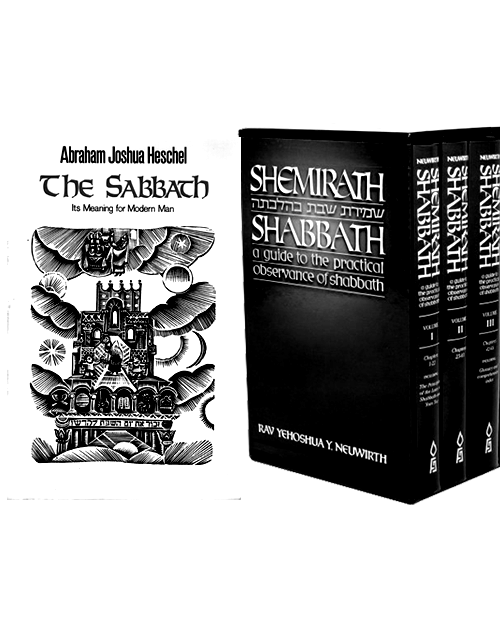
David Fohrman: It was Heschel. Now, he gave a whole chabura on Shabbos, and he says, this is coming right out of Abraham Joshua Heschel’s The Sabbath. You can’t understand the Sabbath without it, right? You need to read this.
And I remember I’m in Mechina, laid out on the grass and I like got the book from the library, I think, and I’m reading it, and my rebbe walks by, my 11th grade rebbe, and is like, what are you reading? And it’s like, a book on Shabbos. He says, Heschel? Who told you to read Heschel? And I’m like, Reb Ezra. Oh, no! Oh, no!
Dovid Bashevkin: You threw Reb Ezra under the bus! Oh, no!
David Fohrman: I didn’t even know it was terrible.
Dovid Bashevkin: You didn’t know.
David Fohrman: You didn’t know. I was just a high school kid. And like Ezra the next chabura Ezra was like, okay, so like, you know, we seem to have generated some controversy. Cuz he got it over the head.
You know, the rebbe came to him and says, you recommended Heschel to Fohrman? What you know, what what were you thinking? That was one of the books he recommended.
Dovid Bashevkin: As he did with me, by the way, and I was always very moved by his ability to find a talmid who is maybe not going to be fully, I don’t know if the word is satisfied, but is going to want more than the standard canon. And I think the two books that I remember very clearly him recommending to me, one was Heschel’s The Sabbath, and the other, believe it or not, is a Hebrew, it’s not a book, it’s a it’s more of a sefer, but it’s not really, is a work called B’Ikvos HaYirah by Rav Avraham Eliyahu Kaplan, who was one of the students of the Alter of Slabodka. And my last conversation I ever had with him, for a different time, was about that book.
David Fohrman: Interesting. That sounds fascinating. I think it might have been Reb Ezra who recommended How to Read a Book by Mortimer Adler to me, which became another foundational book for me, which is basically a derech halimud for any book that’s above you, right? Mortimer Adler is like, most books are not worth reading, there’s a hundred that are. The ones that are worth reading are the books you need to stretch yourself to read that will speak to you in a new way at different times in your life, and here’s how you read them.
And that spoke to Ezra’s kind of meditative, foundational, like way of taking apart something, and I think he might have recommended that to me, as well.
Dovid Bashevkin: Could you go back and share a few more of the chaburos?
David Fohrman: Okay, still in Elul, the next chabura he gave us, also foundational. How do you relate to guilt? Like, guilt is the name of the game, right? You know, we go, Ashamnu, like we’re guilty. And he had a very simple thing to say about guilt.
Says there’s a litmus test for guilt. Says guilt is a useful emotion to an extent, but it’s pernicious and it can destroy you. And the question that you have to ask yourself, always, with guilt, is this emotion impelling me to change, or not? And to the extent that it impels you to change, it’s healthy, and to the extent that it is not motivating you to change, it is pernicious and poison and needs to be expunged from you. Now, there’s a subtle truth in what he said.
He didn’t say, to the extent that guilt holds you back, it’s pernicious. To the extent that it is not doing that, right? It that you can just think like, it’s just there, I just feel guilty about it. No, it’s terrible, it’s pernicious, you have to expunge it, right? And he says, and if you doubt me, and you think like, it’s Elul, right? I should be feeling guilty, right? And even though it’s not impelling me to change, and like you have problems with that, says, do whatever you can to not feel guilty, and blame it on me, right? You know, I’ll take all the in Shamayim I’ll take all of the heat for you not feeling guilt, right? This was his thing. And only later in life, I began to understand the deep truth of what he was saying.
The real truth is it came from a Rambam. I hadn’t even seen it then, but if you look carefully at the Rambam, where the Rambam talks about guilt in terms of charata, you know in yeshiva, if I would ask you, as a good yeshiva guy, what are the three elements of teshuvah, right, or the four elements of teshuvah, you would name them, cite the Rambam, and you would say, charatah, azivas hacheit, kabbalah l’asid. Right? That’s what they are. And then vidui, right, or whatever it is.
Regret, accepting for the future,—
Dovid Bashevkin: leaving the sin, leaving the sin, confession.
David Fohrman: That’s like mother’s milk, everyone knows. If you look very carefully to the Rambam, the Rambam does not include charatah in his definition of teshuvah. It’s not there, right? He includes kabbalah l’asid, accepting not to do this in the future, and he includes leaving the sin behind, but not charatah.
If you look carefully at the pesukim the Rambam is quoting, the Rambam proves it from pesukim that charatah is not a part of it. The Rambam says, after you do teshuvah—he cites the verse, Acharei shuvi nichamti—after I’ve done teshuvah, then you can have charatah. But only after. Only after you’ve moved on.
Years later you can look back. Once you’ve changed, you have the safety net to be able to say, “I can’t even believe I was a cheeseburger guy 20 years ago.” Yeah, yeah. “Really? Like, I wish I had changed before that. Like, there was this other life I could have had.
I feel bad, right?” But he says you can’t have charatah when you’re in the process of change, because it will destroy you. Think of it, imagine you’re a guy who eats cheeseburgers, right? And you start with feeling bad that you’re eating cheeseburgers, before you’ve stopped eating cheeseburgers, before you’ve done azivas hacheit, right? So now what do you feel bad about? Not only do you feel bad that you’re eating cheeseburgers, there’s a meta-feeling bad. Despite the fact that I’m eating cheeseburgers and I know it’s wrong, what am I doing? I’m still eating them. So I’m a hypocrite.
I’m terrible. I’m the worst person in the world. So what happens is there’s a kind of catching-your-tail problem with guilt that it literally eats you alive. And that’s the poison he was talking about, that destroys you.
He says it gets in the way of change. Says, “Forget it. Your motivation for change is not guilt about what you did. Your motivation for change is the future.
Your motivation for change is who do I want to be? What can I become? Reach for that. When you change, when you’ve gotten somewhere with that, then you can worry about guilt, right?” He says, you know, that was a life-changing thing, right?
Dovid Bashevkin: Brilliant, brilliant, brilliant.
David Fohrman: That was chaburah number three.
Dovid Bashevkin: You know, to anybody, there’s always two components to what you receive from somebody.
There’s what they said and how they said it. Yes. You know, and I always look about, you know, you could almost take a piece of paper and draw a line down the middle whenever you’re listening to somebody and describe what you are receiving based on the what or the how. At any moment in a speech, you know, there’s how it’s being delivered, you know, the pauses, the intensity, is it joking, is it serious, whatever it is.
And then there’s the what, the content. And I just wanted to give you a moment. What’s the highlight whats and hows of Reb Ezra‘s impact on you?
David Fohrman: If it’s like how he would speak, again, there was something about that mix of confidence and humility that was incredibly powerful. I’ll tell you why, right? First of all, humility, right? The notion that you could be wrong, that he would accept, like, “I could be wrong”—he would say this—”I could be wrong, but this is how I see it, right?” Like, rebbeim didn’t do that.
Rebbeim would tell you the dogma. This is what you needed to believe. Almost like there was a kind of Moshe miSinai aspect, especially when they were talking hashkafah, right? Maybe they could in Gemara, that they might be wrong, but in hashkafah, no. Like, Jewish thought, this is how it’s.
Dovid Bashevkin: supposed to be, this is it, right?
David Fohrman: This is the party line.
And the notion that no, that there was a subtlety, that you couldn’t be sure, that this is how it seemed to me, was itself like a lesson. And later in life I distilled that, right? And I in Aleph Beta, I kind of told people, I said, “Look, there are three levels of certainty, right? You can bet your life on something, right, on an inference you’re making, you say like, ‘I just I know this is true.’ You can say, you strongly suspect it’s true. You can say, ‘I’m speculating and this is a hunch.’ And all of those things are fine, but you have to have truth in labeling. You just got to say what it is, right?” And I kind of learned that from him.
He would be very careful about labeling his degree of certainty. Sometimes he was certain and he would say he was certain. But other times it was like, “You know, I have a hunch. This is how it seems to me.
I have a gut instinct that this is true, I can’t prove it.” And he would say that and, to me, that was a lesson in how he would say things.
Dovid Bashevkin: A similarity, if I could jump in because it just struck me between you and Reb Ezra, is both of you, I think, deliberately, do not quote from a lot of earlier sources and are very focused on primary texts. One of the things that I was almost disappointed in his shiur, and I think he would have reveled in this disappointment, is that you come to a shiur and you want to build yedi’os, you want to build information and know all of what we call in yeshiva the reid. What’s everybody talking about on this? And Reb Ezra wouldn’t even give you a drop of it.
He was not interested in it, and he would find a way to give over or address the reid without letting you know this is the famous whatever whatever whatever. It was with fresh eyes.
David Fohrman: Yeah, and that was absolutely revolutionary and stayed with me. It influenced everything I did in Aleph Beta.
This started in the three-part series he gave us in Derech Halimud in how to study Talmud in that series of chaburas, in those informal sessions we had. And one of those seven habits was don’t get distracted by Acharonim, right? He says, Acharonim, right, later commentators from 1600 on, that’s what everyone sees as racy and very interesting, and that’s what everyone and everyone’s like, you know, you show your bona fides as a talmid chacham to the extent that you can talk about the Shev Shma’tata, quote them, sure, and you can talk about the Reb Ruvens and all of that. And he says, don’t take your eye off the ball. Says that’s not where it’s at.
He says, more foundational than that is the Rishonim, the more foundational than that is the Gemara, the Mishna, right, just like, again, read these texts carefully. And he gave us a challenge. He says, read the text of Gemara. Even read it without Rashi.
Try to make sense of it on its own. Try to take it apart He gave us exercises. I think one of them, which I later called in Aleph Beta Land, take it apart and put it back together again. Says, pretend you’re a child, you’ve been given a toy, and you have to take apart the toy, right, because that’s what kids do with toys, and then they have to reassemble the toys.
Try that in a sugya. Take it apart, right? What are the elements? And then to put it together, you need to understand what the ligaments are that connect the elements. Whether with this line and that line, what was implicit between those lines? Was it an and? Was it a but? Was it a therefore? Can you name that? And until you can explain that to me, until you can really put it together without fuzz, without ambiguity, you don’t know it. And that is your avodah.
Your avodah is not to build fancy castles of knowledge. Your avodah is clarity in exactly what is there on the page, and can you explain it? And if you can’t explain it lucidly to your friend, you haven’t understood it, and that’s what your job is as a lamdan. And that was it.
Dovid Bashevkin: I one time asked Reb Ezra, I was learning Perek Chelek, the end of Sanhedrin, which is famously an entire chapter of Talmud that’s really focused on theology and messianism, mysticism, it’s all there.
And I asked him, what do you think is the best commentary to learn Perek Chelek with, this mystical And I’m looking, I want Maharal, I want Rav Tzadok, you know, I want him to give me Give me the mystical secrets. And he saw it, and I think part of his thinking was the game. He, like, stroked his beard, he was silent for 15 minutes, and with, like, I think 90% sincerity and 10% mischief, he looked at me and said, have you ever considered Rashi? And I was waiting there, I was online, you know, on Friday nights we would wait online to say Good Shabbos to everybody, and I remember just, have you ever considered Rashi? That also stuck with me.
David Fohrman: Like He opened up my world to Rashi.
With this chabura, he said like, just do the Gemara and then do Rashi, and then ask yourself, what did Rashi say that surprised you, right? Because when you put the Gemara together, you didn’t put it together like Rashi. Rashi considered what you thought, and rejected it. Why? That’s gold, right? Understand why your hanacha keduma was rejected. Why was your foundational premise rejected? Open yourself up to the nuance of Rashi.
The idea that Rashi was a great writer came from Ezra, right? Because Ezra prized expression, Ezra prized clarity of expression, and he saw it in Rashi, and was able to value that. He says, Rashi is a great writer, learn from Rashi’s subtlety in writing, learn from his nuance, right, the positions that he’s taking. He’s not going to sit and argue out his position the way Tosafos will. Tosafos will discursively tell you everything he believes, and the Ritva will discursively Rashi will not.
Rashi will tell you through inference, through what he doesn’t say, through a wink and a nod, and attune yourself to that, and that was just gold. And then my chavrusa’s like sitting out there on the chair listening through the door because he can’t come in, and it’s like this changed the way we learned. And like we went into mechina and it caught on like fire, and suddenly, like no one’s learning Acharonim anymore, no one’s even learning Rishonim anymore. They’re just focusing on the Gemara and Rashi, and they’re reading it over meditatively, and they’re trying to get clarity.
They’re saying it over to each other, and the rabbeim are like, what just happened? Reb Ezra comes back and again it’s like, you know, I see that one of these chaburas generated a little bit of controversy. Cuz the staff is coming to him, is like, what are you doing? You’re messing with everybody. You know, but that’s what he taught us to do.
Dovid Bashevkin: I feel like the world so sorely needs Reb Ezra right now, who operated slower, less instinctively, less reactively, there was a pace to the way he approached and appreciated life that I found very amazing, even watching him walk.
David Fohrman: That was deliberate, by the way. You know, I’m here in California now, and I remember I was taking a hike in Huddart County Park, which would be a national park if it was east of the Mississippi, and it’s just gorgeous there. And I’m like with my daughter, first, I said, “You know, we’re all alone here,” and then she says, “We’re not all alone, look at all these trees.” And it’s like, you don’t think of trees as companions, but like they’re these living things, but they’re just operating on a different time scale, like they’ve been there for over a thousand years, and they’re just hanging out. But like that was Ezra.
It was almost like he operated on a different time scale, and that was part of that meditative quality, which is like life can go too quickly. And I think part of his mischievous side, his silences, part of them, I think, were to make you uncomfortable with how fast you were, to slow you down, slow you down. And it’s like, do you really want to be that fast, right? What would it take for you to really think this through and deliberate, and to listen completely to someone without using that time to formulate your thoughts while you’re guessing what they’re going to say, like will you really take it in, right? That was kind of what he was teaching you to do.
Dovid Bashevkin: And he was like that back then, meaning if there’s one word I would associate with the how of Reb Ezra, it would be silence.
Meaning, you would ask him a question—I mean, I only knew him when he had a big beard, and he would get lost in his beard, so to speak. But there could be a very, very long silence, and it kind of slowed down the whole operation, and it made the questions that you would ask him less transactional, and more about the experience, and less about the information. That’s why I think it’s so hard for so many to like recall nuggets. He didn’t speak in aphorisms and vortlach.
He kind of slowed down the experience itself, so like, we’re here now, and then you could leave his office after 45 minutes, and, you know, one of your roommates or chavrusa, “So what’d he say?” And you’re like, “I don’t know, but it felt transformative. Like I don’t have a good one-liner, necessarily, though we certainly had.
David Fohrman: a bunch.” And I think just the idea of, again, going back to this idea of confidence and humility, there was something reassuring, for me, of just feeling like there’s someone with a degree of gravity out there that, like, is grappling with these issues with a mix of humility and confidence and spiritual attentiveness that just gave me a sense of peace. It’s almost like I didn’t need to know the answer as long as it was something he was grappling with. It was just weird, but like, you know?
Dovid Bashevkin: Yes.
Cuz you knew he would do it with honesty, 100%. You knew he would do it with honesty and integrity, and he was one of the few, especially now, where there’s such a public-facing role to any rebbe or rosh yeshiva. There’s such a, you know, jockeying, you know, on the WhatsApp groups and on the magazine covers and all this stuff, and Reb Ezra would had no genuinely no interest in participating in that world. None at all.
No interest was I called him once, I think I probably got the biggest laugh out of him when I was working for Mishpacha Magazine, and they asked me, there was part of a larger story, “Can you call Reb Ezra and see if he would participate?” And I called Reb Ezra, and he loved my work for Mishpacha Magazine, cuz I used to write a humor column, and he would send me suggestions whenever I would see him. He would give me He loved it. But when I asked him to participate, I remember his first reaction was a deep belly laugh of like And he just turned to me and said, “Dovid, come on now. You know” Like he didn’t say it in those words, but like, “You know me better than that.” Like, you know, and I almost probably phrased the question knowing he would say no, but there was something very moving.
I want to give you the opportunity if there’s just any other core memories, core ideas that you wanted to share about Reb Ezra.
David Fohrman: I’m going to end off with a letter. I talked to you before about a letter that Ezra wrote to me. I’m going to read to you a letter that I wrote to him.
What happened was is that at the funeral, I talked to you about like how angsty that made me feel. I just I felt like crawling out I just it was it was rough. I mean, like when you lose a rebbe, your, you know, it’s it’s hard. He was a real mentor.
And the day after his funeral, I just felt bad. I just felt like I hadn’t communicated to him in his lifetime how much he meant to me, and he must have known it, but I just felt like I should have done that, you know? And so I took the opportunity the day after his funeral to write a letter to another mentor of mine, and I just said like, “It’s the day after Ezra’s funeral. He meant a lot to me. I never told him how much he meant to me.
You mean a lot to me. I’m at least going to tell you how much you mean to me,” you know, and I wrote him that letter. And then a few days later, I said, “Darn it, I’m going to write another one of these letters to Reb Ezra. I know he’s no longer alive, but I have to write the letter.” So, I’m going to read you that letter, and it’s a letter that I couldn’t deliver to him while he was alive, but you know, maybe it means something anyway at some level.
So, I said, “Dear Ezra, there’s” “Something I wish I’d understood when I was 15.” I wasn’t really 15, I think I was more like 16, 17. “Standing in that hallway, tears in my eyes, begging you not to end our chaburah. Something I’ve come to understand only later, maybe only now. Maybe it would have offered me some comfort.
One of the great dichotomies in life I’ve come to feel is the difference between being and doing. Doing is easy to locate and it’s easy to list. If you ask me who I am, the most natural thing in the world is to tell you a story about what I’ve done or the things that have been done to me: I was born here, I was educated there, I moved somewhere else, I achieved this and that. Being, on the other hand, is ephemeral.
It’s really hard to put your finger on. What’s it like to be me? It’s really hard to say. The realm of being is easily overlooked, but it is powerful. You taught me to focus on that realm a little bit, not to let it slip by, in your insistence that one listen closely, listen to people, listen to text, listen to the world around us.” And he did.
Just parenthetically, this isn’t in the letter, I remember one time he just said like, “Go on a walk and listen. Open yourself up to the world. Look at the flowers, look at the grass, look at the bricks in the beis medrash, look at the people, just people watch. Open yourself up to what you see and just take it in.
Just take in what’s around you and really tune in to that.” He says like it’s one of the most astonishing experiences in the world. Back to the letter, I said, “In your insistence that one listen closely, listen to people, listen to text, listen to the world around us, you were really asking me to take life slow and to take life in, to be with others, to be with a text, to feel what it’s like to connect with those things, with those people. When I think of you now, I think of being and doing. And you know, it’s easy to think that what we appreciate about our teachers is what they’ve given us or could still give us: the wisdom, the counsel, the steady hand.
And I do treasure all of that from you. I’ve received so much of that from you. I could say I miss you because I miss the opportunity to receive more of what you have to offer: the insights you shared, the text you opened up, the way you taught me to see patterns in the obvious. I certainly crave that, your teaching and your guidance.
Those things took me to many wondrous places. They gave me a map to follow, helping me to discover the beauty that Yiddishkeit really has to offer. But that’s not the whole truth. At some point, appreciation of mentors graduates into something different.
It becomes who these people are, not just what they do. Long after the years of that chaburah, long after I left yeshiva, your mere being in the world, your existence, that you were who you were, that your love, care, and concern was somehow a part of my life, it made the world feel like a warmer place to me, a brighter place, a more grounded place. I didn’t need you to be constantly teaching me. I didn’t need regular meetings or scheduled calls.
I just needed to know that you were in the world, that you were sharing this life with me. It gave me a certain kind of menuchas hanefesh, a kind of peace of soul to know that I was sharing life in this world with you. That was somehow enough. And now that you’re not here anymore, the world feels colder and it feels more bereft, diminished, not because I’ve lost your guidance—I carry what you taught me—but because your warmth and your presence and your being is not here anymore.
But maybe on some level that’s not entirely gone. Yiddishkeit teaches that we can love and we can connect across worlds. Hakadosh Baruch Hu can’t be touched or felt. Hakadosh Baruch Hu doesn’t live in this world of space and time.
Hu mekomo shel olam, ve’ein ha’olam mekomo. He is the place of the world, but the world is not His place. And yet, we’re still bidden to love Him somehow, to love Him with a great, surpassing passion, bechol levavcha uvchol nafshecha. So, maybe love’s a kind of answer.
I can only hope that by remembering you, and maybe by carrying what you’ve given us, that somehow I and the many others you’ve touched so deeply won’t feel quite so alone in this world you’ve left behind. Yours, David.” Wow.
Dovid Bashevkin: I am so moved by that. I’m so grateful for you sharing that.
I’ll only say in that idea of being is that one of the memories that this letter drew is that when Reb Ezra would leave his office before going home, it could be past 11:00 at night, he would walk into the doorway of the main beis medrash and he would just watch and do nothing else. He would look around, he would see who’s there, but he would just look and he would just watch. Rabbi David Fohrman, this conversation, your memories helped bring a little bit of Reb Ezra’s life and that shared world back into reality for me, and I’m so grateful for taking the time to speak with me today.
David Fohrman: Thank you for the opportunity.
It’s a privilege to be able to put some of this out there into the world. I have, you know, deep love for his family, for the people that were touched by him, and to open that up a little bit to the world, I think, is maybe an important thing to do and it feels wonderful to be able to have an opportunity posthumously to connect to him through memory. So, thank you for the opportunity.
Dovid Bashevkin: The last conversation I ever ever had with Reb Ezra Neuberger was actually the longest conversation I think I ever had with him, and it was at a very difficult time in the world and in everyone’s life, and it was following October 7th and the rallies, and some of the splits that came out within the Orthodox world regarding participation in that rally, which we actually did an episode on at the time.
And I called up Reb Ezra to share my confusion and pain about some of the remarks that were shared, not that he had shared, but that were shared that emerged from the yeshivah world, because it weighed on me a tremendous amount, and I felt that I had a duty and responsibility to myself to reach out to my rebbi to discuss this. And we had a phone conversation, and this is before Chanukah of 2023. I’ll just share one thing that emerged from that conversation. Towards the end of the conversation, he shared with me a story.
You know, Reb Ezra would always remind us that we are part of a mesorah, a tradition. Every year on Shavuos, he would actually tell the story, there’s a famous story of the Ger Tzedek of Vilna, the righteous convert of Vilna. And this righteous convert was actually killed, murdered al kiddush Hashem on Shavuos. And that’s not why he would tell the story.
He would actually tell the story, and then after he finished telling over the whole story, he would tell us the tradition of how he heard the story and who they heard the story from. And he would tell us, “I heard this story from my rebbi, Rav Ruderman, who heard it from his rebbi, the Alter of Slabodka, who heard it from his rebbi, Rav Simcha Zissel Ziv, who heard it from his rebbi, Rav Yisroel Salanter, who heard it from his rebbi, Rav Yosef Zundel of Salant, who heard it from his rebbi, Rav Chaim of Volozhin, who heard it from his rebbi who witnessed the story, the Vilna Gaon.” And what he was really trying to impress upon us was not a particular story, but that we were part of a tradition. And on this phone call, towards the end of it, he told me another story, and it was specifically about the Alter of Slabodka, which had a specific significance to Reb Ezra because that is the tradition he was trying to initiate us into. And he said the Alter of Slabodka lost a child at a young age and was inconsolable.
And he said one person came to pay a shivah call to the Alter of Slabodka, and it was Rav Kook, Rav Avraham Yitzchak HaKohen Kook. And he shared what Rav Kook said. It was actually quite beautiful. Rav Kook said, you know, “If God gave you this opportunity to either never have a son or to have a son for these years, you know, which one would you have chosen?” And he said, “Without a doubt, you know, of course to have a son even if it’s a short period of time.” And Rav Kook just gave him the eyes to see even in this pain and tragedy, the preciousness of the berachah that he actually got to have that child.
And Reb Ezra told me this because I was grappling with, you know, the yeshivah and my own, you know, relationship to Zionism post October 7th. I actually told Reb Ezra in somewhat of a I wouldn’t, God forbid, call it a chutzpah, but I told Reb Ezra, “I’m grappling with this because of ideas I heard from you.” It was Reb Ezra who had recommended to me a collection called Be’ikvos HaYir’ah that was written by a different student named Rav Avraham Eliyahu Kaplan who studied in Slabodka Yeshivah also. And it was in that book that Reb Ezra had recommended to me where he has a eulogy for Herzl, and I said, you know, and it’s so moving where he says, you know, Herzl didn’t teach us Talmud, he didn’t teach us ethics, he didn’t teach us halachah, but he taught the Jewish people how to say loudly and proudly Ivri Anochi, I am proud to be a Jew. And Reb Ezra told me that story, and then he paused, and he said, “Dovid, I continue to strive to be a beis medrash that has room for both the Alter of Slabodka and Rav Kook and Rav Avraham Eliyahu Kaplan and Rav Aharon Kotler.” And he just started listing different names of different streams of students who came out from this tradition, who went in so many different directions.
And I think that was a moving, you know, final thought to leave me with, because I think the most foundational thought I ever got from Reb Ezra was this very idea about the importance of diversity of thought, of understanding where differences emerge from, and not trying to ignore them or be afraid of them, but actually have the language to discuss them, and feel proud of the decisions and the consequences of our decisions of how we build our life. I’ll leave you in this episode with one final story because I think it’s the most central story about Reb Ezra, where he called us into his office before we started dating, and he said, “Before you start dating, you really need to understand the purpose of dating. And the purpose of dating is to get married. And the purpose of marriage,” he told us, “is to have children.
What’s the purpose, what are you trying to accomplish in raising children?” That was the opening question in this kind of gathering to talk about dating. He said we have we have to talk about that. What what is the goal of a parent? And different kids and He called on kids, I remember this, to give different answers. And one kid said, “You know, you should raise kids to, you know, have yiras Shamayim, have awe and seriousness in life.” He said, “Nope, that’s not it.” Somebody, you know, “Okay, it’s it’s ahavas Hashem, love of Torah and mitzvos and to enjoy-” “Nope, that’s not it either.” And different people gave different answers, I think kind of biased of what he was probably looking for.
And he said, “The role and job of a parent is to raise emotionally healthy, independent children who are capable of making their own decisions, people capable of making their own decisions. Now, we can hope as parents what those decisions may be, but what we really want, what we really want is to raise children who are capable of making independent choices on their own.” And this, I think, is an idea that has stayed with me. I think in many ways it animates what we’re trying to do on 1840. I think in many ways it’s how I think about life itself, of learning how to confront, and the way we take life seriously is taking real responsibility for our decisions and our choices, and learning how to fall in love and appreciate and take responsibility for the life that we lead.
And in that sense, the person who taught me how to do that, how to find that, how to both take the consequences of my own decisions and my own life seriously, but also how to love that sense of self that emerges from those choices was my rebbe, Rav Ezra Neuberger. So thank you so much for listening. This episode, like so many of our episodes, was edited by our friend, Denah Emerson. Thank you so much, Denah.
If you enjoyed this episode or any of these episodes, please subscribe, rate, review, tell your friends about it. You could also donate at 1840.org/donate. This all really helps us reach new listeners and continue putting out great content. You can also leave us a voicemail with feedback or questions that we may play on a future episode, and that episode is coming very, very soon.
That number, of course, is 212-582-1840. Once again, that number is 212-582-1840. If you’d like to learn more about this topic or some of the other great ones we’ve covered in the past, be sure to check out 1840.org. That’s the number 1 8 followed by the word forty, F-O-R-T-Y, 1840.org, where you can also find videos, articles, recommended readings, and weekly emails.
Thank you so much for listening, and stay curious, my friends.