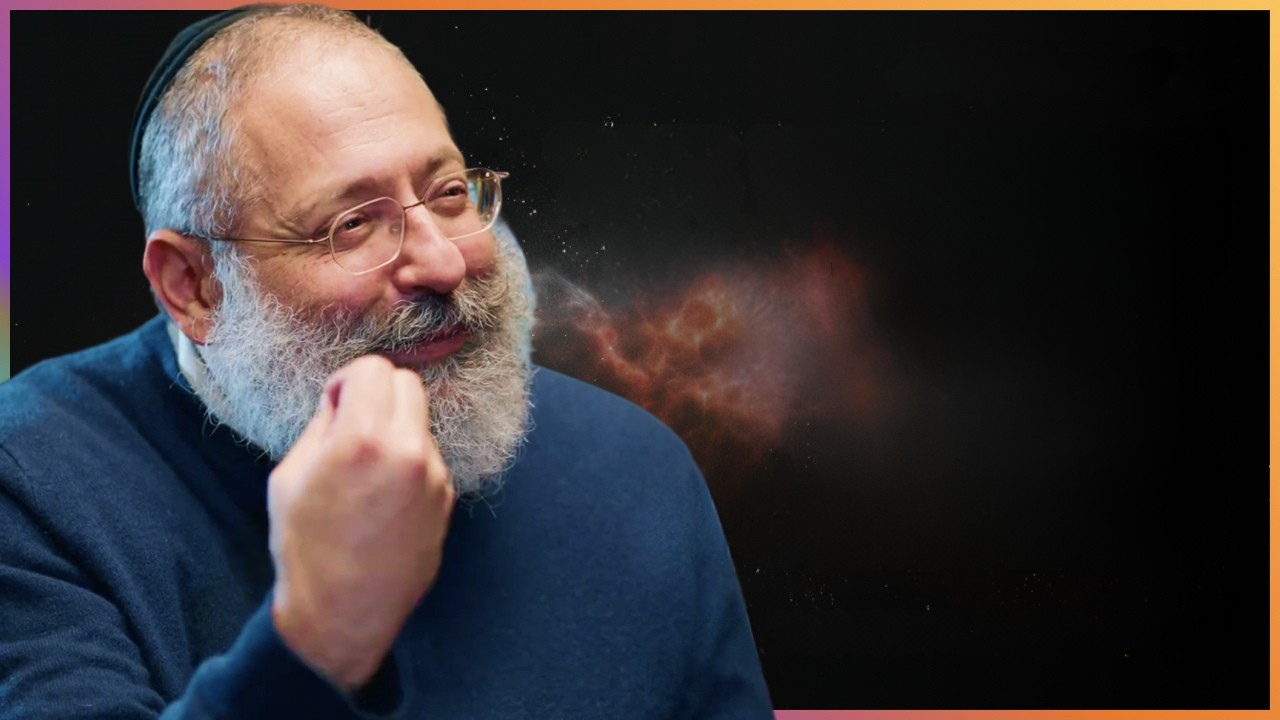
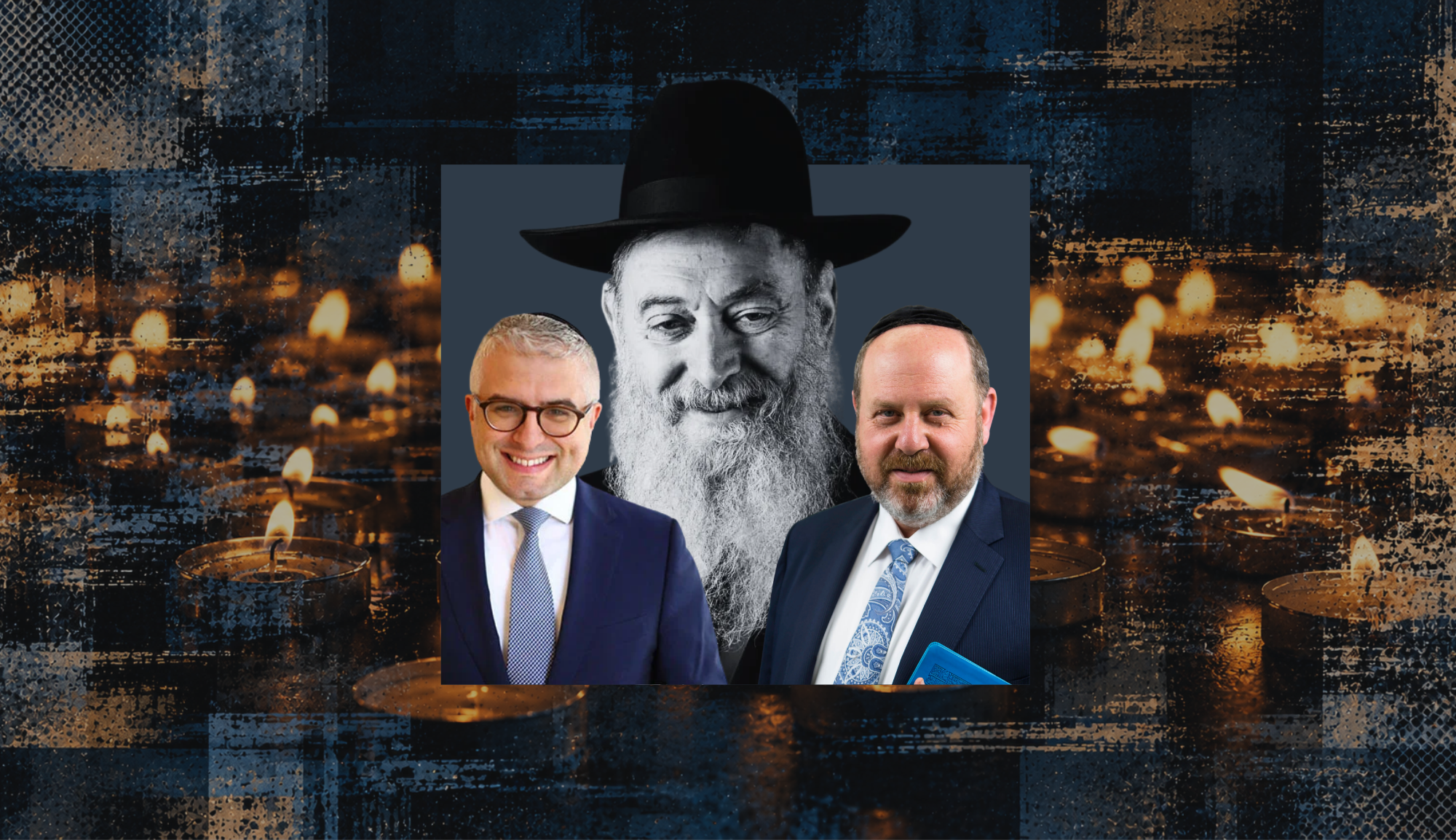
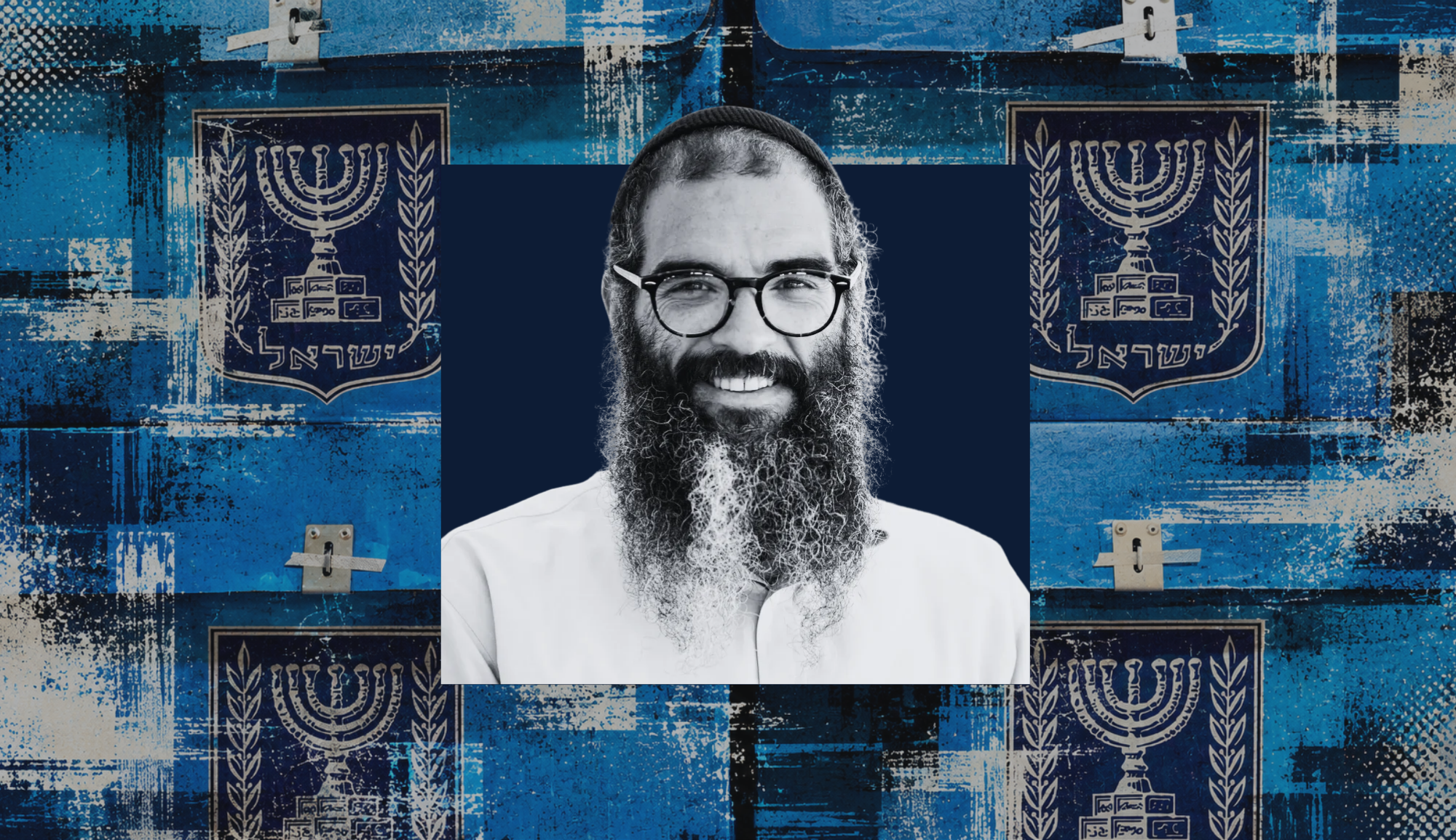
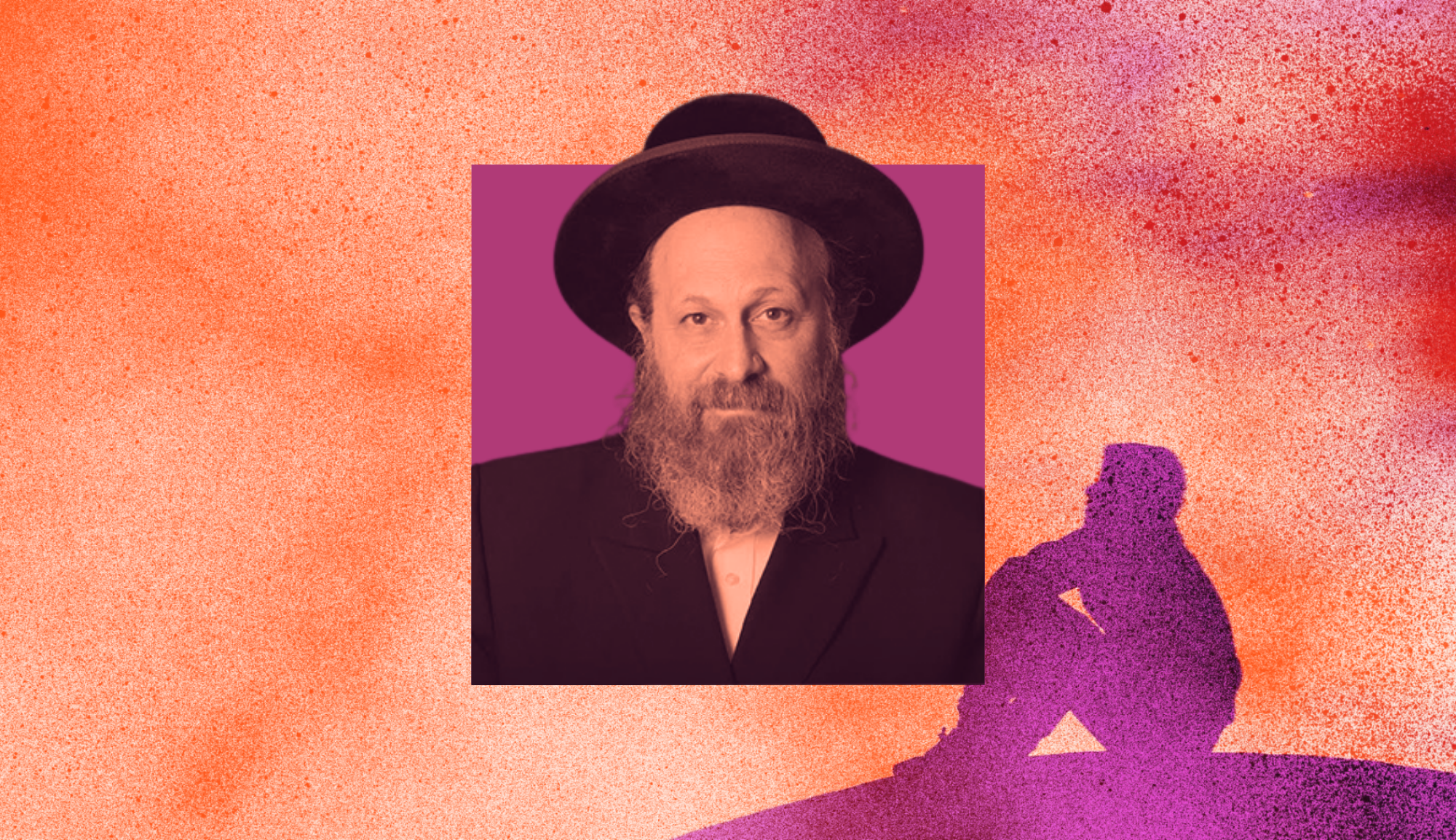
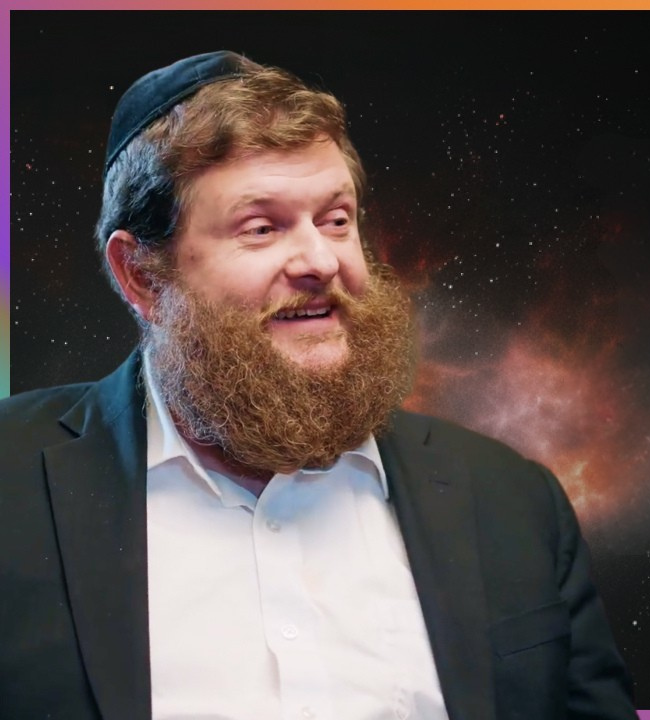
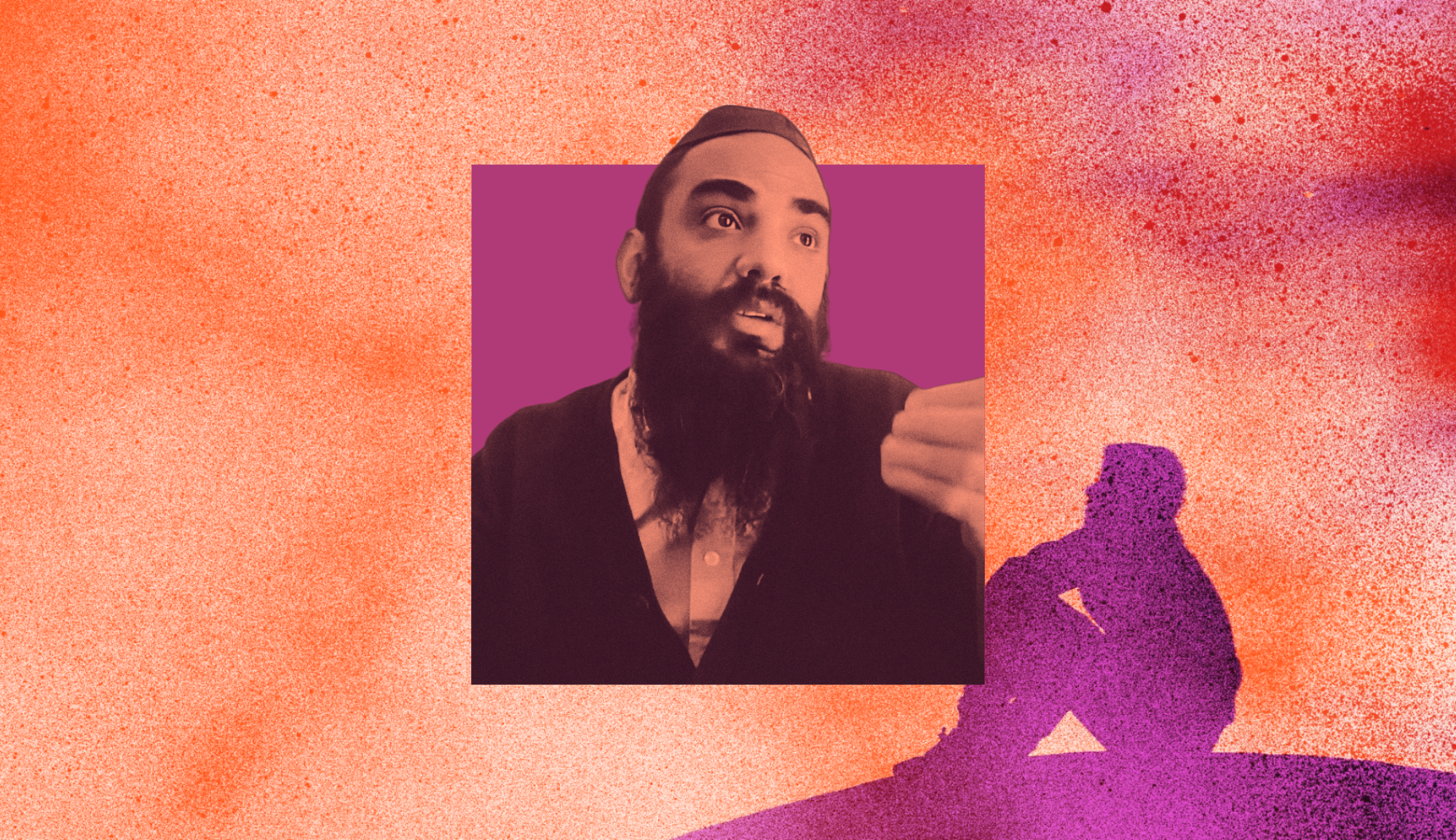
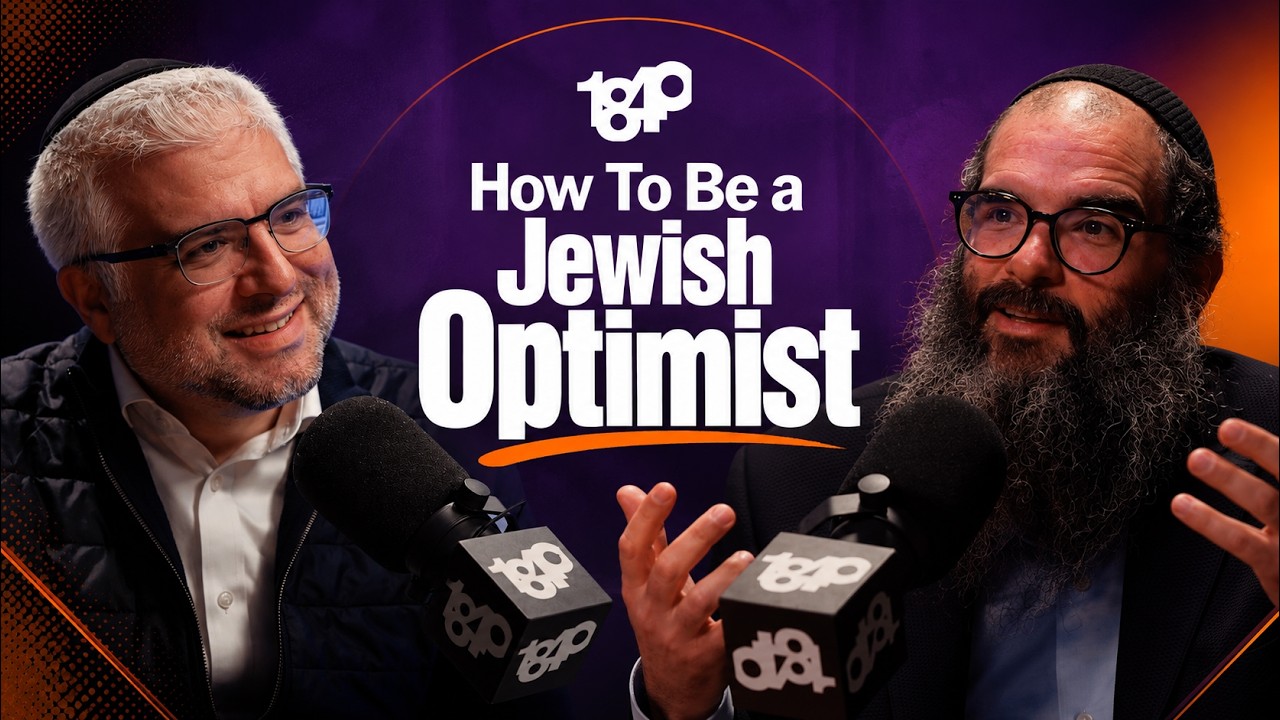
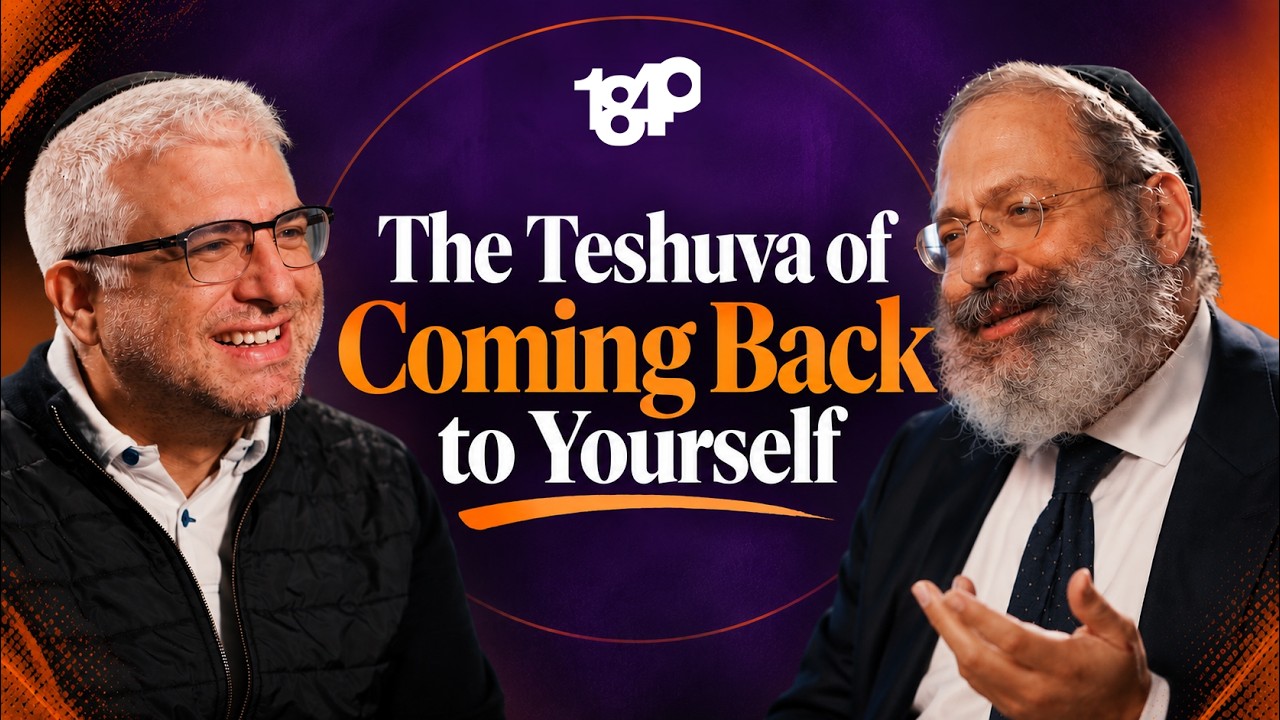
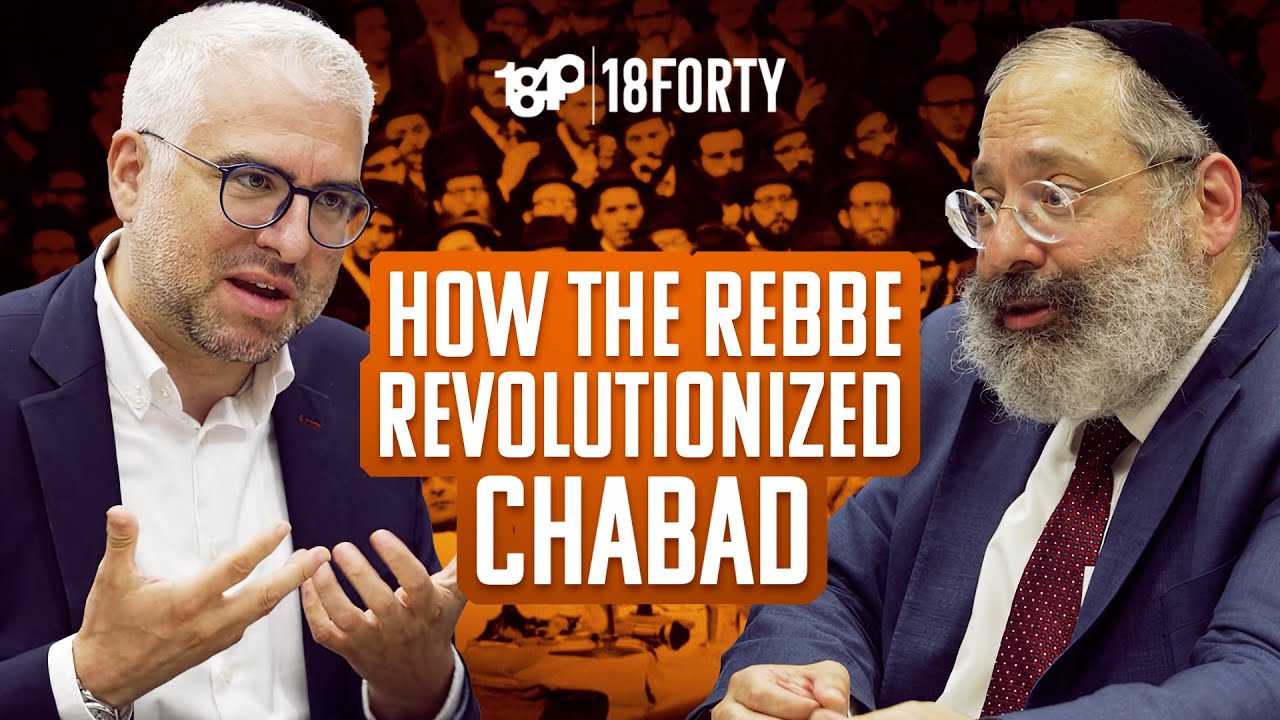
RABBI DR BENJI LEVY. Rabbi YY Jacobson, it’s such a privilege and pleasure to be with you here. You were one of the oral scribes of the Lubavitcher Rabbi, one of the greatest people throughout Jewish history, and now you have become one of his greatest Hasidim that actually go on and speak and share teachings in your own light and in your own right as an international speaker. Thank you very much for coming.
RABBI YY JACOBSON. Thank you for the honor and the privilege.
LEVY. So what is Jewish mysticism?
JACOBSON. Wow. Jewish mysticism, I would say, is the inner meaning and purpose of life. You could call it the spiritual physics of the universe and of the human psyche. We are all fascinated by the progress of science, physics, medicine, biology, philosophy, psychology, cosmology, AI, and all of the miracles that keep on evolving as we learn more about ourselves and about the universe. Jewish mysticism takes it one step deeper and wants to understand what is the spiritual science of the universe and what is the spiritual innermost mechanism of the human psyche. Because only when we can integrate the outer and the inner can we create a world of inner and outer peace and tranquility. If not, there is a dissonance. So what often happens is, there was a philosopher who once said that today people are reading more and more about less and less, or people know the price of everything and the value of nothing. If we make amazing advancements in technology and in science and in all other aspects of our ability to prolong the span of people’s lives, to make them financially more prosperous and comfortable, and all of these things are amazing and important, all of the advancements in our physical material world, but if we don’t equally advance our spiritual consciousness, expanding our minds and our souls, there is a horrible dissonance between the outer and the inner, and that’s where the anxiety of our generation comes in. And I think Jewish mysticism tries to repair that.
LEVY. Beautiful. So was there a moment in your life that you took the deep dive into this world now that you’re such a proliferator of it? What’s your origin story with Jewish mysticism?
JACOBSON. To be very honest, it’s a dive that I need to take every single day, because Jewish mysticism is not a scholastic subject that you study in university or in a yeshiva, and you get a degree and now you have mastered it. It’s about a continuous embodied experience of the rhythm of life. That’s not something you do once. It’s like breathing. It’s oxygen. Once you get what it is, it’s really about an ongoing relationship with it. So, on a practical level, as you mentioned, I grew up at the feet of the late Lubavitcher Rabbi. I grew up in Brooklyn. I was privileged to literally sit at his feet for many years and hear his teachings, and that has shaped me and molded me and impacted me very profoundly. As I got a little older, I had the merit of serving as one of the oral scribes of the Rabbi. So I grew up in an environment that was saturated with Jewish mysticism. It was saturated with Kabbala, with Chasidut, Hasidic spirituality, with Torah in general.
The vocabulary was very familiar to me already at the age of five and six. I still remember I was sitting with our middle brother, his name is Baruch, and I was a little kid, I was sitting on the couch, and I heard him say the word tzimtzum, tzimtzum [contraction], which in Kabbala and Jewish mysticism is a very charged term. It basically describes how divine infinity had to conceal itself in order to create cosmological emptiness. It had to create the emptiness from which cosmology emerges –
LEVY. Quite complex for a five year old.
JACOBSON. But when I was six, I didn’t know tzimtzum [contraction] – I still don’t know what cosmological emptiness is, but I feel it. And I asked my brother, I still remember, what are you talking about? And he said, when you get older you’ll understand what tzimtzum is. He was right. I also feel it. So I grew up with that vocabulary, but I would say it took me many years to mature and experience the various pains and crises in life to really challenge me, not just to learn about it but to actually try to experience it more, to allow these teachings to resonate with me and to, I would say, saturate my nervous system. And that’s where my relationship with it really took on a completely different form, because I realized the value of these teachings, not just intellectually as a career choice, which is also fine, but really as such healing power in a world where there is so much pain and so much anguish.
LEVY. Wow. So in an ideal world, would all Jews be mystics?
JACOBSON. It’s a great question, but I don’t want this to sound like we’re just a bunch of superstitious nut jobs. So I’ll quote the prophet Joel, who speaks about a time which we call Mashiach, the time of redemption, when every single human being, adult and child, female and male, will be a prophet. Moses already was confronted by his student Joshua in the Bible in the book of Numbers. Joshua was very upset because there were two Hebrews by the name of Eldad and Meidad who were prophesizing, and he told Moses: Put them in prison. They are competing with your authority. You’re the prophet. We shouldn’t have other prophets. And Moses responds with one of the most moving, I would say, and rich sentences in the Bible, in my opinion. He says, Joshua, you’re jealous for me? My goal in life is that all of God’s people become prophets, that God confers his spirit on every single human being. Don’t be zealous for me that there are two prophets. That’s my entire aim of life.
So I would say the ultimate goal is for each of us to experience intimacy with our own life force and energy, to really become channels of our own true energy. And that’s a form of prophecy. What prophecy really means is that our antennas are not plugged, they’re not blocked. We’re not full of static. We can sense the energy of the cosmos that vibrates and pulsates through our bodies, through our minds, through our souls, and through the universe at every moment.
LEVY. Wow. So what do you think of when you think of the word God? Or this concept? What does it mean?
JACOBSON. Wow, that’s an intense subject. That’s an intense question, because for me, personally, it’s a very painful question. And the reason is because for many years, when I heard or thought or saw the word God, it was associated with pain. It was associated with tyranny, with suppression, with control –
LEVY. That you personally experienced?
JACOBSON. Personally, yeah, with tragedy and with anguish. It wasn’t a word that expanded my heart. It was a word that made my heart contrite, that made me tight. And there was a reason for it, there was a reason because somehow in my psyche, the concept of God, the word of God was associated with the pain of life, with disappointments, with trauma, with emotional neglect, with dissociation. And I right away knew there’s a dissonance, because when I would see the mystics talk about God, I saw that their hearts opened up, their hearts expanded. Maimonides, who’s not even considered a mystic, he’s considered a rationalist, but in truth he’s one of the great mystics, writes, when you think about God, the love that you’re capable of experiencing is beyond any love you’ll ever imagine in the world. And his only example is, this is what he writes [in] Maimonides’ Laws of Repentance, chapter ten. He says, when a man has this crazy crush on a woman, and he doesn’t stop thinking about her, 24/7, when he sits and when he stands, when he eats and when he drinks, and when he sleeps and when he awakes, his mind is completely obsessed. He says, a true lover of God, this pales in comparison to [what] a true God consciousness is. He said, if you know what it is, it’s an ecstasy that can’t cease. It’s an ecstasy and a rapture that overwhelms you. And I’m reading this and I’m like, can you teach this to me? Like, which God are you talking about? The God that allowed the Holocaust to happen? The God that allowed October 7th to happen? The God that allows innocent babies to die, war, violence, kidnappings, molestation, rape? This is His world. It’s happening on His watch if there is a Creator. Like, which God are you talking about? And it took me, and it still takes me, a lot of inner emotional work to be able to heal from that and to understand that, yeah, there’s a lot of evil and violence in this world that I will never wrap my brain around. But a real, deep relationship with life is also a relationship with the truth. And that is that God is the essence of everything and the source of all bliss, and all light, and all love, and that it’s a privilege to be able to have a relationship with that, which is a very mysterious relationship. It’s not a relationship that I or anybody can define because the moment I define God, I create God in my image rather than being created in God’s image. And it’s really a very deep experience of surrender to experience God as a source that I want to surrender to, even though I could never understand what it is.
LEVY. So to answer your own question of how God can let these things happen, is the answer I just don’t know and I surrender and I accept? Or how do you answer the questions you asked of the terrible things happening in the world with a God of love?
JACOBSON. I have found in my life, and I think it’s a truth that Judaism has spoken about for thousands of years, that at the end of the day, there is no mind or intellect that can understand the mystery of pain. We can talk about reincarnation, and we could talk about humanity having free choice and the need for us to fix the world. And that’s all true and important. But ultimately, ultimately, if God is really infinite, he could have figured out a better way, don’t you think? He didn’t. This is what He chose. And I think there’s a very deep surrender, but not surrender from a place of weakness or naivete, which is like, everything is good and dandy and rosy and perfect. It’s a surrender that comes from a deep maturity of realizing I don’t even understand how one cell was formed. And I have 70 trillion of them in my body. And I don’t even know how one cell was formed, nor does any scientist know. And I don’t even know how one atom was formed. And when I look at the sun, I don’t know how the sun was created and how God manages to get the sun to do the same thing for almost 6,000 years when I can’t get my teenager to do one thing. And so if I don’t understand the sun, do I think that I’ll understand the Creator Who is completely infinite? So I am comfortable with the fact that if there is a truth that is infinite, I must completely, completely surrender to it. And surrender does not mean that I don’t feel the pain. It doesn’t mean I don’t have questions. It doesn’t mean that I don’t cry. It doesn’t mean that we don’t grieve. And it doesn’t mean that we don’t fight injustice. If that’s what it means, it’s a big problem. If faith leads to apathy and emotional paralysis, it’s not faith, it’s a cult. Faith is actually the courage to be able to embrace the totality of life and the reality that there is so much blessing and infinite love, and there’s also so much pain and mystery that I’ll never comprehend.
LEVY. Wow. I think it would be reassuring for anyone listening to see someone that’s dedicated their life to this study and still has the capacity to surrender from a place of strength and has that faith.
JACOBSON. Yeah, and it’s constant. This is constant, because the mysteries of life are so profound and every day when you look at the news –
LEVY. Get to know a new mystery.
JACOBSON. There’s a new mystery and there are so many questions and we can easily go into a place of fear, anxiety, and panic, which all makes so much sense.
LEVY. Does it ever make you feel that this concept of hashgacha pratit, of divine providence, we focus on the story that happened that worked out well. But then we don’t use the word hashgacha pratit for the thing that didn’t work out well. Is there a problem for our sort of bias in that? Or is it still a good thing because it’s just a human –
JACOBSON. It’s fine. I mean, from all the crimes of humans I would not consider this in the top ten. But the other day, I was going to the bank some time ago and I met somebody and he said, Oh, Rabbi Jacobson, hashgacha pratit, which means divine providence, that I met you.
I need to talk to you right now. I need a half an hour. And I didn’t have half an hour. I really didn’t. I had to go somewhere. And I said to him, I’m so, so sorry, but I can’t now. I have to go into the bank and I have to run somewhere. He says, But it’s hashgacha pratit that I met you. It’s divine providence that I met you. So I looked at him and I smiled. I said it lovingly, and I said, But you realize that if I leave you right now, it’s also hashgacha pratit, right?
So, of course, divine providence means that every single moment is part of our journey. There are no bad moments. There is no, like, this day was a miserable failure. Or in my life, I could say, oh, this speech was just eh, it was like deleted from my biography. Hashgacha pratit means that every experience, every encounter, every relationship, including mistakes and errors, are an indispensable part of our journey. Sometimes it’s something we can look at and say, wow, I am so grateful. That was such an incredible moment with my wife, with my child, with my friend, with my student, with myself. And sometimes I look at it and say, well, that was difficult, but you know what? What can I learn from it? Like, maybe I have to think about this differently. How do I grow from it? What muscle was it teaching me to learn about, to flex in my own growth? Is it maybe I was taking credit for something that doesn’t belong to me, it belongs to God? And God in His kindness was showing me, you just deviated from truth. You just went into a place of arrogance and you’re not a channel anymore. So this was the failure you needed to teach you about your hubris –
LEVY. A little adjustment or correction.
JACOBSON. A little adjustment, which when we are in a state of surrender to truth, these things are gifts. Yeah. If I need to be separate, these things are very frustrating. So hashgacha pratit is literally that every moment of the day, it’s like King David puts it, “I walk in the valley of the shadow of death and I’m not afraid because You’re with me.” You’re with me doesn’t mean that things are always easy. Sometimes they’re very painful –
LEVY. Well you specifically located the tzalmavet, the shadow of death.
JACOBSON. The shadow of death. And that’s exactly his point.
LEVY. That’s when he’s acknowledging.
JACOBSON. Yeah, because it’s the fear and the panic that doesn’t allow us to grow and learn from the experience.
LEVY. So what’s the purpose of the Jewish People?
JACOBSON. The purpose of the Jewish People; I’m going to share a line that I heard from a therapist of mine who told me that she heard it from her mentor, who’s not Jewish. And that’s why it’s reliable because it comes from non-Jews. Because if I quote Jews, there’ll be another Jew who says, eh, he doesn’t know what he’s talking about.
But if it’s coming from a non-Jew, then the Jews are like, oh. And she said something very powerful. I mean, I’m going to use my own words, but I love the phraseology. And what she said was, the mission of the Jewish People is to hold up for the rest of the world and for ourselves the frequency of truth, which is the frequency of oneness. The Jewish statement is Shema Yisrael Adonai Eloheinu Adonai Echad, God is One, which as the great kabbalists and Hasidic masters said, it doesn’t only mean that there’s one God. It means God is oneness. Oneness is God. The only reality is Hashem because the entire universe and all of consciousness is just derivative of the infinite flow of life. Everything else is idolatry. Everything else is fake news. And every moment the question is: Which frequency am I going to choose, the frequency of oneness or the frequency of brokenness, the frequency of surrender, trust, love, faith, or the frequency of arrogance, guilt, shame, hatred, jealousy, need for validation, fragmentation, loneliness, separateness?
The task of the Jewish People was to hold tightly the frequency of oneness in the world. And throughout history, antisemites, and there were many of them, came kicking at us, bashing us, trying to destroy us so that we let go of this frequency, that we say either there’s no God or that I am God. And it never helped. It never worked for them because you cannot destroy the frequency of oneness. Because it’s the only reality. So they kick, and they scream, and they persecute, and they expel, and they burn, and they torture, but somehow we bounce back. It’s not because of our IQ. It’s not because of our Nobel prizes. It’s because the Jewish People were charged by the creator with holding up this frequency of authenticity, of truth, of oneness. What does Messiah mean? What does redemption mean? It’s when all the nations and the Jews themselves will look and say, okay, we surrender. We surrender. We’re all part of oneness. What is idolatry? Idolatry is whenever I worship anything outside of this infinite oneness, which is infinite love. When I take my ego, which is easing God out, and I start worshipping that, that’s idolatry. And we hold up this frequency constantly –
LEVY. I love the concept of that frequency because a frequency is something you feel or hear but you can’t touch it.
JACOBSON. Right.
LEVY. So they can never get to it, but we have to continue to channel it.
JACOBSON. Yes, they try to get to it because they don’t realize it’s the frequency of oneness. Yeah. So they think, Hitler said, I’ll get rid of the Jews, I get rid of God. Right? But how exactly do you get rid of God? How do you get rid of the frequency of oneness? If God was an entity, was a statue – which is why they love the idea of statues. You know, monuments, museums, coliseums –
LEVY. Because they’re tangible. Because they’re palpable.
JACOBSON. Yeah. That means I can also be God. If I could just make myself bigger, richer, more powerful, more gorgeous, more handsome, more athletic, I’ll also be a shtickel God. Shtickel means a piece of God. But the real God is something that transcends all of us and therefore unites all of us. And it’s the place that we can only experience energetically when we surrender our egos to cosmic oneness and we realize we’re each a channel of the light, like we’re each a ray of the sun and there’s no competition between us. I never saw rays of the sun fighting with each other. I have the sun, you have the sun. No, I have the sun. And that’s even the limited sun. Do we think that God’s rays have to compete with each other? There’s no such thing.
LEVY. It’s the opposite because the more times the rays can illuminate together, the greater the result.
JACOBSON. Exactly. And the moment I think that you’re competing with me, it means I’m completely detached from the source. I basically think my light is limited and you’re going to hijack my light. So it’s not just I’m jealous of you. It means I completely don’t know who I am. I turned myself into some finite control freak because I want to remain safe, small, and in control. And Hashem Echad, God’s oneness, means you’re a channel of infinity. Stop depriving yourself [of] your richness, for heaven’s sake, pun intended. You don’t have to deprive yourself of that. And I think subconsciously or consciously, all anti-semitism, even if the hater is not conscious of it, is really an attempt to destroy this frequency. And the Jewish People just bounce back and the antisemites say, why? Why can’t we get rid of you? What are we doing wrong? We have had every empire in the world try to obliterate you. Why are you still here? What is it? Chinese food? Sushi? Bagel and lox? Bingo? What in the world is your secret? I mean, the Egyptians, the Babylonians, the Assyrians, the Greeks, the Persians, the Romans, the Byzantines, in our generation Stalin, Hitler, the Islamists, like we’re trying so hard. Why doesn’t it work? And how many Jews are there? We’re not even 0.1 percent. We’re less than a quarter of a percent of humanity. What is this?
So the simple answer is ask God, this has nothing to do with us. He chose us and we are his ambassadors. And as the prophet said, Malachi says, God says, I haven’t been destroyed, you won’t be destroyed. On a deeper spiritual level, it’s really Jews who were chosen to hold onto the frequency of redemptive consciousness, which is the frequency of redemption, of oneness, of unity. And it’s never about arrogance. It’s the contrary. The moment you’re in that frequency, the humility is absolute because the moment I own it, it’s not that frequency anymore.
LEVY. Well, you can’t hold the frequency. That’s the power. You can just be a channel of it.
JACOBSON. You could just be a channel. And the more we become a channel, which means the more we surrender, the more we become transparent and translucent.
LEVY. And it is also just like they’re trying to get rid of it, those that are trying to, and they realize they can’t. We need to also realize that we can’t, and therefore we need to embrace that capacity to be a channel. That’s what ambassadorship is.
JACOBSON. Of course. And that’s really the role of the Jewish People, which is not an easy role. It’s the Jewish People understanding that our greatest task is when we are completely humble servants of God and just channels. And the world really, subconsciously is yearning for that. And in many ways they’re testing our own authenticity and sincerity. How, again, all subconsciously, how real is your relationship with this frequency? Is it real? Can you be separated from it? And when we completely commit ourselves to it, it changes the world in very, very powerful and beautiful ways.
LEVY. 100 percent. So, [as] part of that engagement with God, there’s a framework called prayer. How does prayer work?
JACOBSON. Wow. There’s an unbelievable statement from the Baal Shem Tov, the founder of the Hasidic movement. He quoted a line in Psalms chapter twenty, “yemalei Hashem kol mishalotecha,” which means may God fulfill all of your requests. And he said, if you read it a little differently, it should be read as follows. All of your requests should be to fill up God. “Yemalei Hashem kol mishalotecha.” All your quests should be that yud, kei, vav, kei, God, should be filled. Now that’s a pretty audacious or chutzpa or daring interpretation, but it really tells us everything about the mystical and Hasidic and kabbalistic approach to prayer. I’m really praying with God and for God because the whole world is really the frequency of divine oneness. So when there’s something missing in the world, I’m actually praying for God. I’m not even praying for me. And those are the deepest prayers. It’s like a partnership with God. Like, God, I am your light that you planted into this world, and there is a void here. So help me fill it. Beautiful.
LEVY. Beautiful. And then what’s the goal of Torah study then?
JACOBSON. Torah study is each day aligning our identity with the true map of reality. And there’s nothing more powerful than that. It’s almost like if I’m going on a journey, you know, I need to travel from Manhattan to Miami. I don’t know, is it twenty hours, twenty-five hours. We put on Google Maps or Waze or it used to be GPS, God’s positioning system. The Torah is the map of reality. And each day we each have coping mechanisms. We have our breakdowns. We have our challenging moments. We have our tragedies. We have to deal with triumphs, losses, failures, and successes. Torah is the map of reality. You study it and you see who you really are. What is your journey? What is your destination? Without a map of reality, everything can just become my own subjective experience and I have no standard by which to measure reality. And it’s one of the tragedies of modern man. Our subjective identity takes over, and it’s important for your subjective identity to have a place because we have to deal with our emotions. I have to deal with where I am on the road. But if I have no map telling me where I should be going and how I get there, I could just remain stuck in my ditch. So the Torah is really, it holds the standard of reality. What is the world really? What are we looking for? What are we aiming for? How do we get there?
LEVY. That’s why I love this term of a moral compass because you pull it out anytime –
JACOBSON. Exactly.
LEVY. It’s got the true north and it can direct you –
JACOBSON. Exactly, the true north could direct me. And also I need the mechanism and the tools to get from here to there.
LEVY. So as we get lost in this world, there’s men and there’s women. And even that’s being questioned sometimes. Do the mystical teachings see men and women as the same?
JACOBSON. No, and in fact, in the Zohar, one of the very dominant subjects in all of kabbalistic literature is the female and male energy. Where on the one hand, they both come from one source, God transcends male or female. And yet, as He emanated His light to create the universe, there was a split. Adam and Eve in the Hebrew Bible are created as one, completely one. It says so clearly in the Bible. God created Adam as male and female together. Sometimes people call it like Siamese twins, whatever the right word is. Then the Kabbala speaks of a surgical decoupling by Rabbi Isaac Luria, the Arizal, one of the great kabbalists of the sixteenth century in Safed, he calls it nesira, which means there’s a decoupling between the male and female energy, but they’re searching for each other. And that’s the idea of relationships, of marriage, of the male searching for the female, the female questing and searching for the male, because these are all manifestations of a singular oneness, but they’re manifested in very different ways. And the respect for each one and the integrity of them is very important because we cannot unite if we don’t respect our differences.
Anyone who’s been married and has had somewhat of a successful marriage knows the power of a good marriage is how well you know how to embrace conflict. If my wife and I agree about where we’re going on vacation, that’s not a big deal. Good. If we agreed we’re going to this restaurant, that’s wonderful. That’s not where you’re going to see the marriage and the success of it. You’re going to see it in the areas where you disagree, where there is conflict, especially where there’s emotional conflict, not just objective, there’s painful conflict. Do you know how to bring yourself together from that space? Can you talk about it without drifting away, without stonewalling each other, without the gaslighting, without contempt for the other person? That’s where it is. So a major theme in Kabbala is realizing that all of the universe is a manifestation of male and female energy even within the male and the female. And our job is to bring it together but without compromising the integrity and individuation of each one.
LEVY. Wow, and that’s expressed through this. So what is –
JACOBSON. Yeah, in Kabbala you have, for example, even in God, there’s two names. There’s LeShem Yichud Kudsha Brich Hu u’Shchintei [for the sake of the unity of the Holy One, Blessed be He]. HaKadosh Baruch Hu in the Jewish vernacular is the male emanation of God’s light. Shechina, known as the Divine Presence, is the female emanation of divine light. Right? One of the classic ideas in Kabbala is that women, the female energy ultimately is uniquely connected to embodiment. It’s the Divine Presence. It’s feeling the presence of the divine in every cell, in every bone, in every limb. Male energy represents something that’s more transcendent, more aloof, more sublime. Everybody needs to learn from the other, right? The male is sometimes afraid of the female energy. That’s why females very often, you know, women teach us, don’t run, let’s talk about it. Feel it, be present. A man comes home from work, his wife says, how was your day? For a lot of men that’s a difficult question. What he’s processing is, it was hard enough to go through the day. Now I’ve got to talk about it? I’m not talking about it. Give me a drink, give me a newspaper, give me my phone, let me just run away. But for a woman, it’s not that way. You had a hard day? Of course, let’s talk about it. So let’s talk about it once. Let’s talk about it a second time. Maybe after seven, eight times we’ll be done and I’m not sure. But the process is: Do you go deeper into it? Or do you transcend it? And I’m using this with a little humor, but all of life revolves around this ability to be able to be fully present in every reality. And yet also hold on to a higher perspective and frequency and bring the two together.
LEVY. Beautiful. So what could be the greatest obstacle, or just an obstacle, that comes to mind to living a more spiritual life?
JACOBSON. The first thing is we have so many voices inside of us that derail us, so many voices that just inject poison. And that could be things like, oh, suddenly you’re spiritual? You’re a money-hungry, egocentric, narcissistic hedonist. Like, cut these lies, okay? You could sell this kabbalistic stuff to other people, but not to yourself, okay? I know me. What do the addicts say? We know us. Like, we know us. These are all very human voices. I have them. I think many of us have them. And then there’s of course the guilt and the shame and the self-loathing. And most importantly, all of the negative emotions and sensations that come up are very unspiritual. I get jealous. I’m looking for validation. This one is looking maybe for celebrity status. This one is looking for more money, for more power. So many of our inner mechanisms seem to evolve very brute and sometimes crass and lowly stuff, and even sometimes very immoral and despicable stuff. I may see somebody in the street and be overwhelmed by a desire or sensation and how does that fit into spirituality?
And I think here we have one of the most beautiful teachings of the Tanya [from] the founder of Chabad, Rabbi Shneur Zalman of Liadi, who really revolutionized this idea when he said that you need to understand that living a spiritual life means that you don’t have to amputate or repress or suppress anything that’s going on in you. It’s just realizing that there’s a part of us that develops all types of coping mechanisms and all types of crazy cravings and addictions and sensations. Can you hold space for the fact that you didn’t make yourself that way? Really, God made you this way. And wherever you are, you can actually go into a deeper space and then choose to be the best version of yourself. It really comes down to that first vision of Moses at the burning bush. He sees this beautiful burning bush, it’s not being consumed, and he says, I want to go over and see what’s happening. And God says, don’t, take your shoes off your feet because the place upon which you stand is sacred –
LEVY. It’s where you’re standing.
JACOBSON. Where you’re standing right now is sacred. Spirituality doesn’t mean I go to an attic and I stay there for the next seventy-five years and I don’t see anybody. Spirituality means wherever I am, I could connect to God right here, right now. What that looks like, for every person it looks different. But it means the truth exists right here, right now. I don’t have to amputate any part of me.
LEVY. Wow. How has Jewish mysticism changed with modernity? Or how has modernity changed Jewish mysticism?
JACOBSON. It’s a fascinating question and I would say based on the teachings of the greatest mystics that it’s exactly the other way around. Jewish mysticism has been more and more revealed in the last generations because of modernity. People don’t realize this. The explosion of Kabbala is only a few hundred years old. Even though the Zohar is ancient. Take the Arizal, Rabbi Isaac Luria, who’s considered the greatest kabbalist in Jewish history, certainly one of the greatest, relative to Jewish history, which is three and a half thousand years old. He lived in the sixteenth century. If you talk about the Hasidic revolution, the Baal Shem Tov was born in 1698. It’s literally the year when the European enlightenment began. That’s not a coincidence. Rabbi Shneur Zalman of Liadi founded the Chabad school of thought in 1776. It’s the year when the United States of America was established, the explosion of democracy. These are all literally parallel dates. And I think there’s a reason for it. As modernity progresses, Kabbala and Hasidism have become the language to be able to experience God in the presence of modernity because the greatest threat to modernity, frankly, was religion. Or as Nietzsche put it, God is dead. The enlightenment took away the power from the Church, from the monarch, which Judaism, even though Judaism didn’t believe in the Church and the monarchy, but it was living in a milieu, where if you spoke about kings it was a very natural conversation. So they spoke about Louis XIV and we spoke about the King of Kings, but everybody had a king. We had an advantage because we told our children, Louis XIV, a meshuggener [foolish man]. Kaiser Wilhelm, eh, we have the King of Kings. But everything was about obedience, submission, there’s a higher power, there’s a higher authority. The question is, is it the Pope? Is it the king? Or is it the real God? So Judaism worked.
Suddenly, modernity took over and said, the Pope? King? Who’s the king? Behead him. Get the guillotine. Suddenly it’s all about individualism, freedom, fraternity, brotherhood, the search for the self, the worship of science and the mind, the intellect. What’s the place of religion in this world? This is where Judaism was struggling deeply. And it’s not a secret that as a result of the enlightenment and what came after that, maybe half of the Jewish world lost touch with its Judaism, went into assimilation, and we’re still struggling with that today. You know, of course, there was the Russian revolution, and the Holocaust, and so many other revolutions that reshaped Eastern Europe and the whole world but also reshaped Judaism. And the Jewish world also became fragmented.
And I think it’s here where Jewish mysticism came with a very, very powerful energy and said, now the search for God has to be from within. Not anymore about an outer authority, whether rabbinic or spiritual authority from without. That’s all very important. We all need role models and teachers and mentors and so forth. But the real search for God is inside. And that’s where Jewish mysticism came and said, it’s precisely in the face of modernity where if you want to understand the essence of modernity, if you want to really keep up with the times, if you want to understand what is really happening in science, in physics, never mind in quantum mechanics, in cosmology, and in technology, you need to see the world as a spiritual, spiritual place.
Anyone who reads a modern physics text, I would say that in many ways it’s the language of Kabbala using physics. If you don’t have a relationship with the infinity of the universe, modern physics will drive you mad because it’s basically all teaching that matter is a derivative of consciousness. Max Planck once said, “We used to think consciousness is a derivative of matter. Today we know matter is a derivative of consciousness.” That’s literally Jewish mysticism. That’s Kabbala telling you everything is consciousness, and it all comes down to the source of all consciousness. And that’s why the physical world is beyond amazing because it’s really consciousness, it’s divine consciousness. Or as the Tanya puts it, the entire world is God speaking. It’s divine energy vibrating literally through every atom, through every cell, through every neuron. And the moment you see that and you open your eyes to it, it’s a different universe. So it’s precisely modernity that became the greatest facilitator for the deepest Jewish spirituality.
LEVY. Amazing. So it facilitated, promulgated, proliferated a lot of Jewish mysticism but also other mysticisms, and other mysticisms [that] predate modernity came about. What is the difference between Jewish mysticism and other schools of thought around mysticism or other religious mysticisms?
JACOBSON. It’s a great question. And I would say that Jewish mysticism ultimately, we surrender even the quality of surrender, which means sometimes surrender itself can be a form of arrogance. You see, oh, I surrendered –
LEVY. Look at me, I surrendered.
JACOBSON. Look at me, I surrendered. And not necessarily in a brute or foolish way, but even in a very, very sophisticated way, where it’s ultimately about my own spiritual enlightenment, which is very powerful. But in Judaism we go a step deeper. And that is ultimately we’re here to serve God. We’re channels of the Source. And the Source paradoxically wants me to be embodied in this world and transform earth. Transform our universe and our planet into an abode for God. So it’s not just about asceticism or escape or segregation and going into a place of enlightenment, but it’s always about bringing it back. It’s about kindness and goodness in our world. It’s about bringing redemption to the earth. It’s about dealing with people. It’s about transforming our physical lives and the entire material world into a divine abode, which is why so much of Judaism is focused on rituals, mitzvot, and study that are very, very practical and very, very physical. And in a way, it seems like a turn off from spiritual enlightenment only when we separate the spiritual from the physical.
But in the Jewish consciousness of mysticism, the physical is also the spiritual and the spiritual is also physical. And just like God is not physical, He’s also not spiritual. So spirituality can also be a form of idolatry. And it’s really about surrendering it all to be a conduit. So that even when I’m eating, when I’m sleeping, when I’m engaging with intimacy, when I’m trying to make money, when I’m exercising, when I’m playing Monopoly or chess or Uno with my kids. I’m going on vacation or I’m taking a walk or I’m in a business meeting. That’s also a divine experience. That takes a lot of humility because it doesn’t have to look divine to be divine. I’m not always on the top of a mountain. That’s number one.
Number two, there’s a very, very big focus on family, children, community. Very often spiritual enlightenment is characterized by isolation, by loneliness, which makes sense because it’s a very deep energy, and if you’re serious, you separate. In Judaism, if somehow spirituality is not building your marriage, if it’s not building your relationship with your children and with other people, there’s something off about it. If the purpose was to be in the Holy of Holies, God never had to create you. You could have remained as part of God and that would have been perfect. The whole reason we came down here is to become separate and to bring unity into the separateness. And that means that as physical people embodied, we build relationships that are based on connection with others, not running away.
LEVY. Wow. So you talked about rituals and expressions of this in the day-to-day. That looks like what many people would call a religious life. Does one need to be religious to study mysticism?
JACOBSON. That’s a wonderful question. I don’t think technically somebody has to be religious to study Jewish mysticism. Anybody could study Jewish mysticism. I just think that the experience of Jewish mysticism, the embodied experience includes the blueprint of Judaism. And that blueprint includes the study of Torah and the observance and the celebration of the mitzvot. The mitzvot from a kabbalistic perspective are like electrical wires that channel the electricity. Every mitzva we do channels divine electricity into our body and into the cosmos. So these are literally like channels. It’s like sinews, arteries that channel the blood of life, the source of life into our homes, into our nervous system, and into our planet.
LEVY. Can it be dangerous? People can get electrocuted with the systems. With mysticism, can Jewish mysticism be dangerous?
JACOBSON. Anything that is true can also be dangerous. Anything. Atomic energy is very real and it could be very dangerous. Some medicines are very, very powerful and they can also be dangerous. Things can be distorted. There are mentors who can be manipulative and exploitative. There could be people who call themselves kabbalists, mystics, rabbis, rebbes, teachers, who are not worked out. They may be consciously or unconsciously hurting people. Sometimes it’s unconscious. If I’m not a worked out person, I will manipulate my students because I need them to fill my wounds and I don’t even know it. There are people who do it consciously, but there are people who do it unconsciously. So that’s why you always have to be an informed consumer. We just read in the book of Esther, Mordechai did not kneel and bow down to Haman. We bow down only to God, nobody else. That’s important. We bow down to truth. We don’t bow down to God as another statue. We bow down to truth. Never bow down to anything that’s not true. If a person is channeling truth, we have the deepest respect, not for him, for the truth that he channels. In fact, the greatest personalities, you know, I grew up by the Lubavitcher Rabbi, so I’ll tell you what I saw and I always felt. There’s no real hierarchy in Judaism. If God really exists and God is everything and everybody, there’s no hierarchy. The moment there is a real hierarchy, we’re out of the frequency of oneness. Now it’s a color war game. You’re bigger, you’re smarter, you’re richer, you’re brilliant, you have more students, I have more. It’s a game of idolatry.
So when I say this to people, they say, what do you mean there’s no hierarchy? There’s no hierarchy. We have respect for great people. We look up to them. We defer to them. We seek their advice. I said, the real people who stand at the peak of the hierarchy in Judaism, people who know that they are absolutely, absolutely surrendered in the presence of God. That is exactly what gives them all their power. The moment they wrestle even one percent of that power from God for themselves, run. Run for the hills. So the only people we really honor in Judaism are those who get it, that they don’t exist, that they’re just channels. And the more they surrender their ego, paradoxically, the more power they have, because it’s not theirs. And they’re the first ones who know it.
And that’s why it’s so important whenever we learn, whenever we connect to people, to always keep that critical mind open of asking, is this bringing me closer to truth or further from truth? Is there an agenda here? Is this person showing me my relationship to God? Or is this person somehow taking me away from that and wanting to own me? And all of us, we always have to be cautious. Not because we shouldn’t surrender, but because surrender can be hijacked. If I’m an insecure person, or I just need relationships to fill my void, and there’s a charismatic guy, I can easily, easily fall prey to that. I know in my role, I’m a teacher. I speak all over the world. There are students that sit in my classes and sometimes they have a desperate need to attach themselves to something. They never had good emotional attachment. They have a lot of voids. They need people to fill those voids. And I could watch it, I could see sometimes after a class, I can easily, easily take that for myself and even enjoy it, like, wow, it’s very, very powerful. And that’s where I just engaged in idolatry. I worship myself. Instead of saying, wow, thank you God for such an amazing class that I had the privilege of being a channel for. I could say, no, YY, you did well. You did well. Wow, you nailed it. You nailed it. Now, there’s nothing wrong with feeling good about the fact that we were merited to be channels. That’s an amazing thing and everybody should merit that. But there’s a very subtle, subtle difference between that and even for a split second saying this belonged to me. And the moment that happens I become a dangerous person. And we all have to be aware of this all the time. The more you’re aware of this, the better you are in protecting yourself and your students from this
LEVY. I think one of the depths of your capacity to share is that you’re able to talk about vulnerability from a vulnerable place. When you talk about God, when you talk about these different things. And I think that authenticity is what really inspires [us]. And you talked about the importance of it coming to our own children, in our own marriages, in our own relationships. How has it changed you, Rabbi YY Jacobson, as a person – the study, the immersion in this mysticism? Can you think of an example of a relationship that practically shifted or changed because of the study?
JACOBSON. Yeah. I mean, I think all of my relationships have been transformed by it, but probably the deepest and most important relationship is my marriage. And I would say it helped me not need to become defensive in my marriage. What often happens, I know to me, and I think probably some people can probably empathize with me is – my wife is a very, very authentic person. She picks up like many Jewish women, or maybe many women, or maybe all women, but she detects the slightest form of, let’s put it this way: dishonesty, deceptiveness, ego, disassociation, detachment. And it was so easy for me to become defensive, which means basically, I’m living in a klipa. I put on a shell, a husk. I’m not really connecting. I’m not ready to be vulnerable. Instead, I’m busy protecting myself because there’s a power struggle. Who’s going to win the argument? Me or my wife? And I have to remain righteous. I have to remain right. I have to remain the good guy. Immersing myself in these teachings allows me literally every morning to literally flex the muscle of surrender. It’s like those of us – I love physically stretching. I have somebody who helps me stretch yoga and so forth. What does it do? It just opens up the flow. My body used to be so uptight because I sit a lot of the day like many Jews. I sit and I learn and I’m bent and my body really became somewhat crippled from it. Like, just tight and this opens it up. Learning this type of study, and meditating on it and trying to live it and breathe it, it literally – it opens and frees the muscle of flexibility, of surrender, of authenticity. I don’t have to defend myself. I can actually listen. I can experience it.
What a burden it removed from me, the burden of having to be right, the burden of having to be perfect, the burden of not [being] allowed to be vulnerable and honest. What a burden. People don’t realize, I didn’t realize what a burden it is. The self-consciousness to literally have to hold on to these burdens that if I will not be defensive, I will die. I will cease to exist. And it really expands to every time I’m looking for validation or I’m self-conscious and anxious, because what are you going to think? What is he going to think? What is she going to think? You know, there were times I would finish a class and what I needed was I was waiting for the validation, I needed the applause, I needed the standing ovation, I needed the texts. I needed the feedback because there was an emptiness inside of me and I was trying to fill it by other people giving it to me. Now, it’s certainly nice to get compliments and I’ll never sue anybody for giving me a compliment. But for me, for the void that I’m experiencing, it’s completely fake. It’s not going to help. It’s going to last for six minutes and then I need the next compliment. And when that compliment finishes, I need the next one. And then when somebody criticizes me, I’m like dead for a day, you know? And then I need to eat or binge or whatever it is. So it’s such a sad, pathetic way of living. And I would say that this type of relationship, which I still work on every day, it just frees me up, realizing that this burden of self-consciousness is such a burden. I don’t have to be defensive. I don’t have to be right. I could be vulnerable. I could be authentic. And it’s just so much more liberating.
LEVY. Beautiful. So you’ve done an incredible job of bringing the teachings into life throughout this conversation just to conclude. I’d love you to just share a teaching. What’s one short idea that you personally find inspirational, that you find meaningful from Jewish mysticism?
JACOBSON. Ah, there’s a beautiful, beautiful teaching of the Maggid of Mezritch –
LEVY. By the way, your eyes smiled the second you thought of the teaching, that shows the intimacy of the learning.
JACOBSON. Yeah, wow. The Maggid of Mezritch said something so, so powerful. Actually, as I started to prepare the first one, a second one popped in. So I think I’m going to have to share both because I didn’t ask for any one of them to pop in. So I guess the Maggid is sending a message I should share both, and they’re really connected.
The first thing he said was, one of the prophets in the Hebrew Bible is called Elisha. His name is Elisha. And he wants to prophesize, but he can’t. He’s stuck. And he says, “kichu li menagen,” bring me a musician. “Vayehi kenagen hamenagen vatehi alav yad Hashem” in the original Hebrew. As the musician began to sing and play the music, the hand of God came down and the presence of the source of life dwelled on him, and he could begin to prophesize and be a channel. In Hebrew, the wording is very awkward. “Vayehi kenagen hamenagen,” literally means when the musician became the instrument or became the music. And he says, that’s exactly the point. It’s not just about the musician playing the song. It’s when the musician or the singer actually becomes the music or becomes the instrument of music.
And he says, the violin doesn’t have an ego. When Joshua Bell or another violinist finishes a concerto, the violin doesn’t go home and like, you think I was good? You think they’re going to hire me again? The violin is a channel. But the musician or the singer or the speaker or the teacher, oh, we go home, you think I was good? You think they liked it? You think they’re going to hire me again? You think I can ask for a raise? You think I can make a career out of this? Right? That’s what we’re busy with. He says, God will never dwell on you that way. “Vayehi kenagen ha’mmenagen.” Only when the communicator becomes the music himself, becomes the instrument himself, you realize you’re just a channel, that’s when God flows through you.
And then he says something else. He says, in Kabbala, we know about great righteous people who perform miracles. He said, what is this? Some voodoo? Abracadabra? What is this? And he says, what it really looks like is, he says, it’s very simple. I don’t think it’s so simple, but he says it’s simple. He says the entire world is vibrating, it’s vibrations. The entire world is energy, and there’s a back-end program. It’s called God’s thoughts. God’s thoughts are like DNA. It’s a program that literally the entire world manifests. He says, most of our thoughts have so much static and so much ego and so much insecurity that they’re not aligned with the back-end program. He says, but if you clean yourself up completely, your thoughts suddenly become completely aligned with God’s thoughts. And then you have the back-end program. So you could shift – the L comes before the K, and then you change the universe.
And what he was really saying is, we want to change people. We want to change our children. We want to change our spouses. We want to change our in-laws. Good luck. We want to change our siblings, our parents, our community. We’re all busy changing everybody. The Maggid says, change yourself. If you really, really go into the deepest place, if you can really cleanse your thoughts and your consciousness, you’ll be aligned with the source. And then your actual thoughts and words manifest divine energy because you’re a complete channel.
LEVY. Well, to conclude, I’m not going to validate you for you. But what I am going to say was this was a riveting conversation where I felt that the instrument, I was channeling the music, and there was a sense of Godliness in this interaction. So may you continue to work on yourself so that God can continue to work through you to help us work on ourselves through that.
JACOBSON. Amen. And all of us.
LEVY. You should be blessed until 120 to continue to bless others.
JACOBSON. Thank you. Amen.
LEVY. Thank you, Rabbi.
JACOBSON. Thank you so so much.