Transcripts are produced by Sofer.ai and lightly edited—please excuse any imperfections.
David Bashevkin: Hi friends, and welcome to the 18Forty Podcast where each month we explore a different topic, balancing modern sensibilities with traditional sensitivities to give you new approaches to timeless Jewish ideas. I’m your host, David Bashevkin, and this month we’re exploring the connection between Israel and Diaspora Judaism. This podcast is part of a larger exploration of those big, juicy Jewish ideas, so be sure to check out 18Forty.org, that’s 18-f-o-r-t-y dot org, where you can also find videos, articles, recommended readings, and weekly emails. As we have discussed many, many times, the last five-plus years have been extremely destabilizing in society, starting with COVID, for those who may remember from 2020, going into October 7th, and of course the AI revolution that we are experiencing now.
And each of these crises or each of these issues unto themselves would have been extremely destabilizing. But for people who have been paying attention, each of these have kind of bled into the other. COVID in some ways upended society, what we’re looking for from society, we’re now all retreated into our homes. October 7th asked some very real questions about the State of Israel, the future of the Jewish people.
And of course the AI revolution is extraordinarily destabilizing, whether it is with its professional implications, its personal implications. Over the past five years, we have truly seen a world turned upside down. And there are a handful of thinkers that I have turned to or paid special attention to because of their, I think, unique ability to kind of see the forest from the trees. Instead of reporting on each little event that happens, on each development, whether it’s with COVID or AI or October 7th, their point of view is deliberately and markedly much more macro, of kind of looking at the entire world.
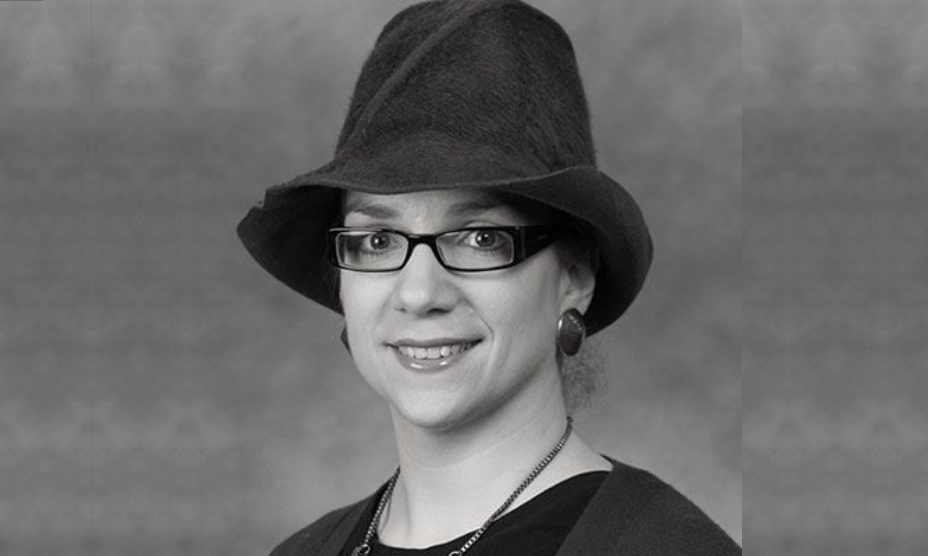
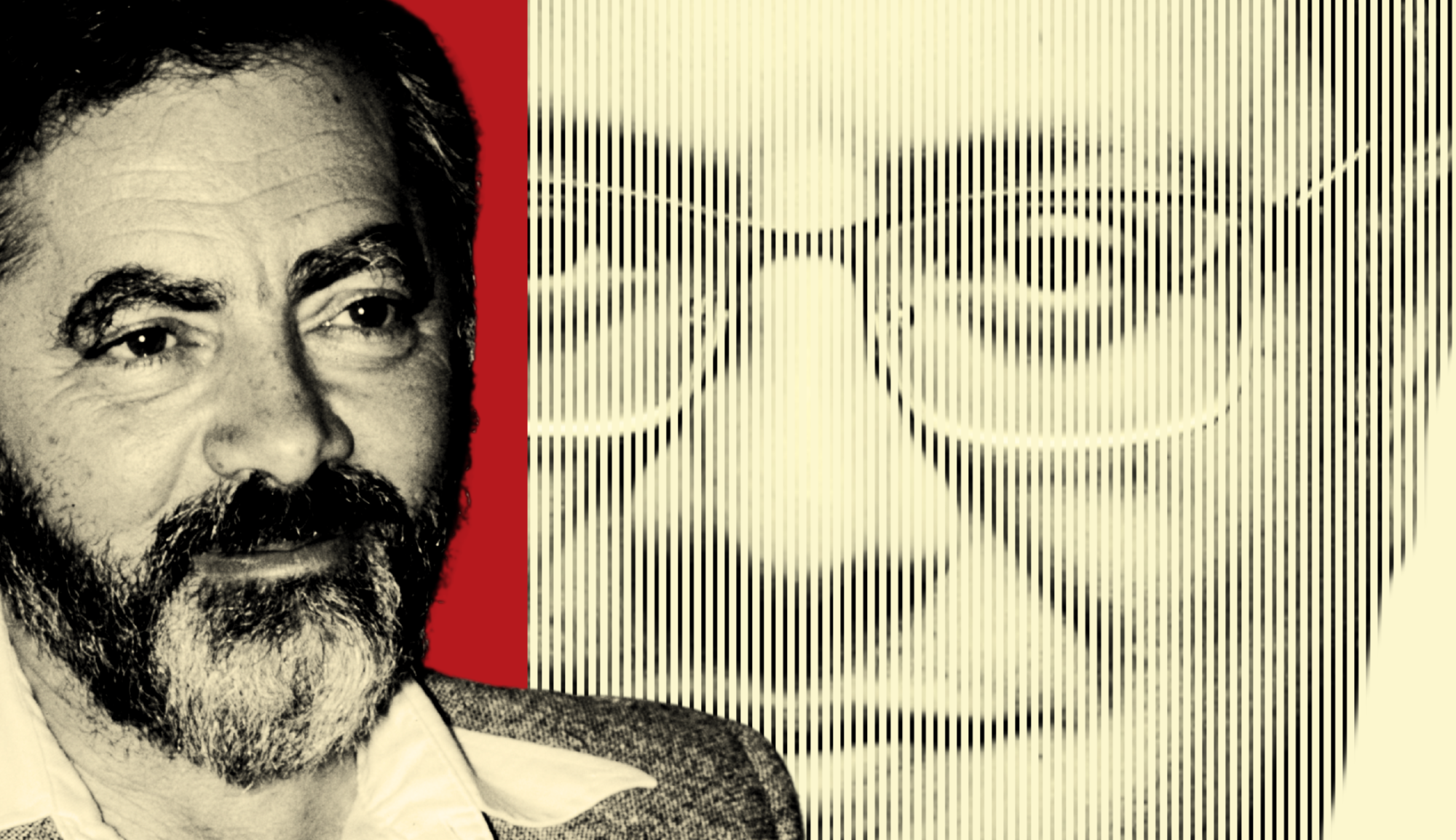
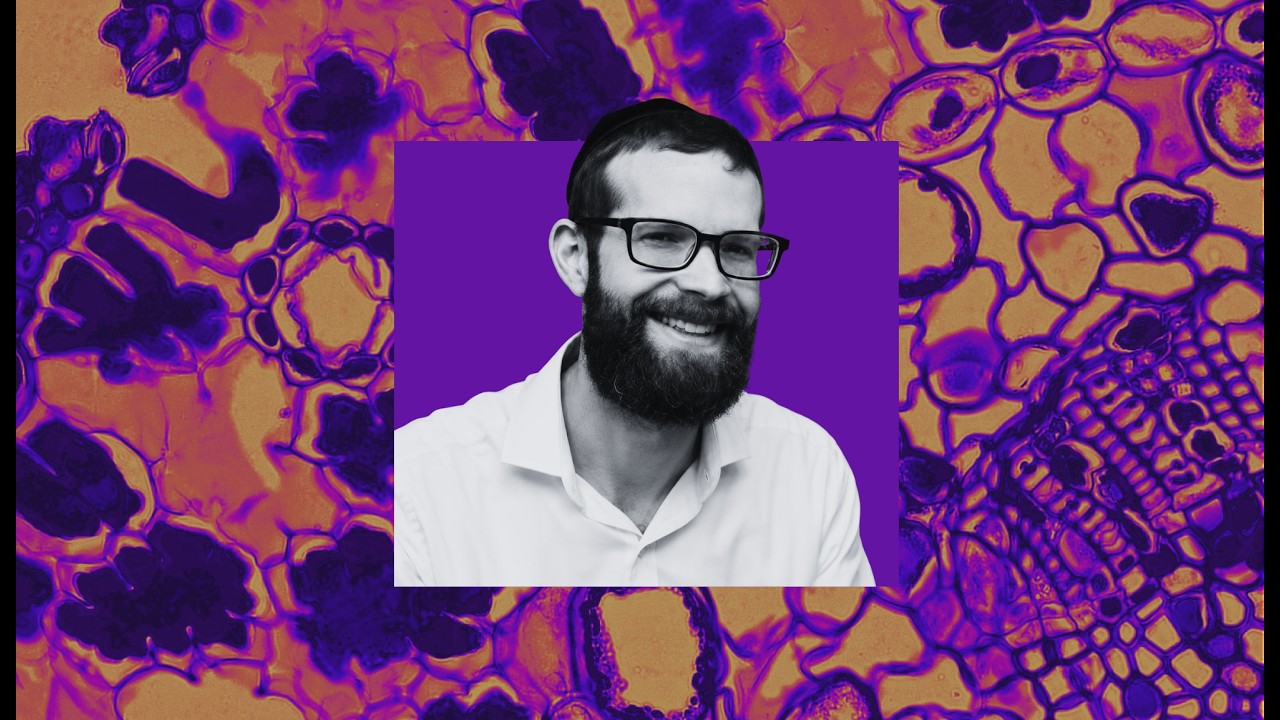
And one of those thinkers who if you’re not familiar with today, I am so excited to introduce to our audience is Alana Newhouse. Alana is the editor-in-chief of Tablet Magazine, and Tablet, I feel like I am a part of the Tablet family. Since January of 2020, I have been working with my dear friend and chavruta Liel Leibovitz, doing Talmud programming on the Take One Talmud podcast, as well as writing essays for Tablet Magazine along with the Daf Yomi cycle at the end of each tractate. And that’s just the beginning.
We have a lot in store in terms of Talmud programming that we’re not going to get to. But Tablet in general has really been one of the leading Jewish platforms for incisive, nuanced, substantive Jewish thought. Even the very fact that Tablet, of all the Jewish organizations out there, was the first to offer kind of a daily Talmud podcast for beginners, always struck me, like, they’re always looking in between the cracks, and a lot of that is a testament to Alana’s vision and leadership. Five years ago, Alana wrote an article which I remember garnered a lot of conversation, it’s a very important article, which is bleakly titled “Everything Is Broken.” It was kind of written midway through COVID, the world was upside down, and she placed her finger on something much more disturbing about the way our relationship with institutions that we once trusted, that all of these institutional breakdowns that we have been seeing, and you could fill in the blanks of whatever institutions you, whether it’s higher education or government or media, and she pointed to this just general flatness, what she calls, this kind of like system-wide push, where all of society is prizing speed and efficiency over depth, simplification over complexity, this frictionless interactions rather than real meaningful relationship and engagement, and of course this ideological conformity over genuine diversity of thought.
And it’s an incredible article that I love the way that it ends. If you’ll allow me to just read the ending because I found it so powerful. And the article begins by her talking about some of the medical difficulties she struggled with her child, and the end returns back to that child and her husband, who in Israel met a very prominent rabbi, who asked, “What is your son’s name?” and her husband David told the rabbi that her son’s name is Elijah, Eliyahu. And the rabbi responds, “Ah, the prophet of unlikely redemption,” he said, smiling.
With them, the good news is almost as hard as the bad. And she concludes the article by saying, it took me a while, but I eventually figured out what he meant. Sometimes the task of rebuilding, of accepting what has been broken and making things anew, is so daunting that it can feel almost easier to believe it can’t be done. But it can.
And her entire article, which seems bleak—everything is broken—is really a call for more agency, more rebuilding. And in a way, this is when 18Forty was just emerging. This gave me a great deal of encouragement and enthusiasm. There’s never been a structure quite like 18Forty in the way that it tries to bring about and address communal change and communal issues.
But I was looking around and, exactly as Alana described and discussed, everything is broken. It felt like the mechanisms we had to perpetuate and cultivate Jewish commitment and Jewish thought were fossilized, were old, had ossified, and we needed something new for this moment. That is not the article that we discuss in this conversation, though I would urge all of our listeners to read both of the articles that we discuss. The first is “Everything Is Broken.” In a way, her more recent article, which I think garnered even more attention, is a continuation of that article.
What would it mean to rebuild societally? And this article, which she published quite recently, is called “Zionism for Everyone.” And the subtitle is “The Real Reason We’re Fighting About Israel.” And she just notes something that I myself have lied awake in bed thinking about. With all of the change, with all the instability going on in the world, we’re on the precipice of one of the greatest technological revolutions that’s going to bring about change that we’re beginning to see but is only going to get more destabilizing. And it’s in this very moment that what is the world talking about? The Jewish people, Judaism, and of course the State of Israel and Zionism. And she writes, “Years from now, it will be obvious why in this specific moment in human history, as we faced high-powered technologies and political ideologies aimed at paving the way for their dominance over humans, what had to emerge was an intense global debate about, of all things, Zionism.
Israel is no longer an outlier in the pantheon of free societies and people. It’s a blueprint for human defense and flourishing in the coming century.” But this article for me is the closest thing to a pragmatic blueprint for ushering in the Messianic age. Nothing short of it. That is not what Alana explicitly wrote the article about.
I actually just did a word search; she does not mention messianism and Messiah. But to me, a pragmatic approach to how we could actually revolutionize and bring redemption through the Jewish people for the entire world. This is an extraordinarily important conversation, both for the world, for the Jewish people, and for you, the individual listener. This is an important conversation for everyone.
And as her article is entitled, “Zionism for Everyone,” it is not what you think. It’s not a call for more hasbarah or pro-Israel content, though that’s certainly wonderful work. It is really getting to the very heart of how the Jewish people share blessings and serve as a model of blessing for the entire world, to literally realize God’s promise to Abraham. Right after telling Avraham, “lech lecha, build a life for yourself,” God tells Avraham, “v’nivrechu v’cha kol mishpachot ha’adamah.” In the 12th chapter of Genesis, in the third verse, God tells Abraham that I am going to bless through you all of the families of the world.
And it’s a strange and daunting blessing to give Abraham: “Through you, all families of the entire world, not just the Jewish people, are going to be blessed.” And I would not fault anyone for wondering, how on earth is my family, my Jewish family, supposed to be a conduit for blessing for the entire world? Dare I say this approach, Alana’s article “Zionism for Everyone,” is the beginning of that answer. So take a moment, realize how important, how revolutionary, how crucial this moment is for us, for the Jewish people of learning how to embrace our own tradition, our own way of life to serve as a model for the rest of the world. It is my absolute privilege and pleasure to introduce our conversation with my dear friend Alana. I invited you on for a million and one reasons but the primary reason it was like a lightbulb that went off you wrote a really fascinating well-discussed I dare say it was like viral the entire Twitter at a point I would open up social media and it was your article entitled “Zionism for Everyone” which offered a really stunning thesis that I want to get to in a moment but before we get to it I want to talk about why you wrote this article now what were you seeing that you said you know what something is off something does not make sense about the way the world is talking about Zionism.
Do you remember where you were or like what was the context what’s going on in the news that all of a sudden you said this doesn’t make sense?
Alana Newhouse: There wasn’t a specific moment it’s a little bit like a piece I wrote five or six years ago called Everything is Broken which these pieces tend to be articulations of thoughts or feelings that I have as somebody whose job it is to watch the news and try to observe it but also try to have my own reactions to what I’m seeing. And sometimes it feels now especially because we live in a really disaggregated news space that sometimes can feel like a cracked mirror where there are these shards and you talk to somebody and you realize oh they’re looking at the same shard as me and then you speak to somebody else it feels like they’re on Mars because they’re looking at a completely different reality than you are either they’re looking at the same event but such a warped in your mind version of the event or they don’t even see the same stories as you and don’t even understand reality the way that you do. And so what happens to somebody who has to watch the news and has to watch this kind of shattered mirror is that sometimes I can feel like I might be seeing something from different corners of that landscape that I want to figure out the connective tissue between and I want to understand whether or not it’s all part of some bigger picture. And so there isn’t a specific moment it’s sort of like the slow drip of watching the news and feeling this thing emerge.
David Bashevkin: I’m so happy you mentioned that earlier article from six years ago “Everything is Broken” because I read a lot as listeners know and with both of those articles I had a very unique sensation of remembering where I was what was going on when I read them and both of them articulated for me at least the strangeness of this moment of I think being Jewish at this moment someone who grew up with a certain vision of what Zionism was. And for me when this article came out your most recent article “Zionism for Everyone” what struck me really more than anything was the fact that the whole world right now feels like it is talking about Zionism whether it is major media whether it’s the front pages of the New York Times or Reels on Instagram questions between celebrities what do you think about it every day there’s another soundbite I don’t even want to reference any of the soundbites of people condemning Zionism being pro-Zionist and to me what was so strange is the discourse itself. Why is it that this conflict has captured the world’s attention and imagination? Why has the litmus test yes Zionism no Zionism and that to me was where your article came in and really reframed what is this conversation really about. It’s not about whether or not you support Israel it’s not even whether or not you are celebrating Yom Ha’atzmaut or Nakba.
It has nothing to do with any of that and you reframed the conversation in a way that I found so brilliant and so resonant in my own life would you feel comfortable just distilling the underlying thesis of your article?
Alana Newhouse: The premise of the piece is exactly as you said with a broad context here which is we are living at a time of pretty massive flux in all societies driven by technology. I’m not just talking about sort of AI us all being able to use Claude. Technology is changing every aspect of how we live and how our societies are organized and structured and how they function. And it is also doing things that are changing the globe and literally how it sustains itself.
So we are curing diseases that have been plaguing humanity for hundreds if not thousands of years. We are going to Mars. We are rewilding nature. We are We are re- I don’t actually know the right term for it, like there are extinct animals that some cell or some version of which is now being revived.
The point of which is, we are in a moment where it’s kind of like hard to even process how big some of the changes that technology are affecting, how truly big and massive they are, and the consequences that they’re going to have for human life and for human evolution are astronomical. And so it feels strange then to acknowledge and realize that in that moment, in just the moment that our lives are changing in this insane way, the only thing everybody wants to talk about is the Jews. And it feels a little nutty actually, even as somebody whose magazine covers the Jews, right?
David Bashevkin: Like we’re interesting, we agree on that, we’re interesting, we’re not that interesting.
Alana Newhouse: Somebody’s going to say, like, I know I’m interesting, but it’s weird.
And so I tried to present that as the frame of a piece and say, well, let’s actually try to figure out why this is. And to try to imagine, I obviously understand that there are bad faith audiences, that people who make money off of antisemitism or frankly off of influencing in pro-Israel voices and pro-Israel spaces, let’s leave all of those people out of it.
David Bashevkin: I’m so happy you’re saying this, which is the normal answer, and it’s not wrong, but it’s not what your piece is about. The normal answer is they’re obsessed with us because the world is anti-Semitic and it’s just classic anti-Semitism, which may or may not be true, but to me, the depth of that theory, why now with everything going on, doesn’t make that much sense.
Alana Newhouse: Correct. And also remember that you can’t say two things at once. You can’t say there’s a major spike in antisemitism and also say it’s just the way the world is. Pick one.
And there is a spike in antisemitism. Those spikes happen when societies are in stress. That’s a thing that happens, particularly in Western societies. So it’s not interesting to me to say this is a fact of human nature.
I understand all the reasons why humans need an other, humans are tribal, okay, I get it, but it really doesn’t answer the question as to why in this moment in, you know, in the late 2020s, this has become a dominant, if not the dominant topic of Western discourse. And the argument that I make begins with the idea of what a popular Jewish reaction to this problem is, which is Jews feel enormous anti-Israel sentiment, anti-Zionist sentiment, and their reaction is defensive. Their reaction is to say Zionism’s not a threat, it’s not a big deal, we just want what everybody else has, isn’t it fair? Zionism is just about believing in the right of self-determination for the Jews just like everyone else has and in fact, if you say that the Jews can’t have it, then that’s antisemitic because you’re saying the Jews are the only people who aren’t allowed this right. And what I tried to explain and articulate at least as the frame of the piece in the beginning is that part of the problem with that reflexive argument is it really isn’t seen past your nose.
What you don’t understand if you make that argument is that in fact, many people in the West do not believe they have that right anymore. There are many people living in the UK or France or Italy who do not believe that they have the right to their own sovereign nations. And so then they look at Israel and people fighting for Israel to have that right and they say, why do you get what no one else in the West is allowed anymore? And I tried then in the rest of the piece to explain why it is that many people in the West feel they don’t have that right, because I think that’s the context for confusion about Israel. Some people misread the piece and simplified it as you’re just jealous.
And like, it’s a simplistic if potentially useful for some people argument, but what I tried to explain was that Israel is an ethnostate in a definition of the term that I think is not widely used. And I try to redefine what ethnostate means in an effort to explain that actually an ethnostate is what we’re going to need and is what Western states are going to need in order to maintain civil liberties as well as healthy nationalism and that in fact, the reason why we’re having this argument in this technological moment is because the technologies threaten that. They threaten difference and they threaten thick culture and Israel, ironically, is actually the model for many of the societies in which it has now become a bugaboo. And so that’s the basic argument of the piece.
David Bashevkin: Beautifully stated, which is why the title Zionism for everyone, you have a roadmap that explains whether, you know, the emphasis on envy or the very real threat threat that our way of life that we grew up in, that our parents grew up in, that there is an American dream for Americans, there is a way of life in England, there’s a way of life in Italy, is beginning to erode and we see this in art, I thought of the Apple show Pluribus, which imagines a world where only one person is conscious and everybody else in society has this shared consciousness which erases all difference. It erases all uniqueness, all culture of what we’re preserving, a collective future that we’re holding together. But I wanted to rewind a little bit because some of the nitty gritty and the history is lost and I noticed this with my students. Students don’t appreciate how recent the notion of living in a country and being a citizen of that country, the nation state that we talk about.
Nation states are not thousands of years old. They are fairly new. You would live in empires, you would have dukes and kings that you’d have to pay homage to. Why do you think the vision of nationalism, that each of us has a country that we’re trying to build, that there is a kind of a pride in the country that you come from, why do you think that has waned, aside from the technological threats? Why do you think that has waned for the rest of the world but has not affected Israel?
Alana Newhouse: Well for starters, Israel’s younger, right? So the flush of statehood is still being enjoyed, right? It’s a very, very young country, 78 years old.
So for starters, I think we just have a different chronological trajectory here. But in terms of your larger question, not only is that the right way into the conversation, but if you zoom out, which again I also try to do with the piece a little bit, I zoom out to try to say let’s look at the history of how humans organize themselves and why, right? And we start with the history of human evolution and how people banded together first in nomadic tribes. Then a really revolutionary thing happens when people realize that they can domesticate animals or that the animals can stay put. So they don’t have to as nomadic tribes.
Nomadic tribes used to follow their animals. So they would follow their food source. Then you have a really radical moment when humans realize that they can stay put and have everything else come to them. The reason why that’s such a radical decision is because now it makes land a thing that becomes a part of your life.
A thing you have to defend, a thing you invest in, in whatever resources you have at the time. You start to build because now you are staying put so you want to build. But you also have to build for the weather because now you’re not necessarily following weather, you’re staying put and you have to build to sustain yourself no matter what happens around you, how the weather changes. So your relationship to the environment, your understanding of the environment changes and then from there we get tribes and eventually we start to see civilizations emerge and then as you note we see big empires emerge and out of the empires, we’re doing a kind of rough sketch of history, at the same time really but then eventually the empires break up and you really get the globe is organized in a dominant way by nation states.
And each of these nation states is really interesting and some are more or less successful. What I try to argue is that the term ethnos, which right now we have, I believe, incorrectly defined as ethnicity, which means people who belong roughly to my bloodline. The term ethnos, in fact, in anthropology, it was used as a synonym for a people, a tribe. And what those people had in common was not necessarily blood.
What those people had in common was what we now call culture. And as I explain it, culture is a mixing board. Not every culture is the same. Cultures have some dominant features.
So race is a feature, religion is a feature, your actual music, art, literature, these things can be features and they can be more or less important. So we’ll take two good examples to show the difference. In Japan, race is very important to the Japanese culture. You actually can look Japanese and not speak the Japanese language and you will be accepted in Japan, at some point somebody will want to know how to talk to you, but you will be accepted as part of culture.
Similarly, if you don’t look Japanese and you go to Japan and you speak Japanese fluently—
David Bashevkin: The Queen’s Japanese.
Alana Newhouse: Correct. In Israel, race is not important. This is the reason why there is no difference internally between people of different racial backgrounds in their participation or engagement with culture.
In France, language super important to the culture. Right? So you can see See that different countries create their cultures based on different ingredients and different measurements of those ingredients. The nation states that had strong cultures have been the nation states that have sustained themselves and been the most successful. What I think though happened and obviously then you have a particular focus in Europe because Europe has dominant nation states in the Western vertical.
What happens though after World War II is that there is I believe a kind of unspoken maybe even subconscious although not for everyone sense that nationalism is what wrought the Holocaust and that nationalism was the crime or was the original sin that developed into or that made people develop into monsters. And Europe decides that it wants to start to break down those bonds and push away from the idea of difference and the idea of national pride and national distinction toward universalist ideas of humanity and sameness and connection on that vector.
David Bashevkin: And we’ve seen a lot of those ideas be transported to America the sameness. And it’s usually not nefarious.
I don’t think any of these values on their own is inherently bad or good. In the wrong hands nationalism can be weaponized though underlying I think it’s a value neutral idea. The same is true of the universalism that was kind of cultivated in Europe. At least in my sense is that initially the words like equality and all of this sameness that we tend I understand where it’s coming from but everything comes at a cost and looking at the world now it has come at a tremendous cost.
It has erased a lot of very real cultural difference and dignity. But please continue. I am enraptured right now because this is really a world history that leads up to the Zionist idea.
Alana Newhouse: So it is deeply ironic poetic pick your word that the inflection point of Europe deciding that it needs to abrogate nationalism is the moment that the Jews get a country.
And you can almost see it as though Israel picked up the baton of nationalism and began to develop what at the time it believed was how a Western or any civilized nation develops with a sense of peoplehood a sense of how it treats its population. I think that the universalist values that you mentioned then find a very first they find a very useful mechanism or system in global institutions. Institutions like the United Nations eventually the World Bank various NGOs that work on the globe or in global ways and universalist ideas dominate in those spaces for obvious reasons because they serve the globe. And so the idea that you’d serve people wherever they were whoever they were feels like it makes sense logically.
I think that now we’re seeing that as we examine the way that those international institutions did that work I think we’re seeing chasms between the ideal and reality. It actually is better to understand that cultures are very different and to treat them differently and to serve them differently especially if you want to help them. But regardless that universalist idea really finds a home inside of a certain elite that emerges across countries and these institutions for the most part that are international institutions. And then there is another big wave that comes in that supports that which are big technologies.
Global technologies and digital culture thrives on the flattening of difference. It thrives on removing friction and difference between people creates friction. So for example if you are Amazon one click it’s the ideal mechanism for the internet. We want to make it so easy for you.
We don’t want you to have to click five times to buy something. We want you to be able to do everything very easily. So what that means is that we have to remove all the barriers. If we can create language sites mechanisms that can move across cultures and if we can actually flatten the difference between cultures so that they can move through these technologies then everything will work better faster easier more efficient et cetera.
And so then you have this really really powerful vertical moving economically and in communication which flattens the differences between people. That I think gives a real leg up to universalism. And I think that you’re looking at a battle between universalism and particularism. And in that fight, Israel kind of, there are a lot of people I would say in Israel who are like I didn’t know that was the fight we were in.
I didn’t prepare for this. But Israel now becomes probably the leading argument for an ethno-state the way that I’ve described it. For a state that is rooted inside of a thick culture, does not mean that everyone has to participate in every feature. That’s part of the aspect of culture.
You have a dominant culture, but not everyone subscribes to every part of the dominant culture. And that’s how you have a free society. So the way that I then try to come to terms with it is I explain that Israel has a bunch of features to it that feel to me like they are questions that civilizations or states that want to survive have to start to ask themselves. One of which is: are you happy? Are people happy? And there are happiness indexes.
And Israel consistently is in one of the top. Despite being in constant violent wars. So there’s that.
David Bashevkin: Makes you wonder, yes, exactly.
One is happiness. You have a really nice, it’s almost like a very quick questionnaire to figure out: am I part of a civilization that is collapsing or on the ascent? And you really, you made it very user-friendly, almost like one click. Like we’re going to make this very easy for you to figure out. Answer these, I think it’s like four rubrics of what type of civilization are you a part of.
One is obviously, I love this starting point: are people happy? Do people like it in this place? Which is, you know, you could go to a happiness index, you could ask your neighbors. It’s not the same as peaceful. It’s not the same as not having strife. Israel has a conscripted army and yet people are happy.
Alana Newhouse: And it’s not the same as no one complains. Yeah, that’s not the same.
David Bashevkin: It’s not the same as nobody complaining, correct. One is happiness.
What are the other questions to ask: am I a part of a civilization that is collapsing or am I part of a civilization that’s on the ascent?
Alana Newhouse: So the questions that I ask are: one, are people happy? Two, are people having babies? The way that you vote for your future, the way that you express a belief that you will have a future, your family, the people who are around you, that you believe that there is a future that is good, is by having babies. It’s a way that humans express that idealism. And right now Israel’s the only country in the West that’s above replacement level.
David Bashevkin: And that means for our listeners, replacement level of population, are there enough children to just replace those who are you two.
Alana Newhouse: So basically a couple is made up of two people. Those two people are going to die eventually. Who are they going to leave in their stead? Replacement level is two people, so you’ve replaced yourselves. Given how humanity functions, right, that’s not great, right? Just replacing yourself, given that people die, people have accidents, the likelihood then that your population’s going to go down is good, right? Generally what we look for is above replacement level.
That means that you are going to have a growing population. And that is a sign, generally, of societal future planning.
David Bashevkin: I don’t know if you saw it, if you did it must have been subconscious when you were writing about this, but there is a movie that a lot of people have been returning to called Idiocracy, which imagines a distant future where the entire world is low-IQ and not intelligent. But the premise, the first kind of three minutes of that movie, is basically an intro to the importance of having population above replacement.
It has a very upper-class couple who are wealthy and upwardly mobile in their nice apartment in some city, and they’re talking about should we have kids? And right away ah, now’s not a good time. We’re starting the job, we just had a promotion, things are so busy, we’ll have it later. And they keep putting it off. And eventually you see one couple who is so discriminating, so careful, planning to such a detailed way that they don’t end up having kids, and the other couple, I mean, they’re contrasting it to people who are just frivolously popping out babies, which I don’t think is your argument either, but the intro of how this movie imagines the collapse of society begins with this population question.
It’s the ultimate vote for your future is bringing children into the world.
Alana Newhouse: Correct. So you have happiness, babies, defense. Can you defend yourself? People who can’t defend themselves tend not to survive.
Just one of those basic logical realities, right? Because at least historically, human life has been vulnerable. And if you can’t defend your land, your resources, the people around you, somebody else will come and take it. So Israel’s capacity to defend itself is deeply important. And it’s not just about militarily, it’s about the idea that it’s built into normative life of the citizenry.
And I have this one anecdote which I really love and it was really important I thought to the argument, which is that I noted that a few months before during one of the Iran strikes, the head of the air force—this is not like a pilot, right? The head of the air force was not in an office somewhere with Bibi, he was not in some military compound, he was in a plane with his pilots. He was actually out there with them on the field fighting, the head of the air force. It is so outside of the imagination of a lot of big Western countries that that person who we see as a bureaucrat or as an executive, in Israel that person is seen as I’m getting my hands dirty every day with my pilots and the country knows that and everyone around me knows that. That culture is very rare and it’s very valuable.
David Bashevkin: I’m not sure why your article brings up so many movie parallels for me, but I remember when I read that article I was thinking of the closing scenes in Independence Day, you know, the famous movie with Will Smith and Jeff Goldblum. And there’s this remarkable scene at the end where the president is getting into a plane because he knows how to fly and they need everyone to defend Earth at this moment and the novelty is that the president is also flying in the plane. And what struck me is like that’s kind of what we have in Israel. Like everyone needs to be involved, everyone needs to have it on their mind.
You know, growing up in the States at least, I mean for sure in, you know, suburbia where I grew up, you’re not really thinking about the American defense all that much. It’s just not a part of the culture in any way whatsoever, while in Israel it’s a rite of passage. It is what invites you into contributing into society that I played a role in defending and protecting our nation.
Alana Newhouse: That’s right.
So we’re up to three and then the fourth is, particularly in times of flux, but I could make an argument that this is true anytime, the ability of a country to face the coming changes that are happening to its society is essential to its ability to have a future. So in the case of where we’re at right now, one of the things that feels like a truism of technology and AI is that AI is going to reward cultures or populations where there are very smart people in specialized areas and that there is an ability to work in small, live, and constantly recombining teams. So in Israel you have a country, it is a country of ten million people give or take, half of whom have completed some form of army training or service, a large percentage of whom sit around all day reading an obscure legal document and fighting over it, and who as a culture in both of those separate subgroup or sub-areas of experience as well as in the country as a whole, there is a constant almost oppressive need to constantly figure out a new team and work together. If I’m looking at an AI revolution that’s about to completely remake my employment possibilities, that’s a population that it’s not like it’s not going to be painful.
These changes are going to affect societies in ways that force change and change is never easy. But that’s a population that when you assess it from the outside and you obsess it rationally, that’s a population ready for these changes. I look at that and I think I know why people are jealous. They live under constant threat.
On the other hand, their threats are almost elementary, by which I don’t mean that they’re not very, very real and very, very serious and very, very grave. And which I don’t mean that they aren’t geopolitically complicated. But when you go into Western nations now and you talk to people, there’s just this sense of like I don’t know how to fix France. France feels so far.
I talk to friends of mine who are French and they’re like I wouldn’t even know where to begin. Like if I said to them I have a magic wand, you can fix one thing about France, they’re like I don’t even know what I would pick. It all feels like a morass. And I feel like it’s in those countries that there’s a sense of broad confusion, broad anxiety, broad demoralization and dread about how their cultures are facing the future.
David Bashevkin: When I read this and really your earlier article as well which I think was even more counter-cultural, it came out kind of during the COVID breakdown, you write like a prophet. You are warning people, pay attention to what is happening to your life. But the real reason I had you on and the real reason I reached out was because I read this article and I thought if this is in fact true and I believe it is, if it is the case that the vision of Zionism is for everyone and the State of Israel and the Jewish people more broadly are trying to model a form of cultural preservation, cultural renaissance where a people, we have future we can defend ourselves this is not a drill we are a real people we’re in charge of a country and we have this amazing future and we’re modeling this for the world right now because this is no longer in vogue and everyone’s searching for it and the Jewish people have it right now. My question for you is from within the Jewish people, what do you see we could be doing better or differently to serve as a very model for, and when I say Zionism I don’t mean the State of Israel, but serving as a model for civilization that when you look at the Jewish people people say this is kind of what we’re looking for, this is what we want.
We have so many very real divisive issues within Israel and thank God we’re still tethered together, but these are very real questions about the future of Judaism, what Judaism is, how should it be practiced, given your thesis, what do you think Jews could be doing differently or better to serve as kind of this model for the world?
Alana Newhouse: I can tell you what I think I feel like I should do and I want to be mindful of not being prescriptive for anyone else because there’s a lot of work to do at this moment in history and there are a lot of different kinds of work to be done and I want people to find the work that feels best to them. So if you want to be a fireman putting out fires of the Jews need better PR or whatever the latest fire is, then kol hakavod, go and do it and if you can do it well then you can contribute. One of the things that I try to make clear, even though I explain that Israel does meet those four markers, is I explain that it does not mean that Israel is a perfect country, it does not mean that it is internally peaceful, it does not mean that there aren’t massive contradictions that are threats to it. And there is a big responsibility and a big job for the people who live in that country.
They have a lot of work that they still need to do there and I want to reflect the reality of their experience so I don’t paint some kind of utopian picture of them. And I think that they should be supported in whatever way in doing that work of improving and fixing what’s broken in Israeli society and there is plenty there. So I just want to leave that aside and I want to leave people living in Israel, I want to put them to the side for a minute. So I am an American, I live in America, I am a Jew and I’m a Zionist, but I live here.
I feel deeply, deeply American. And part of the reason why I think what I think about Zionism and why I was able to see what I see about Zionism is because I actually spend a lot of my day thinking about America and talking to Americans who are not Jewish and talking to them about their problems, which is also part of where everything is broken comes from. And I find myself inspired by my fellow citizens, I find myself concerned about America and about American society. And I think that rather than see myself as a model, I want to see myself as a partner and as a citizen of this country and participating in this country and in its conversation, in the building of new things that it needs, in the unbuilding of some old things that it doesn’t need, and in the assessment of that whole space as an American with the idea being that there is an American ethos.
And that American ethos is particular and it’s distinctive and it should be explored and admired and we should build around it. And so when I think about what I want to be doing, I want to bring that idea into the conversations that I’m in and I want to explain to other people how they might bring that idea into the conversations that they’re in and into the work that they do. One of the things that I tried to articulate with my brokenness pieces is that basically I really believe that everyone now in this moment has the opportunity to do something really, really useful for themselves and for everyone around them, which is look at an institution in your life and put it in one of four buckets. The first thing is, this is an institution that largely functions the way that we need it to.
It works, largely. So you can put a lot of energy towards that institution but it is conserving energy, right? You are conservative about that institution, you’re looking to preserve it, to protect it, to maintain it. Second thing is, no, I’m looking at an institution and it has gold in it, it’s valuable, but it has a lot of problems and it’s really broken and it doesn’t serve our purposes now. I am going to put energy or resources or money into it but it is reforming energy.
I am looking to change this thing, preserve what’s good about it, but we have to actively work to change it because it doesn’t work for us right now and it won’t work for the future. Different energy. Third thing, this is an institution that is dangerous and actually it is making people vulnerable. And again, this is a very controversial thing.
but there are people who then say I actually need to spend my energy and time dismantling or destroying that institution because it is dangerous for others. And the analogy that people use or I use there is: imagine that you have a building. That building is dilapidated and you see people going inside the building. It is dangerous for them to be in that building, the roof can collapse on their head, it is actually safer for them to be out on the street.
So people look at institutions and they say people going in there think that it’s safe but it’s not and they’re going to get hurt inside of that institution in some way or another. So you work to dismantle it. And the fourth thing is I’m building something completely new. I’m going to spend my time not caring about old institutions at all.
I never wake up thinking about them. I only wake up thinking about building something that never existed before. Those are your four options and they kind of match everyone’s personalities. Like which one do you want to wake up every day and do? And so when you think about it that way, which I find helpful, that’s how I would tell people to start to imagine what they could do for their own country, how they could potentially model or contribute to a conversation about how to make the world better.
David Bashevkin: One thing that I love and that’s so beautifully put is that your earlier four points in evaluating the future of a civilization: happiness, ability to have defense, above-replacement birth rate, and finally some kind of future-oriented commitment. What I loved about that is that I believe that those four can evaluate a civilization, they could also evaluate an individual in their own life. There are always so many debates about the different streams and movements within Judaism, different ways to express it, different family structures, this and that. And instead of what used to be is that my way is right, your way is wrong, I think it gives people a rubric to take agency for evaluating their own lives, meaning: are you happy? Let’s start there.
Then secondly, national borders to me is like do you have the economic means and economic agency where you are now not on the streets looking for handouts, you have the ability to determine your own economic future. That then I’m looking on the individual level. The third is the replacement, meaning babies. Are you willing to bring somebody else into the life that you’ve created? And then finally the last one is: do you have a future vision for your family, for the people most closely around you? And I think if people answer those questions carefully and thoughtfully it can yield a much more thoughtful committed whether it’s Jewish life or non-whatever life you have, it kind of gives you a rubric to assess where am I in all of this, what needs to change?
Alana Newhouse: I really love that and I love the idea of taking those questions and making them individualized and not just at a national level.
Somebody wrote to me probably the best email I got about the piece was written by a young woman who wrote to me who said that she and the guy who she’s dating decided to ask themselves the four questions and see if their answers were compatible and they were and that it was a real moment of realizing that they were committed to each other.
David Bashevkin: We have the same things.
Alana Newhouse: It made me so so happy because she felt so joyful at being able to articulate for herself what the answers to those questions were and then feeling like she had a partner because she was like now we can build. We’re going to build together.
And it was really exciting to me and I was like wow the idea that they would become like shidduch questions would be such a dream for me.
David Bashevkin: Exactly. I heard a speech from Dr. David Pelkovitz who is a psychologist and he was talking about dating and he said the most important thing you have to realize when you’re building a new family are the culture differences and how culture is cultivated within a family and I still remember his example, I love his example. His example was: does the dad feel comfortable walking around the house shirtless in his boxers? You go to some homes and in my home I don’t remember seeing my dad without a suit and tie on, my dad.
Right, me neither. He gets dressed, even his pajamas are more formal. It’s like a suit, suit pajamas, he would wear that. And then there are other people, I remember I come to I have a friend and you see the dad in his undershirt and boxers watching television.
That’s a very different culture, just to understand what you’re building within your family. What do you want to preserve? What do you want to dismantle almost familially in what you’ve received? And what do you need to build fresh?
Alana Newhouse: This idea of bringing all of these questions down at the local level like super local, local as your actual house, feels really fun to me mainly because I think that people who ask these questions of their home, ask them of their block, ask them of their neighborhood and then ask them of their state and their Because you become familiar with these things as values or as ideals and then you want them for your neighbors. You don’t only want them for yourself. I find Americans to be an incredibly generous people and I think that ultimately people want the thing that they have that is good, I think that many people want their neighbors to have it too.
So, the reason why I really like this idea of asking yourself these questions in a familial level is the other thing that you can do is ask yourself what your mixing board is. As a family, how important is money? How important is religion and observance? How important is your ethnic culture? For example, if one of you is Sefardic and one of you is Ashkenaz, it’s not only about observance. It’s also about what the feel of the house is going to be. Right? My mother was Sefardic, our home felt Sefardic, even though the Shul that we went to, we went to two Shuls, we were always affiliated with a Sefardic Shul that was conservative, but the Shul that we went to every Shabbos was a modern Orthodox, very Ashkenaz community.
But inside my home it felt very Sefardic because that was what my mother was and my father loved it and loved that the house felt that way. But that could be different in somebody else’s family and it could be actually a point of strife. So, asking yourself how important is culture, art, how important is where we send our kids to school, are these things important? And don’t assume they’re important. They may not be to the other person.
And so when you figure out your mixing board and you can say to yourself, one to ten on a number line, how important is money? One to ten on a number line, how important is observance? One to ten on a number line, how important is our relationship with our parents? One to ten on a number line, how important is it that we live in a suburb or Frum community or whatever, right? And just tell yourselves how important is this? Because once you make that mixing board, that’s the culture of your family. And it’s not that it can’t change and it’s not that these things don’t evolve and it’s not that they don’t grow, but at a home level, at a national level, and at the level of peoplehood, this is what makes the magic of the human existence. If I can get religious here, it’s where we honor having been made in the image of Hashem is by asking ourselves, how do we honor the gift of life? And to me, that feels like where we’ll do good work.
David Bashevkin: Alana, I cannot thank you enough.
You’ve articulated something so beautiful. I hope it’s okay that I, generally, I have called this article and your earlier work, “Everything Is Broken.” There’s something very prophetic, really, really about this and it opens up Judaism as really the celebration and sanctification of existence itself. It really allows you to train in on what project are we involved in? We’re involved in the celebration and sanctification of existence, of life itself, and just figuring out the component parts, to take the Lego set of life, of existence, and just take the basic parts and the building blocks to assess whether or not it is working for you, your family, your block, your neighborhood, and ultimately the world.
So thank you so much Alana for joining and for sharing it and for all your work and friendship over these years. I always end my interviews with more rapid fire questions. So before I get to them, I feel morally obliged to just state that you and I are both what you would call OG Five Towns, is that correct?
Alana Newhouse: Well, I certainly am, yes.
David Bashevkin: I’ve always felt a kinship.
Alana Newhouse: Where are you from?
David Bashevkin: I’m from Lawrence.
Alana Newhouse: Me too.
David Bashevkin: One day we’ll do a deep dive kind of reflecting on our Five Towns upbringing. But in the meantime, my rapid fire questions. I’m always curious for book recommendations. Sometimes I ask for a specific area.
You are so just eclectic as a thinker, as somebody who is reading, I’m curious if there are specific books on this topic that kind of inspired you or played a role in you forming your thesis or if you have any other book recommendation. I’ll take anything from you at this point, Alana.
Alana Newhouse: Well, first of all, thank you. I think that everyone could benefit from reading a book called The Brain That Changes Itself by Norman Doidge.
It’s a book about neuroscience, that’s what it’s billed as, but it’s not. It’s actually a book about your brain and what it has the capacity to do and it changed my life and I think it changed what I pushed my brain to do and to think and to feel and it’s absolutely inspiring. And Norman is an incredible writer who I later, after I read the book, found out was actually the child of Holocaust survivors.
David Bashevkin: Wow.
The Brain That Changes Itself by Norman Doidge. My next question: if somebody gave you a great deal of money and allowed you to take a sabbatical with no responsibilities whatsoever to go back to school and get a PhD, study whatever you want, what do you think the subject and title of that dissertation would be?
Alana Newhouse: The future of gene editing.
David Bashevkin: Wow. So that would be like bio-? Biotech.
The future of gene editing. Wow. That is fascinating. Sure there’s more to talk about on that.
My final question: I’m always curious about people’s sleep schedules because mine is so horrific. What time do you go to sleep at night or what time do you wake up in the morning?
Alana Newhouse: No, no, no. This is really bad. I really don’t sleep.
And I am a terrible sleeper and I don’t have a sleep schedule. And it’s so flagrantly bad that it’s a joke and there isn’t I can’t give you a time I go to sleep. I can’t give you a time I wake up. I can’t give you a number of hours I sleep.
It’s different every night. I am like a kind of it’s like managed chaos here when it comes to sleep.
David Bashevkin: I always felt a kinship with you and I was never sure what the foundation was.
Alana Newhouse: You can text me at like 3:30 and I’ll be awake.
David Bashevkin: Chaotic, chaotic sleeping habits. Alana Newhouse, thank you so much for joining us today.
Alana Newhouse: Thanks for having me.
David Bashevkin: I was so moved from Alana’s approach to Zionism and what the work is at this moment.
I think these four questions: Can you maintain your demographics? Can you defend yourself? Are you happy? Are you building a future for yourself? And obviously this has very real macro questions, but I think more than anything the micro application starting with yourself and your own life. Asking, does the life I am building right now pass this test? Cultivating a family life, having borders for your own home, for your own culture, and of course the most important question that people are sometimes even afraid to ask and it is challenging to answer, but we shouldn’t shy away: Are you happy? Are you happy? And in many ways this micro and macro question, micro asking the individual and macro asking a country, suffer from a lot of the same obstacles. The same way that Israel is positioned as the obstacle to other people’s happiness, instead of serving as a model for other cultural preservation, instead of serving as the model for the way v’nivrechu vecha kol mishpechot ha’adamah, God’s promise to Abraham that all blessing will be channeled through you, many people look to Israel with jealousy, with competitiveness, with saying if only it was different then our country, our way of life would be better. As preposterous as antisemites sound when they speak this way about Israel, I would like to suggest something quite radical.
We talk this way every single day in our own lives. We blame other people for our lack of happiness. We look at other families, other individuals for the reason why we can’t build the family life of our dreams, the life of our dreams. We develop victim mentality, we develop cynicism, we have an unneeded competitiveness and adversarialness with others’ happiness in order to preserve our own.
And whether it is on the individual level or on the macro level, whether we’re talking about individuals, families, countries, civilizations, I think the blueprint is quite similar. The questions we need to ask ourselves about our own lives, starting there and working outwards, are incredibly similar. While nobody, you know, the second question “Can you defend yourself?” for a civilization that may require an army, for a family and for a culture that will require education. Rabbi Sacks said it explicitly in this beautiful quote I think about so often: “To defend a country you need an army, but to defend a civilization you need schools.” Think about your way of life.
Think about how you’re educating your family, how you were educated. That is our defense system for the Jewish people. Are you educating your children in a way that they will be able to stand confidently in the face of assimilation, not join that flatness of society, but live in this incredibly complex world with a great deal of pride in who they are and their tradition? I believe Alana’s article, while not explicitly theological, gets to the very heart of Jewish identity itself. As I’ve discussed in other contexts, the strangest thing to me at least about the Jewish people is that Jewish identity is an unchosen identity.
It is a familial identity. To be Jewish does not mean that you follow all the laws of the Torah, though you’re certainly commanded to do so, but somebody who does not follow the Torah in all its details is still entirely Jewish, while somebody who was not born Jewish or did not convert properly to Judaism, though they could keep as much Shabbos and daven as much as they want, they will never become Jewish. Jewish identity is deliberately structured as a familial identity. God could have given the entire world the Torah.
God could have structured Judaism that the only people who are considered Jewish for future generations are the ones who follow along with the Torah. But that is not how the Jewish people were structured. The Jewish people were structured as an unchosen identity, that’s a familial identity. Even a convert, the moment that they arise from the mikvah, their own Jewish identity becomes immutable and unchangeable.
Why are we structured this way? And I believe her article adds even further depth to this of the Jewish people modeling how to build and find meaning, how to celebrate and sanctify unchosen identity. Most Western countries have given us a roadmap and a game plan for how to achieve success and build a chosen identity through optionality: get degrees, get a good job, get promotions, go on good vacations, eat great food. These are ways that we build and optimize our chosen identity, which we each have. But the West has never really developed a program and project for how we should sanctify and celebrate our unchosen identity.
Because here’s the kicker and something that I am constantly thinking about. The ultimate unchosen identity is not Jewish identity, it is not even our familial identity. The ultimate unchosen identity is existence itself. Nobody chooses to be alive, nobody chooses to be born.
We emerge in this world already existing, never having been given a choice: do you want to be alive, do you want to exist? Learning how to grapple with the ultimate unchosen identity, existence itself, life itself, to learn how to sanctify and celebrate our precious moments of existence. That, I believe, at its heart, is the project of Judaism: to serve as a model and a blueprint for the Jewish people so through the Jewish people we can model this for the world. How to live, how to be alive, how to sanctify, elevate existence itself. This is the project that is unfolding in the State of Israel.
This is the project that is unfolding in Jewish homes across the world. And what it means, Zionism for everyone, is not trying to transform everyone into a Zionist and not trying to make sure everyone makes aliyah, though those are wonderful goals, but it is serving as a model and a template for teaching others how to embrace their own lives, their own existence. And the starting point for that is that we have to do the work ourselves, whether it’s the four questions of Alana or you just looking at the mirror and taking account of your life. There is no way to serve as a model for others until we really understand how to live ourselves, how to embrace our own lives, and how to find eternity even in these temporal moments that we call existence.
That is the project of Judaism, that is the mission. V’nivrachu vecha kol mishpachot ha’adamah to serve as a conduit, a template, and a role model for how to find blessing in your life and to usher in a redemption not just for the Jewish people, but through the Jewish people for the entire world. So thank you so much for listening. This episode, like so many of our episodes, was edited by our incredible friend Denah Emerson.
Denah, you have been so incredible and outstanding, especially now. And if you enjoyed this episode or any of our episodes, please subscribe, rate, review, tell your friends about it. You could also donate at 18Forty.org/donate. All of this really helps us reach new listeners and continue putting out great content.
Thank you so much to each and every one of our supporters. You could also of course leave us a voicemail with feedback or questions that we may play on a future episode. That number is 212-582-18Forty. Once again, that number is 212-582-1840.
If you’d like to learn more about this topic or some of the other great ones we’ve covered in the past, be sure to check out eighteenforty.org. That’s the number 18 followed by the word forty F-O-R-T-Y dot org. eighteenforty.org where you can also find videos, articles, recommended readings, and weekly emails. Thank you so much for listening and stay curious, my friends.