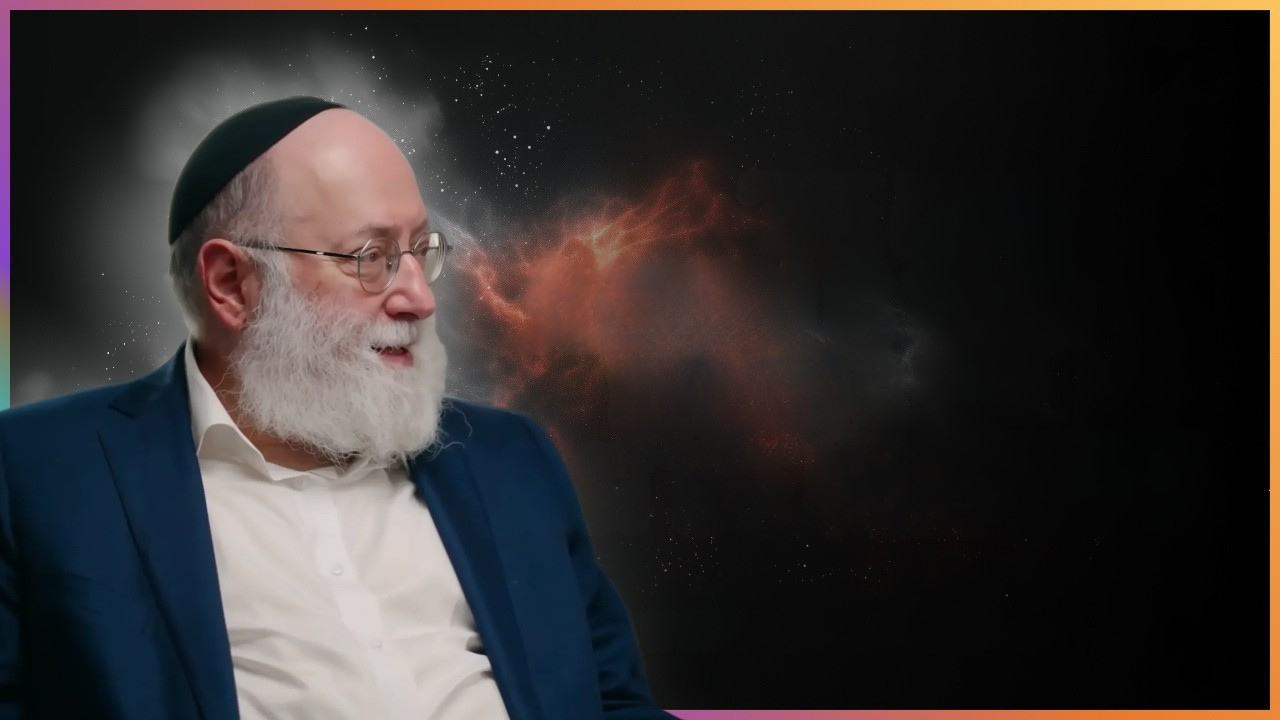
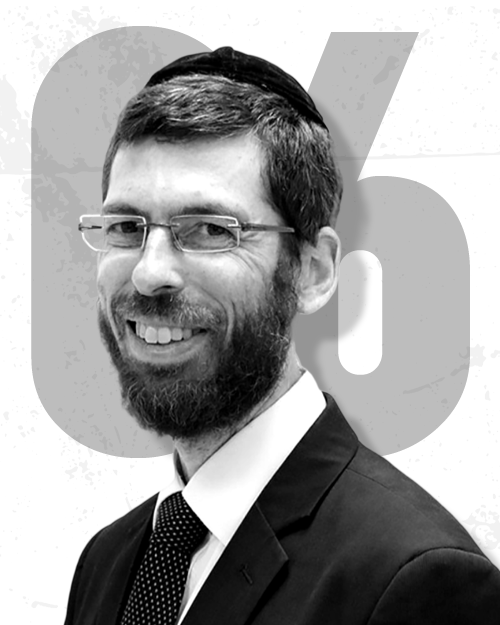
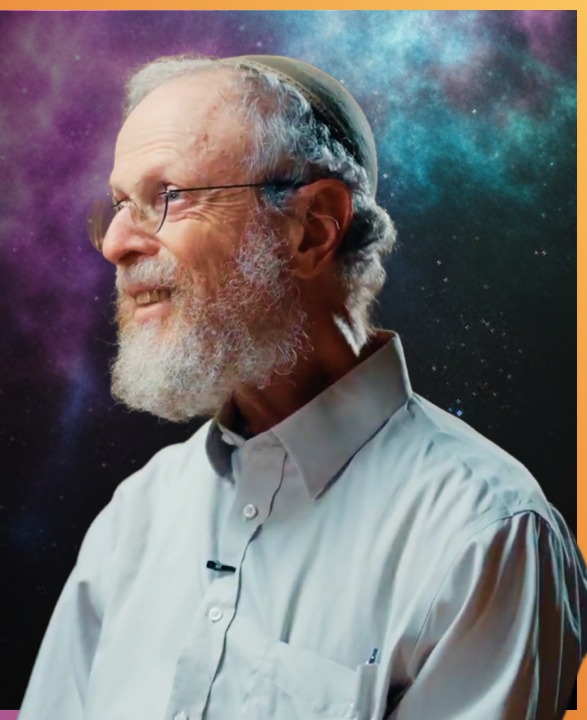
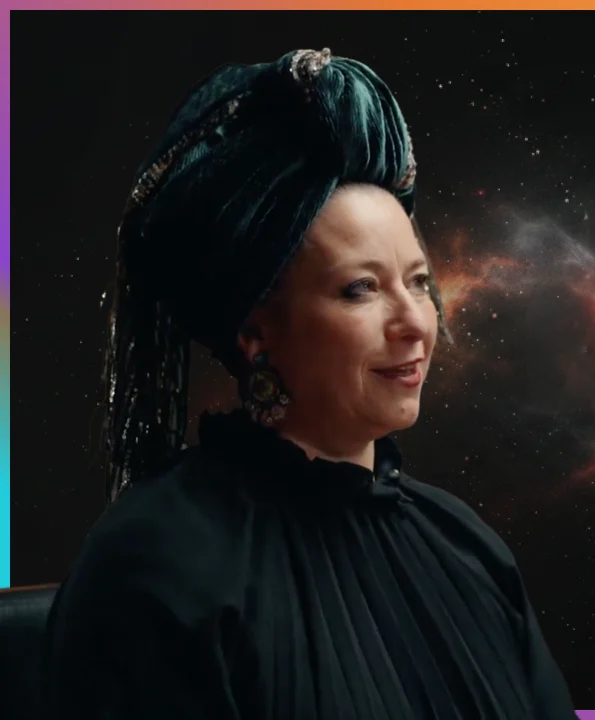
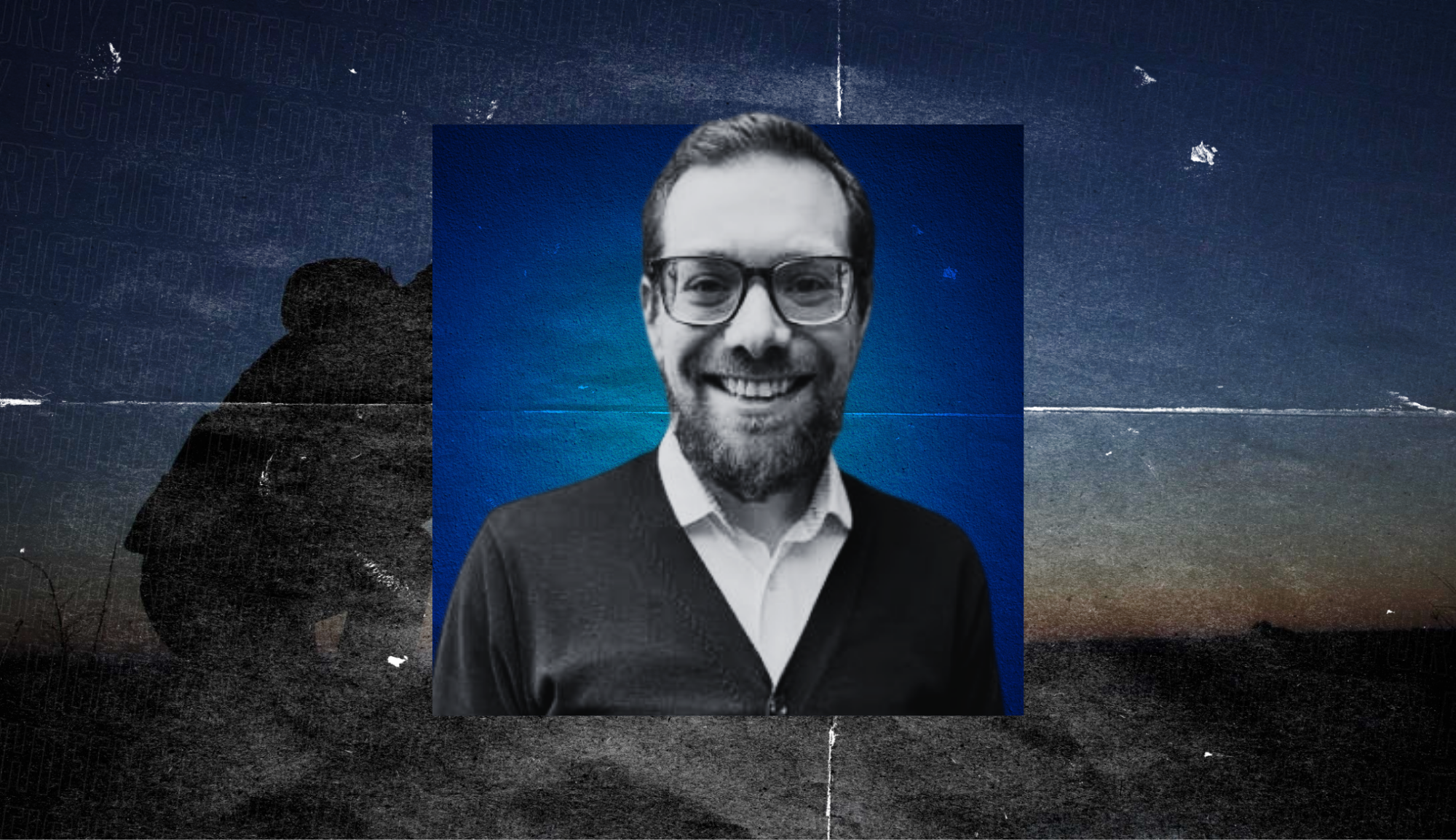
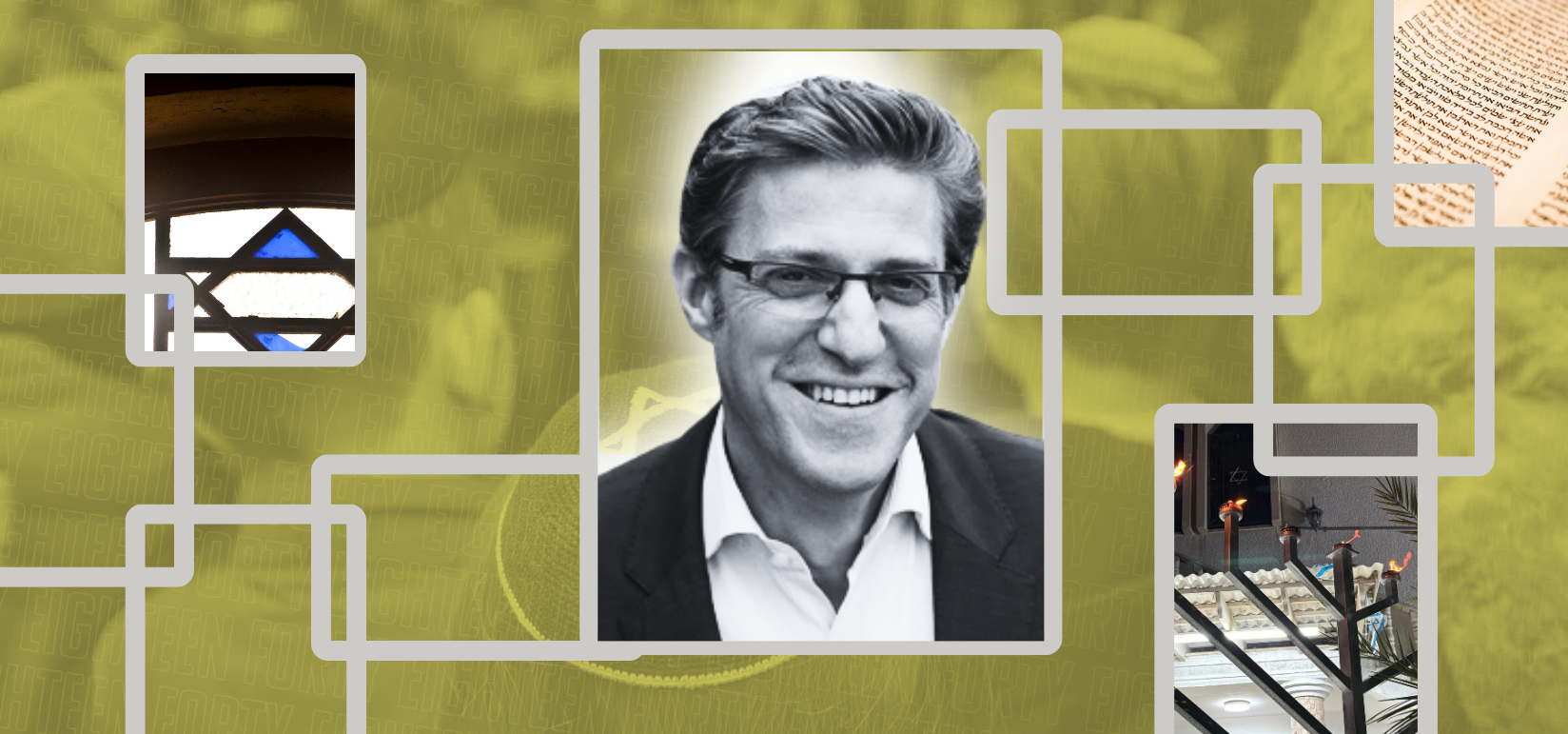
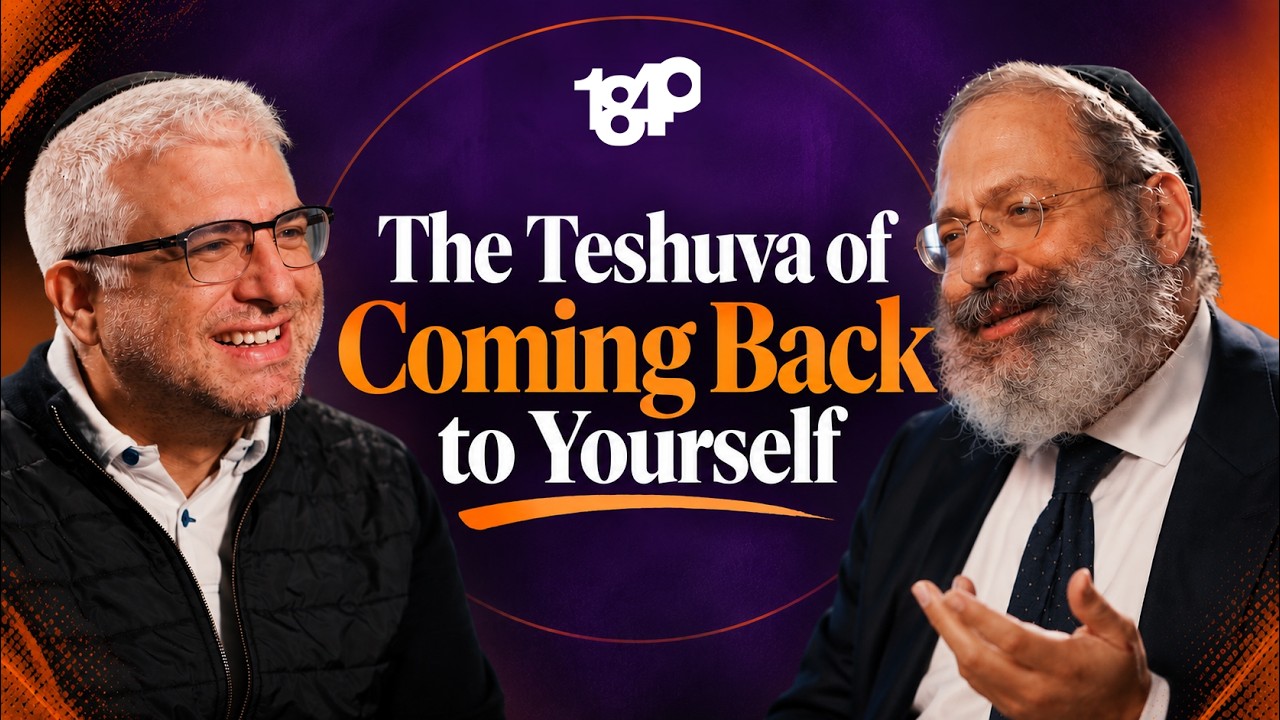
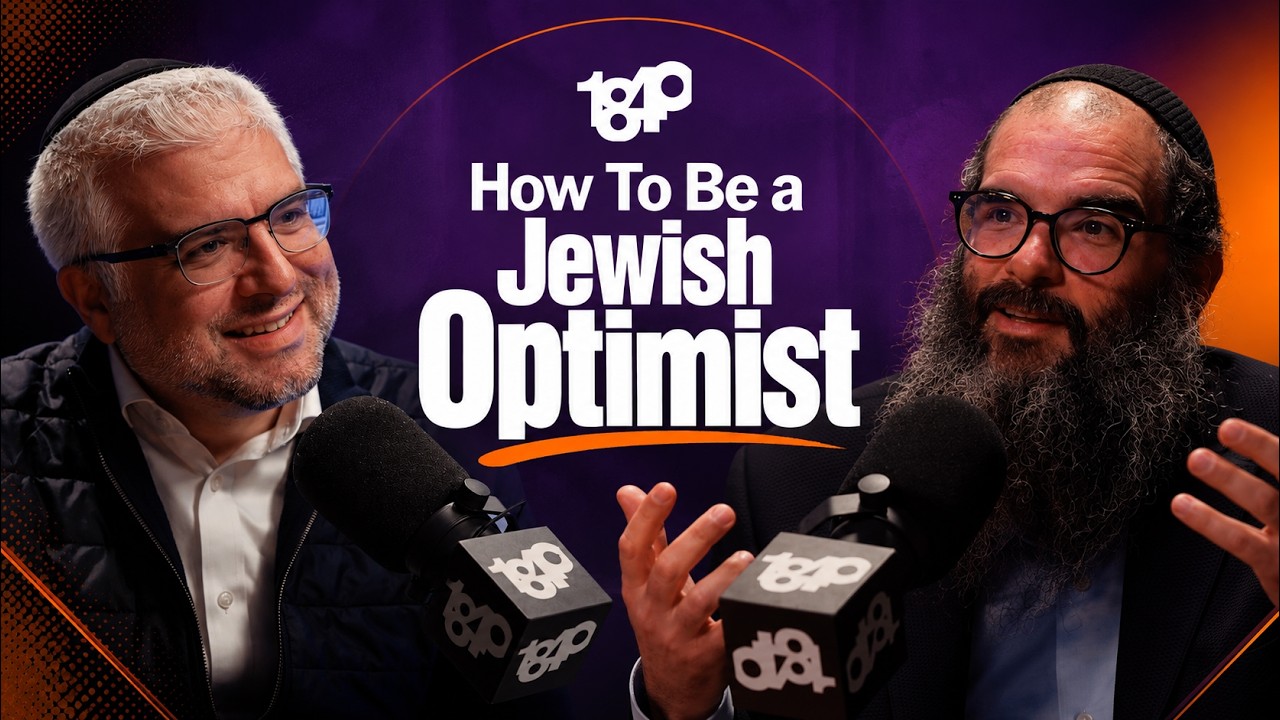
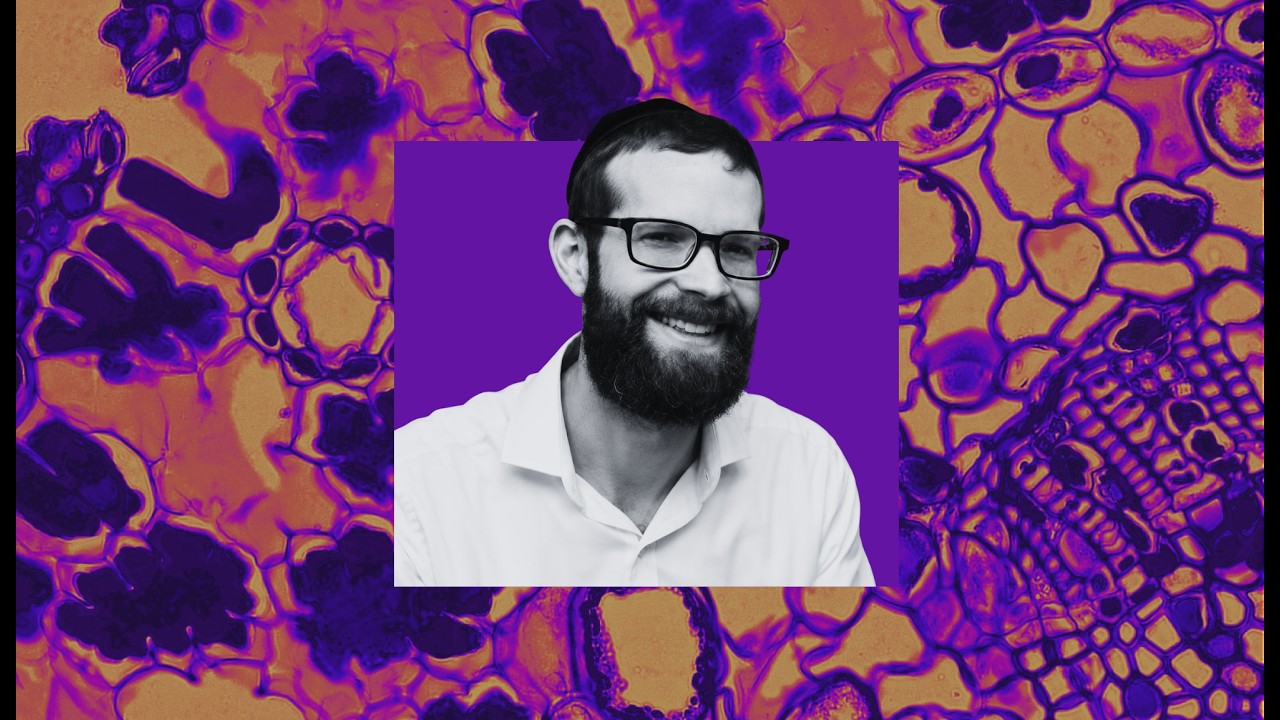
RABBI DR BENJI LEVY. Rabbi Simon Jacobson, it’s such a pleasure and privilege to be with you here in Israel and to talk about Jewish mysticism. You wrote Toward a Meaningful Life and it sold so many copies and inspired so many, among the other books and the beautiful shiurim and ideas that you share all over the world. But what is Jewish mysticism?
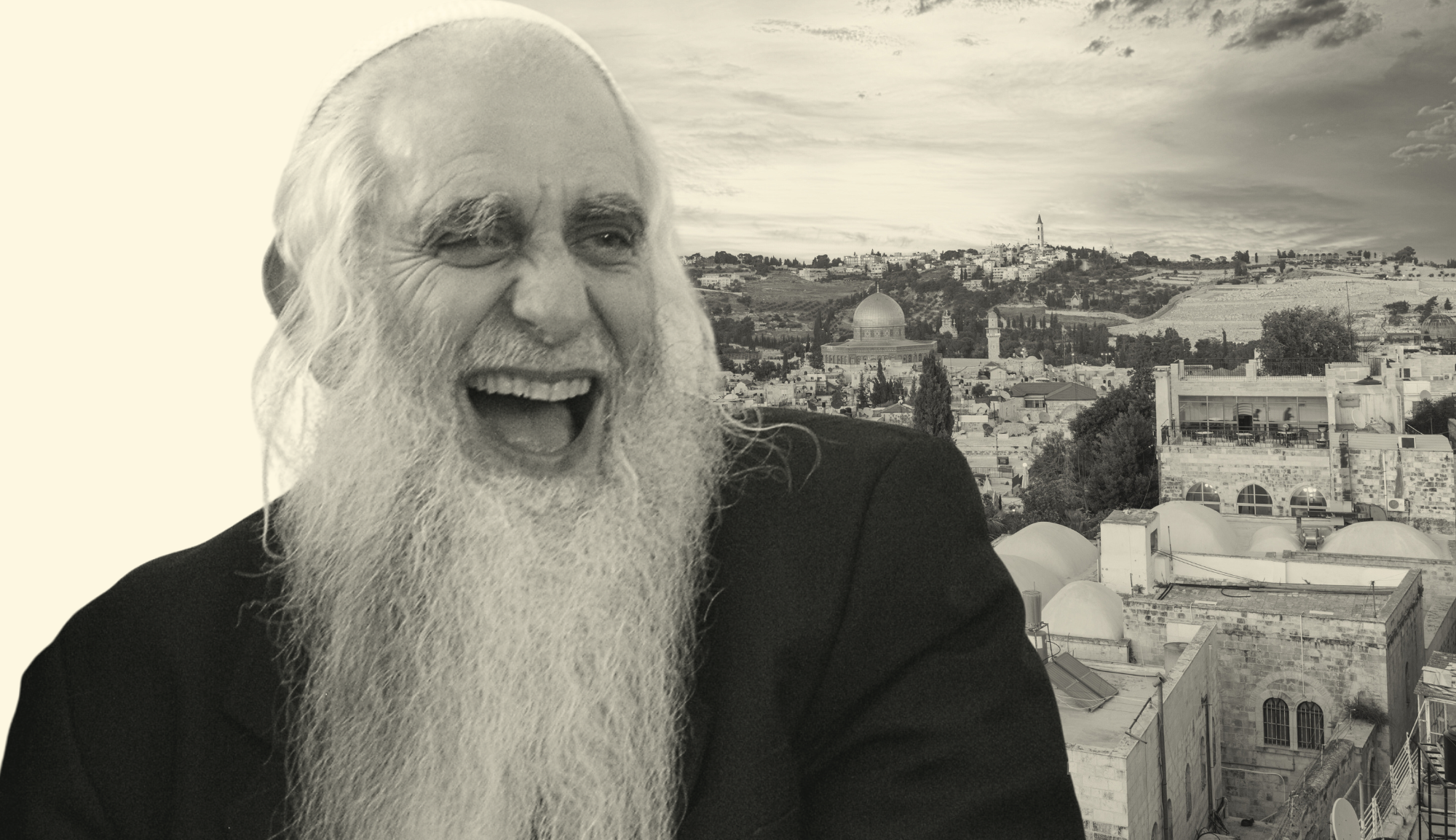
RABBI SIMON JACOBSON. First of all, thank you for having me. It’s an honor to be here, especially in the Holy Land, as you say. And maybe that’s a good segue, because in the Bible it says when Jacob fell asleep on the Temple Mount, and then he realized where he was, he called it “zeh shaar hashamayim,” a gate to heaven. So in modern vernacular, you can say Israel is like a bridge, an interface between heaven and earth. And that’s what Jewish mysticism is. We live in a physical world with materialistic needs. We need to eat, to drink, to sleep, to make money, to provide for our families, to protect ourselves. But then there’s another side to us, which is the transcendent side, what some would call the soul. And mysticism essentially is the study of the soul, the experience of the soul. The most simple example is, people say, tell me what a soul is. I said, have you ever heard a song? What does a song do for you? Everyone, you don’t even need to explain. It touches you. It resonates. So mysticism is like a bridge between heaven and earth, between your soul and your body, allowing you to experience in the material world something otherworldly.
LEVY. Amazing. And you do that for so many, you connect so many people to it, but how did you get connected? Do you remember a moment or what was the space or the time that brought you so deep into this?
JACOBSON. It’s a great question. I grew up in Brooklyn, New York. My parents are both Russian-born. They came to the United States after World War II, and I grew up in a traditional Jewish Chabad family. So I grew up with a very intense Jewish education, went to yeshiva. I’m just saying for context. I think it’s important to know where people come from.
But what was unique in my life was that my family, my parents, both very loving, were not dogmatic. So the Judaism I grew up with was very, very warm and loving. I know many of my friends, they grew up in very stern homes and very severe, you know, God will punish you, very negative. So being by nature a skeptic and a seeker, it worked for me because I don’t know, if it was imposed upon me I would have probably rebelled. But I did rebel intellectually in the sense that I started challenging what I was learning. I remember asking one of my teachers, one of my rabbis in yeshiva, I said, “Why do we learn all these intricate details, hair-splitting nuances in the Talmud? We can hire lawyers to read our mortgage documents.” And he came over and gave me a slap. No, I was not traumatized. I don’t need therapy, just for the record.
LEVY. Thank you for clarifying that.
JACOBSON. But he said to me, “You’re a poiker.” It means you’re a mutineer. We’re going to see trouble from you. Lately I actually told him, “You know that I did become a troublemaker because of you” My point is that I was challenging the axioms. Like, I questioned the question, what is Judaism? What is God? Is this a man-made system to control people? I mean, I’m being very honest with you –
LEVY. No, I appreciate it.
JACOBSON. So that’s what led me. I think I was like a rebel without a cause. I grew up with Judaism and I, again, was not molested. So I have no negative experiences with Judaism, but internally it didn’t resonate yet with me. It was more like this is what you do. And I did it. I mean, I wasn’t particularly looking to reject Judaism. And it was ultimately in my teenage years that I did a lot of reading. I have to say I read many other religions and many especially from Far Eastern mysticism, Buddhism, and so on. And someone introduced me a little to Hasidic thought, which I had studied but I had studied very mechanically. And then something clicked. It was like music. I mentioned music. I use it for a reason because it works for me, it resonated. I said, oh wow, the music of Judaism is what I’m looking for, not just the mechanics. Imagine just hitting the keys on a piano and no music comes out. That’s what mitzvot could be if you don’t have a soul. And for me it happened in a very profound way. It wasn’t overnight. It was a journey. And I realized life is not what you see on the outside. It’s all within. But I was looking up. Judaism talks about that because when you read the Talmud, you don’t always see that. The Talmud talks more about the intricate details of law. It tells you more about what to do, not why to do it and what’s behind it. And once it began resonating with me, I’m like an extremist. I said, okay, I’m in. This is it. And it was for me a sense of a mission, that we have to do everything possible to teach because I saw so many Jews, even my own colleagues, both in the religious world and the secular Jewish world, that had no idea that we have this treasure. And that’s really, it was like music. And now I do, I’ve been teaching music since. I always say I’m seventeen years old with fifty-one years of experience.
LEVY. Amazing. Well, you’re connected to one of the greatest mystics of our time and arguably in many generations, the Lubavitcher Rabbi. What was your role with him, what did he do for you as an individual, and what did you feel his contribution was?
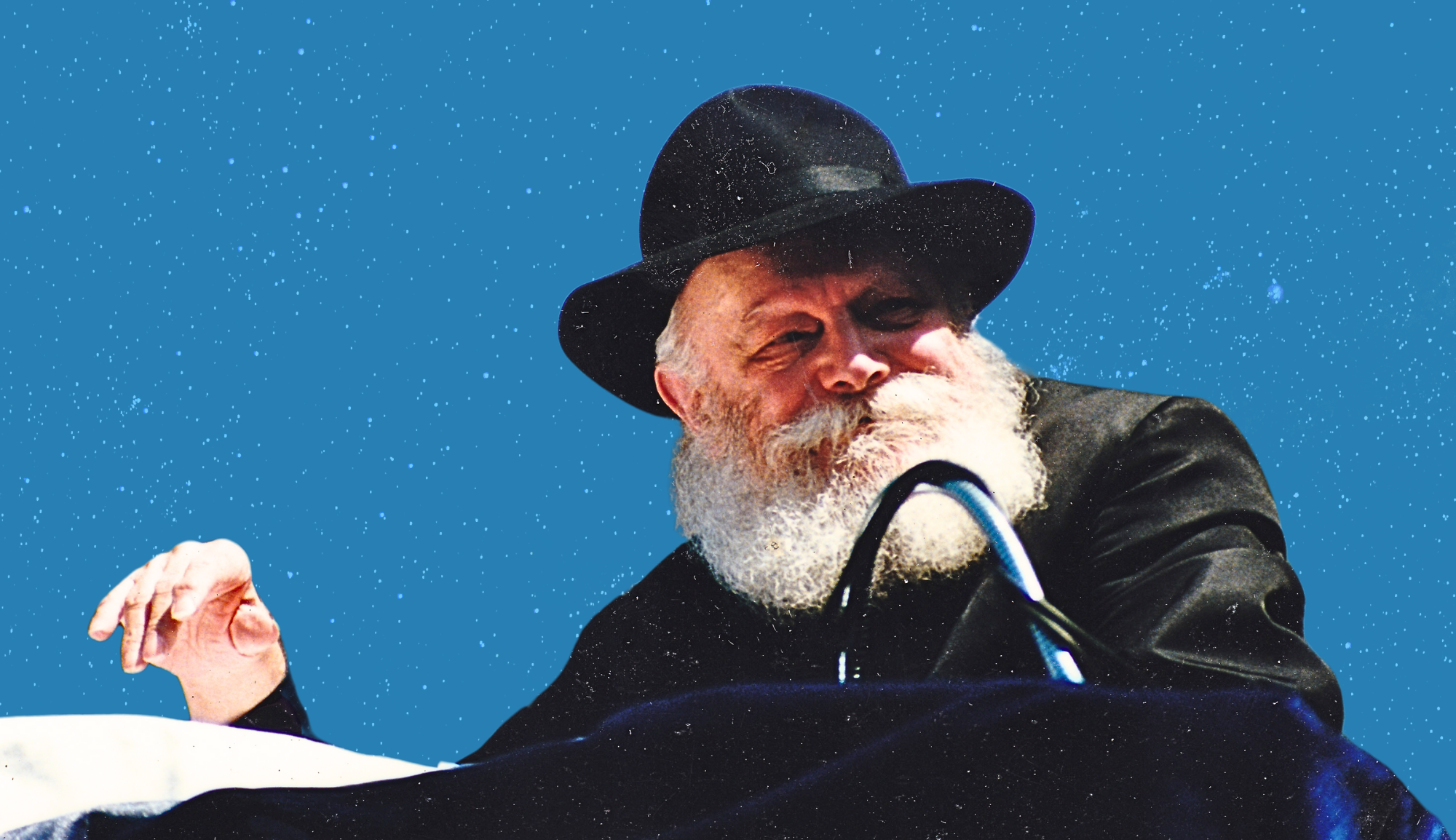
JACOBSON. Well, just to follow along, I’m giving you my biography. So those teenage years, seventeen, eighteen, which you know are formative years. That’s when you’re breaking away from being a child, starting to become an adult, thinking for yourself, who are you? As you know, your identity, who you are independent of your parents and independent of your school. And the Lubavitcher Rabbi was always a presence because I lived in Brooklyn, Crown Heights. But he was like the king on the hill. I respected him, but I had no real [connection]. But once I began to, so-called, touch this music, the soul of Judaism, then I saw the Lubavitcher Rabbi, I said, oh, wow. I started understanding his words because he would talk about this. But sometimes his traditional garb would make you think he’s more of a biblical scholar type of thing. Then I realized, no, he was a revolutionary dressed in traditional garb. And I very much identified with that and I wanted access. So I began to get involved in the job, which was very unique because on Shabbat and holidays, when the Lubavitcher Rabbi would speak, no recordings were made. According to Jewish law, you don’t record and there’s no notes taken. So you have to use your good old brain to remember. Like the Jews did Torah She’be’al Peh, Oral Torah. And I really was intrigued by the process. How do you remember hours and hours? And I got involved and I became good at it.
LEVY. Did they teach you how to do that or was it just something?
JACOBSON. No, I learned on the job.
LEVY. I don’t think it’s something you learn on the job. I think it’s something you have.
JACOBSON. No, you have, but like anything, you [couldn’t] have a talent if you don’t cultivate it.
LEVY. Wow.
JACOBSON. So I cultivated it. It was really about listening and absorbing. I mean, we can talk about that for hours, trust me. It was about how do you put aside your temptation to process information and just absorb, like a dry sponge. Because only dry sponges remember. A wet sponge – and most adult minds are wet sponges, full of even good ideas, but those ideas don’t let you really hear new ideas.
LEVY. But I think even if you’re not just listening to the Lubavitcher Rabbi’s teachings and sharing it, that’s something that we should all be doing.
JACOBSON. Absolutely.
LEVY. We should try to empty out to be able to absorb in a real way.
JACOBSON. As a matter of fact, it’s a book I was thinking of writing about the secrets of the mind I learned from hours of remembering. It’s really about allowing yourself to listen to another without getting yourself and your ego in the process, which a lot of people don’t know how to do.
LEVY. So there’s a Rabbi, there’s Hasidim, there’s all these different parts –
JACOBSON. So, let me just answer this first. So I got involved in that job and I became better and better. Then I rose in the ranks and I became the main writer of the Lubavitcher Rabbi’s talks until 1992 when he had a stroke. And so I had actual direct communication. I have thousands of pages of the Lubavitcher Rabbi’s edits and answers to questions and queries that I presented. Then afterwards, I wrote Toward a Meaningful Life. So that was my trajectory, but that job was always taking this higher wisdom and presenting it. I think I was blessed with the ability to understand it, but also, even more difficult, [I was able] to present it in [understandable] language to people who are not indoctrinated, or who were not taught Hebrew, or who don’t know the concepts. That’s the most difficult part, making it relevant.
LEVY. Amazing. And that’s the challenge of today –
JACOBSON. Music, the music again, resonating relevance, right?
LEVY. So if this music was resonating broadly, in an ideal world, would all Jews be mystics?
JACOBSON. I wouldn’t even use the word mystics. I would use realists. Because the reality today that I’ll just use, I love physics and science and I always saw the parallels between mysticism and science. You don’t even need to be a scientist to know that all matter is really energy. Matter is just the outer surface, the tip of the iceberg. So I wouldn’t call it mystics. If you really understand mysticism, you realize that’s the reality. Like I’m speaking to you right now. Am I speaking to your body or to your soul? I see your body and our mouths, our lips are moving. I see your eyes and your face, but it’s soul speaking to soul. So I would say everyone would be soulful. Maybe that would be the right way to put it.
LEVY. So what animates the soul is God. What is God?
JACOBSON. There you go. I was waiting for that question.
LEVY. Oh good.
JACOBSON. It’s a million dollar question. I have a whole chapter of it in my book Toward a Meaningful Life. Before I say what the problem is, I just need to say what it’s not. Because there’s a beautiful story about Rabbi Levi Yitzchak of Berditchev, the great eighteenth century mystic. He was once speaking to a self-proclaimed atheist. And he said to him, the God you don’t believe in, I also don’t believe in. In other words, the problem is the definition. For many people, God is like a nursery school fairy tale of a guy sitting with a long white beard in heaven waiting to strike us with lightning when we misbehave. So if you told me that’s your God, I would say I don’t believe in that God, I’m an atheist too. So terms matter. So I’m very glad you’re asking it. I would strip all the preconceived notions and the stereotypes and all the labels that people have used about God. And I would simply say God is the essence of all reality and beyond. That’s how I would put it.
LEVY. The essence of all reality and beyond –
JACOBSON. And beyond.
LEVY. How would you unpack that for someone?
JACOBSON. So I would say, who are you? Before we talk about – who are you? As I mentioned before, are you a sum of the parts of your body? Your arms, legs, heart, brain, liver, lungs? Obviously there’s more to it, because, God forbid, a corpse is also that. So you have a spirit within you. I’m not even talking now in religious terms. You have something, you want to call it electricity? So be it, energy. But how far does that go? How far down the rabbit hole can we go? So let’s take physics again. We know all matter is made up of elements, which are made up of molecules, which are made up of atoms, which are made up of subatomic particles. How far down can you go? So in a way, the essence of everything is very deep down. So God is like the core of it all, lying right here except we don’t see it because we only see the outer dimension. And that God, you’re calling it God, that higher reality, chose to create an outer reality, which is the surface-level layer of our existence. And the rest is history. We’re trying to reconnect.
LEVY. And what’s the purpose then of the Jewish People?
JACOBSON. Let’s first talk about the purpose of all people –
LEVY. Okay. What’s the purpose of people?
JACOBSON. So let’s, so I’ll quote the biblical statements. God says, I’m creating a universe, He creates it in six days, and then He says, now I will create the human being in my divine image. I will put a creature on this earth that’s unlike everything else, unlike the mineral, the vegetable, the animal, whose role is to transform this material world into a home for the divine. So that’s the purpose of all of existence. We’re all here to take our material life and turn and spiritualize it. Turn it into a garden, into a beautiful home. Civilize the world and go against the grain of our selfish temptations to become people of service, of love, of virtue. In other words, basically instead of a narcissistic, self-interested life, a God-centric life.
LEVY. And that’s basically all of humanity.
JACOBSON. All of humanity. Now, as we know, Adam and Eve, were they Jewish? It’s a good question, right?
LEVY. Well Jewish wasn’t really invented then.
JACOBSON. Exactly. So it became a process. Human beings began to search. They also made mistakes, major mistakes. So we consider Abraham to be – the patriarch Abraham – to be the first who went into a pagan world that had denied God and began to say, something’s wrong, something’s missing, and he began to search. And in a way, sometimes he’s called the first Jew, but he wasn’t, he wasn’t legally the first Jew –
LEVY. Because that only really happened after the Torah was given.
JACOBSON. Yeah, but you could say theologically he was the first Jew.
LEVY. Yeah.
JACOBSON. Because he embraced the idea that life is not just about me, me, me, there’s something greater and higher. But more importantly, he taught it to his children. And hence the birth of Isaac, Jacob. And then they had children and that continued to pass on. After the exodus from Egypt came matan Torah, the revelation at Sinai, and that’s when formally God said, here’s a nation that’s committed itself to me. I will now commit myself to them and give them the mandate, give them the blueprint for life called the Torah. And that’s when the Jewish People became the people of the book, to teach what God wants to each of us but also to teach it to the rest of the world. And that’s important to know.
LEVY. So the purpose is really to teach the world to lead the way that God wants –
JACOBSON. To lead the way. And look, I mean even the Christians and the Muslims will say it all begins with the Jews.
LEVY. Yeah.
JACOBSON. However they explain it, but the bottom line is, this one man Abraham and this one woman Sarah today are the most – I mean, billions of people, literally billions of people and maybe almost the entire world completely reshaped by them because they introduced essentially the concepts of virtue, of charity, of tzedaka, of justice, all the values we cherish today. I just say it because a lot of people are not even aware that the very human rights and the freedoms you have were not a given. Three hundred years ago the world was ruled by monarchs and by the church and by despots and by dictators.
LEVY. And we take it for granted today.
JACOBSON. Exactly. So I look at – you talk about mysticism, Abraham was clearly a great mystic. Again, I use mysticism with a certain – because I look at it more if you really understand existence, the mystical sounds exotic, like it’s out there. But it’s like saying that there’s a soul. That’s not so exotic if you think about it. So he introduced soul to the world, and today this has become very prevalent. And we’re doing, we’re continuing the mission that was given to Adam and Eve, which is to bring soulfulness into a material world.
LEVY. Another thing Abraham introduced was a formalization around prayer with the morning prayer service. So how does prayer work?
JACOBSON. So prayer, I use again a biblical example, I think they’re good. Again, Jacob, let’s go back to Jacob. He had a dream of a ladder, a sulam, a ladder that was firmly planted on the ground, with the top of the ladder going to heaven. This is the classic analogy for prayer. When you pray, you’re taking your material life and essentially connecting it. You’re longing, you’re looking up and saying, God, I want to speak with you. Let’s have an emotional – It says, “avoda shebelev zu hi tefilla,” which translated is that prayer is the service of the heart. If studying Torah is the service of the mind, the cognitive exercise, which is cognitive conditioning, prayer is emotional conditioning. It’s emoting with your soul and the source of your soul, which is God. That’s the essence of what prayer is. And in other words, you’re not alone in this world. You do have a relationship with what I call higher reality, or the essence of it all.
LEVY. Interesting. And you said that Torah study is about sort of the cognition and the conditioning of the mind. So what’s the purpose of Torah study then?
JACOBSON. Well, as human beings, you want to be a full human being. You want to have a cognitive and an emotional experience. The mind is more of a guide. The mind researches, discovers, analyzes. The heart experiences. So if you want another analogy, you could say the heart is like the ship, the mind is like the captain of the ship. So if a person wants to really live a meaningful life, a fulfilling life, their mind has to be in the right place and of course their emotions, their heart has to be in the right place.
So that’s why you’ll find very often in the Torah, in the Bible, you’ll hear expressions: “Veyadata hayom vehashevota el levavecha” [know, therefore, this day and keep in mind], which means know and feel or know your God, “Da et Elokei avicha ve’avdeiHu belev shalem” [know the God of your father and render service with single mind and fervent heart]. So think of a relationship, let’s talk personal relationships, because remember the relationship between a husband and a wife is essentially a mirror of a relationship between God and man. And a good relationship has a cognitive element. You have conversations with your spouse if you’re in a healthy relationship. But of course, it doesn’t remain, it’s not just a mind game. It’s an emotional experience. So emotions are the experience itself, but emotions need guidance because emotions can get the better of us. Sometimes you need self-control. You need to harness your emotions.
LEVY. You talked about the relationships between a husband and wife. Clearly there’s a categorization of husband and of wife. Does Jewish mysticism view men and women differently or the same?
JACOBSON. I always go back to the sources, back to the videotape, the original, rather. So it says, these are the verses in the Bible, they’re really powerful, that’s why I’m quoting them. So God says, I will create a human being in the divine image. And here’s the expression – Male and female, God created them and then separated them. So here’s your answer. Male and female are two parts of one whole. They’re both equal in that sense. They both need each other. They play different roles, but they also have much in common. So in a sense, from a Jewish point of view, despite the stereotypes, men and women are equally divine, and as a matter of fact, the only way they really become completely one is when they join together, which is why the only time you can have a child is when there’s a man and a woman. So someone’s gonna say, what’s more important in the birth of a child, a man or a woman? You can make the case more for women, actually. That’s why Chava, Eve in the Torah, is called the mother of life. You know what Adam is called? The dust of the earth. So who’s inferior?
LEVY. And you’ve been both.
JACOBSON. But the truth is, in the eyes of God, there’s no such thing as inferior. In the eyes of God, there’s no inferior. Inferiority is a political and a bureaucratic and –
LEVY. It’s also a human statement because it’s not able to see the spiritual realm.
JACOBSON. Right, exactly. What’s more important in a person’s life? The eyes or the ears? The mind or the heart? And it’s a matter of fact, there are 35 to 75 trillion cells in your body, in your being. Which cell is the most important? God forbid, one mutation can wreak havoc. So I think when you’re dealing with, especially today we understand at the microscopic level, a computer program, which line of programming is most important? Take out one dot, the whole program. So I think we have to look at it, it’s not as literal as –
LEVY. And is Judaism meant to be easy or is it meant to be hard?
JACOBSON. Both. So here’s that. I like analogies, so I’ll give you this analogy. If someone offered you a hundred pounds of stones and said, if you carry it across the street or carry it, it’s yours. Most of us would reject it. What do I need stones for? But if I offered you a hundred pounds of diamonds, you wouldn’t even hesitate. You’d say, give me two hundred pounds. Now, a hundred pounds of diamonds don’t weigh less than a hundred pounds of stones, but the value makes it worth the effort. So I would say Judaism is definitely – it’s plenty of responsibility. It regulates your life, a lot of commitments. But if you see it as stones, it’s a burden. If you see it as diamonds, it’s very light.
LEVY. I love that. It’s a beautiful analogy. So why did God create the world?
JACOBSON. You’re asking me all the biggest questions. I hope I’ll be able to answer. I don’t know.
LEVY. Besimcha [with pleasure].
JACOBSON. Okay, we only know what God told us. So what we find is that God says: desired. This is an interesting word. He uses the word desire, and that’s very precise. The Baal HaTanya, Rabbi Shneur Zalman of Liadi, a great mystic in his own right, the founder of Chabad Hasidism, the community I grew up in, so it’s close to me, my heart. So he explains, when they say: Why did He desire? He says, you can’t ask a question on desire, because He created logic, so you can’t use logic to ask a question on the one who created logic. It’s like asking, why did you create logic? So He desired, this is the expression in the midrash, which is essentially the oral interpretation of the Bible, of the Torah. He desired to have a home in the lowest of worlds, in this material world, which is essentially the sanctuary, the mikdash. We’re talking about being in Israel, in Jerusalem, the Temple Mount, the place that every Jew on earth prays toward, toward the east, because the Temple is essentially the home for the divine on earth. But he wants the whole earth to be divine. That’s what we know. There is no why, because as I said, why is already a question that comes into the system itself.
Einstein says that the only way to solve a problem is from outside of the system where the problem was created. So the same is true on a positive end. We know that God desired that and hence created human beings with intelligence. And look what we did. We did transform this world. Every time you look around, we took a world that was exposed to the elements, a wilderness. Who roamed here thousands of years ago? And we transformed it into a civilized planet. We’ve also done damage, but we also have done tremendous things. But look at the nobility, look at the beauty, look at the love. Talk about Abraham. The kindness that he brought love into the world.
LEVY. Does this will of God and will of human beings apply in terms of free will? Meaning, can we do something against God’s will? How does free will work?
JACOBSON. Well, you’re asking all the big, big theological, thorny questions. So I’ll try to be brief. Built into the purpose, you have to say there’s free will. I mean, I’ll use a famous joke. I think it was Isaac Bashevis Singer who said, “We must believe in free will, we have no choice.” But what that really means is, if there’s no free will, the whole thing is a joke. Then what, God created puppets and robots to play out a script that He’s controlling? So as complex as it may be, free will is built in, inherent, because if there’s no free will then what’s being achieved? So there is the theological question, how does God leave room for free will when he’s all-pervasive and all omnipresent?
But I don’t want to talk about that right now. The bottom line is, yes, He gave us a part of His own essence that says, when it comes to not your height, not the color of your eyes, not, I don’t want to use gender, but other things. There are many things you have no choice about. You didn’t choose what family to be born into, you didn’t choose what language to speak. I mean you could learn new languages, but the color of your eyes, or your height, or other – but your [ability to] choose right and wrong is up to you. If you choose right now to be kind to me, it’s your choice. If you choose the opposite, it’s your choice. And in some way, God, in His mysterious way, and there’s many thousands of pages that have been written on this, has suspended His own so-called hashgacha, his providence and his oversight when it comes to that point where you’re going to choose. So the fact that you and I are sitting here is not necessarily up to us. God put us here, but how we’ll use it is up to us.
LEVY. And what about the Messiah? What about Mashiach? What do you think about this term that for some people just sounds like a term? From a mystical perspective, what does it look like?
JACOBSON. Absolutely. And I go back to the same story with God. The Messiah you don’t believe in, I also don’t believe in. I think the Messiah, like God, is the most misunderstood – furthermore, it’s distorted words. I mean, I can tell you, I don’t know how it is in Israel, but in the United States, the stereotypes around religious terms, like God, Messiah, and so on, are so deep that ninety percent of the work is not explaining what it is, but it’s un-explaining –
LEVY. Or explaining what it’s not.
JACOBSON. Dispelling the myths. So the myths around the Messiah are so many, and it also sounds like this thing, especially the Christian version of it, et cetera. So let me put it in just simple English without using any Hebrew. To me, it goes like this. This world, with all its intricate and fascinating design, was created by a Cosmic Engineer, otherwise known as God. For a purpose. The purpose we spoke about, which was to transform this material world into a spiritual environment. Basically to bridge heaven and earth. Okay. The Messiah is the destination, the end of the process, when it will be achieved. So take out that idea. That would be like saying, okay, the world is created by design. There’s a purpose, but that purpose will never be realized. So the Messiah simply is the realization of the purpose of existence. That’s the simplest way to put it.
LEVY. What happens when we get there? Once we get to this place, is the world going to be different?
JACOBSON. And we’re very close there. Look at the world in which we live today. You mentioned before, we take for granted our freedoms. That’s Messianic, these freedoms. Because why shouldn’t we be living in a world of survival of the fittest, dog eats dog, and just destroy each other? So I’m not saying there’s not plenty of work to be done still.
LEVY. But we’re close.
JACOBSON. Yeah. Number two, look, we’re sitting here talking about spirituality. There’s a revolution in the air. What will it look like? It will look like a world where there was, I’ll quote my Maimonides, the Rambam, a world where materialism will only be a means to spiritual ends. So the idea of selfishness and greed and war and discord will be gone. That doesn’t mean there won’t be diversity. There will be, but people will understand –
LEVY. It’s diversity without discord.
JACOBSON. I’ll call it harmony within diversity. It’s when you really see people working together of different talents and skills, that’s like a little taste of it.
LEVY. We really need it.
JACOBSON. Absolutely. The beautiful story is that there are many people that are living that way.
LEVY. For sure.
JACOBSON. But there’s more work to be done.
LEVY. Where do you see the State of Israel, is it a part of the final redemption?
JACOBSON. Well, the fact is, you can’t deny that today you have what is it, seven million Jews, the largest body of Jews ever [living in Israel]. It used to be the United States, but that is a fulfillment of all the prophecies and we say in the prayers, the Jews will be gathered. But remember, the gathering of the Jews is not just a physical thing, it’s also a spiritual thing. It means that we’re reconnecting to our roots, to our homeland, the gate between heaven and earth. So it’s clearly part of the process. I mean, there are different opinions, theological opinions of how much is it the actual part of the geula, the redemption, or is it a step before? We don’t have to go into that, but everyone agrees, when you see a million, recently a million Soviet Jews from the former Soviet Union, and in general the haven after World War II and of course the renaissance of Jewish life in Israel. I mean, this is our home. And it just continues. But there’s two parts of the revolution. One is the actual being in Israel, and second is to be there spiritually. You can be there and not be there. You want to also have that renaissance –
LEVY. So there’s a lot of spirituality here, but we’re not fully there.
JACOBSON. Like we say in the prayer, even Jews in Israel say “mipnei chata’einu galinu me’artzeinu,” because of our sins we’ve been exiled from Israel. But what do you mean – we’re living here. Because you can be here and still be in exile.
LEVY. It’s like a spiritual exile.
JACOBSON. Yeah. You can be out of prison but still be a prisoner.
LEVY. Beautiful. What is the greatest challenge facing the world today?
JACOBSON. I think the disparity between our material success and technology, which is making life literally so easy, and our spirituality is not keeping up. So, I think the biggest challenges are areas like our emotional lives, our personal lives. Technology does not necessarily make marriages better. So I think the disparity, to bridge that, that’s why I think we need such a heavy dose of spirituality today to counter those forces of technological, and medical, and political advances that are taking place, that disparity. Too much tension will be created between body and soul. And that’s why I believe is also [behind] the rise of opioid use and people looking to relieve their tension. They have to numb it. And the answer is soul, neshama, talk about mysticism. I actually don’t like the word mysticism just because it sounds like it’s some –
LEVY. Exotic.
JACOBSON. Yeah, and it should be something that should be as common as eating, as drinking water. It’s our spiritual oxygen.
LEVY. How has modernity changed Jewish mysticism? Or has Jewish mysticism changed in modern times?
JACOBSON. Absolutely. I see this as a divine miracle, a divine hashgacha, divine providence. The rise of mysticism in Jewish life. Remember, it was always there. Rabbi Shimon bar Yochai, the author of the Zohar, we’re talking about 2,000 years ago, but he only had ten students. And it was kept very confidential, very discreet for many different reasons. So it was always there, but it was with the Arizal, the holy Arizal – we’re talking now 500 years ago, 600 – where he began to say it’s a mitzva to start disseminating it. It was still limited because of the language, the cryptic nature of it, but with the generations it began to spread. The Baal Shem Tov, of course, was the birth of Chasidut [Hasidism], and he had his students. Today, it’s commonly taught to people that are not necessarily in the high spiritual levels. So you clearly see the growth of it, but if you trace the roots, you know when the Baal Shem Tov lived? Right at the time of the enlightenment.
LEVY. Correct.
JACOBSON. The emancipation of the Jews. So the birth of modernity corresponds almost to the year when Pnimiyut HaTorah [inner dimensions of Torah] began to become more mainstream. And there was resistance.
LEVY. So you think it’s a spiritual balancing of the scales then?
JACOBSON. Not only – all the real kabbalists say that. They say it explicitly. They actually give two reasons for the greater dissemination. Because the question of course is asked if it was always kept so discreet –
LEVY. Why now?
JACOBSON. Yeah, why suddenly are you able to teach it? Why aren’t there all these limitations? And it could be abused. And it was, Shabbetai Tzvi, the Frankists, they abused – Kabbala can be abused. There was a reason there was resistance to it. It was for legitimate reasons, because once you open up the spiritual –
LEVY. You can’t close it again.
JACOBSON. Yeah, and also if someone doesn’t know how to use it, they can abuse it.
LEVY. Yeah.
JACOBSON. They could turn it into things that were very inappropriate, and so two reasons are given. One is when it’s darker, you need more light. And the darkness was becoming – remember there was no assimilation of Jews 500 years ago. I mean there were a few that maybe converted. But it was minimum numbers. Today, eighty percent of the Jewish People are assimilated, however you define that. And I’m not saying it as a judgment, I’m just saying it as a matter of fact. They’re not affiliated, and it’s mostly out of ignorance. We call [them] tinok she’nishba, someone that doesn’t know better. So when there’s more darkness you need more light. There’s actually a beautiful analogy for that from the Baal HaTanya, Rabbi Shneur Zalman, because some of his colleagues were saying, should Pnimiyut HaTorah, Chasidut, mysticism be taught to everybody? And as hashgacha [divine will] would have it, someone saw a page of a Hasidic discourse on the floor. So you see, it’s not being appreciated.
The Baal HaTanya gave a beautiful analogy. He said, a king had a child who became gravely ill and the doctors gave up hope. He was dying; this was the king’s only child. So he was desperate. Finally, some doctor came and said, I think if you take – the crown of the king has the most precious jewel. It’s a rare gem. If you crush it and you mix the powder of the jewel with water, and you can get it between his clenched teeth, it may save his life. But you’ll never have that jewel again. The king said, of course. And what’s the question? My child is more important to me than the crown. And that’s what they did. So Rabbi Shneur Zalman, the Alter Rabbi, said the Jews were in a very difficult situation. So God said, this is the time, even though there may be – drops of the water will drop on the floor –
LEVY. The price that He is willing to pay.
JACOBSON. Yeah, because the Jews need neshama [soul] because they are going to be challenged in terrible ways due to the materialism of the world, due to the freedoms and so on. So freedoms are a blessing.
LEVY. Yeah.
JACOBSON. So that’s one reason given, because before dawn is the darkest time. So that’s the counter. The second reason, interestingly, is before Mashiach [the Messiah] comes, before the end of time, spirituality will dominate everywhere. So it says before Shabbat you have to taste of the foods of Shabbat –
LEVY. Taameha.
JACOBSON. Right, the taameha. So the revelation of the inner dimension of Torah is like a taste of what will be coming. And they actually are, of course, interdependent. So the deeper revelation is due to the darkness and the darkness brings out that deeper revelation.
LEVY. And you said that you studied many other religions, doctrines of thought, ideas. What makes Jewish mysticism unique?
JACOBSON. So first of all, I have no problem saying there are many commonalities. There’s one God, and people have found God whether in India, or in Tibet, or in Europe, or wherever. So actually when I see commonalities, it just affirms. Secondly, Abraham had children that went all over the world, including to the East. So, just to state that. Unique, I may be subjective because I am Jewish, as you can tell. So, I’m not trying to dismiss any other school of thought because as I said, there’s many commonalities and many truths. But what I find when I do read different schools, first of all, the Jewish perspective I find to be most comprehensive. So I think there are many common denominators, but you get the biggest picture. That’s one thing.
But then there are two other things that really stand out. In most schools of mysticism, or maybe all, there’s two realities, a material world and a spiritual one. And the goal is to move from being a materialistic person to a spiritual person. In Judaism, there’s a one-third step, it’s called kedusha, holiness, godly. And godly is not closer to the spiritual than it is to the material. So you really have three steps, matter, spirit, and God. And God joins matter and spirit. That’s why most schools of mysticism teach you asceticism. You have to move away from matter –
LEVY. To reach the spiritual.
JACOBSON. And Judaism says, no, you have to bring spirit into matter.
LEVY. Yeah.
JACOBSON. The second distinction is the focus on actions. In most schools of mysticism, the highest place that you can get to spiritual transcendence is through meditation –
LEVY. Which is almost a lack of action.
JACOBSON. And in Judaism, through a mitzva, through a good deed, action, you can reach deeper than any meditation.
LEVY. Amazing.
JACOBSON. Those are the two key things.
LEVY. Beautiful. Does someone need to be religious to study Jewish mysticism?
JACOBSON. Can I challenge you in return? What does religious mean? Does religious mean dogmatic? Does it mean mechanical? Let’s say you teach a monkey to put on tefillin. Is that called a religious monkey? I don’t mean to be irreverent. So the word religion is also a word that needs to be – I know what you mean by it, however, so I’m not dismissing it.
LEVY. No you’re right it’s important to be clear –
JACOBSON. Right, right. So my response would be as follows. Unfortunately, many people think the more religious you are, the less spiritual, and the more spiritual, the less religious. And there is that disparity. I would rephrase your question like this: Do you need to be committed to all the Jewish laws, Shabbat, kashrut, and so on to study or experience mysticism? The answer is no, because I know many people that begin first on the soul journey and then it may lead them and often leads them to Jewish ritual. But from the big picture I would say it’s like do you need a body or only a soul? At the end of the day what you call religion or what I would call halacha, laws, is the body of Judaism. And mysticism is the soul of Judaism and you need both.
LEVY. So you talked about some people –
JACOBSON. But you could do one without the other.
LEVY. Correct.
JACOBSON. There are people that do the laws and they don’t know about the soul.
LEVY. So anyone can learn about it but the highest level is to bring them together.
JACOBSON. And frankly, for many people the only entrance point is through the soul. They’re not ready to keep Shabbat, but then they hear, oh wow, Shabbat is a day of the soul, let me try it. So you do whatever it takes.
LEVY. They become sold.
JACOBSON. Well said, yes.
LEVY. So, you talked about people abusing Jewish mysticism. Can it be dangerous, Jewish mysticism?
JACOBSON. Yeah, absolutely. In Jewish mysticism there’s a thing called Kabbala maasit [practical Kabbala]. And then there’s the study of Kabbala. You can study mysticism. You study the ideas, the theology of it. And of course that translates into the kavana, the intention in doing a mitzva, in prayer. But Kabbala maasit [practical Kabbala] is like, maybe the classic one is the Maharal when he built a golem. He built a man of clay. That is considered to be off limits. Even if it happens, it’s very rare and only done by someone who is on an extremely high level. So the idea of using mysticism like cantations or words that you try to manipulate existence, that’s considered to be crossing a line. Because that’s where it would be abusive. Another aspect where it could be abusive, unfortunately, is spiritual masters, mentors that people trust, and they abuse the trust, sexually or otherwise.
So there are plenty of ways – remember, when you travel into the world of the intimate, into the world of the soul, you’re very vulnerable. It’s a vulnerable place. It’s like, would you just trust someone to cut you open and do heart surgery? It’s invasive. So that’s why a spiritual master has to be extremely humble, extremely sensitive, and they cannot bring in any of their own agenda. It’s one thing if you go to a rabbi and ask him if the chicken is kosher, that’s not such an intimate experience. But when you start talking about your personal life and about your soul’s journey, that’s one of the reasons that a lot of care has to be taken because there could be abuse on that level.
LEVY. So you talked about Jewish mysticism, one of its unique matters is bringing the soul into matter as opposed to stepping away from it. How does it affect in a personal way your relationships, with yourself, with those around you? How has it changed your relationships?
JACOBSON. Well, I’ll be personal. When I – by nature I’m more of an artist, a free spirit. I’m not the domestic type. If I had followed my own heart’s desires, I probably would never have gotten married. Not because – I love my wife, I love my children. Don’t get me wrong in that way.
But it’s not my nature. My nature is, I’m a floater. I travel the world and this music, art, spirit. But I realized, and it’s perhaps probably my upbringing, that I need to be grounded. Because it’s easy to float like that and it’s also selfish in a way. As spiritual as it is, spirituality can also be very selfish. It’s about you. Except it’s not making money, it’s spirit, it’s transcendence, it’s spiritual enlightenment, higher consciousness. So for me it was a very real challenge. But I made the decision and I knew that I needed – because it would have been dangerous probably if I remained that way, because I would be experimenting with things, I would have no – halacha ultimately was like guardrails.
LEVY. It’s interesting as you’re saying it’s Jewish mysticism that helped you have those guardrails as well as the creativity to ground you –
JACOBSON. Yeah.
LEVY. In your relationships.
JACOBSON. Yeah, but ultimately it was a commitment that I can’t just indulge in my spiritual aspirations. I need to ground it. It needs to be channeled into real life. And like I learned from Avraham Avinu [Abraham], you have to build a family. I always tell people, look, who are the greatest leaders in the secular world? Biggest philosopher in the Western world, Aristotle, most people say. The biggest, the greatest artist, Rembrandt, Van Gogh, whatever. Musicians, Mozart, Beethoven, Bach. I mean the list goes on. Shakespeare, the greatest literature. Do we know if they had children or grandchildren? They left a legacy, they left plenty of beautiful things, but they didn’t turn it into a community. And to me that resonated and that’s why I said it’s not just spirituality and material, is God. You have to have the bittul [nullification] even of your spirituality. You have to get out of the comfort zone of your own spirit and do what’s right, not always what you like to do, even if it’s spiritual.
LEVY. Beautiful. We’ve had an incredible conversation about Jewish spirituality, about Jewish mysticism. Instead of talking about it, just to end, can you share one teaching? What is one mystical teaching that you either carry with you right now or that you think can resonate with others?
JACOBSON. Yeah. The one that comes to mind, I mean there’s so many, is human suffering. It’s one of the most difficult topics because it’s emotional. And even if you have it all figured out in your mind, when your heart is broken, your heart is broken. A loss is a loss. So I found the idea of tzimtzum [contraction], which is a doctrine taught by the Arizal. Tzimtzum means concealment. That for God to create existence, since God is an all-pervasive reality, there’s no room or space for anything else. I’m quoting now Etz Chayim, that’s one of the classic works of the kabbalistic master, the Arizal, one of the greatest, maybe the greatest mystic. So God, so to speak, like a teacher would withdraw or recede his ideas to leave room for a student. So God in some way left space, but in the process He concealed his presence, which allows for free will and allows for us to be. So in essence, all suffering and all pain is really a product of God’s concealment. So to me that’s a mind-blowing revolutionary idea because it’s not just, okay, you’ll find God even in the concealment, but the very concealment itself is godly – it’s just a different way of God expressing. It’s like, think of in the name of love, if you want to express something to the person you love, but you have to prepare yourself so you fall silent. So they think you’re silent. In truth it’s the deepest love because you’re preparing to reveal something even deeper. So never think that silence is really silence. So in many ways, suffering is a form of divine silence, but don’t ever see it as an end in itself. It has a tremendous amount of potency. Because remember, pain is very powerful; it’s just negative energy. So when you tap into it, you can release tremendous power. And now of course we want to reveal it. That to me is one of the very fundamental topics because it’s addressing a difficult topic. There are the beautiful mystical topics of seeing the infinite in a rose or in a flower, but to be able to see God in darkness is very difficult.
LEVY. Well, Rabbi Simon Jacobson, this conversation was enlightening and reflects the incredible knowledge and sagacity that you take with you everywhere. And we hope that you can continue to show the light and to help everyone come closer to [living] a meaningful life.
JACOBSON. Thank you so much. It was an honor.
LEVY. Thank you.