Transcripts are produced by Sofer.ai and lightly edited—please excuse any imperfections.
David Bashevkin: Hi friends and welcome to the 18Forty Podcast where each month we explore different topics balancing modern sensibilities with traditional sensitivities to give you new approaches to timeless Jewish ideas. I’m your host David Bashevkin and this month we’re continuing our exploration of the future of Israel and its relationship to Jewish communities and the rest of the world. This podcast is part of a larger exploration of those big juicy Jewish ideas so be sure to check out 18Forty.org that’s one eight f-o-r-t-y dot org where you can also find videos, articles, recommended readings, and weekly emails. I just want to give a quick thank you to our episode sponsors Brett and Susan Nadritch who support creative initiatives that strengthen our love and connection to the people and the land of Israel and in honor of all the lone soldiers in the most recent Hesder draft class of Nissan 5786.
I’m trying to remember the first time I saw a group of people who I was friendly with or close with come back from yeshiva or seminary. I think the first people I knew who ever went to yeshiva or seminary what some call a gap year in Israel, which has become extraordinarily popular particularly in North America, the United States, particularly within the modern Orthodox community, in most modern Orthodox Yeshiva high schools or day schools upwards of 90% of the students in many of these places if not 100% spend one year or two years studying in a yeshiva or in a seminary. It is a little bit different in the American yeshiva world. In the American yeshiva world instead of spending a gap year immediately after high school they actually usually spend one to two sometimes three years continuing to learn in the States and then they spend a year or two in Israel and then nearly everybody goes back to Lakewood.
That’s kind of the current reality in the American yeshiva world. In the Modern Orthodox world and in large parts of the Conservative world as well students go and take a gap year in Israel after high school. In most of the world the gap year is done the junior year of college. I think there’s something very nice that to mark that transition before college to kind of have this immersive experience in Israel studying Torah immersed in the Avira in the environment of Israel is a transformative experience and one that I myself had and trying to remember the first group of people who came back from the gap year were probably my sisters.
I’m trying to remember if I noticed them being any different. I have three older sisters each of whom went to the same seminary in Israel, a very classical seminary. I don’t think it’s a secret Michlala. I think they all went there.
Now there are many many more but that was kind of like in the ’90s the gold standard seminary kind of right of center where so many people went. All three of my sisters went and each one came back a little bit different. My oldest sister a little bit, it wasn’t a drastic transformation but my next two sisters really transformed their year in Israel. One still lives in Israel to this day and the other, I remember when she came back she’s the one who I’m closest to in age and I remember a story, I don’t know if she remembers this, I don’t think I am misremembering this.
I would have been in 11th grade. I remember we were on line together maybe in TJ Maxx and we were talking then all of a sudden out of her pocketbook she took out a little mini, it was a Mesillat Yesharim I believe which is The Path of the Just, an incredible work by Rabbi Moshe Chaim Luzzatto but I remember as an 11th grader watching my sister take out a sefer to learn while on line at TJ Maxx. It was like what now? Like what now? I think I started maybe giggling or laughing a little bit, I mean there’s nothing to laugh at it’s a very beautiful thing but to an 11th grader who wasn’t used to that it definitely caught me by surprise and I’m like okay we’re dealing with something different here. And I think my sister smiled as well I’m not sure if she remembers it the same way but I do remember year after year people would come back and they would look different very often.
Many times guys would come back and they would start dressing with a white shirt and black pants, you would see women dressing a little bit more formally, maybe a little bit more modestly. Now this doesn’t always happen to everyone and even those who do change it doesn’t always stick in the same way the moments you come back after gap year in Israel people have a term colloquially they will use a term called a fresh back. What is a fresh back? Very often spoken about when people are dating like oh is this person a fresh back? Wherever you come back to. And there is a certain very beautiful kind of growth that you see after a year in Israel, a sense of great pride in Torah learning and Jewish identity.
And so many of the teachers go, your local Modern Orthodox yeshiva high school and you trace the history of the teachers in that high school. How did you get here? How did you become a Modern Orthodox high school rebbe? Many of them were cut-ups themselves in high school, up to the same mischief as anybody else who went to high school, but they spent a year or two in Israel, they got much more serious about Jewish life and Torah learning and they wanted to give back and they say, “Oh, now I have this new perspective to reach the next generation of high schoolers.” And then the cycle kind of continues. We have a system that we have developed. It is not the oldest system.
It has probably been in place at least within the centrist community, where we have twelve years of yeshiva, eight years elementary school, four years of high school, and then kids spend one to two years in Israel, something that we have spoken about. But this really gets not enough attention, which is: what is the goal? What are expectations and hopes for that year in Israel? And the truth is, if you ask parents and you ask high school administrators and you ask students and you ask teachers in Israel, you will get a different answer from each of these demographics. Different people at different stages in life may give it different importance. I remember when I was in high school, I thought the year was absolutely paramount.
And though my relationship with my own yeshiva and my year in Israel was absolutely wonderful, I have begun to question, I don’t know, what is the point of it? I’ll state it very, very plainly. If the point is to build foundations in Torah learning in an environment that you were not born, I think to a degree it has been more or less successful. People do learn quite a bit more that year in Israel. I think their level of halachic education and observance rises and you see people really elevate in that area.
And I think by and large, it’s an extraordinarily positive experience. My question is, is perhaps it’s time to kind of reimagine what that year could be? Which I don’t think means tearing down what exists, but perhaps it means even more variety and even more thoughtful introspection about what we could be achieving collectively in that year. Essentially, the way I see it is that Israel is an extraordinarily vulnerable country right now, both obviously from physical safety but also spiritually. Meaning Israel has the majority of Jews and is trying to develop a brand of Judaism, a brand of Yiddishkeit that can reach and really uplift the entire population.
And to have a Yiddishkeit that can reach the entirety of the population of Israel, to truly have a Jewish state, a state that is for the Jewish people and run through the lens of Judaism, this is to continue the covenant of Avraham, Yitzchak, and Yaakov. This is serious. This is a religious endeavor. Then I look at Israel as very spiritually vulnerable just because the stakes are so high.
And what the Judaism is going to be in the Land of Israel is something that everyone should have a stake in. And it’s my belief that it’s not almost a knock on American Judaism. It’s because I think what we’ve achieved, the Judaism that we have produced in America—and I’ll be blunt, particularly Orthodox Judaism in America—is so miraculous. It’s so against the logic of sociology and assimilation and how everyone expected American Judaism to turn out.
I mean, it is so shocking that in 2026, we have Yeshivas that are bursting by the seams. You have three-year-olds who know what Shabbos and Havdalah and Kiddush is. I genuinely find it remarkable. It is the question that the whole world is trying to solve as we become more saturated technologically, and here, go to Teaneck, go to the Five Towns, go to Boca, LA, Chicago, Portland—I mean, there’s so many beautiful communities—and you go out on the streets on Shabbos and you see people who are well-educated, they love their Judaism, they’re doing it because this is joyful.
This is America; nobody can be coerced into Judaism. And we have spent time developing and cultivating a Yiddishkeit that, however imperfect because we don’t yet have perfect observance, we haven’t reached that—that’s for… Yemos HaMoshiach for messianic times, but each of us, what we’ve built here communally is jaw-dropping. We have created a Yiddishkeit that people want to opt into.
Nobody can force you to be religious in America. Anybody can assimilate. You could leave, you could pick up and say, no thank you, I am not interested in Shabbos, I am not interested in minyan and in davening and in Torah learning. You could pick up, I don’t want Yom Tov anymore.
No one has a gun to your head. That is both the gift and the curse of America and American culture. It is both the struggle and the opportunity of the Yiddishkeit in America. And it is because of my appreciation for what has been accomplished by American Jewish communities that I see just an incredible jaw-dropping opportunity of not just learning from Israel, but almost importing the Yiddishkeit that we’ve cultivated here and integrating it naturally and organically by building lives in Israel with all of our oleh mentality, with all of our American perspective.
Yeah, bring it all. We need it all. We need these forms and these perspectives and these sensitivities. They will uplift everyone.
I remember my sister started a community. My oldest sister started a community in North Woodmere. Before the community, there was another synagogue there and it was a question whether we’re going to join that synagogue or the other synagogue. It was a little bit contentious, as it is in many communities when you open up a second shul.
And after that shul started, slowly, a couple years later, and established itself, BKNW, by the great, my esteemed teacher and friend, Rabbi Aryeh Leibowitz. I remember after he started that and it blew up and the community totally changed. I knew one person who lived in North Woodmere growing up. He’s famous now, Ira Savetsky.
But that was the one stop on the bus that we had in North Woodmere was just Ira’s house and Mikey Hollander, two people. There was not a lot of people who lived out there. It was really considered the boondocks. And after that second shul opened up, a third and then a fourth and a fifth.
And I remember people stopped getting contentious. I don’t know who said it, but somebody said, the more we have here, it lifts up everybody. Different communities you bring in different sensitivities and you have people who move in, whether they’re coming from Brooklyn or from Monsey. Different communities crop up.
It transforms the entire neighborhood. And now every shul is uplifted. And I think that we are poised to have a moment like this right now in Israel in this coming generation. And that is why my question of, is it time to reimagine the year in Israel? Are we optimizing sending thousands of kids to Israel each and every year and what we could potentially be building and creating in this moment? They’re going anyways.
Is there a way to reimagine this as a much richer integration, a long-term integration, to have different entry points, to have programs that last multiple times, six-month programs, one-month programs, one-year programs. And most of all, and I will say this from the top, is placing a much greater emphasis on learning Hebrew. To make sure that we do not have another generation growing up, whether it’s in America or anywhere, who is unable to be fluent in reading and speaking Hebrew. That has got to be bar none a goal of any graduate regardless of your outlook, hashkafa, religious worldview, Orthodox, non-Orthodox.
I don’t think it matters. I think everyone at this moment, especially if you’re spending after twelve years of day school and high school spending a year or two in Israel, we gotta insist on better Hebrew fluency. It’s just jaw-dropping. But with that introduction, that is what this conversation is about.
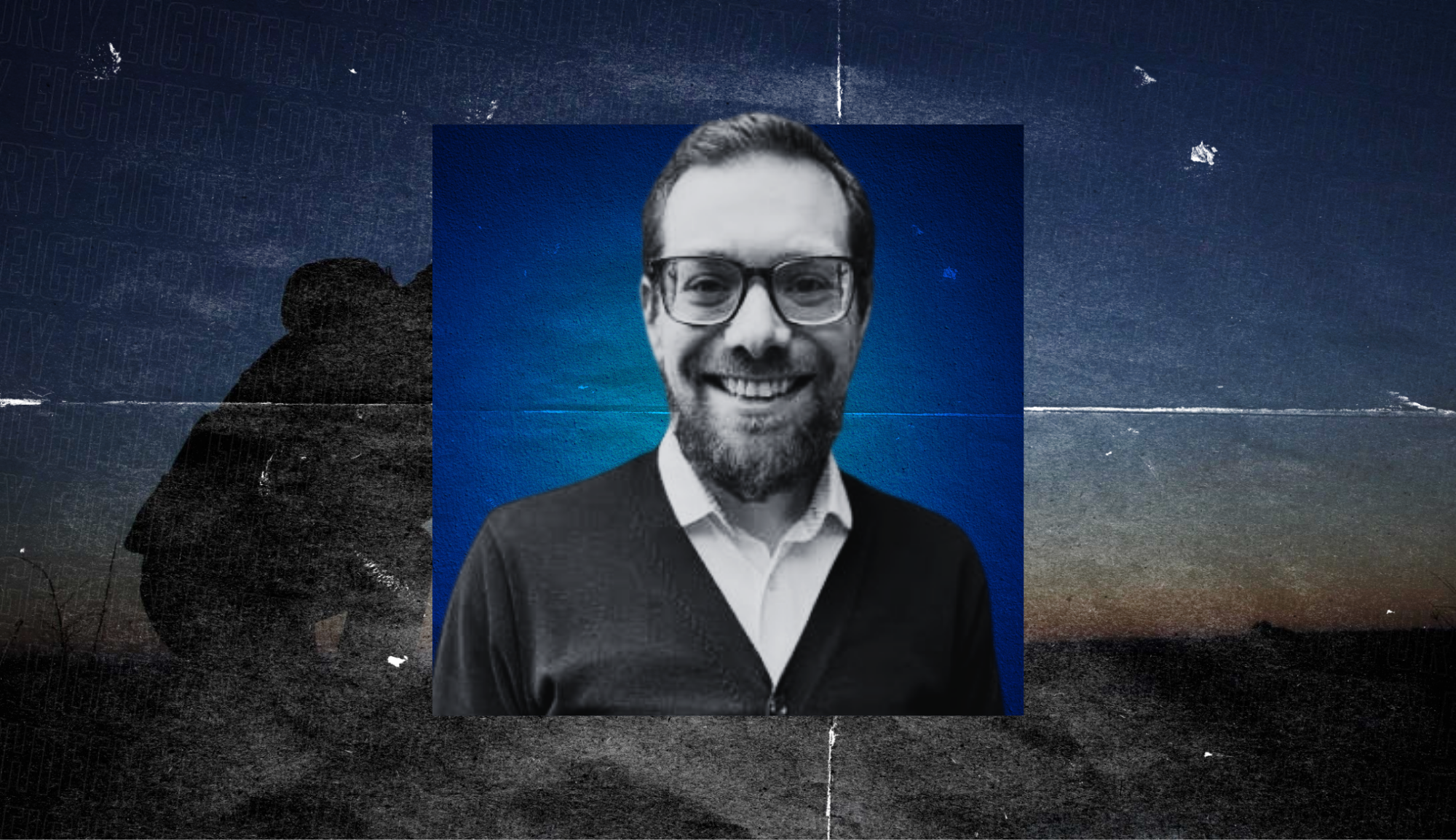
It is a reflection on what we call the conceptzia, the conception, the status quo, what the year in Israel has been and potentially some ideas to reimagine it. And that is why I am so excited to introduce my conversation with Rabbi Michael Olshin, who is the educational director of Yeshivat Torah Shraga in Jerusalem, has been teaching in programs overseas in gap year programs for over twenty-five years. We’ve known each other for a little bit of time and I just find he oozes sincerity and sweetness. And especially right now in this moment, honestly, if you want to know what I’m looking for more than anything else in the world, a little bit of sincerity in this world.
This world’s gotten really cynical and Michael Olshin is really a mensch and a visionary and a leader, but more than anything, somebody whose sincerity oozes off of him. It is my privilege and pleasure to introduce our conversation with Rabbi Michael Olshin. For many years, the year in Israel, its primary purpose was to ensure after leaving high school, before you rejoin the workforce or wherever you’re going, take two years in Israel to really shore up your Jewish knowledge, your Jewish commitment and to really become from a pristine Jew, so when you return back to America, you kind of have all the fuel in the tank. And my question is, post October seventh, has the goal of Israel yeshivas changed, should it change, and what are kind of the trends you are seeing in this massive pipeline? It’s almost de rigueur, for sure in the Orthodox community, you have upwards of ninety-plus percent kids spending gap years in Israel.
In the non-Orthodox world, many people spend a gap year in Israel. And my question that I wanted to begin with is, do you think the focus or the purpose of this major pipeline has changed, and should it change post October seventh?
Michael Olshin: I believe, we believe in the yeshiva, that absolutely it has to change. After October seventh, we’re looking at things differently. We spoke a few weeks ago, we spoke about the idea of konseptziya.
We all lived under a certain konseptziya. In Israel, that’s a popular term.
David Bashevkin: Which means literally “the conception”.
Michael Olshin: Yeah, the conception that existed before October 7, which led to some of the disaster that was October 7, the belief that we can achieve a certain level of peace with our neighbor, security and safety,
David Bashevkin: and there was this konseptziya if we play nicely with, you know, Gaza and this, everything will be…
That obviously crashed, but we’re not talking about that konseptziya.
Michael Olshin: Right. But everyone uses this term konseptziya also in terms of our understanding of this issue, in terms of our kids, our students who are here from the United States, who are coming to Israel, and we lived under a certain konseptziya.
David Bashevkin: Describe the konseptziya that was.
Michael Olshin: Yes. And that still is for some. As you described, we want to get our kids to Israel, we want them to strengthen their connection to yiddishkeit, to HaKadosh Baruch Hu, to their acting in the ways of the tradition of Torah mitzvot.
David Bashevkin: Halakhic practice usually was dialed up the year in Israel, sure.
Michael Olshin: Right, absolutely.
David Bashevkin: That’s the konseptziya.
Michael Olshin: And then you come back to America, for the most part, there are some guys who stay in Israel, but you come back and you go wherever you go to, whether it’s Yeshiva University, or sometimes to a place like Ner Yisrael, or other universities and other colleges. The main thing is to be frum, is to be connected, which obviously all that is true still, but we were less discerning about in which path they continued, whether they stayed in the Modern Orthodox world or they moved more to the right and entered into the more yeshiva world.
David Bashevkin: And it became very common, I think you’re underselling it a little bit, especially for people who grew up in the nineties. We’ve spoken about there’s this famous Blue Fringe song called “Flipping Out” which we actually had them on just to reflect on that. But there was this sense that you went to the year in Israel and you really dialed it up very seriously, and most often when people are having that type of growth, they come back to America and are looking for communities, number one, different than their own, and ones that from the outside seem to provide a much more intense and serious experience. So you had people who were growing up in the Five Towns, or in Boca, or wherever it is, and then they would move and find their ways to more yeshivish communities or start transforming the communities they grew up in, and we’ve seen that in our lifetime become significantly more yeshiva-oriented.
Which has benefited our community beautifully.
Michael Olshin: For sure, for sure. There used to be a yeshiva called Ner Yaakov, Ner Jake.
Sure. And I remember when they used to come and give a pitch, like you know, all the yeshivas would go together and there would be some kind of Shabbaton, often in Cleveland. And I remember the rabbi from Ner Jake, his pitch was, “You know, come to Ner Jake so your kid won’t have to.”
David Bashevkin: Come to Ner Jake so your kids don’t have to. It wasn’t the only yeshiva that made pitches like that.
Michael Olshin: No, no. So they made that pitch, but the truth is that in a sense, a lot of yeshivas were saying the same thing. That mentality. Yeah, like, “You come to us, you know, you’ll go to Modern Orthodox High School X, you’ll come to us, and then your kids will be in a different place.
And again, I have to say, the Torah Vodaath wasn’t necessarily the case, but we certainly have guys who change their trajectory. There are yeshivas that more, some yeshivas less, as we all know.
David Bashevkin: Meaning you’re alluding to the fact there were some yeshivas that were kind of… they developed their reputation based on a place of, like, “the guys flip out here.” They’re going to get much more serious and intense.
I mean, we use these words unfairly because what’s serious, what’s intense, but colloquially. And that was the konseptziya. I grew up with that, and the longer you stayed in Israel was kind of correlated to the intensity that you would then bring back. And if you stayed in Israel, at least everyone who I knew stayed in Israel would then join the haredi community.
That was extraordinarily common, to the point where a large degree of the people teaching in the American-Israel programs are Modern Orthodox products of the yeshiva system who are now within the haredi community.
Michael Olshin: Correct. That was more often the case, especially if you stayed in Israel, you shifted to the right, to the yeshiva community.
David Bashevkin: Why didn’t you do that?
Michael Olshin: Why didn’t I do that?
I didn’t buy into it. I believe that the Religious Zionist philosophy is the ideal philosophy of which we should be living our lives. I did have thoughts about Educating my kids in places that were more to the right in terms of like the yeshivish, and there’s certain comforts in that, obviously, but I felt, and my wife and I should say, we felt that we should be consistent in our home to where we send our kids to school.
David Bashevkin: What were the comforts that you had to give up?
Michael Olshin: Comforts in the sense of it’s safer in certain sense, less exposure to the outside world, and maybe a better chance of your kid becoming a talmid chacham, kids more engaged in learning in those communities, where it’s more the rule than the exception in the Religious Zionist communities, but we felt that this is lechatchila for us and should be lechatchila for our kids, meaning ideal.
Yeah, ideal. And Baruch Hashem, we thank God every day that our kids, we have seven, Baruch Hashem, kids, bli ayin hara, different, but they’re all all in this path, they’re all committed, shomer Shabbos.
David Bashevkin: Beautiful. Come back to the konseptzia that we’re talking about.
So you were in the middle of describing the konseptzia as we like to call it that existed kind of prior that I think we all grew up in. And then I don’t know if it was literally right after October 7th, I’m sure they were bubbling up before, but I’ve had it quite acutely of like the konseptzia in the way that we think about religious growth, the trajectory that we’ve kind of had in place the last, let’s call it 30-40 years is basically how old this system is. Right. You know, the majority of the kids are all going to yeshiva high schools and yeshiva day schools and then they go to one year to two years in Israel and then you come back.
That’s about a 30 to 40-year-old system. When did it first you started to feel the konseptzia needs to evolve, we need something beyond this for this moment?
Michael Olshin: It’s always been in the conversation, but it’s sort of a backdrop. What happened on October 7th and subsequent to October 7th, where initially when the war broke out, it was this sense that we’re all in this together, everyone’s going to sort of do their part in this war. But what transpired after that initial sense of achdus was unfortunately that large parts of the Haredi world said, “This is not, we’re not part of this.
We’re not engaged in this war. This is not something that we are interested in participating in.” And even more so where the sense of like, “We’ll do other things. We’ll help out in the oref.” The oref is the home front. We’ll pick up the slack.
You had hundreds of thousands of people dropping what they’re doing and going. Okay, so they need help. I remember in yeshiva, we had our guys helping out in the bakeries, packing bread, cleaning in hospitals, setting up beds in hotels for those who were being taken out of the surrounding Gaza communities. So we had our yeshiva guys doing these things, but it wasn’t being done in the Haredi yeshivos.
Long story short is that the sense of this trajectory of our students coming from Religious Zionist homes, Religious Zionist backgrounds, going to yeshiva high schools and then coming to Israel and then sort of moving over to that other world and that other world is saying, “We’re not part of this.” Like this came out as a shock to some, and even those who sort of entered into that world were even surprised that we’re not doing more and that the basic stand of these mainstream roshei yeshiva in that world saying, “We have to just double down in our learning and nobody should be thinking about going to the army.” So the responsibility comes back to us.
David Bashevkin: Can we still be value neutral over which community our product, so to speak, of 12 years of elementary school and high school, and these are predominantly Religious Zionist though they’re in America, sending their kids to Israel? Should we be value neutral over which community they join afterwards? And I think for many years we said, “Yes, we can be value neutral because there’s so much to gain from every community.” But now the tradeoff has become much more acute, much more serious. The consequences of the choice are much more visible.
Michael Olshin: Absolutely.
We have to address it. We have to do a better job explaining the ideals of the Religious Zionist philosophy.
The average American, even the average American Haredi, is Zionist.
He supports the state of Israel, he loves the State of Israel, he felt it in his heart at the beginning of the war. And then as things sort of unfolded and the Haredi world spoke and said, “Not so fast, like we’re not really what you think we are.” The Israeli Haredi world doesn’t really match up with the American Haredi world.
David Bashevkin: I don’t even believe in American Haredi. It’s the American yeshiva world and there’s an Israeli Haredi world.
Michael Olshin: Correct. That’s correct. That’s a better terminology. So we have to actually pick a side here.
We owe it to our community, we owe it to the State of Israel. There’s an existential threat here. The more kids that we lose to that world, that’s a world that’s not planning on joining the army. The workforce issue is another issue.
But I think most people were coming to terms with, “Okay, let them enter into the workforce, we’ll exempt them from the army.” And by the way, which was the political consensus as well. You know, now it’s a hot topic, but before the war, the left, the right were very much giving up on the Haredi world entering into the army. But now we realize we can’t afford it.
David Bashevkin: I am American, I live in a Modern Orthodox community.
I have Chareidi sisters and nephews. I like the fact that my relationship to Israel is at a distance because I’m afraid of these very tough choices. And at the same time, even more so, and this is what makes it so hard to even talk about here on 1840 or wherever it is, the hardest thing for me is that whether you are the most devout religious Zionist, you’re buying trees in Israel and motorcycles for Magen David Adom, you’re doing everything, I still don’t know if my contribution, which in my heart and my tefillos and everything, even rivals that of an Israeli Chareidi. Meaning, at the end of the day, they are Israeli, I know this from my nephew, and they’re involved especially in the younger generation and they’re connected.
The question I have is, now that this split became more acute, what is the vision for the American Modern Orthodox community? So easy for Modern Orthodox American Jews to criticize Chareidim. It’s like, ugh, finally, somebody who we can just serve as a… and I think it’s terrible. Why do I think it’s terrible? Because it’s giving you a terrible out to feel good about yourself and your commitment to Israel when you’re doing less than them.
You’re not even there. And what I’m trying to figure out is, if we said that the goal of the year in Israel is to develop a foundation in Torah learning? Absolutely. Develop stronger commitment to halacha? Absolutely.
But a big chunk of it is to onboard or present a better picture of contributing to the State of Israel, what that means, what it means to be a citizen of the state of Israel. Who do you think is responsible? Why do you think it’s not more of a push to reimagine this? Because it hasn’t been loudly spoken about. Is it because the kids don’t want it, the parents don’t want it, the schools don’t want, like nobody wants it? Meaning you and I would love to talk about it, or it’s just the konseptzia, like the way things have been got us this far and we don’t like rocking the boat, just keep things afloat. How would you diagnose why change in this area of the function of the year in Israel, the function of the gap year? For, do we have any stats of how many kids are going per year?
Michael Olshin: The boys are about 1,300 boys that are in the YU system orbit, yeshivos.
I think girls, I think, a little more actually.
David Bashevkin: But we’re dealing with, yeah, 3,000 together. And over a five-year period, easily more than 10,000 people.
Right. I just find it fascinating. What do you attribute the staying power of the konseptzia?
Michael Olshin: I do think there has been subtle change already, but for the most part, you’re correct, it’s the same old, same old for the most part. Why is it? I think it’s a combination of a lot of things you mentioned.
I think parents for the most part want their kids to come back and want them to be just like they were before.
David Bashevkin: Call it another ride on the merry-go-round. Give it one more, give it one more lap.
Michael Olshin: There’s still parents that are holding out just one year in Israel and not a second year even, even that so, so there’s certainly that element.
I think most parents have come to terms with Shana Bet.
David Bashevkin: The second year of gap year.
Michael Olshin: The second year. It seems like the majority of kids will stay for a second year. Like you look at the yeshivos that, whether it’s the Hesder yeshivos like Gush and Kerem B’Yavneh and Sha’alvim and Hakotel, or the non-Hesder yeshivos, like Mevaseret and Reishit and Aish and Netiv, most of the kids are staying Shana Bet.
Most parents come to terms with it. Again, there’s still some holdouts. But they want them to go, even go back Shana Bet and do your thing, and then come back. And then, parents still want their kids to go to Harvard and Columbia and those places even despite what’s happened since October 7.
And certainly they want to go to YU and Touro, etc. It’s certainly a combination of that and let’s not rock the boat too much. And again, the yeshivos, it’s a business also. They don’t want to rock the boat too much. If you get a reputation that you’re keeping the kids in Israel, that could affect your numbers.
David Bashevkin: I look at there are four demographics that go into the konseptzia in this area. There are the parents, there’s the high schools, there’s the kids, and then there’s the actual programs in Israel. Everyone plays a role in kind of developing the konseptzia. This is how things have been done.
Do you have any sense in what are the kids looking for?
Michael Olshin: The more thoughtful kids want more. They do I think want this to develop more and to change. And again, with the rise in antisemitism and what’s going on in college campuses and the costs of it, I think also parents are coming around, more parents are coming around to the idea of change of, okay, maybe I’m not ready to go to Israel but if my kid goes. And this is what we tell the parents, like don’t be afraid if your kid comes and says to you “I want to stay in Israel”, whether it’s “I want to do college in Israel”, you’re pocketing $150,000, you go to college in Israel, you’re saving tons and tons of money.
And what we tell our students is your default position as a… Torah believing Jew should be I’m coming to live in Israel. There are reasons, very good reasons why you may not be able to at some point, but the default position you should have in your mind: I’m coming to Israel. We try to impart on our parent body also, like let your kids be themselves.
Don’t guilt them into coming back and living in America. Let them come and you’ll follow eventually. You’ll follow. That’s how many of the Nefesh B’Nefesh flights are filled with parents whose kids went before them.
So there is definitely a rise in interest of our students who want to stay in Israel, want to serve in the army, and this leads to where Torah Shraga has sort of shifted.
David Bashevkin: This is incredible. We have so many Halakhic discussions over who needs to go out to war, like who needs to serve in a battle defending the Jewish people. We love this class because it’s like, see, the Haredim, they they do have to go out.
But no one ever talks about this, like what’s the responsibility of American Jewry? We have Jews under attack in Israel. Even from a Halakhic perspective, like I’m not sure the fact that we’re divided by an ocean anymore is sufficient reason. You saw it after October 7. Israelis got on planes and returned.
I’m defending my brothers and sisters. Americans sent packages and we sent money. I had one student who came to me and said, I plan on going to medical school in America. Should I just ditch the plans and become a medic in Israel?
I was like, that’s very noble. I did tell him to pump the brakes slightly. Your parents are going to need a medic if you tell them you’re dropping out of medical school to serve, but you’ll eventually serve. You’ll be a doctor in Israel, God willing.
But like what is our responsibility? Torah Shraga did something that I fell out of my chair. I don’t know if you guys are the first, but you have essentially a Hesder program. Hesder literally means the arrangement.
Okay, that’s where it came from. And it was yeshivot that were set up that would allow people to learn and serve in the army, which predominantly were only Israelis. Americans used to join those yeshivot, but wouldn’t serve. So they’d be in the same Beit Midrash, but it led to this, I think, really—I don’t want to say terrible, but I don’t want to say narcissistic either, but those are the words that are coming up—where you have Americans spending their year in Israel in essentially—it’s their most American experience of their life, because they’re not participating.
They’re right there. I was in Shalvim, which is a Hesder Yeshiva. And, you know, we did basic training as a night activity. You’re not really connected.
I can only imagine what Israelis think of us. A lot of the yeshivot have had drama and politics. The Israelis are like, what’s going on here? Whatever the stereotype—spoiled Americans coming—and yeshivot have all had to contend with this. What does it look like to have an American Hesder program?
Michael Olshin: So first of all, we weren’t the first.
David Bashevkin: Who was the first?
Michael Olshin: Hesder Yeshiva that you described, like Shalvim.The first Hesder Yeshiva was Kerem B’Yavne, correct. Shalvim, Gush, HaKotel, they have American programs in the Yeshiva where some of them will also choose to join the Hesder in army. Rav Boaz Mori in Lev HaTorah really was the first one, which is a yeshiva catered specifically to the Chutz La’aretz American diaspora student and to have that turn into a Hesder Yeshiva.
He was the first. And the program’s called Lev L’Chayal. It’s very successful, fifty plus guys every year that are drafting. And a lot of yeshivot who don’t have Hesder programs would send to Lev HaTorah
David Bashevkin: for kids who are interested in serving and learning.
Michael Olshin: After a year or two of learning, they would go there to join Lev L’Chayal. After that, TVA, Torah V’Avodah, Rabbi Yehuda Seif is the Rosh Yeshiva there together with Rabbi Eisenstock. They developed also an army program in their Yeshiva, which we’ve had students who wanted to stay in the army. Before these programs existed, they would just go draft themselves in either a Haredi unit called Netzach Yehuda that existed then, or they would just draft on their own, like sort of really be a lone soldier without the support.
We would give them some support, but they went in not with—
David Bashevkin: which is not simple. Like, I remember somebody in my year in Shalvim did that, and it was very, very challenging, and I’m being generous.
Michael Olshin: Yeah. We’ve had many students that drafted that way.
They sort of went in on their own or just a few guys together, weren’t part of a Yeshiva, Beinishim as they’re called in colloquial Hebrew. Beinish is the acronym of Ben Yeshiva, Bnei Yeshiva.
They weren’t part of a Hesder Yeshiva. They would just draft into, let’s say, Tzanchanim, into paratroopers on their own. But Rav Boaz and Lev HaTorah really changed the trajectory of these kids since they opened. So our students who want to stay in the army, they basically go to either Lev HaTorah or to TVA.
After October 7, we had an upsurge in guys who want to serve and that has continued. So Baruch Hashem, we are also embarking on this journey to begin as a Hesder Yeshiva. We’ve been recognized by—there’s an organization called the Igud Yeshivot Hesder. We’ve been recognized to be counted as a Hesder Yeshiva.
We’re looking at about 17 guys that will be drafting next year in March. So they stay in yeshiva. In March of their second year, they draft. Most of them will be doing what’s called machleket chutz l’aretz, Machal, and they do 18 months in the army and then they are basically finished and they can if they want to go back to America they go in America, if they want to stay here they can stay here, they can go study university, they can work, they can make aliyah afterwards.
They don’t have to make aliyah per se. And then there’s optional also to do a full hesder. Full hesder is a five-year program, two years of learning, a year and a half in the army and then another two years of learning. We’re very excited that we’re going to have our first machzor, the first class of students that are going to be drafting through Torat Shraga.
David Bashevkin: Who is the kid who wants this? Are these usually the strongest kids, the weakest kids, the middle kids? Do they cluster demographically? Are they from the East Coast, West Coast, or it’s just all across the board?
Michael Olshin: All across, all across. I can tell you just our students that are drafting right now in March, either have just drafted, there’s a student from the West Coast from LA, there are three guys from Boston from Maimonides in Boston, guys who went to Moshava, guys who went to Morasha, guys from North Shore, Sephardi students, Ashkenazi students, kids from coming more yeshivish high schools even. There’s a kid from TA in Baltimore who’s drafting.
It’s a really a range of guys. They’re very committed, very idealistic, and they felt that I’m no different. Just because I live in America I’m no different, which is what our rabbeyim are telling us as well. Ask Rav Schachter, Rav Schachter our rebbe tells that American students, American eighteen-year-olds are no different than Israeli eighteen-year-olds in terms of their obligation.
Rabbi Twersky I believe says the same thing. So they feel that we have to do our part as well. And that’s where I think there’s a shift of now we have to change the conceptia. We have to feel that sense of responsibility.
American Jewry needs to pick it up. I wanted to pick up on this point mentioned earlier. We’re not here to criticize the haredi world per se. They have their shita, they have their rabbanim and okay, that works for them.
But we’re talking about our students who grew up lechatchila, they grew up in a religious Zionist educational system. Parents lived and breathed Eretz Yisrael. These are our students.
David Bashevkin: It’s a very generous description of American Jewry to say that we lived and breathed Eretz Yisrael.
Yeah. We have always been following and rooting for Israel.
Michael Olshin: Yes. Absolutely.
And you’ll get that lump in your throat when you talk about an Israeli soldier and about those kids who were in the Far East and stopped their year off and came back and fought and picked up arms and continued to do it today. And two of my sons are currently in Lebanon. Even though I’m here in America, my heart is in Israel. I’m here in America currently for a short trip.
It’s very hard to leave that.
David Bashevkin: I imagine now is the hardest time to have a trip, not just because you’re worried about the airport or logistics, but we were saying this right when you sat down, I’m just going to be blunt, you don’t feel any of this in America. That’s why I corrected you. The sense that we are in the midst of a war, you see it in the headlines and you know it’s happening and ceasefire and this and you know people are going to shelters, but the existential urgency of what is next for the Jewish people, just seeing the forest from the trees of just do you know where we are in Jewish history right now? Just like recall just the basic facts like how old is the American Jewish community? How old is this kontzeptzia? I mean when you grow up now in America I don’t know you assume it was always like this.
Kids growing up now don’t really have access to what it felt like beforehand. They didn’t know people who grew up before the Holocaust, let alone the founding of the State of Israel. But one thing that I wanted to ask you about because I think this is so crucial to develop these pipelines and build these pipelines but I am concerned and my question would be that you’ve almost started with the most elite pipeline and that is American students who are looking to serve and as you mentioned let’s call it roughly 3000 people a year, 2500 people a year, you could quibble with the number, over a five-year period we’re talking about 10,000 different people who have spent probably a year or two in Israel. And it would be amazing if more people got involved serving in that way, but I wonder whether that step is so high and what else could be done in the yeshiva and seminary experience.
Are there other ways that we could reimagine the programming? Even the schedule, it surprises me that we are still for the masses, when you look at your contemporary product of the American Jewish high school system which I think has been marvelous. I mean they feel a sense of belonging and identity. The Yiddishkeit is coursing through their veins. It’s cool to be frum now.
It’s cool to be committed. It’s cool to be involved. But what I wonder is aside from the question of service, I wonder if the very schedule doesn’t leave enough to actually integrate or even get a connection to the land because of the language barriers, because of You’re really just interacting with the other Americans who are there with you and doing fun American things like going to Cafe Rimon or wherever. What institutionally could be done to both give the Americans a more realistic experience of Israel, something organic, but even more so help these thousands of kids contribute to the development of the State of Israel? What other ways and ideas do you think can or should be considered?
Michael Olshin: First of all, we have changed some of our programming since October 7 to really to address these things.
One example is we did a Shabbaton together with Yeshivat Yeruham. Yeshivat Yeruham is one of the leading Hesder Yeshivot in Israel. It’s fully Israeli. It’s in Yeruham.
Americans aren’t going to Yeruham. There’s no pizza stores in Yeruham. It’s far.
I remember when actually when I was in Shalavim, I don’t think they do it anymore, they had a Shabbat Bogrim, which what that meant is that they sent you to alumni of the Yeshiva and they sent two boys to different families. Each family had two American boys. So I was sent with a friend of mine, actually Renon Mann, he lives here in Teaneck. Two of us were sent to Yeruham.
And Rav Yarmer, Rav Yarmer was the madrich then, he called us over and he says, you’re going to Yeruham. You have to leave very early because it’s going to take you five hours to get there from Shalavim. You have to take a bus to Yerushalayim, from Yerushalayim to Beer Sheva two hours and a two hour bus from Beer Sheva to Yeruham. It was literally the end of the world.
It was it was horrible. It was a terrible Shabbat for me, honestly. So I was a little nervous about going back to Yeruham, but we went. Last year, we had this amazing Shabbat.
It was an optional Shabbat, but we had thirty-five guys who went into a completely Israeli environment. We were welcomed very warmly. They have amazing students there, amazing Roshei Yeshiva. Rav Wolfson is a very, very impressive individual.
David Bashevkin: Were they able to find common grounding of experience? Because an 18-year-old in Israel is already like an adult, and an American 18-year-old is like it’s basically like a kid who, you know, like can drive.
Michael Olshin: They did a great job. They actually got a lot of their students who have, you know, they come from Olim families, they come from families that made Aliyah, they’re English speaking, and they paired them up with our students. So they had chavrusas with guys who had some English background.
They broke up into discussion groups. It was such a beautiful Shabbat. Really it was very, very special. And our guys really fell in love with that experience.
And I can tell you a lot of those guys are the guys that now want to stay. Want to stay in Israel, want to join the army. Yeruham is one of the Yeshivas that got hit very hard in this war. They lost ten students.
So that certainly was something that was discussed and it made a huge impact. Part of the experience that we have, and I’m sure almost every Yeshiva does this, right? Especially this time of year, right? We’re between Yom HaShoah and Yom Ha’atzmaut and Yom HaZikaron going to Har Herzl, which yeshivas always did. But now after October 7th when the graves are fresh and the stories are real and we heard these stories and now going to visit the graves and hearing it of guys there basically their same age, that’s very impactful. And I want to add something.
I do a lot of guiding in Har Herzl. Not only Yeshiva but summer programs. And one of the summer programs that so impressed me was actually the Sulam program in Camp Morasha, which Rabbi Feld, Rabbi Yisrael Feld, heads the program. And we go every year to Har Herzl.
And since October 7th, Yisrael has basically had every single camper, after going to Har Herzl, make a commitment that if there’s a need, if there’s going to be a call that we need help and you’re living in America, that you’re going to come and help the State of Israel. And he makes every single kid make that commitment.
David Bashevkin: That call, that commitment, to me, needs to be broadcast earlier, louder, more frequently. It’s so easy, the complacency, the comfort.
You can miss out on what I think is the most remarkable, you know, transitional generation right now. It’s just the rebuilding of the it’s not even the rebuilding. Israel’s a baby. Israel’s a baby of a country.
And like, this is just an incredible moment. One of the biggest issues, and I’m just curious what your thought is on this, is the language barrier. Even the kids who go to schools that, you know, teach in Hebrew, have a lot of Hebrew, call it the cheder ochel and not the lunchroom. The kids are like Hebrew phobic.
They’re like afraid. Now, I happen to read type fluently. I can type in Hebrew fluently. I can read in Hebrew fluently.
I don’t speak a lick. I think that happens to be unique because I’m so verbal and so attached to my own. So when I’m in Israel, I say, you speak Hebrew, I’ll understand you and just we’ll do it that way. But I’m curious what your thoughts are in just your seeing from the products, even a mainstream good religious Zionist school, what’s going on with Hebrew language?
Michael Olshin: We dropped the ball on Hebrew.
There’s no question.
David Bashevkin: And by we is like?
Michael Olshin: Everybody, from top to bottom. When I was in Yeshiva almost forty years ago, there were guys that came with a decent Hebrew. I went to Shalavim as well.
Sure. All the shiurim were in Hebrew. There wasn’t an English option of shiur. You had to sort of You didn’t understand maybe for the first few weeks.
I had three Israeli roommates, like you were thrown in.
David Bashevkin: Correct, that’s when they were really trying to do the integration thing.
Michael Olshin: Right, and now they’ve, not saying Sha’alvim, all yeshivot have moved away.
David Bashevkin: They’ve all moved away from that model. You’re not having Israeli roommates in most of the places, nearly all of them.
Even the shiurim that are in Hebrew, I’m using air quotes. If they’re being spoken by an American, there’s an ample amount of English.
Michael Olshin: Right, we’re paying a price for it. The cultural challenges, like you mentioned, a lot of it is language.
I don’t envy American educators because I know how difficult it is and it’s tedious. It’s difficult to teach Hebrew, but we have to do it. We have to start early.
David Bashevkin: Do the kids want it at this point in their life or they’re just like, I missed the boat?
Michael Olshin: We have an ulpan in our yeshivah.
David Bashevkin: Is it popular, honestly?
Michael Olshin: It’s not popular, but there are guys who, the guys who want to draft, they’re all in the ulpan and they want to. And there are guys who are also not drafting and they also go to the ulpan. We have a great teacher, he’s one of our students who comes from an Israeli home of yordim and he’s, he’s great, Rav Shoval, he’s fantastic, he’s fun. So guys enjoy the class.
But it takes work. It’s not just a class, you need to do more than that. You really have to commit yourself to it. But we need to do a better job here on this side of the ocean before they come to Israel.
It will bear a lot of fruit. You know, the ability to come and be able to learn, to open any sefer, to have a sense of what’s going on.
David Bashevkin: I think even getting rid of the phobia. It’s like, oh, it’s in Hebrew, you can’t, like it’s, it’s a stressor for people.
It’s a trigger. And I think just more immersion. I think what I did is my father made me learn a Kahati Mishnayot with him. That’s why I have this baseball over here.
This is an award for finishing Kahati with Masechet Shabbat. But with all the Kahatis. Kahati was this very beautiful, crisp, Modern Hebrew explanation of the Mishnah. That’s a great way to basically learn rabbinic and Modern Hebrew at the same, you know, give you like a nice, if you don’t want to read the newspaper every day and you also want to learn, I found that really, really helpful.
I did that when I was in about like seventh or eighth grade. I have one more subject I want to talk to you about and in some ways this might be the most sensitive, but you alluded to it already. Because of the, you know, this kontzeptzia that we’ve been talking about, many of the most kind of committed and popular teachers in the yeshivot and seminaries do not live within the Religious Zionist community. And these are your colleagues and contemporaries and I’m sure there’s some in every yeshivah.
There’s a mix of both. How do you navigate those relationships? Is that spoken or unspoken? If I had made aliyah, which I did not after Sha’alvim, I don’t think there’s a question, I would have moved to Ramat Eshkol with my sister, with my parents and, you know, go to that good bagel place with the good, you know, like it’s a good, you know, you see the, yeah, Paran, you see everybody pushing the strollers with their good coffee slushy drink and there’s that corner bagel store. Is that also Sammy’s? I forgot what it’s called, but it’s a, it’s a really good bagel store and I recommend it strongly on Paran. And I could imagine that I would be the same and then like fast forward 20 years and that very subtle difference which was like literally nothing has both a lot of not just political baggage but personal baggage.
You have children who are in Lebanon as we speak and you have colleagues who that’s not the case. And very often those colleagues can be the ones whose kids have the easiest time then being the next generation of educators. Is it fair to say that your decision to live within kind of the Religious Zionist community as an American and not kind of the other kontzeptzia, kind of move into Ramat Eshkol or a more yeshivah-oriented community, what you did was not as common?
Michael Olshin: It’s not as common for those who are in chinuch.
David Bashevkin: For those who went into education, most of them were within the chareidi world.
I wanted to kind of emphasize that the population that the yeshivot were drawing upon were mostly American graduates of the American day school system, spent two to three years in Israel, you know, spent time in either a chareidi yeshivah or maybe some time in YU and then came back to be educators but kind of skipped over the service, the living there, then sending their kids there. And now that’s become more uncomfortable. So how do you make sure that these very real ideological divides don’t actually like tear us apart at the seams?
Michael Olshin: So first of all, I want to say that in Torat Shraga we have about 35 rabbeyim on staff and baruch Hashem we get along beautifully, everyone respects each other, it’s a pleasant place to work.
We’re all working towards a common goal to raise bnei Torah committed to Hakadosh Baruch Hu and to a life, a meaningful life of Torah and mitzvot, hopefully in Eretz Yisrael, but also proud of those who return to wherever they’re from, United States, Canada, etc. I would also add that a majority of our staff are squarely in the Religious Zionist world, raise their kids in that world, have either themselves served in Israeli army or their kids are serving in Israeli army or their kids will be serving in Israeli army. The young, I’m talking about the younger rabbanim whose kids are yet to reach the age of army age. And the other rabbeim in yeshiva who have not served in the army and their kids are not in that system, are in the charedi system, so every single one of them without exception grew up in homes that were Religious Zionist homes. They went to schools that were in the YU ecosystem.
And then they came to Eretz Yisrael, they went to different yeshivot, whether hesder yeshivot or other yeshivot, yeshivot like Torat Shraga and the like. And they were inspired and they grew and they connected and they may have gone back to the United States and then they came back to Eretz Yisrael, they wanted to continue learning. And they may have chosen to go to yeshivot like the Mir yeshiva where they felt just culturally more comfortable than going as opposed to like the Har Hamors and the Merkaz HaRavs, etcetera. Going to a beis medrash of a thousand guys has its own allure.
And then they got married and then they have to decide where they want, how they want to raise their kids. So many of them chose to raise their kids in that world much more for strategic reasons than for philosophical reasons. And this is an important distinction. And I’ll give you a case in point.
My father passed away about twenty-six years ago, and a few years later my mother remarried. She married a very, very wonderful man, his name was Jerry Feller. He’s since passed away a number of years ago, and he was very good to my mother, he was a great role model to my family as well. And he shared with me a story that when he was a kid, he grew up in Canarsie and the rabbi of his shul’s name was Rabbi Galinsky.
My stepfather went to a Jewish day school in Canarsie and I think he was only one of three shomer Shabbos kids in the class. And he was probably going to continue with most of his friends to go to public high school. So Rabbi Galinsky took a day off, he took Jerry to visit Yeshiva Brighton just to expose him to yeshiva high school. And the ninth grade rebbe at the time, his name was Rabbi Yaakov Perlow, who was later to become the Novominsker Rebbe, he met my stepfather.
What he recalls is that he didn’t talk Torah with him, he didn’t share divrei Torah. He spoke about the Yankees and the Brooklyn Dodgers and he knew the players’ names, he knew some of the scores. And Jerry felt very comfortable that this man speaks my language. And that was a pivotal moment in which he ended up deciding to go to yeshiva high school as opposed to public school.
Now, was that the philosophy of Novominsker to champion baseball and sports? No. He chose for strategic reasons to lure in this young man and get him to go to yeshiva high school and to understand that the rabbeim here understand the culture, understand the language, can speak your language and you shouldn’t be afraid, even though that’s when the rabbeim would talk to each other, they’re not talking about the Yankees and the Dodgers. And so for strategic reasons we’ll make decisions in life that may not align exactly with our philosophy. And that’s what happened with many of these rabbeim.
They philosophically may find themselves much closer to Religious Zionist philosophy on a personal level, but for strategic reasons they put their kids in the charedi system. They felt that it’s safer, that they stay al haderech, they felt that it’s maybe a better chance that they’ll become scholars, talmidei chachamim. But they’re much more at home philosophically in the world that they were raised. And so as regards to our students go, they’re fully supportive.
They believe what they’re doing by choosing to go to the army is a great ideal. And all of them have told me that if their own children who are in the charedi system would decide that they wanted to join the Israeli army, like for example in this new chativa charedit called Chashmonaim, they would be fully supportive of it. Certainly they’re supportive of our students who choose to join the hesder program and want to stay in Israel and to serve in the Israeli army. I would also add that many of them have struggled since October 7 with some of the leadership in the charedi world and their lack of response, their sharing with their talmidim and their community that they should not serve even if they’re not learning they shouldn’t go to the army, or not to really get involved with all the different chesed things that were being done for the soldiers, like the barbecues and the tzedakah that was given, that they were disappointed.
And some of them even shared with me, would they have known twenty, twenty-five years ago what they know now, after October 7 especially, they may have chosen differently. They would have raised their kids differently so that they would be in the world that’s we’re calling Religious Zionist. I’m often asked with having had five kids in and out of Gaza and Lebanon, I still have two kids in as I mentioned in Lebanon and one son-in-law in Rafiah in Gaza, how do you sleep at night? So I like to answer borrowing from Haggai Lober who’s a well-known personality here in Israel who unfortunately lost his son in the early part of the war in Gaza, his son Yehonatan Lober, Hashem yikom damo, that when he was asked this question, how do you sleep at night, and he had six kids. between sons and sons-in-law in Gaza at the time, he said if my sons wouldn’t be there, then I would really have trouble sleeping at night.
I wouldn’t be able to live with myself if my kids weren’t part of this. And so that’s the way I felt. When my wife and I decided how we’re going to raise our kids, you know, we felt we have to be true to the philosophy in which we subscribe to, which we think is what Hakadosh Baruch Hu wants of us. We felt even strategically that it would be a better thing to do, that the school that you send your kids to and the home philosophically are on the same page, that there would be a consistent message, and Baruch Hashem, Hashem has blessed us with wonderful children who are committed to Torah and mitzvot, to Eretz Yisrael, to serving Am Yisrael in Eretz Yisrael and we couldn’t be prouder.
David Bashevkin: Do you think you and your wife deal with this differently? I wonder that if the tension is somewhat gendered because of the role that yeshiva plays in kind of the underlying issue, which is, you know, the charedi world didn’t want to compromise in their Torah learning. It’s obviously the yeshivas in Israel are very gendered, separate men and women. And it’s a very different experience for men and women in both communities.
Michael Olshin: I’m more forgiving, I think, than my wife is on these matters.
My wife is a doula, she’s a birth coach, she’s a reflexologist. Most of her clients come from the charedi world. We live in Beit Shemesh. It’s often frustrating for her when, you know, she’s describing what her nights are like, and they don’t really understand what she’s describing because she has kids who’ve been, you know, in and out of Gaza and Lebanon, etc.
David Bashevkin: But neither do Americans, that’s the honest truth.
Michael Olshin: Yeah, it’s true.
David Bashevkin: I think they get a bit closer than we do.
Michael Olshin: Maybe. I will say that I do get a lot of people reach out to me who send me texts and WhatsApps and etc. just saying, you know, thinking of you and your boys, and you know, alumni, parents of alumni, I get it regularly.
It’s beautiful, it’s very heartwarming. I will say that one of the things that I think about, especially now in what’s happened now with war around Pesach, right? So there was this exodus in the wrong direction.
David Bashevkin: This highlighted a lot of the kind of the gap year tension. I mean, the sad irony was a lot of people were escaping Israel through Egypt to get back to America.
A parent wants to know that their kid is safe and all this stuff, and I never questioned that bond. And yet, it was hard to watch a little bit.
Michael Olshin: Yeah, absolutely hard to watch. But understandable.
I think we can be melamed zechut, we can, you know, look to give the benefit of the doubt, that because it was Pesach, when anyways most of these kids go back home to their families. So that was the big push. Had it been in the middle of the year or earlier in the year, you would not have seen that kind of exodus. The question really is now that they’re on their way back, or are they on their way back? I flew to the United States as our students were arriving in Israel and I was looking, you know, in Ben Gurion Airport.
You’re going down into and then there’s the groups that are just arriving and you can sort of see them through that glass.
David Bashevkin: You pass by each other. Yeah.
Michael Olshin: And I was trying to notice, like, is there more Religious Zionist students coming in or more charedi students coming in?
David Bashevkin: I mean, one thing that is not really spoken about, but I think it does bear mentioning, is that a lot of the major aliyah numbers for many years ultimately came from the American yeshiva world and not from the Religious Zionist world in America.
I give credit to that. As somebody who didn’t do anything and is a total, you know, zero and is just starting to do teshuva on my relationship with Israel and heal my relationship with the State of Israel. In America, it’s not organic. It still feels like an appendage.
Yom Ha’atzmaut still feels like an appendage to the Jewish calendar, right? Yom Hazikaron is an appendage to the Jewish calendar. I don’t know Americans who take off from work or adjust their work schedule because of Yom Ha’atzmaut. Whether or not they pray in a minyan or don’t pray at all, or they pray in a minyan that is black hat or they pray in a minyan that is saying Hallel with a bracha and doing it all. None of that, like it doesn’t really alter your day, unless your kids’ school is doing a program and then you’re like, oh, maybe we should go to the program and get some pita and falafel.
But the enormity of the establishment of a Jewish state is still lost. The enormity of what this means for the Jewish people, I think is certainly lost on me, and I’ll leave it at that. I’ll speak for myself in that. But I’m curious for you, has Yom Ha’atzmaut changed in the year in Israel? Because when I was in Israel, this is something that bothers me tremendously.
The jokes over, you know, what are you doing Yom Ha’atzmaut? Are you doing with a bracha, without a bracha, Hallel, you know, they’re making it like a silly day of like the hock and not a day of like serious introspection that we the Jewish people control a state in the world. It’s 2026. You quoted Twersky, who recently marshaled a beautiful line from the Ramban in Shoftim.
Michael Olshin: A Torah titzaveh derech ha’aretz.
In other words, the Torah commands that we work within the natural world. Although the real effects are spiritual and Hakadosh Baruch Hu is the one who brings, God is the one who brings victory.
David Bashevkin: The Torah is addressing the natural world. I think that’s the difficulty of living outside of Israel because it’s hard to feel that as much. The Torah of galut is escapist.
I want to get out of Manhattan. I want to feel otherworldly. I want to feel transcendent. I want to get out of this place.
And the Torah of Israel does the opposite. It tethers you, it brings you down.
Michael Olshin: It’s a great way of describing it. And I think this is also part of the tension within the Religious Zionist and non-Zionist world is that the Religious Zionists feel like this is living Torah, like serving in the army is living Torah, and it’s not Torah that just stays in the Beit Midrash or is only transcendent.
It’s lived. It’s Torah that’s lived.
David Bashevkin: It’s lived. It’s societal.
It’s guiding a country. And konseptziot, they serve a purpose but they can be very dangerous. You don’t want to ossify as a community. I mean, I have no doubts about the future of the Jewish people and Knesset Yisrael because I know that at the end of our story, the arc of the Jewish people is long, it bends towards redemption and Geulah.
And everything that you’re doing to, in Israel they call it shiputzim, like the improvements in the pipeline. We have pipelines, but these pipelines need to be improved and need to be enhanced, need to be made stronger so this connection is able to serve the purpose that it rightfully needs for the Jewish people, which is let’s get there. Let’s rebuild Am Yisrael. Let’s let the dry bones stand up and lead us into that finish line.
I can’t thank you enough for joining me today. I always wrap up my interviews with more rapid fire questions. I’m always curious for book recommendations, particularly related to our subject of books that you recommend for people to develop or cultivate their appreciation of the Land of Israel.
Michael Olshin: A lot of great books have come out in the last few years.
One of them’s just been translated to English, but try to read it in the original, which is Im Atem Korim et HaMilim HaEleh. If You Sre Reading These Words. These collected letters of the soldiers that have been killed in this war. And most soldiers are told to write a letter to their loved ones.
God forbid. Yeah, if you’re reading these words, it means I’m no longer. It’s a Toby Press, Maggid books. It’s very powerful.
It’s religious, non-religious, from all walks of life in Israel. There’s also a beautiful, beautiful book written by Rav Tamir Granot.
David Bashevkin: I love him.
Michael Olshin: Yeah, he’s actually, they’re putting out a film.
It’s a film about him and Rav Medeidan. Sure. Rav Medeidan who’s the Rosh Yeshiva of Yeshivat Har Etzion whose son Elisha lost his legs, become one of the heroes of the war in Gaza. And Rav Tamir Granot’s son Amitai was killed right in the beginning of the war.
He was the first soldier that was killed by Hezbollah in the north. So he wrote a book based on his son’s diaries that he kept. It’s called Lochem v’Cholem. Fighter and Dreamer.
And Rav Granot is really one of the outspoken people of calling to his brothers.
David Bashevkin: Extraordinarily outspoken. He has a background in it.
I first was introduced to him because I read his PhD. I mean he’s a rav, but he wrote a PhD on the Klausenburger Rebbe who was this incredible survivor, lost his entire family in the Holocaust and rebuilt and brought Chassidut to Israel not to live separately but to rebuild Israel itself, to set up the Laniado hospital. Sounds Laniado. Right in Netanya.
Laniado, yeah. And he wrote his PhD on him which is, again, that’s the vision of we want Chassidim in the future of Israel. We want Chareidim in the future of Israel.
We want hakol. We don’t want to, God forbid, no one wants any cultures, chas v’shalom, wiped out. We want all of it, but we want it all be kind of rowing together to advance Klal Yisrael, Knesset Yisrael, and Amcha Yisrael b’Eretz Yisrael.
Michael Olshin: He also has a, have you seen his sefer, Meshilach?
David Bashevkin: Yes, yes.
Okay, this is supposed to be rapid fire. We got lost. My next question, somebody gave you a great deal of money with no responsibilities whatsoever, you get to go back to school, write a PhD, anything. What would you study?
Michael Olshin: I’m fascinated by the Holocaust.
I do a lot of guiding in Eastern Europe. I’d probably spend time on researching on that area.
David Bashevkin: My final question, always curious about people’s sleep schedules because I am such a horrific sleeper. What time do you go to sleep at night and what time do you wake up in the morning?
Michael Olshin: Yeah, we’re night owls, my wife and I, my whole family.
Usually like 2:00 AM.
David Bashevkin: Now we’re talking. If you wake up early too, I’m going to be honest, I’m going to hate you so much. If you’re like two to six, I don’t think we’re even going to air this episode.
I would just be like get out of my house. A little later.
Michael Olshin: Yeah, later, the way, way later.
David Bashevkin: We’re cut from the same cloth, my brother. Absolutely. I appreciate you to the core. Rabbi Michael Olshin, thank you so much for joining us today.
Michael Olshin: Thank you so much for having me.
David Bashevkin: I want to acknowledge the sensitivity of these conversations and I am sure that there are people who could potentially Be listening to this and feel like they’re being either judged or dismissed. As somebody who feels like we should not be reimagining the Yiddishkeit, the problem lies elsewhere. You’re totally missing the boat or you are overly emphasizing these religious differences when we should not be emphasizing them.
Why do we care what community somebody has allegiance to, especially in the year in Israel? We should just let’s get our kids on fire or whatever it is. And I think the answer to all of those questions is yes, there is a sensitivity here, and I think it’s okay to center these conversations now. I think we need to learn how to speak thoughtfully about our own Jewish lives and Jewish practice, to normalize conversations where we take our Judaism seriously without demonizing others, but at the same time being able to voice very real questions about our trajectory, our priorities, where our community is headed. And different communities have very different answers to this, but regardless of one’s communal affiliation or hashkafa, religious outlook, whatever somebody calls it, I think the need for honest and sincere soul-searching applies equally, that all of us should do the work of asking these questions.
Where are we headed? What are our hopes for our children? Are they headed in a direction that we care about, that we’re excited about, that we’re nervous about? What do we hope the future holds for us and our children and future generations? Without a doubt, this effort of developing a vision for Yiddishkeit, taking responsibility, achrayut, real responsibility for what our Yiddishkeit yields, what is the product of our Judaism? How does it touch other people’s lives, the Yiddishkeit that we’re investing in? How does the Yiddishkeit that we’re creating look at the rest of the world? Asking these serious questions, taking our Yiddishkeit seriously is the only way forward and we need everyone’s participation. So thank you so much for listening. This episode, like so many of our episodes, was edited by my incredible friend, our incredible friend, Denah Emerson. Thank you, Denah, especially now where you are wearing many, many hats.
Thank you to our episode sponsors, Brett and Susan Nadritch, who support creative initiatives that strengthen our love and connection to the people and the land of Israel and in honor of all the lone soldiers in the most recent Hesder draft, class of Nissan 5786. If you enjoyed this episode or any of our episodes, please subscribe, rate, review, tell your friends about it. You can also donate at 18Forty.org/donate. Thank you so much to our listening community.
Without your support, we cannot continue our work. So thank you so much, whether it’s rating, subscribing, donating, anything, it all really helps us reach new listeners and continue putting out great content. And of course, you can leave us a voicemail with feedback or questions that we may play on a future episode. That number is 212-582-1840.
Once again, that number is 212-582-1840. If you’d like to learn more about this topic or some of the other great ones we’ve covered in the past, be sure to check out 18Forty.org. That’s the number 1 8 followed by the word forty F O R T Y dot org, 18Forty.org, where you can also find videos, articles, recommended readings, and weekly emails. Thank you so much for listening and stay curious, my friends.