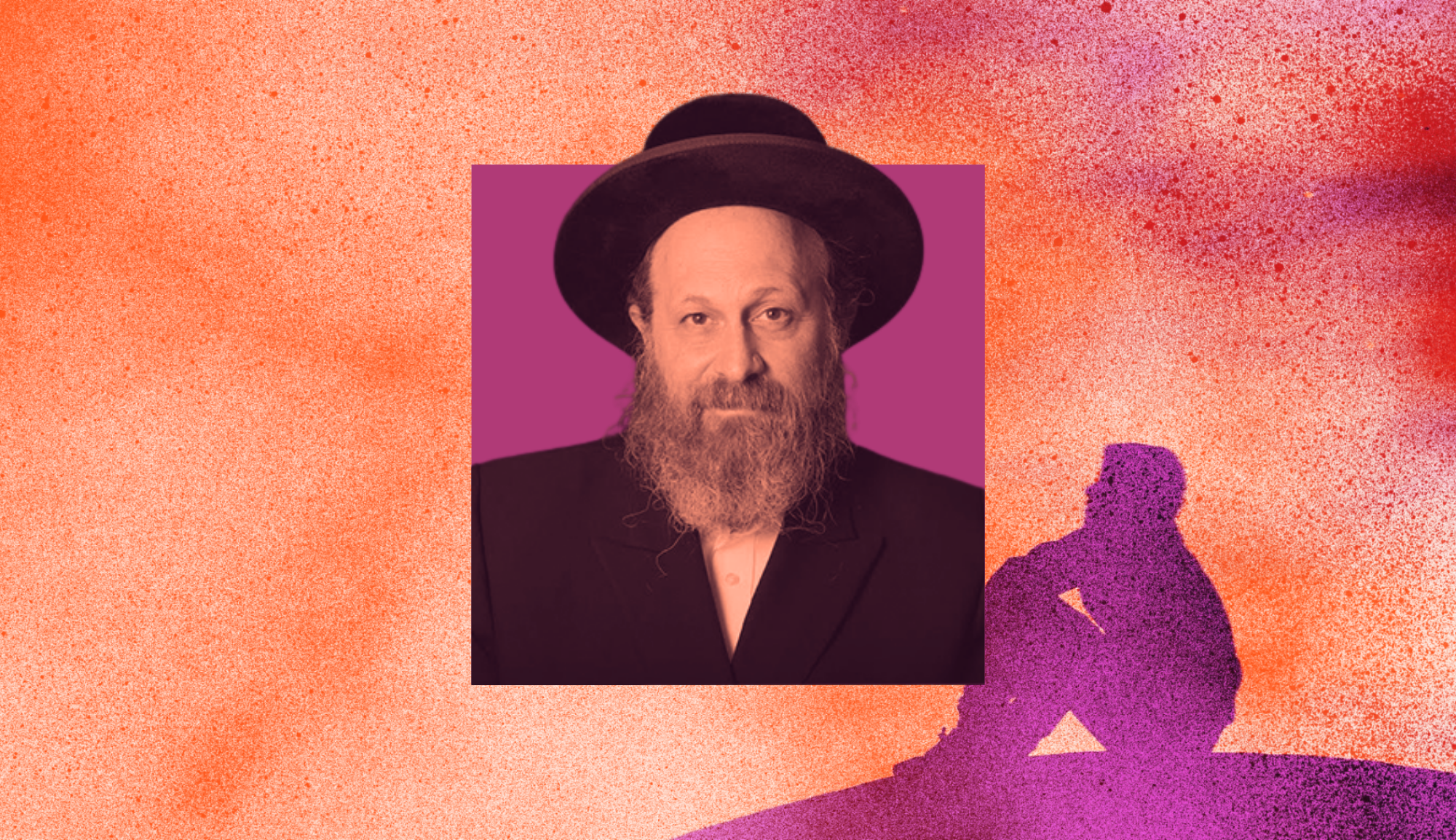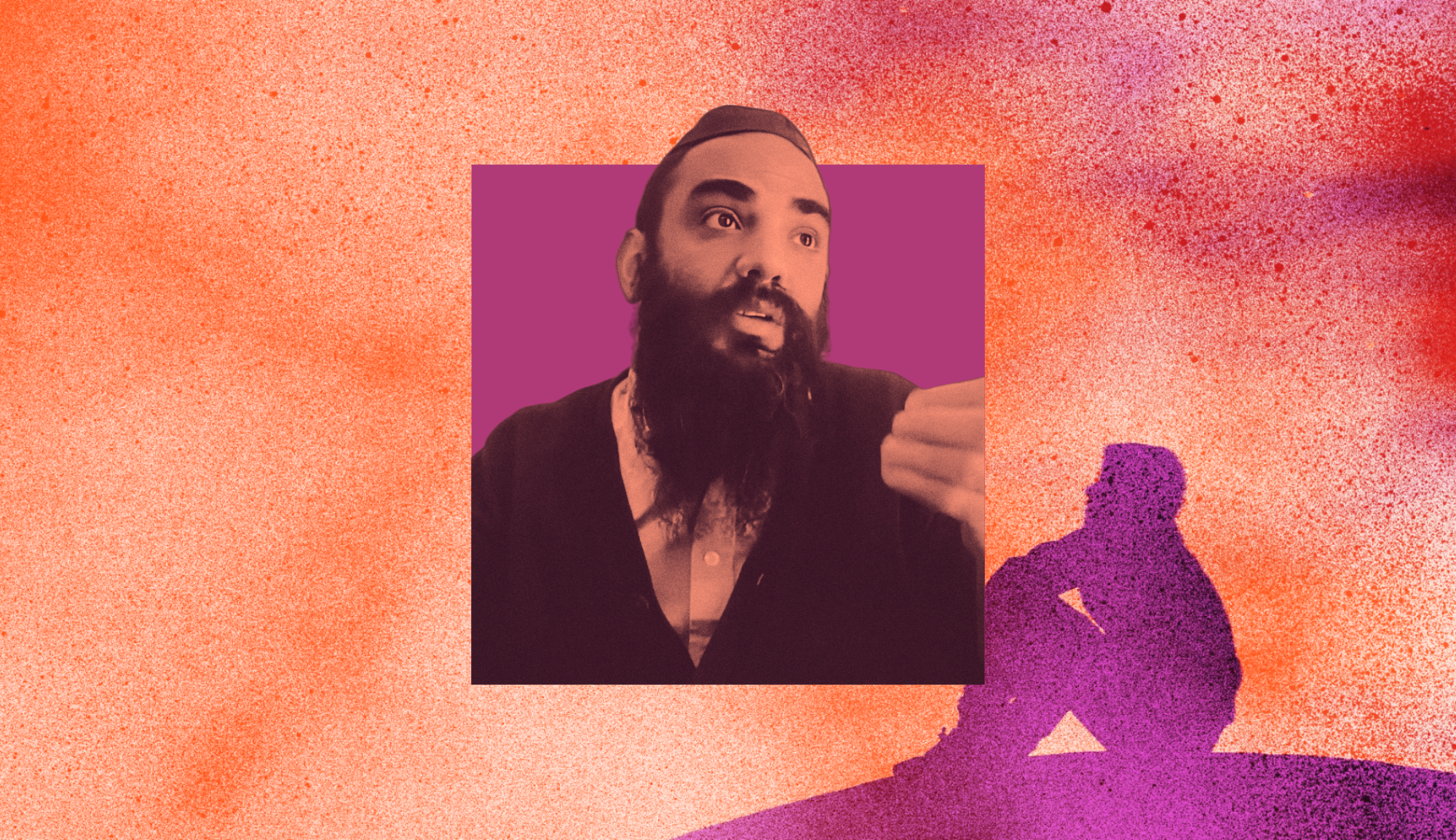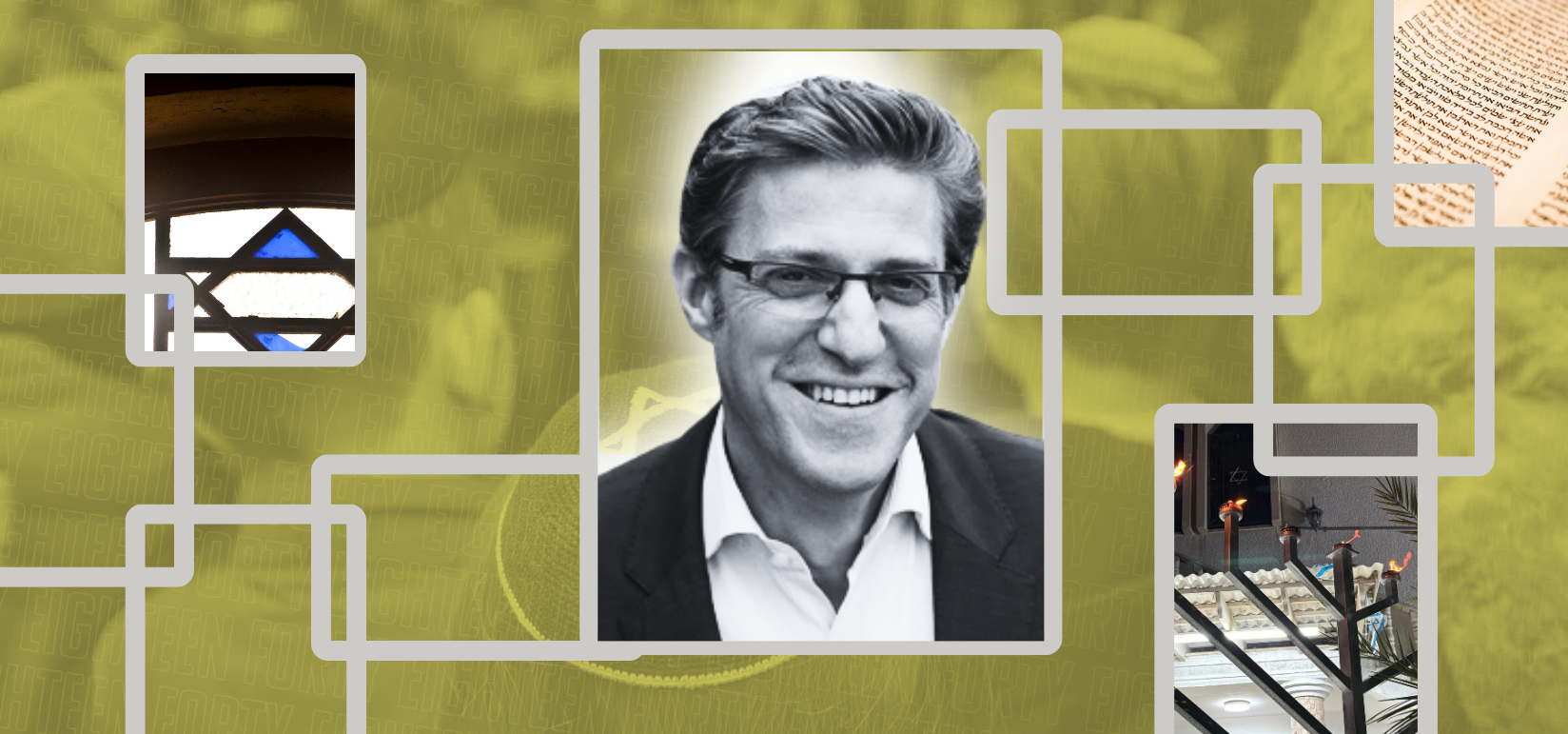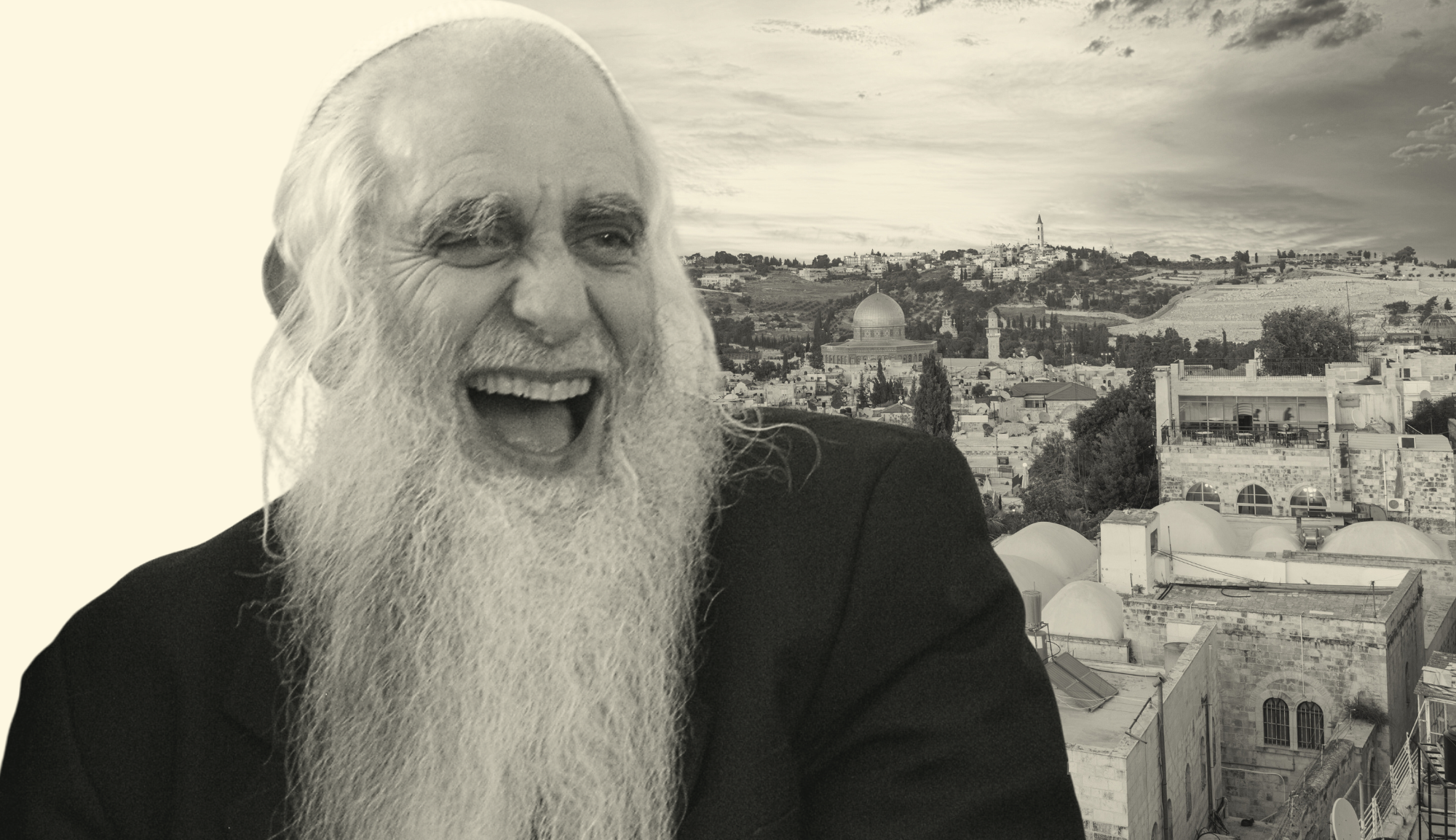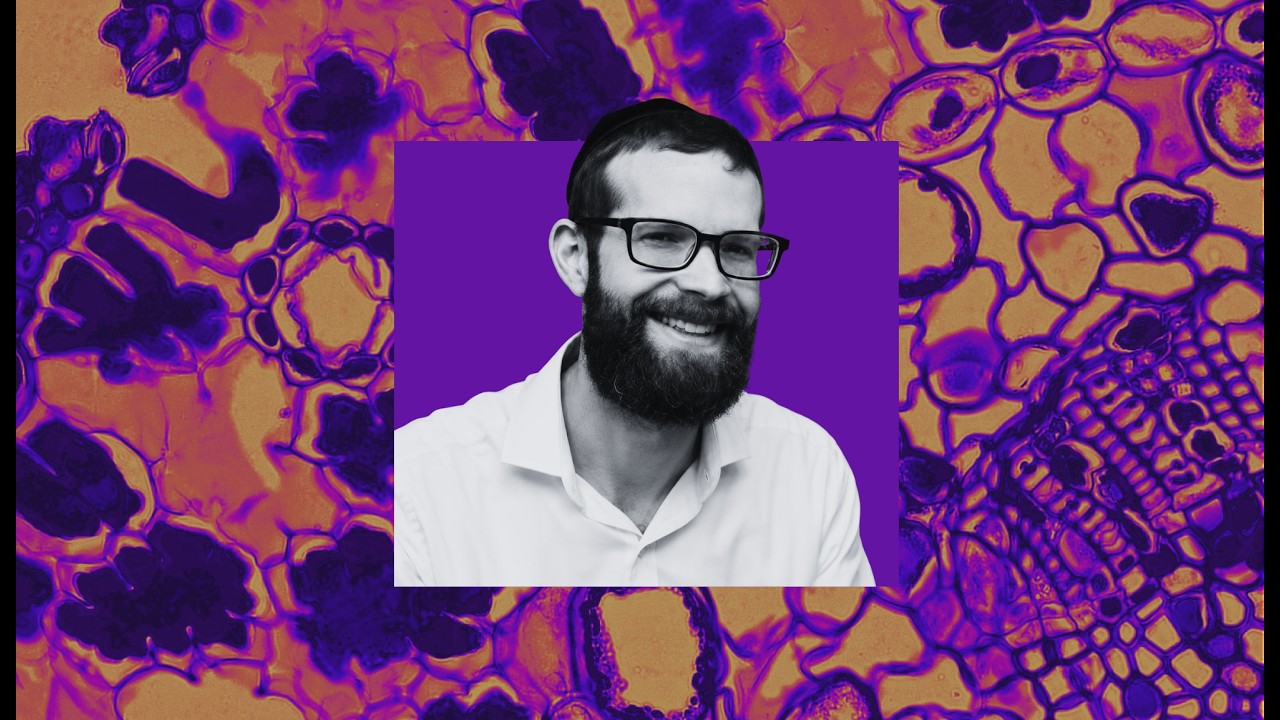
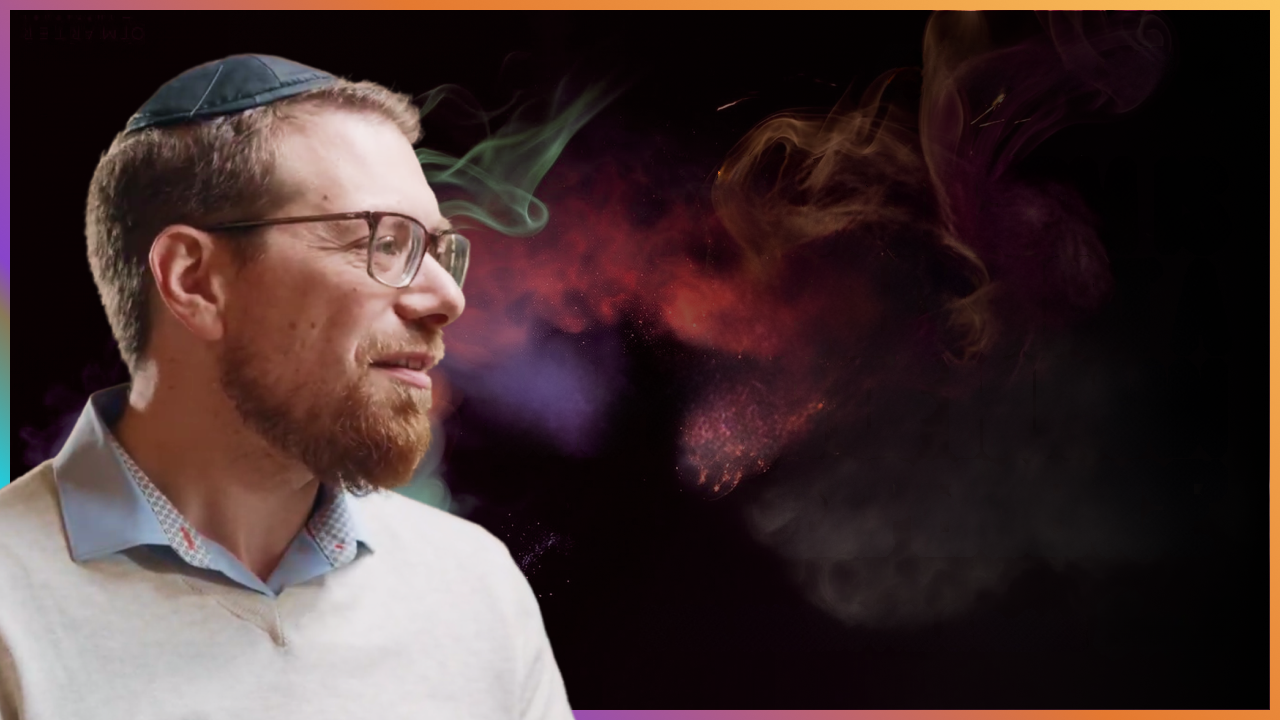
Shlomo Pill explains how mysticism is the soul of the Torah and prayer is the avenue through which we recognize God’s role in reality.
This podcast is in partnership with Rabbi Benji Levy and Share. Learn more at 40mystics.com.
For Rabbi Dr. Shlomo Pill, self-satisfaction is the biggest obstacle to living a more spiritual life. Based on the teaching of the Arizal, Rabbi Isaac ben Solomon Ashkenazi Luria, he argues that a sense of lack is what promotes true spiritual growth.
Rabbi Dr. Shlomo Pill is a professor at Emory University School of Law, where he earned his SJD. He is also a research scholar at The Center for the Study of Law and Religion at Emory University. Rabbi Dr. Pill is the co-author of Setting the Table: An Introduction to the Jurisprudence of Rabbi Yechiel Mikhel Epstein’s Arukh HaShulhan and has published numerous articles in a variety of forums.
Now, he joins us to answer eighteen questions on Jewish mysticism with Rabbi Dr. Benji Levy including how mysticism is the soul of the Torah and prayer is the avenue through which we recognize God’s role in reality.
RABBI DR BENJI LEVY. Rabbi Dr. Shlomo Pill, it’s such a privilege and pleasure to be sitting with you here in Jerusalem, Israel, at this amazing time. And to think about your amazing work as a professor of law in Houston, Texas, your founding of Beis Medrash Nishmas HaTorah, which is all about teaching Pnimiyut Hatorah, [Jewish mysticism]. Thank you so much for being here.
RABBI DR SHLOMO PILL. Thank you so much for having me, Benji. It’s fantastic.
LEVY. It really is exciting. So, a professor that’s a mystic. How would you describe Jewish mysticism?
PILL. Wow. Well, I would say I don’t think Jewish mysticism is really about esotericism. I don’t think it’s about spooky things. I don’t think it’s about magic. Really, I like to think about it as contrasting materialism with spirituality. You know, there are parts of Torah that are about the things we can measure, and the things we can touch, and the things we can evaluate in an empirical way. That’s the area of halacha, what the Zohar calls gufei Torah, the guf, the body of Torah. But there is the neshama of Torah. There is the soul of Torah. And you can’t measure, you can’t touch, you can’t quantitatively evaluate the soul of anything. And so Jewish mysticism is really about the parts of Judaism and ourselves, and our experience of the world, and our relationships with other people and with God that you can’t put into numbers, you can’t put into data, you can’t quantify.
LEVY. Even the way you compare it: quantification, evaluation, metrics, this is a professor talking. And yet you tapped into this other world, which you’re describing so beautifully. How were you introduced to it?
PILL. So the truth is I was introduced to it by another one of our interviewees, I think Yaakov Klein. Yaakov and I actually went to the same high school together ten years apart. I’m older. And much to my great gratitude, he wrote a fantastic book maybe a little over a decade ago called The Story of Our Lives, which I encountered at a point in my life where I really needed that story. And that kind of opened the door to the world of Jewish mysticism to me, which was a world I was not interested in before that. But I read the book [and] I loved the book. I decided I had to learn everything quoted in all of the footnotes in the book. And I just went from there.
LEVY. So in an ideal world, would all Jews be mystics?
PILL. I don’t think so. In an ideal world, I think eventually all Jews will be mystics in the sense of, they will all be attuned to spirituality and be able to experience Torah and God and themselves and the world at spiritual levels that are deeper than just halacha. But at the same time, I don’t think that means that everybody is supposed to be a mystic now. Everybody has to come to it at the right time for them, when the need is there. As it used to be the case that one of the primary qualifications for beginning to learn Kabbala was malei kerito, benigleh uveshas uposkim, that your stomach is filled with the regular stuff [of Torah study]. And many used to interpret that as meaning you know everything. You’ve got it all. And that turned into effectively a ban or was part of a ban on studying Kabbala because no one knows everything. But really, if you look at the actual people who study and practice Jewish mysticism, actual kabbalists, actual practitioners and teachers of Pnimiyut HaTorah [inner dimensions of Torah] have written and said malei kerito means when you’re full. Everyone gets full at different points in the meal. Some people eat more, some people eat less, some people like this food, some people like that food. And so every individual is going to find at a certain point that malei kerito, that their particular and unique stomach, so to speak, has been full of whatever it is that they need and can get from nigleh, from the revealed parts of Torah. And at that point it’s time for them to turn to something deeper.
LEVY. It’s really interesting, that description, because there are stomachs and there are also appetites. And people have different appetites and they also have different capacities in their stomachs. And some can adjust it accordingly.
You talked about experiencing God and taking that in. What is God? When I say the word God, what do you think of?
PILL. I think of yichud. I think of oneness. I think ultimately, in the highest, highest sense, one. And it’s silly to say more than that, I think.
LEVY. So what is the purpose of the Jewish People?
PILL. I think the purpose of the Jewish People is, as the Torah itself tells us, to be an am segula, a nation with a purpose. And that purpose is to be a mamlechet kohanim ve’goy kadosh, a holy nation, a distinguished nation, and a nation of kohanim, of priests. That means that it’s our job to really be the kelim, the vessels, the vehicles, to try and gradually, slowly over the course of history, bring a little bit more recognition into the world to other people of the reality and the oneness of God.
LEVY. So it’s interesting that you use specifically the idea of priests who served in the temple. When the temple was destroyed, the way to communicate with God sort of went from this priestly service [to a] democratized [system] where everyone could pray. From a mystical perspective, how does prayer actually work?
PILL. From a mystical perspective, one approach that I really enjoy is an approach by the Komarno Rabbi, who lived in the mid-1800s. His view was that the entire purpose of prayer is to come to a greater and greater appreciation of ein od Milvado, that there’s nothing else in reality other than God. And so the liturgy that we use is a tool by which we can relate parts of our lives and parts of our experience of the world around us back to God and appreciate His unity and presence more and more.
LEVY. And so what about Torah study?
PILL. There are many levels of Torah study. Part of Torah study is certainly utilitarian. Part of Torah study is we have to study things in order to know how to do the things that we’re supposed to do and avoid the things we’re not supposed to do. And at some level, that’s an important part of Torah study.
But it’s always very, very critical, I think, to bring Torah study ultimately back to God. The kabbalists talk about how the Torah itself is at higher levels of reality than maybe the physical Torah of letters on paper that we have now, and rules, and so [forth], and all of that – how the Torah itself is kind of the primary expression of God. It’s identical with the ratzon, the deep, deep will of God, the unconscious or deeply subconscious will of God, the thing that just has to be. And so every time we learn, in addition to the utility of learning and in addition to the joy that one gets out of learning, particularly and perhaps only when they’re learning the things that they enjoy and that they connect to, at a metaphysical level, every time we do it we are connecting with God itself; that’s contained within the Torah.
And that’s true at a metaphysical level, but I’m not a big fan of just leaving things metaphysical, and we are connecting with God, so that’s enough. One of the principles of Kabbala is ein melech be’lo am, that there’s no king without a people to recognize the king as king. And you could be as royal of a bloodline as you want, but if there’s no nation and you’re stuck on a desert island somewhere, it doesn’t really matter that you’re the son of a royal. And so likewise, when it comes to God, the metaphysics is important in terms of understanding what’s happening. But at the same time, what’s really, really critical is for us to recognize that those metaphysics are happening. So it’s not just a matter of when I learn Torah I’m connecting with God, but I should be consciously aware, I should have kavana, intent, awareness, mindfulness, that what is happening while I study Torah is that I am connecting with God, and that makes that connection real.
LEVY. Does Jewish mysticism view women and men as different or the same?
PILL. Well, I think that it views men and women ultimately at their core, spiritual DNA as the same, just like it views everything else in reality at its core, spiritual DNA as the same, because they’re all just differentiated expressions of the same oneness filtered down onto a physical plane. But within that physical plane, of course, there’s a difference between men and women. There are physical differences, there are psychological differences, emotional differences, et cetera. And those, of course, are just generalizations, I would say. So in general, they are different. And that doesn’t mean that in the particulars there isn’t crossover. One of the principles of Kabbala is always duality and the idea that everything is contained within everything. And that means that while in a general sense we might make a judgment that this is a table, or that is a chair, or that is a man, or that is a woman, or that is female, or that is male, at the same time, there are aspects of chairness to a table, perhaps even just in the material that it’s made out of, if they’re both made out of wood. Perhaps in terms of the relationship they have with each other. You put a chair at a table. There’s an alignment, there’s a connection between the two, so there’s not a total separation and differentiation between them. They serve similar functions in that they’re both there to help me eat my meal in a respectable way. And I would say likewise for men and women as well.
LEVY. So you live in Texas. There are people that have more spiritual lives, some have less spiritual lives. In their own self-description, what do you think is the greatest obstacle to living a more spiritual life?
PILL. To me, without a doubt, I think the biggest obstacle to living a spiritual life is self-satisfaction, being satisfied with where you are, thinking that there’s nothing wrong with the way things are. The Arizal, the master of Kabbala, who summarized all of Kabbala about 500 years ago and has been the touchstone and source for all of Kabbala that has happened ever since, very famously and often said that the way growth happens, and particularly spiritual growth, is always out of a sense of lack. If you don’t have that sense of lack, it becomes [a situation where] there’s no emptiness within you in order to receive any spirituality and you’re too full of yourself and the world that I’m in, and the universe that I’m in, and the life that I’m in; everything is good. And really spirituality is about connection with God. God is the thing that’s always a little bit beyond what we have. If we have it, if we have absorbed it, if we contain it, if we can cognize it, that’s not God because that’s fitting in a human mind or a human experience. And so we have to be open to something beyond ourselves in order to have real spiritual growth or access to spirituality.
LEVY. So we all operate within this world [with] different levels of satisfaction that you described. Why did God create the world?
PILL. At the most basic, basic level, we have no idea, and we can’t possibly know. The will of God itself, the essence of God, this is unknowable. God itself is unknowable and can’t fit into anything we can cognize. And likewise, God’s will, God’s essential ratzon, why God chose to create a world can’t fit into something that we could fundamentally understand.
However, the Arizal does teach that once God decides to create a world, for whatever reason, we can now start to explain a little bit about why the world functions the way it does and how a world, as we experience it, exists in the form that it does. And one of the fundamental things that he teaches is that God creates a world in part to create wholeness within God itself, so to speak. God is everything. But God can’t, so to speak, really express Himself or be fully manifest as everything if those things that He is don’t exist. So, for example, if God is described as good and merciful and kind, and sometimes angry, and sometimes vengeful and judging and fatherly, and so on and so forth, none of those reference, none of those names make any sense or actually can connect back to God, and God can’t manifest as those things unless there is mercy in the world, unless there is anger in the world, unless there’s something called fathers and something called judges, and so on and so forth. So in a sense, the creation of the world is creating a platform within which God can be more complete and more real.
LEVY. What about free will? You spoke about God not being able to [become] complete through different areas. Does free will exist?
PILL. It depends how you look at it. I think one of the fundamental teachings of Jewish mysticism is perspective and relativity. So the kabbalists and Hasidic masters are constantly speaking about dual perspectives. There’s our perspective and our experience, and there’s God’s perspective and God’s experience. And both of these are very real. From God’s perspective, of course, there can’t be any free will. We are, so to speak, all figments of God’s imagination. God’s knowledge of everything is absolute. And the fact that God knows something or wills something, which can’t be separate from each other philosophically, that means that that thing has to be, and it can’t be any other way. However, from our perspective, we do genuinely have experiences of free will. Perhaps that free will can fluctuate a little bit. So for example, there are things that perhaps I have zero interest in and would never ever consider doing, and from some perspective I don’t have free will over that thing. But perhaps over the course of my life that might change given [certain] experiences, or different behaviors, or different choices that I might make. There can be an Overton window, so to speak, of free will and that can shift, but that’s all from our perspective.
But it’s important to note that again, the kabbalists and the Hasidic masters and Jewish mystics all speak from the perspective of duality. The oneness of God is incomprehensible. Once we can start talking about anything, there’s always only two. This is why the Torah begins with a bet for Bereishit, which is the number two as opposed to an alef, the number one. We always begin with two, there’s always duality. There’s God’s perspective on things, there’s our perspective of things. And our perspective is real. God created it to be real for us to experience it as real. And so our free will is real to us.
LEVY. Well, so what about Mashiach, the Messianic Era? What does this mean from a Jewish mystical perspective?
PILL. At least some mystics would understand this as everything sort of returning to where it came from. Everything began with just God, Ohr Ein Sof, the infinite light of God, the infinite will of God filled everything, and encompassed everything, and annihilated everything within it. There was nothing outside of God. And the Messianic Age is a return to that. Not in the sense that all of this doesn’t exist anymore, but in the sense that from our perspective, we now experience all of this as godliness.
LEVY. So we’re all moving towards this Messianic Era. Is the State of Israel part of that final redemption?
PILL. Everything is a part of that final redemption. And of course, the State of Israel and everything it has gone through, good and bad, accomplishments and failures, is all part of that story and all part of bringing us to that final redemption, undoubtedly so.
LEVY. What is the greatest challenge facing the world at large today?
PILL. I think ultimately it’s a lack of meaning. I think people are afraid of having meaning because meaning entails vulnerability and the fact that I might need something beyond where I currently am in order to have that meaning. And so we try to distract [ourselves] and avoid facing that reality. But we can’t avoid it because we all need to be more connected, connected to God, connected to ourselves, connected to each other. And that can only be found from a place of vulnerability and need. And so our fear of that, our fear of that vulnerability, I think, is the biggest challenge.
LEVY. Amazing. One of the times when vulnerability historically happened was around modernity. The world changed completely. So, how has Jewish mysticism changed in this time of modernity?
PILL. I think that the rabbis teach us that God always provides us with the medicine before the illness, so to speak. And I think this is true with respect to the conditions and challenges of modernity and Jewish mysticism’s response to it. We were provided with a teacher and an innovator, the Baal Shem Tov, who lived in the 1700s, who reframed Jewish mysticism away from discussions of the metaphysical and higher worlds and all of that and attempted to bring all of those concepts down to explain our human condition. The world in many, many ways wasn’t ready for the teachings of the Baal Shem Tov at the time. But I think we see now more and more and more over the last eighty years, fifty years, thirty years that the teachings of the Baal Shem Tov have become critical, critical medicine to deal with precisely that problem of modernity, of fear of vulnerability, of self-satisfaction, of an unwillingness to be in touch with ourselves and other people and God.
LEVY. So as a professor in university, you’re exposed to many different schools of thought. Is there a difference, and if so, what is it, between Jewish mysticism and other mysticisms?
PILL. Rabbi Benji, I’ll be really honest. I’m not a student of other mysticisms. So I have no idea.
LEVY. I think that’s a really important answer. And I think that honesty and openness is what Kabbala is about, to be mekabel, to receive. We can’t all know anything and everything. I think it’s great to see that. Does someone need to be religious to study Jewish mysticism?
PILL. Certainly not. However, I would say that the Zohar teaches us that as we said before, there are different aspects to the Torah just like there are different aspects to the human being. There’s a soul of Torah, there’s a body of Torah. And bodies and souls go together.
So ultimately, I think that while one can study Jewish mysticism, very, very important vessels, and tools, and vehicles for implementing and growing from Jewish mysticism are contained within the rituals and practices of Judaism, which the Zohar itself refers to as 613 ideas or suggestions, good advice for connecting to God. And so while you can certainly access the teachings of Jewish spirituality and mysticism, and that’s a good thing, I think it’s important to remember that there has to be a structure and a framework for containing and channeling that into positive growth. And I think Jewish religious life and Jewish observance is naturally wedded to that and provides the appropriate vehicle.
LEVY. So you used words like appropriate and vehicle. Does that mean Jewish mysticism can be dangerous?
PILL. Certainly it can be dangerous. Certainly can be dangerous. All the way back to the Talmud, the Talmud tells us that Jewish mysticism can be dangerous, that entering into mystical spiritual spaces, especially higher ones, can really set people off in the wrong direction. And we’ve seen this countless times throughout history. Historically this resulted in a lot of hesitancy towards Jewish mysticism. Rabbis banning the study of Jewish mysticism, banning it until you’re a certain age or you studied certain things, or banning the teaching of Jewish mysticism in too large of a group or things like that.
There’s a lot of fear around Jewish mysticism, and it’s appropriate. Because it’s very easy to think that access to the soul of Torah is an easy way to short circuit and circumvent the need to deal with the body. We all want to connect to the soul, but you still have to eat dinner, get eight hours of sleep, and put on your clothes in the morning. And I think that that’s important. So yes, it certainly can be dangerous. Despite the danger, however, certainly today it’s needed. There’s no choice about it. And so –
LEVY. It’s like you said, it’s the medicine.
PILL. It’s the medicine.
LEVY. And certain medicines you don’t take unless you need it, but –
PILL. Right.
LEVY. This is needed.
PILL. And certain medicines have side effects and risks. But you have to take them. Yeah.
LEVY. And has it affected your relationships in any way? In a really personal way, with those around you, with yourself?
PILL. Absolutely. Especially studying Jewish mysticism and Kabbala through the lens of the Baal Shem Tov. The Baal Shem Tov tells us that mysticism is really just a mapping of human experience, human psychology, and human inner experience. Understanding the concepts of Jewish mysticism as taught by the Arizal and in kabbalistic books are really just a way, at least in the Baal Shem Tov’s approach, of understanding what’s going on inside of yourself, what’s going on inside of other people, and how those two things connect together. And again, there can be dangers and this can take you the wrong way. One can study Jewish mysticism, fly off into the clouds, and not care about anyone else or themselves. But studied in a healthy way, it leaves one much more attuned to oneself and what’s going on with oneself and [one becomes] more in touch with oneself. [It makes you] much more open and receptive to other people and in a much better position to have strong relationships with –
LEVY. Can you share an example either for yourself or one relationship you have with a child, or with a friend, or a sibling, or a spouse? Is there any example where you’ve seen it impact your life?
PILL. Sure. I’ll give you an example about [my] relationship to [myself]. So I would say that certainly from a non-mystical approach, there’s a strong tendency often for people, especially religious people, observant people, to kind of beat themselves up over their faults, over their missteps, over their mistakes, their sins, so to speak. And I would say that Jewish mysticism has given me the tools to understand, oftentimes much more, where those are coming from. And [it helps me] understand ultimately, at the end of the day, without excusing mistakes, and missteps, and faults that have to be addressed and corrected, they all come from one place, they all come from God. There’s a reason why they’re there. And I think it gives me at least a way of treating myself and my areas of necessary growth with a lot more compassion and a lot less shame and resentment.
LEVY. And we’ve spoken so much about it, and I appreciate you answering all these questions. To end, rather than just speaking about it, I’d love you to just share one powerful thought, one short kabbalistic idea, that you’re either thinking about or that resonates with you that may resonate with those listening today.
PILL. Sure. So as we’re sitting and talking, we’re in the middle of studying the parasha, the portion of the Torah, that discusses the Jews’ enslavement in Egypt and their ultimate exodus from Egypt.
And one of the central characters in this story, of course, is Pharaoh. And Pharaoh is not a nice guy, he’s a villain. He’s one of the villains of the Torah. But I think it’s so important to appreciate, as we see in the Torah countless times with respect to Pharaoh, Pharaoh is a villain and we don’t root for him, but he’s kind of a little bit of a tragic villain. There are many times throughout the story where he wants to do the right thing and God comes along and hardens his heart. And so at the end of the day, at least if you have openness and empathy, Pharaoh is a tragic villain. We see this so many other times in the Torah with so many other villainous characters. The Torah paints them as tragic villains, not as through and through bad villains. And I think that one of the messages there, really importantly, is that the Torah is trying to teach us empathy, and an appreciation of the other, and an appreciation and an ability to put myself in someone else’s shoes. And to me that’s a spiritual idea that is really, really important and I’m thinking about it now in different contexts, but mostly because of the current parasha that we’re reading.
LEVY. Well, having spent quality time with you over a nice sustained period over a few days, I’ve seen that you’re empathetic yourself and I think that’s why your Torah resonates so deeply. And I just give you a wish to continue to find in your own relationships and everything this depth of experience that you can continue to teach, to share with others, and to really lead by example.
PILL. Thank you, Rabbi Benji.
LEVY. Thank you.
In this edition of the 18Forty Podcast, we talk to David’s rebbe, Rav Yisroel Kaminetsky, longtime principal of DRS Yeshiva High School, about the state of Jewish education in America.
David Bashevkin discusses how to embrace holiness, the purpose of prayer, and the search for meaning in an age of distraction.
We talk to Rabbi Shlomo Pill about how Torah and teshuva have helped him handle his struggle with addiction.
Fally Klein joins us to discuss finding God in the everyday and where the Messiah might come from.
In this episode of the 18Forty Podcast, we talk to Liel Leibovitz and Lisa Ann Sandell about what happens when one partner wants to increase their religious practice.
We talk to Ben and Yael de Toledo about doing teshuva by returning to community.
We talk to Mendel Horowitz, who introduces us to the notion of having a “good-enough Elul.”
In this episode of the 18Forty Podcast, we sit down for a special podcast with our host, David Bashevkin, to discuss the podcast’s namesake, the year 1840.
In this episode of the 18Forty Podcast, we talk to Judah, Naomi, and Aharon Akiva Dardik—an olim family whose son went to military jail for refusing to follow to IDF orders and has since become a ceasefire activist at Columbia University—about sticking together as a family despite their fundamental differences.
In this special Purim episode of the 18Forty Podcast, we bring you a recording from our live event with the comedian Modi, for our annual discussion on humor.
In this episode of the 18Forty Podcast, we talk to Rabbi Menachem Penner—dean of RIETS at Yeshiva University—and his son Gedalia—a musician, cantor-in-training, and member of the LGBTQ community—about their experience in reconciling their family’s religious tradition with Gedalia’s sexual orientation.
The true enemy in Israel’s current war, Einat Wilf says, is what she calls “Palestinianism.”
In this episode, we talk to a father and daughter who were estranged and then reunited.
In this episode of the 18Forty Podcast, we sit down with Joey Rosenfeld, social worker and kabbalist, to talk about the differences between mysticism and rationalism and the roles they should play in our lives.
Rabbi Yehoshua Pfeffer answers 18 questions on Israel, including the Haredi draft, Israel as a religious state, Messianism, and so much more.
In this episode of the 18Forty Podcast, we talk to Yosef Bronstein—a rabbi, writer, and scholar—about the philosophy of Chabad and the Lubavitcher Rebbe.
Rav Joey Rosenfeld’s entryway into mystical thought began with the writings of Franz Kafka and Albert Camus.
In this episode of the 18Forty Podcast, we talk to Rabbi Larry Rothwachs and his daughter Tzipora about the relationship of a father and daughter through distance while battling an eating disorder.
In this episode of the 18Forty Podcast, we sit down with Rav Moshe Weinberger, rabbi and educator, to discuss the role of mysticism in modern-day Judaism.
In this episode of the 18Forty Podcast, Dovid Bashevkin dives deeply into the world of dating.
Yossi answers 18 questions on Israel.
In this episode of the 18Forty Podcast, David Bashevkin opens up about his mental health journey.
Haviv answers 18 questions on Israel.
A bedrock principle of Orthodox Judaism is that we received not only the Written Torah at Sinai but also the oral one—does…
Perhaps the most fundamental question any religious believer can ask is: “Does God exist?” It’s time we find good answers.

Before you open a page of Gemara, meet the people, ideas, and arguments that make the Talmud worth opening.
Parshat Ki Tavo warns us what happens when everything we’ve prayed for stops feeling like a gift.
Joy and meaning can be found not only despite the brokenness, but even because of the brokenness.
Psychodynamic therapy is not for everyone. But for those who dare, it can change everything.
To talk about the history of Jewish mysticism is in many ways to talk about the history of the mystical community.
Children don’t come with guarantees. Washing machines come with guarantees.

Children cannot truly avoid the consequences of estrangement. Their parents’ shadow will always follow.
Yes, the Israeli army needs Jews to draft, but more than that, Jews need to experience what it means to serve.
I consider the Rebbe to be my personal teacher, and I find this teaching particularly relevant for us now.
Israeli minister Itamar Ben-Gvir wears the mantle of Kahane in Israel. Many Orthodox Jews welcomed him with open arms.
My family made aliyah over a decade ago. Navigating our lives as American immigrants in Israel is a day-to-day balance.

A 94-year-old Holocaust survivor, a lone soldier, and more. Here are seven olim sharing their stories of aliyah.
It isn’t only censorship that creates the narrative of our history, but it is every creative endeavor that we engage in.
Christianity’s focus on the afterlife historically discouraged Jews from discussing it—but Jews very much believe in it.
Talking about the “Haredi community” is a misnomer, Jonathan Rosenblum says, and simplifies its diversity of thought and perspectives. A Yale-trained lawyer…

In this episode of the 18Forty Podcast, we speak with Shais Taub, the rabbi behind the organization SoulWords, about shame, selfhood, and…
In this episode of the 18Forty Podcast, we talk to Ben and Yael de Toledo, founders of Pnima Jerusalem, a soulful community…
In this episode of the 18Forty Podcast, we speak with Diana Fersko, senior rabbi of the Village Temple Reform synagogue, about denominations…
We speak with Naftuli Moster about how and why he changed his understanding of the values imparted by Judaism.
In this episode of the 18Forty Podcast, David Bashevkin answers questions from Diana Fersko, senior rabbi of the Village Temple Reform synagogue,…
In this episode of the 18Forty Podcast, recorded live at Stern College, we speak with Rabbi Moshe Benovitz, director of NCSY Kollel,…
Rabbi Moshe Gersht first encountered the world of Chassidus at the age of twenty, the beginning of what he terms his “spiritual…
What is Jewish peoplehood? In a world that is increasingly international in its scope, our appreciation for the national or the tribal…

There is circularity that underlies nearly all of rabbinic law. Open up the first page of Talmud and it already assumes that…
In this special Simchas Torah episode of the 18Forty Podcast, we speak with Rachel Goldberg-Polin and Jon Polin—parents of murdered hostage Hersh…
In this episode of the 18Forty Podcast—recorded at the 18Forty X ASFoundation AI Summit—we speak with Rabbi Eli Rubin and Rabbi Steven…
On this 18Forty panel, we speak with Alex Jakubowski of Lightning Studios, Sara Wolkenfeld of Sefaria, and Ari Lamm of BZ Media…

In this episode of the 18Forty Podcast, we speak with Mark Wildes, founder and director of Manhattan Jewish Experience, about Modern Orthodox…

A free 40-week journey through the Talmud. No Hebrew or background required. 7,000+ people have already signed up — join us.