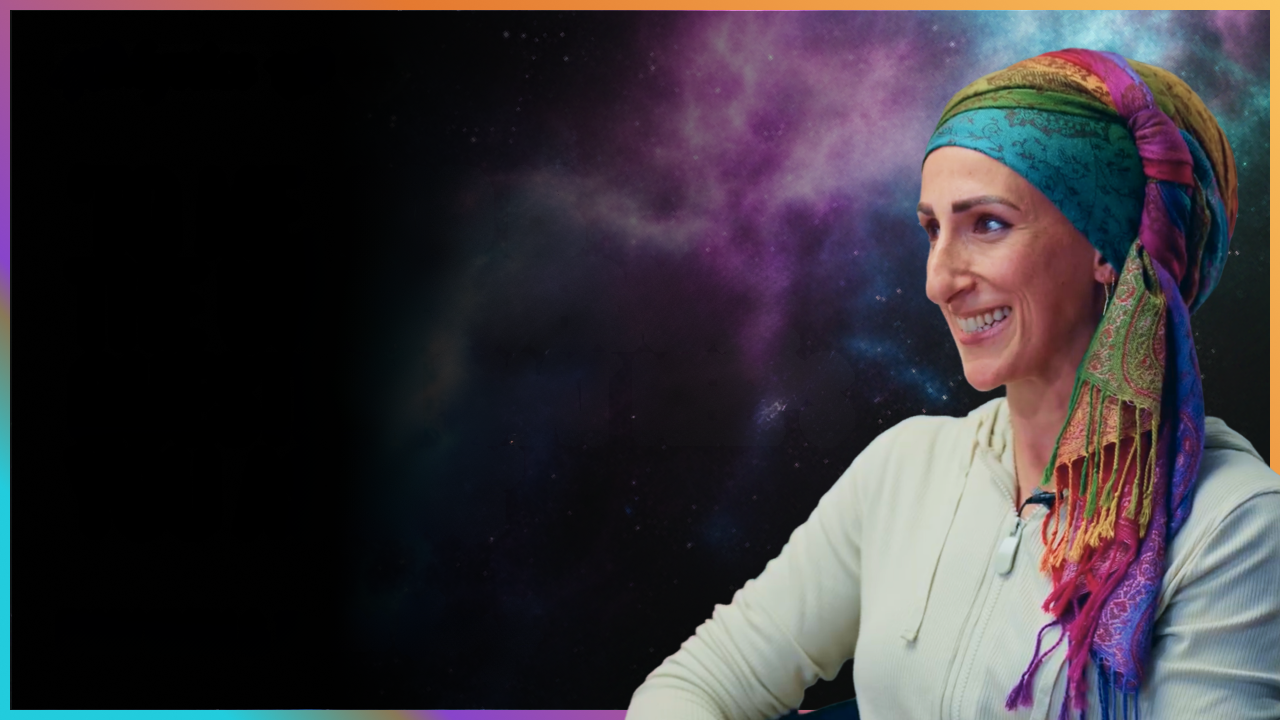
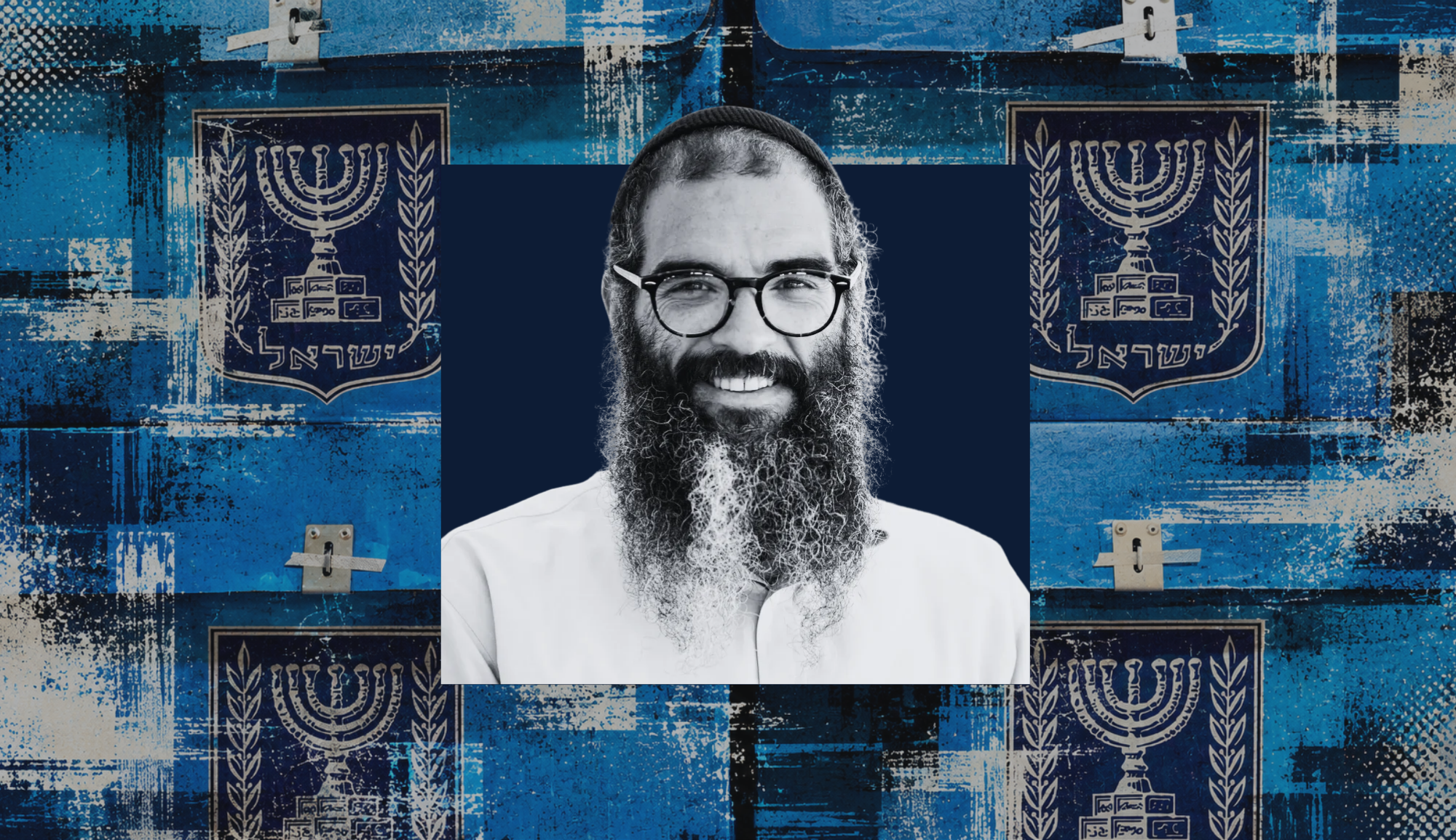
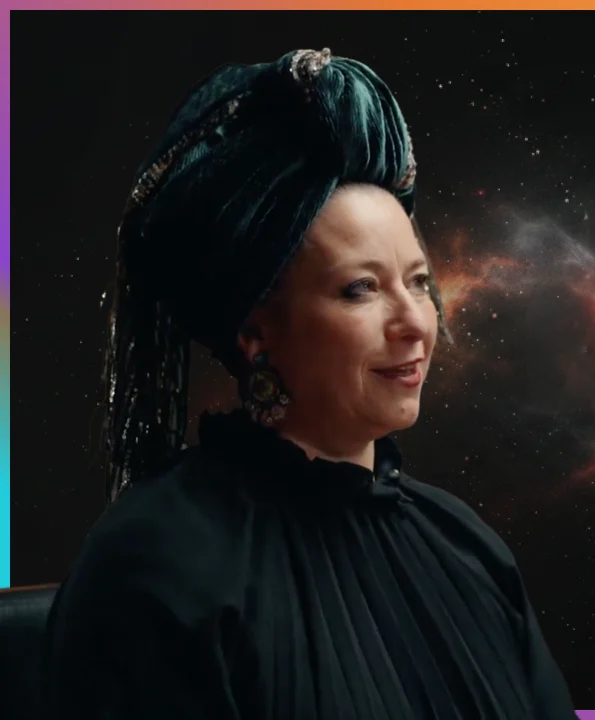
RABBI DR. BENJY LEVY. Fally Klein, it’s such a privilege and pleasure to be sitting with you here today. Thank you so much for coming in. You’re an educator, educating both educators and more broadly. We’re looking forward to this conversation.
FALLY KLEIN. Thank you. Excited to be here.
LEVY. So what is Jewish mysticism?
KLEIN. Oh my goodness! You were really not kidding about not being prepared for these questions. What is Jewish mysticism? I feel, totally off the cuff, that Judaism’s brand of mysticism is actually elevating the ordinary moments. The way we are instructed to make Shabbat out of basar vedagim [meat and fish], enjoy the pleasures of this world –
LEVY. Meat and fish –
KLEIN. – yeah, meat and fish – enjoy the pleasures of this world, I think people have this interpretation that mysticism is esoteric and it’s separating yourself from the world. But I believe that Judaism as a religion, as a culture, as a way of life, is actually how to be more present in the world. And the truest mystics knew that. They were parents, they were humans, they worked, they had livelihoods, they were present in their day-to-day life, and they found non-ordinary states of consciousness in ordinary endeavors. To me, that’s Jewish mysticism.
LEVY. So how did you begin this journey? Where did it start? You’re from Boro Park?
KLEIN. I am, yeah.
LEVY. And how did you get into the Jewish mysticism space?
KLEIN. Well, it started where I was born against my will, like everybody!
LEVY. Like all of us.
KLEIN. But for me, I experienced throughout my life a series of – Of course, my very humorous brain is going, A Series of Unfortunate Events, like the Lemony Snicket series that my kids are into. I feel that as I went through life and encountered different challenges, the choice was always: Is it a desire to get out of pain that’s motivating me, or is it a desire to see who I will become as a result of what I’m going through, what I’m going to make of this? And people know this about my history. It’s not where I love to tell my story, but it’s something that people can really relate to. It makes for good storytelling that when I was sixteen, I was diagnosed with Hodgkin’s lymphoma. It’s a form of cancer, blood cancer. And that was my first bout with cancer; I had cancer after that as well. But at sixteen, when you’re busy with very mundane things like being pretty, being popular, passing your scores in school so that you can go to a good college or seminary, and then you’re faced with this very sobering reality that the hair that you used to obsess about, because bad hair days – and then you walk to school without hair. Or, you may not. You’re worried about where you might go for seminary or college and then you’re like, actually, I don’t know if I’m going to live long enough to be seventeen. So you have to reframe your narrative about life and what life is. And I feel like I was given a great gift. I was given an amazing doctor who was religious, Dr. Michael Harris. He passed away earlier this year, but he was one of my greatest teachers, because he told me that healing is not about a date on a calendar when you finish chemo. That’s not when you get to restart your life. Your life is right now.
He says, You don’t know what’s going to be with your life in an hour from now. Live this life, this moment. This could be the pinnacle of all of your life. This could be the moment that you were created for and you just don’t know because you’re worried about graduation or you’re worried about whatever it is that you’re worried about. He says, Make this moment precious, make this breath precious. And that has been my guiding principle in all of life. So when I watch people my age – I’m in my thirties, so twenties, thirties – watching women in my age and stage raising little ones, getting very bogged down by the laundry, making the beds every morning, and people feeling very stuck in their lives – and I have never felt that way – I have always felt it is such a privilege to do the laundry. It is such a privilege to get up every morning and put my kids on the bus. It is such a privilege to have kids, because they were not a given for me. So the ordinary moments in my life have always been extraordinary.
To me, when people started becoming more into kabbalistic thought and they were sharing these things to me, [I felt]: this is how I [already] live my life. And then when I would start sharing some of the things that I was experiencing, I would get comments from rabbis very often: Who taught you Kabbala or who taught you Chasidut [Hasidism]? And I said, nobody. It’s just so apparent to me that this is the way life is meant to be lived. And so, I may have a name out there as a maverick mystic, and I think the maverick comes from the fact that I’m not busy quoting sources or sefarim [holy books]. The maverick in me is like, I figured this out a little bit on my own, but I believe that everybody has that window of opportunity that this is what life could and should be for us.
LEVY. But that has also brought you back to the sources where you’ve seen correlation of them?
KLEIN. For sure! It’s been such a joy when people say, well, I just read a Maharal [Rabbi Judah Loew ben Bezalel] on this, or Ramchal [Rabbi Moshe Chaim Luzzatto] says this, and I’m like, cool! And then it makes you feel a little insecure, like, am I allowed to – I can’t be saying the same things, I’m a nobody. So it actually put a fire under me, realizing that I have to actually learn more. It’s wonderful when you kind of trip over some glorious epiphanies and you’re figuring it out and it’s like, oh, look what I discovered! But also, it’s like a little kid who stumbles and finds a great archaeological treasure, but they’re not an archaeologist. So it’s a great story that they get to tell, but if you really want to discover treasure, you gotta learn to dig. So a great portion of my recent years have been like, wait, if this is what I stumbled on by mistake, what would happen if I applied myself to it?
LEVY. And you’ve seen the results of that?
KLEIN. So that’s where you’re catching me now. Yeah.
LEVY. Amazing. And in an ideal world, would all Jews be mystics?
KLEIN. Well, I would redefine mystic. In an ideal world, I feel like we would all be living with the amount of joy and excitement as our children do. I feel like the greatest mystics I know are actually my children. They have not yet solidified their consciousness into the harsh realities of what society deems is what this world is meant to look like and be. So you watch a kid just discovering the world for the first time with this great appreciation and this great wonder. And to them, it is as mysterious and wonderful to pick up a blade of grass and just marvel at its color and its texture and then pick up another blade of grass and it’s the same but it’s also different. And the Talmud says every blade of grass has its own malach [angel]. When you see a kid do that –
LEVY. An angel.
KLEIN. Yeah. When you see a kid do that, you see a kid really discover that every blade has its own angel, because to a kid, no two blades of grass are the same. But to an adult, we’ve long stopped seeing the grass, we’ve stopped seeing the forest for the trees. So do I believe that everybody should be a mystic? How do you define mystic? Is it the rabbis in Safed wearing the tallit [prayer shawl] or just being childlike with wonder and seeing Hakadosh Baruch Hu [the Holy One, blessed be He], to see God in everything?
LEVY. So when you say God and seeing God in everything, what is God? How do you define this thing? What do you imagine when you say the word God?
KLEIN. I wish I knew. To me, God is the unanswerable question that keeps you asking. It’s the pleasure of not really needing an answer but waking up every morning with a better question. It’s the “why” that gets you out of bed, that has you growing, that has you becoming more than you were yesterday. And not because you weren’t enough, but because there’s so much more you can possibly be, and learn, and grow. God is the ever-evolving consciousness that we’re striving towards. And it’s hard because the English language – I’m not a linguist, I don’t know very many languages, but my experience of language is that it’s very definitive. So anytime you use a word to define God, it becomes “other.” Because if you can talk about it and it’s an “it,” it’s an idea; it’s other. And of course, using words like God makes it very masculine, patriarchal, and limiting. How do you define a feeling? How do you define this ache or yearning? It’s like an ache, or a yearning, or a drive. It’s a sadness but also a joy of: there’s so much more. There has to be more. And it’s not a “more” because things aren’t enough. It’s a “more” because there’s always going to be more. I know that’s a very vague and terrible answer because it doesn’t define anything, but that to me is my experience of God. It’s undefinable. It’s that childlike awe that keeps saying, wow, there’s so much more I’m going to learn, and grow, and experience, and that is endlessly exciting. It’s a life that’s never boring because how could it be? It’s a life of creation, constant creation and recreation and – okay, I’m sounding like a nerd.
LEVY. I think it’s a beautiful answer.
KLEIN. Thanks.
LEVY. So what do you think the purpose of the Jewish people is according to Jewish mysticism?
KLEIN. For me, I really believe that everything that God created is purposeful, is meaningful, and has intent. My understanding is that the Jewish people were not just created. We were given the opportunity to choose a very, very specific mission and purpose. And every nation has a mission, has a purpose, and has a medicine. And my perspective is that the medicine of Klal Yisrael [the Jewish People] is to be in alignment with Creation. Hashem is the ultimate Creator. If you watch the world, if you watch Creation, it’s an ever-evolving process. And when I study our medicine, what was really given to us, which is the Aseret Hadibrot, the Ten Commandments, what we really committed to was helping this creation energy to keep creating, to keep evolving, consciousness to keep expanding, according to certain guidelines. Because it’s a maintenance that this world requires. If the world were to continue evolving without the maintenance that we give it in terms of din, judgment, but not harsh judgment, balance – tzedek [righteousness], like tzedaka [charity], keeping things in line and checks and balances, so to speak, it would devolve into chaos. And I think our job as the Jewish nation is to keep this consciousness evolving in a way that brings more consciousness, not more chaos. Because the way consciousness evolves it goes from simple to more complex. If you look at biology, we go from simplistic organisms to more complex organisms. Consciousness has evolved in the same way. And in over a very rapid period of time, 6,000 years of human consciousness, we’ve evolved, science has evolved. But evolution can also bring devolution, because we’re going from simple to expansiveness and that expansiveness can either become more complex, with the right structures, or so complex that it’s just falling apart at the seams. And we see that at different time periods in history. And I feel like the Jewish values – call them conservative values, but they’re biblical, monotheistic values – tend to bring that consciousness back from the brink while also helping it to continue expanding into that ultimate consciousness that we’re striving for.
LEVY. And how does prayer work?
KLEIN. Define prayer! Prayer can mean so many different things to people. I really love what Chazal, our rabbis, Sages, have said, that true prayer is avoda shebalev, it’s the work of the heart. So to me, the work of the heart is coming into alignment. What is your heart? It’s an electromagnetic being. Many of us think that our bodies are chemical. We treat our bodies with chemicals, but actually, our most important organs are not chemical, they’re electric. Your brain is electric, your heart is electric, your nervous system is electric. So, when we speak in terms of attunement, vibration, frequency, there’s a reason why these words are gaining a lot of popularity today. People aren’t conscious of what it is that they’re really saying. They’re resonant words, but they’re all music. They’re all about sound, they’re all about vibration. We are not chemical beings, we’re vibratory beings. So your heart being a frequency organ, coming into avoda shebalev, what is the work? It’s attuning to the frequency that you want to be aligned with. To me, that’s what prayer is. If God, if Hashem is the ultimate frequency, then for a lot of people, prayer is the brokenhearted: I need something, I want something. I get that. We all pray, and we should pray from those places. But to me, the ultimate prayer is a work of alignment. It’s a work of mastery. It’s a work of coming into my heart, understanding where my heart is, what my heart is beating for, and what my heart is beating towards. And it’s a work of self-mastery and alignment. And to me, that’s what prayer is: taking time every single day to check in with your heart, to ask yourself: Who am I praying to? What am I praying for? Who is the “me” that’s praying? So it’s a work of elevating your frequency.
LEVY. And then what’s the goal of Torah study?
KLEIN. My sarcastic brain is like, why are you asking a woman this question? A woman raised in the ultra-Orthodox system – we were told women are not meant to study Torah, and it’s a man’s job and privilege, and it’s a woman’s job to support that. And I still believe in all that. And over the past few years, my life has taken such a drastic turn. I never believed that I would end up here. I still have almost a weirdness around talking about these subjects because the story I tell myself about myself is the Bais Yaakov girl that couldn’t wait to leave school and never open a Chumash [the Five Books of Moses] again. I had a reading difficulty. I still struggle. I can’t read Hebrew out loud. I struggled very, very strongly in school and I was just so resistant, like, I never want to study Torah again. I’ve no problem with Judaism, no problem with religion, just Torah is not for me. And here I am totally unexpectedly teaching Torah, studying Torah. I wake up early every day to sneak in an hour of learning before my kids wake up and I still can’t believe – it’s hard for me to say it out loud because I almost don’t believe it. I feel like it’s a dream I’m going to be waking up from. To me, Torah is this ongoing conversation of consciousness. Sometimes I can’t believe how lucky I am. I get to sit down in the morning and I feel like I snuck into the back of the beit midrash [study hall] and I get to hear these voices arguing over concepts, arguing over ideas that – I just feel so like I’m not even supposed to be here. “Am I really allowed to listen to this? I’m so privileged.” And that’s what it feels like to me. It’s this ongoing conversation of consciousness. And again, Torah has many levels. There’s the Torah Shebichtav [the Written Torah]. That’s the actual Torah, the Five Books of Moses. And then there’s the Torah Shebe’al Peh [the Oral Torah], which is the Talmud, the Gemara. Then there’s the mystical Torah. There’s all these aspects of Torah, but what it really is is God saying, I want you to be partners with me in creation. I created this world and I want you to help me continue creating this world. I want you to be partners in this consciousness where every day you get to choose creation. You get to choose if we’re building or we’re destroying. And Torah to me is this conversation of how we can be more, how we can do more, how we can give more, how we can be more like the One who created us. And there are many aspects to it, right? There’s a practical aspect. What does that look like on a practical level? There’s the internal aspect. What do I think in that regard? Who do I become when that becomes part of my thought process? And I know this answer is so vague. I wish I could give you something more like, this is what I believe, but I can’t tell you that because I’m so far from figuring it out on my own, but this is kind of my experience in the moment.
LEVY. First of all, I think that makes sense. Meaning, if Torah is endless and to the question before, if God is limitless and infinite, it makes sense that, number one, there isn’t a perfect box that’s going to limit the limitless. Number two, there’s an evolving relationship with this. And number three, if we ourselves are evolving as human beings, so we’re evolving next to something that’s ever-growing – God Himself said, “Ehyeh Asher Ehyeh,” I will be what I will be. There’s no defined, specific thing, so I think that makes sense. And second of all, that moment before you defined, where you reflected out loud with me that journey you’ve been on: “Why are you asking a woman this question about Torah study?” It really shows a lot about the authenticity of the journey that you’re on. And it makes me ask the question, which I ask of everyone, but I think it strengthens it here: In Jewish mysticism, are women and men the same?
KLEIN. So, I’m going to go back one bit. When you say God says His name is “Ehyeh Asher Ehyeh,” do you know where the source for it is?
LEVY. In Exodus.
KLEIN. Right. Do you know the exact source for it?
LEVY. Yeah.
KLEIN. Do you know what perek [chapter] –
LEVY. You can share.
KLEIN. So the chapter is chapter three, verse fourteen.
LEVY. Speaking to Moses.
KLEIN. Yeah, He’s speaking to Moses at the burning bush. But it’s chapter three, verse fourteen. Now what always struck me about that is that those letters are Pi.
LEVY. Three–fourteen.
KLEIN. Three–fourteen. And Pi is an infinite number in math.
LEVY. Yeah.
KLEIN. So when God says, “This is my name,” and the chapter and verse is the number of infinity in math, that was the first thing that I noticed. That’s the Infinite Name right there!
LEVY. Very cool.
KLEIN. So, in regards to your question of are men and women different in the study of Kabbala? Absolutely. The nature of Kabbala is that it is feminine, it’s feminine teachings. Men are told that they should not be engaging in Kabbalistic study until they’re forty. Forty is the number of the feminine. It’s the number of bina, of wisdom. Women inherently have something of that in them. And I believe that, again, I’m just projecting, these are my own conclusions, a man should not be studying these things before the age of forty because it takes forty years to be a man in this world, to learn what it means to provide for a family, to have an identity, to step into that masculine role, to learn to love a woman without trying to understand a woman. And only then can a man, once he’s reached his manhood, his masculinity, go into – And it’s also not surprising to me that – it was a very Western term – the midlife crisis tends to hit men at around age forty. My understanding of that is, think about what happens if a man is not solid in his identity, in his masculinity. Then at around the age of forty, when he is ready for spiritual shift, if he hasn’t done the physical, practical work in this world, the spiritual shift is going to hit him very hard and it might look like a midlife crisis. But if he’s done the work, it could look like a spiritual evolution into a greater consciousness. You tend to not hear about the midlife crisis for women as much, although today with feminism and women taking on a more masculine role, I think we’re going to see more of that. But I think today women in general are very cut off from their essence of the feminine. And I don’t believe feminine means flowery. A woman is a lioness. She will fight to protect her young. She has courage and she has strength. So a woman is not soft and fluffy, but a woman truly connected to her essence, she’s a living, breathing kabbalist. She may not know what she knows, but my experience is that the men who are involved in kabbalistic spend years trying to really define the essence of a woman, but the woman is actually living it. So yes, I do think that it is different. I think it’s probably going to be surprising for people to find out that there were actually very well-regarded women kabbalists of old. They may not have written sefarim [books] that we study from, but there are tales of them. They existed, they led gatherings. But they weren’t front and center because that was never a woman’s role. But I do believe that it is different for men and women.
LEVY. And should Judaism be hard or easy?
KLEIN. I think it should be the good kind of hard. I’m a gym junkie, so I really appreciate feeling “charley horse” after you’ve worked out and your muscles are sore for three days, but you love it because it means you did well at the gym. You cherish that, the ache. And in fact, if you were working out and you didn’t feel it, you would probably not be doing anything in the gym and you would lose interest. When you’re working hard and you’re doing the right thing, your brain and body actually release endorphins that keep you going, that excite you, and you live for that runner’s high. To me, Judaism can be anything. It can be easy, it can be hard, but I like the middle path where I feel there’s a sense of achievement, a sense of joy, of “I earned my Judaism.” And I’ve been a public figure for most of my life, my entire adult life. I’ve been on stage since I was fifteen. So if you Google my name, you’re going to see different iterations of me, which is always what happens as we grow up. And I’m always conscious when people ask me these questions in a public forum to answer where I am now. Do I know where I’m going to be in five years from now? Will I be stronger in my Judaism or weaker in my Judaism? I don’t know, but what I do know is it will be an ever-evolving process for me, and that process is never going to be superficial or harder than it needs to be. It’s going to be exactly right for my growth at that time, even if it may look different than I did five or ten years ago.
LEVY. So taking a step back from us, why did God create the world?
KLEIN. For pleasure.
LEVY. What does that mean?
KLEIN. I don’t presume to understand God’s reasoning for any of it, but I just spent Shabbat with my siblings and I watched my brother, who’s an adult, who has a very successful construction company, spend hours on the floor building something out of MAGNA-TILES. And he had such joy in it, just piecing it in. He’s a math brain, he’s in construction, he has an engineering mind, and just playing with a kid’s toy, just watching it come together and insisting that this shape could be made, a mathematical configuration, until he finally got it, and the sheer joy in having put that together. And then breaking it. Well, he didn’t break it apart. By the time this is released, I’m going to assume it’s not going to be hidden on the top shelf in the cabinet because he didn’t let anyone touch it. But to me, it’s the joy in creating something. In creating something that may have no meaning. He played with a child’s toy yesterday. It has no inherent meaning other than the joy of creation. And anybody who’s a musician, an artist, even a writer. For me, there’s been this journey of, am I creating because I want to achieve perfection? I’ve done that for many, many years and it’s run me into perfectionism, writer’s block, frustration, and self-hatred. And it took a long time and by far, I’m not there yet, but I am slowly rediscovering just the joy of making a mess, just the joy of creation even if no one’s ever going to know, no one’s ever going to see it, no one’s ever going to applaud you for it. There’s a joy in that, and I, at the risk of sounding anthropomorphic – I don’t want to give God human qualities, do believe creation is joy. I do believe creation is pleasure. And I believe Hashem invited us to partake in that. That’s our essence as Jews.
LEVY. So in that invitation, can we do something against God’s will?
KLEIN. I believe that God’s will is for us to make choices, and part of that choice is the choice of discovery. If you’re creating something, if all of creation was perfect, it’s just kind of pointless. If something was so easy for you, you wouldn’t appreciate it. The joy of creating is knowing that it’s not easy, knowing that you will mess up, knowing what to do when you’ve made a mess, knowing when to discard something, knowing how to fix something that you thought was irredeemable, to take a twist and say, I thought it was going to be one thing and then I can turn it into something else. So I believe God’s love is unconditional. I believe His faith in us is unlimited. Is there a right and a wrong? Yes, for sure; we have a very clear Torah and halacha [Jewish law] that guides us, and at the same time, I don’t think we’re meant to be perfect. We’re absolutely allowed to mess up. We’re recording this – I don’t know when you’re going to release it – but it is Rosh Chodesh [the first of the month of] Elul. So we are entering into the whole month of teshuva, in return. And return, the idea of teshuva, it was already mentioned in Creation, [When] God created Shabbat – “shev” [sit/rest] – to return, to sit, to rest; that was the point of the Garden. Why would God create this idea of return before the first sin? Because all of creation is about making a mess, discovering, and knowing that there is always a point of return.
LEVY. Beautiful. And what do you think about when you think about the term Mashiach [the Messiah]? The Messiah is really what we’re all trying to return to, on a cosmic level. What does this mean?
KLEIN. So again, I’m not an expert in languages by any means, but something kind of snuck into my brain a while back, that every day we say in the Ani Maamins [specific prayers instituted by Maimonides], “Ani maamin be’emuna sheleima,” I believe with my whole heart and being, “bevi’at haMashiach.”
LEVY. The coming of the Messiah, the Thirteen Principles –
KLEIN. Right, the Thirteen Principles.
LEVY. – that Maimonides says we should say.
KLEIN. Yeah, the coming of the Messiah. But “bevi’at haMashiach” doesn’t only mean the coming of the Messiah, it also means the bringing of the Messiah. So grammatically, it could be passive: the Messiah is coming. Or it’s active: I get to be part of that. And I have to say that if I reflect back on my education, my formative years, the way I was taught about the Mashiach [the Messiah] was essentially Jesus, was essentially Christianity. There’s this one being who’s going to come and redeem you all. And I remember challenging my teachers: What does that mean? How will you know it’s him? How will you know? And they said, well, he’s going to ride on a donkey. And I said, okay, there’s a guy riding on a donkey on Main Street. He’s an idiot. He’s not okay. Just everything that they would tell me, I would argue with, because realistically speaking, if this were to happen today, you would immediately discount it. What’s he going to dress like? What community is he going to be from, right? And nobody could give me [anything other than] well, we will just know. And I said no, how do you know? We already don’t know, there’s so much that we don’t know. What makes you so sure in the knowing? And so I had to suspend the knowing. I’m never going to know. Maybe they were right. Maybe one day it will be so impossible not to know – and I believe that’s part of the prophecy – that when you know, you know. There will be a coming, a time where everyone’s going to know. But to me, you know what? That’s not my job. My job is to bring that consciousness in. So to me, it’s less about who is the Messiah and what I have done today to contribute to that messianic consciousness. And when I was pregnant with my last one, my last child, who is currently three, I remember thinking during the pregnancy: Do you know, I could be the mother of the Messiah. I could. Because if the Messiah is going to be flesh and blood, then he’s going to have to have a mother. And I didn’t say this from a grandiose place. It was more like, but what if? What if every mother in the world, when she was carrying an unborn child or raising that kid, putting breakfast on the table, turning the socks inside out, saying, this could be the Messiah? And if I knew that one day this kid was going to grow up to be the world’s salvation, what role do I play in that story? How do I conduct myself as a parent? How do I conduct myself as a human? I don’t know, you might be the Messiah. Anyone I talk to might be a pivotal, vital key. Sometimes I look at the stories in Tanach, in the Bible, and I think: Did they know?
LEVY. That they were writing the chronicles of the Jewish people?
KLEIN. Right! Did they know when they were in it? I bet they didn’t know, but they lived as if they did. And that’s what makes them the people that we look up to. They couldn’t have known, and they had their dark times, and the chronicles do tell us about their dark times. They experienced the darkness in all its darkness, and yet they lived that darkness as if it mattered. So to me, that’s messianic consciousness.
LEVY. Well, two comments on that. The first is that it’s very interesting you say [that] because my mother started to keep a higher level of kashrut [Jewish dietary laws] when I was inside her as a fetus.
KLEIN. Are you the oldest?
LEVY. I’m the oldest.
KLEIN. Oh, wow.
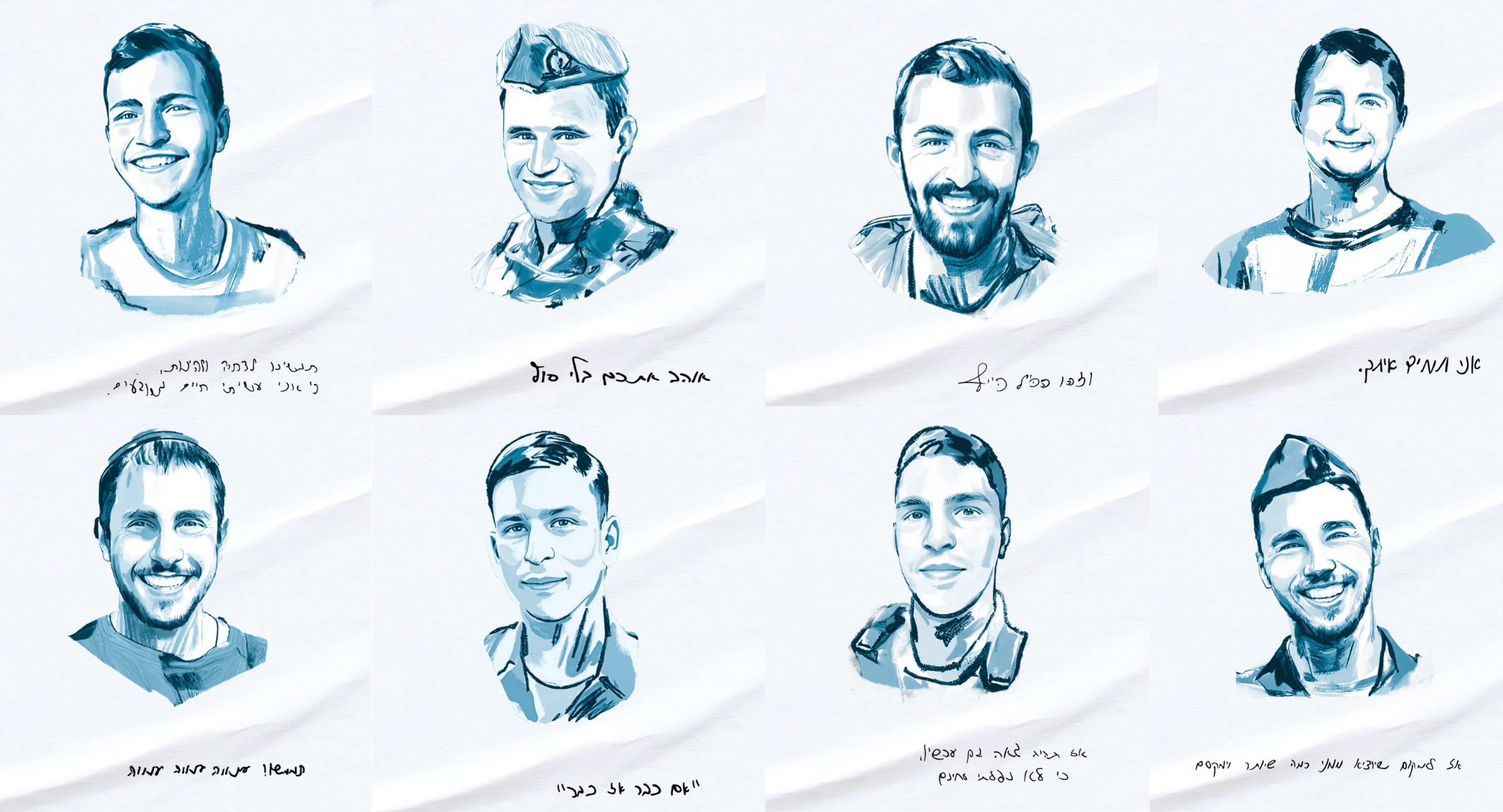
LEVY. Because my father said, “What if it’s Mashiach [the Messiah] and you’ve got to make sure that when he’s inside you he’s eating your nutrients, you need to make sure it’s kosher.” And then when I was born, he said, “Well, you know, when you breastfeed, he’s still eating from the nutrients.” And then I breastfed for nine months and she kept the same level of kashrut [Jewish dietary laws]. So, it really does affect someone’s personal growth when they think of themselves as trying to help bring that Messiah about – on a personal and on a broader level. And the second thing is, when you talk about writing the Tanach, the Bible. I’ve had the privilege of interviewing a number of widows that have been through October 7th, that have lost their loved ones, and other incredible heroes, a series called “Legends Among Us.” And they’re really legends and they share the stories of other legends. And I’ve sat in those interviews sometimes thinking like, it feels like the next chapter of the Bible is being written before our eyes in the State of Israel. And therefore, that leads me to the question: Do you see the State of Israel as part of the final redemption?
KLEIN. I do. I do, and that isn’t to say – I think there’s this almost fairy tale consciousness, “Well, this must mean,” and every time, every new year, every Rosh Hashana, watch it because the memes are going to start happening: this rabbi said, and there’s a source in this Zohar [the foundational work of Jewish mysticism] that this year is going to be the year of redemption. It’s happened every year, they’ve all said it. And I don’t believe in those fairy tales. I live every moment as if this could be the moment. And when I look at the State of Israel, my hope and prayer would be that this is the one. This is the final time that we’ve had to resettle our land. Hopefully, this will be the one where we get to settle, live in, stay in, rebuild in, and be in for eternity. And also, I don’t have to hang my hat on that hook in order for me to believe that this is part of the messianic age. It doesn’t have to be home stretch. But it definitely is part of the narrative. The fact that we’re witnessing open miracles in our lifetime, and I’m watching my children take it for granted. In fact, I’m probably taking it for granted. My great-grandparents made aliya [immigrated to Israel]. My grandparents and my great-grandparents. They made aliya in their seventies. To them, it was Holocaust and post-Holocaust. They lived the miracle, and we are witnessing open miracles. Where they take us, what happens from here is only in God’s hands. But I absolutely believe in it. And I’m not affiliated with Israeli politics. Being in America, I’m very distant from that. So I might sound a little bit like an am haaretz, like the uneducated, when I speak to this. I know it’s contentious when it comes to the courts and the government, and everybody has their opinions, which I think is a very Jewish thing, where Jews love to argue. So I think the fact that we have a fractious government is beautifully in line with Jewish nature. But the fact that we can argue over a Jewish government is messianic consciousness. And people will argue: but it’s not necessarily a religious government. [That] doesn’t matter yet. It’s not where we’re at yet. The fact that this is where we’re at is incredible. It’s beautiful, it’s profound. We’re definitely heading in the right direction.
LEVY. So what do you think is the greatest challenge facing the world today?
KLEIN. I don’t claim to be educated enough to speak to this. What I will tell you is in my personal life, the greatest challenge that I feel I encounter on a daily basis is still the greatest teaching of all time. I believe it was someone who wanted to convert that came to Hillel HaZaken, Hillel the Elder [and] said, “Teach me the whole Torah on one foot.” And Hillel said, “Ve’ahavta larei’echa kamocha.” Love your neighbor, love your friend as yourself. Everything else is just commentary. That is timeless, ageless wisdom. We still have not gotten close to where we could be with that. The world is so contentious and fractious, and we’re not just talking about religion against religion, Republican against Democrat. We’re talking Jew against Jew, neighbor against neighbor, family members against each other. I believe that if we focused more on just being good people: speaking with kindness, treating others with respect, ninety-nine percent of the things we struggle with would just disappear. And we talk a lot as Jews about tikkun olam, bettering the world that we live in. I really do think it starts with yourself. It starts with your immediate relationships, it starts with how you talk to others, how you treat others. That’s messianic consciousness. If you’ve ever been in a relationship that’s been difficult, if you’ve ever been a parent having to raise a child, then this part, this love, nurture, respect, care for another human being, I think it’s the hardest thing we’ll ever do. We’ll work on it for as long as we’re here on earth. We’re never going to master it. But the pursuit of mastery in this, I believe, is the hardest thing for anybody who’s really given it some thought and some effort. And if we can all just take a step back and work on this, ultimately you’re going to work on global warming. Whatever issues are big in your life or in your world right now, distill it. You’re going to find that it comes down to basic human decency, respect. And if you conduct yourself that way, you’re going to conduct yourself that way in every area of your life.
LEVY. That’s fascinating because my partner, Michael, on this mission of what we’re doing, when we started talking, it was just simple to him that “Ve’ahavta larei’echa kamocha,” loving your fellow as yourself, is that truth, is that golden standard. Why I say it’s interesting is because we’re in a conversation about mysticism here. And with him, it’s also about mainstreaming spirituality and that area. And yet, it’s something that anyone and everyone can understand and anyone and everyone can work towards.
KLEIN. And it’s the most mystical thing, right? Because to really, truly appreciate another person is to see divinity in that person. How much more mystical can you get? And I think it’s filtered a lot into Jewish tradition, but it’s not Jewish tradition. A monk in Tibet goes into a cave and meditates for seven years. That’s not Jewish mystical tradition. Jewish mystical tradition is: find the divinity in every person that you meet. And there are so many stories about Eliyahu HaNavi, Elijah the Prophet, that he appeared as an old beggar. And there’s a reason we tell these stories to children. You need to understand that Elijah or the Divine is in everyone you meet. You just don’t know.
LEVY. Yeah, it’s not just the king or the angel, it’s specifically the person that you think of as the beggar.
KLEIN. Yeah.
LEVY. How has modernity changed Jewish mysticism?
KLEIN. It’s made it much more accessible to the masses. It’s changed everything about Judaism, learning, Torah, and mysticism in particular. And there’s a concern with that. Because mysticism was always a secret. Mysticism was always, you had to work to achieve it; you had to find a teacher and then you had to be accepted by that teacher. And it wasn’t a given that you could just learn the secrets. And so in prior generations, the mystics were, I believe, of a certain caliber. They had to have been. And with that, it doesn’t mean that there weren’t some serious derailments. We had Sabbateans, Sabbatai Zevi. We had issues with that, and that’s why it was so secret and so hidden. Modernity made it accessible to everybody. So there’s a gift in that and I think the gift is that there’s many more voices. We’re unpacking this at greater speed, and also it’s more accessible, not just in that you can get to this information; it’s being distilled in a different way to the more common people. And the danger in that is the danger that mysticism always provides, that you can easily go off the rails if you’re not learning it from the right teacher. And also, I don’t believe that anything happens without God’s will. So the fact that it has become more available must mean that on some level, this is where the world needs to be shifting into. We need to be having these conversations. The question is: Are we doing it well, are we doing it right, and then where do we go from here?
LEVY. Wow. What differentiates Jewish mysticism from other mysticisms or religious traditions that are mystical?
KLEIN. I can’t claim to know enough about other mystic traditions, but in general, my understanding is that in other mystical traditions, the mystic is an ascetic. He has taken himself out of the world. And we do have stories of Jewish mystics that were ascetics, [such as] the very famous story of Rabbi Shimon bar Yochai and his son, Rabbi Elazar. They ran away from the Romans and they hid in a cave for thirteen years. And some attribute the writing of the Zohar [the foundational work of Jewish mysticism] to him. We can’t know for sure, but we say that it’s his magnum opus. And the story is that when they came out of the cave, they saw people engaged in mundane [activities], their livelihood, and they were so spiritual that they actually gazed at them with misunderstanding and judgment, and they burned people with their eyes. And they realized they were not ready to come out of the cave. And they went back to the cave for another year, so it was twelve years plus one. And after that thirteenth year, they were able to come out and they saw a farmer running home with flowers for Shabbat and they said: Wow, he’s taking the mundane and making it holy. And so the ascetics who actually locked themselves in caves and were deeply rooted in mysticism, they’re frowned upon in the Jewish tradition. The Jewish tradition says: No, be a farmer who sanctifies the mundane, takes flowers and makes them holy for Shabbat. That’s Jewish mysticism. Which is not to say that people who lock themselves in a cave and choose that path – it may be right for their personal growth, for their personal journey, but if you’re asking a generalized question about Jewish mysticism, it’s to make the mundane holy. And it’s part of the Ten Commandments, right? “Zachor et yom HaShabbat lekadesho” [remember the Sabbath day to sanctify it]. It’s the fourth commandment: Honor the Shabbat. Take the mundane and put it aside and just set aside time for holiness. Within the mundane.
LEVY. Yeah, I think it’s interesting that that specific story from the Talmud that you recounted is specifically about the person that brought the Zohar into the world. Meaning that you can be an ascetic mystic, but if you want to bring it into the world and make it effective, you could fall into the trap of the first twelve years. But that following year allows you to calibrate, balance, and therefore share mysticism that is a Jewish form of it.
KLEIN. Yes, very much so.
LEVY. Does one need to be religious to study Jewish mysticism?
KLEIN. I think so. And the reason I think so is because religion looks different for everybody, right? So I’m not going to claim to be the expert on which path is the right path. But I do believe so because mysticism is only valid in a framework. So if you don’t have the framework, then your mysticism – what does it mean other than abstract concepts? It’s almost like when I was in school and we studied math and trigonometry. And being sixteen studying trig, I was like, what’s the point? It’s beautiful math, it’s almost like watching a melody unfold, but where’s the application? And if I think back to who I was in school with, we learned complicated math [but] nobody in my class became an engineer. In fact, most of them are stay-at-home moms, they’re in fashion, or whatever they’re in; one of them opened a bakery. What happened to the math? But if you were an engineer, that would make sense. And it’s fine, it’s beautiful to appreciate a good equation. But if it goes nowhere, then it goes nowhere. And I feel like it could be beautiful to study mysticism as an ethereal, almost abstract concept. But what are you going to do with that abstract concept? A concept can only remain abstract for so long. And either you’re going to go so far off the rails into abstract concepts – because you had nowhere to put it – or you’re going to misapply it, which I see happens very often. And again, I’m not going to be the one to say this is how you have to practice religion. But the more I study halacha [Jewish law], halacha is actually defined. Halacha –
LEVY. Jewish law.
KLEIN. – Yeah, Jewish law has a very deep psychological component to the way we practice what we practice, how we practice it, why we practice it. The deeper you go into what is considered almost mundane, there are actually very deep mystical elements. So, studying mysticism without having a practical application for it, it’s almost like, why do it? Where does it get you?
LEVY. You talked about misapplication. So can mysticism be dangerous?
KLEIN. For sure. Yeah.
LEVY. What do you mean by that?
KLEIN. To go back to the math example, everything in this world comes down to numbers. We live in a numbers economy. Every time you turn on the radio, you’re hearing earnings reports. Financial reports, the market – the government runs on numbers. Everything that you ingest is FDA approved in terms of the food and drug administration. So everything goes by statistics, everything goes by research, numbers. If you are smart enough to manipulate the math, you manipulate an entire consciousness of people. Every drug that you take, every medication, there is math that proves its efficacy. But if you’re a manipulator, and it’s not even about lying, it’s about knowing just how to present the equation, you’re going to poison people. And it’s happened so many times. How many times have we had drugs that were recalled? Or things that we once thought were healthy, now we’re discovering are really bad for us, or the conspiracies of everything that was covered up. I know this is a terrible example because we were talking about spirituality, right? But talk to a math professor; they have this spiritual relationship with numbers the same way that we do with mysticism. It absolutely can be. I’ll give you an example. I met someone recently who had some mystical, spiritual, very deep in Zohar, study. And they had some spiritual download, awakening, and they were told, they believed one hundred percent, that they were greeted by an angel, that they communed with this angel, and they received a message that they received a new name that captured their essence, and they were told to tattoo it onto their body. And so they did. But the Torah very practically says: We don’t tattoo our bodies. It’s in Leviticus, it’s very clear. And when I asked this person, they were 100 percent certain that that rule – they had a whole new interpretation of that rule that was completely contrary to our Jewish understanding of what that means, and they 100 percent believed that because of their spiritual insights, and what they saw, and what they achieved, and what they accomplished, their directive made them an outlier. This is one story. This is a great story to tell because most people who are familiar with Judaism just know: Jews don’t get tattoos. We just don’t do it. I mean, contrary to popular belief, you can still be buried in a Jewish cemetery, there are a lot of myths around that, but it’s just a known thing.
LEVY. It’s a good example of where you said that Jewish law is what needs to tether mysticism.
KLEIN. Yes.
LEVY. Mysticism without it can just go aloft –
KLEIN. Right.
LEVY. – and go aloof.
KLEIN. Yeah. And then I also ask myself, is mysticism making you a better person? Going back to the “Ve’ahavta larei’echa kamocha” [love your neighbor as yourself] piece. Is it making you a better person? Are your relationships being enhanced? Are you a better father, mother, spouse? Are you better at your job? Do you breathe better because of what you study? Do you fold the laundry better? Folding the laundry is – I’m always going to come back to it. As a mom, we spend a lot of time folding the laundry and making the beds. Do you have a greater appreciation for the actual life that you’re living? And I don’t see that.
LEVY. So let’s translate it beyond laundry into the people you’re doing the laundry for.
KLEIN. Yeah.
LEVY. Your relationships with loved ones, with students, with people around you. Do you feel like it has actually transformed your relationships? And if so, can you give a personal example or show us how?
KLEIN. So remember, I’m not the one who studies Zohar. I’m the one who’s realizing how much catching up I have to do. I laugh about it, but I was born during the Shloshet Yemei Hagbala, the three days before the giving of [the Torah at Mount] Sinai.
LEVY. Before the Shavuot [Festival of Weeks] festival.
KLEIN. Yeah, Shavuot. So I was born gimel, three days, before the giving of the Torah. And in the Torah, in the Bible, it talks about how the Jews were commanded from the third day, from my birthday, to spend three days preparing for the Torah. And as I’ve gotten older, and I’m not forty yet, but I’m a couple of years away, but as I approach forty I have begun to realize that I was born under the umbrella, in the energy of preparation. And I’ve realized I actually feel so unprepared. As I approach forty, the age of mysticism, I realize there’s so much I don’t know. And so I’ve taken a backwards route where I realize I have to immerse myself more in halacha [Jewish law]. I thought I knew what it meant to keep Shabbat. I don’t. The more I study, I’m like, Oh my gosh, I’ve been taking it for granted, I don’t know anything, or kashrut [Jewish dietary laws], or taharat hamishpacha [family purity laws], or all these things. So I’m kind of the anti-Kabbalistic movement, but from a place of wanting to ground and anchor my very mystical perception of life.
LEVY. Does this express itself with your kids or with your students?
KLEIN. Absolutely. I’m a breathwork facilitator and I run an academy. I train facilitators in breathwork. And one of the things I tell them is that the goal of a good facilitator is not just to facilitate the client that we’re working with. I just want to be the kind of person that people breathe easier around. Not because I facilitated them, just because being next to me, you feel better about yourself. You feel like you can let go. And so [I aim to do that no matter what] I am studying, whether it’s Kabbala, whether it’s halacha, whether it’s just parasha [the weekly Torah portion]. And I can’t believe I just said just parasha because there’s no just about parasha. Actually, my foray into this was relearning parasha. I signed up [for] the Partners in Torah, which is an organization that pairs learning partners. They take someone who’s unaffiliated, [who] doesn’t know much about Judaism but wants to learn more, with someone who’s ostensibly Orthodox and can create a study partnership. And they said, “We’re going to sign you up to [learn with] a college student.”
I’m like, no, no, I am the unaffiliated one. I’m the one who knows nothing. And we started out by learning parasha. And we learned parasha from The Little Midrash Says. It’s a kid’s book on parasha. I spent three years on that book. And it changed my everything. Because I had taken parasha from a Cinderella place. When you’re four, and you learn Cinderella for the first time, and you’re like, whatever, glass slippers, and it’s fine, and you don’t think twice about that. And then when I was a mother, I first told my daughter the story about Cinderella, and she said, “Ma, you can’t wear glass slippers. They give you blisters and they cut your feet.” And I didn’t think about that. And that’s how parasha was for me. All these stories that I had completely accepted without thinking about them, revisiting them as an adult, I had so many questions and it was so exciting for me. So, how does that affect the relationship that I have? I think that’s the question that I completely segued on. It changes everything because it humbled me. It taught me that I know nothing. Every day I wake up early and I study. And it feels like I know nothing. And I don’t know why I keep coming back. I don’t know what draws me to wake up at some unholy hour every morning, and as mothers we’re not getting enough sleep as it is, and just to say: no, I just want to show up, I just want to learn more. And you feel like such an idiot, sitting in front of these pages. No one taught me how to learn; I still don’t know how to learn. And you’re just like, please, I just want to hear these words. I just want to know more. I want to know what I don’t know. And then you look at your kids who are struggling – I have three teenagers – and it’s so hard to be a teenager. I remember how hard it was to be a teenager and they have it so much harder than me. And I have so much compassion for them. I can show up to them differently because I don’t know. I don’t know what I don’t know, and how do I expect them to know? Also, when you study, again, I can’t speak for everybody and how everybody studies, but for myself, that level of “I don’t know anything” has brought up so much shame. So these past few years starting to learn Torah from a real place has forced me to work on my shame, has forced me to work on my insecurity, has forced me to work on my ego. Has forced me to say I’m sorry a lot, right a lot of wrongs. Like I said before, I’ve been on stage for a long time. So, people love seeing me evolve on screen, and people hate me for it, too. Because they’ll say, “You look like this now, but you used to look like that,” or “You used to speak like that.”
And to be in this place and say, “Yes, and also, I don’t know what I’m doing, and I’m learning, and growing, and evolving.” I can’t pretend to have it all together and it absolutely has changed who I’ve become in relationships. Of course I mess up, of course there are people out there who hate me, who will tell you the worst things about me, my kids probably included, which is healthy, they’re teenagers, they’re supposed to individuate from their moms. But I do believe it’s changed everything about the way I show up. And also, it’s changed the way I show up to myself.
LEVY. So we’ve talked about how teaching has transformed you as an individual and your entire life. Can we end just with a teaching? What’s one thought, idea, learning that you take with you or that’s resonating at this moment?
KLEIN. This is not the Zohar piece, this is completely different. What’s resonating with me at this moment? Oh my goodness. Well, we are recording this just after Parashat Re’eh [the Torah portion of Re’eh]. Today is Sunday so yesterday we read Parashat Re’eh. And because you had me prepare something in the Zohar for this interview, and one of the available parashot [weekly Torah portions] that you didn’t have taken was Re’eh. So I just looked it up. I wanted to see, maybe there’s something to say on this parasha. Turns out that out of all the parashot, the Zohar has the least on Parashat Re’eh, almost nothing. And that was interesting. And yet, my takeaway from that was: Of course. Because the name of the parasha is Re’eh, to see. And if someone truly sees, the Zohar doesn’t have to articulate anything to the person who sees. All of the Zohar, all of these teachings are an invitation: Just open your eyes and look. And sometimes I watch people and they’re so engrossed in the text in front of them, and I wish I could tell them, but pick your eyes up from the text. Pick your eyes up from your cell phone and look at your kid who’s standing right in front of you. What are you not seeing in your search for enlightenment? People think enlightenment’s going to be in some text, or at some workshop, or in some Ayahuasca psychedelic ceremony, but it’s right here. It’s really right here. It’s the adventure of the life that you’re already living. So, Parashat Re’eh, I believe, was the invitation to close the Zohar and go out and gaze at the sunrise, the sunset, the trees, your kids, and take it from there.
LEVY. It’s fascinating you said that. Because the Talmud famously says “ta shema” when it’s deducing something: come and listen.
KLEIN. Come and listen.
LEVY. And the Zohar says “ta chazi,” come and see.
KLEIN. Oh, interesting! I did not know that.
LEVY. It’s one of the differentiating factors. So, it’s like one of the key differentiators there. So what you picked up on is really that powerful of Re’eh, that command, that imperative that we need to open our eyes, see the mysticism before our eyes. And really, Fally, what I’ve seen from this conversation is someone that’s opened new eyes and that constantly opens new eyes. And we give you a blessing that you continue not just to open your own eyes in the deepest way possible, but to help open the eyes of all those that you continue to teach, continue to live by, and through that see the most powerful light that ever came forth.
KLEIN. Amen, thank you, and may the blesser be blessed.
LEVY. Amen, thank you.