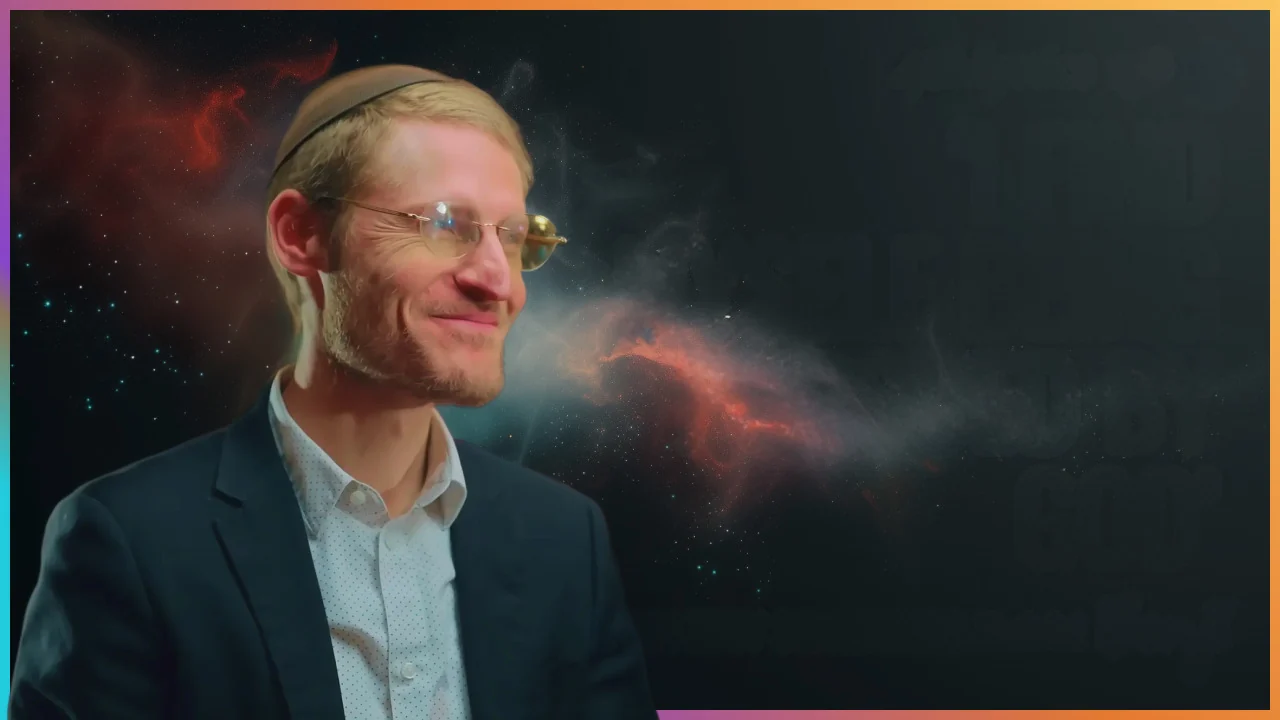
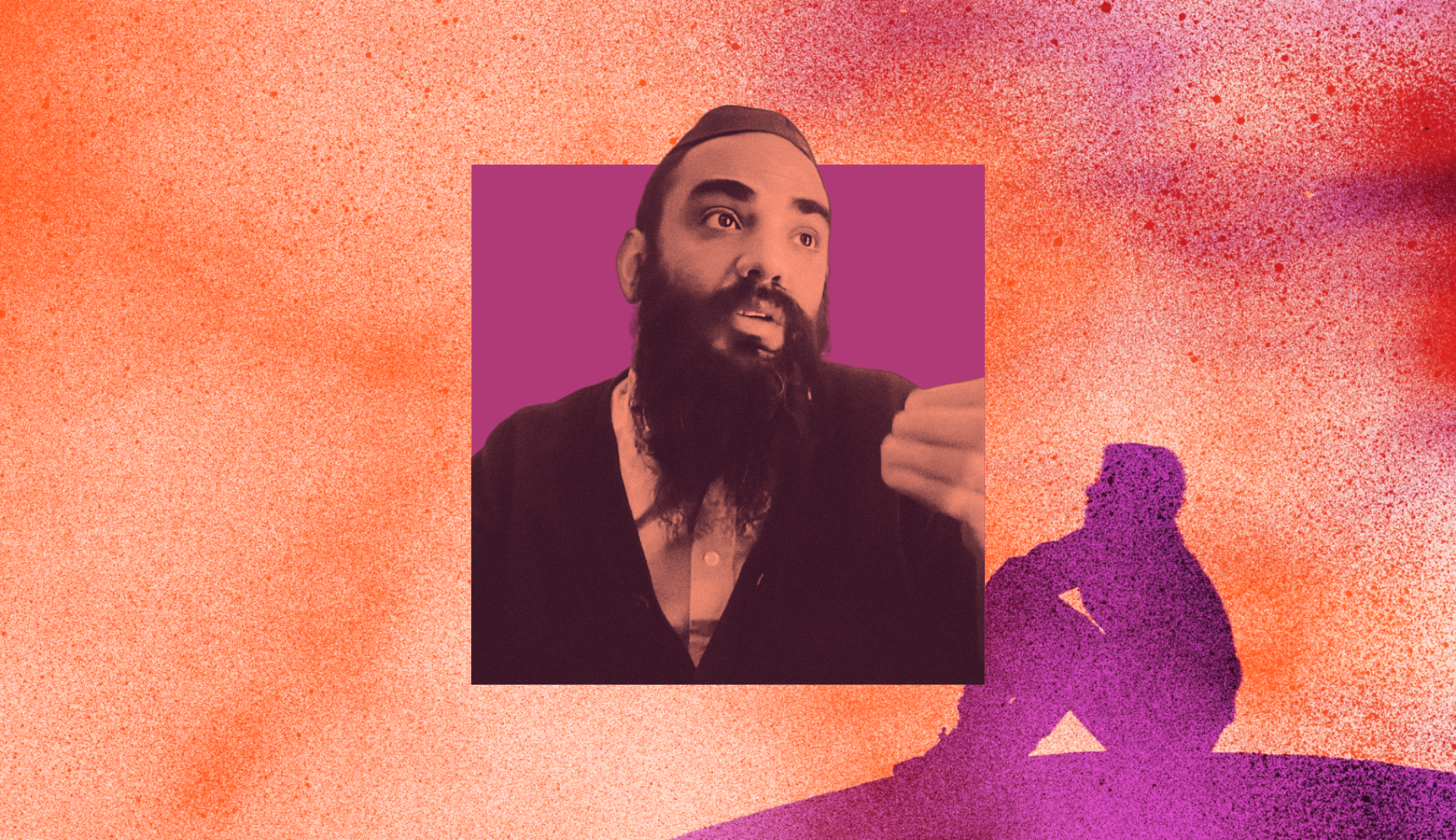
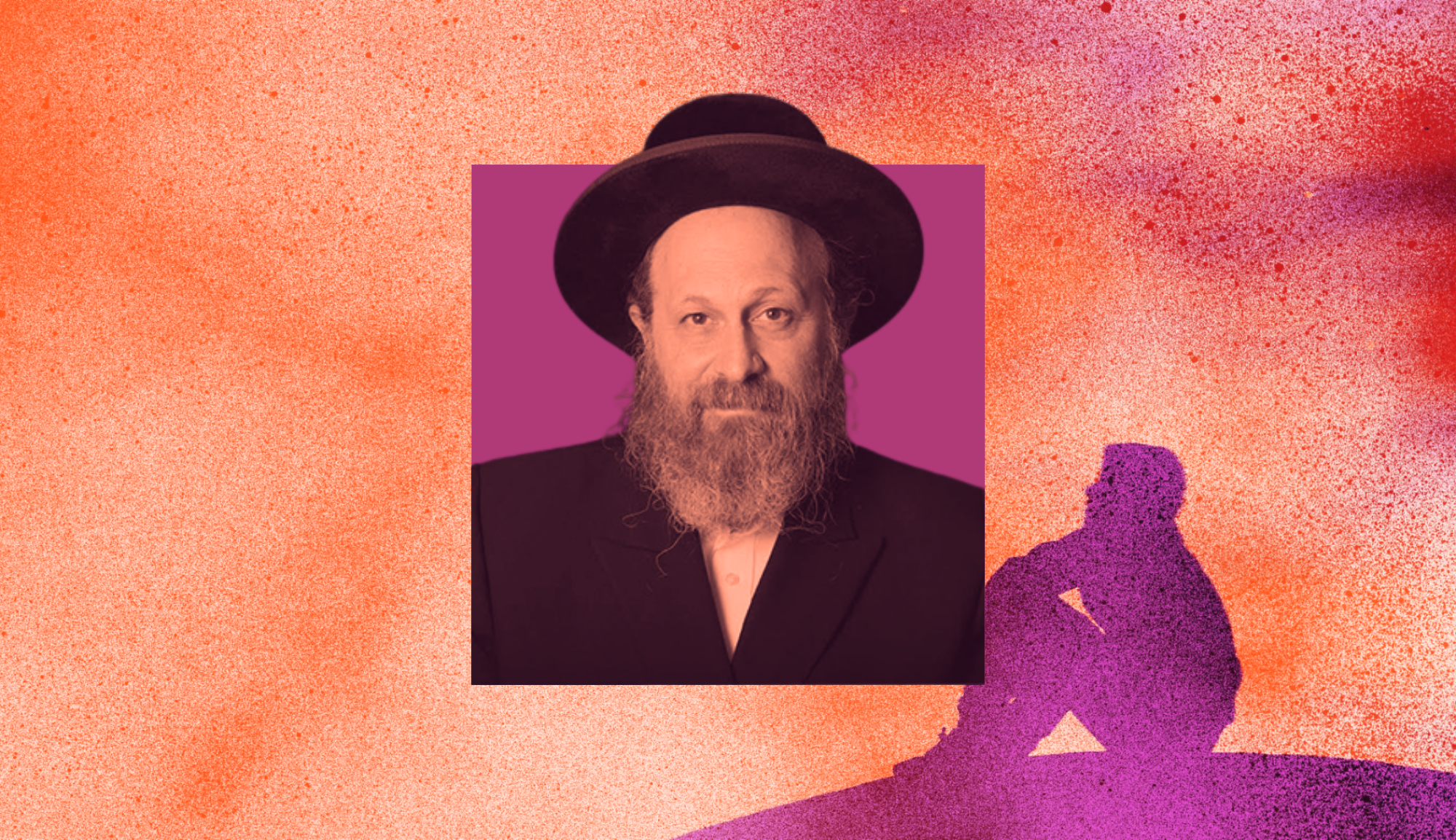
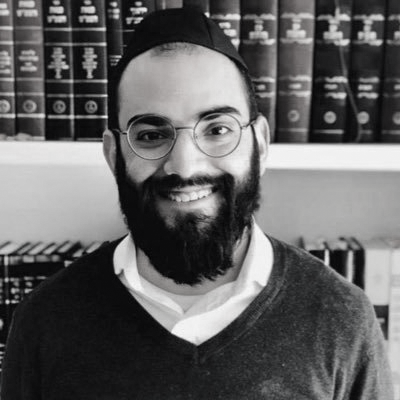
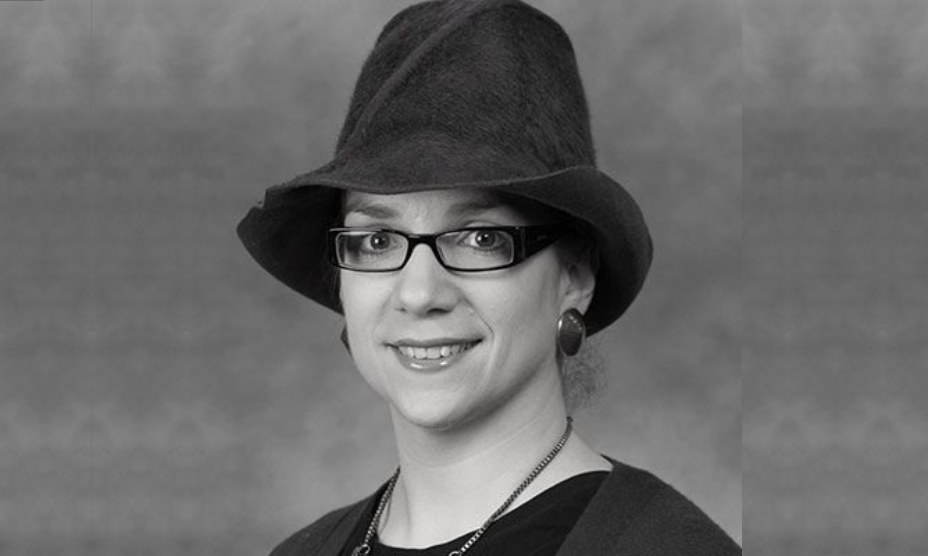
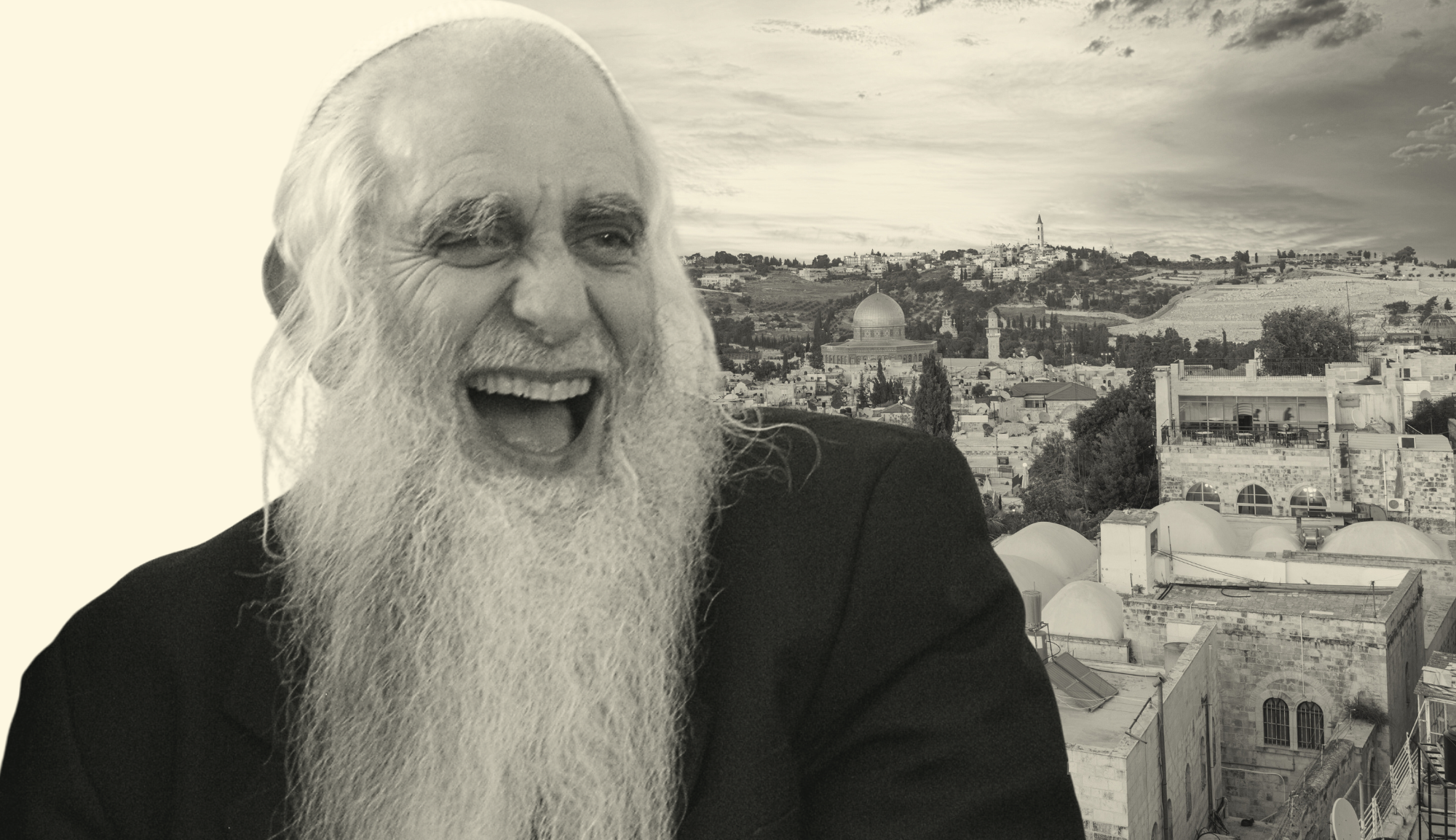
RABBI DR BENJI LEVY. Rabbi Ari Ze’ev Schwartz, it is such a privilege and pleasure to be sitting with you in the heart of Jerusalem, around the corner from your home, in the shul, in the synagogue that you pray in. You are an incredible author and you just came out with The Spiritual Revolution of Rav Kook. You’re an amazing teacher, and you’re a dear friend. I got to grow up with you in Sydney, Australia and to watch you from close and from afar, inspiring so many, means so much.
So thank you so much for joining us today.
RABBI ARI ZEEV SCHWARTZ. Thank you for having me, and yeah, it’s exciting to talk to you. We probably could have had this conversation for many years, but finally we got to put it on film.
LEVY. Can’t wait to have it. So I guess let’s start. You’re a Jewish mystic yourself. What is Jewish mysticism?
SCHWARTZ. Okay, well, I think the word Jewish mysticism, if you really use a technical term, it’s obviously Kabbala. And I think for me, my entrance for Kabbala is through Rabbi Kook, Rabbi Abraham Isaac HaCohen Kook. So Rabbi Kook is somebody who basically has taken the most practical parts of Judaism and uncovered how they’re all connected to some higher spiritual purpose.
So, for example, if you’re putting on tefillin [phylacteries], it could just be a mechanical thing. But according to Kabbala, it’s something that is connecting to your soul, to all different spiritual worlds, and obviously having an effect on something bigger than just the individual. So I think Kabbala in that sense, and mysticism, is taking something that seems very simple, like a simple law, a simple practical thing, and realizing it has major effects on not just your own physical body but your soul and all the people around you.
LEVY. And how were you introduced to Jewish mysticism?
SCHWARTZ. Again, I keep going back to Rabbi Kook because I really think that with any other type of Kabbalist or mystic that I was introduced to, it didn’t really affect me until I got into Rabbi Kook’s writings. One of the big misconceptions of Rabbi Kook is that he was just a normal Chief Rabbi of Israel. But the deeper I got into him, the more I realized this is a person who took Kabbala as his number one identity.
And anything from meditation, to prayer, to studying Kabbala, even small things; he would write books and he believed that there was such positive spiritual energy [in them]. He wrote in the Reish Millin [Rabbi Kook’s work on Jewish mysticism], he would literally give it out to people, and he believed that there was a spiritual effect it would have on people just by having it in their hands.
LEVY. So, I guess, how did you connect to him then?
SCHWARTZ. Yes, again, I think that I’d gone through Rabbi Nachman’s writings before, the Baal HaSulam, I looked at his writings, but I think Rabbi Kook, when I was introduced to him through Rabbi David Aaron, it was the first time that I really realized Kabbala and mysticism weren’t just something cool and trendy; they really helped my personality. And [mysticism is] anything from: if I focus more on my thoughts, they can affect people just by thinking positively, or another thing: if I am always having negative thoughts about someone, that will have a negative effect on my own relationship to them. This you could obviously say is psychology, but I think it’s deeper than psychology because Rabbi Kook and the Zohar and the Baal HaSulam, they really believe there’s an interconnectivity between all existence.
So if I really am connected to everything, if I think something negative about somebody, it’s going to have a ripple effect on them, and that ripple effect will come back eventually to bite me. It’s going to come get me as well. So I really want to take responsibility for my thoughts, and my words, and my actions, and I think that’s really the beginning of what mysticism is for me. And again, through Rabbi Kook, that’s how I got into it.
LEVY. And so, in an ideal world, would all Jews be mystics?
SCHWARTZ. Rabbi Kook says in Shemona Kevatzim that he thinks there are nigleh [revealed] souls and nistar [hidden] souls, which means there are mystical souls and there are more practical souls.
So mystical souls for Rabbi Kook are a certain type of personality that Hashem put in the world, a certain neshama, a certain soul. So I don’t think Rabbi Kook – and I wouldn’t believe this either – believes that everybody has that type of neshama. So there are souls that really are much more connected to the practical parts of life, and for them it really feels unnecessary to talk about something that you can’t touch and you can’t see. But for those souls who need that, almost like they need nourishment, they need that food to survive, it’s a must.
Mysticism is a must for people who have that certain sensitivity in their soul who can feel almost in a poetic way that there’s something more than just meets the eye. I was always into music growing up, so I always had this feeling that when I listen to music it’s doing something to me even though I can’t see it. I don’t know where it’s coming from, and then I want to listen to it with other people. You’ve heard me play the clarinet before.
LEVY. Beautifully.
SCHWARTZ. So what exactly am I doing with the clarinet when I’m playing it? There’s a vibration coming out, and it’s affecting people, but I can’t see what’s coming out of the clarinet. And so I think for me, people who are very musical, Rabbi Kook says, [they] are often very connected to mysticism. People who are very artistic are very connected to mysticism. So for those people who have not been exposed to Kabbala and mysticism but are really musical and artistic, I think it actually is an obligation for them.
They should be immersed in Zohar and immersed in Ramchal, Rabbi Kook, Baal HaSulam, [and] Baal HaTanya. But for other souls who really just are more intrigued by the practical parts of life, I don’t think it’s necessary for us to put it into them. And also Rabbi Kook has this great line in that piece in Shemona Kevatzim where he says that they’ve already been nourished enough in this kind of spirituality. That’s why when they learn Kabbala they feel like, I don’t need this.
So it’s the opposite of what you would think. You would think Rabbi Kook would say, oh we’re undernourished if we don’t like Kabbala and we’re overnourished, like we have enough and we need more. But it’s the opposite. The people who aren’t turned on by mysticism for Rabbi Kook, it’s because something inside of their soul is happy without it.
So we shouldn’t be judging them and saying, oh, really you’re not as deep as me. It’s the opposite. Something inside of their soul is extremely well rounded. It doesn’t need that.
And on the other hand, people who are extremely hungry, like myself, for that which you can’t see, that which you can’t physically touch but know it’s real, it is almost like I’m undernourished. I need more of that. And just on a practical level, I’m learning mysticism every day, and if it’s Rabbi Kook, if it’s the Ramchal, if it’s the Baal HaSulam, these are things that, almost like food, I’m putting inside of me every day because I feel there’s something lacking if I don’t learn it.
LEVY. So you talk about something that you feel but you don’t touch. What do you think of when I say the word God? What is that construct? What do you imagine or what do you connect to?
SCHWARTZ. So for what the word God is, I think it’s pointing to something extremely deep and just like a menu. When you’re looking at a menu and you see a chocolate souffle with ice cream, milk, and caramel, it would be ridiculous to eat the menu.
So the words are trying to point to some experience. What is the experience of God that the word is pointing to? For me, based on what I’ve learned, and definitely in Rabbi Kook’s writings, I think the word is pointing to a consciousness that exists, that is pursuing me, that is guiding me, that won’t leave me alone, that loves me unconditionally, and that is asking me to do something. And it’s not a guy in the sky, but it is something beyond me. So in that sense, Avinu SheBashamayim [Our Father in Heaven], when we say these phrases in normal rabbinical language like Our Father in Heaven and Avinu Malkeinu [Our Father Our King], I don’t think they’re so far off.
In other words, there is something beyond us like a king. There is something compassionate like a father. So these words are not superficial; they’re pointing to something very deep. But on the other hand, the mystics like the Ein Sof; they love using the word Ein Sof. Rabbi Kook loves using that phrase, which means the Infinite One. It’s not just a thing in the sky, it’s something that permeates all existence.
And for me, that means that not only is God the Creator of my life, but I can actually experience the Divine in music, in art, even in this relationship right now, in this conversation. Martin Buber, who was a famous mystic, used to say that God is the electricity between two people when they feel connected. So I think that there is divine experience in all depth.
And I can pursue that. And more than that, it’s pursuing me. Even if I am not pursuing God and spirituality, it continues to run after me even if I ignore it. So if I go through a day where I was too immersed in worrying, and money, and the business of life, and stress, I find myself almost being pursued by God. Like Hashem won’t let me just have a day that’s satisfying by working on material things.
Like He won’t let me just be happy in the physical world. There’s something more to life. And so, no matter how much I try and ignore it, that spirit is pursuing me. And Rabbi [Abraham Joshua] Heschel, in God In Search of Man, he said that more than we are in search of God, God is in search of us, in the sense that this consciousness that is something we can hold on to isn’t just like this blind force that I can feel sometimes. It is literally pursuing me. It’s running after me. It won’t let me have a break. And I think there’s something very almost romantic about the Kabbalistic understanding of God. Like Hashem is in love with me. Hashem is in love with human beings. And it doesn’t matter how much human beings have ignored God throughout history, God will not give up on us. And I think there’s something very beautiful about that, that there is this love story between God and Creation.
LEVY. It’s almost like our faith in God reveals God’s faith in us.
SCHWARTZ. Yes, 100 percent.
LEVY. Beautiful. And what about the Jewish people? What’s our purpose?
SCHWARTZ. Well, the Jewish people, I think, is a tough question. There were people who were very bothered by the idea of the Jewish people having some unique connection to Hashem. And that sounds racist and [like] you think you’re superior to the other nations.
I think a more mature understanding of the Jewish people is based on a famous midrash [homiletics], which is that God searched for any nation and all nations to receive the Torah. And the nations didn’t want to receive the Torah until eventually Am Yisrael [the Jewish People] came along and said, “We want the Torah.” So in that sense, Hashem is pursuing humanity. But Am Yisrael, we said yes; we wanted the mission that Hashem wanted to give us and wanted to give the whole world.
And if any non-Jew would want to join this amazing mission called the Torah, then they can join. Right. That’s called a convert. But we’re not going to force and convert someone against their will, because it really is a mission by choice.
I think the Jewish people in that sense are definitely a mission. We have a mission in life and it’s a spiritual mission and it’s an ethical mission. And it materializes itself in many ways, like having a physical land that we have to protect. But it can also be not just about the land. It’s what the land does for the world. I heard Jordan Peterson say this when he came to Israel, that he felt like the Land of Israel was really like a light to the world. Like when he came, he felt like it was more than just a country, like it represented something bigger than itself. So I think that is what Israel is supposed to be. That even though it is a country and it’s a concrete thing, it is both concrete and also something much bigger than the concrete. And as someone who made Aliya [immigrating to Israel], you’ve made Aliya; we both came from Australia. I don’t feel like living in Israel and being a part of the Jewish people is the same as living in Australia and being part of the Australian nation. It seems to be something more than just the physical going on here.
So the Jewish people in that sense, we really are personifying this higher purpose to life. And anybody who wants to join it and fulfill it is welcome.
LEVY. And also, even if they don’t want to fulfill it, they have their own ways to relate and fulfill different purposes. But you’re saying there’s a unique purpose for Jewish people and other peoples equally.
SCHWARTZ. Yeah. In other words, the fact that the non-Jewish world doesn’t have to convert doesn’t mean obviously they can’t connect to God, and meaning, and purpose. There’s so much depth and meaning in many other ways to connect to God. But I do think something unique, as you said, what is something unique about the Jewish people? I think that we have taken upon ourselves as an entire people this responsibility. And what’s remarkable in Rabbi Kook’s writings is he says even if a Jew says, I’m part of the Jewish people but I don’t believe in the mission, I don’t believe in God, I don’t believe in, [et cetera], they end up being a part of the mission anyway. In other words, just associating yourself with the Jewish people causes you to be a part of this mission. You can’t run away from it. And that goes back to what I said before that it’s more than we are in pursuit of Hashem; Hashem is in pursuit of us. Like a person who wants to assimilate but they’re a Jew; they still have that name “Jew.” And it pursues them wherever they go. They can go to Kansas City, they can go to Australia, but your name Jew, Yehudi, is going to pursue you. And it’s [in] just a matter of time, hopefully, that you come back.
That’s the story of the Zionist, Theodor Herzl, that he was trying to throw away his connection to the Jewish people for so long. But eventually he came to the really deep acceptance that to be a Jew is something I can’t evade; I can’t run away from it. And instead of trying to throw it away, maybe I’ll look into it and go deeper into it.
And Rabbi Kook had a lot of respect for the early Zionists because even though they didn’t connect to all the Torah and the whole spiritual mission, they really believed that there was something worth fighting for to be a Jew. So I don’t think it’s all or nothing. There are Jews who feel connected to some of the Jewish people or the Jewish tradition and Jews who feel connected to all the Jewish tradition. I think ultimately it’s like a ladder of observance. And every Jew who wants to go deeper into what this Jewish tradition is gets more and more and is able to give more to the world.
LEVY. And how does prayer work?
SCHWARTZ. Okay, prayer. I think prayer is one of the greatest tools that God has ever given us as human beings to transform ourselves and the whole world. So take, for example, refuah [healing], if I’m praying for somebody whom I truly think needs help. So usually we think if someone needs help when they’re sick, I would send them to the doctor, which is something we should do. This is a very important thing to realize. We’re not just spiritually caring for them, we have to physically care for them.
But the role of prayer is very significant. If I’m praying for somebody, definitely according to Kabbala and mysticism, my words have a ripple effect on them. And there’s an interconnectivity, as I spoke to before, that if I’m praying for somebody, I really am using my positive energy and sending it out to them. And there are some people who believe you have to say their name exactly, and if you don’t say their name it won’t work. Other people say, okay, generally I should send positive prayers towards that person. But either way, there is some incredible ability. If I really take my words and my thoughts seriously I can influence people whom I’ve never even met across the world.
So that’s one understanding of prayer. Another understanding of prayer is more like a psychological understanding. And I don’t think that’s any less important. That if I’m using words every day, almost like a mantra, and I’m saying every day: I want to be a wiser person, I want to be a more caring person. I really want to be a person who takes healing more seriously, which is what is in the Amida [silent prayer service].
Then those values start becoming internalized into me. And the question of: Is prayer psychological, or is it a mystical thing? I think the answer, usually when it comes to those questions, is yes. It is both psychological and [it] is all mystical. And we shouldn’t feel the need to have to pick one over the other because things have many dimensions.
So the fact that prayer psychologically does change my thoughts every time I say the words, no matter what, even if I didn’t believe in God. The prayers literally are affecting my mind, we should say, well, that’s a real thing. On the other hand, if that’s only prayer, Rabbi Kook says in one beautiful piece, if prayer only changes you, then we don’t even need God anymore. But if prayer is like a magic trick where I just say the words and then I hope, hocus pocus, somebody will get better, then that’s kind of ruining and taking away from the inner logic of prayer.
Prayer does have a deep spiritual logic to it. And as I said before, the psychological can be one way to explain it, but the mystical can be another logic, which is: My words and my thoughts have a ripple effect on the universe. And the more I take my words seriously, and the more I concentrate on the person I’m thinking of, the more it can affect them.
LEVY. So if prayer is our capacity to speak to God, often people say that Torah study is God speaking to us. The question is, what’s the goal of Torah study?
SCHWARTZ. Okay, Torah study. So Torah study is kind of like, I would say, the partner of prayer. You’ve got prayer being able to affect the universe. And in many ways, studying Torah is me trying to access the wisdom of what I’d want to even pray about. Rabbi David Aaron, who I know you’re going to have on this show, is one of my teachers. He says that we study Torah to know what God wants, and we pray to want what God wants, and then we do mitzvot [commandments] to do what God wants. So I think that’s a great way to think about Torah. Talmud Torah [Torah study] is me accessing [the] wisdom of how exactly God wants me to act in this world.
But I think there’s also another element, and I learned this from Rabbi Shagar, Rabbi Shimon Gershon Rosenberg, another great mystic who died, I think, in 2004 or 2006. Rabbi Shagar said that when a person learns Torah, when a Jew learns Torah, there’s a unique brit [covenant]. There’s a deep connection, like a covenant that a Jew has when they learn Torah, and it’s not just to access information. And I definitely feel like this with my talmidim [students], when we’re learning in yeshiva, in a midrasha [women’s institution of Torah study], that it almost feels like we’re having a deep connection right now with the Ein Sof, with the Infinite, with our souls.
It’s like an experiential thing happening. So it’s not just information that later on I’ll use in my life when I get home with my wife and kids. But [through] the very act of studying and reading and immersing ourselves in divine wisdom, I go through a transformation right here, right now. And if anybody has never studied Torah late at night in a beit midrash [study hall] with a few friends, that is a mystical experience.
I remember I had this one Rabbi in yeshiva. At about midnight every night in yeshiva, he’d come in late in the night, and basically the lights would turn off in [the] yeshiva, and then there’d be this little part in the beit midrash that [the light] would stay on. And the guys would huddle around, and then he would teach us Zohar. I remember he would teach us Zohar. And I remember this excitement, like, what’s going to happen at midnight? What ideas are we going to enter into? But it wasn’t like I’m going to learn information and then later on it will be helpful in my life. It was helpful in my life, but there was an actual experience that was happening in that moment, live, right now. And you have to try it. You have to try this experience called Talmud Torah. So I think those are the two aspects that I often think about.
Torah [is] for some practical benefit, right? Talmud Torah, so maybe lidei maaseh [for practical use], that’s what the Gemara in Kiddushin says – Talmud Torah, learning Torah, brings action. And then Talmud Torah for its own sake. Learning Torah as its own spiritual experience, and definitely the mystics, [like] Rabbi Shimon bar Yochai; he would sit in the cave. There’s that famous story where he would literally just sit and study nonstop. There’s no doubt that when he’s in that cave it’s not just, learn Torah so when he leaves the cave he’ll know what to do. The cave itself, being inside of there, is an experience of God.
LEVY. Amazing. So you have the privilege to teach women and men in yeshivot and midrashot. Is there a difference in Jewish mystical teachings between women and men?
SCHWARTZ. That’s a very good question. I think there is a fundamental difference. The question is, is that fundamental difference so strong today? I think theoretically there’s a fundamental difference. In other words, if you read Kabbalistic books, we should be honest, there is a very strong emphasis on men and women being different, and feminine aspects and masculine aspects, and mashpia [influencing] and mekabel [receiving]. So I do think on a theoretical level, 100 percent, it would be a lie to say no, really they’re the same.
But on a practical level, in other words, I deal with them; I’m learning with them every day. Today I taught in the morning in yeshivot [higher institution of Torah learning, for men in this context] and then in the afternoon in midrashot [higher institution of Torah learning for women]. I do think that over time it’s becoming less and less noticeable, the difference. And I’ve been teaching for almost fifteen years now in midrashot and yeshivot. I think it’s becoming less and less noticeable as the years go by, even in my teaching. And I don’t know exactly why that’s happening, but it is happening.
And I remember sometimes in yeshivot they’ll make fun of it. They’ll say, oh we learn better than in the midrashot. And I always say to them, I teach in midrashot, they’re better than you. They’re learning more seriously than you. They take more attention to everything I say. They ask questions at the end of the class. You guys immediately after class run away and want to go eat some food.
LEVY. So you are saying there’s a difference, just because women are better.
SCHWARTZ. I wasn’t saying that, but I was saying that I often knock back men who immediately say, oh, we must be greater than them. Because I’m literally living that experience of teaching them and then teaching them. And it’s not that they’re the same, but I just don’t feel strong differences. And I’m sure there are differences. I’m just not spiritually attuned to be able to pick up on them. And it would be arrogant for me to say I know the differences and what exactly is going on. I also think that because of the generation we’re in, and definitely because of the liberal and secular values that we are so affected by, it’s becoming more and more clear that people are very confused about their identities sexually and what masculine energy is and what feminine energy is. So I think that we’re in a very exciting time period.
We’re literally in, it’s like writing a PhD about what a man and a woman is. We don’t know. Simone de Beauvoir [was] a very famous feminist who talked a lot about how women are inferior. That’s what she wrote about. She said, I don’t even know what a woman is. She wrote in her famous book, Second Sex. She said, I don’t even know what a woman is. We have not even figured out what the woman is. We have to figure what that looks like. We know what men are, but we don’t know what women are. So I think we’re in a time period where we’re really just getting deeper and deeper into that discussion. And I’m excited to see what the generation will produce, what insights will come out of men and women.
And I will just say that Rabbi Shagar wrote in one of his essays that he, because he also taught in yeshivot and midrashot, and he said that he believed that the Torah of geula [redemption] is going to come out of midrashot and not yeshivot.
LEVY. The redemption. The Torah of redemption.
SCHWARTZ. And the reason, in his opinion, and I think there is something to this, is that in yeshivot it’s often very stale because this is what you need to learn. And this is how many hours you need to learn this and that. Whereas in midrashot it’s a new thing. It’s fresh. And there’s more room for different insights and classes on the Zohar, and Kabbala, and Rabbi Kook, and Rabbi Nachman, that in the yeshiva world, in the men’s, they’re still kind of stuck on no, you don’t learn that. You only learn this.
So Rabbi Shagar was quite excited to see what the midrashot, what the women’s spiritual institution, would produce. And because I’m a part of it, it is very exciting. It’s like, wow, these students are so incredibly insightful and deep as well as the yeshivot. But it’s amazing. It’s not so clear what the difference is.
LEVY. So when you work with these women [and] these men of all ages, really, what do you think is the biggest obstacle to living a more spiritual life?
SCHWARTZ. Well, I think we should make a distinction between religious and spiritual here. I think we can say: What is the obstacle for them becoming more religious in terms of following laws within the Torah, if you’re a Jew? And then also what’s the obstacle for making them more spiritual, which would be connecting to some higher purpose and feeling of what we were talking about before, that almost intangible, something you can’t see but you can feel and sense.
So I think in terms of religion, at least my students who [have] gone through the system of a lot of Western wisdom and then they’ve studied Torah also, that combination often is amazing but often confuses them. I think what is making an obstacle for them is they feel like religion is irrelevant to their life. They don’t struggle so much today, I’ve seen, with: Is the Torah from God or not? That’s not one of their struggles. Their question is, is the Torah relevant? Does it actually have anything to do with me as a human being struggling with love, and happiness, and depression and all that jazz, all that stuff that’s really difficult for them.
And once you show them, even with Rabbi Kook, I spend so much time teaching Rabbi Kook, I can see why. It opens them up because they see here’s a rabbi who really speaks their language and is actually helping them deal with sadness, and jealousy, and anger, and arrogance, and loneliness. And all of a sudden, once they start respecting rabbis in general, then they can go on to other parts of Torah.
So in terms of an obstacle towards religion, they really need to be shown how the Torah and this ancient tradition is relevant to them. Not just that it’s divine, but that it’s actually relevant to their life, that it will help them. And then in terms of spirituality, I think one of the obstacles unfortunately is we become more and more materialistic as the generation goes on and we become more and more addicted to anything from our bodies, to our food, to alcohol, to sex. It’s just we’re so immersed in materialism, to sport.
It’s very hard to pull yourself out of that material world. And definitely for me, leaving Australia and coming to Israel, it enabled me to do that because I felt that I was so immersed in very meaningful materialism in Australia. It was beautiful, like very heavy sport culture. And then coming to Israel, I felt like the conversations were different and the values we talked about were different.
And so I think that’s one of the main obstacles, that when you’re in a very material culture everything is about sport, careers, money, fashion. It is hard to pull yourself out of it. Now coming to Israel, and I do really believe this, opens people up to spirituality. I think moving to Israel or even visiting Israel does things to people’s personalities and souls where it doesn’t matter if you’re a hundred years in Australia or a hundred years in America, it wouldn’t do.
Something about Israel, is it the people? Is it something in the air, like the Gemara says, that there is something in the air that makes you wise? I think all of those things are true; it’s really a majestic place to be, here. It doesn’t matter if you’re a Jew or a non-Jew. People feel it.
LEVY. So on a religious level you say it’s relevance and on a spiritual level you say it’s materialism. And those are two journeys we all need to really work through.
SCHWARTZ. Yeah, and when I say materialism, I mean something that I think is almost impossible to work on unless you’re around a setting or a people or an environment that has the sense of the spirit and not just the body. I myself, I really admit my own flaws here. If I would go back and live outside of Israel in Australia, I don’t know how much I’d be interested in mysticism. I don’t know if I’d be able to really pull myself out of that intense culture of materialism. And that’s not because it’s bad there. It’s amazing, but it has a different focus.
You can kind of think of it – Rabbi Heschel, he used to say, you go to an art gallery and you experience art. You go to a concert if you want to go see Coldplay. You go to a concert and you experience music. It opens you up to music. So if you want to experience spirituality, you come to Yisrael, Israel. Israel is the museum of spirituality. Once you walk inside of Israel you feel something different, it does something to you. The conversations are different. And in that sense, I really think we need help. I don’t think we can do it alone in our room. And when we’re humble and admit that we can’t do it alone, we can come to Rabbi Benji Levy and ask for help. Or any great rabbi – you have so many great rabbis and teachers on this program – I think it’s not as hard as it is when we’re on our own.
LEVY. So why did God create the world, like in the first place? Why put us through all these things? Why would he do it?
SCHWARTZ. You’re asking what’s the purpose of the universe? That’s the framing of that question?
LEVY. Potentially, but also, why did God, an Infinite Being, decide to create this finite existence?
SCHWARTZ. I think it is important to make a distinction between the why versus the what purpose. The why we don’t know. We have to be God to know why.
Rabbi David Aaron used to always say that. I just want to say, just because this is a whole series on mysticism, it’s important to realize that Rabbi David Aaron is one of the people who opened up so many people to mysticism in the English-speaking world. It’s not a small thing he did. And there are a lot of people who are in love with Kabbala and mysticism and God and themselves and human beings because of that rabbi.
So I remember I sat for a whole year with him. It wasn’t me by myself; there was a group of us. And I was just [asking] every question I could think of. So I remember that question came up, Rabbi Benji, that somebody said, why did God create the world?
And I remember this was his answer and this is what I believe to this day: We can’t know why God created the world. That would be impossible. We’d be arrogant to say we know why. But we can, in true humility, say God has revealed to us for what purpose He has created the world. And according to at least Rabbi Kook [and] his understanding of Kabbala, He has created this universe for us to grow, and for us to transform ourselves, and for us to overcome struggles. And that changing and transforming the universe and ourselves is the purpose of the universe. So whenever there is suffering, and pain, and struggle in my life, I always say back to myself, remember that the purpose of this universe is for growth. And this struggle is a possible growth opportunity. Do I want to turn it into a moment where I play the victim and get upset at the world because it’s so hard? Or do I want to turn it around and say this is an opportunity for growth? And the bigger the struggle, the bigger the growth?
So I think that’s a very empowering way to think about for what purpose God created the universe. But why? I think we should all be humble and say Lecha dumiya tehila, to You, silence is praise. We should be silent.
LEVY. So does that imply that we have free will and that free will exists? And what is free will then?
SCHWARTZ. It does imply we have free will. And not only do we have free will, we have too much of it. It seems to be we could destroy the whole world with our free will. It’s a risk God took. And clearly the whole purpose is for us to grow. So free will was the tool to give us that.
LEVY. But how is there free will if He knows what we’re going to do?
SCHWARTZ. So the question and the paradox of: Is there free will versus does God control everything? In all paradoxical questions, the answer that I’ve learned from my teachers and my kabbalistic teachers, and Rabbi David Aaron is definitely one of them, the answer is yes. Which is not, we have free will or God controls the world. It’s [that] we have free will and God controls the world. How can that be? You have to be humble and say they both exist yet we can’t explain it.
And to use Rabbi Tzadok Lublin’s language, Bimakom bechira ein yedia, bimakom yedia ein bechira: In the place of God’s knowledge, when I say to myself God runs the world, I shouldn’t be in that moment trying to say I have free will. And in the moment when I say I have free will, I shouldn’t be trying to say also that God runs the world. A paradox doesn’t have to be, I think, of both paradoxical ideas always at the same time. They can be different parts of my mind that I access at different time periods.
So, for example, before I come to this interview, I say I have absolute free will and I need to prepare for it. And I need to think of what I want to say, and how I want to talk, and what type of persona I want to bring to it, and what type of close up. That’s free will. Do not use God as an alibi and an escape, going, oh, whatever happens, happens. So I should be in the dimension of: I have free will, completely, 100 percent. And then after we’re finished, if I feel any feelings of regret, or guilt, or why did I do that, or I should have said that, let go. God runs the world. It was meant to be. You put in your hishtadlut, your responsibility, your hard work; now you need to accept that there’s a dimension of existence that you have no control over anymore and enter into that – what the mystics call bittul, being able to surrender.
So I think that’s a really great way of utilizing the paradox of free will versus determinism to our benefit. Now Rabbi Arush, who wrote a great book on emuna [faith], titled The Garden of Emunah, he says that the negative way to use that paradox, in other words, the unhelpful way, the way that would hurt your life would be before you do something, you say everything’s from God; I don’t have to work hard. And then after you do it and you fail in it because you didn’t work very hard, you say oh, it was my fault, I shouldn’t have done that and you’ve built yourself up. But if you flip it around, that is really a very empowering way to think about that paradox, which is before I do things I take 100 percent responsibility on how I prepare and I’m a hard worker and I don’t make excuses. And then after the action happened, after the event happened, I need to let go. I need to accept that God runs the world. And that will give immense responsibility to your personality and it will also give you immense humility.
LEVY. So God’s running this world to a certain end, so to speak, the end of history, which is the time of Mashiach [Messiah]. What do you think of when I say the word Mashiach? What is Mashiach? What is this time period? What is it going to be?
SCHWARTZ. So Rabbi Kook says there are two types of Mashiach. This is based on the Gemara. There’s Mashiach ben Yosef and there’s Mashiach ben David, the Messiah of Joseph and the Messiah of David. And according to Rabbi Kook, they’re not just two different people, they represent two time periods. So Mashiach ben Yosef is the time period, according to Rabbi Kook, where all of humanity and definitely the Jewish people, we’ll stay with the Jewish people first of all, all the Jewish people are coming back to Israel and we’re rebuilding this country and rebuilding our identity on a national level, and that could be anything from the army, to the economy, to the yeshivot, to the midrashot, to our identity. That’s the Messiah of Joseph coming back to our land.
The Messiah of David is spreading our light to the world. The second phase of the Messiah, of the Mashiach, is where we actually are an Or LaGoyim [a light unto the nations] and we actually add and give and don’t just come back to ourselves. A good way to think about it, Rabbi Kook says, is you need hitbodedut and then you can give yourself to the world. Hitbodedut means spending time alone, and then once you have recharged yourself, you can give [of] yourself and you should give yourself to the community.
So I think that’s a great way to think about the time period of the Mashiach. The Mashiach is a person but also a time period and if you want to say, yeah, but it’s a person, so where’s the person? I think Martin Luther King Jr. is kind of a good way to think about it, that he is a person that represented more than himself. In other words, during the civil rights movement, he was an actual real person [and] you could have met him. But the time period of the civil rights movement in America is much bigger than an individual and it actually matters what happened and not just what he did in his life.
So I think that’s a good way to think about the Mashiach, that the Messiah of Joseph and the Messiah of David will be individual people that will be a catalyst for some bigger time period in history. But ultimately it’s not about the individual, it’s about the consciousness and changes that happened during that time period.
LEVY. So where does the State of Israel fit into this? Is it a part of the sort of final redemption?
SCHWARTZ. So the answer is yes. Like I said before, the Messiah of Joseph, the first stage of the Mashiach and the first Mashiach is coming back to Israel. And for Rabbi Kook, it’s a very controversial idea of his, but when Theodor Herzl died, they asked Rabbi Kook to get up and give a eulogy and he said, oh, I don’t know if I should do it or not. All the religious people in his time period, the Haredim [ultra-Orthodox Jews] were very against [it]; don’t get up and do a eulogy for Herzl. He was a secular Zionist. And then all the secular Zionists said to Rabbi Kook, you should get up, he’s the most important Zionist. And so what did Rabbi Kook do? He got up and he gave a eulogy about how the Messiah of Joseph had just died.
LEVY. Wow.
SCHWARTZ. And he never said Herzl’s name even once in the eulogy, but everybody knew what he was talking about. And he really believed, and I think this is a powerful way to think of your question, which is the first phase of the Mashiach we are inside of right now. Theodor Herzl was the catalyst. It’s not about him. It’s about where we are right now. And he really began this new time period in history. And Hashem used him to bring us back to Israel. And we’re in a remarkable time period. I love living in Israel. The army, the economy, the language, the revival of Hebrew, the amazing yeshivot and midrashot, the fact that I can speak to Jews of all types. That is the beginning of the Mashiach and that really is connected to Medinat Yisrael [the State of Israel].
On the other hand, to say this is what we were praying for for thousands of years and that’s it – no, there’s more. And so that’s what the second stage of the Mashiach is. And that’s more universal. So you could almost say the first stage is national, the Jewish people reviving their nation. And then the second phase of the Mashiach and the Messiah is reviving, and redeeming, and healing the whole world, tikkun olam.
LEVY. So you’re going to the whole world here, tikkun olam, and we see our role within that. What is the greatest challenge facing the world today?
SCHWARTZ. The greatest challenge that the whole world is facing, I think there’s a number. I think materialism actually is a very big problem. To go back to our discussion before, I think the world is saturated in materialism and it’s exhausting for people. And it feels so empty to believe that your career is the only thing that matters, and making money, and the way your body looks, and the way people look at your body, and putting yourself online. So that materialistic, almost sickness that people are affected by and infected by, I think that is destroying people. People are mentally unstable. It’s leading to so much chaos emotionally for people. So I think that’s number one. The world is saturated in materialism and we are so affluent.
We have so much materialism today, as Rabbi [Abraham J.] Twerski used to say, that we have so much not to complain about. We have the most affluent society in all of history. We have so much food. We have more food than most kings would ever have. We have more clothes than any royal people would ever have and our houses are bigger. And yet we’re so sad and depressed. And that just shows you that people are so misguided and they’re so stuck on things that don’t matter that it’s causing them to do disgusting things to literally their own children.
So I think to really get us back to purpose, and meaning, and spirituality, what Viktor Frankl said, in Man’s Search for Meaning, I think that’s the number one. If we could really get people back to purpose and meaning, wow. That would be big.
Number two, I would say, is on a national level, because that’s on an individual level. I think the national level [is] anti-Semitism. The world is falling apart with anti-Semitism. The Jewish people end up always being the center of attention in every generation. It seems like we’re here again. And I think the world has got to heal themselves of this anti-Semitism and it’s a disaster. And it’s affecting everybody and anybody who has got this sickness inside of themselves that they hate the Jews or they have some negativity towards the Jewish people.
And we have a real responsibility to [engage in] Israel advocacy, to actually speak up and say who the Jewish people are, what it actually means to live in Israel, and invite people to come to Israel. And I do believe almost like this is about mysticism. There will be a real effect on the universe, a ripple effect that if the world understands and respects the Jewish people, it will eventually have a ripple effect back on them and it will bring positivity to their life.
And now, obviously you could say this is such a strange argument. It’s one tiny nation. [What] does this have to do with the whole world falling apart? But again and again in history, the Jewish people end up not even us wanting to be, we just end up being the center of attention. And World War II, the Nazis and the Holocaust, why are we being pursued and afflicted? Pick another people! But it ends up being the Jewish people, and when the world respects the Jewish people then the Nazis go away.
LEVY. How has modernity, sort of after that time period coming into today, affected Jewish mysticism?
SCHWARTZ. I think modernity has made Jewish mysticism harder on the one hand and easier on the other hand.
On the one hand it’s harder because the beginning of the Renaissance period and modernity is all about reason. So many famous philosophers talked about the importance of reason, but Immanuel Kant was probably one of the most famous. And reason is something that mysticism challenges. So the more you take reason and logic as the center of the way you think, the harder it is for you to accept that there’s something that you can’t see [and] that you can’t touch, but it’s real. And it’s so real that you’re willing to sacrifice your life for it. The Jewish people sacrificed their life for this tradition, which is, in many ways, very mystical.
Now that’s how it makes it difficult, modernity, because it’s so focused on reason and isn’t able to let go. On the other hand, postmodernism, which is actually a part of modernism; I think they’re very interconnected. Postmodernism is almost like modernism getting to its logical end and then coming back and criticizing itself. In the name of reason, which is a modern idea, we can critique reason. And mystics are very, very rational at the end of the day.
Rabbi Kook was such a rational person. He loved philosophy. He studied so much Rambam, but he also was deeply affected by the Zohar. So how can someone who’s so deeply affected by logic appreciate something that is beyond the logic? Because the logic can critique logic. Rabbi Kook has this one piece where he talks about siguf sichli [intellectual self-denial], that everybody needs to do a siguf sichli. Now, siguf, sigufim is when you deny your body to eat something. So he says sometimes you need to deny your mind. Your mind wants to say, but give me an explanation. And you need to say to it, there are some things that are true even though they can’t be explained.
So I think modernism, and definitely leading to postmodernism, this is a Rabbi Shagar idea actually, will enable us to get back into mysticism more than in any time period because now we can use our own reason to critique the limits of reason.
For example, love. There is no way, based on logic, just use your mind, to really explain the phenomena of love. That would be a ridiculous belief that if I could actually analyze love, it’s a perfect analysis and now I know how to love somebody perfectly because I’ve analyzed it. I’ve read a book, now all love will make sense and I’ll be able to be amazing in every relationship. We know that love is mysterious. Every poet wrote about it, every musician wrote about it. And it doesn’t matter how much you analyze it, it continues to baffle people how mysterious it is. So love is something that has circular reasoning, which is: I love you because I love you. And it is what it is. I can’t explain where it comes from, but I know it’s there. And whatever analysis you give, it’s always weak in comparison to the actual phenomenon.
So I think that modernism, actually, and this is the great potential of postmodernism, if we use all the tools of modernism, we can actually put reason where it’s supposed to be, which is [that] reason can do some things, it can explain some things, and also we should be able to have the logic to be able to say [that] reason also is faulty when it comes to trying to explain love, and music, and art, and prayer, and meditation, and unity, and all these incredible things that animate us. We can’t actually use reason to get there. But we can use our mind to critique the reason.
And in that way, I think that we don’t have to be threatened by modernism or postmodernism. We can see it; actually, finally we have language that can actually legitimize mysticism. And even Immanuel Kant, who was such a famous advocate for reason, said that there is something beyond reason. We may not be able to explain it, but it does exist.
And everything that we are experiencing is from the subjective point of view, but there is something beyond the subjective. And we know it’s there even if we can’t comprehend it. We can experience it. And I can feel a connection to you right now even if I can’t put my finger on where it’s coming from. And I think that’s very exciting.
And also I think that as myself, someone who grew up [with] Western education as well as religious education, I don’t want to have to say everything I learned in the Western world was wrong and everything I learned in mysticism is right. I think that feels very piecemeal in its truth. Some things are right, some things are wrong.
I’m always very attracted to rabbis and thinkers who are able to show a holistic point of view. And I think mysticism is holistic.
LEVY. Well, that was also Rabbi Kook. [He] integrated everything, a holistic approach.
SCHWARTZ. Yeah.
LEVY. In terms of the universe in particular, in this holistic way, there’s sometimes a particular voice. We speak in different ways. Is that true of Jewish mysticism as opposed to other mystical traditions? Is there something unique about Jewish mysticism?
SCHWARTZ. 100 percent. There’s something unique. Now, I’m not a historian of Jewish mysticism, so I don’t want to try and say, well, these are the differences between Christian, Muslim, and Jewish mysticism.
I have studied other mysticisms. I’ve studied Meister Eckhart from Christianity and Rumi from Islam. So I have read and seen that there are universal values. All the mystics talk about love, prayer, unity. So in that sense, there really is a universal language of the mystics and they are often saying very similar things.
On the other hand, there’s no doubt about it that the Jewish mystics choose a different lifestyle. They get married. They have kids. They eat a lot of food. The Kabbalists took food very seriously. They took clothes very seriously. In the Arizal’s Shaar HaKavanot, he talks about how important clothes are on Shabbat. He even has this one amazing description where he says, every single thing that you wear on Shabbat should be different to [what you wear during] the week. Every piece of clothing: your shoes, your socks, your pants, your shirt. How materialistic of you, Arizal. Why don’t you give me some meditation to do? He will give you a meditation, but right now he’s talking about clothes.
So I think that Jewish mysticism takes the material world very seriously. And this is in line with Judaism, that the Jewish tradition is inherently a physical and spiritual religion. So the mysticism that comes out of Judaism is also very connected to the physical. And there are all these phrases in Kabbala like maaleh nitzotzot, avoda shebagashmiyut, which is raising up the sparks of the physical, serving God through the physical.
Ultimately, if you actually are around Kabbalists, and I have spent a good amount of time, they are very physical people. And they take the physical world and the food they eat and the clothes they wear and the family that they have very seriously. So I think that there’s something incredibly grounding about Jewish mysticism, which for me as a family man is very attractive, that I don’t want a spiritual system that will tell me to neglect my family and neglect my body. And for many years, I do think that I was going in that direction of: It doesn’t matter what my body looks like. It doesn’t matter if I have a job, if I have money. The main thing is my connection to some spiritual power. And over the years I’ve moved away from that. And I’ve realized that’s actually not the Jewish tradition. That was something strange that I was doing to the Jewish tradition. That is not actually it.
And it doesn’t matter if you’re whatever stream in Judaism, if it’s modern Orthodox, Haredi, yeshivish. Ultimately they’re all coming back to spirituality within the physical.
And it’s a very exciting thing to realize that that is a big contribution Jewish mysticism has to play in the world, a certain grounding, the body, the physical, the family, drinking wine on Friday night. What does that have to do with mysticism? Shouldn’t we be monks staying away from wine? I was just learning this morning with my students in yeshiva about how the Gemara talks about the dangers of wine. And then immediately on the same page, it talks about how powerful wine is, and how helpful it is, and how you can use it in a holy way. This is something unique to the Jewish tradition.
LEVY. So do you have to be religious to learn Jewish mysticism?
SCHWARTZ. It’s a very good question. I think that’s a question in general about Judaism, but we can apply it to mysticism. I don’t think it’s all [or] nothing. I don’t think that the Torah and Jewish mysticism ever says: unless you do all of it, you can’t do some of it.
It’s a ladder of observance. You can think of it [as] rungs on a ladder. I do think that the more you do, the more you experience what each detail is actually about. So if you’re just meditating based on some Arizal Kabbalistic mantra, but you don’t keep Shabbat, I don’t think you’ll really understand what that meditation is all about. And you won’t really be able to do it. And if I say, you know what, I’m not going to put on tefillin [phylacteries], but I’ll meditate about the ideas of tefillin. Well, you won’t really be able to understand what the ideas of tefillin are about.
So I think that the answer is: You should say to yourself, not yet. This is a phrase Franz Rosenzweig used to say a lot. He was a famous Jewish German philosopher, and he would say [that] he was doing teshuva [repentance]; he was becoming more religious. And people would say to him, oh, so you’re a baal teshuva [master of repentance], you must be doing all the mitzvot. Why aren’t you putting on tefillin? He wasn’t putting on tefillin yet. And he said, not yet. I am going to put on tefillin. I’m just not ready yet.
I think that’s a really empowering way and an honest way that you should say to yourself, if you’re someone who is studying mysticism, and you’re not ready to do all the halachot [Jewish laws] and all the mitzvot, but there are parts of Kabbala that you’re very excited about, you should teach your mouth to never say, I won’t do the rest of the Torah. I don’t care about organized religion. I only care about mysticism. You should say, not yet. Right now, this part of mysticism is really exciting to me. But you never know, in the future, those other parts of Torah and mitzvot may actually come into my life, and I’m going to wait for them, and they’ll be there at the right time.
And God surprises us. And even we who think we know ourselves, in five years [we] are completely different people. So that’s, I think, a more honest answer you should say. And in that way, I would say, we should never ever criticize and insult people who are learning just a little bit of Kabbala and say, oh, you’re not doing all the mitzvot, therefore what you’re doing is a waste of time. I think that is a very superficial way to look at spirituality.
LEVY. So is it dangerous, Jewish mysticism?
SCHWARTZ. Is it dangerous? I think that every idea is dangerous when it’s taken the wrong way. That’s what Rabbi Kook says. He says that in the Orot HaKodesh, that every idea, when it’s taken in the wrong way, is dangerous. The Torah, in the Gemara in Kiddushin, even says that the Torah can either be a sam hachayim or a sam hamavet. It can be a sam hachayim, a medicine for you that helps you, or it can be a poison that can ruin you. So I think that Kabbala can ruin you, and it can mess with your life. It can make you go crazy, but it can also save you, and heal you, and turn you into the most selfless, giving person.
So I think that, in that sense, every idea can be taken in the right way and the wrong way, but I do think there is something uniquely dangerous about Kabbala, if I’m being really honest, and I think the reason why it’s uniquely more dangerous than other things is because it talks about unity a lot. And [when learning] things that talk about unity and oneness, you often get rid of the boundaries. And boundaries are very important. Boundaries like your body and my body. I’m not allowed to touch your body unless you want me to touch it. I’m not allowed to go near yours; that’s yours; this is mine; that’s your money; this is my money. Boundaries are, in many ways, the materialistic world. So when you start entering into the more mystical and kabbalistic [realms], everything is one, there’s divine in everything, [and] we’re really interconnected, [so] there’s a unique danger of people saying, ah, that boundary isn’t a real boundary, and that person’s body, you know, I’m allowed to touch.
So I do think if you look at the history of Kabbala, there were people who made this mistake, and I don’t think it’s responsible for me to say, oh, there’s no danger in it, or, it’s just the same as other dangers. Yeah, there is a unique danger in it. But as Rabbi Kook said, every single thing has dangers, and if you go about it in a mature way, leshem Shamayim [for the sake of Heaven], for the sake of some great growth that you want to connect to a greater purpose, and you’re around the right people with the right teachers, I think you’ll get to the right place.
And also, like how Rabbi Kook thinks that not everybody needs to learn Kabbala. So people who aren’t drawn to it and attracted to it, you don’t have to learn it, you don’t have to study it. And the people who are deeply in need of it, those people should go towards it, but they should be humble when they go towards it. They should say: I’m going to go with a teacher; I’m going to be studying it with a mentor, and little by little, I’m going to do it in a mature way, and then it will enhance my life.
LEVY. So how has it enhanced your life? Let’s think specifically about relationships. Are there any very practical, personal ways that you can say, with my children, or my spouse, or my friends, with my students, with my parents, that it has influenced your relationships?
SCHWARTZ. Okay, so I really do think that Kabbala is immensely practical. I mentioned just before we started the interview that Rabbi Kook was this incredible mystic. And he says many times in his writings, Kabbala and mysticism is my main identity in life. Now if anybody looks him up on Wikipedia, you’ll see that he was the chief rabbi of Israel, that he was part of the Balfour Declaration, helping to create [it], he was an immensely political figure. So how are you a mystic?
So this is a good example of people who apply mysticism in such a practical way that it affects the decision making, the way they talk to people, and the way they act. So in terms of Rabbi Kook, I could analyze forever and ever how it impacted the way he treated people, and there was unity, and he didn’t insult people even if he disagreed with them. So I would also say in my own life, the more I study Kabbala, and Baal HaSulam, and Rabbi Ashlag, who is so much about giving and not taking, I think that has helped me a lot.
Let’s take the example of my kids. So many times I’m talking to them and I think to myself, here’s an opportunity to give to them. I could take from them; I could say, why aren’t you doing it like I want it? This is the way I want my house to be. This is the way I think you should be educated and there’s a lot [that] the Kabbala keeps making me return to, at least the Baal HaSulam, [like] how can I be a giver in this situation? How can I actually not put myself in the middle but give to my kids? What do they need that I could actually give them that I have the unique ability, in this situation, to give to them? If it could be in school, how can I help with school work?
I want to be a giver. I don’t want to be a taker in the relationship. Definitely throughout history, parents were takers. We don’t have to go so far back to get to child rights. Children were abused by their parents throughout history. That’s why they had to make child rights.
So the Kabbala is always reminding me, why don’t you be a giver in this relationship? Don’t expect from them. Be a giver. I know you’re a father as well. You come home, they just jump on you, and they want every single thing. Give me this, give me this, give me this, and you’re exhausted. You are. You’re absolutely exhausted. You just came home from work. To enter into that giving mindset, which is the Baal HaSulam’s main ideology, which is: How can I be a giver and not a taker, which is to emulate God who is the greatest giver? I should set my intentions before I walk into the room and before I walk into the house. And I should say to myself, how can I be a giver right now to my kids? They’re going to want things from me. Instead of feeling upset because I want time for myself, you know what? I’ll get time for myself later tonight when they go to sleep – hopefully they’ll go to sleep – how can I be a giver? I am here to serve you.
Rabbi Kook used to end his letters, eved le’am kadosh al eretz kadosh – I am a servant of a holy people on a holy land. How can I be a giver? So I think in that way mysticism can turn me, and it does turn me, into a giver.
Also with my students. I think to myself often [as] I walk into the room: I’m not the center. Stop making yourself the center. It doesn’t matter what you’ve done in your life up until now. How can I be in service of these people in front of me? I think that’s a really practical way for Kabbala to affect the dynamics of my relationships.
In terms of prayer, I think really, mysticism affects my prayers so much. When I’m praying I need to let go more. Because mysticism spends a lot of time working on bittul [nullification]. That you are this tiny speck within this universe, this Ein Sof within this infinite energy. Sometimes when I’m praying I have to remind myself: I want things, I want things, I want things, but maybe I can change the prayer around a little bit. Hashem, help me accept that you run the world. That I don’t always run the world. Let go. There are things happening to me right now that have nothing to do with me. Or at least I’m not in control of them. So I have to stop playing the victim like, oh why did that happen, why did that happen. Some things are not in my control. Hashem knows why they’re happening.
In that sense mysticism can be very therapeutic because I can really accept my life just as it is. Rabbi Shagar used to always say, kabbalat atzmi, self-acceptance, is therapeutic. When you can accept yourself and say this is the way Hashem, God, the Ein Sof made me, you don’t have to try and be something you’re not. This is the body I was given. This is the name I was given. That’s the country I was born in. I don’t have to try and be someone I’m not. There’s something very therapeutic about saying Hashem is the source of creation. He made me exactly the way he wanted me to be. This is the person I’m supposed to be. These are the relationships I’m supposed to have in my life. And to really accept with a deep trust that it’s going to be okay.
LEVY. So we’ve had an incredible eighteen questions, but I feel like we’ve talked about Jewish mysticism and you’ve integrated so many sources. I think for the last one I just want to ask you to share a teaching. What is one Jewish mystical teaching that you take with you that inspires you, that animates you, or that’s just on your mind right now?
SCHWARTZ. Okay. So this is, again, I keep bringing up Rabbi Kook because I think it’s important to quote your teachers and not act as if you made up these ideas – Kabbala is literally from the word to receive.
So Rabbi Kook teaches, he has a lot of chapters and writings about love. And he has this one piece in Shemona Kevatzim where he says: When you see somebody who really hurts you and has done something extremely painful to you, you need to say to yourself [that] their action is not the same as their essence. Their essence is their soul and their pure light of God. But their action is what I’m angry at. I need to separate their essence from their action. And the more I do that, it doesn’t mean I have to forgive every single second, but it means I can stop pursuing the person and focus a little bit on the messenger. Hashem has sent this action to me. Why is this action in my life? Why did he put this in my life? There must be a reason why I’m going for this right now. And to actually see, maybe this negative thing is coming to teach me something, coming to give me something. So that will enable me, number one, to take the message and not just focus on the person. That person is such a bad person. They’re an evil person. How dare they?
And two, when I am trying to heal my relationship with them, I can say, you know what? Maybe that action I’m angry at, but I don’t have to be angry at their essence. And Rabbi Kook goes again and again to this theme because he thinks that we often confuse this. We often think that someone’s action, their bad action, is their essence. So let’s say somebody gets angry. It doesn’t mean they’re an angry person in their essence. Someone acted lazy and came late. It doesn’t mean they’re a lazy person in their essence.
Again, we don’t have to forgive the flaw, but we have to separate the flaw from their essence and say, they made a mistake. I’m going to give them an opportunity to improve their action. But their essence, I want to continue giving them opportunities to change. And really, when you believe that somebody has a good essence inherently, it means that you’re giving them second chances. You’re giving them opportunities to surprise you because they’re going to surprise themselves.
Now, I want to now flip it around just to make it really balanced. Rabbi Kook has another piece where he says there’s a danger to this idea. What’s the danger in looking at somebody whose essence is good and just their action was bad? He says, the danger is if you forgive them too much.
And to use a very practical example: If I say [about] Hamas that their essence is good, it’s just their actions [that] are bad, I might be too lenient with them and therefore I won’t actually deal with them the way I need to deal with them in order to stop the evil actions they’re doing. So Rabbi Kook has this amazing piece, it’s also in the Kevatzim, where he says, at the beginning, when somebody does something bad to you, it could be incredibly cruel like Hamas or it could be just something small like somebody who is rude to you. At the beginning, you need to actually say, that person is a dangerous person. The negative person, the actual person. You say it out loud to yourself, or it could be in your mind. That person is dangerous. Hamas are dangerous. Not their actions, them. Later on, after you’ve protected yourself from that dangerous person, then you can now analyze and you can make a distinction between their actions versus their essence. But at the beginning, Rabbi Kook says, you need, in the name of mysticism, to actually defend yourself. There is a person out there who’s trying to hurt you, and you need to be realistic in the way you use mysticism.
Because if you use mysticism in an irresponsible way, it could lead to you forgiving and being irresponsible in the way you protect yourself from very dangerous people. And I come back to that idea I said before, that one of the unique dangers of mysticism, even though I love it, is that people often, because they’re so passionate about unity and the oneness and the goodness, that they won’t have healthy boundaries. And when there is a really dangerous person in front of you, even if it’s true their essence isn’t dangerous, right now they’re acting out danger. And you need to be realistic and say, right now that’s a dangerous person. Protect yourself from them; do whatever you need to do. And then later on, when you’re really trying to heal or think of them in a more positive way, then you can make a distinction between their essence and their actions.
LEVY. Well, I’m going to flip it one last time to conclude and say, I’ve known you for a number of decades now, from all around the world. We’ve got to educate together, we’ve been on stage together, we’ve performed together, and we’ve had these opportunities in Australia and Israel. And your actions and your essence are both holy, and that’s why we call you the Holy Ari.
So thank you for shedding light in such a beautiful way, being such a conduit of Rabbi Kook in this world through your writings, through your teachings. There are few experts in the world on your level, and it’s incredible that you’ve been able to expose him to such a broader audience. And we just hope and pray that you continue to make mysticism practical in the way that you do in your day-to-day life in every single action.
And we thank you so much for the amazing work.
SCHWARTZ. Thank you for having me.
LEVY. Thank you.