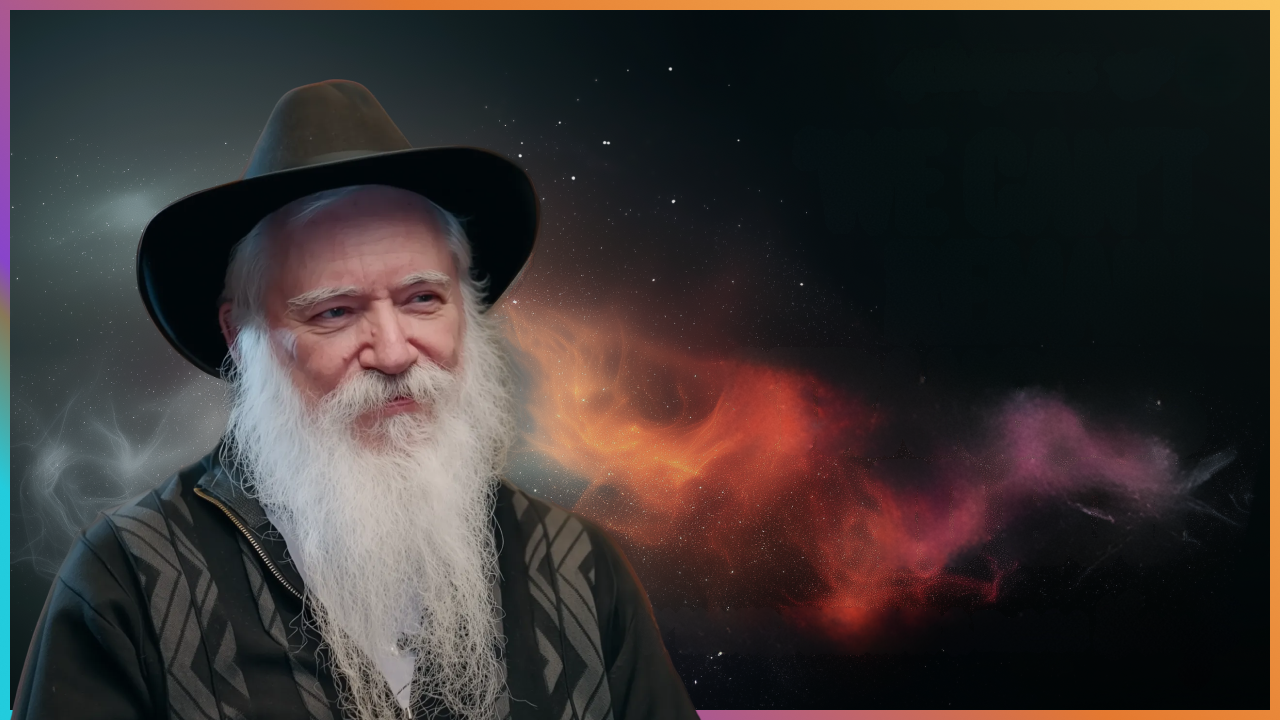
Rabbi Manis Friedman discusses the nature of prayer, the challenge of ignorance, and the evolution of mystical teachings.
This podcast is in partnership with Rabbi Benji Levy and Share. Learn more at 40mystics.com.
To Rabbi Manis Friedman, mysticism provides an intimate view of Torah and our relationship with God. He understands our relationship with God through the lens of a human relationship, one where behavior is more important than intention and where the relationship is not self-serving. Only then can we have a meaningful relationship with God.
Rabbi Manis Friedman is an author, counselor, lecturer, and philosopher. He is the founder and dean of Bais Chana Institute of Jewish Studies in Minnesota, and he spent six years serving as the simultaneous translator for the Lubavitcher Rabbi’s televised talks.
Now, he sits down with us to answer eighteen questions on Jewish mysticism with Rabbi Dr. Benji Levy including the nature of daily prayer, dealing with the challenge of ignorance, and the evolution of mystical teachings.
RABBI DR BENJI LEVY. Rabbi Manis Friedman, Dean of Bais Chana, a shaliach, a true emissary and teacher of tens of millions of people across the world. Thank you so much for joining us here today.
RABBI MANIS FRIEDMAN. Thank you.
LEVY. So what is Jewish mysticism?
FRIEDMAN. I don’t know, it’s mystical. What are the secrets of Torah? Well, I can’t tell you, they’re secrets. Mysticism simply means a more personal view of the Torah, the commandments, and the relationship between us and God. The commandments can be very dry. The mystical side is the more personal, the more intimate, the more romantic.
LEVY. So how were you introduced to this? Is there a moment in your life where you remember connecting in a deeper way and then going on this path of becoming such a teacher to so many?
FRIEDMAN. Oh, I grew up with it being in the Chabad school. That’s our bread and butter. You know, go a little deeper. What’s going on? Make it personal. I remember when we were fourteen years old, a group of us were sitting around when we should have been studying, and we were talking about: Why are we doing this? We were all observant from observant families, but we were sitting there saying, “Why do we do this?” We had to make it personal, which is probably necessary. If you never asked yourself that question, you’re not getting past the surface. So what are we doing? Why are we doing it? Why is this important? Make it personal. And if it’s personal on your part and you’re serving God, it must be personal on His part.
LEVY. Beautiful.
FRIEDMAN. Otherwise, we’re not communicating.
LEVY. Amazing. So, in an ideal world, would all Jews be mystics?
FRIEDMAN. The whole world. We can’t remain strangers to God.
LEVY. So what do you think of when you say God? What is this concept?
FRIEDMAN. God is the Creator Who desires a relationship with us, whose pleasure comes from being invited into the physical world by the physical world. That’s romantic.
LEVY. Wow. It’s that invitation of God.
FRIEDMAN. Yeah.
LEVY. And what is the purpose of the Jewish people?
FRIEDMAN. To bring this knowledge to the world. Practice it and share it with the rest of the world.
LEVY. And how does prayer work?
FRIEDMAN. Obviously, in a time of need you should turn to God. Who else are you going to trust? That’s simple, practical. But the daily prayers, which are not necessarily [said only at] a time of need, I hope you’re not that needy. Three times a day, every day. The daily prayer is simply like a reality check. So stand in front of God and tell Him how you’re doing and keep a straight face. Don’t hide, don’t spin. Just stand there and tell God.
We tried making our prayers meaningful, and okay, we were kids and we didn’t get very far. So one of the kids in the class asked our teacher, our mentor, “I tried to daven, I tried to pray, I tried and nothing happened.”
He said, “Oh, that’s good.”
[The kid] said, “What do you mean that’s good?”
He said, “That’s the whole purpose, so that you know where you stand. You tried to talk to God and say something and you have nothing to say. Good. That’s a reality check.”
LEVY. Yafeh [nice]. And what about Torah study? What’s the goal of Torah study?
FRIEDMAN. I mean, that’s the way you get closer to [God]. The knowledge of God brings closeness. To know Him is to love Him.
LEVY. And through Torah study, we get to know Him.
FRIEDMAN. Yes.
LEVY. Because it’s His mind, it’s His thought, it’s His –
FRIEDMAN. It’s Him revealing Himself. Telling Himself in His own words.
LEVY. Wow. So does Judaism and specifically Jewish mysticism view women and men as the same?
FRIEDMAN. No. Why would we be the same? Same is not a virtue. There are special talents that women have that men can only be envious of. And there are certain obligations, mitzvot, that men have that women are envious of. Not the same.
LEVY. So what’s the biggest obstacle to living a more spiritual life?
FRIEDMAN. The assumption that life is meant for me. My life [is] meant for me. No. That is the beginning of narcissism. We were created to be of service, not to tend to ourselves. Doesn’t make any sense. I’m going to create you with problems. See how well you do. What kind of plan is that? I’ll give you needs and obstacles and we’ll see how you handle it. What is this?
LEVY. So why did God create the world?
FRIEDMAN. For His purpose. We serve His purpose. And that’s the way any relationship should really be. You’re never in a relationship for yourself. That’s horrible. So seeing ourselves in the context of a relationship, everything makes sense. Otherwise, life itself doesn’t make any sense. Then I don’t need this. I don’t need this.
LEVY. So then where do we sit in that relationship in terms of free will? Does it exist?
FRIEDMAN. Yes. Otherwise it’s not a relationship again. Then He’s just talking to Himself. Only with free will can there be a relationship.
LEVY. And it’s all leading towards somewhere. We talk about Mashiach [the Messiah]. What is Mashiach?
FRIEDMAN. Well, the ultimate purpose of all of creation is to achieve a complete and total oneness. A unified existence. Unholiness means fractured, separated, which always leads to conflict. So the ultimate goal is the oneness. Hashem echad doesn’t mean there’s one God. It means God is all about oneness. And as long as there isn’t that total oneness, it’s not comfortable, it’s not Godly, it’s not holy.
What happens after sixty years of marriage? You’re still trying to get each other’s attention? Or are you just there? You’ve arrived. You’ve merged. Now you’re too old to enjoy it.
LEVY. Is the State of Israel on the path towards Mashiach? Is this part of the final redemption?
FRIEDMAN. We’re all on that path. It’s a strange path, isn’t it? How this leads to good stuff, I don’t know, but it definitely is leading to a grand conclusion that will make up for all the pain.
LEVY. So, many of your students are Jewish and not Jewish. On a level of humanity, you hear from so many people around the world. What do you feel is the greatest challenge facing the world today?
FRIEDMAN. Ignorance. Ignorance of the most basic, fundamental realities. We don’t know what a woman is. How did we get so far from truth and reality? Like we fought our way out of normalcy? It’s horrible. What do we know? Why are we here? I don’t know. How did the world get to be here? We don’t know. What do you know? I mean these are such fundamental questions. If you don’t know this, what’s the difference? What else [do] you know? You know how to get to the moon? Great. You don’t know why you’re on earth, but you know how to get to the moon?
LEVY. So what do you tell these people? How do we deal with this issue?
FRIEDMAN. That’s what the Torah is all about. The whole point of Torah is God gathered us at Mount Sinai and said, I’m sure you’re wondering –
LEVY. Why are we here?
FRIEDMAN. Why did I create you and why are you going through all of this? Well, let Me tell you. This is My plan. This is what I need. I need you to help Me. I need you to partner with Me and turn the world into a Godly, unified place.
LEVY. And how has modernity changed Jewish mysticism? Is it different today?
FRIEDMAN. On the one hand, it made it much worse because [of] the splintering and the conflicts and the frictions between people and nations and it’s just horrible. Probably because we don’t even know where we’re going, so we’re stepping on each other.
On the other hand, it provided communication abilities. You can talk to the world. When I started, I went as a shaliach [emissary] of the Lubavitcher Rabbi to Minnesota. If I got twelve students I thought I was so successful. Because I started off with two. When I reached twelve I thought, wow. Now I’m talking to eighty million people and it’s nothing. Drop in the bucket.
LEVY. You want to connect with more?
FRIEDMAN. Eight billion.
LEVY. Wow. How does Jewish mysticism differentiate from other forms of mysticism? What makes it unique?
FRIEDMAN. Well, first of all, it’s God’s mysticism, not human mysticism. It’s not anyone’s theory. It is a part of the Torah. At Mount Sinai, God revealed Torah in four dimensions. One of them is the mystical. But that was kept private, taught only to a select [few] among the scholars. They had very select individuals who were taught one on one, never in a class, until it was written down as the Zohar. And then the Ari, Rabbi Isaac ben Solomon Ashkenazi Luria, 400 years ago, made it public. And then Chasidut [Hasidism] made it understandable.
LEVY. So why was it allowed to be changed? Why can this generation be studying to this level whereas at the beginning it was more kept, as its name implied, sod, more secretive?
FRIEDMAN. The more private and the more personal something is, the more selective you are who you want to share it with. But after 3,000 years of serving God under impossible circumstances, we’re ready. We’re ready to move on to something a little more personal. And when people hear it, I can’t describe the power. People use expressions like, “Wow.” “Now I can breathe.” “It’s like oxygen.” When you realize there’s a relationship going on, everything falls into place. So that’s why I’m here. That’s why God created the world. That’s why He gave us the Torah. That’s why we have all these commandments. That’s why the world needs – yeah, now everything makes sense.
LEVY. That’s why it’s called revelation. [It] reveals everything.
FRIEDMAN. It’s amazing.
LEVY. So does one need to be religious to study it?
FRIEDMAN. Not at all. Religion is part of the problem.
LEVY. What do you mean?
FRIEDMAN. Religion just probably didn’t mean to do it, but in the end, religion makes you self-conscious. And that’s exactly what we need to get away from. Am I good? Am I holy now? Am I a saint? Not a saint? Almost a saint? Total distraction. In a relationship, that’s poison. So am I a good husband? I’m a good husband, right? I’m a good husband? Yeah, you’re a lousy husband. Why aren’t you thinking about your wife? Then you would be a good husband. So if you’re thinking, am I holy? Am I religious? Am I super religious? Am I the best? Am I the – you’re missing the whole point. And religion does that. It makes you very self-conscious. It’s not supposed to.
LEVY. So how do we liberate ourselves from the constructs of the negativity that you’re saying some religion can bring?
FRIEDMAN. Well, I think from the negative we can get to the positive. We’ve descended into such a horrible narcissism that we’re horrified by our own lowness. Narcissist? That’s really sick. And now we want to run the other way. Just get me out of this narcissism. So, I’ll help you become a better person. No, don’t do that. I don’t want to be a better person. I want to get past myself. Tell me something more important than me. Because if you start with me, I’ll be a narcissist.
LEVY. So can it ever be dangerous? Kabbala, Chasidut, Jewish mysticism?
FRIEDMAN. I don’t think it can be dangerous, but it can be very misunderstood and can easily be corrupted. You can use that to become self-conscious. Am I mystical now? That’s not the point.
LEVY. So what does one do to protect themselves from that?
FRIEDMAN. Oh, focus on the other. It’s not how well you serve, it’s Whom you’re serving.
LEVY. And how does this in your personal life apply in your relationships? You’re teaching out there to so many people. Do you feel like it’s also influenced [you] with your children, with your spouse, with your students, with colleagues? Are there any particular relationships where you see this expressed?
FRIEDMAN. It has kept me out of trouble. I don’t have time to focus on myself, otherwise I probably would. So it’s a blessing.
LEVY. So is there an example of it? With a child, or with a friend, or with a student, you can give an example of how this has really imbued the relationship or made it more meaningful?
FRIEDMAN. Well, you look at a child and you say, what is wrong with these people? Why do they make a big deal out of nothing? Why can’t they grow up? And then you realize you haven’t grown up either. You’re just more articulate. Because you do the same thing. I want, I don’t want. I like, I don’t like. But the kid is upfront about it. And you are trying to be sophisticated, but you’re doing the same thing. So what do you want for the child? You want the child to stop thinking only about itself, himself or herself. Think about someone else. You’re not the only one in the room. Don’t scream and cry because you’re in a bad mood. There are people here, you’re disturbing them. You don’t think about that. That’s a child.
So moving from self-aware, which you were born self-aware, moving from that to aware of others. That’s maturity. That’s sanity. That’s service. It’s everything. So it keeps reminding you, stop thinking about yourself. And in many, many instances the one conversation I dread, the ones I’m just not in the mood, not now, I don’t want. They turn out to be the best. Just to remind you.
LEVY. So what advice would you give? What do you think is really important to tell a parent in parenting their child? Obviously there’s a lot to say, but is there a key message that one should keep in mind?
FRIEDMAN. There’s a lot of wisdom involved in weaning a child away from himself. Without hurting, without crushing, without damaging. But the point is, it’s not about you. How do you convey that to a child? We actually do this unconsciously. You say, time to go to bed. The kid says, I don’t want to. You say, but it’s time. See, the but is like weaning. Yes, you don’t want to, but. What does that mean? It means there’s something else to consider. The fact that you don’t want to is not the end of the story. But if a father tells you to do something, you’re supposed to do it. But it is your bedtime. This is when you go to sleep every night. But, right? So without hurting the child, you’re actually saying, yeah, but. You’re in the mood, you’re not in the mood, but there’s something more important than that.
LEVY. If we flip the relationship, you’ve given beautiful advice for what a parent needs to do with a child. What advice would you give a child towards a parent to be a better son, daughter, at any range of ages?
FRIEDMAN. Be patient. Your parents will grow up. Same thing. The same thing you say to parents. The child will grow up. Be patient. We all grow.
LEVY. Even the parents. What about spouses? A husband, a wife? What advice do you give in that relationship?
FRIEDMAN. Definitely grow. The idea that once you’re married, you’re done? Not you’re done, you’re starting. Like, oh, we’re married now, we don’t have to be nice. What kind of ridiculous attitude is that? Marriage is a challenge. How noble can you be? How much patience can you have? How much tolerance can you have? How much flexibility are you capable of? Every virtue in the world, you’re going to need it. Use it.
LEVY. And we talked about practical advice with these relationships and theological questions: free will, God, why God created the world. And how that’s informed by the beautiful teachings of Jewish mysticism. I’d love to end this conversation with you just sharing a Jewish mystical teaching. What’s something that inspires you or just might be top of mind at the moment to share with us?
FRIEDMAN. Just the idea that in a relationship, your behavior is more important than your intentions. Good intentions don’t make good relationships. You hear couples getting divorced and they’re sobbing, they’re crying – I know you meant well, but I just can’t live with you because of the way you behave. I know you didn’t mean to hurt me but you kept hurting me.
So, good intentions. In our relationship with God, the commandments are primary. If God says this pleases Me, and you ignore that, no matter what your intention or reason is, you blew it. So the notion that we can do without the commandments. That’s like, you can be married without hearing your wife. No, you can’t. God reveals Himself, and He’s very open. You know, if we could be as open with each other as God is with us, we wouldn’t need therapy. He even tells us that He can’t stand the thought of eating bugs, makes Him nauseous. What a confession for a God. Really? You’re the creator of the whole world? And You’re not ashamed to say that the thought of eating a bug makes You, it’s abominable to You? Wow.
So we need to be open. The mitzvot are God’s way of telling Himself: This pleases Me, this doesn’t please Me. This pleases Me very much and this pleases Me very little. And this gets Me very angry. And I can get angry, and I can get angrier. He’s so open. And then in the end, He says, no matter how angry, no matter how loving, we are going to be together. That is not negotiable.
So in the relationship with God, the action is more important than the intention. Because the intention is just a degree of your maturity, of your wisdom. It doesn’t connect you to Him. Smart people don’t always make good spouses. Because they’re too busy with their own thoughts. Like this couple who were having trouble and the husband says to me one day, “I think things are going to get a lot better because I figured her out.”
I said, “Oh no. Now she’s in trouble. You figured her out? This is so romantic. But if you’re so in tune that you know what she’s going to want in five minutes from now, now you’re talking.” That’s connection. That’s a relationship. But you figured her out?
So when people say, I can’t figure God out. You can’t figure yourself out. What did you think you’re going to figure out? But you know exactly what pleases Him. Do it. And what am I going to get for that? Nothing. You’re doing it for Him. The question reveals that your thinking is all wrong. So will I go to heaven? No, you’re not going to heaven. You want to do what He created you for or not? Stop making deals with Him. If I do this, You do that, we’ll work it out. That is narcissism.
So a world united means everything and everyone is serving the purpose for which it was designed. Jews are being Jewish, human beings are being human, animals are being animals, minerals are minerals. Everything is doing exactly what God intended for it to do. That is a universe that isn’t tearing itself apart.
LEVY. Wow. It starts with the awareness of what our purpose is, and then it’s just about fulfilling it.
FRIEDMAN. And that’s so universal. Everything has a purpose. And you don’t make it up. You’re created for that purpose. So it should be the easiest thing in the world. It’s what you’re designed for. How can that not feel comfortable? How can that not resonate?
LEVY. Wow. Well, Rabbi, this was such an incredible conversation on two levels. Number one, to be able to package such deep wisdom, which I know you can speak hours about each of these questions, in such a concise way, and yet for it to be so profound. And second of all, because I feel like you are one that does what you’re meant to do. And you’re in tune with that sense of what my purpose is here, and you’re giving that over.
And I think that is the message that you’re really saying, whether it applies to our children, to our spouses, to our friends, to our congregants, and ultimately to ourselves and of course to God. So we give you a blessing that you can continue to inspire so many others and to keep achieving your purpose to help us find our own.
FRIEDMAN. Amen to that.
LEVY. Thank you so much.
In this special episode of the 18Forty Podcast, we talk to Professor Jonathan Haidt about the late Rabbi Jonathan Sacks in honor of his yahrtzeit.
Rabbi Yaakov Klein joins us to discuss the soul of God, Jewish particularism, and personal identity.
We mark the yahrtzeit of Rav Ezra Dovid Halevi Neuberger with remembrances from Dovid Bashevkin and David Fohrman.
In this episode of the 18Forty Podcast, we sit down with Rav Moshe Weinberger, rabbi and educator, to discuss the role of mysticism in modern-day Judaism.
In this episode of the 18Forty Podcast, we talk to Judah, Naomi, and Aharon Akiva Dardik—an olim family whose son went to military jail for refusing to follow to IDF orders and has since become a ceasefire activist at Columbia University—about sticking together as a family despite their fundamental differences.

In this episode of the 18Forty Podcast, we sit down for a special podcast with our host, David Bashevkin, to discuss the podcast’s namesake, the year 1840.

In this episode of the 18Forty Podcast, we talk to Liel Leibovitz and Lisa Ann Sandell about what happens when one partner wants to increase their religious practice.
In this edition of the 18Forty Podcast, we talk to David’s rebbe, Rav Yisroel Kaminetsky, longtime principal of DRS Yeshiva High School, about the state of Jewish education in America.
In this episode of the 18Forty Podcast, we sit down with Joey Rosenfeld, social worker and kabbalist, to talk about the differences between mysticism and rationalism and the roles they should play in our lives.
Efraim Palvanov answers questions on misinformation, prayer as self-reflection, and every Jew’s role in bringing Mashiach.

Israel is a heroic country, Michael Oren believes—but he concedes that it is a flawed heroic country.
We talk to Rabbi YY Jacobson about how each of us can experience redemptive consciousness by feeling Hashem’s infinite love and presence in this moment.
In this episode of the 18Forty Podcast, we sit down with Dr. Ora Wiskind, professor and author, to discuss her life journey, both as a Jew and as an academic, and her attitude towards mysticism.
In this episode of the 18Forty Podcast, we talk to Marika Feuerstein about the life of her grandfather, Aaron Feuerstein.
In this episode of the 18Forty Podcast, we talk to Frieda Vizel—a formerly Satmar Jew who makes educational content about Hasidic life—about her work presenting Hasidic Williamsburg to the outside world, and vice-versa.
In this episode, we talk to a father and daughter who were estranged and then reunited.
In this episode of the 18Forty Podcast, we talk to Lizzy Savetsky, who went from a career in singing and fashion to being a Jewish activist and influencer, about her work advocating for Israel online.
In this episode of the 18Forty Podcast, we talk to Aliza and Ephraim Bulow, a married couple whose religious paths diverged over the course of their shared life.

In this episode of the 18Forty Podcast, we talk to Talia Khan—a Jewish MIT graduate student and Israel activist—and her father, an Afghan Muslim immigrant, about their close father-daughter relationship despite their ideological disagreements.

We talk to Michael Eisenberg about the state of the Jewish People in Israel and the diaspora.
In this special Purim episode of the 18Forty Podcast, we bring you a recording from our live event with the comedian Modi, for our annual discussion on humor.
In this episode of the 18Forty Podcast, we talk to Rabbi Josh Grajower – rabbi and educator – about the loss of his wife, as well as the loss that Tisha B’Av represents for the Jewish People.
In this episode of the 18Forty Podcast, we talk to Rabbi Larry Rothwachs and his daughter Tzipora about the relationship of a father and daughter through distance while battling an eating disorder.
In today’s world, Rabbi Sacks’ message feels more urgent than ever: that God continues to believe in humanity.

Perhaps the most fundamental question any religious believer can ask is: “Does God exist?” It’s time we find good answers.
The 18Forty guide to making meaning on Shabbos, part II
Joy and meaning can be found not only despite the brokenness, but even because of the brokenness.
The 18Forty guide to making meaning on Shabbos, part I
In the midst of crises of faith, Rabbi Sacks’ course of thought profoundly impacted so many, especially in the area of science…

My family made aliyah over a decade ago. Navigating our lives as American immigrants in Israel is a day-to-day balance.
I consider the Rebbe to be my personal teacher, and I find this teaching particularly relevant for us now.
Rav Froman was a complicated character in Israel and in his own home city of Tekoa, as people from both the right…
Children don’t come with guarantees. Washing machines come with guarantees.
Israeli minister Itamar Ben-Gvir wears the mantle of Kahane in Israel. Many Orthodox Jews welcomed him with open arms.
A personal return to the poems that taught me how to imagine America

Children cannot truly avoid the consequences of estrangement. Their parents’ shadow will always follow.

To talk about the history of Jewish mysticism is in many ways to talk about the history of the mystical community.
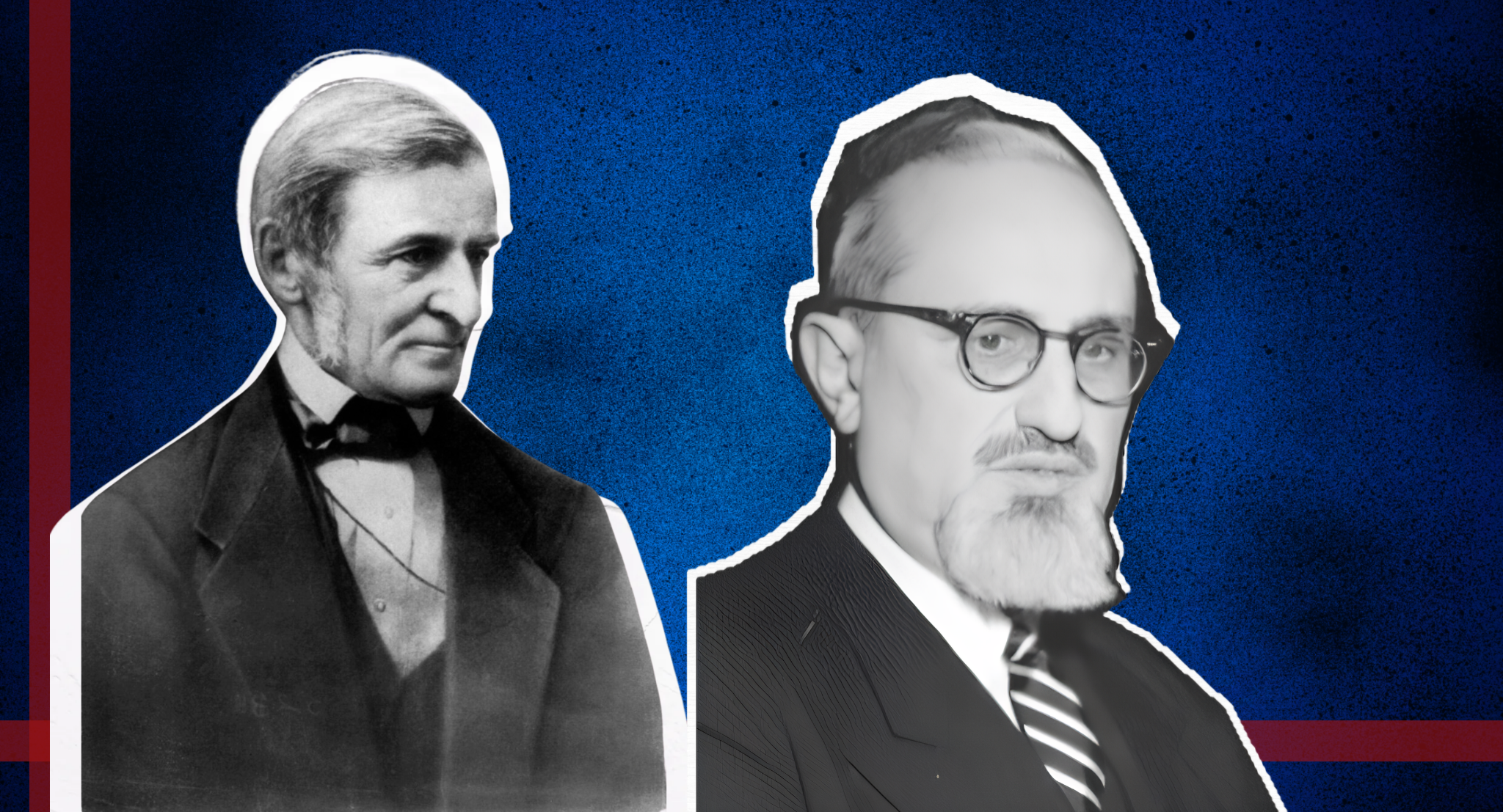
As America grows lonelier, Rav Soloveitchik’s vision of the self offers a challenge to Emersonian self-reliance.
A 94-year-old Holocaust survivor, a lone soldier, and more. Here are seven olim sharing their stories of aliyah.
If You’re Reading These Words is a book in which all the heroes have died, yet it overflows with life.
From Freud through today, our desire to heal asks us to consider why we care so badly—and maybe if it’s hindering the…

Yes, the Israeli army needs Jews to draft, but more than that, Jews need to experience what it means to serve.
From verses in Parshat Bo to desert caves, tefillin emerge as one of Judaism’s earliest embodied practices.
Between early prayer books, kabbalistic additions, and the printing press, the siddur we have today is filled with prayers from across history.

From Avraham’s mission to Rivka’s generosity, Parshat Chayei Sarah outlines a relationship rooted in values, agency, and mutual respect.
Dr. Judith Herman has spent her career helping those who are going through trauma, and has provided far-reaching insight into the field.
Their motivations are not ideological extremism but a basic survival instinct to protect their families from the past’s failed paradigms.
In this episode, Liel Leibovitz reflects on falling in love with the Talmud precisely because it is so difficult—and on how its…
We talk to Tania Friedlander about how her husband’s Parkinson’s diagnosis challenged her expectations and taught her to become capable of more.
In this episode of the 18Forty Podcast, we speak with Diana Fersko, senior rabbi of the Village Temple Reform synagogue, about denominations…
In this episode of the 18Forty Podcast, we talk to Rav Judah Mischel, executive director of Camp HASC and author of the…
In this episode of the 18Forty Podcast, David Bashevkin answers questions from Diana Fersko, senior rabbi of the Village Temple Reform synagogue,…
In this episode of the 18Forty Podcast, we talk to Rabbi Dr. Ari Lamm, co-founder and president of SoulShop Studios, about doing…
In a disenchanted world, we can turn to mysticism to find enchantment, to remember that there is something more under the surface…
In this episode of the 18Forty Podcast, recorded live at Stern College, we speak with Rabbi Moshe Benovitz, director of NCSY Kollel,…
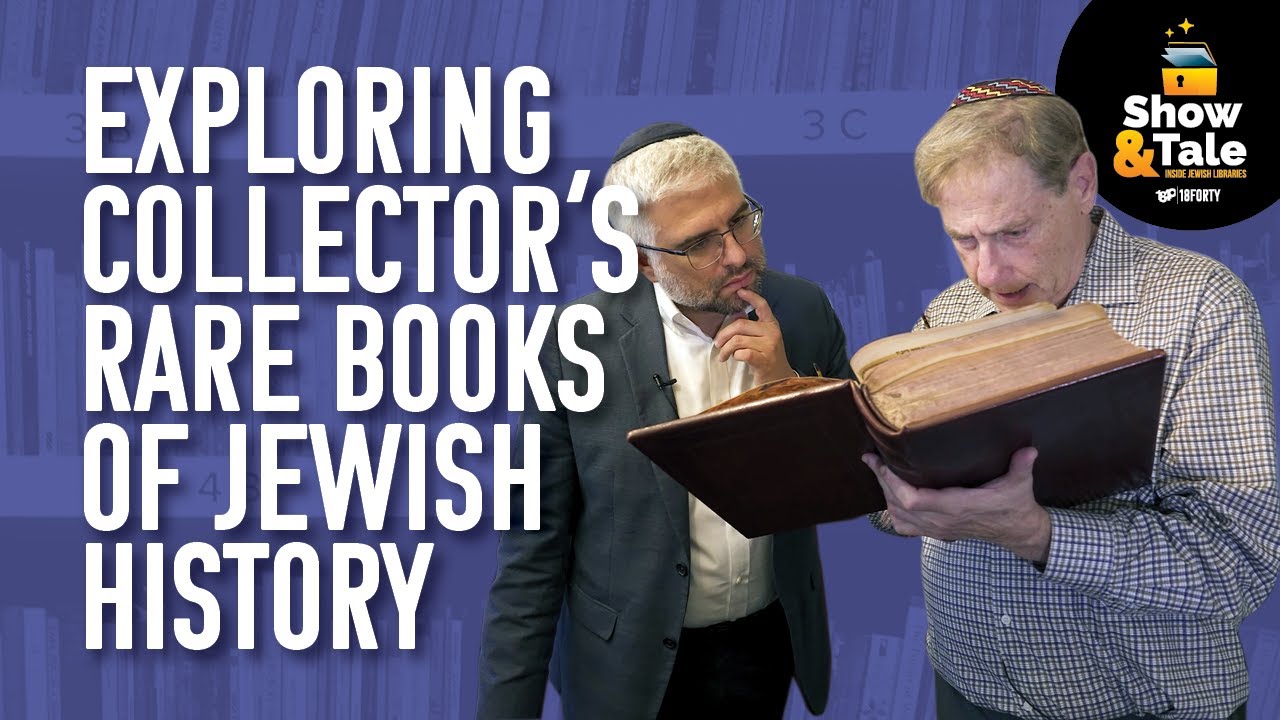
From the Blood Libel of Trent to a first-edition set of Rambam, the home of rare-book dealer and private collector Pinny Stieglitz…
Love is one of the great vulnerabilities of our time. Can we handle it?

18Forty helps users find meaning through the exploration of Jewish thought and ideas.
A free 40-week journey through the Talmud. No Hebrew or background required. 7,000+ people have already signed up — join us.