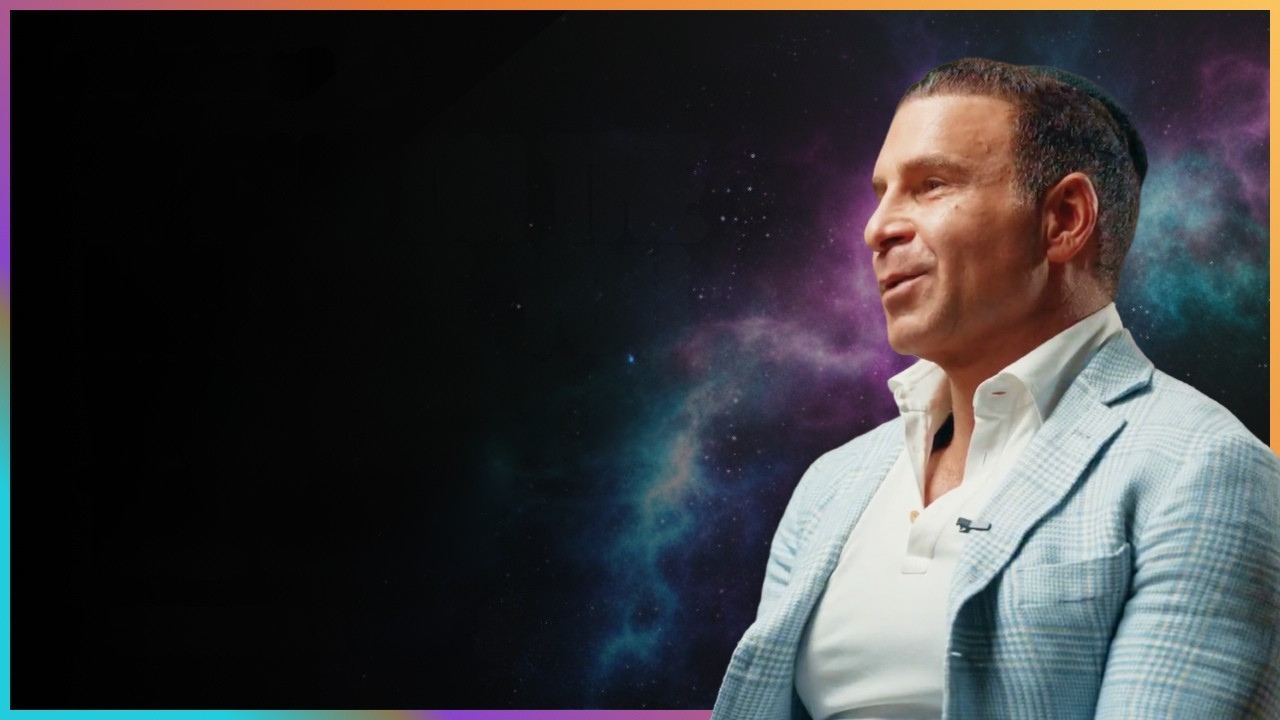
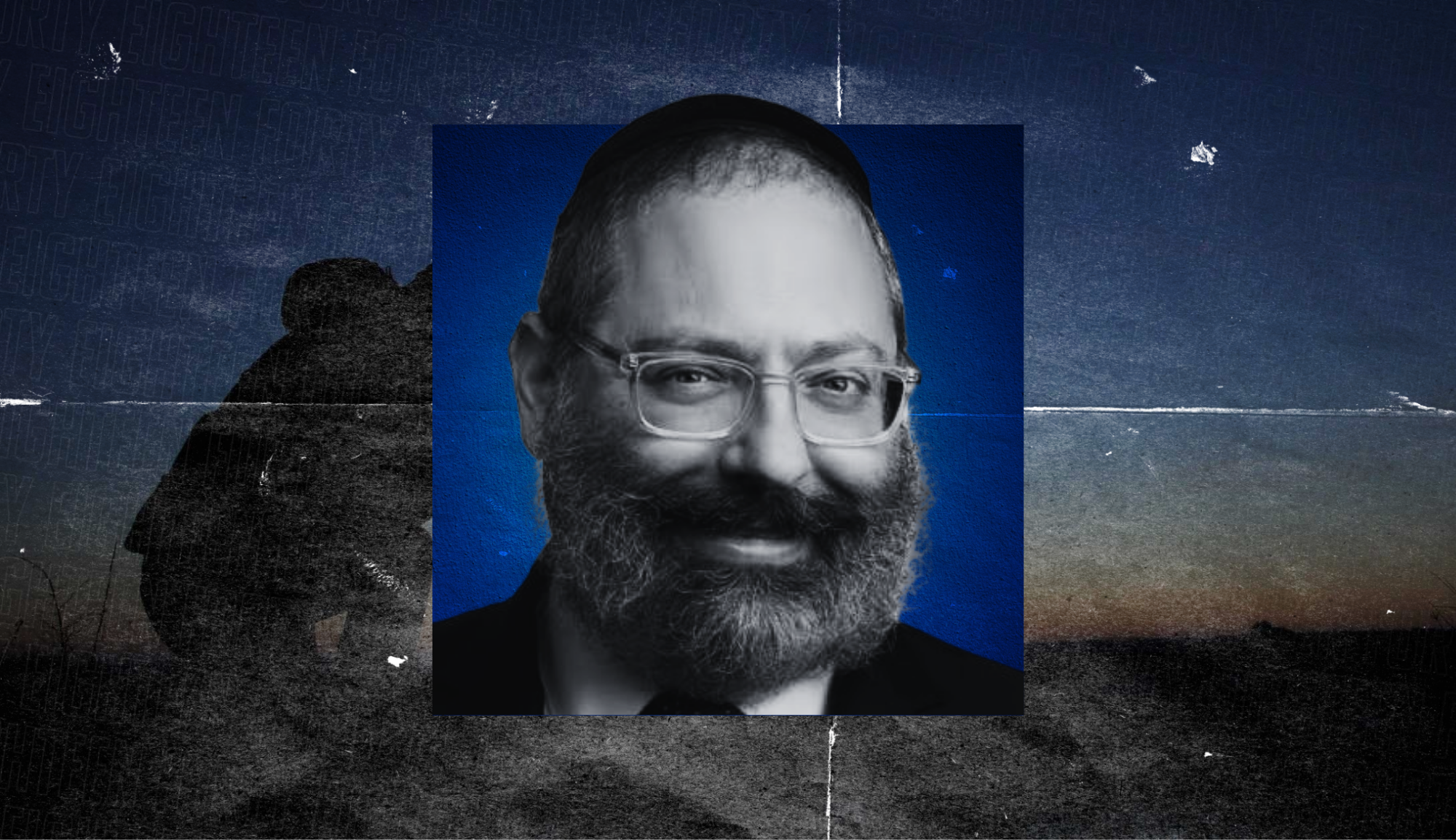
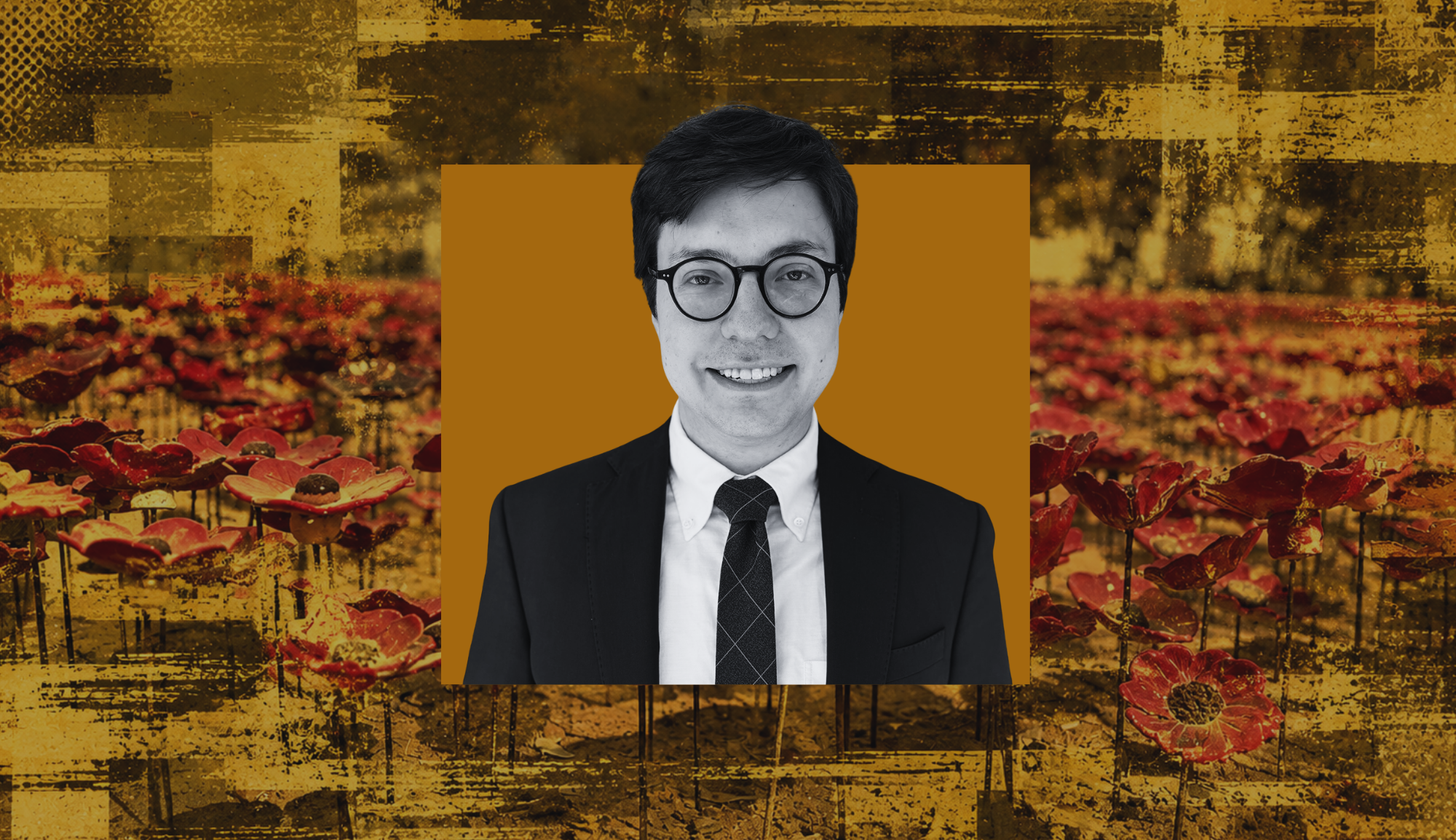
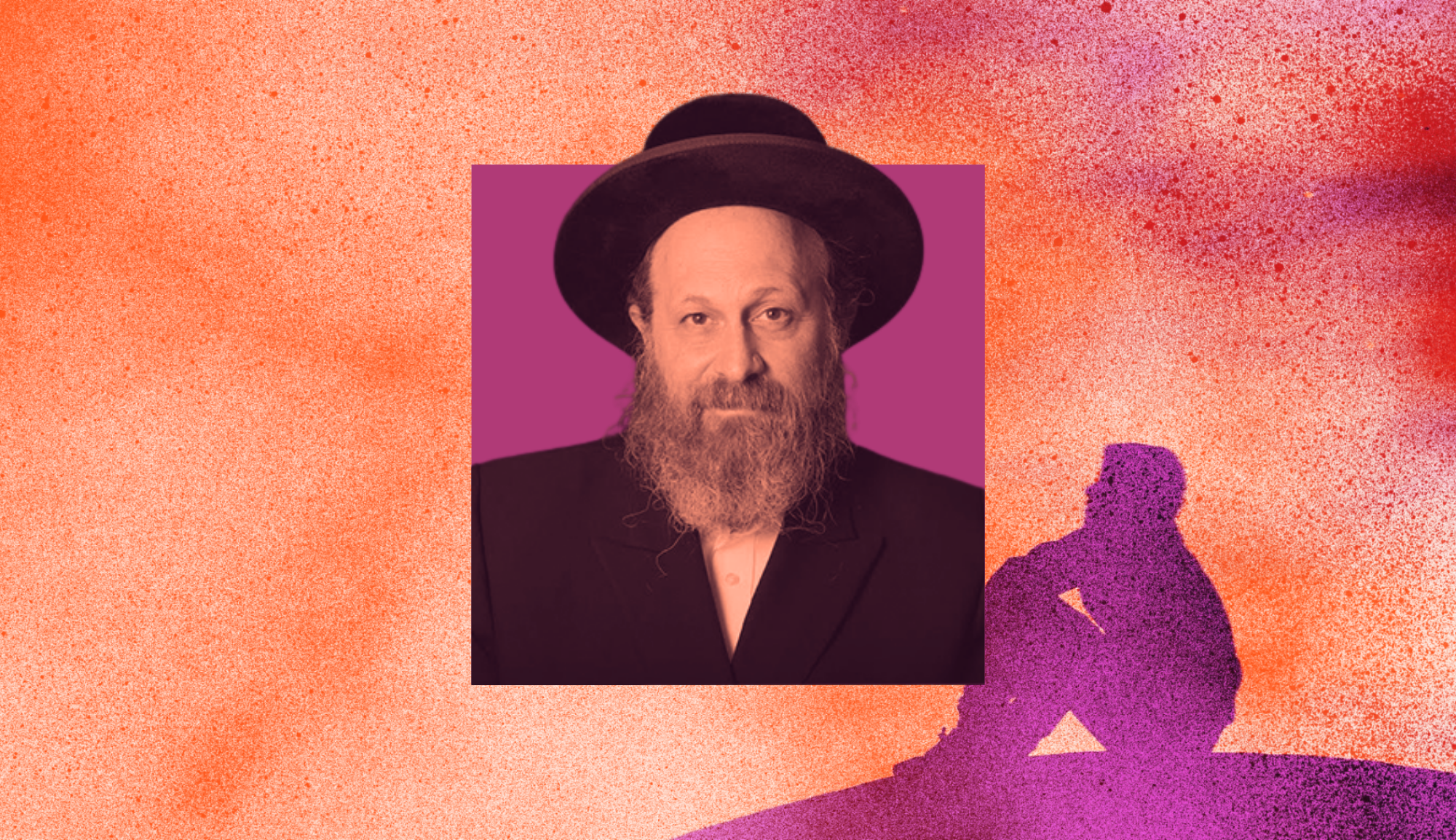
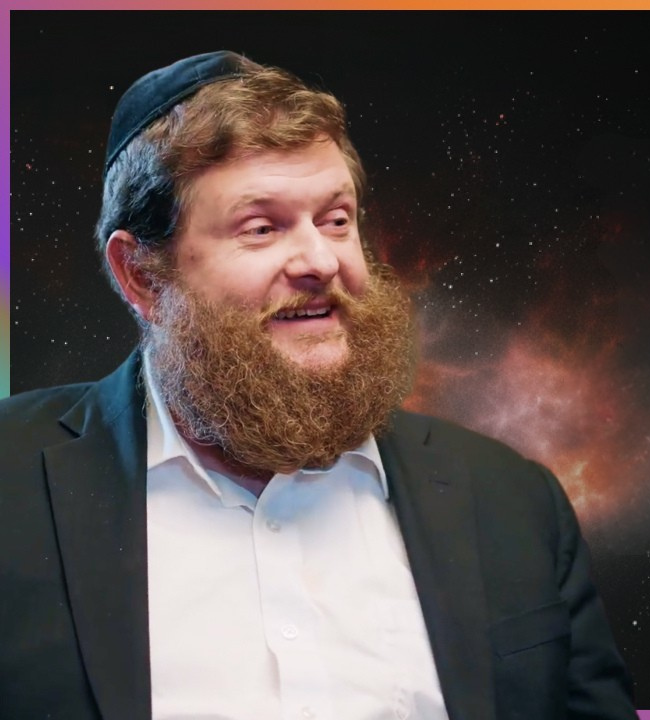
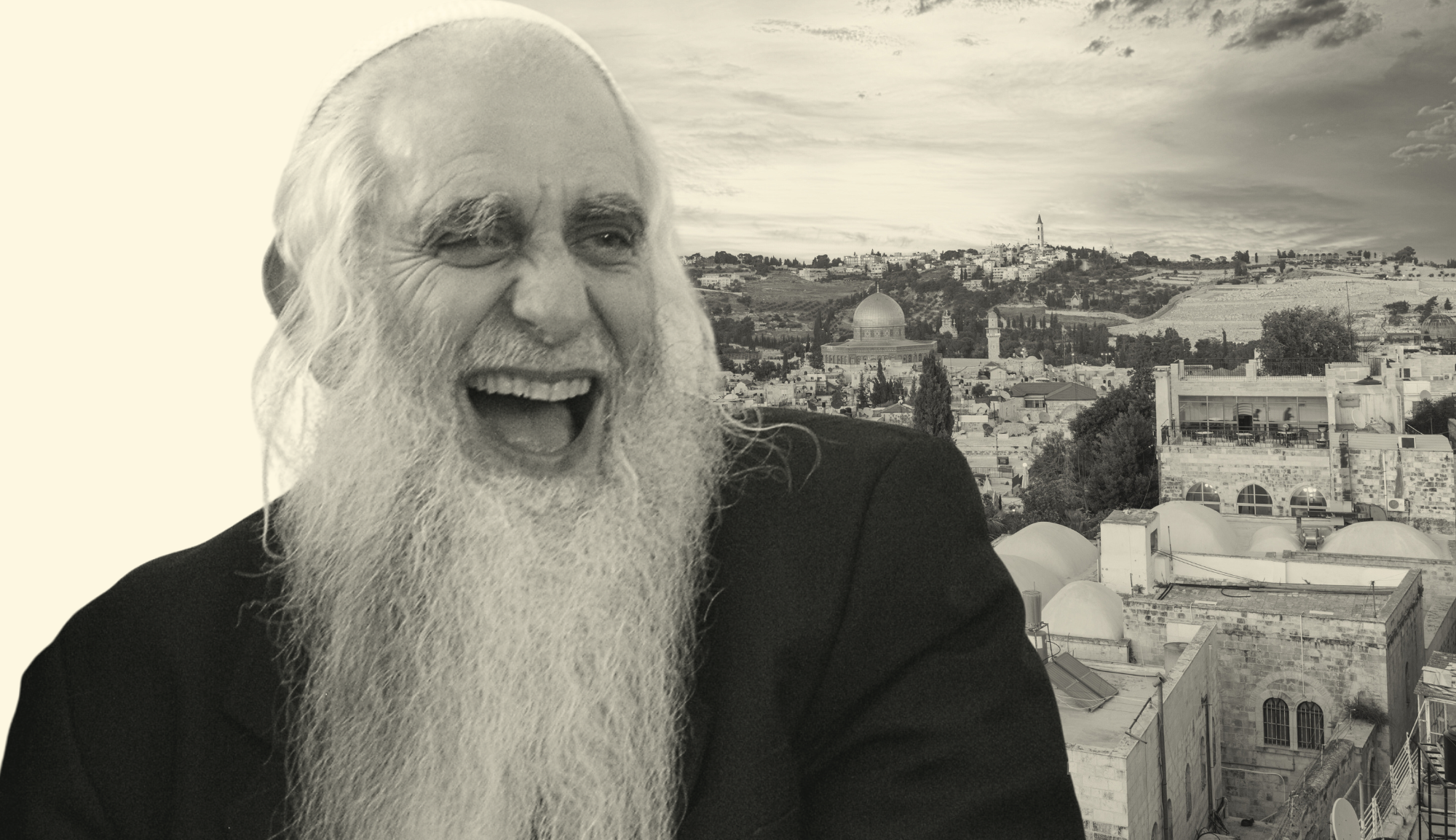
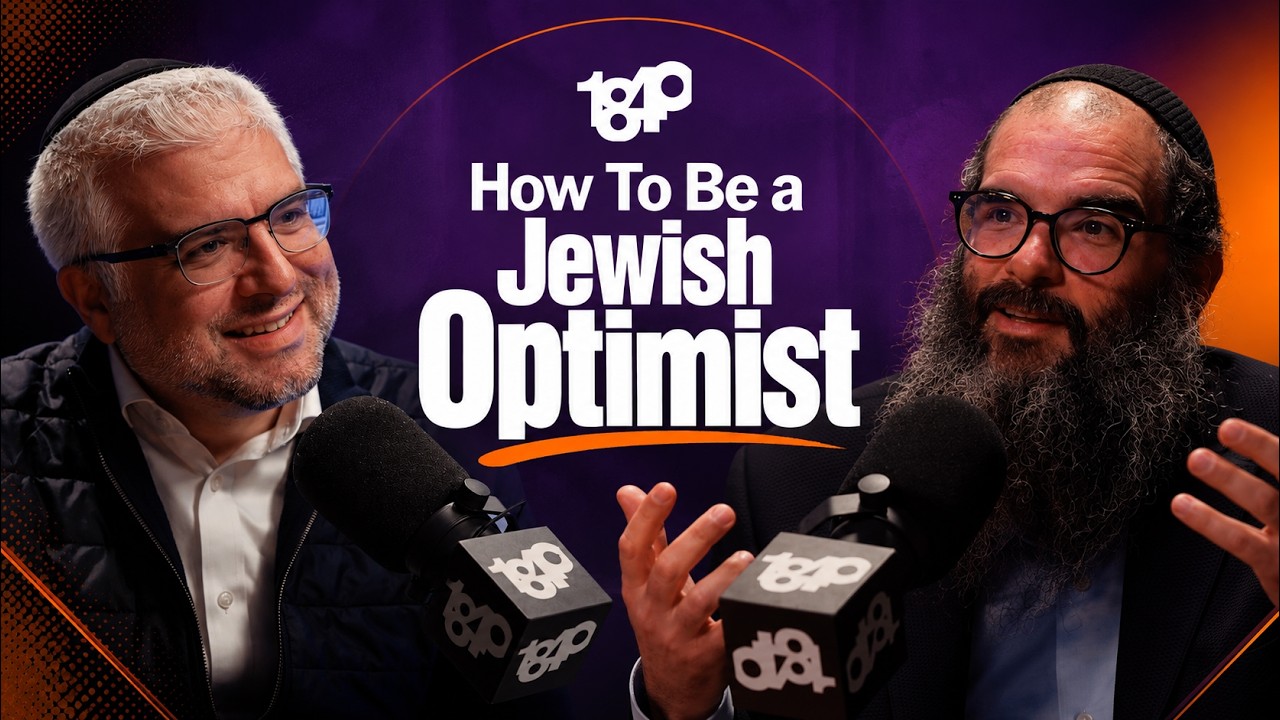
RABBI DR. BENJI LEVY. Gedale Fenster, founder of Evolutions Treatment Center, incredible podcaster, inspirational speaker, and spiritual consultant. Thank you so much for being with us here today.
GEDALE FENSTER. My pleasure, my pleasure.
LEVY. What is Jewish mysticism?
FENSTER. Jewish mysticism is, I believe, the Kabbala [Jewish mysticism]. It’s the hiddenness behind everything, realizing there’s much more behind everything that you’re going through. There’s a much bigger picture, and seeing the essence of everything instead of just the details of everything.
LEVY. So you’re a successful businessperson and you’re still choosing to devote so much time in this space. How did you get into it all? What’s your origin story around Kabbala and mysticism?
FENSTER. I was connected to Rabbi Nachman’s teachings at twenty-two years old and that changed everything in my life, from the way I looked at things, speaking to God, seeing everything for the best, building faith, building discipline in giving areas. It pretty much changed my life.
LEVY. Was there a moment that brought you into Rabbi Nachman’s teachings?
FENSTER. Rock bottom. I was twenty-two years old and I was in a very bad situation in my life, and I cried out to God and asked Him for advice. And I found the book called Advice and that’s where it came from.
LEVY. You literally got a book with what you were asking for.
FENSTER. Called Advice, exactly. You have to be careful what you pray for.
LEVY. And what are the messages you give to other people that are rock bottom to inspire them?
FENSTER. It’s not just rock bottom. It’s about building strategy, building consciousness. The main thing I teach is expanded consciousness, daat [expanded awareness/knowledge]. If there’s daat, if you’re looking at it the right way, you have everything. If you lack the consciousness, you have nothing.
LEVY. If someone doesn’t know what that means, what does it look like? How can they actually practice it?
FENSTER. On a practical level, let’s say you’re a businessman and you’re walking into your office with anxiety and fear. And you have a very fearful relationship with God, so you’re almost expecting things to go bad. You’re not going to give charity, you’re going to be frightful, you’re going to contract, you’re going to overwork, you’re going to try to control it, you’re going to be angry at every detail. But instead, if you go into the same office with expanded consciousness, you’re going to trust, you’re going to give charity, you’re going to be confident, you’re going to make decisions. So it’s the same businessman living in two different worlds.
LEVY. Amazing. And in an ideal world, would all Jews be mystics?
FENSTER. They should be. We’re the light among the nations. If we’re the light among the nations, we have to be the example.
LEVY. And what do you think about when you think of God?
FENSTER. God is infinite. God is Ein Sof [the Infinite]. We contract God based on our understanding. So the greater our understanding, the greater God is in our lives.
LEVY. Is there an image, or a conception, or something tangible that you experience when you pray, or think about God, or share with people?
FENSTER. It’s taking limits off things. Yud, kay, vav, kay represents past, present, and future. When you’re connected to God, nothing’s impossible. Nothing. There’s nothing that can’t change. But when you’re connected to the world of teva [nature], then you’re bound to nature and things.
LEVY. And what’s the purpose of the Jewish people?
FENSTER. I believe to be the light among the nations. We should be the example. If we have unity, we’re the light, we’re doing our job. If not, unfortunately, we learn from everybody else and we diminish the name.
LEVY. So what does that look like today? What should we be doing as a nation, as a people?
FENSTER. I would say spend more money on unity and expansion of consciousness and less on antisemitism and begging people to like you. Getting stronger instead of getting people to approve of us. I think the message is off there. I think the message has to be: we need to build ourselves, and when we build ourselves, we’ll be unstoppable. We know who we are, we’re unstoppable. If not, we become afraid of people.
LEVY. So almost like if we were sitting as investors and collectively looking at the billions of dollars a year that are invested, you’d say we need to completely reallocate now. Move away from the anti-Antisemitism and move much more towards Jewish pride, and who we are, and what we’re meant to be doing.
FENSTER. To increase consciousness amongst us. In a conscious world, the religious and the non-religious will be praying for each other. Everybody would be wanting the best for each other. When there’s a lack of consciousness, and just Torah, and we don’t have the bigger picture, then we’re fighting against each other.
LEVY. And then you talk about unity –
FENSTER. Unity is the key to everything. You have unity, you have oneness. That’s it. That’s the key. It’s the fragmentation, duality.
LEVY. Why is that, and how does it relate to God’s name and the unity of God?
FENSTER. God’s name is yud, kay, vav, kay. It represents the past, present, and future. It’s all oneness. Ultimately, every situation in our lives, the only way we end up rising in that is when we realize it’s all coming from God. Unfortunately when we don’t see that, we end up blaming messengers or we stay in the mess in our lives.
LEVY. And so in that process we sort of share things with God through what we call prayer. How does prayer actually work?
FENSTER. God creates lack in order for you to pray, right? Rabbi Yitzchak Hutner would say, prayer doesn’t get you out of trouble; trouble gets you into prayer. So the ultimate goal is prayer. Through prayer and Torah study, we get to expanded consciousness. And when we’re in expanded consciousness, we start attracting things, we look at the world completely differently. If we don’t have Torah and prayer, then we look at the world through a reactive lens and we don’t see the bigger picture. We don’t see the depths behind our relationships, we don’t see the Kabbala behind this. There’s no mysticism because all we’re looking at is fragmentation, reactiveness, details. We don’t see the bigger picture that’s going on.
LEVY. And then you talk about prayer and Torah study, and prayer is that lacking for us to connect.
FENSTER. They both need each other.
LEVY. But how do you differentiate, meaning, what’s the goal of Torah study then?
FENSTER. Torah study is potential, but you need prayer to actualize it. I could learn about being a good person, but until I pray for it, it’s not going to happen. So Torah study could be chochma [wisdom], we have to bring it down into the heart, into bina [understanding]. Rabbi Nachman would always say: something you learn is just potential. For example, there’s three steps. There’s something that you learn, it’s [like an embryo], then you have to develop it through a pregnancy stage, through nursing it, and then it becomes expanded consciousness. So an idea doesn’t just get grasped; it has to be developed. It’s almost like a birth. When you want to become a person with bitachon [trust in God], a person who has faith, it’s like you’re giving birth to a new reality, to a new existence. And that requires prayer, it requires learning. It’s a back-and-forth motion.
LEVY. Amazing. And does mysticism view women and men as the same?
FENSTER. In Kabbala, it talks about more the masculine and the feminine. Every word in Hebrew has either a masculine or feminine word. So there’s times that we become masculine and there’s times that we become feminine. For example, if we are able to, Rabbi Nachman has a Torah that if we’re able to pray with joy, if we’re able to do mitzvot [commandments] with joy, God gets pleasure from our work, our spirituality. So God actually becomes the feminine and we become the masculine. So it’s the cycle between masculine and feminine – constantly switch.
LEVY. When you say “we,” that means women also become the masculine in the relationship with God. That is the feminine in that instance?
FENSTER. Correct. We could have both masculine and feminine aspects, but in general – for example, the more we do things with joy, the more we become givers. The more we do things with sadness, the more we become receivers. So when you do something with joy, for example, a kid could all of a sudden give his father a cup of water with joy – he’s giving his father now pleasure. You understand? So the father, he’s normally the giver. He becomes the receiver because the kid now becomes the giver. So the same idea in that concept.
LEVY. Well, how do you define joy? Joy is a lot of things.
FENSTER. Joy is growth, joy is giving, joy is, I would say resilience.
LEVY. But what’s interesting is that two of the words used were resilience and growth.
FENSTER. Mindset.
LEVY. But what’s interesting about those two words is that traditionally people think of joy or happiness as a smile on your face. You’re not always so outwardly happy. So what is this mystical or Jewish view of happiness?
FENSTER. Right. I mean, the words simcha [joy] and machshava [thought/perspective], they have the same letters pretty much. Perspective, machshava; perspective, simcha. If you think about what you said: I had a good day today. Okay, you had an expectation that you were going to make five dollars and you made ten dollars. You had a good day. You had a bad day, right? What happened? You had an expectation you were going to make five dollars, you made three dollars. So at the end of the day, it’s really our expectations. We have to turn our expectations into appreciations.
LEVY. And so should Judaism be hard or easy?
FENSTER. It should be growth. It should be resistance. Resistance is good. Struggle is good, because we’re always worried about the bread of shame. Any time we’re trying to receive something we don’t earn, it’s not going to be good for us. So there has to be a combination between chesed [loving-kindness] and gevura [strength-discipline]. Both of these aspects must be there, because otherwise you wouldn’t appreciate the growth. So something too easy is not good, because whatever is easy you’re going to lose. So there has to be a concept where there has to be struggle, because without the struggle, you can’t get to the other side of growth.
LEVY. Is there a limit to that? Is there a struggle that’s too much?
FENSTER. It’s based on your attitude. You can grow quicker or you can resist and suffer. Either we’re going to grow through inspiration or we’re going to grow through desperation. One way or another, it’s going to happen. So the key is what door you want to come in. You want to come in through the front door or do you want to come in through the back door? You can wake up in the morning and break your sleep, or your wife’s going to tell you you’re lazy and you need to get up in the morning. So one way or another, it’s going to come. It’s up to you. You’re going to be in good shape or your doctor’s going to tell you you’ve got to be in good shape. So it’s going to come one way or the other. The question is: What do you want to toil in? Do you want to toil in effort or do you want to toil in pain?
LEVY. You mentioned being in good shape. I know that’s something that you believe is very important in this sense. Why is it so important in Judaism to be healthy and working out?
FENSTER. Without energy you can’t do anything. You can’t learn without energy, you can’t pray without energy. Ninety percent of our serotonin comes from what we eat, and the schedule that we have to grow is very demanding. You have to have energy for your kids, you have to have energy for your wife, you have to have energy for your Creator. You have to have energy for work. So if you’re not moving your body, if you don’t feel strong, if you’re eating the wrong foods, you’re going to walk around with no energy.
LEVY. But if I walk for twenty minutes a day or half an hour a day, do I also need to then curl my biceps and work my core?
FENSTER. Everybody – according to Rabbi Abraham Isaac HaKohen Kook and according to Maimonides, they wanted exercise. And again, the reason is: every year we lose body strength, we lose muscle. So at the end of the day, when you get older, if you don’t have that muscle, it’s going to affect you.
LEVY. It’s almost planning for the long term.
FENSTER. Yeah, and you have to build muscle because it’s going to constantly degrade. And as you get older, God forbid, people fall, they lose their hip, it takes them months to recover. If you’re in great shape, it can [be] much easier. So you have to think about recovery also.
LEVY. Why did God create the world?
FENSTER. In order to bestow His kindness on us, believe it or not. According to Rabbi Yehuda HaLevi Ashlag, the Ba’al HaSulam, in order to bestow His kindness, His love upon us. That’s what our Sages tell us.
LEVY. And couldn’t God come up with something else to bestow His kindness on? Why this?
FENSTER.That’s the way He created the world. Because there could be no God without a nation. Can you have a Super Bowl owner without a team? No. So His compassion is based on a team. You could have a great owner but no team. What’s the point of that?
LEVY. And now that He’s created this world, can we go against His will?
FENSTER. Yeah, of course you can go against His will. People go against His will, and that’s where people are not aligned with the Creator. The more we are aligned with God, then the more shefa [divine abundance] flows – everybody wins. Because remember, if He created the world to win, if we align with His will, everybody wins. He wins, we win, and everybody wins. It’s when we don’t do His will – He doesn’t win because He can’t give, you can’t receive, and then the shefa goes to the wrong places.
LEVY. What do you think about when you think about Mashiach [the Messiah]? We spoke about God before. What’s this Mashiach?
FENSTER. Rabbi Nachman speaks about believing everything that’s happening for you is a taste of the World to Come and living in a world of daat, living in a world of complete consciousness where there is no bad, where everything is oneness. So I would say living in presence is this concept of Mashiach. And we can live in that concept today by living and believing that everything that’s happening is for our benefit and also thanking God – these two concepts of Mashiach.
LEVY. When Mashiach comes, does that mean that everyone will be thinking like that?
FENSTER. When daat will be full, when the daat will be complete, there will be no: I will respect your opinion, you’ll respect my opinion; there will be no duality. When everything’s united, that’s the ultimate zivug [union/unification]. That’s the ultimate unification.
LEVY. And is the State of Israel part of the final redemption?
FENSTER. I believe so. Israel represents Jerusalem. It represents the heart. Israel represents the expanded consciousness.
LEVY. You’ve been here for the last while. Do you see it in a day-to-day sense?
FENSTER. When living, being here for the past weeks, specifically in Jerusalem, you could see that time collapses here. You meet people exactly at the time you’re supposed to meet them. Everything is divinely ordained. The waitress is five minutes late with the credit card. I end up meeting a friend exactly at that time to [take] me to the event. There seems to be so much synchronicity, and everything is so divinely ordained, that you’re supposed to meet exactly who you’re supposed to meet. It’s like living in hashgacha pratit [divine providence], exactly divinely ordained. That’s why time flies, because everything is just the way it’s exactly supposed to be going. It’s like a halo of energy just coming together. There’s no mistakes. You’re exactly where you’re supposed to be.
LEVY. Do you think more Jews should be living here? Do you think that people should be tapping into this more?
FENSTER. I think at least whoever can come here and live here should live here, of course. Everybody’s got their own struggle coming here, obviously, but Rabbi Nachman says you can bring Yerushalayim [Jerusalem] into your space in America also. You can bring the air of Yerushalayim into America also by creating that space.
LEVY. So you should try to be –
FENSTER. Listen, people in Tel Aviv, you don’t have the space of Jerusalem, you could see it, but you can actually bring that space into your place. When I go to Uman on Rosh HaShana I feel Jerusalem. I feel the exact same energy as I feel in Jerusalem.
LEVY. But there’s still something special about actually being here.
FENSTER. Of course, of course, yeah.
LEVY. You founded addiction centers and you work with people all across the spectrum. From your perspective, what is the greatest challenge facing the world today on a broader level?
FENSTER. Not seeing everything for the best, I would say. Not looking and people not facing their challenges, trying to alter their consciousness instead of expand. I think that’s one of them. Another one is focusing too much on the fruit, not on the root, these are the big issues. Blaming the messenger, not the message. Getting the message.
LEVY. I’m just thinking to myself, when someone is in a real challenge that seems out of their control. Let’s say, God forbid, they’ve got an illness, or a family member dies, or they’re at rock bottom with other areas. How should they be approaching that? Isn’t that a difficult place to be in?
FENSTER. But the purpose of evil is actually to create good. If you look at what that situation got you to – Pharaoh was evil, he ran after us, but he got us closer to God. If you don’t look at the illness itself but what did the illness do to you? It got you closer to God, it got you to change your diet, it got you to be healthier. Not so much focus on what happened, but how did it make you? We focus on the “power of now.” Power of now – what? What are you doing with this? I think that’s the message. What are you doing with what you got, with what happened to you? Not what happened to you. What happened to you could just be the trigger. What you are doing with it is the key. What are we doing after October 7th? Have we been more united or not? Yeah, one thing is evil. What did it do for you?
LEVY. You’re reframing the question, because the “why” question is paralyzing. You can’t deal with it.
FENSTER. Correct, exactly. It’s exactly right, it’s paralyzing. Okay, you had a trauma in your business. What did it do to you? Did it make you build a new vessel? So if we understand that everything’s happening for us, we have to focus on that. Even this is good, and we have to find the way to catapult that situation and turn it for the best. And this pretty much is across the board through our lives. We’re just going through struggle, growth, struggle, growth, struggle, growth, and we’re meant to grow. We’re meant to toil. So I think if you understand these concepts, it’s easier to deal with life. But if you understand that you’re here for comfort, that’s probably one of the biggest problems.
LEVY. And how has modernity changed Jewish mysticism?
FENSTER. Good and bad, I would say. Sometimes, anything: mysticism, Kabbala, could have impure sources and could have pure sources. And modernity has changed that? Yeah, positively and negatively, I would say, like anything else. The internet has brought people much more access, but at the same time it’s also distracted people.
LEVY. And so how do you recommend dealing with the two sides of that dilemma?
FENSTER. Anything in life has a positive and negative to it. Psychedelics have a positive experience if a person has the vessel, and they can be a terrible experience for that person if he doesn’t have the vessel. It’s up to the vessel of a person. AI could be great for people and AI could also take away people’s creativity. So everything has this aspect.
LEVY. On the distraction point, which you mentioned first, what advice would you give people?
FENSTER. Pharaoh purposely tried to get us distracted so we wouldn’t leave. The desire has to be clarified in order for it to be satisfied. OK? So there are a lot of situations today where people don’t know what they want. And they’re blaming God for why nothing is happening. You don’t know what you want. So if you realize that sometimes, you know, I got married in sixty days. I knew what I wanted, I knew who I wanted, and I knew it was going to be constant work. But because we’re so distracted today, it’s almost too much light and no vessel. If you look at dating today, if you’re dating too many people, you’ll get distracted. Whereas if you focus on one person and you go all in, you make it work.
LEVY. You talked about clarity of desire. Can you have wrong desires, or is that not your real, true desire?
FENSTER. Yeah, of course you can. Energy works, desire works both ways. But as far as us wanting to manifest and optimize, we must have clear vessels. We must know what we want, and when we know what we want, that’s why it says einei kol chai yesabru ve’Ata noten lahem et ochlam be’ito [the eyes of all wait upon You and You give them their food in its time]. God will give you according to your desire. What is your desire? You have to have clarity. Clarity is very important. Clarity and energy are very important in our lives. If we have those two things, and they both feed off each other, because the more clear we are, the more energetic we are to do it. And when we don’t have clarity, we don’t focus on the thing we want, we get confused, and then we don’t put the energy into it. So you can see how it becomes a vicious cycle when you don’t have clarity. For example, you sometimes see a menu with too many things on the menu. You don’t know what to order, you leave confused, and the enjoyment is off because maybe you ordered the wrong thing. It backfires.
LEVY. On the energy point, I’m just thinking, does it mean literally vivacity in that sort of sense, because a lot of the world today is almost like anti-energy, meaning: sit back and watch this play, sit back and watch this Netflix, sit back and watch this – it’s like not demanding an [action]. It’s creating passivity. What does energy look like? How do we tap into it more?
FENSTER. People are spending too much time entertaining instead of empowering themselves. There’s nothing wrong with entertaining yourself, but it should be seventy percent empowerment, thirty percent entertainment. But when entertainment becomes seventy percent and empowerment becomes thirty percent, it’s a recipe for disaster. Energy represents the concept of azut [boldness]. Azut is movement, boldness, being bold in what you want. Whatever it is, it could be in business, it could be spirituality. That boldness is the same word as mazal [fortune/destiny]. So our Sages woke up in the morning early, right? They say every single time, Moshe Rabbeinu, woke up early to do that. Everything was at –
LEVY. Abraham – vayashkem [and he arose early in the morning].
FENSTER. All of them. Boom! It wasn’t a tranquilo, take it easy, because when you want something, you get out of bed. And so our Sages, the first halacha [law] is rise up like a lion [in the morning]. Make a decision to rise up like a lion. And when you have this mindset, you start becoming empowered. It’s an empowering mindset.
LEVY. Well, it sets the tone for the whole day.
FENSTER. Yeah, because once you start, you’re in decision fatigue. It’s really fear-based, and fear takes fifty percent of your energy away.
LEVY. So what differentiates Jewish mysticism from other forms of mysticism?
FENSTER. I don’t know that many other religions, I don’t study that many other religions, but one thing about Judaism, Jewish mysticism: It doesn’t try to eliminate things. It tries focusing on elevating things. Yes, you can have relations, but it has to be in kedusha [holiness]. Yes, you can eat, but lift the sparks, right? Yes, you can work, make money, and give to charity. I think it’s more about elevation versus elimination, and I think that’s what I really love about it, because you’re living in this world, you’re going to be physical, you’re going to be in the business world, you’re going to be everything, but just bring heaven down to earth. And I think that’s more doable versus just eliminating. Eliminating, you could see, has not worked.
LEVY. Based on that, I’d go even further. You can actually express it through the physical.
FENSTER. Exactly, correct. It’s more opportunity to express it, and that’s exactly what the job is: you have a nice car, drive it to synagogue, elevate the car. You want to take something beautiful, elevate it for Shabbat. So there’s nothing wrong with that.
LEVY. Are there any limits on that?
FENSTER. Of course there are limits. There are limits on everything, but you know, the limit is when you start flaunting it. When you start flaunting it or you need it. If it’s there – you enjoy nice things – there’s nothing wrong with it. But if you need it, the dependency. The lack is the problem.
LEVY. Does one need to be religious to study Jewish mysticism?
FENSTER. I think the concept of religion is a tough word to say today. I think connected to God is the key. Doing the mitzvot, I think, absolutely. But if you explain Shabbat, for example, as: Wow, this is a day to receive. The reason we don’t want to work on Shabbat is because if God’s giving the whole day, what are you getting in the way for? What do you need to work? What do you need to be on your phone? Don’t be a slave. But if you tell people: You can’t do this, you can’t do that, they don’t understand the concept. So this is what mysticism’s all about: the deeper essence of that. That every single mitzva has the aspect of the infinite light into it. So if you can connect to it, you can connect to that infinite light. Today, people are just doing things out of being told, so they don’t connect to the infinite light. Two people could do the same thing, and one person can get a complete blast of light, and another person can get nothing out of it. It’s the way they’re thinking about it, their intention and attention to it.
LEVY. And can it be dangerous?
FENSTER. Anything in excess can be dangerous, of course. You could be hyper-attached to it, you could be OCD with religion. But people need to have a healthy relationship with God. And then they need to connect to God through joy. Fear and joy, fear and love. But if it’s just fear-based, it’s a problem. If it’s just love-based, then there’s no structure. Any relationship that has too much love and no boundaries, it could be cheating, right? Any relationship that has too [much] fear, too much gevura and no love, it could be too hard – high expectations, no love. So we need to have both chesed and gevura in everything.
LEVY. So you talk about the relationship with God. A lot of it is also about the relationship with other people in our lives. How has studying this material since your early twenties helped you in your personal relationships? Do you have any examples about your spouse, or kids, or students, or colleagues, or interactions?
FENSTER. Like everything else in life, like we just said, there’s times to press go and there’s times to press the brakes. Sometimes with teenagers, sometimes with business, sometimes you need to make a tzimtzum [contraction], a contraction of the light. Sometimes the vessel must break in order to rebuild a new one. So I’ve seen this personally in my life. Where a good market has to sometimes take a breath, it has to go down in order for a new high to come up. So once you understand the Arizal’s concept of the tzimtzum, of the contraction of light, the shattering of the vessels, you see this practically in your life. You’ll see this practically in your life as far as markets going down in order to create buying opportunities. Things that are stagnant, sometimes it’s better that they fall in order to recoup, right? A person putting a C-level effort, lets say, in his lifestyle, it’s better that he should have some kind of an F so he should reengage and get an A eventually. So I don’t look at trauma as bad; I look at trauma as rebuilding you.
LEVY. And you personally? Like, when you see in your own relationships –
FENSTER.Tons, tons, tons.
LEVY. Is there an example you can give us?
FENSTER. Situations with my wife where there had to be sometimes almost close to breakups in order to rebuild new things, new light out of it. Businesses that have had major contractions, and those contractions forced me to think outside the box and come up with new ideas that I would have never gone to. So when you look back on them, you see them as nothing but blessings in the thing. It’s just while you’re in the moment, your emotions take over you, you’re hijacked by your emotions, and you go into fear, and this is where we have to surrender.
LEVY. Are you able to do that in the moment?
FENSTER. It takes the first couple of days for me to have to go vent it out, but after that I end up getting back on the horse, and I change strategy, and I realize: you know what? This is a blessing, and I start getting excited over the same thing I was becoming anxious about.
LEVY. Amazing. Well, I’ve loved how you’ve shared through this conversation applications in life in such an honest and authentic way that other people can relate to. I’m wondering if there’s one teaching that you’d like to share to conclude this conversation.
FENSTER. There’s so many teachings. There’s so many. Like I say, I combine therapy, motivation, and Torah at the same time, and it’s all needed.
LEVY. Is there one that’s sitting with you right now?
FENSTER. I would say one of the favorite ones that I’ve used lately is: God always sends you a messenger to get the message. So there’s always the mess, the message, and the messenger. So what happens is: if you focus on the message, you won’t stay in the mess or with the messenger. But if you don’t focus on the message, you end up falling in the mess and the messenger. And this is what a lot of people get stuck in. They become victims. “This person ruined my life.” “This person caused me to be depressed.” “This person.” You understand? So they focus too much on the person itself, and that’s how they stay in the mess. So I always like to believe that everything’s from God and there’s nothing but God. And everybody’s just a messenger in my life to get me to get the message. And the message is always going to come, which is constant growth, and growth, and growth. So I’ve seen that a lot. I think that’s one of my favorite teachings. Another one is focusing on your good points in life. Another beautiful concept that I always go back to is: The problem is the solution. That’s one of the things I always go to. I always realize that the problem is the solution. Being single is how you’re going to get to spirituality, because if you weren’t single, you wouldn’t have a problem, you would never go to the classes, you would never start talking to God. If you were not going through this business problem, you would never be giving charity, and because of the business problem, now it forced you to give charity, which now connected you to give maaser [tithes]. So at the end of the day, in the distress You have relieved me. The formula’s there, but the thing is the tests do get bigger as you grow. And they’re always ahead of you. They’re always bigger than us. So we have to constantly ask God for help, because you could have mastered something on one level – new level, new devil. So as much as we speak about this, we have great strategies for every single situation, but they’re always given to us on a much bigger level. I’m dealing with things now on a much bigger level than I’ve ever dealt with, where before I could [not] have handled them.
LEVY. It’s counterintuitive, because you think you’ve mastered this.
FENSTER. Exactly. So you think you’re good. Exactly. So it’s the opposite. And that’s why the more daat, the more suffering, but the more expansion. So there’s also a concept that you can’t stay on one level, because it’s just the way it is. But the more you grow, the harder the test becomes. Not because it’s there to hurt you. It’s because you can handle them now. And the more you have to rely on God. So I have great tools for pretty much every situation, but they do get bigger.
LEVY. And all of these come from our sources like you talked about,
FENSTER. Everything’s from Rabbi Nachman.
LEVY. Like you talked about seeing the good, sounds like Rabbi Nachman, resh peh bet [Likutei Moharan 282].
FENSTER. Rabbi Nachman, the Baal HaSulam, the Arizal, Lesson 64. Every single thing I’ve told you today comes from the Zohar, Kabbala, the Ramak [Rabbi Moshe Cordovero], our Sages.
LEVY. Well, we give you a blessing that you’re able to rise in consciousness to be able to take on bigger challenges.
FENSTER. Amen, amen.
LEVY. And to inspire so many along the way, so that we can see the mess as part of the problem, which is really the solution: look for the good, acknowledge the message and the messenger behind it all.
FENSTER. Exactly, exactly.
LEVY. Thank you so much.
FENSTER. Thank you so much. Such a pleasure.