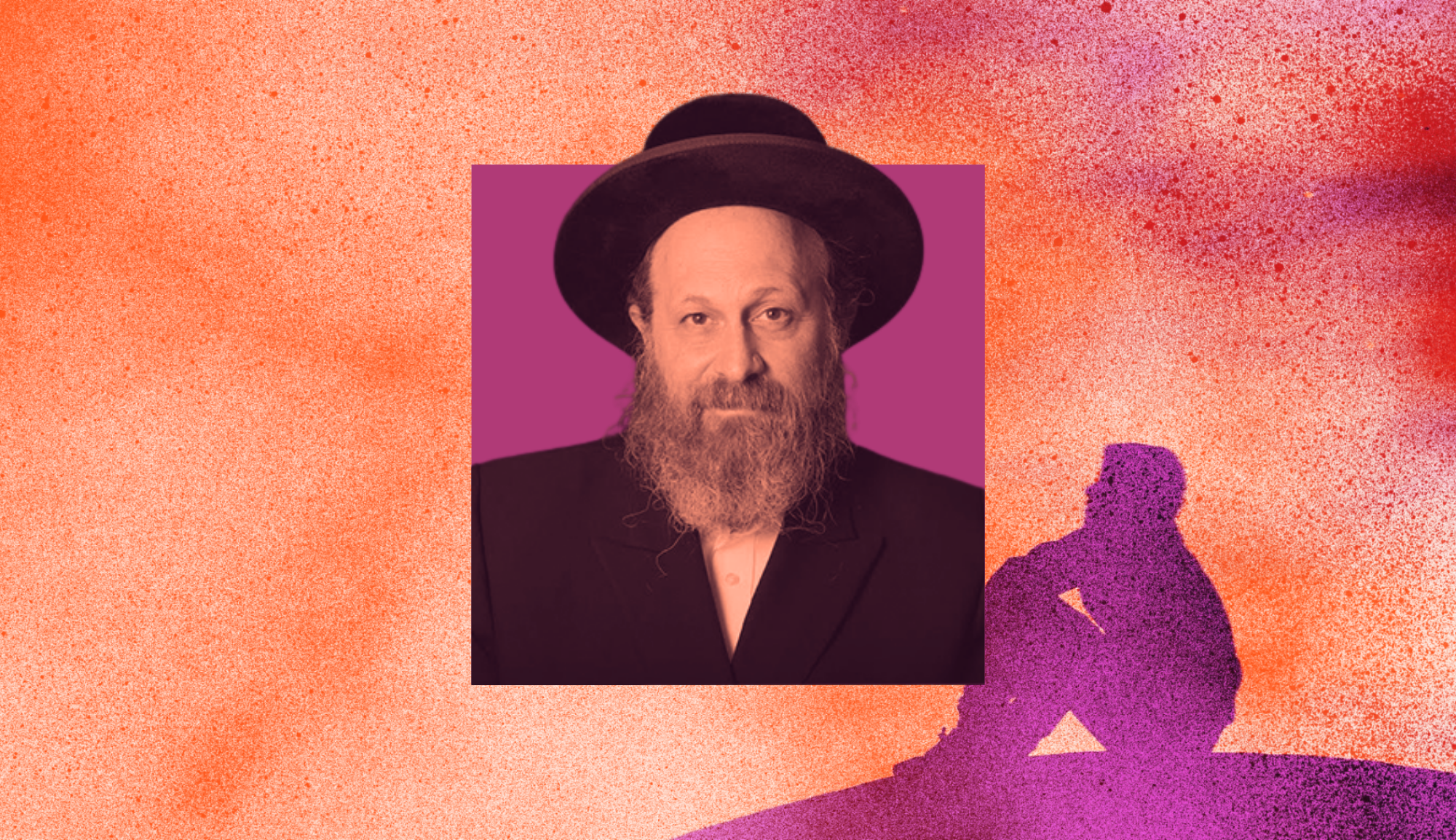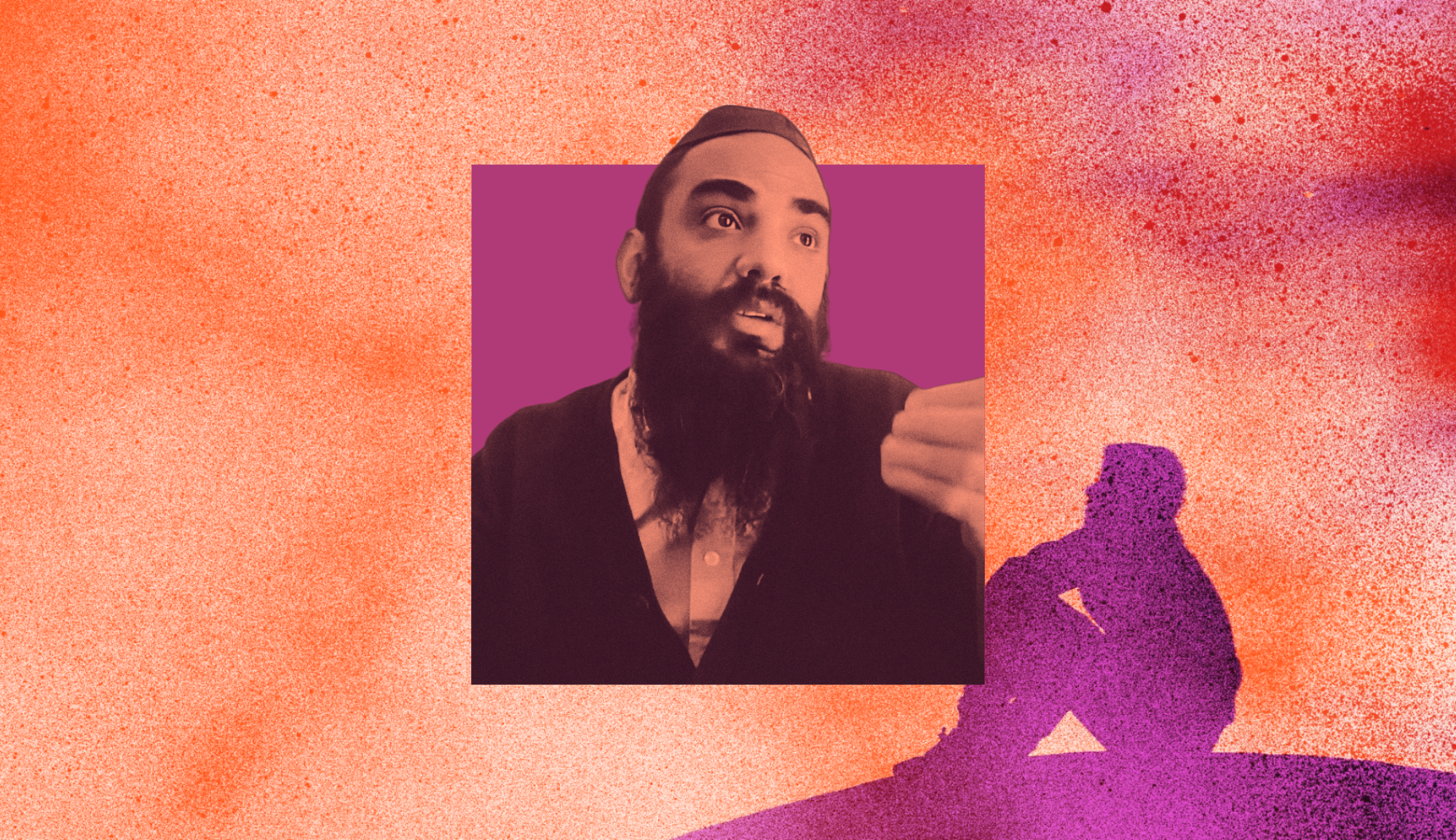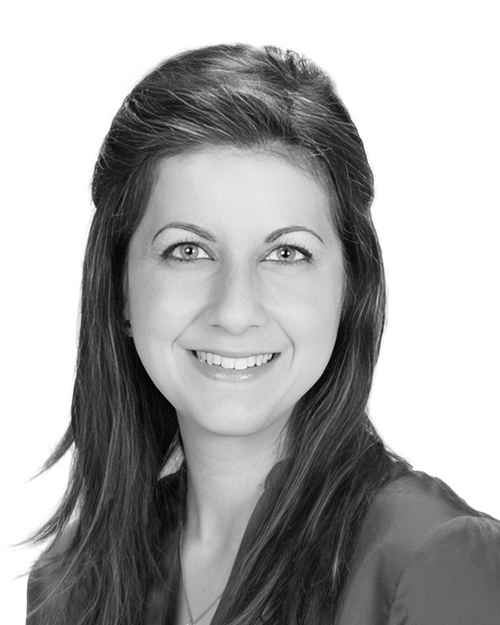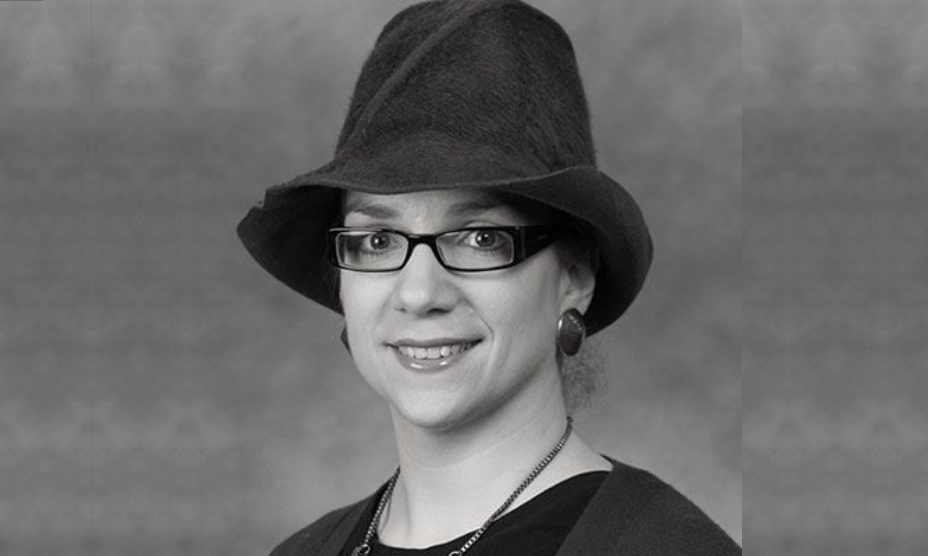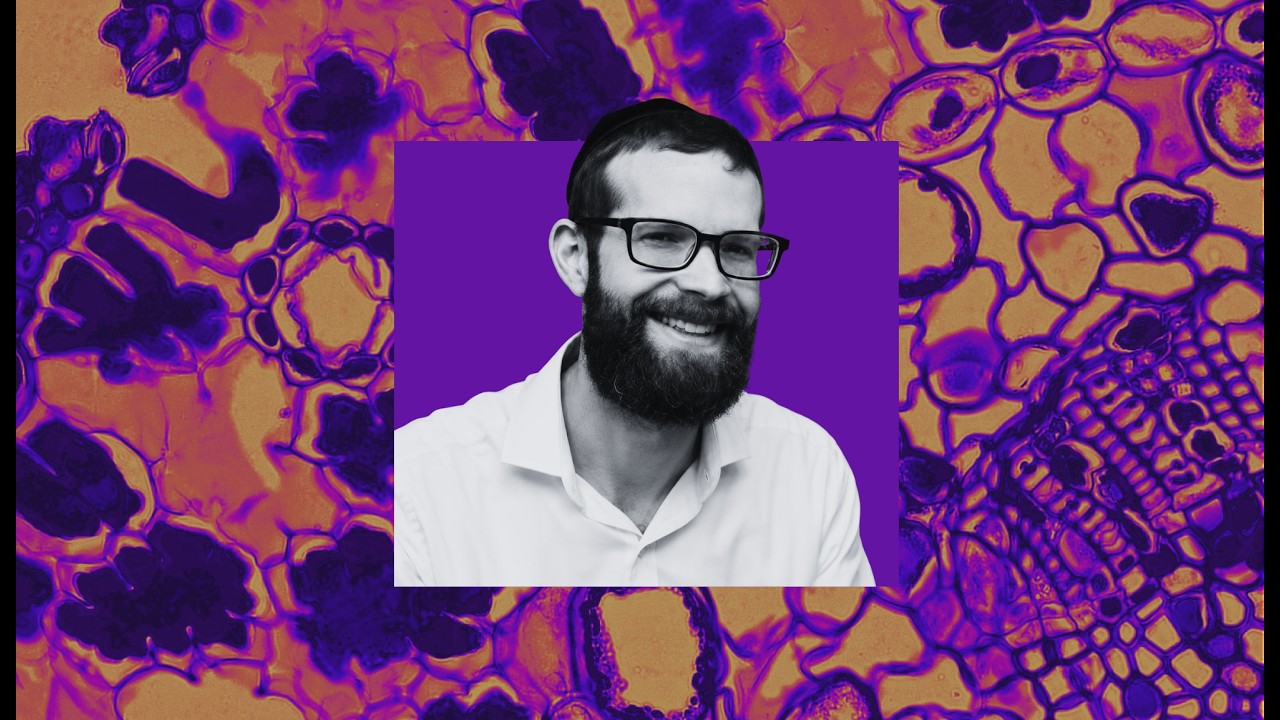
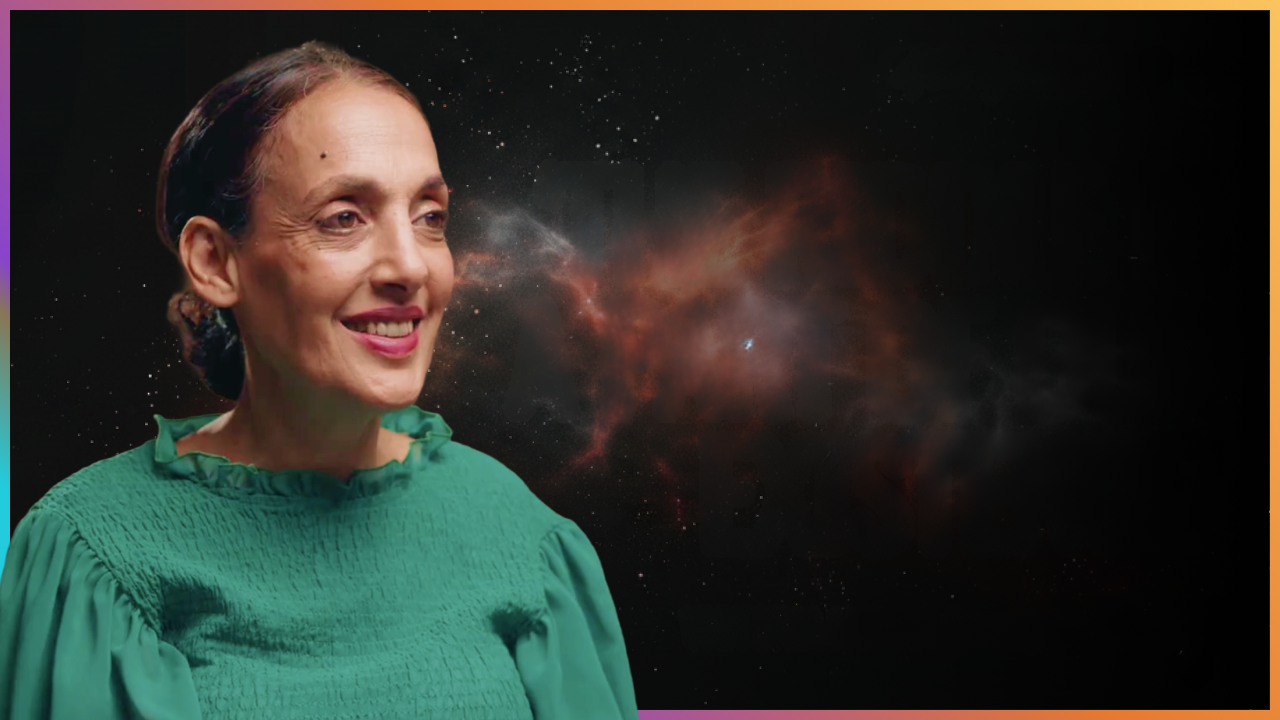
Victoria Hanna, known for her kabbalistic rap, explains how the human body can be a place for divine revelation.
This podcast is in partnership with Rabbi Benji Levy and Share. Learn more at 40mystics.com.
Victoria Hanna sees tremendous power in riddles. In many ways, she argues, questions are more important than answers. The Israeli musician uses sounds and letters to understand God and the world, believing in the power of the “limitless within the limits.”
Victoria Hanna is a multidisciplinary singer, artist, and musician. Her first single, “Aleph Bet,” went viral in 2015, garnering over two million views, and her music has been described as kabbalistic rap.
Now, she joins us to answer eighteen questions on Jewish mysticism with Rabbi Dr. Benji Levy including the connection between the Hebrew letters and the parts of the body and how the human body can be a place for divine revelation.
RABBI DR BENJI LEVY. Victoria Hanna, it’s a privilege and pleasure to be sitting with you together in Jerusalem. You’re an amazing Jewish mystic. You’re a vocal artist with millions of views on YouTube and social media and you have a deep understanding of how one can bring the body and the soul of the Hebrew language together. Thank you for joining us.
VICTORIA HANNA. Thank you for inviting me.
LEVY. So, what is Jewish mysticism?
HANNA. Wow, it’s a very big question, and I’m not the one to have the responsibility to say it, but I can say it from my perspective. What is mysticism? Mysticism is, in general, a way to connect with life and to understand that there are other layers that are unseen and unrevealed in the normal perspective, so-called. And those other perspectives, we want to connect with them and to enrich our being here. Otherwise, it seems like there is no reason [for it].
LEVY. Beautiful. And how were you introduced to Jewish mysticism?
HANNA. I would say that through my father. When I grew up, my father of blessed memory was a rabbi. He was very much connected with Jewish mysticism. And I grew up with that. So it’s like my DNA.
LEVY. Are there any specific memories or parts of Kabbala?
HANNA. There are a lot of memories. Yeah.
LEVY. Can you share one short one?
HANNA. Yes. The presence of the letters and the language are something that is not only a way to deliver information. For example, I would sleep and under my pillow would be the names of angels that he wrote and wrapped in a nylon bag.
LEVY. And placed under your pillow?
HANNA. And placed under my pillow.
LEVY. Your father put them there?
HANNA. Yeah.
LEVY. And did you feel weird about that?
HANNA. No, it was a part of our life. It means that the entities of the letters are connecting with your body when you are sleeping. It’s a very unique relationship with letters, language.
LEVY. Is that something you do in your own life for your own children? Do you try to connect in a very practical way, like putting [letters] under their pillows and things like that?
HANNA. No, I don’t do this, but I do it very much in my artistic work. It’s like my main inspiration.
LEVY. Can you unpack that for a moment? What do you do with that?
HANNA. What do I do? For example, I’m working now on a new sound installation in the Israel Museum in Jerusalem, in which I’m going to take an amulet from their collection, an old amulet for protection. And the person is going to enter the room and the amulet is going to surround him, because I’m going to compose it and he will hear it on the walls, but also I’m going to eich omrim [how do you translate] lisrok?
LEVY. To scan.
HANNA. To scan. I’m going to scan it and everything that I’m singing, or everything that will be heard, is going to be shown on the walls. So somehow there is a feeling that you are surrounded within an amulet.
LEVY. Wow. Beautiful. In an ideal world, would all Jews be mystics? Should everyone be studying this and connecting to it?
HANNA. Each one in his own way, because not everyone has the same access. But I believe in the depth of my heart that everyone should understand in a deep sense that what he sees is not the only story.
LEVY. Beautiful. And that becomes access to that, to look beneath the surface.
HANNA. Exactly. Exactly.
LEVY. What do you think of when I say the word God? Hashem. What is that Being?
HANNA. So, for me God and Hashem are different things. And Hashem for me is hey, shin, mem. Every letter is a sound. The shin, according to the Book of Creation, Sefer Yetzira, connects with the upper world, with the sky, with the abstract world. Whenever we see the sky, we see the abstract entity. So this is like the shin, shhh. And the mem connects according to the Book of Creation with the earth. Mmm. And even when you look at the letter, you see that the mem is completely sealed, it’s closed. It’s like the earth. The earth is sealed. And the shin, it’s like an upper root. It directs itself up. So when I say Hashem, I connect the shin and the mem together. Exactly. And I take the hey in the beginning, which is only air. It’s very spiritual. So to to say Hashem is basically to acknowledge everything, up, down, everything.
LEVY. Amazing. So when you think of the concept of Hashem, that’s what you think: heaven meeting earth with everything connected.
HANNA. I think that it is everywhere. It is everything. I think that even in a way, it’s a crime to try to define it.
LEVY. Wow.
HANNA. Because it’s beyond words.
LEVY. So to try to put words to it confines the infinite.
HANNA. Exactly.
LEVY. Which is wrong.
HANNA. Because words are very limited.
LEVY. Yeah. Even though your work is to show how those words also give expression.
HANNA. Exactly. Exactly. So this is the the contradictions that we are dealing with between the concrete world, which is so limited, and the abstract world, which is –
LEVY. Limitless.
HANNA. Limitless. And I believe that in Judaism, we make very, very interesting, in a deep way, meeting points between those two worlds. And when we spoke in the beginning about Jewish mysticism, I believe that this is also about that.
LEVY. Beautiful. So what is the purpose of the Jewish People then?
HANNA. Wow. I tell you, I’m not the one to say. I was just born like that. I was born Jewish, Jewish to this father. I grew up like that. Who am I to to say about the –
LEVY. Any of the studies in Sefer Yetzira, Zohar, any of the mystic tradition?
HANNA. I definitely feel that there is a riddle here.
LEVY. Yes.
HANNA. There is a riddle here. It is something again that I feel that if I put it into words, then I lost it. You know what I mean? The Jewish People are supposed to be ta ta ta ta ta ta ta, they are ta ta ta ta ta ta. The riddle – gone. And you know what? During my life, I understood that I’m not sure it’s a good thing to get out from the riddle. The riddle is a part of our existence. We have to accept it. Otherwise, there is no mysticism.
LEVY. That’s what’s mysticism –
HANNA. Mysticism has to do with dealing with question marks. In the Gemara, there is one beautiful thing about the embryo and they say that when the embryo is getting out into this world, the shut is open, of course, because life is open.
LEVY. What’s the shut?
HANNA. The shut, the close. Niftach hasatum venistam hapatuach [what was shut was opened and what was open was shut]. When the embryo merega sheyatsa le’avir haolam, as soon as the embryo exits into the air [of the world], the shut is open, right? Niftach hasatum. Because –
LEVY. Okay. The thing that was shut prior is now opened.
HANNA. And then the open is shut. You see? And this is the riddle.
LEVY. Yeah.
HANNA. We live here –
LEVY. Because that which was shut is now opened and that which was opened is now shut.
HANNA. Exactly. Exactly. We live here and we don’t know anything. If you ask somebody if he knows something, he can only tell you whatever other people told him or what he read. The basic situation that we cannot ignore is the riddle.
LEVY. Wow. So that’s the purpose of the Jewish People. The answer is to be determined. It’s a riddle. We’re not sure.
HANNA. Yeah, I mean, I just look at the history. The only thing we can do is have an overview of the history and say, wow. Those people, this is a very unique journey. It’s not just something that you see in other people, in other nations. So what is it?
LEVY. Yeah.
HANNA. And we keep on asking. I believe that the question is more important than the answer.
LEVY. It’s interesting. Even Mark Twain asked this question.
HANNA. Yeah. No, it’s very interesting. It’s very interesting, but we cannot –
LEVY. Confine it.
Victoria Hann: Confine it because it’s a riddle.
LEVY. Yeah. How does prayer work?
HANNA. Prayer is not an instruction to open a computer. I can tell you how the computer works, but prayer is also dealing with the riddle. Basically, when we pray, we have a quest. And then we try to bring or to pull unknown intentions, unknown, I would say. I don’t even know how to define it, unrevealed secrets to help us to make it happen, this quest.
LEVY. So what is the goal then?
HANNA. Ve’Chana hi medaberet al liba. Rak sfateha naot vekola lo yishama [Now Hannah was praying in her heart; only her lips moved, but her voice could not be heard]. What did she [Hannah] do here? What was this action? It’s an action that you are going somehow beyond yourself. And you devote yourself to this quest and to the feeling that there is a bigger thing up there that you cannot really see and you ask. And I would say that from the outside, for rational people, it looks weird. So it’s again, acknowledging that there is something beyond this reality. It’s the same.
LEVY. Yeah, it sounds like a real pattern, what you’re saying.
HANNA. Exactly.
LEVY. There’s different pathways and doorways to access the inaccessible.
HANNA. Exactly. Exactly.
LEVY. And this is one of them through speech.
HANNA. Yeah. Accessing the inaccessible and yet [one] knows that after one minute, it will be inaccessible again.
LEVY. So you’ve got to –
HANNA. It’s ratzo vashov. Ratzo Vashov [running and returning]. You go there and then it disappears. You go there and then – this is the work.
LEVY. Wow. What is Torah study?
HANNA. This is an amazing thing. The Torah, this is the thing from the Zohar that Rabbi Shimon Bar Yochai was praising before he left his –
LEVY. His body.
HANNA. His body. He was saying Oraita Oraita [Torah]. He was crying and he was kissing the earth and then he said Oraita Oraita, Torah Torah, nehiru dechol almin. You are the light of the whole world. Kama yamin venechalin umekorin umabu’in. So many different paths of water, like lakes, and seas, and rivers, and fountains. So many different kinds are mitpashtei minach lechol sitrin, are rising from you to all different directions. So we can learn about studying Torah [from] this. Oraita Oraita ma eima legabach ayelet ahavim ant. You are my beloved. So when we learn Torah, we are almost like making love. We are in an intimate relationship. We are in an intimate relationship with the high knowledge. This is amazing. It’s not just to take a book and to gain information. It’s entering something that is beyond us.
LEVY. Wow.
HANNA. It’s like entering a riddle because you can study the same thing over and over and over again, and every time you will feel that you are not done. It’s unbelievable.
LEVY. But it’s limitless.
HANNA. Yeah.
LEVY. It’s another pathway –
HANNA. Yeah, and this is an example of what we just spoke about. It’s an example of the limitless within the limits.
LEVY. Yeah.
HANNA. Because it’s a text, it’s a book.
LEVY. Yeah.
HANNA. It’s something sealed. And exactly.
LEVY. It’s a gateway to something –
HANNA. Exactly.
LEVY. Because when you open it it’s closed, when you close it’s open.
HANNA. Exactly. Amazing. You see, you are –
LEVY. I’m listening. And learning.
HANNA. Yeah.
LEVY. So what about men and women? Does Jewish mysticism view them as the same?
HANNA. No. The Zohar is talking a lot about the feminine side and the male side. So it’s like the right and the left. The right side and the left side are in our body. It’s about creation also. It’s the meeting point, maybe, between two directions that creates something new.
LEVY. So each, the male and the female, offers something different and new, and together they create some type of harmony?
HANNA. Together they create a new creature.
LEVY. Wow.
HANNA. It’s more than that. It’s about –
LEVY. Is that offensive for someone today that thinks like, we want to say women and men are the same, or is feminine and masculine different to women and men in this sense?
HANNA. I don’t understand the question.
LEVY. Some people today will be like, men and women are the same, everyone should have the same role –
HANNA. No, I don’t think men and women are the same. I think that the feminist women, the feminist movement did a big nezek, harm, damage to femininity. Because femininity is not about being a man. Power, the power of the woman comes within a different place. And we should connect to our power within our nature. We don’t have to be like somebody, like men. And you know what? When something is unbalanced in the women, the man is also unbalanced because we are connected. In order that it will be [balanced], each one should be fully completed, and then [each] will completely react on the the other –
LEVY. Yeah. They depend on each other but masculinity needs to tap into its essence and femininity needs to tap into its essence.
HANNA. Exactly. And it’s a riddle again, because our life now got so messed up. So we need to find again what femininity is and what it means to be a man.
LEVY. Should Judaism be hard or easy?
HANNA. Wow. The question of what is hard and what is easy. Because easy on one hand means not to do anything and everything will come. And hard means that really to work hard. And I believe that it should be both.
LEVY. To be hard and easy?
HANNA. Yeah, I think you should work on it.
LEVY. Yeah.
HANNA. You should work, you should put in the effort. But that’s the beauty of life. God gave us everything. And it’s our responsibility if we are doing something with it or not.
LEVY. Amazing.
HANNA. And then, once you work hard or I don’t know hard, once you work, then it becomes easy.
LEVY. Wow. So it should be hard in order to become easy?
HANNA. Yeah, exactly. It’s very hard to live to be easy.
LEVY. Yeah, le’fum tzara agra. According to effort is the reward.
HANNA. Yeah. Exactly.
LEVY. What about, why would God create the world? Why did Hashem make all of this?
HANNA. How can I know? I mean, I have to ask Him, but I can just imagine.
LEVY. Well, based on mysticism.
HANNA. Yeah. Based on mysticism, they say a lot of things about that. It’s a very deep question. But shaashua: playing, playing. It’s shaashua.
LEVY. God was just playing?
HANNA. God, He mishtaashea.
LEVY. He’s just playing. That’s why He created the world.
HANNA. He’s mishtaashea. That’s why we should connect to this element also of the shaashua [playfulness] in our life.
LEVY. Doesn’t that sound flimsy? Doesn’t it sound whimsical? God just created the world because He was playing? Isn’t that weird?
HANNA. I think it’s about joy. It’s about curiosity. It’s about the game in the good side of it. Not in the sense that I’m fooling around. It’s about the joy. Being here offers us amazing things, a lot of joy.
LEVY. Yeah.
HANNA. And when we connect with this thing in a high way, we connect with Him. Because that’s what He does here.
LEVY. Interesting. Can we do something against God’s will?
HANNA. Actually not. I really have to be careful when I say it. Of course we can. I mean, in the Orthodox way, in the Conservative way, yes, He was telling you not to do this and He was telling you not to do [that] and you should do this and not [that]. But in a deep sense, and this is why you are asking, I believe that God is everywhere. And if I believe that he is everywhere, so if I am doing something that is not good, ze yashpia alai.
LEVY. It’s gonna influence me.
HANNA. I’m going to –
LEVY. Be influenced.
HANNA. To be influenced by it. So it’s a part of Him also. Because we want to experiment, we want to learn. If we are always only on the right side, we can never learn.
LEVY. Amazing. What do you think of when you hear the word Mashiach? What is this Messianic Era?
HANNA. Wow. So again, if I’m going to the letters of Mashiach [the Messiah], mem, shin, in the opposite direction. Okay? Mem, earth, shin – it comes from earth, connects with the sky, with the upper world, Mashi, and then we have the yud and the chet. And the yud and the chet have to do with life. Chaim. Chai. So, Mashiach is going to connect Hashem within life in a new way. I mean, I hope.
LEVY. What is that going to look like? Do we know?
HANNA. No.
LEVY. But you know what’s going to happen?
HANNA. I think it can happen every moment and it happens every moment. We have moments of Mashiach [the Messiah] in our life where it happens, tak [really].
LEVY. Is the State of Israel part of the Messianic Era? Is it leading towards the redemption?
HANNA. According to the Bible, it does.
LEVY. What is the greatest challenge facing the world today?
HANNA. I don’t know if it’s the greatest, there are many challenges, to understand what is feminine: What is a man and what is a woman.
LEVY. Really?
HANNA. Yeah, I think if we solve it and if we heal it, we are doing a lot of healing into the world.
LEVY. Very interesting.
HANNA. Because all of the wars in the world, it’s a lot of masculine energy. And what does it mean if we can bring more of the other energy into this world. And I don’t know. I mean it’s not that I have the solution, but I feel that this is one of the challenges that would be very nice to solve.
LEVY. How has modernity –
HANNA. But also connects with nature. Those things also connect with global warming and connect with nature and the healing of nature. The earth is a feminine side. You know? So you can see the unbalanced between femininity and masculinity –
LEVY. Expressed in the world.
HANNA. Expressed in everything.
LEVY. And how has modernity changed Jewish mysticism?
HANNA. First, it’s very easy. Now, you don’t have to know all of those pages by heart. You know? You just click it and then you see it. So it’s a big challenge. You need to memorize less and less.
LEVY. Amazing.
HANNA. You don’t need to hold it in order that it will not get lost. It is there. It is storage. You know? All of those years we made a lot of effort to remember it, to memorize it, to hold it. And from here, we need to ask ourselves as scholars, so what shall we do now? It’s a very interesting question.
LEVY. Meaning it’s asking a new question.
HANNA. What?
LEVY. It’s asking a new question of –
HANNA. It’s asking a new question. Yeah. What should I do now in order to get into the next level? What does it mean?
LEVY. So it’s almost like there was like an extra weight off our shoulders so we can just focus now on the system itself, not –
HANNA. Exactly. Exactly. Not on holding it.
LEVY. Beautiful. What is unique to Jewish mysticism among the other mysticisms that you’ve studied?
HANNA. I would say because I saw other mystic practices in the world. What is very special that I see in Jewish mysticism is that it is very connected to everyday life. We are not neglecting everyday life, we don’t want to sit on a mountain and leave all of those other people to be there and just to have an overview. We are here. We are here with them. We are here within life. And within life, we are doing everything we need to survive, to eat, to drink, to work, to sleep, but [with] everything that we do in Judaism we are connecting to a higher purpose, to this higher perspective.
LEVY. Amazing. Does one need to be religious to study Jewish mysticism?
HANNA. Wow. This is a very interesting question. First, who am I to say? I will not say yes or no, because who am I to say?
LEVY. Well, what’s your feeling?
HANNA. But I can definitely tell you that when I meet people that are practicing Judaism in a deep sense, when they learn Jewish mysticism, it definitely makes more sense.
LEVY. Yeah.
HANNA. This is for sure. To learn Jewish mysticism without practicing it, it’s more intellectual. It’s a different way, it’s a different path.
LEVY. Can mysticism be dangerous?
HANNA. Yes. Definitely.
LEVY. In what ways?
HANNA. Nichnas laPardes [entered the orchard]. And I mean, you can enter the Pardes [orchard] and –
LEVY. So you’re referring to the Talmudic passage where four individuals went into an orchard and some didn’t come out alive.
HANNA. Exactly. So it’s very important, and that’s why we are connecting our mitzvot with everyday life. It’s very important to be grounded. For some people it’s very hard when they go into this mysticism.
LEVY. Why? When you go into the mysticism, do you find it hard to be grounded?
HANNA. It connects with your constitution.
LEVY. What does that mean?
HANNA. The constitution of some people. Some people are very grounded. Some people easily get lost.
LEVY. What about you? When you’re in a deep mystical state, do you find it hard to come back to the normal world?
HANNA. I find that for me personally, I need to work a lot on grounding myself. It’s not easy for me. For me the task is not to go high, but to go down.
LEVY. Amazing.
HANNA. You know? Some people are like that.
LEVY. How has Jewish mysticism affected your relationship with yourself and others? It’s a lot about relationships. How has it practically had that impact in your life?
HANNA. In many different ways. In every second of my life, I would say. I feel entities that are surrounding me, that I’m in dialogue with them. Many special moments in my life.
LEVY. What do you mean entities? People or not just people?
HANNA. Not just people.
LEVY. What are other entities?
HANNA. People that used to be people.
LEVY. Souls.
HANNA. Souls.
LEVY. So you connect to souls that –
HANNA. I can give you an example so you will understand. As a singer, sometimes I’m invited to sing in many places in the world. And in many of those places, when I go, especially in Europe, I go to the cemeteries of those places. So I was in Magenza, Mainz.
LEVY. In Germany.
HANNA. To perform. It has nothing to do with going to the cemetery, to the Jewish cemetery. And then they told me, there is a very special Jewish cemetery, ta ta ta ta ta. I went there. It was sealed. The cemetery was sealed. Nobody could enter, and I felt that I needed to go. So I jumped, I went inside, and I found myself alone inside the cemetery. And I really felt that when I’m using my voice and saying Shema Yisrael at the same place, I’m in dialogue with the souls. It was very powerful. I could see the names. I went, I was reading Tehillim, some portions of Tehillim near –
LEVY. Psalms.
HANNA. The Psalms, yeah. And then I saw that it’s very late, that I need to go to perform. So I jumped again back, running to my –
LEVY. Performance.
HANNA. Performance. And I would tell you, I really felt that there is shoval shel rabanim [trail of rabbis]. Like a –
LEVY. Not a fox [shu’al].
HANNA. No, no, no, like a pamalia [entourage].
LEVY. Like a group of rabbis.
HANNA. Of rabbis, of souls –
LEVY. Following you.
HANNA. Following me in the back. It was so powerful. It was so powerful. Okay, maybe I imagined it. Rational people say, oh, you’re an artist, you have a very beautiful imagination, you can sing, you can – but I really felt it. So this is how, and sometimes I remind myself of it, they are still with me.
LEVY. Isn’t it difficult –
HANNA. So it’s a relationship. Even when you learn Gemara. Okay? So men, they learn Gemara more than women, we know, but –
LEVY. Traditionally.
HANNA. But sometimes, some people, I’m sure they have a special relationship with specific figures. It’s like you having Jewish mysticism in your everyday life allows you to open the gate, to be in dialogue with souls that are not from here and now. And it’s very clear.
LEVY. Doesn’t it bother you, like, someone like me, I’m very rational and very in that sense, and to me, I can’t imagine experiencing that.
HANNA. You can’t imagine?
LEVY. On a personal level going through that experience. I’ve definitely felt things that are beyond this world. But –
HANNA. You felt.
LEVY. I have definitely felt it, but it takes a very special person to jump over a cemetery [wall], to experience this, to be running back, to feel that.
HANNA. Yeah. Is that stress? That’s why I said that each one has his different constitution, each one has his own path.
LEVY. Yeah. And there’s something very powerful about leaning into that.
HANNA. Exactly. You should not be like anyone else. You just have to listen, to connect with your neshama [soul], and it will lead you.
LEVY. So [for] the last question, we’ve talked a lot about Jewish mysticism, a lot about different teachings. I’d like to ask you to conclude with one teaching. What’s one idea or powerful teaching that you take with you or something that comes to mind right now from Jewish mysticism? It can be from Sefer Yetzira or the letters or –
HANNA. Yeah. Every letter in the Hebrew language is an entity. And every letter is a sound. And every letter connects with another organ in the body. So basically, when I walk, the twenty-two letters are within me. And this is a very beautiful practice. Because I can go through the whole alphabet and scan my body and vibrate the sound.
LEVY. Is this taught in the Sefer Yetzira? In the Book of Creation?
HANNA. In the Book of Creation, every letter is mapped in another organ in the body.
LEVY. Can you give us one example of one letter and which organ it represents?
HANNA. Yeah. We can do for example the alef. The alef is in the chest. It’s here. And the alef is the abstract world because it opens into all of the directions. It’s the abstract world and it’s here.
LEVY. When you say the abstract world, is it the atzilut [divine emanation], one of the four worlds in that sense?
HANNA. No, I mean, it’s the inconcrete world.
LEVY. Okay.
HANNA. The meeting point between the alef and the bet is the meeting point between the abstract and the concrete.
LEVY. Okay.
HANNA. Because the bet is the dibur [speech], what we do now. But the alef is the silence and the voice. They’re talking about it a lot in the Zohar. The voice [sings wordlessly] – it’s a different thing than when I’m talking. It’s the abstract world, it’s like the pure, pure essence of the vibration of life. And then we can talk.
LEVY. And why is it the chest?
HANNA. I don’t know why. That’s what is written. But the chest is the heartbeat. It’s the nekuda. It’s the point, the deep inner point of our life right now.
LEVY. Wow. Well, Victoria, thank you so much for sharing today. It’s fascinating how you don’t just learn intellectually, but you embody somatically through the voice, through the vibrations, and through all the artistry you do. And we give you a blessing that you continue to share that with the world.
HANNA. I really feel that we need to bring this amazing ancient knowledge to its source and to connect with our body, that our body is the Mishkan, is the Beit HaMikdash.
LEVY. It’s the Tabernacle. It’s the Temple.
HANNA. Yeah. And we need to daven, to pray, to study, to learn, to reveal.
LEVY. Yeah.
HANNA. To have revelation within our body.
LEVY. Because that’s the vehicle.
HANNA. Yeah.
LEVY. Thank you so much.
We talk to Tania Friedlander about how her husband’s Parkinson’s diagnosis challenged her expectations and taught her to become capable of more.
We talk to Ben and Yael de Toledo about doing teshuva by returning to community.
We talk to Rabbi Shlomo Pill about how Torah and teshuva have helped him handle his struggle with addiction.
As a Haredi woman of the Israeli left, Nechumi Yaffe lives between a few different worlds—and she feels at home in Israel’s new “Religious Left” movement.
In this episode of the 18Forty Podcast, we talk to Liel Leibovitz and Lisa Ann Sandell about what happens when one partner wants to increase their religious practice.
In this episode of the 18Forty Podcast, we talk to Eli Rubin—a scholar, Lubavitcher Hasid, and author of the forthcoming book Kabbalah and the Rupture of Modernity: An Existential History of Chabad Hasidism—about life’s big cosmic questions.
The true enemy in Israel’s current war, Einat Wilf says, is what she calls “Palestinianism.”
In this episode of the 18Forty Podcast, we sit down for a special podcast with our host, David Bashevkin, to discuss the podcast’s namesake, the year 1840.
We talk to Mendel Horowitz, who introduces us to the notion of having a “good-enough Elul.”
In this episode of the 18Forty Podcast, we sit down with conservative journalist and cultural commentator, Bethany S. Mandel, to talk about the entrances and exits of her life, reconstructing Jewish identity, and creating a Jewish home outside of the Jewish community.
In this episode of the 18Forty Podcast, we sit down with Rav Moshe Weinberger, rabbi and educator, to discuss the role of mysticism in modern-day Judaism.
In this episode, David and special guest, Michelle Chesner, Columbia University’s Norman E. Alexander Librarian for Jewish Studies, discuss how the formatting of sacred Jewish texts has developed throughout Jewish history and impacted religious Judaism.
In this episode of the 18Forty Podcast, David Bashevkin opens up about his mental health journey.
David Bashevkin discusses how to embrace holiness, the purpose of prayer, and the search for meaning in an age of distraction.
In this episode, we talk to a father and daughter who were estranged and then reunited.
Shlomo Pill explains how mysticism is the soul of the Torah and prayer is the avenue through which we recognize God’s role in reality.
In this special Purim episode of the 18Forty Podcast, we bring you a recording from our live event with the comedian Modi, for our annual discussion on humor.
In this episode of the 18Forty Podcast, we talk to Yosef Bronstein—a rabbi, writer, and scholar—about the philosophy of Chabad and the Lubavitcher Rebbe.
Elliot Wolfson joins us to discuss the mechanics of prayer, the constant recreation of time, and Pardes.
In this episode of the 18Forty Podcast, we talk to Lizzy Savetsky, who went from a career in singing and fashion to being a Jewish activist and influencer, about her work advocating for Israel online.
In this episode of the 18Forty Podcast, we talk to Aliza and Ephraim Bulow, a married couple whose religious paths diverged over the course of their shared life.
Rabbi Yehoshua Pfeffer answers 18 questions on Israel, including the Haredi draft, Israel as a religious state, Messianism, and so much more.
Haviv answers 18 questions on Israel.
In this episode of the 18Forty Podcast, we talk to Frieda Vizel—a formerly Satmar Jew who makes educational content about Hasidic life—about her work presenting Hasidic Williamsburg to the outside world, and vice-versa.

What can Rashi’s reading of Shir HaShirim teach us about antisemitism, Jewish identity, and the sources of resilience in a post-Oct. 7…
A bedrock principle of Orthodox Judaism is that we received not only the Written Torah at Sinai but also the oral one—does…
Perhaps the most fundamental question any religious believer can ask is: “Does God exist?” It’s time we find good answers.
Kosher phones make calls and send texts. No Instagram, no TikTok, and no distractions. Maybe it’s time the world embraces them.
In Nitzavim-Vayelech, Moshe makes a covenant with those who were there—and those who had not yet arrived.
Christianity’s focus on the afterlife historically discouraged Jews from discussing it—but Jews very much believe in it.
Books are not only how one acquires wisdom, but how to reach ever-deeper depths in the world as well.
Children cannot truly avoid the consequences of estrangement. Their parents’ shadow will always follow.
To talk about the history of Jewish mysticism is in many ways to talk about the history of the mystical community.
Children don’t come with guarantees. Washing machines come with guarantees.

I consider the Rebbe to be my personal teacher, and I find this teaching particularly relevant for us now.
Rav Froman was a complicated character in Israel and in his own home city of Tekoa, as people from both the right…
Is teshuva about changing ourselves, or is it about accepting who we are? For this paradox, Rav Shagar says, it’s both.
From Freud through today, our desire to heal asks us to consider why we care so badly—and maybe if it’s hindering the…
What can Jewish law teach us about wealth, peer pressure, and communal responsibility? Two sources point in opposite directions.
A personal return to the poems that taught me how to imagine America
From verses in Parshat Bo to desert caves, tefillin emerge as one of Judaism’s earliest embodied practices.
Joy and meaning can be found not only despite the brokenness, but even because of the brokenness.

Talking about the “Haredi community” is a misnomer, Jonathan Rosenblum says, and simplifies its diversity of thought and perspectives. A Yale-trained lawyer…

In this episode of the 18Forty Podcast, we speak with Shais Taub, the rabbi behind the organization SoulWords, about shame, selfhood, and…
In this episode of the 18Forty Podcast, we talk to Ben and Yael de Toledo, founders of Pnima Jerusalem, a soulful community…
We talk to Tania Friedlander about how her husband’s Parkinson’s diagnosis challenged her expectations and taught her to become capable of more.
On this 18Forty panel, we speak with Alex Jakubowski of Lightning Studios, Sara Wolkenfeld of Sefaria, and Ari Lamm of BZ Media…
In this episode of the 18Forty Podcast, recorded live at Stern College, we speak with Rabbi Moshe Benovitz, director of NCSY Kollel,…
In this episode of the 18Forty Podcast—recorded at the 18Forty X ASFoundation AI Summit—we speak with ASF’s Julia Senkfor and AI researcher…
In this episode of the 18Forty Podcast, we speak with Diana Fersko, senior rabbi of the Village Temple Reform synagogue, about denominations…
We talk to author and theoretical physicist Berel Leib Epstein about rational reasons to choose to believe in Judaism and live a…
What is Jewish peoplehood? In a world that is increasingly international in its scope, our appreciation for the national or the tribal…

In this episode of the 18Forty Podcast, David Bashevkin answers questions from Diana Fersko, senior rabbi of the Village Temple Reform synagogue,…
In this episode of the 18Forty Podcast, we speak with Mark Wildes, founder and director of Manhattan Jewish Experience, about Modern Orthodox…

A free 40-week journey through the Talmud. No Hebrew or background required. 7,000+ people have already signed up — join us.